Which steps do you consider the most crucial and important in your fascinating journey in life and in arts particularly?
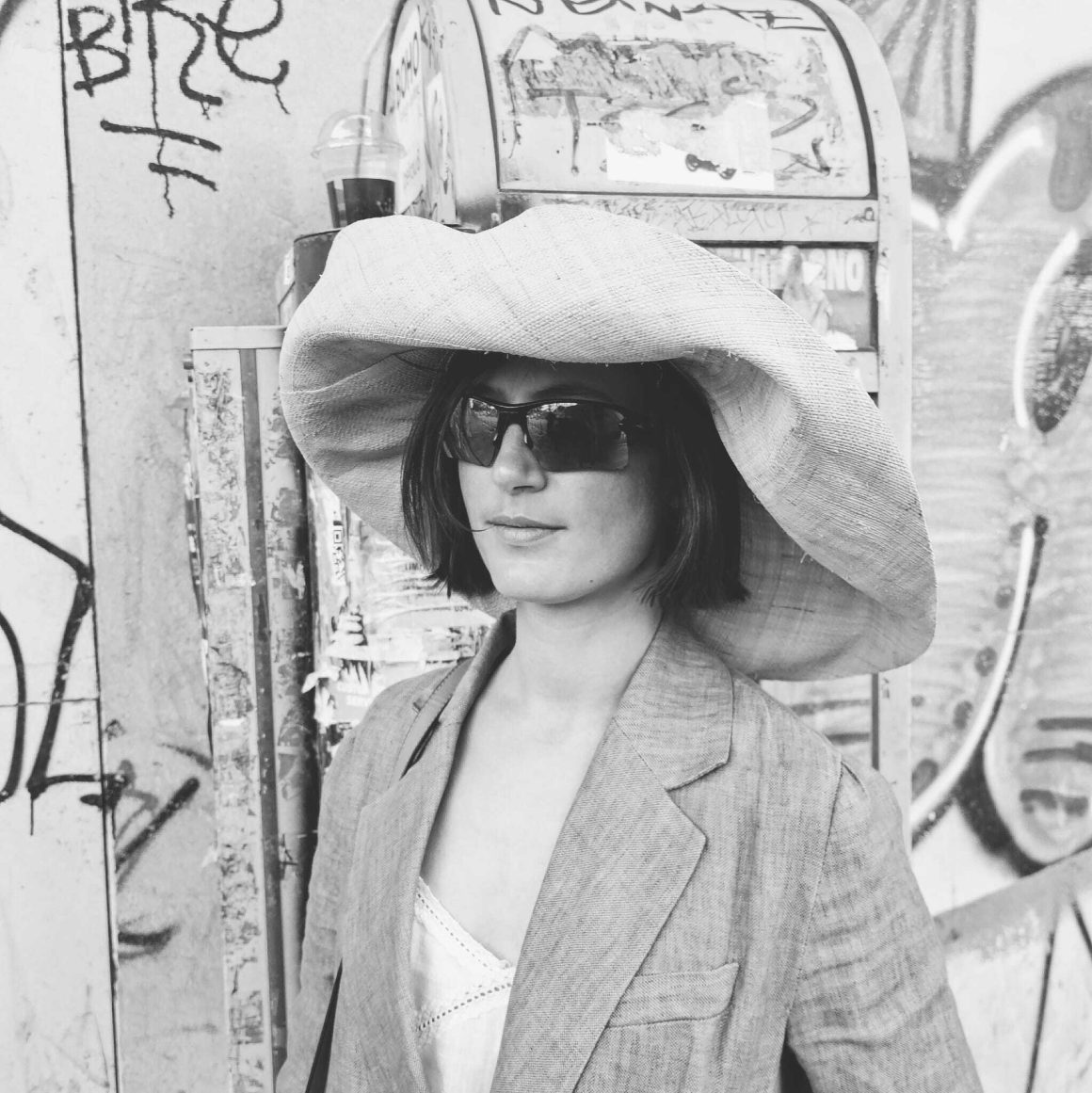
My parents always thought outside the box and said yes to life even when that meant going into the unknown. This is the common thread connecting all the people in my life who stand out when I look at where I am today. My tutors at Oxford were of course experts in their field but more importantly they taught how to find out about that which one knows nothing – and to enjoy the process of building knowledge from scratch. I worked for a gallery in Luxembourg owned by Alex Reding who was a fearless pioneer of Luxembourg’s contemporary art scene. For him, nothing was impossible, he always finds a way to achieve his goals. I think there are two kinds of people. Those who see a beautiful rooftop which has an amazing view but there is no means to get there so they walk away and find a rooftop where somebody has built a staircase and those who say “hey, how could I build my own way to get there?” I’m not unique in this, everyone in the contemporary artworld or starts a business has this mindset for different reasons. This was my journey.
At the same time having horses in my life from a young age taught me what it takes to pursue your passion. It looks glamorous but you are up early, shoveling manure, cleaning your tack, making sure the horses are well looked after, no weekends, no evenings, traveling hours and hours to shows with no guarantee of success. If you’re not crazy in love with what you’re doing you’re just plain crazy. It is exactly the same with the artworld. The openings are 1% of it, if you’re not willing to work and sweat and work around the clock it makes no sense. What’s interesting is that the reason I stay hooked also run parallel. A horse is a creature very unlike us. Dogs we get, we have similar natures. A horse’s psychology is completely outside our experience which is what makes them so fascinating to observe and work with. I have this same perception of artists. I am not an artist and could never be an artist, but working with artists and seeing how they engage with the world and put their experience, even their souls into their extraordinary creations is one of these great mysteries I can’t get enough of. They are human creatures unlike any other and certainly unlike me. I feel so lucky for this chance to be part of their lives.
What was it that led you to create Wilhelmina’s? What is the central axis of your selections and what do you focus on?
I wasn’t looking to create anything but it’s an example of what I was describing about saying yes to life. I came to Greece for the first time to Hydra in 2022. Stumbled across the space which turned out to belong to an old friend, Arthur Fitzwilliam, who I had played polo with in my early 20s. He is another one for whom life has no limitations. It’s a dreamy space, high ceilings, 100m2, right on the sea. I had a job lined up at a bank at the time so it wasn’t obvious to me that I wanted it or even what to do with it exactly but I met Ekaterina Jukowski, the founder of Mnemosyne Projects and a very talented creator who knew the island well, helped lay out the pieces of the puzzle. She was the main catalyst. Together we realized that an artist I worked with called Bea Bonafini had collaborated with the Soutzoglous in Athens and they were the original owners of what is now the Old Carpet Factory Music Studio on Hydra. It was like a giant hand had come out of the sky with a perfectly formed project. I rejected the bank job offer and here I am four seasons later.
My focus is on figurative art and themes connected to dreams, mythology and nature. I have an essayistic and exploratory curatorial style orientated towards spiritual questions. Personally I’m drawn to art for its ability to take you out of the world. Hydra is an ideal place to connect with a simpler and deeper side of yourself. Art, nature and books are our greatest antidote to this noisy spiral technology is trying to bury us with. Big tech, big pharma, even world governments want us numb, stupid, superficial, malleable, desperate, exhausted, poor and alone. Art makes us sensitive, thoughtful, profound, independent of thought, calm, energized, rich in spirit and connected. It’s no accident that the first thing that gets axed in the name of budget cuts is the arts.
Tell us about your exhibition in Hydra. What is happening every summer in Hydra, how did it happened to be part of it and what is your perspective in arts?
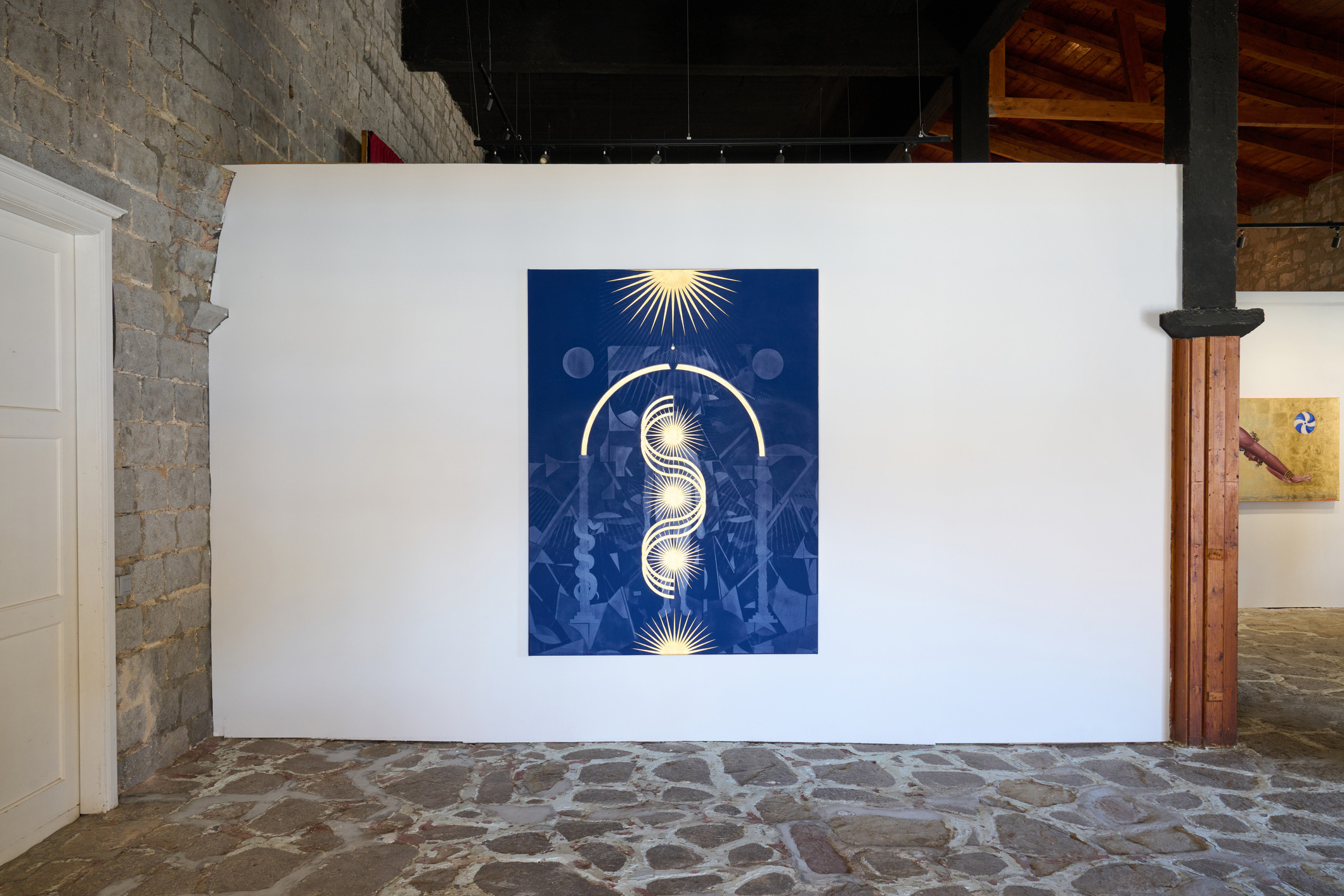
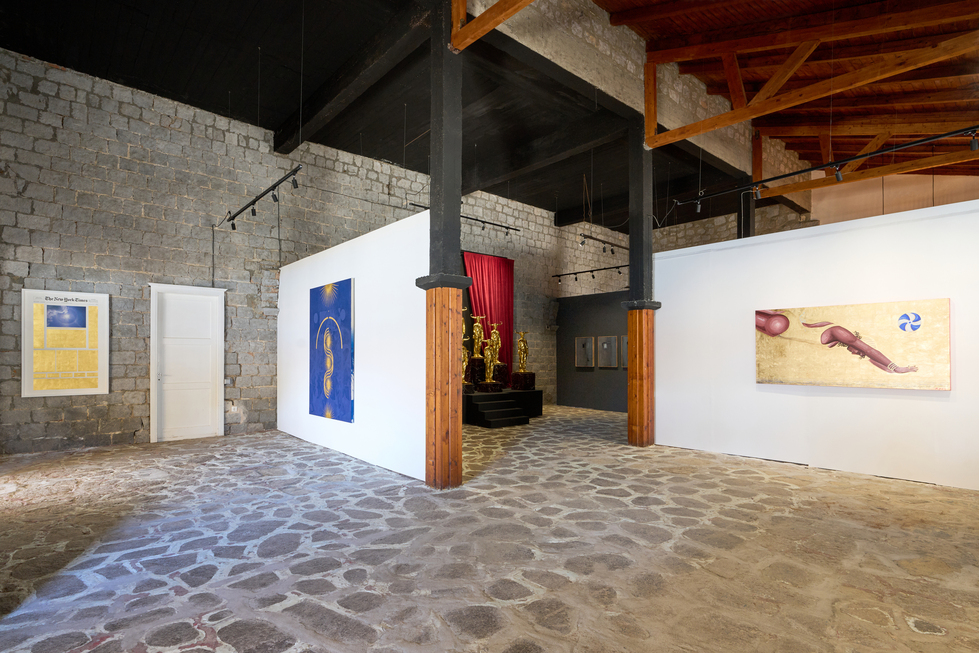
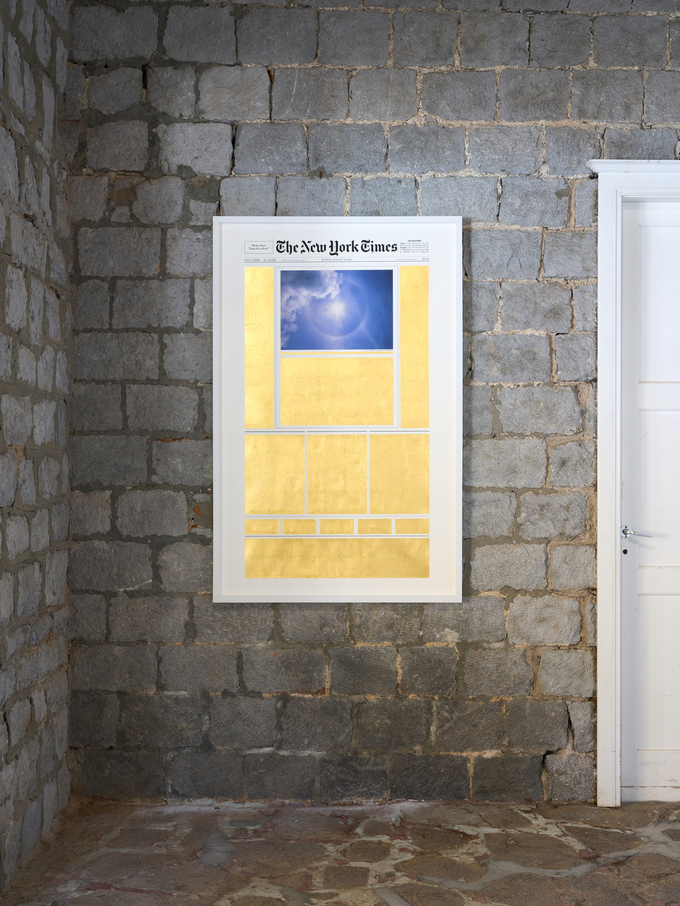
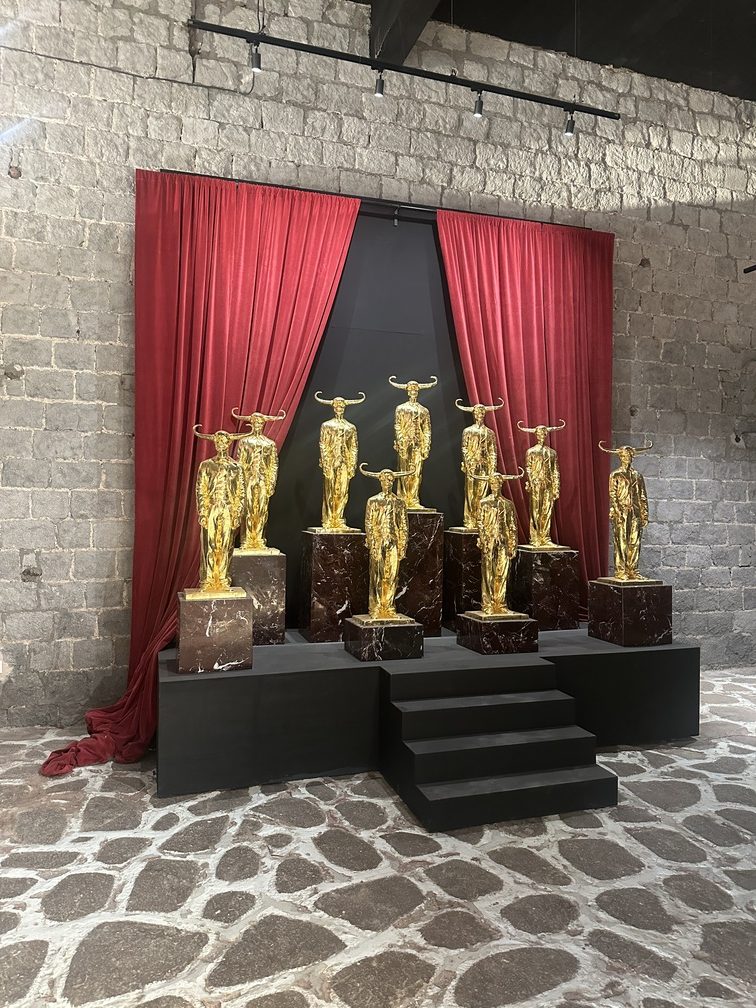
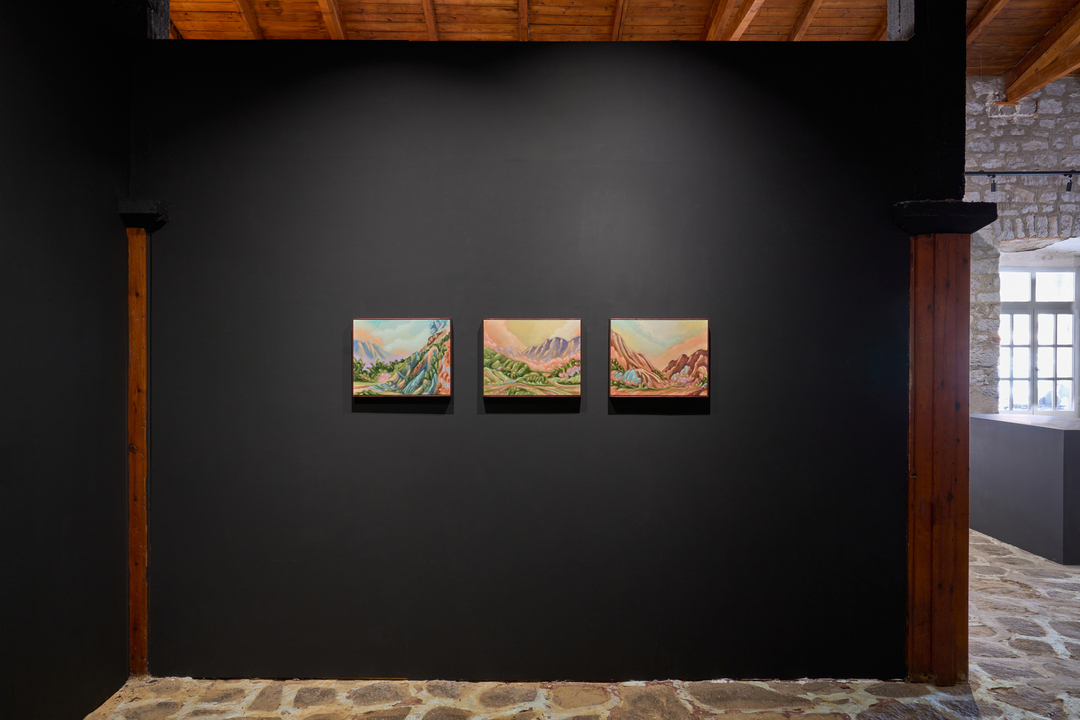
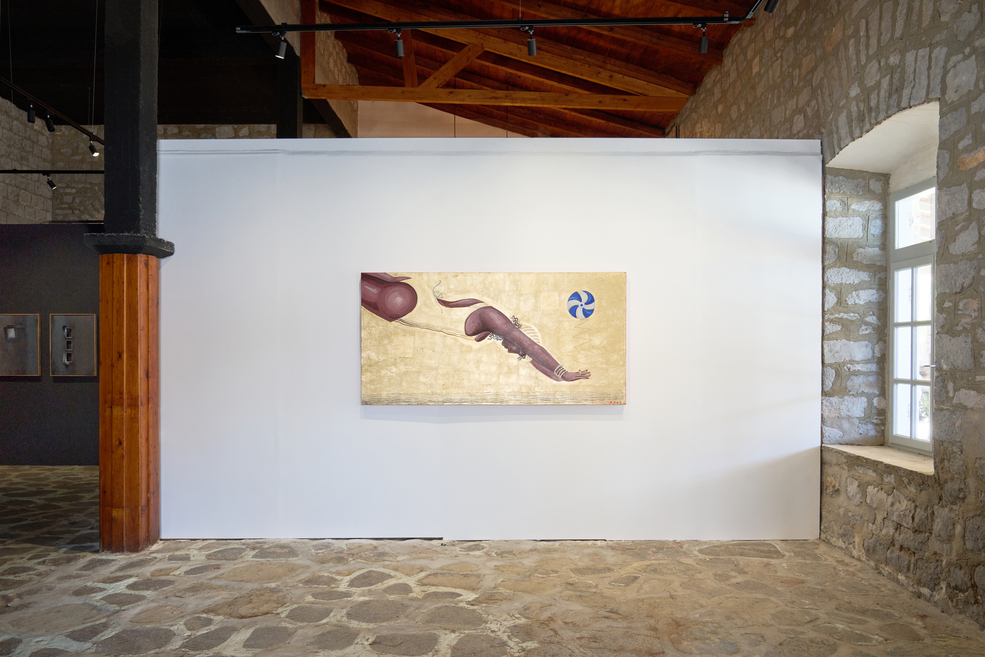
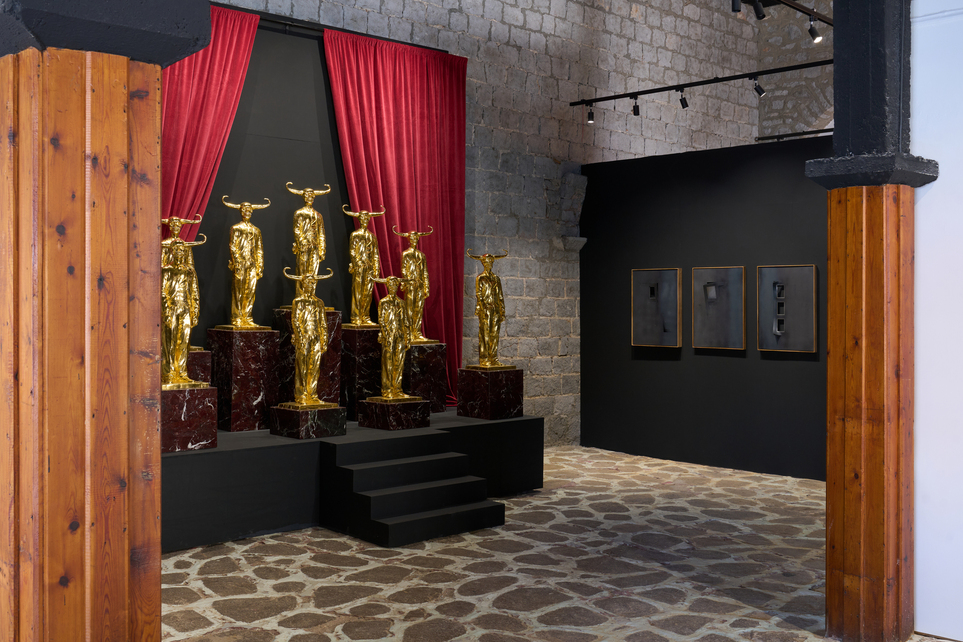
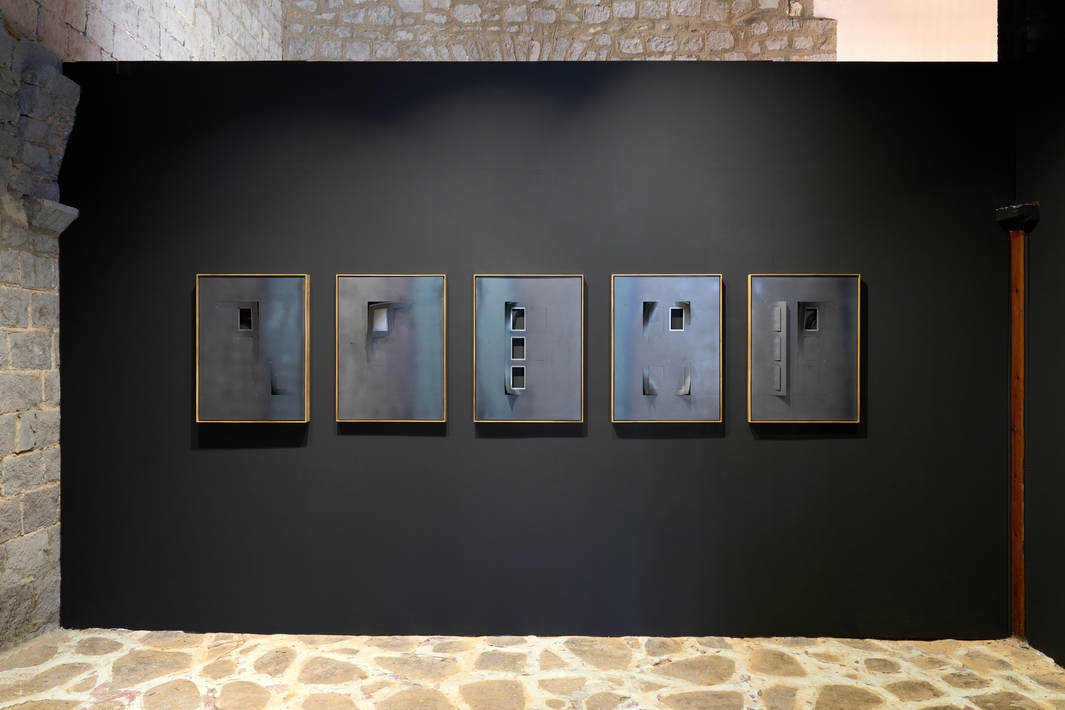
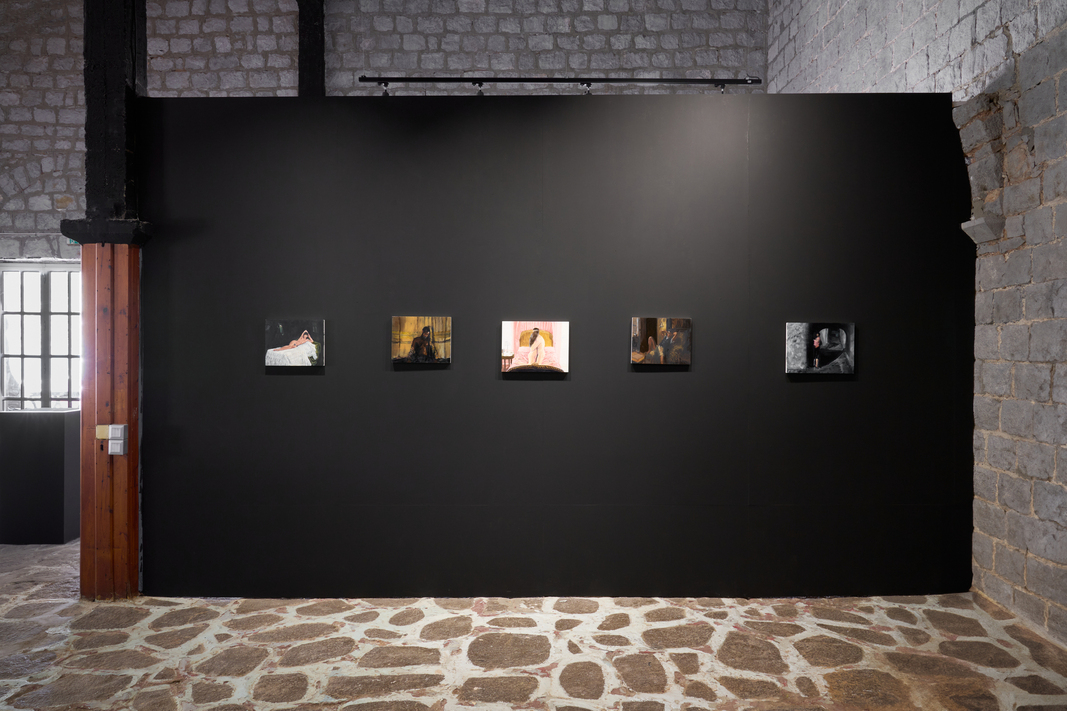
Right now I have a show called “Lighthouses of the Earth” featuring 7 artists : Apostolos Chantzaras, Corcho, Martand Khosla, Boris Torres, Emilio Perez, Esteban Fuentes de Maria and Panos Tsagaris. The theme was initially inspired by Helen Hunt-Jackson’s 19th century poem “God’s Lighthouses”, a simple but lovely poem about sailors weathering a stormy sea guided by a lighthouse to safe harbor. It’s a metaphor for navigating life troubles and our own inner turmoil that has been around for centuries but they posequestions that haven’t changed – where are we going? What principals are we guiding ourselves by? What really matters inthis one life we have? Is that a guiding light or a decoy lightholding up a false set of values to live by? How do we charter our own path rather than one imposed to us? Questions like these don’t age, they don’t depend on world events, they apply to everyone as individuals, they apply to us as a society and are as relevant now as they were at the dawn of mankind. Artist’s living today are still in a unique position to be the bridge between the demands of the world and our metaphysical needs. From that point of view the lighthouse is itself a great metaphor for the role of the artist and the role of art.
The gallery is a former shipyard right be the sea so I like the idea of it as a lighthouse shining forth artists’ works which illuminate the path of lost and troubled travelers who seek respite and safe harbour. I’m probably over-romanticizing it but then I wouldnt be here if I wasn’t a romantic.
“This is your fourth time exhibiting at the Mandraki Beach Gallery. What has the response from the audience been to your presence on the island this year, and what do you love most about being here?”
This year at the opening I was expecting 80 -100 people and 300 people showed up. It was both overwhelming and wonderful. However, what I love most is the rhythm of the island the rest of the summer– yes, I work very long hours but interspersed with swims several times a day and because dinners don’t start until 9pm or later I can still have an evening before walking back to Mandraki Bay under a beautiful starry sky. People who come to Hydra have a tendency to be authentic, easy going doers and thinkers with a creative background, it’s rare to have such a high concentration in one place and it’s a pleasure not least because you don’t have to explain what you do, everyone just gets it. That’s why friendships take deep roots so quickly on the island, you can fast forward through a lot of stages that you have to go through in most places.
What feedback do you receive from an international audience, and what differences do you notice compared to the Greek one?
I think international audiences become smitten with what Hydra still represents which is this other dimension where International art can exist with Rousseaunian simplicity outside the contemporary artworld machinery. They’re caught up in the magic of it with the eagerness of a newborn. Greeks find it less surprising because they grew up going to islands and although Hydra has the most established art scene it is not a complete unicorn, there are great residencies, galleries and projects dotted around the islands so it’s still charming but there isn’t the same novelty factor.
Are Greek artists part of your exploration? What is new in your current searches?
Yes absolutely. I didn’t know the Greek art scene at all when l arrived but quite early on I started working with Iasonas Kampanis who is a magnificent painter that has built a very distinctive universe. Last year I started working with Aliki Paliou, another tremendous talent. I have two Greek artists in my show right now, Panos Tsagaris and Apostolos Chantzaras. I’m so in love with their work and them as people. I also have a big crush on Peggy Kliafa’s work and Angelo Plessas. The International curator Marina Fokidis has been very important in this process of getting to know these artists amongst other ways in which she has been a great contributor to my development as a gallery. There are so many great Greek artists and although there are exceptions, generally speaking I don’t think they have the International recognition they deserve but their time will come. Galleries like Kalfayan, Breeder, Bernier Eliades, Dio Horia are being key in giving Greek artists an International voice and I am doing everything I can with those I represent. In terms of new explorations for me the new frontier is digital art and to be frank I was a bit frightened of it but in the last years I have been exposed to some very interesting actors in this domain and I feel ready to take on that challenge.
How do you divide your time in Greece, and what do you enjoy the most?
I have to go back to Luxembourg a lot but when I am here my time is spent between Hydra and Athens with the odd foray into other islands. The thing I appreciate the most about Greece, and it doesn’t matter where, is how everything is done without stress. This doesn’t mean necessarily a lack of urgency or pressure, in fact what is impressive is that even when there is a huge thing to accomplish with big time constraints there is no stress. It’s an extraordinary quality the Greeks have. In northern Europe everyone is stressed all the time for no reason, it’s the default setting. I used to live with a permanent ball in my chest. The big gift has been that I don’t just feel it here anymore. Greece has changed me and I carry this underlying calm with me wherever I go in all contexts. I’m a much happier person as a result.
Which are your future plans?
I am preparing a group show in London called “Oracles” in October coinciding with Frieze at a new space in Charing Cross called the Adelphi Arts House. It’s the first time for Wilhelmina’s showcasing artists in the big smoke and I couldn’t be happier for the opportunity the owner, Alasdair Machpherson, is giving me. In November my gallery will be back at Art Athina with a solo presentation of a wonderful new Argentine artist called Corcho that I have just started working with. Art Athina was my debut art fair so it has a special place in my heart – by the way my best ever experience of an art fair including when I worked for Nosbaum Reding. It will be incredible to be at the Onassis Stegi Foundation who generously stepped in now the Zappeion is under renovation, I can’t wait. Then we’ll have to see what 2027 brings but you can already save the date for another June 2027 show at Mandraki Beach!
Which achievements do you hold closest to your heart as the most important ones you have accomplished?
Becoming a practicing Catholic again.
Tell us a story you will never forget.
There is a story about a man in a cave and the exit is blocked by a huge boulder. He is wondering what his life should be and God appears and tells him to push the boulder. So he pushes and pushes and nothing happens. And as he is about to give up God appears again and asks him to push harder. He does this with gusto for many years and one day the man says “I have pushed this boulder all my life and not moved it one inch, I have failed you.” And God says “I didn’t ask you to move the boulder, I asked you to push it.” I don’t think life is about achievements or failures I think life is about pushing and finding joy in that struggle. The rest, success and failure. It’s all relative. And once you understand that the fear leaves you and you can do anything.
A dream project.
I would like to have an art gallery inside a boat and sail the world with traveling exhibitions.
When you enter a space, what do you notice first?
The proportions and the light.
Three places you love to return to, and why.
I travel a lot for work and the world has so many extraordinary people and places but as Dorothea says there’s no place like home. Being with my parents and my dogs in the kitchen of the watermill where I grew up is my sanctuary. My favourite film is Gone With the Wind and whenever Scarlett doesn’t know what to do she goes back to Tara – it’s where she draws her strength and her resolve anew. The watermill with my family is my Tara.
That said – Mandraki Bay is a pretty close second. I have the art I love, in one of the most beautiful bays in the world, eating great food at my Landlord’s restaurant Captain M, being visited by amazing people, swimming every day, traveling to town by boat and watching wild goats come down from the mountain to eat the plants outside the gallery every morning. How much more of a dream than that can you get?
Last but not least as I had to give up horses when I opened the gallery for me there are few greater treats than heading out onto a polo pitch in Buenos Aires to ride, hit the ball around and play some chukkas with friends. I completely understand how centaurs came about that feeling of becoming one with the horse is so transformative and exhilarating. I guess it’s also one of the few instances where I am doing something I have been practicing for 30 years. I’m constantly facing new challenges in my profession but on the horse my body knows what to do and I can enjoy the moment without having to think.
Give us your own definition of beauty.
A Greek sunset is a good example. It doesn’t matter how many you see it is always mesmerising, you always find something different, you never want it to end and you want to see it again. An artwork, a book, a person, an athlete, an animal, a performance, a song, an experience – anything that has that quality is beautiful.
What do you consider authentic nowadays?
As far as people are concerned I don’t think that has ever really changed. There are so many books stretching way back into antiquity poking fun at people pretending to be something they’re not in order to fit in, climb socially or gain political favour. Authenticity is always uncompromising. Sometimes that’s charming, sometimes infuriating or downright odious but in every case it demands respect. The restaurant owner who won’t serve clients she doesn’t like the look of, the person who couldn’t care less about a promotion as long as they can leave work at five, Hydra that no money in the world will induce to allow a new build or a vehicle on the island, the person that loses their job on a point of principle. It comes in all forms but it comes down to staying true to the essence of a person or thing regardless of what that essence is. You’re looking at person vs persona, real place vs Potemkin village. Tourism definitely has a lot to answer for in destroying the essence of virtually every beautiful spot in the world. It must have been amazing to travel 500 years ago. Authenticity is always to be admired but especially political prisoners, people who lose their positions at work, or the ultimate extreme which is people who are put to death for their opinions and being who they are.