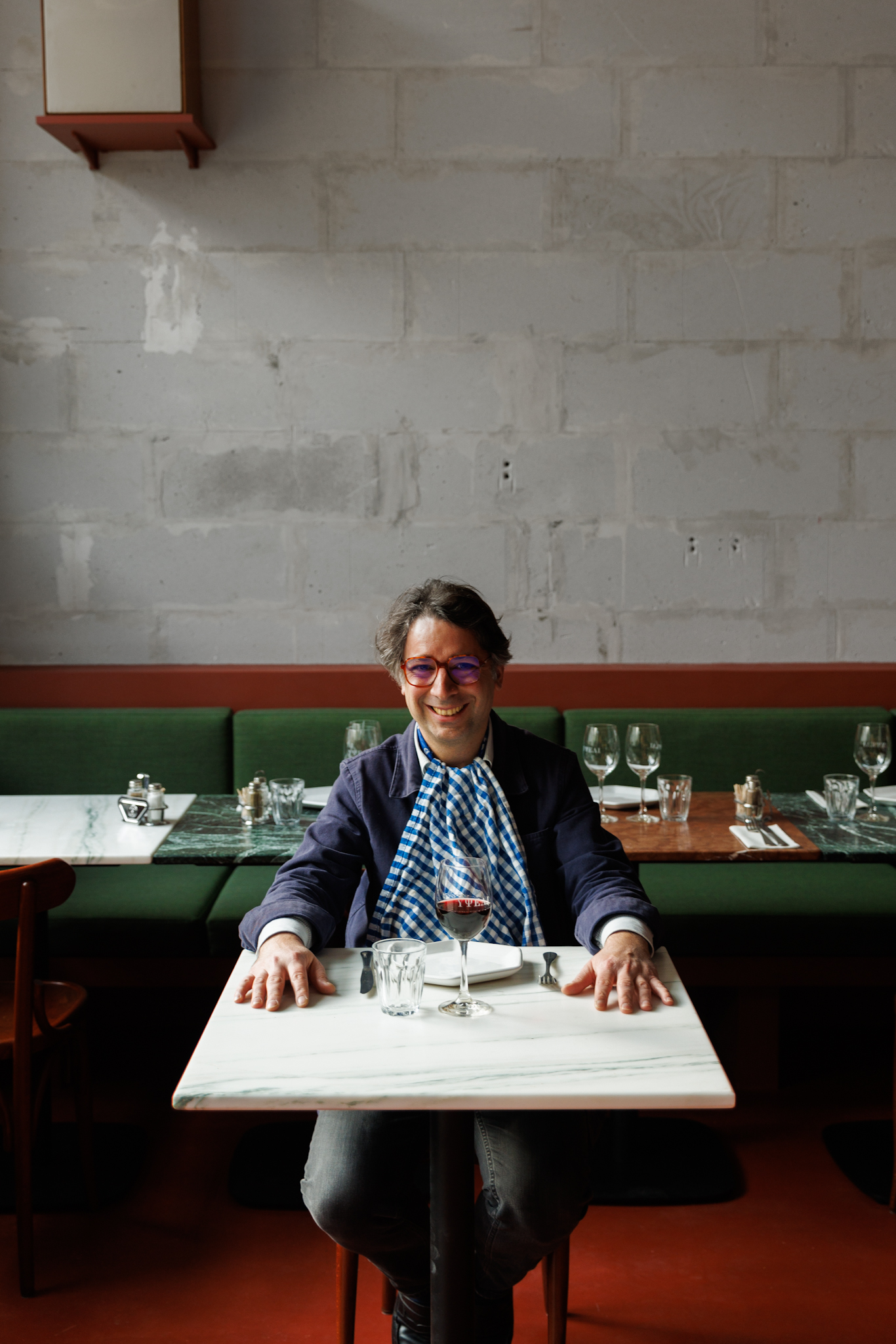
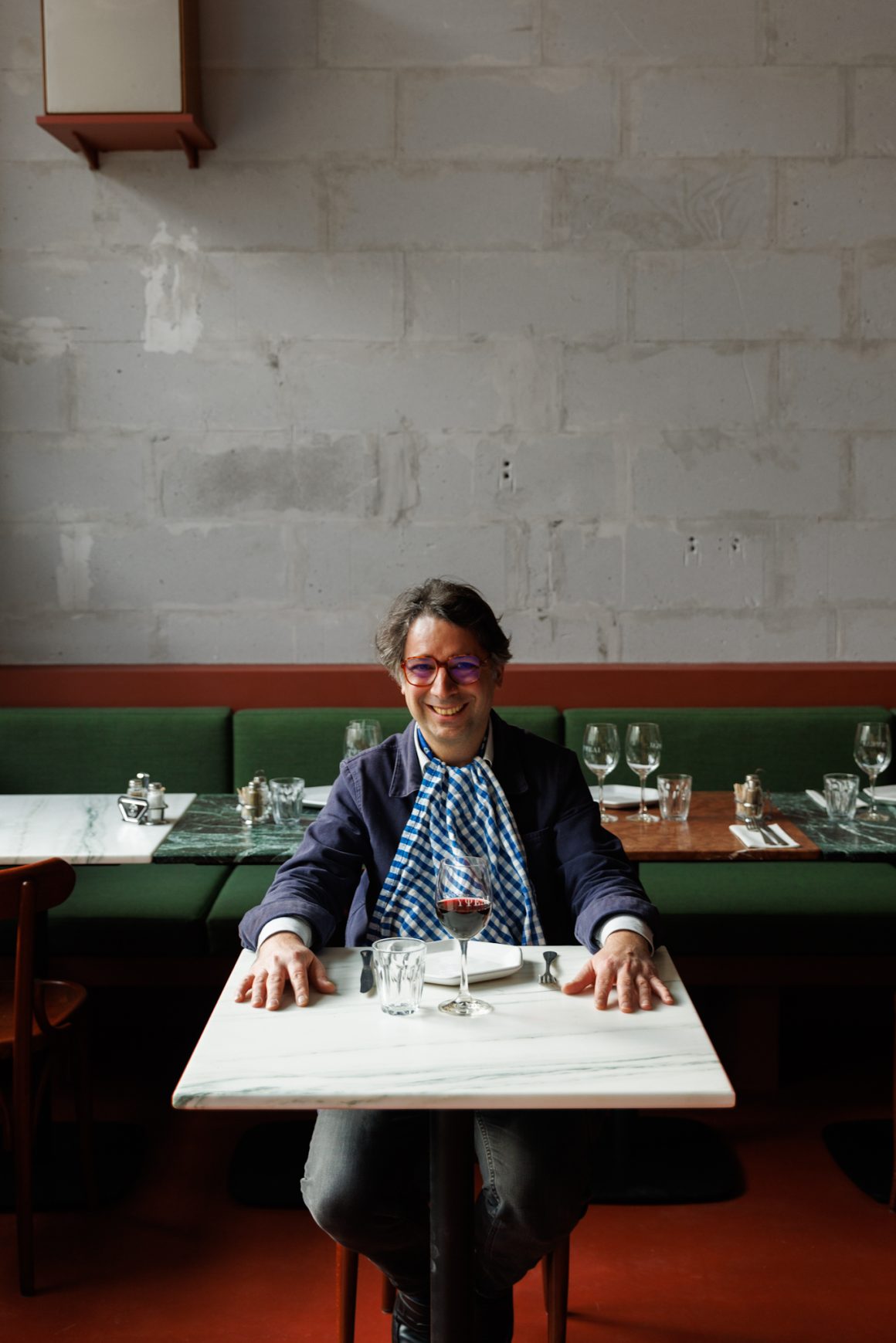
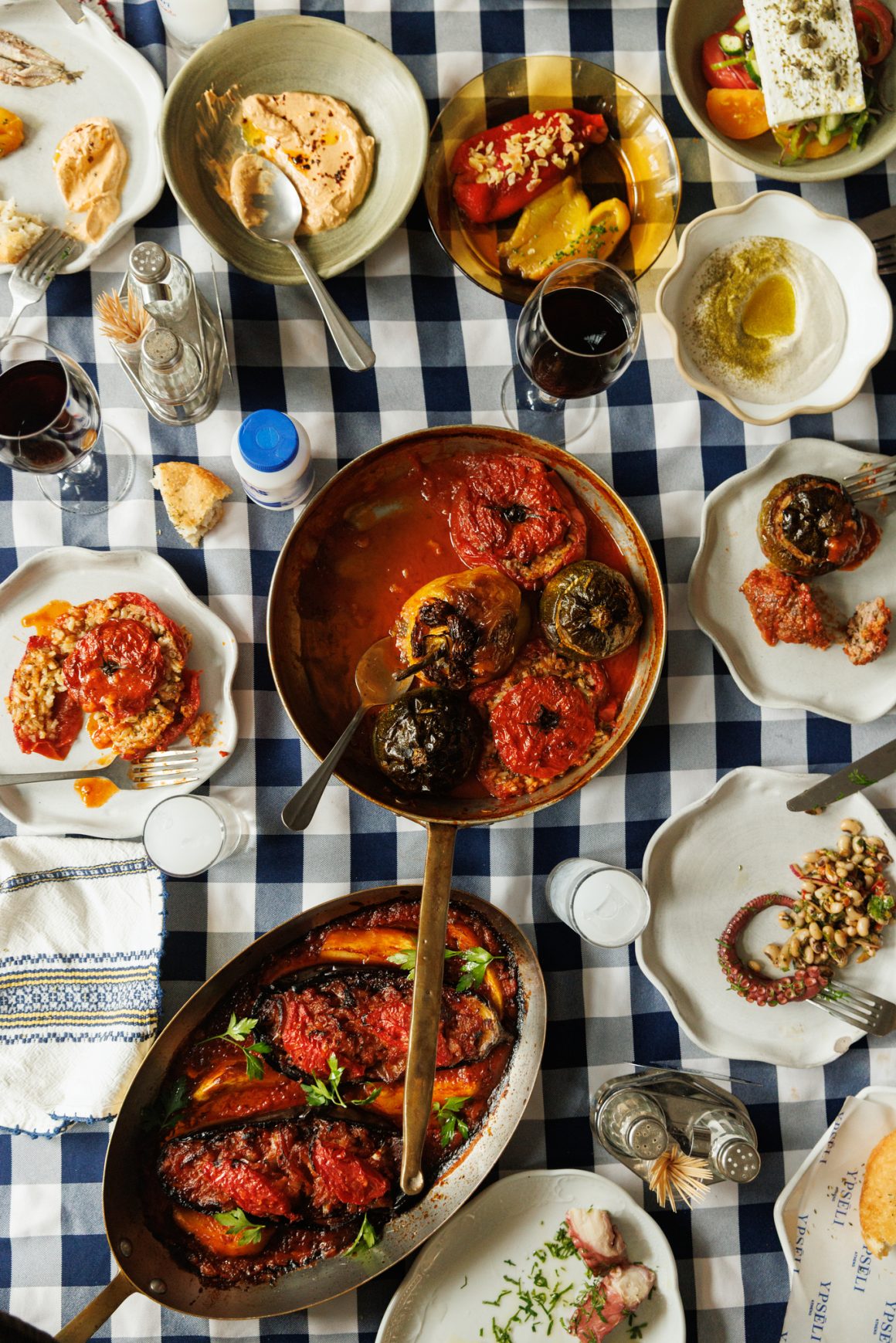
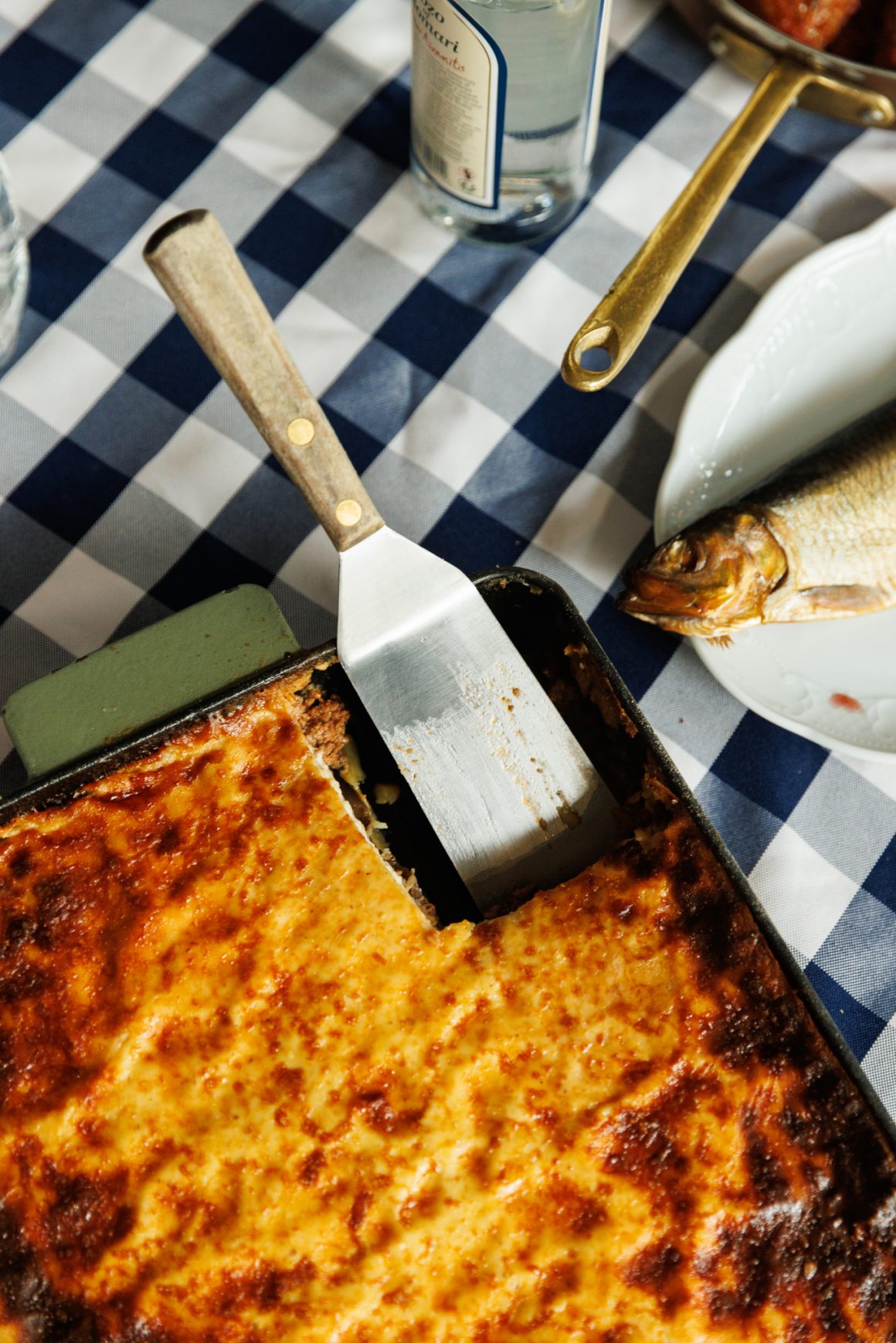
Its name is Supergrec: generous, sunny and joyful, opening on 7 September 2026.
Located in the Sentier district, Supergrec is a popular taverna in the image of Delphine and Symeon: generous, welcoming and accessible.
A place where everything is put on the table, where plates, laughter and good times are shared.
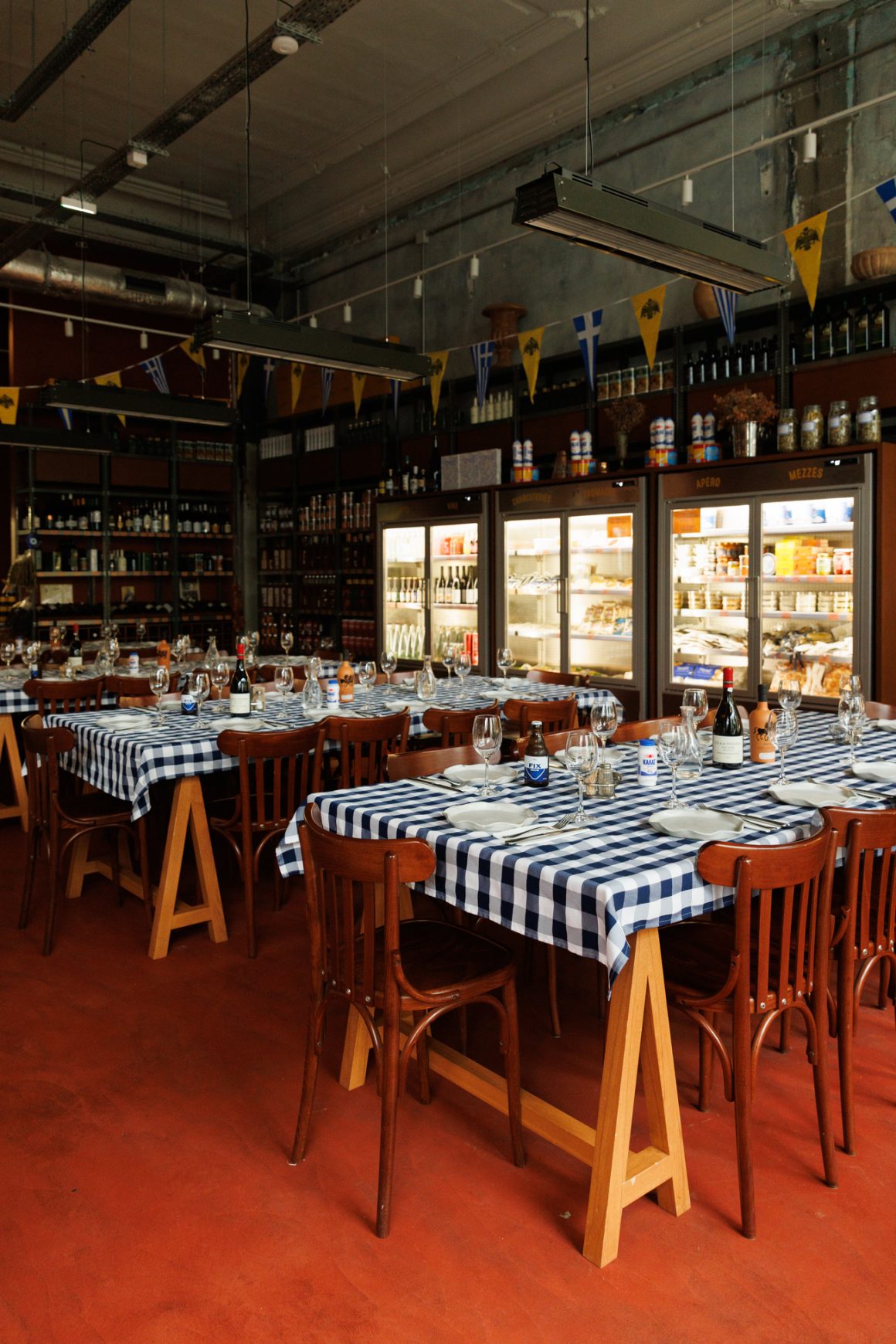
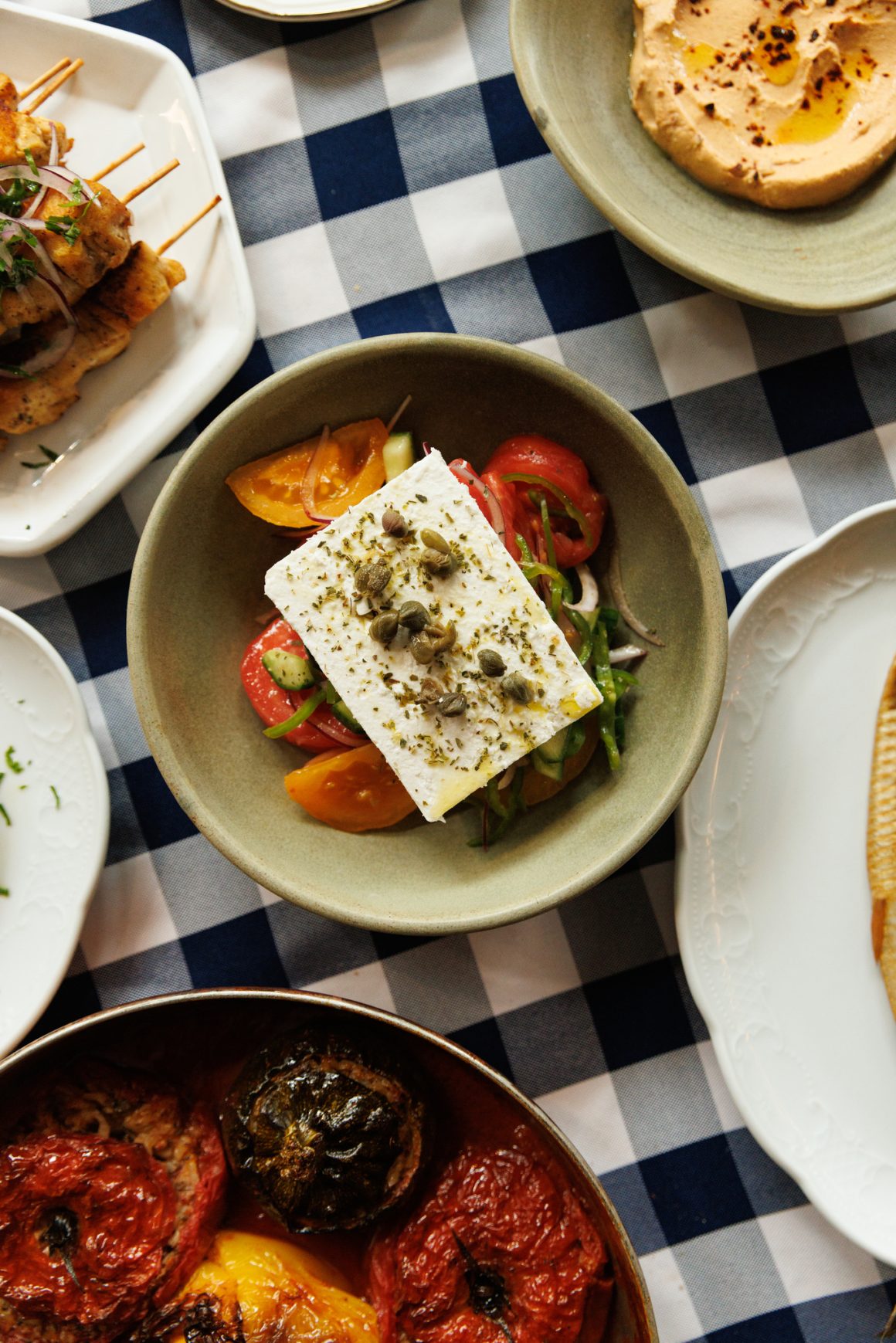
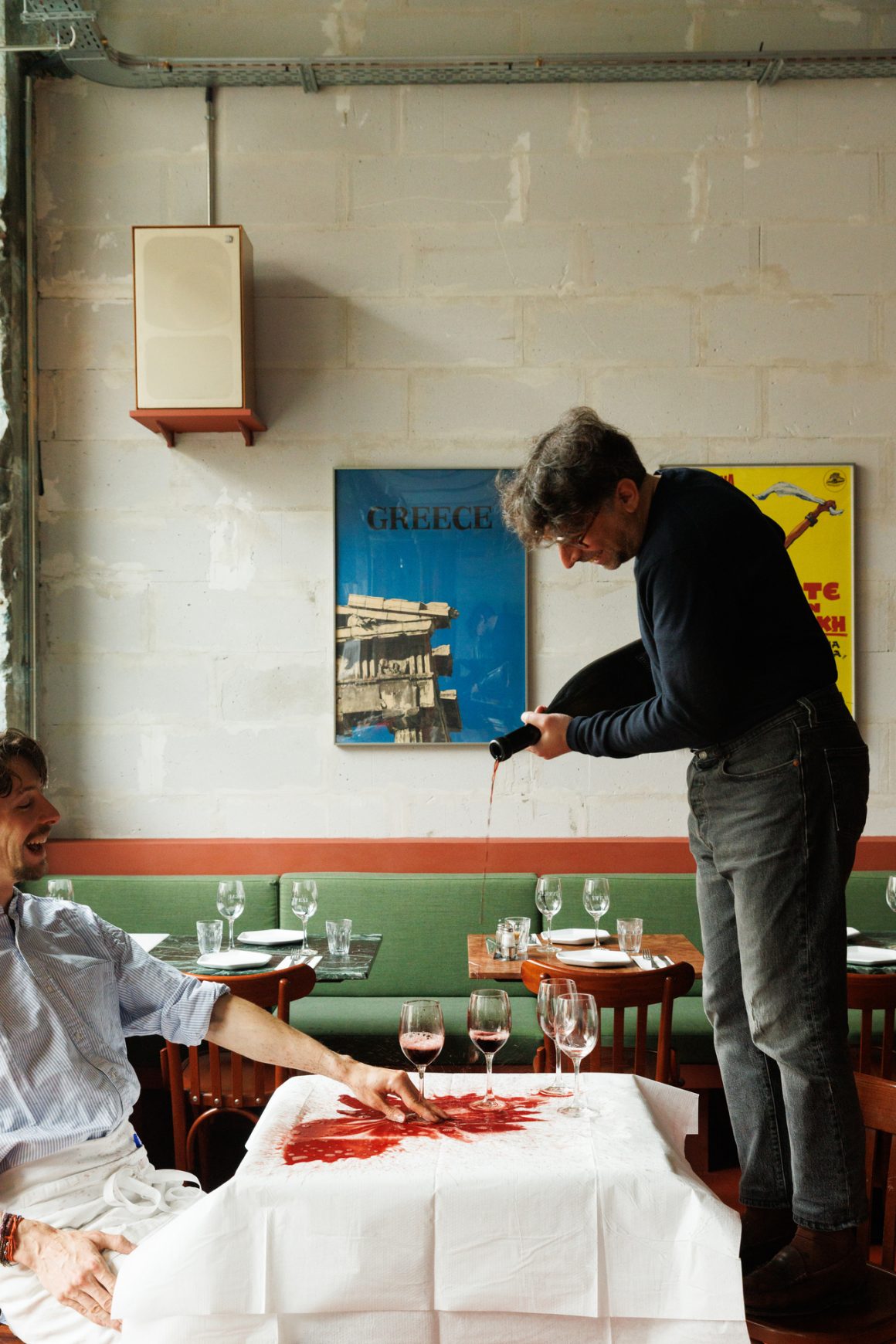
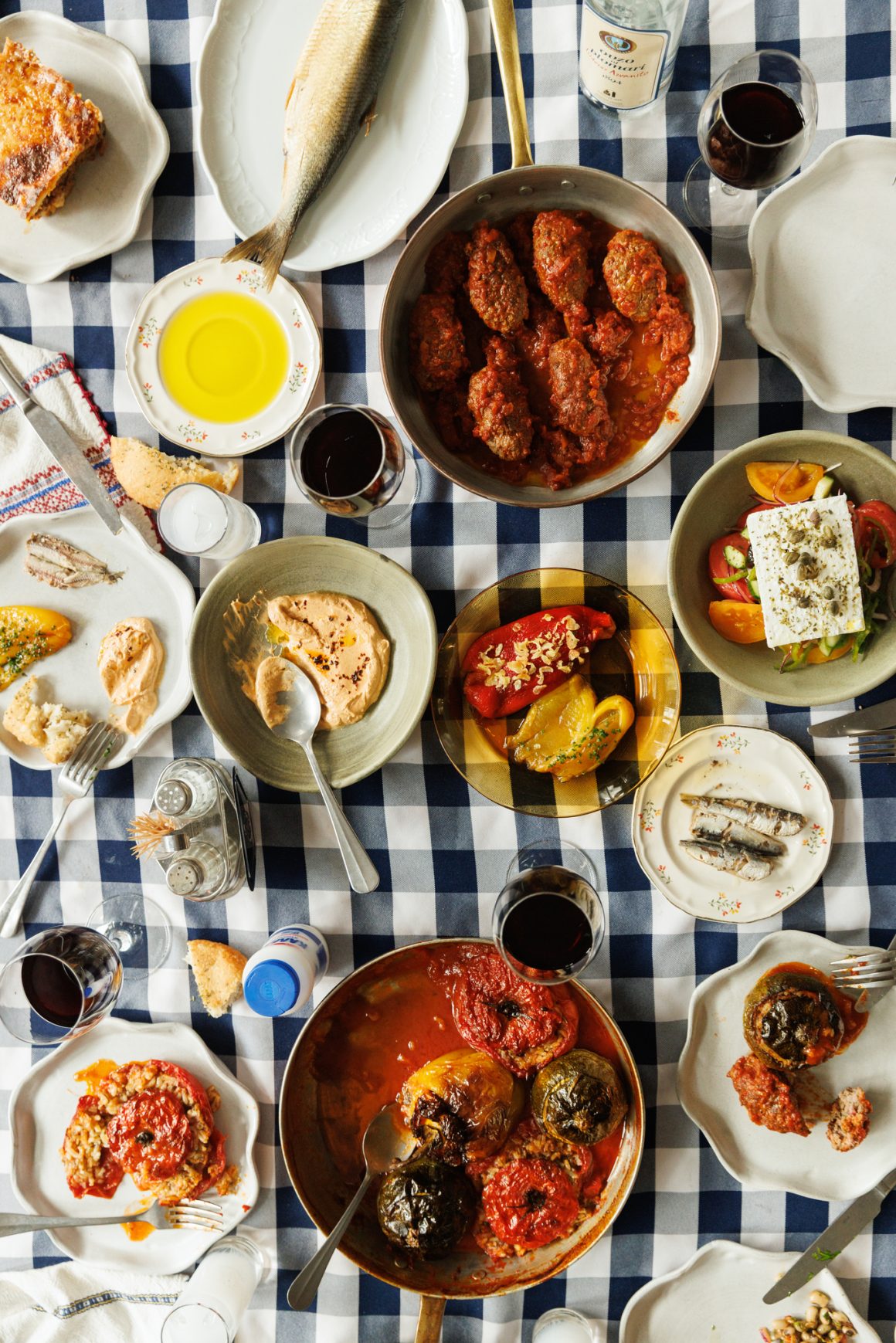
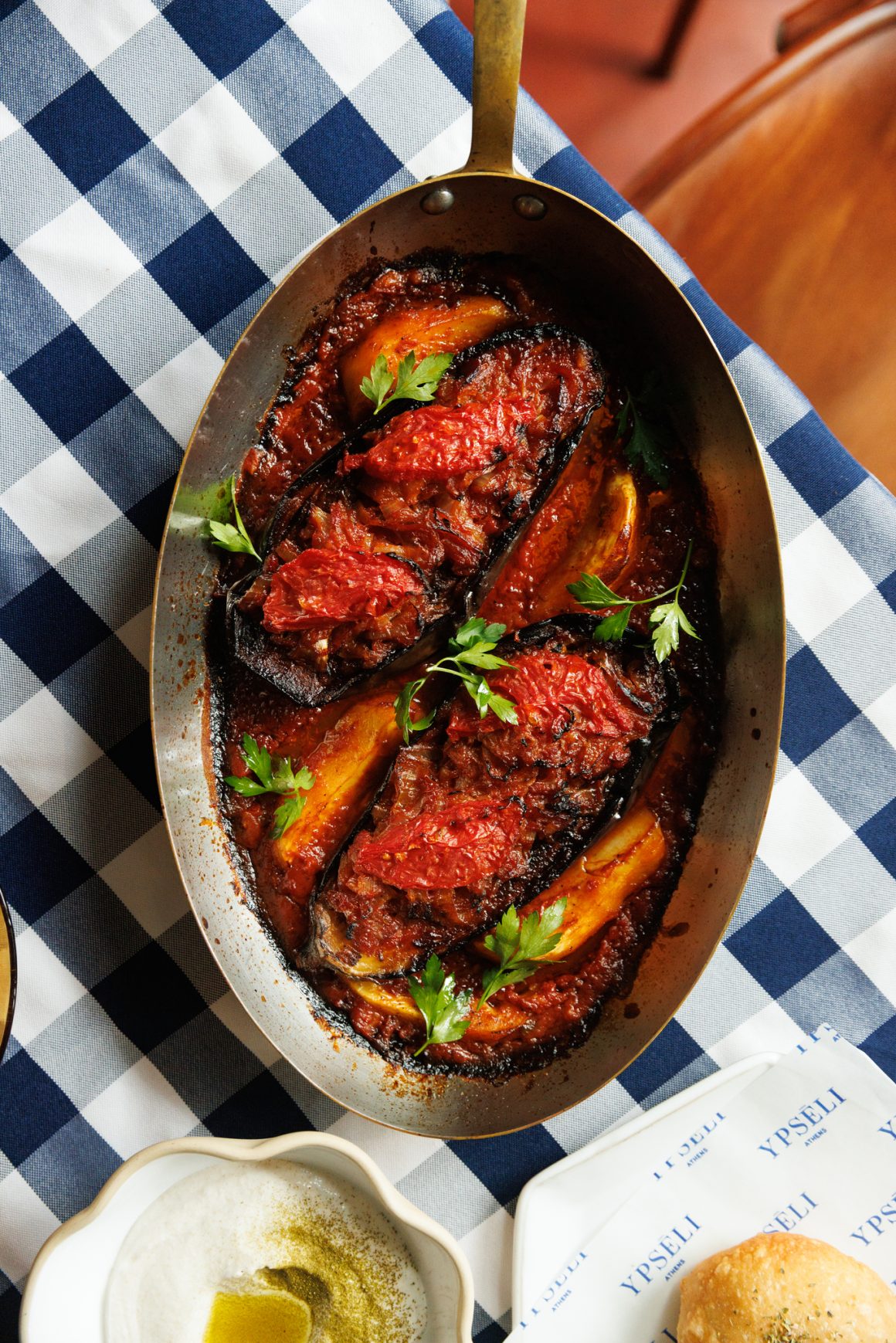
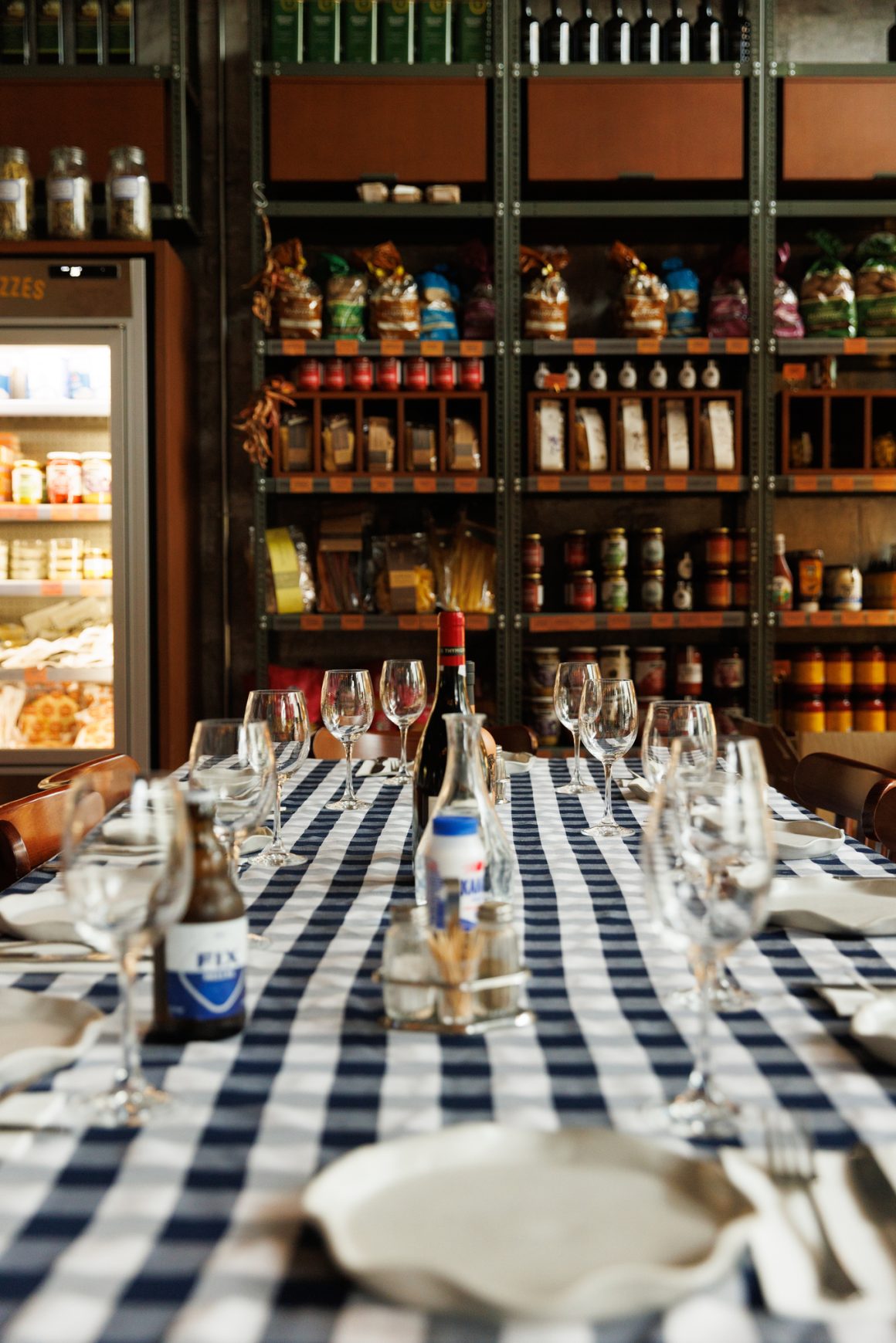
Checked tablecloths, taverna chairs and an easy-going atmosphere set the scene for plenty of mezzés, as well as slow-cooked dishes inherited from Symeon’s mother.
There is no spectacular décor or design statement here: the walls are lined with olive oils, honeys, artisanal cured meats and oregano.
It feels a little like eating in a Greek Ali Baba’s cave; fittingly, Supergrec is housed within the grocery store.
The idea came from a simple desire. Delphine dreamed of finding in Paris what she loves so much in Greece: joyful tables, generous food, reasonable prices and an atmosphere where you immediately feel at home.
The promise: eat well for less and have a good time
Symeon and Delphine set themselves the challenge of offering quality cuisine at friendly prices in the heart of Paris. To make it happen, they designed a simple, clever model.
Products are sourced directly in Greece from carefully selected producers, without ever compromising on quality. The result: generous mezzés, lovingly slow-cooked dishes and a gentle bill.
Symeon takes us back to the very beginning, unfolding the story from its origins…
To begin with, tell us about the highlights of your journey. What have been the key milestones that brought you to where you are today?
In 2001, I enrolled at the School of Tourism Studies in Thessaloniki. 2003 was the most significant year, as the school sent me to France for an internship. I ended up staying in Paris and was fortunate enough to work alongside some of the greatest chefs. In 2008, I met a French woman whose grandmother was from Thessaloniki. She would become my business partner and, later, my wife. Together, we founded a catering company that went on to achieve great success. Then Covid hit, and we decided to travel around Greece, seeking out producers and winemakers for what would eventually become our restaurant. It took us five whole years to turn the initial idea into reality. On 21 February 2025, we opened YPSELI.
You have created your own culinary destination in Paris, with a distinctly Greek identity. What is the story behind YPSELI, and how has it evolved over the years?
It was born almost by accident, thanks to Covid. It was something we had wanted to do for a long time, but we had always hesitated, afraid to take on such an ambitious venture. When Covid came along, we had no other choice. We had lost our previous company, so we had to take risks and start over.
What does your latest venture, the Supergrec taverna, bring to the table, and what is the philosophy behind this bold undertaking?
We are not trying to offer anything new. Instead, we are bringing back memories and traditions that are gradually disappearing. How many bakalotavernes – traditional Greek grocery stores that also served as tavernas – still exist in Greece today? In the old days, people didn’t have much money, but they would still go out for a glass of wine at a local taverna. That is precisely our philosophy: to go out, enjoy yourself and not have to spend a fortune. This is both our philosophy and our response to the way the market works today.
The space evokes Greece in every corner. How did you manage to achieve this, and how easy was it to bring such a distinctly Greek atmosphere to Paris?
Very easy! If you love Greece, if you carry it in your heart and deep within you, then Greece will naturally shine through.
Of course, we worked hard to express our Greek identity without falling into clichés. That was the great challenge we set ourselves, together with our architect, Manos Babounis of TRAIL PRACTICE. It took us two years to develop the design, along with countless trips back and forth between Paris and Athens.
How has the public responded? Do Parisians come specifically to discover Greek cuisine, or do you also attract visitors looking for something different and off the beaten track?
First of all, Greek cuisine is not considered something alternative by Parisians, nor even ethnic, as one might expect given that it comes from another country. It is a familiar cuisine: simple, rooted in excellent ingredients and demanding in its execution. It doesn’t take much to make a customer happy, but it does require hard work.
Are there Greeks living in Paris who regularly visit your restaurants, and how easy is it for a restaurant with a Greek identity to survive in the Parisian dining scene?
Greeks support us enormously. There isn’t a single day when we don’t have Greek customers at the restaurant. A Greek restaurant serving good food can thrive, just like any other restaurant. Being Greek is not a disadvantage in Paris; quite the opposite.
Which are your most popular dishes, and what distinctive flavours can guests discover on the menus of both YPSELI and Supergrec?
Our revithada (slow-cooked chickpea stew) is absolutely delicious, and we also make a wonderful bourdeto (traditional fish stew). And our almond paste dessert is reason enough to come and visit us!
How do you see yourself carving out your own path in gastronomy, and what would you consider your most significant achievements so far?
I am a man of action and live entirely in the present. I wouldn’t say I have any achievements to speak of, but I do have visions. Even so, what matters is the here and now, even if it takes me five years to turn a dream into reality.
Who and what helps you move forward? How easy is it to stand out in such a demanding industry?
My family and a handful of close friends, quite literally, people I can count on the fingers of one hand. Of course, connections also matter if you want to move forward. I often say that nothing is easy and nothing is difficult.
Is cooking and pastry-making an art of the heart, a process driven by emotion, or simply something that can be learned?
Both are true. However, when you truly love something, you naturally do it better.
Have you experimented with other culinary traditions? What else features in your spectrum of gastronomic interests?
I spent many years working with French cuisine, and I have a great love for Italian and Japanese food. I don’t experiment with flavours or cuisines; I prefer authentic tastes. What I do experiment with are techniques, always with the aim of perfecting a simple, traditional recipe.
Tell us a story you will never forget.
My first day in Paris. It was overwhelming. I had just arrived in a huge city, I have never been particularly good with directions, food was everywhere, and I had no idea which way to go. For a young chef, arriving in the mecca of gastronomy is quite a shock. You are dazzled. You want to explore every single street. I got lost, but I loved it. That very evening, I told myself that I would stay in Paris forever.
What else would you like to create? Do you have a dream project in mind?
I don’t have anything specific in mind. YPSELI was a dream of mine that came true, and for now, I am simply enjoying living that dream.
Who are the chefs closest to your heart, and why?
Giannis Loukakis, because he was among the first chefs to recognise that Greek cuisine is a true treasure. Joël Robuchon, because I learned so much working alongside him and because he was one of the most influential chefs in the world. And Iñaki Aizpitarte, because he is one of the pillars of bistronomie.
Are we what we choose?
Absolutely. It is quite obvious. If, for instance, you choose to follow a light and balanced diet, your body will reflect that choice.
What was the last thing you bought, and why did you choose it?
Over the past few years, I have realised that I buy very few things. I simply replace or update what I already own. I have very specific requirements and now know exactly what I need. I am very particular about anything I buy or choose, and I find great joy in having fewer things, provided they are good ones.
What is the best book you have read recently? What kind of question is that?
The book I wrote, titled YPSELI, which has also been translated into English under the title GASTROTAVERNA. This book is the alter ego of YPSELI. All our journeys, adventures and cooking experiences are captured in its 328 pages, and it smells wonderfully of Greece.
What is one object you would never want to part with?
My comb and my glasses. Even if war broke out, I would need them! The truth is that I don’t form attachments to objects. I am very sensitive to beautiful things and love them, but I don’t become attached to them.
Three places you love returning to, and why.
Donousa, because it still holds something of the Cyclades of the 1960s. London, because it is a great source of inspiration and energy. Interestingly, its lifestyle is the very opposite of the Mediterranean way of life. And Thessaloniki, because it is the birthplace of the gastrotaverna.
Can creativity, in a broader sense, be a path towards becoming better human beings?
I don’t think so. There are many highly creative people in the world who are not particularly good people. Of course, this is not an absolute rule. A creative person can be a wonderful human being, but let’s not forget that creative people are rare creatures, and not necessarily the easiest people to deal with.
How would you define beauty?
Cartier once conducted extensive research in an attempt to define beauty, and even they struggled to reach a clear conclusion. I believe it is impossible to define beauty. To me, anything in its untouched, original state is beautiful. But if we intervene to make it more beautiful, what does more beautiful actually mean, and who gets to decide? Is there some kind of scale?
What do you consider authentic in today’s world?
Authenticity has become increasingly rare and, consequently, expensive. It has even turned into a marketing product. What a shame… To me, anything intangible is authentic and has true value.