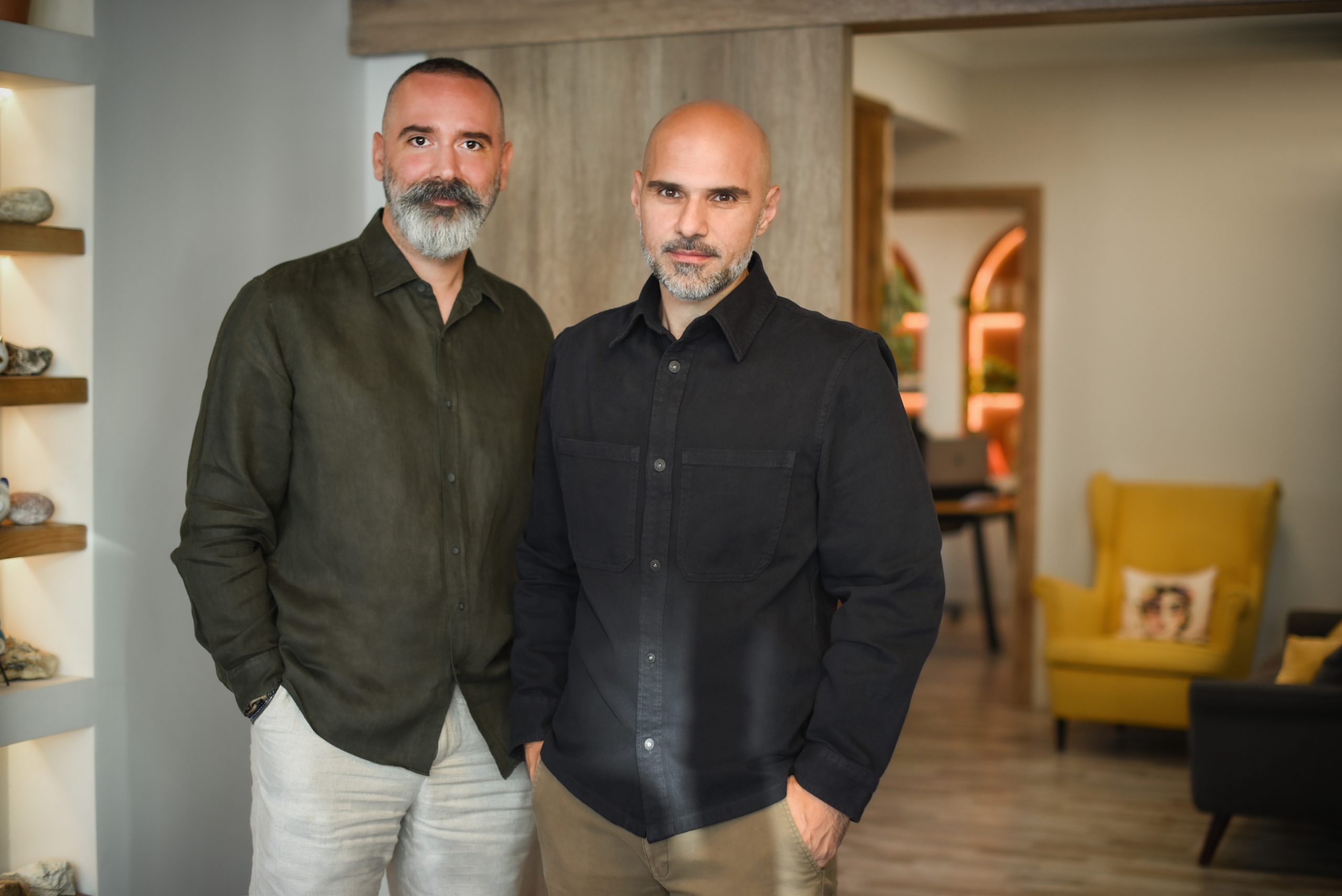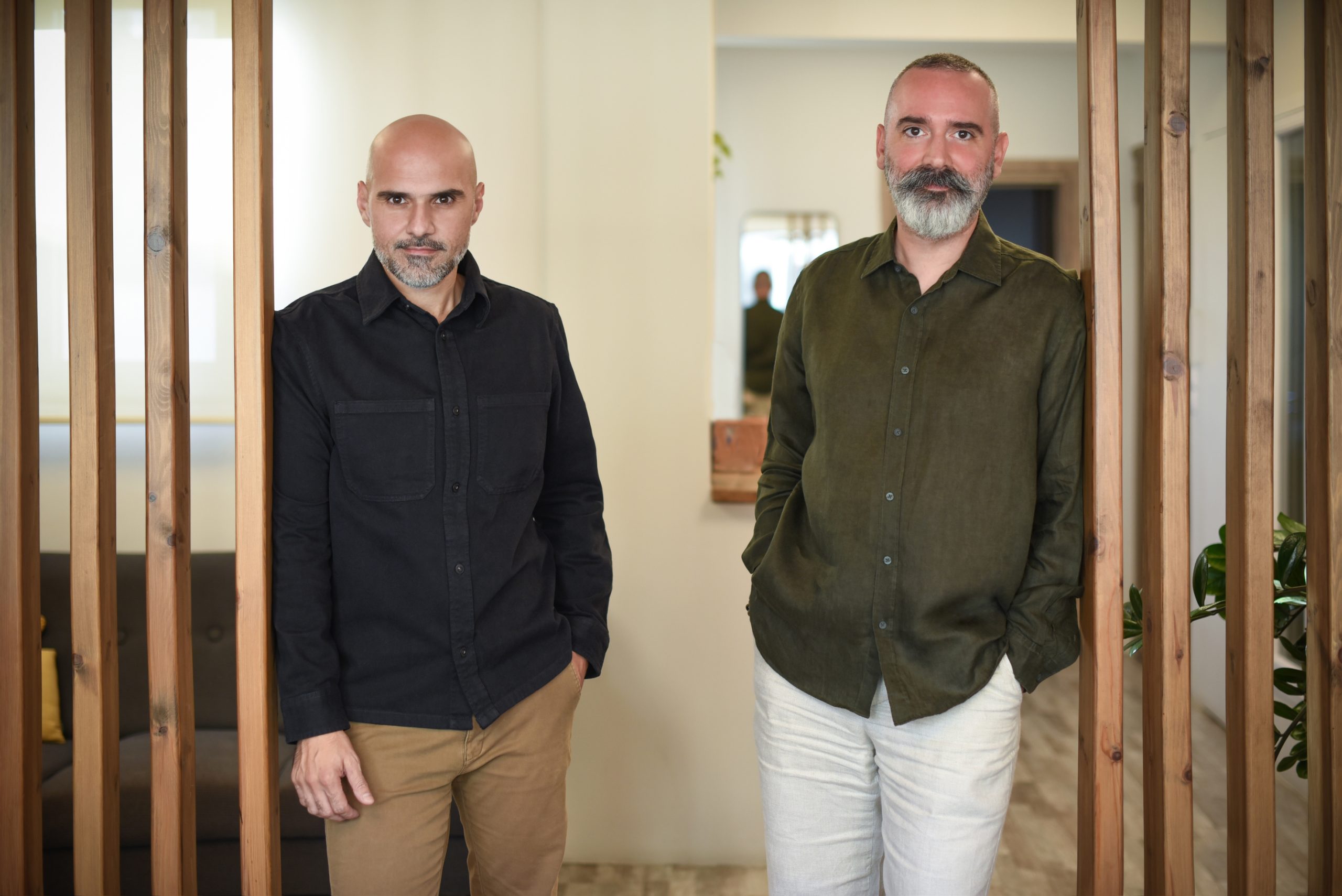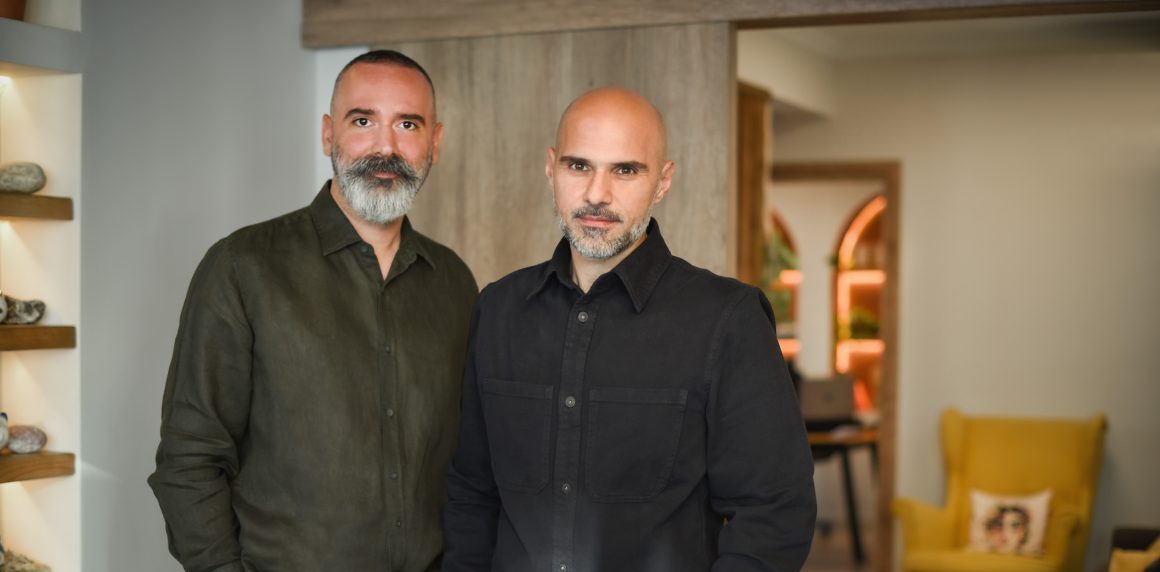
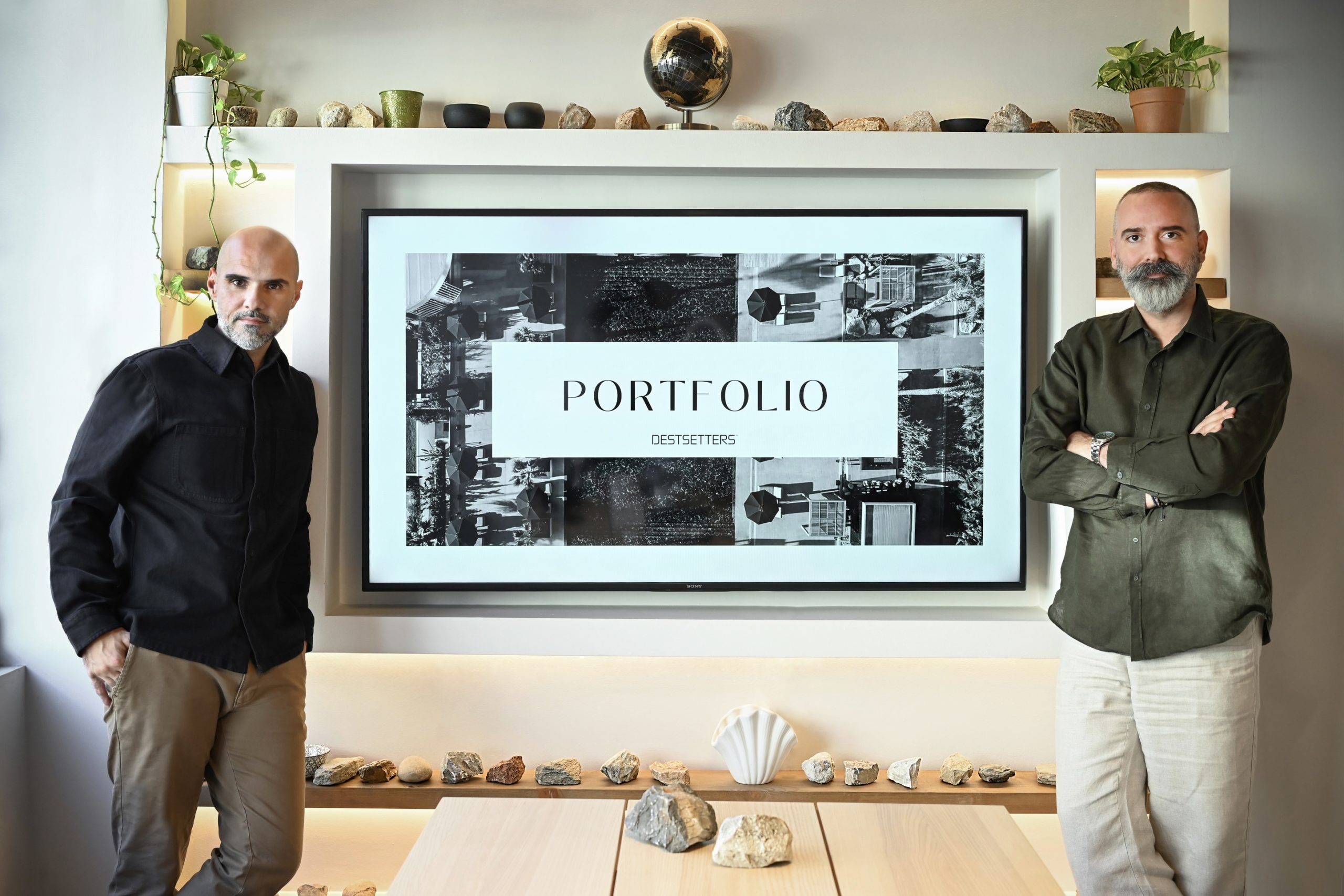
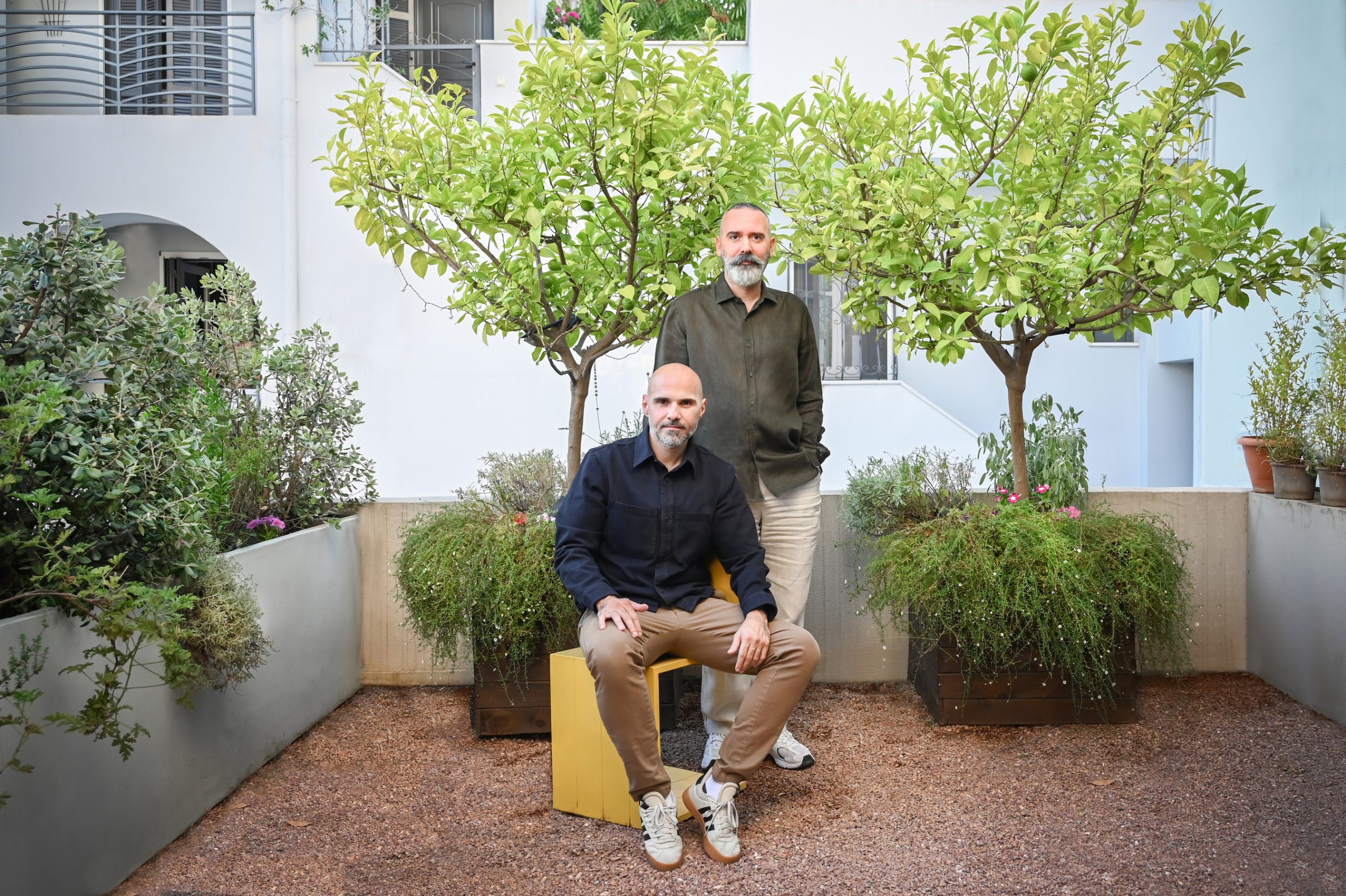
Nikos S. Morantis and Zenios Zeniou, the founders of Destsetters, share with The Authentics the values that guide one of the most specialised brands in the development of new hotel investments. They bring the human dimension of the process into focus, highlighting the importance of teamwork, shared values and a conscious approach to business — elements which, combined with expertise, contribute to the creation of truly successful hospitality concepts.
As the founders of Destsetters, each with your own distinct background and professional journey, what have been the defining highlights and experiences that brought you to where you are today?
Nikos: Perhaps the answer is somewhat unexpected, as we founded Destsetters when I was just 24 and Zenios was 26. In many ways, the company’s own journey has become a significant part of our professional background. We came to know the hotel industry from the inside, through hands-on experience in different areas, from sales and marketing to branding and operations.
The timing was particularly fortunate. Established hoteliers trusted us with important projects from the very beginning, while the period in which we entered the industry coincided with an era of profound transformation. We grew professionally at a time when almost everything was changing, from hotel distribution and marketing channels to hospitality technologies and the way hotels were managed and operated.
Zenios: Nikos’s studies in marketing and my own background in cultural studies gave us the opportunity to combine different perspectives and recognise the changes taking place in the global hospitality market. After almost 16 years in the industry, we have developed substantial, in-depth knowledge and are delighted to contribute to shaping the next generation of hotels in Greece and, increasingly, in Cyprus.
It is also worth mentioning that our experience has been enriched through our involvement in other ventures, such as Hotelier Academy and 100% Hotel Show. These projects have broadened our understanding of both the development and the day-to-day operation of a hotel.
What is the story behind the creation of Destsetters? How did the idea first emerge, what was your original vision, and how has it evolved over time?
Nikos: The initial idea was to help hoteliers reach dynamic travel markets by making the most of all the marketing channels available to them. As we progressed, however, we realised that although many hotels were beautiful and newly built, there was often a gap between their initial specifications and their actual implementation.
Zenios: Sometimes essential operational and back-of-house areas were missing; in other cases, room categories lacked a clear hierarchy. Quite often, there was also no distinctive story or narrative that would give a hotel its own identity and set it apart. This led Nikos and me to develop a service focused on the strategic planning and specification of new hotel investments, positioning ourselves at the very beginning of the process and providing each project with a clear strategic direction from the outset.
A pioneering concept, unique in its field, Destsetters has established itself in premium hospitality consultancy. What are the main areas you specialise in, and what sets you apart?
Zenios: Our consultancy covers the strategic development of a hotel investment from its earliest stages: from market and competition analysis, as well as assessing the potential of a site, to defining the appropriate typology, concept, operational structure and guest experience.
What I believe sets us apart is that we never approach a hotel solely from an aesthetic or technical perspective. We seek to bring together all the elements required to create a property with a meaningful identity, one that functions efficiently while offering something genuinely distinctive to the people who choose to stay there.
Nikos: An equally important part of our work is the owner and their vision. We believe the owner is the most important client of the hotel we are creating. That is why we want the final result to genuinely reflect what they envision and the values they wish the property to represent.
Perhaps most importantly, we establish a common framework for everyone involved in a project: architects, interior designers, consultants, chefs and every other collaborator. We want everyone to be on the same page, working towards a shared vision and direction. Because a hotel is never the work of one person; it is always a collective effort.
Could you share an example that would help us better understand how your consultancy works and how the strategy you propose shapes the fundamental direction of a hospitality project?
Nikos: Perhaps the best way to answer this question is through a real project we are currently developing. More specifically, it is a wonderful project in Vasilikos, Zakynthos, involving an existing building that is being transformed into a hotel. The owners initially envisioned a good-quality three-star boutique property. We began by seeking a deeper understanding of the destination: how travellers move around the area, what the surrounding environment offers, and what possibilities and limitations the existing building presented.
What we discovered was that Vasilikos is a particularly special and protected part of Zakynthos. Many visitors explore the area, but do not necessarily choose it as their base for a stay. We therefore asked ourselves what could encourage them to remain there and experience the destination more meaningfully.
Taking into account the location and the building’s potential, we proposed a change of direction: transforming the initial concept into a five-star hotel with comprehensive services, capable of positioning itself within the island’s premium hospitality market and becoming a destination in its own right.
For the owner, it was essential that the hotel express his love for Zakynthos and the values of the place. Living in the United States, he wanted the project to maintain a meaningful connection with his homeland. We therefore felt that creating another conventional five-star hotel would not do justice to the vision. Instead, we developed the idea of a form of luxury inspired by Zakynthos’s agricultural heritage, complemented by wellness experiences integrated into the property’s gardens.
Zenios: The architectural and interior design studio Stones and Walls, together with Afroditi Bonatsou and her team, played a decisive role in this journey, having recommended us for the project. Working alongside such a talented creative practice helped the vision take on a more complete form and translate into the spaces and the overall guest experience.
At the same time, we developed a narrative that accompanies guests throughout their stay, connecting them with nature and the identity of the destination. The Caretta caretta sea turtle, one of Zakynthos’s most recognisable symbols, inspired us to explore the idea of reconnecting with nature.
This is how a truly distinctive vision came to life. We cannot reveal the hotel’s name just yet, but we believe that very soon it will become another compelling reason to visit Zakynthos.
What are the key ingredients of a hospitality concept that, with your guidance, can become its strongest assets? How can an ordinary project be elevated to achieve lasting value? And how does a good idea translate into a truly unique experience?
Nikos: I would begin with a clarification: for us, there are no mediocre projects. There are investments of different scales and categories — budget, mid-range or premium — and each should aspire to be outstanding within its own segment. A simple project is not necessarily an average one; it can have a clear identity and offer a meaningful experience.
To understand what can make a property stand out, we first need to establish what we are creating and for whom. Who is the owner? What is their vision? Which guests do they want to attract, and what kind of operation are they willing and able to support? We also examine the market, the destination and the property’s potential. By bringing all these elements together, we can identify the features that have the potential to become genuine competitive advantages for each individual project.
Zenios: The operational aspect, however, is just as important as the concept itself. A project with ambitious aspirations requires an owner who is both willing and able to support it. Equally, a simpler property can stand out when its choices are carefully considered and serve a clear purpose. Not every project needs to be complex; it needs to be right for its owner, its guests and the category it belongs to.
In a premium property, for example, the concept needs to be reflected throughout the entire product: in the design and organisation of the spaces, the team’s operational approach, the services, the distinctive facilities and the experiences on offer. When all these elements come together consistently, an idea becomes something guests can actually experience and remember. This is how a property develops its own identity and a distinctive reason to be chosen, creating value that can stand the test of time.
There is a sense that luxury hospitality tends to follow specific directions, resulting in properties with an almost identical aesthetic and shared visual language. Is this really the case? How often do we see hotels with a truly distinctive character and one-of-a-kind experiences? Does this difference depend on the people behind them, or can it be built through the right guidance?
Zenios: I believe this tendency does exist. In recent years, luxury has often become associated with a particular aesthetic language: earthy tones, boho elements, a serene ambience and a strong emphasis on privacy. Some of these choices can be excellent. However, when they are repeated from one property to another, they inevitably begin to create a sense of uniformity. We see this quite clearly in Greece, where certain aesthetic trends quickly move from luxury properties into more conventional hotel categories.
For us, however, luxury is not defined by a particular aesthetic. It lies in the experience itself and in how closely it responds to what you are looking for. It could be a vibrant space with bold colours and a lively social atmosphere, where you can meet people and feel part of the action. It could be a traditional guesthouse offering breakfast rooted in local flavours and customs. Or it could be a wellness retreat where time spent in the garden, a sense of tranquillity and small daily rituals allow you to disconnect. Each offers a different expression of luxury, provided its experience has meaning and character.
Nikos: Nevertheless, there are indeed properties in Greece with distinctive identities and one-of-a-kind experiences, although we believe there should be many more. Creating something truly individual begins with the vision and personality of the people behind the project. These qualities, however, are not enough on their own. We need to understand whom we want to welcome and what we want to offer them, and then translate that vision into the spaces, services, operations and every point of contact with the guest.
This is where Destsetters can make a difference through the right guidance: helping transform an initial vision into a complete, cohesive experience in which every element is connected and expresses the same identity. In this way, uniqueness goes beyond an impressive visual statement; it becomes something guests experience, remember and associate with that particular property.
A guest’s overall impression of a hotel stay is shaped by many different aspects. How easy is it to maintain complete control over the smooth running of every operation? Which areas are most important for guest satisfaction, and what are travellers looking for most today?
Zenios: The hotel experience is not shaped by a single moment. It begins before guests even arrive: with the name, photographs and descriptions they encounter across booking channels, as well as the promise the property makes to them. It continues with the first interaction and check-in, through the spaces, services, attentiveness of the staff and every detail of the stay. It is only complete once guests return home and reflect on what they have experienced.
This is why maintaining absolute control over every touchpoint is difficult. A hotel involves numerous teams and different areas of expertise, and the overall experience depends on how effectively they work together. What can be achieved, however, is a shared direction that brings them all together: ensuring that the hotel’s promise is consistently reflected in what guests see and experience. This needs to be carefully considered from the outset, so that the spaces, services, operations and attitude of the team all serve the same vision.
Nikos: This is also where Destsetters comes in. We provide the strategic foundation and the overall perspective that enable the different professionals involved to work with a shared understanding of the project. We do not look at an individual space, service or department in isolation; we consider how all these elements come together to shape the entire stay.
Today, travellers are not all looking for the same things. What matters to us is understanding who the hotel is being created for and offering an experience that responds to what those guests are seeking: one that is consistent, thoughtful and distinctive. Ultimately, satisfaction does not depend on a single element, but on whether the entire stay lives up to the promise made from the very beginning.
The idea of a distinctive hospitality experience is becoming increasingly valuable, serving as an important incentive for today’s travellers. What are some of your own achievements in this field? What original concepts have you proposed, and how have they been brought to life?
Nikos: When people ask us what distinctive ideas we have proposed and implemented in a hotel, they often expect to hear about something particularly impressive or unconventional. Our approach, however, is primarily strategic. We seek to shape a complete operational structure and guest experience, ensuring consistency across every aspect of the property. Not every original idea needs to be unusual or complex. It simply needs to make sense for that particular hotel and be implemented effectively.
Zenios: We can, however, share an example: Alkima Athens, a small hotel we worked on in Psyrri. The owner had a personal connection with fitness and, given the hotel’s intimate scale and the fact that competing properties did not offer anything similar, we recognised an opportunity to build the guest experience around this concept.
The idea was subtly incorporated into both the design and the stay itself. The bedside light fixtures evoke gymnastic rings, while the rooms feature designer weights and in-room screen content offering workout programmes. In this way, the concept went beyond a decorative theme and became an experience guests could genuinely engage with.
Tell us the story behind one of the most distinctive projects you have undertaken.
Zenios: One particularly special project for us is Koia Resort in Kos. Its starting point was the Hippocratic philosophy associated with the island and the question of how it could be translated into a contemporary wellness experience.
We did not want to create a themed hotel with literal references to Hippocrates at every turn. Instead, we chose to incorporate a number of subtle elements, such as the Hippocratic Gardens and the Elixir Bar, inspired by Hippocrates’ elixirs. These are symbolic touches that add depth to the experience without imposing a theme on the guest.
Building on this Hippocratic narrative, the property also embraced the broader concept of wellbeing, placing particular emphasis on the spa experience and a culinary offering closely connected to wellness.
Nikos: This is precisely what makes the project distinctive: you find yourself in a luxury resort that is not themed, yet gives you the opportunity to connect with an important historical figure and the heritage of the destination in a subtle, contemporary way. This vision would not have been possible without the emblematic architecture and thoughtful landscape design developed by Elias Mastrominas, one of the most distinguished architects specialising in hospitality projects.
Hospitality in Greece has remarkable potential. Are investors willing to think beyond the conventional and invest in concepts that may not offer the greatest sense of security but hold considerable promise? Are there entrepreneurs prepared to take risks, and how do you earn their trust?
Nikos: I consider hoteliers to be among the most admirable professional groups in Greece. In practice, a hotel operates like several businesses under one roof: accommodation, restaurants, bars, sales, technology, international partnerships and much more. People in this industry are expected to understand and manage an exceptionally wide range of activities.
We encounter entrepreneurs with vision, who are willing to think outside the box and explore new directions. To move forward, however, they need the right teams alongside them. I have often seen a strong initial vision become diluted because certain collaborators opt for the easiest solution for themselves.
Zenios: Our aim is to help entrepreneurs preserve their ambition while translating it into something that can be properly planned and implemented.
Nikos: Trust is built through this process. We listen to what the owner wants to create, understand the project’s possibilities and limitations, and work together to identify the right way forward.
What happens when an existing hotel needs rebranding and a complete makeover? Is it an easy undertaking?
Nikos: It is something we have encountered on several occasions. The first step is to understand what is worth preserving and what needs to change. If, for example, a hotel already has a solid infrastructure and well-designed spaces that we can build upon, we can focus more extensively on its identity and on how this identity can be reflected throughout the entire guest experience.
Zenios: Branding is about much more than a logo and a graphic identity. It is also about the way a hotel welcomes its guests, its spaces, signage, uniforms, services and all those small details that consistently communicate the same narrative.
For example, if a hotel expresses the idea of reconnecting with one’s roots, this could be reflected even in a welcome drink inspired by local flavours and presented in a distinctive way.
Nikos: Rebranding an existing hotel is more complex than developing a new property, because we need to take into account both what is already there and what existing guests have come to expect. It is certainly not impossible, though. With the right assessment and consistency throughout implementation, its identity and overall experience can be meaningfully transformed.
One of my favourite rebranding projects undertaken by Destsetters is undoubtedly Nauma Paros. Working alongside interior designer Dimitris Papanastasiou, we managed to shape one of the island’s most distinctive design-led hotels. Cycladic art became the central reference point for an out-of-the-box artistic experience, contributing to the creation of a truly distinctive brand.
What are the main objectives of the strategy you propose, and what are the non-negotiable values that underpin your work?
Nikos: Our strategic objective is to create a hotel with a clear reason for being and the ability to operate successfully. We want every decision concerning its typology, spaces, services and guest experience to be interconnected, to reflect the owner’s vision and to make sense for the guests it seeks to attract. At the same time, we want each project to have commercial potential and be viable in practice.
Among Destsetters’ core values, two stand out in particular: caring and ownership. We genuinely care about the entrepreneur and whether the project will succeed. And when you truly care, you take responsibility: you approach the project as if it were your own and stand behind it at every stage.
Zenios: We also want this attitude to extend to all the other teams involved. A project should never be treated merely as a technical process. When people genuinely care about the outcome and about those who will eventually experience it, this becomes apparent in the details. It can be reflected in something as simple as a properly made toast, prepared with genuine care rather than treated as just another routine obligation.
What has maturity brought to your work, and how differently do you approach projects today compared to when you first started?
Nikos: Sixteen years of experience have helped us better understand what is feasible and what requires more time or a different approach. Sometimes a team can become enthusiastic about too many ideas. Maturity, however, teaches you to recognise that it is better to start with two or three things, execute them exceptionally well and then gradually introduce the next ones.
At the same time, we have developed a much more holistic understanding of hotel development. We have been involved in every stage, from site selection and architectural planning to the development of individual spaces, such as kitchens and spas, and the organisation of operations in collaboration with chefs, kitchen teams and front-of-house staff. This experience allows us to understand how decisions made at each stage ultimately influence the overall guest experience.
Zenios: Our approach to work has also changed considerably. In the beginning, we were perhaps more concerned with making an impression. Today, our priority is to be meaningful and genuinely useful to each project and the people behind it.
What would you consider your most significant achievements?
Nikos: Our greatest achievement is having built a community of people with whom we share a common spirit. Our clients are entrepreneurs with vision, passion and optimism, who love what they do and genuinely care about the people they welcome.
This is a relationship we never take for granted. We have created an environment of trust in which we can collaborate meaningfully and feel that we are contributing to something of real value. For us, this is also closely connected to professional wellbeing: being happy to go to the office and knowing that we work with people who share the same aspirations.
Zenios: We would love to bring this community together more often. This is why we are planning an annual event where our clients can exchange ideas, ambitions and concerns. It is certainly one of the things we are looking forward to bringing to life!
What are your immediate plans for the future?
Nikos: One of our main objectives is to expand into international markets. We have already taken our first steps with two projects in Cyprus. Although it is geographically close to Greece, it is a different market, with its own rules and particular conditions. This experience has helped us venture beyond the familiar environment and gain our first international perspective.
Zenios: Our specialisation addresses a field that remains relatively uncommon internationally. We believe the methodology and expertise we have developed can bring value to other countries as well. We therefore want to explore new markets and engage with different cultures, drawing on the confidence that years of experience and our first projects outside Greece have given us.
What do you love about the industry you work in, and what do you find less appealing?
Zenios: We love being part of such a positive moment in someone’s life. Developing an investment often represents a dream, an ambition or the desire to create something of one’s own. It is both a great responsibility and a privilege to be able to contribute to that journey.
We also value the relationships we have built with our clients and collaborators. The communication and trust that develop through working together are among the aspects that give our work its particular meaning.
Nikos: We cannot really say that there is anything specific we dislike about our field. Even its challenges give us opportunities to grow. We have learned a great deal through them, and they are part of what makes our everyday work so distinctive. I know it may sound like a somewhat diplomatic answer, but it is genuinely how we feel!
What would your dream project be?
Nikos: We do not have one particular dream project, because every project represents someone else’s dream, and we believe each deserves the same level of commitment. Every case has different possibilities, different people and different challenges. We find them all equally interesting and approach each with the same sense of responsibility.
We often say that there is no such thing as a big or a small client. Every collaboration requires time, care and genuine involvement. Fees may vary according to the scale of a project, but the importance we attach to the work never changes.
Zenios: We could, however, talk about Destsetters’ own dream project: creating a business hub in a Greek countryside destination — a small community where our collaborators could come together and work in a setting closer to nature, alongside other creative teams. Although it may sound like an ambitious undertaking, it is one of our goals and, indeed, a personal dream we would love to realise.
Why should someone choose to place their trust in Destsetters?
Nikos: It all starts with our holistic approach and our specialisation. We have remained entirely focused on hotel investment planning and specification, which has allowed us to develop substantial expertise and build a rich and diverse portfolio.
Zenios: On a more personal level, once people get to know us, I believe entrepreneurs choose to trust us because they see that we genuinely care about the success of their investment. We do not approach a project as an isolated service. We work closely with the client, bringing together the knowledge required to support the development from different perspectives and at different stages.
Nikos: Trust is also closely connected to the way we work. We make an effort to understand the person behind each project, respect their vision and translate it into a direction that can be brought to life. When necessary, we are prepared to stand behind the decisions we believe will best serve the hotel.
For us, success is not simply about completing a study. It means seeing the hotel thrive, knowing that guests are enjoying a meaningful experience and that the investor feels they have created something that truly reflects who they are and can operate successfully.
What does authenticity mean to you today?
Nikos and Zenios: Authenticity is a word that is used so frequently nowadays that it sometimes risks losing its meaning. For us, being authentic means staying true to the personal meaning of your life and to your values.
This applies to both our personal and professional lives. A project is authentic when it genuinely reflects the people behind it, rather than simply following a trend or trying to imitate something else. It does not need to be impressive to be authentic. It needs to remain true to the beliefs and aspirations of the people who bring it to life.
Ultimately, authenticity means never having to compromise your values, desires and dreams in order to create something meaningful.
Photography: Olympia Krasagaki