Maria, tell us about the most significant milestones in your journey. What were the steps that brought you to where you are today?
My journey began with science. I studied Chemistry at King’s College London, followed by a postgraduate degree in Drug Discovery. Those were years of discipline, observation and patience, spent many hours in laboratories. And yet, when I returned home, I would paint almost every day.
The decision to pursue art professionally initially took me to Athens, where I held my first solo exhibition. New York came next. At the School of Visual Arts, I met artists who profoundly influenced the way I work to this day, people who taught me to trust the process more than the outcome. It was there that I began experimenting systematically with materials: plaster, fabric, found objects and colour. I also realised that Chemistry had not been left behind in London. I had brought it with me, not as a theory, but as a way of looking at and observing the world.
Since then, I have exhibited in the United States, Europe and Japan, with each exhibition becoming a different chapter in the same story. The further I go, the more clearly I see how the two sides of my journey speak to one another. Science taught me to ask how a material behaves and what emerges through its transformation. Art gave me the freedom to let the material answer in its own way, often taking me by surprise.
How did the initial idea of pursuing painting creatively come about, and how has it evolved over time?
I have been painting since I was very young, and I remember always finding something to make with my hands, wherever I happened to be. If there was no paper or paint available, a napkin would do. For me, it was as natural as speaking, which is perhaps why it took me so long to recognise it as something that could become a profession. For many years, it remained a personal necessity, something I kept alive alongside my studies and, later, my work.
The moment everything changed came one night in London. I woke up at around three in the morning and started painting. I did not stop until daybreak. When I finally looked up and saw the works spread out around me, I realised something I had probably known for a long time. This was not something I did in my spare time. This was my time, and I wanted to devote far more of it to painting than I had until then.
That decision transformed my daily life and, gradually, the way I worked. I began with painting, but little by little, the process itself opened up new possibilities. One material led me to another, a surface called for volume, and volume called for space. This is how I found myself working with plaster, fabric, found objects and even my own body through performance. To this day, I follow the possibilities that each work reveals along the way.
How do you feel your work and aesthetic are evolving?
In my early works, colour took centre stage. The compositions existed on the flat surface of the canvas, and that was where they ended. At a certain point, however, I began noticing something else: not what I was depicting, but what the material itself was doing as I worked. How plaster warms up and solidifies within minutes. How fabric holds its folds, almost as if it remembers them. How a surface changes character with every new layer I add. Once I began paying attention to these processes, I could no longer ignore them.
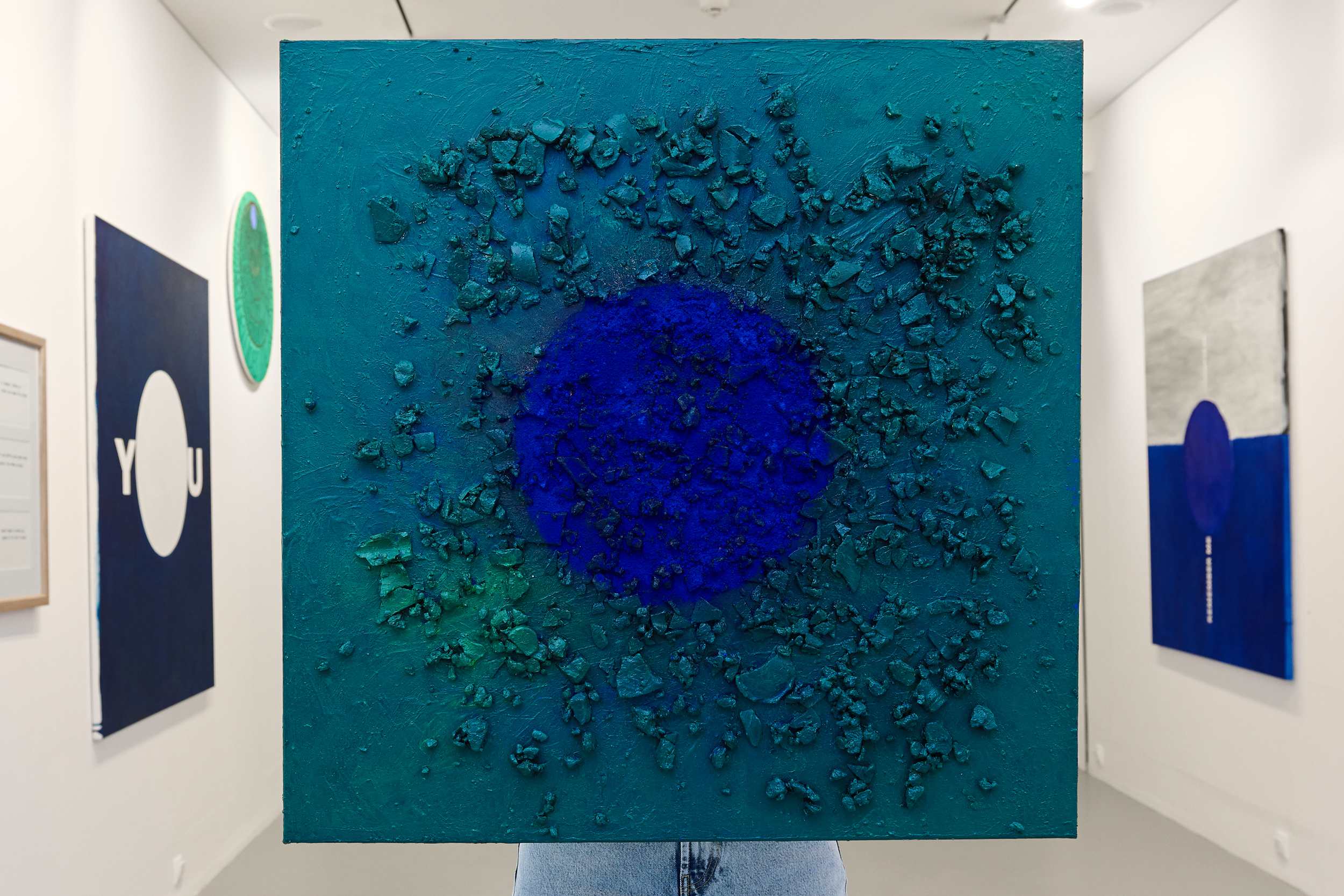
I think this is how my aesthetic evolves: not through decisions about how I want the works to look, but through what the materials allow me to discover. In my new series, I work with oil, acrylic, dry pigments, plaster, glass and silk — materials with entirely different properties. I bring them together and observe how they react to one another.
What interests me most is the moment when a transformation leaves its trace visible. A crack, a fold, a layer that does not entirely conceal the one beneath it. That trace often changes the course of the entire composition, and I follow where it leads. If anything has changed over the years, it is that I have learned to wait for it.
What do you consider your most significant achievements?
Taking part in the Royal Academy of Arts’ Summer Exhibition in London is one of the moments that stand out for me. So is the fact that my work has travelled to different countries and been presented in a wide variety of settings, from galleries and museums to public spaces.
The Art Acts 4 All initiative also holds a special place in my heart. Through it, I was able to bring artistic creation together with supporting people in need. I find it particularly meaningful that an artistic activity can create the conditions for a genuine human connection, and that people respond to it in ways that often surprise me.
I also think of writing and music, which emerged at different stages of my life and allowed me to express thoughts and emotions in other ways. On a personal level, my family remains the most important part of everything I have created.
What and who are the people and influences that help you move forward?
First and foremost, my own work. Stepping into my studio every day, the sense of calm I find there, the sound of birds coming through the window, and the way my works engage in a dialogue with one another, sometimes calling for continuity, at other times for a pause. Reading, science, music and the notes I keep, which often evolve into artworks themselves, also inspire me. They may be small things, but they are what keep me moving.
And then there are the people. My family, who provide the steady foundation that allows me to experiment so freely, as well as the people I have had the privilege of working with at different stages of my journey.
In New York, for instance, my mentor Gregory Coates, along with my time apprenticing with Donald Sheridan and Andrew Ginzel, were instrumental in my development. I found myself in an environment where I could observe different artistic practices at close quarters and explore my own ideas. Trying something new often gave me an intense sense of momentum. It could be challenging, pushing me beyond my limits, but with their encouragement, I dared to take that step, and each time it took me a little further.
I have come to appreciate the importance of this ongoing, everyday exchange. A question that emerges in a conversation can stay with you for a long time, eventually influencing the way you work. I am drawn to people who preserve that sense of curiosity and are willing to share what they know, because it is through encounters like these that I continue to learn.
What stories do your works tell, and what can we expect to discover in your new exhibition?
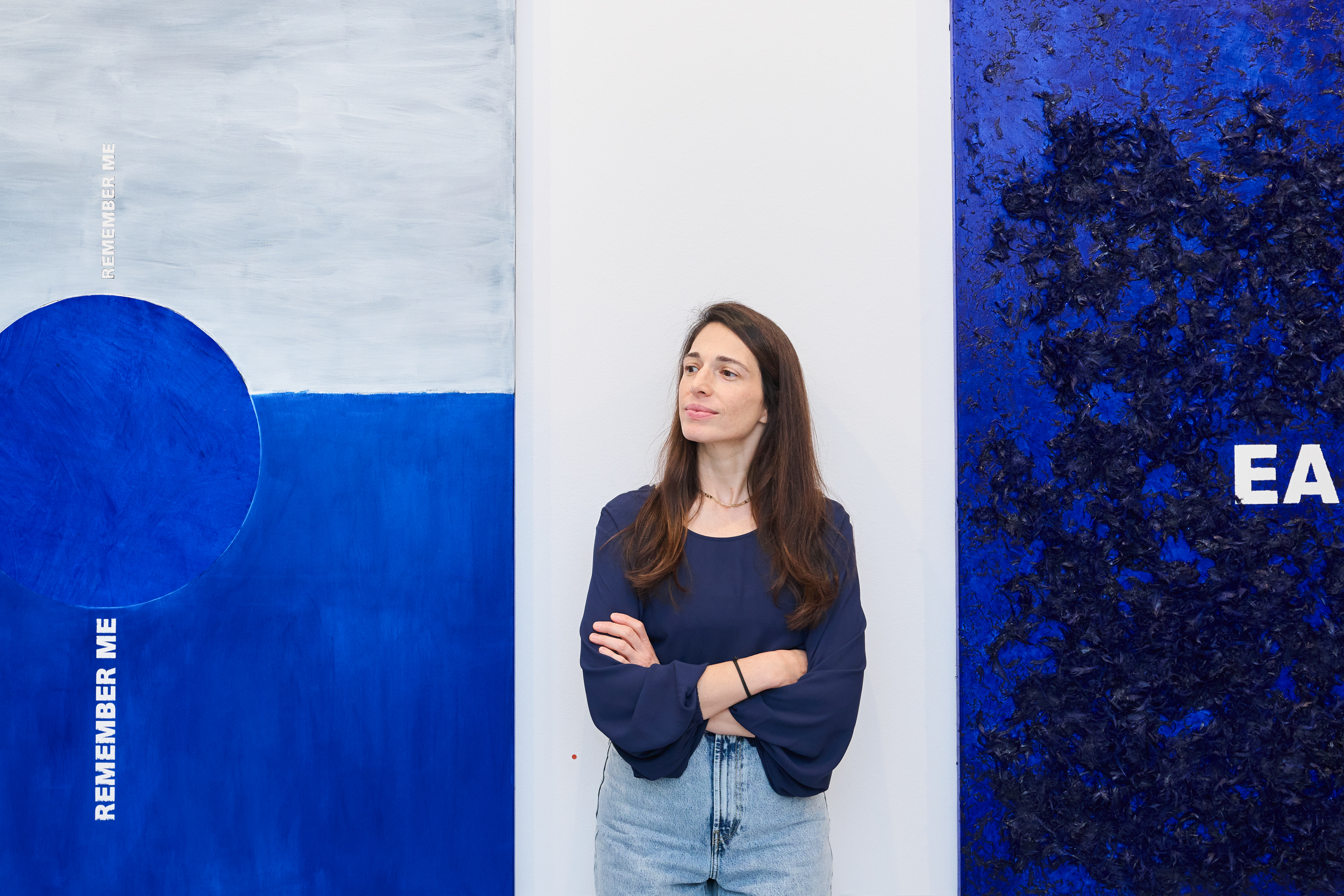
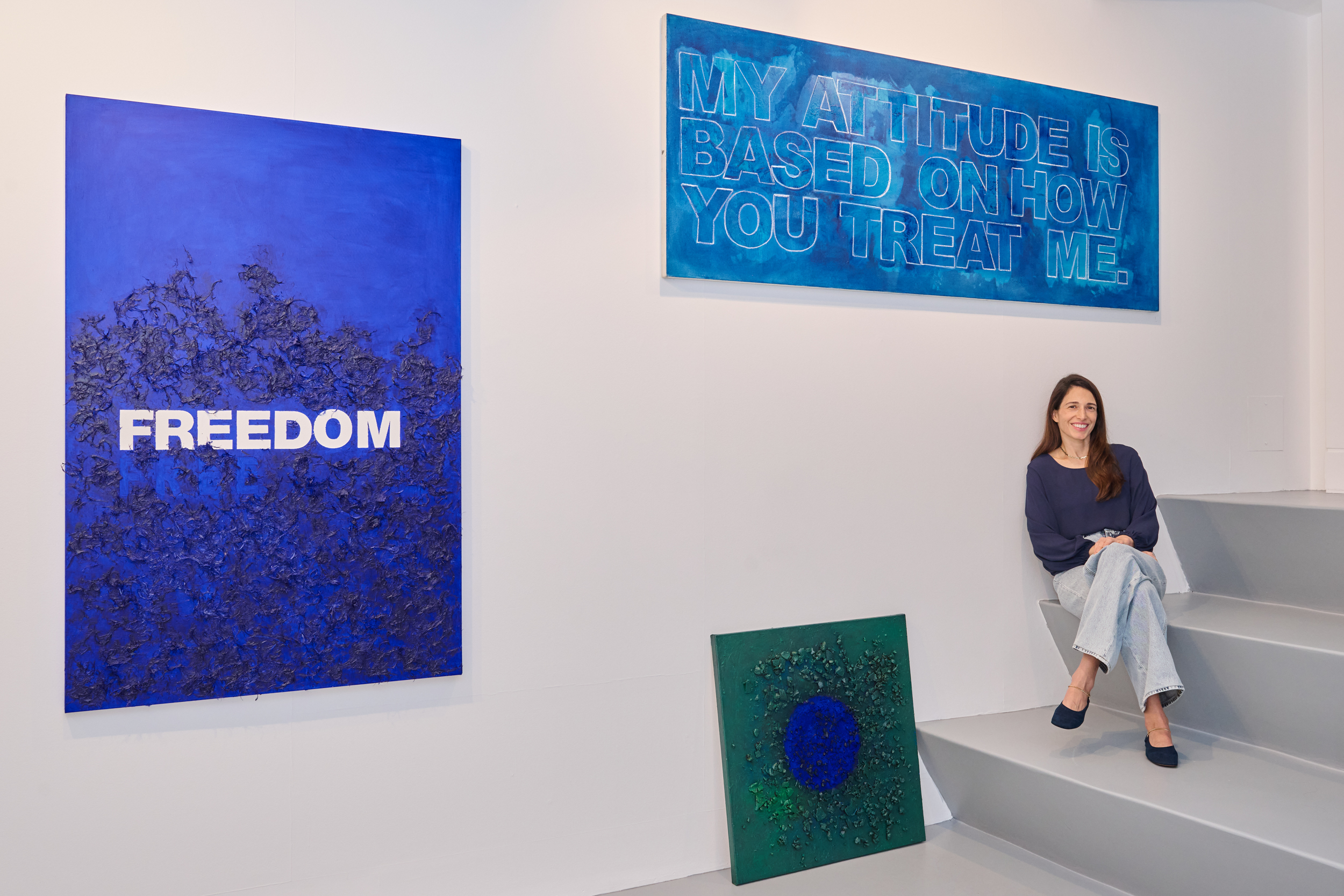
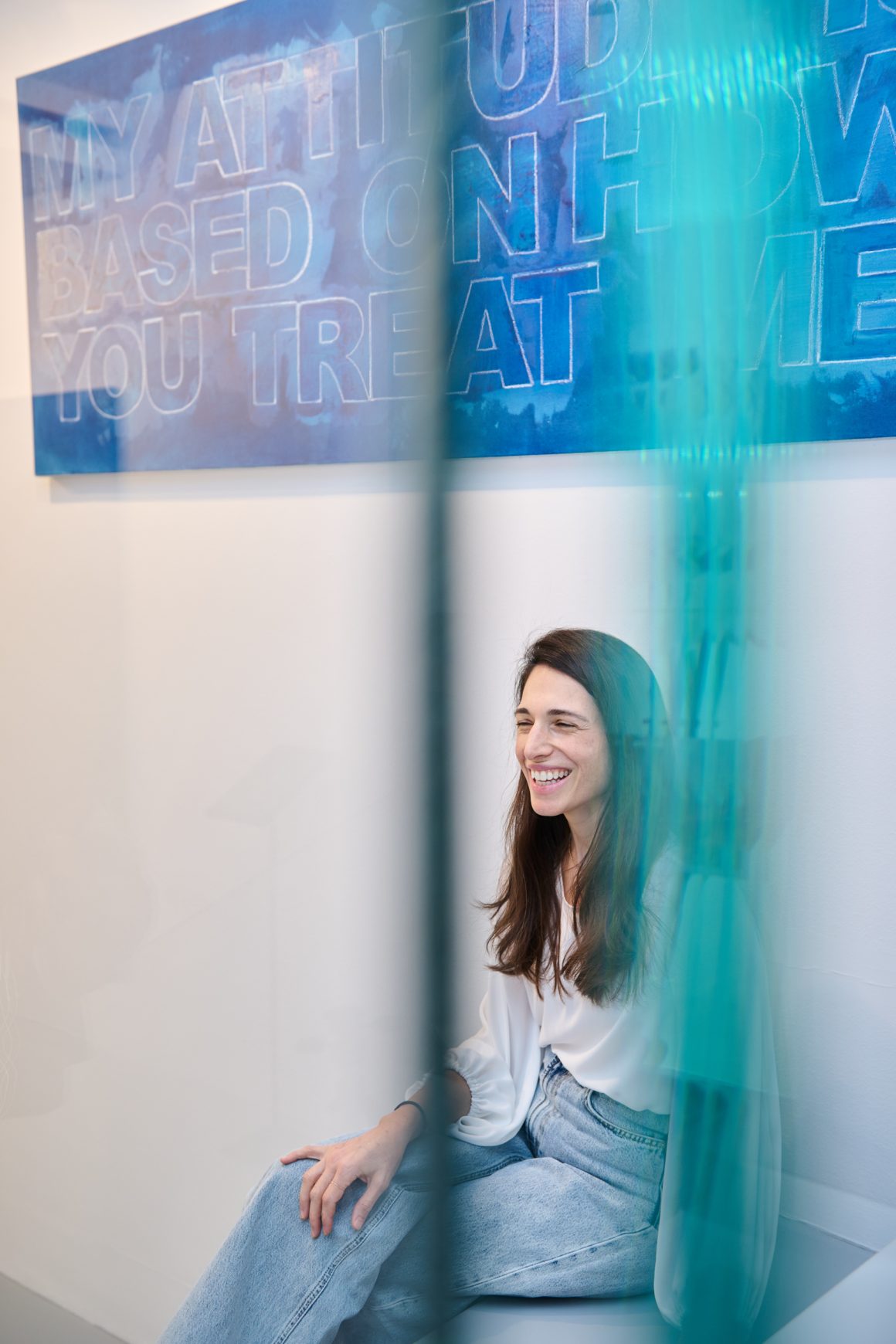
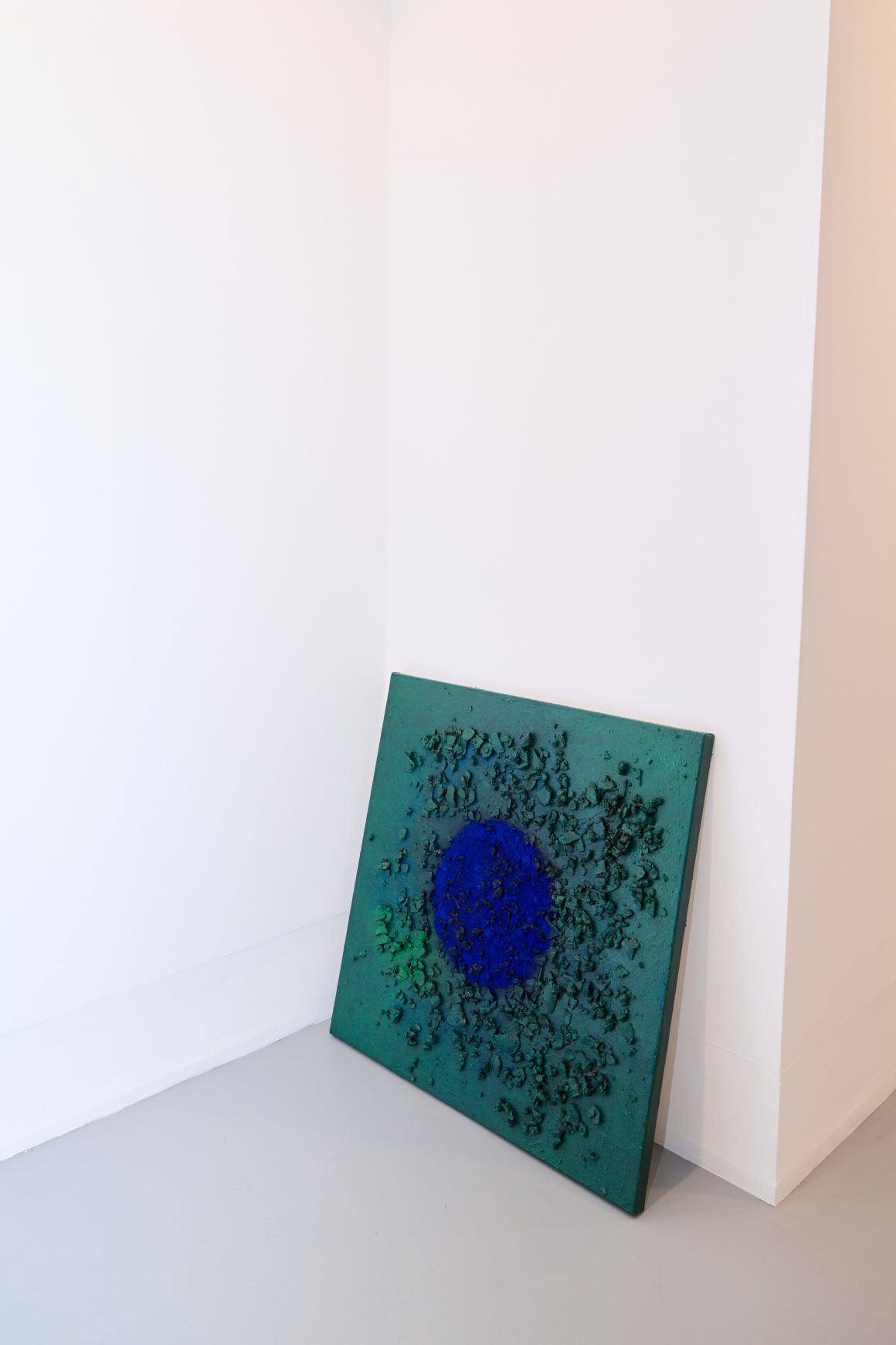
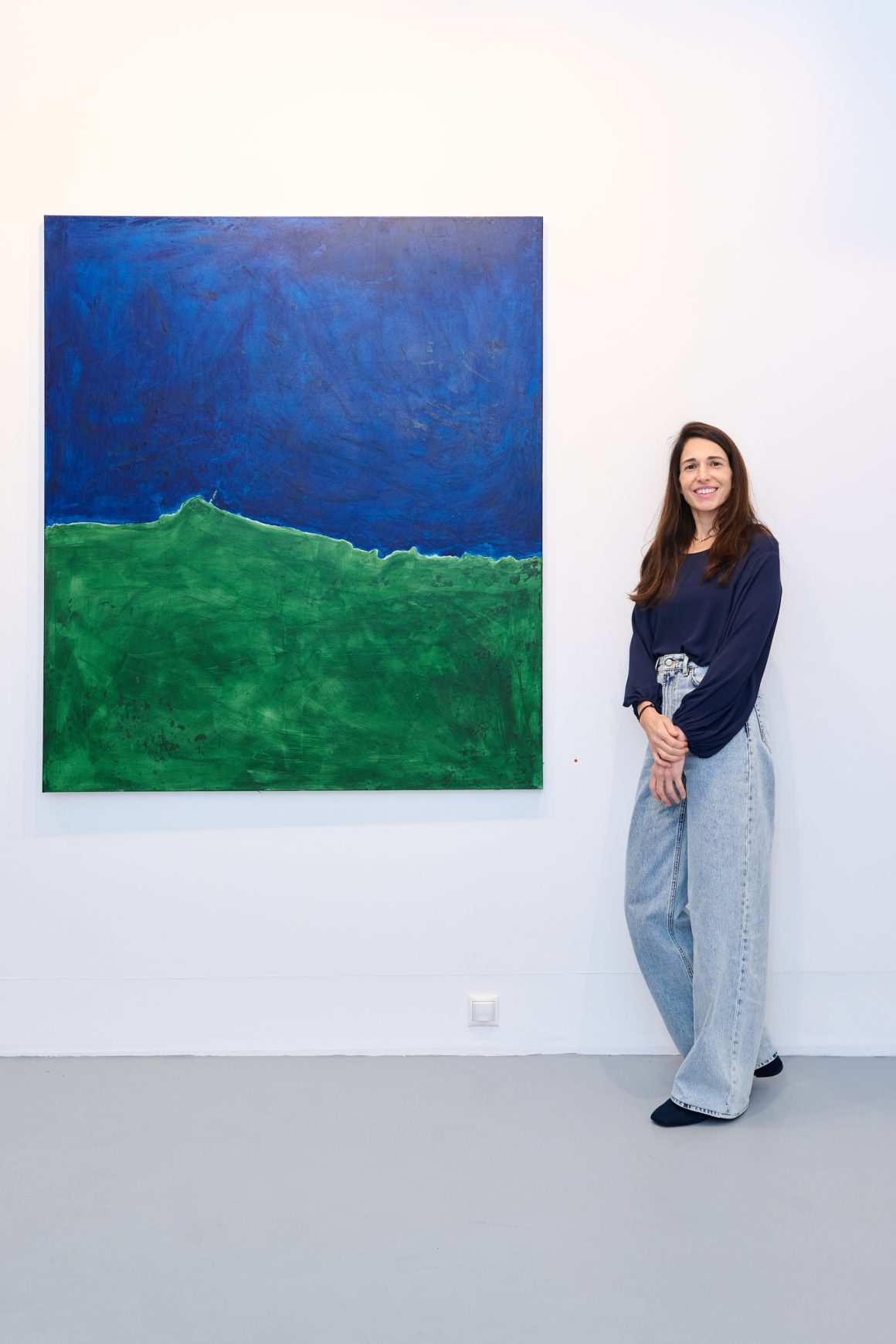
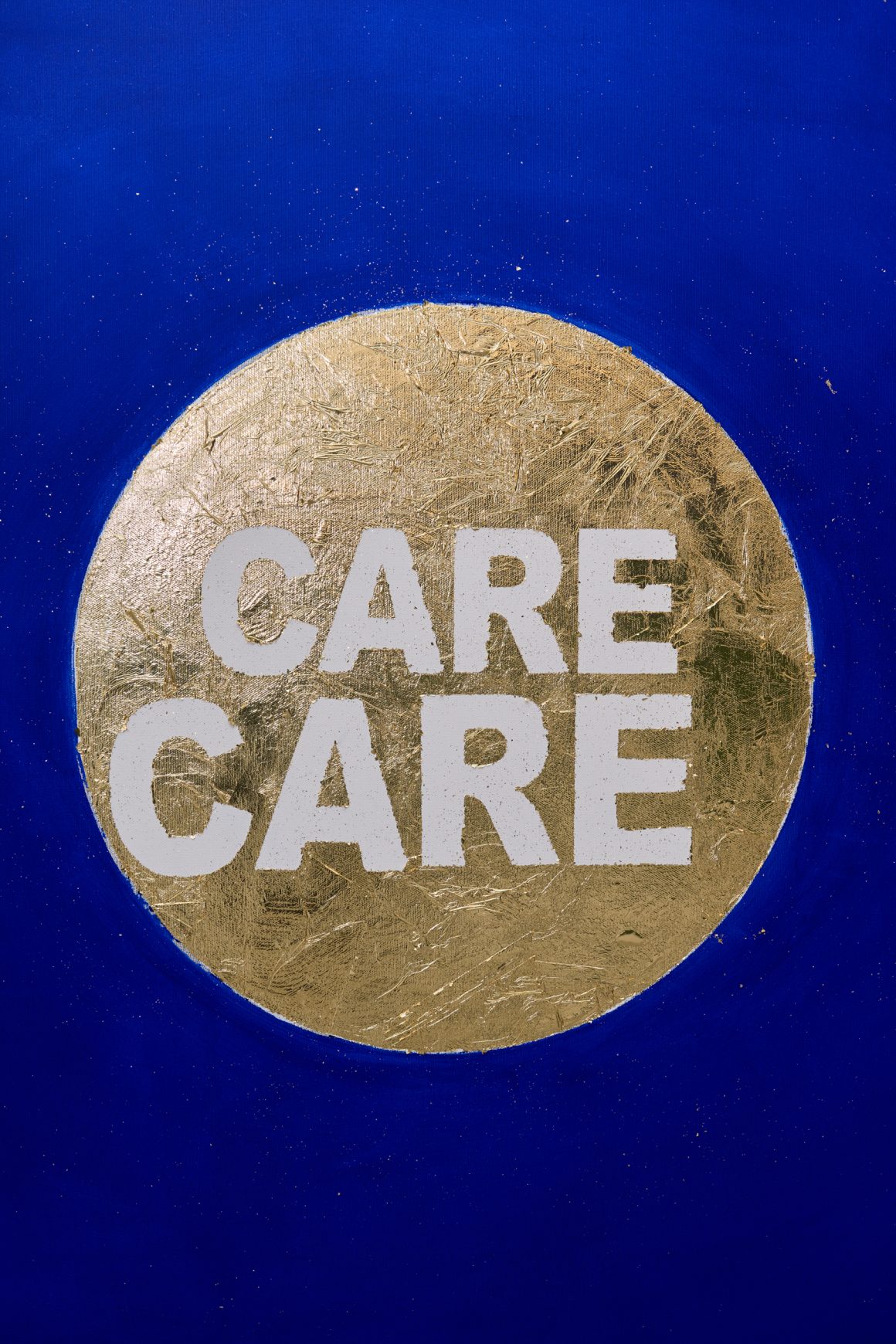
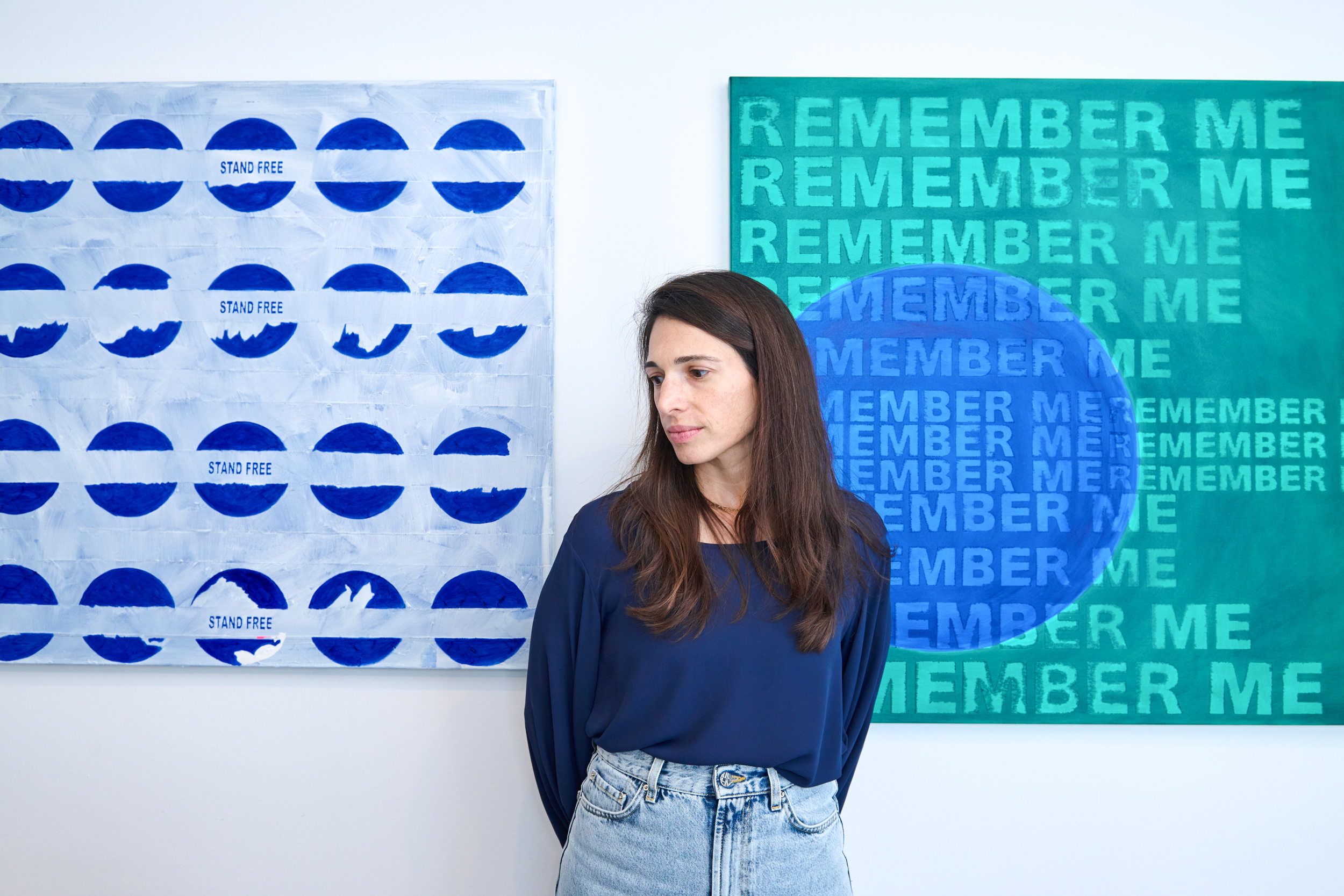
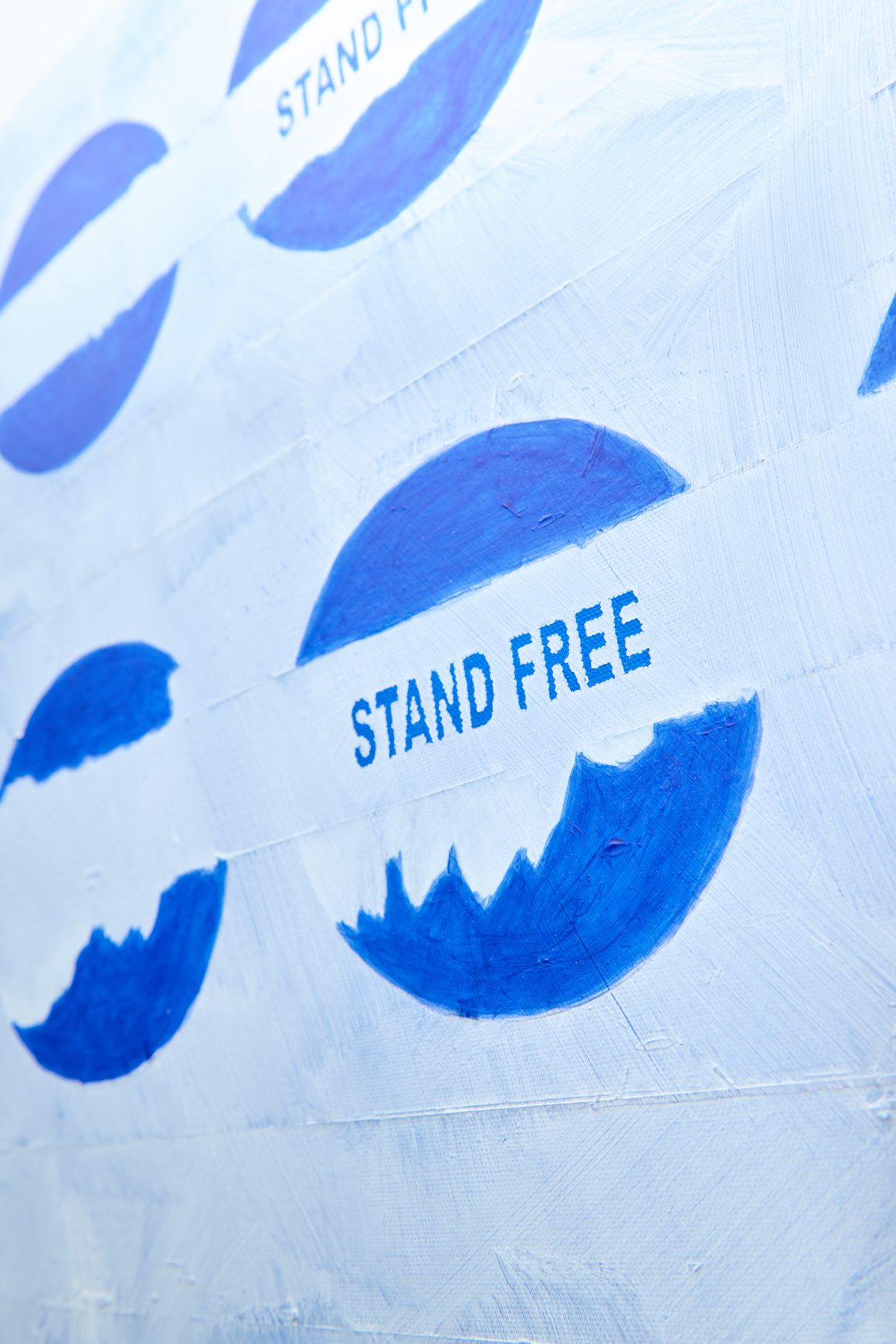
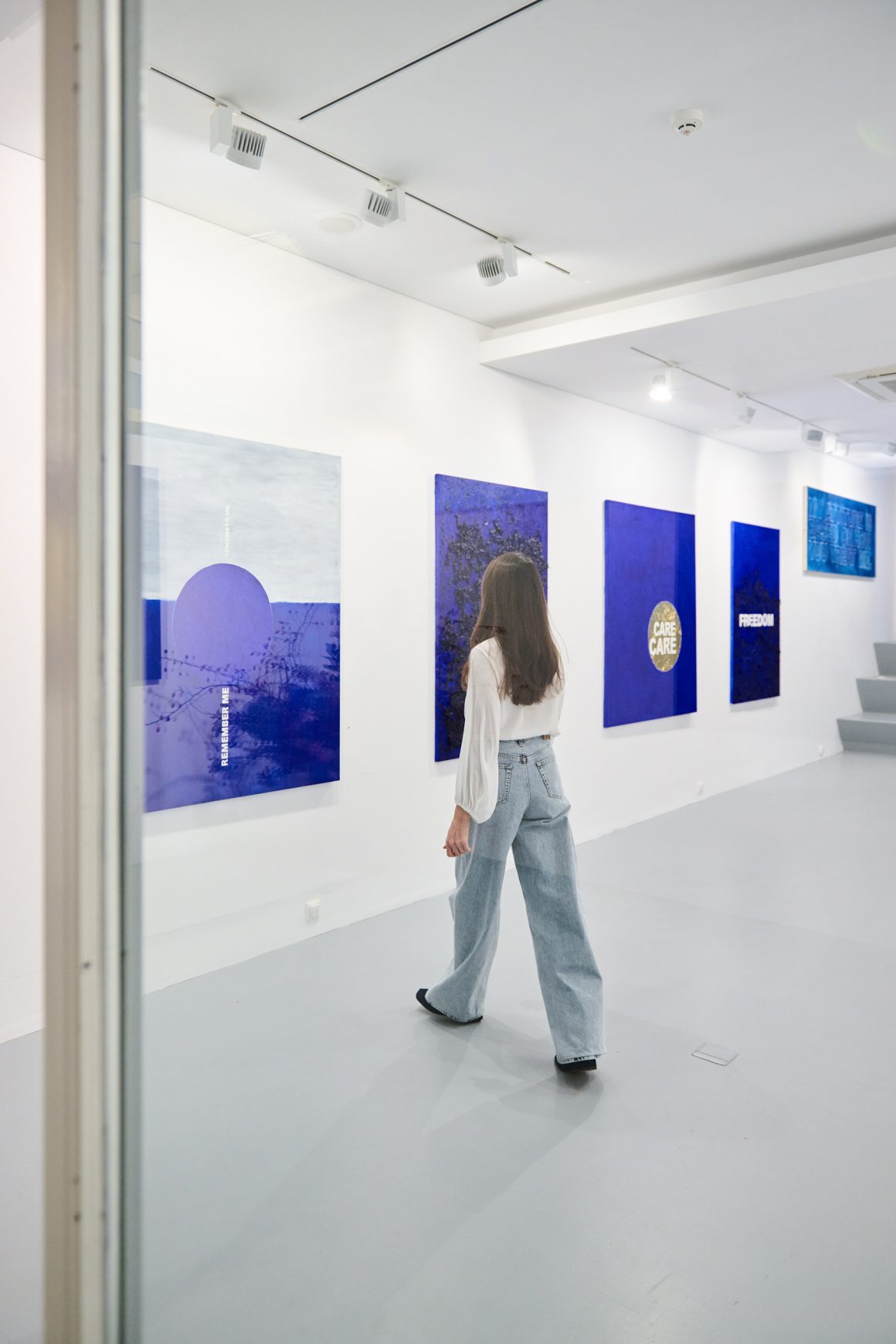
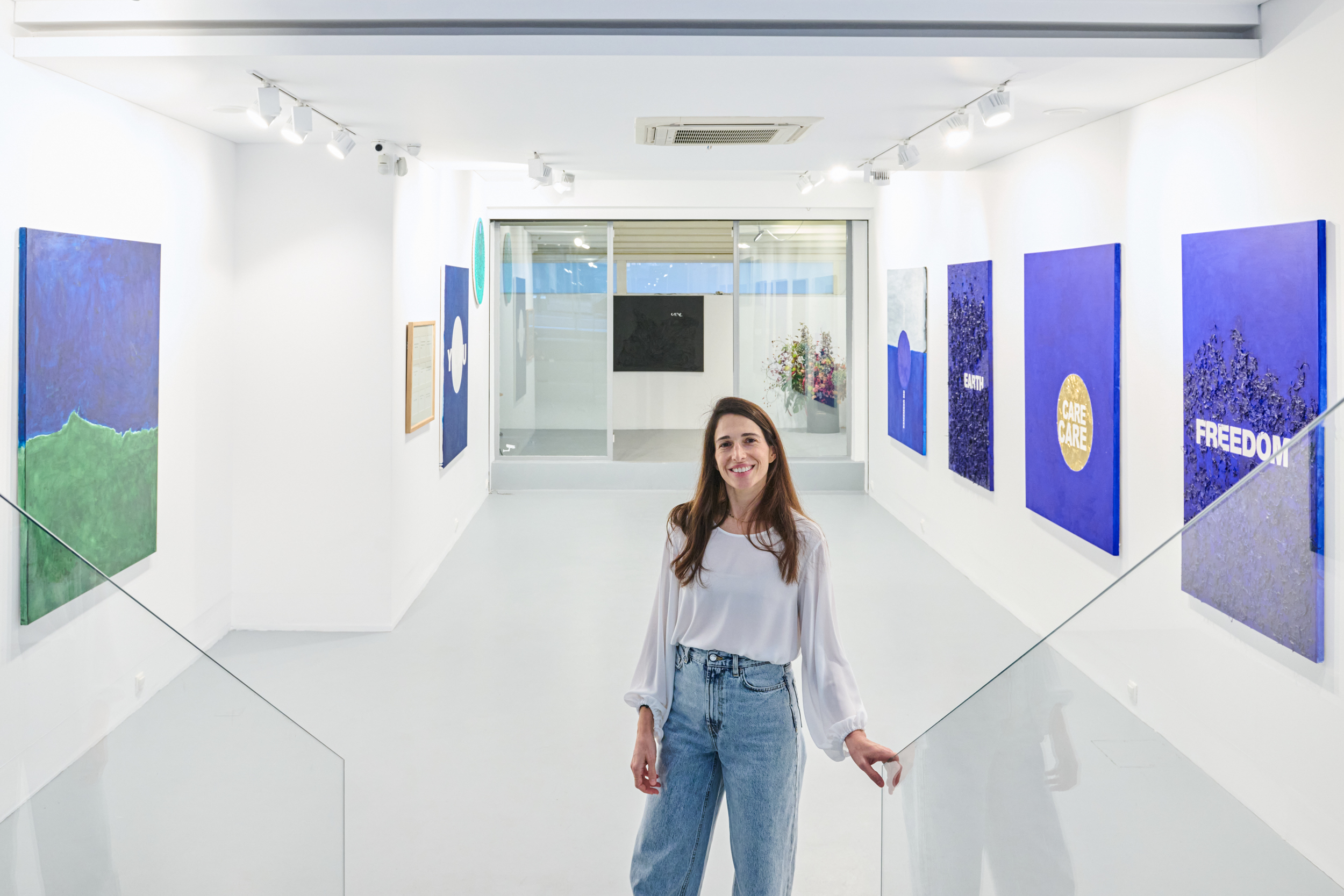
The exhibition You — Remember Me. No Blue, No Green. Earth — Stand Free. Inspire. Care. at Roma Gallery gradually took shape around a recurring circle that kept reappearing in my work, sometimes as a planet, sometimes as a moon, sometimes as a black hole, and sometimes as a symbol of the balance between humanity and nature. At the same time, words began to emerge in my handwritten notes: “YOU”, “Remember Me”, “No Blue, No Green”, “Earth”, “Stand Free”, “Inspire”, “Care”. They appeared at different moments, initially following separate directions. But as the works began to come together in my studio, I realised they could be read as a whole, like fragments of a letter written over different periods of time.
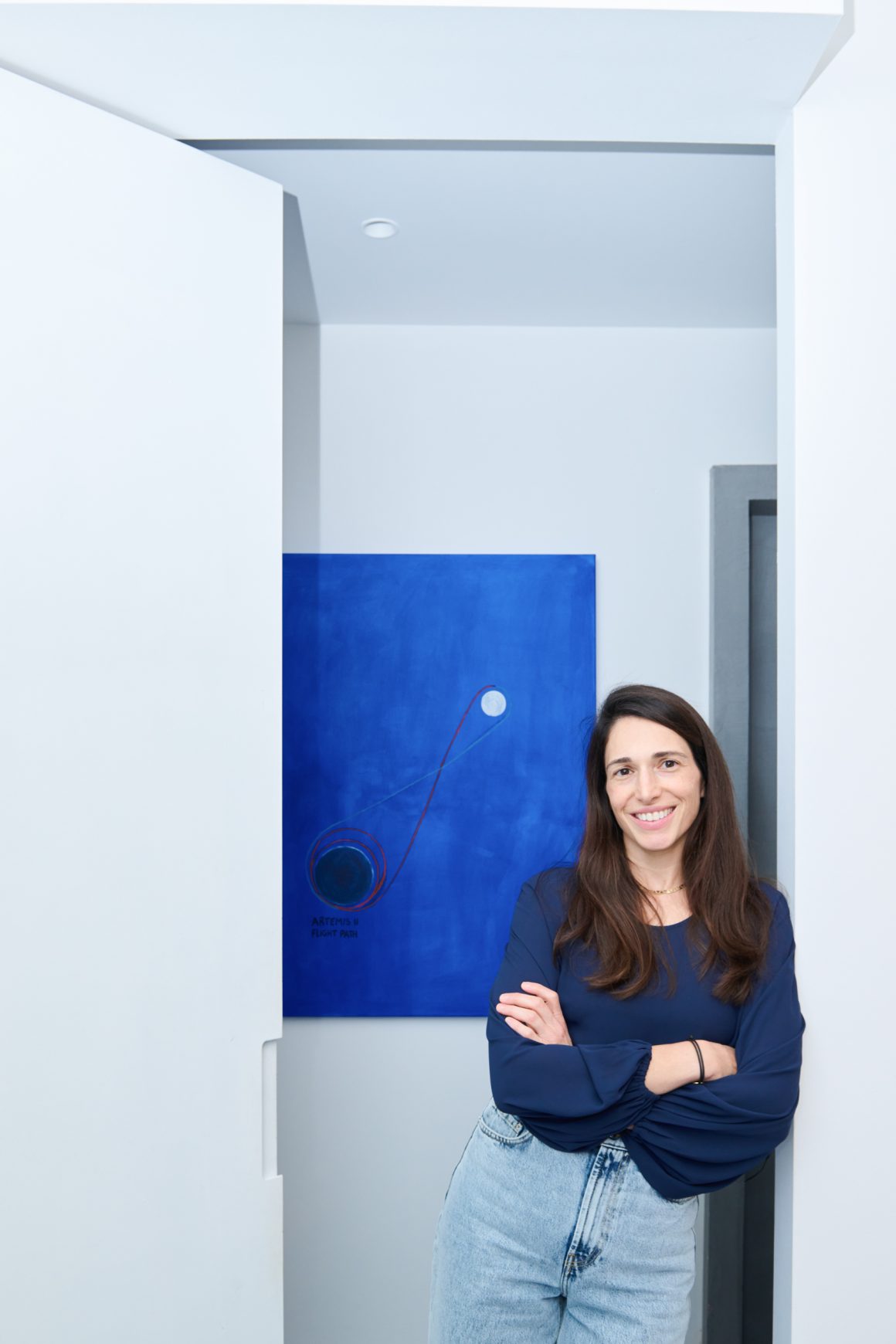
This letter is written by the Earth. I think this is the first thing visitors will discover in the exhibition: here, the Earth is not being described; it is speaking. And it speaks exclusively in the imperative, through a few concise, powerful words. This idea became connected in my mind with the images of Earth captured during the Artemis II mission, particularly the view of our planet from the vicinity of the Moon. They made me reflect on how our perception of something so familiar changes when we observe it from a great distance. From there, the Earth is simply a circle.
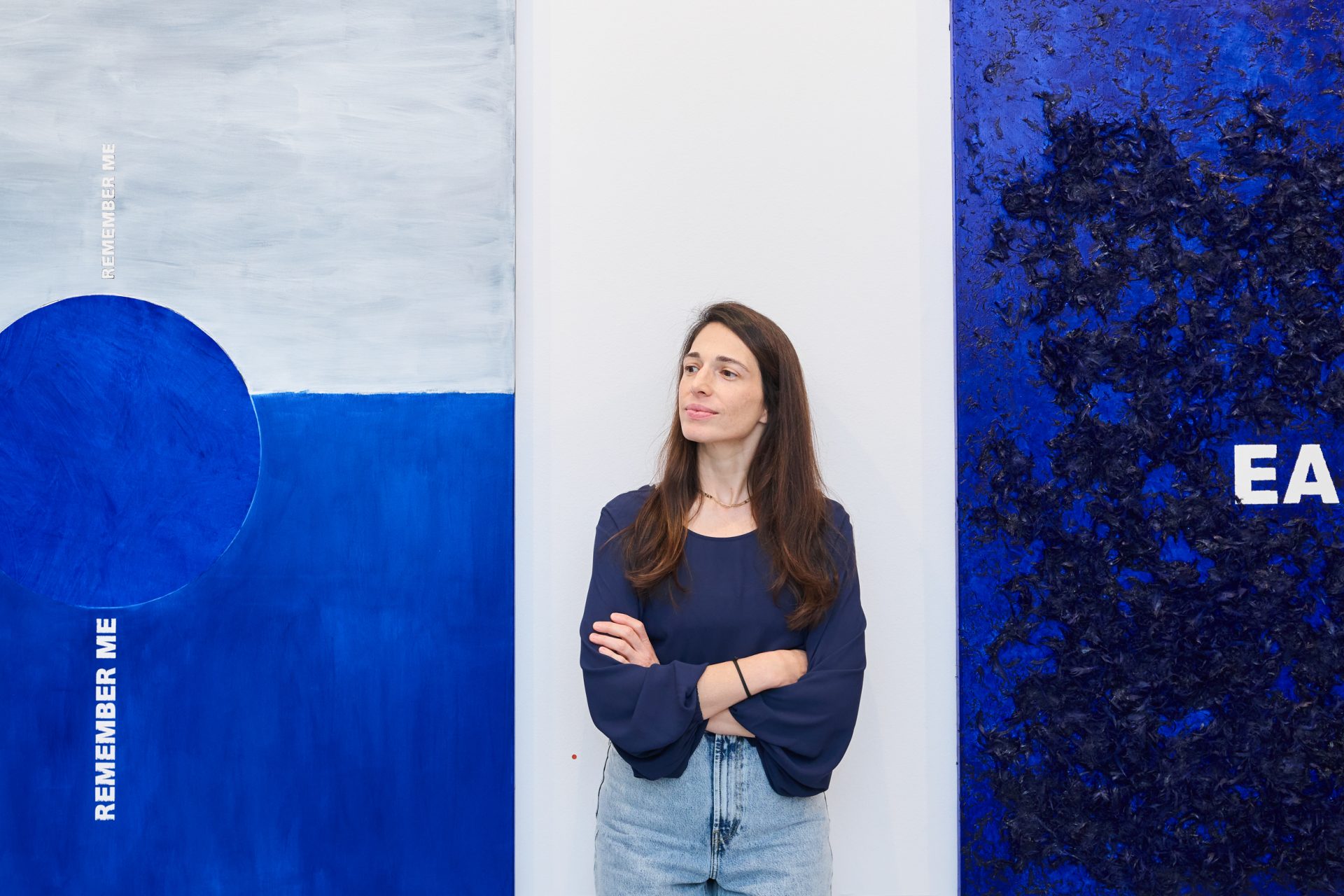
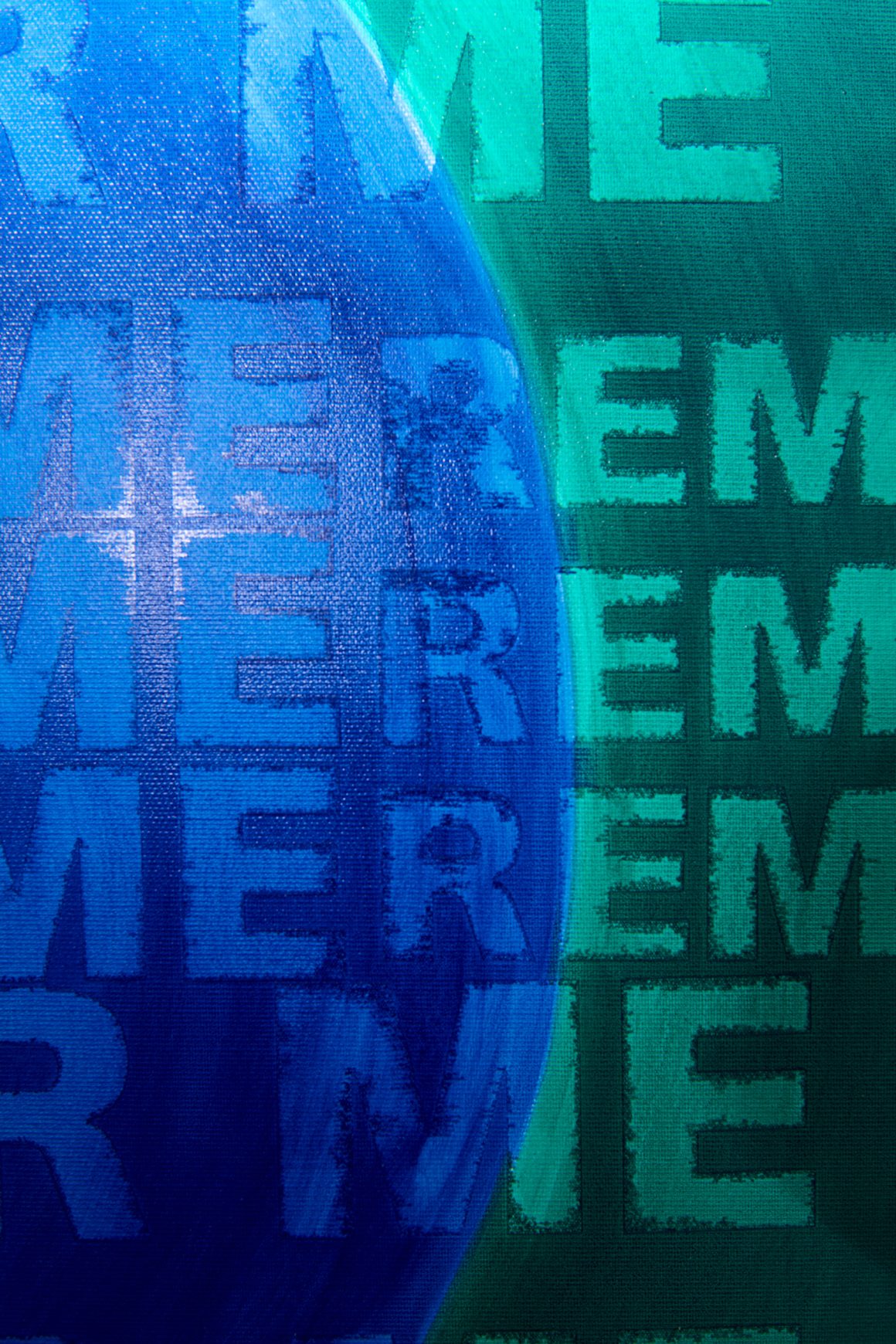
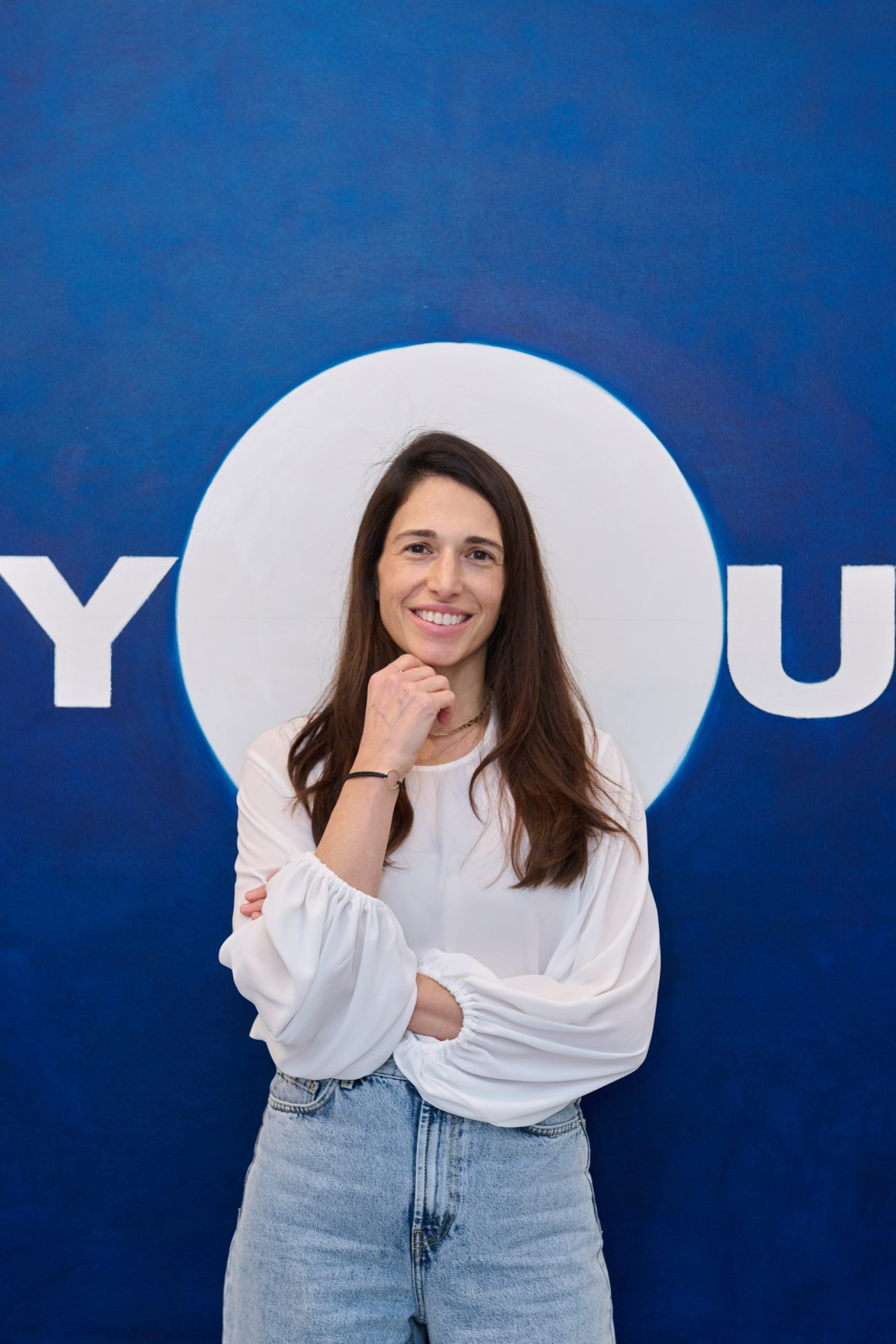
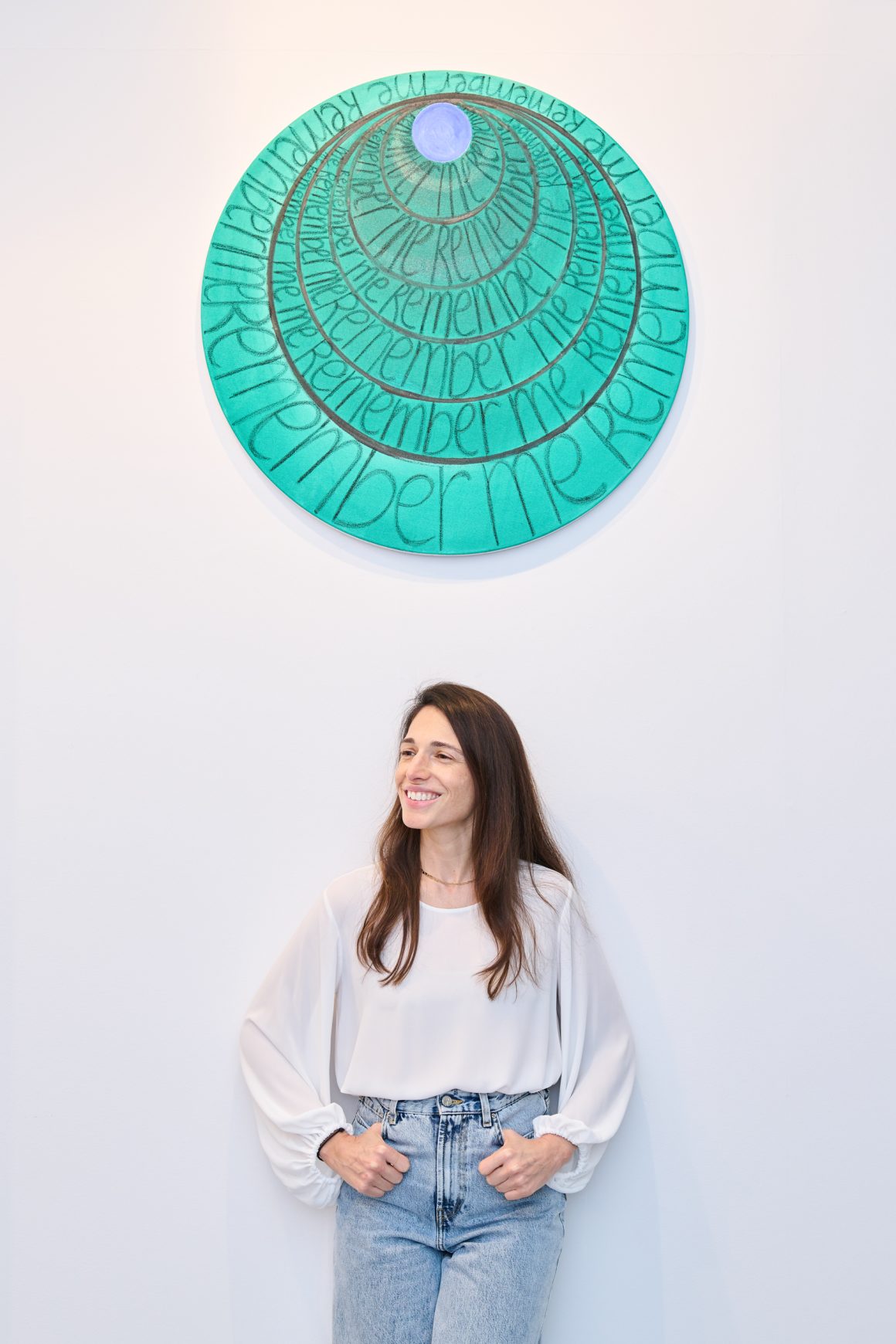
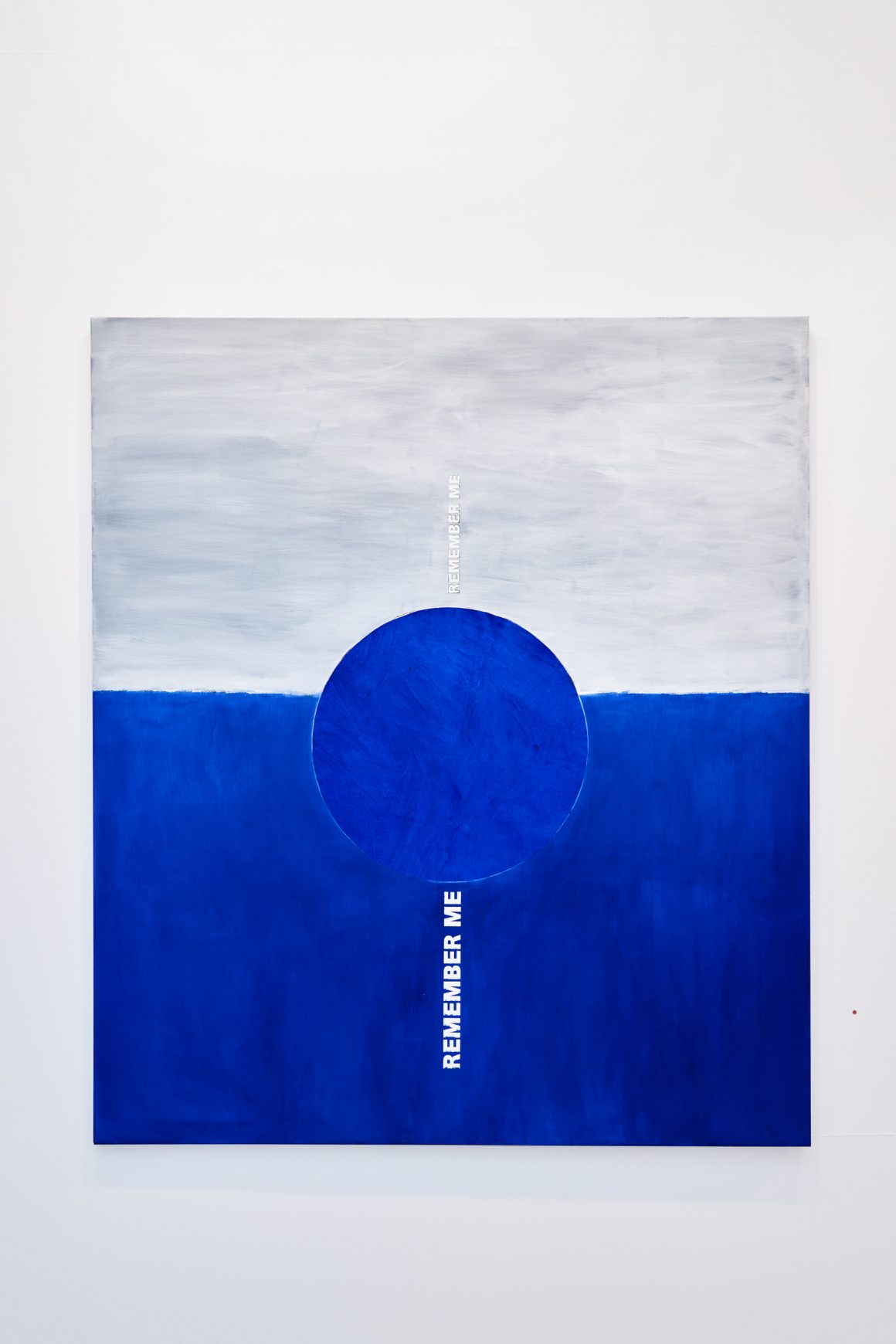
In the works, the Earth appears sometimes through the blue of the ocean and sometimes as a circle set within an expansive field of colour, while words acquire their own presence on the painted surface. In YOU, for instance, the large white “O” reads as a letter, but it is also the shape of the Earth. Within a single word, humanity and the planet become one: “you” already carries the Earth within it. In Echo, the repetition of “REMEMBER ME” is interrupted by a blue circle, leaving part of the phrase visible. The words remain distributed across different works, and visitors gradually discover the connections between them as they move through the space, slowly piecing the letter together.
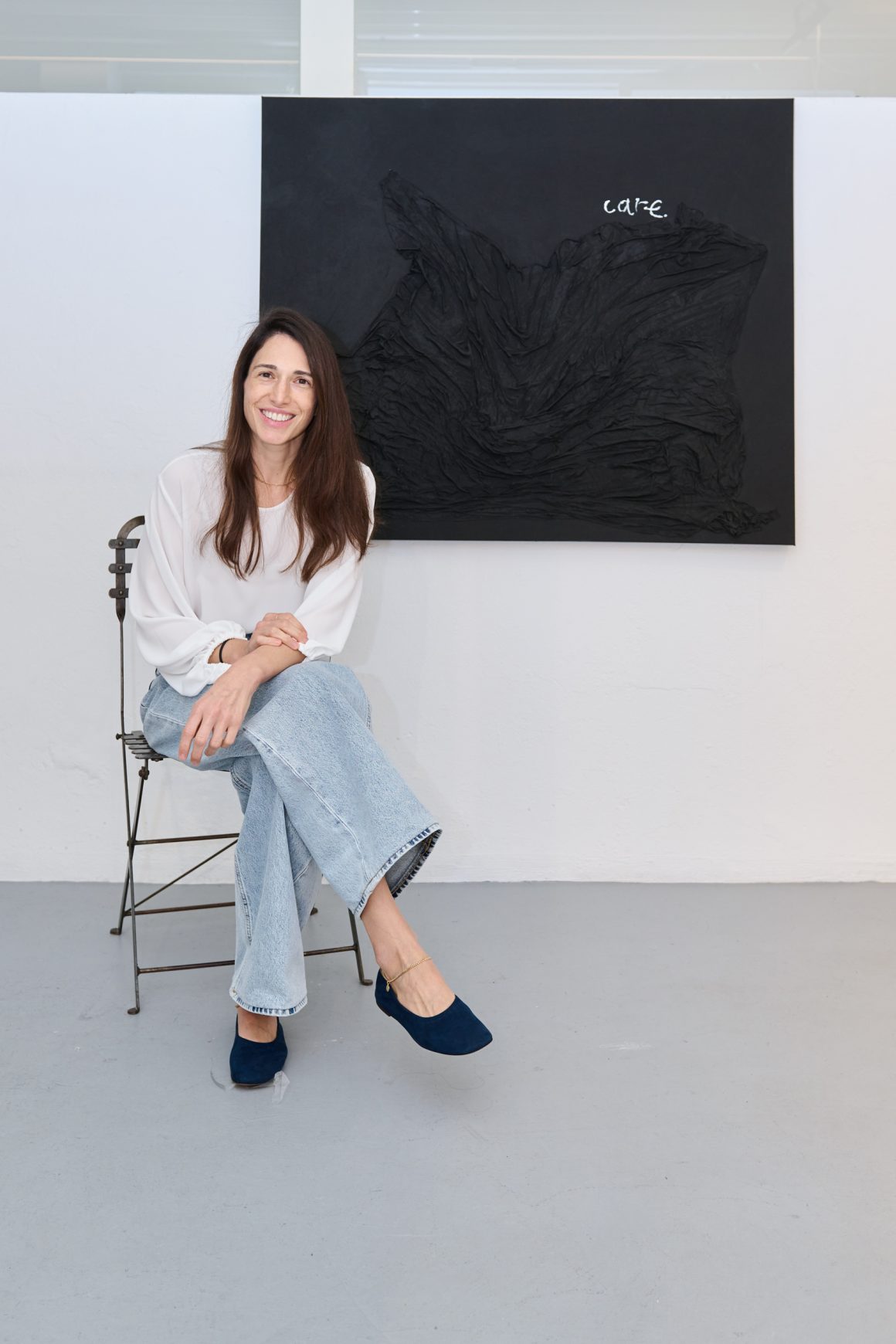
I think of “Remember Me” as a plea made by the Earth itself. “YOU” speaks to each one of us, conveying that plea to whoever stands before the work. And the exhibition closes with the word “Care”. It is the word visitors take away with them.
Your work radiates a distinctive tenderness, often associated with childhood, while also conveying messages about our relationship with the environment. How has motherhood influenced your work, and what are your aspirations?
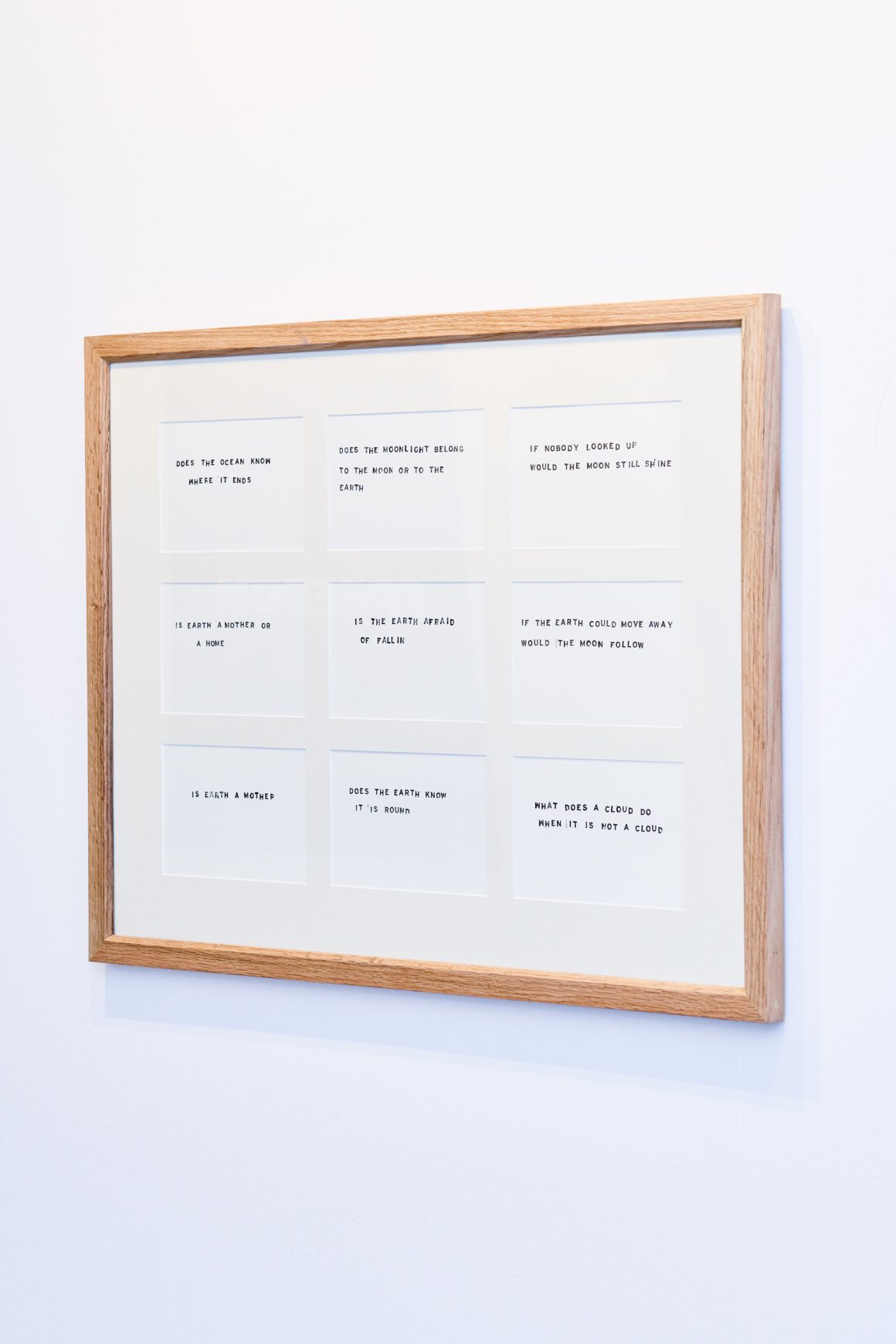
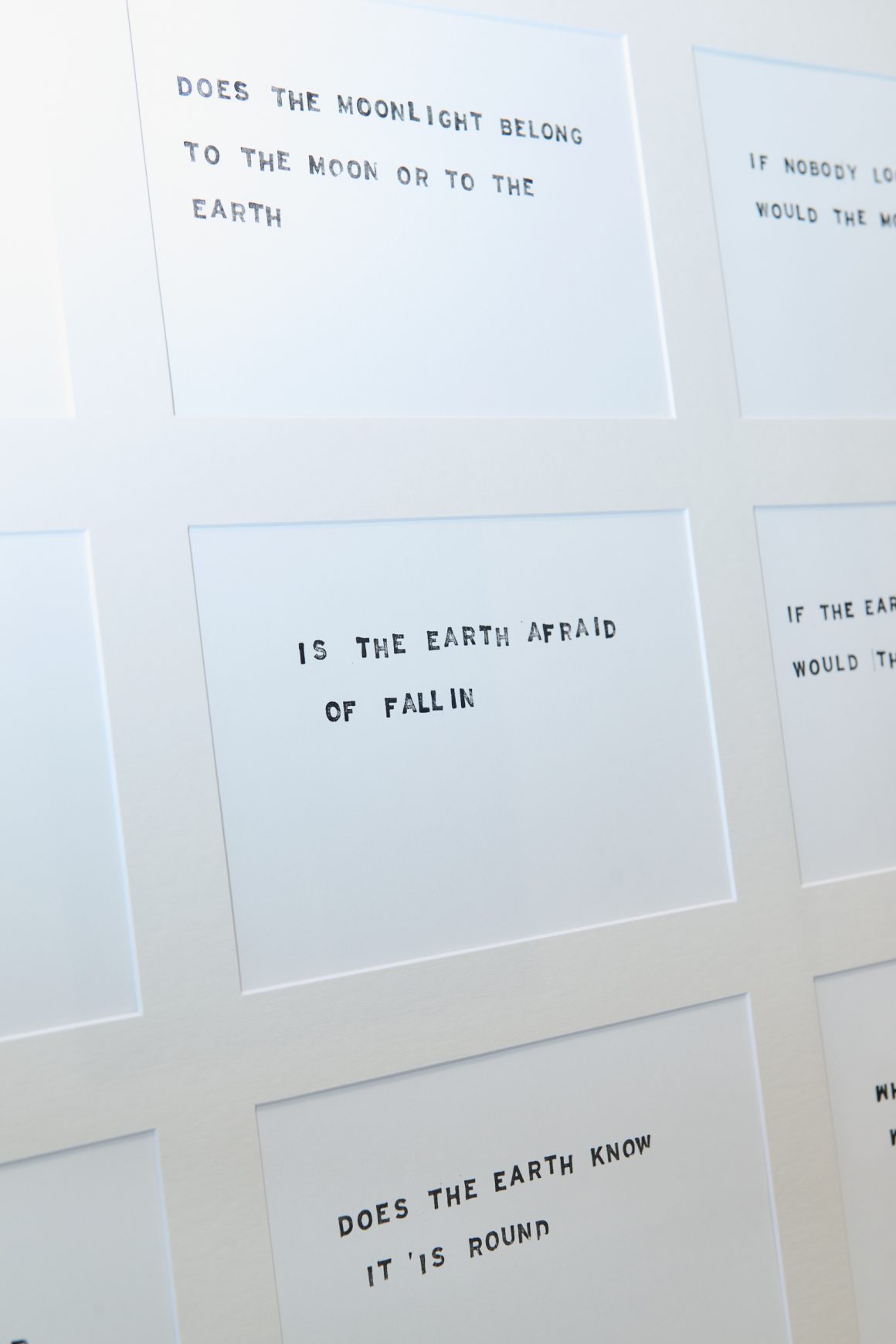
Motherhood has influenced my work in ways that initially stemmed from the very circumstances of my everyday life. During my first pregnancy, I had to move away from certain materials and limit the movements I was accustomed to making when painting on the floor. During my second pregnancy, which coincided with the pandemic, I began working more extensively with pencil. And after the birth of my third child, I felt a strong need to write and began exploring poetry. It was around the same time that the Pumping Bags series was born. I became particularly interested in the fact that a process so closely connected to nourishment and care relies on disposable materials, on things we simply throw away. I think this was where motherhood and ecology first came together in my mind.
In my new work, this idea has taken on a broader dimension through the notion of the Earth as our shared home. I began thinking very concretely about how closely the human body is connected to the natural world: the water and elements that make up our bodies are the very same ones found in the environment on which our lives depend. By caring for a child, you are already caring for a part of the planet.
That is why the word “Care” recurs throughout my new works, although it now carries a broader meaning than before. For me, care remains something deeply personal, something that occupies my thoughts every day, both at home and in the studio.
Having exhibited internationally, what has been your experience of audiences abroad in their response to your work, and how does the situation differ in Greece?
From the years I spent in New York, I particularly remember the practice of opening our studios to the public every month or two. It created opportunities to meet people and talk about works that were still in progress. I loved this sense of immediacy, as visitors could observe the materials and the working process, and conversations often began with a very specific detail. In Greece, my studio is more of a personal space for concentration, and I miss that everyday interaction. This is why I try to create similar opportunities during my exhibitions. The audience’s response is particularly meaningful to me when someone focuses on an element of a work that I had approached from a different perspective, as that observation can open up an entirely new conversation around painting.
What has being open to the outside world offered you more broadly, and how does it influence your work?
I consider myself quite introverted, and I have consciously chosen to make the time I spend in my studio a solitary experience. I need the quiet to concentrate, observe a work or a surface, step away from it and return to it several times before understanding how I want to proceed.
At the same time, encounters with different people have profoundly influenced my journey. Through collaborations, exhibitions and collective initiatives, I have found myself in situations I would not have sought out on my own, and it was there that I discovered new possibilities within the creative process. Openness to the outside world may not be part of my natural disposition, but it is a door I am learning to open each time.
What I value most is the exchange that takes place when a work encounters someone who views it through the lens of their own experiences and approaches it from a perspective I may never have anticipated.
What else is on the horizon for you?
At the moment, I am still very close to the works in my current exhibition at Roma Gallery, as preparing it has occupied me for quite some time.
The next step is London, where I will be participating in the group exhibition Cure³ with my work The Last Drop II (2026). It is a drop of glass I collected on the shore of Leros, smoothed by the sea, with a deep blue core at its centre and the faintest trace of gold, a reflection. As long as there is a reflection, there is still water, there is still life. I find it particularly moving that this work is being presented in an exhibition with the word “cure” in its title, because care and healing share the same root. This is the thread connecting Athens and London for me at this moment.
At the same time, I continue to develop the Art Acts 4 All initiatives, a project I would like to expand in the future to include other groups, such as older people, as well as more environmental actions. Writing and music also remain an important part of my creative everyday life.
What sparks your creative evolution and inspires you to take new directions in your work? Can you share a story with us?
When I first moved to New York, my work consisted mainly of abstract compositions with bold colours and relatively flat surfaces. Colour was my primary focus. As I began presenting my work to professors and people in the art world, I remember them repeatedly asking me, “Where is the Chemistry in your painting?” I had spent so many years studying the properties of materials that I suddenly began to wonder how I could bring that knowledge into the studio. I started collecting whatever I could find on the streets of New York, even fragments of posters peeling away after exposure to rain and sunlight, and observing what happened when I incorporated them into the canvas. This led me to plaster, fabric and found objects. The canvas ceased to be a surface and became a field, a space in which I create the conditions for a transformation and then observe how it unfolds, much as I would in an experiment. That question has never left me. Even today, when I stand before a new work, I can still hear it somewhere in the back of my mind: “Where is the Chemistry here?”
What are the non-negotiable values that underpin your work?
Freedom is a concept that has occupied my thoughts for many years, returning in different forms and with different meanings throughout each period of my work. In 2017, there was BedSheets, a performance in Syntagma Square featuring a bed and a sheet that was transformed into a 3D mapping projection on the façade of the Hotel Grande Bretagne, exploring the duality of freedom. The question it posed was whether we are truly free or merely believe that we are. In 2021, the phrase “Stand Free” appeared in public spaces along Ermou Street and at the airport, at a time when we all needed to read those words. In my new works, the same phrase is addressed to the Earth. It is connected to the idea that human freedom also depends on the conditions in which we live: water, air and soil. You cannot be free on a planet that is not free.
Equally important to me is the integrity of the creative process. I want to recognise a genuine search within every work, even when the outcome takes me far from my original idea. Curiosity and the desire to keep learning go hand in hand with this, because experimenting with materials often forces me to reconsider things I thought I already knew.
And the third is care. It is the word that closes my exhibition, “Care”, and the reason Art Acts 4 All exists. Caring for the planet and caring for the person beside me are, to me, one and the same act.
How has your design philosophy evolved over time, and what do you believe holds particular value today?
If design is about giving form to an intention so that it can reach someone, then my own philosophy has evolved from abundance towards simplicity. In my early works, I wanted to include everything: colour, movement, dense compositions. Then came the materials — plaster, fabric, found objects — and the surface acquired depth and weight. Today, I work with almost just two elements: a circle and a word. It took me years to understand that the less you introduce, the more clearly what remains can be heard.
I believe this is what holds particular value today: immediacy. We live surrounded by noise, images and words that pass before our eyes without ever truly touching us. A work that says “Care” in large white letters, or a blue circle against a black field, needs no explanation. A child can read it, just as a scientist can, and each will interpret it through their own perspective. To me, good design today is that which leaves room for the other.
What would your dream project be?
I would love to create an exhibition in which the tactile experience takes centre stage, one that people with visual impairments or other disabilities could fully participate in. I have long been interested in the possibility of understanding a form through touch, which is why, in some of my earlier works, I created small relief versions that could be explored by hand, even with one’s eyes closed. I would like to develop this idea on a larger scale, creating the right conditions for visitors to engage with the work through their different senses. I believe it is particularly important for an exhibition to be able to adapt to the people who visit it and to the different ways in which each person perceives the space and the objects around them.
Are we what we choose?
I think we are, or at least we are what we dare to choose. Most of our decisions do not change us. The ones that matter are the few that overturn a situation we have grown comfortable with and force us to rebuild our lives from scratch.
In my own case, there were two such decisions. The first was leaving science and moving to New York to pursue painting, without any guarantee of where it might lead. The second, years later, was returning to Greece to start a family. On both occasions, I had to leave behind an established everyday life, guided by the feeling that I was following something that truly mattered to me. In essence, these two choices are my entire life.
The last thing you bought and why you chose it.
Tickets to clinamen by Céleste Boursier-Mougenot at Onassis Mandra. Hundreds of white porcelain bowls float in circular pools, gently collide and create an ever-changing musical composition beneath the Athens sky. I chose it because it brings together things that have been on my mind lately: water, the circle and ceramics. It also reminds me that tranquillity does not have to mean silence. I seek moments of contemplation and calm, so tickets to exhibitions are among the things I buy most frequently.
The best book you have read recently.
The World Is Blue by Sylvia Earle. A phrase from this book became one of the central works in my exhibition: “No Blue, No Green”. Without the ocean, there is no life on land. Earle has spent thousands of hours underwater and writes about the sea as one might write about someone they love and fear losing.
An object you would never want to part with.
My coffee cup. I have had it since 2010. Recently, it slipped from my hands and its handle broke. I am now repairing it using kintsugi, the Japanese art of ceramic restoration, and I will fill the crack with gold. I love the idea that something can break and emerge more beautiful than before. The gold will not conceal the fracture; it will reveal it, making it part of the object’s story.
An artist you love and whose work you would like to own.
I have a deep admiration for Mark Rothko, and the experience of his retrospective at the Fondation Louis Vuitton in Paris has stayed with me. I am moved by the way colour acquires an almost physical presence in his paintings, and by how our perception of the surface changes the longer we spend standing before it.
Three places you love returning to, and why.
Leros. I have memories of the island dating back to my early childhood, and many of my works have taken shape in my thoughts there.
New York, because I spent a significant part of my adult life there. It is the only city that ever truly felt like home to me, and I would have spent my life there had I not decided to start a family. No matter how much it has changed, every time I walk its streets, I reconnect with that period when I would walk to my studio and feel a sense of fulfilment and certainty that I was exactly where I was meant to be.
And London, because that is where it all began. I studied there, and it was there that I woke up at three in the morning and painted until dawn, on the night I realised that this was what I wanted to do, and nothing else.
Can art and creativity, more broadly, be a path towards becoming better human beings?
Through the Art Acts 4 All initiatives, I have seen how meaningful creativity can become when it offers people a way to express themselves and connect with one another. I particularly remember an art workshop at the Elpida guesthouse, organised with the participation of Make-A-Wish volunteers, where we painted and sang with the children. Some were initially more hesitant, while others joined in immediately. Gradually, they began expressing themselves in different ways, through conversation, music or painting. It was a deeply moving experience, because you could see how important it was for each child to find a way to express what they were feeling. I believe encounters like these nurture our sensitivity towards others, giving us the opportunity to listen to and observe people whose experiences may be very different from our own.
Tell us a story you will never forget.
I still remember my arrival in New York, just after deciding to leave my life and work in London behind. I had organised the move so quickly, carried away by my enthusiasm, that when I arrived, I realised I had not even made sure there would be a bed in the place where I was going to stay. I found myself alone in an enormous city, with an entirely different rhythm of everyday life, having to organise almost everything from scratch. During that period, I often felt I needed superpowers just to keep up with everything happening around me. That thought later inspired my Superheroes series. Today, I look back on that experience with great tenderness, because it marks the beginning of a period that profoundly shaped both my life and my work.
The museum and the artwork that stole your heart.
ARoS, the art museum in Aarhus, Denmark, and, within it, As Seen Below by James Turrell. An enormous underground dome with nothing inside it, just an opening in the ceiling and the sky above. You sit and wait. At dusk, the light inside the dome changes slowly, and the sky framed by the opening seems to take on colours it does not actually have. The sky does not change. Our perception does. And the act of looking itself becomes the artwork. There is no image, no object, only light, time and your gaze.
It stole my heart because it does not show us something new. It shows us the sky, something we see every day, and invites us to look at it again as though we had never seen it before. That is what I ask of art, and what I try to achieve in my own work: to take something we think we know — the Earth, the moon, a drop of water — and bring it before the viewer as though they were seeing it for the first time.
Give us your own definition of beauty.
Loving yourself as you are. I believe this kind of acceptance is essential, because it allows us to feel free with everything that makes us who we are and to express our individuality more naturally.
Have you ever designed something for a home collection? If not, what would you create?
Yes, I have designed something for my own home. I created a series of ceramic tiles, each featuring a constellation I painted by hand. They do not exist in the sky; I invented them. One for myself, one for my husband and one for each of my children. Five constellations, all different, forming a kind of map of my family.
If I were to create something for other homes, I would want it to follow the same principle: an object that grows out of an artwork, almost as an extension of it. Perhaps I would continue exploring the idea of constellations, which fascinates me at the moment, and create constellations for the families of my friends.
What do you consider authentic today?
Today, I find authenticity in what is genuine and in anything that does not seek to impress. In an age when everything is filtered, authenticity, to me, lies in spontaneity, in what allows room for imperfection and reveals the passage of time.
For me, authenticity is closely connected to the freedom to be ourselves and to the honesty we bring to what we create. In art, I am particularly drawn to works in which I can sense the personal quest behind them and understand how it has evolved through the creative process itself. I often think about how important it is to remain open to new experiences and to retain the ability to change our minds or direction when we discover something that speaks to us more deeply.
If you were to design something for TheAuthentics.gr, what would it be?
I would design a constellation. My constellations are made of dots that I connect differently each time, allowing a shape to emerge from the lines. Every person who has appeared in the pages of The Authentics would become a dot, hand-painted on a ceramic tile. Individually, they are stories. Together, they form a sky that exists nowhere else, because no one else has brought these particular people together in quite this way.
I think this is what The Authentics is about: people who each shine in their own way and, when brought together, create a shape. And I would certainly leave a few dots unconnected, for those who have not yet appeared in its pages, as a reminder that a constellation is never complete; it is simply waiting for the next light.
EXHIBITION
Maria Fragoudaki’s solo exhibition is titled “You — Remember Me. No Blue, No Green. Earth — Stand Free. Inspire. Care.”
Roma Gallery, until 14 November 2026.
Curated by art historian Alia Tsagari.