Tell us the story of your life and the defining moments along the way that brought you to where you are today.
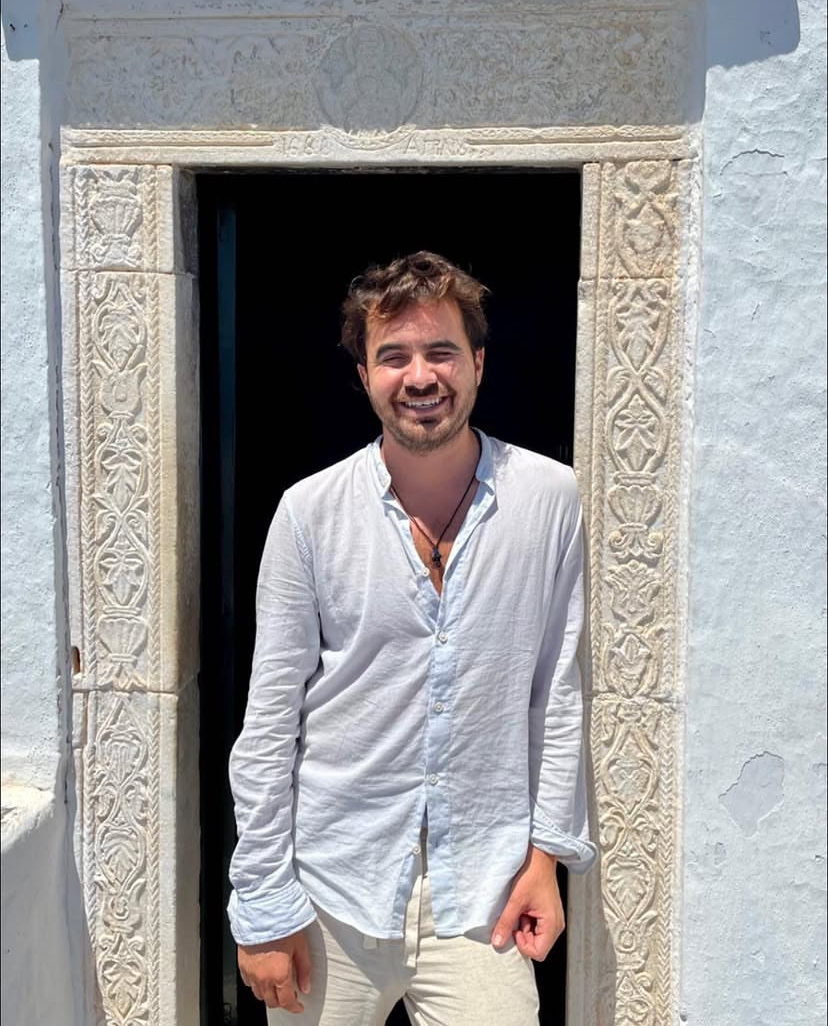
I was born in Athens in March 1990. We lived in the southern suburbs, and I attended Leonteios School in Smyrna. After completing the International Baccalaureate (IB), I was fortunate enough to pursue my studies in the UK, as it had always been my dream to study abroad and somehow find my way into the world of fashion. Life took an unexpected turn, and I eventually found myself in Paris, undertaking an internship at L’Oréal Paris, the world-renowned cosmetics company. After completing my studies in the UK, I returned to Paris, where I went on to spend another ten years.
During my career, first as a manager and later as Global Director of Digital Communications, I had the opportunity to meet and work with some of the most recognised names in fashion, film and the arts. Jennifer Lopez, Eva Longoria, Doutzen Kroes, Liya Kebede, Karlie Kloss and Elle Fanning are just a few of the people I not only collaborated with but also developed meaningful friendships with. One of them was, and remains, my closest friend, almost like a sister: Natalia Vodianova, perhaps Russia’s most renowned model and, in my eyes, one of the brightest souls. I was fortunate enough to oversee her digital image for several years, travelling the world together, attending fashion shows and taking part in philanthropic initiatives across the globe.
Yet, alongside this journey through a world of beauty – at least on the surface – my mother was diagnosed with cancer and given just one year to live. I cannot say exactly what kept her going for seven extraordinarily difficult years: perhaps her grace, her strength, her faith or her boundless love for her family. Throughout that time, my father, my brother, my aunts and her closest friends were her greatest support. Sadly, my mother passed away in July 2019, and somehow, that was when an entirely different journey began for me.
How did the moment come when you decided to change direction and withdraw from your former life to embrace a monastic way of living? Was such a decision easy to make?
I remember this change beginning in May 2019. More specifically, I vividly recall moving between Athens, where my mother was hospitalised, and Cannes, where I was attending the annual film awards. The stark contrast between these two worlds, their circumstances, emotions and people, brought me to a crossroads – or, perhaps more accurately, to a moment of quiet revelation. I felt that my journey in the fashion world was somehow reaching its natural conclusion, and that my heart would be more fulfilled by doing something for people in need.
I initially began bringing together small groups of young people and, at times, refugees who needed companionship and a sense of belonging – a way to connect with others, become part of a community and find their own path. At the same time, I began exploring different forms of spirituality, including meditation. I travelled quite extensively, both literally and inwardly, emotionally and psychologically. My mother’s death became a catalyst for rediscovering myself.
Then, following a rather extraordinary journey through northern India, I returned to Paris and felt that even this wonderful city, which had been my home, was also coming to the end of a chapter in my life.
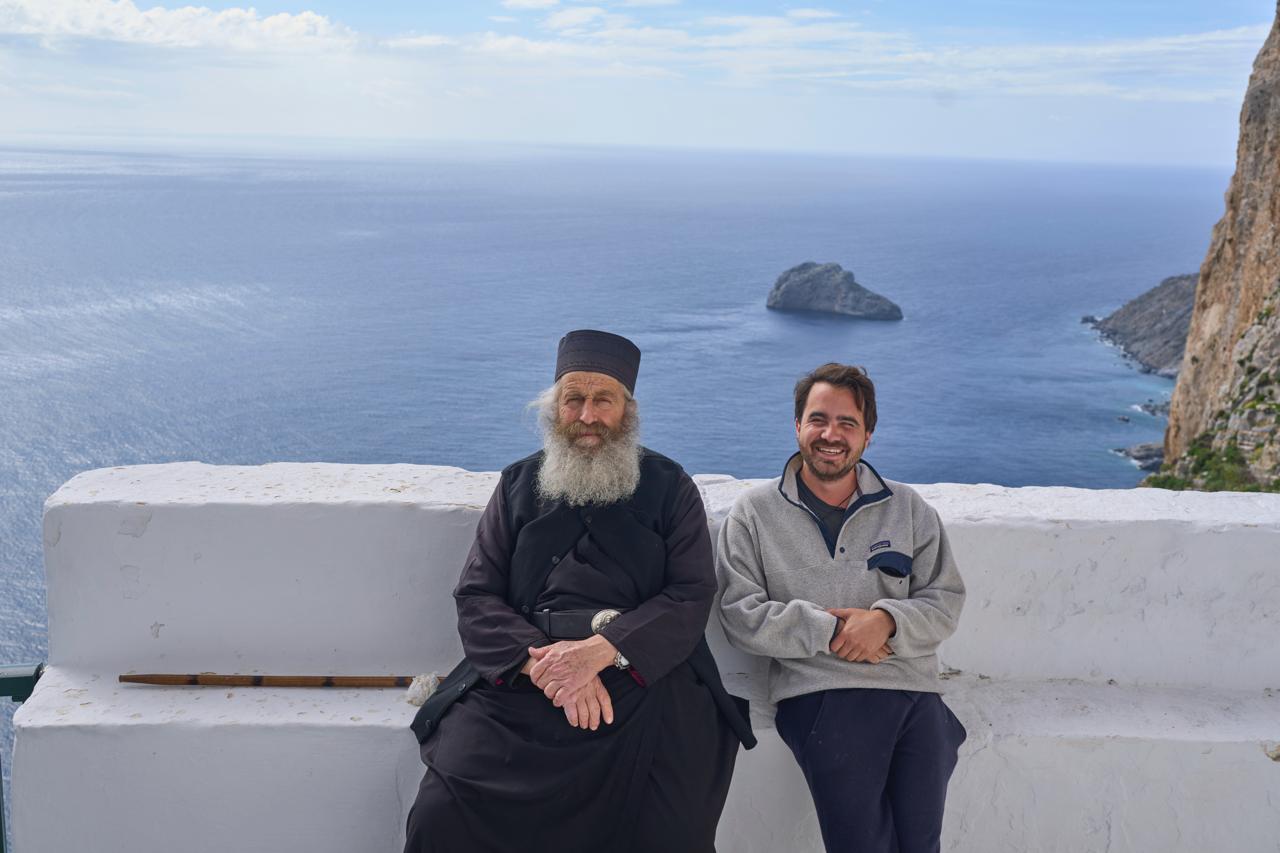
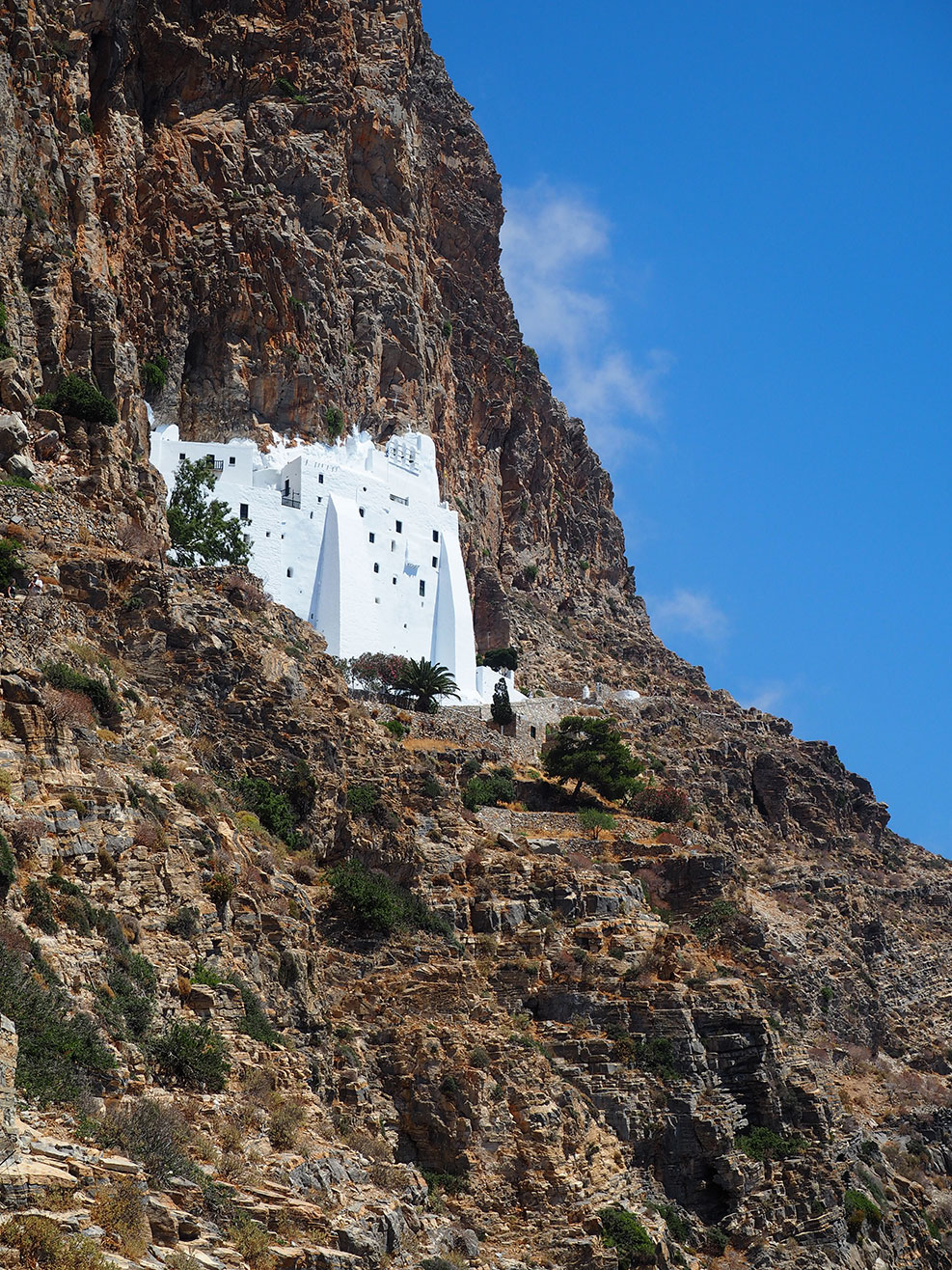
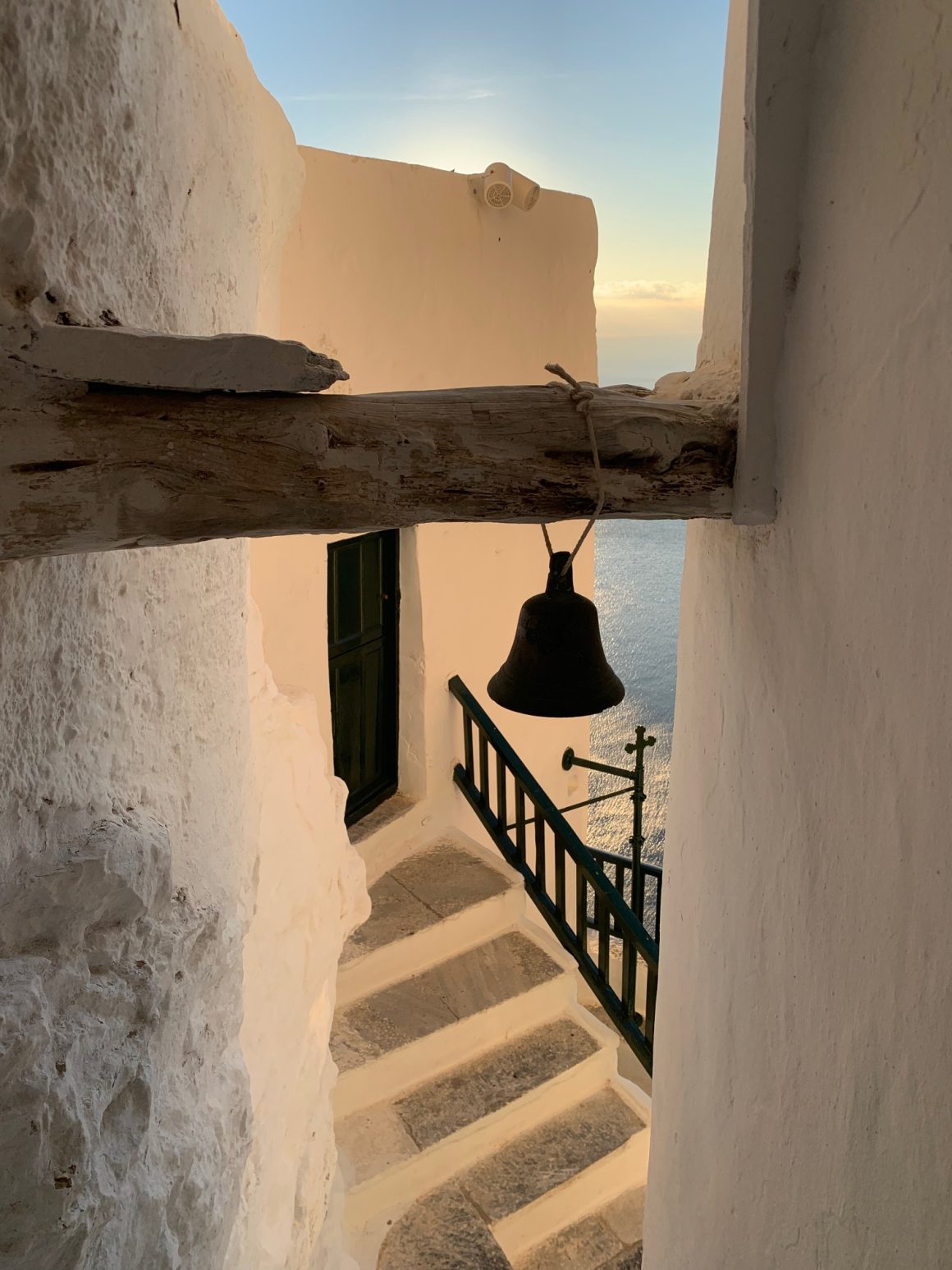
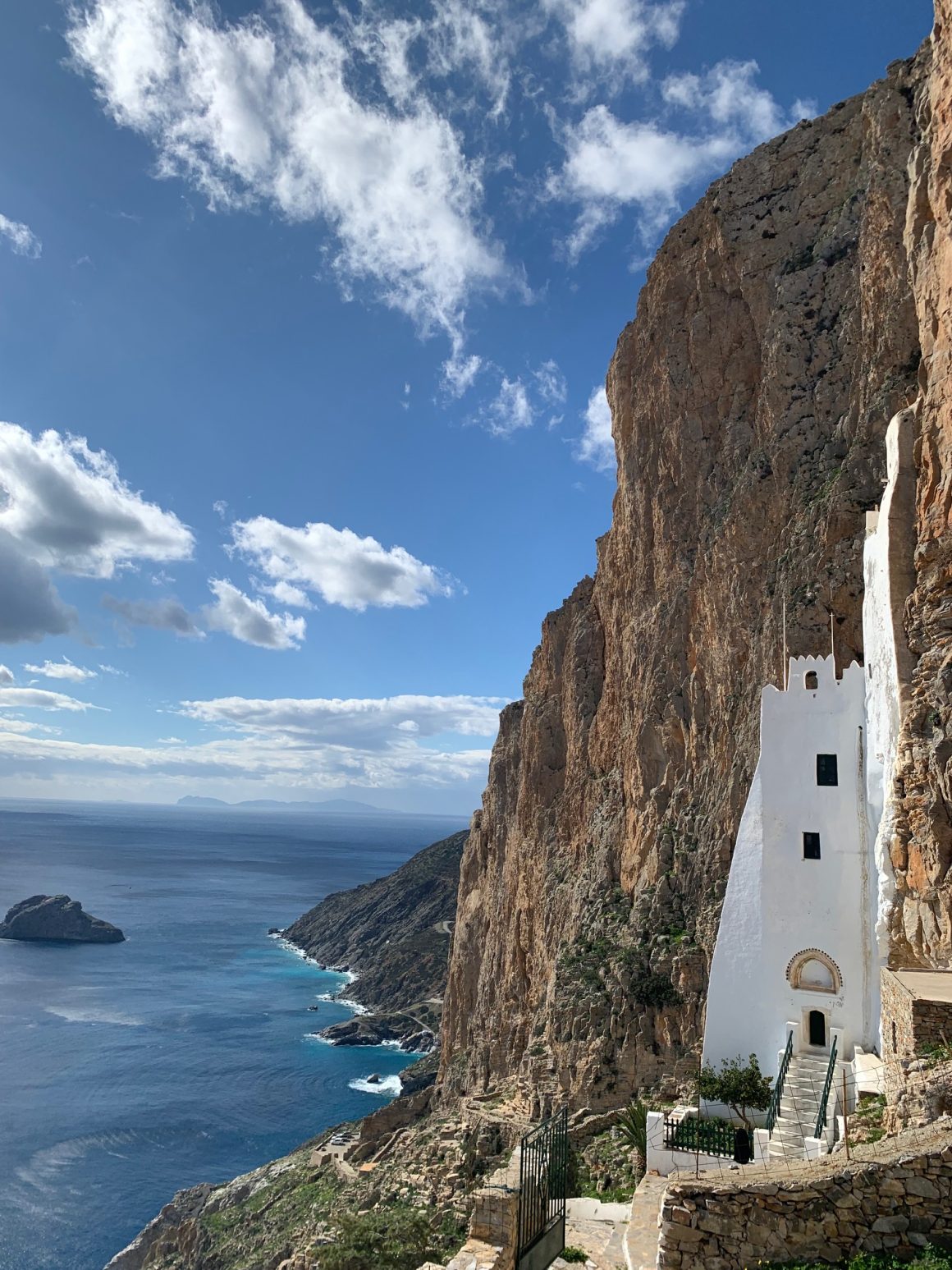
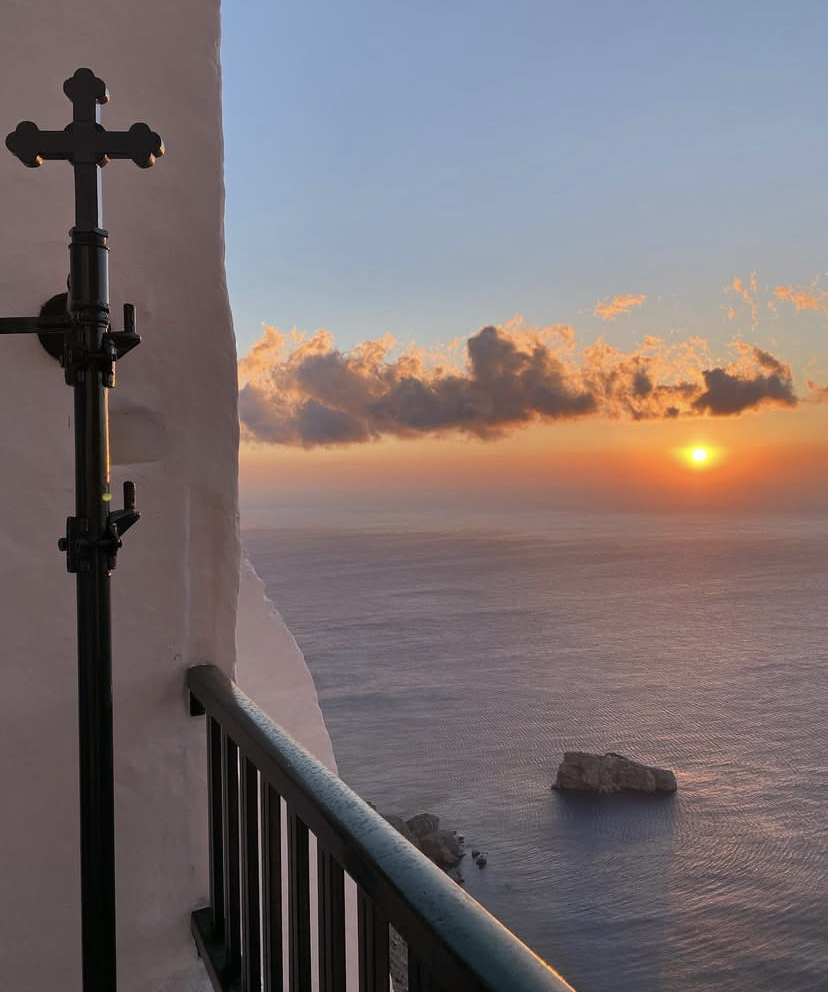
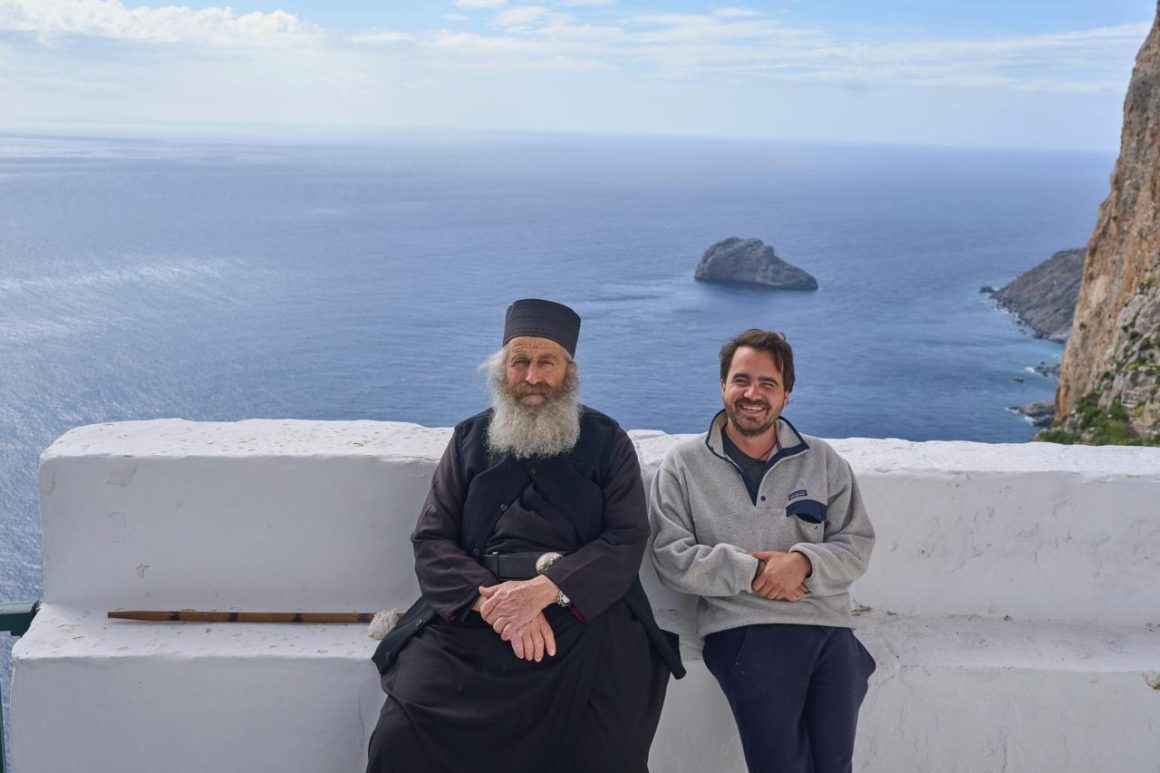
A few weeks before my mother’s exhumation in the summer of 2022, a song dedicated to the Virgin Mary, which we used to sing at Leonteios School, suddenly came back to me. I could not get it out of my head. The first name of the Virgin Mary mentioned in that childhood hymn was Panagia Hozoviotissa. Unless you know its etymology, you might not realise that the name originally refers to the area of Hozeba in Palestine, and today is associated with the monastery on the island of Amorgos, which has stood for more than 1,200 years. Dating back to the ninth century, it is home to the miraculous icon of Panagia Hozoviotissa.
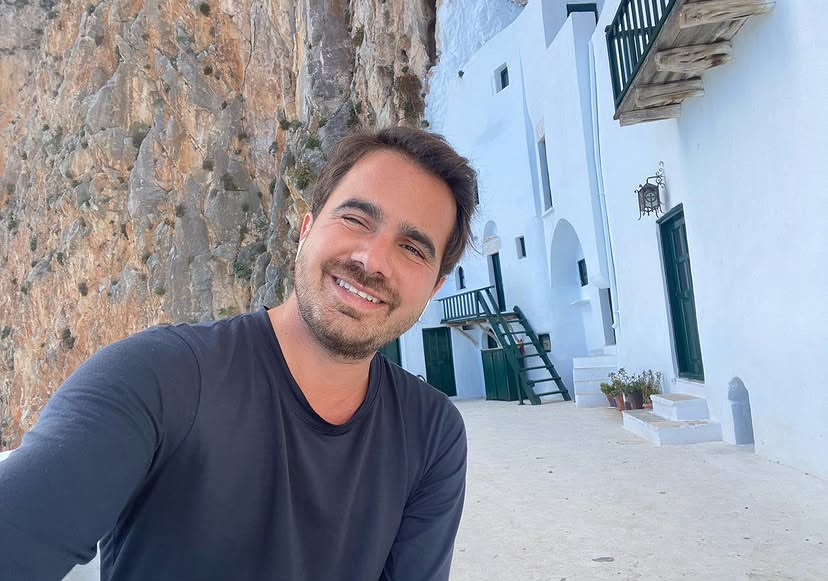
And so, in a nutshell, that is how I found myself going there for a week, initially as a tourist, as it was my first experience of staying in a Christian monastery. That one week, however, has gradually turned into almost four years, as of today.
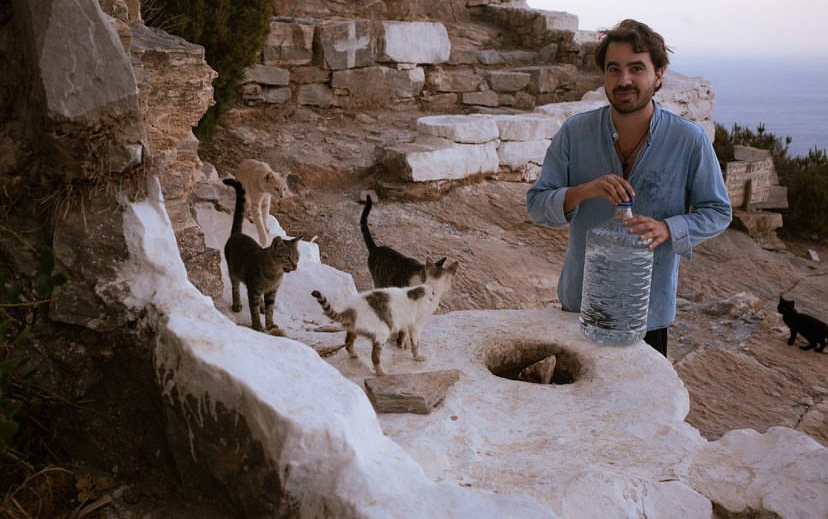
My stay has never been entirely continuous, nor has it been a solitary experience in the strictest sense. I began by spending a few weeks at a time, then returning to Athens, leaving again and coming back. The sudden transition between city life and a home perched on a rock at the far edge of the Cyclades was – and still is – quite profound. And I say it has not been entirely solitary because this particular monastery has the blessing of being known throughout the world, which means that during the summer months it welcomes an extraordinary number of visitors.
How does someone so young, having already built a successful career, leave everything behind? Was it a calling you felt compelled to follow, or did you want to experience life in Christ first-hand before making such a choice?
I believe that when you receive a message that is sufficiently clear, you have the choice either to listen to it or to ignore it. When these messages, or signs, whatever we choose to call them, keep coming, I found it impossible to turn a blind eye. I don’t know whether I left anything behind, perhaps I did. But the essence of everything is always within us. During my years at the monastery, one particular saying has become deeply ingrained in me: when you are at peace with yourself and with God, everything else somehow falls into place.
I also felt that I had climbed very quickly to a fairly high position in the material world. I came to realise that, while all these things are wonderful, no matter how much money we have, without inner peace and good health, everything is somehow futile. And when it comes to health and death, relationships, joy and sorrow, we are all equal. In this life, we all have to find our way to a sense of harmony with ourselves, with those around us and with the One above us in heaven.
Now that you can look back on and compare these two paths, what have you gained and what have you left behind? Have you ever considered returning to your former life?
I suppose what I have gained is this sense of peace. I don’t know; I might wake up tomorrow and find that I have lost it. Everything is subject to change in life. But every day, I can honestly say that I feel grateful for this life, for the people around me, for nature and for everything. So, in a way, I have let go of things that, at a certain point, had become a burden – material or emotional attachments that were standing in the way of my growth as a human being.
Would I return to a career in which I worked seven days a week, driven by financial advancement and caught in a vicious cycle of overconsumption? Certainly not. But would I consider finding ways to balance spiritual life with a more worldly engagement? Why not? As the ancient Greeks taught us, and as Saint Seraphim of Sarov also observed, everything in life requires moderation. Even excessive prayer, in certain circumstances, may be less pleasing to God. What matters is balance and discernment.
I believe the art of living lies in finding that balance, although for us human beings it is almost impossible to attain. It is a daily struggle between the ego, what we feel we ought to do, what we want and what we are actually able to do.
How fulfilling is the life you have chosen, and how has your spiritual journey transformed you?
Before going to sleep each night, I feel grateful and say to myself that if my life were to end now, I would feel complete. At this particular moment in my life, I feel fulfilled. I take this as a sign that, at least for now, I seem to be on the right path. Yet I know that life is full of changes and waves, so the real challenge is to learn how to navigate both calm waters and rough seas. Perhaps one of the most important lessons lies in the prayer, “Thy will be done” – learning, as far as we can, to bring our own will into harmony with His.
You are fortunate to live in such a blessed place, and particularly in a monastery of remarkable history, set against a landscape of extraordinary beauty. What is it like to live in such a place, and what does your daily life look like?
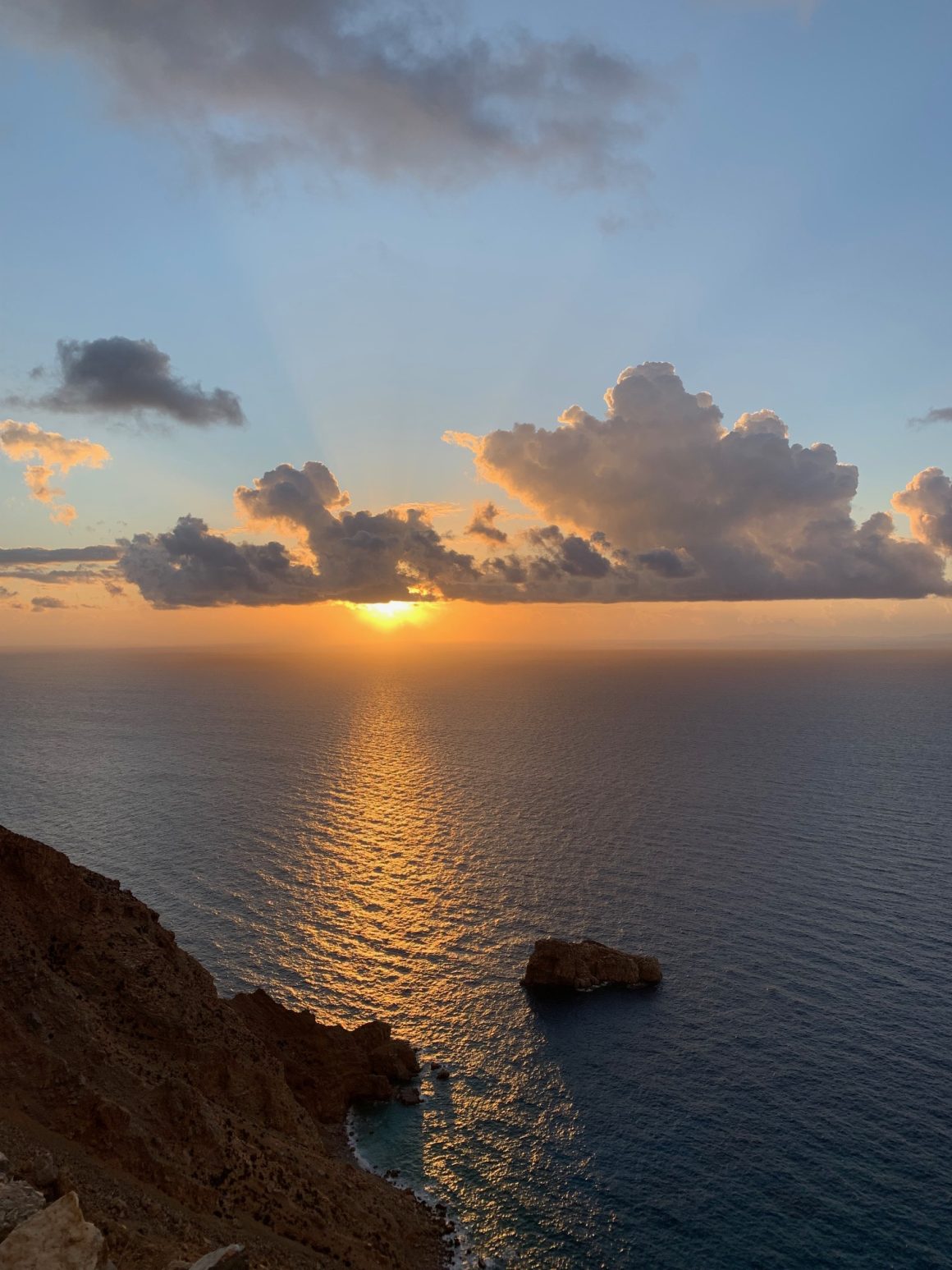
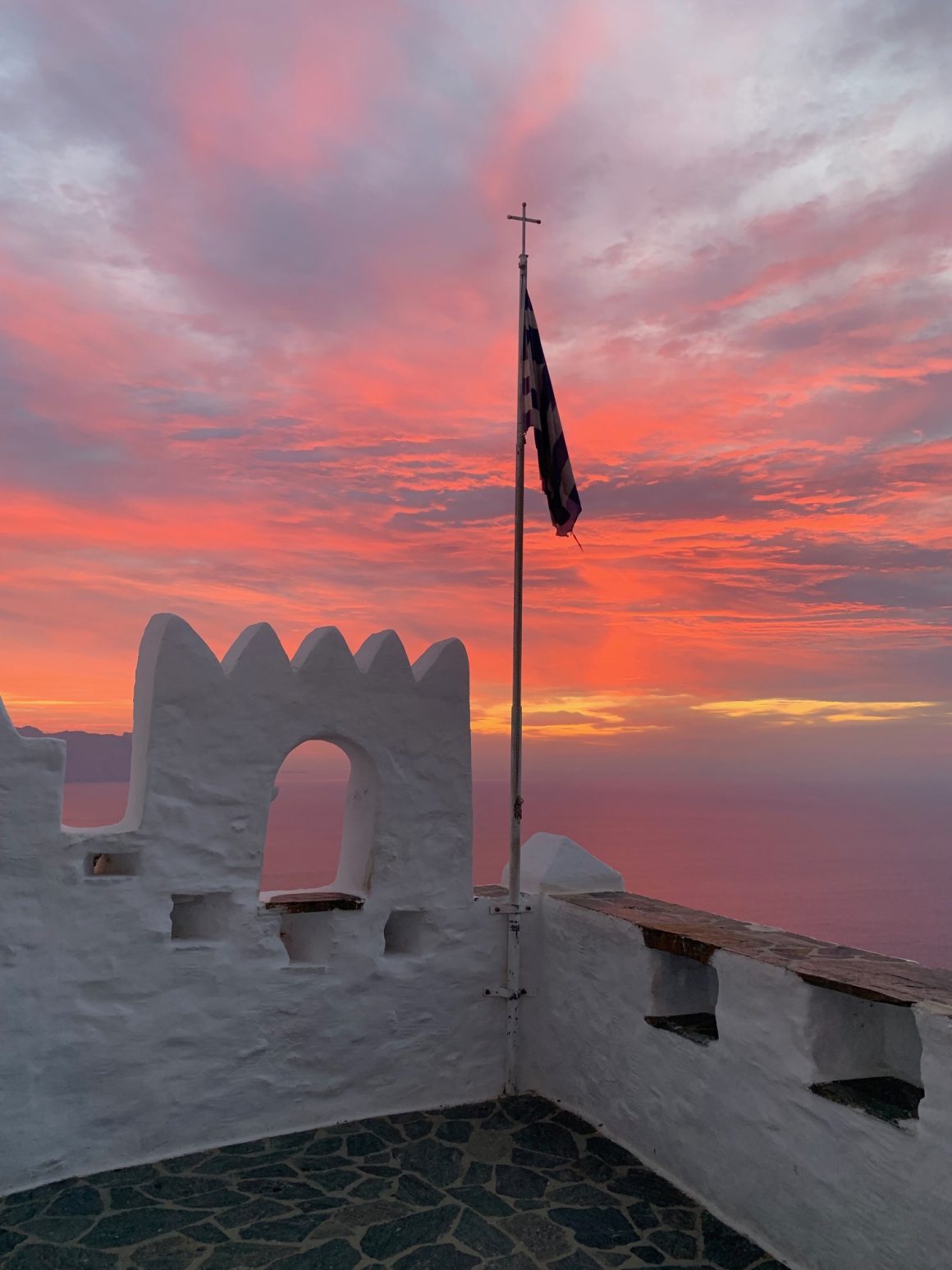
The natural surroundings alone offer one of the most profound spiritual experiences one could have. It is no coincidence that the French film The Big Blue was shot there. It is exactly that: an immense, powerful expanse that inspires awe, with its endless sea and absolute blue. The fact that the monastery was founded in 812 AD and is one of the oldest in Greece, with an active monastic brotherhood maintaining its presence there ever since, gives the place an entirely different kind of grace.
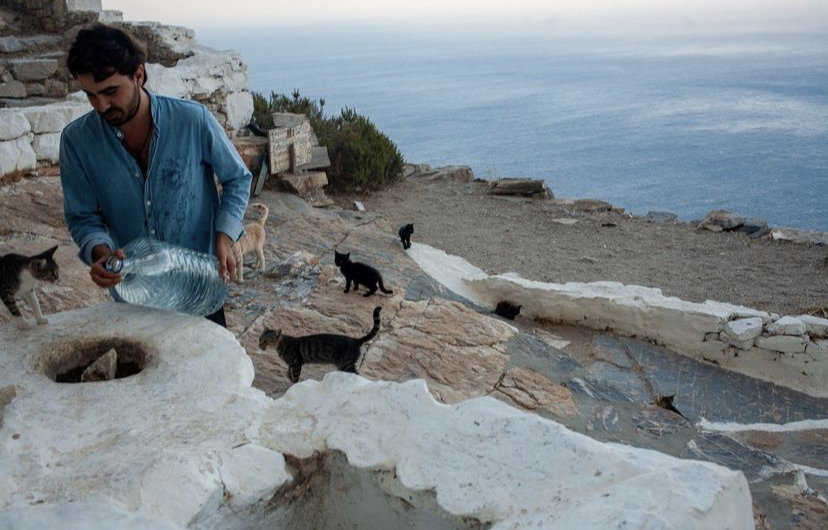
We should bear in mind that our daily services begin at four in the morning and continue until eight, followed by Vespers in the afternoon and Compline in the evening. This means more than six to seven hours of communal prayer every day. During the remaining hours, we welcome visitors, offer guided tours and attend to the various tasks involved in maintaining the monastery. The truth is that I try to find moments almost every day to reconnect with nature, particularly the sea, as I have always felt a deep affinity with water.
One of the most fascinating aspects of this experience is the paradox of life: although, in theory, you are somewhat removed from the world, in many ways you become much more connected to it. Away from the pollution and constant noise of the city, you become more attuned to people in need, to those going through difficult times or simply looking for someone to talk to and offer them a different perspective. Somehow, this geographical remoteness and distance allow you to gain a more complete view of life, without getting lost in the small concerns of everyday existence.
Although you are not a novice but a volunteer, you also manage to take on remote professional assignments. What exactly does your work involve, and what are you working towards?
Just to clarify, I am not a novice but a volunteer. Although I follow the entire monastic schedule and daily order, as we call it, I remain a volunteer. This distinction has made me, and continues to make me, feel more honest in my relationship with the monks, because I want to offer my time and service wholeheartedly, without any financial or formal arrangement in return.
From time to time, in order to remain somewhat financially independent and avoid placing an additional burden on the small monastic brotherhood, I continue to work in consultancy and strategy. I advise companies, hotels and private clients, helping them with everything from establishing their business to communicating their work and vision in the digital world.
Living in a remote monastery also gives you the opportunity to develop a broader, more holistic perspective on how a business can be built with a long-term vision.
In what ways do you feel you are continuing to grow in this field?
I think I am increasingly seeing, in practice, something I sensed from the very beginning: that everything in life has its purpose and that every person comes into this world with something to fulfil. When we discover what that is, listen to it and follow it, it becomes a gift, not only for ourselves but for everyone around us. Living in a monastery does not make someone more spiritual, nor does living outside one place them further from God’s will. I find myself becoming increasingly open to different fields and perspectives, and to the idea that every business, however small the gesture, should be connected to a charitable cause.
What do you consider your most significant achievements in life, and which personal milestones mean the most to you?
I believe everything in life matters, because even the smallest gesture can take you somewhere much deeper and further than you might imagine. Perhaps one of my greatest achievements was managing to build something at a very young age, while also realising that even that is transient. Perhaps it is learning to love the people around me more deeply. And what I would still like to achieve is greater discernment.
What and who inspire you to keep moving forward?
Daily prayer, especially when it comes from the heart, is certainly something that moves me deeply. Nature, of course, the sea, walking and the Virgin Mary. My mother, who is now in heaven, as well as a few very close friends and spiritual guides who are here with me. They support me every day, with the patience, persistence and love to always be there for me. For that, I am truly grateful. It is a rather particular path, one that comes with no set rules, because, at the end of the day, theory and practice are worlds apart. It is something you experience every day, a daily struggle.
What does faith mean to you, and what do you believe it means to people in general?
I would say it is an anchor. It gives you something to hold on to, offers hope and keeps you grounded. It also helps you move beyond excessive egoism, when you realise that your time here is temporary and, more importantly, that you are never alone. I hope it makes you more compassionate, more merciful and, ultimately, freer, because you serve God, not people.
How easy is it to live on a rock in Amorgos, through both summer and winter? What is it that keeps you there?
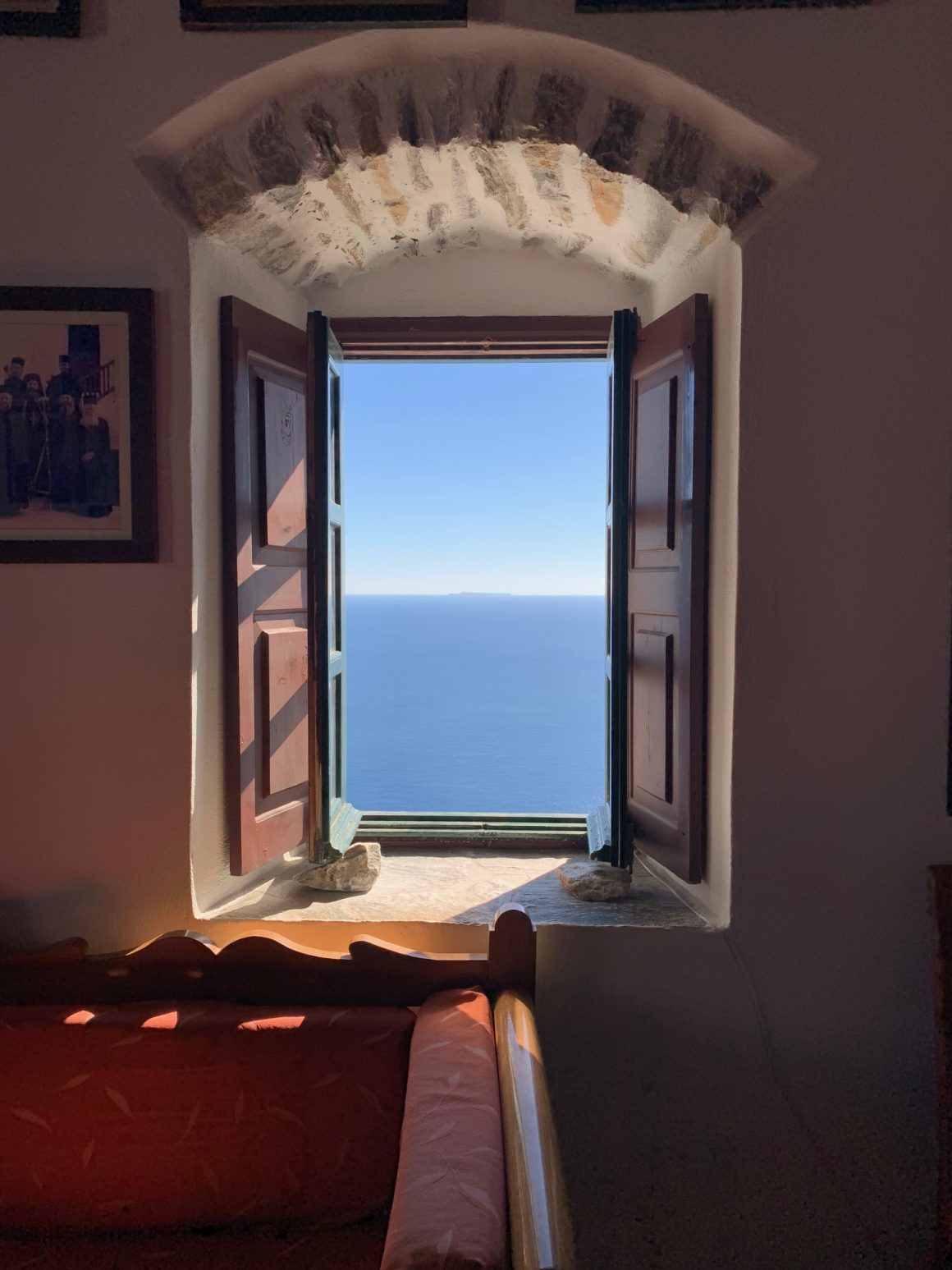
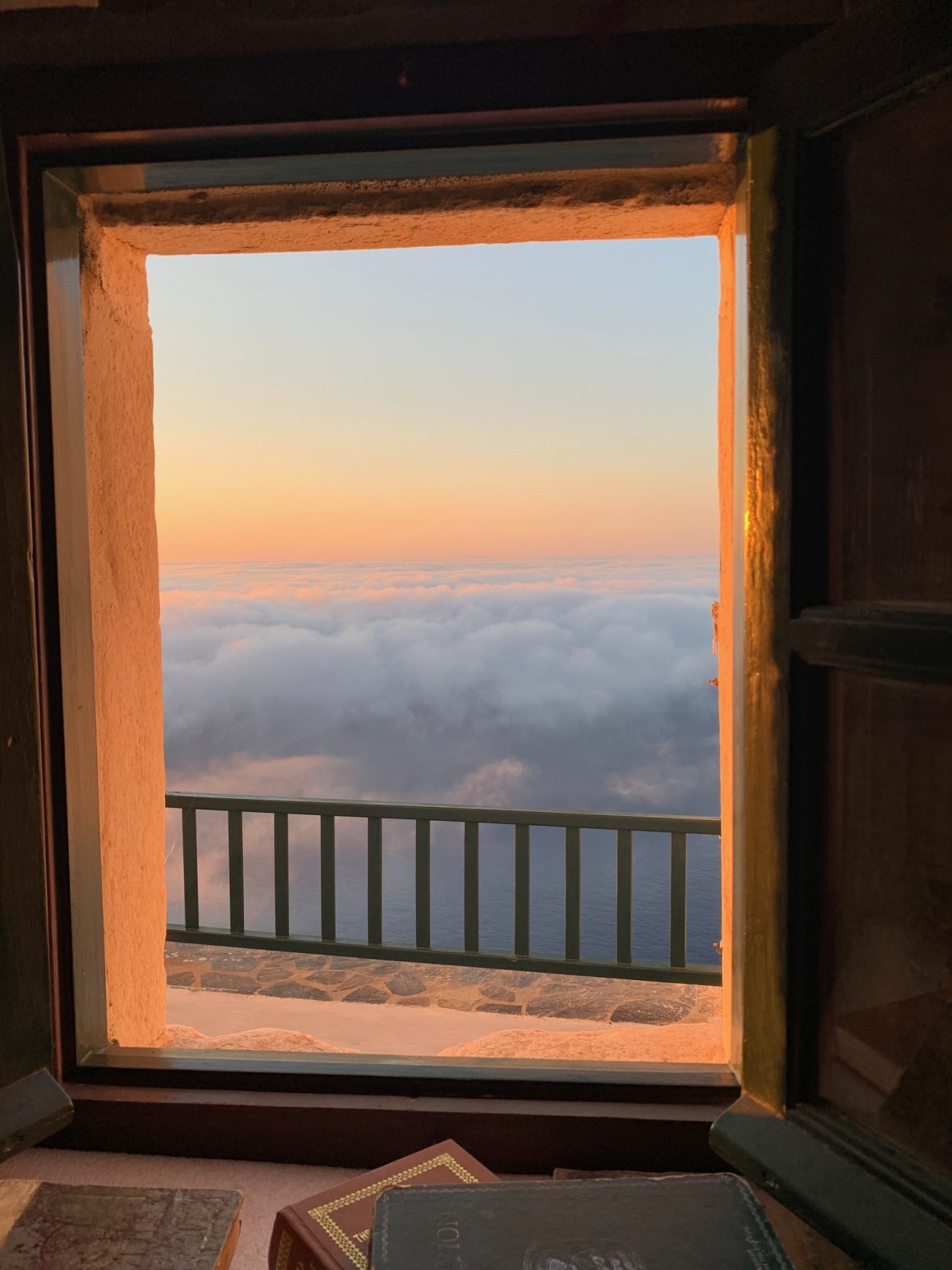
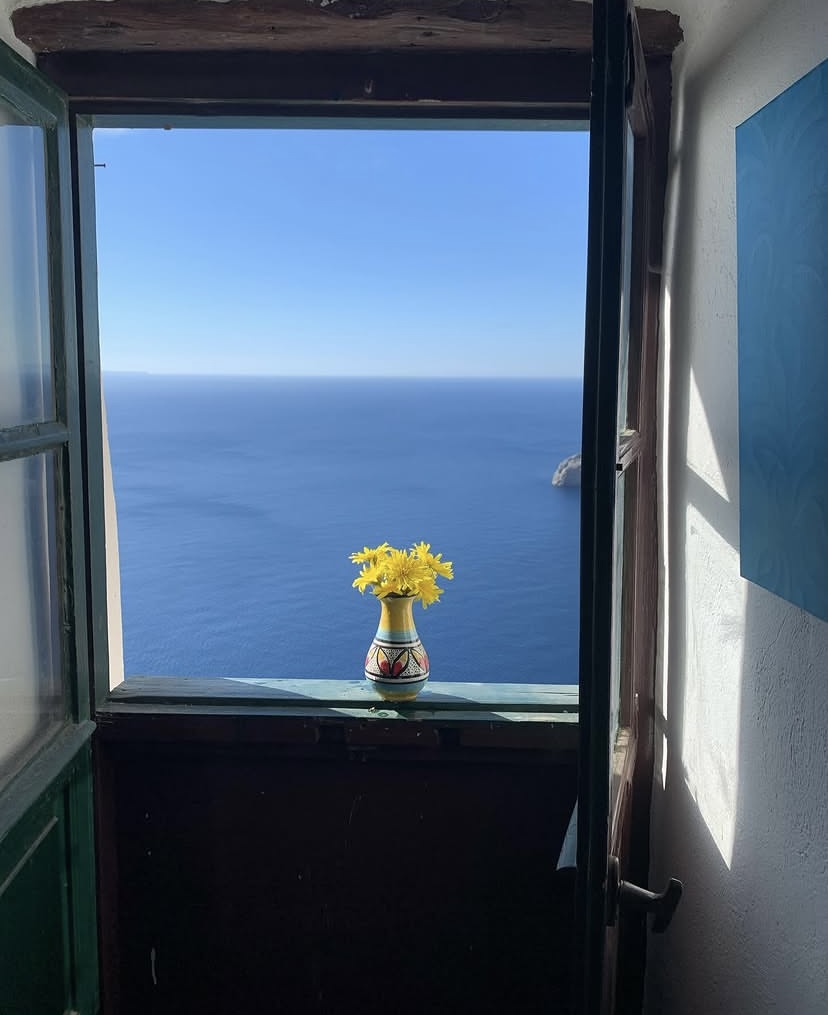
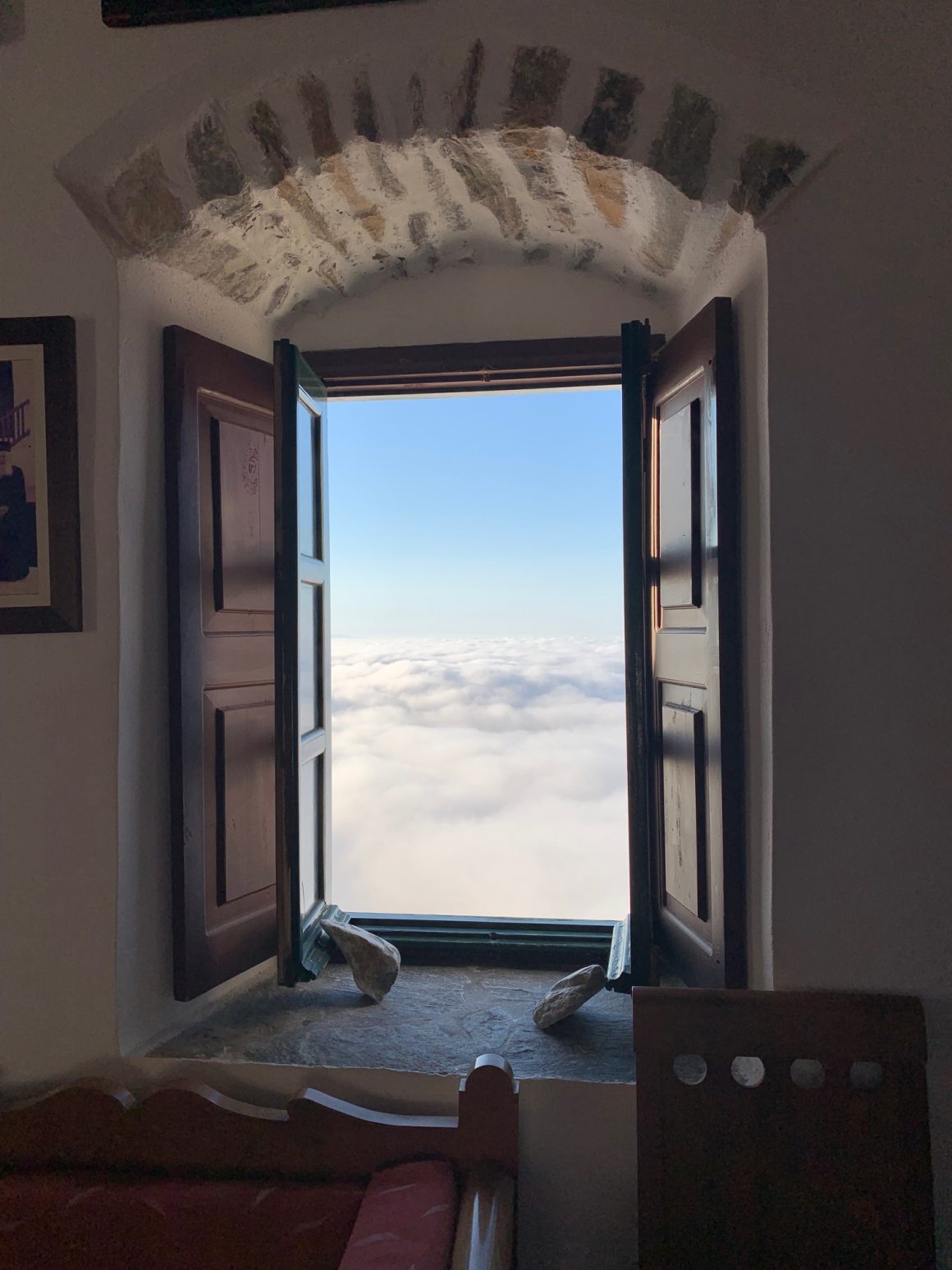
I think it is the power of nature, faith and the people I have met and share my everyday life with. I always tell my friends that I have the best room view imaginable, and it is priceless. How could Paris ever compare? 😉
Meeting so many people every day, many of whom travel from the other side of the world to experience the monastery, how do you feel about people today? What do they seek in God, and how determined are they to find their own place close to Him?
I think it is wonderful to realise that we are all constantly searching, both within ourselves and beyond. More and more, I feel that people are seeking a spiritual connection with something greater than the human experience. It is a form of hope that I believe people, particularly younger generations, respect and actively seek. People are neither foolish nor as disillusioned as we sometimes imagine. We all have feelings and, deep down, we long for this connection. And quite often, it is through these everyday conversations with visitors that you ultimately discover love – and, through love, God.
Tell us about an experience you will never forget.
So many things happen every day that it is difficult to single out just one. I have met people who used to be my neighbours in Paris, visitors who have since become friends, and couples who first met here. I have witnessed what feel like miracles, from pregnancies to recoveries. I would not want to overlook the everyday, because there is something miraculous about it in itself.
Do you believe that God protects us, listens to us and is always close to us?
I do. We simply have to find a way to remain in communication with Him. Sometimes, much as in our human relationships, we tend to speak more than we listen. And that is where we lose our way. We are also impatient, myself included. But time does not exist for God; there is only the right moment, the moment that can change everything.
What gifts has maturity brought you, and how much do you feel you have changed inwardly?
The greatest gift is knowing, with greater certainty, something I had sensed all along: that there are great advantages to remaining childlike. To be mature in judgement, yet a child in love and in heart. That is the balance I seek, sometimes find and sometimes lose. But even then, you have to surrender to the flow of life.
What would you love to create? What would your dream project look like?
I have always been drawn to communities and to bringing together people from different backgrounds, cultures and walks of life. That is why, in previous years, I organised retreats once a year in the beautiful Peloponnese. Who knows what form this might take in the future? I have also come across so many beautiful yet abandoned little churches around the world. The thought of restoring one of them and somehow bringing it back to life is something that deeply moves me.
The best book you have read recently?
The most recent one was The Rule of Saint Benedict, written by a sixth-century saint who has somehow captivated me. He was a pioneer of Western monasticism, and his approach is often considered relevant even as a guide for business leaders. Ora et Labora – eight hours of prayer, eight hours of work and eight hours of rest, very broadly speaking. I find it an interesting approach to the balance we were discussing. Another book I consider particularly insightful is Beginning to Pray by Anthony Bloom.
Something you would never want to part with?
My love for the world. And God.
Where do you see yourself in ten years?
(Laughs) I have no idea. Perhaps wearing a monk’s habit, perhaps not. As long as I am happy and able to help others.
Three places you love returning to, and why?
I would say the Peloponnese, because the power of its nature, its light and the land itself always replenish me. Italy, because there is a certain sweetness to it; I am always moved by the constant ringing of church bells and the presence of the Virgin Mary throughout its buildings. And I would also say Paris, because it brings back memories of a beautiful chapter in my life, a place where I still have dear friends.
What advice would you give to people of your generation?
To live. And to truly follow their hearts. Not to become trapped by dogmas and rules if these weigh them down, but to love God and their fellow human beings. Always to speak the truth and keep their conscience clear. And never to be afraid of human connection. We have reached a point where people do not even speak to one another in the street. It is a pity. Every person comes into this world for a reason. We are fellow travellers, not opponents. And I believe younger generations have this within them. They are more authentic.
How would you define beauty?
Beauty is truth, in everything. There is nothing more beautiful than the human face as God created it. Nothing in nature is more beautiful than an olive grove. And nothing is more beautiful than a genuine, clear and luminous gaze.
What do you consider authentic in our times?
Whatever is true. Nature. Silence. Young children. The sun. Love. These things have always existed and always will. They are not fleeting; they are eternal. It is simply that our superficial obsessions and passing trends sometimes blur our vision. Light will always be authentic. And so will truth.