Tell us about your story and how your background in architecture led to an artistic path rich in references and design elements.
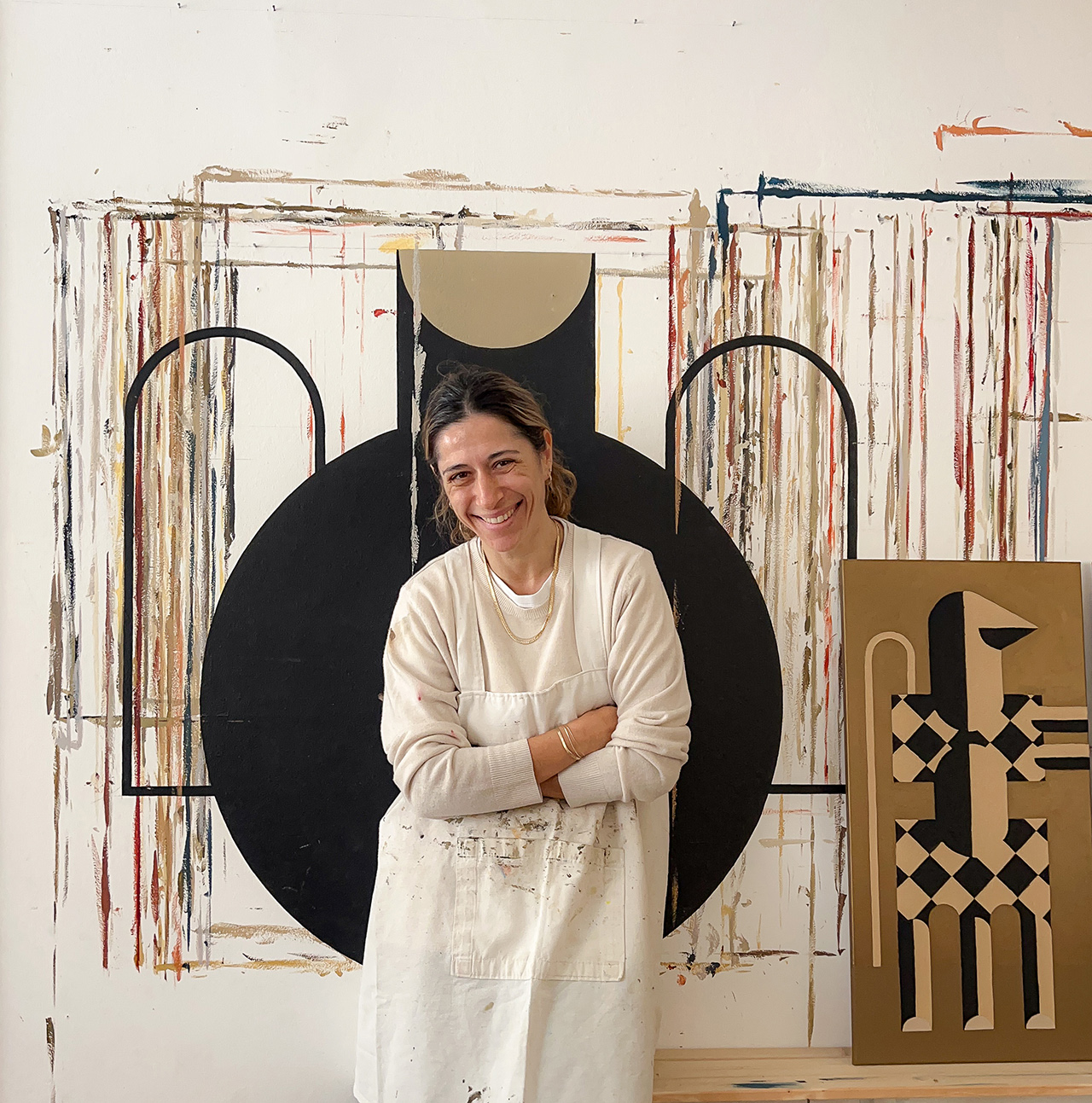
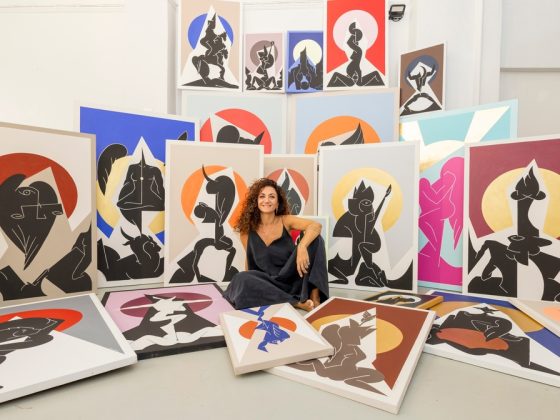
I studied architecture at the University of Thessaly and worked as an architect and interior designer for many years. At a certain point, when architecture no longer fulfilled my creative needs, about six years ago, I began devoting more time to painting. One thing led to another, entirely organically, until painting gradually replaced architecture in my everyday life and overall direction.
In your work one can recognize Crete, Byzantium, Mother Nature, family, Greece. What is the blend of your own perspective, and how does your soul manifest in the way you function as a visual artist?
That’s true—everything you mentioned serves both as inspiration and as creative fuel, rooted in the way and the place in which I grew up. As a typical Cretan girl, my experiences overflow with nature, Christianity, and family. These are values I questioned intensely, and through art I am now trying to redefine them.
How can the imagery of a religion that doesn’t fully express me still offer comfort and meaning?
How can the tight—often suffocating—embrace of family provide security and grounding?
How can wild, harsh nature, alongside the contemporary artificial and chaotic environment, awaken the eternal symbols that exist within me?
Your work carries a poetic character and existential dimensions. How did you discover the path that ultimately feels true to you?
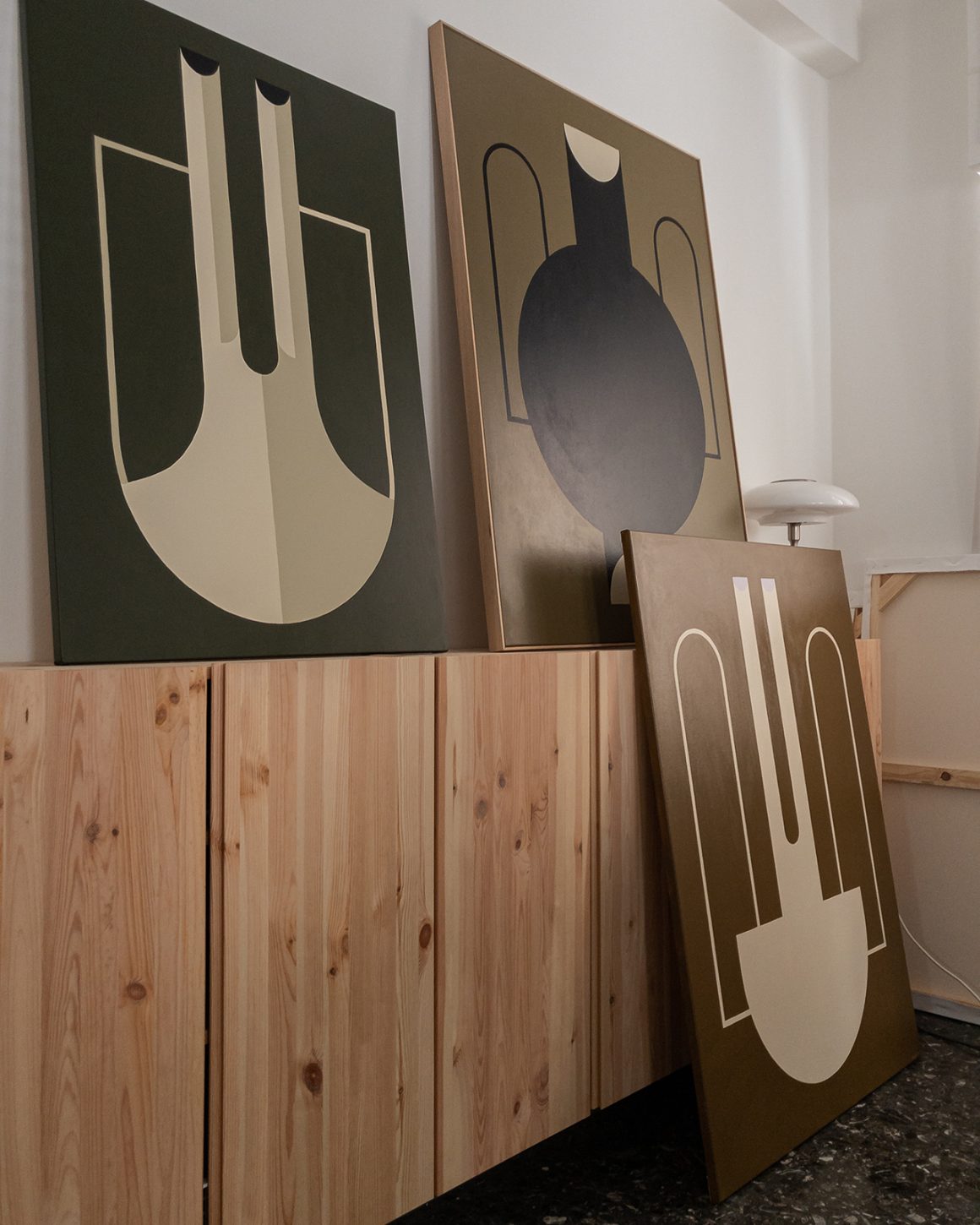
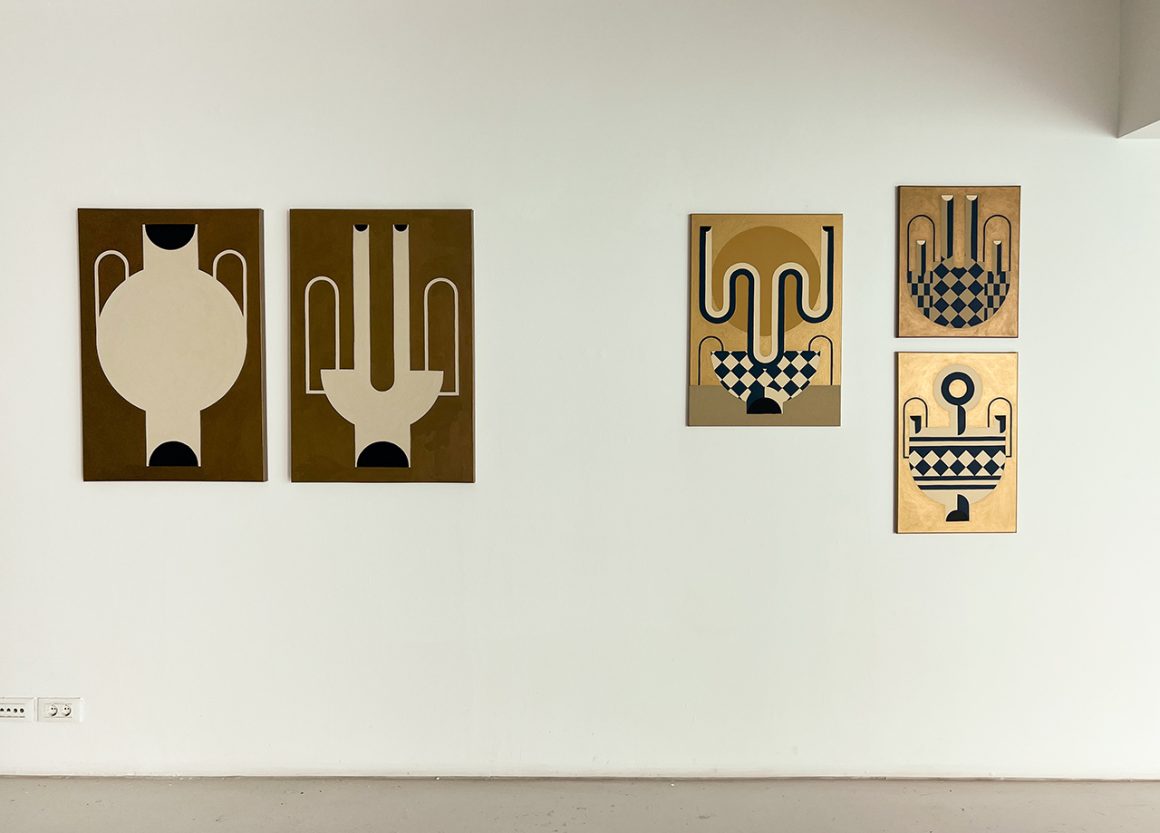
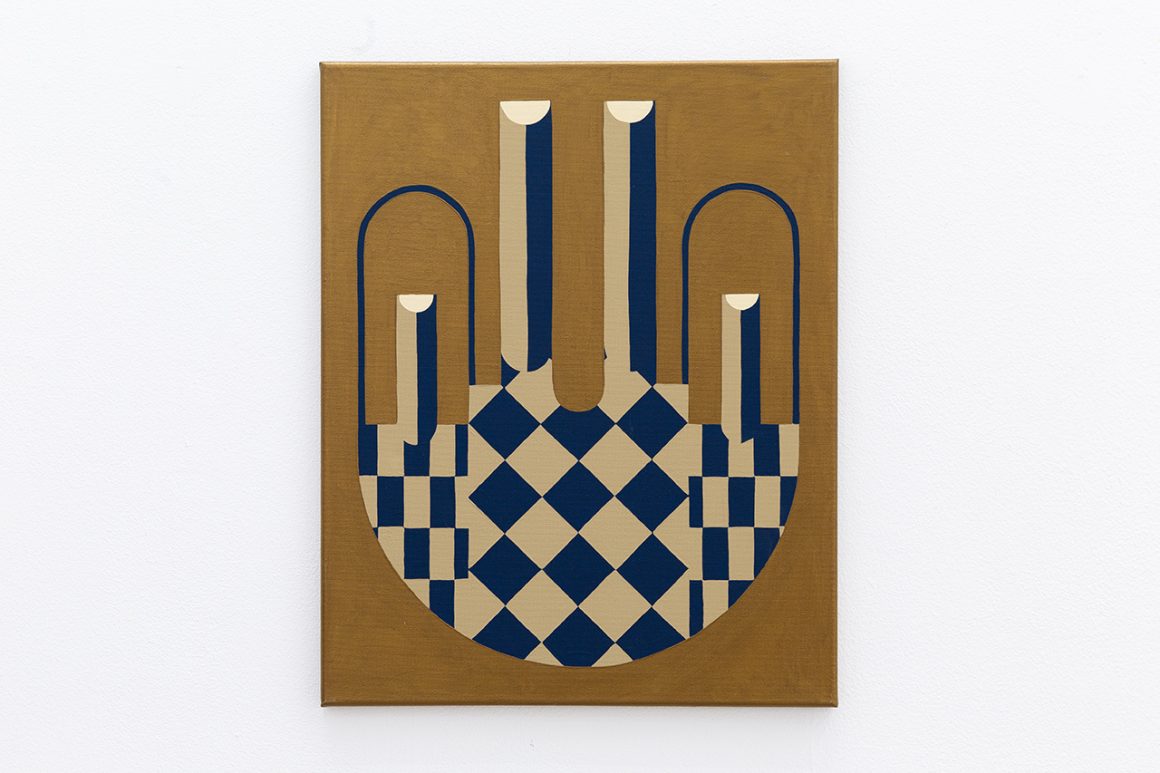
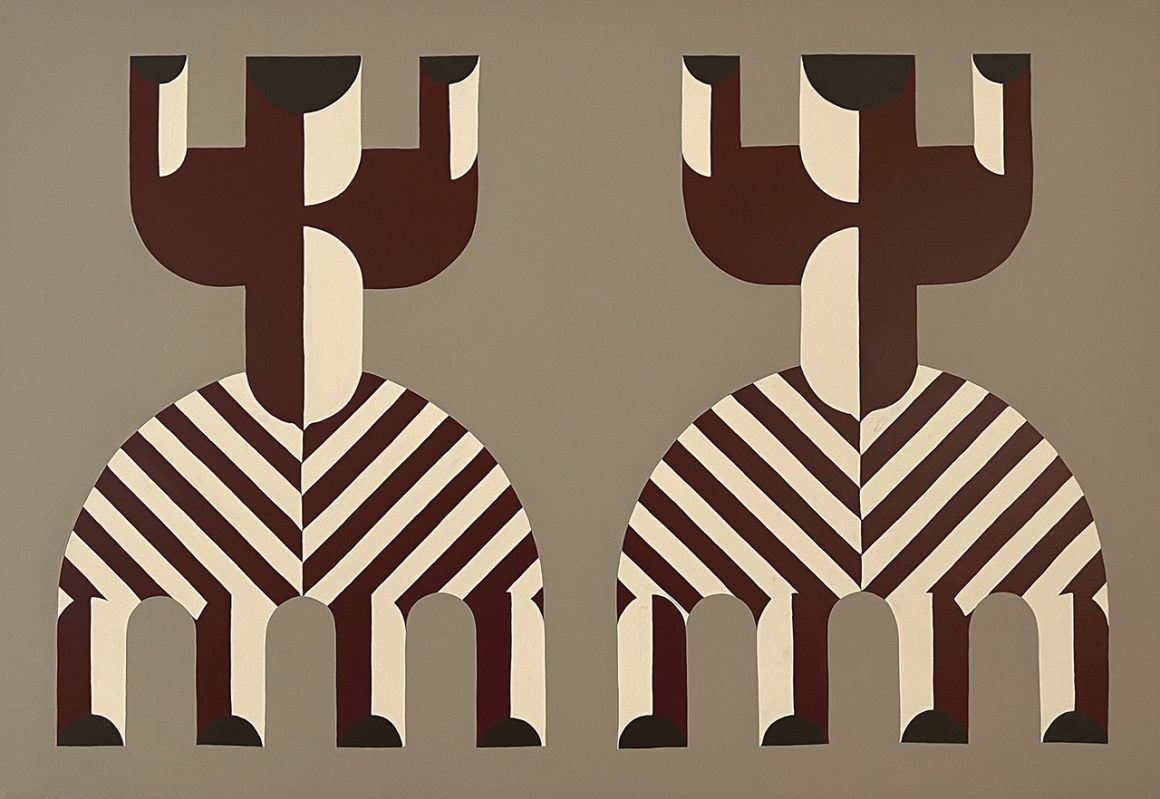
One work gives birth to the next. I began with simple forms—my earliest works were monochromatic, abstract vessels. Over time, I felt the need to introduce more information into them. Later, the vessels began to take on eccentric forms, resembling humans, animals, or architectural structures. They were placed within space and acquired textures. Gradually, while maintaining my original visual language and enriching it, each work intertwines with the next, creating a dialogue—both among the works themselves and with the latent forms waiting to emerge from within me.
Tell us about your exhibition at The Breeder Gallery—what does it include and what kind of response do you receive from the audience?
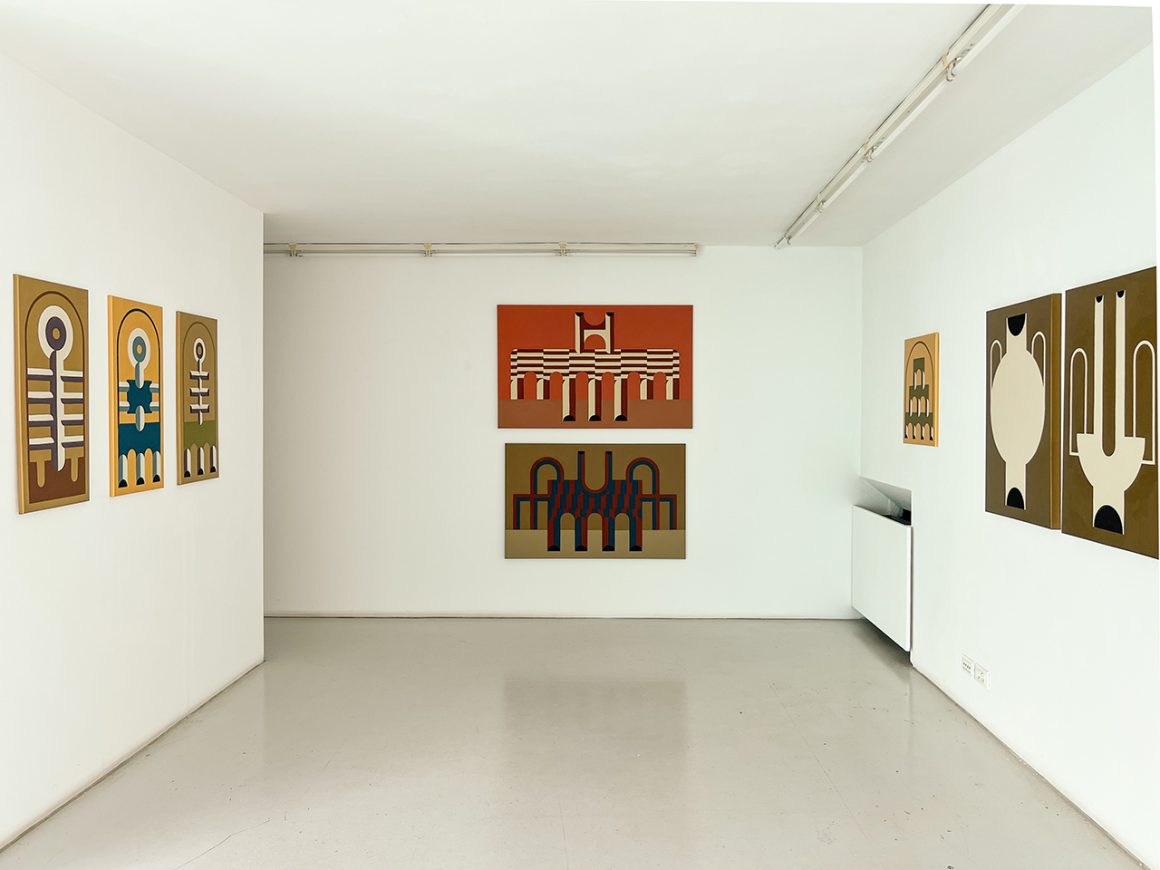
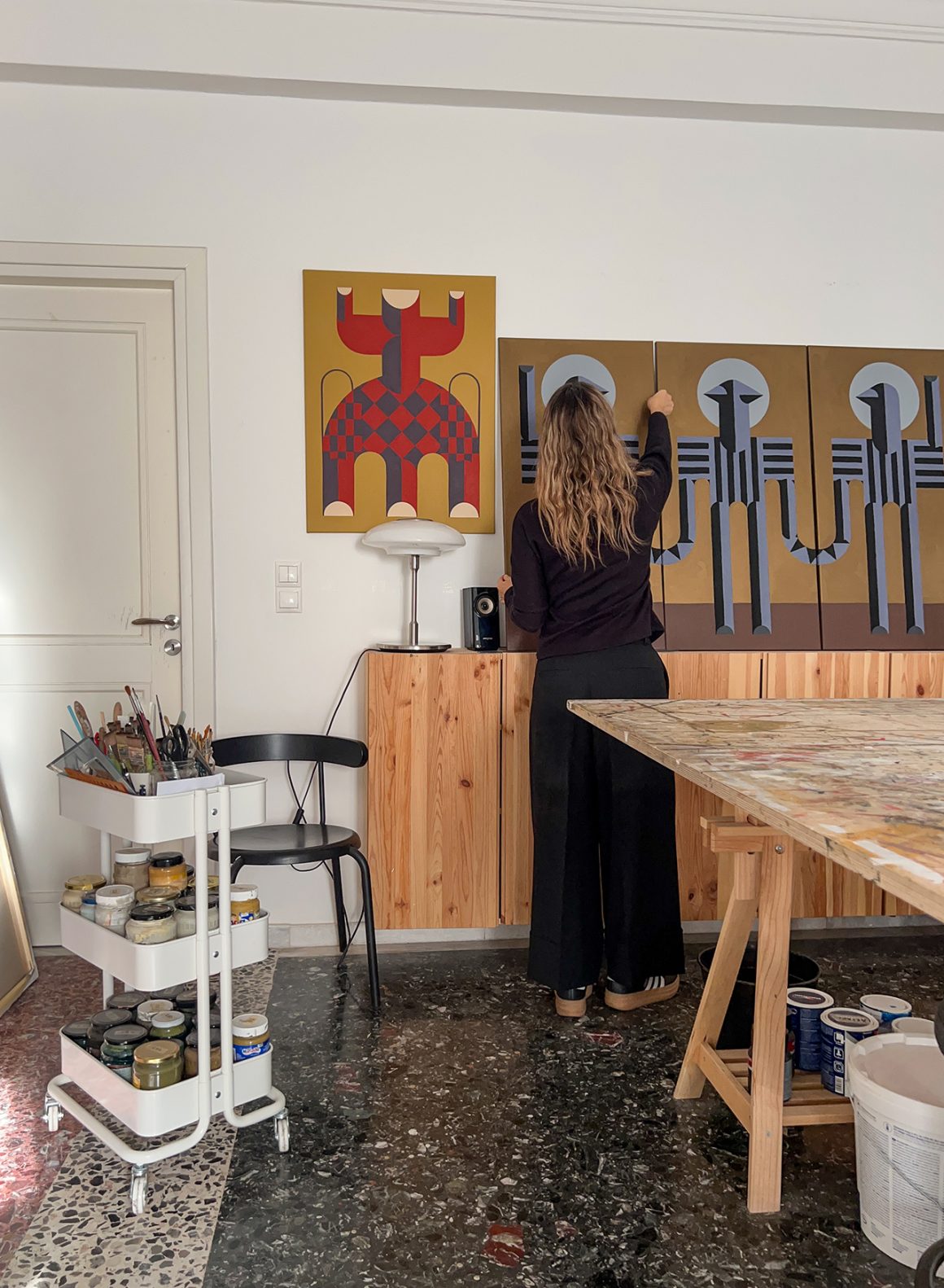
In the exhibition, visitors encounter works from the last three years of my practice. They can follow the progression from the vessel as a fundamental form to its transformation into a creature or a structure. They will see birds, monuments, bulls and rams, muses.
Most importantly, however, they will encounter a translation of their own elements through the forms depicted in the paintings. As the exhibition title suggests (Let Your Dreams Flow Inside Me), I hope the viewer allows themselves to surrender and let a part of their own self enter the work—thus activating its meaning on a deeply personal level.
Is there a story behind each work, and if so, what is it?
There isn’t a story in the literal sense, but there are emotions and memories. More often than not, these become clear to me long after the work is completed, once I’ve lived with it for some time.
What is your favorite work ever, and why?
One of my most beloved works is Dancing Ladies. It was perhaps the first piece where the transition from a pure vessel to a vessel-figure occurred, and it became a source of inspiration and liberation for everything that followed.
Tell us about the mural and your collaboration with the Onassis Foundation’s Stegi. How did it come about, what does it depict, and what impact did it have on the neighborhood and beyond?
The story behind the mural, created in collaboration with the Onassis Foundation’s Stegi, is particularly meaningful to me because it confirmed the power of manifestation when it happens at the right moment. The initial contact began after I posted an Instagram story—a collage of an imaginary mural of my work on a random wall in a random metropolis, with the caption “some day…”. It was a dream to see my work realized on such a large scale in public view, though it wasn’t something I consciously pursued.
Through the mediation of artist Nikomachi Karakostanoglou, who saw and believed in my dream, I came into contact with Aphrodite Panagiotakou, and everything flowed naturally from there.
The mural symbolizes a maternal figure—it is a vessel in female form, a guardian and protector, a mother who loves, supports, and sets boundaries for her children in a disoriented era that longs for reference points and meaning.
How important is it today to connect with people who share a common language and aesthetic?
It’s important to be among people who inspire you to bring out the most authentic part of yourself. You may or may not align aesthetically or artistically—sometimes inspiration comes precisely from difference and contrast. What matters most is being surrounded by people with whom you resonate energetically, who share common values and a common understanding of what a beautiful and meaningful life entails.
How does your architectural thinking evolve, and how does it manifest in your work?
My work is deeply influenced by architectural thought and practice. The initial approach to a subject—say, the vessel—is inherently architectural: stripping the idea down to its essence so it can later re-emerge in a new form through abstraction and redefinition of its core elements, guided by balance, aesthetics, and the movement of the viewer’s eye across the canvas.
One of the defining characteristics of my work is the translation of three-dimensional space into two dimensions. I’m interested in how the viewer perceives spatiality without it being rendered through traditional methods of drawing and shading. I often compare this reading of form to the way architectural drawings are interpreted—it is essentially a language that conveys the idea of the final form through symbolism, abstraction, and color palette.
If you’d like, give us a glimpse of what exciting things are coming next in your work.
I can’t say much just yet, but very interesting projects are on the way—projects where the work moves beyond the canvas and acquires spatial presence and functionality through the use of materials such as marble and stone.
Do you see a continuation through custom-made creations and applications of your art in functional objects in the future?
I would be interested in translating the language of my work into functional objects. It’s not something I’ve explored yet, but it will certainly appear along my path.
When you enter a space, what do you notice first?
In any space I enter, I immediately focus on the lighting. The way a space is lit—both naturally and artificially—is extremely important to me. Good lighting can elevate even the most indifferent space, while poor lighting can ruin even the most beautifully designed one.
What makes you feel good in a space?
Lighting 🙂
Essentially, the more easily I can appropriate a space, the more comfortable I feel in it. If I can find my corner—literally or metaphorically—I instantly feel at ease. A well-designed space, with thoughtful lighting, layout, and material choices, allows you to do exactly that.
How much of Greece exists in your work?
There is as much Greece in my work as there is within me. Greece—and even more so Crete—is an ideal homeland of reference, a memory, an idea, a mental space within which I inevitably grew up and was shaped. The notion of “homeland” as it is often distorted today doesn’t interest me, nor is it something I wish to depict. Through my work, I prefer for each viewer to discover their own homeland, whatever that may be.
What would you say is the distilled wisdom of your journey so far—something you would pass on to your children?
If there is one thing I wish to pass on to my children, it is to be honest with themselves—their desires and their needs—to love their fears and face them head-on. To respect themselves, as well as the people and all living beings around them.
What would be a dream project for you?
I would like to experiment more with large-scale work—perhaps a landscape or architectural installation.
A place you love to return to, and why?
There is only one place of return for me: my village in southern Rethymno.
There, among the mountains and ravines, beyond the dreamlike beaches, among scattered olive groves and strong winds—I feel that I reconnect with my true self.
What is your personal definition of beauty?
That which makes you feel both awe and serenity at the same time.
What do you consider authentic today?
For me, authenticity today is anything that has nothing to do with performance in its broad sense—doing something for yourself, knowing it won’t be seen, applauded, or commented on. Not doing it for trends, views, uploads, or fifteen minutes of fame, but because it genuinely matters to you and contributes to your growth as a human being.
If you were to design something for TheAuthentics.gr, what would it be?
A mural in your offices—a symbolic figure of authenticity, quiet strength, and creativity.
Let Your Dreams Flow Inside Me – Eleni Psylaki
The Breeder Feeder
On view until 21st February