Tell us about your creative journey and which achievements you hold closest to your heart
My journey began very organically, without the kind of “strategic plan” people might imagine today. And quite difficultly, too — without an established background or mechanisms that opened doors. It was a very different era from the one we live in now, without the immediacy and the tools that exist today. Everything was built more slowly and much more manually. But from a very early stage, I knew that what interested me was not simply creating clothes, but creating an entire world around clothing. I was interested in the woman, her attitude, her energy, the impression she leaves when she walks into a room.
I think my greatest achievement is that I managed to build a clear identity that has remained recognizable throughout the years without mechanically repeating itself. In such a fast and noisy era, I consider it a great success to remain true to yourself without standing still. What I also deeply value is the fact that I have an audience that grows alongside me. People who have trusted me for years, who keep returning, who connect moments of their lives with my clothes. There is something deeply emotional and meaningful in that. And perhaps, in the end, that is the most important thing I’ve achieved: creating a relationship of trust and longevity within an industry that constantly changes.
You have been creating within Greek fashion for many years and are considered one of its worthy representatives. What is your view of Greek fashion today, and what do you believe your contribution has been?
I believe Greek fashion has far more talent than it gives itself credit for. However, there is a constant anxiety to prove that we “belong” somewhere externally, instead of building something truly personal and lasting. I also see many young designers investing first in the image of being a designer and only afterwards in the actual work. And I understand that to a degree, because today’s world pressures you to remain constantly visible. But eventually it becomes clear whether there is real thought, evolution, and work behind it.
If I had to define my own contribution, I would say that I chose to build slowly. Without an established background, without financial security, and without being interested in becoming famous as quickly as possible. I wanted to create something with duration and character. “Everything is possible” is something I often say and deeply believe in because I’ve lived it myself. And I think that may be the most important message for young people today: you do not need to appear successful from the beginning. You need to endure long enough to become truly good at what you do.
What have been the brightest moments of this journey, and what remains non-negotiable for you?
The strongest moments are not necessarily the loudest ones. They are the moments when you realize that something which once existed only inside your mind managed to genuinely touch other people. I never forget women who have told me they felt stronger or more beautiful wearing one of my pieces during an important moment in their lives.
That’s when you understand that fashion can become something much more personal than it appears on the surface. What remains non-negotiable for me is character. I’m not interested in easy luxury or excess for the sake of excess. I care about clothing having a reason to exist and a personality of its own.
After so many years and such a remarkable career, what elements do you consider most emblematic of your creative approach?
For many years, my work had a rather strict side to it. I was more absolute aesthetically, perhaps even more authoritarian toward the woman I dressed. I was very focused on image, strength, and silhouette. Over the past few years, though, I feel I’ve come to better understand women’s real needs. I no longer want to impose a character onto them. I want them to feel beautiful, strong, free, and empowered through the clothes — not to serve the clothes themselves.
I’ve also introduced much more color into my collections, something I used to avoid. I haven’t lost the darker or stricter side that defines me, but today I’m more interested in balance. Within me, there is simultaneously a need for reinvention and a need for stability. And I think this contradiction exists very strongly in my collections. For me, stability does not mean stagnation. It means evolving while maintaining continuity.
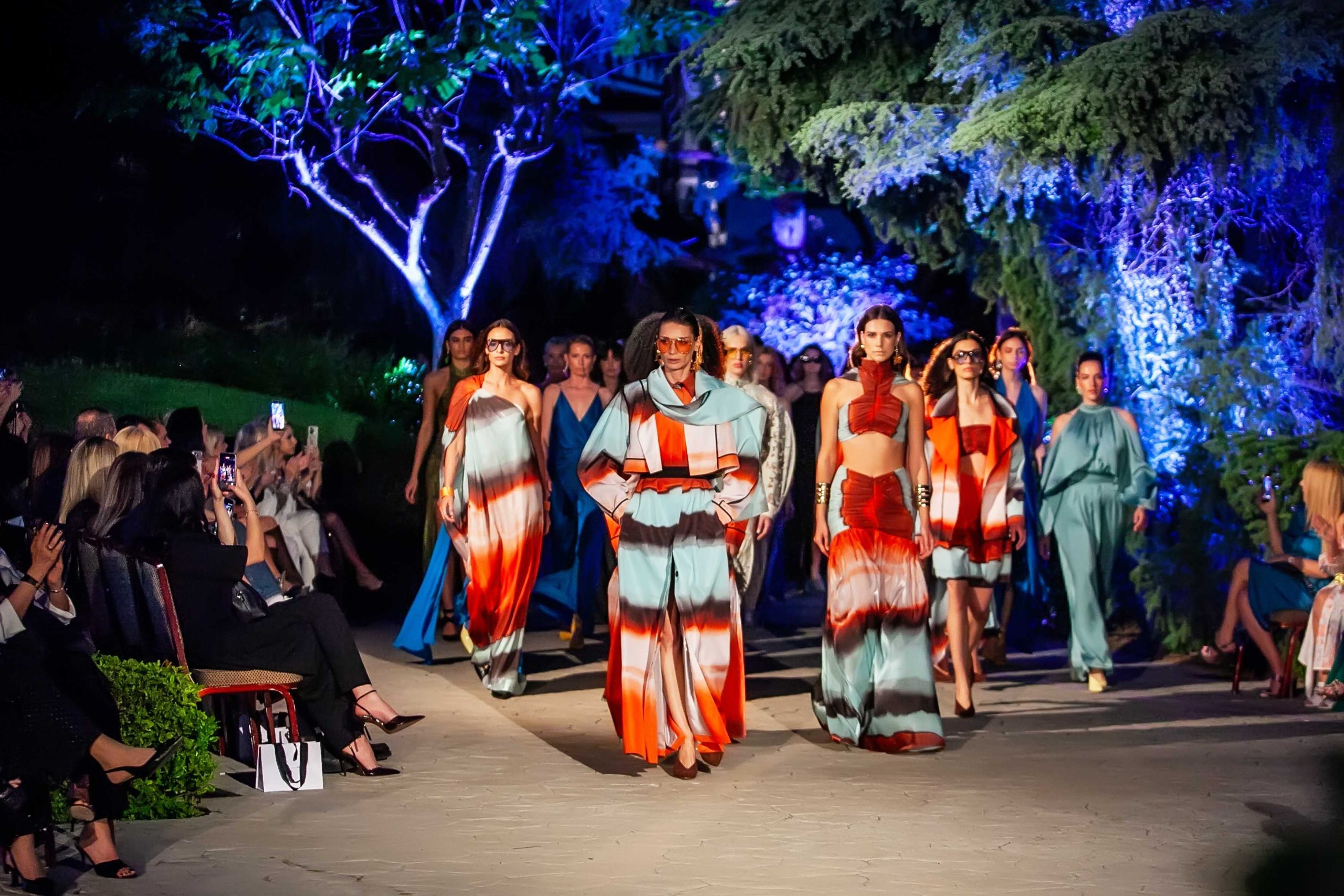
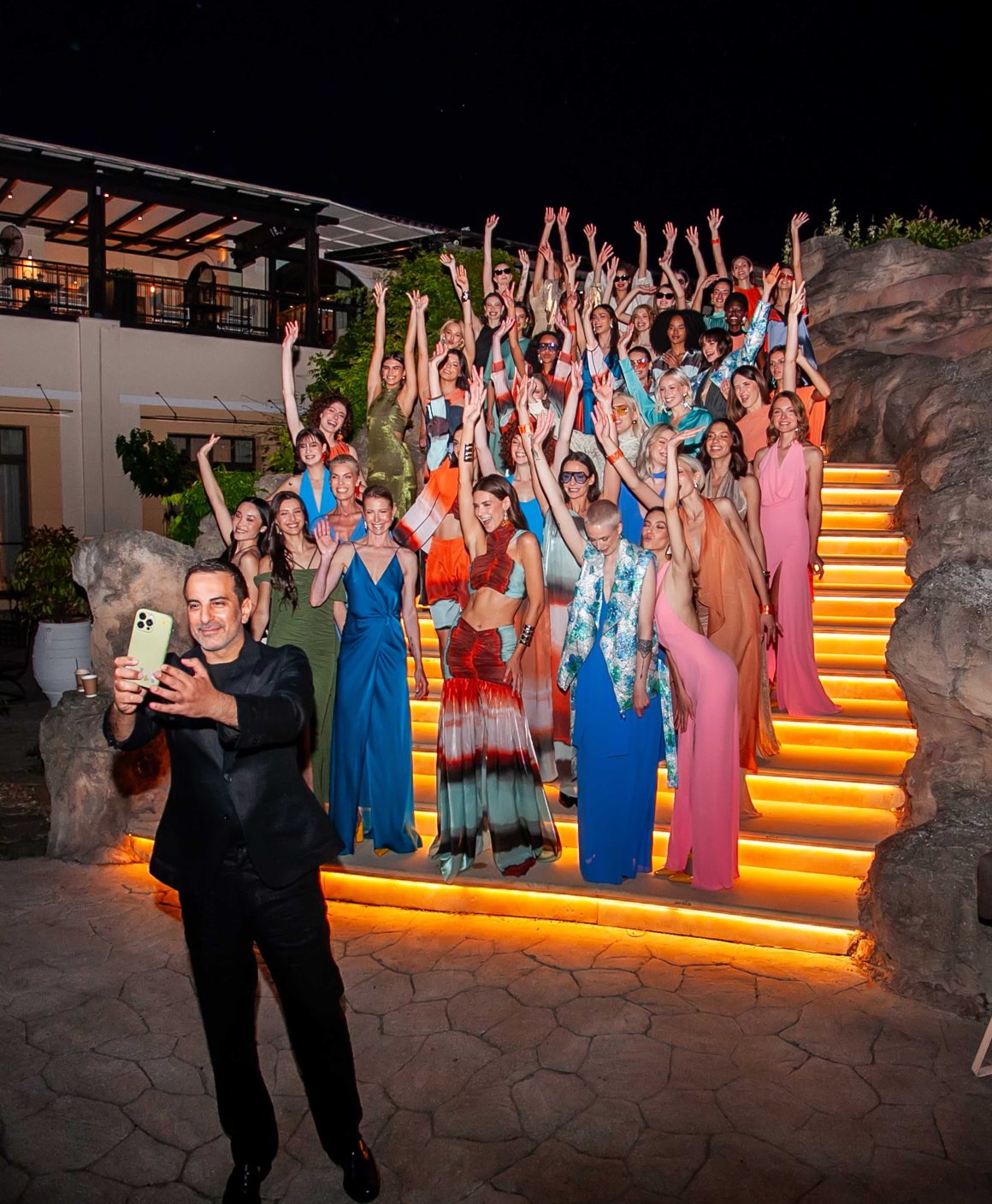
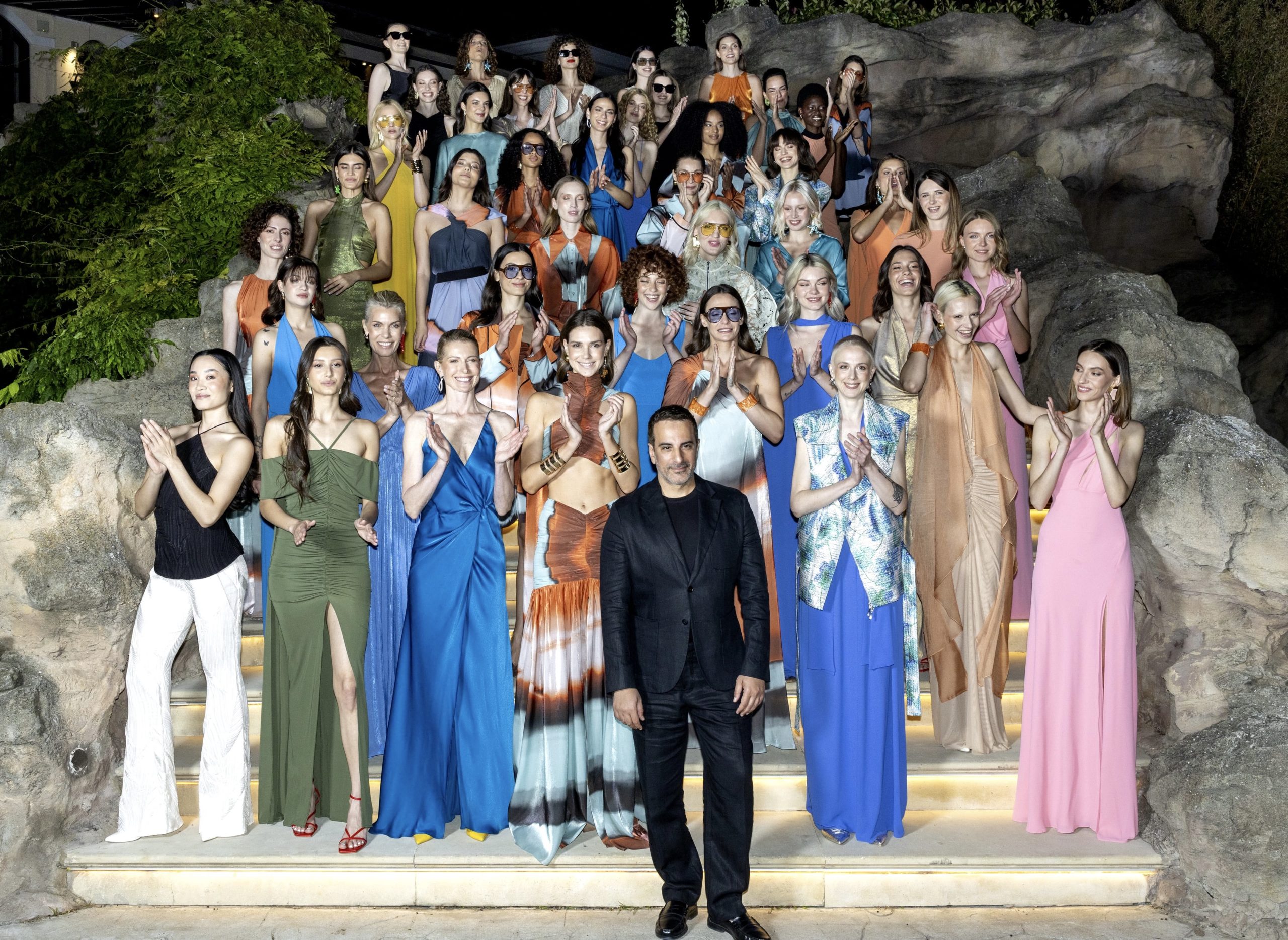
Tell us about the show that took place in Thessaloniki. What did it include, and what story did it tell?
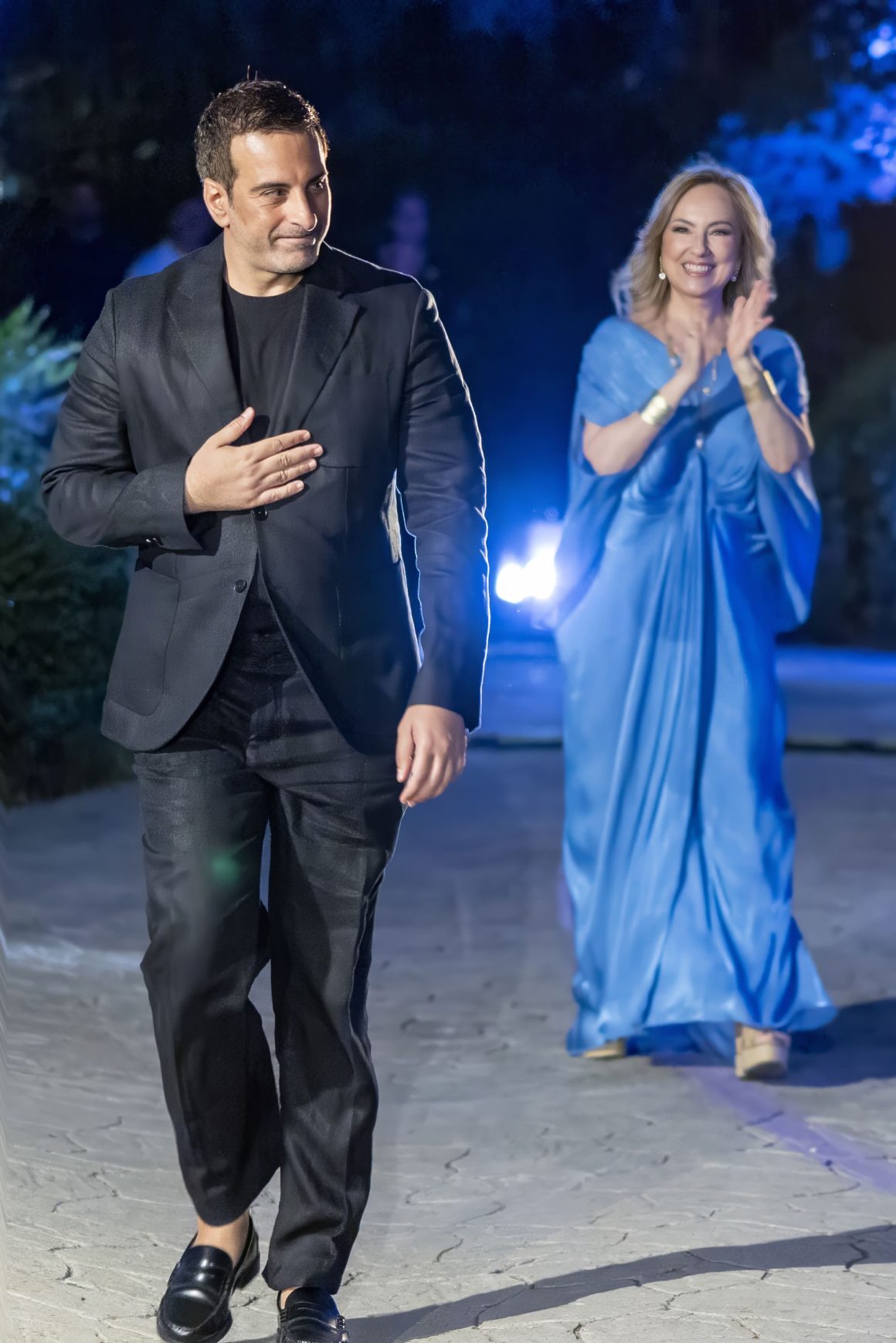
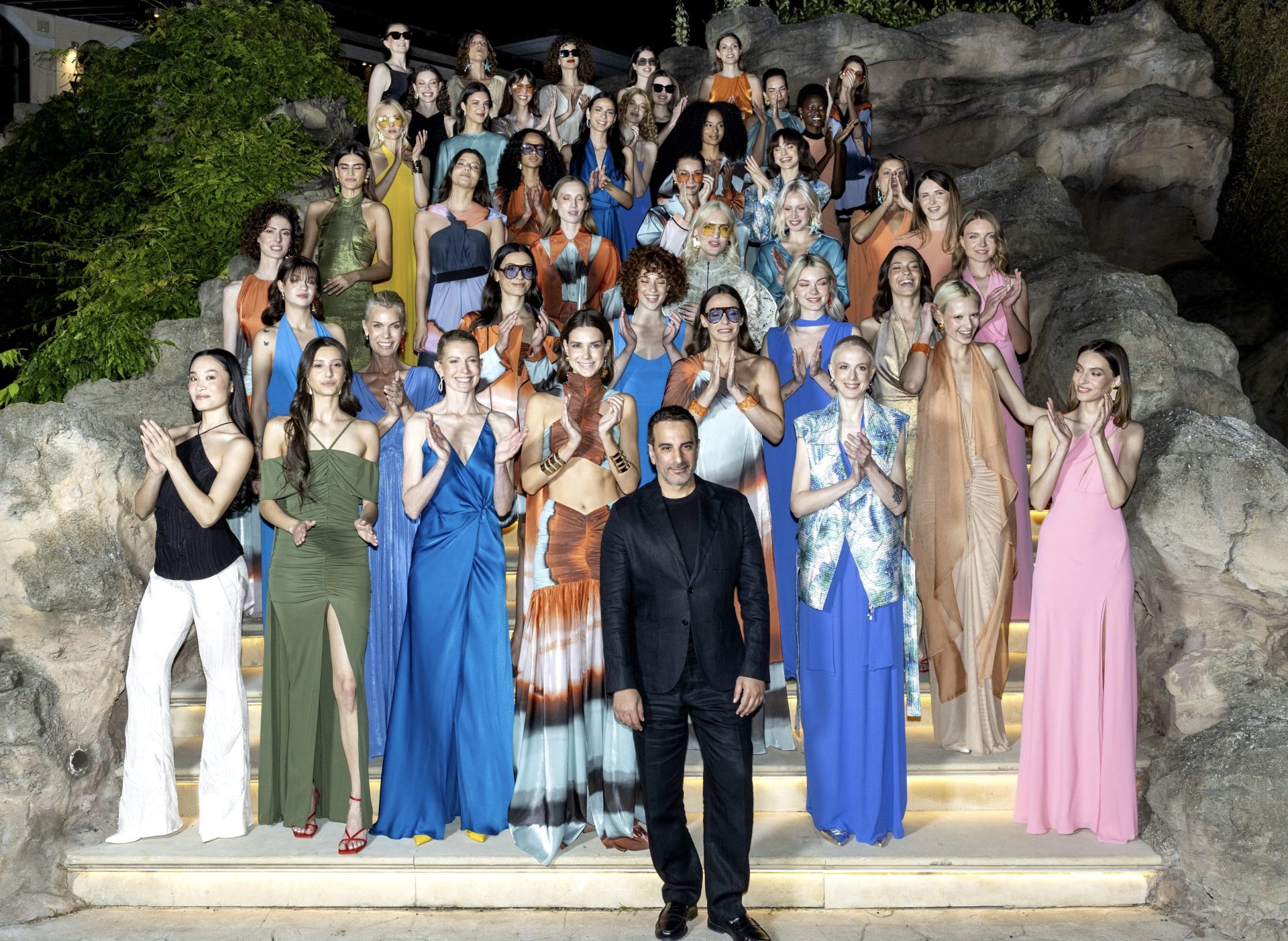
It was a show with very strong emotional significance for me because it took place in collaboration with the organization “Mazi,” with the purpose of supporting the pediatric oncology clinic of the Hippokration Hospital in Thessaloniki. The response from the audience was truly moving, and I feel very happy because the purpose of the event was genuinely fulfilled. We managed to raise funds for something truly important, and that gives an entirely different meaning to the whole effort.
At the same time, however, it was also a fully realized high-standard fashion show, with strong production, music, atmosphere, and intense emotion. People embraced it very warmly, and I think they genuinely needed to experience something like this. Thessaloniki is a city with aesthetics, with people who love fashion and culture, but unfortunately it does not often have the opportunity to host major fashion events. So I felt that the audience truly enjoyed it and left having experienced something more meaningful than a simple fashion show. And ultimately, that is what interests me most: creating an experience that leaves emotion behind, not just images.
What does the new collection have to say, and what innovation does it bring to your designs?
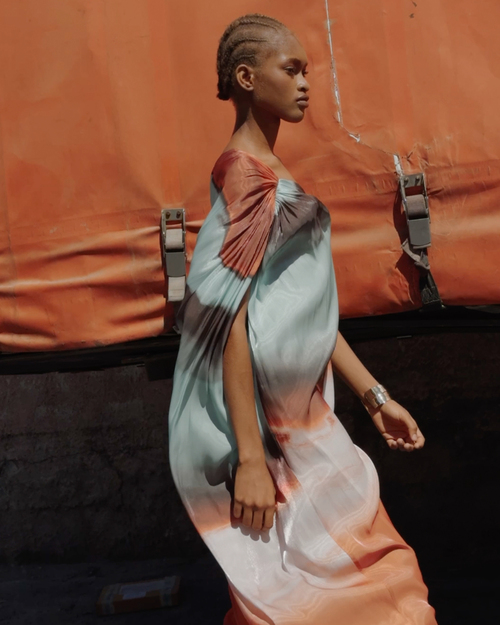
I don’t particularly believe in innovation as a goal in itself. I think fashion has grown a little tired of constantly trying to define itself as “disruptive.” What interests me more is meaningful evolution. Being able to recognize the person behind the work, while also seeing that person change, mature, and redefine themselves.
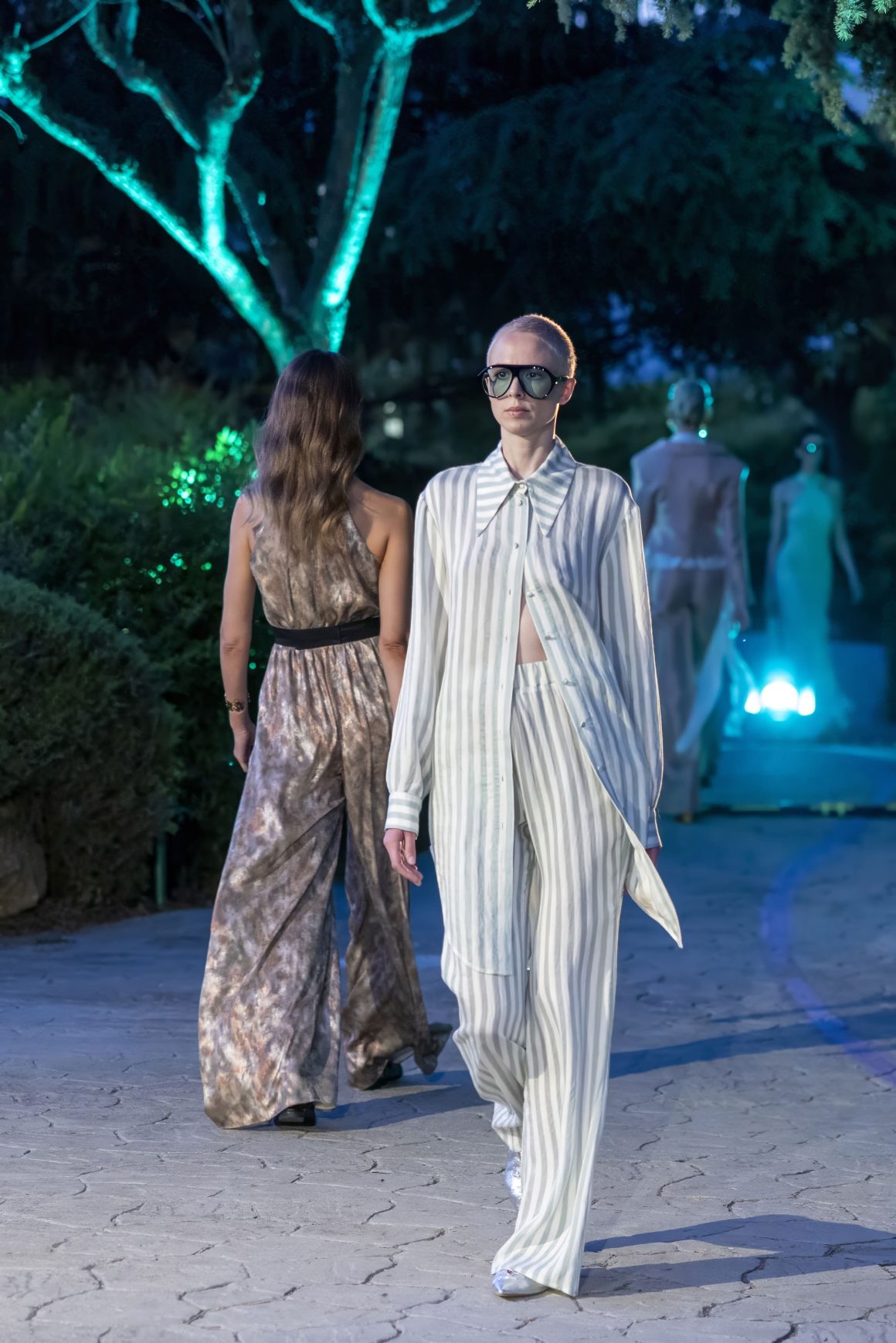
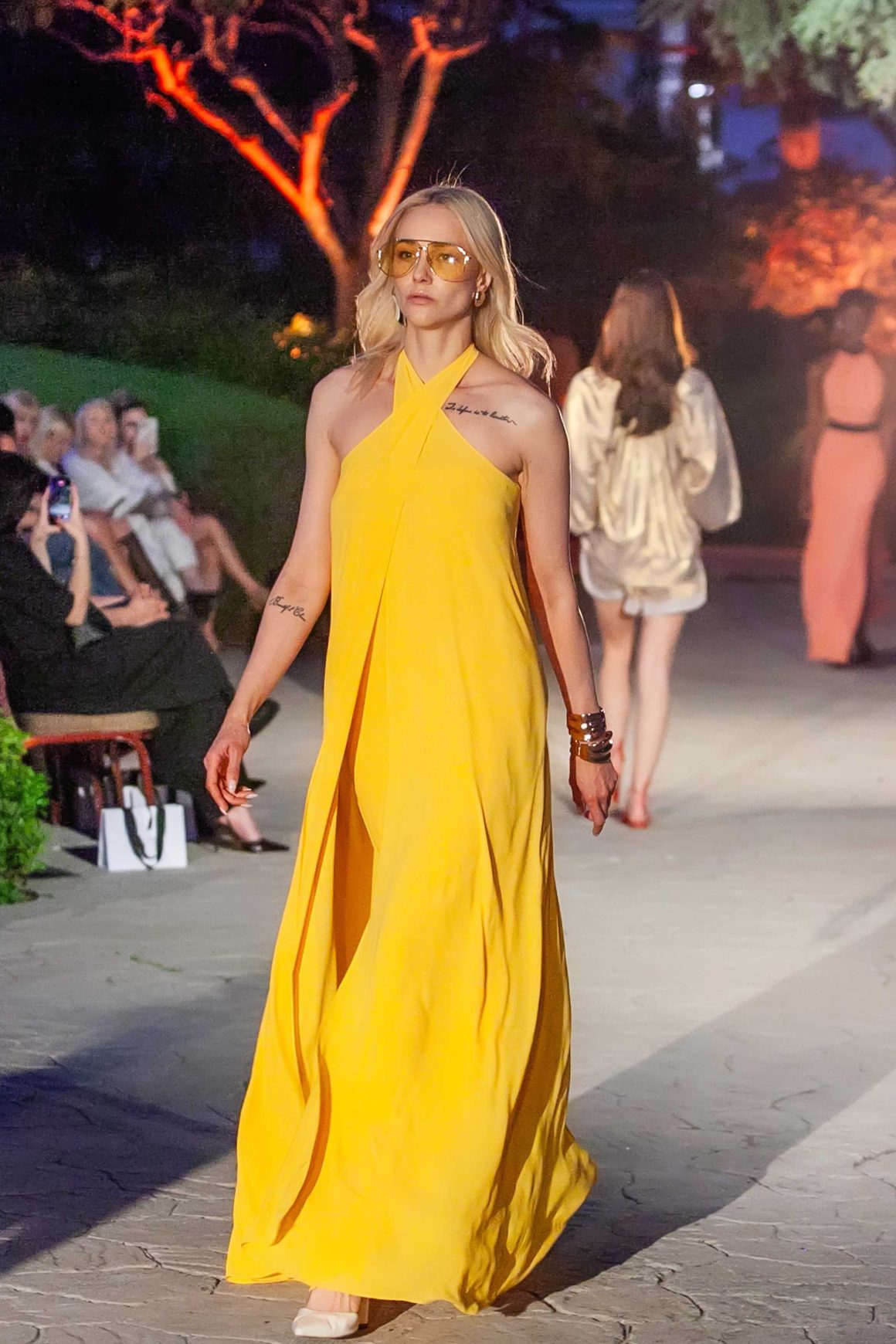
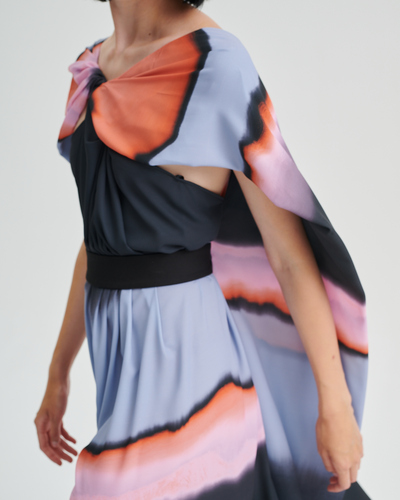
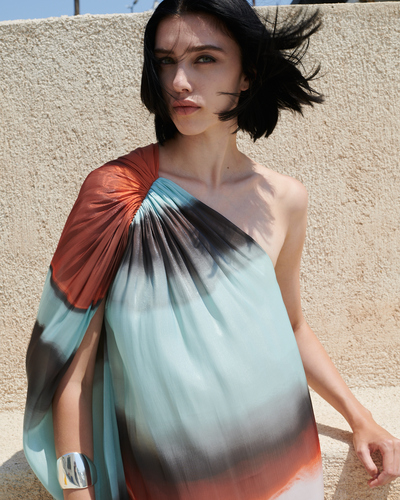
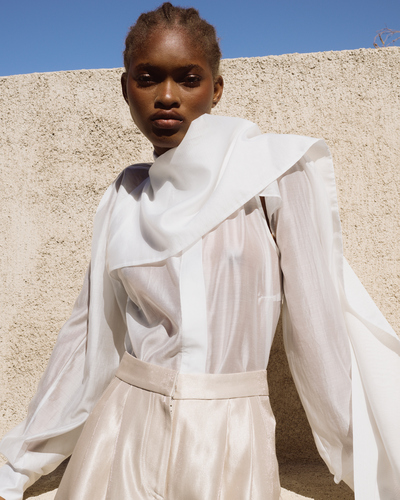
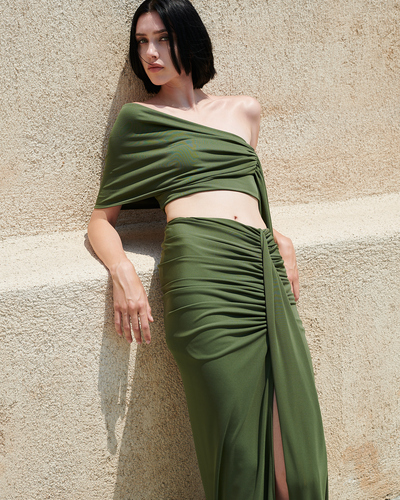
The new collection carries more freedom, more color, more movement, and perhaps more emotion. And there is also something quite new for me: I designed prints, something I rarely do in my collections. I wanted to explore a different form of expression without losing the identity of the brand.
How difficult is it to create an entire collection from scratch that consistently tells a story with a distinct point of view every time?
It’s not easy at all. And as the years go by, it perhaps becomes even more difficult, because you neither want to repeat yourself nor change violently just for the sake of appearing “new.”
Today there is enormous pressure for constant reinvention. But I also believe people need stability. They need something that evolves without losing its core identity. Very often, the greatest challenge is knowing what to remove rather than what to add. I think over-effort is the great aesthetic disease of our era.
Who is your audience, and in what direction would you ideally like it to expand?
I don’t really think about my audience in terms of age. What interests me more is attitude. They are women who want to feel strong, feminine, and contemporary without all looking the same. And perhaps what moves me the most is that I’m growing alongside my audience. I’m not trying to force a kind of youthfulness that no longer belongs to me. I prefer to evolve naturally together with the people who have followed me throughout all these years. Ideally, I would like the brand to continue expanding internationally, but in a way that preserves its character and personality.
Tell us about the collaborations you’ve done and how they have evolved over time
Collaborations in my work have existed on many different levels, and I think that’s what makes them interesting. From artists and people I’ve dressed over the years, to partnerships with brands or more commercially driven projects. The relationships that truly last over time are the ones built on mutual respect and understanding. I feel this very strongly both with the people I collaborate with creatively for years, and with my own team. The people involved in the image and creative outcome of my collections evolve alongside me, and that means a lot to me.
In recent years, I’ve also become very interested in the idea of allowing my work to communicate with different audiences without losing its identity. For example, the collaboration I did last year with a major Greek fashion company was an experience that gave me tremendous creative freedom, while also allowing me to reach a much broader audience — economically, aesthetically, and geographically — through a network of stores across Greece. That interests me greatly: being able to carry your identity into different environments without distorting it. As I grow older, I’m increasingly drawn to collaborations that have a genuine reason to exist, rather than simply creating communicative spectacle.
What do you love and what do you dislike about the industry you work in? And what would be a dream project for you?
I still deeply love the moment of creation. The moment when an idea begins to take shape. That never changes inside me. What tires me, however, is that in Greece, a designer is rarely just a designer. At the same time, you are a businessperson, production manager, communications director, administrator, and often even a psychologist. Most fashion businesses here are small, so we are forced to carry many roles simultaneously. And somewhere in that process, energy gets taken away from the most important part — the creation itself.
So perhaps my real dream project is not a specific show or collaboration, but rather the possibility for my brand to someday function with the kind of structure we often see abroad. To have a major group or serious investor truly believe in what I’ve built and give it the opportunity to evolve on a much larger scale. I’ve always been fascinated by the model where the designer can genuinely dedicate themselves to creativity, while strong teams and professionals handle the other aspects of the business. I think that would allow me to further develop the world around the brand — not only through clothing, but through image, space, experience, and atmosphere. It’s not something I’ve actively pursued in an organized way until now, but perhaps one day it could become a very interesting next chapter.
Tell us a story you will never forget
It’s not one specific moment. It’s more the times when I’ve seen people become genuinely emotional through something I created. You never get used to that. And perhaps it’s not something people easily expect from fashion, but in the end, people carry deeply personal emotions within their clothes.
When you enter a space, what do you notice first and why?
The light and the energy. Before I even notice the details, I’m interested in the feeling a space leaves behind. I think spaces, just like people, reveal very quickly whether they are trying too hard to impress.
The last thing you bought or would like to buy
The truth is that lately I avoid buying many things. I think we already live surrounded by too much information, too many objects, and a constant need for consumption, and sometimes I feel the need to distance myself from all that.
In fact, I often think I’d like to do a major “decluttering” and keep only the things that truly have a reason to exist or personal value. I just never seem to find the time to do it properly. Displays of luxury don’t particularly move me. I’m more interested in objects that carry history, character, or can genuinely coexist with you for years. And nowadays, I increasingly prefer buying useful things rather than simply decorative ones.
The fashion designer closest to your heart
Alexander McQueen. For many reasons. Because he managed to unite fashion with emotion, darkness, theatricality, and human sensitivity in a way that was almost extreme, yet deeply honest at the same time. What always moved me about his work was that he didn’t simply create beautiful clothes. He created entire worlds, images, and emotions that stayed with you. And I think he possessed something very rare: he never tried to be likable. He created with complete honesty and instinct, even when that became uncomfortable or difficult for the world around him. There is an intensity and vulnerability in his work that still deeply touches me.
Three places you always return to and why
Cyprus, definitely, because it connects me to my childhood, my family, and a very deep part of my identity. No matter how much my life changes, there is always something there that brings me back to my core.
Paris, because it remains a city that reminds me that aesthetics can exist naturally within everyday life — not in a forced way.
And of course Athens has now become my home. I’ve lived here longer than I lived in Cyprus, and I feel that no matter how much it tires me sometimes, I will always return here. It has an intensity, a truth, and a vibrancy that are difficult to leave behind.
Give us your own definition of beauty
I think beauty can be found almost everywhere, as long as you are willing to truly observe something. I’m very interested in the idea that even something which initially appears “ugly” or indifferent can eventually become deeply fascinating if you begin building an entire world around it. Through light, detail, atmosphere, or the emotion it carries.
Obvious or overly calculated beauty doesn’t particularly move me. What moves me more is something with personality — a small imperfection, a sense of truth. I think beauty is ultimately a way of seeing things.
What do you consider authentic today?
I consider authentic anything that doesn’t change personality every time the season — or the algorithm — changes. We live in a period where trends move so quickly that you often see people and brands constantly adapting simply to remain relevant. That tires me quite a lot. But I also don’t believe authenticity means staying stagnant. You should evolve, change, redefine yourself. Still, I think it’s important to maintain a core that remains recognizable over time. For me, true luxury today is not excess or logos. It’s having character, consistency, and personality. And ultimately, that is becoming increasingly rare.
If you designed something for TheAuthentics.gr, what would it be?
I can’t define it that easily, because it would require a lot of thought for something truly meaningful and right to emerge. Especially at this stage of my life, where I increasingly feel the need to have fewer objects around me, and where excessive accumulation within a space feels somewhat exhausting. So I would be interested in creating something with a genuine reason to exist. Something limited, deeply personal, and functional. Not an object that exists simply to be decorative or impressive.
Perhaps something for the home. Perhaps something connected to travel, or more generally to everyday life. I’m increasingly drawn to objects that can gain character and value over time, rather than things dependent on temporary trends. I would want it to carry a sense of longevity, calmness, and personality. Something that could truly coexist with someone for years.
You can find Stelios Koudounaris’s collection at the flagship store in Athens (4 Anagnostopoulou Street, Kolonaki), in selected boutiques throughout Greece and abroad, as well as online at stelioskoudounaris.com.