What is the story behind the Parrot Chair? How did the idea come about, and how did it evolve into the final design?
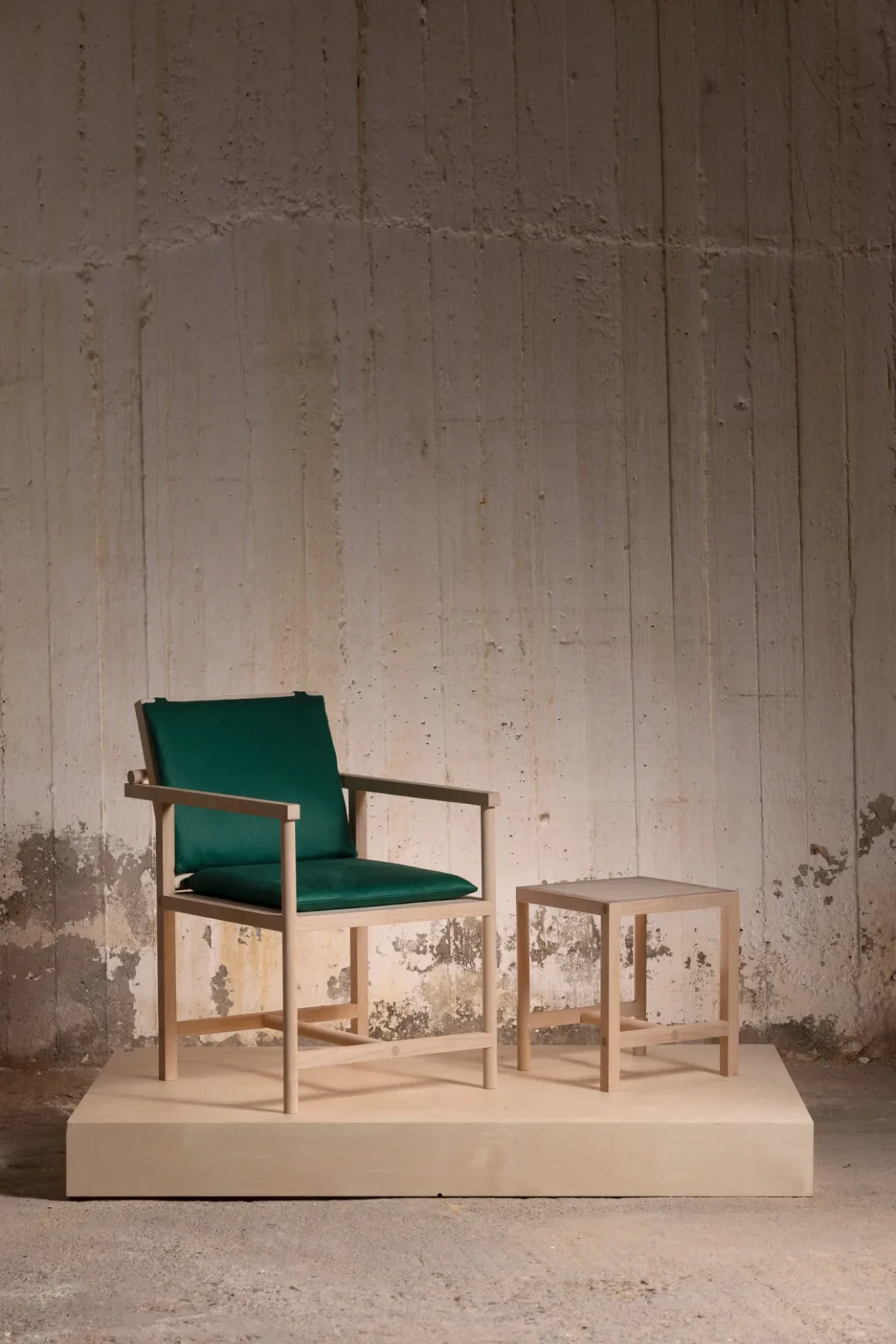
The starting point for Parrot was the traditional Greek telephone chair, sometimes called a “gossip seat”, a compact seat with a small shelf for the telephone. It was a place to sit and talk or gossip on the landline, often for much longer than originally intended.
When Sirigos invited us to reinterpret an object from its archive for A Century and a Year, its 101st anniversary project, I was drawn to this piece for its compact proportions and simple form, but also for the social ritual attached to it. It struck me that an everyday object could hold such a specific place in domestic life.
Given that our phones are more like an extension of our hands than objects tied to a particular place in the home. I wanted to move away from the chair’s original purpose and bring it back to the simple act of sitting: somewhere to pause, take a moment for yourself or sit together and have a gossip, without the distraction of a phone. We removed the telephone shelf, the element most closely tied to its original function, which opened the design up to a much wider range of uses. The result retains a connection to its past but feels relevant to contemporary living.
Where did you draw your inspiration from, and what functions or needs did you want the chair to address?
Objects and spaces reflect the time and place in which they were made, and I’m interested in how they can be reinterpreted for the present. The natural world and landscape are constant sources of inspiration too. I’m a very visual person and find ideas in all sorts of places; you just have to ask the right questions.
Parrot began with an object that had a very particular place in Greek domestic life. I wanted to revisit something familiar, not out of nostalgia, but to understand what made it meaningful in the first place and how it might find a new role today.
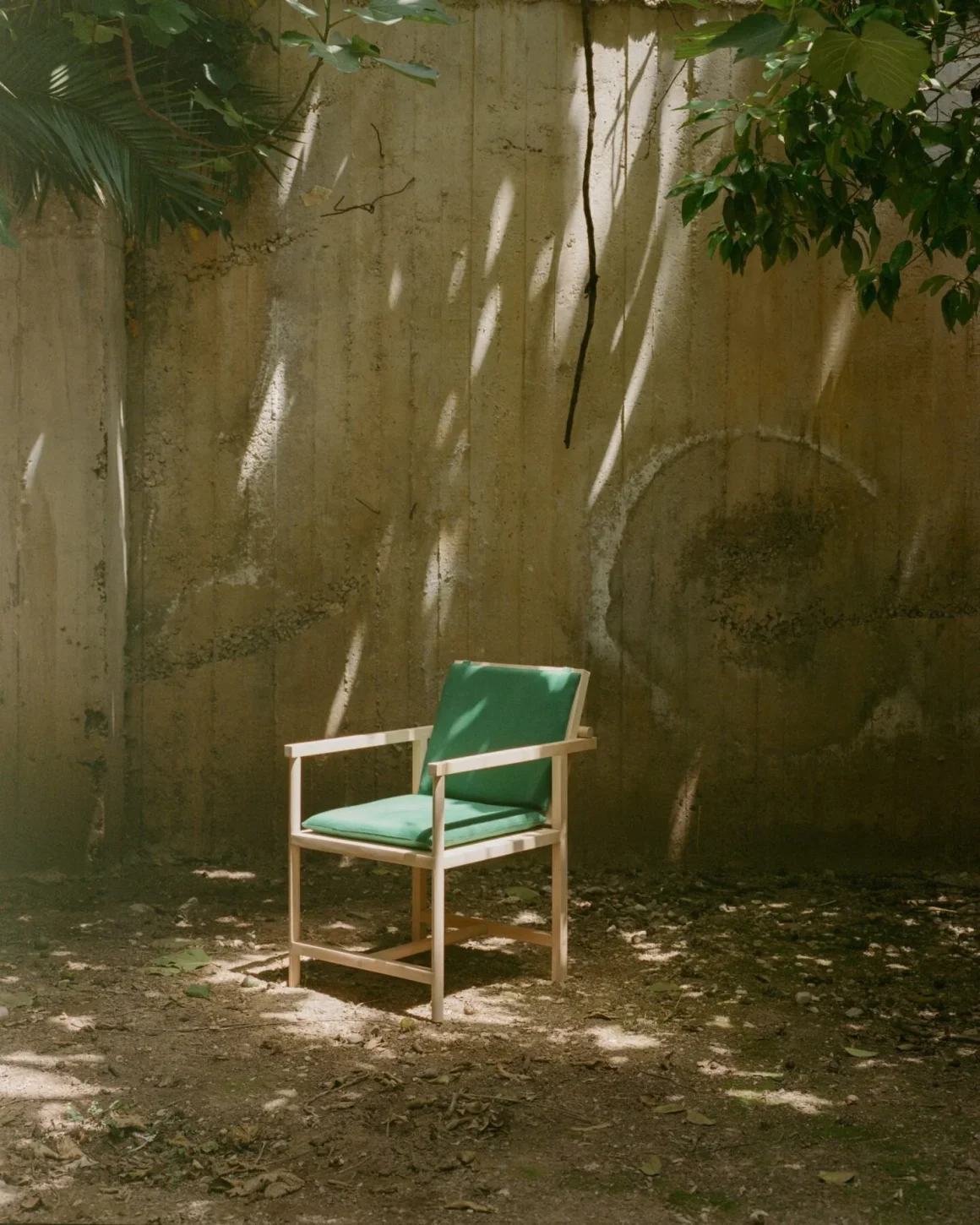
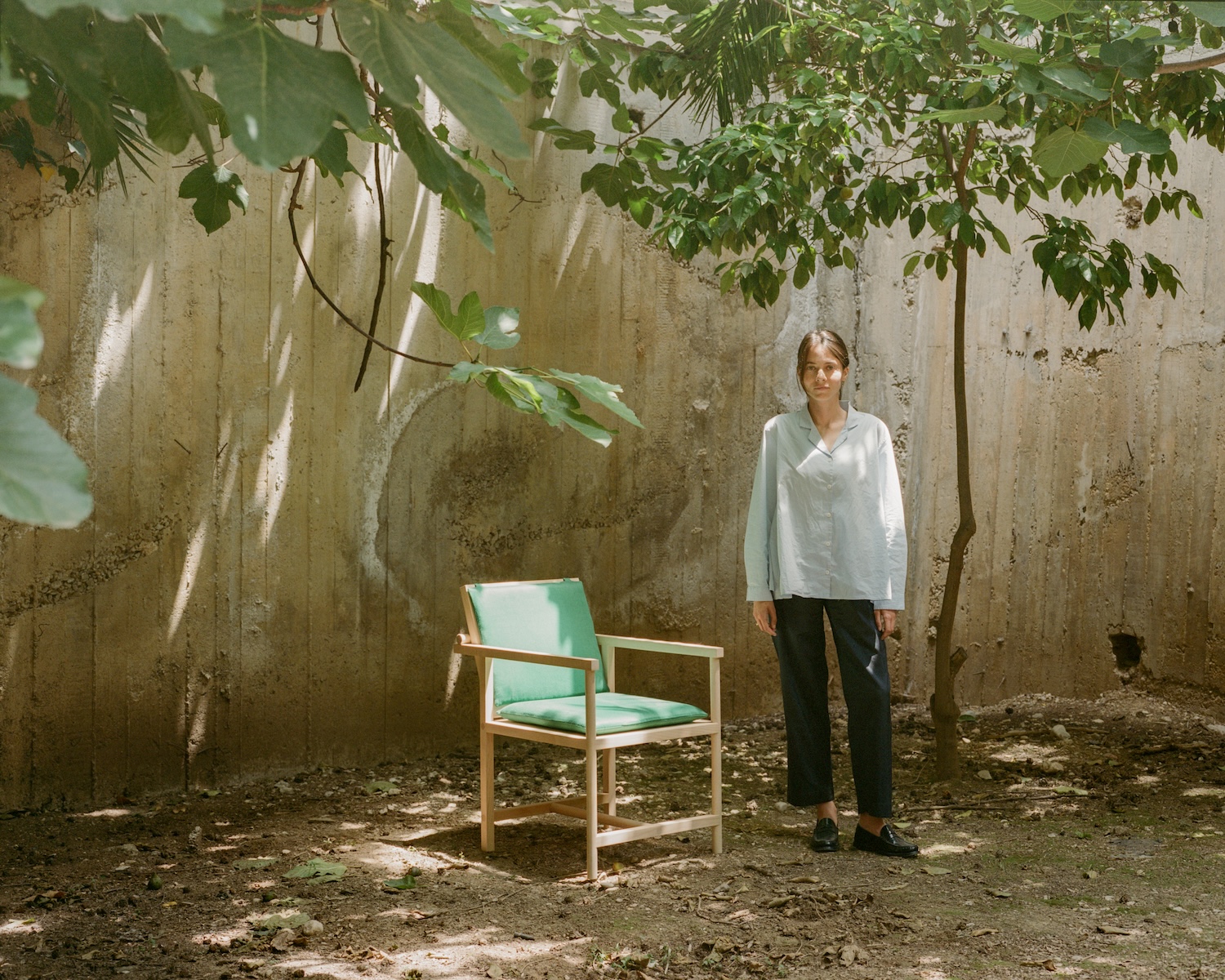
In terms of function, I wanted the chair to be versatile without being overly prescriptive. It works as an individual seat, but also in groups, where it takes on something of the original’s social character. People can bring their own interpretation to it.
What informed your choice of materials, joinery techniques and colour palette?
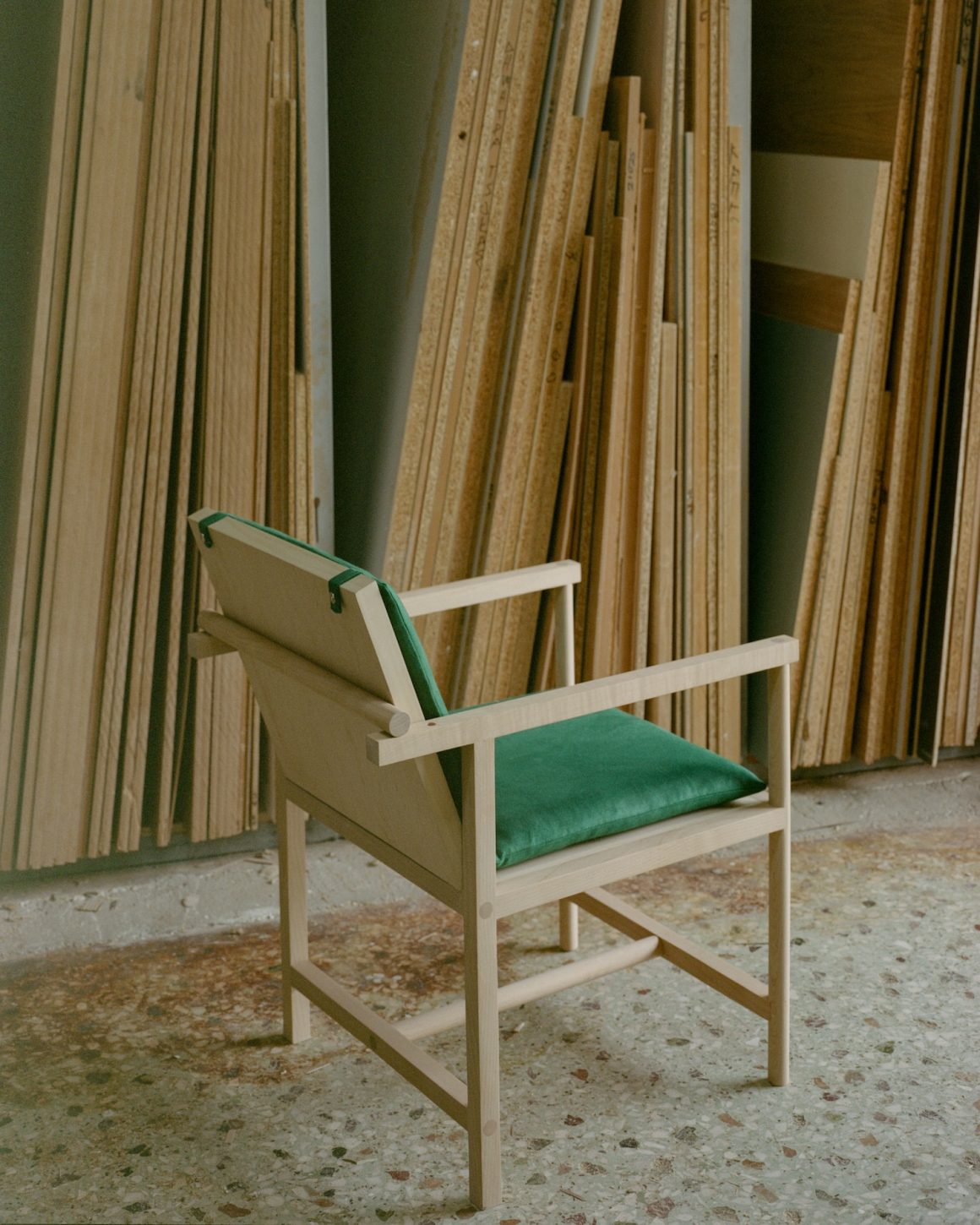
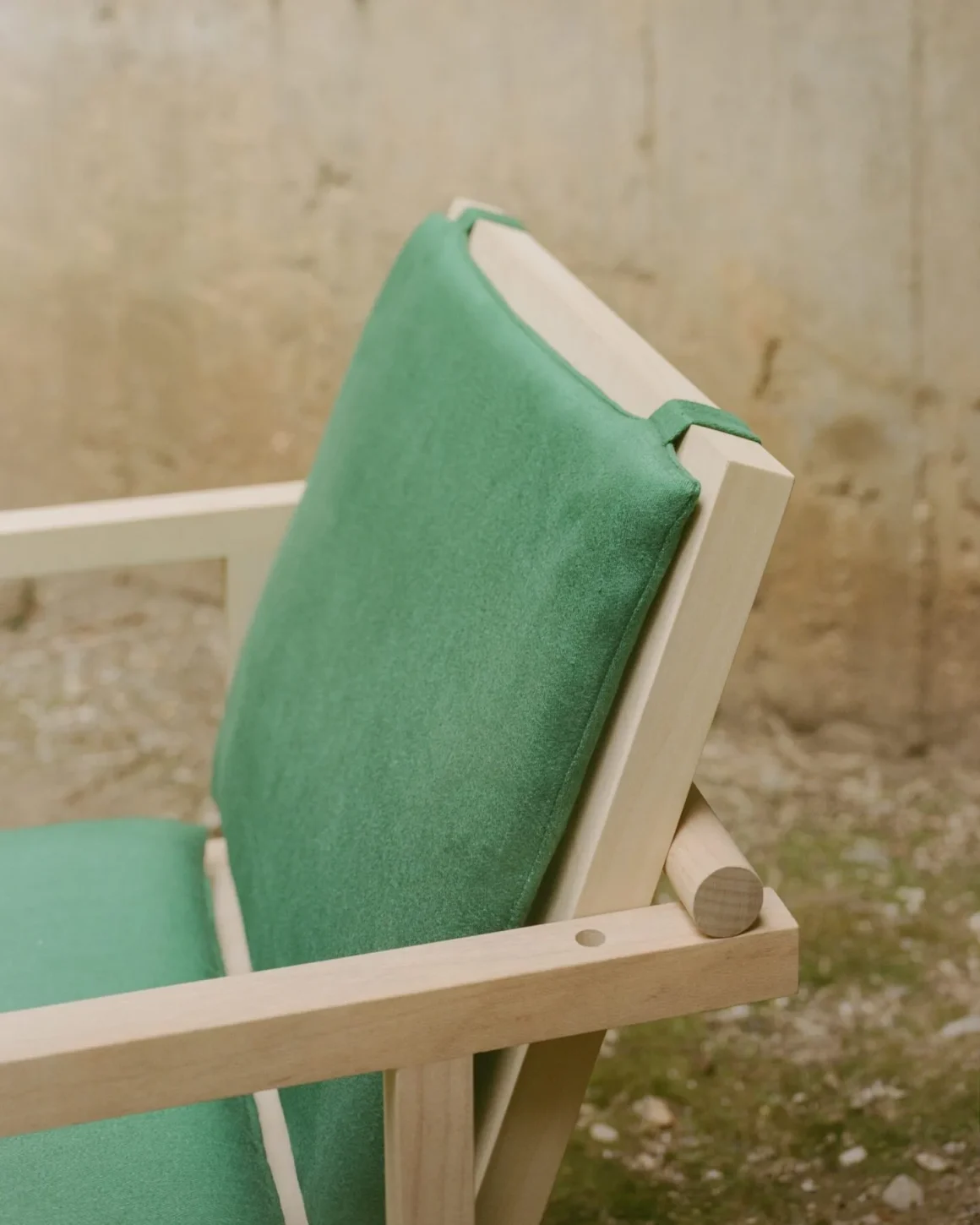
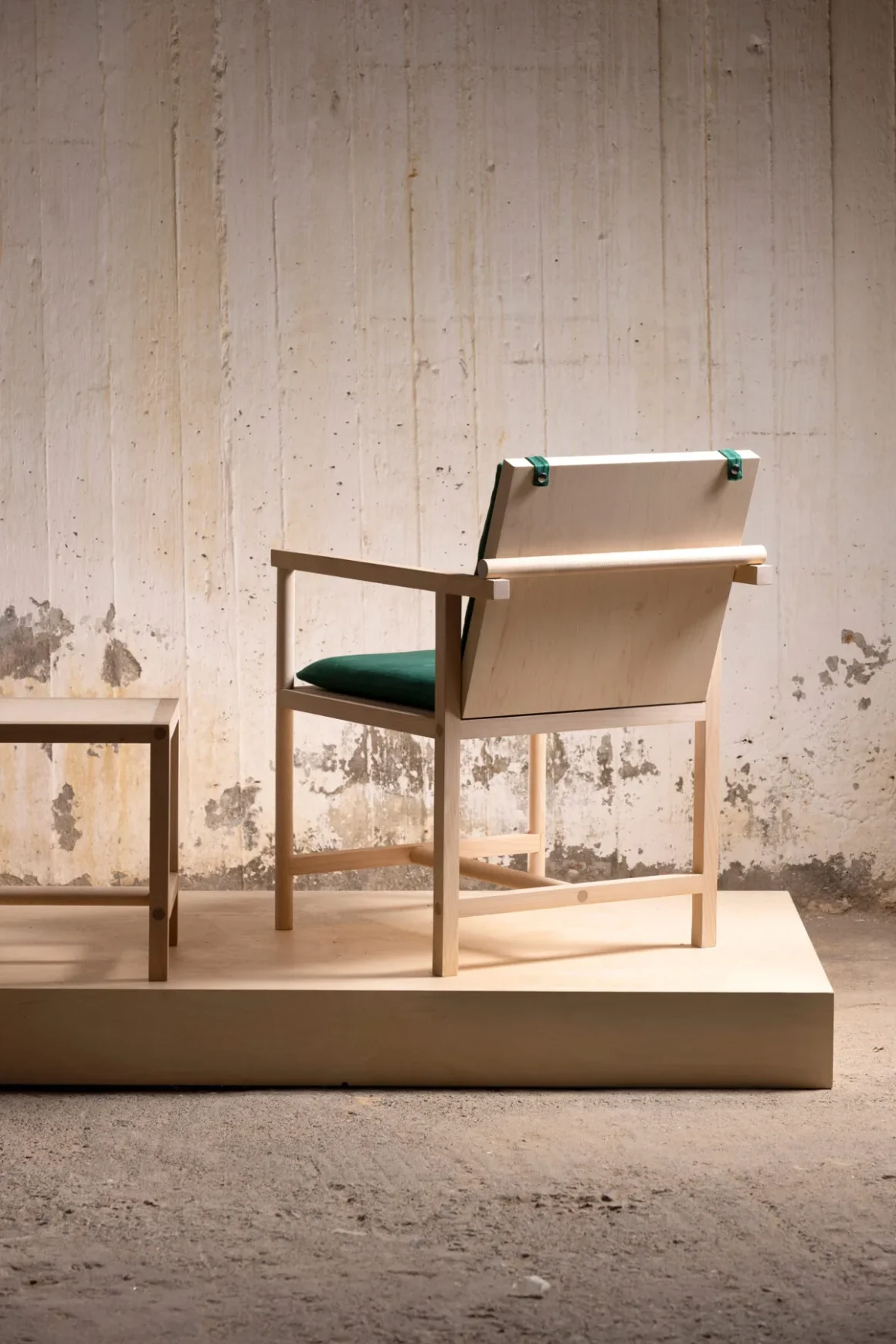
We chose maple for its natural tone, subtle grain and warmth. We left the wood unvarnished rather than using a coloured or heavily treated finish, so the chair will develop its own character through use rather than staying exactly as it was when it left the workshop.
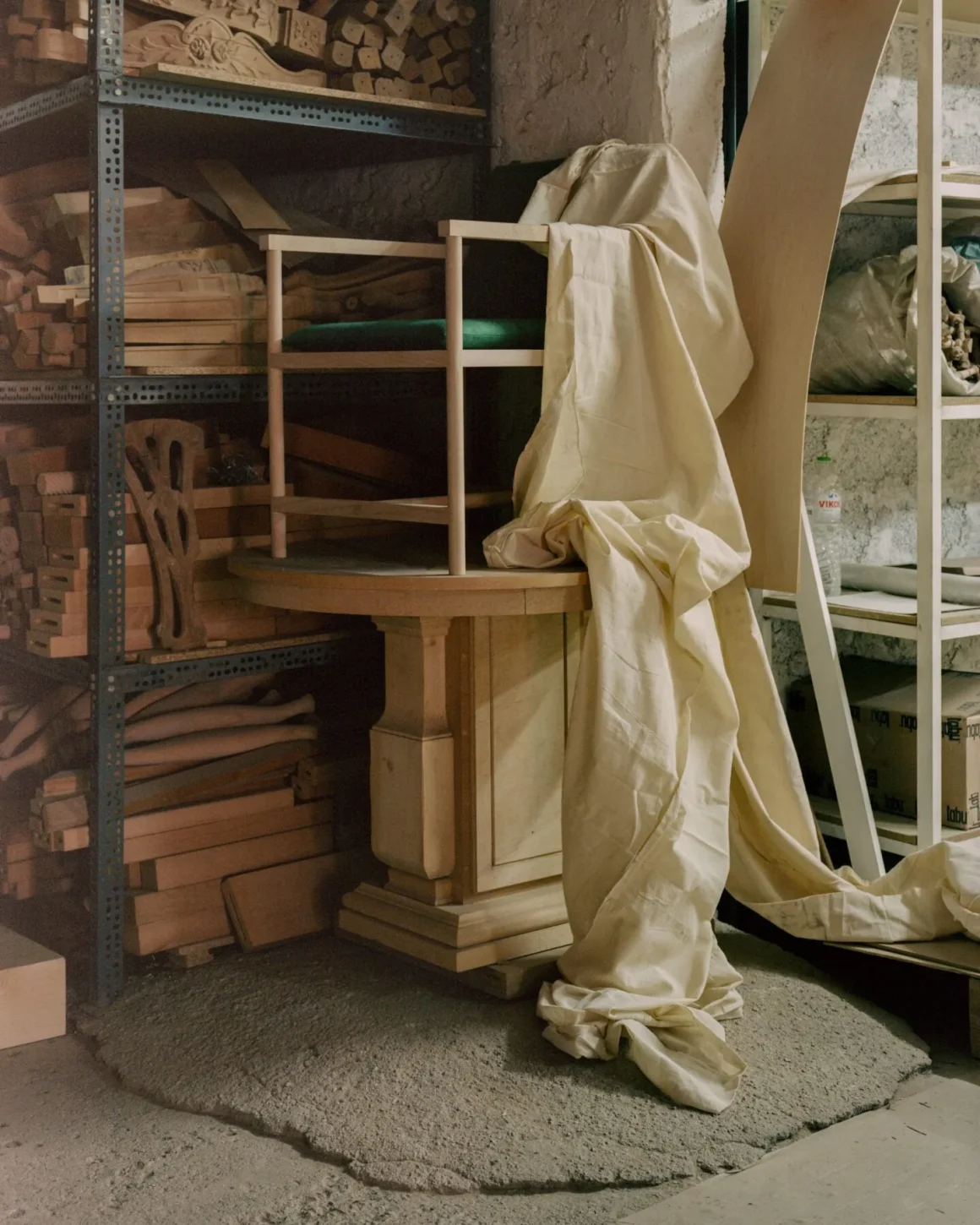
The joinery was equally important. We used traditional woodworking techniques and left the joints exposed, so the construction becomes part of the chair’s visual language. There are no screws; the connections are resolved through the timber itself. I like being able to see how something has been made.
The palette is deliberately restrained, which keeps the focus on the proportions, craftsmanship and details.
How challenging is it to design and build a chair that combines proper ergonomics with elegance, comfort and functional versatility? What knowledge and skills does this process require?
Furniture design brings architecture to a much more intimate scale. With a building, you are thinking about how people move through and inhabit a space; with a chair, that relationship is far more direct. The object has to respond to the body, and even small differences in proportion can significantly change how it feels to use.
There is also a balance to be found between the visual idea and the practical requirements. A chair can look very simple, but achieving that simplicity takes a lot of thought. Proportions, seat height, depth, back support and the position of the joints all need to work together. Comfort can’t be treated as separate from the design; it has to be considered from the start.
Tell us about the creative process. What challenges did you encounter along the way, and how did you overcome them?
I don’t tend to approach design with a fixed idea of the outcome. I prefer to start with a reference or an initial intuition and let the design evolve through drawing, testing and making. With Parrot, that meant looking closely at the original telephone chair, understanding what made it interesting, and gradually working out which qualities were worth retaining and which could be reinterpreted.
Design is rarely linear, and there is a lot of trial and error, which is a necessary part of arriving at the right solution. One of the biggest challenges was balancing the character of the original object with giving it a new identity and purpose.
How did you feel when your initial ideas and sketches began to take shape and become a tangible object?
It’s one of the most satisfying stages of the process. As an architect, I spend a lot of time developing ideas through drawings, models and visualisations, and the road from concept to completed building can be very long. With Parrot, it felt much more immediate. I enjoyed seeing the proportions and details come together in a physical object, and experiencing the timber and joinery directly.
You can get a sense of things that are difficult to judge from a drawing: the weight, the tactility, the way the joints meet, how the object relates to the body. It was also a reminder of how much there is to learn through making.
Looking at the finished piece, do you feel the result has lived up to your original vision? Are you proud of what you have achieved?
Yes, I’m happy with the result. The chair keeps a connection to its historical reference without becoming a reproduction, and its simplicity allows it to work in different contexts. I’m particularly pleased with the relationship between form and construction: the exposed joinery, natural maple and compact proportions give it a clear identity without any added decoration.
I’m also proud of the collaboration. It was a pleasure to work with a manufacturer with such a long history in Greek furniture making, and to bring a contemporary perspective to a piece of everyday Greek design history.
If you could change anything about the Parrot Chair, what would it be?
I see design as an ongoing process rather than something that’s ever completely finished. You notice things once an object is used in the real world, and that is part of what makes it interesting.
For now, I’m happy with the balance we’ve achieved. I’d like to see the chair in different environments and used in ways we haven’t anticipated. Letting an object find its own place in people’s lives is part of the process, and it would show how the design might evolve.
What comes next in your design journey? Are there new ideas or projects you are eager to explore?
I’d like to continue exploring furniture and object design alongside architecture. I’ve always designed bespoke pieces for our architectural projects at Local Local, so working with Sirigos felt like a natural extension of something that has been part of the practice for some time.
Working across scales brings different questions and opportunities, and I’m motivated by learning and discovery. I don’t want to limit the practice to one type of work or aesthetic, and I’d like to stay open to new collaborations, materials and ways of making.
We’re currently in the process of developing another furniture project which I’m looking forward to sharing more on soon.
What is your greatest dream as a designer?
I’d like to keep evolving, both personally and through my work. I don’t feel the need to follow a particular style or reach a specific scale. What matters more is continuing to question, experiment and learn while building a practice with a clear point of view.
I’m interested in design that comes from paying attention to a place, its history, the natural world and the people who live there. I’d like to make things that speak to the present moment while having a sense of place and legacy: work that people connect with, that becomes part of everyday life, and that stays relevant beyond the moment it was made.
About Local Local
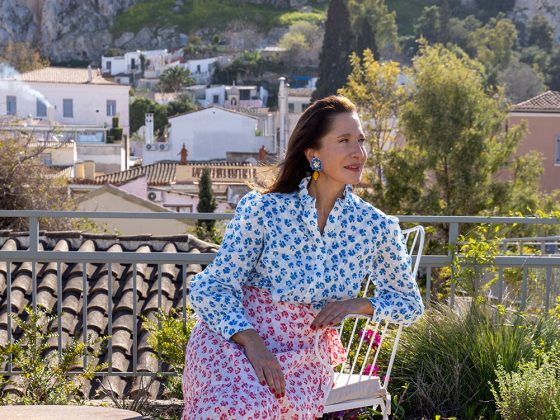
Local Local is a boutique architecture practice based in Athens, designing and transforming buildings and objects through a context-sensitive approach. Founded in 2022 by architect Sofia Xanthakou (TEE registered), Local Local has completed residential and cultural projects across Greece and London.
The practice leans into the cultural, social and geographical nuances of a site, listening closely to the philosophy, histories and meanings embedded within each place. Locality is the organising principle of the studio’s design process, incorporating the details, materials, scales, communities, landscapes and intangible aura of place into the buildings and objects it creates.
Rather than replicating context, Local Local actively reinterprets it, transforming nuanced observations into bold architectural decisions. Dedicated to creating architecture that feels intimate, sensory and grounded in its surroundings, the studio follows a holistic approach, both inside and out, from conceptualisation and design through to supervision and detailing.