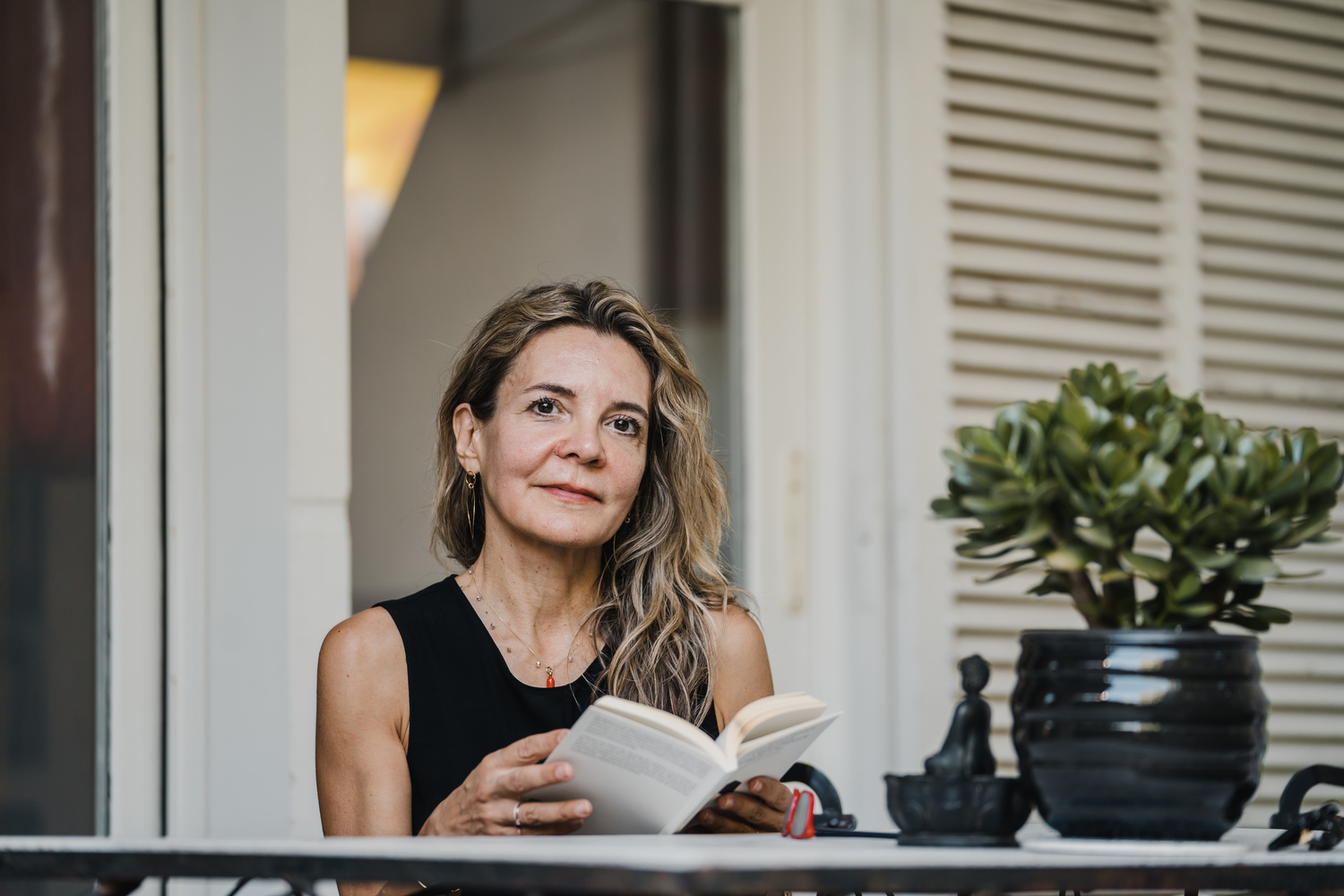
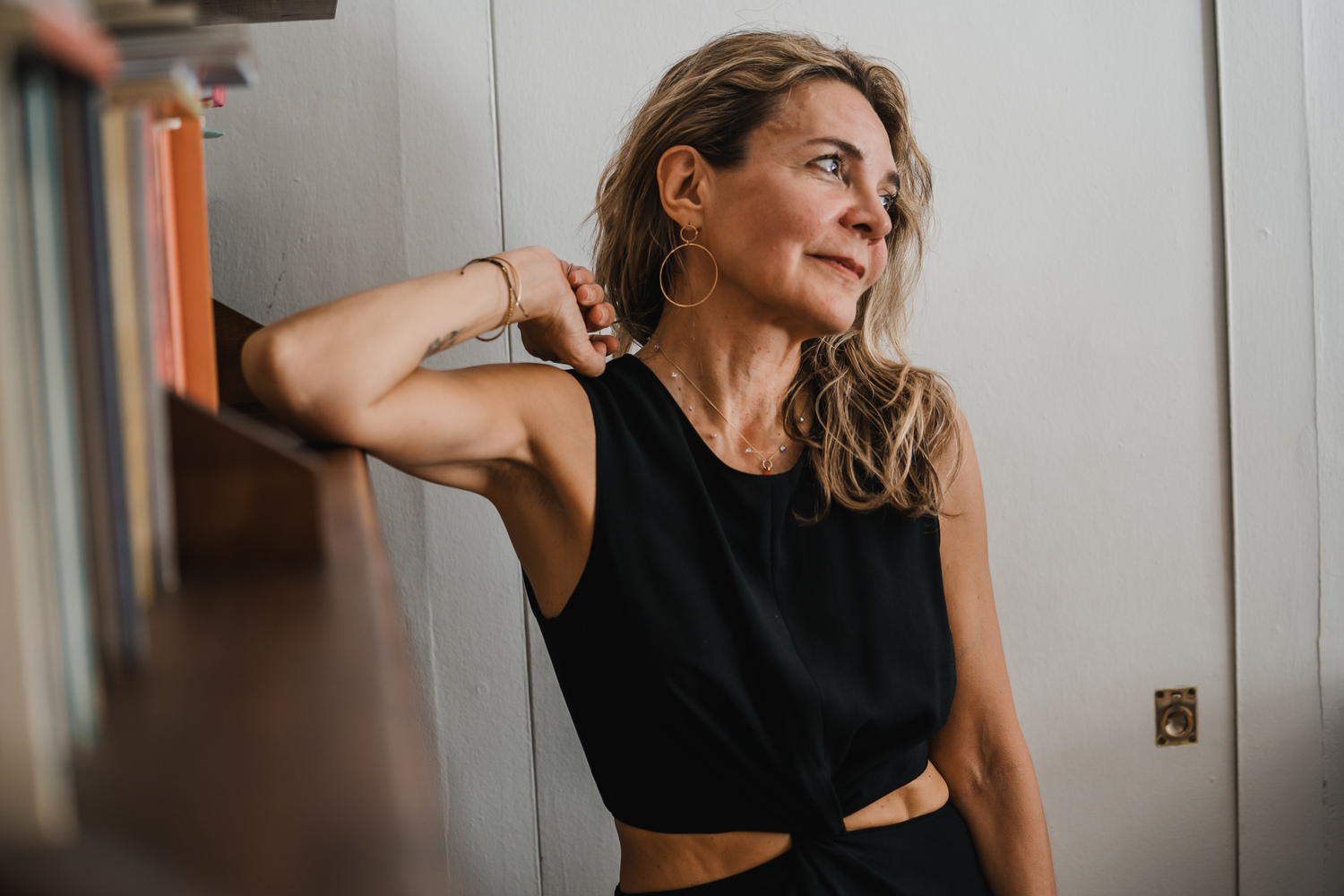
You have built an impressive literary career, establishing yourself as a gifted writer whose work continues to surprise and captivate us. Looking back on this fascinating journey, which moments do you consider the most pivotal in shaping your path?

The decision to leave my job and devote myself to literature. It was a risky move, but there was simply no other way. My body was saying no; my immune system was thrown off balance by the constant suppression of my deepest desires. I was perpetually ill. Writing felt like a calling of an almost religious nature. I don’t know how else to describe it. I understood that I would live a profoundly unhappy life if I did not surrender myself to literature.

My first novel, Giantes, was a milestone. Another was Tha Ithela (I Would Like To), a collection of short stories that read almost like a novel. I arrived at this particular form because, as a new mother, I simply didn’t have the time to write a linear novel. In doing so, I discovered first-hand that writing adapts to our limitations and transforms as we do.

Another defining moment was Baroque, which paved the way for autofiction in my work: fifty stories told by a woman, spanning the years from the age of fifty back to her birth, an inverted coming-of-age through memory. The device of a writer revealing herself through fictional confessions led me to The Long Journey of One Into the Other, my most recent novel, which explores motherhood and daughterhood.

In Greece, autofiction is still often regarded as biography or confession. We have some way to go before we can stand alongside the example of Annie Ernaux. When people ask whether I write true stories, I now answer with my daughter’s words, from a presentation she gave at the Modern Greek Studies Association (MGSA) conference: “My mother gave birth to me twice: first as her daughter, and then as a character in a novel.”

When did you first discover the writing bug, and what allowed it to grow and flourish over the years?

As a little girl, I would lie on the living-room carpet and tell myself stories to escape boredom. There was something deeply exhilarating and comforting about invention. I didn’t know how to describe it back then, but I still remember the excitement, the wild joy of stories taking shape through random images and associations in the mind of a five-year-old girl.

How do you feel your writing is evolving, and how are you evolving as a person through the process?

I always wait for a book to tell me exactly what it needs from me, what form it wants to take. Lately, I have discovered the allure of writing to a commission. I have always contributed short stories to anthologies, but never written an entire book on commission. When the French publisher François Saugier approached me to write a fictional narrative about Athens, I discovered that constraints can sometimes be more fruitful than absolute freedom.

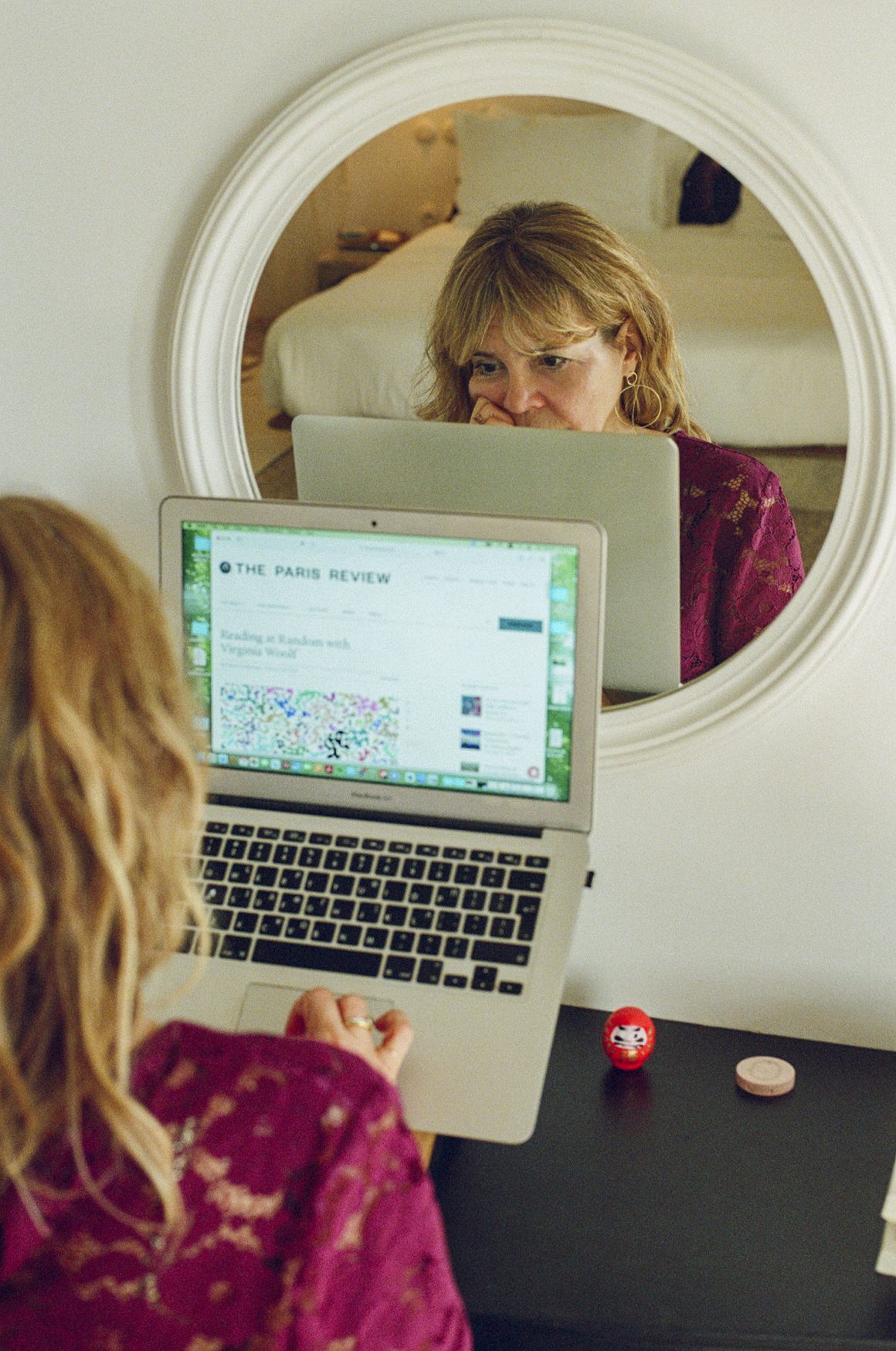
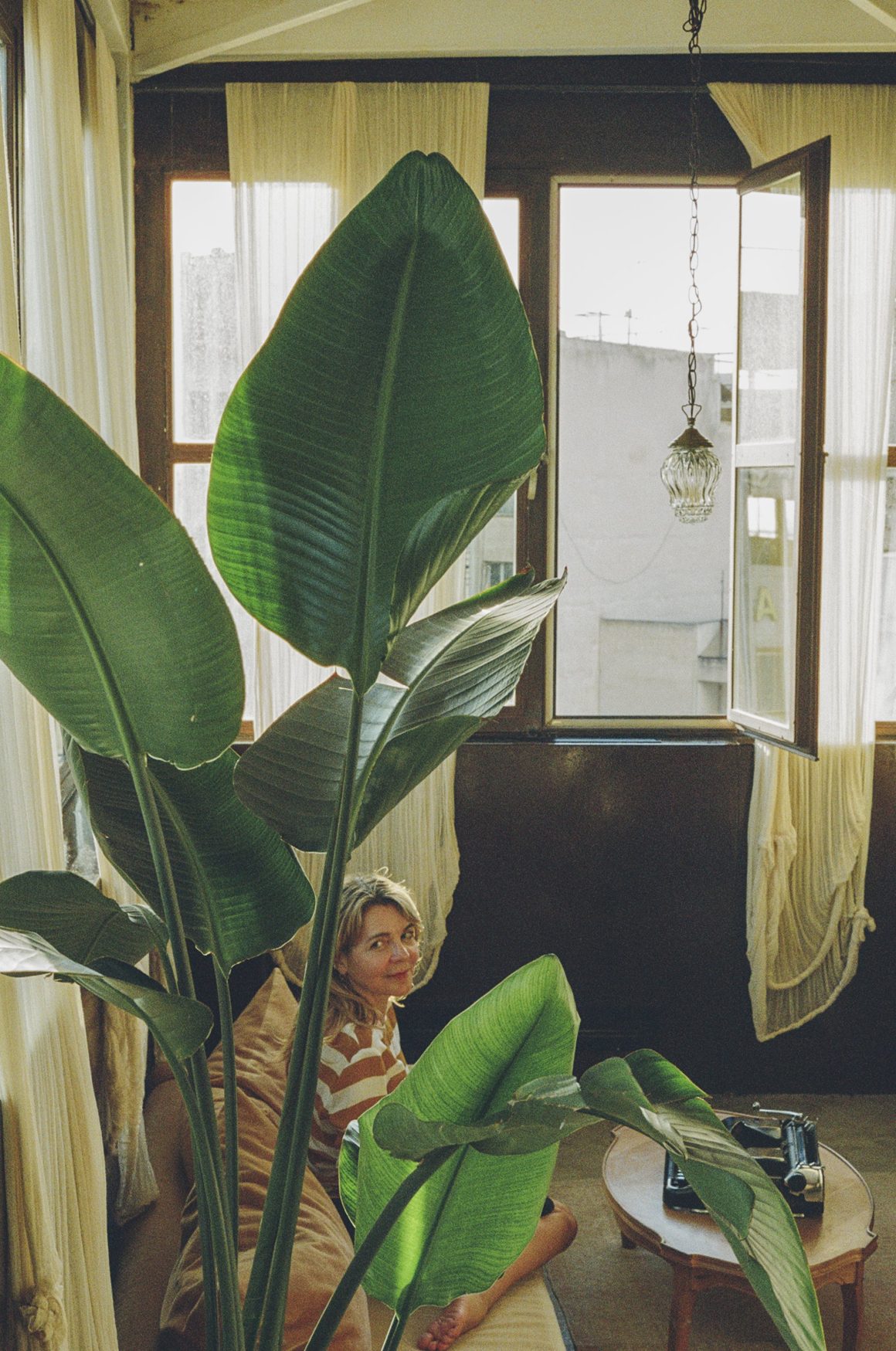
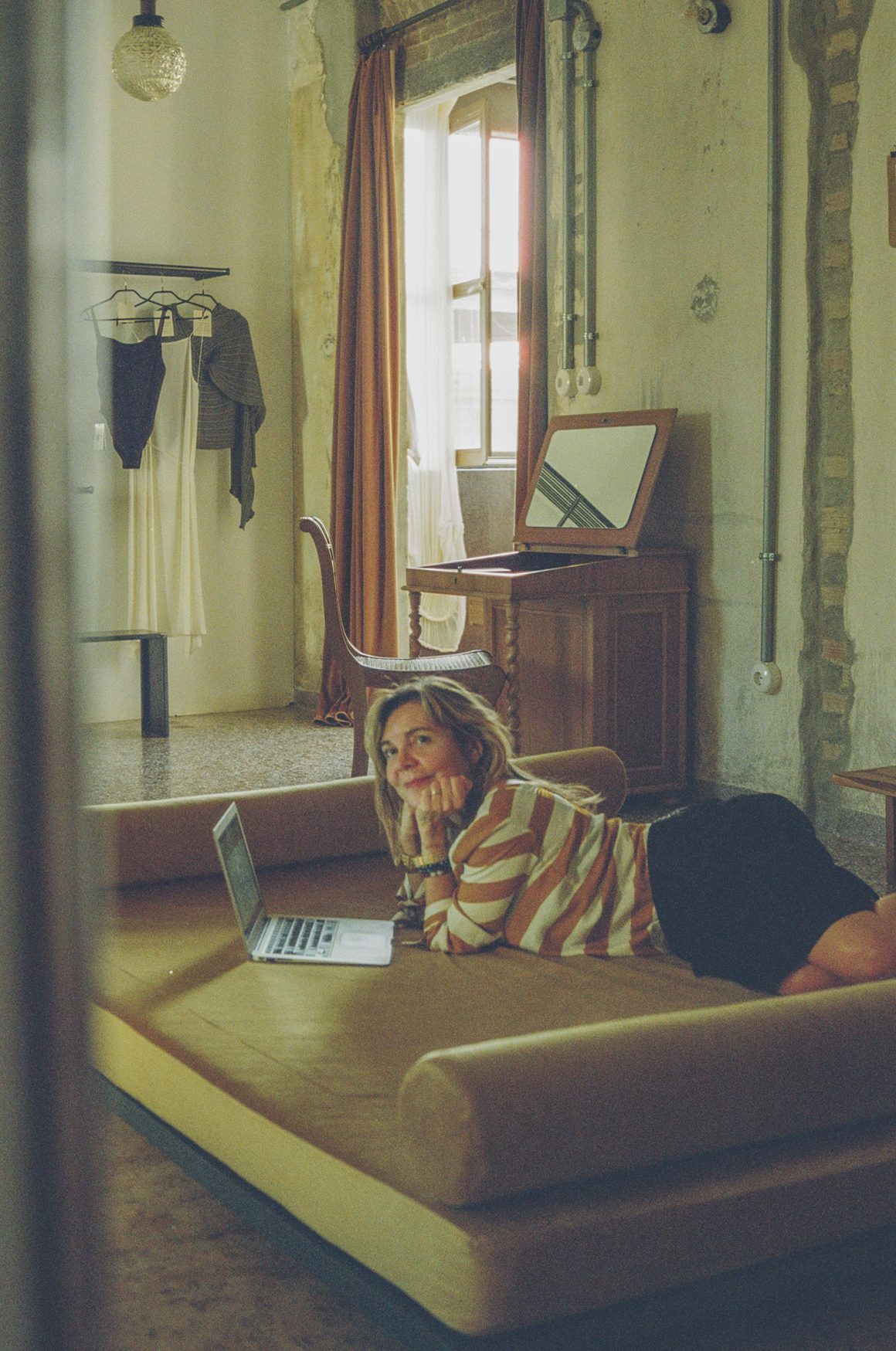
I borrowed keys to the homes of friends who live abroad or in the suburbs, and spent time in different parts of the city: in Kolonaki, at the home of visual artist Sofia Kolokouri; at Alexandra K’s apartment in Kypseli; at Rebekka Kamhi’s gallery in Metaxourgeio; at Mona Hotel in Psyrri; and in a beautiful neoclassical apartment in Plaka. It was an extraordinary urban experience. I found myself living like a tourist in my own city, immersing myself in the rhythm of life in each neighbourhood.

The book will be published in French first, in May, and I cannot wait for its Greek edition to follow shortly afterwards.

I remember reading your conversation with Alexandra K in Greek Vogue some time ago. Two intelligent women engaged in a wonderfully witty verbal ping-pong. Does meeting bright, stimulating people inspire you? And how does the first idea for a book come to you?

I enjoy spending time with younger people and seeing the world through their experiences. It is the only way to keep the mind from growing old, from clinging to what is familiar. I am also fascinated by humour. The other day, I had a minor eye procedure, and the young nurse had such spontaneous wit that he made me forget what was about to happen on the operating table. I live for these chance encounters with people who briefly cross our paths and leave a little piece of themselves behind: a phrase, a memory, without asking for anything in return, simply by being there.

Do you agree with the contemporary anxiety women seem to feel about having to prove the obvious: that a woman today can achieve anything?

I don’t think it is obvious. I believe no one can achieve everything, and that this anxiety consumes our lives, regardless of gender. Beyond perfectionism and the need for control, there are rare joys that I am only now beginning to discover. Living in the present is not some New Age notion. It is the only thing we truly have in our hands.

What has the woman of today gained, and what has she lost?

She has gained self-awareness but lost her innocence. All that performance of femininity we grew up with was an obstacle and a waste of time. Looking back from where we stand today, our past seems profoundly melancholic: good girls who never talked back and smiled politely while bad boys imposed their will. We didn’t understand what was happening to us. We simply sensed that something was wrong, that we were living for the male gaze, as though we were characters in a Nouvelle Vague film.

Even the things we considered progressive at the time — cinema, literature, music — placed women under the microscope of an endless fantasy. And we, proud to embody the beautiful or the femme fatale, adopted patterns of behaviour that reflected the male imagination.

How do you relate to your daughter’s generation, and what do you consider its greatest strength compared with our own?

They have given us an intensive education in self-determination. They have introduced words such as “femicide” into our vocabulary, for crimes that in my generation were described as “crimes of passion”. Words reshape reality, and in recent years we have come to realise just how painfully unequal that reality remains: a girl has been taught to accept the social violence inflicted upon her simply because of her gender.

Who was it who said that if men could give birth, the abortion pill would be handed out at newsstands? That sentence says it all. We are still living according to Darwin’s theory of the species. We have a very long way to go.

What advice would you give your daughter that you wish someone had given you at her age?

I would tell her to tame her fears as much as she can and live her life on her own terms, not according to other people’s expectations.

Now that you have entered your sixties, what are your thoughts on this new chapter of your life?

I was afraid of turning sixty, but an American friend prepared me for it by saying that at sixty-one we would be “sexy one”. What she meant was that sensuality is not connected to how others see us, but to how we see ourselves. It is an erotic affirmation of life. It brings to mind what the great Audre Lorde wrote about the uses of the erotic: eroticism is a way of looking at the world.

What gifts has maturity brought you? And what wisdom would you like to pass on to younger generations?

An unprecedented sense of calm. I am no longer in such a hurry as I used to be. Every day brings its own gifts. The closer we theoretically come to death, the greater our appetite for life becomes.

With your latest book as a starting point, what do you cherish most about the mother-daughter bond? What has your own relationship with your mother taught you, and what wisdom have you drawn from it?

My daughter has taught me how to allow myself to experience the unbearable without immediately seeking consolation. My mother taught me that every woman is different — and that, in itself, is a form of freedom.

Your earlier book, Why I Killed My Best Friend, has already been published in several languages. It is now being reissued in Greece, as well as in Dutch, Turkish and Armenian. Tell us about this particularly interesting moment in the life of the book.

I wrote this novel in 2002, while I was pregnant. It explores female friendship as a form of emotional education. It was first translated into English and published in the United States, and, as often happens, European publishers read that translation and acquired the rights for Poland, Germany, Slovenia and even Egypt. Sometimes I don’t even know how the translations keep multiplying. I owe much of this to my devoted translators.

I am delighted that the novel is being reissued by Patakis, because it now acquires its own historical dimension. The story unfolds during the early years of Greece’s post-dictatorship era, extending all the way to the 2004 Olympic Games. I think it can be read very differently today, particularly by a younger generation.

Tell us a story you will never forget

Yesterday, I heard about a little boy who had read a story about a chick and then gathered the eggs he found in his kitchen, lined them up and sat on them to hatch them. It is an extraordinary story that transcends gender and prescribed roles, and offers a wonderfully tangible illustration of what it means to suspend disbelief when we read.

Tell us about the writing workshops you have held and what else you might be preparing

Teaching creative writing grounds my own writing practice. It is a way of organising everything I learn through writing itself. I talk about mistakes, rules and the art of breaking them, as well as the fundamentals of storytelling. In the process, a circle of emerging writers takes shape, forming a supportive community that we all need, because writing can be an intensely solitary pursuit.

This year, as always, I am teaching a novel-writing course at Ianos.

I am also preparing my summer workshops on a surprise island.

For the past few years, I have also been teaching American students through Writing Workshops in Greece, alongside a wonderful group of novelists and poets from the United States.

What would your dream project be?

A library that folds and unfolds to accommodate all my books.

Three places you love returning to, and why

Paris, because it is the capsule that holds all my youthful dreams.

Iceland, because it represents the ultimate form of exoticism for me.

Chicago, for its architecture.

How would you define beauty?

Beauty is whatever awakens the senses in an unexpected way.

What do you consider authentic in today’s world?

That which needs neither explanation nor justification.


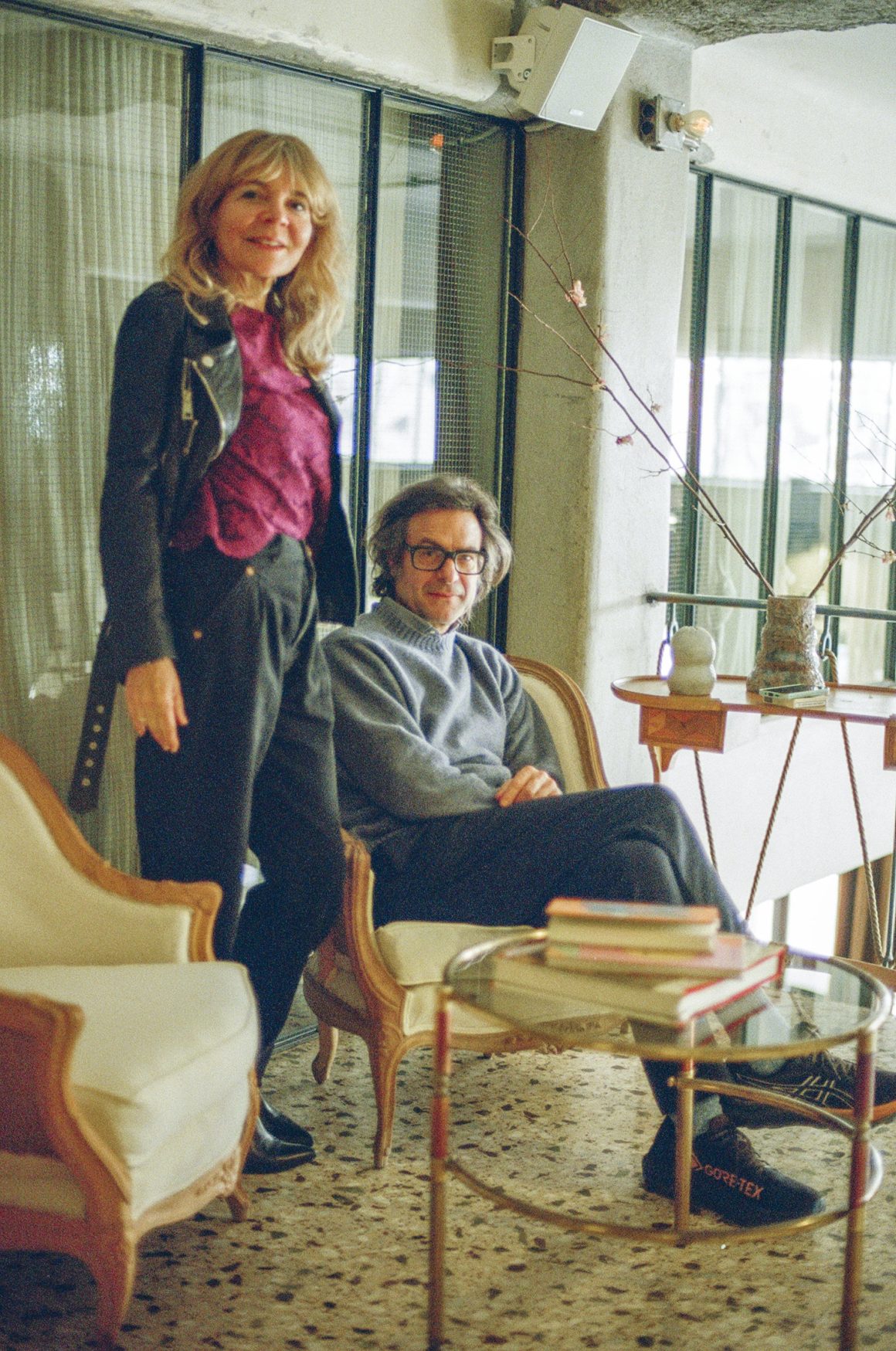
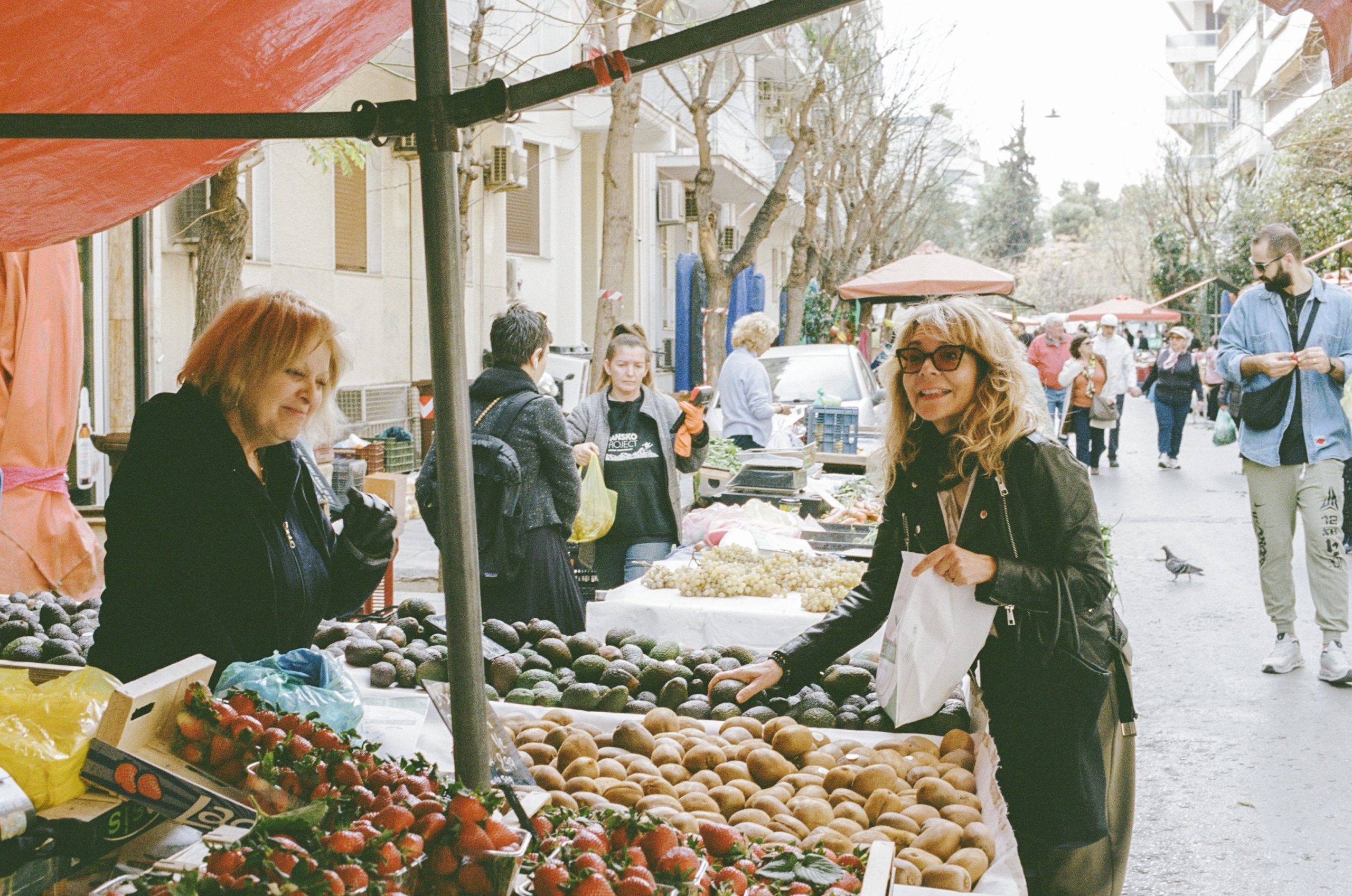
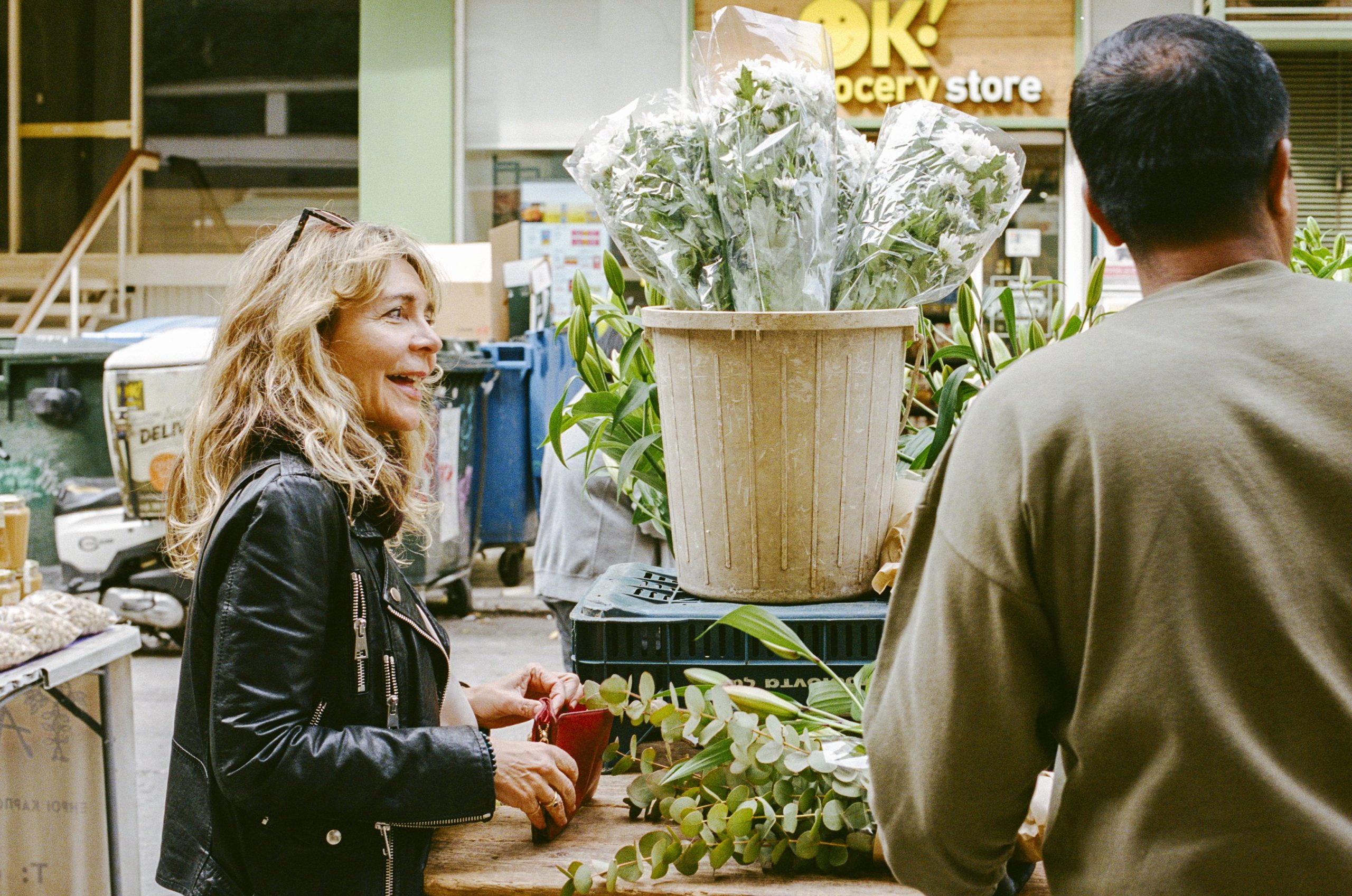
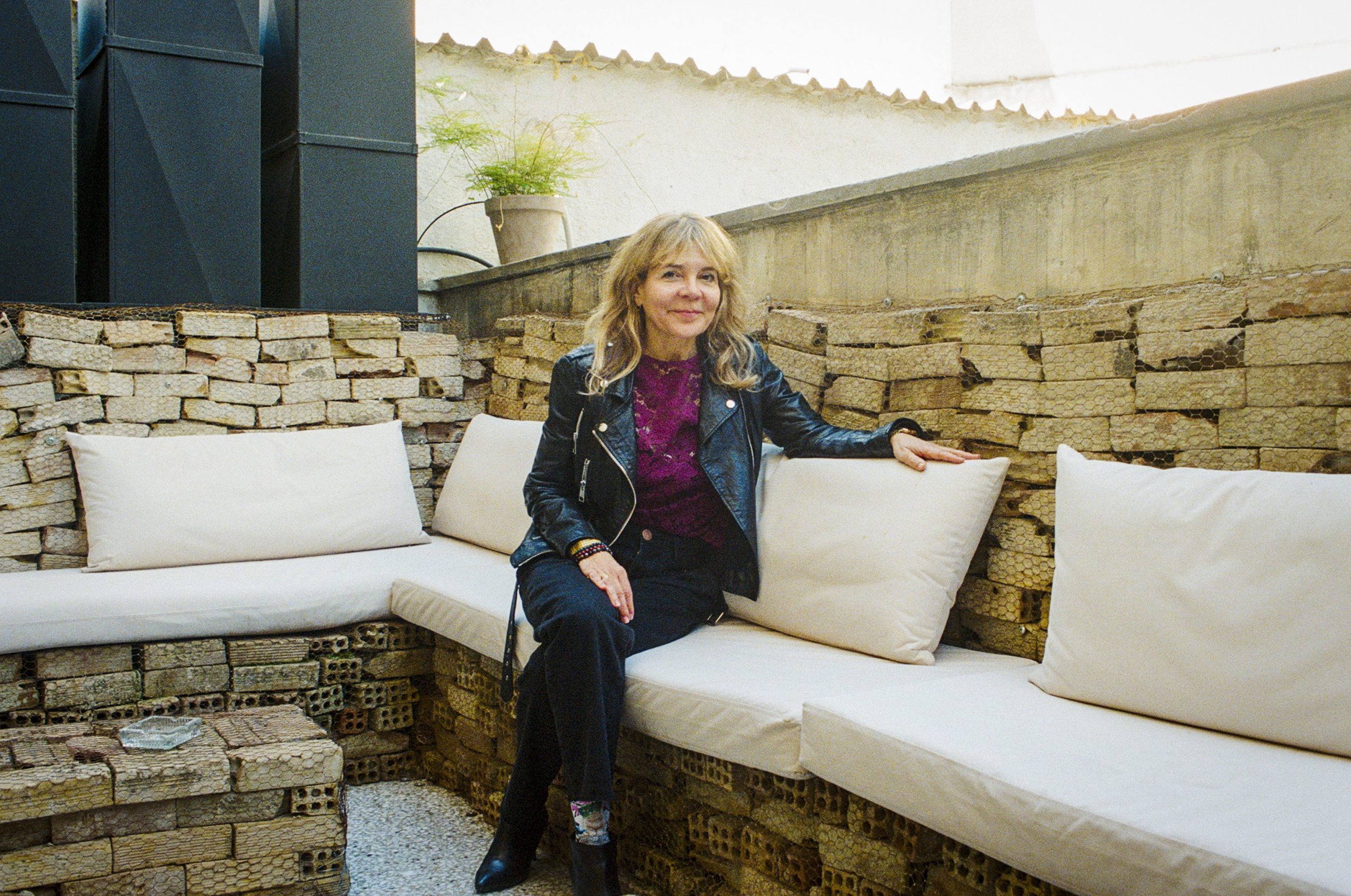
Photos: Eftihia Stefanidi / House of Shila

Location: Mona Athens

Author