As President of MOMus, you lead a team that has achieved a great deal throughout your tenure. What would you consider the institution’s most significant accomplishments to date, and how have you experienced its remarkable transformation and growing outward engagement with the city of Thessaloniki and its audiences?
Indeed, we have achieved a great deal. There have been major successes, but also countless smaller, less visible, everyday achievements that make us better and give us a meaningful and influential presence in the city.
We have succeeded in making the MOMus name increasingly recognisable, in changing the everyday life of the city, in creating a better working environment and in becoming an open organisation. Open, however, according to very strict criteria. In many respects, the city operates through local networks. We want to operate according to one single criterion: excellence.
So, rather than dwell on the major exhibitions we have brought to Thessaloniki or the establishment of MOMus Air at Macedonia Airport, I would like to focus on our most recent and perhaps greatest achievement, one that has transformed the city while also reshaping the future of MOMus: the Ministry of Culture’s decision to entrust us with the day-to-day operation and artistic programme of the Hamza Bey Mosque. There can be no greater tangible expression of trust.
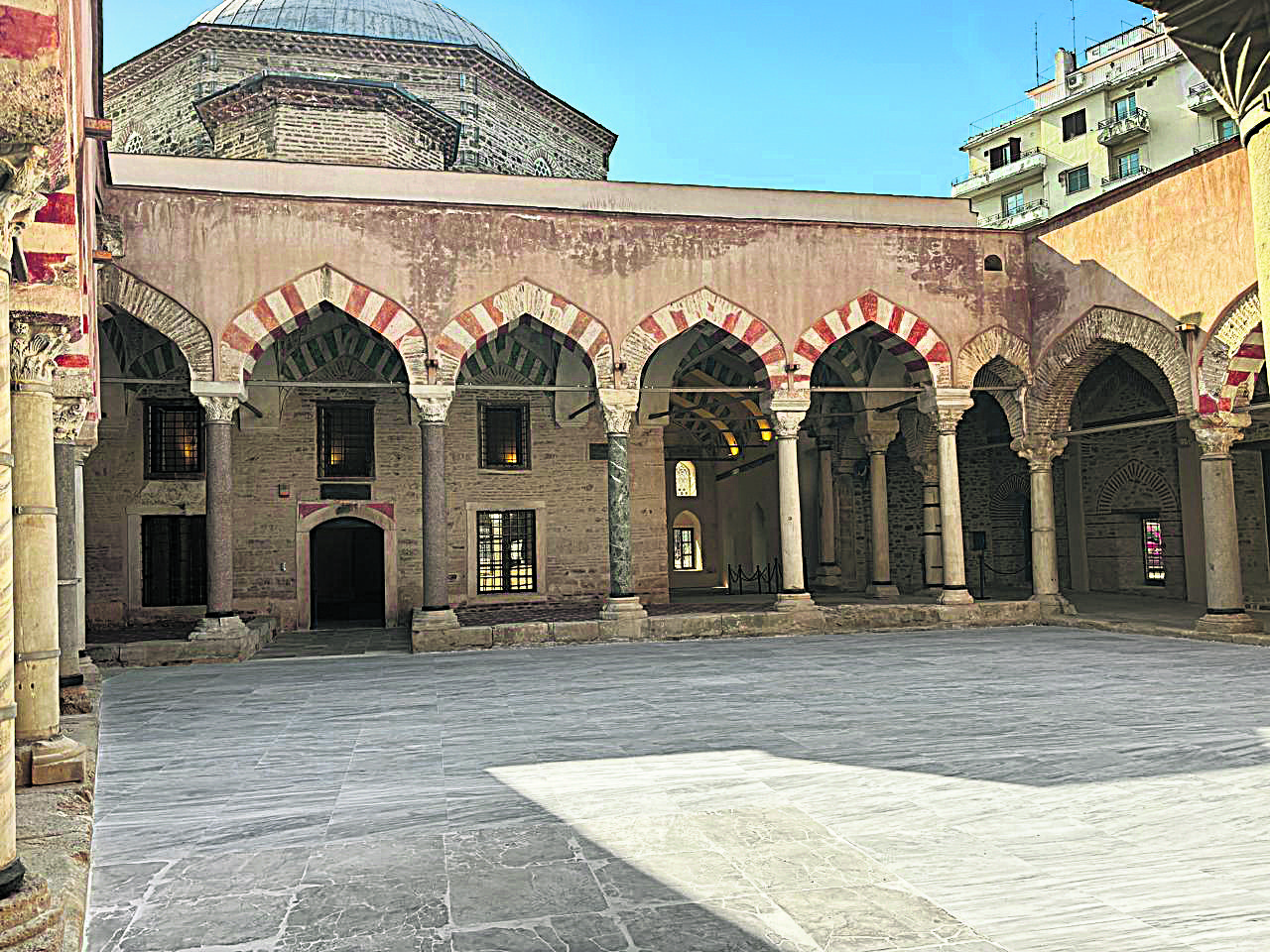
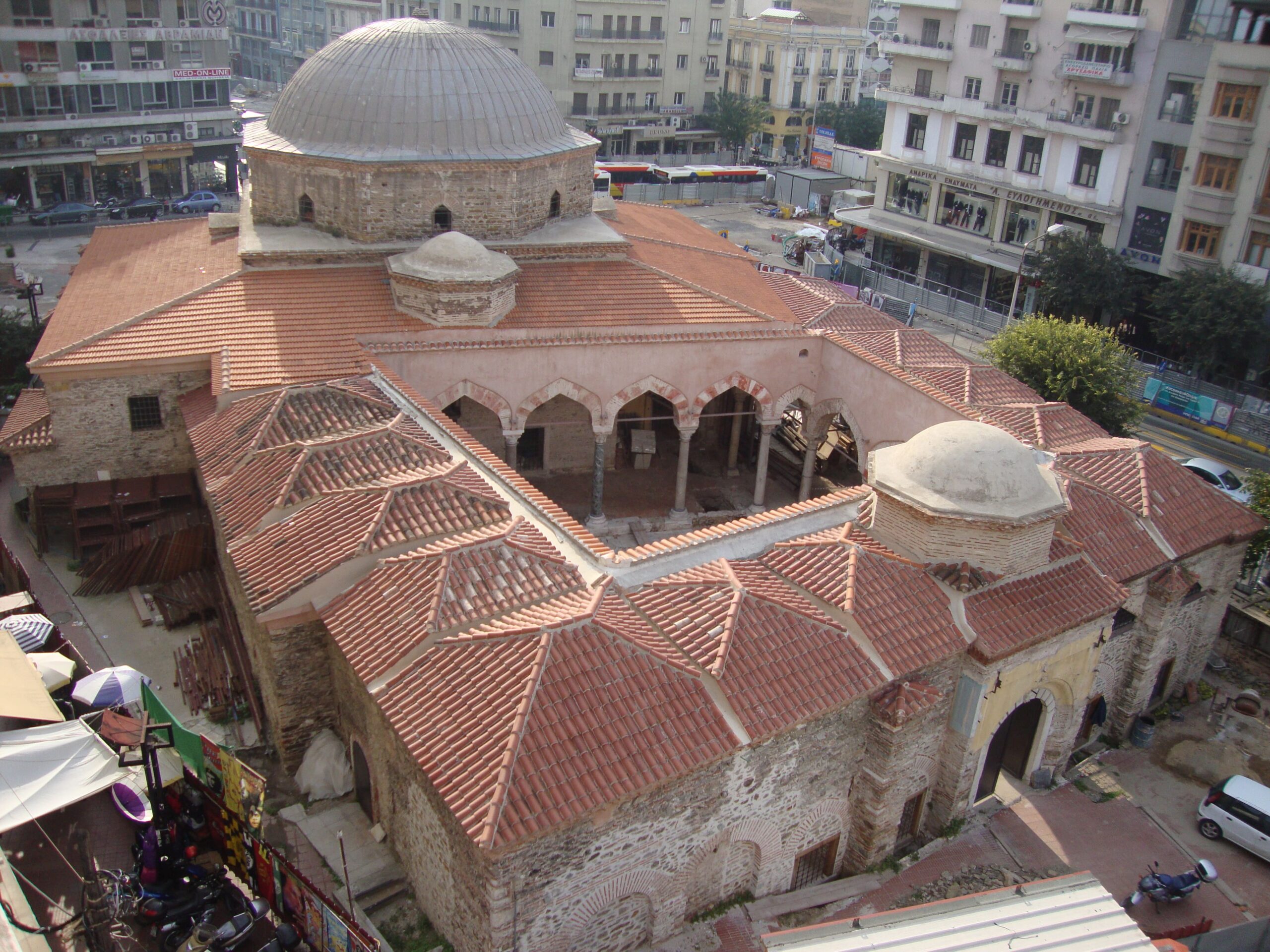
The Hamza Bey Mosque – Alcazar has finally opened its doors to the city. It is a true masterpiece, meticulously restored, and now operates under the umbrella of MOMus. Would it be fair to consider it the institution’s sixth museum? And what does it mean for MOMus to play such a pivotal role in bringing this important landmark back to the city?
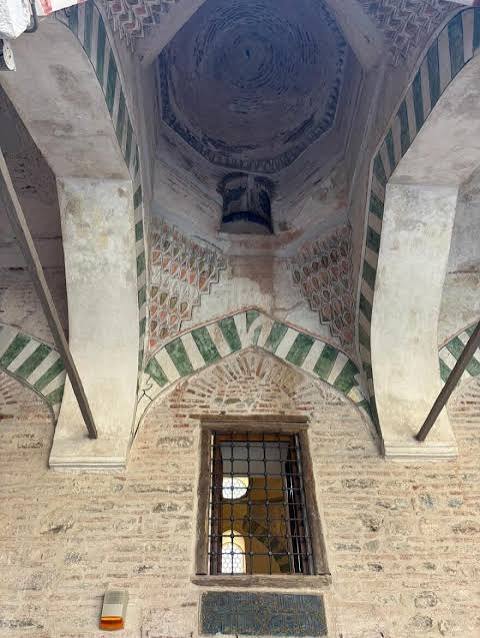
Indeed, finally! The entire stretch of Egnatia Street is becoming more beautiful, alongside Bey Hamam and the new metro stations. Finally, we have reached a level of maturity that allows us to acknowledge and showcase the city’s centuries-old Ottoman heritage. Ultimately, what was needed was a political decision and the determination to see it through. An emblematic monument, abandoned for half a century, was meticulously restored by the Ephorate of Antiquities of the City of Thessaloniki and returned to the city in just two years.
As you rightly suggest, we regard it as the sixth MOMus museum, a venue capable of hosting landmark exhibitions and events. The inaugural exhibition is a first step towards getting to know the space, its possibilities and its particular requirements. I am certain we will offer exceptional experiences. Our ambition is also to host musical events, perhaps as part of a summer festival, along the lines of the performances staged at the Odeon of Herodes Atticus.
What are your aspirations for this remarkable monument?
What is particularly striking is that, until its restoration was completed, the monument was almost entirely absent from public debate. Few, if any, were calling for its restoration or including it among the city’s priority projects. Only a handful of people were interested in its history.
Everything changed on 10 October, when it was unveiled in all its splendour, bearing the patina of another era. It was immediately embraced by the public: 40,000 visitors in its first two weeks. From the outset, it claimed its place among the city’s most beloved cultural destinations. At the same time, it transformed MOMus’s own identity, giving us greater visibility, a broader reach and increased visitor numbers, while bringing us into contact with new audiences. It has changed our standing.
Naturally, expectations are high, and we intend to meet them. Together with the Ephorate of Antiquities, we will ensure that the monument remains consistently accessible, that visitors enjoy services of the highest standards and that the artistic experiences on offer continue to evolve and grow in quality.
Having personally explored the monument’s long and troubled past, what stories did you uncover, and how deeply were you drawn into its rich and layered history?
When we first learned that we would be taking over the monument, I knew very little about its history, just like everyone else. I began looking for information, only to discover that it was, in many ways, a historical black hole. The available material was scarce, often undocumented and certainly fragmented.
So I put my researcher’s hat back on, revisiting an earlier chapter of my professional life, and embarked on a journey of discovery that revealed some extraordinary stories. I spoke with the Jewish Community of Thessaloniki, descendants of the monument’s last owner, as well as scholars in Paris and Istanbul. Dozens of fascinating narratives began to emerge, each following the course of the city’s own history. How could it be otherwise, given that this was once a mosque dominating one of its central thoroughfares?
I hope that what I have uncovered will serve as a starting point for more in-depth research, not only into the monument itself but also into other chapters of the city’s past. We are already planning to invite the distinguished Ottoman historian Heath Lowry this spring to present the story of the mosque’s construction by Hamza Bey, great-grandson of Gazi Evrenos, and explore the history of the Evrenos family in Thessaloniki.
After its many different uses and transformations over the centuries, which historical period of the monument fascinated you the most?
This is entirely subjective. I was particularly captivated by the transformations the monument underwent in the early 20th century, following the dramatic upheavals that reshaped the city. Within just a few decades, the mosque became connected to the exiled Sultan Abdul Hamid II, the Young Turk Revolution, the liberation of Thessaloniki in 1912 and the efforts to Hellenise the city, the Asia Minor Catastrophe and the refugees who settled here. Finally, its history became intertwined with the persecution of the Jews and the seizure of their property.
It is a mosaic of stories, many of which are interconnected. They offer an important lesson: to become better, avoid repeating the mistakes of the past, resist fascism, build bridges of friendship and base our development on close relationships with our neighbours. After all, who would want to live in an apartment building where nobody speaks to anyone, where a neighbour calls the police the moment you throw a party, or where you have no door to knock on when you run out of lemons? It may sound amusing, but Thessaloniki experienced many periods of prosperity when it functioned as an open metropolitan hub for the entire Balkans, attracting investment and talent from across the wider region.
Are you satisfied with the way the Alcazar has emerged following its restoration, and what are your major plans for the monument?
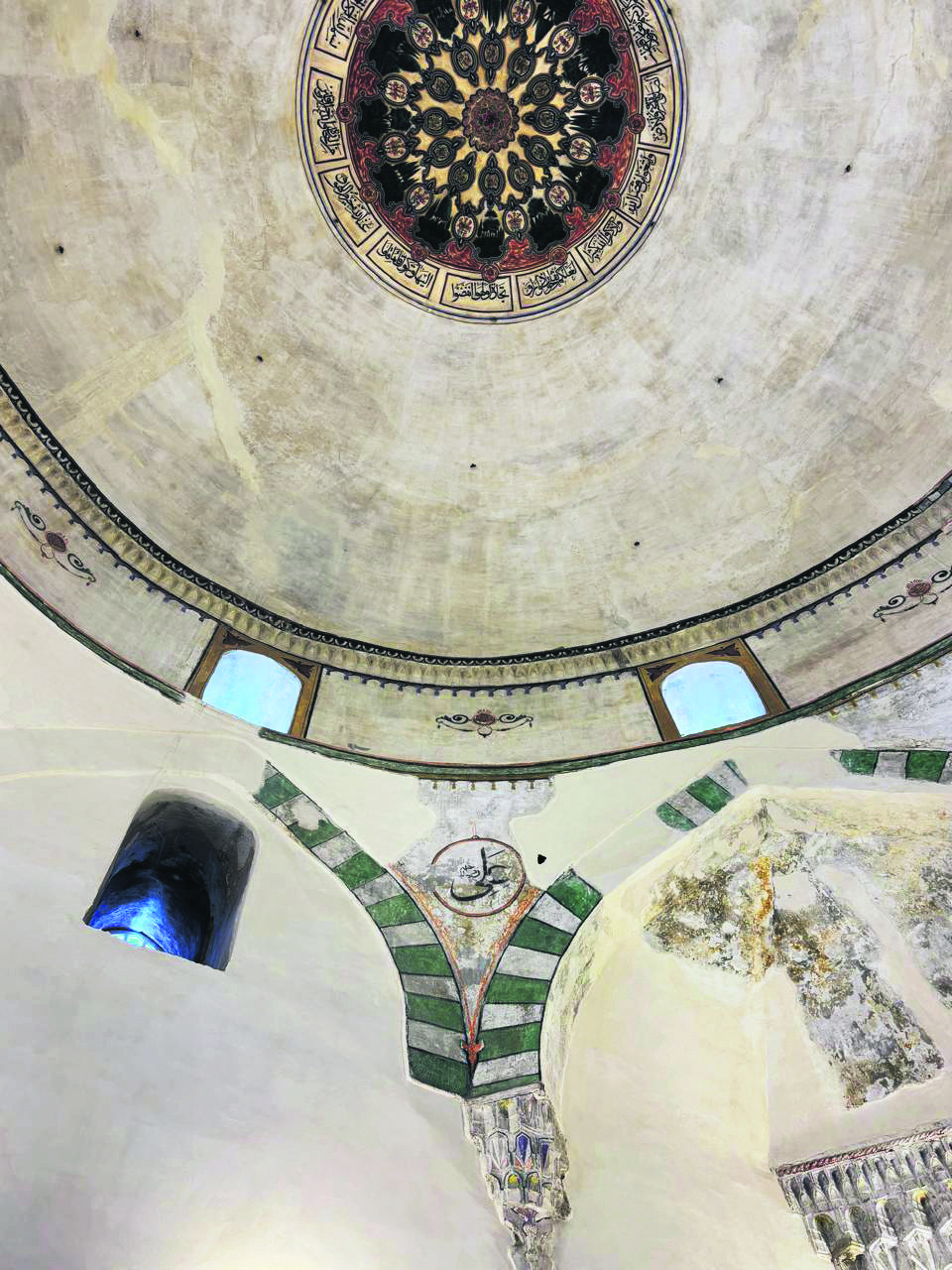
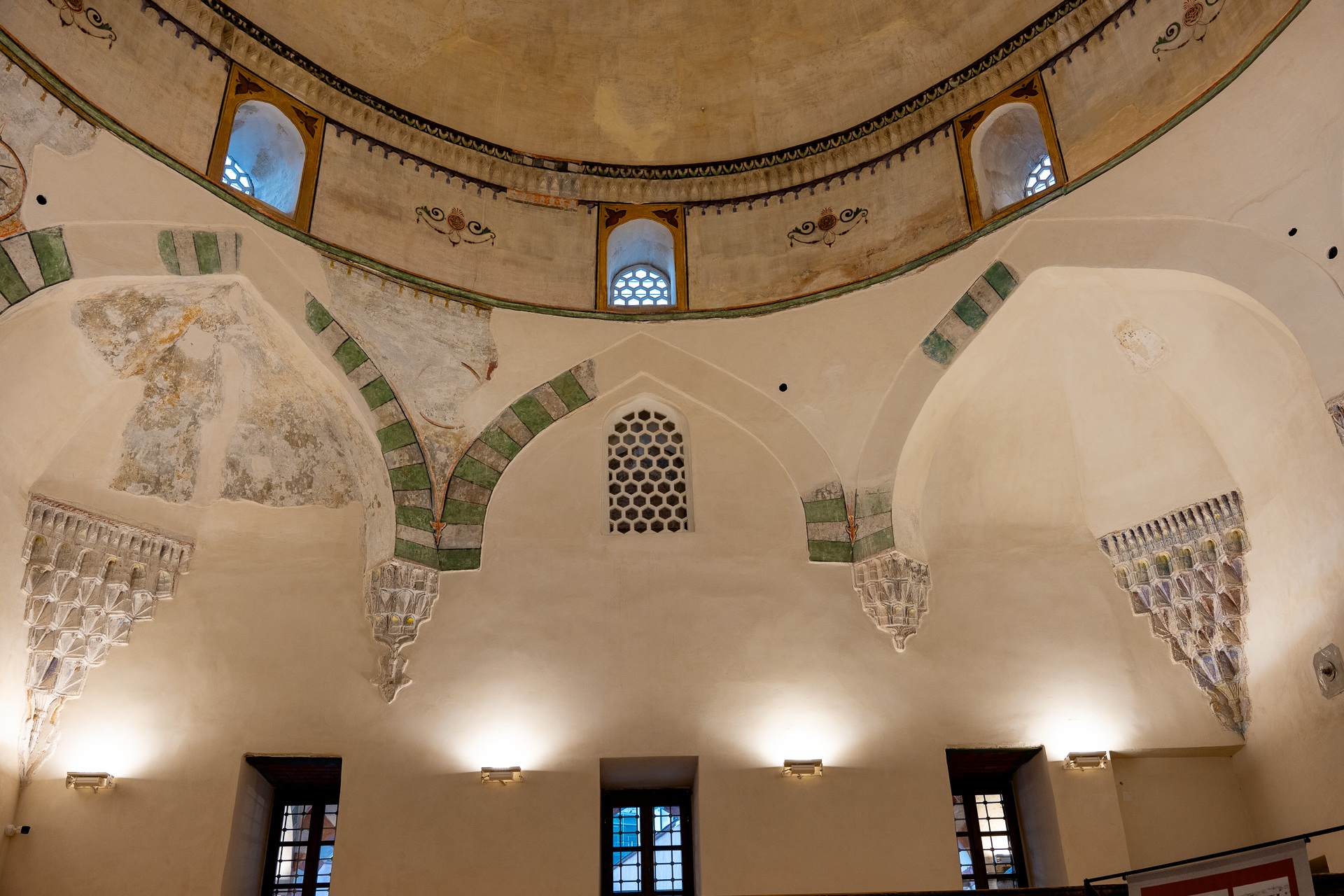
The work carried out by the Ephorate of Antiquities of the City of Thessaloniki and the services of the Ministry of Culture has been exemplary. Extensive and outstanding infrastructure works were necessary, as the monument had suffered from serious structural problems, which were further aggravated by the construction of the metro. At the same time, the building itself was finally revealed in its true form. Not the cinema, with its makeshift structures as older generations remember it, but the mosque founded by Hamza Bey in memory of his daughter, where the final prayer was held in 1923.
Its magnificent decorative colours have come to light, along with handwritten messages left on the mosque’s walls by worshippers. The expertise of the professionals involved in the restoration is truly exceptional.
Our plans begin precisely here: to respect this masterpiece and bring it to life through exhibitions, music and people.
How has the public responded so far?
The Hamza Bey Mosque has proved to be the monument the city never knew it was missing. During its first two weeks, when admission was free, it welcomed 40,000 visitors, and the impressive flow has continued, with approximately 500 people visiting every day. I believe that its first full twelve months will see visitor numbers exceed 150,000. This will make it the city’s most popular cultural destination after the White Tower.
I also expect visitor numbers to grow even further once the monument becomes better known to visitors from Turkey, as it was the first mosque built in the city following the Ottoman conquest of 1430. We warmly welcome them. The audio guide is already available in Greek, English and Turkish.
How easy will it be for visitors to discover the monument’s history?
The audio guide is the first tool already available to visitors. By scanning a QR code, they can also access photographs and stories, which we will continue to enrich over time.
A guided tour programme will also be launching shortly and will be officially announced soon. In addition, we are preparing a series of special publications exploring the different chapters of the monument’s history, which will be available at the museum shop for those wishing to delve deeper.
Finally, we are planning some rather different guided tours, with me personally taking on the role of guide. I will try to convey the emotions I experienced during my research: the political upheavals, the conflicts and even the love stories associated with the monument.
Tell us a beautiful story.
I would like to tell you the story of Beniko Segura. Born in 1900 into a Jewish family of eight children, he grew up at a time when Sephardic Jews constituted the majority of Thessaloniki’s population. In 1931, Segura and Elli Attas founded a company to operate the Attikon cinema, and in 1932 they opened the Alcazar.
In the autumn of 1942, like so many other Jewish residents of the city, the businessman was arrested by the Germans. He was released only after agreeing to surrender the cinema to trustees appointed by the German propaganda office. It was a characteristic episode in the systematic plundering of Thessaloniki’s Jewish property. The contracts were drawn up in the presence of Max Merten, an adviser to the German Military Administration of Thessaloniki and the Aegean, and the cinema was subsequently leased to a refugee from Serres.
At least Beniko Segura survived the Holocaust. In 1937, he had married an Orthodox Christian woman and converted to Christianity, a decision that ultimately proved instrumental in saving his life. He was initially detained at the Pavlos Melas military camp and subjected to the traumatic humiliation of Liberty Square, alongside approximately 9,000 Jewish men aged between 18 and 45. He nevertheless escaped deportation to Auschwitz.
After the war, like many Jewish survivors, he sought legal restitution of his property. His claim was unsuccessful, and he was forced to buy back the cinema for a second time, operating it until 1975. In 1959, despite his conversion, he testified as a Jewish witness before the Special Court for War Criminals in Athens, during the trial of the notorious Max Merten, who was charged with war crimes. After all, Segura had lost 42 close relatives in the Holocaust, including all seven of his siblings.
Is authenticity a timeless and irreplaceable value in today’s world?
In a world changing at an extraordinary pace, where everyone seems to imitate everyone else and we are increasingly flooded with products generated by artificial intelligence, authenticity is indeed a timeless and irreplaceable value. The Hamza Bey Mosque is its finest definition. A unique monument, carrying centuries of stories, cannot be replicated. That, precisely, is what the first 40,000 visitors came to experience.