How did your creative journey begin? Tell us about your life story and the key moments in your career that have led you to where you are today.
Magdalini:
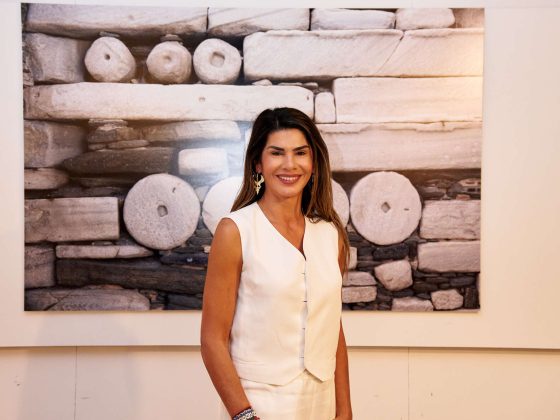
I started working in contemporary art galleries while I was studying at the Academy of Fine Arts in Milan. After that experience, I found a position at a design gallery in Milan, where I stayed for almost eight years. After the first lockdown due to COVID, I decided to quit my job and start working as a freelance design advisor with my friend. I think this was the most important decision for my career. Today, here I am with Yagos.
Yagos:
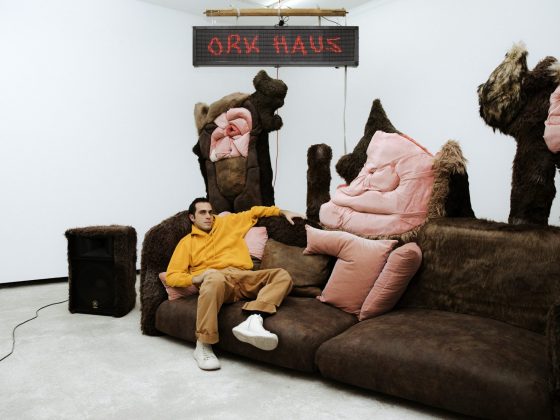
I come from a family of antique dealers. At a certain point, I felt the need to move away from that market and discovering gradually design pieces helped me shift completely the direction of Antiqua Gallery, focusing on 20th-century design. it was a natural process.
How did your love for Arts and Design begin, and which period do you prefer the most?
Magdalini:
There isn’t a real beginning. It’s simply an attraction and a constant curiosity towards art and design, a desire to learn and explore. It’s also about the discovery of objects and a deep appreciation for their details, both within their aesthetic language and their place in history.
Yagos:
For me, it grew organically through my family environment, but it evolved when I started looking at design not just as objects, but as a language connected to architecture and culture.
What need led you to create Antiqua Gallery, and what is its philosophy?
Antiqua has been a reference point in the antiques market since the 1950s. With Yagos taking over, the gallery shifted its direction and focus, and today it is specialized in historical design. Our goal is to tell the story of 20th century design by highlighting and valuing the objects themselves.
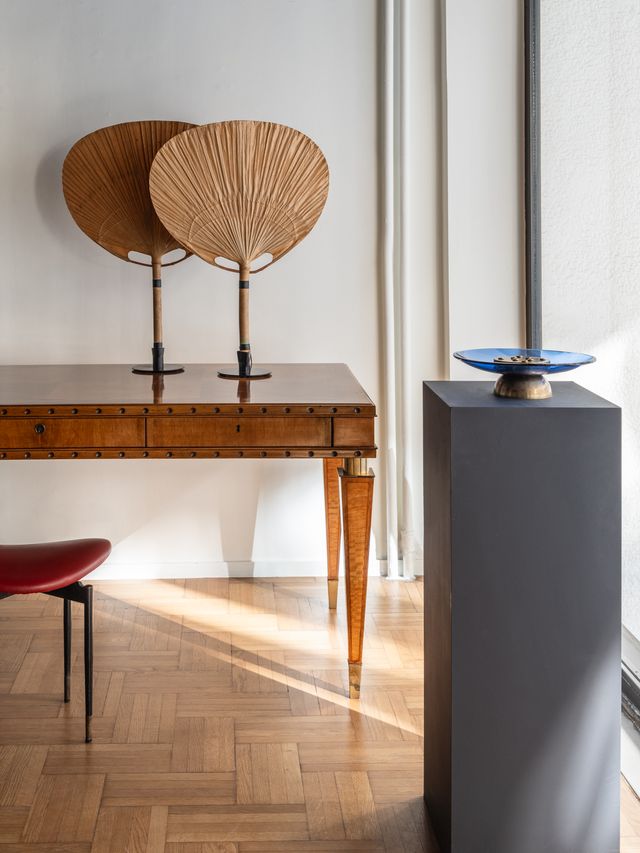
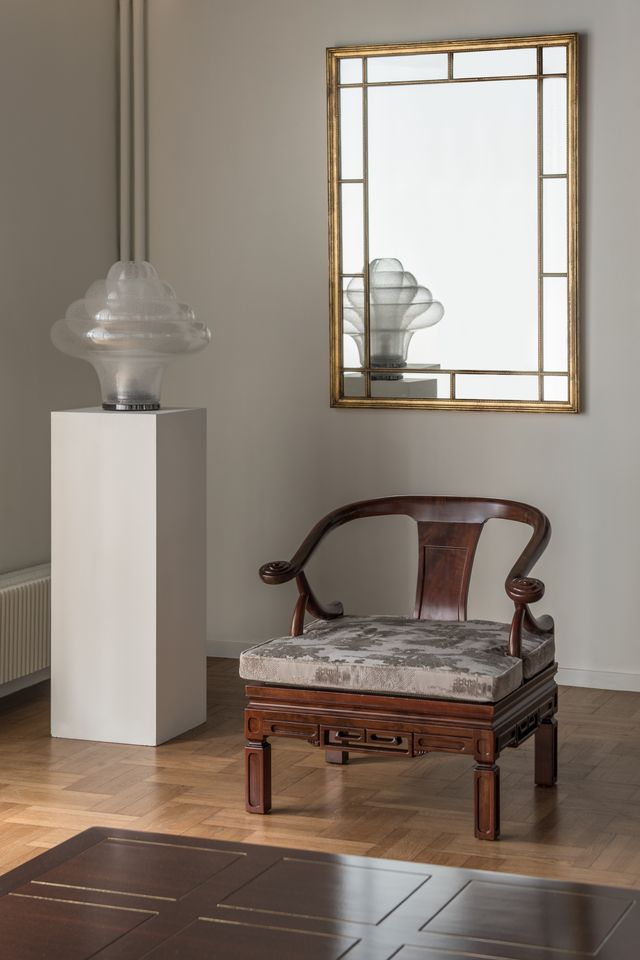
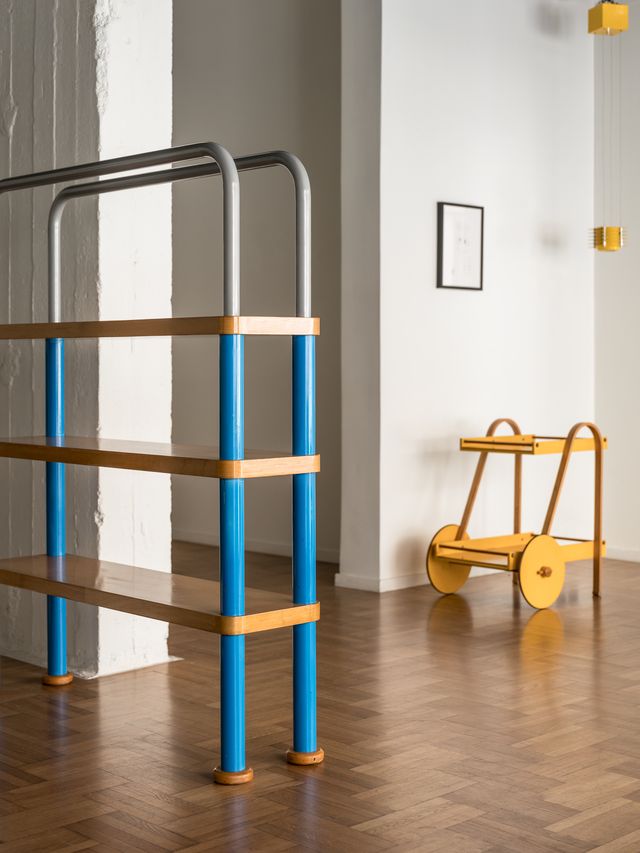
What guides our work is the desire to present and share what we consider truly worth attention. Our selection is accompanied by a thoughtful approach to arrangement and visual direction. We do not focus only on individual pieces but aim to create a broader context, connecting objects to their environment and their history.
Does Antiqua Gallery focus more on the past, or on contemporary artists and design?
Antiqua is deeply rooted in the past, but not in a nostalgic or static way. For us, the past is a living material, something to be continuously reinterpreted and recontextualized. Our work lies in enhancing it so that it can engage with the present and maintain its relevance into the contemporary culture.
What makes a piece of furniture valuable through time?
Timeless value comes from a combination of factors: the strength of the idea behind the piece, the quality of materials and craftsmanship, and its ability to remain relevant across different contexts and generations. The designer is also fundamental, not just for their technical skill, but for the vision they bring, the way they understand space, function, and form, and how they create something that resonates beyond its era. When a piece goes beyond function and becomes a cultural or aesthetic statement, it gains lasting significance.
What is your personal preferences in interior design and what do you think people need today for the places they live?
We prefer warm, enveloping spaces with light and carefully considered elements. It is important to respect the objects and allow them to live within their context. Spaces do not need excess; on the contrary, less, but thoughtfully selected, is always more.
Which collaborations have been the highlights of your journey?
All collaborations leave something valuable. Even though we do not often work with living artists and designers, every exchange is fundamental. From artists and designers to gallerists and technicians, each encounter brings new perspectives. Through them, dialogues and deeper understandings emerge, enriching our experience and approach.
What are your next steps and future plans?
This summer we are preparing two special projects. We are working hard to make them meaningful and we are enjoying the process a lot. Stay tuned!
What is Greece’s position in the global art scene? Do you feel we can do better?
Greece is rapidly emerging as a dynamic arts hub, blending its rich history with a vibrant and experimental contemporary scene. Institutions and galleries are working hard, and professionals are increasingly present in the international market. Greek collectors are showing a growing interest and strong intention to expand their presence internationally, while the number of international visitors and collectors engaging with the local scene is steadily increasing.
It is a very good moment, but there is always room to improve. Growth comes from never thinking you have arrived. There are still gaps to address, particularly in terms of professionalism, merit, management, humility, and punctuality. Recognizing these challenges is essential to build a stronger and more sustainable system.
What would be a dream project for you?
It is difficult to define a single dream project. We are more interested in the process and in how each new project allows us to grow and evolve.
A piece of Art or Design that stole your heart
There isn’t one specific piece. Our interests change over time. There are moments when we influence each other and become deeply focused on the same works or designers, and other times when each of us follows our own interests. It is a continuous process of discovery, both together and individually.
When you enter a room, what draws your attention first?
The light and the lamps. Both immediately define the mood and character of a room.
Which designer or artist do you most admire?
Magdalini:
I am particularly drawn to Milanese modernism and admire women designers such as Cini Boeri. One of the absolute geniuses is Joe Colombo, who transformed the concepts of living, modularity, and the function of objects within the home. I am also very interested in the radical movement, when traditional design was challenged and reimagined through anti-design principles, introducing new and often provocative ideas about living.
Yagos:
I have always been fascinated by Carlo Mollino. I have collected his pieces whenever I came across them and have long admired his eclectic world and visionary approach.
Is there an exhibition you will never forget?
One exhibition that left a strong impression on us was the 17th International Architecture Exhibition, How Will We Live Together?, at La Biennale di Venezia in 2021.
The theme invited a profound reflection on how architecture shapes the ways we live, how we share space, how communities evolve, and how built environments respond to societal needs and change. We were particularly struck by the Japan Pavilion, which presented a project exploring the concept of time in relation to architecture and the domestic sphere, showing how buildings and the spaces we inhabit are continuously shaped by the passage of time and the lives they contain. The way this project encouraged visitors to reflect on time, memory, and spatial experience made it especially memorable for us. Experiencing the Biennale during a quiet, almost empty Venice due to the covid-19 situation made the visit feel like a rare, intimate opportunity, making the exhibition even more memorable.
What is the best piece of advice you’ve ever received—and the best advice you’ve given?
More than advice, it is a way of living: being grateful, being kind, staying curious, always going deeper, and committing to continuous learning. These are essential values, not only in work but in life.
What do you consider the most emblematic design piece of all time?
Every period has its own icons. Design follows history and reflects the context of its time. Some pieces are particularly relevant because they represent change, while others perfectly embody the way people conceived daily life and the function of objects during that specific historical moment.
Have you made any recent discoveries in art or design that excited you?
When we started working, we spent a great deal of time searching through markets, with a real sense of treasure hunting. Although that feeling and way of working has partly been lost, there have still been remarkable discoveries over the years, both in markets and in private homes. One especially memorable find was an important collection of 32 early works from the Klismos series designed by T.H. Robsjohn-Gibbings for the Greek cabinetmaker Saridis of Athens. The collection was sold intact to another collector, and it is wonderful to see it pass from those who first appreciated the distinctive elegance of this style to new owners who have chosen to preserve and value it as a whole.
How do you define beauty?
Beauty is simplicity and sensation. It is not limited to aesthetics; it is something that surrounds you and engages all your senses.
What is Authentic to you?
Authenticity comes from a place of honesty and coherence. When an object, a space, or a work truly reflects its intention and identity, you feel it immediately. The same applies to people.
When Design Was Experimentation opens at ANTIQUA Gallery in Athens
The exhibition explores a pivotal moment in the history of Italian design: the early 1960s, when what would later be defined as Radical Design had not yet taken shape as an ideological manifesto, but existed instead as an open and fertile field of experimentation. During this decade, architects and designers progressively redefined the domestic environment, questioning materials, colors, forms, and the very relationship between design and industrial production.
At the core of the exhibition are the early furniture projects created by Ettore Sottsass for Poltronova in the early 1960s. In these works, expressive forms are already present, yet they still belong to a phase of testing and research in which each object represents an attempt to open new possibilities for living spaces. The selection on view, including the Lucrezia bench and the Califfo seating in its settee version, comes from an important private collection in Northern Italy. Crucial to this experimental climate was Sergio Cammilli, founder of Poltronova in 1957. An enlightened entrepreneur, Cammilli deeply believed in artistic research and creative design, encouraging experimentation and allowing prototypes and unconventional objects to enter production. Within this system, designers and manufacturers formed part of the same cultural avant-garde: without such entrepreneurial trust, many experimental ideas would never have materialized.
What Ivan Mietton describes in his book Sottsass (2017) as Sottsass’s “formative years” coincided with a period of exceptional creative freedom. Through extensive experimentation with ceramics, metal, wood, and thermoplastics, Sottsass gradually developed the theoretical and aesthetic foundations that would later make him a central figure in Radical Italian movements such as Studio Alchimia and the Memphis Group.Alongside the furniture, the exhibition includes the Yantra Y32 and Y34 ceramic vases (1969), part of the Yantra series commissioned by Cammilli to complement the furniture collection with decorative objects. Produced in Tuscan workshops between Figline and Prato, the series consisted of thirty-two pieces.
The word “Yantra,” from Sanskrit, means “diagram” and refers to symbolic geometric representations of energetic principles used in Hindu traditions as aids to meditation. Each geometric element carries meaning, the circle representing the earth, the upward triangle fire and the male principle, the downward triangle water and the female principle, and the central dot the generative core, while color becomes the visible expression of natural energy. With Yantra, the domestic object transcends functional neutrality and acquires symbolic and spiritual dimensions.This transformation of the domestic environment would later find theoretical reflection in La casa calda (1984) by Andrea Branzi, which describes the transition from a purely rational and functional house to a “warm” house, an emotional and layered environment shaped by signs, colors, memories, and symbolic objects.
The experimental research of the 1960s anticipated precisely this new understanding of living space. The exhibition also includes a table from the Quaderna series by Superstudio, reflecting the growing challenge to traditional furniture codes. Through its abstract grid and radical geometric reduction, the series transforms furniture into a conceptual statement, already charged with critical implications toward functionalist orthodoxy.A significant section of the exhibition is dedicated to lighting design, a privileged field of experimentation in which architects and designers began, during the 1960s, to explore new industrial materials and alternative formal languages.
The Model 524 lamp (1963) by Franco Albini for Arteluce marked an important shift in his work. By employing plexiglass, then a relatively unexplored material, Albini departed from artisanal tradition and introduced a visual lightness and structural transparency that anticipated the broader experimentation with plastics in the following decade. With the Model 602 in ABS, Cini Boeri further advanced this material investigation. The use of an industrial polymer allowed for formal freedom, serial production, and a compact, essential aesthetic far removed from the decorative culture of blown glass. Here, the luminous object becomes the expression of a new technical and industrial language.The Popone lamp by FontanaArte represents another decisive break. Historically associated with refined glass craftsmanship, the company here embraced volumetric boldness and a sculptural presence that challenged the idea of the lamp as a discreet functional device. Popone transforms lighting into an autonomous, declarative object within the domestic landscape.
Finally, the late-1980s wall lamps designed by Achille Castiglioni and Pier Giacomo Castiglioni reduce the object to its essential structural elements, exposing rather than concealing its mechanical logic. Through typological irony, mobility, and the dismantling of conventional archetypes, their work anticipates the critical attitude that would soon characterize Anti-Design: design no longer conceived solely as functional problem-solving, but as cultural inquiry and conceptual gesture.Taken together, the furniture, ceramics, and lighting projects presented in the exhibition reveal a moment when Italian design was not yet radical by declaration, but already radical in attitude. It was a period defined by experimentation, entrepreneurial trust, and visionary collaboration, one that profoundly reshaped the way objects and interiors were conceived, and that laid the groundwork for the critical and expressive movements that would define the following decade.
When Design was Experimentation
31 March- 16 May
ANTIQUA is an Athens-based gallery dedicated to historical design and key masterpieces of the twentieth century. Established in 1954, it has long been recognized as one of the city’s foremost destinations for high-quality antiques and collectible design. Since the early 2000s, the gallery has focused on postwar collectible furniture, lighting, ceramics, and sculptural works by leading international architects and designers, alongside significant Greek creators who shaped the design culture of the period. Through thematic installations, research-driven exhibitions, and editorial projects, ANTIQUA presents historical design as a living dialogue between architecture, objects, and interior space, fostering appreciation for the formal, material, and cultural richness of twentieth-century
design.antiqua.gr
@antiqua_gallery