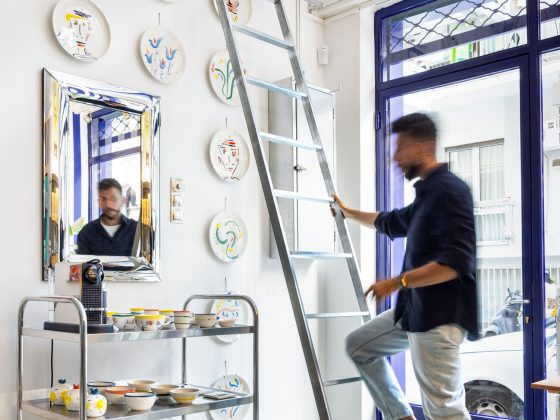
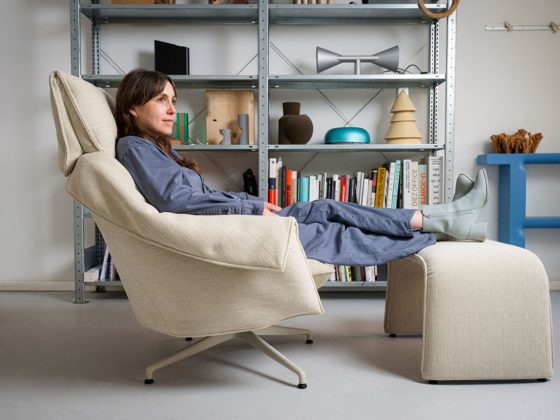
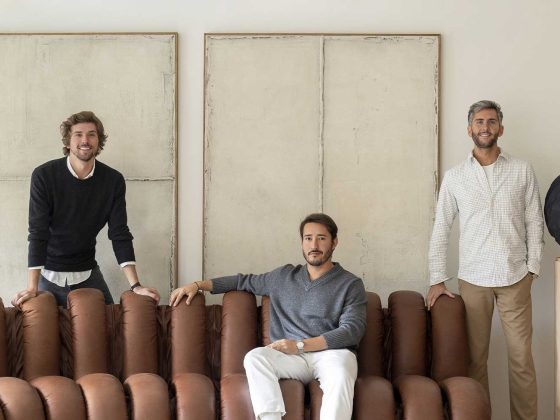
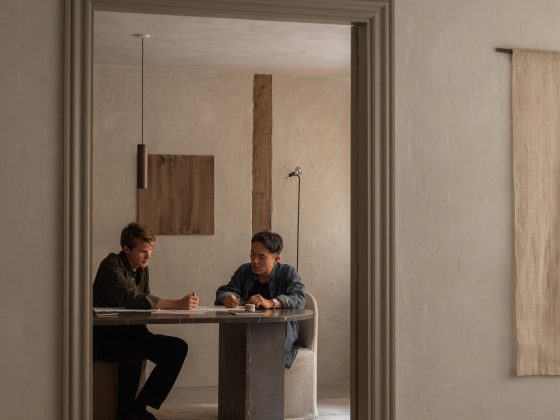
Industrial designer Dianna Karvounis and architect Vivian Philippa, through Anaktae—the studio they co-founded—share a deep appreciation for craftsmanship, a prolific work ethic, and take pride and pleasure in perfectionism. Their personal apartment on Lycabettus is bathed in natural light and reveals their own truth about aesthetics.
What are the characteristics of the house that you loved, and how did you handle them?
The proximity to the Lycabettus forest is almost spellbinding. Nature does not function as a backdrop but as a co-inhabitant; it enters through the openings, changes the atmosphere from moment to moment, and becomes part of the everyday experience. The light, the mist, the shifting moods of Mount Hymettus seep into the interior like a living stage set—the house breathes in constant dialogue with the landscape. And of course, the city, sprawling like an unbroken weave of sound and light, adds its own layer of energy with its continuous hum.
How did Anaktae’s philosophy find its place and adapt to the context of the residence?
This residence is not a project—it is a long-term relationship. It grows as we grow; it changes as our desires and needs change. Here we test our ideas, allow the objects to teach us, and observe how design becomes part of everyday life.
The Anaktae philosophy was not imposed on the house; it found its place gradually, through the natural evolution of the relationship. It is present in the materials, in the calmness of the lines, in the subtle yet essential rituality of the objects.
Interior design has the ability to highlight values and elevate a minimal space. How does that happen, and what makes it special?
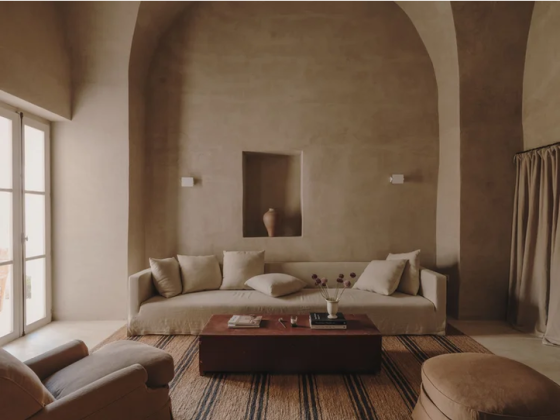
We operate within a minimal–maximal balance: a balance between strictness and freedom, between the clarity of lines and the joy of objects. A minimal space is elevated when it sheds the fear of “emptiness”; what makes it special is not quantity but character. Simplicity and minimalism are not poverty—they are maturity.
❝ We operate within a minimal–maximal balance: a balance between strictness and freedom, between the clarity of lines and the joy of objects. A minimal space is elevated when it sheds the fear of “emptiness”; what makes it special is not quantity but character. Simplicity and minimalism are not poverty—they are maturity.❞
Which materials do you love, and what is the philosophy behind the objects you create?
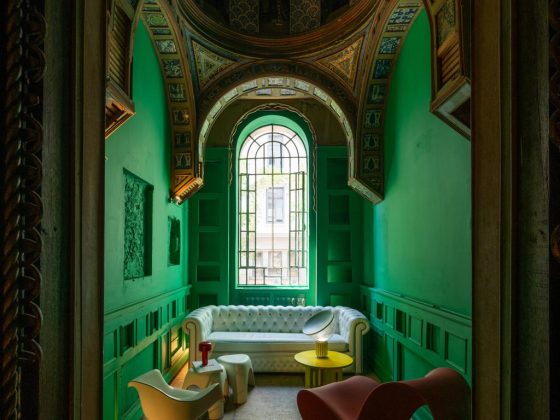
We consistently love brass for its warm metallic quality, marble, woods with pronounced grains, and mirrors that multiply the light. For us, these are materials with soul, weight, and personality. If we had to condense our philosophy, the term Archaic chic is the most accurate: a contemporary interpretation of the primordial.
How much “Greece” is present in your work?
Even when we don’t consciously seek it, Greece is there. It exists in the ever-changing light, in the proportions we’ve inherited, in the simplicity that is never empty, in the materiality that carries history. It is not expressed through imagery, but through essence.
What is the first thing you notice when entering a space?
The light—both natural and artificial—its origin, the way it diffuses, the shadows it creates. And immediately after, its narratives, its… “ghosts”: those subtle elements that reveal the character, use, and history of the space.
What do you consider the advantages of your own residence?
Our home combines two almost contradictory qualities: it is located in the center of the city, yet it enjoys the calmness of the countryside. The house is unexpectedly quiet—a rare luxury in the city. This dual character—urban and natural at once—is perhaps its greatest advantage. Silence, for us, is a rare luxury.
❝ Give space and time to your instinct. Choose objects that truly speak to you, not those you feel “should” choose. Remember that decoration never ends—it evolves. The most authentic space is the one built with consistency and truth.❞
Do you believe that a home should evolve and change over time, or do you prefer it to remain the same?
Yes—just as the people who live in it evolve. Some constants remain, but many things change to allow us to keep moving forward. And some things… are constantly rearranged by our cats, who have their own opinions about decoration! The evolution of a home is a living process.
Does art and creativity make us better people?
Undoubtedly. Art urges us to observe, to question, to feel. It reminds us that there is always something beyond the “surface level.”
Does architecture have the ability to shape and cultivate its users? Do you agree?
Yes—when it functions as art and not merely as construction. A space can support new behaviors, inspire better habits, and influence one’s psychology and life rhythm. Architecture is everyday education.
What would be your advice to someone who is starting to decorate their home?
To give space and time to their instinct. To choose objects that truly speak to them, not those they feel they “should” choose. To remember that decoration never ends—it evolves. And that the most authentic space is the one built with consistency and truth.
Is our home a reflection of our soul?
Under certain conditions, yes. When it is the result of conscious choices and not merely a reproduction of a trend or passing fashion. A space built with honesty toward ourselves reflects the way we see the world.
Which is your favorite corner of the house and why?
The fireplace; because it marks moments of relaxation, warmth, and a more disarming side of daily life. It’s the spot where we slow down—a small ritual in our everyday routine.
If you were to design something for The Authentics.gr, what would it be?
A bookcase! A piece of furniture that unites structure, character, and memory, capable of blending functionality and poetry. Bookcases are contemporary bastions that host objects, stories, and ideas with the same generosity and grace.