From March 14 to August 23, 2026, Palazzo Strozzi presents an unmissable exhibition dedicated to the great master of American art Mark Rothko through an extraordinary selection of works, including large-scale paintings never before exhibited in Italy, on loan from prestigious private collections and international museums such as the Museum of Modern Art and the Metropolitan Museum of Art in New York, Tate in London, Centre Pompidou in Paris, and the National Gallery of Art in Washington, D.C.

Curated by Christopher Rothko and Elena Geuna, the exhibition traces the evolution of Rothko’s artistic practice, from his early figurative works in dialogue with Expressionism and Surrealism to the iconic abstract canvases of the 1950s and 1960s, while also exploring his connection to the Italian artistic tradition.

The exhibition pays tribute to a central figure in the history of modern art, whose works create spaces where colour and light invite meditation and introspection, in a constant tension between abstraction and spirituality.

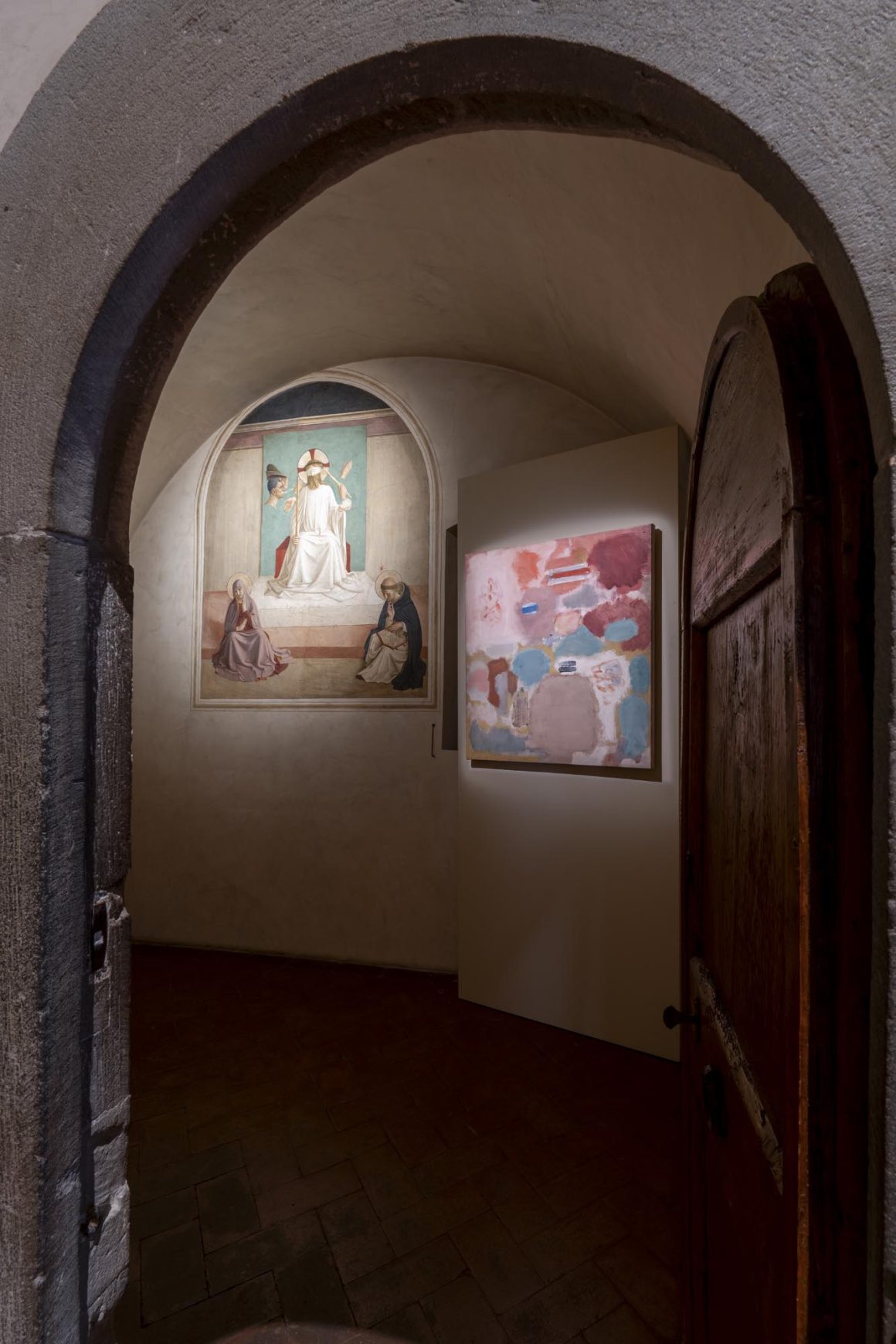
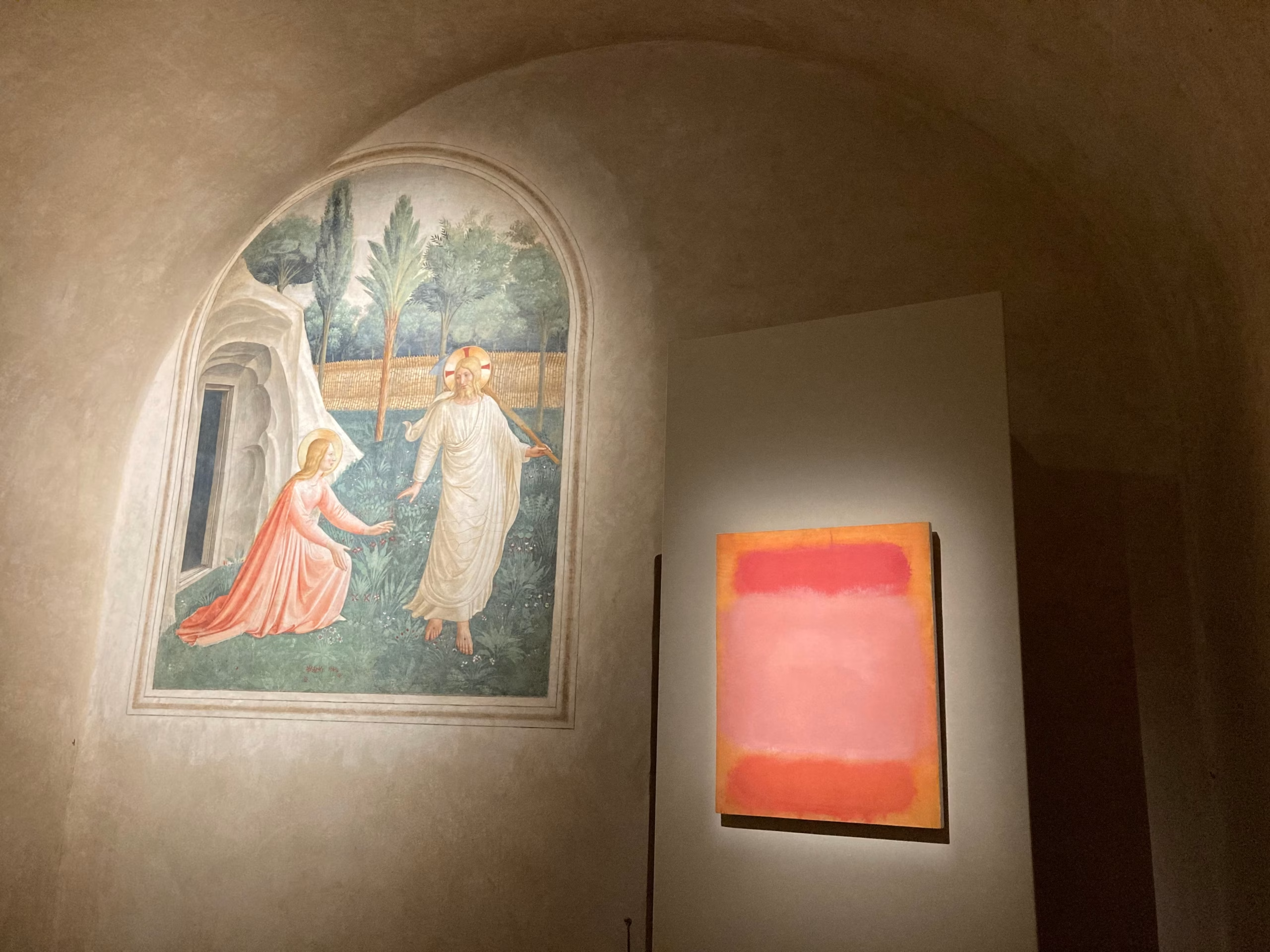
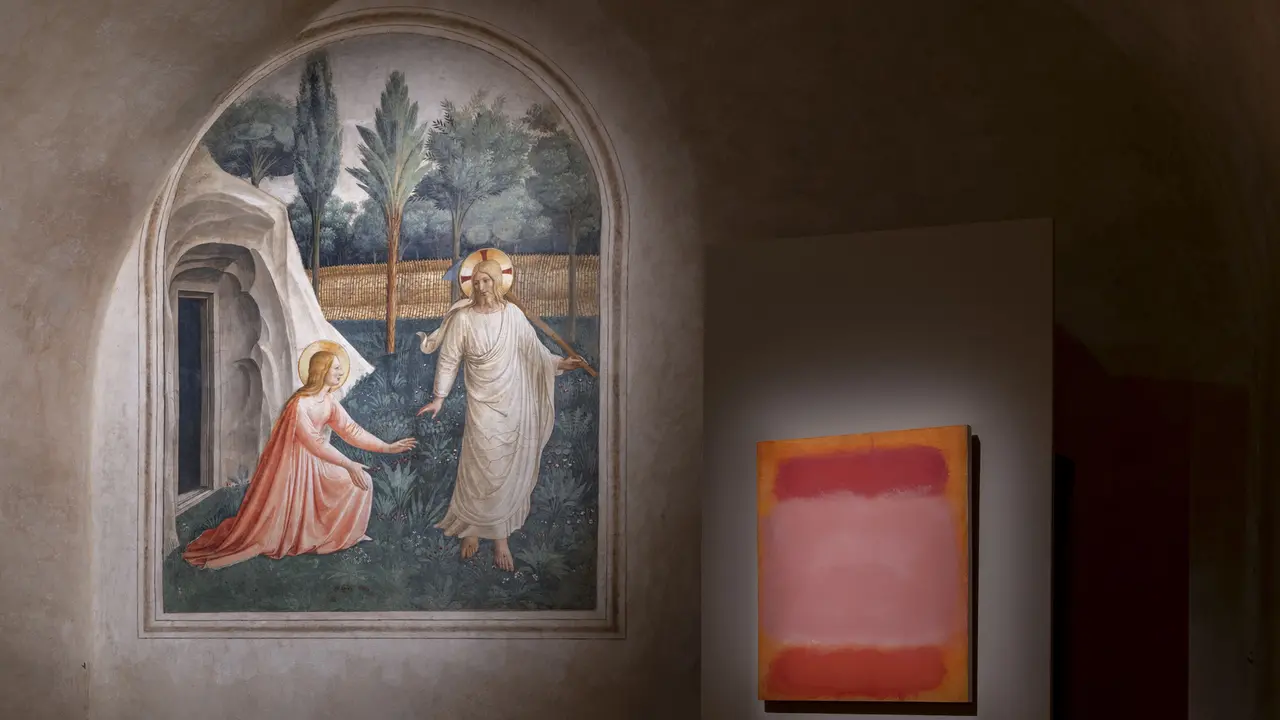
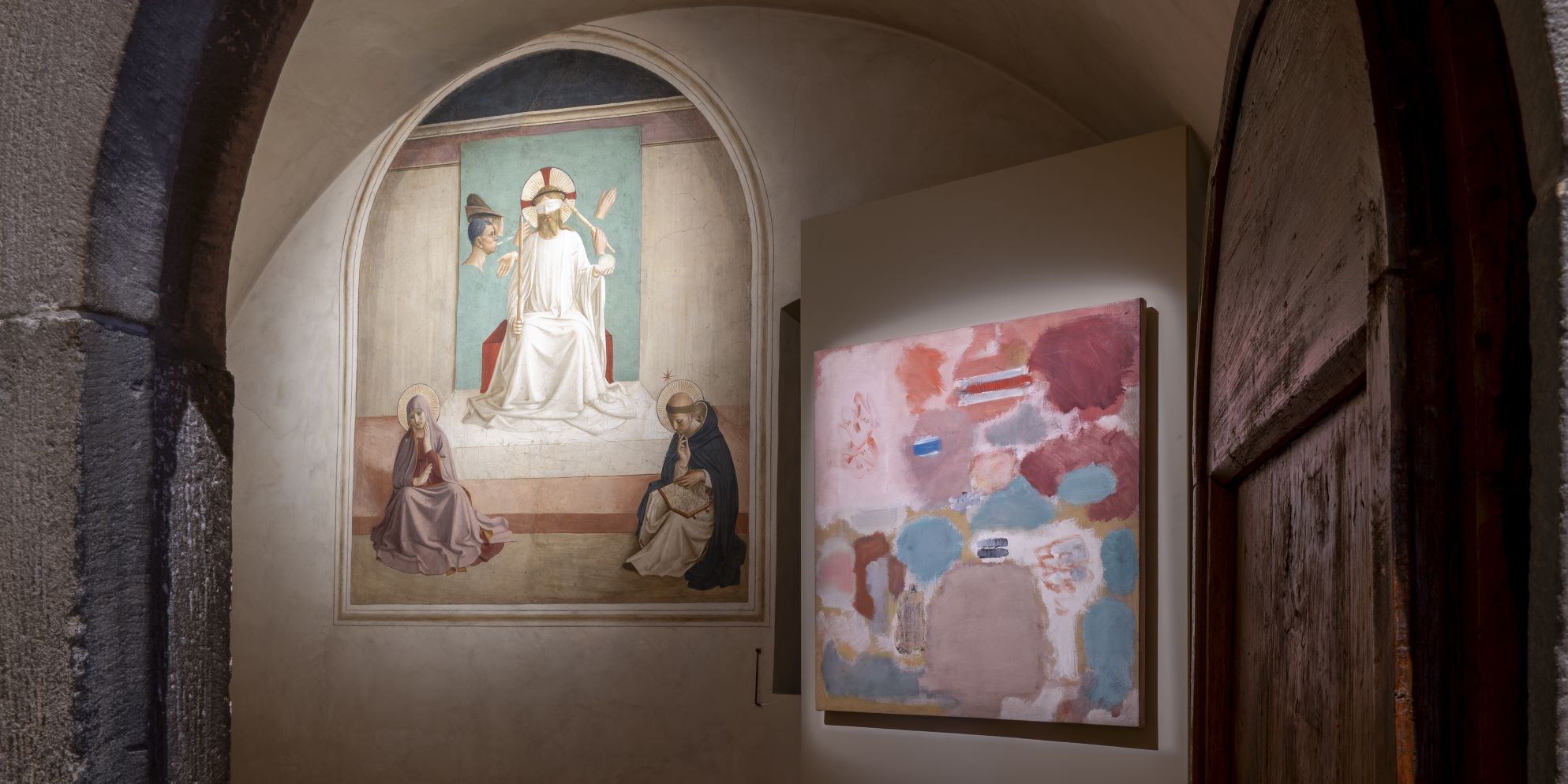
From Palazzo Strozzi, the project extends throughout the city of Florence, involving two places particularly meaningful to the artist through special sections hosted by important institutions of the Italian Ministry of Culture: the Museo di San Marco, where Rothko’s works enter into dialogue with the frescoes of Fra Angelico, and the Vestibule of the Biblioteca Medicea Laurenziana designed by Michelangelo.

The architecture of the palazzo and the city itself provide the ideal setting to explore how the artist translated into painting the tension between classical measure and expressive freedom, creating through colour a new perception of space that transcends the two-dimensionality of the canvas.

The exhibition at Palazzo Strozzi unfolds chronologically, retracing Rothko’s entire career: from the 1930s and 1940s, characterised by figurative works in dialogue with the languages of Expressionism and Surrealism, to the 1950s and 1960s, distinguished by the celebrated abstract canvases composed of expansive fields of colour capable of deeply engaging the viewer through a visual vocabulary imbued with spirituality and poetry.

The exhibition, with Intesa Sanpaolo as Main Partner, features more than 70 works, many of which are being shown in Italy for the very first time.

The sections of the exhibition trace the different phases of Mark Rothko’s artistic research, while also documenting his relationship with the Italian artistic tradition. In an initial group of early works, Rothko’s interest in the symbolic and psychological dimension of the human figure, as well as in Renaissance compositional structures, emerges clearly, as in Interior (1936), where the reference to the tomb of Giuliano de’ Medici by Michelangelo in the New Sacristy of San Lorenzo is unmistakable.

Alongside these works are the Neo-Surrealist paintings of the 1940s, which introduce a more fluid and metamorphic sensibility, anticipating the dissolution of form in what would later become known as the Multiforms — suspended fields of colour that mark the transition toward complete abstraction.

In the later large-scale abstract canvases, such as No.3 / No.13 (1949) from the Museum of Modern Art in New York or Untitled (1952–1953) from the Guggenheim Museum Bilbao, light and colour invite meditation. In the following years, Rothko’s palette becomes increasingly restrained, shifting from greens and blues to the deep browns and reds of the 1960s.

The relationship with architecture re-emerges in the studies for the Seagram Murals and the Harvard Murals, through chromatic portals and closed thresholds also inspired by the Vestibule of the Biblioteca Medicea Laurenziana.

The exhibition concludes with the Black and Gray series (1969–1970) and Rothko’s final works on paper, in which shades of sienna, pink, and pale blue bring his painting to a synthesis of introspection and rigor.

 
Fra Angelico, with assistance, Annunciation, c. 1439–41, dormitory, cell 3, Museo di San Marco, Florence. Mark Rothko, Untitled, 1954, Private collection. (Rothko a Firenze, exhibition views, Museo di San Marco, Firenze, 2026. Photo Ela Bialkowska, OKNO Studio)

From Palazzo Strozzi, the project extends throughout the city of Florence, involving two places especially dear to Mark Rothko through special sections hosted by two major institutions of the Italian Ministry of Culture: the Museo di San Marco, which reopens its full museum itinerary and the newly reinstalled Sala del Beato Angelico, with five works displayed within five frescoed monastic cells by Fra Angelico, and the Vestibule of the Biblioteca Medicea Laurenziana, where two works enter into dialogue with the space designed by Michelangelo.

The artist’s first encounter with Florence dates back to 1950, during a trip to Italy with his wife Mell. Rothko was particularly captivated by the paintings of Fra Angelico at the Museo di San Marco and by the architecture of the Vestibule of the Biblioteca Medicea Laurenziana. This unique environment — which the artist would revisit in 1966 — became a source of inspiration for the Seagram Murals, created at the end of the 1950s. In works characterised by softer tonalities, the influence of fifteenth-century Italian art and, in particular, of Fra Angelico becomes palpable.

Both artists share a desire to evoke a sense of transcendence — a dimension that feels at once distant and deeply familiar. While Fra Angelico succeeds in reconciling the divine with earthly reality through the emotional power of painting, Rothko constructs chromatic fields capable of generating multiple emotional tensions, challenging established notions of abstraction and colour theory.

“My father wanted those who looked at his paintings to experience the same religious feeling he experienced while painting them,” says Christopher Rothko, curator of the exhibition. “Inspired by his travels to Rome and Florence, that spiritual element became even more central. Throughout the exhibition, we have created intimate rooms where the personal interaction with Rothko’s works is heightened and enriched by their resonance with the historic spaces themselves.”

“Rothko’s encounter with Florence revealed to him a tradition in which painting and architecture converge within a contemplative dimension,” states Elena Geuna, curator of the exhibition. “The exhibition situates his work within this perspective, where the meditative stillness of Fra Angelico’s frescoes at the Museo di San Marco and the spatial tension of Michelangelo’s vestibule at the Biblioteca Laurenziana echo Rothko’s pursuit of a form of painting capable of expressing the deepest human emotions.”

“Rothko redefined the language of twentieth-century painting, transforming colour into experience, space, and meditation,” says Arturo Galansino, General Director of the Fondazione Palazzo Strozzi. “This exhibition represents a unique project conceived specifically for Palazzo Strozzi and was born from the desire to offer a profound encounter with Rothko’s artistic research, reconstructing within our galleries all the major phases of his career through a wide selection of works, while placing the silent power of his paintings in dialogue with the history of the city.”

Fra Angelico, with assistance, Annunciation, c. 1439–41, dormitory, cell 3, Museo di San Marco, Florence. Mark Rothko, Untitled, 1954, Private collection. (Rothko a Firenze, exhibition views, Museo di San Marco, Firenze, 2026. Photo Ela Bialkowska, OKNO Studio)

Author