What are the highlights of each of your journeys, which key steps brought you to where you are today, and how did you meet and decide to create together?
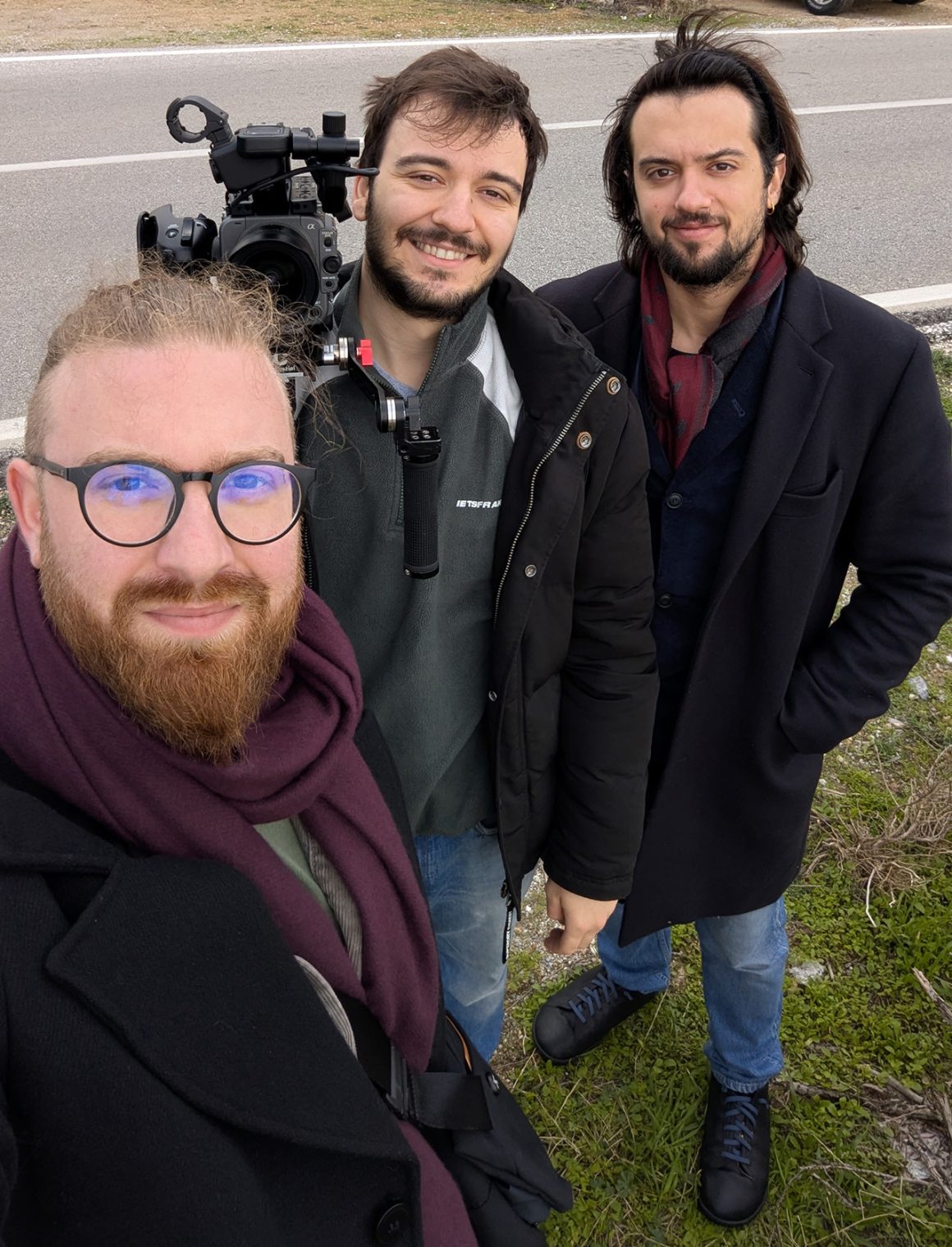
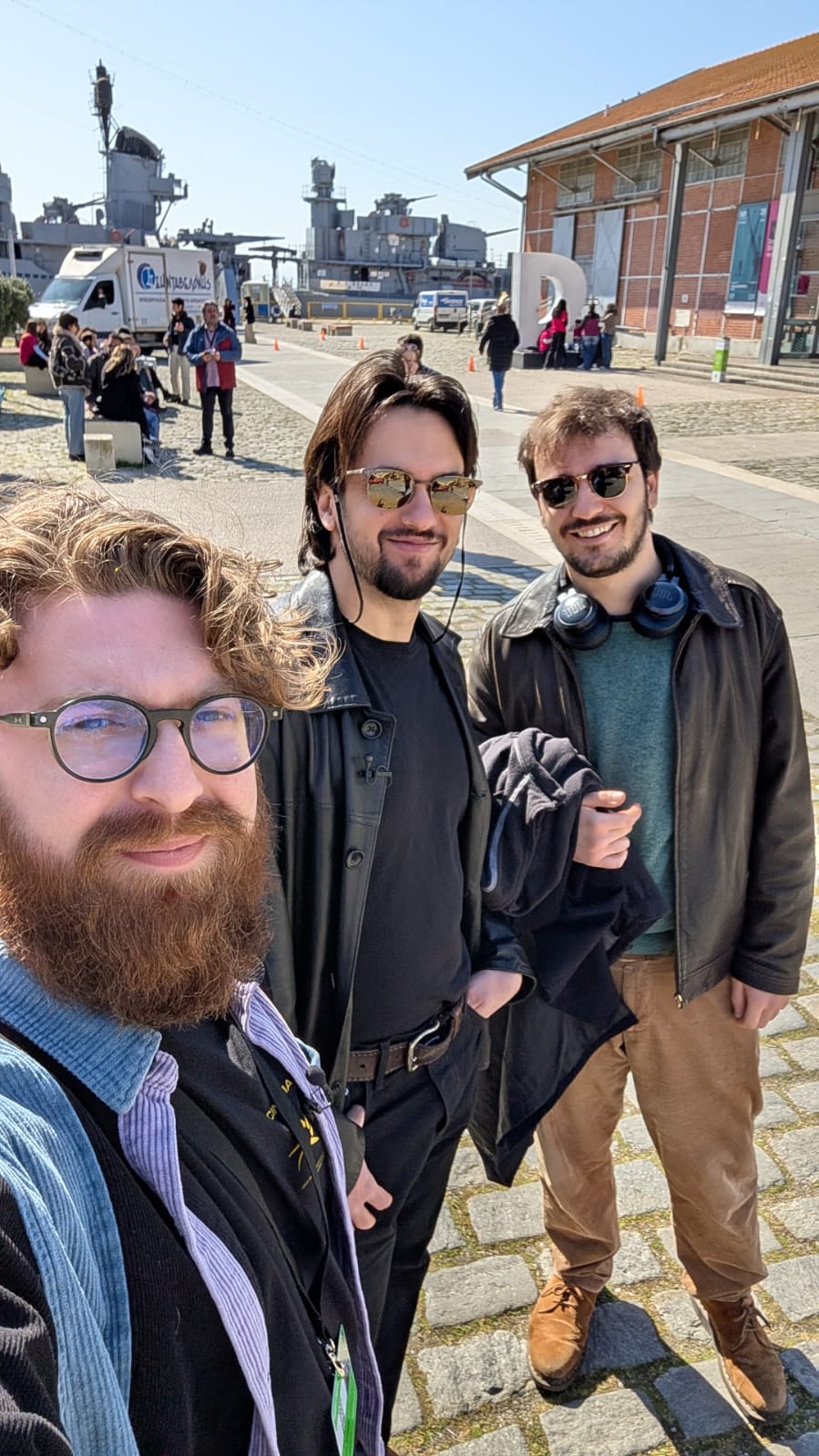
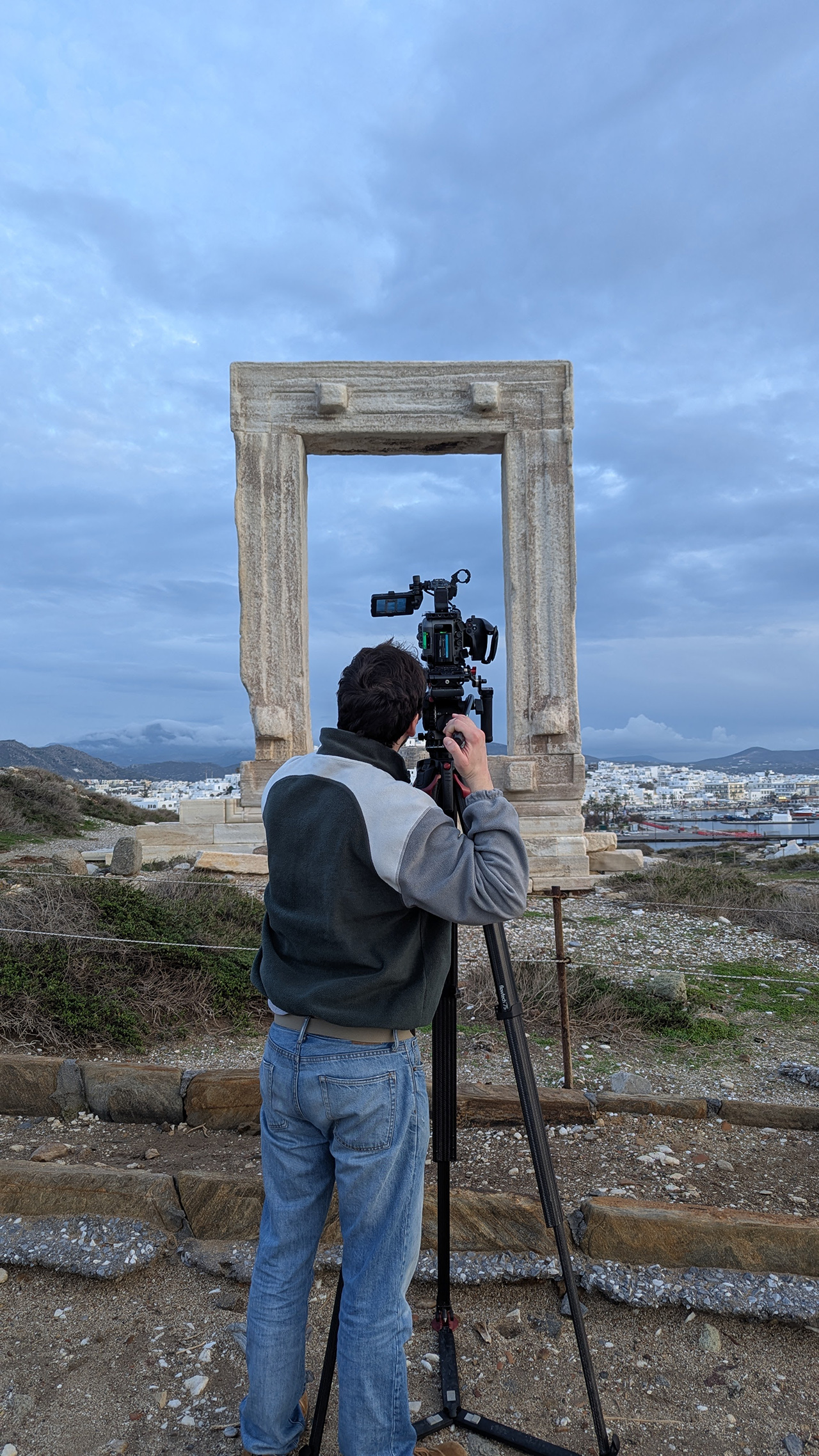
We are three very close friends who have known each other since high school. We always enjoyed the concept of creativity, but “Passing the torch” marks the first time when all three of us joined forces to put our creativity into practice. Alexandros studied psychology, while I studied pharmacology in Glasgow before moving to London to try and find work as a filmmaker, and Yiorgos studied in Boston and afterwards worked there as an editor for a few years. We often dreamed about working together.
In late 2024, Yiorgos again approached us with the idea of kickstarting his youtube channel “Yiorgos Tsivranidis”. By that time, he would be moving to Berlin to do an MA in documentary direction, while I, by that point, had gained some experience in working in the film industry in London. We therefore decided, along with Alexandros who joined as our producer, to prove to ourselves that we could take on a project as a team and see it through all the way from the ideation phase to the completion of its post-production. We wanted to test not only our skills, but our collective ability to remain professional as a collective and not let our friendship get in the way of working together.
The purpose of “Yiorgos Tsivranidis” is to bring Greek stories to a global audience. This was our thesis when we began the selection process for our first project, a process that led to a massive document with dozens of possible ideas for video essays and documentaries (all of which you will hopefully get to watch in the future!).
How did the idea of collaborating first emerge? How did you discover this particular tradition, and what led you to document it in a film? Which elements of it captivated you the most? So why did we choose the Torchlight Procession of Naxos out of all those topics?
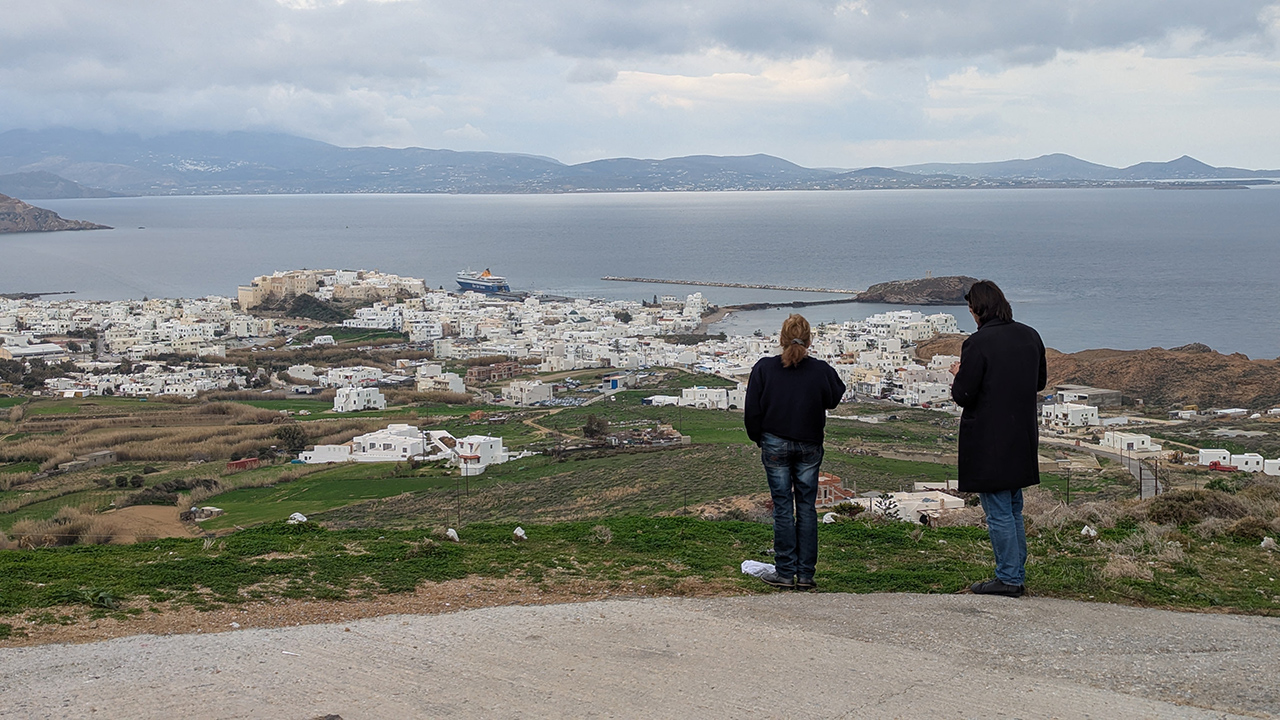
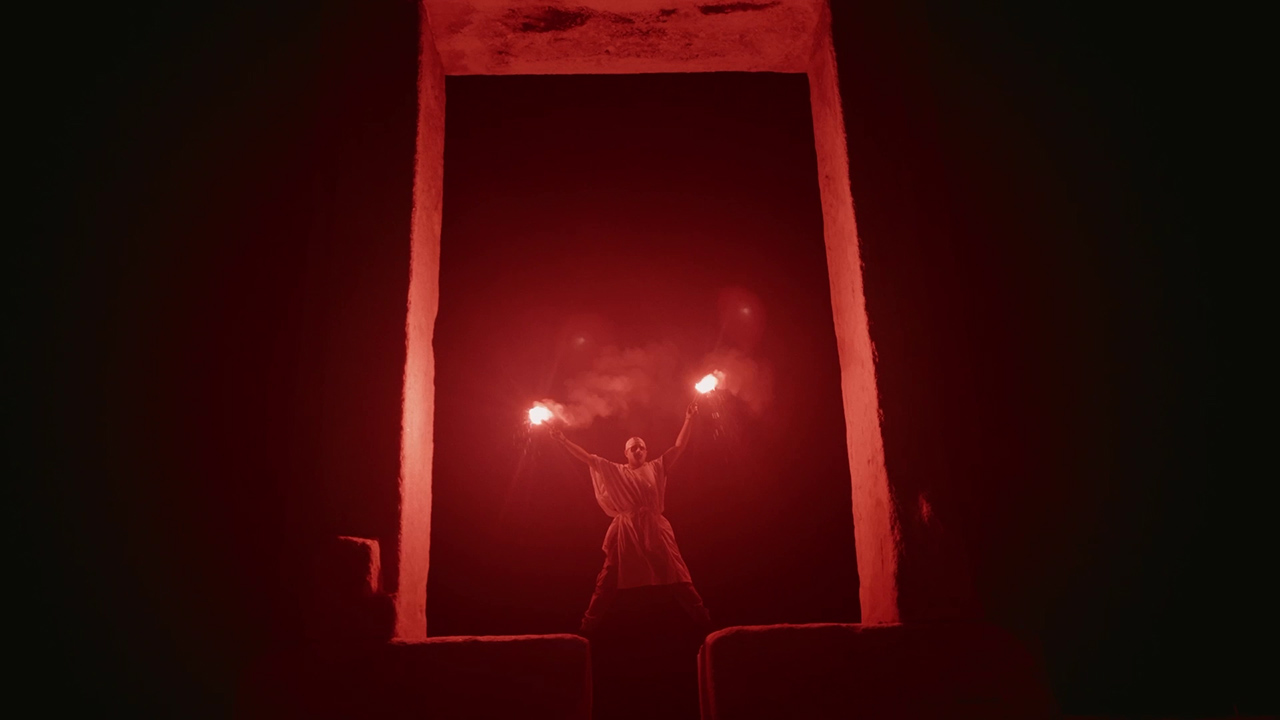
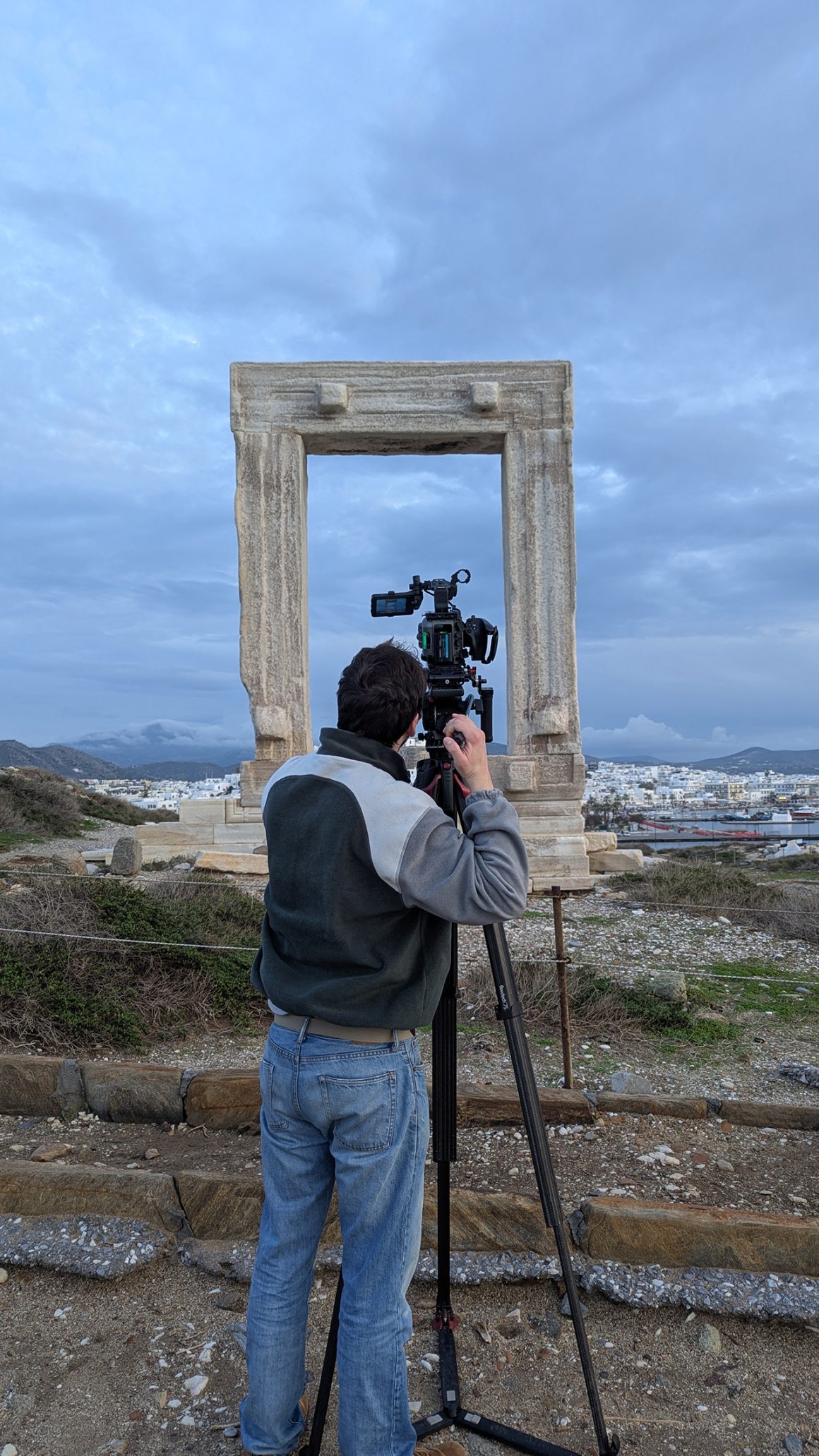
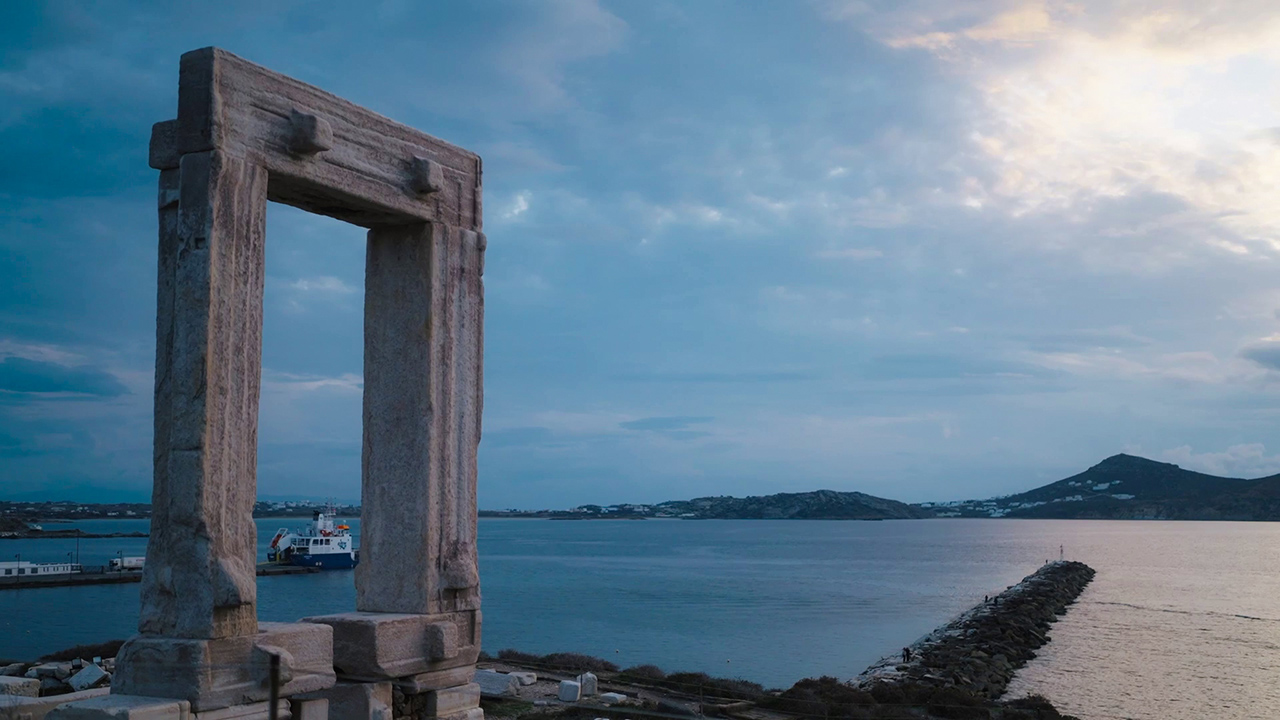
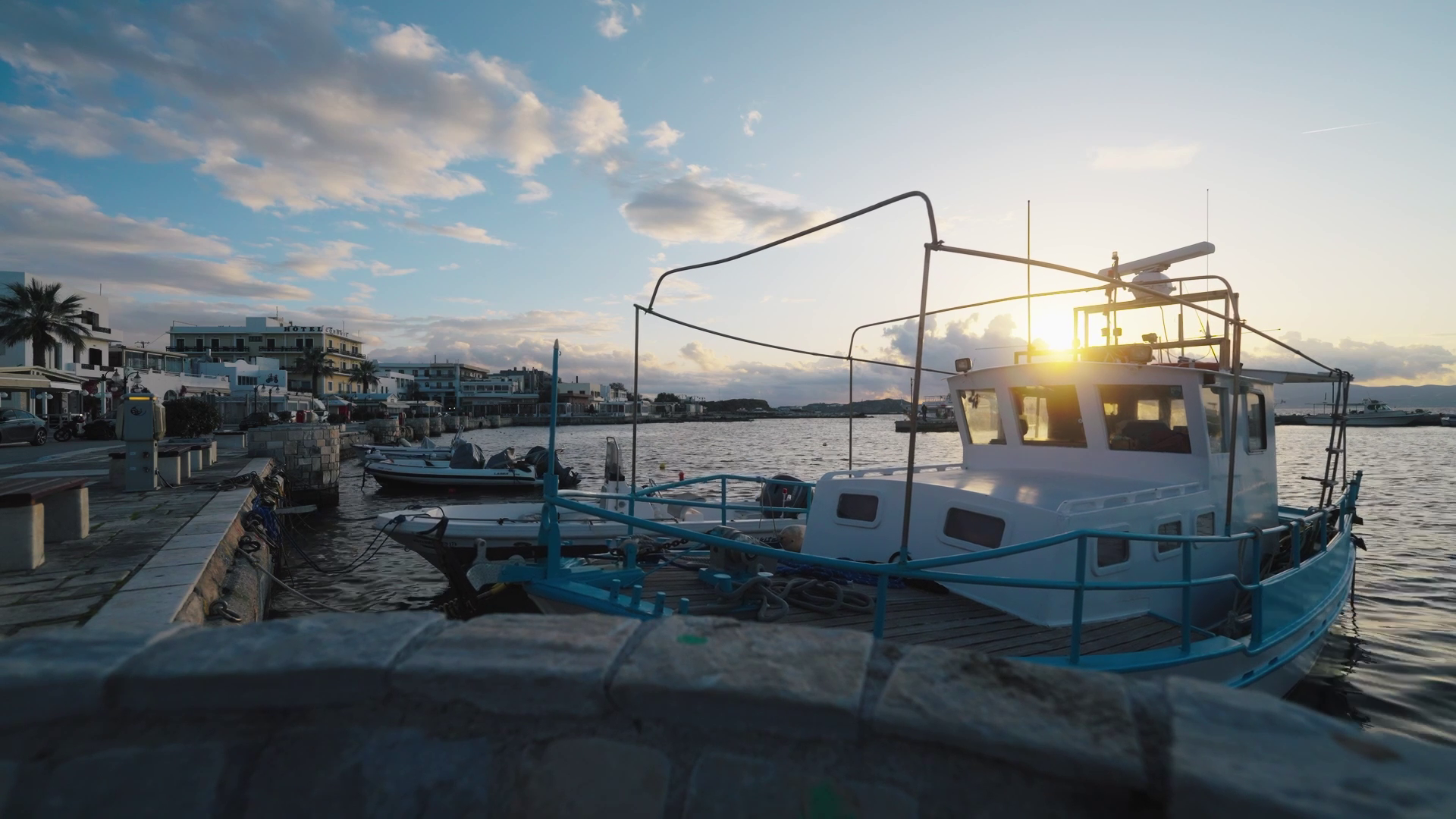
We were trying to find a Greek project that would offer a lot of substance, and a chance to produce something beautiful, something eye-catching, as well as a project where we already had relations with those involved. The torchlight procession covered all three: Alexandros had participated in the procession himself in the past, and he knew people he could get us in contact with. From the images we had seen, we could tell that the potential to create striking images was there, and, lastly, shooting a video on a Greek island during off-peak season meant that we could get a lot of footage without being obstructed by the waves of summer tourists.
The problem was that, as the project grew in scope, it ended up becoming a separate entity from the channel altogether. We discovered that there was enough material for a feature-length, festival-level documentary. The processions are a subversion of the traditional Greek customs, because, as pagan and ancient as they might look, they are only 30 years old! In fact, the whole point of our documentary is that we have a chance to speak to the creators of the event, and immortalise the story of its creation on camera, serving as a potentially valuable archive for any future generations that might be interested. The explosive trajectory of the event, which started in 1995 with 20-30 people, is not a phenomenon attracting thousands of tourists, and yet risks to subside after its creators step away from their roles as organisers, poses one main question: What is tradition? Is it a set event, which should remain unchanged in memory of its roots? Or is it an ongoing, malleable process?
How easy or challenging is it to divide responsibilities, carry out the research, film at different moments, and incorporate older footage? Do you follow a specific process each time, or does it adapt according to the circumstances?
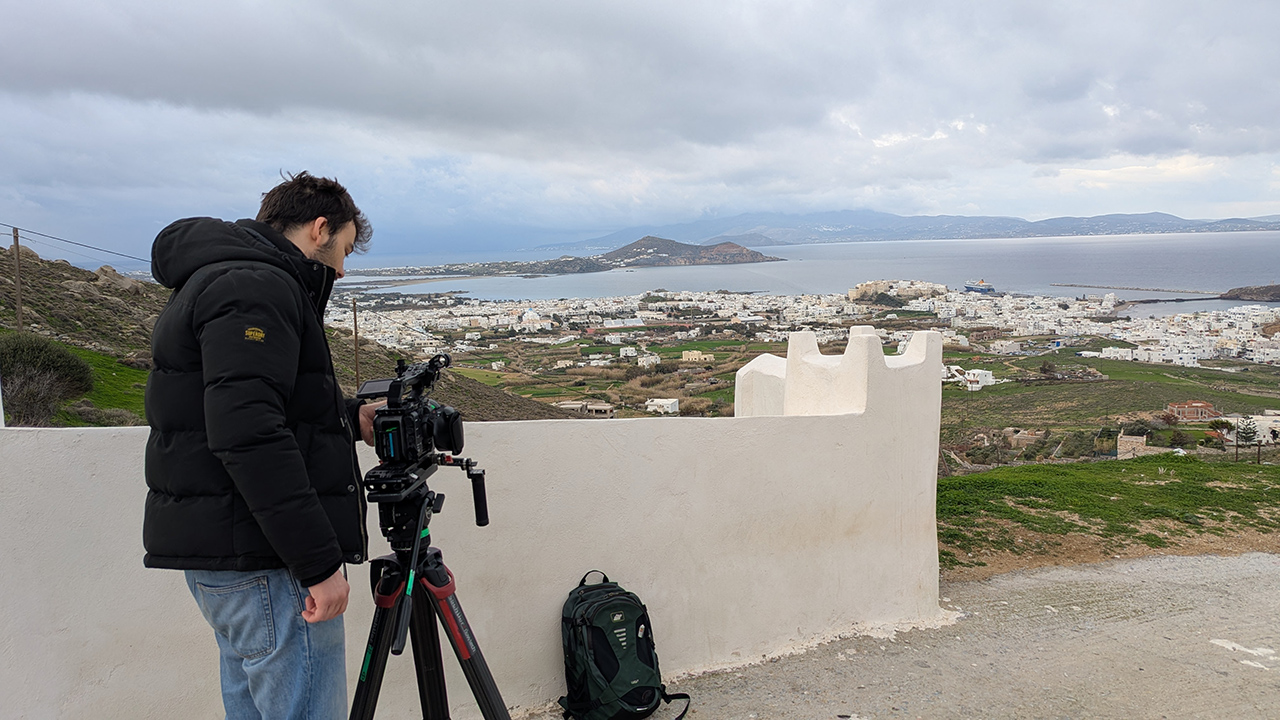
Documentaries are the wildcard of the filmmaking industry. There are no certainties when it comes to the ease or difficulty of the project, so it is necessary to take a leap of faith. Even the story itself is something that unfolds naturally in front of us, and it always deviates from what we might initially have in mind (and “Passing the torch” is no exception to the rule). Our roles are set, but, in truth, we all had to help each other since there were only three of us there. The whole process requires both extremely careful preplanning, and the awareness that things might change completely while we are there and we simply have to adapt. Every film poses its own unique questions, but that also comes with unique joys and unique opportunities to learn and craft images. There are often people who refuse to speak on camera, or equipment that refuses to work on the day of the shoot. A perfect example is that the drone we had with us did not function during the night of the procession.
However, Aggeliki Efstathiou, one of the creators of the procession and one of our protagonists, gave us a access to a balcony that overlooks the procession, which allowed to get these high angle shots which add production value and depict the size of the event and the synchronicity of the participants.
Another issue that documentaries have which is not often talked about, is the need to show restraint and composure to not get warped into other interesting stories that might be happening around us. We were often encouraged by the people of Naxos to cover older traditions of the island which were taking place at the same time as the procession. While we were tempted to capture many stunning vignettes, it was important to remain focused on our story. At the end of the day, every film is a story. The aesthetic comes in support of that, not against it.
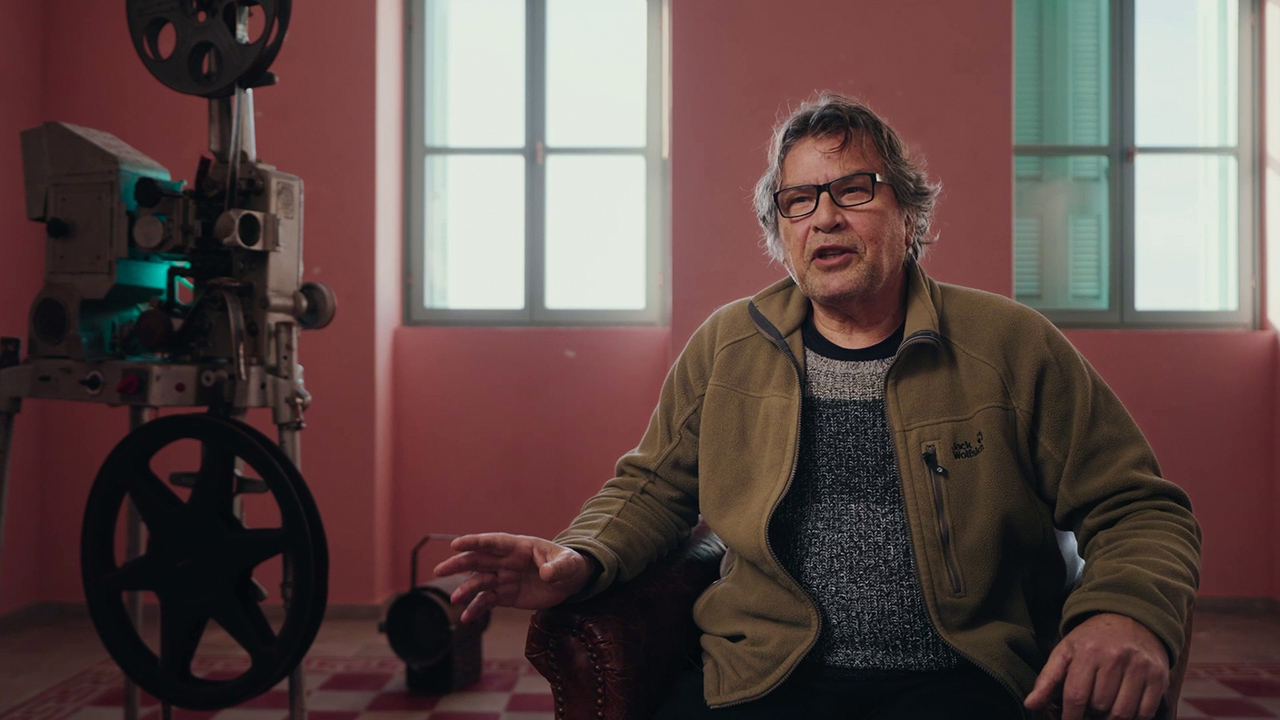
The introduction of archival footage came in during the editing process. Once again, we had a few ideas of what we were hoping to find, based on everything we learned during our time in Naxos. During a 3-day scouting trip in January we met Vassilis Mpakalos, one of the founders of the procession, and the photographer of its early events. He has a stunning collection of black and white pictures which served a part of our archival footage, and a big source of inspiration for my style of cinematography in the film. While editing, I also did a deep dive into the ERT national video archives, to find footage that would supplement the story. I ended up narrowing it down to 5 hours of footage, from which myself and Yiorgos extracted less than 2 minutes of footage which made it to the final film. It is a long and intense process, but we learned so much about the history of Naxos by looking into the archives, I felt like peeking into my country’s memories.
What do you believe strong cinematography contributes to a film project? Is it primarily about aesthetics and talent, or is it a creative craft that can also be developed through learning and experience?
I prefer the term “correct” cinematography to “good” cinematography. There are many ways to shoot something well and make it look good, but very few also serve the story. In fact, many stories (documentaries especially) might require the cinematography to be more grounded than beautiful in order to enhance the audience’s experience, which I believe is what cinematography is all about. Successful cinematography ensures the viewer’s immersion, it lets the story flow seamlessly through their eyes and minds. By working in tandem with all the other ingredients of a film (direction, sound,editing) it binds all the shots together, making a film much, much more than the sum of its parts.
I am not sure whether to call cinematography an artistic expression, a technical skill, or even perhaps a psychological trick? It probably has elements of all three. Taste is definitely important, but (if I am allowed a small joke) taste is an acquired taste. I do not believe filmmakers have an innate aesthetic. It is something that we cultivate by working and watching other films. And not just films! Every single art form makes us richer and adds to a filmmaker’s arsenal (in fact, books are my favourite, because they stir my imagination in the purest way possible). So, yes, filmmaking, and cinematography by extension, is something that is learned by watching, and also shooting new things.. The struggle to create images that match our vision is never ending, but that makes the whole process fun and constantly engaging.
Now that you have some distance from the documentary, do you feel the result has justified your effort? Is there anything you would change?
Personally speaking, whenever I look at finished work for mine, all I can see is a thousand little things that I could have done better. This might sound a bit defeatist, but it’s actually this hindsight that I learn from, the little notes which I then take into the next project. The process of growing requires looking back at your work and seeing what you learned from it. That being said, we are very happy with our work, mainly because of the effort we put in. The creative value of a film is definitely subjective, but the effort someone puts in is not. Regardless of how good or bad “Passing the torch” is for a viewer, we could not have worked any harder than we did, and we are incredibly proud of each other for always being supportive of each other’s efforts and ideas.
We would have of course loved to have shot this year’s procession too in order to add to our footage, but due to the lack of funding we had to focus on completing the film. Sometimes filmmakers can get dragged into production hell by constantly shooting and reshooting, trying to reach a type of perfection that is, by nature, unreachable, because they are afraid of exposing the final product to criticism and scrutiny. However, this is the nature of this endeavor, and it’s good to face it sooner rather than later.
How was your experience participating in the festival, and which documentary stood out to you the most?
The best documentary that we saw this year was “EXILE(S), tales from an island” which showcase vignettes from the stories of the Greek, Turkish, and Kurdish citizens of Imbros. It was shot so honestly and so beautifully. It is a brilliant slice-of-life documentary that evoked so much sadness but also a lot of laughter in the room, because it portrayed all sides of the lives that those people live against the backdrop of the deserted homes and villages of previous inhabitants that had moved out, either by choice or by force. It blends themes of identity and co-existence in wonderfully unique way.
Is there a dream project you would love to bring to life?
As I said above, we have so many ideas which we believe are all rough diamonds, we wish to give them all a chance to shine, it’s up to us to try our best. Greece is a country blessed with an incredible array of stories, so it is up to us as a filmmaking trio to make them shine and offer a new way of revisiting those stories through our own unique perspective.
On a personal note, a dream of mine would be to shoot a feature length film or documentary in Japan, which I always feel drawn to creatively.
How important is it to follow your dreams and take the risk of pursuing a creative career, even though it is highly competitive and often difficult to establish yourself in?
A person doing what they love for a living should be a right, not a luxury. That being said, even a career at something as interesting as filmmaking ultimately becomes a job, which brings in all the weight and the struggle of a freelancer’s life.Filmmaking is an arena where big egos clash, so it is important to always try and stay humble and mindful of the things that we don’t know.
Uncertainty, anxiety, and self-doubt are normal and should be accepted as necessary parts of the process. So I would urge anyone thinking of attempting this kind of creative job to be aware of their decision and be realistic in their expectations. Those beautiful, dreamy moments of creating images are indeed there, but they are earned through hard work, professionalism and decent behavior.
You also collaborate on the YouTube channel of Yiorgos Tsivranidis. What creative direction do you envision for the channel? And what are the next steps in your future plans?
As a team, we will focus on three things: Making more corporate and commercial videos, making a cinematic documentary in the next few years, and making bi-monthly videos for the “Yiorgos Tsivranidis” youtube channel.
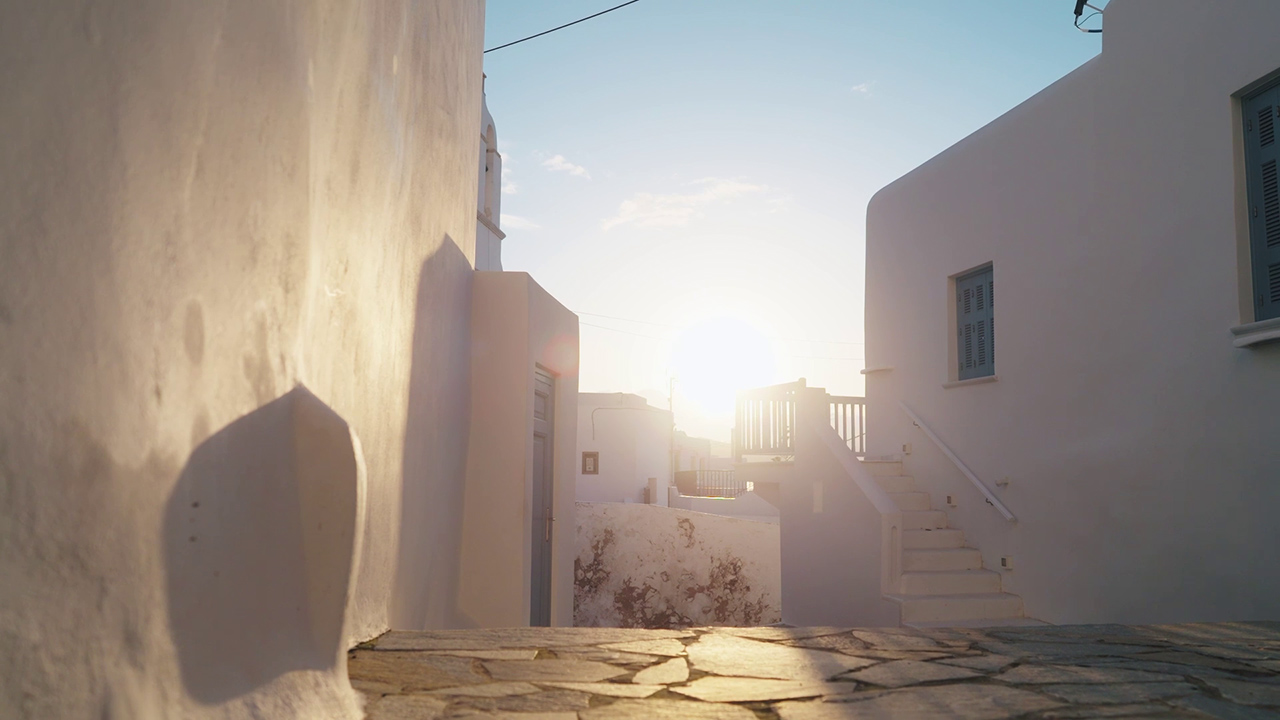
The channel will focus on Greek topics aimed at a worldwide audience since the main language will be English. The variety of topics will be quite wide (the first video;s topic was about the history of the white houses of the Cyclades, while the second is a 1-hour conversation with 5 survivors of the Tempi train crash). We will showcase our interests and concerns and then let the viewers and the algorithm guide us into the far future.
All in all, we are a collective that sees the value in cinematic work, commercial work, and youtube so we want to film all kinds of projects and choose for each one the platform that best serves as its vehicle.