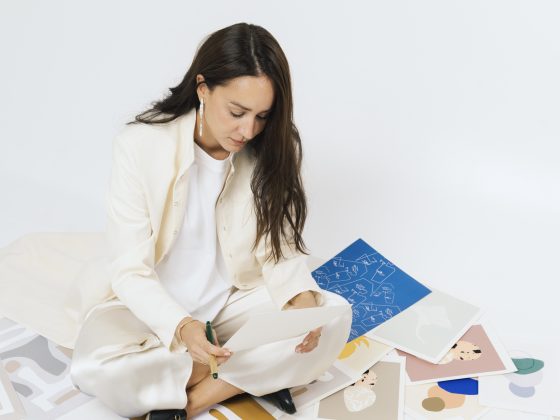
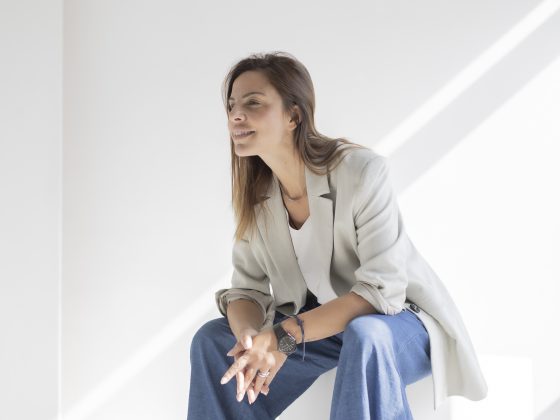
Let’s start with the highlights of your journey. What have been the key steps that brought you to where you are today?
After completing my studies in architecture in 2015, I didn’t have a clear vision of how either my life or my professional path would unfold. In retrospect, I see that uncertainty as an open horizon of possibilities.
It may sound paradoxical, but the postgraduate program Urban Design and Architecture at the Berlage in the Netherlands became one of the most defining milestones in my later engagement with art. It was a period of intense exploration—both of my own “architectural” identity and of how I wanted to approach architecture through a freer, more artistic lens.
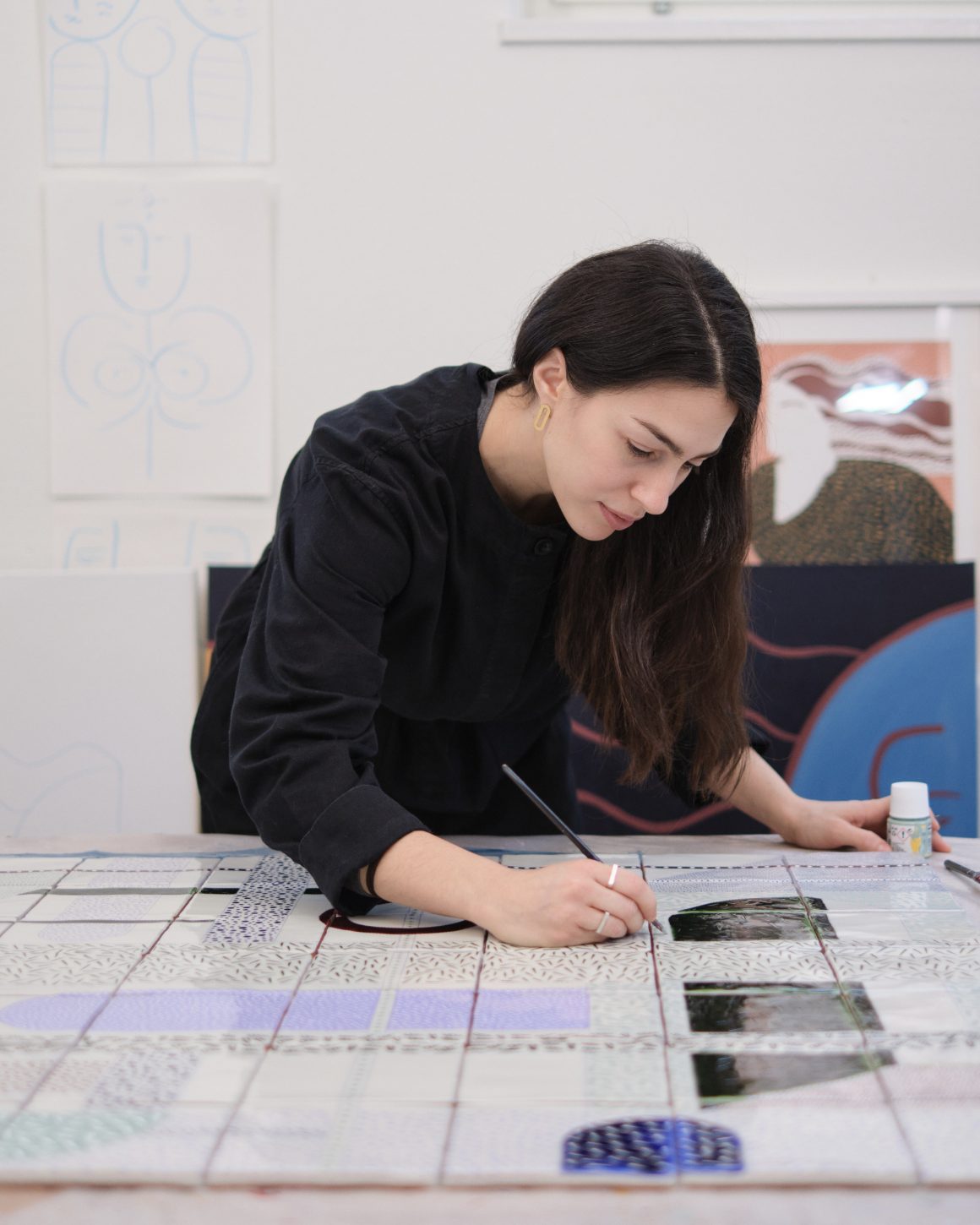
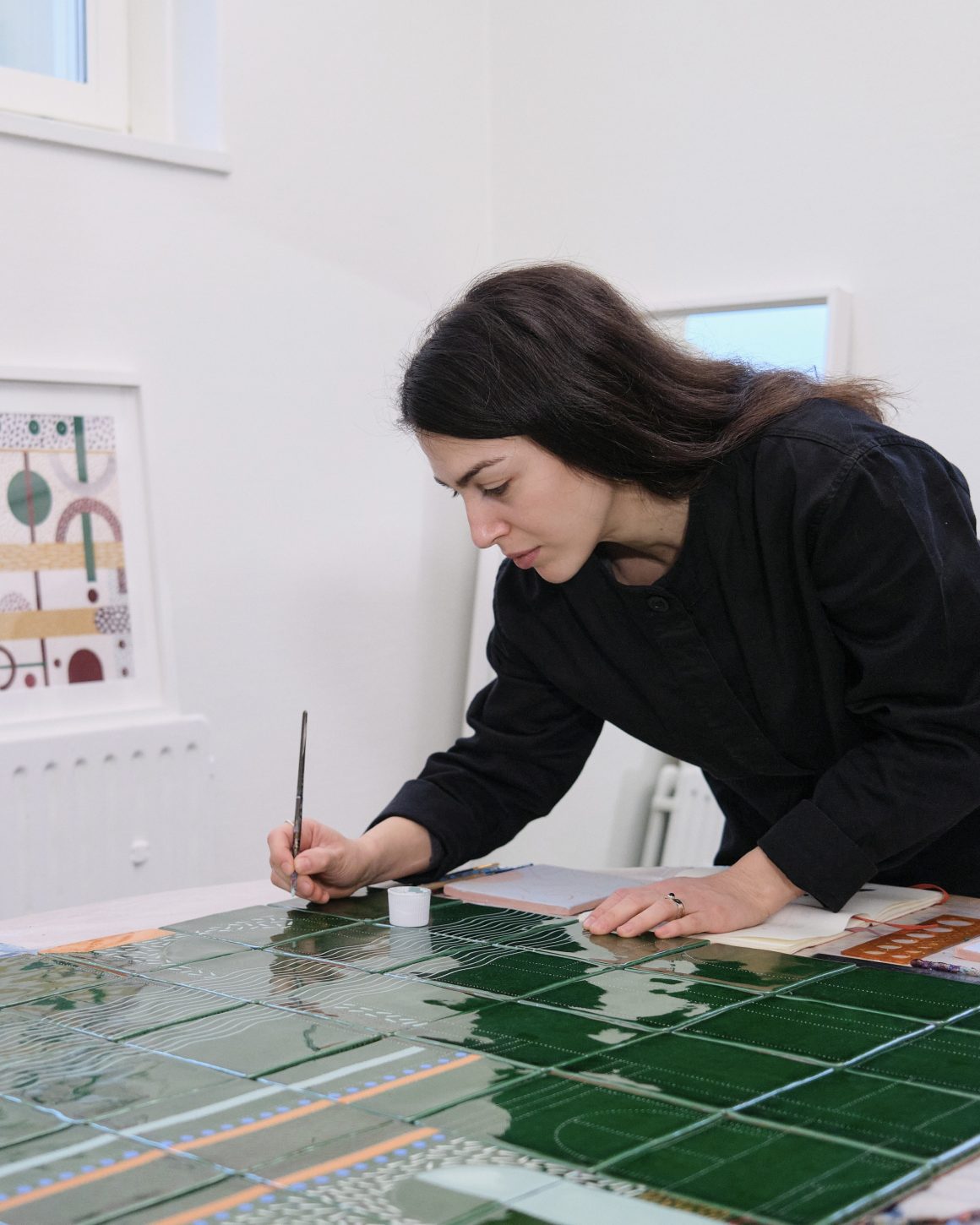
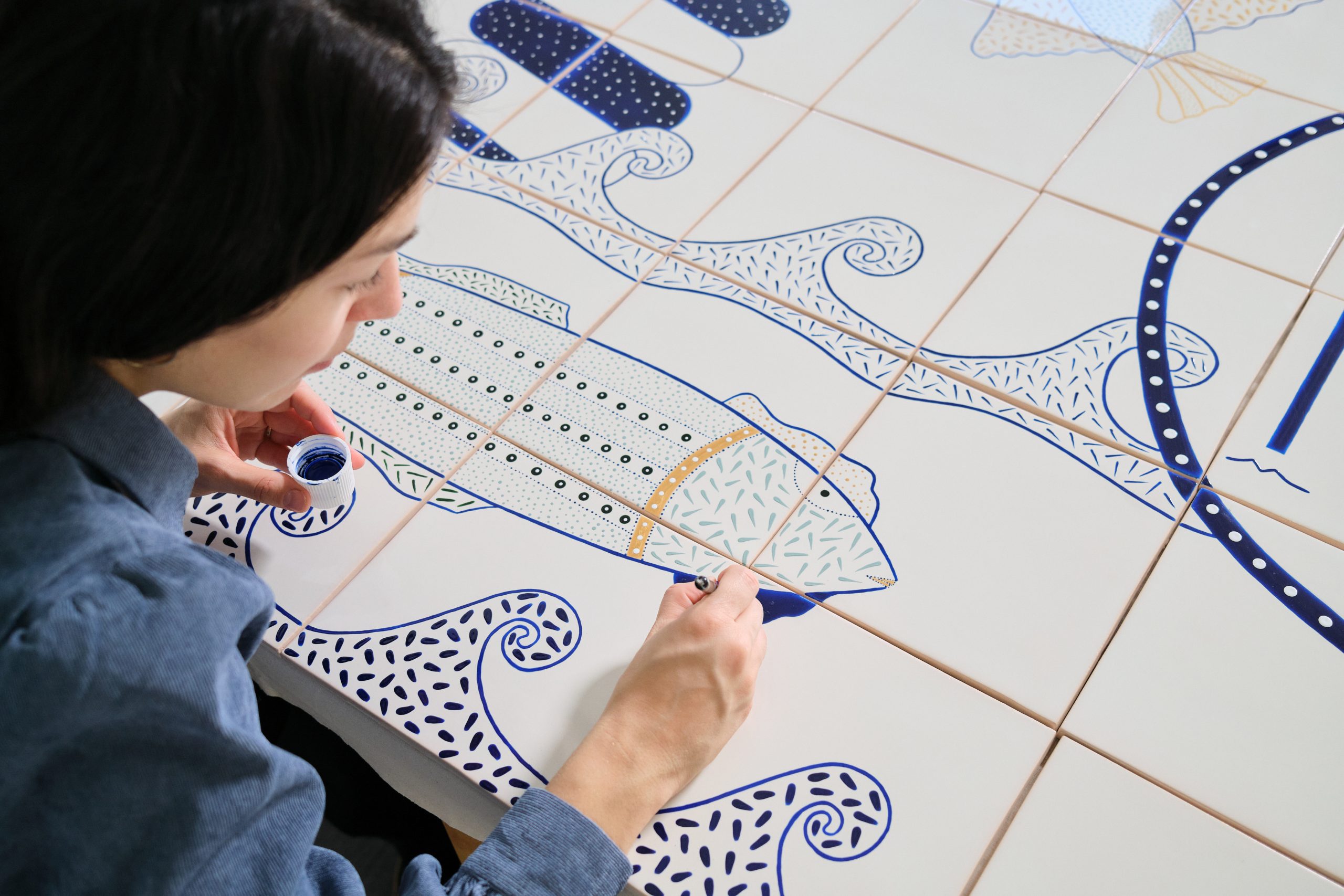
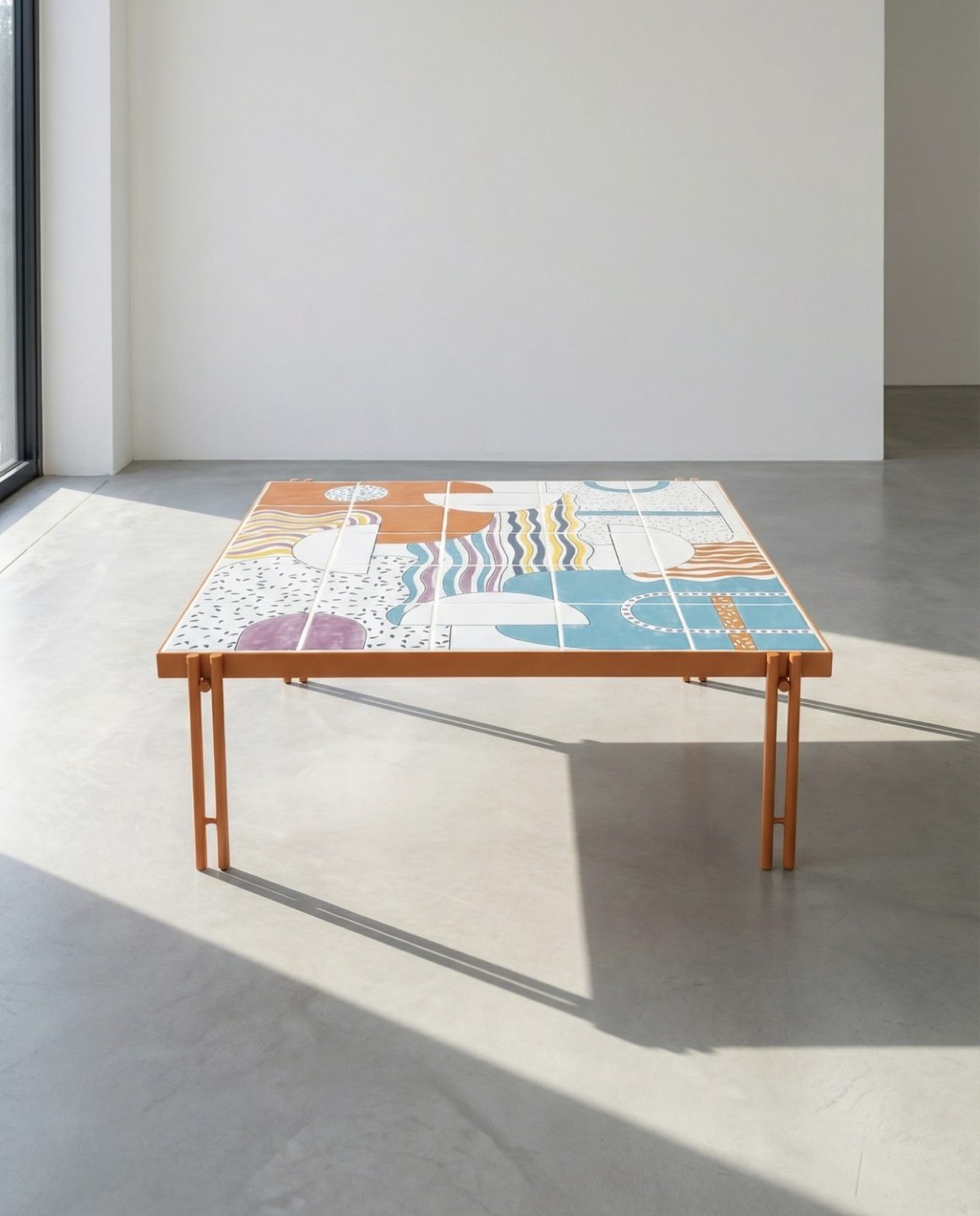
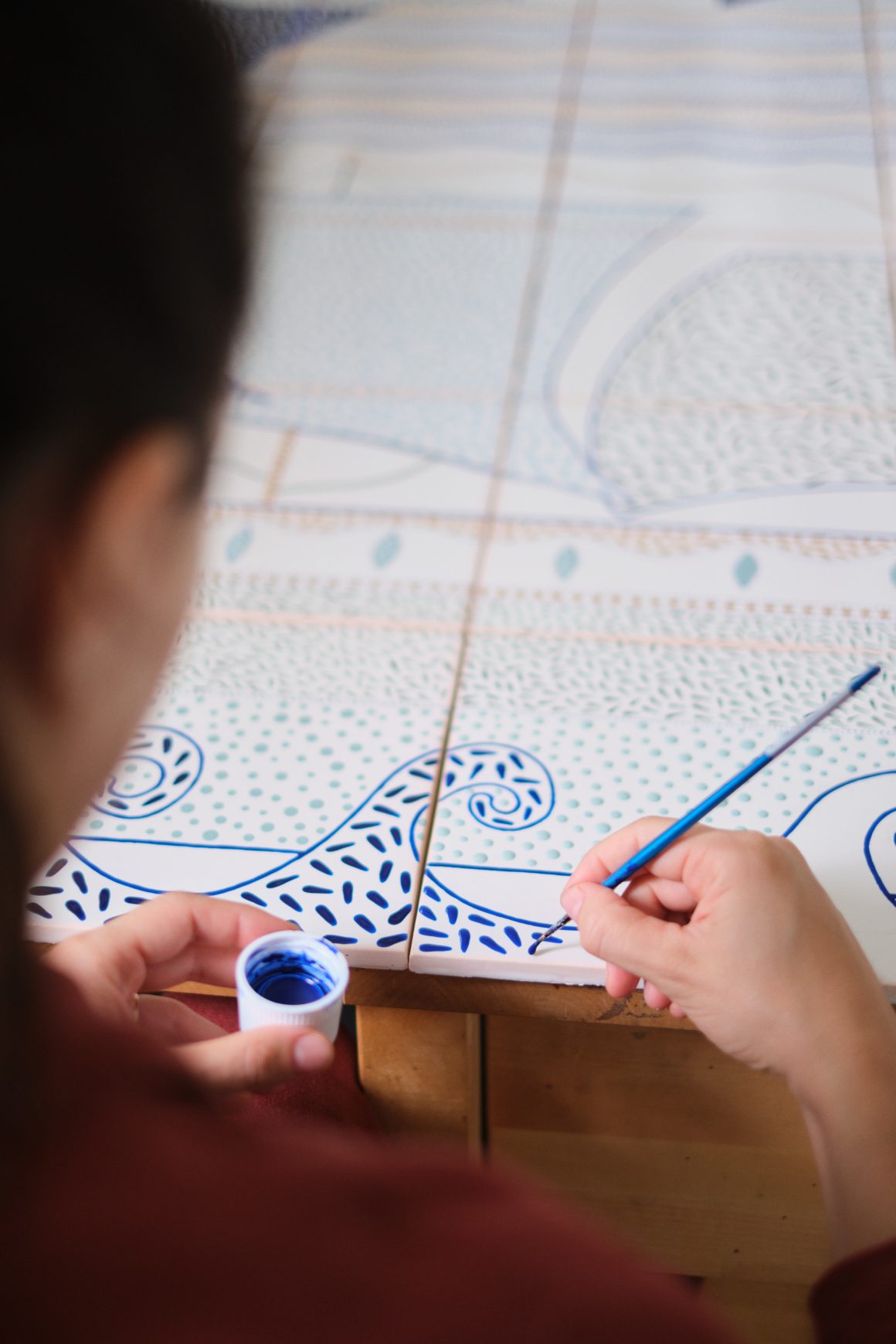
During my time in the Netherlands, a small but pivotal moment occurred almost by chance: I bought a box of white tiles from a thrift shop and began painting on them. That spontaneous act evolved into a new form of expression, which gradually grew in importance for me.
Life then brought me to Stockholm, where I am still based today. For about five years, I moved in parallel between architecture and art, trying to balance two worlds that demand different energies and forms of dedication.
The arrival of my second daughter marked a deeply personal turning point. It led me to reassess my priorities and ultimately make the decision to devote myself more consciously and fully to my artistic practice—a choice that felt like a natural continuation of everything that had come before.
Your work moves between architecture, painting, and ceramics. How did this creative direction first emerge, and how has it evolved over time?
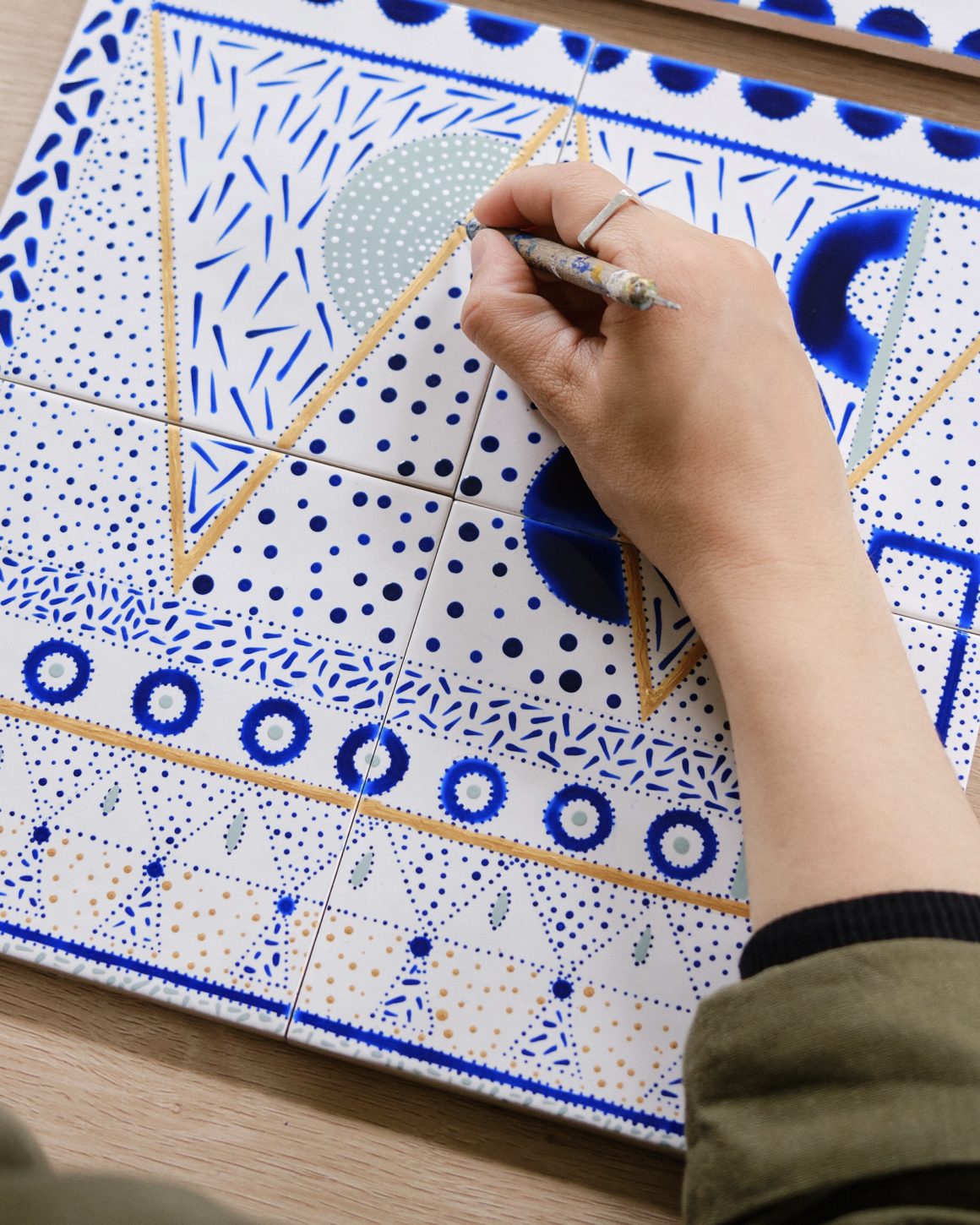
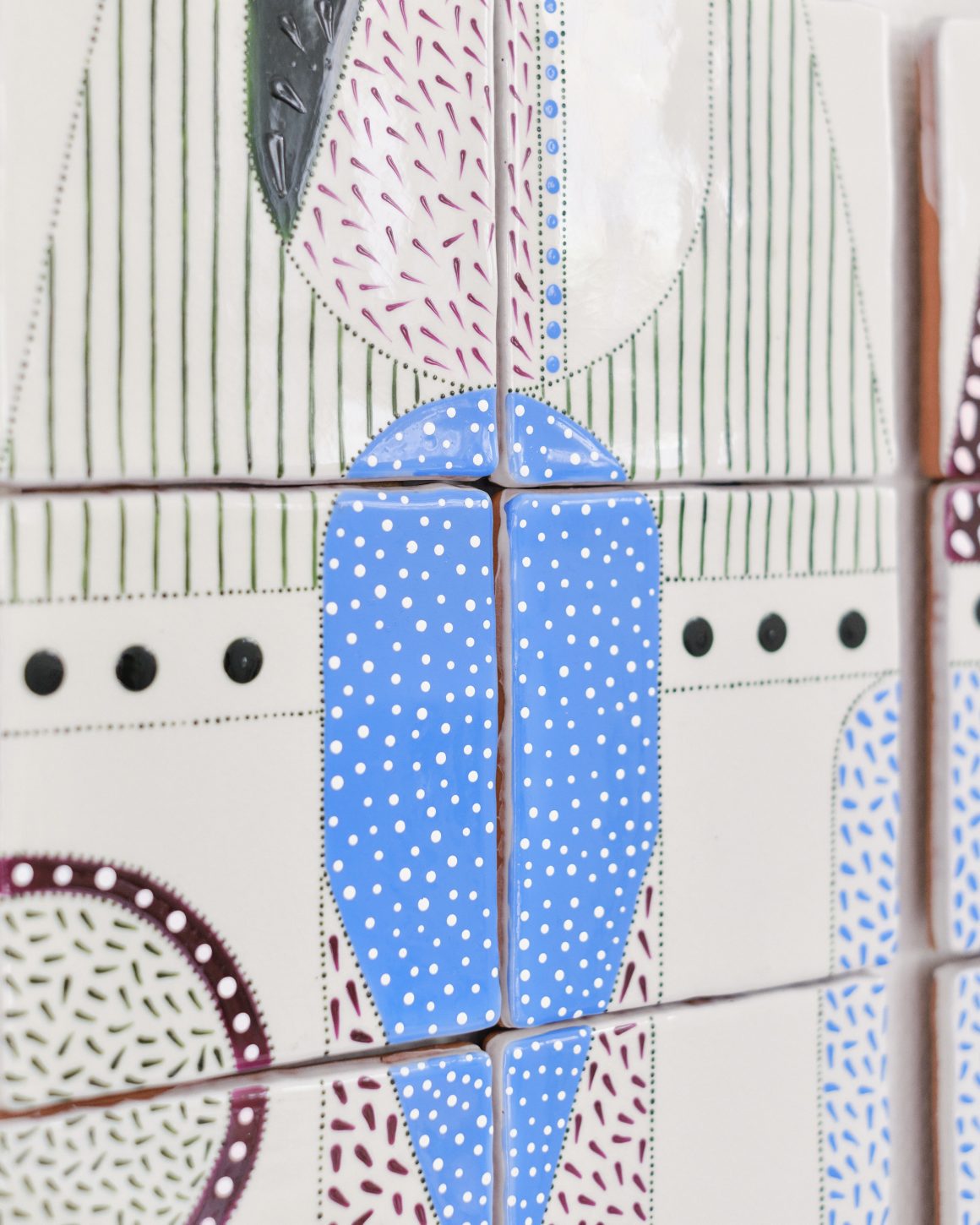
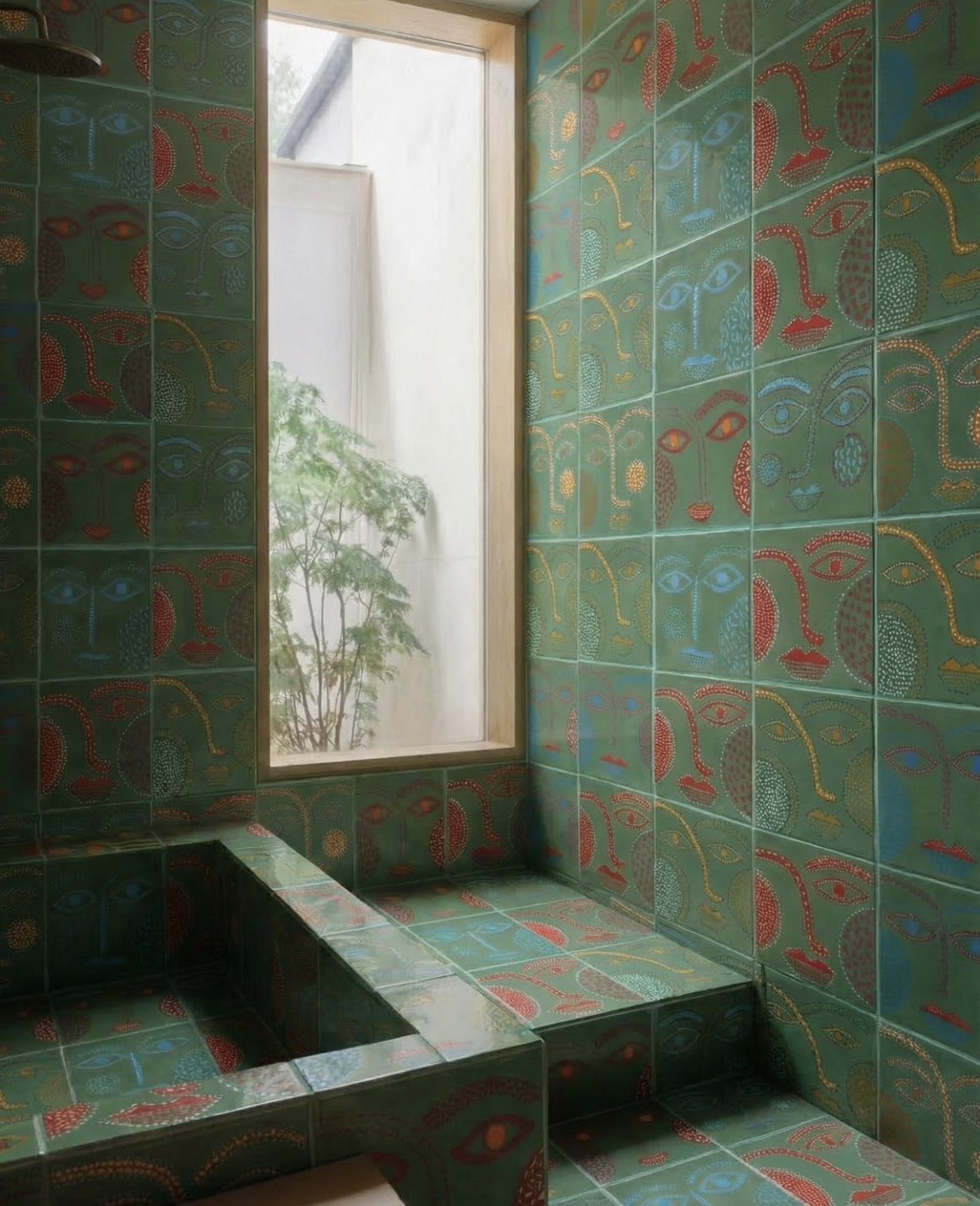
The starting point of this creative path was simple and intuitive. Holding those first white tiles in my hands, I was naturally drawn to experimenting with pointillism. The small scale and hardness of the material led me to work with dots, creating early, almost primitive pieces—mainly geometric compositions where repetition and rhythm played a central role.
Gradually, this initial approach began to expand. I started experimenting with different themes, drawing inspiration primarily from Greek folk tradition and mythology.
Over time, both my subject matter and technique evolved in parallel. New ideas, new expressive needs, and different materials entered my practice, expanding the space between architecture, painting, and ceramics. Despite these shifts, my work continues to maintain a constant core: a subtle yet essential connection to my Greek roots, which serves as a point of reference and renewal in every new piece.
You have a distinct aesthetic and a recognizable signature in your work. What do you most enjoy creating, and how did this unique perspective develop?
I believe my aesthetic wasn’t formed consciously, but rather emerged organically through everything that has shaped me as a person. The images—real, imagined, or fictional—that accompanied me growing up, along with the scents, the colors of the islands, the sounds and stories of older generations, have become so deeply embedded within me that they resurface almost effortlessly whenever I sit down to draw.
What I enjoy most is returning to these memories and reinterpreting them—drawing from the past and transforming it into new visual narratives that exist somewhere between the familiar and the imaginary. Through this process, painting becomes a form of storytelling for me, a way of giving shape to stories that are not necessarily told through words.
I’m interested in each work functioning as a small narrative universe—conveying a mood, evoking emotion, and leaving space for the viewer to recognize something of their own within it. And perhaps, ultimately, this desire for storytelling and connection is the most consistent element of my personal signature.
How do you feel your aesthetic is evolving?
I believe my aesthetic evolves through a continuous process of exploration and experimentation. I try to introduce new narrative elements into my compositions, enriching each piece with multiple layers of meaning and interpretation.
At the same time, it’s important for me to explore different color palettes—shifting balances and intensities—and to observe how color can shape the atmosphere and emotional impact of a work.
For me, evolution is a gradual expansion: an effort to remain open to new ideas without losing the core of my personal language.
What do you consider your most important achievements?
I feel that every stage of my journey so far holds its own value and significance, which is why, overall, I feel fulfilled with what I’ve achieved. That said, it’s not something that makes me complacent—on the contrary, it motivates me to keep evolving.
Collaborations have been particularly meaningful. Through them, it’s not just the final outcome that matters, but the exchange of ideas, experiences, and perspectives. This process allows me to expand my thinking and view my work through new lenses.
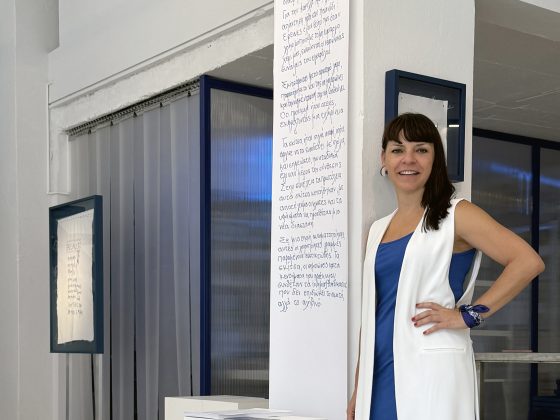
Ultimately, what I strive for is continuous growth, both professionally and personally, shaped by the people around me and the creative environments I engage with. Perhaps the most important achievement is the journey itself—and the ability to keep moving forward.
Who are the people that help you move forward?
The people around me are one of the most defining factors in my journey. First and foremost is my partner, Michalis, who has been by my side from the very beginning. He is my greatest supporter, but also a necessary counterbalance—someone who grounds me with honesty and clarity when I feel off balance.
My mother is also a vital pillar. She supports me not only emotionally but also in practical ways, often helping in the studio when she visits us in Stockholm. Her presence carries a deep sense of care and continuity.
My friends and the people who remain consistently present in my life—through both easy and challenging times—form a support system that strengthens and evolves me.
Finally, collaborations with people who trust me are incredibly important. That trust creates a space of freedom and creativity where I can truly express myself. Through these relationships, what emerges is not just a work, but a dialogue—and it is this dialogue that propels me forward.
Tell us about your collaborations. What are you currently working on, and how do you approach custom-made creations?
Every collaboration is unique, because it results in a work that cannot be replicated. It is always the outcome of a dialogue—between myself, the space, and the people who will live with it.
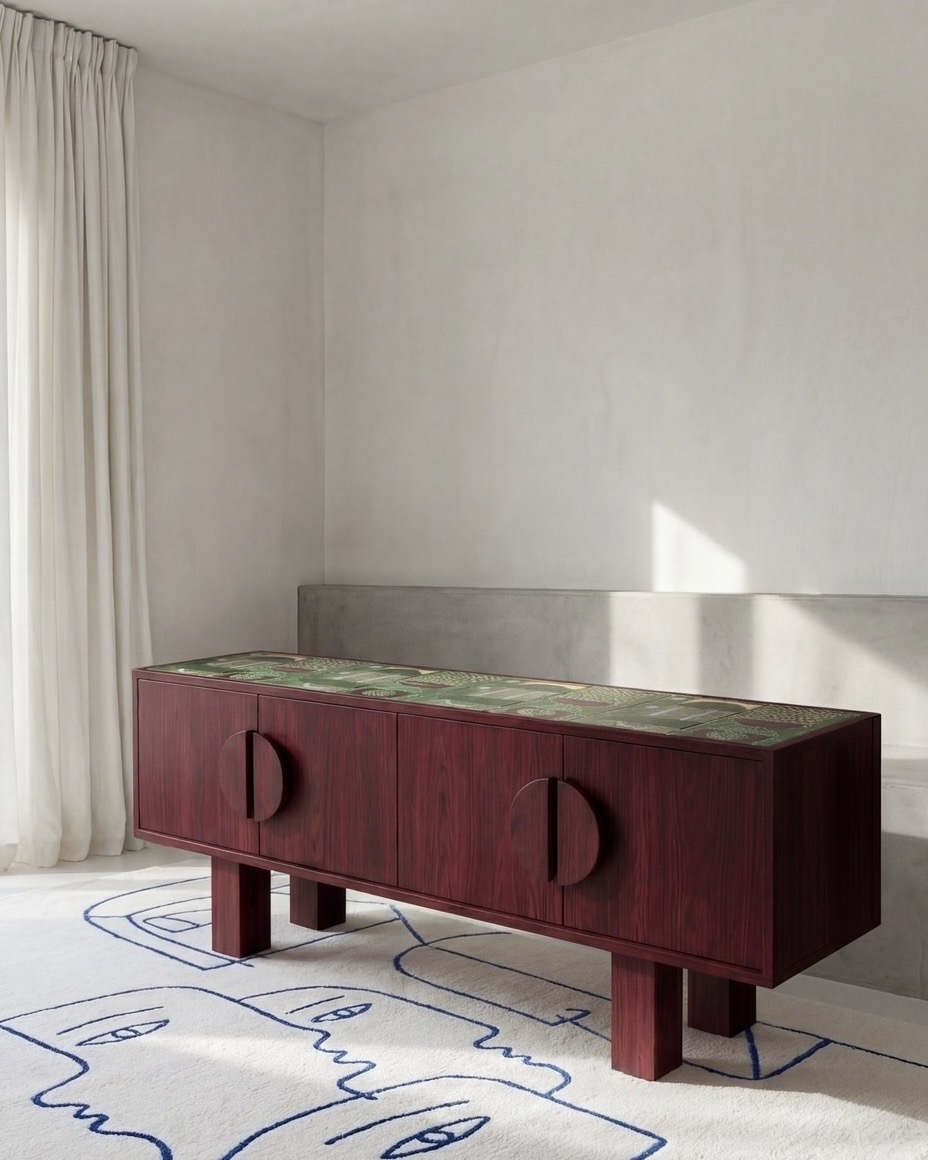
So far, I have collaborated with architects, art consultants, and interior designers, both in Greece and internationally, creating works for hotels, restaurants, and private residences. At the same time, a significant part of my practice involves direct commissions from individuals seeking a piece designed specifically for their personal space. These collaborations are especially meaningful to me, as they involve a more immediate and personal connection.
Over the past year, I’ve had the opportunity to work on larger-scale projects, and in the coming months I look forward to seeing them integrated into remarkable architectural environments. It’s always a moving moment when a work finds its place and becomes part of a lived, everyday setting.
Custom-made creations are at the core of my practice. Almost every piece is conceived from the outset for a specific space and a specific person. I’m interested in how a work can “listen” to its environment—the spatial qualities, the light, the materiality—as well as the personality of those who will experience it. This process is what keeps my work alive and constantly evolving.
Equally important are the collaborations that happen behind the scenes: with craftsmen, fellow artists, and people who deeply understand materials and how to work with them. Through this exchange of knowledge and experience, the work gains another dimension—more tactile, more authentic—and often moves in directions I could not have imagined on my own.
How has your creativity—and its outcomes—shaped you as a person? What have you gained from the creative process?
The creative process has shaped me profoundly, especially in the trust I’ve developed in myself. Through my work, I’ve learned to surrender to the unconscious movements of my hand, to let go of control, and to trust my judgment and intuition.
For me, creating is a deeply vital need. It is the moment when I disconnect from everything external and remain alone with the work. In that in-between space, I experience a sense of freedom that is difficult to find elsewhere.
Perhaps that is what I have gained the most: the freedom to express myself without constraints and the ability to exist authentically through the process. A state where the self and the work coexist and engage in a quiet, unfiltered dialogue.
What does Greece mean to you, and how does it inspire you?
Greece is not something I consciously choose to “express”; it simply exists within me as a foundation. It’s not decorative—it’s a way of thinking, a way of seeing the world. It carries light, simplicity, silence, but also the intensity of contrasts.
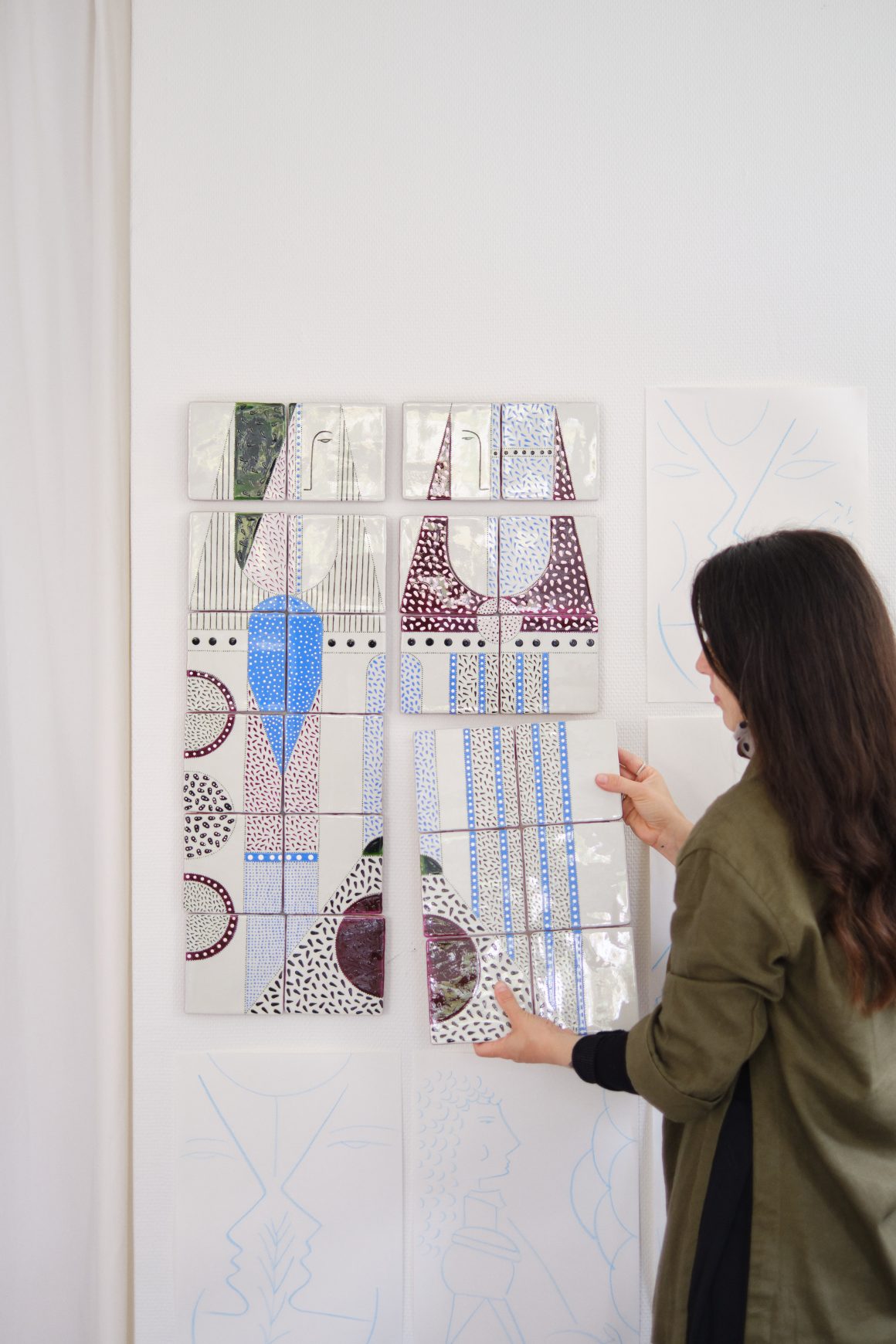
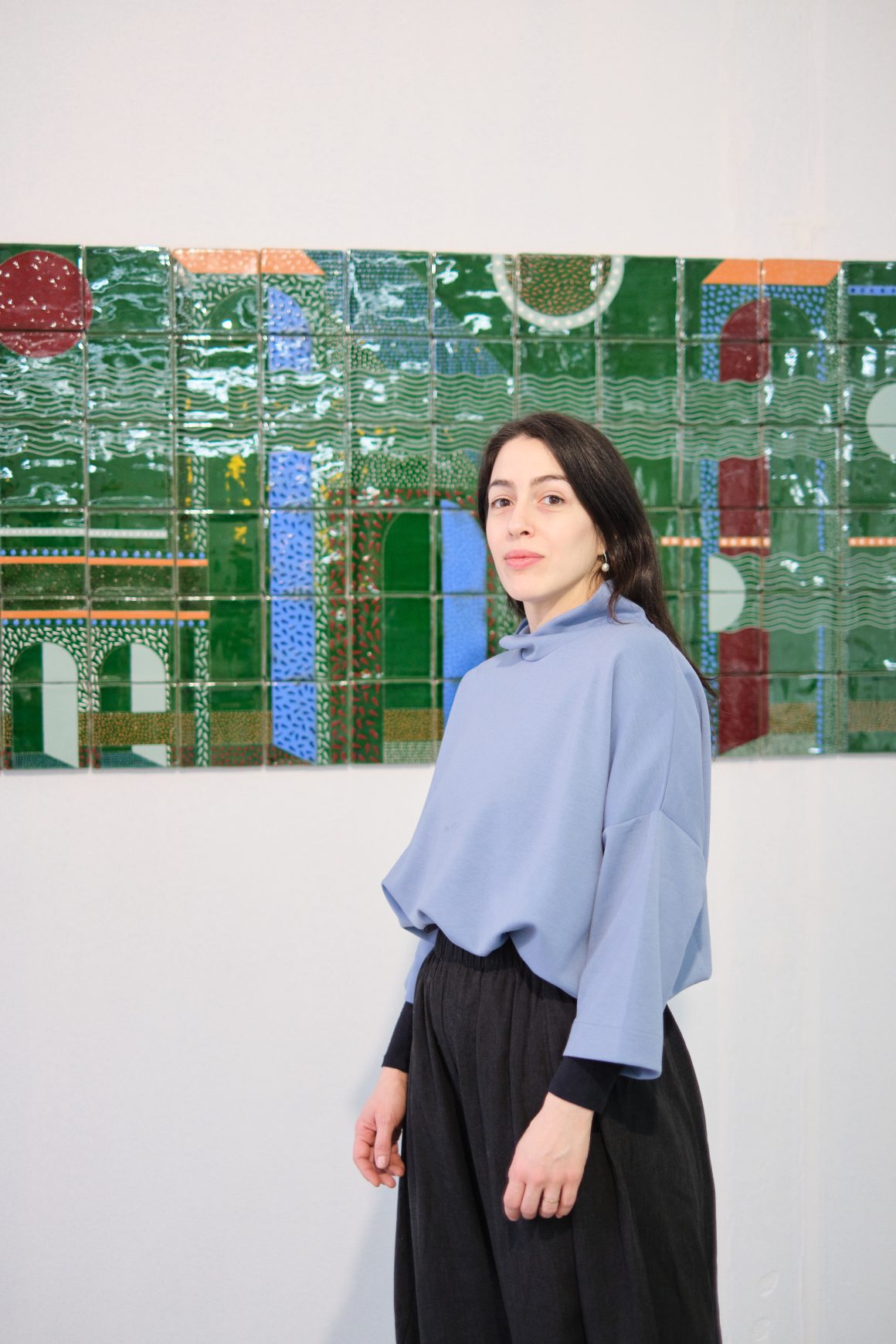
In my work, this translates into genderless, abstract forms, often inspired by Cycladic figurines and the symbolism of Greek mythology—shapes without gender, era, or age, carrying only a feeling, an imprint.
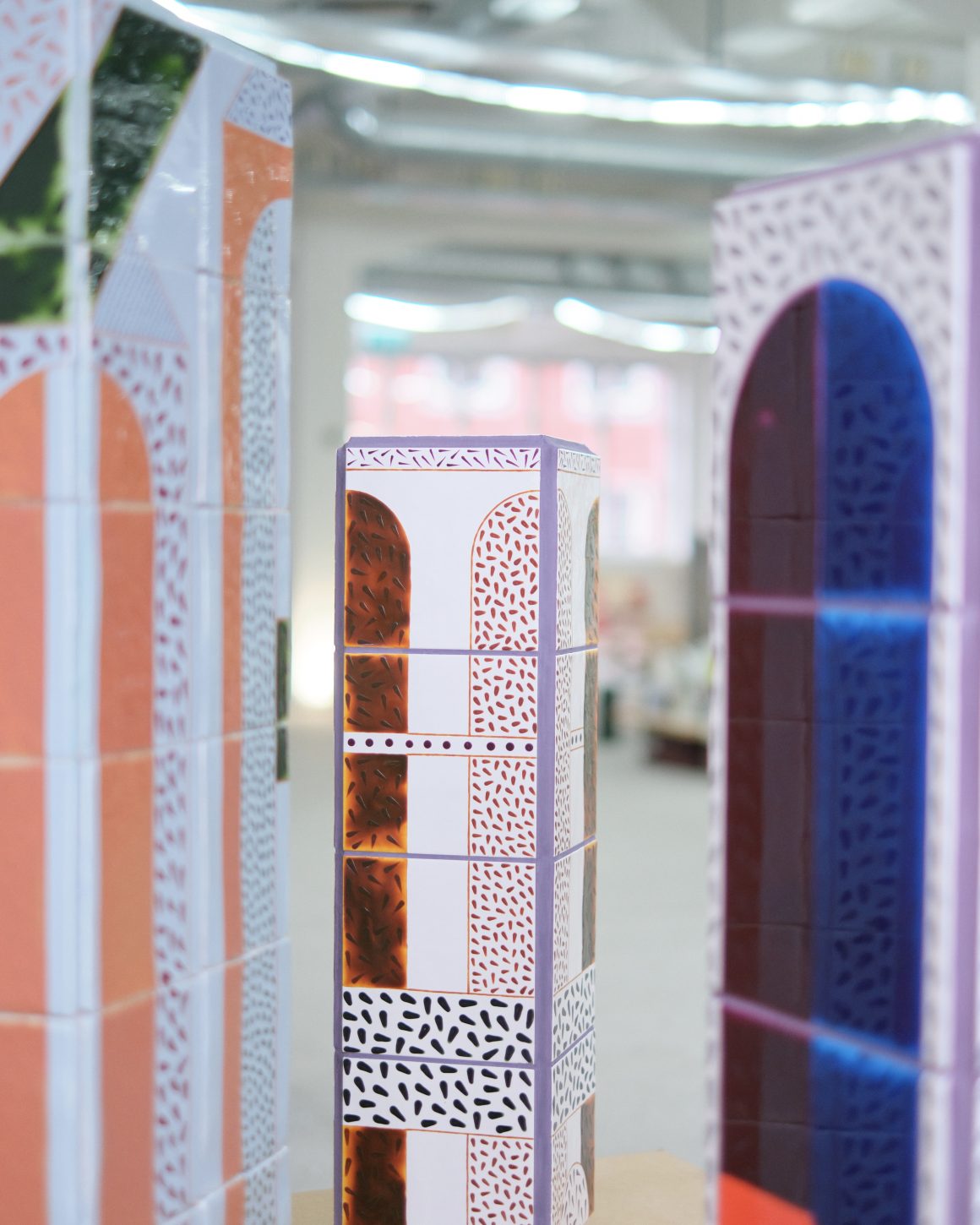
There are also recurring images of the countryside and Greek architecture: a wall, a courtyard, arches, stairways. These are not descriptive, but existential—memories distilled into forms.
Color is another part of this “inner landscape”: the blue of the sea and depth, terracotta tones of rooftops and fired clay, the green of olive trees, the ochres of sand and summer light. These palettes don’t follow trends; they come from lived experience.
The kind of “Greekness” that interests me is timeless, abstract, and deeply rooted in lived memory—quiet, yet present.
What kind of response do you receive from an international audience, and how does it compare to Greece?
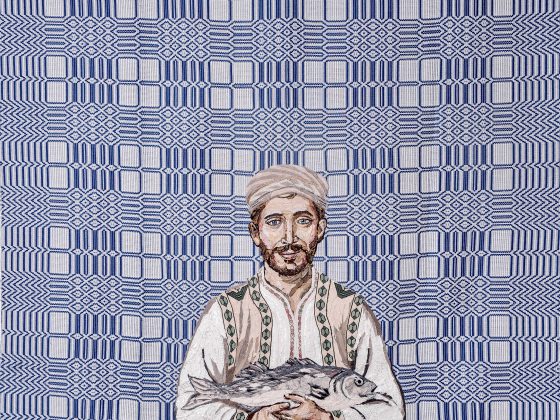
My works travel across the world through the custom commissions I undertake, and that holds a special meaning for me—I feel that a part of my personal journey travels with them. They are living, narrative pieces that often invite the viewer to come closer, to “read” them, observe them, even touch them, in search of the story they carry.
I particularly enjoy creating for diverse environments—from Venetian palazzi to English homes—as each space carries its own energy and requires a different approach. Still, there is something deeply personal that always moves me: when my works meet the sea, I feel they are in their natural place.
At the same time, I’ve been involved in very interesting projects in Greece, which have allowed me to grow and connect with different architectural and cultural contexts. Ultimately, regardless of geography, the way my work is received feels similar: there is interest, respect for the process, and a shared desire for something that tells a story and creates an experience.
Which of your works stand out to you, and why?
I always find it difficult to single out one piece, because each is tied to a different phase of my life. Perhaps I’m drawn more to those that became a starting point for something new—works that pushed me forward, either technically or narratively. They are the ones where something “opened up,” without being entirely controlled from the beginning.
Tell us about your workshops and the feedback you receive.
Workshops are a very special experience for me because they completely shift the dynamic of creation—from something solitary to something collective.
What moves me most is that people often arrive with hesitation—“I don’t know how to paint”—and leave with a sense of joy in creating. The feedback I receive isn’t so much about the outcome, but about the experience: that they relaxed, reconnected with their hands, and found a way to express themselves without pressure. That, for me, is what truly matters.
What has extroversion offered you, and how does it influence your work?
Extroversion has allowed me to open my work to different environments and cultures. Every collaboration, every place, every person brings a new perspective. At the same time, it acts as a mirror—I see how others read my work, and that helps me reposition myself.
I don’t change my core, but I evolve through this dialogue.
What stories do your recent works tell, and what are your immediate plans?
In recent years, I’ve mainly been working on commissioned pieces, so I haven’t developed a collection in the traditional sense. Occasionally, I create independent works, though they don’t necessarily belong to a single unified series.
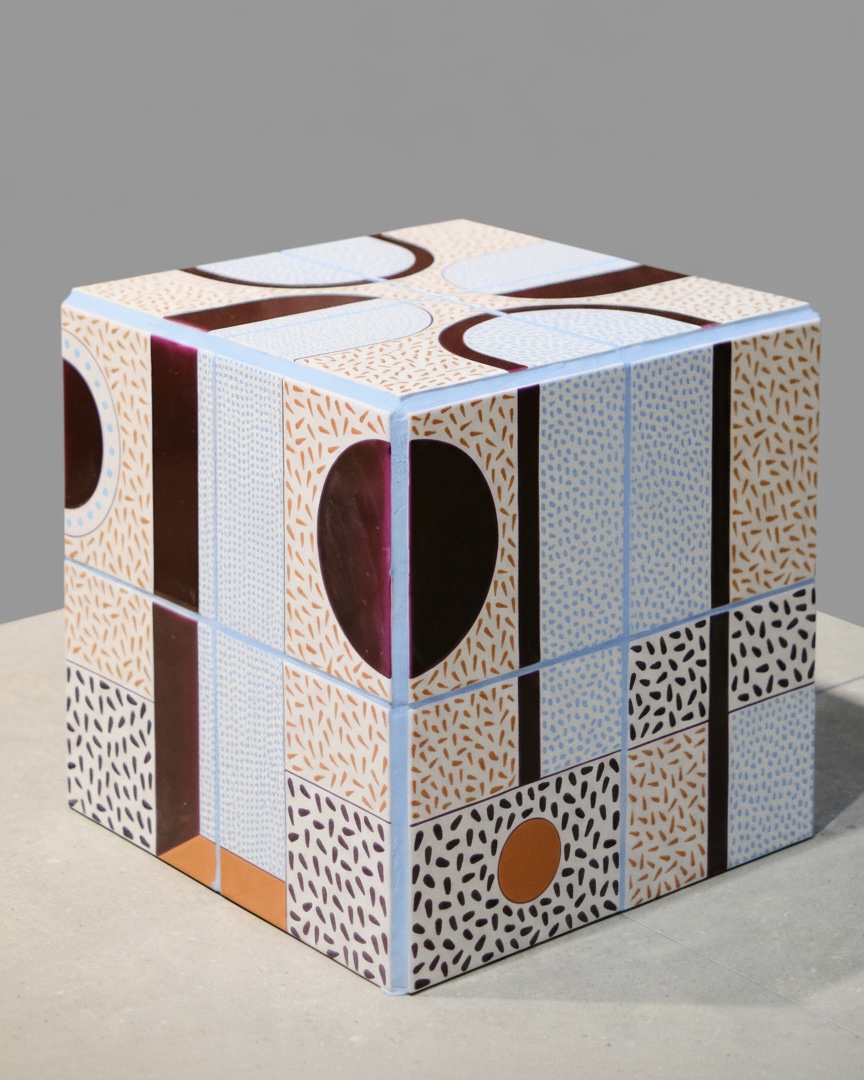
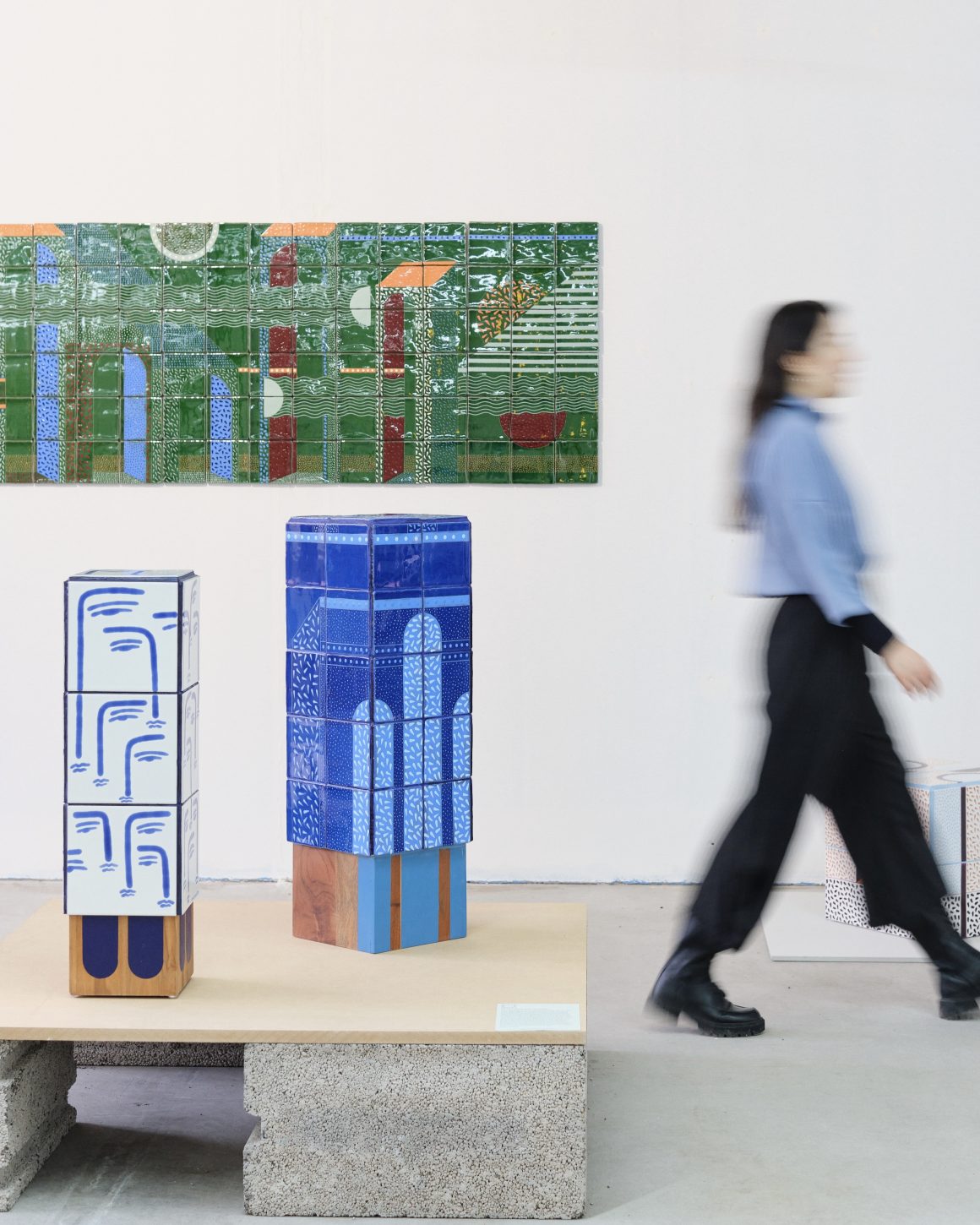
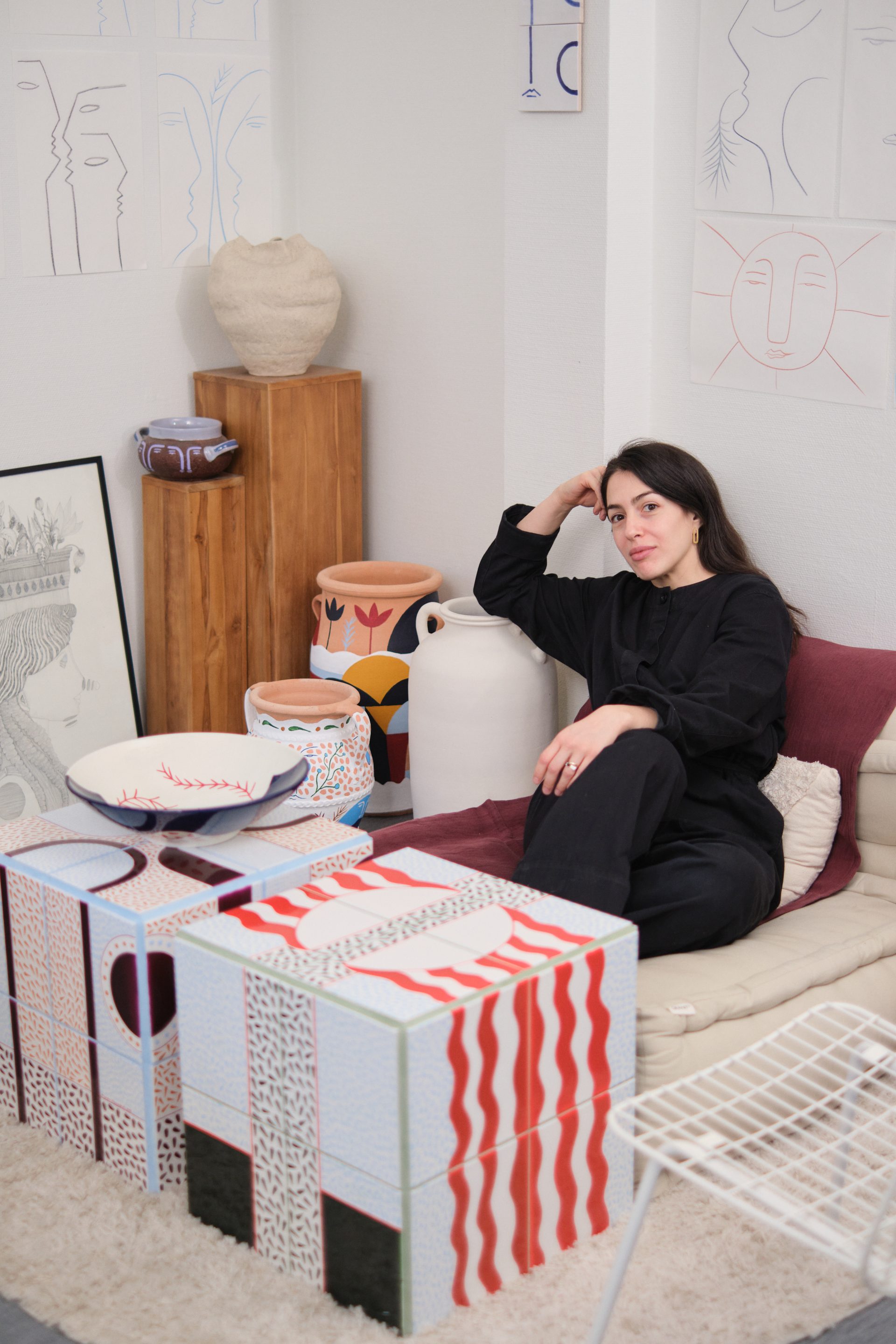
In my most recent work, I’m drawn to a more narrative approach, with a language that is becoming increasingly architectural and geometric. Clearer structures, stronger perspectives emerge, while the human element remains central. At the same time, I’m increasingly interested in volume—creating vertical, sculptural objects that occupy space and gain a physical presence beyond the surface.
In the near future, I will be participating in exhibitions in both Stockholm and Athens. In June, I’ll present my work in a show in Stockholm, while one of my pieces will also be part of the Contemporary Ceramics Biennale in Rhodes.
Do you love color, and how do you approach it in your work?
Yes, color is a fundamental part of my work, but I don’t approach it decoratively—I see it as a carrier of emotion.
I rarely begin with a predefined palette. I let the work guide me. I aim for a balance between intensity and calm, and I always try to create a sense of “breathing” between colors—so they don’t clash unnecessarily.
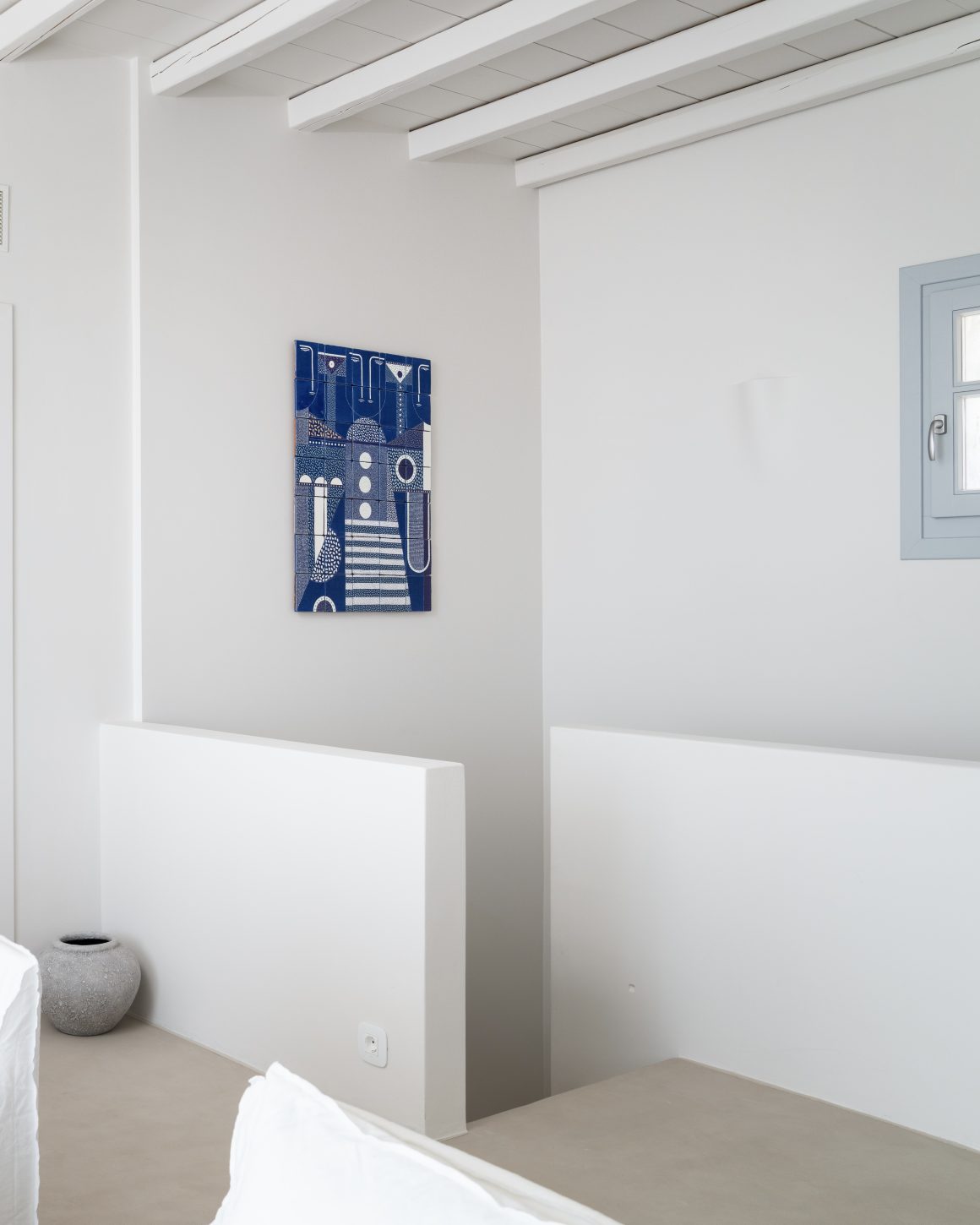
My palette is usually built around three or four colors, with one taking the lead within the composition. That said, I’m also deeply drawn to monochromatic works—especially blue and white.
What drives your evolution and the way you create?
Place and people are the starting point of every evolution for me. Each new work is connected to where it will live—sometimes directly, sometimes more subtly. I’m always interested in creating a dialogue with the space, a relationship that goes beyond the visual.
People are equally important—their desires, their thoughts, what they want the work to carry within their space. At that point, the work stops being exclusively mine. The process is personal, but the piece ultimately belongs to someone else, to another everyday life.
What pushes me forward is exactly this shift—the transition from my own world into someone else’s. The people who choose to live with my work are the ones who inspire me to keep evolving, to rethink my process, and to find new ways to connect.
What are your non-negotiable values in your work?
My most fundamental principle is that the work must first fulfill me. It has to express me honestly, satisfy me visually, and feel genuine. If that’s not there, it’s difficult for it to resonate outwardly.
This sense of inner completeness is my starting point—and perhaps the only truly non-negotiable element in my practice.
How has your design philosophy evolved over time, and what do you value most today?
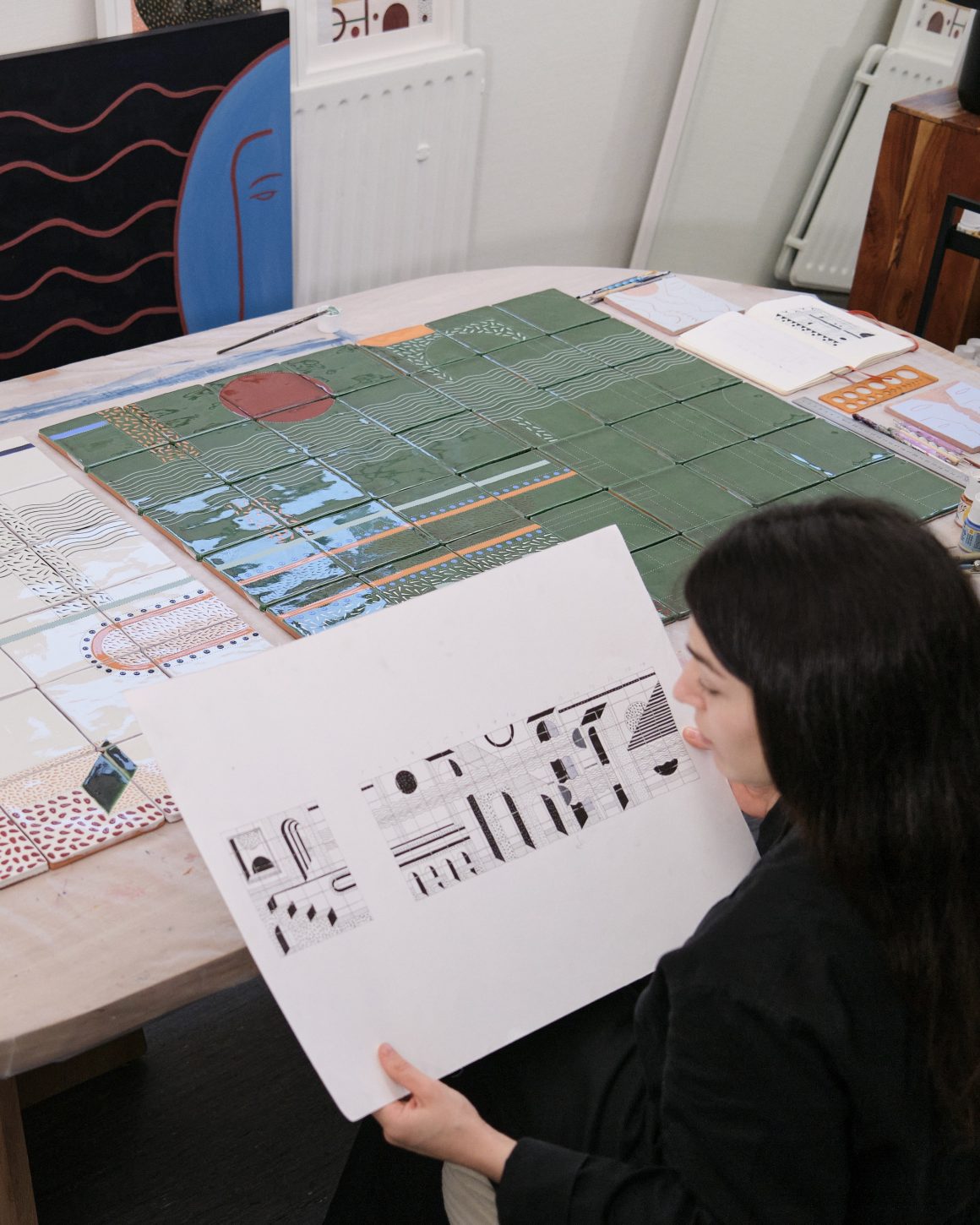
In the beginning—especially during my early years as an architect—I was deeply focused on grid, structure, and material honesty. I was drawn to clarity of composition and the logic behind it.
Over time, that shifted. I became more interested in the human experience—how a space or object is lived, what it leaves behind, how it integrates into everyday life.
Today, I value what endures—not necessarily in a material sense, but aesthetically and emotionally. Work that reveals something new over time, and perhaps most importantly, work that leaves space for people to make it their own.
What would your dream project be?
I would love to work on projects in the public realm—spaces where art meets everyday life in a more immediate and open way.
For example, I’d be very interested in seeing my work in a place like a metro station—somewhere people pass through, pause, return to. I’m drawn to that relationship with time and repetition, and how a work can become part of someone’s daily journey, even subconsciously.
An object you would never part with?
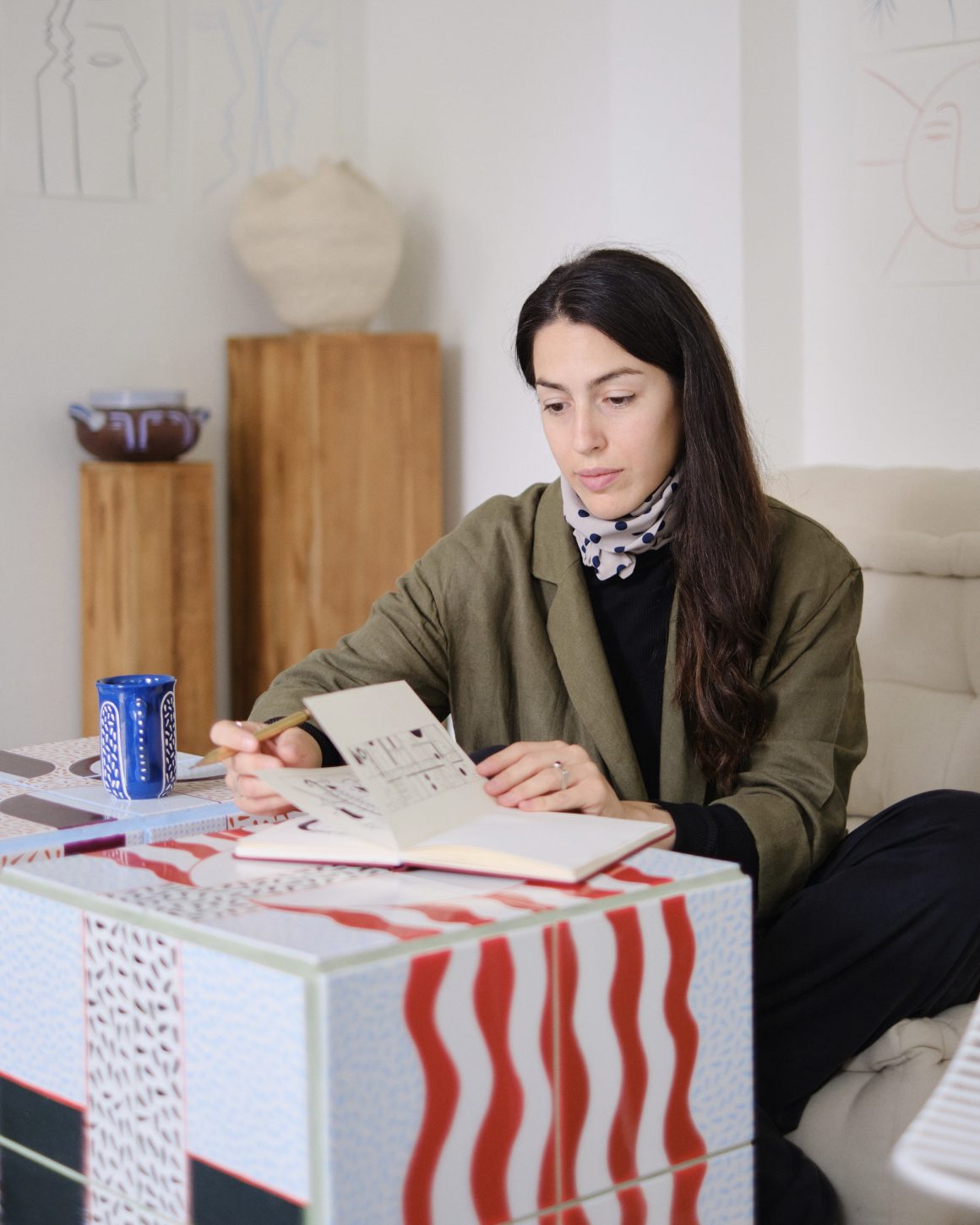
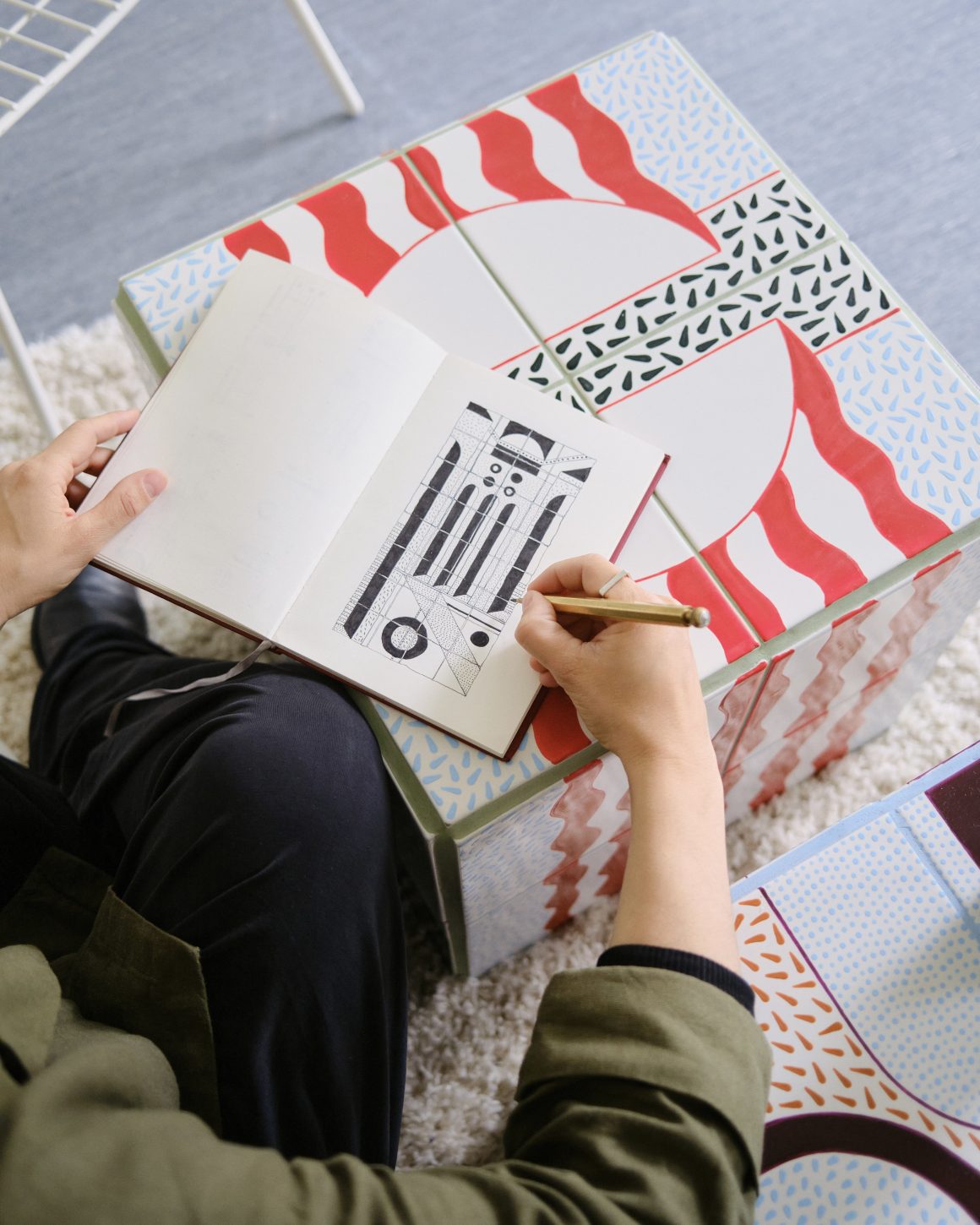
Beyond the tile itself as a medium, I would say my sketchbooks. They are where my thoughts begin to take shape, before becoming a finished work.
An artist or designer you admire and would love to collect?
I would love to own more works and objects by Jaime Hayon. I’m particularly drawn to the playfulness of his forms and his use of color—there’s a sense of freedom and imagination in his work that I find deeply inspiring.
Three places you love returning to—and why
Skopelos, because it’s inseparably linked to my childhood—a place full of memories, joy, and my earliest emotional impressions.
Athens, because it holds my student years and my strongest friendships. It’s a city of intensity, but also one that carries a deeply personal history for me.
Pelion, for its landscapes—the coexistence of mountain and sea—and the sense of calm and observation it always brings me back to.
Is art and creativity a path to becoming better people?
For me, art is прежде всего a way of existing in the world—not in terms of livelihood, but inner survival. I’m not sure creativity necessarily makes us better people. But it does bring us closer to our own truth, whatever that may be.
And perhaps that closeness—that honesty with ourselves—is what matters most.
Tell us a story you’ll never forget
It’s not one single story, but rather moments that stay with me—fragments that don’t necessarily form a narrative, but carry intensity and permanence.
This time, I won’t speak about my art, but about a much deeper creation. I will never forget the birth of my two daughters—not just the moment itself, but everything surrounding it. The images, the emotions, the experience as a whole.
It’s something that can’t easily be described, but it changes you completely and stays with you forever.
A museum and a work that captured your heart
The Byzantine Museum of Thessaloniki by Kyriakos Krokos is a space that deeply moved me. I’m fascinated by the way one material transitions into another, the treatment of textures, and the extraordinary construction detail.
There’s a precision, but also a poetic quality in the shift from heavy to light, from rough to smooth. I’m drawn to his work as a whole—both architectural and painterly—because it reflects a profound understanding of material and time.
I’m also deeply moved by traditional embroidery. These works carry stories, memories, and generations of women who are no longer here, yet whose gestures remain alive in every detail. I can observe them endlessly, discovering new symbols and narratives each time.
Have you ever designed for a home collection? If not, what would you create?
Not yet, but I have many ideas. One of them is a collection of embroidered curtains. I’m drawn to fabric as a surface that isn’t static—it moves, filters light, and constantly changes throughout the day.
Curtains feel both intimate and poetic. They act as a threshold between inside and outside. I would approach them as carriers of imagery and pattern—almost like “moving paintings,” where the handmade detail of embroidery meets the everyday life of a home.
Your definition of beauty
Beauty is something we hold, feel, hear, taste, imagine, desire, and long for.
And yet we never truly possess it—we encounter it again and again, as something that reveals itself and disappears in the same moment.
It’s something experienced through all the senses, not just sight.
Perhaps that’s why it’s so personal—because everyone encounters it differently, through their own memories, desires, and losses. Beauty is not fixed. It is a relationship, an experience, a return.
What feels authentic today?
What feels authentic is what has strong foundations and something real to say. What doesn’t exist just for the sake of existing, but emerges from an inner necessity.
What doesn’t end at the surface or its image, but carries a substance that endures—something that doesn’t lose its power after the first encounter.
If you were to design something for TheAuthentics.gr, what would it be?
I would design a work that exists somewhere between art, architecture, and lived experience—something that is not simply seen, but felt.
An experiential piece with volume, height, and layers—something the viewer doesn’t just observe from a distance, but approaches, moves through, and physically engages with.
A work that activates the relationship between the body and space in a direct, almost instinctive way.