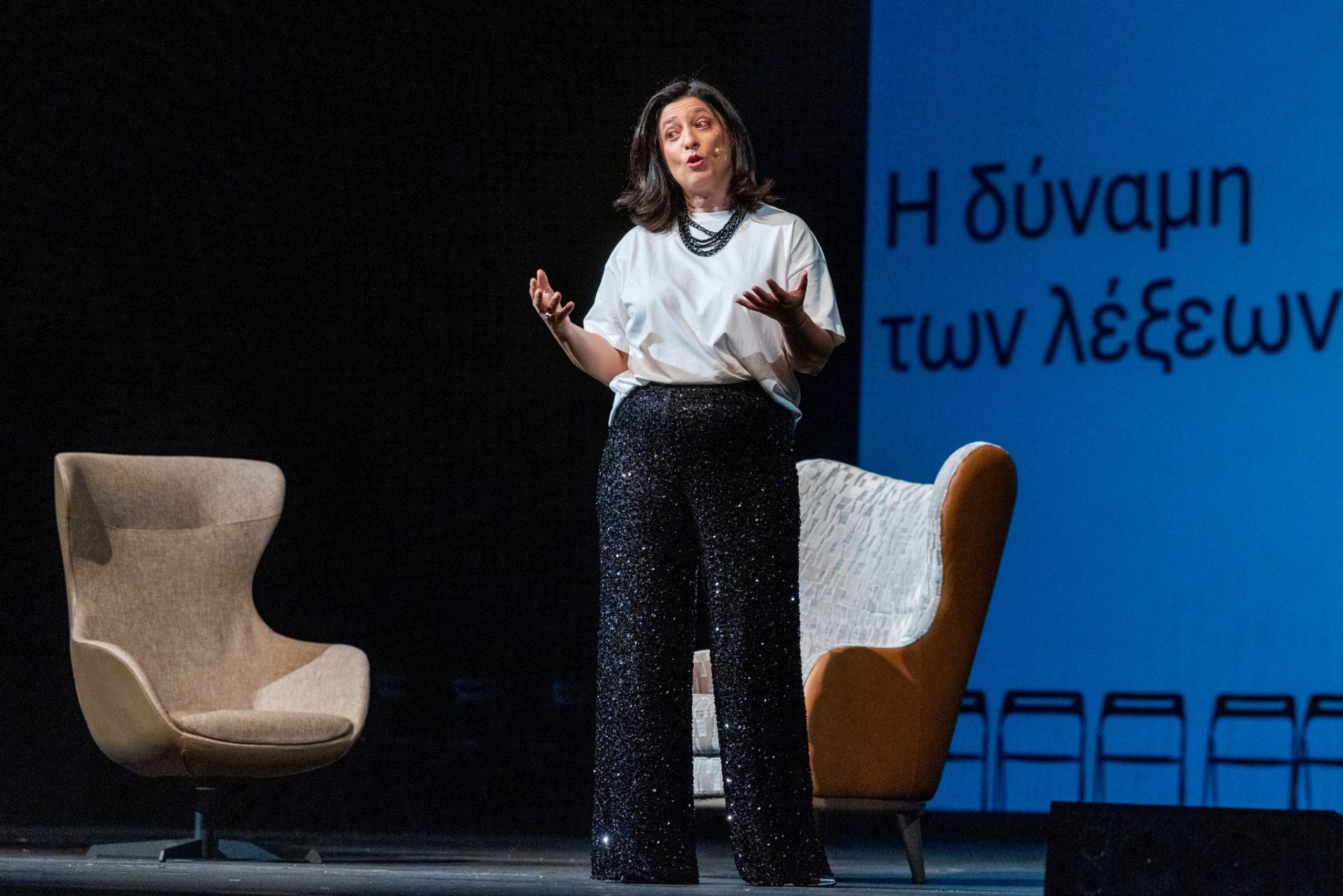
Let’s begin with the highlights of your journey. How did it all start in Thessaloniki, and what have been the defining milestones that brought you to where you are today?

Thessaloniki is the place that shaped me. It is where my first questions about human nature, relationships, and the ways we can live more meaningful lives began. From an early age, I realised that I was interested not only in understanding people but also in creating the conditions in which they could grow and evolve.

My path has never been a straight line. It has been a continuous journey of exploration through academic studies, professional training, personal therapy, scientific research, and, above all, through the people I have met along the way. Every client, every collaboration, every public initiative showed me that psychotherapy can extend far beyond the walls of a consulting room and become a living social dialogue. That was perhaps the most defining turning point in my journey.

Tell us the story behind discovering a creative perspective through psychotherapy. How did this idea come about?

I began my career believing that psychotherapy was primarily a space for healing. Over the years, I came to understand that it is also a space for creation.

I realised that people do not change simply by analysing their trauma. They change when they are deeply moved, when they create, when they encounter art, when they share stories, and when they experience a sense of belonging within a community.

This gradually led me to the idea that psychology and culture could engage in a meaningful dialogue—not as complementary disciplines, but as a profoundly therapeutic experience.

What are Cultural Psychotherapies, and how did the idea of Syzeuxi come to life? What is its mission and philosophy?

Cultural Psychotherapies represent a new approach. They recognise that mental health is shaped not only through individual therapy but also through culture, the arts, communities, and human relationships.

Scientists, psychologists, artists, professionals, amateurs, parents, children who aspire to grow up, and adults who wish to preserve their childlike curiosity come together around a shared theme. Scientific knowledge intertwines with personal experiences, theatre, music, and dance, collectively creating what we describe as a culturally therapeutic experience—a Cultural Psychotherapy.

This vision gave birth to Syzeuxi (Connection), a Centre for Mental Literacy and Empowerment: a living space where science meets everyday life.

I founded Syzeuxi because I believe scientific knowledge should not remain confined to universities or therapists’ offices. It should become a lived experience.

We have not yet reached everything we dream of achieving. I hope that one day this initiative will receive the institutional recognition and long-term support it deserves so that it can reach and serve even more people.

Today, however, we can confidently say that we are no longer alone.

More than 2,000 people have participated in our public events, over 150 are actively involved in our community initiatives, and many distinguished figures from science, culture, and public life have chosen to stand alongside us.

At its heart, Syzeuxi stands for something simple yet profoundly human: building bridges between science and everyday life, between research and well-being, and between knowledge and creativity.

What do you consider your greatest achievements?

I wouldn’t point to an award or a title.

My greatest achievement is seeing a personal vision gradually become a community.

Watching people return to our events, bringing their children, friends, and families with them, is perhaps the most meaningful confirmation that what we are creating truly matters.

Who and what helps you keep moving forward?

I believe deeply in collaboration.

No meaningful vision is ever realised alone.

My colleagues, the people of Syzeuxi, the artists and scientists who co-create with us, my clients, my family, and my friends are the people who keep me both inspired and grounded.

“In the Armchair with Efcharis” has now become an established institution. Tell us about this experience.

In the Armchair with Efcharis was born from a very simple idea: to create a space where people would not offer ready-made answers but instead share the story of their journey.

I believe that stories have the power to heal.

Through them, we discover that behind every success lie challenges, fears, doubts, and countless small victories.

Our upcoming conversations continue to embrace this philosophy. We don’t simply invite accomplished individuals—we invite people with authenticity, depth, and substance.

How easy is it to maintain healthy family relationships today?

It’s not more difficult because people love each other any less. It’s more difficult because we are living in a world that is changing at an unprecedented pace.

Parents are raising children in a reality they themselves never experienced, while young people are growing up surrounded by an overwhelming flow of information, social media, and constant comparison.

That is why I believe there is a greater need than ever for mental literacy. We need to learn how to communicate, how to listen, and how to navigate conflict and our emotions.

Seeking support is not a sign of weakness. It is an act of care.

What do you receive from your audience?

The most moving moments are not the compliments.

They are the moments when someone tells me that, after attending one of our events, they went home and spoke differently to their child. That they found the courage to ask for help. That they felt less alone.

Those are the moments that remind me why I do this work.

Tell us a story that you remember with particular affection.

I will never forget an event where, at the end, an elderly woman approached me and said:

“Today I realised that it is never too late to get to know yourself.”

That sentence has stayed with me ever since.

What do you love—and what do you find challenging—about the field you work in?

What I love most is human connection. Meaningful encounters. And science.

I love those moments when a person feels safe enough to simply be themselves.

What concerns me, however, is the growing tendency to oversimplify psychology. There are no magic formulas or quick fixes. The human psyche requires time, scientific integrity, and deep respect.

What are the non-negotiable values that guide your work?

Respect for every individual.

Scientific rigour.

Creativity.

Collaboration.

Transparency.

And, above all, authentic human connection.

What would you still like to create? What is your dream project?

My greatest dream is for Syzeuxi to evolve into a recognised centre where mental health, the arts, education, and research coexist as part of everyday life.

I envision a place where children, parents, professionals, artists, and scientists can learn, create, and grow together.

I hope it will become a model Centre for Mental Literacy and Empowerment, supported institutionally and making a meaningful social impact on our city of Thessaloniki.

What does true happiness mean to you?

To be able to look at your life and feel that what you do truly matters.

To love.

To create.

To give.

And to return home each evening just a little more human than you were that morning.

How would you define beauty?

Beauty is authenticity.

It is the moment when a person stops trying to prove something and simply allows themselves to exist.

What does authenticity mean in today’s world?

Today, authenticity means allowing yourself to be imperfect.

It means being willing to show your vulnerabilities instead of constantly striving to appear flawless.


Following a series of highly successful Cultural Psychotherapies that were warmly embraced by audiences, In the Armchair with Efcharis, presented by the Syzeuxi Centre for Science, Art and Family, returns—this time to the stage of the Thessaloniki Concert Hall.

For this unique evening, two of Greece’s most iconic cultural figures, Mimi Denisi and Lakis Gavalas, will join Efcharis Panagopoulou to share the stories of their personal and professional journeys.

Monday, 29 June 2026
8:30 PM
Megaron Mousikis Thessaloniki

Author