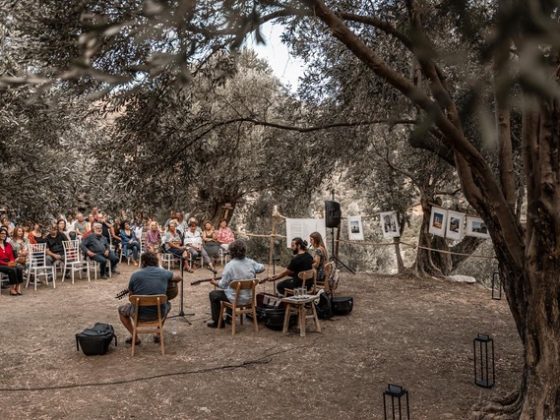
Cristine Bedfor is, above all, a culturally curious and restless woman. Passionate about travel, she loves discovering unique and authentic places in every destination. Her approach is to embrace the holistic experience of each city, immersing herself in its artisans, gastronomy, art, nature, and much more. For her, very little escapes her interest.
One of her greatest satisfactions is sharing. In her philosophy of life, exchange is fundamental. By joining forces, everyone brings out the best in themselves and their surroundings. This passion for sharing shines through in gatherings with friends and enriching conversations. In this way, Cristine becomes the ultimate host, as these moments nurture her wisdom and her outlook on life.
She firmly believes in teamwork and enjoys recommending places, dishes, destinations, and special experiences: from a magical corner or a unique sunset to a stroll or an antique shop that only sells cutlery. Cristine has many treasures she wishes to share.
Hosting others is for her an inexhaustible source of experience. With each encounter, she not only grows personally but does so while caring for every detail. She plans each occasion with dedication, ensuring her guests feel part of her passions and her small yet grand discoveries.
She has always enjoyed surrounding herself with people and planning events: deciding the menu, setting the table, selecting music, and finding ways to create shared moments. She relishes every step of this process from the very beginning. That is her secret: genuinely enjoying every detail. And as the old saying goes, for Cristine Bedfor, “sharing is living.
Making guests feel at home. Possibly the most widely used motto in the hotel industry, and yet one of the most difficult to achieve. Aesthetic homogeneity, the sheer size of the establishments, and the challenge of satisfying the tastes and needs of diverse clientele are some of the factors that prevent a vacation from becoming a truly personal and authentic experience. And it was precisely the desire to break with these established patterns that motivated Cristina Lozano to embark on a business that was crying out for a woman like her.
Her affair with boutique accommodations began in Menorca. After taking a break from her professional career to become a mother, she wanted to return to the world of communications when she realized it wasn’t for her anymore. Initially, she wanted to dedicate herself to house renovations; until a small hotel appeared for sale in the Balearic paradise, offering her the opportunity to realize a project she had always dreamed of: opening her own establishment, embracing English aesthetics and stripping away all traditional elements. Thus, the first Cristine Bedfor was born in the historic center of Mahón. She soon realized it was a highly exportable product that could work in other cities. Because there was nothing like it. So, in June 2025, the Málaga branch opened its doors in a 19th-century building that had belonged for generations to a local family and which had been renovated by the Marta de la Rica Architecture and Interior Design Studio. And, just as the new season begins, it welcomes the group’s third – and possibly most ambitious – project: a hotel in Seville.
Cristina Lozano is sharing with us…
❝ At the end of the day, Cristine Bedfor is meant to be a friendly, thoughtful place where every detail tells a story. A different way of discovering destinations. That is the soul of our guest house: comfort, harmony, coziness… feeling truly at home. ❞
How important is it to bring new life to such a historic building, and what emotions does such a creative journey hold?
What were the main principles behind the redesign of the spaces, and how important and challenging was it to respect the existing structure while showcasing it in a contemporary way? What difficulties arose during construction, and how were they overcome?
From the beginning, our intention at Cristine Bedfor Sevilla was to preserve its essence: the patio, the floors, the arches, its unique theatre structure with its stage and central courtyard. Given its condition, officially declared a ruin, the process required meticulous craftsmanship and enormous patience. The glass dome was especially complex to recover, as were the original materials, of which only small fragments survived. While many elements had disappeared over time, every trace that remained has been carefully restored.
Did the colors and materials follow those of the original building? Were you faithful to the local architectural style, or did you create with a freer spirit?
What is your philosophy regarding hospitality, and how do you want your guests to feel?
What are the non-negotiable values in your work?
What do you consider the most significant advantages of guest houses, and why is it worth visiting them?
The Neo-Mudéjar building, located on the central Trajano Street, is one of the masterpieces left by Aníbal González—the architect of the iconic Plaza de España, among others—in the city. It was built on the site of the former Amor de Dios Hospital—demolished in 1860—and, since then, had always served an artistic purpose. The Lope de Rueda Theater was located there, although it didn’t enjoy the same popularity that the Lido variety hall would later have. That was the first business to occupy the building after its inauguration in 1922, and until the outbreak of the Civil War, it was a performance space that opened almost daily and where the best artists of the time performed. However, the uprising forced its closure, and it began to serve as a military prison. Finally, during the post-war period, it was transformed into the Trajano cinema, an art house cinema frequented by the city’s intellectuals and which became an emblem of the Sevillian capital.
The result is a hotel that doesn’t feel like a hotel—in the best possible way. A majestic place that captivates guests the moment they step through the gate on Amor de Dios Street, where the colors, the light, the upholstery, and the furniture blend seamlessly with the history of the building that houses it. Cristina Lozano approaches each project as if it were her own home. And in this strategy, where emotional connection and respect for the city play a fundamental role, the program of plans and activities that Cristine Bedfor offers is as important—or even more so—than the building itself. Coming to Seville and seeing the cathedral, the Giralda, the Torre del Oro, and the twenty thousand wonderful churches is a given. But when you offer guests the option of meeting a leather craftsman in a village just 20 minutes away, participating in a basketball tournament, or visiting private homes and convents that no one knows about, they will appreciate it. And they will reach more destinations, without a doubt; because every city longs to welcome a hotel willing to change the paradigm.