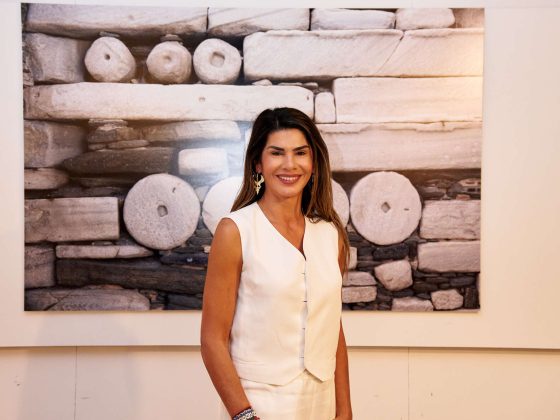
She begins her storytelling far back in time, as history in this place is something you can sense at every corner of Metohi Kindelis. Even today, it preserves that centuries-old charm that steals your heart at first sight, like a sudden romantic flutter.
The area around Chania in Crete, with its distinctive microclimate, has for centuries been an ideal place to live and enjoy the fruits of a blessed land. To such an extent, in fact, that it can function almost autonomously, offering a high degree of self-sufficiency to its inhabitants.
Around 1204, the Venetians occupied the island, which then experienced Venetian rule for the next 465 years. During this period, a large part of what is now known as the city’s old harbor was built—serving as the departure point for Venetian commercial ventures across the Mediterranean. At the same time, a series of country residences were constructed in the fertile plain of Chania, surrounded by lush gardens, which in some cases were combined with olive groves and citrus orchards—crops the Venetians were the first to introduce to Crete.
Metohi Kindelis is estimated to have been built around 1580 and was one of approximately thirty similar buildings in the plain, created as summer residences by noble Venetian families.
When Crete fell to the Ottoman Empire, all Venetian residences were converted into metohia—a term used in western Crete to describe Venetian buildings that were transformed into agricultural estates, as well as purely Ottoman farms operating under a system of collective cultivation.
In these estates, farm workers were housed in buildings constructed specifically for them, usually arranged around the perimeter of the main courtyard surrounding the owners’ residence.
During the Ottoman period, Metohi Kindelis came into the possession of a Pasha and, following the addition of auxiliary buildings to accommodate workers, began operating for the first time as a commercial farm. During the population exchanges that followed the implementation of the Treaty of Lausanne, many metochia were exchanged. However, this particular estate had already been purchased in 1912 by the great-grandparents of Danai and Kynthia Kindeli, a Cretan man and a woman from Constantinople, who until then had lived in the City but decided to continue their lives in Chania.
Their great-grandmother, Victoria Kyriakou, was a remarkably dynamic woman who was initially reluctant to leave her home in Constantinople. As the daughter of the Sultan’s physician, she had enjoyed a comfortable life and, as a playwright, moved within the intellectual circles of the City and Greek literary society.
Rural Crete represented a dramatic change for her, yet she soon took full charge of managing the estate and transformed it into the family’s primary source of income. She continued to oversee the farm until the 1970s, assisted by her daughter Efrosyni, until 1975, when her grandson Manolis Kindelis—having completed his studies in agronomy in Italy—took over.
It was in the mid-1970s that Manolis, together with fellow students and friends, began searching for new crops that could thrive in the Chania region and introduced avocado cultivation to Greece. They initially experimented with the Californian Hass variety, which remains the most widely known worldwide, and soon discovered that in the Chania plain—unlike most places in the world—avocado is a sustainable crop. The local microclimate, with increased winter rainfall and high humidity, proved highly favorable. After a few years, they expanded their experiments by planting additional varieties.
Today, avocado production at Metohi Kindelis has grown significantly. Six different varieties are cultivated to ensure fruiting throughout the entire year, while across the Chania plain as a whole, ten distinct avocado varieties now thrive.
Production is now spread across all seasons, covering not only the needs of the island but also supporting a degree of export activity. At the same time, during the 1980s and up until the mid-1990s, strawberries occupied the largest portion of the cultivable land, a crop particularly sensitive to seasonality and weather conditions.
Danai recalls that in the 1990s their father, Kyriakos Kindelis, embraced organic products as a consumer and adopted sustainable practices in the family’s everyday life. From an early stage, he encouraged his brother Manolis to convert the family farm to organic cultivation.
The decision was made, and the transition process lasted seven years, as the land had been heavily burdened by pesticides—especially toxic in the sensitive cultivation of strawberries. With the conversion to organic farming, additional crops were introduced to ensure sustainability both environmentally and economically, creating an ecosystem capable of functioning throughout the entire year.
From the early 2000s onward, experiments began with tropical and subtropical crops, some of which adapted remarkably well to the region’s microclimate, such as mango, lychee, annona, and others.
“Avocado, which this year marks 50 years of cultivation in Chania, gradually became part of the locals’ daily diet—finding its way into salads and earning a place at the Cretan table. For decades now, in many homes and tavernas that are not rigidly attached to absolute fidelity to Cretan tradition, avocado has been adopted as an addition to the Cretan salad, where, together with carob rusks and mizithra cheese, it truly elevates the dish,” she notes.
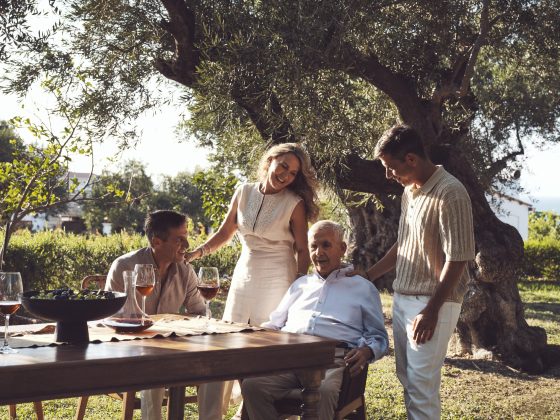
Today, at Metohi Kindelis—which since 1995 has largely been transformed into a hospitality destination with three independent guesthouses, attracting visitors from all over the world who come to experience firsthand the miracle of Cretan land and Greek hospitality—avocado has become an integral part of the breakfast table.
Spread on bread with honey and almonds, or with olive oil and graviera cheese, and even throughout the day added to fragrant, irresistible salads alongside other vegetables from the farm.
Danae concludes her narrative with a recipe—the family favorite that is almost never missing from the table. “The most flavorful and refreshing salad includes avocado, orange, mint or dill, sea salt, a little olive oil, and orange juice. It can also be combined with lettuce or spinach, but it is wonderful on its own. Other beloved family dishes include pasta with wild mushrooms, garlic, and fresh avocado—avocado is never, ever cooked—and cabbage risotto with finely chopped broccoli, spring onion, garlic, and avocado to give it creaminess.
An even greater favorite, of course, is Manolis Kindelis’s dish celebrating all the treasures of spring: an omelet with artichokes, wild asparagus, avronies (wild shoots), and onion. After the vegetables are sautéed, a little egg is added at the end to bind them together—and, of course, avocado.”
In this place, exceptional food is part of everyday life; flavors are elevated, and both people and the precious fruits of the Cretan land become fortunate recipients of its blessing.