Designed by Gunter & Co, this restored home exudes warmth and serenity through bespoke furnishings and refined, high-quality materials
In the affluent South West region of London–where expansive parks and riverside charm dotted with elegant Victorian and Georgian architecture–there sits an Arts and Crafts-style residence, originally constructed in the Edwardian period during the early 1900s.
Unusually wide for a London property, the four-storey home comprises a ground floor that acts as the social heart of the residence.
On this floor, the largest footprint of the property, are the open-plan dining, kitchen and family living spaces; as well as an adjacent formal living room, defined by floor-to-ceiling glass doors that recess completely into the walls, dissolving the threshold between interior and garden.
Supporting spaces on this level include a gym, artist’s studio, home office, boot room, prayer room and powder room, while the newly added basement level accommodates generous storage, a wine room and a cinema room.
The upper floors hold five bedrooms, each with its own ensuite bathroom, along with a dedicated laundry room.
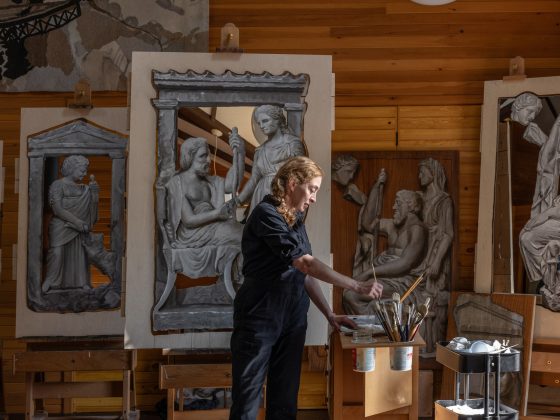
This is the family home of an artist and her financier husband, whose passion for photography and paintings matches her own creative sensibilities. With university-aged children and a life split between London and India, they approached Gunter & Co for a space that functions as both a family nest and a creative haven.
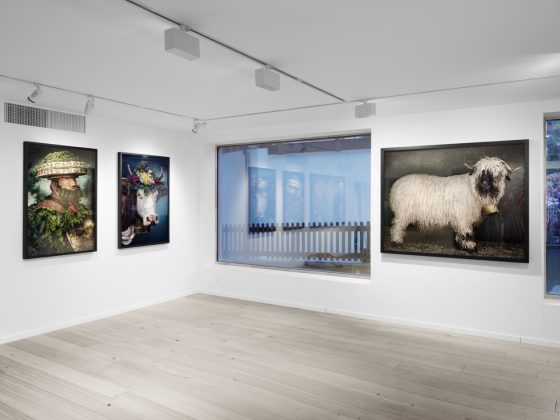
“They have a keen passion for art and craftsmanship, and they really understood the value of letting us explore high-quality pieces and invest in the time it took to have those commissioned,” recalls Irene Gunter, founder of the London-based design firm.
What began as a modest plan to relocate the staircase quickly evolved into something far more ambitious. With the façade essentially braced to minimise damage from lateral forces, the team rebuilt the interior, reconfiguring the entry hall as a three-storey entrance void.
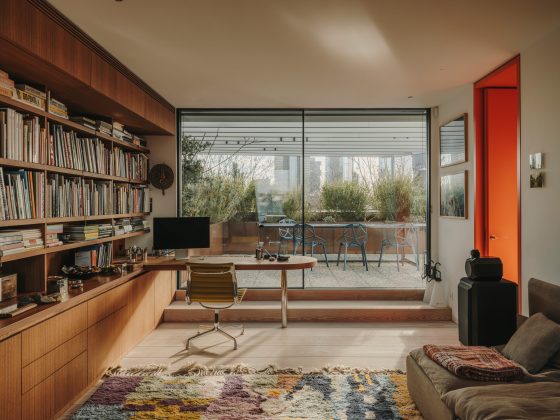
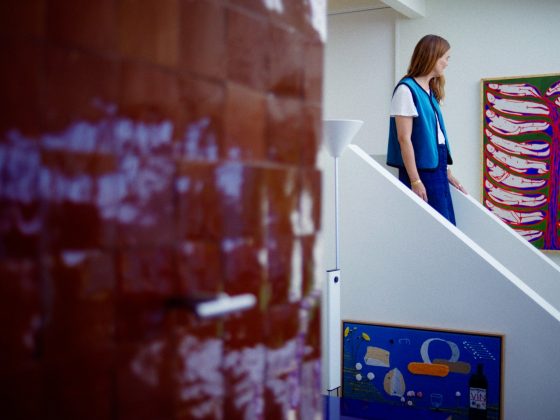
“When you open the door, you walk into a contemporary space that is more reminiscent of a museum for contemporary art than a conventional home,” Gunter describes. “You’re immediately transported into a serene sanctuary with an incredibly warm feeling despite the very clean lines and modern architecture.”
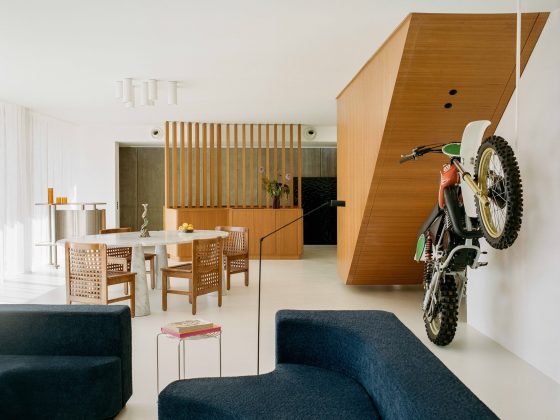
Here, the interior design unfurls as one of cohesion and tranquillity, anchored by an overarching scheme of richly layered neutral tones.
“Except for a few choice locations such as the bathrooms and the cinema room, the absence of strong colour adds to the richness of textures, and really allows you to appreciate the finer details, which, in a more colourful interior, might be lost,” Gunter elaborates.
The polished plaster walls with earthy tones create subtle textures, complemented by flush skirting with metal detailing and black accents on the light fittings.
“Because of the workmanship involved with polished plaster–where you can’t start or stop the process within one space–at one point there were 12 craftsmen working on the large, triple-height hallway to ensure a consistent finish,” she shares.
Meanwhile, the owners’ and Gunter’s shared love for high-quality natural materials is reflected throughout the home–starting with the White Emperador marble flooring on the ground floor.
“Finding the perfect blocks to create over 50 slabs of stone for the flooring was one of the most challenging aspects of the project, but well worth the effort,” Gunter says. “After the stone was installed, it was also ‘polished’ in a matte finish in situ–one of my favourite parts of the incredible workmanship that almost makes the joints disappear.”
Additionally, the residence showcases rich and warm oak finishes on the veneered wall cladding throughout the hallways and landings, as well as the sculptural staircase, designed in collaboration with Harper Latter Architects–acting as the centrepiece for the design language upon which the rest of the home was built.
“Everything came off this huge spiral installation, and so many pieces were designed with more organic shapes and forms to complement this,” Gunter adds. “The result is a gallery-like quality that accommodates contemporary pieces along with eclectic, unique finds.”
Another source of inspiration for the home’s design is the homeowners’ extensive art collection, many of which were selected for key spaces in the home before the interior design began in earnest.
“Where normally we often find that the client’s existing accessories are lacking, in this case, we were like kids in a candy shop,” Gunter explains. “The homeowner has an incredible collection of handmade pottery, which she made herself, along with unique pieces collected over the years.”
The plethora of handcrafted pieces also helped inform their collaborative shopping trips to London boutiques and art-sourcing trips to Paris, culminating in the team travelling all the way to India–adding a mix of contemporary pieces with more eclectic, one-off finds to the elaborate collection.
“We got to see a glimpse of where the clients had grown up and the strong culture there, and how they wanted parts of that reflected in their home,” she says. “Seeing how they socialised with family and friends, and how we could achieve that same flow in London, was very important in creating their family home here.”
The trip to India also opened doors to artistic collaborations with incredibly talented craftsmen there.
One particularly rewarding endeavour was the custom-designed, three-storey pendant installation by Charles Burnand in the entrance hall, in which its cast bronze uprights and hand-blown glass ‘eggs’ required a meticulous process to perfect the glass textures, colours and proportions.
Given the client’s own passion for glass art, the design team was able to explore the boundaries of what was possible, engaging in a truly creative and playful design process.
Other notable design details include the creation of bespoke furniture–from the sculptural seating in the family and living areas to the curved storage seat in one of the children’s rooms–custom designed and crafted in partnership with artisans in India; and the fabric-panelled walls in the cinema room with cleverly concealed built-in speakers.
“Despite the clean lines and modern architecture, the atmosphere is serene, shaped to be a sanctuary that envelops guests in warmth,” Gunter concludes.
“The unique combination of refined natural materials and artwork creates an aesthetic narrative of calm that goes beyond just visual appeal, further enhanced by the natural light flooding in through the back of the house.”
Tatler Asia