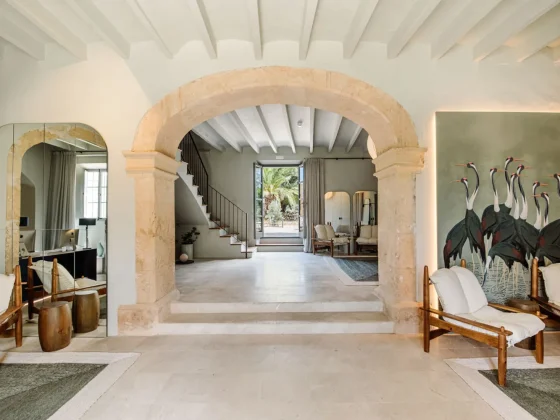
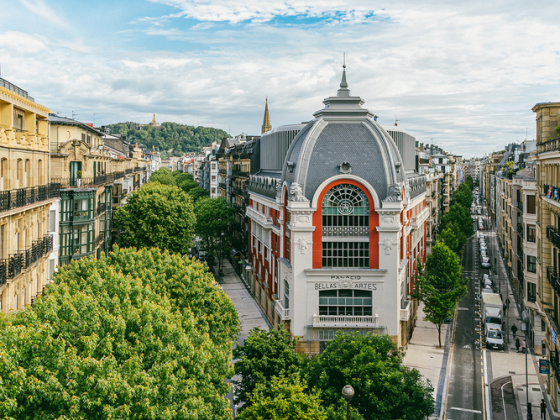
Located on the Piazza della Minerva, just steps from the Pantheon, the hotel is housed in the former Palazzo Fonseca. Transformed into a hotel in 1811 by a wealthy French family, it quickly became one of Rome’s most fashionable addresses; a favoured stop-off for Grand Tour writers including Stendhal, George Sand and Herman Melville. Its new incarnation, the Orient Express La Minerva, has been reborn under the direction of Franco-Mexican designer Hugo Toro, continuing a hospitality portfolio that includes the Michelin-starred Pur’ at the Park Hyatt Paris-Vendôme and Booking Office 1869 at London’s St Pancras.
Toro’s work is united by a sense of warmth and tactility: a rich, earthy palette and craftsmanship drawn from Hailing from Alsace-Lorraine, Toro gained a master’s in interior design at Penninghen in Paris, before completing a second master’s in experimental architecture at the University of Applied Arts Vienna and UCLA, where his focus on complex 3D modelling and printing processes continues to shape his work. ‘I’m interested in artisanship and working with my hands,’ he notes. ‘But I also like to push new techniques, to see how the two can merge.’
Toro describes working on La Minerva as ‘waking up a sleeping beauty’. His task was to revive the grande dame using a contemporary lens while also creating a dialogue with Rome. ‘I wanted the Romans to be proud of this hotel,’ says Toro. ‘It’s such an institution. I wanted to have a reflection of the city.’
The hotel’s 93 guest rooms feature earthy, mineral tones, with Toro interweaving art deco details alongside references to the Eternal City. ‘When you go to Rome, it feels a little chaotic in some way, but the city has a lot of texture and warmth.’ Although the colour palette remains consistent throughout, each room is unique, with Toro hand-painting bespoke headboards for the suites.
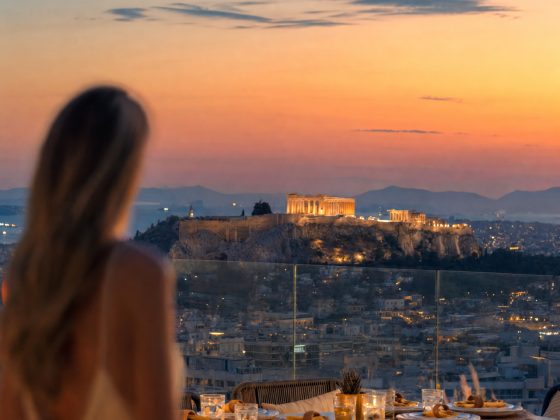
‘They reflect a sky horizon depending on the orientation of the bed,’ he says, ‘So if you’re facing east, the colours are cooler.’ This attention to detail extends to the rest of the hotel, with the bar dressed in the same rich tones and bespoke furnishings. Here, a statue of Minerva from the original hotel takes pride of place under a spectacular glass roof restored by Toro. Up on the seventh floor, leafy palms and green trellised columns bring a freshness to rooftop restaurant Gigi Rigolatto, while the light blue furnishings are a nod to the panoramic views of Rome’s skyline.
A quartet of signature suites – the Stendhal, La Minerva, Obelisco and Orient Express – crown the guest room offering. Individually designed yet bound by the same aesthetic, they feature textured plaster walls, Rosso Verona marble bathrooms and original 17th-century floors, as well as providing views of the Pantheon and Bernini’s Elephant and Obelisk sculpture in the square below.
The Orient Express suite is the largest at 190 sq m, a rarity in central Rome, featuring a rich interplay of textures: glossy oak wardrobes, metal and burgundy leather dining chairs, and amber-hued Murano glass lighting create a mood of quiet opulence. The bathroom’s Rosso Verona shell-shaped basins are inspired by the city’s fountains, while a bathtub, surrounded by a curved marble wall sculpture, is a subtle nod to traditional Ottoman bathing culture. In the living area, a large curved sofa is covered in a bespoke jacquard fabric bearing motifs that nod to the patina of the neighbouring building, while a circular rug is inspired by the Pantheon’s cupola.
There’s a playful nod to travel in the minibar area, which is framed by dark wood panelling, carved to echo the grooves of a Rimowa suitcase. The suite also features a travertine fireplace in the dining room and a discreet study concealed behind a hidden door. As with the other suites, there are marble-topped kitchenettes fitted for convenience – though guests need not cook, as a private chef can be arranged – complemented by a retro record player and a curated vinyl selection for late-night listening sessions.
To complete the mise-en-scène, Toro collaborated with an art curator to source contemporary Italian artworks and objets d’art, supplementing them with pieces from Parisian and Roman antique markets, as well as from his own personal collection. Works include a cloth map collage, mounted on board and bound in black leather, by Lucy Naughton, geometric wood paintings by Studio Blaau, and a collection of églomisé glass pieces by Studio Ulgador.
‘I wanted to create something quite domestic, somewhere warm,’ says Toro. ‘I think that’s what people are looking for in hospitality today. And Orient Express is not just about creating a beautiful space, it’s about creating the whole experience.’
@wallpaper