The New York Home of Objects of Common Interest: “The Absence of Walls Makes Everything Fluid” as seen in Living Corriere Magazine
Their Brooklyn townhouse, designed by architects Eleni Petaloti and Leonidas Trampoukis, is an ongoing experiment—a demonstration that living can be reimagined in a freer way, without preconceptions.
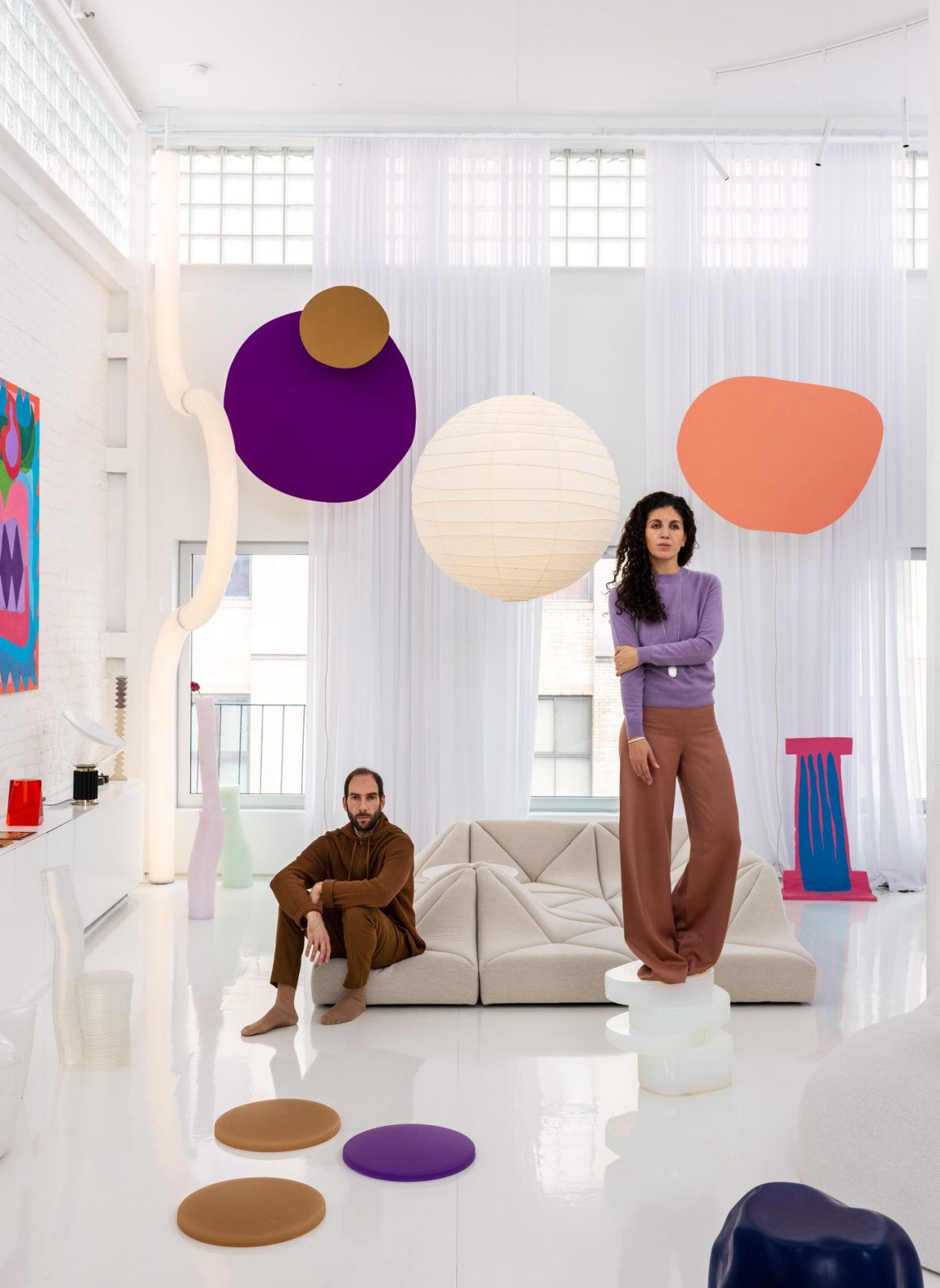
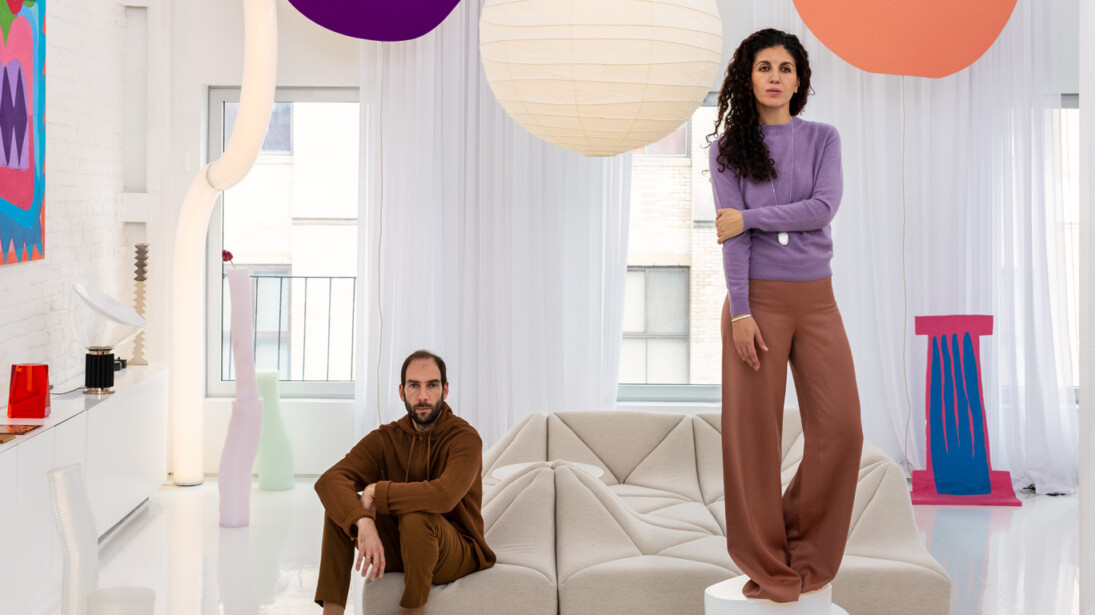
It is the manifesto of their way of life—free, open, without constraints. “Everything began with a research project on domestic living that gradually took shape as architecture,” explain the homeowners, architects Eleni Petaloti and Leonidas Trampoukis, founders of the design studio Objects of Common Interest and the architecture practice LOT, with offices in New York and Athens. “It’s a conceptual project that only began to reveal itself once we started living in it,” they continue.
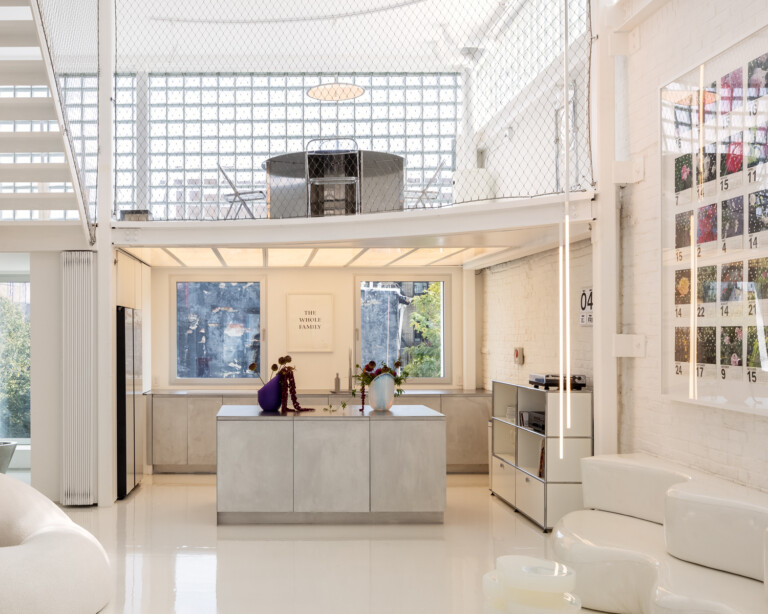
Originally from Thessaloniki and both 43 years old, they purchased the Brooklyn townhouse in 2022, just a few months after the birth of their second child. Immediately after the acquisition, they demolished all internal partitions and removed the dropped ceilings, allowing the space to open up without interruption. “We wanted to recreate the atmosphere of an industrial loft—an archetype we had long idealized during our years of study at Columbia University in New York,” smiles Eleni Petaloti.
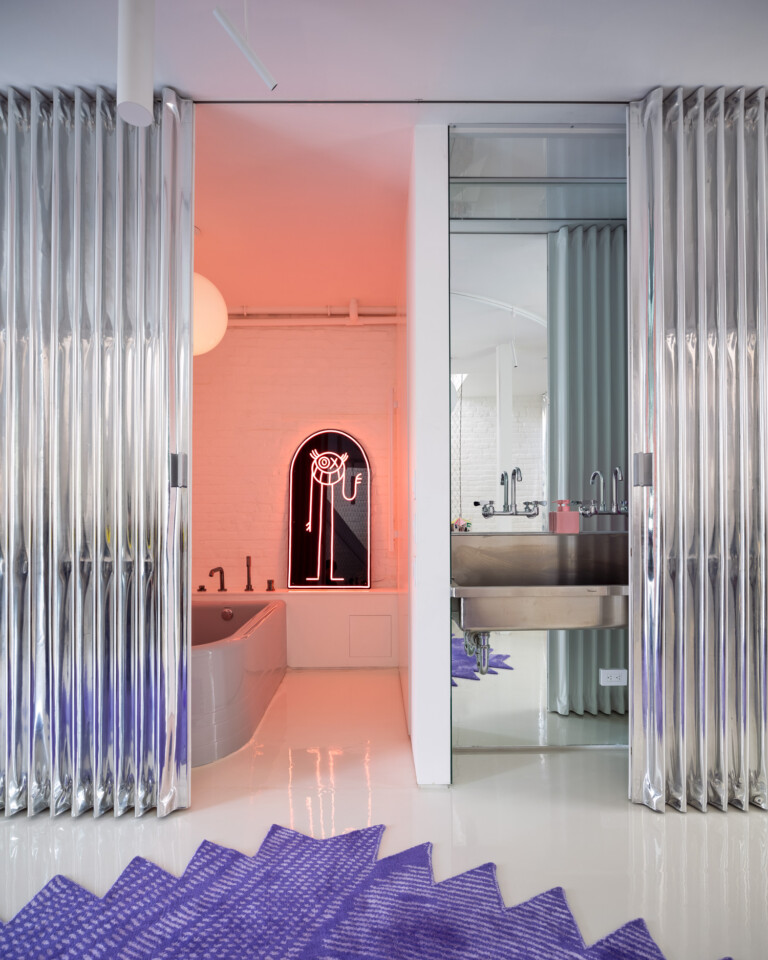
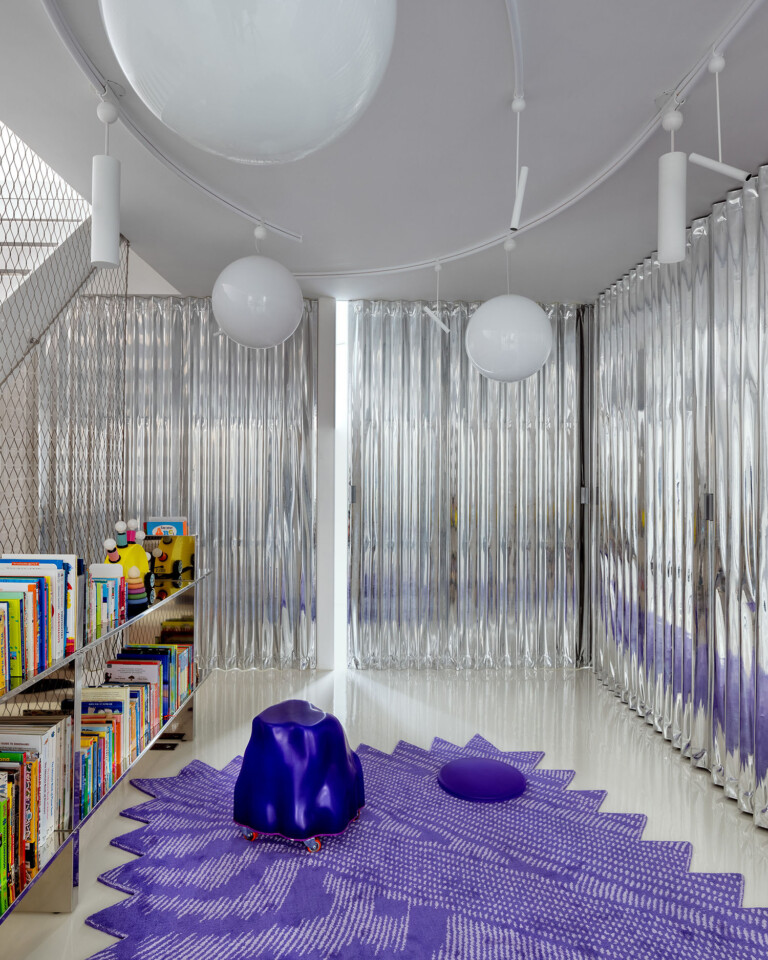
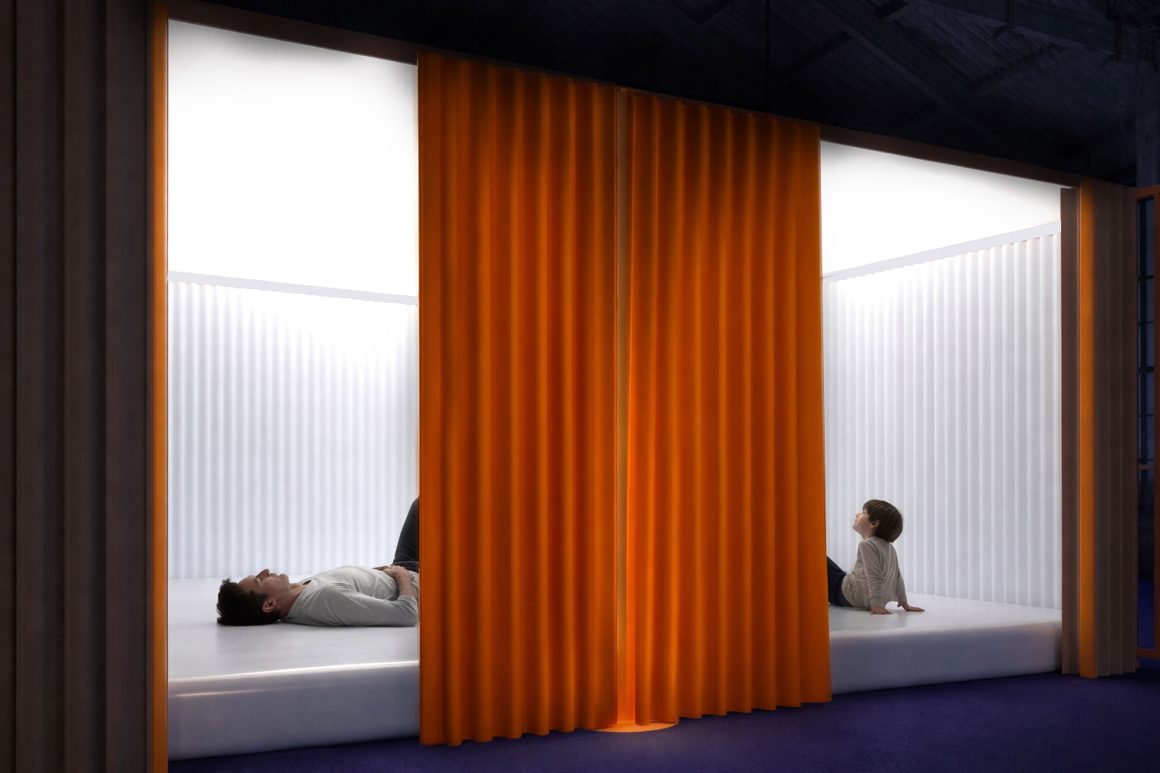
Revealed behind a silvery pleated door on the second floor is the children’s bedroom: “There’s a lot of improvisation in this house. If I had to choose a piece of music to represent it, it would be Let’s Get Lost by Chet Baker. For those who enter, the invitation is to feel free to get lost.” Not as disorientation, but as a shared experience—surrendering to the space and discovering it in unexpected ways.
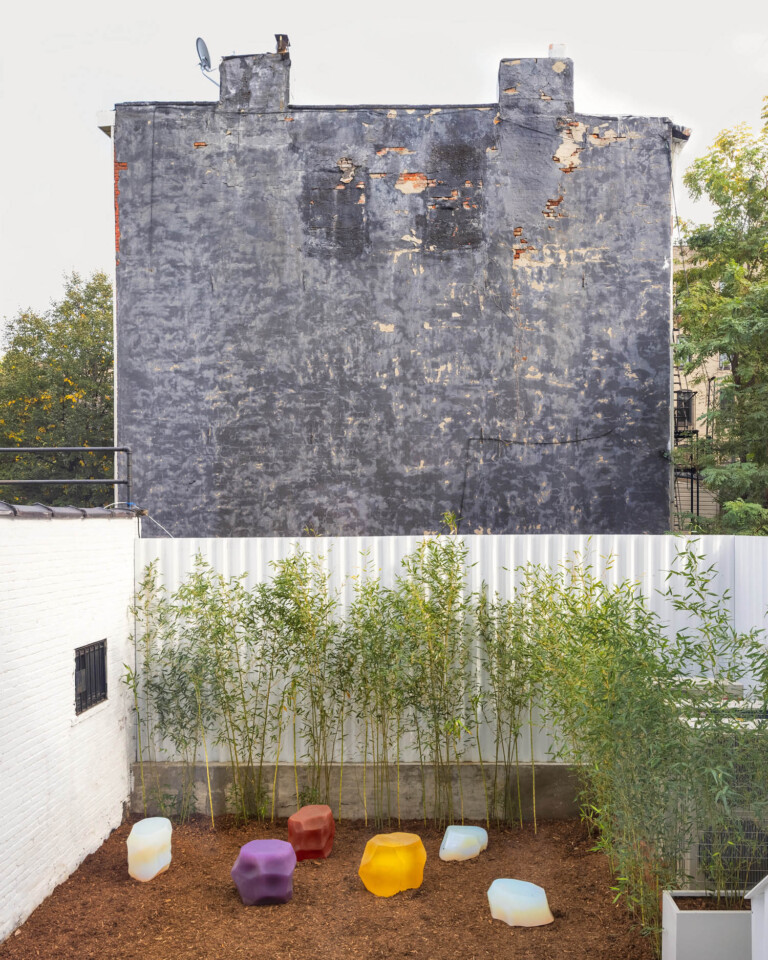
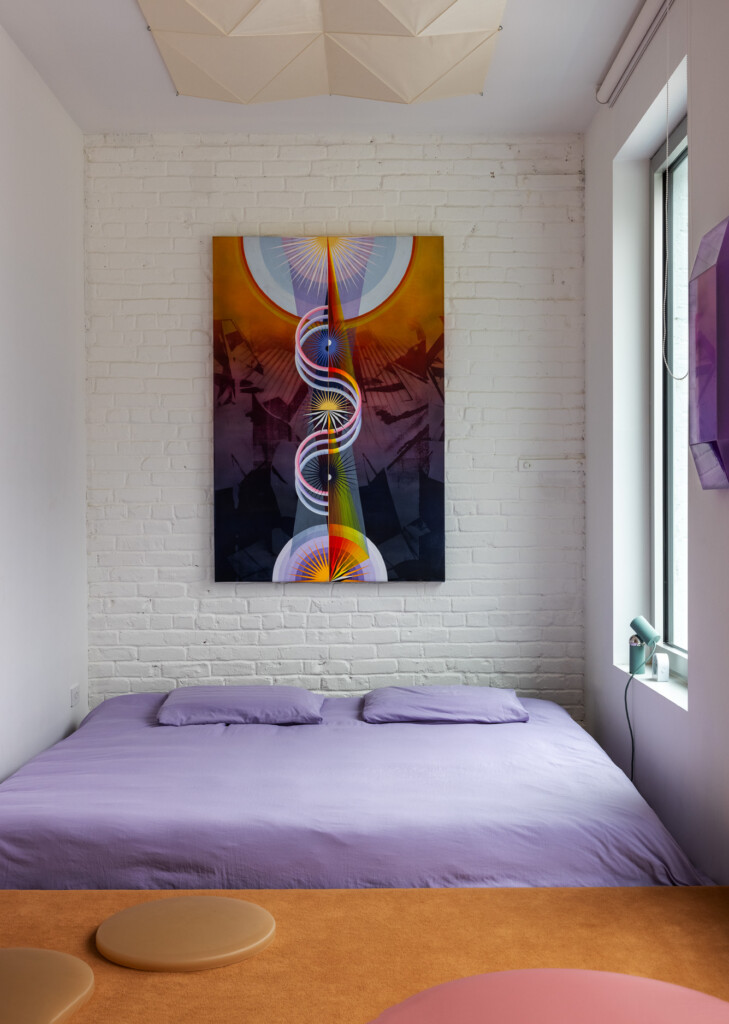
Organized across levels, the house subverts the logic of the traditional townhouse. On the ground floor, where one would typically find a living room overlooking the inner courtyard, the bedroom instead unfolds. A niche with an oversized mattress is paired with an alcove dotted with pastel cushions, reminiscent of oversized candies.
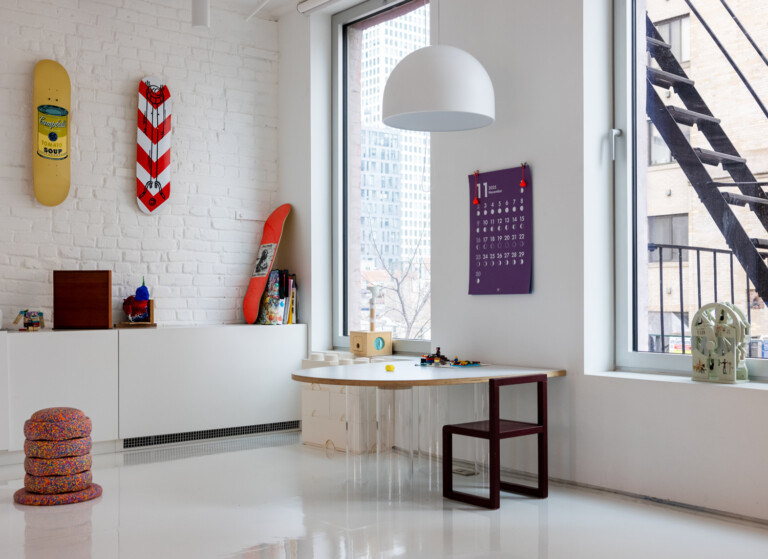
The second floor is the children’s realm, while the top floor—pristine and perched like a tower of light—hosts the kitchen and living area. “The absence of walls makes everything fluid,” adds Trampoukis. “You eat upstairs, you eat downstairs, you sleep in different places. Functions shift, overlap, and exchange.”
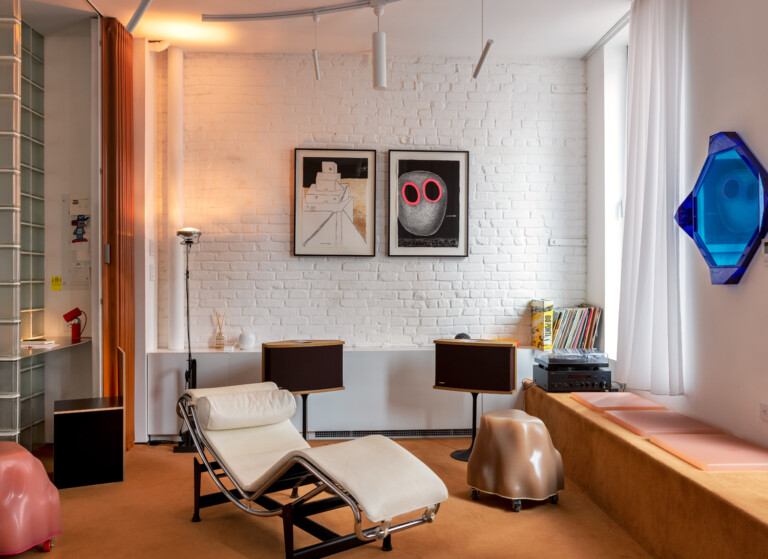
A domestic stage set where the family behind Objects of Common Interest continuously constructs new scenes and arrangements. In this process, light plays a central role: “We use iconic lamps—often by Michael Anastassiades—like actors taking on different roles. They create sequences, counterpoints, pauses. Just switching one on can change the character of the space.” Yet natural light remains the starting point, as one might expect from two architects raised by the Aegean Sea.
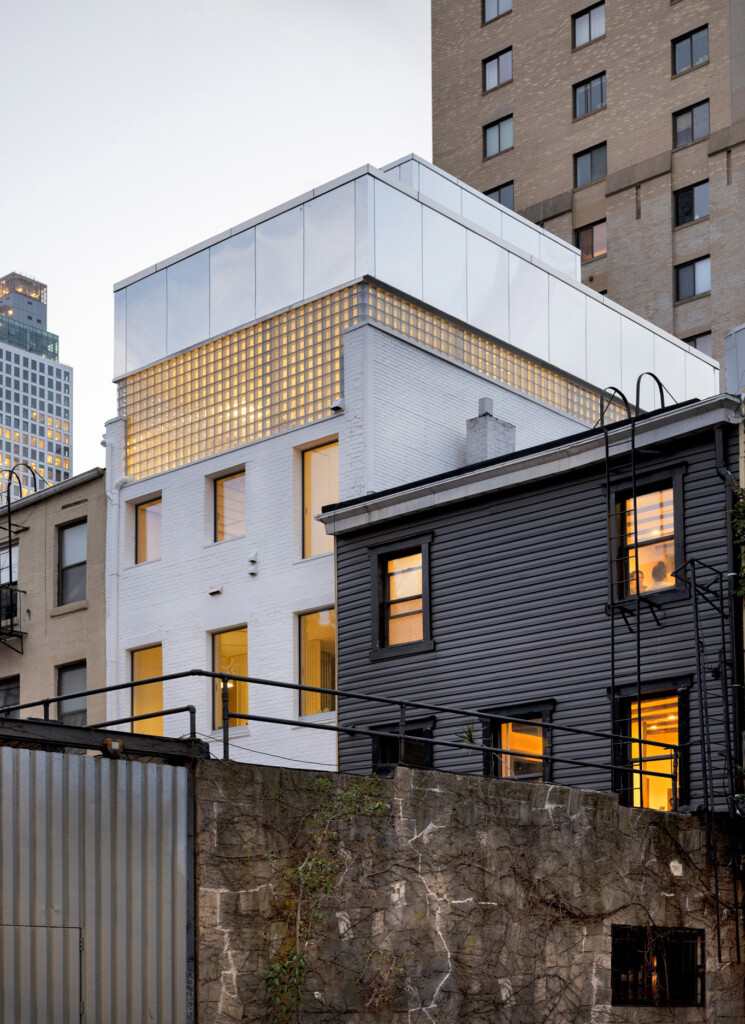
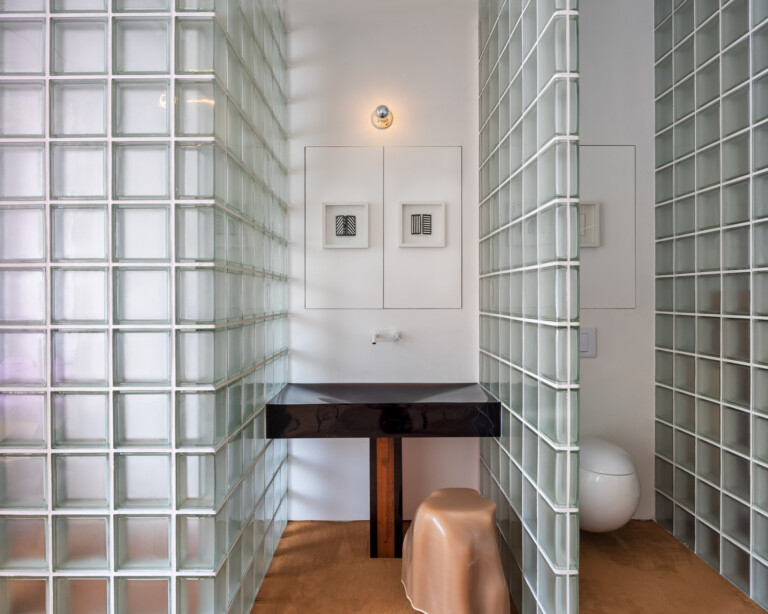
“The roof had to be completely rebuilt, and building regulations allowed us an extra meter in height. That’s where the idea came from—to insert that volume above the band of glass blocks, behind which lies the mezzanine dining area, flooded with light,” they explain. When the interior lights are switched on, the external volume once again transforms into a play of appearances and disappearances. The design duo are masters at orchestrating illusion. By day, this light box acts as a mirror, reflecting the sky and the movement of clouds; by night, it almost vanishes, like a silent presence.
The house is a natural extension of their aesthetic and sensibility: “We’ve been living between Greece and New York for nearly twenty years—nineteen, to be precise. Our studios are there, we travel constantly, and we inhabit two very different realities,” they explain. It is precisely this contrast that generates new short circuits, sparking unexpected reflections.
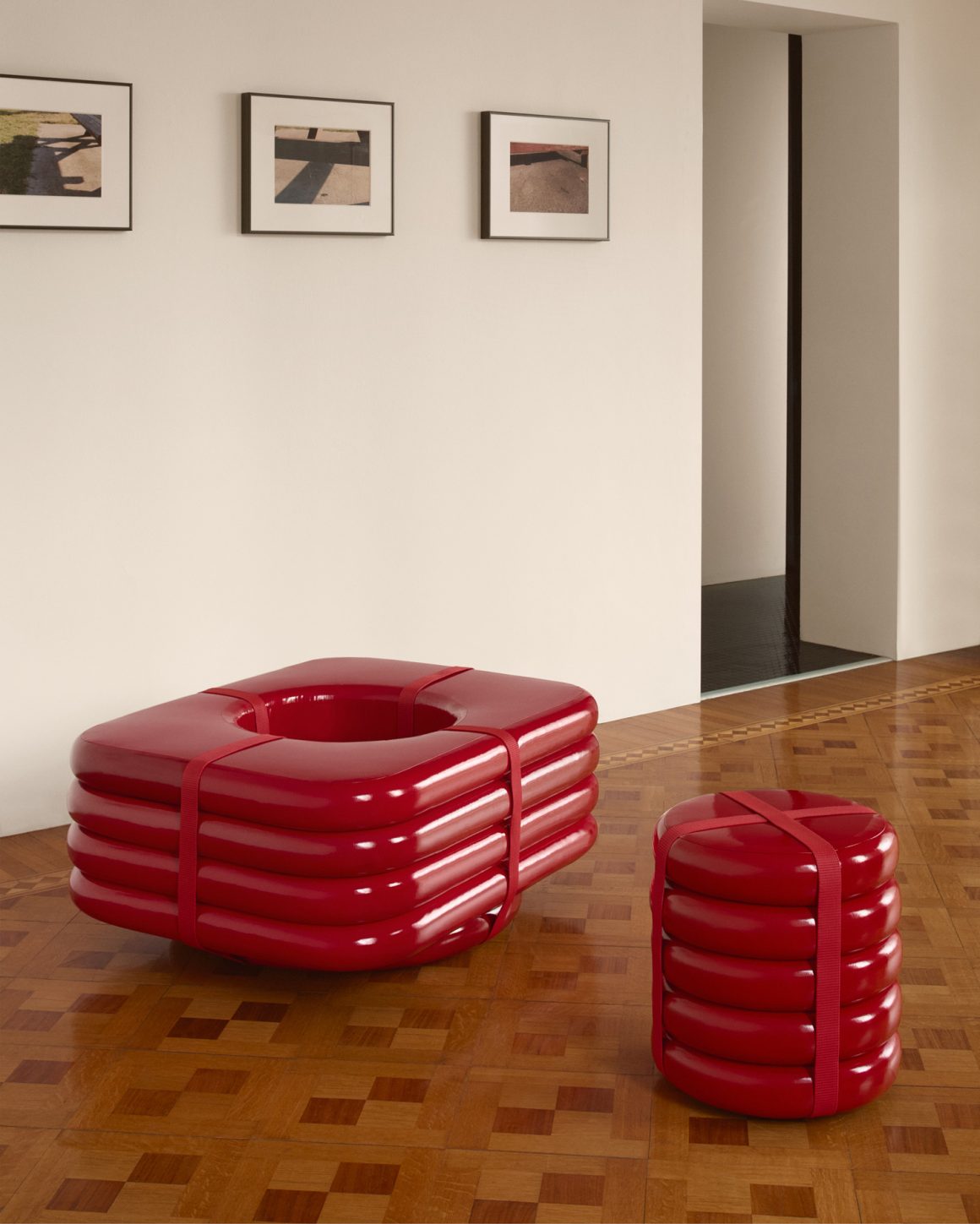
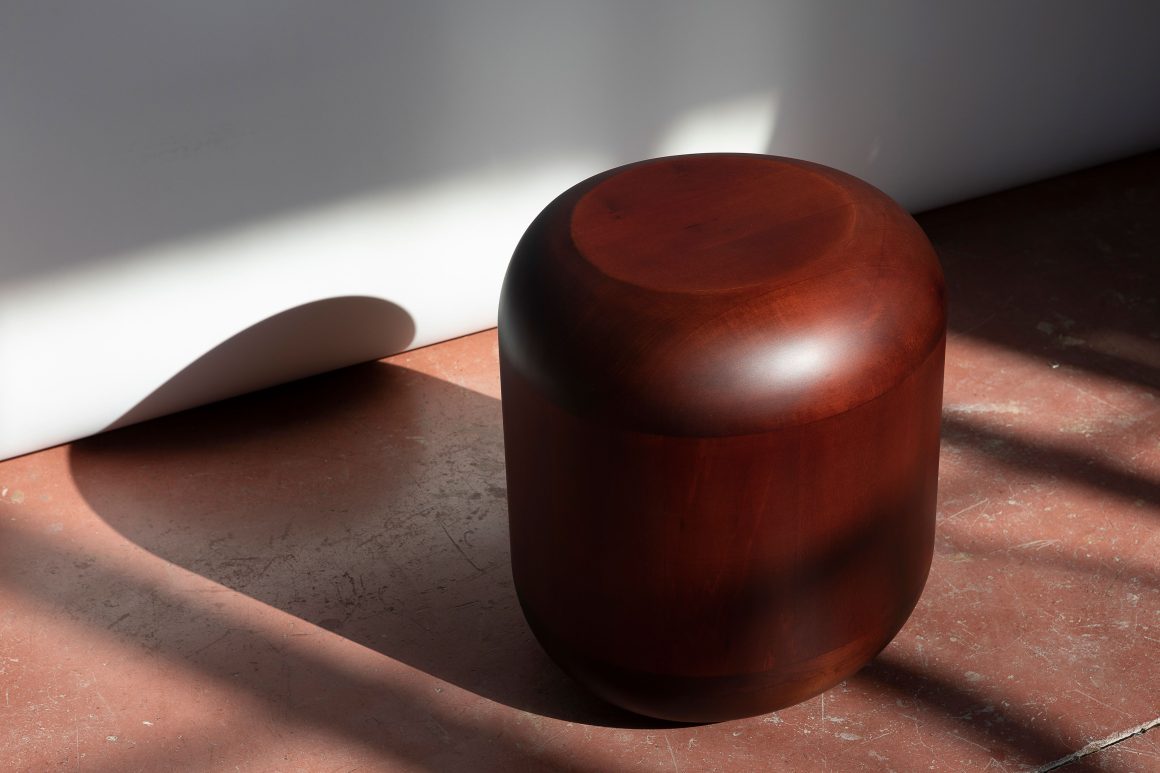
“The name Objects of Common Interest came about during a trip between Chicago and Lake Superior. We were looking for a democratic expression that would allow our objects to speak for themselves, without authorial superstructures,” says Leonidas Trampoukis, as he moves across Metaphoric Rock, the wheeled stool that resembles a soft, gelatinous stone. In this house, it is the first time they have lived freely with their own pieces. “For the children, too, the relationship with objects is completely free. There are no prohibitions, no ‘don’t touch’ rules. When something requires caution, we use a specific expression: one of a kind,” adds Eleni Petaloti. “A volume may appear massive yet be incredibly light; a tiny object can be surprisingly heavy. This perceptual shift—between appearance and reality—shapes the way we inhabit space.”
For the family, there is no single favorite room. Spaces change, just as moments do. But if they had to choose, it would be the children’s area on the second floor. “That’s where we spend most of our time: we play, sit on the floor to eat, talk, they take baths. It’s the true heart of the home—where we experience that there isn’t just one right way to live.”
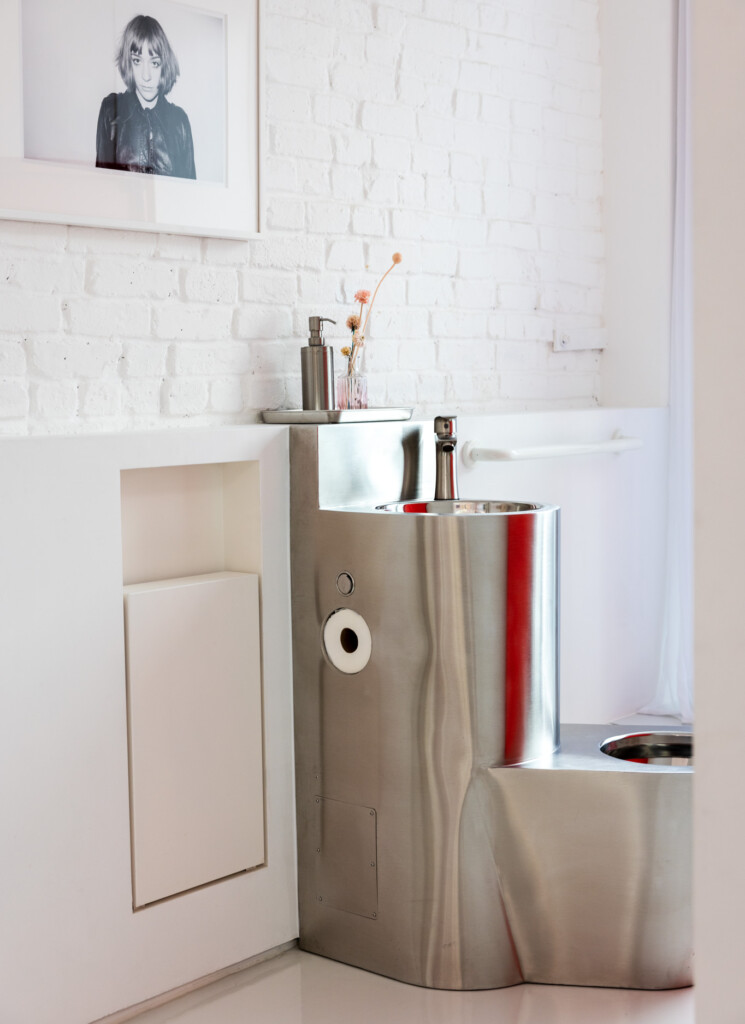
It is perfectly valid to have no bathroom doors, to give up walls, to question what is usually taken for granted. For the duo behind Objects of Common Interest, the house is a continuous exercise—a demonstration that living can be reimagined freely, without preconceptions.
Words Olivia Fincato
Foto Dean Kaufman per Living
@Living
Objects of Common Interest
Projects for Milan Design Week 2026
April 20th–26th