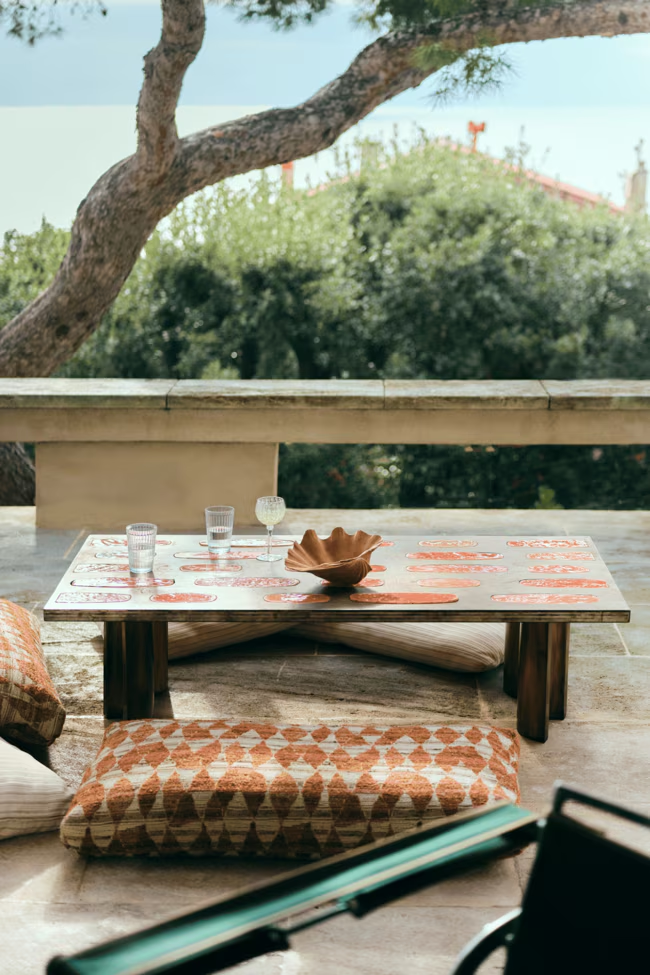
In this expansive family home, the original spirit of the seventies enters into dialogue with a mesmerizing view of the Mediterranean Sea. By working with light, materials, and nature, interior architect Dorothée Delaye has preserved the soul of the space while infusing it with her own distinctive signature.

With sweeping views over the Frioul Islands and Marseille’s harbour, she has created a warm, family home shaped by its natural surroundings. The project reflects Delaye’s approach to blending interior design, architecture, and styling into a cohesive, lived-in space.

Panoramic sea views, sunlight pouring through every window, and a terraced garden with a pool carved into the rock define this remarkable Marseille home. With such a striking setting in the South of France, interior architect and designer Dorothée Delaye explains that “the site guided almost every decision.”

“The openings towards the sea, the choice of natural materials, the palette of earthy and marine tones, and the fluid connection between interior and exterior spaces,” she notes. “It’s a home immersed in light and landscape—something we approached with subtlety and respect.”

Perched above the Corniche Kennedy in Marseille’s Roucas Blanc district, the house is surrounded by a landscape that feels both Mediterranean and almost tropical, rich with lush vegetation, parakeets, and wild ducks. Originally built in the 1930s as a shipowner’s residence, it was later expanded in the 1970s by a local architect, introducing modernist elements inspired by the Mediterranean villas of that era.

Spanning over 250 square metres across multiple levels, the home offers generous living spaces, including five bedrooms, three bathrooms, an open-plan living and dining area, a kitchen that extends դեպի the outdoors, and a series of terraced levels that enhance its connection to the landscape.

Delaye was tasked with restoring a sense of unity to a home that had lost its coherence through earlier, less considered renovations. “Some interventions in the 2000s didn’t align with the original character,” she explains. “We approached the project room by room—rebalancing proportions, reusing period materials, and ensuring fluid transitions between spaces.”

Original elements were either reintroduced or carefully reinterpreted, including travertine surfaces, custom wooden joinery, natural plasters, and furniture with a modernist sensibility. The aim was to create an interior that feels timeless—one that appears as though it has always existed, while remaining faithful to the spirit of the original architecture.


Oak-framed windows, stone flooring, and modernist geometry became key elements in preserving the home’s character while adapting it to contemporary living—striking a balance between functionality and a strong visual identity.

Using a palette inspired by minerals and sun-warmed surfaces—travertine, warm woods, terracotta pinks, Alicante marble, and chalky whites—the intention was to shape a timeless, light-filled environment where indoor and outdoor living blend effortlessly throughout the year.

For Dorothée Delaye—interior architect, designer, and founder of her own studio and furniture line presented at Invisible Collection—shaping her own home was both a rewarding and demanding process.

“My home is the result of years of projects, experiences, and accumulated inspirations,” she explains. “Each project I’ve worked on has influenced my choices—sometimes consciously, sometimes intuitively. This house is a personal synthesis, carefully composed, where I was able to express a more intimate vision while still upholding the rigor and clarity of a well-resolved project.”

ncorporating pieces from her own collections—such as the Santa Anna glass paste table—alongside distinctive elements like hand-sewn Élitis curtains and Ponant bedside tables, Dorothée Delaye also curated an impressive art collection, with a focus on Mediterranean photographers and artists. Her intention was for each element to “engage with the space without overwhelming it.”

Soft, rosy light moves across the travertine surfaces, while the Frioul Islands and Marseille’s harbour shimmer in the distance, placing the home delicately between nature and architecture. The result is a deeply balanced composition—a residence that feels both warm and contemporary, yet firmly anchored in its surrounding landscape, as Delaye concludes.

Photography  Pauline Chardin

Author