First, tell us about the highlights of your journey. What were the key steps that brought you to where you are today?
Simply put? The pivotal moment was my decision to devote myself entirely to my art and leave the world of branding behind.
At the same time, there were many circumstances, some small, some significant. Some initially seemed completely random, but as we know, nothing truly is. Collaborations that each added a small stone to my artistic path. Solo and group exhibitions. Starting with the very first one at the beginning of my artistic journey, before I even had my own studio, in June 2014, at the DEPAM in Mykonos, alongside four other artists.
After that, things quickly gained momentum. First came Galleria Spigolo in Koufonisi, with Francesca Consolati, who believed in my work from the very beginning and continues to present it consistently to an international audience. Then Sealed Earth, through its inspiring workshops and exhibitions, and later Big Blue Dot in 2022 in Koufonisi, a ceramic residency during which we created sculptural works referencing Keros and the Early Cycladic civilization. The pieces were exhibited along the island’s beaches.
There is also my exceptional collaboration with the Benaki Museum shop, which is a true honor and continues very successfully. My inclusion in Homo Faber by the Michelangelo Foundation was another important milestone but above all, it is my commitment to creating what I see through my own artistic filter that defines me.
The story of discovering a creative path in ceramics: how was the first idea born and how did it evolve over time?
Painting and drawing were always part of my life. At Vakalo Art & Design College, beyond Design, engagement with fine arts and the visual field was essential for graduation. So I never abandoned painting or drawing, even while living abroad.
In 2008, while actively working in branding and running my company Milk in Athens, I decided to dedicate more time to what I truly loved and chose ceramics. At that time, it was very difficult to find a workshop to study the craft, it wasn’t as widespread or fashionable as it is today. My instinct led me to the studio of Andreas Katsilieris, beside whom I was initiated into this ancient yet deeply captivating art.
Ceramics is an art that encompasses all arts, that’s how I describe it. Katsilieris is an exceptional teacher for many reasons, but most importantly because he was never paternalistic. He never imposed his influence on me. On the contrary, he allowed me to unfold everything I carried within, supporting me with his knowledge. That is what I value most. I owe him the fact that I found my artistic voice immediately and did not wander, wasting time in seas that were not my own.
It seems you truly enjoy creating your works, almost like a child playing and experimenting with new toys. Is that how it feels?
I feel the joy and eagerness of creation that we had as children, when we wanted to recreate whatever our imagination generated. Imagination is one of the truest things we possess. It materializes first, it forms the image we then follow.
I love that gallop of childlike imagination. Everything is real, everything is possible. Everything makes sense and at any moment, everything can change.
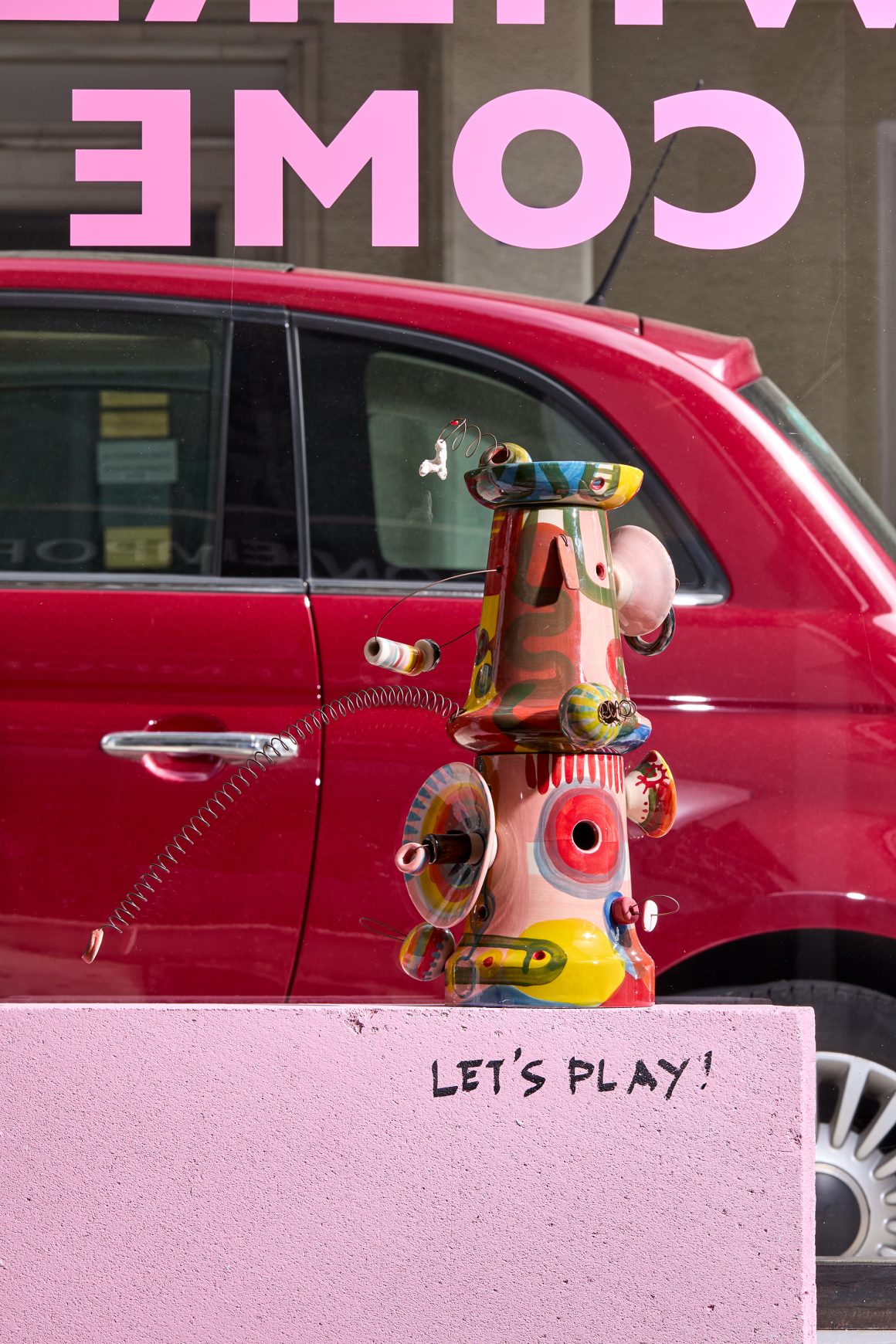
Yes, it is through that filter that I create. That is why I call it play. The concept of play is misunderstood today, often associated with idleness or wasted time. On the contrary, it is a very serious matter. Through play, we connect with the here and now. We allow our soul to guide us toward joy and pleasure. Through it, we imagine our world. We create new universes. Through it, we define our boundaries, make choices, and live in alignment with our truth.
I had seen your works at the Ceramic Biennale in Santorini and was mesmerized. I observed them for hours, as if they had incredible stories to tell. Tell us about the storytelling behind your creations.
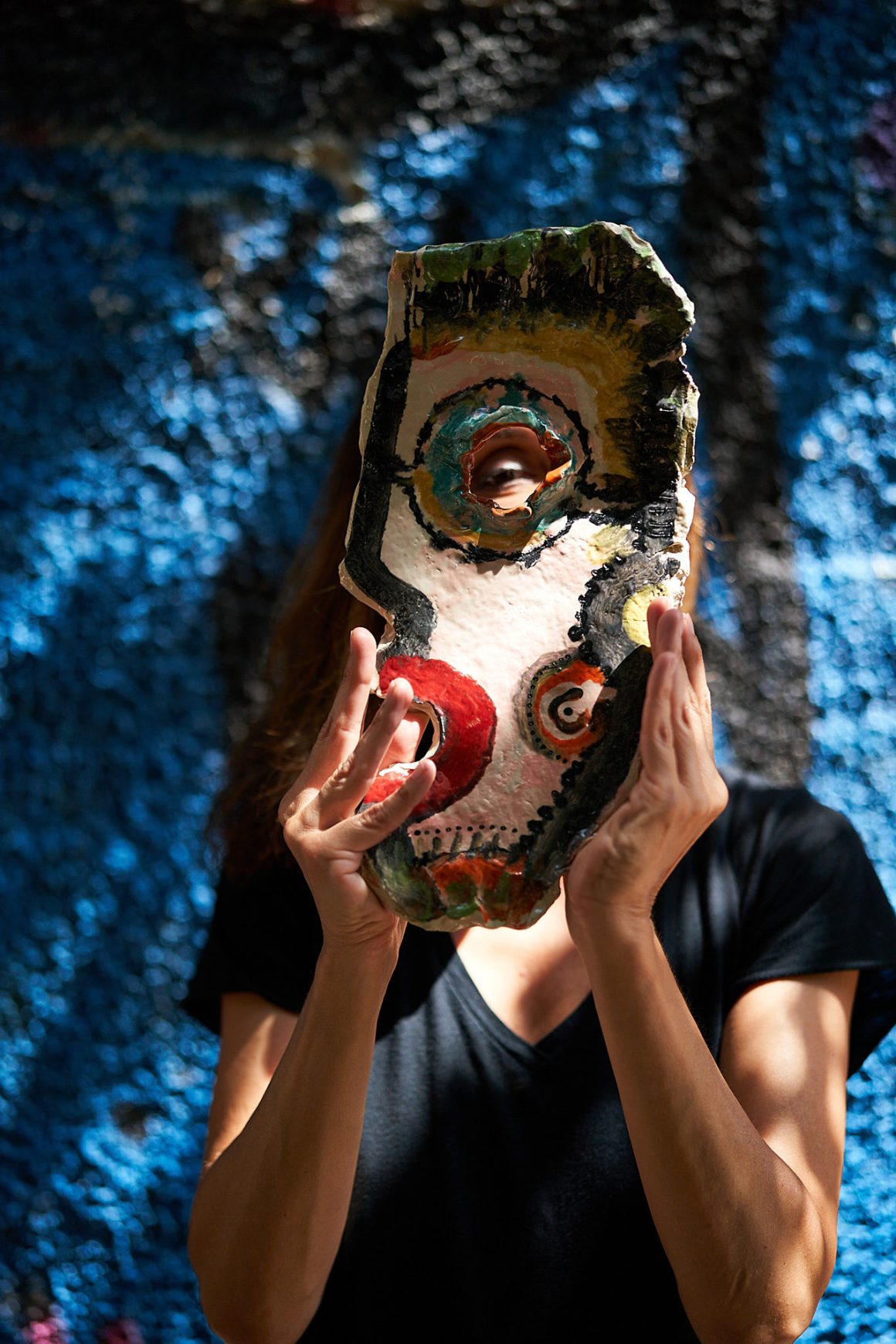
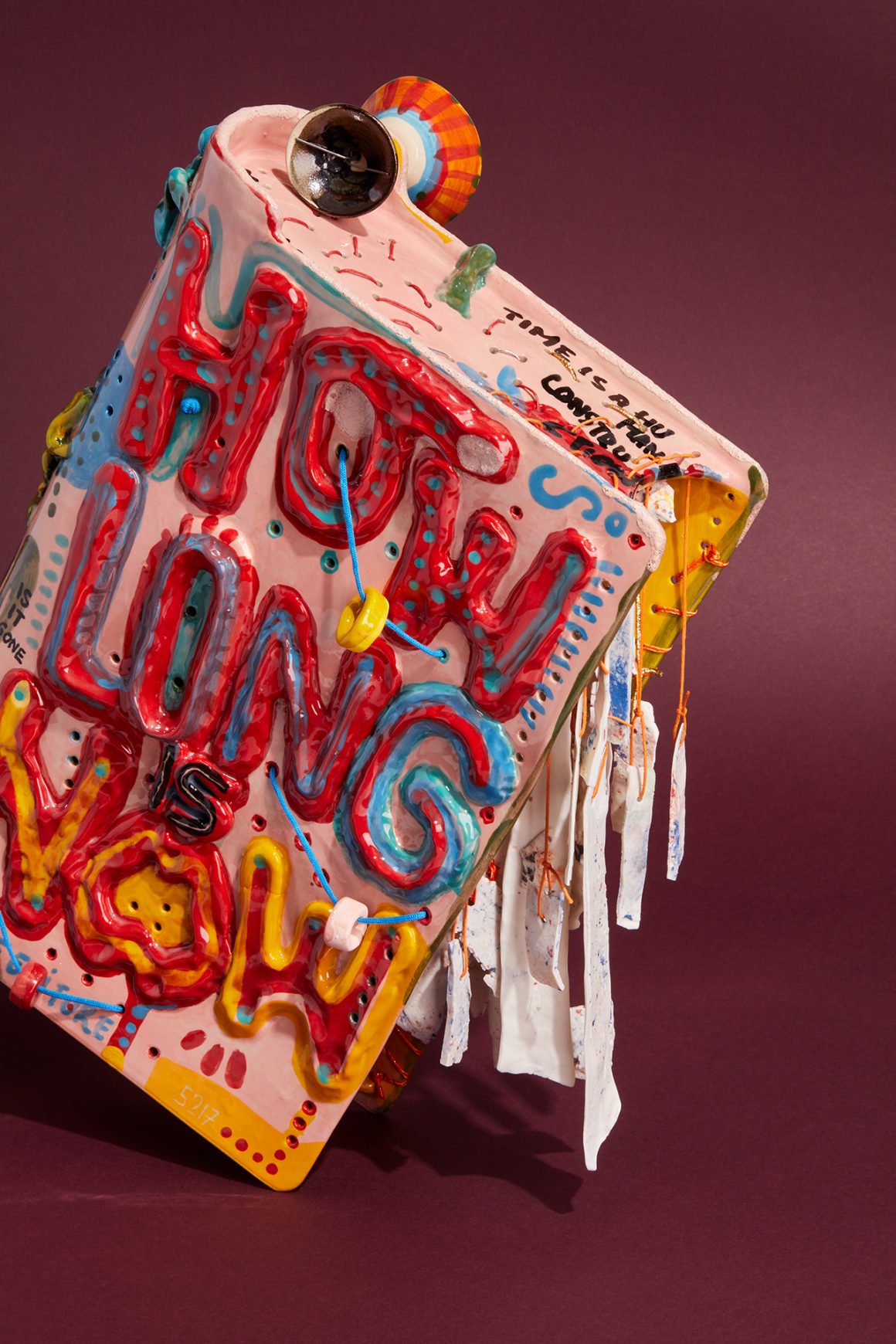
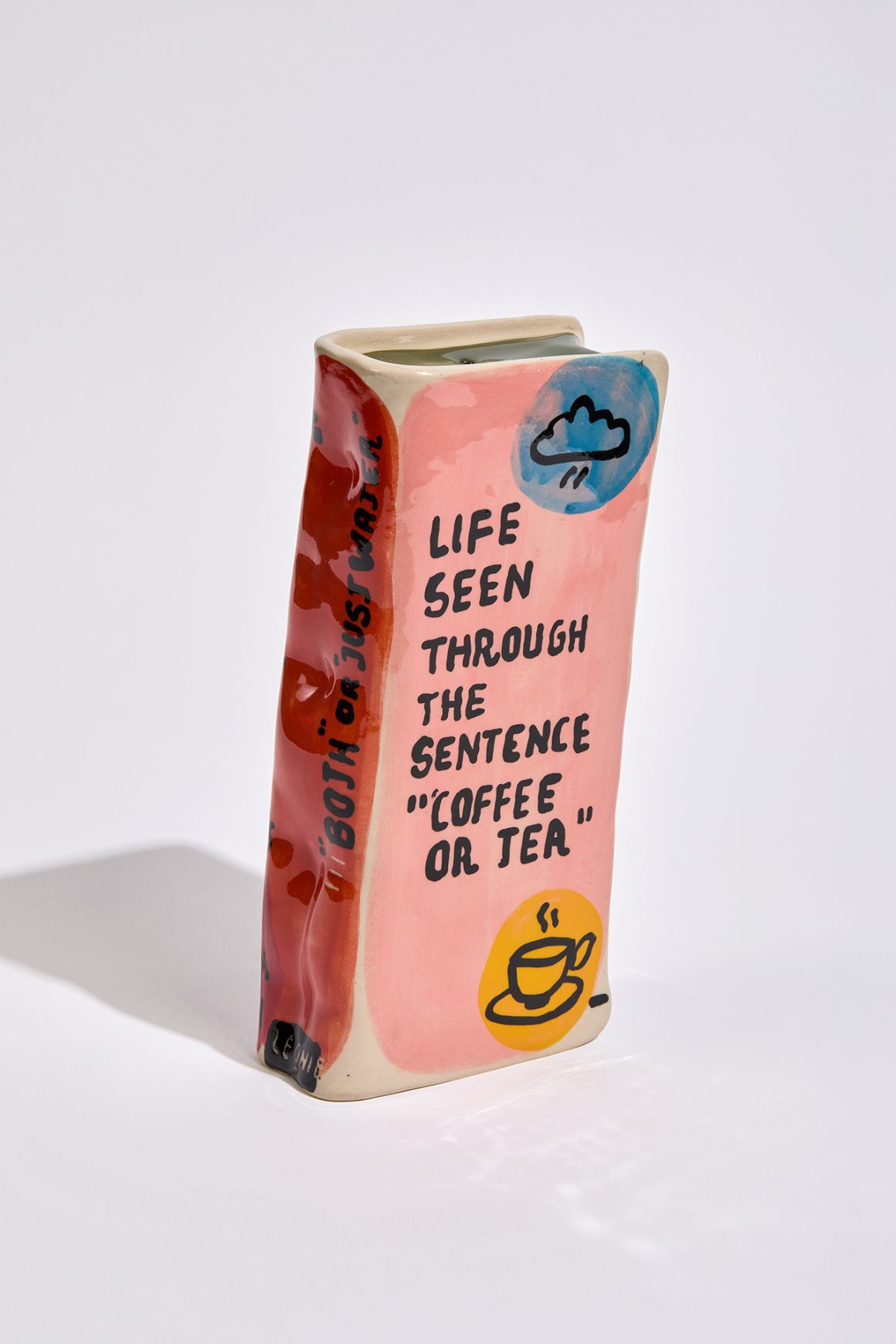
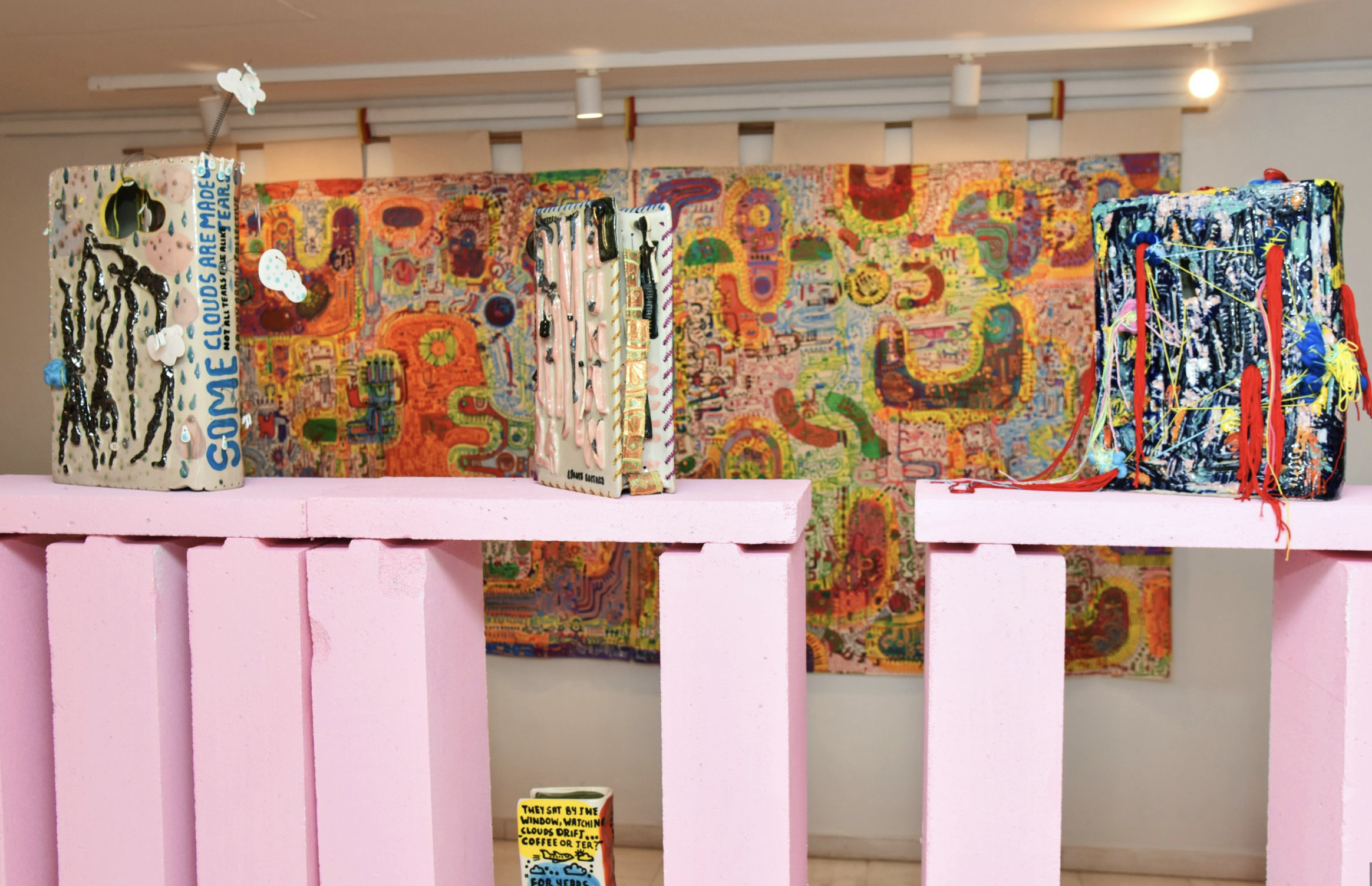
My intention, always through my art and especially through the books, is to “shake” the viewer a little. To nudge them, surprise them, catch them off guard, and move them away from literal interpretation (which is precisely why I chose the book as an object). I want the viewer to be compelled to connect with their imagination and inner world. To create their own story. To narrate it in their own words. To enter a world of their own.
The ceramic books, precisely because their function is inherently cancelled by the material of clay, make this happen more immediately and more intensely.
I begin with a theme that concerns me and give it a title, while simultaneously creating the sculptural book as it guides me. A note: I never sketch beforehand on paper, nor do I work with a maquette. I avoid this for one simple reason because the moment I do, I return to the rational mind and limit myself.
In what way do you feel your aesthetic evolves over time?
To be honest, I don’t separate aesthetics from the work itself. I create because I want to communicate. Aesthetics is not an end in itself; it is part of the creative process, it forms the language, the code, the discourse.
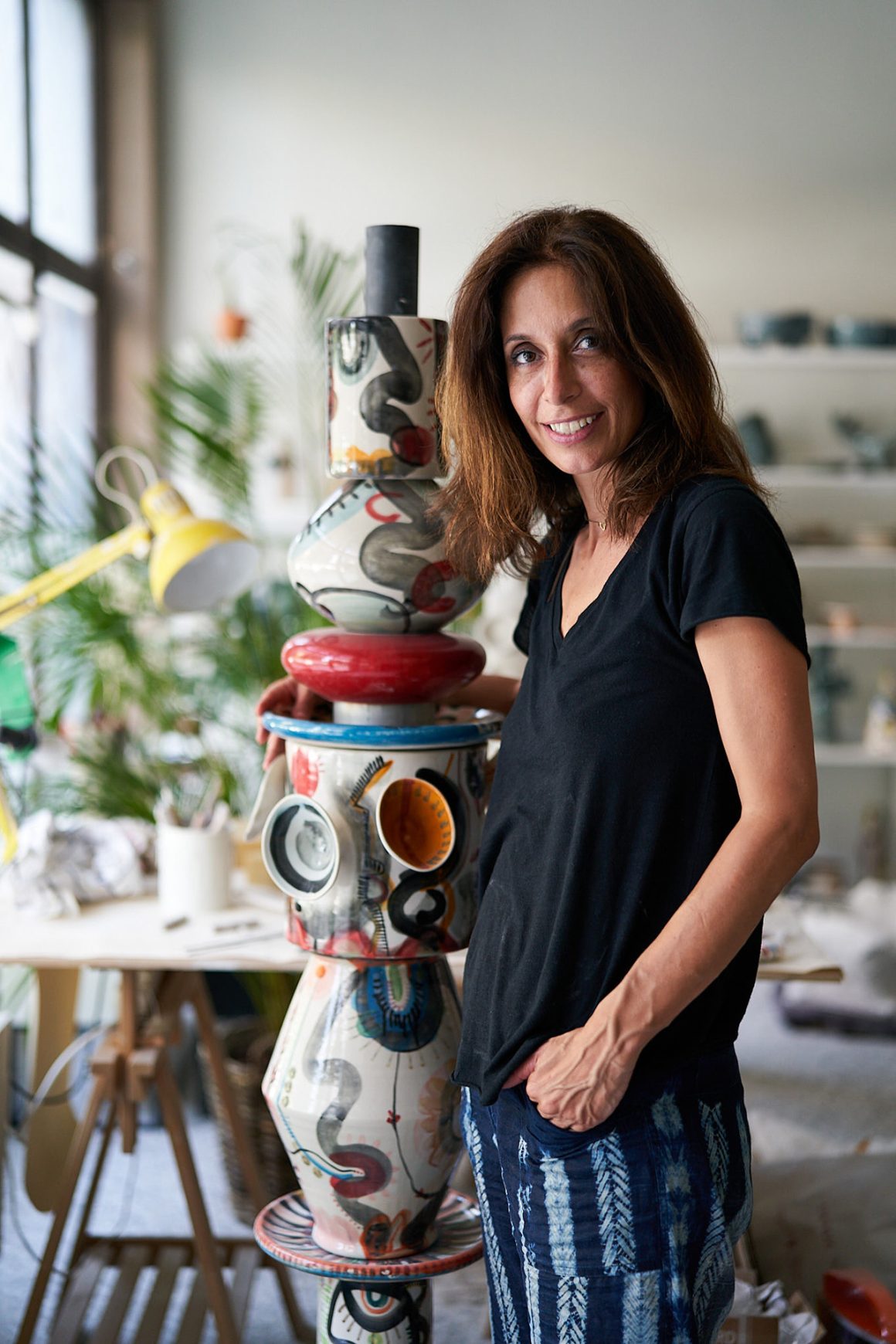
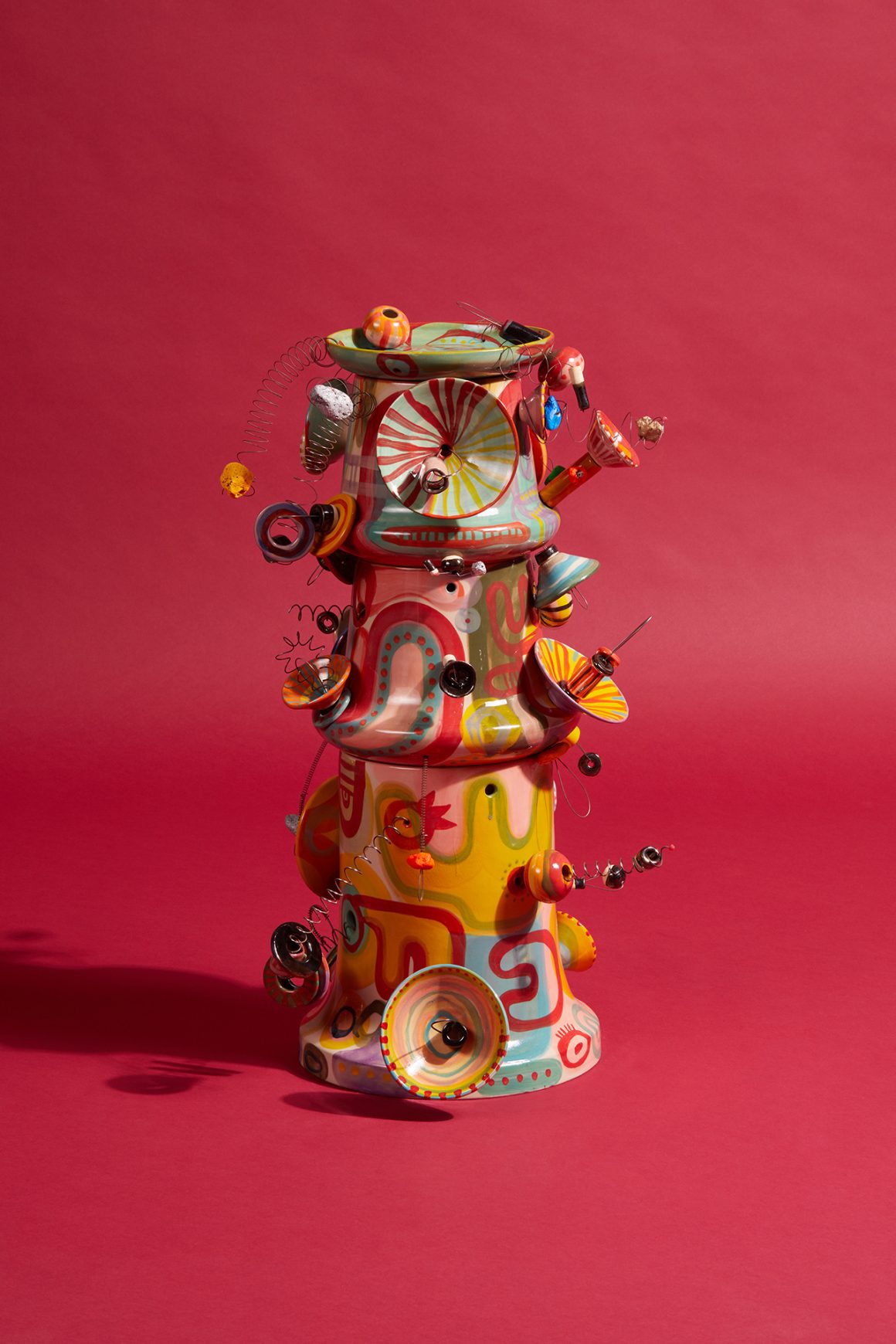
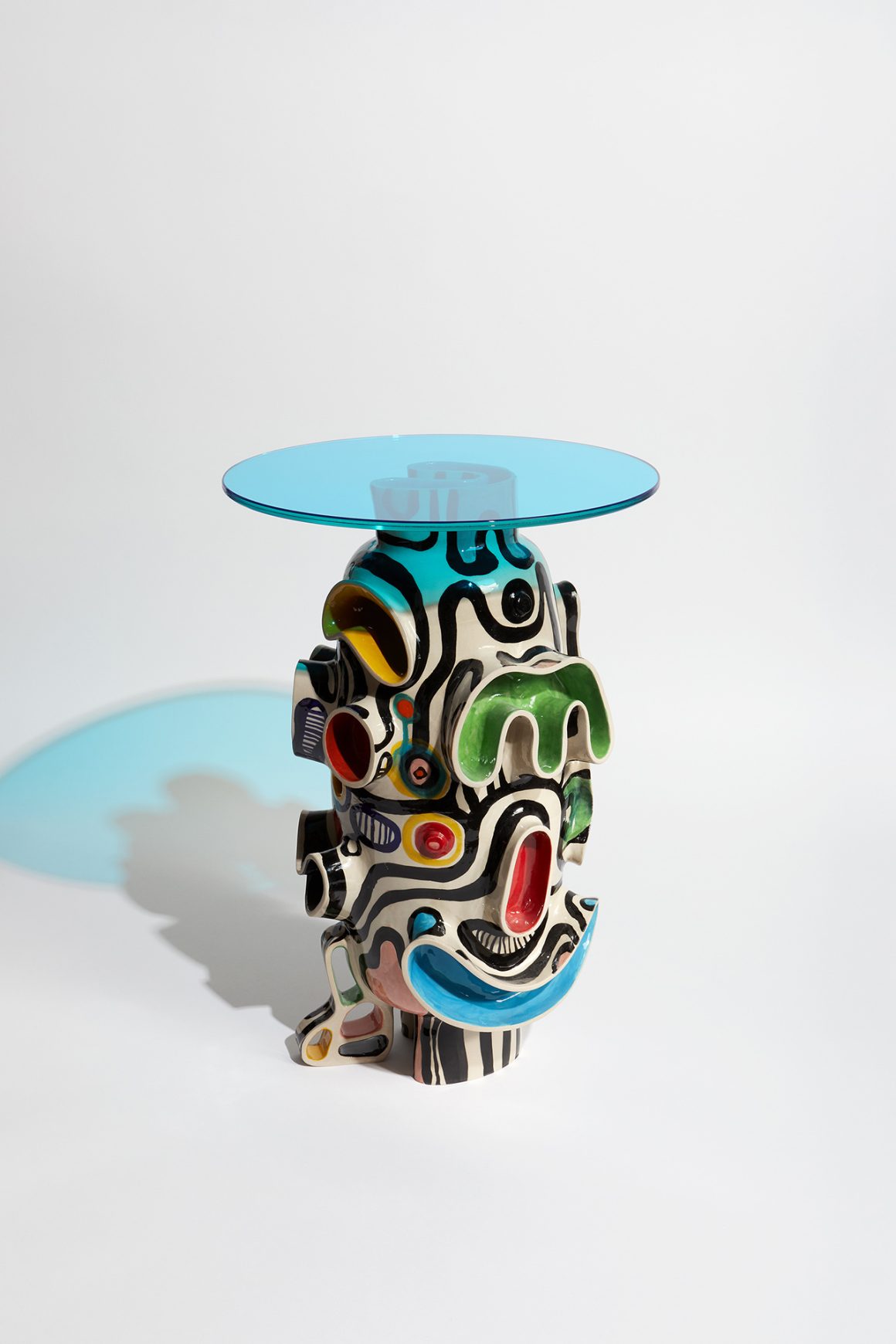
Most, if not all, of my works carry strong sculptural elements. I do not simply create traditional ceramic objects. I create through ceramics. Ceramics is the medium, not the message.
What do you consider your most important achievements?
The decision to devote myself exclusively to my art after 26 years in the corporate world. And the fact that I trusted my instinct and allowed it to guide me.
What and who helps you move forward?
My close circle, my chosen family, my beloved friends those I love most. But also, oddly enough, those who tried to place obstacles in my path. Those who were disappointed by my choices and, with great effort and energy, attempted to hold me back. Unfortunately for them, they failed. Fortunately for me.
Tell us about your solo exhibition. What does it include and what does it seek to communicate to the public?
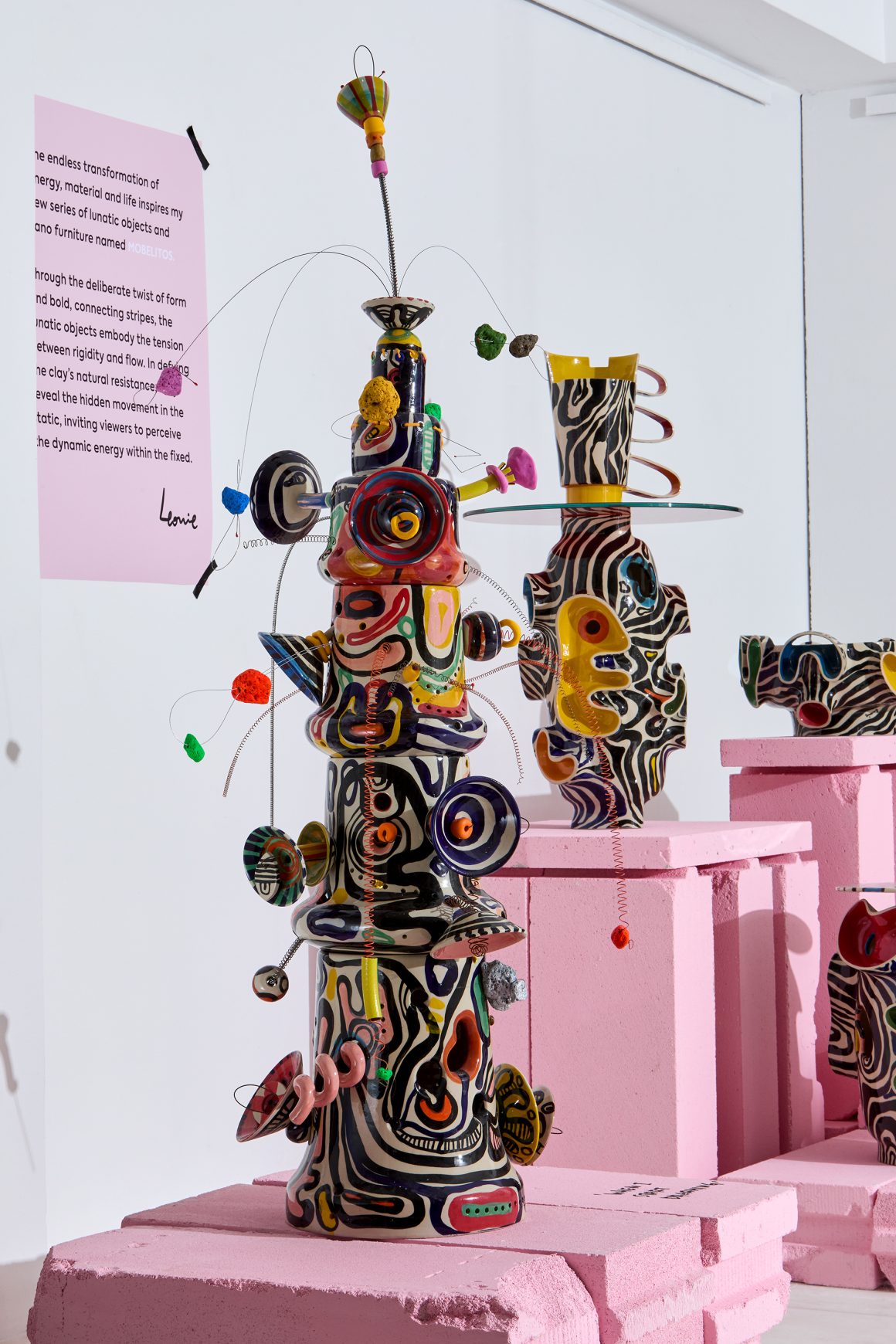
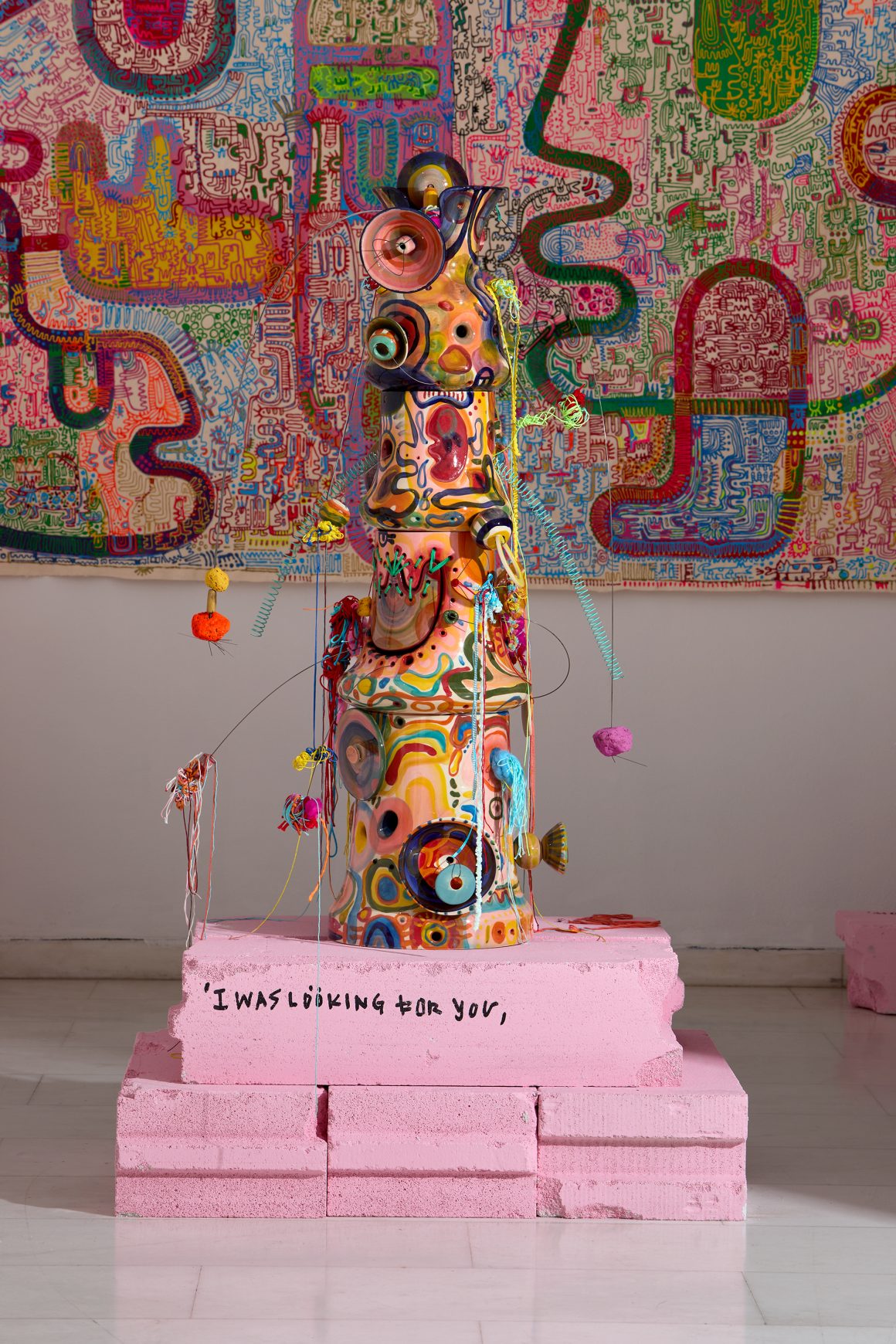
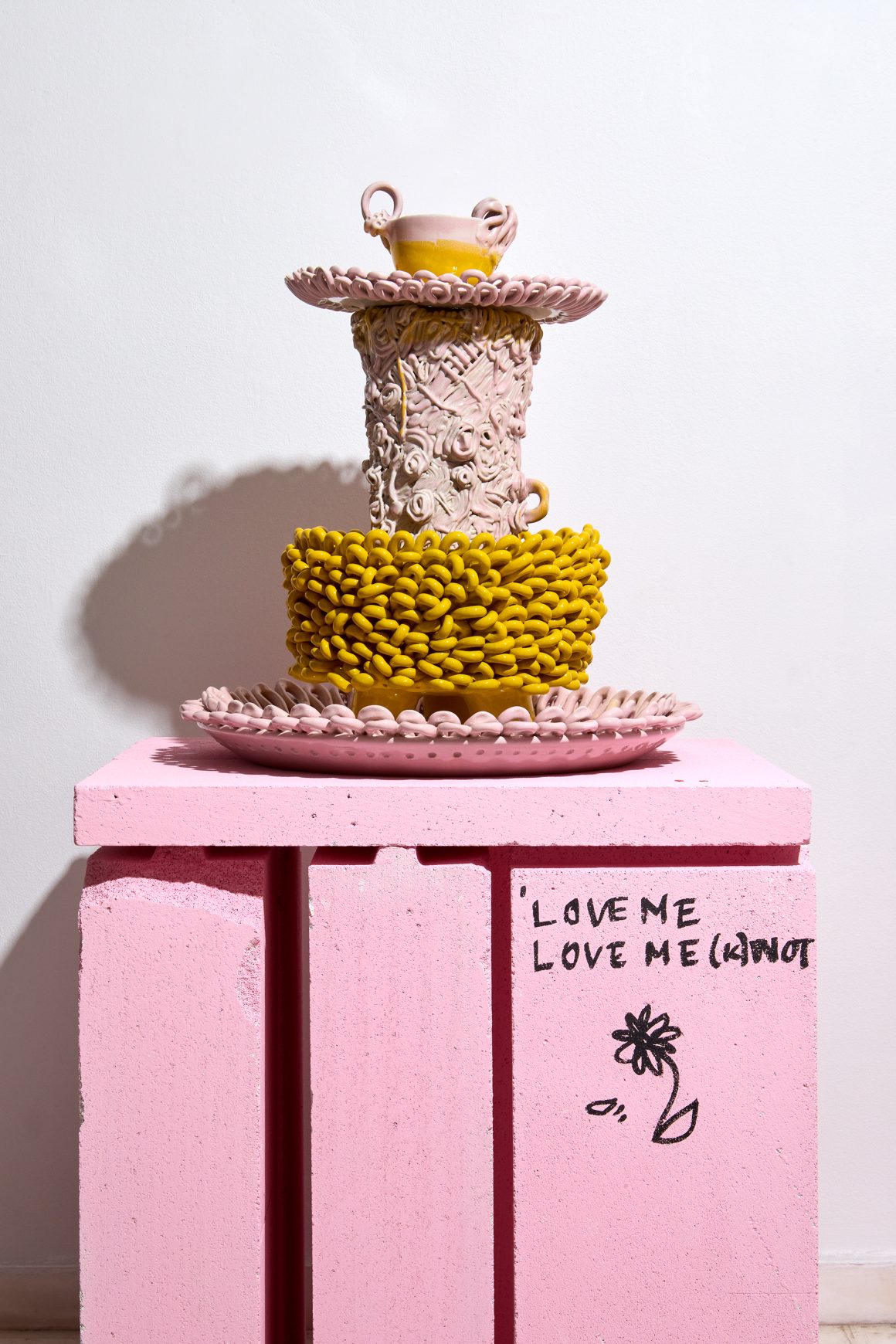
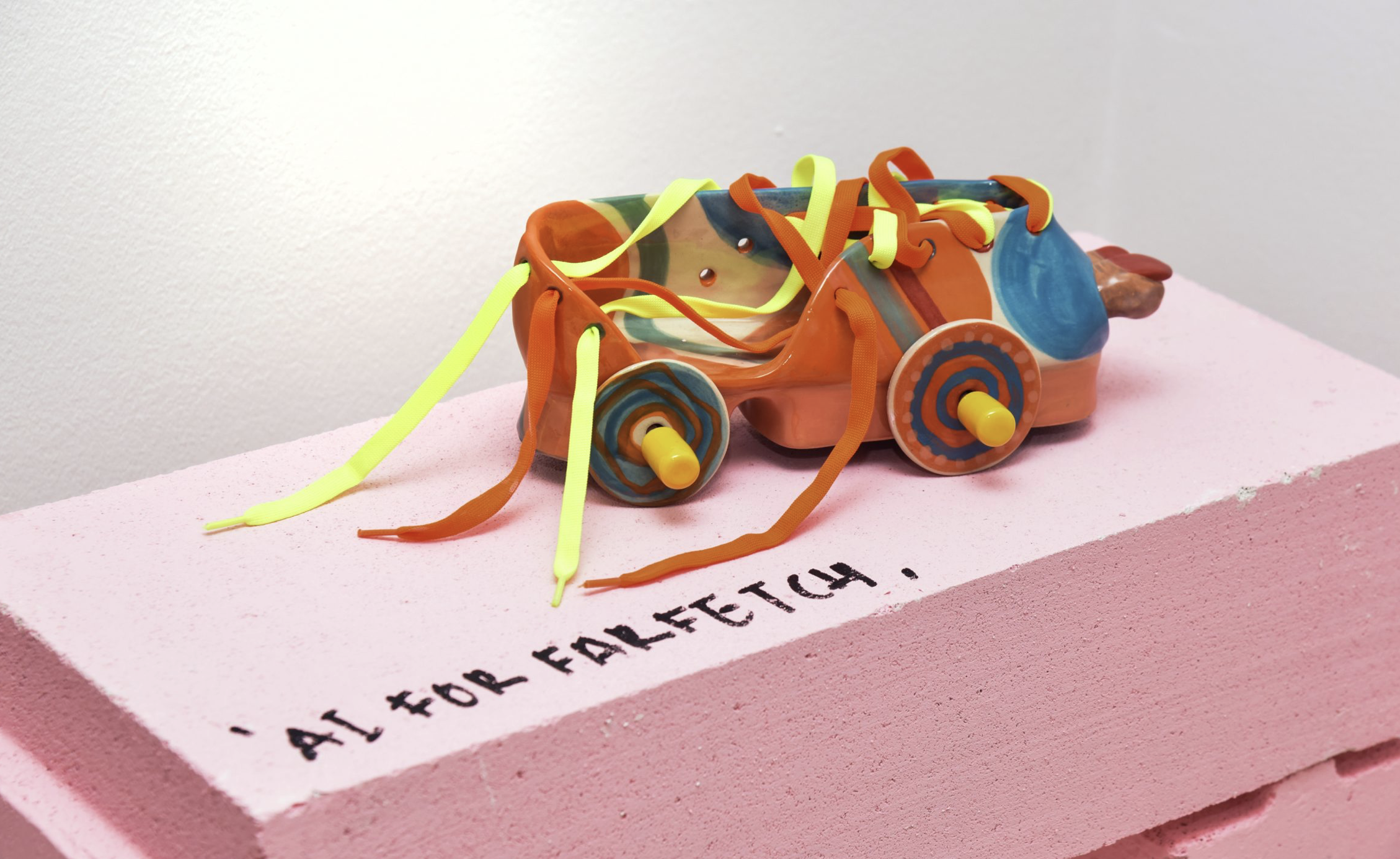
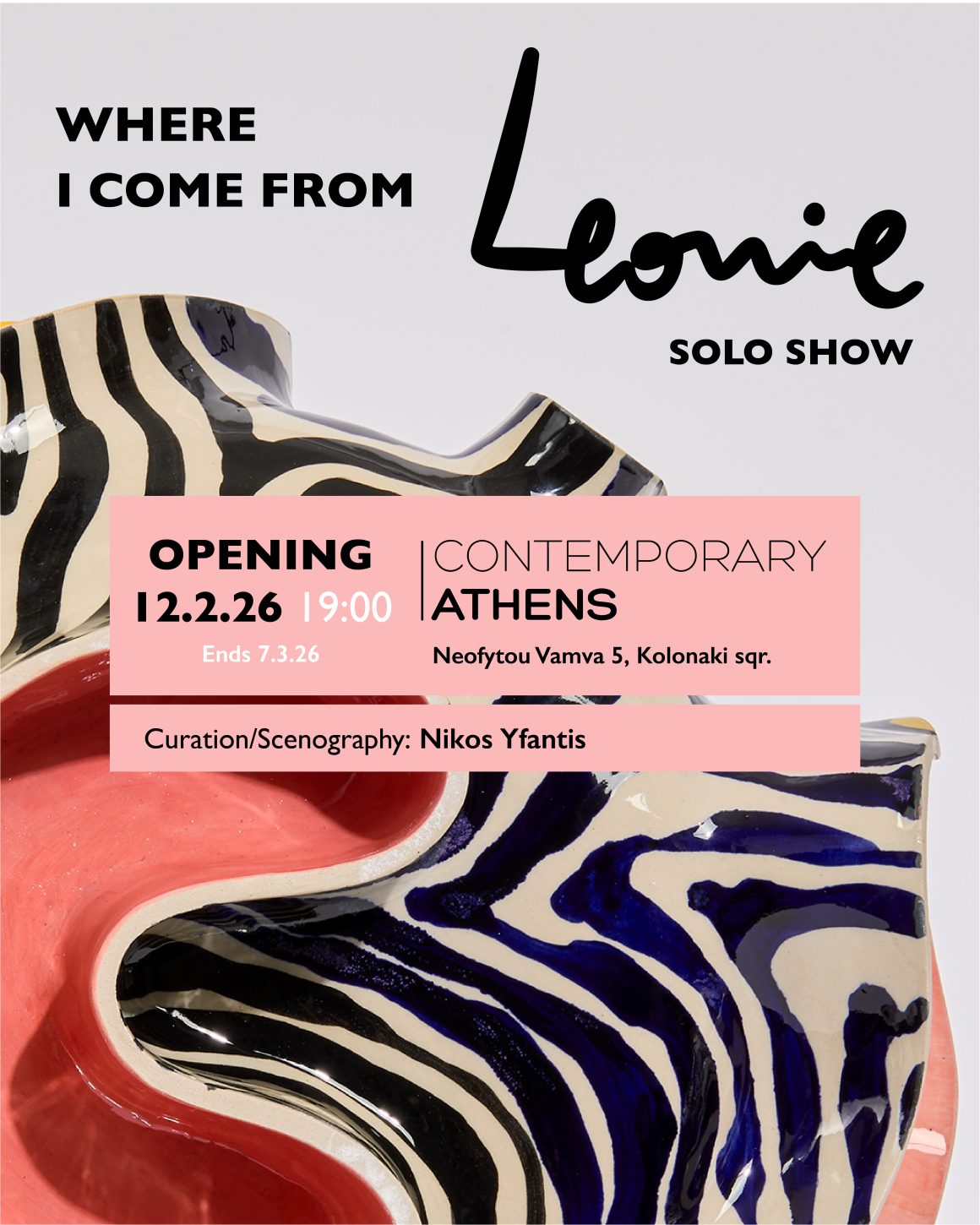
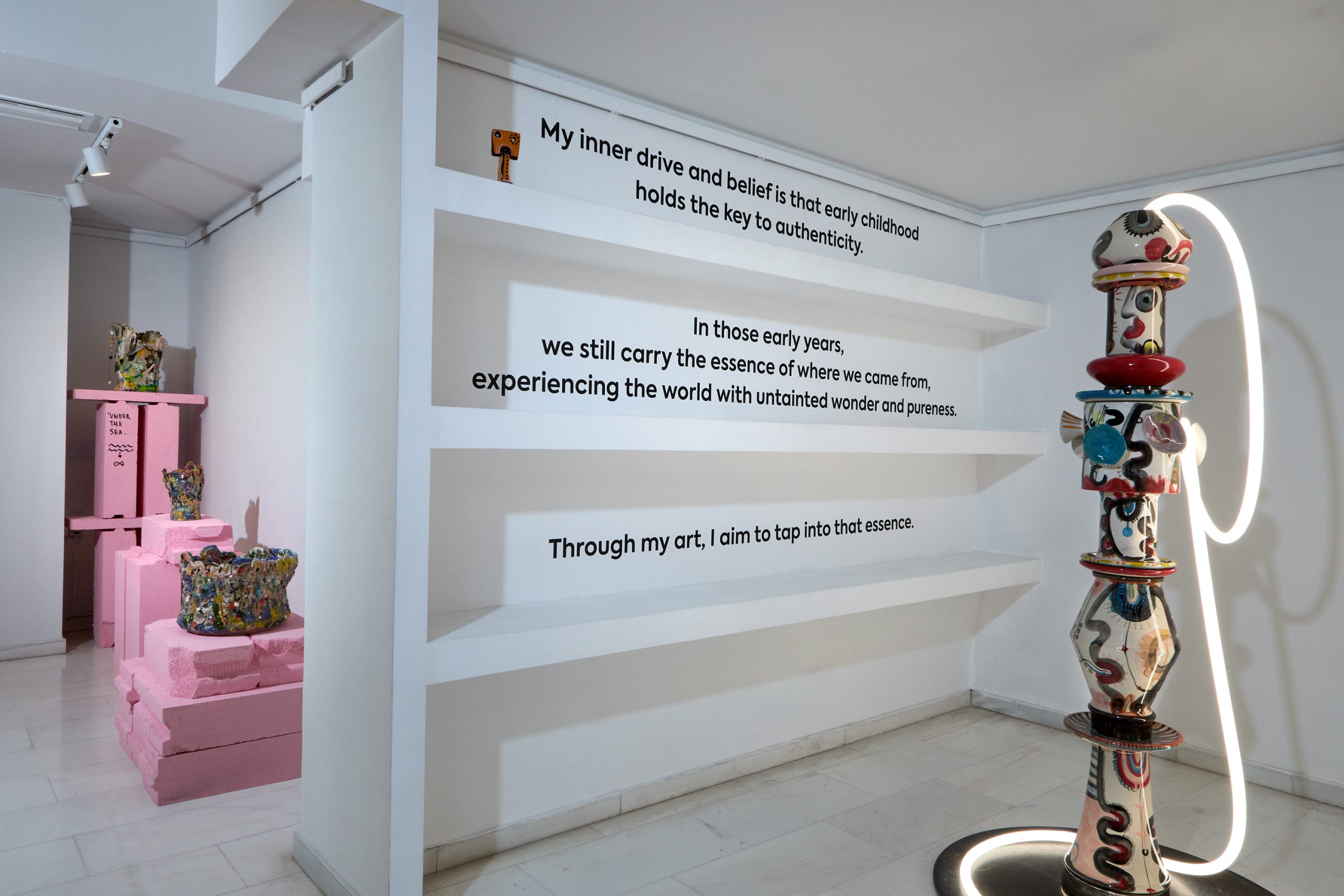
My solo exhibition titled “Where I Come From” opened on February 12, 2026, at Contemporary Gallery in Kolonaki (5 Neofytou Vamva Street) and runs until March 7. It was curated with exceptional sensitivity by Nikos Yfantis something not only I believe, but something visitors spontaneously express.
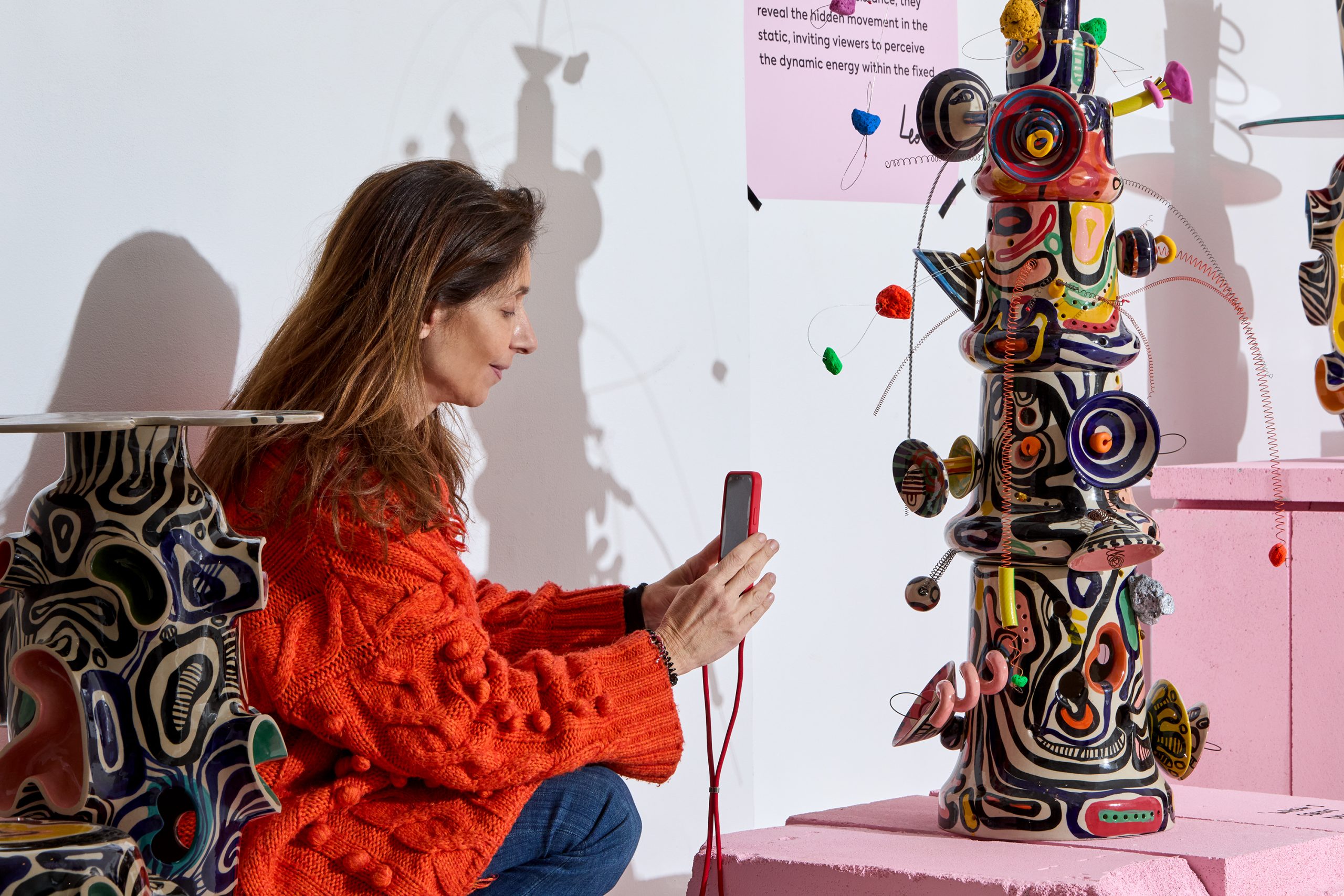
I think the inventive installation of the works gave the narrative a unique character, very much “Leonie-like” and introduced an element of surprise. Although the exhibition is not thematically singular, the curation allows it to function as a cohesive whole.
I trusted Nikos completely, not only because I know the quality of his work from previous exhibitions, but also because we share exceptional creative chemistry.
The exhibition includes works from different “lives” and internal “places” of mine, experiences and archives that surfaced consciously through the occasion of this show.
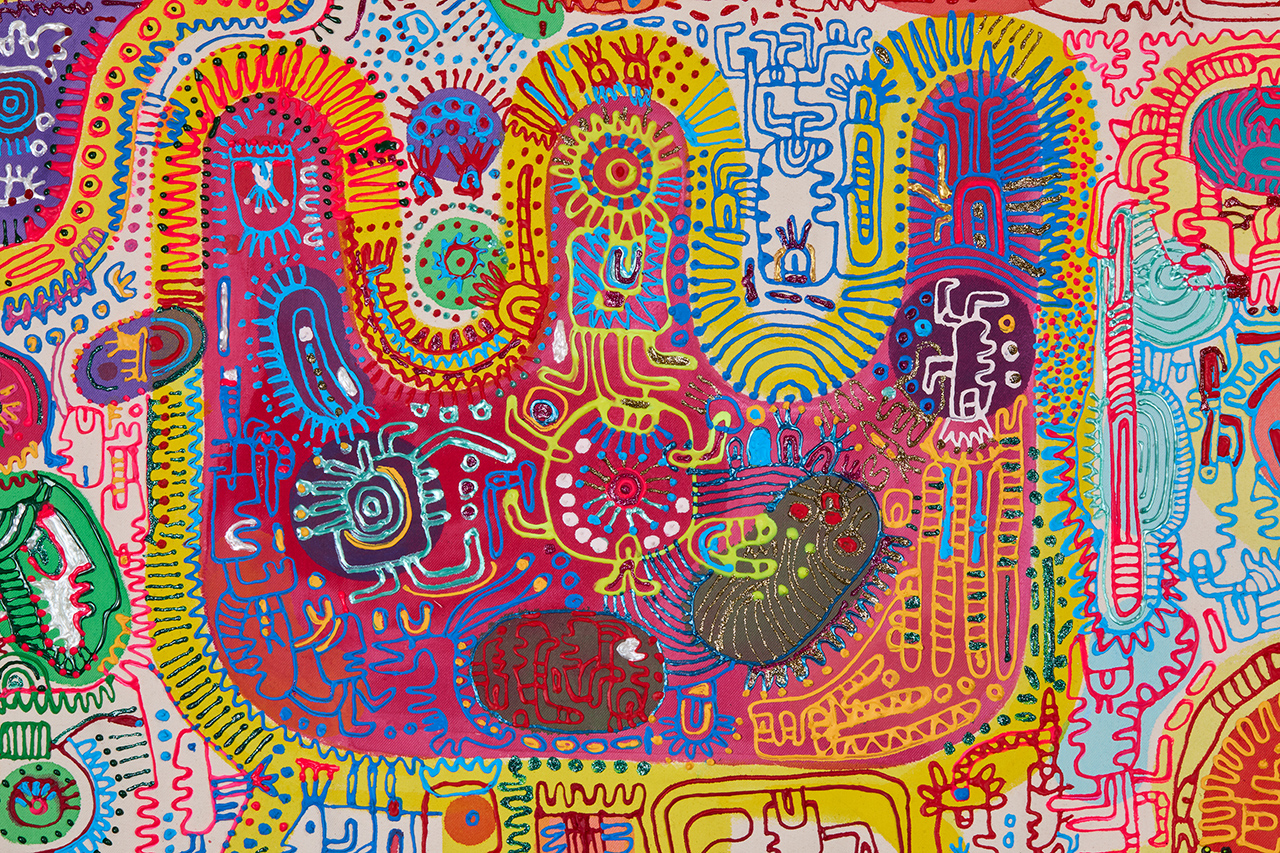
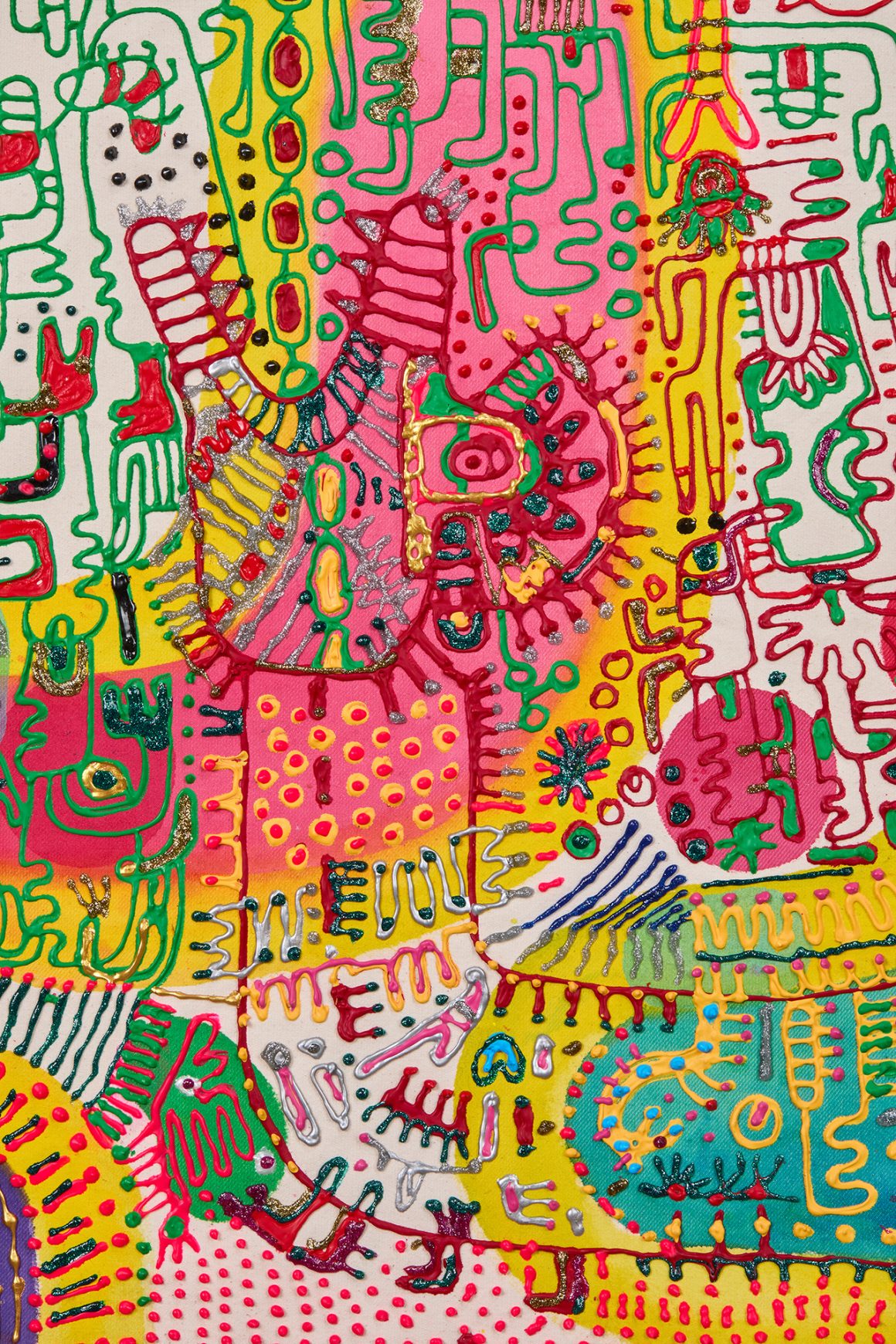
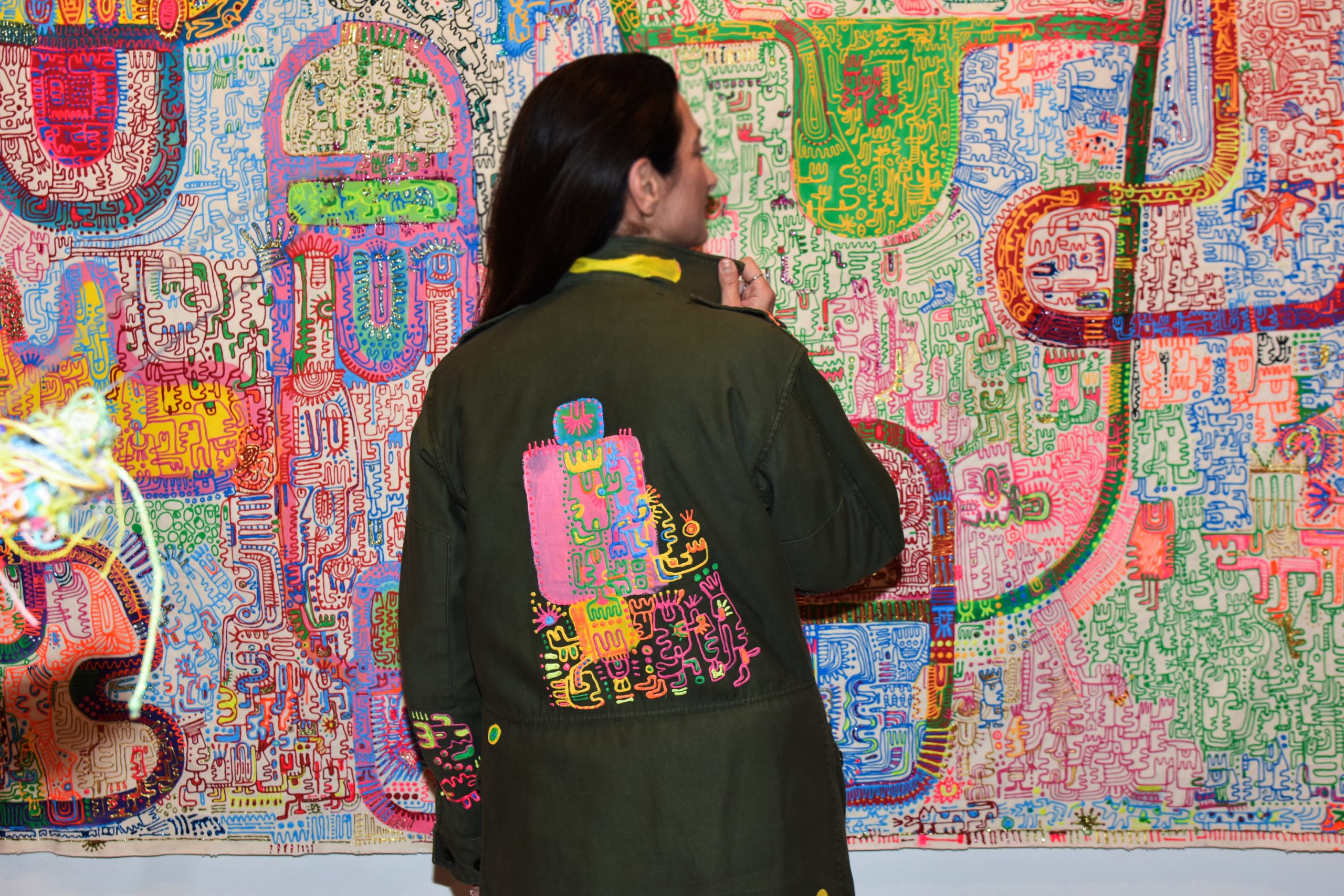
All the works were created almost simultaneously. They are not phases I passed through as an artist. My intention is to present my personal journey toward freedom, my own spring. A reunion with little Leonie and with ancestral fragments of myself. All of them tesserae of my own mosaic. Threads that connect me to the world within translated into works of ceramics, sculpture, and painting, including the ritual banners I present for the first time. Multicolored narrative stories painted on sailcloth.
I am certain that some visitors will connect with a part of themselves through this exhibition. They will recognize the joyful child—the one who carries innate wisdom.
Because children possess inherent wisdom. They live in truth, and that truth is precious. When we rediscover it, it guides us. And yet it also unsettles us, precisely because we once lost it.
What do you receive from the international audience in relation to your work, and how different are the conditions in Greece?
Those who have seen my work have truly embraced it. I believe it’s because it carries a sense of immediacy, an honesty that comes through the surprise and unexpected element it creates. That gives me great joy and relief, because it means I am sharing exactly what I wish to express.
However, as far as I can observe, in Greece we still carry certain inhibitions unfortunately, even in art. If art doesn’t allow freedom, then what will? Abroad, there is a broader space for experimentation and exploration. People are more exposed, and therefore more prepared for what is new.
What has extroversion offered you overall, and how does it influence your work?
Perhaps because I come from the world of branding and worked in it for many years, I understand the importance of communication. It is essential in anything one does, especially in art. Art needs communication even more. The right communication allows it to step down from its inaccessible pedestal and speak clearly to people. People want and expect to feel, to connect.
Art saves. Of course, only those who wish to be saved.
I know how difficult it is for an artist—who mostly needs quiet, clarity, and isolation to create—to dedicate time, and quite a lot of it, to social media. Yet in our era it has become necessary, and therefore important. In my own way, I pursue extroversion, even if in this form it can be exhausting. Technology, through which this happens, can drain you.
What are your immediate plans?
I want to “travel” my exhibition abroad.
Next, I will participate in the group exhibition Off Center Europe: art in Vevey, Switzerland, from May 27 to June 1, 2026. Soon, I also plan to organize my own solo exhibition outside Greece.
What inspires you to evolve in the way you create? Tell us a story.
I try to observe everything. I trust my dreams—quite literally, the dreams I see while sleeping. I consider nothing accidental. Haute Couture fashion is also a great source of inspiration and reference for me.
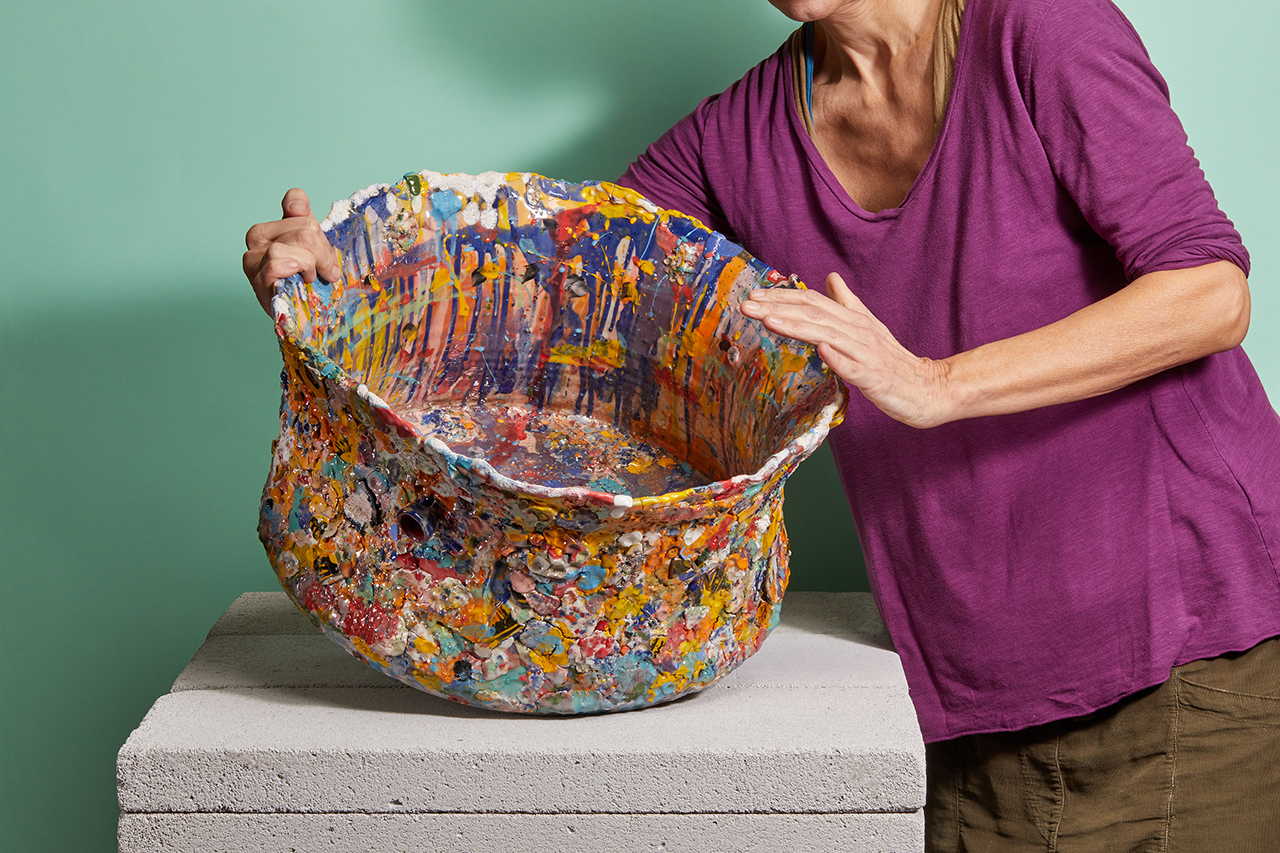
I experiment with materials and techniques beyond ceramics. Through ceramics, I create sculptural works while incorporating other materials and processes. As I’ve said, ceramics for me is a medium, not an end in itself. That is why I also paint on different surfaces and continuously adopt new techniques.
What are the non-negotiable values in your work?
Truth.
Color.
Surprise.
The unexpected.
The surreal.
The imaginary.
That which cannot be seen with the eyes.
What would you like to create, a dream project?
A “playground” for adults.
The artists you love and why you choose them
Friedensreich Hundertwasser — I adore him!
Niki de Saint Phalle, Paul Gauguin, Gustav Klimt.
There are also several fashion designers such as Cristobal Balenciaga and Vivienne Westwood, Issey Miyake.
And the Bauhaus movement — Walter Gropius.
One object you would never want to part with
My paintbrushes.
In another life, you would like to be
A shaman.
Three places you love returning to and why
Koufonisia — for its freedom and light.
Patmos — because it has its own spirituality beyond the religious aspect. It brings me peace.
Berlin — because there I connect with something both rigid and tender at once. It feels like a wounded part that longs to be loved.
Is Art and creation in general a path to becoming better people?
I believe yes. If not the only path, certainly one of the most essential ones. Creation is life. Only through creating can one process decay, face death, and reconcile with it.
Tell us a story you will never forget
The first group exhibition I participated in took place at DE.P.A.M. Mykonos. Before I had even finished setting up — while I was taking a short break — a British couple approached me, expressing their wish to buy all my cups. At the time, I didn’t know about their reputation in Britain. They were my first clients, and I considered it very fortunate. Interestingly, although they were English, they didn’t buy the teapot! That series later became part of my collection titled “Stripe or Strike.”
The museum and the artwork that stole your heart
Kunst Haus Wien Museum Hundertwasser.
Have you ever designed anything other than ceramics?
Of course. Jewelry. I paint on clothes. I’ve also collaborated with Mantility on silk scarves. But I would love to collaborate with a fashion house as well.
What do you consider authentic nowadays?
Enjoying a traditional chickpea stew on a beach in Serifos without caring about taking a selfie.
If you were to design something for TheAuthentics.gr, what would it be?
I would paint a large banner inspired by a spiral.
Photography: Giorgos Vitsaropoulos
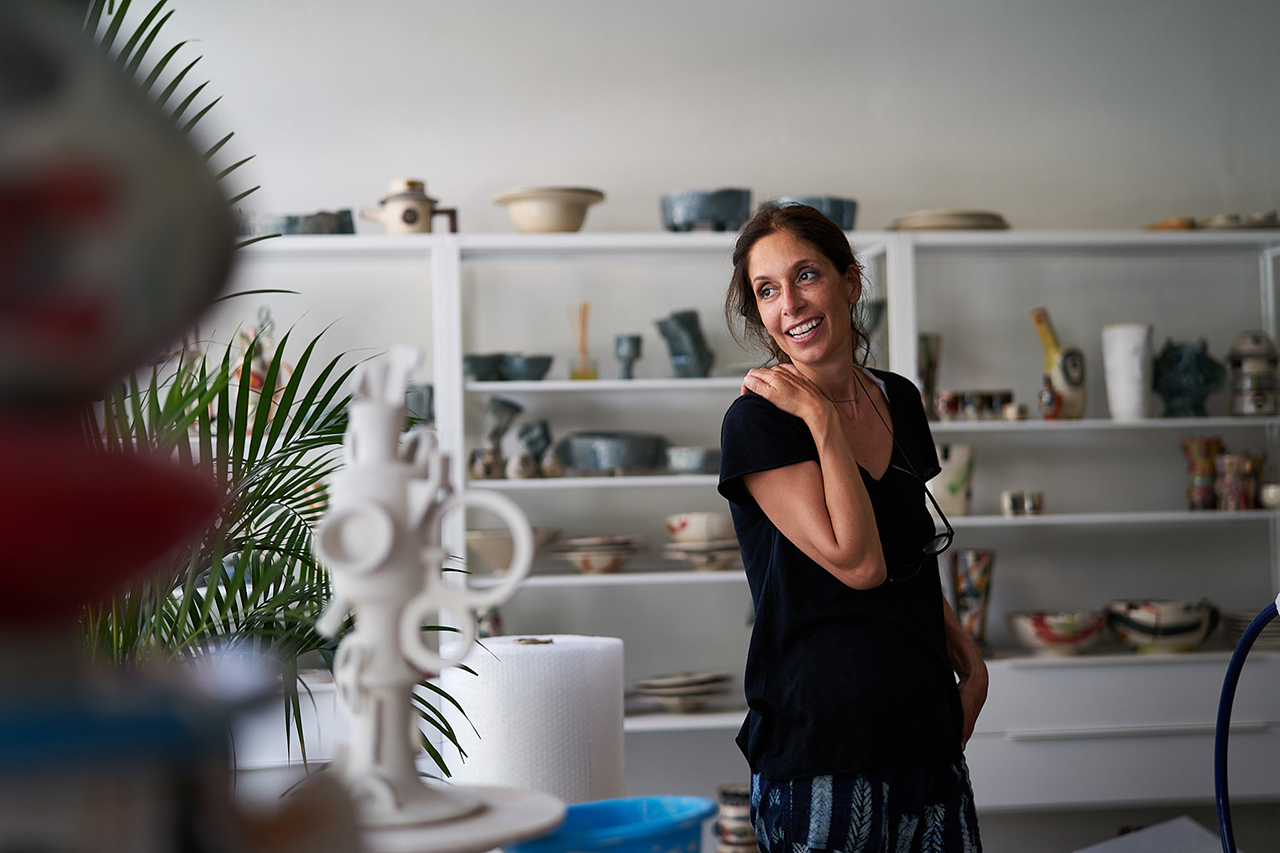
Portrait Photography: Sebastian Bottcher