To begin with, could you tell us about the highlights of your journey? Which do you consider the most important steps that have brought you to where you are today?

I wouldn’t name or single out any particular step along this journey as more important than another. I would say that every step was important until the next one.

Essentially, this entire journey has been characterised by a continuous presence both in the field of creative photography and in that of applied photography, with each step within these two fields becoming part of a very interesting journey.

Because everything that emerged, especially within my creative practice, consists of life experiences—small journeys, so to speak—I wouldn’t single out any one of them. In terms of how I experienced and lived alongside them, but also independently of my own personal experience, Wor(th)ship, for example, beyond its artistic value and the impact of the exhibition, carried an anthropological dimension and imprint that propelled it beyond something that might simply be photographically or visually interesting.

But all these experiences, whether they culminated in an exhibition or still remain in my archives, were steps that shaped this entire journey. So I wouldn’t single out any one of them.

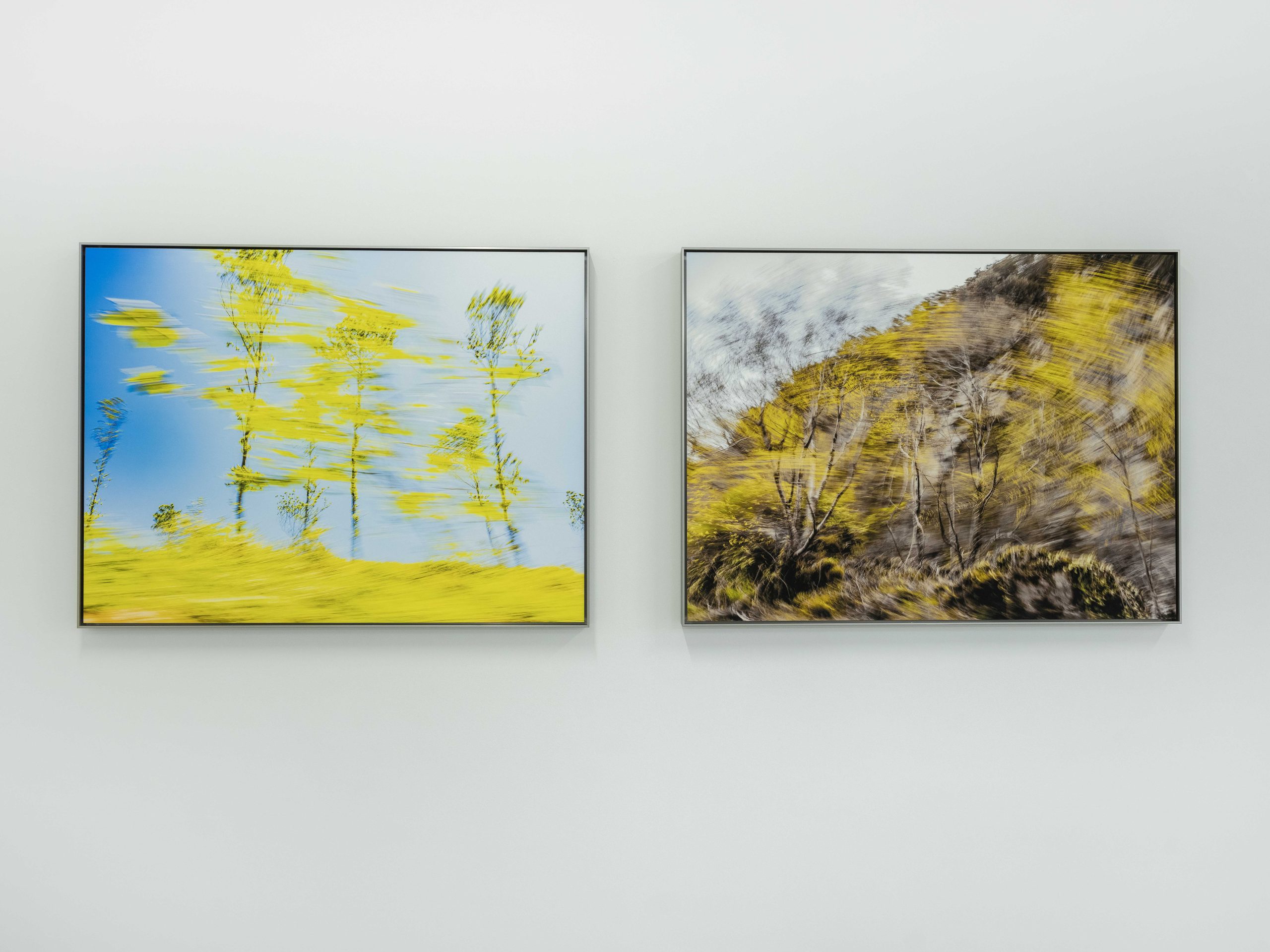
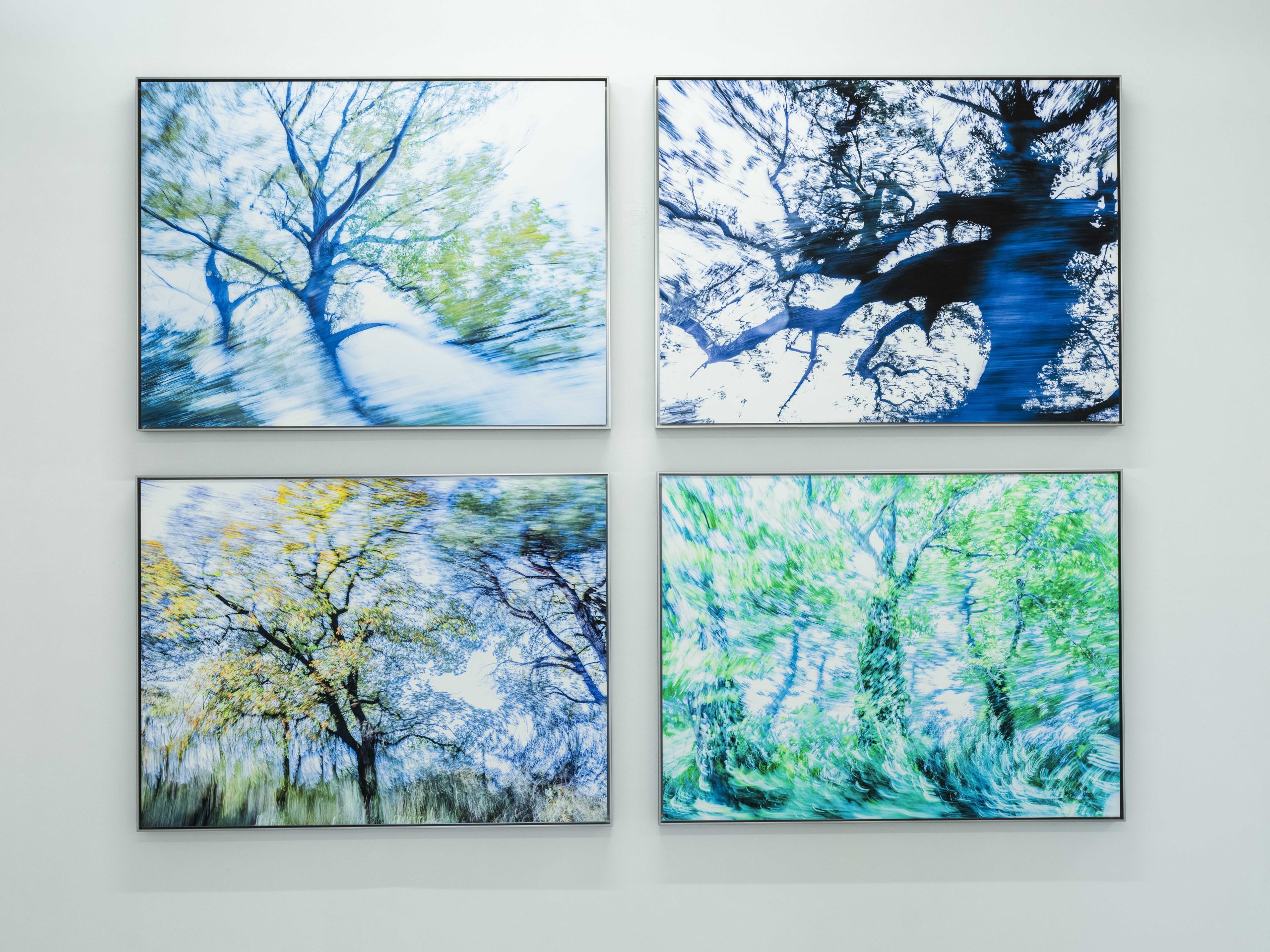
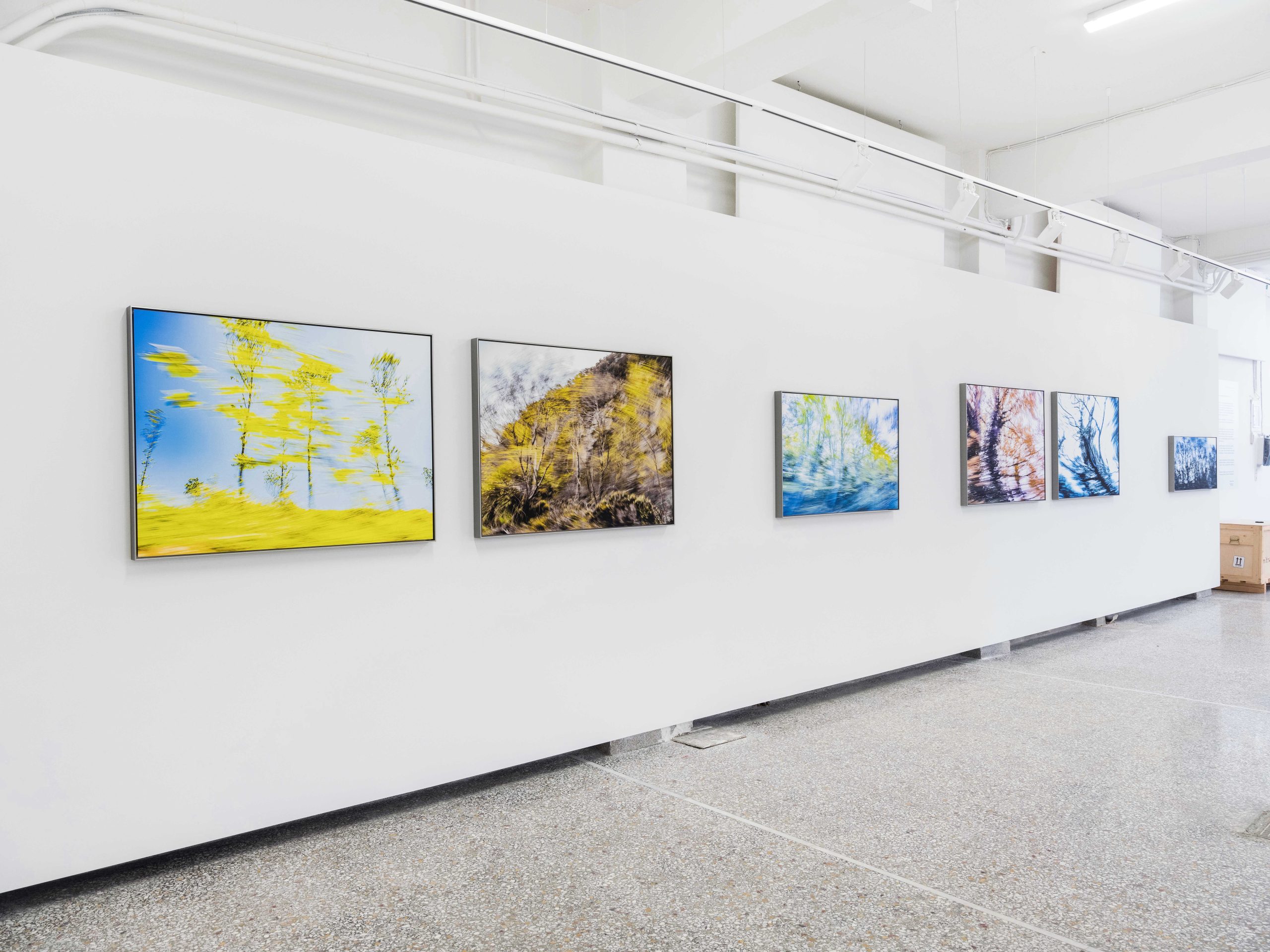
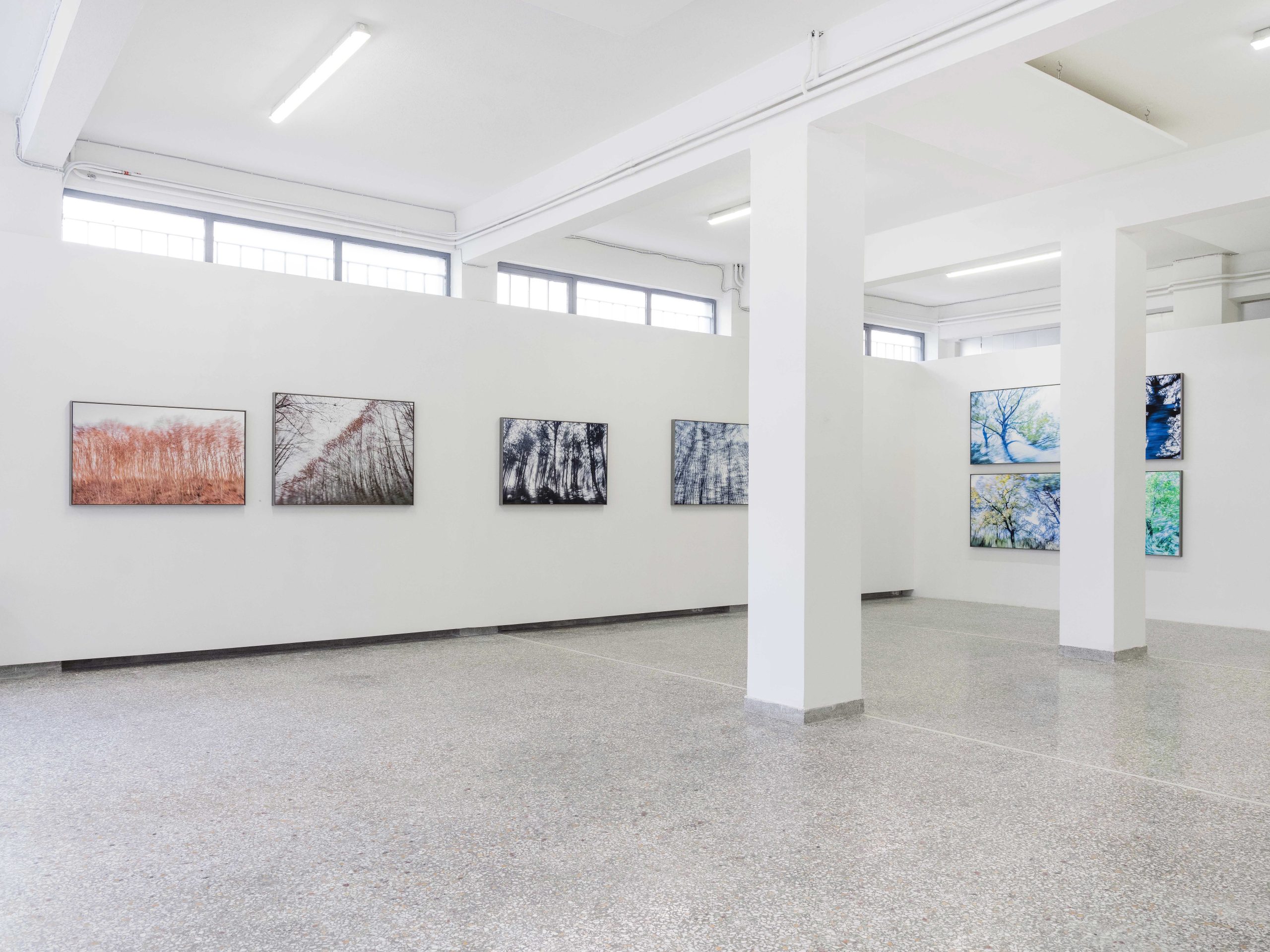
A new body of photographic work and a new exhibition at Nitra Gallery that brings to the fore dancing trees, a pioneering concept with a positive imprint and a sense of both calm and uplift. Tell us about your exhibition.

First of all, I would like to thank Nitra for the invitation and for giving me the opportunity to present this work. It allows me to share the experience of this journey with a wider audience.

This work emerged following a long period of research of mine, which culminated in The Forest’s Riddle, presented in 2023 at Nobel, the Cultural Space of the Municipality of Chalandri.

Essentially, it was the first time I photographed trees. It was the first time I found a way to engage in a dialogue with them, because I consider them a very difficult subject photographically.

After a process of engaging in this dialogue with them, we found a way to communicate.

This work is a continuation of that earlier body of work, which was quite dark and nocturnal and eventually led to Living Forests. The present work essentially brings the trees into the light.

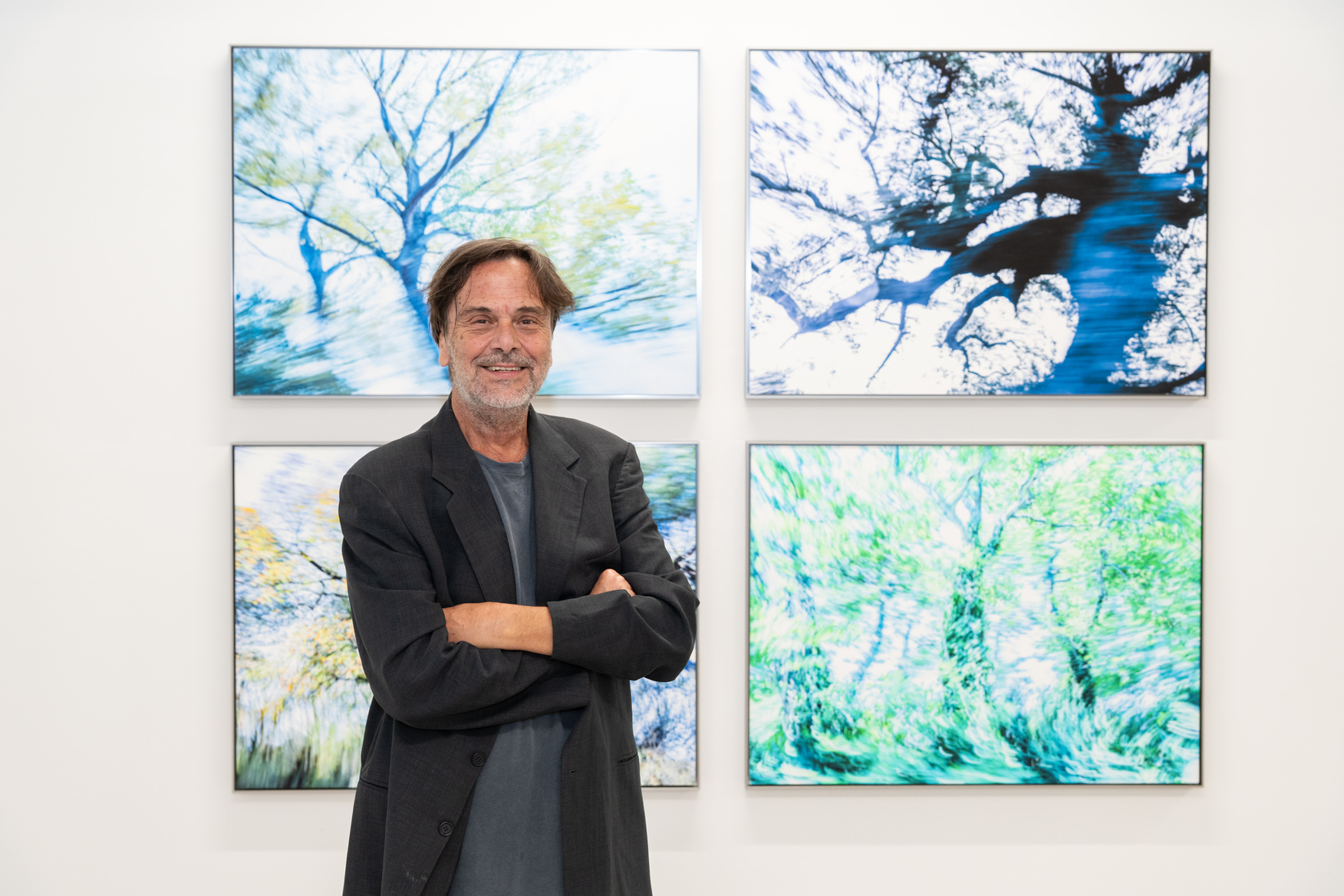
The trees that emerge are more solitary, and they come from my journeys throughout Greece, where I photographed them from inside the car.

This photographic approach creates this very strong sense of dance. The trees move. They move because of the wind; they move, whether we want them to or not, whether we observe them or not.

It was this collaboration between their movement and my own movement inside the car that created this result.

How does an analogue photographic aesthetic help you capture your particular sensibilities, and what is your creative process?

For much of my journey, until digital technology emerged, I photographed in analogue. This meant that you couldn’t make a mistake; you had to be extremely precise with every click. Something that the arrival of digital technology in photography essentially liberated us from.

But the way I photograph, the way I approach photography, is as though I were still working in analogue. In other words, I don’t use Photoshop or AI in my personal work. I use them extensively, however, in projects that are applied.

Is nature, even through its representation, an escape, a helping hand for the contemporary human being who feels suffocated?

Absolutely. This journey is, in a way, entirely dedicated to forests and trees. For me, without this being intended as an educational exercise, it is about encouraging people to see these beings in a different way.

Clearly, the anxiety we all share about the course of things and the way nature is now being violated on a daily basis is a very deep concern. And I hope that what I do can, at least in some way, contribute to a different way of looking at our trees.

Your work has a particular elegance, nostalgia and a gaze towards the future—contrasts that captivate and become food for thought. What touches your soul most deeply?

With the exception of these last two bodies of work we have discussed, my work has always been fundamentally anthropocentric. So, the protagonist of my subject matter has always been the human being.

I have always approached my subjects out of curiosity, and I have always been interested in looking at what is happening from a very different perspective. Sometimes with humour, sometimes perhaps more seriously. But always with respect for my subject.

The human being is central. And respect towards my subject matter is also something that I believe… at least, my intention has always been to ensure that my click does not become provocative towards the model.

What kind of emotions would you like visitors to take away from your new exhibition?

In every exhibition of mine, I would like them to enjoy it, to think, to reflect, to experience it.

The landscape of photography has been changing dramatically in recent years. How much does this concern you?

It concerns me now as a viewer. The image is constantly evolving—or rather, transforming through contemporary means. Something will emerge, something will change for new audiences, in order for them to feel a kind of stimulation through the experience.

What else is part of the range of your artistic explorations?

I am genuinely curious. I am always looking for something that will spark my curiosity.

How has your philosophy towards the art of photography evolved over time, and what do you believe holds particular value today?

It is experience. Once you have been doing something for a number of years, experience acquires its own strength.

Now, at this moment, when it comes to my personal creative work alongside my professional photography, there comes a point when this entire journey becomes important, as though it adds an extra resource, another tool. It is experience you acquire through photographing.

And the way in which I have essentially evolved alongside that experience has been through my personal projects. My encounters with migrants, refugees and involuntary protagonists have made me think and renegotiate many things that I did not know.

What are your immediate plans?

To soon find a need and a subject. I need to photograph. Essentially, I feel that I have been blessed with this medium through which I can express myself, while at the same time it makes me happy.

A dream project?

I don’t have one. I have no unfulfilled ambitions.

Is there a place you love returning to, and why?

I would like to return to Thessaloniki, a place I have visited and love very much. Thessaloniki is a city I feel nostalgic for.


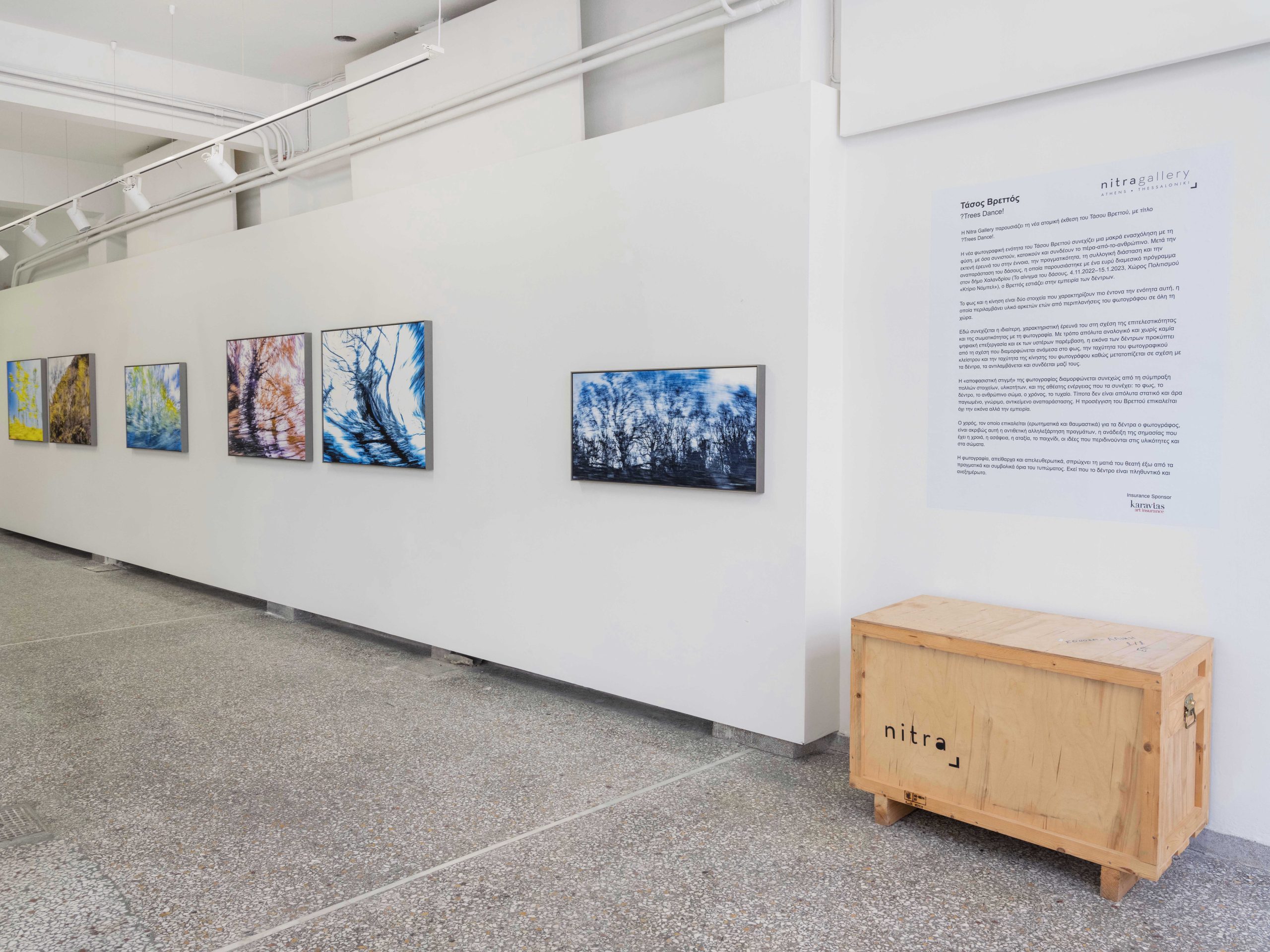
Nitra Gallery presents the solo exhibition of Tassos Vrettos titled ?Trees Dance!, hosted at ArtSpark.

Duration: September 24 –  November 10, 2026

The new photographic chapter by Tassos Vrettos carries on his long engagement with nature, with what constitutes, inhabits and connects the more-than-human. Following his extensive research into the concept, reality, collective dimension and representation of the forest, which was presented at a broad multimedia program in the city of Chalandri (The Forest’s Riddle, Nov. 4, 2022 – Jan. 15, 2023, “Nobel Building” Cultural Space), Vrettos now focuses on the experience of trees.

Light and movement are the two elements that most strongly characterize this unit, which includes material from several years of the photographer’s wanderings throughout the country.

Continued here is his unique, characteristic research into the relationship of performativity and physicality with photography. In a thoroughly analog manner, without any digital processing or post-processing, the image of the trees emerges from the relationship formed between light, the speed of the photographic shutter, and the speed of the photographer’s movement as he moves in relation to the trees, perceives them, and connects with them.  

The “decisive moment” of each photograph is always shaped through the interaction of many elements, materialities, and the invisible energy that holds them together: light, the tree, the human body, time, chance. Nothing is absolutely static and therefore fixed, familiar, an object of representation. Vrettos’s approach invokes not the image but the experience, the embodied knowledge of the tree as the other that is not foreign, does not belong, is not subject to evaluations of usefulness and beauty, and ultimately remains a mystery. As trunks shift, branches disperse, leaves enmesh, colors dissolve into light and shadow, the starting point of the image, the vantage point, ceases to matter. The multifocal experience of this photograph does not hold a single riddle, a latent presence, a hidden point of relief, where the gaze can rest. Instead, it calls on the viewer to let go and surrender to an almost vertiginous relationship, an ec-static entanglement of moments that can never be the same. 

The dance, (questioningly and exclamatorily) claimed by the photographer as a quality of the trees, is precisely this contrasting interdependence of things, the highlighting of the importance of nuance, ambiguity, disorder, play, ideas that swirl in materialities and bodies.

His photography, waywardly and liberatingly, points the viewer’s gaze beyond the real and the symbolic boundaries of the photographic print; to where the tree is plural and feral.

Αbout Tassos Vrettos

Tassos Vrettos has been active in photography since 1979, both through personal artistic projects and as Head of the Photography Department at the publishing company Grammi, later at Lambrakis Press Group, and today as the founder of Studio Vrettos. He also collaborated with Manos Hadjidakis on the magazine To Tetarto.

In his personal work, he explores the human condition, nature, identity, the body, and diverse social and cultural realities through a distinctive and highly recognizable photographic language.

Tassos Vrettos’s exhibition history extends across major institutions and events in Greece and abroad. Selected solo presentations include The Forest’s Riddle at the “Nobel” Building, Cultural Space of the Municipality of Chalandri (2022–2023), The Feel. Backstage at the Athens Epidaurus Festival (2021), Wor(th)ship: Tassos Vrettos at the Benaki Museum, Athens (2015–2016), a presentation at Les Rencontres de la Photographie in Arles (2016), The Hole Argument in collaboration with the Athens International Film Festival – Opening Nights, at The Breeder (2010), Athens: The City and the Cinema at the Benaki Museum (2009), and Homo Ludens at the Thessaloniki Museum of Photography (2005).

He has also participated in major group and international exhibitions, including presentations at the Palais de Tokyo in Paris (HELL AS PAVILION, 2013), Faggionato Fine Arts in London, the Macedonian Museum of Contemporary Art, the Thessaloniki Museum of Photography, and the Athens Concert Hall, while his work has been shown in exhibitions and events in Greece, France, Spain, and Belgium.

His work has been featured in major publications and photography catalogues in Greece and abroad, including Athens: The City and the Cinema (Université Sorbonne Nouvelle – Paris 3, 2009), Mysteries and Miracles – Photography Beyond Representation (Thessaloniki Museum of Photography, 2005), Photography and Fashion (Athens Concert Hall, 2005), and The Hole Argument (Saprophyta Publications, 2010). Further selected publications include The Nude in Greek Photography (Kochlias Publications, 2004), Ellinomouseion (Militos Publications, 2001), Thrace – Terra Incognita (1997), and Revelations, in collaboration with Dionysis Fotopoulos (Adam Publications, 1989).

Author