The key milestones in your journey. What were the defining moments that brought you to today?
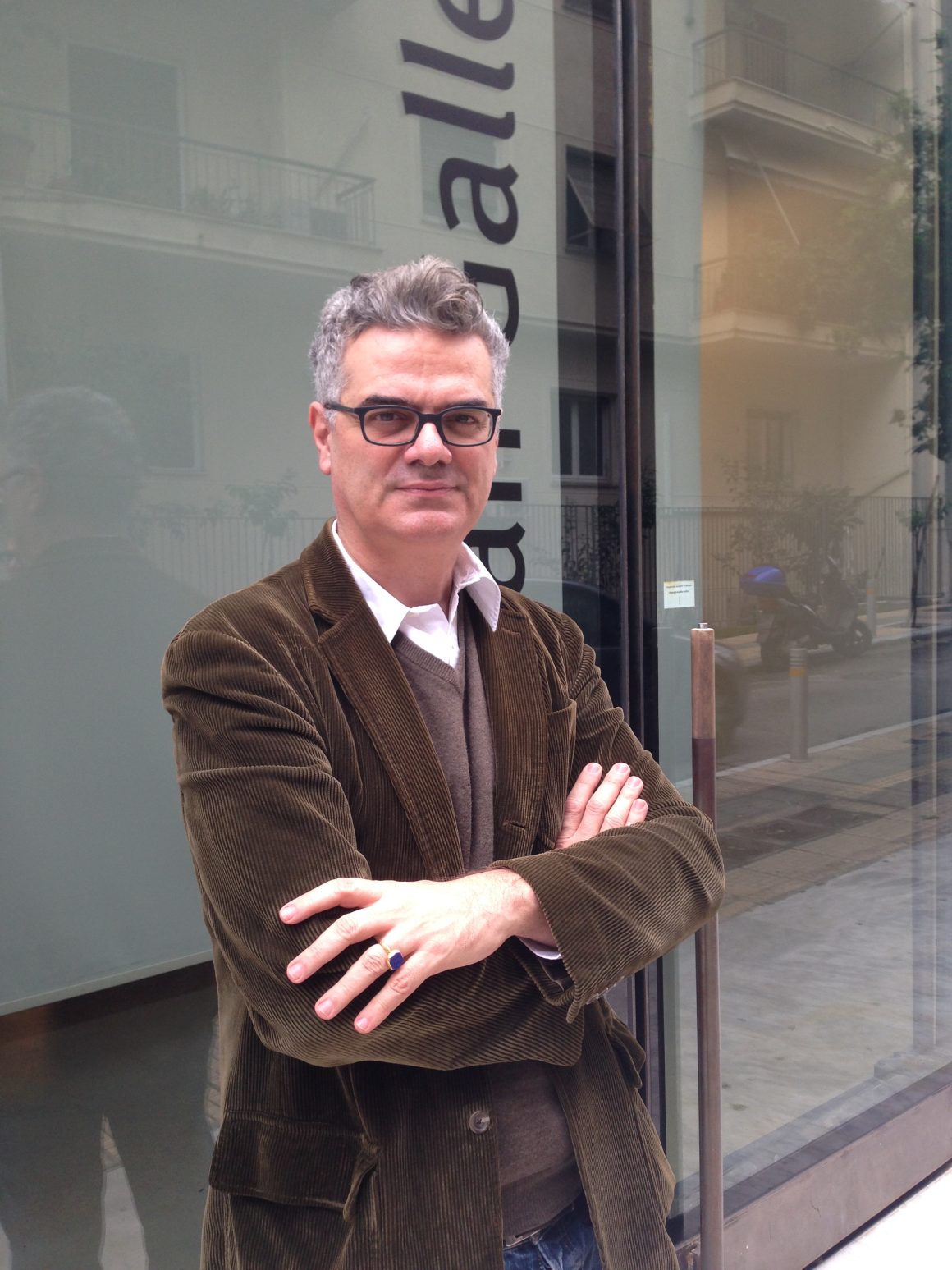
After finishing school in Thessaloniki in the early 1980s, I moved to London—a decision that marked the first major turning point in my life. I studied Prehistoric Archaeology of the Middle East at the Institute of Archaeology, before completing a master’s degree in Islamic Studies and Islamic Archaeology at SOAS (the School of Oriental and African Studies).
It was during those years in London that my brother, Arsène, and I were introduced to the world of the art market. Coming from Thessaloniki—a relatively small city at the time—we were fascinated by the scale, energy, and international character of London’s art scene. It opened our eyes to an entirely new world and profoundly shaped the way we would later approach the business of art.
You were fortunate to grow up in a family with a deep appreciation for art, which undoubtedly instilled in you a respect for creativity from an early age. Tell us about your family’s history and its connection to Thessaloniki.
As many people know, I am of Armenian heritage, although I was born and raised in Thessaloniki.
On my mother’s side, my grandparents arrived in Greece as refugees following the Armenian Genocide in the early 1920s, alongside many other displaced families from Asia Minor. My father’s side, however, has much deeper roots in the city. My great-grandfather settled in Thessaloniki at the end of the nineteenth century, when it was still part of the Ottoman Empire, and witnessed the city’s liberation in 1912.
Growing up with these two intertwined family histories gave me a profound appreciation for cultural identity, heritage, and continuity—values that have remained central to my personal and professional life.
How did the transition to the next generation take place, and how did you and your brother come to lead Kalfayan Galleries? What new direction did you bring to the gallery?
After completing our studies, Arsène and I returned to Thessaloniki, despite having opportunities to remain in London and pursue careers within its thriving art market. Instead, we chose to return home and work alongside our mother, who ran a well-established antiques business on Tsimiski Street in the city centre.
By the early 1990s, however, we both felt that dealing exclusively in antiques was no longer fulfilling creatively, nor did we believe it offered the future we were looking for. The art world itself was changing, and we wanted to be part of that transformation.
In 1995, we opened our first gallery in our family’s property on Aristotelous Street. We had already established close relationships with contemporary artists and were inspired by the idea of representing their work, supporting their careers, and introducing contemporary art to a broader audience.
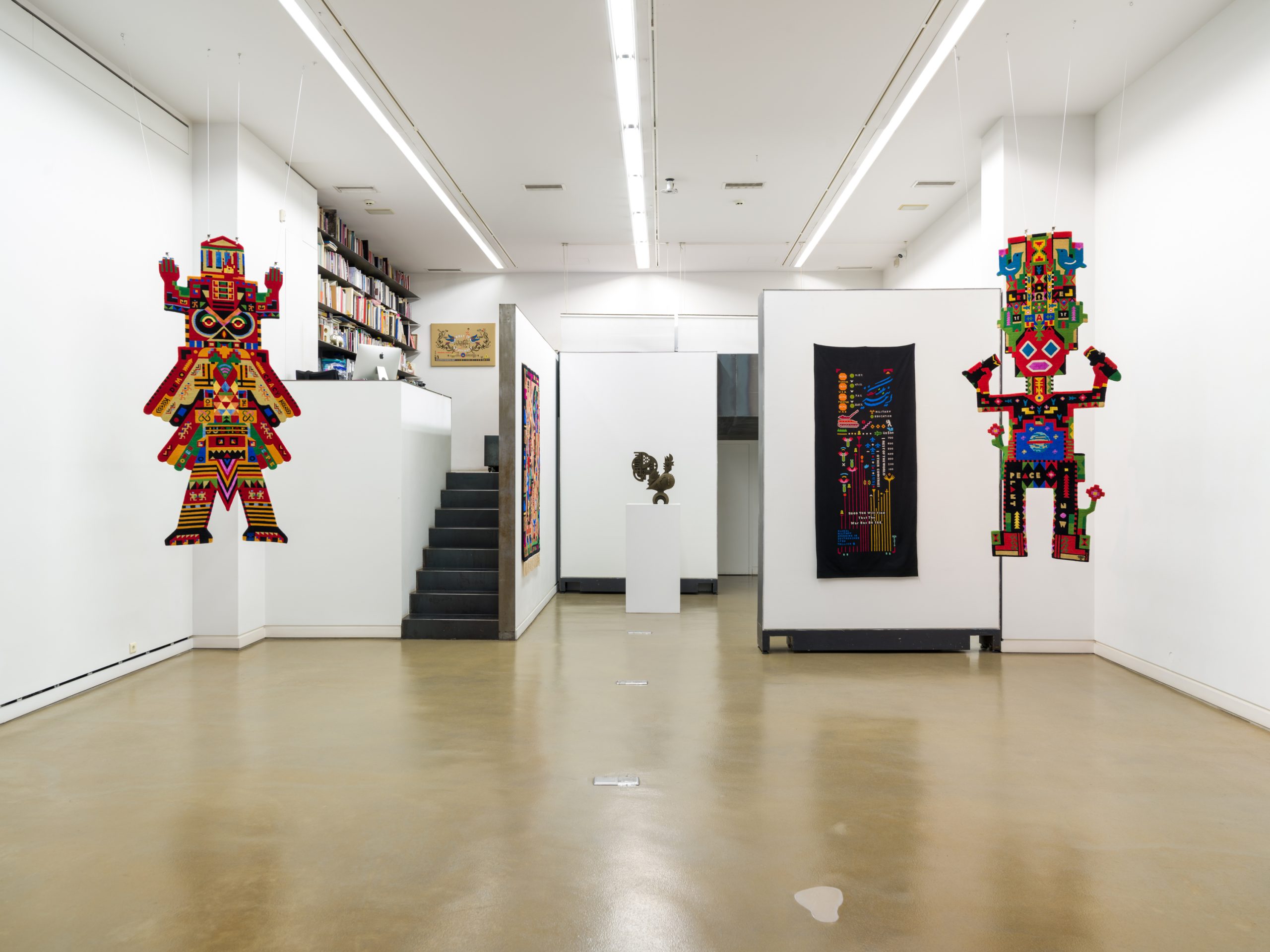
Four years later, in 1999, we opened our first gallery space in Athens, in a first-floor apartment on Kapsali Street, just off Kolonaki Square. In May 2007, we inaugurated our current gallery at 11 Haritos Street.
Relocating our focus from Thessaloniki to Athens proved to be a pivotal decision for the growth of the gallery. As much as we love Thessaloniki, it remains a relatively small city with limited opportunities for the contemporary art market.
Athens, by contrast, has evolved into a vibrant international metropolis. Particularly in the years following the economic crisis, it has emerged as one of Europe’s most dynamic centres for contemporary art, attracting artists, collectors, institutions, and curators from around the world. That evolution has created the ideal environment for galleries like ours to grow internationally.
A work by Spyros Vassiliou from your collection was recently exhibited at the Teloglion Foundation. Could you tell us about it?
It is a remarkable painting by Spyros Vassiliou, completed in 1980, depicting portraits of leading intellectual and artistic figures of Thessaloniki. It forms part of the private collection that Arsène and I have built over the years.
I vividly remember acquiring the work almost thirty years ago from Mr. Lachas, the founder of Kochlias Gallery, one of Thessaloniki’s pioneering galleries and a landmark of the city’s cultural life. It is one of those acquisitions that has remained particularly meaningful to us—not only because of the artist, but also because of the history and cultural memory the painting embodies.
How do you remember Thessaloniki during those years, when the city had such a vibrant artistic community?
I remember the Thessaloniki of my youth as a city with a relatively small but exceptionally dedicated art audience. It was a close-knit community of people who faithfully attended exhibitions at galleries such as Zita Mi, Eirmos, Kochlias, and Art Gallery Terracotta.
It was the very same audience that attended performances by the State Orchestra of Thessaloniki, then conducted by Giorgos Thymis, with my uncle, Kosmas Galilaia, serving as concertmaster, and that also supported productions at the National Theatre of Northern Greece.
Those were also the years when the Macedonian Museum of Contemporary Art was founded through the vision and determination of an extraordinary group of people, including Yiannis Boutaris, Katerina Kamara, Maro Lagia, Aleka Floka-Boutari, and many others. Their initiative transformed the city’s cultural landscape and reflected a remarkable belief in the power of contemporary art.
Looking back, I realise how formative that environment was. Although Thessaloniki’s art scene was modest in scale, it possessed a genuine intellectual curiosity and a strong cultural identity that profoundly influenced my generation.
What do you consider to be your greatest achievements?
After more than four decades in the art market, I can look back with a deep sense of satisfaction. Arsène and I have built something meaningful together.
When we moved to Athens, we were outsiders. We had no established network within the city’s art world or social circles. People simply knew us as “the brothers from Thessaloniki.” Yet, over the years, we succeeded in earning our place and leaving a distinct mark on the Greek contemporary art scene. Looking back, that is perhaps what gives me the greatest sense of accomplishment.
What has experience and maturity given you in relation to your work and the art world?
With time comes experience, and experience teaches discernment. Today, I feel I have the knowledge to distinguish the genuine from the fake—not only when it comes to works of art, but also when it comes to artists. You learn to recognise those who truly have something meaningful to express through their work, as opposed to those who simply create decorative objects.
I understand now why, when I was younger, the people I admired in this profession placed such importance on experience. It is something that cannot be taught; it can only be earned.
What lies ahead for you?
My brother Arsène often jokes that perhaps we should start thinking about retirement. I always tell him that we are still a long way from that.
There is still so much to discover, so many artists to support, and so many conversations to have. As long as that curiosity remains alive, I cannot imagine stepping away.
How has your philosophy towards art evolved over the years, and what do you believe has become particularly valuable today?
At a time when technology and new production methods have reached unprecedented levels, I believe the value of craftsmanship has become even greater.
Painting, sculpture, ceramics, weaving—disciplines that require the direct involvement of the human hand—carry a unique authenticity that is increasingly rare today. They remind us that art is, above all, a deeply human act of creation.
Can art and creativity make us better people?
I would like to believe so.
Unfortunately, reality often proves otherwise.
What do you love most about the art world, and what do you find most difficult?
I value trust, long-term relationships, and genuine collaboration.
What I find difficult are envy, malice, and ingratitude—qualities that, unfortunately, can be just as present in the art world as they are anywhere else.
What would be your dream project?
There are so many projects I would still like to realise that it is impossible to choose just one. The list has neither a beginning nor an end.
Three places you always love returning to—and why?
Venice, for its incomparable uniqueness.
Vourvourou, in Sithonia, because it holds some of my most cherished memories.
London, because it taught me so much—not only about the art market, but also about the world itself.
Which museum and which work of art have captured your heart?
Museum: The Prado Museum, Madrid.
Artwork: The Lamentation over the Dead Christ by Andrea Mantegna, at the Pinacoteca di Brera in Milan.
What is your definition of beauty?
Nature itself.
What do you consider authentic today?
Authenticity lies in genuine creation.
Whether in art or in life, true authenticity cannot be fabricated. If you have trained your eye, you recognise it immediately. A truly authentic work of art possesses an integrity and presence that cannot be imitated.