Τell us about the highlights of your journey—what are the key steps that have brought you to where you are today?
I do not see my path as a sequence of “milestones,” but rather as a persistence with something I did not fully understand from the beginning. Entering the Athens School of Fine Arts, after repeated attempts, and studying under Tasos Riga, who taught me drawing, was an առաջին boundary I had to cross. My apprenticeship alongside Dimitris Botsoglou, Giannis Harvalias, and Vlassis Kaniaris confronted me with the responsibility of the work itself.
Later on, periods of silence—times when I produced almost nothing visible—proved to be just as formative as exhibitions. My collaboration with Eleftheria Tseliou Gallery, as well as with the curator Christoforos Marinos, has also been significant. In recent years, the shift toward the minimal, toward the almost immaterial, is perhaps the most essential step.
Having apprenticed with Vlassis Kaniaris and lived through times when art provoked tension, engaged in social commentary, and expressed resistance—what do you remember from that period?
Kaniaris never spoke about what he had experienced. What I do know is that in every one of his works there was personal involvement.
What I retain is his stance: that a work cannot be neutral. The intensity of that era was not only political; it was existential. And this is something that continues to accompany me, even when the work appears quiet.
By contrast, in your current exhibition at Eleftheria Tseliou Gallery, the aim seems to be to soothe and calm the soul. Tell us about it.
On the contrary, this exhibition is grounded in a sense of unrest.
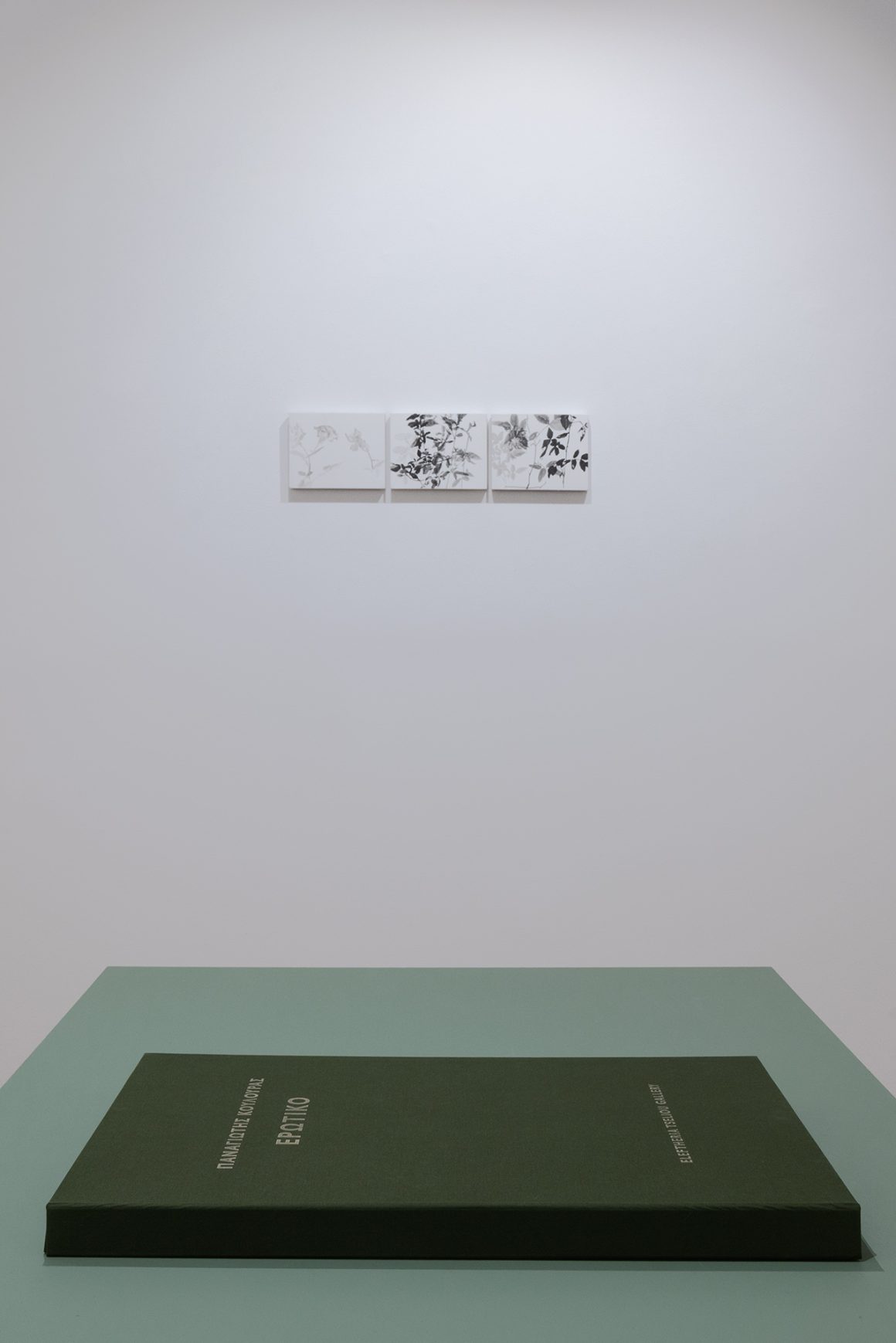
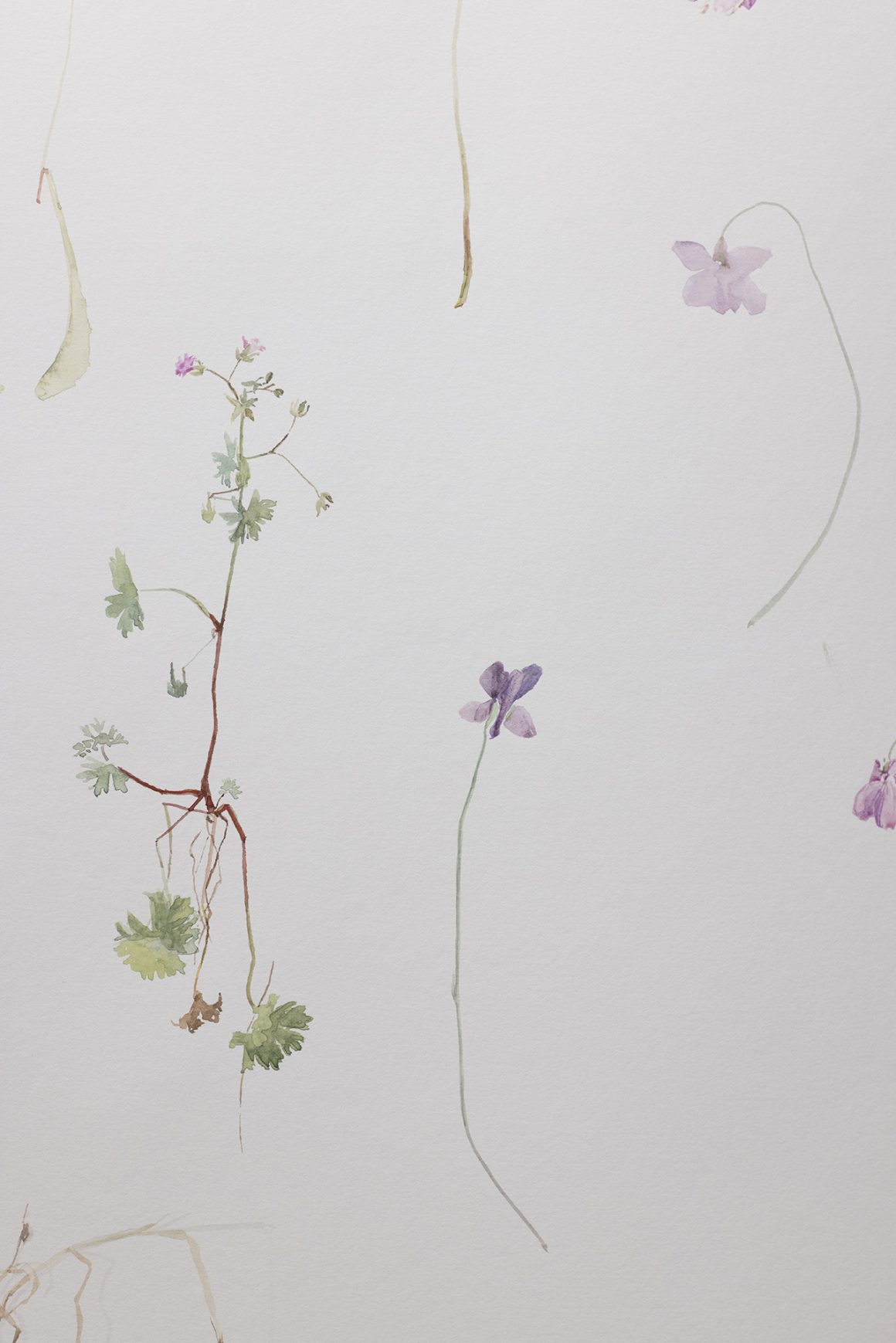
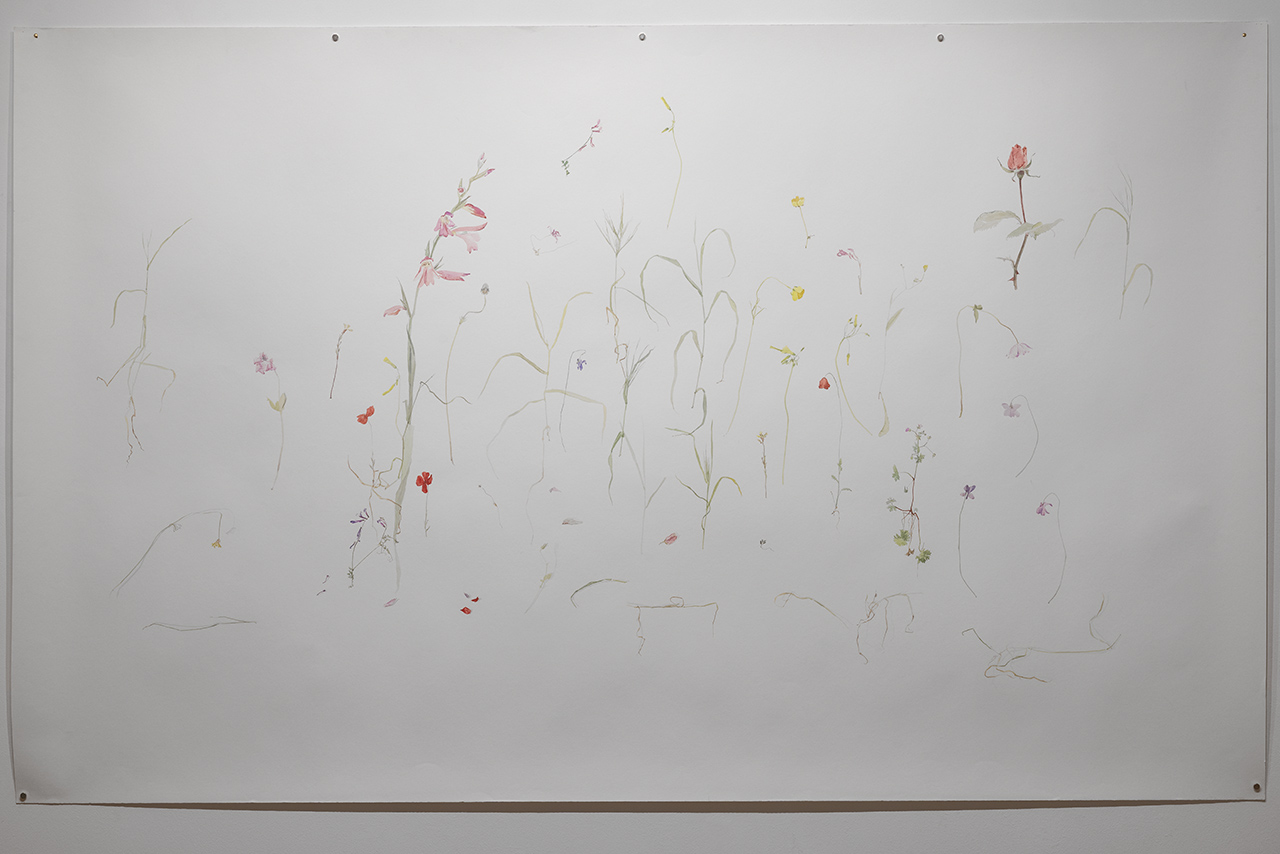
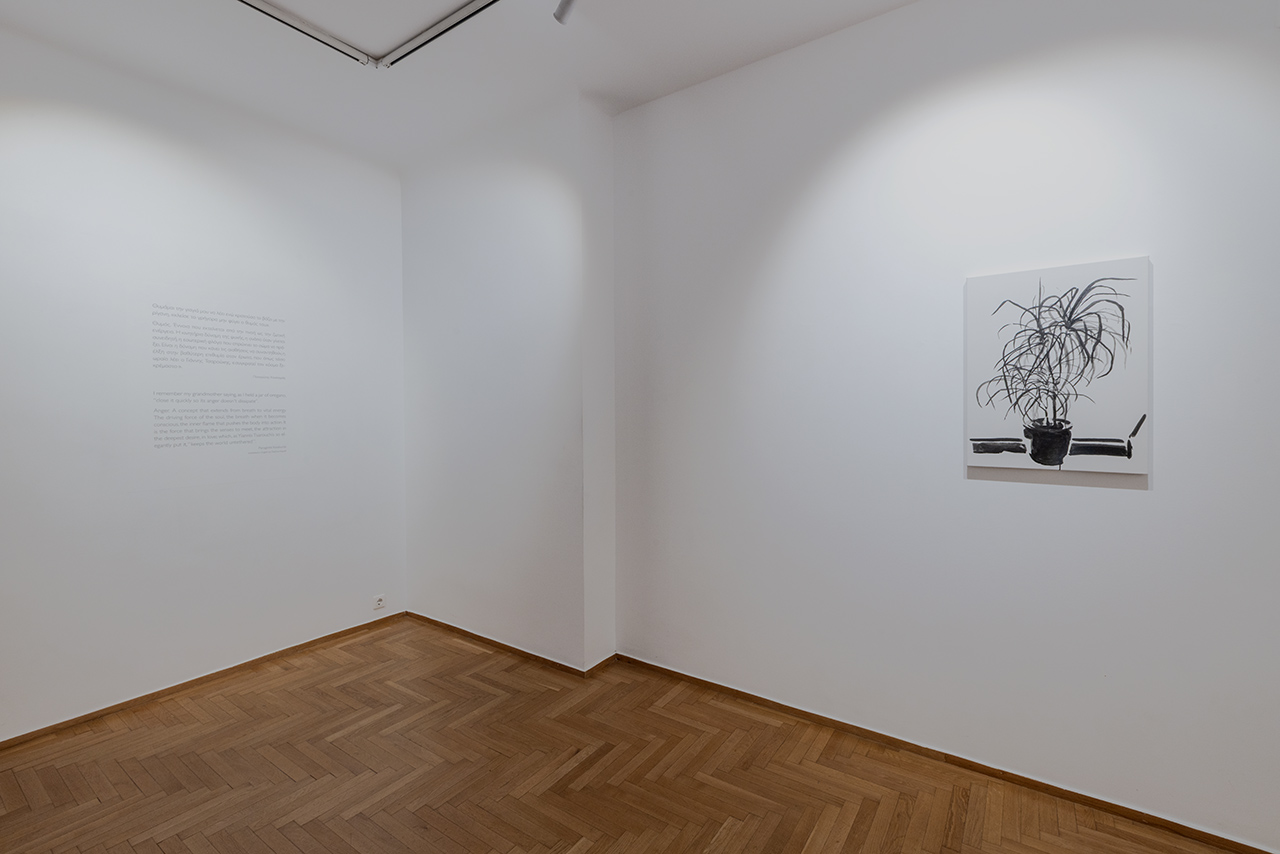
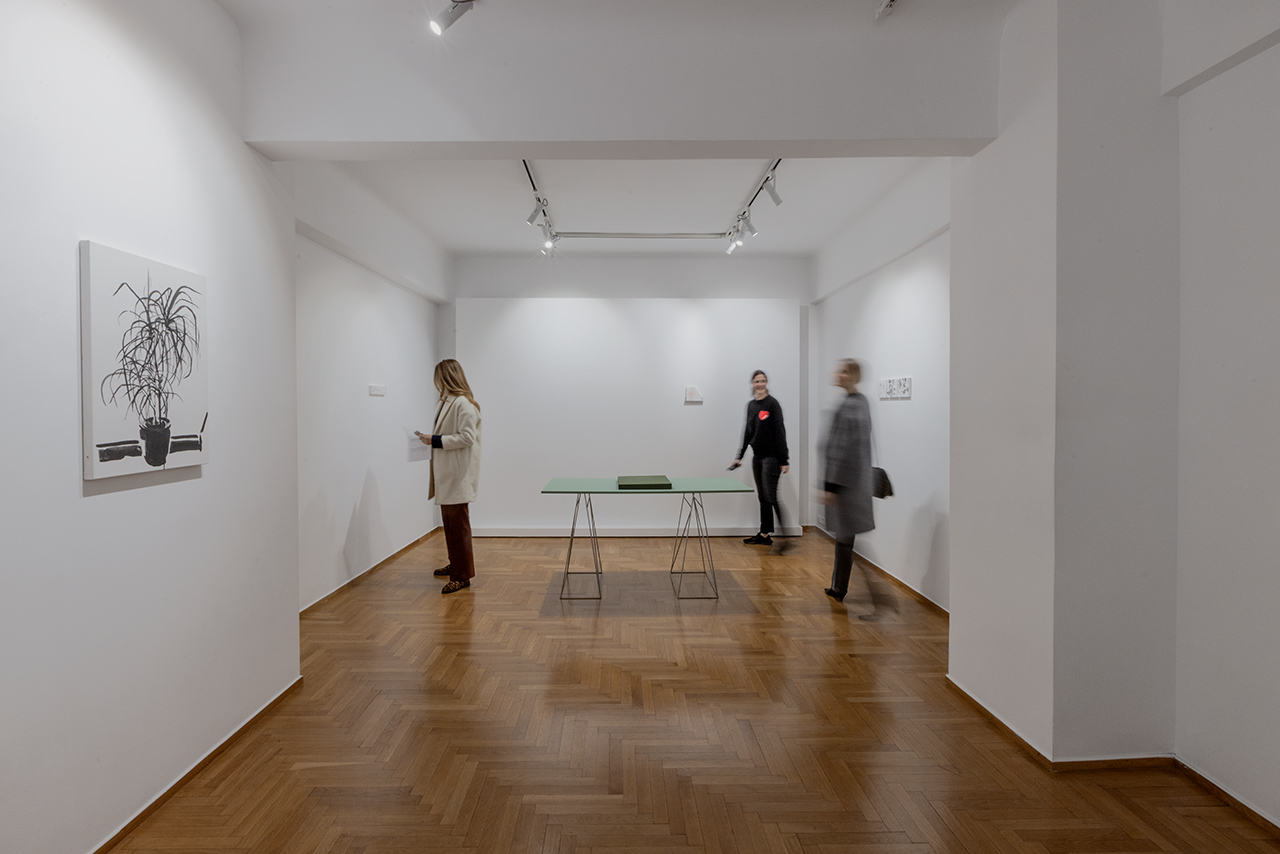
I am not interested in consolation as a form of suppression. I am interested in a kind of stillness that is active—one that brings you into a heightened state of awareness. The works operate within a threshold field: they almost disappear, and precisely for that reason they require the viewer to persist. The “calmness” here is a form of tension that has shifted from the obvious to the imperceptible, from the surface to the depth.
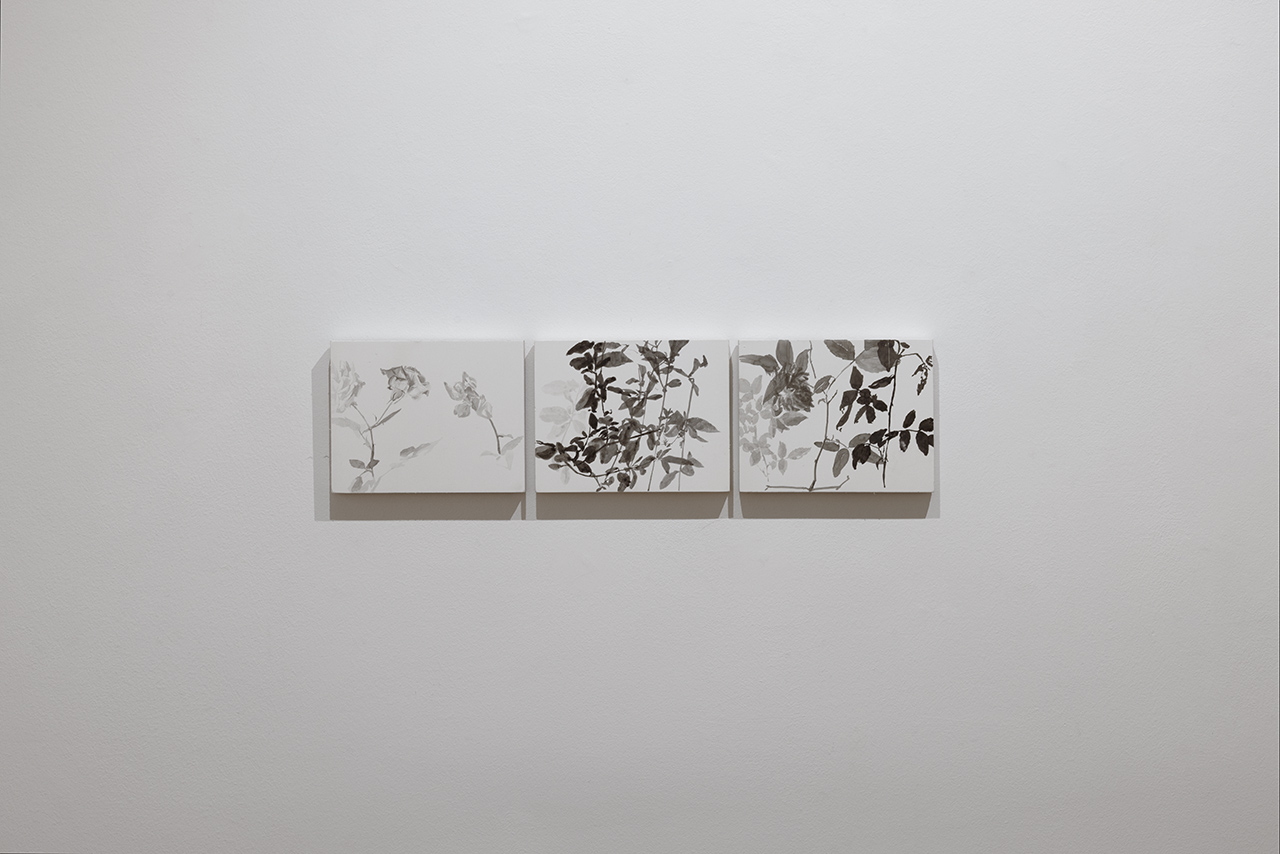
How does the sharp and the rough come to result in something so tender and refined, like the almost transparent flowers in your new exhibition?
The tender and the refined are also sharp and rough. In these paintings there is a fragility, but at the same time they carry a tension that is not decorative. It is like touching something that could cut you, without immediately realizing it.
What materials do you like to experiment with, and how did you arrive at them?
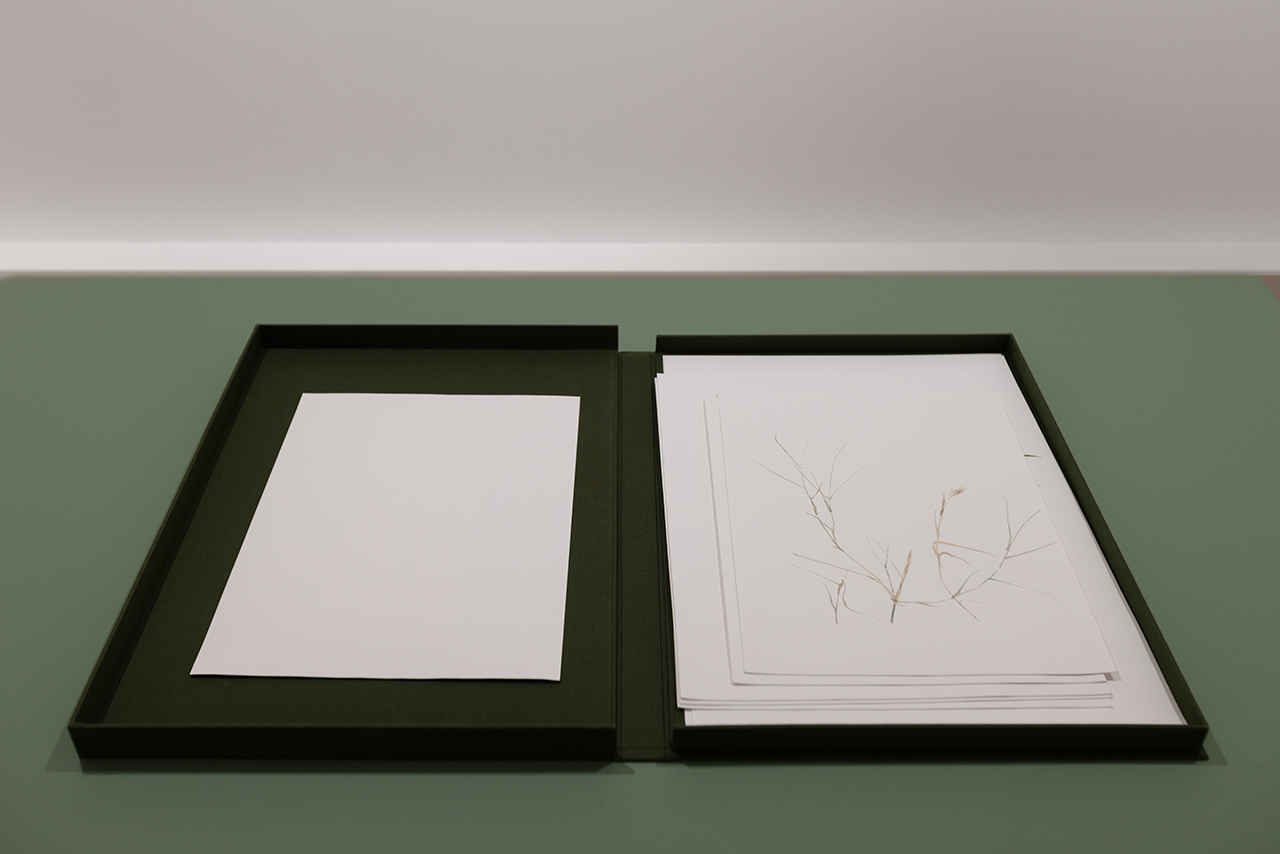
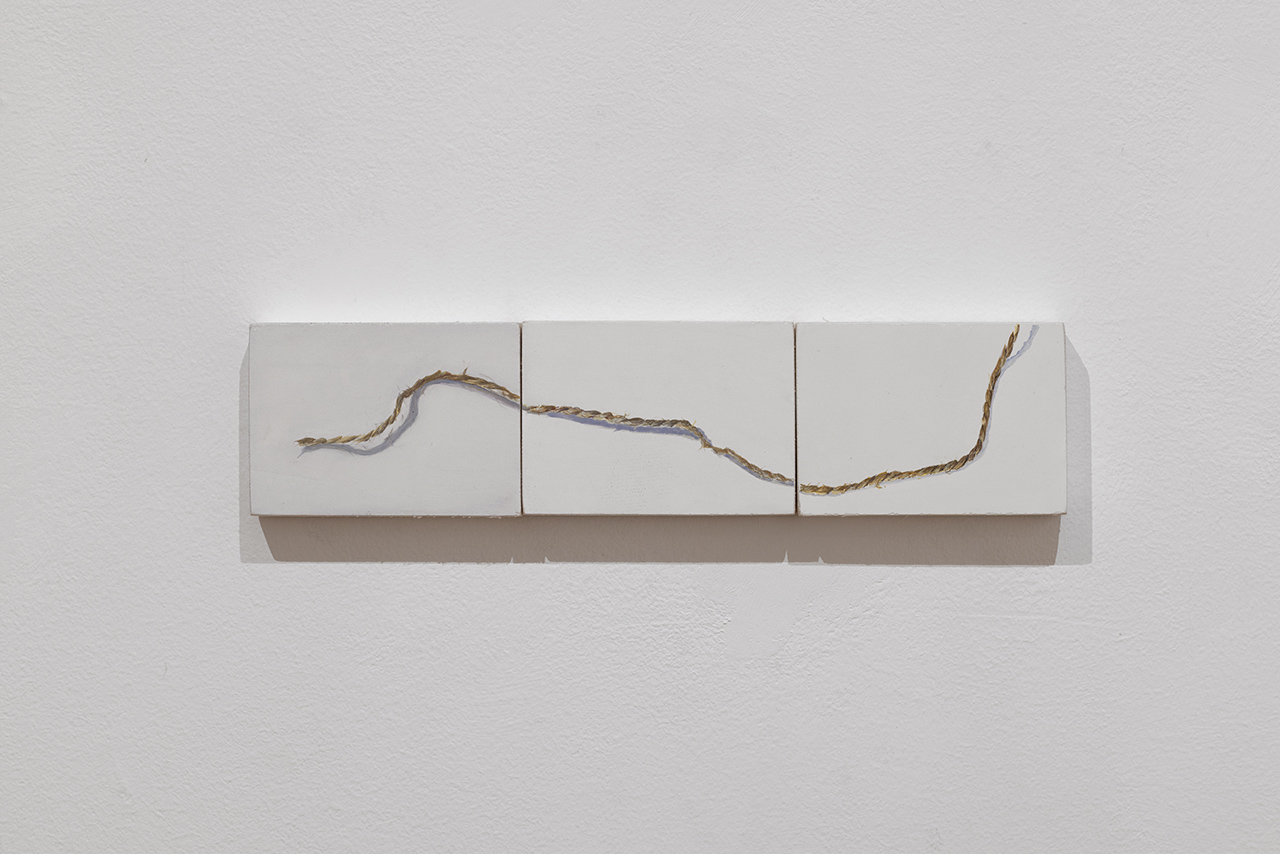
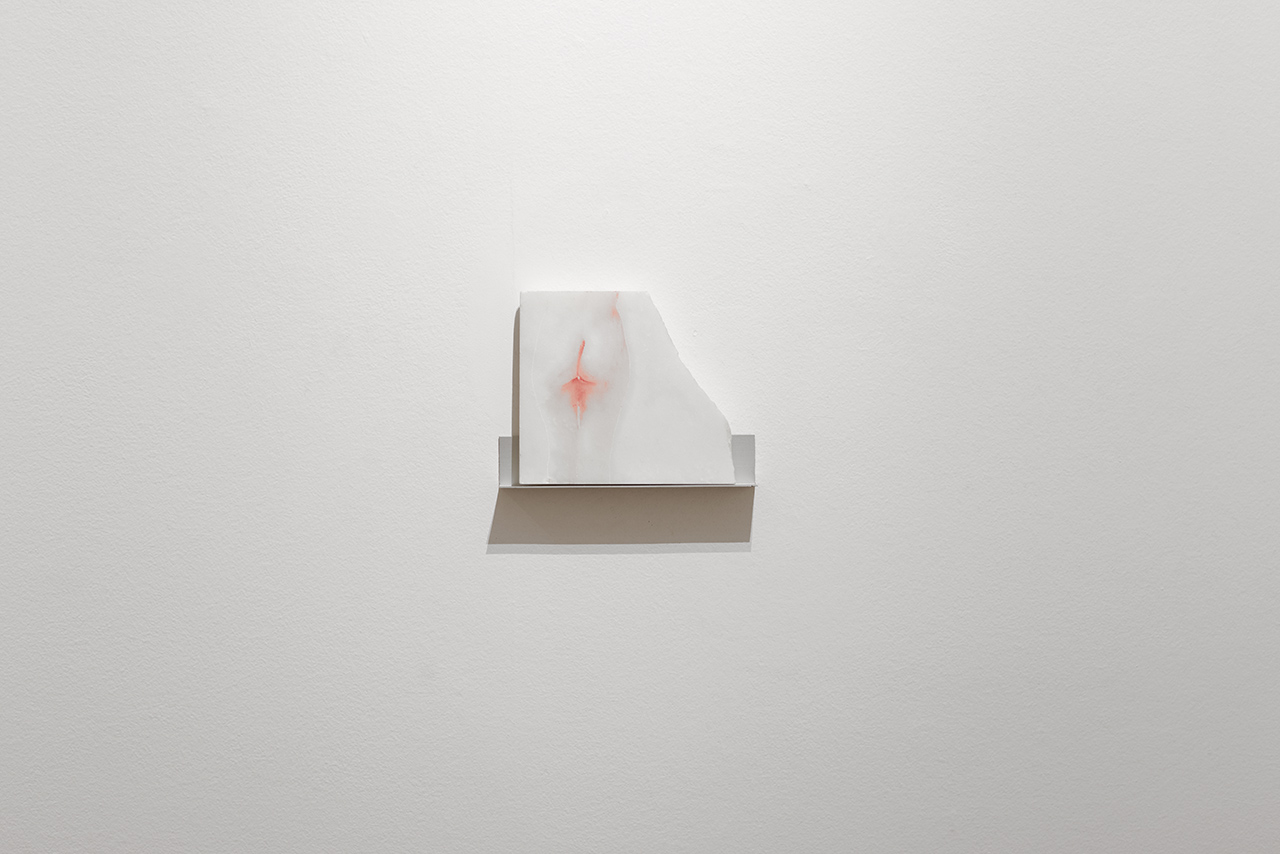
Materials are carriers. Paper, marble—everything functions as a surface that bears its own history, whether of memory or sensation. I am interested in what a material leaves behind, not only in what it shows, because that is where something more truthful is revealed.
What has maturity offered you in relation to your work?
A form of reduction that is not aesthetic, but existential. I remove everything that is not absolutely necessary. And above all, a greater endurance for silence—the ability to let the work exist without explaining it.
What do you consider your most important achievements?
I do not think in terms of achievements. If there is anything, it is that I did not abandon an inner line, even when it lacked external validation. And that I managed to reach a point where the work can stand with minimal means.
What are your immediate plans?
A further deepening in this direction of the threshold and the minimal.
How has your philosophy regarding art evolved over time, and what do you believe holds particular value today?
I moved from a need for expression to a need to understand my relationship with the world. Today, what holds value is precision: to do less, but for it to be necessary. In a world of image overproduction, the responsibility of producing yet another image is much greater.
Is Αrt and creation in general a path to becoming better people?
I would not frame it in moral terms. Art does not necessarily make you “better.” But it can bring you closer to something true—and that is often more difficult than simply being “good.”
What do you love and what do you not love about the field you operate in?
I love moments of sincerity—encounters that have no ulterior motive. What distances me is superficial speed and the need for constant visibility.
A dream project?
A work that requires time and silence from the viewer in order to exist.
Three places you love to return to, and why?
The embrace of Vasiliki and my children. Music, books. And the paper itself before the work begins.
The museum and the artwork that stole your heart?
I would say the Charioteer of Delphi, or the east pediment of the Temple of Zeus at Ancient Olympia, with Apollo dominating the center. In reality, though, it is not a specific work. It is those moments when a work looks back at you—and for a brief instant, time is suspended.
Give us your own definition of beauty.
Beauty is that which cannot be exhausted by the gaze—something that remains, even after you have moved away.
What do you consider authentic today?
That which does not try to prove that it is authentic. That which arises from necessity rather than strategy.
Eleftheria Tseliou Gallery
Exhibition duration: Until April 18, 2026