Starting out on completely different paths, you have arrived today at a point where you have created an entire portfolio of hotels at the forefront of Greek hospitality. What is the story behind Omicron Hotels? How did the original idea of creating a hospitality space rooted in the authenticity of Crete come about, and how did that first step lead to what you have built today?
Nick: Our journey actually didn’t begin with hotels. We started out with clothing stores, and we genuinely loved that work. We were in the shops every day, talking to people, meeting customers, seeing what they liked and what they were looking for. It was a very social business, and that was what appealed to us most.
At the time, of course, we could never have imagined that we would eventually move into hotels. Looking back today, though, I think we learned things there that stayed with us and later became important in hospitality.
We entered tourism gradually. In 1991, we bought our first plot of land in Hersonissos and built our first accommodation, with around 57 rooms. There was no grand plan that said we would do this and then move on to something else. We simply started with what we could, and each year we did a little more. The 57 rooms gradually became 100, the accommodation evolved into a hotel, and that was how we ourselves became increasingly involved in the business.
And the more involved we became, the more we enjoyed it. We were there from morning until night, learning through experience, making mistakes and correcting things along the way. That is how we learned the hotel business. In 2005, we took the next major step and created our second hotel, in Agia Pelagia. But even that never remained as it was in its first year. Every winter, we would think about what we could do better. We added rooms, redesigned spaces, introduced new facilities. There was always something we wanted to improve.
I was very fond of Agia Pelagia from the beginning. At the time, it wasn’t as well known, and perhaps that was precisely what drew me to it. I saw a beautiful place, with the sea, the hills and this distinctive landscape, and I felt it still had so much to offer. I think we have always liked looking at the potential of a place, rather than simply seeing it for what it is at a particular moment.
You have lived through a great deal along the way and built an impressive hospitality infrastructure that continues to evolve with integrity and a strong sense of values. What do you consider the essential ingredients behind this success? What have the two of you done differently in the way you run the business?
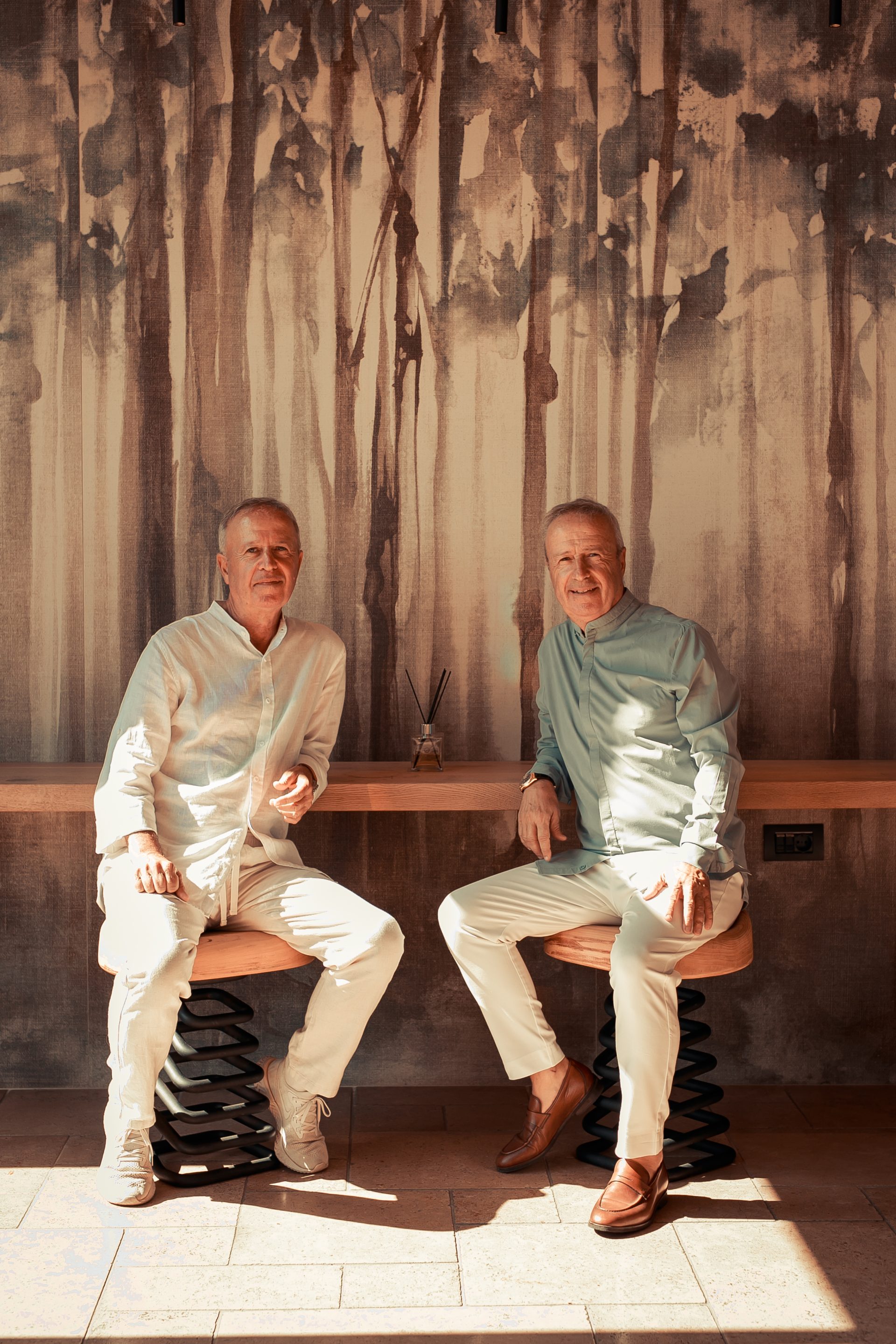
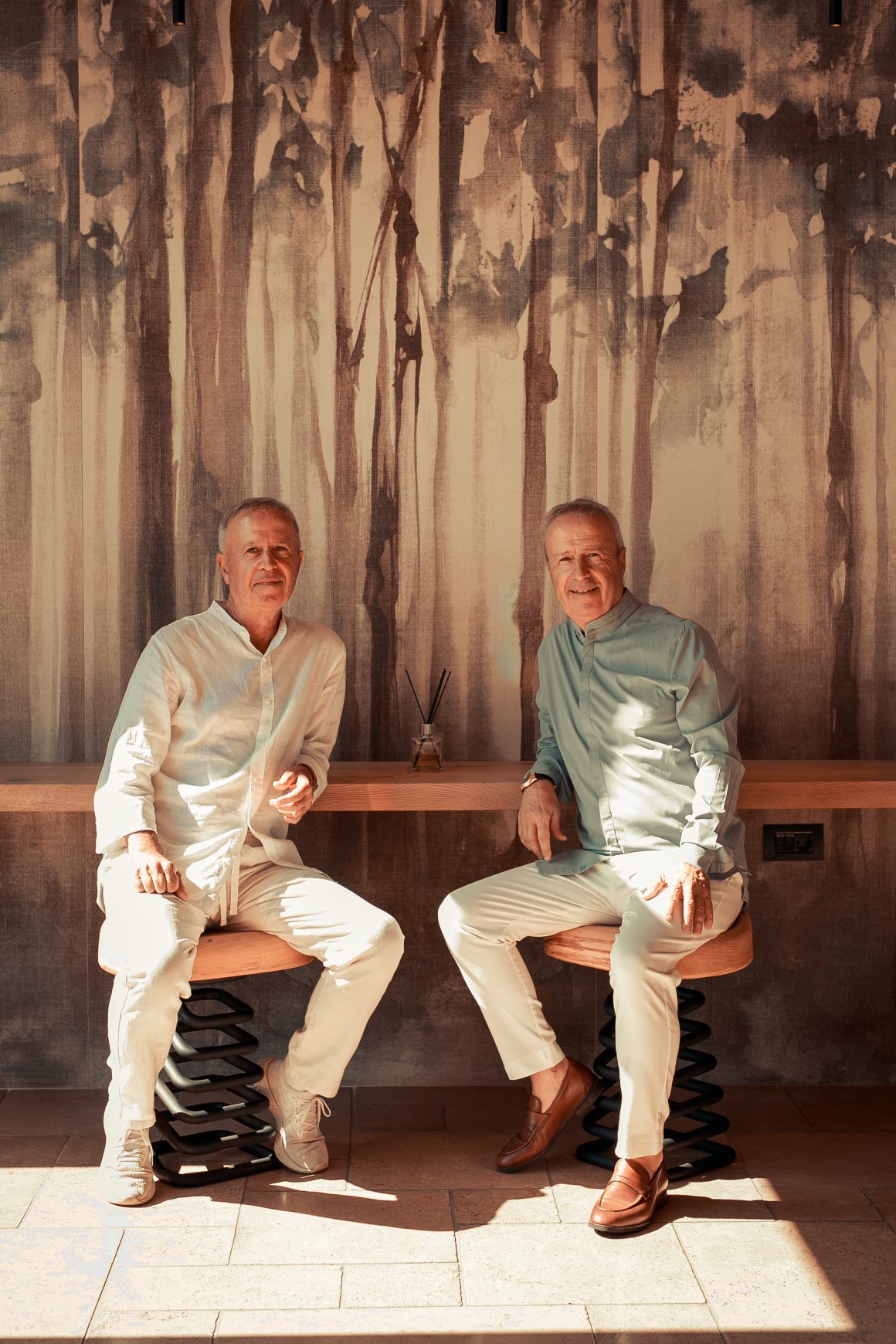
Nick: Perhaps one of the most important things is that, although we are twins, we are very different people. We have different personalities, different ways of thinking, and very often we can have completely different opinions about the same thing. When we were younger, those differences could more easily lead to conflict. Over the years, however, we realised that this is actually one of our strengths. I may have an idea, and Giannis may see it from an angle I hadn’t considered at all, and vice versa. We discuss things, we disagree, we change things, and usually, in the end, something better comes out of it than what either of us had originally imagined.
Beyond that, I don’t think there is any secret to success. There is a lot of hard work, patience and, for us at least, being present. We don’t believe you can build a hospitality business from a distance. You have to be there, to see, to listen and to understand what is happening.
Even today, we want to know what is going on in our hotels—perhaps even a little more than our people would like! We ask questions, we discuss things, we listen to what they have to say, and our door is quite literally always open. Sometimes it is so open that we wonder whether we should introduce visiting hours.
What has changed over the years? What particular characteristics has Greek hospitality developed, how has your approach to running the business evolved, and how much have the wider circumstances changed?
Giannis: So much has changed since we started. I essentially learned the hotel business by living in it. Every summer, it was almost as if a small, temporary neighbourhood was being created, and we were part of it too.
I remember, for example, that every week we would have a BBQ and the whole family would take part. Our father would come, light the fire and grill the souvlaki himself. Our mother would be in the kitchen helping out, while we ran around taking care of everything else. We would put on Greek music and then all sit together at the tables with our guests.
Things were very simple back then. It was as if we had invited people into our own home.
And most of them would come back. We had so many guests who returned every summer. We knew roughly when they would arrive, which room they preferred, and we would keep it for them for the following year. Some would even leave their belongings behind when they left, so they wouldn’t have to carry them back and forth. We would keep everything throughout the winter, and when they returned the following summer, their things would be waiting for them here.
Another thing I remember very fondly is that when guests left, we would give them a small bottle of raki with their name written on it. There were people who would come back the following year with the same bottle empty and say, “I’ve come to have you fill it up again.”
And at the time, we never thought we were doing anything particularly special. It simply came naturally to us. That was how we had learned hospitality.
At Christmas, we would also receive postcards from people who had stayed with us during the summer. They would write to tell us their news, send their wishes, and we would write back. We stayed in touch with some of them for many years. So when I think back to that time, what I remember most are the people.
As a family business passes into the hands of the next generation, what is the scale of the responsibility you have entrusted to your children, and what new possibilities for growth have emerged as a result?
Giannis: For me, having our children join the business is something very personal. On the one hand, there is a great sense of joy and pride; on the other, there is a tremendous responsibility. I never wanted them to feel that, because this is a family business, everything was simply given to them. I wanted them first to truly understand the work, to work alongside us, experience different positions and understand what running a hotel actually means on a day-to-day basis.
When Nikos and I started out, things were very different. Our children grew up in another era, with different perspectives, and that has been very positive for us too. They brought new ideas and placed greater emphasis on branding, gastronomy, wellness and, more broadly, on how a hotel can develop its own personality. And of course, there are times when we see things differently.
But that is also what makes it interesting. Nikos and I have the experience of all these years, while they bring their own, complementary perspective and a desire to try new things. We learn from one another.
What makes me proud is that they are not simply trying to continue something they inherited. They want to evolve it. And I think that is what every parent wants for their children.
What were the challenges and difficulties you encountered along the way, and what was the guiding philosophy behind each hotel individually?
Nikos: There have always been challenges. And I think this business teaches you very quickly that nothing can ever be taken for granted. We went through economic crises, Covid, wars and periods of great uncertainty. There were years when we would close the hotel at the end of the season and genuinely had no idea what the following one would bring.
At first, that can be very stressful. Over the years, however, you learn that you cannot control everything. What you can do is adapt, never become complacent and keep evolving. I think that is perhaps the greatest lesson we have learned throughout all these years.
And perhaps that is why we never wanted our hotels to be identical. Each one was created at a different point in time and has its own personality. There is, however, something we try to keep consistent across all of them: their relationship with the place. You should understand where you are, see Crete around you, and never feel that you could be anywhere else in the world.
After welcoming so many people from all over the world, which stories have left the deepest mark on your journey?
Giannis: We have so many stories after all these years that it is genuinely difficult to choose just one. There is one, however, that has stayed with me very strongly. We had a guest from the Netherlands, Koko, who came every year with his wife and gradually became almost part of the family. He also became very close to my children. I remember in particular that he and my eldest daughter would constantly go to the water slides together and could spend endless hours there.
The years passed, he had a child of his own, and at some point he told us that he had given his child my daughter’s name. That genuinely moved me. Through this business, you can form relationships that become part of your life. Those are the things you never forget.
Nikos: Over the years, many different people have passed through our hotels, from political figures to people from the world of the arts. And at one point, a genuine rock star came to stay with us: Mick Jagger.
That certainly stayed with us. You think about the fact that he is someone who has travelled all over the world, seen and experienced so many places, and ultimately chose to come to Crete and stay at Acro.
What different hospitality proposition do your newest additions bring, and what makes them so distinctive?
Giannis: Each hotel carries a different story. Momi is where we started, around 35 years ago. We completely renovated it, but we wanted to preserve something of its original energy and simplicity. We have a particularly strong connection with Hersonissos, because that is where we took our first steps and have watched the destination change and evolve alongside us.
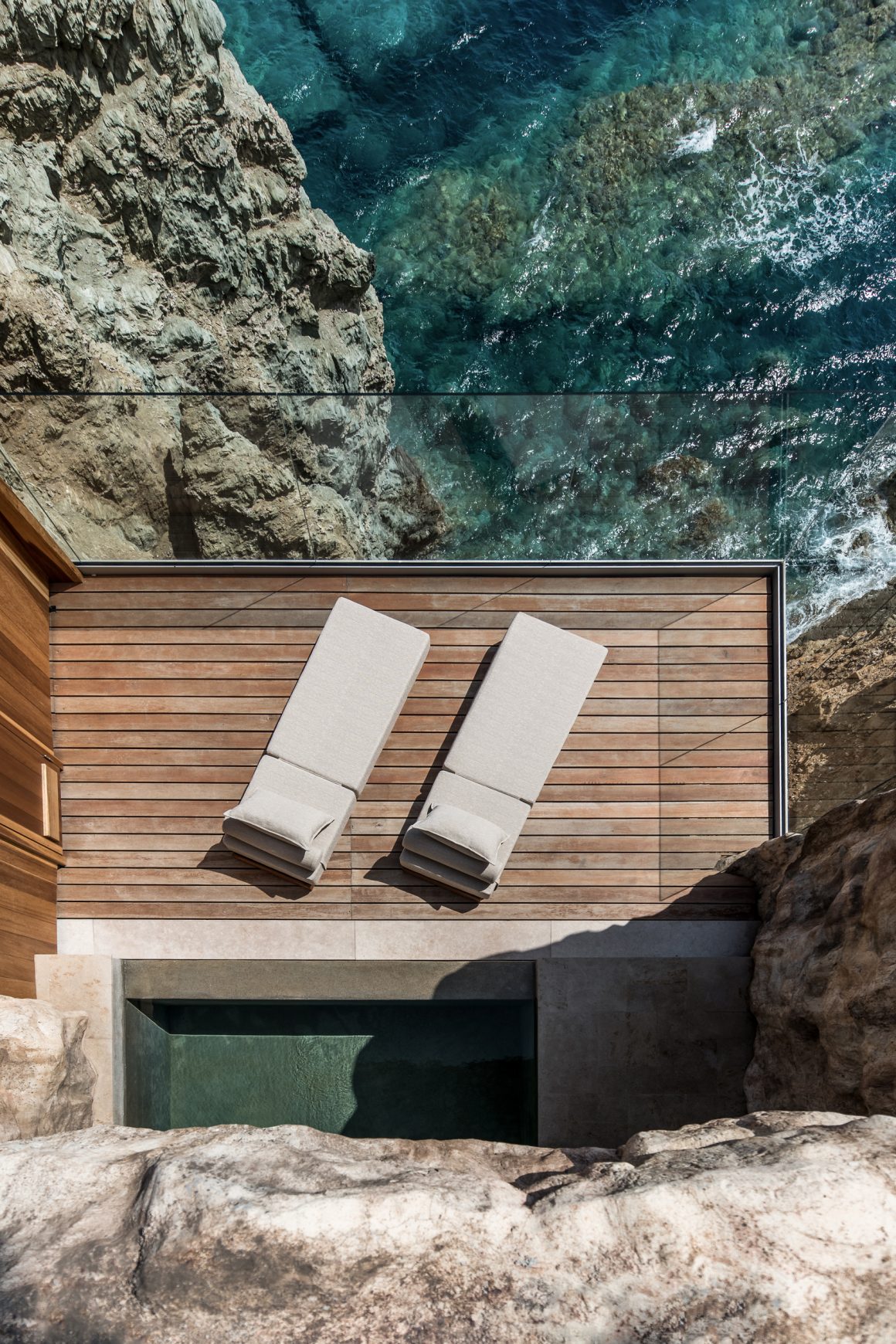
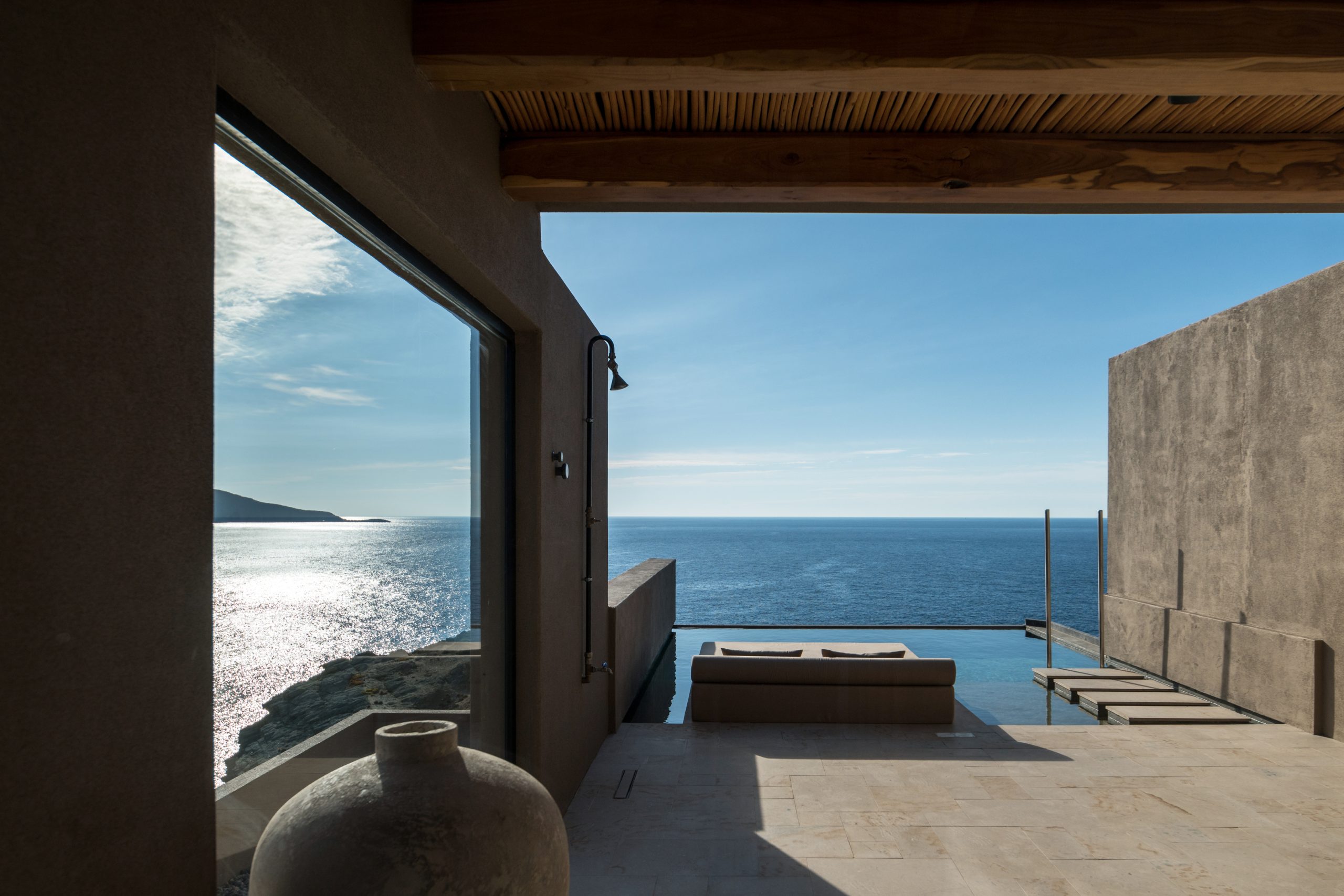
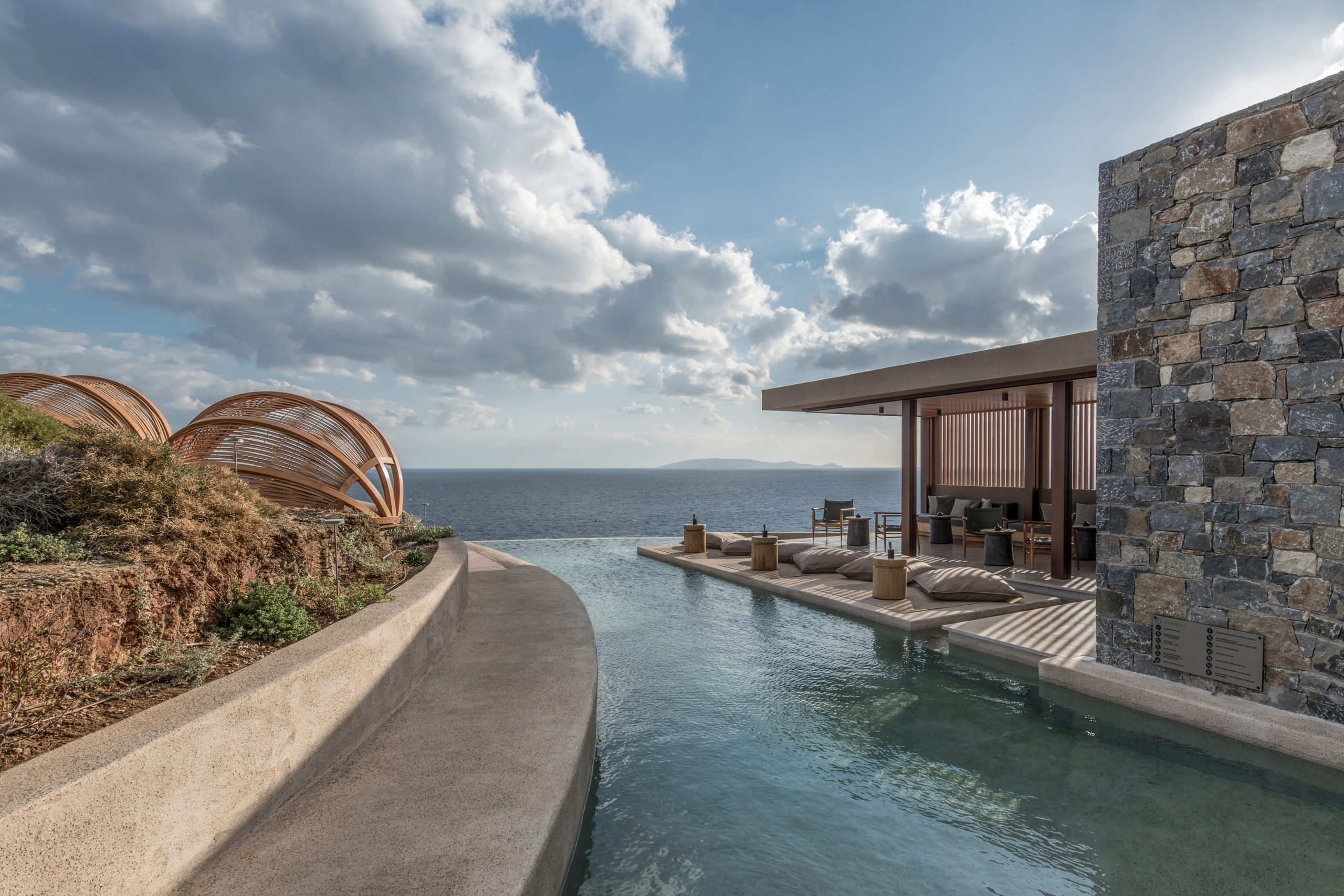
Acro was something completely new for us. In the past, the conventional investment model was based on large hotels, smaller rooms and as many doors as possible. Boutique hospitality was something we had never done before. Acro was our first property of this kind, with a clearly defined concept and its own identity, and through that process we learned a great deal.
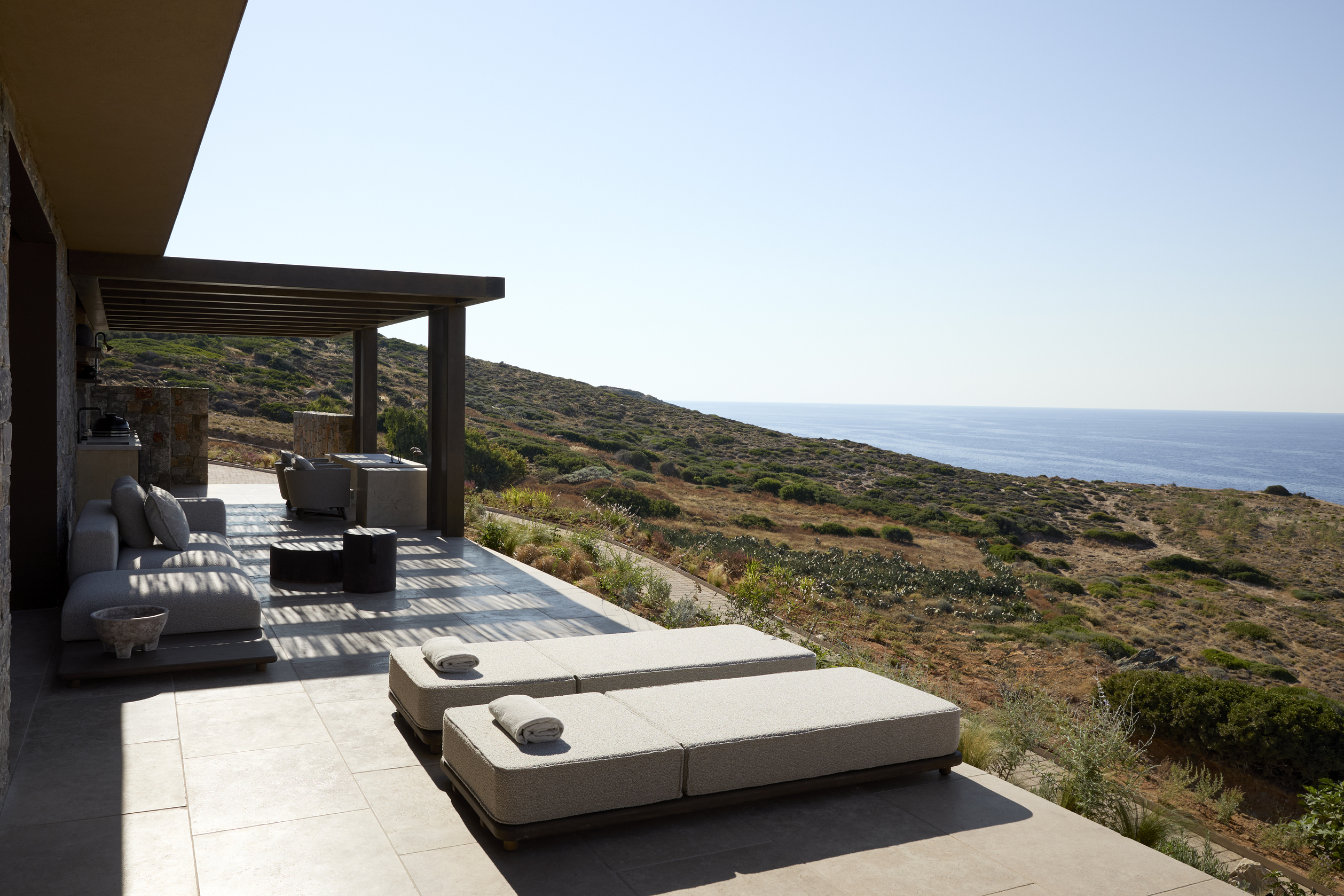
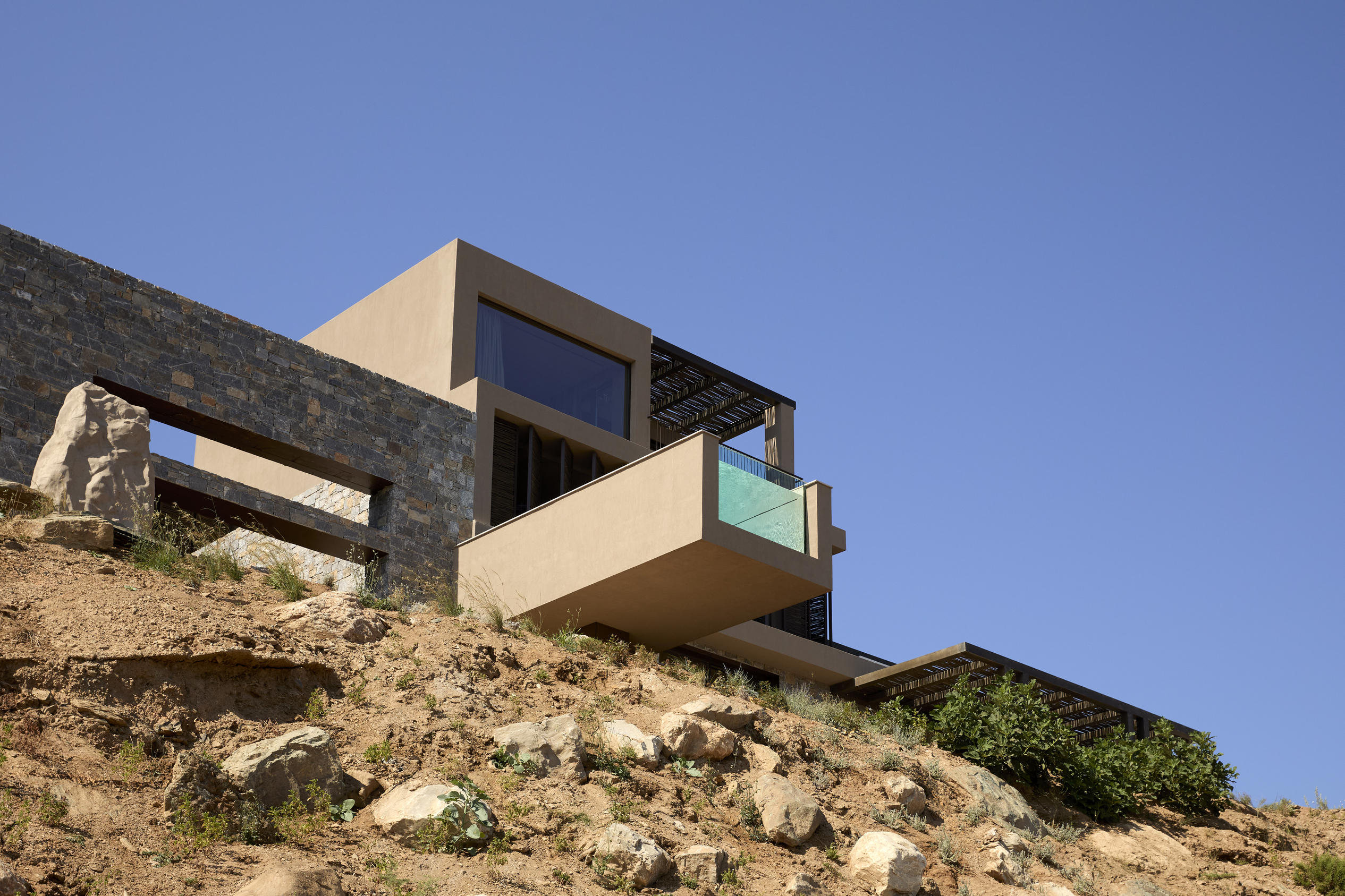
Nikos: Our most recent project is Tierras, five villas that we completed this summer. For me, it is perhaps our most personal project to date, because the idea began very spontaneously. There was an abandoned plot of land near our hotels that I used to pass all the time, and every time I looked at it, I thought there must be something we could do with it.
I didn’t have a clear idea from the beginning of exactly what it would become. I knew, however, that I didn’t want to create another hotel. I wanted to try something different, something more residential, with independent, fully equipped villas and a greater sense of privacy.
That is how Tierras came about. At the same time, I wanted to see whether there was genuinely a market for this kind of product in Crete beyond the traditional summer season. So, for me, it is particularly meaningful to see that plot of land today—something I simply used to pass by for years—transformed into something that once existed only as an idea in my mind.
What kind of guests do you welcome, and how important do you consider the opportunity to experience the authenticity of Crete and Greece more broadly?
Nikos: We welcome people from everywhere, from America and Australia to Asia and, of course, all over Europe. What strikes me, however, is that in recent years, no matter how different the people who come to us may be, they ultimately seem to be looking for very similar things.
They are not so interested in luxury for its own sake. They want to understand a little about where they have come. They want to taste something we eat ourselves, drink a Cretan wine, ask where the olive oil we serve them comes from. They want to walk through the hills around the hotels, find a beautiful spot and watch the sunset.
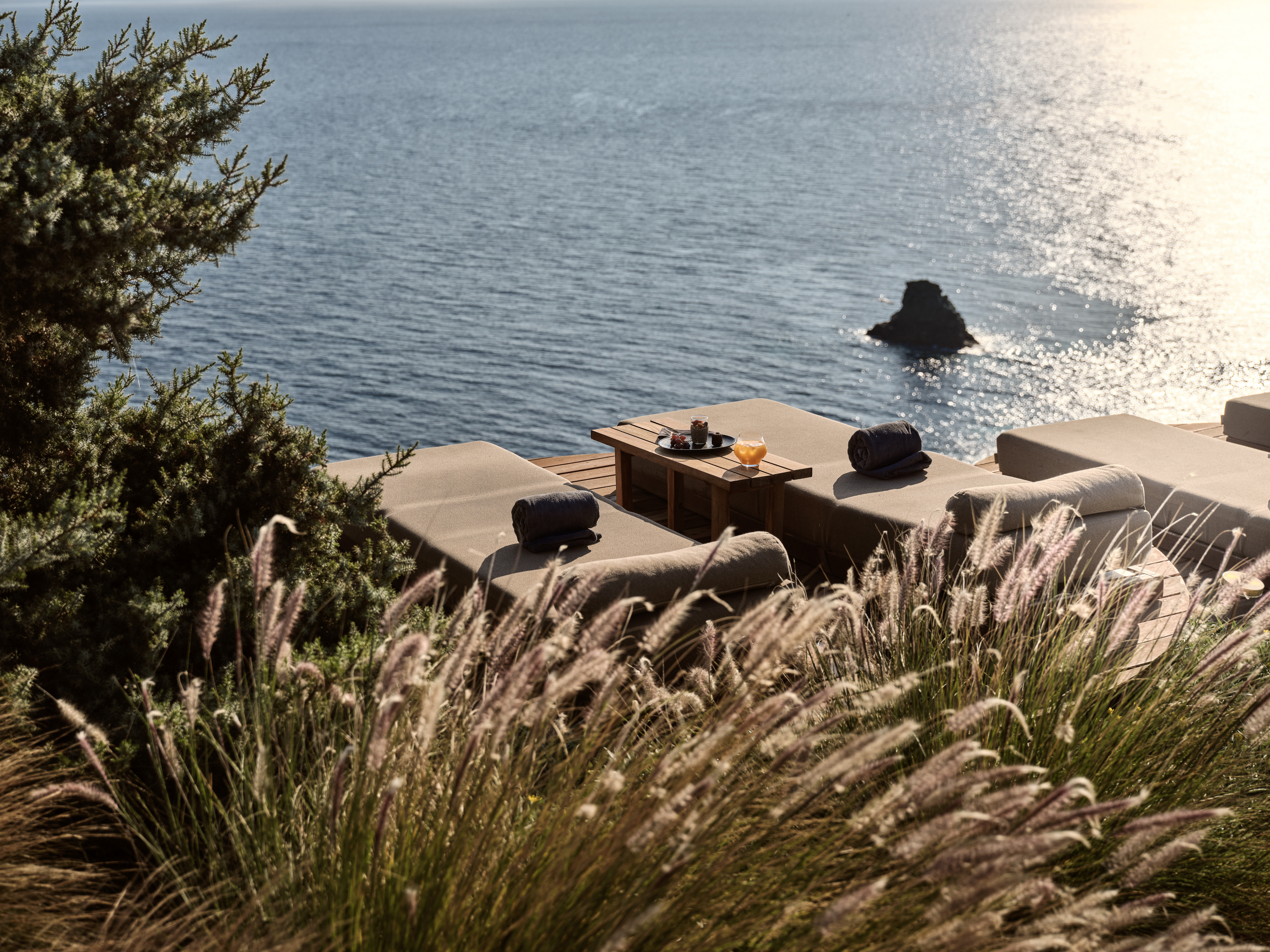
For example, every afternoon when I leave work, I see our guests sitting on the rocks for hours, simply watching the sunset. I love that image, because I think that what stays with them can be something so simple. A view that is part of our everyday life can, for someone who has travelled from the other side of the world, become the reason they remember that trip.
I see the same thing in the restaurant. I often hear guests asking the staff, “What would you eat? Tell me what I should order.” To me, that says a lot. They don’t want us to present them with a version of Crete created for tourists. They want to experience our Crete—the Crete we live every day.
Where, in the wider area and within the spaces you have created, can one discover a sense of authentic Greece?
Giannis: The area around Agia Pelagia has many such places, as long as you look a little beyond the beach. A little further up in the mountains is Achlada, a small village surrounded by fields and olive trees. As you make your way there, you come across goats crossing the road, quiet landscapes, nothing hurried.
There is Dina’s taverna there, where she cooks herself alongside her husband, and at the end, before you leave, they offer you raki to drink together. The food is simple, without embellishment, but it has flavours that remind you of something familiar, something homemade.
That is the spirit we try to carry into our own hotels, in a different way, of course. We don’t try to smooth out or soften the character of the area. We want you to feel it as it truly is.
Which collaborations have proved particularly fruitful over the years, and which have evolved into enduring values for your hotels?
Nikos: We believe very strongly in relationships that stand the test of time. We have partners and travel agencies that have been by our side for many years and continue to trust us, even through difficult periods such as Covid, when everything was uncertain. That kind of relationship of trust is not built easily or quickly.
But we feel it most strongly with our people—the staff who stay with us season after season, year after year, and who ultimately are the ones who communicate who we really are to every new guest. That continuity, those people who remain beside you through difficult times, are what make the difference.
The results speak for themselves. Did you ultimately achieve what you had dreamed of?
Giannis: To a great extent, yes. But the truth is that our dreams never remained fixed. They grew alongside us. We started from scratch, without anything ready and waiting for us, and everything we created came step by step, through a great deal of hard work.
Nikos: Every time we achieved something, we never sat back and enjoyed it for very long. Our minds almost immediately moved on to the next thing. That is how we have been since we were children. We always wanted to create something of our own, to move a little further forward. And perhaps because we built everything ourselves, we never took anything for granted.
Giannis: What moves me most when I look back today is not simply how much the business has grown. It is the fact that I remember very clearly where we started and that, throughout this entire journey, we never lost ourselves.
Do you have returning guests? What kind of feedback do you receive from them, and why do you think they keep coming back?
Nikos: Yes, many people return, and for us that is the most important sign that we are doing something right. Many come back to see their friends, the members of our staff with whom they have formed bonds over the years. They arrive every summer with gifts in their hands—chocolates from Austria, sweets, cards—and embrace them as if not a single day had passed. Quite often, they even make arrangements for the following year before they have left.
At Seaside, we have people who have been with us for more than 15 or 20 years, and they have their own returning guests. They know which table each person prefers, they know their wine by heart, they tease each other. You can often hear their laughter from a distance, and it is moving, because you realise that this is not simply a job. It is a relationship.
What are the more intangible qualities of your hotels that shape their uniqueness?
Giannis: I think it is the warmth and the sense of immediacy. In Crete, we have learned to make people feel like one of our own very quickly. We will start a conversation, ask where they are from, tell them where to go for dinner, where to swim, what to try. And our people are like that too—spontaneous and genuine. They don’t follow a manual on how to be friendly; it comes naturally to them.
That is how we grew up as well, in a home that always had people coming and going, food on the table and room for one more. That is the feeling we want someone to have when they come to our hotels.
Is Crete a destination that attracts quality tourism, and how do you think this aspect could be further developed?
Nikos: I think Crete has evolved tremendously as a tourism destination and today it can attract visitors looking not only for quality, but for something more meaningful as well. What I believe we need to do better is show that Crete is so much more than a summer destination.
For me, one of the most beautiful aspects of the island is our villages. We have wonderful mountain villages, mountains and hiking routes, small cafés and tavernas, but above all, people and a way of life that exists independently of tourism. Especially in winter, you discover a completely different Crete—quieter and perhaps even more authentic.
There are so many things to see and experience here throughout the year; I simply don’t think we have communicated that as much as we could. I would like the day to come when, when someone thinks of Crete, they don’t think only of the sea and the beaches. For me, that is the next step. Not simply to bring more visitors, but to give people more reasons to discover Crete differently, and at different times of the year.
Giannis: On the other hand, I believe we will also see major changes in the island’s infrastructure in the coming years. The new airport is a very important project for Crete and could open up new possibilities, with more flights and direct connections to markets that currently do not have such easy access to the island.
The BOAK is equally important. Crete is a large island, and today travelling from one area to another is not always easy. A modern and safe road network would change not only the visitor experience, but also the everyday lives of all of us who live here.
I think all of this will significantly transform Crete in the coming years and create new opportunities for the island. Having been involved in tourism here for so many years, we always try to look a little further ahead, to see where things are going and be ready for the next step.
How do you envision yourselves ten years from now?
Nikos: In ten years, above all, I would like us to still be working and doing what we love. I’m not someone who can easily imagine himself sitting still. I like being in the hotels, seeing the guests, talking to our people, thinking about what we can do better. I hope that never changes.
Of course, I also want to see our children moving forward, taking on more responsibility and evolving the business in their own way. We will be there for as long as they want us and for as long as we can contribute—perhaps in a different role, but always close by.
Giannis: I see it much the same way. I don’t dream of us having simply more or bigger hotels ten years from now. I would like us to continue creating things that we genuinely enjoy. To still be able to go to our hotels and feel the same joy we had when we were starting out. To have built something sustainable and timeless.
And, of course, as the years go by, you want to see the next generation moving forward too. To take what we have created, make it better and take it somewhere we perhaps never imagined. If, ten years from now, we are all well, continue working together, still love what we do, and can look at everything we have created and say that we did it right, that will be enough for me.
Give us your own definition of beauty.
Nikos: For me, the truest form of beauty is our family, our children, the moments when we are all together. As the years go by, those are ultimately the things that matter most.
And then there is the beauty of hard work. When I look at something that was once simply an idea and remember how hard we fought to create it, how many difficulties we went through, and now see it filled with people enjoying it, I experience it differently. Perhaps if everything had been handed to us ready-made, we wouldn’t love it in quite the same way. The effort behind something is often what makes it more beautiful.
Giannis: Beauty is also looking back and seeing how much you have changed yourself throughout the journey. For me, there is beauty in exhaustion too. In giving yourself to something, struggling, persevering and, through all of that, evolving. Looking back and realising that things which once seemed like mountains can now be faced differently.
Beauty is not only the moment when you say, “We made it.” It is everything that changed you along the way. The exhaustion, the mistakes, the things you learned along the way. For me, that evolution is perhaps the truest form of beauty.
What do you consider authentic today?
Giannis: Being authentic today means being able to admit that you are wrong, and to say it simply, without pride or excuses. Our generation did not learn that easily. We were taught to appear strong, not to show weakness. It took time for us to understand that the opposite is true.
And yet, the most genuine thing a person can do is say, “I didn’t know that,” or “I got it wrong; let’s fix it.” You don’t see that very often, and when you do, you realise that you are standing in front of a real person.
The same applies to us. Over all these years, we haven’t got everything right; we have made mistakes too. But what kept us authentic was not that we never made mistakes. It was that we were never afraid to admit them and make things right.