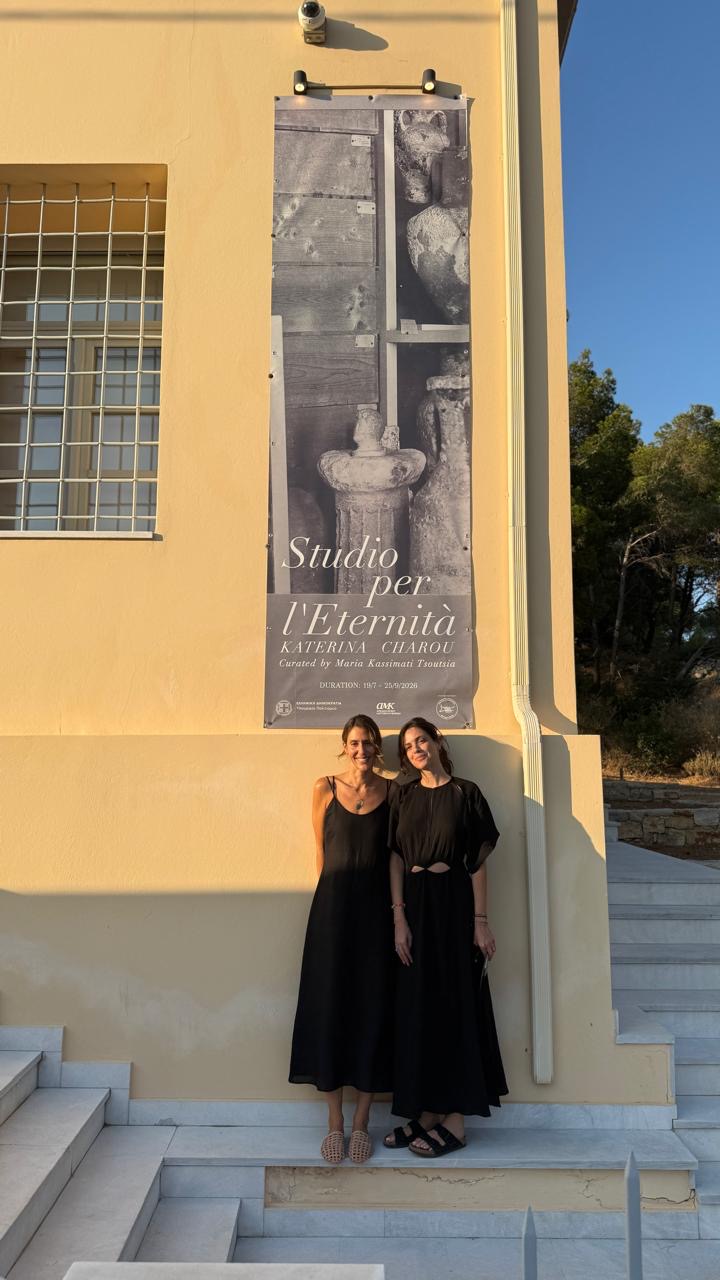
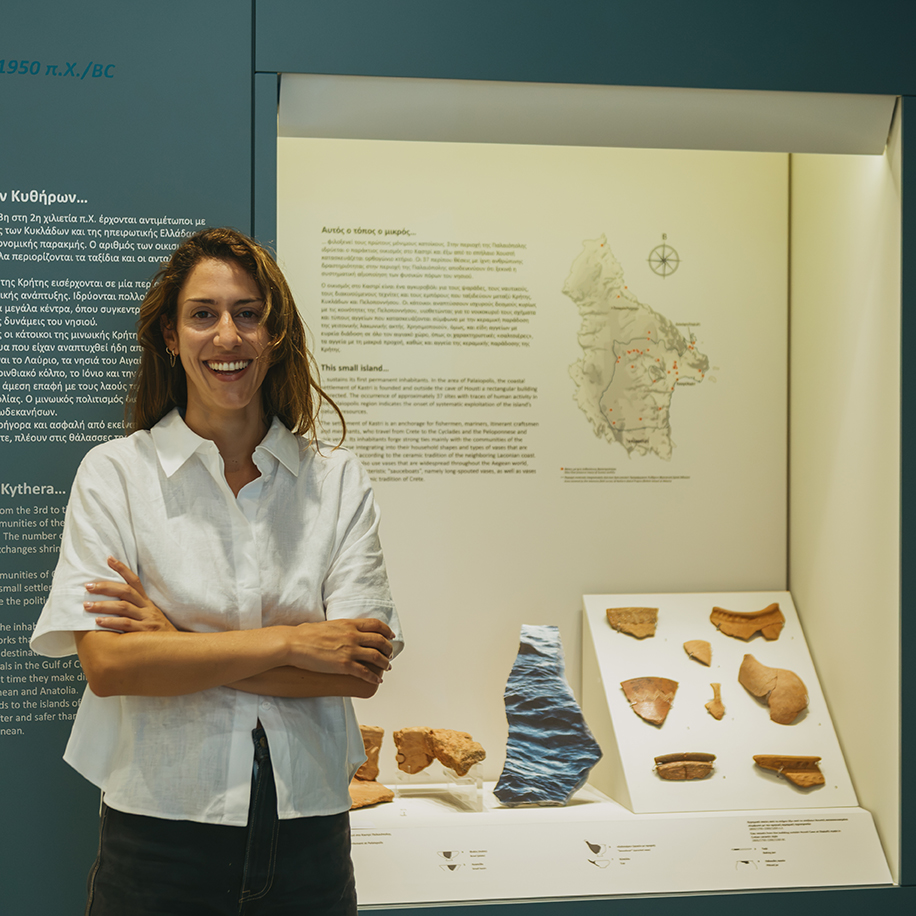
To mark the tenth anniversary of the reopening of the Archaeological Museum of Kythera, the Ephorate of Antiquities of Piraeus and the Islands presents Studio Per L’Eternità, a solo exhibition by Katerina Charou, curated by Maria Kasimati Tsoutsia.

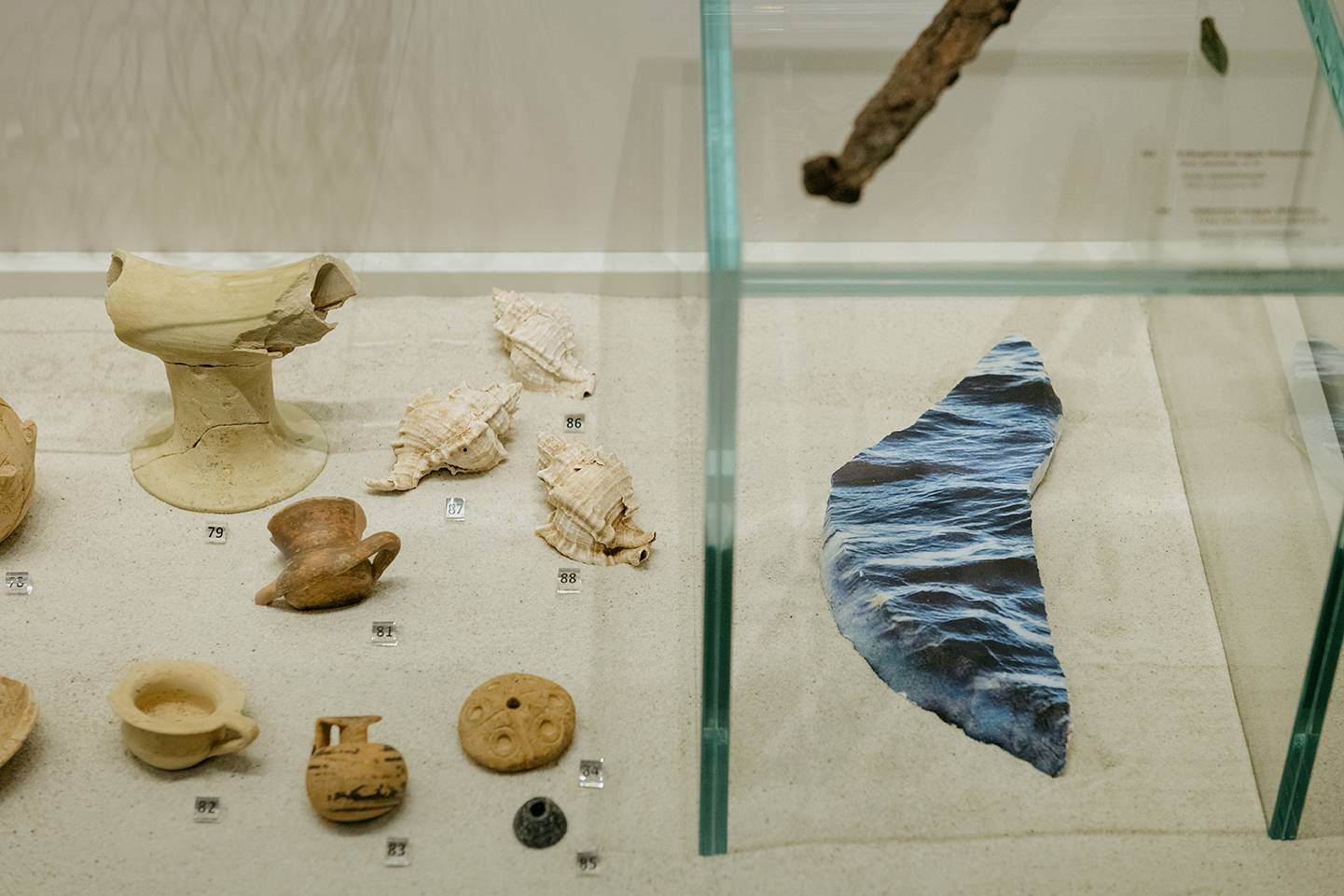
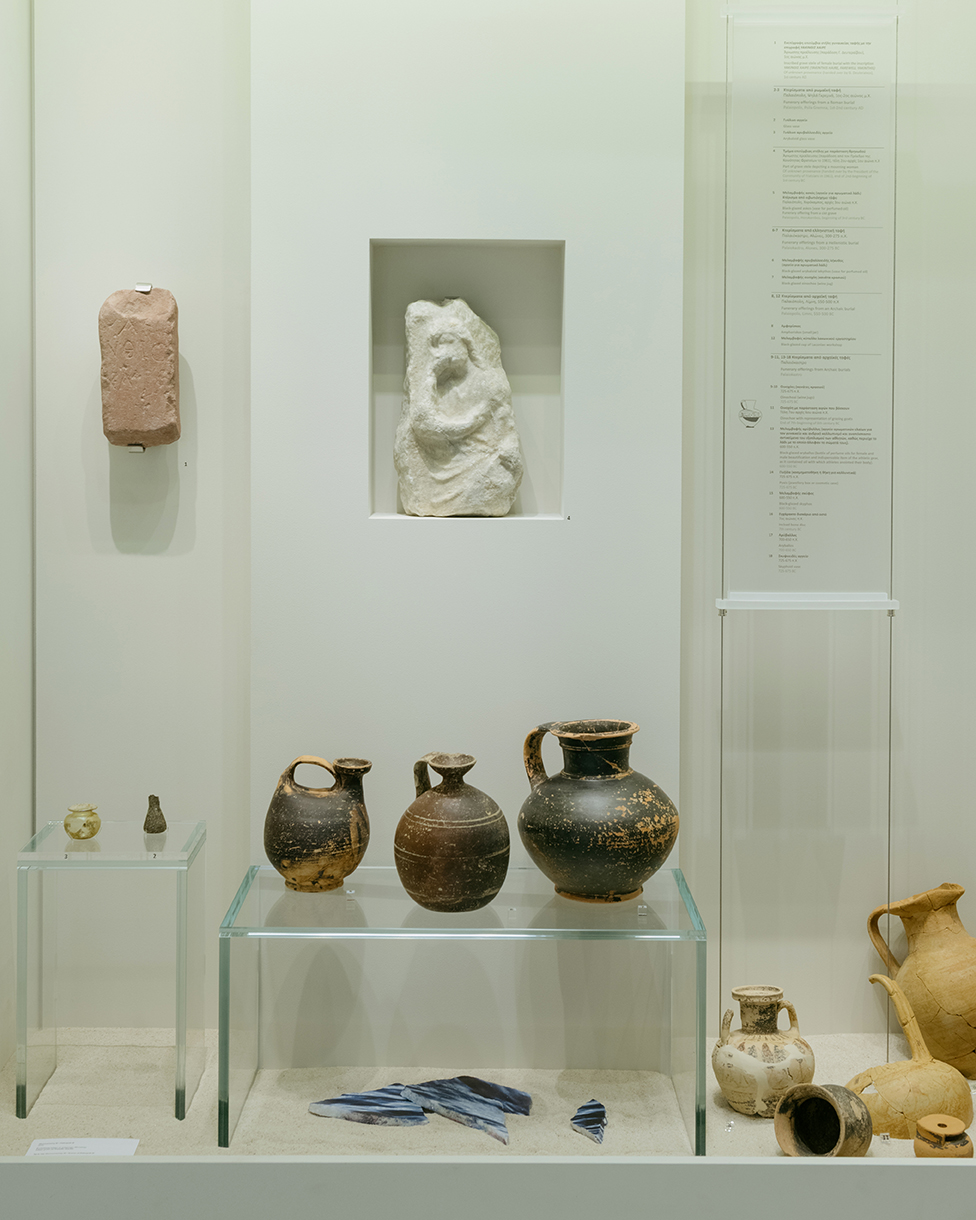
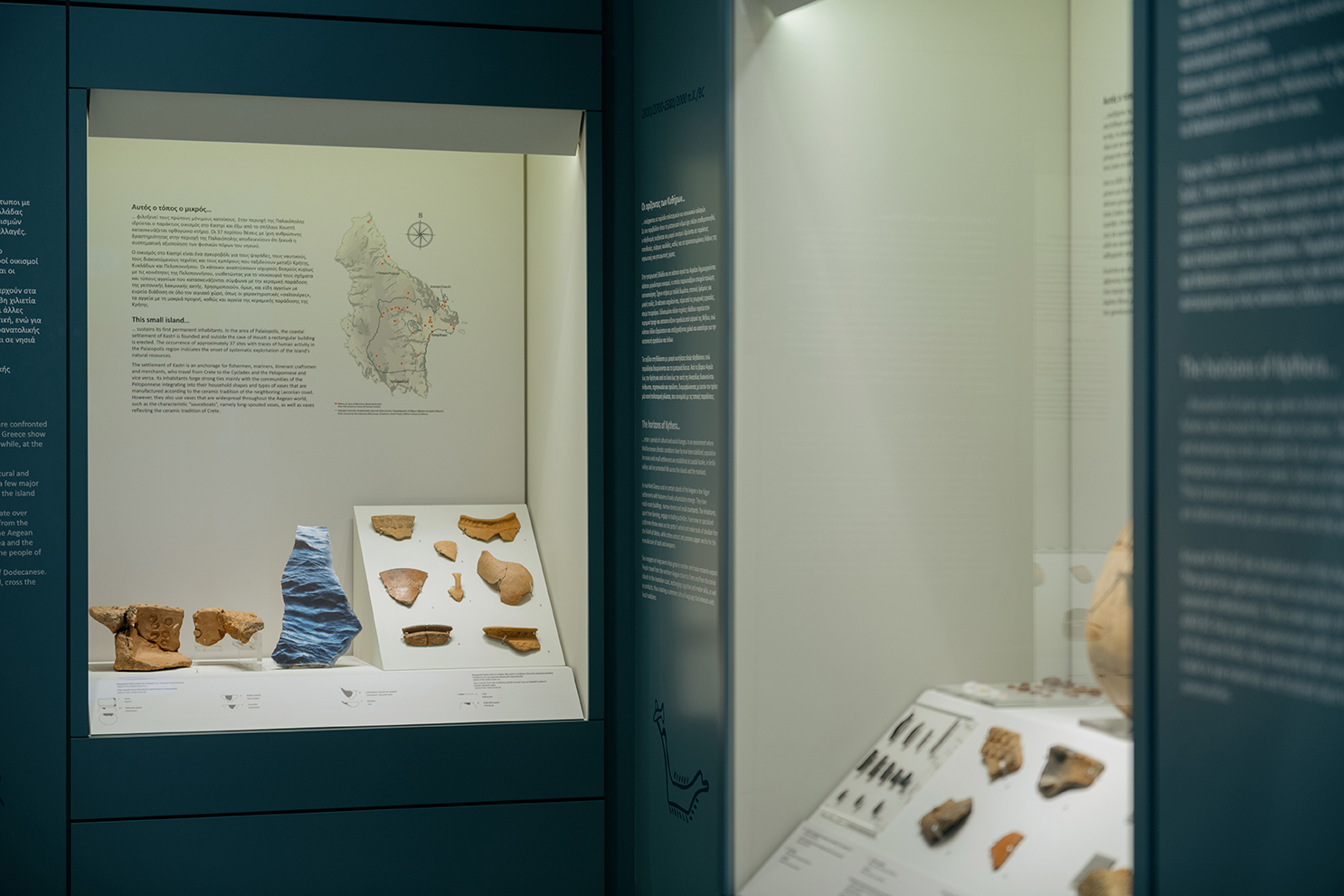
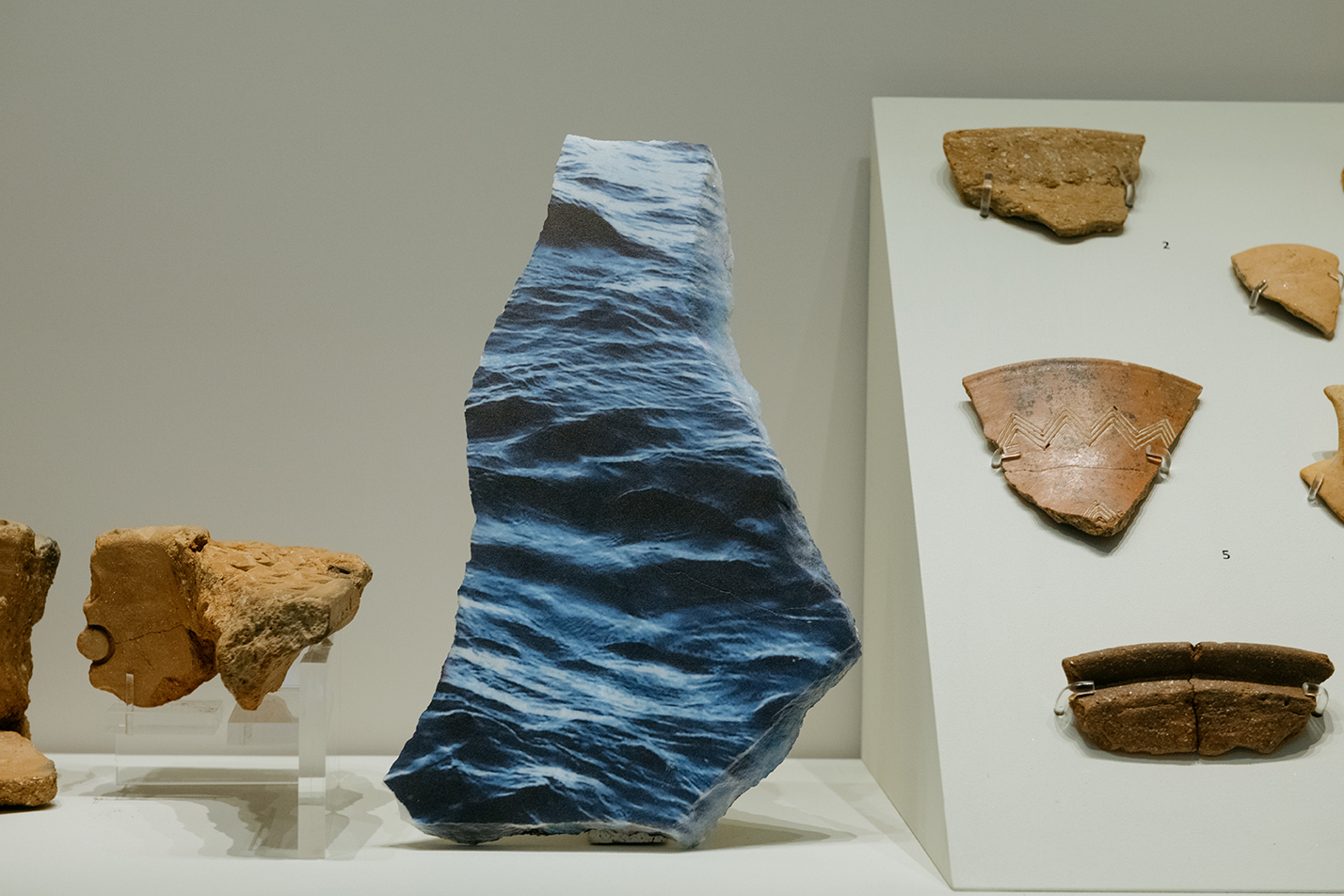
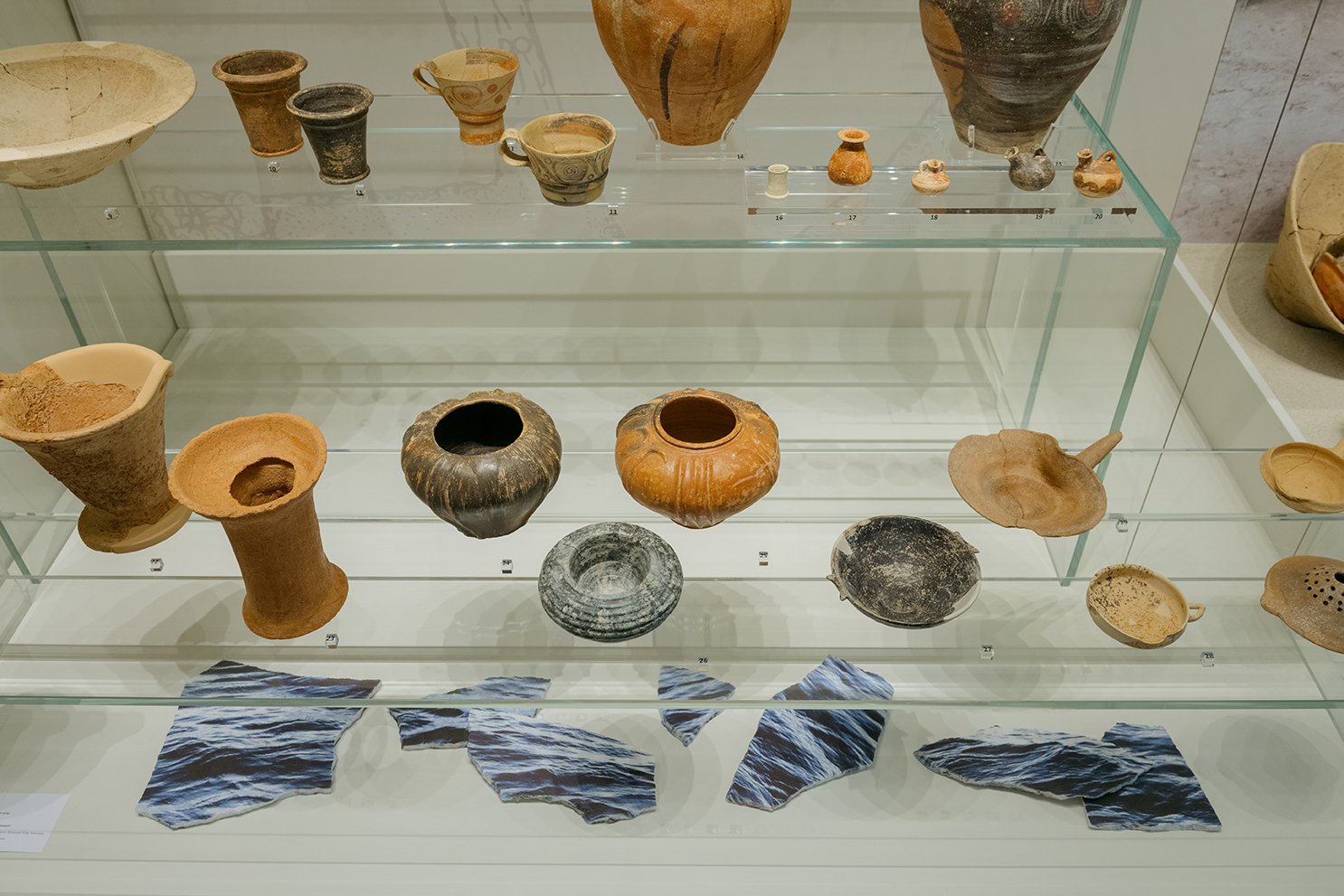
The exhibition marks a symbolic milestone in the museum’s history, as contemporary artworks are presented alongside archaeological artifacts within the museum’s display cases for the first time. These vitrines are transformed into spaces of dialogue and reflection, where the museum narrative moves beyond a strictly linear reading of history. Charou’s works act as conduits between different temporalities, inviting visitors to experience the archaeological objects not merely as remnants of an ancient civilization, but as enduring vessels of presence whose significance continues to resonate across centuries.

At the heart of the exhibition is Sea, a body of work born from the artist’s ongoing exploration of water as a site of memory, transition, and transformation. The series is the culmination of years of interdisciplinary research into Kythera’s geology, mythology, and layered histories. Rooted in extensive fieldwork and a profound personal engagement with the island’s natural and cultural landscape, the exhibition unfolds as a meeting point between archaeology and contemporary artistic practice, between trace and memory, materiality and permanence.

The Sea series was first presented in 2022 as part of the group exhibition HORS-LES-MURS – Coup d’éclats at the Louvre Museum, under the patronage of the École des Beaux-Arts de Paris.

Archaeological Museum of Kythera

Studio Per L’Eternità

Until September 24, 2026.

Studio per l’eternità

There are titles that name a work, and titles that displace it.

Studio per l’eternità belongs to the latter.

The studio is not the preparation of a work. It is its refusal to be considered complete. It does not describe a condition but a state of becoming: form at the moment it remains open.

It is the word per that unsettles the title’s equilibrium.

It signifies neither possession nor identification. It signifies direction.

A work towards something that can never become an object.

Eternity, therefore, is not the subject of the exhibition.

It is the point towards which it is oriented without ever arriving.

Marble already knows this movement. Before it became sculpture, it underwent geological transformation. Before it became an archaeological artifact, it was matter.

History did not replace these states; it merely layered itself upon them.

The screenshots operate in the same way.

They neither overwrite the stone nor interpret it.

They leave yet another trace upon a surface that has never been empty.

Perhaps the fragment is the only form capable of moving towards eternity.

Not because it is incomplete, but because it refuses to coincide with a single completion. Every fragment remains open to a future inscription.

Studio per l’eternità does not propose an image of duration.

It proposes a different economy of matter, in which stone is no longer the support for the image, but the temporal ground within which the image appears, endures, and ultimately recedes.

Perhaps eternity is never what we see.

Perhaps it is that which renders every image provisional.

Maria Kasimati Tsoutsia

Katerina Charou & Maria Kasimati Tsoutsia
Katerina Charou

Author