Tell us about your journey. How did it all begin, what was your starting point, and how has your practice evolved over time?

My engagement with art began with a personal need to give form to emotions and experiences that could not be expressed in words. After two difficult breakups, I found myself with a pile of fabrics that held deep sentimental value. Rather than parting with them, I began to work with them, cutting and stitching them together to create pieces that told stories of memory and emotion.

This process led me to develop a deeper relationship with fabric as a medium of expression. Each piece of fabric carries its own story, texture and pulse. Through my work, I seek to bring these stories to the surface, giving new life to materials that were once part of someone’s everyday life.

Taking part in Contextile 2024, the Biennial of Contemporary Textile Art in Portugal, was a significant milestone in my journey. Out of 1,300 applications, I was selected as one of the 50 artists whose work was presented.

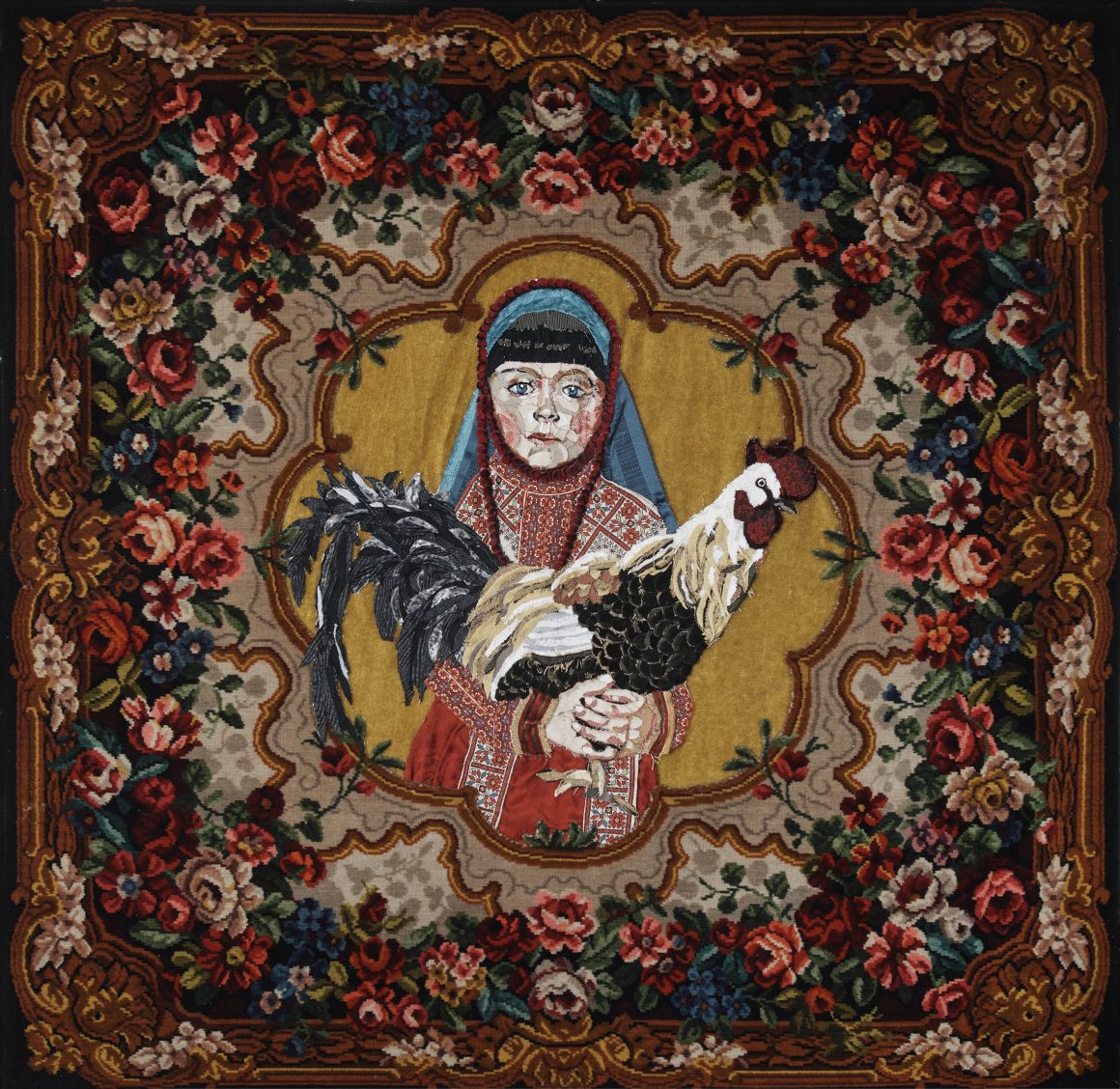
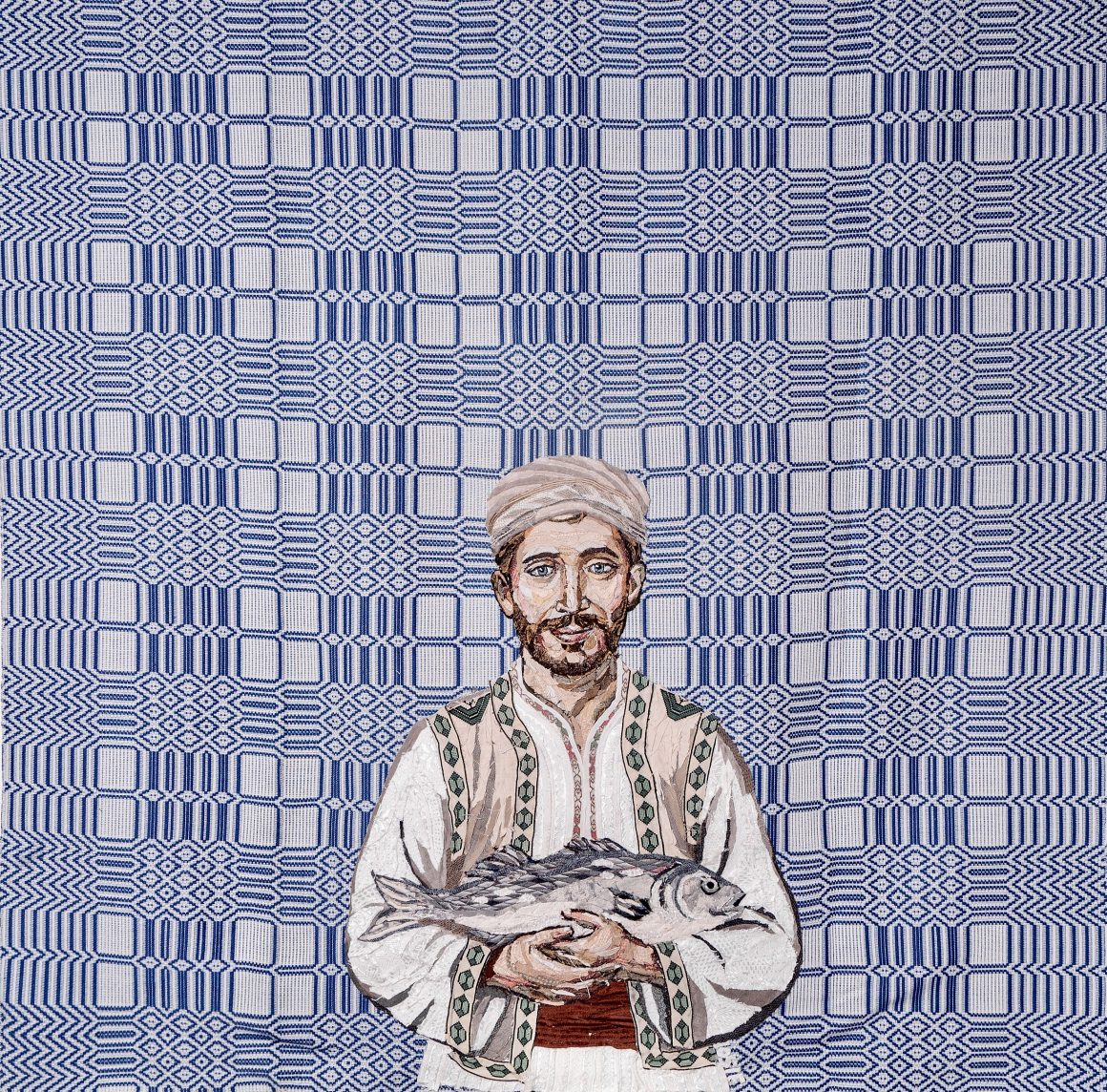
Another defining moment was having my work Girl with a Rooster selected for the cover of Greece Is magazine. This recognition was a great honour and encouraged me to continue working with dedication, without losing my personal perspective.

A further milestone was the selection of my work Woven Echoes for the Larnaka Biennale 2025, themed Along Lines and Traces. For me, this participation affirmed that the language of textiles can reach wider audiences and find resonance within international art contexts.

What do you think sets your work apart? What is your approach?

I believe what distinguishes my work is its sense of familiarity, coupled with an element of mystery. I use fabric, a material closely associated with the body, everyday life and the home, to tell stories that possess depth and introspection.

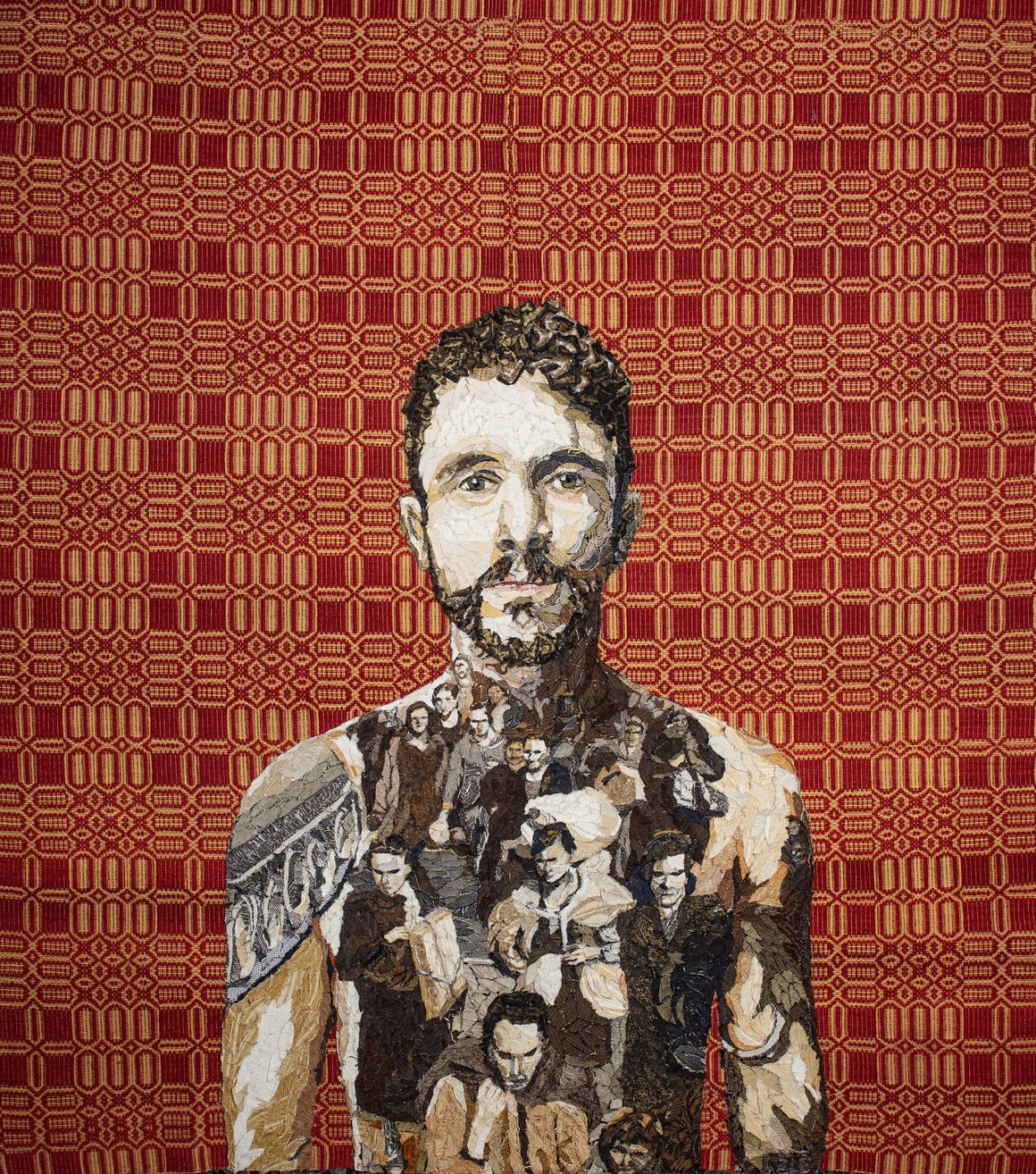
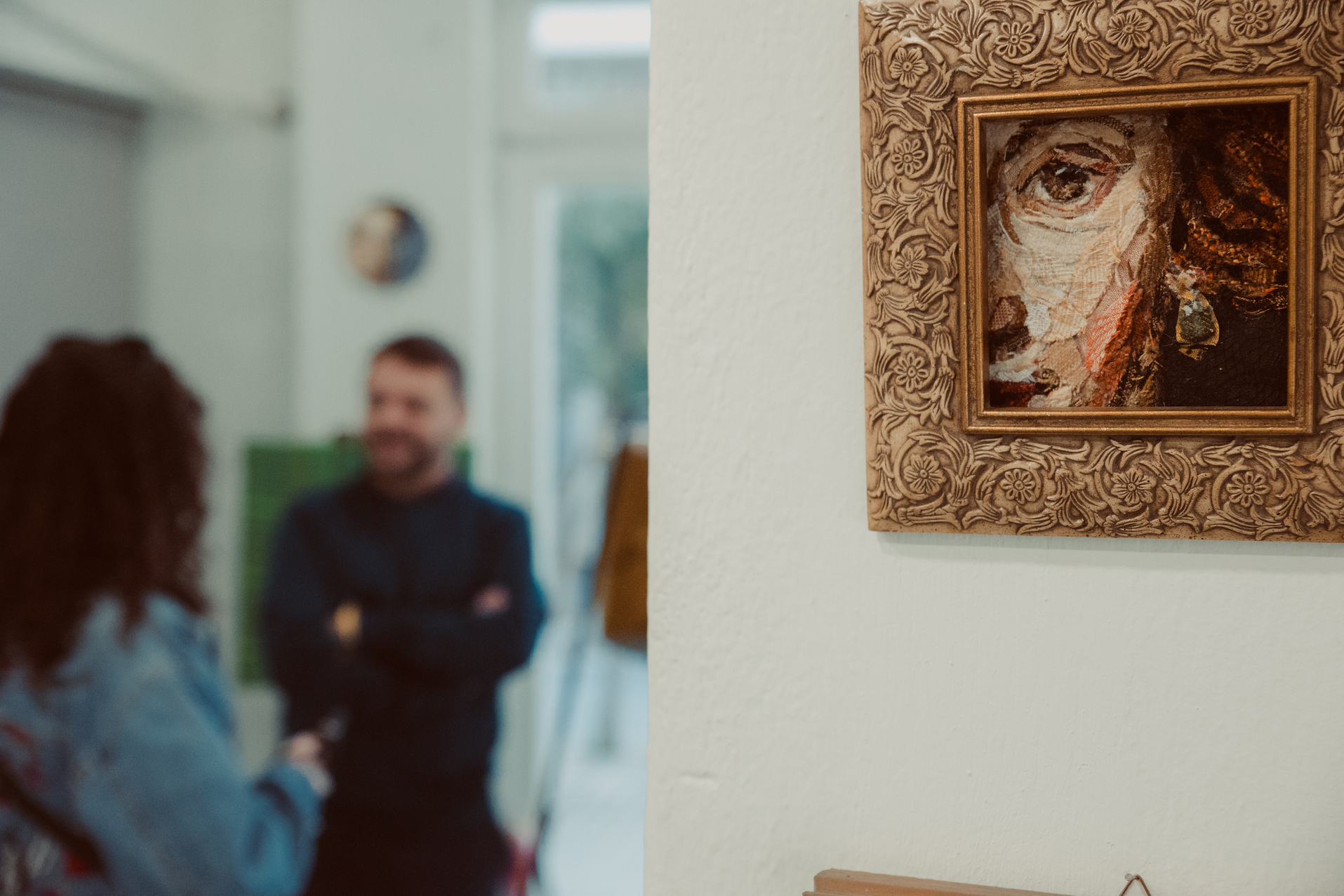
My approach is deeply personal, yet open to the viewer’s interpretation. I do not impose a narrative; instead, I create a quiet setting, a space in which the viewer can observe, feel and reflect. The eyes, in particular, featured in my Silent Watching Eyes series, function as mirrors. It is never entirely clear whether you are looking at them or they are looking at you. This ambiguity creates a space for a silent, almost existential dialogue.

For me, the creative process is a form of therapy. As I work with the fabric, I also work through my own emotions and experiences. Every cut, every piece of material carries a story, a memory, an emotional charge.

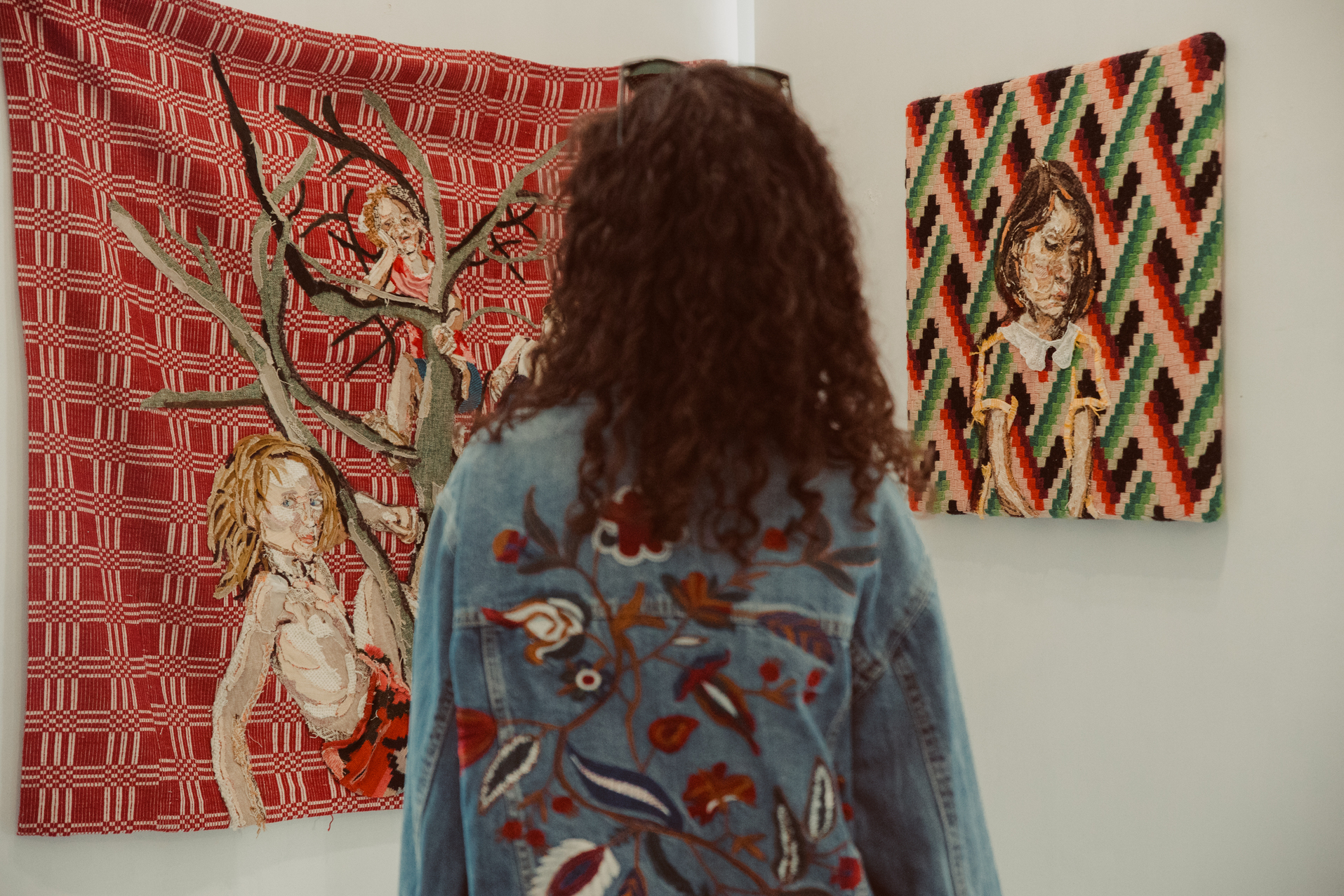
My choice of fabric as my primary medium is also deliberate. Textiles are deeply connected to everyday life, family and tradition. Through their use, I seek to bridge past and present, the personal and the collective.

Ultimately, I believe the power of my art lies in its ability to evoke emotions and provoke thought without the use of words. Through the silence of my works, viewers are invited to listen to their own inner voice and connect with their personal experiences and feelings.

You create art objects using different materials, bringing together contrasting textures and striking, unexpected combinations in compositions that feel remarkably cohesive. How did this idea first emerge, and how has it evolved over time?

The use of different materials, textures and unexpected combinations came about almost naturally, out of a need to express inner contradictions and memories that are never entirely unified or clear-cut. It began spontaneously, when I started working with personal fabrics imbued with stories. I realised then that each piece of fabric carried its own energy. I could no longer treat these materials as neutral. They had something to say.

The idea of composing through disparate elements reflects the way I perceive the human experience: as a patchwork of memories, contradictions, traumas and desires. Never something unified, but always something open-ended. I began bringing together fabrics that differed from one another, hard and soft textures, embroidery alongside raw seams, old materials alongside something fresh, the familiar alongside the unfamiliar.

The work evolved as I learned to trust the process. Through it, I began to recognise a natural ability to see potential where others might see waste, and to transform it into something new. Gradually, the act of creating became a personal ritual. I allow the material itself to speak to me. My relationship with fabric is almost meditative. I observe it, listen to it and respect it. I believe this is where my talent lies: not in technical perfection, but in my ability to read the material, sense its energy and give it a new voice, always with honesty, without concealing its cracks.

How do you select your materials, and how do you bring them together with other objects to create a new whole?

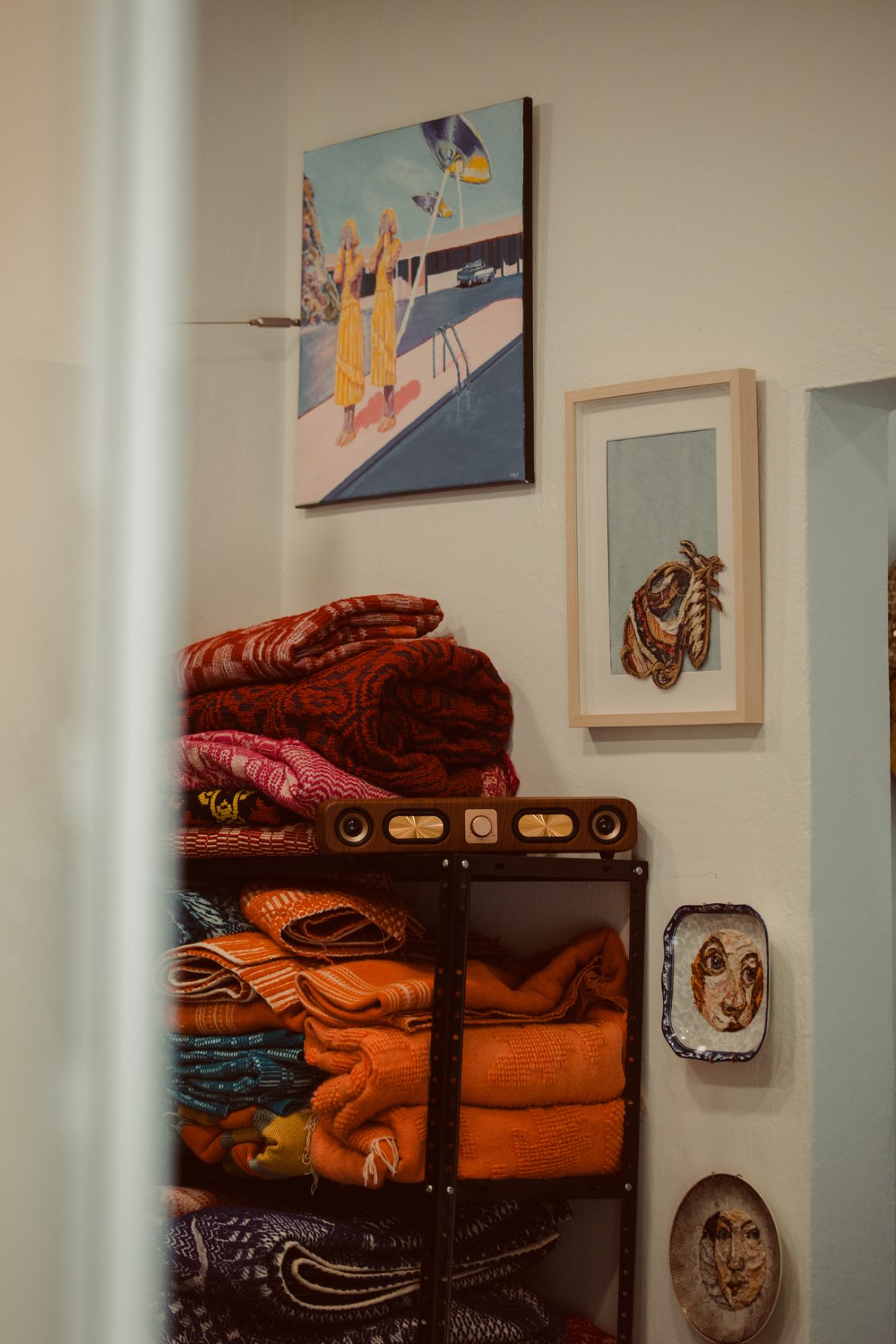
I choose materials that carry memories: worn, mended and forgotten fabrics, objects that have lived. Texture and colour palette are decisive in the selection process, guiding me almost instinctively.

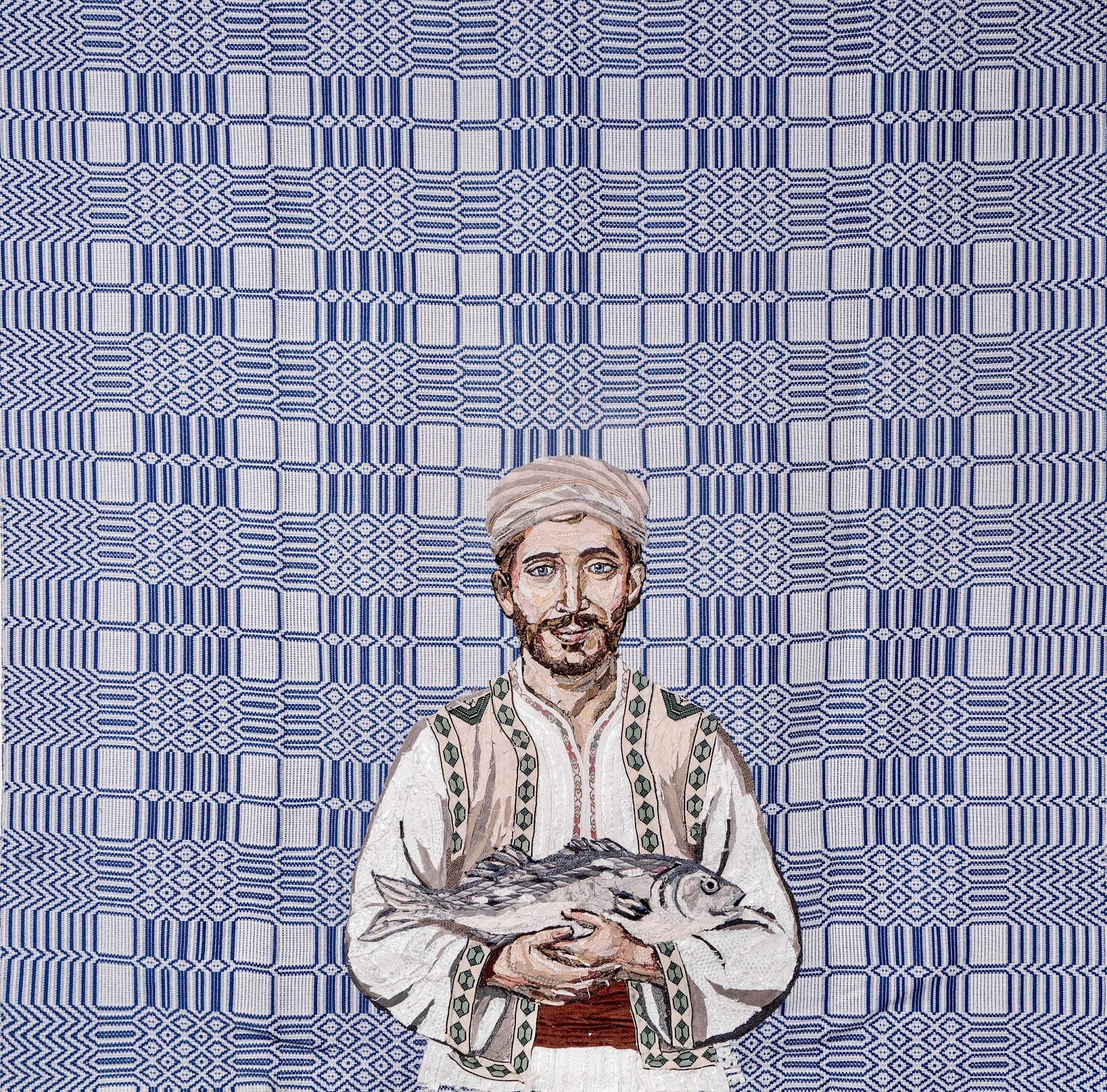
In my series featuring fish and seafood, ceramic plates serve as a foundation, like little stages. I am not serving food, but memory, humour and something unexpected. The combination of the familiar and the unusual creates new narratives: an image that seems recognisable, yet becomes something entirely different when rendered in fabric.

What place does art occupy in your life, and how do you navigate the space between art and design?

Art is my life. If I could, I would live in my studio; it is where I feel most authentically myself. There is no clear separation between creating and my everyday life; everything moves in sync, quite naturally. My work emerges from the rhythm of my life, almost as an extension of my body. I do not think of it as a job. It is simply the way I exist.

As for where art and design meet, I do indeed move between the two. I use materials and forms associated with the domestic and the functional, such as a ceramic plate or a garment, but functionality is not what interests me. I am drawn to memory, texture and emotion. My aesthetic may borrow elements from the world of design, but my intention is purely artistic. I do not want to make something beautiful; I want to make something true.

When that magical moment arrives and a work is complete, what do you feel? And which of your works holds a special place for you?

The moment a work is completed is both difficult and liberating for me. It is not so much a feeling of excitement as one of quietness, as though something that needed to be said has finally been expressed. I feel that a cycle has closed, that I have managed to capture an emotion, a memory or a truth I could not have expressed in any other way.

If I had to single out particular works, I would certainly mention Girl with a Rooster, which was selected for the cover of Greece Is magazine. It carries something raw yet deeply symbolic: a portrait filled with allusions to childhood, identity, gender and freedom.

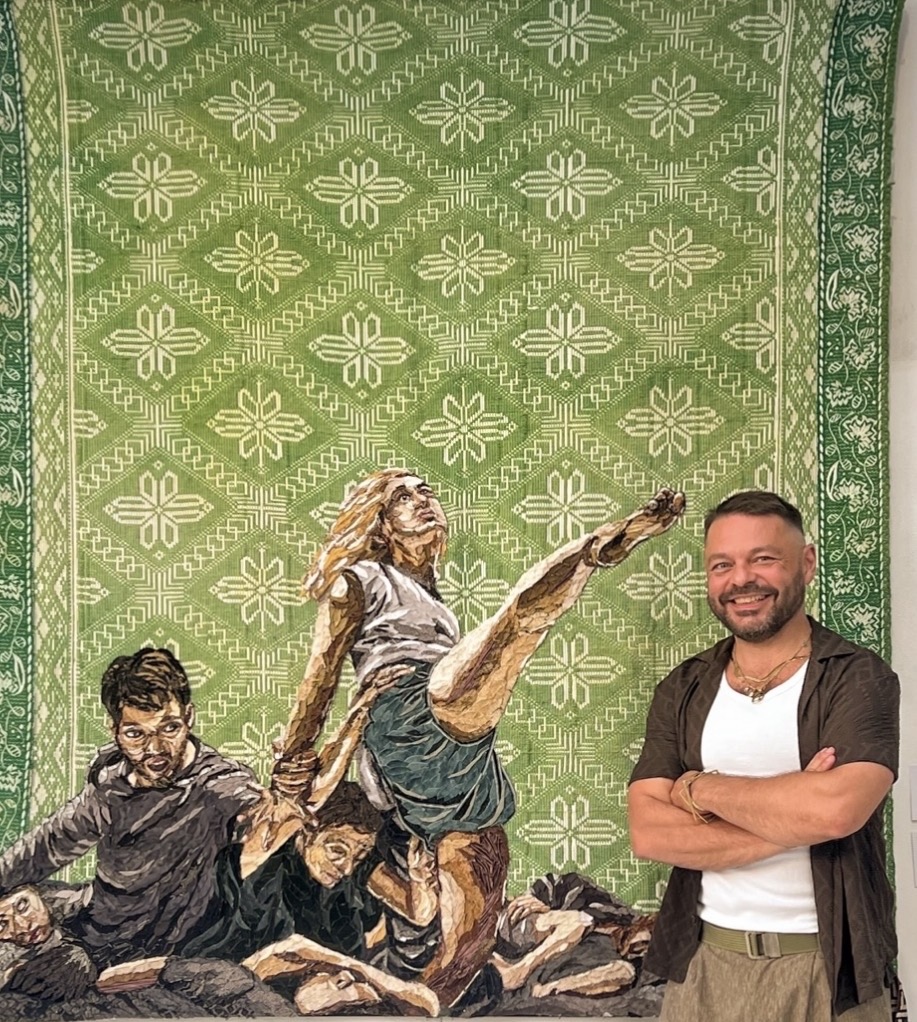
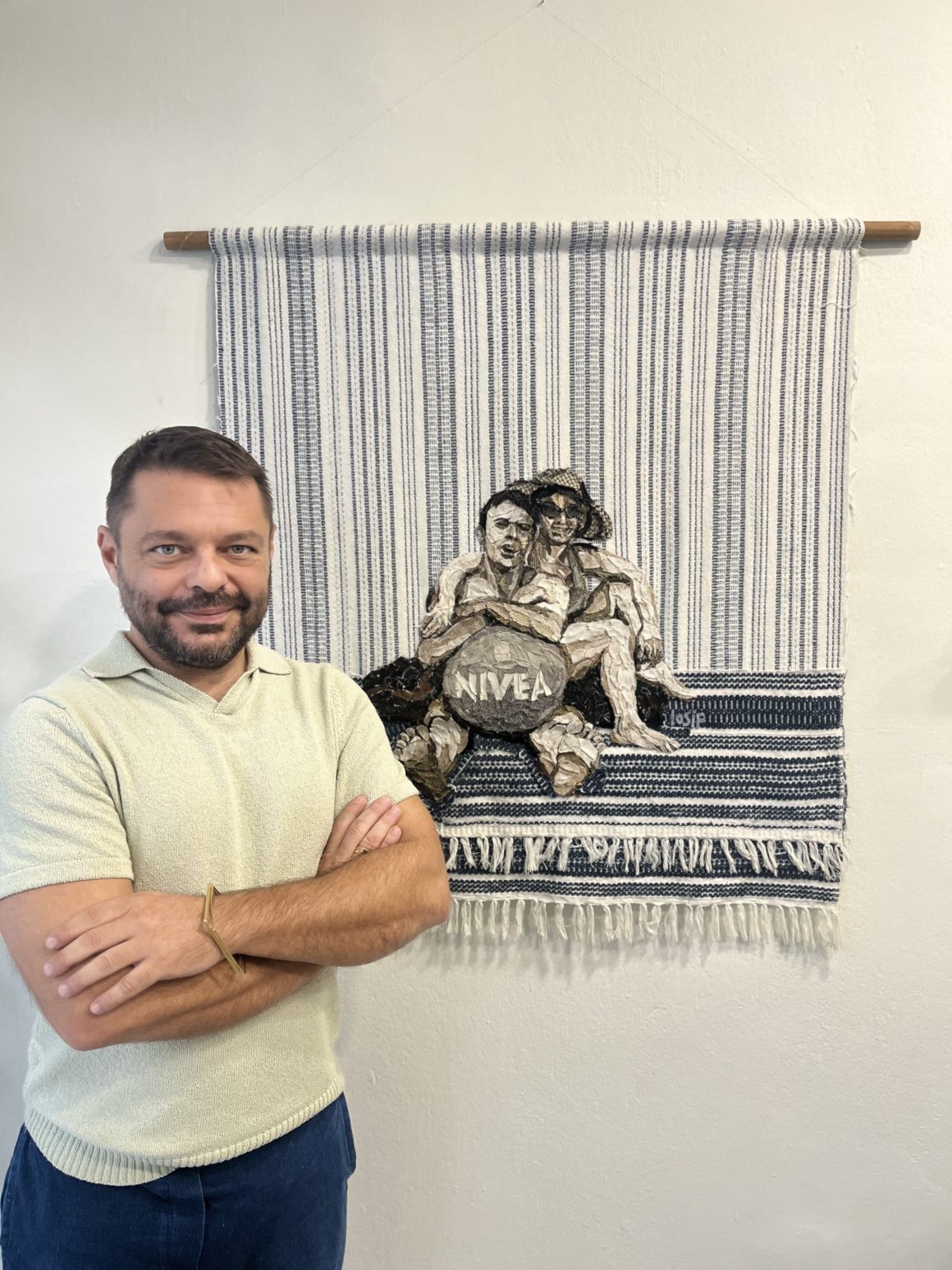
I would also single out Woven Echoes, because it is a collaborative work, not only in its making but also in its energy. It was inspired by a photograph by Mike Rafail, which was based on the stage production The Iran Conference by Christos Theodoridis, itself inspired by Ivan Vyrypaev’s play. The woven background was gifted to me by a couple who admire my work, and it was the first piece in which I began incorporating fabric scraps cut by my mother. The work carries a very beautiful energy.

Created entirely from recycled fabrics, its surface is populated by shadowy, almost ghostlike figures. It evokes stories of displacement, refuge and identity. Like the lives of migrants, it is made of fragments stitched together to form a new narrative. Although deeply political, its foundation is emotional: it speaks of resilience, memory and the collective experience of belonging and not belonging.


The concept of sustainability in art. Tell us the story of a work that was transformed from something that already existed.

For me, sustainability in art goes beyond the reuse of materials. It also concerns emotional sustainability and the way a material can carry memories and become part of something new without losing its past. A characteristic example is Girl with a Rooster.

The work is built around an old decorative wall hanging from my grandmother Polyxeni’s home. It was an object that stayed with me for years, imbued with childhood memories, familiar scents and the sound of her voice.

Rather than leaving it folded away in a cupboard, I decided to transform it into the backdrop for a portrait that would bring together tradition and a more personal, symbolic narrative. The figure of the girl with the rooster has something sacred yet elusive about it, as though suspended somewhere between a religious icon and a psychological portrait.

For me, this work is an example of how something old, seemingly merely decorative, can acquire a new power without renouncing its origins. Memory is not discarded; it is stitched back together.

What does Greece mean to you, and how is it deciphered through your work?

For me, Greece is made up of the images and objects that shaped my childhood: our grandmothers’ homes, the plates on the walls, the textiles, the familiar scents and the silences. I do not approach it from a touristic or patriotic perspective. I carry it with me because it is the environment in which I grew up and was shaped.

This is expressed in my work primarily through the materials I use: objects drawn from everyday Greek life, old embroideries, frames and decorative pieces we have all encountered somewhere. I enjoy bringing them into the present and giving them a new role. I am not interested in creating folklore; I simply draw on what holds meaning for me because it comes from my own experience.

What have been the highlights of your journey so far, and what new challenges lie ahead?

There have been moments along the way that felt like both validation and milestones in my personal growth. From the first works that emerged almost spontaneously in the studio to my participation in the Contextile Biennale in Portugal, where I felt that my work could hold its own and engage in a dialogue on an international level. I was one of the few artists selected to present two works, something I experienced as recognition of the consistency and authenticity at the heart of my practice.

Recognition in Greece came slowly and with difficulty, largely through people who encountered my work in exhibitions and felt a personal connection to it. This kind of communication—direct, genuine and outside the system—ultimately proved to be the most meaningful.

Another highlight was the selection of my work Girl with a Rooster for the cover of Greece Is magazine. It was a deeply moving moment, because the piece is based on an old textile from my grandmother’s home. It carries family memories and a personal history, and seeing it recognised gave me the strength to keep going and trust in myself.

Of course, Woven Echoes, presented at the Larnaca Biennale 2025, where it received the Finalist Award, also holds a special place in my heart. It is a collaborative work inspired by theatre, photography, displacement and human resilience. Memory, culture and lived experience come together in it.

Another meaningful experience was taking part in Liakada at MOMus–Museum of Contemporary Art, an initiative that brought together emerging artists from the city for an evening of dialogue about its artistic future, while breathing new life into the museum’s gardens.

As for the challenges ahead, I want to continue working in depth, exploring the ideas of memory, reconnection and quiet care. I would also like to experiment with presenting my work in public spaces and create pieces that foster emotional intimacy beyond the walls of galleries.

The greatest challenge, however, is to remain honest with myself, with my materials and with the stories I want to tell.

What are your next plans, and what is the dream project you would love to bring to life?

At the moment, I am exploring new ways of working with fabric as a sculptural medium. I am already developing works that move beyond the two-dimensional surface, beginning to acquire volume, form and movement in space. I am interested in discovering how far I can push this material, both technically and conceptually. How can fabric—which we tend to perceive as something “soft” or “familiar”—acquire presence and weight, standing as a body in space?

My dream is to create a large-scale installation made entirely of textiles: an immersive environment in which visitors can move, lose themselves, touch and connect with the work physically. To become part of it. To experience art not as something external to themselves, but as an experience that embraces them. A work that surrounds you, holds you and perhaps, without ever announcing it, transforms you. I don’t want to create works that people simply look at. I want them to step inside them.

Have you ever designed something different, perhaps something functional?

Yes. Together with my partner, Anestis Konstantinou, we created an e-shop called Yfeos by Nikos Iosif, featuring functional and decorative objects inspired by my artworks.

It is a way of bringing the aesthetic and philosophy of my practice into everyday life through accessible, functional forms. The project has already led to collaborations across Greece, and selected products, such as the Roots colouring book, based on works from my first exhibition, The Nemophilist, are available at the MOMus museum shops in Thessaloniki.

Describe yourself in three words.

Persistent, authentic, observant.

What does beauty mean to you?

For me, beauty is not about perfection. It lies in the small things that have a soul: a worn textile that has passed through many hands, an old object that carries memories, a seam that has held. It is in imperfections that tell stories. But beauty is also found in people, in my friends, in a simple “good morning”, in flirtation, in an unexpected kind word that lifts your spirits.

In an age of profound alienation and technological overload, these simple, human things matter more than ever. For me, beauty is the feeling of belonging somewhere, of being touched by something without it having to try. And that is something I strive to preserve, both in my life and in my work.

Your neighbourhood around the Church of the Twelve Apostles in Thessaloniki, and your favourite places there

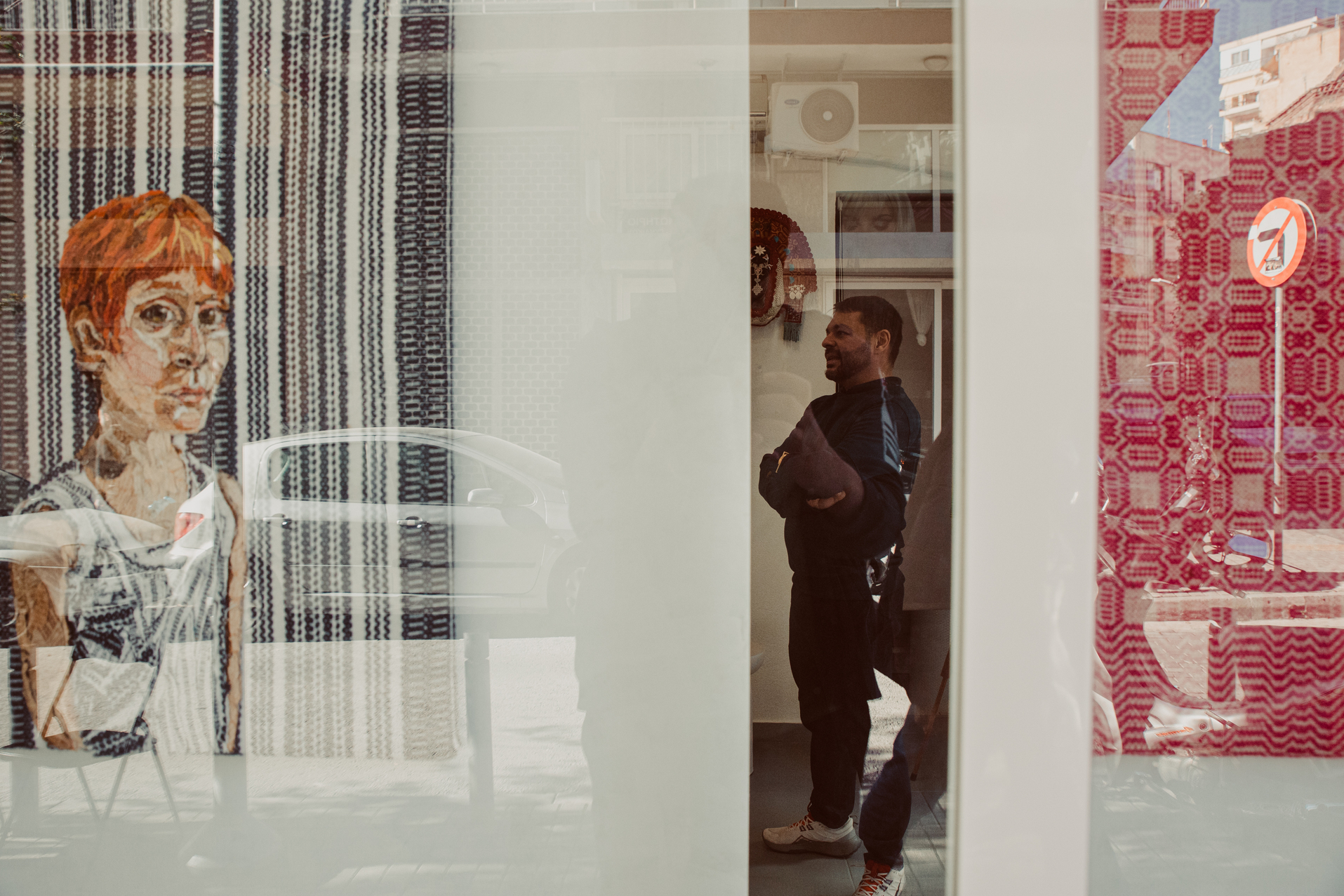
I was born and raised in the neighbourhood of the Twelve Apostles, and my connection to this place runs deep and is profoundly emotional. I grew up here, playing as a child in the church courtyard. My studio today was once the café my family used to visit, where I would eat souvlaki as a boy. Mr Stefanos, with his flower shop, is also part of those memories.

The neighbourhood went through a period of decline, but in recent years it has begun to rediscover its pulse. I often go to Little Cup for coffee and to the restaurant Phoenix, and it makes me happy to see new places opening and creative people bringing fresh energy to the area. Maria, Mike, Meni and others are people with a vision. They didn’t simply come here to “open a shop”; they came to create culture in a neighbourhood that had once lost its character and was considered cut off from the rest of the city.

For me, my neighbourhood is a living landscape of inspiration, shaped by people, memories and relationships. I feel fortunate to be able to live and create within this continuity.

Author