You started from Thessaloniki to take a series of important steps and build a career full of light. What is the story of your journey?
If I look back at my life across its four decades so far, each one would have its own highlight, and I believe they have all shaped the person I am today.
I spent my first decade in Kinshasa, in the Congo, in Central Africa. It was a completely different life, filled with ideal and carefree childhood memories.
The second decade was spent in Thessaloniki. Along with my school years, educational trips, and my dream of becoming an architect, it also included my studies at the School of Fine Arts, Department of Theatre, where I was eventually admitted. That’s when I discovered a whole new world: theatre, scenography, and lighting design.
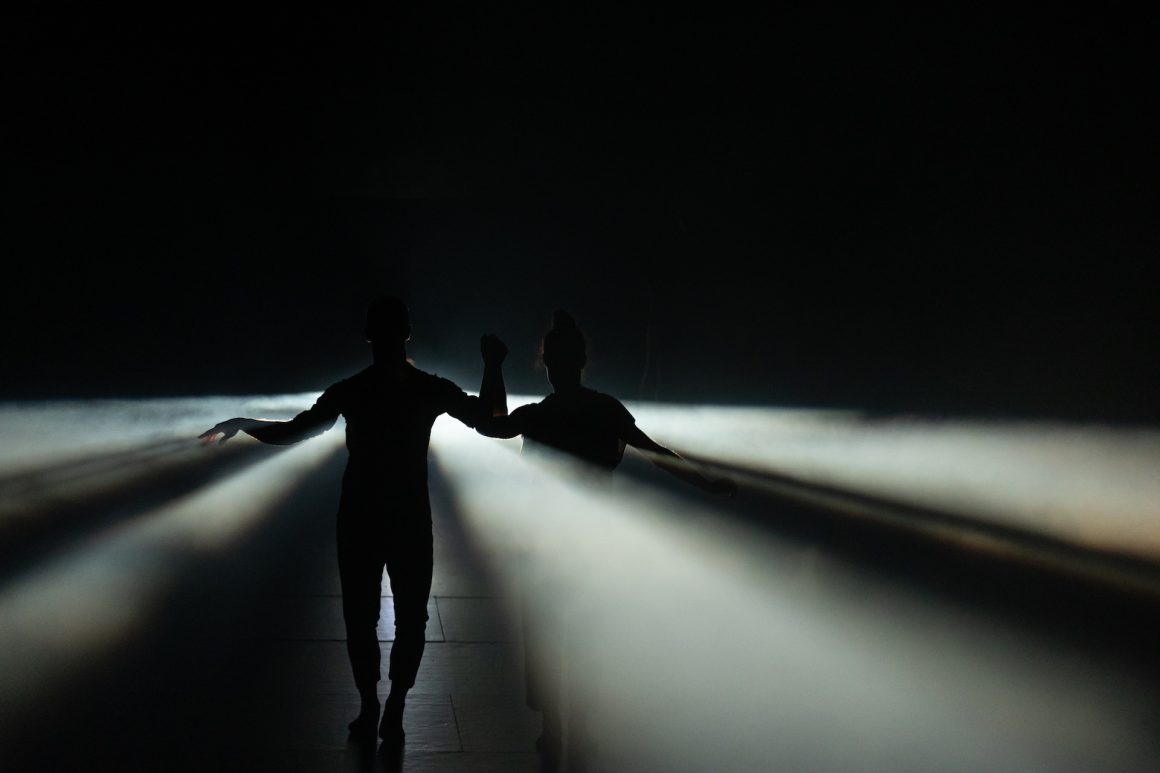
My third decade began with the certainty that I wanted to become a lighting designer and with the creation of the lighting group beforelight, founded by a “group” of fellow students who shared a vision of experimenting with light (and thankfully the group still exists today). This enthusiastic decade continued creatively after graduation, when I moved to Athens and began working consistently on my own theatre projects as well as lighting interventions with beforelight in Greece and abroad.
My fourth decade started with an attempt to live in my beloved Paris, which eventually brought me back to Athens—probably for a good reason. That was when I began to engage in projects that intrigued me artistically, to travel frequently through my work, to expand my artistic horizons even further, and to mature through demanding theatrical productions.
My fifth decade began dynamically and with some wonderful surprises: I started discovering architectural lighting, a new field that offers a particularly interesting way of approaching light. Now I have the luxury of choosing my collaborators and working on projects that truly matter to me.
Finally, the beginning of this decade brought me a very important gift: my election as Assistant Professor in the Department of Theatre at the School of Fine Arts of Aristotle University of Thessaloniki, the very school where my journey began. It is a great joy and honor, and I am truly excited about what lies ahead.
Light became your source. How did the idea of working with it begin, and how did it evolve over time?
My relationship with light has always been special, as far as I can remember. Even as a child I was curious about it: I loved natural shadows, I was fascinated by the light of the moon, and I adored the sun.
As a teenager, thanks to my love for painting, I learned to observe famous paintings and study how great painters handled light—how each one of them interpreted and used it.
Later, as a student, I encountered the challenge of space: what it means to illuminate something in three dimensions, in a tangible way. A stage set is a place you are called upon to “paint” and “color.” And what could be more interesting than being able to be so creative through your profession?
Over the years, the pieces of the puzzle started to fit together. I realized that all this observation I had been doing my entire life was becoming the canvas through which I could serve my art. Through my work, I find myself doing what those painters did—but through the lens of dramaturgy, a theoretical framework that runs through each performance and each direction. I translate that into images and materialize it through my own interpretation.
It is a difficult, competitive, and demanding profession for a woman. How does it become second nature in your hands?
It is a difficult, competitive, and demanding profession for a woman in Greece.
Unfortunately, we live in a country that still has a long way to go regarding gender equality and respect for women in positions of authority. It certainly did not become easy for me, and it still isn’t. I often have to fight for the courage to express my artistic opinion, for persistence in matters of organization, safety, consistency, and team spirit.
It is clearly more difficult when you are younger and less experienced. I remember this from my early years working in the field, and I see it now with young female lighting designers who feel they must constantly “prove” that they know what they want—as if there were no room for mistakes or experimentation, especially when you are new and still learning.
Unfortunately, the effort required is often double or triple when you are a woman, and I say this without exaggeration.
I feel fortunate and grateful because, firstly, I have had the opportunity to work in several theatres across Europe and experience a different kind of professional environment. This helps a lot in understanding what you should demand and how to define your boundaries in problematic workplaces. Secondly, perhaps because of my methodical approach, my perfectionism, and my persistence, I feel that over the years I have earned the respect of the majority of my collaborators.
But it was never easy—and it still isn’t. Even today, I notice that male colleagues who are far more relaxed about their professional obligations are often treated better. And that is simply not OK.
Who are the people and what are the things that help you move forward?
Personally, meditation and frequent introspection help me a lot, as well as alternative therapies, my partner and my friends—their thoughts and the way they approach life.
Professionally, I believe it is my consistency, both in artistic work and in the practical side of theatre, as well as my collaborators, their artistic perspective, and their working methods.
Your work involves many trips and demanding commitments. How easy is it to cope with that?
It isn’t easy. I know it may look glamorous, but it’s actually exhausting, and most of the time you don’t even have the chance to see the place you’re traveling to.
Of course, you do move around, change perspectives, and gain new experiences—even if it’s simply through the interior of the theatre hosting you. You meet new people and learn their way of working, you supervise the work while speaking English or French, and in the end you realize that everywhere in the world we’re essentially doing the same thing. We share the same concerns, the same problems at work, and the same things that intrigue us or make us laugh. That realization is quite comforting.
I started traveling professionally very early in my career, so I had more energy and stamina back then. Nowadays I’m much more selective—mainly because I prefer traveling for leisure.
What do you love—and what don’t you love—about the field you work in?
There are many things I love. I love the opportunity to collaborate with different people each time, on random days throughout the year. A job where I would see the same people every day and follow the same weekly schedule would never suit me.
I also love the variety of workspaces. One day I might be in a classical Italian-style theatre stage like the Municipal Theatre of Piraeus or the Tschiller Building of the National Theatre, and the next day in a gallery, a black box theatre, a concert hall, or an open-air theatre.
I love the endless range of theatrical texts and dance projects, each with a different concept, which broadens my horizons and keeps me in a constant state of artistic exploration.
What I don’t love…
The working hours—which, although they allow freedom of movement, can be extremely irregular. Sometimes I work for weeks without a day off, with very little sleep, standing for hours, and with my mind constantly active.
Another challenge is that most hours of the day are spent in darkness, in windowless theatres with poor ventilation, which can be exhausting for both the eyes and the mind.
And finally, I would mention the futility—a heavy word perhaps—of the profession, despite its unique nature. Many people are unaware of how much time and how many days of work are required to complete the stages of lighting design. In reality, this makes the profession almost “immeasurable.”
As a result, the rewards are often limited: financially, in terms of recognition, and even in terms of understanding. Very often even directors underestimate the process, not to mention the general public or friends who have more structured schedules and wonder, “Do you really need to be there for so many hours for that?”
And the more you hear that question, the more you find yourself wondering: “What am I actually doing?”
Alongside your work, you also pursue visual art explorations. Tell us about this—what exactly do you do and where can we find your work?
I actually have a brand—yes! It emerged from my long-term engagement with collage and stencil works with a Pop Art aesthetic, which until recently depicted various personalities. During the COVID period, I had the time to further develop this idea.
Inspired by my love for Andy Warhol and ancient Greek sculptures, I thought that this theme could become a series of products sold as Greek souvenirs. So I created my first postcards and an experimental tote bag with screen printing. One thing led to another, and soon I began designing textile patterns, sewing accessories, printing notebooks, cutting small plexiglass pins with laser cutting, and gradually composing a collection that kept growing.
Within a few months I had an online store, www.cutandpaste.gr, participated in several commercial exhibitions, and expanded my circle. The products quickly “traveled” to stores across Greece, and it makes me happy to think that someone in another country might have at home a notebook with the Venus de Milo, a pouch with a Kouros pattern, or a collage with the Antikythera Ephebe—objects that remind them of the beautiful summer they once spent on an island in Greece.
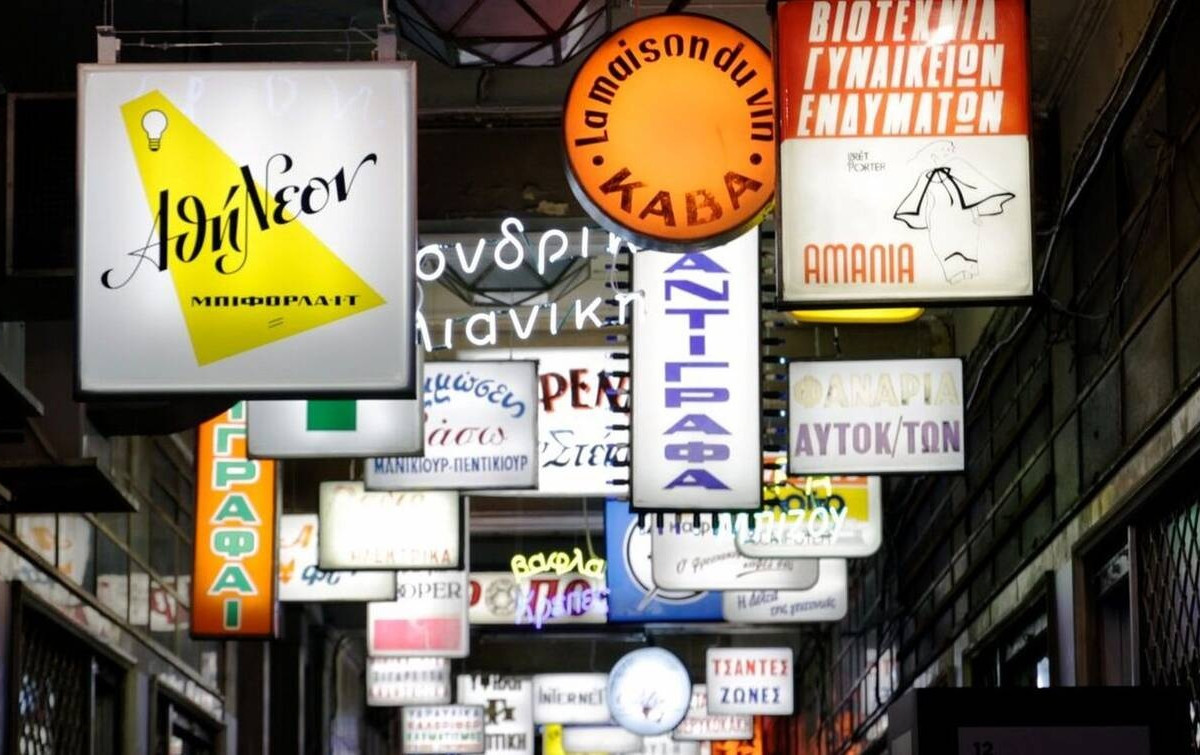
Two years ago I opened a small showroom located in the Stoa Anatolis on Aristeidou Street, in the center of Athens. The place feels almost forgotten in time—a small oasis in the heart of the city. I believe it perfectly reflects what the brand represents: a different vision of Greece, not the typical kitschy tourist imagery you often see in Monastiraki, but something unique and colorful within the “ugliness” that sometimes surrounds us.
The shop opens by appointment and on selected days during the year when I organize bazaars and invite friends and acquaintances. It’s my side project, and I love it because it was created with a lot of enthusiasm and care, surrounded by valuable collaborators—who have now become friends.
What’s coming up in your immediate plans?
At the moment I’m completing the lighting design for The Blues of the Little Prince by Giannis Aggelakas, directed by G. Gousis, which will premiere on March 12 at the Onassis Stegi in Athens.
Next comes Jenny Jenny, directed by N. Karathanos, which will be presented at the Municipal Theatre of Piraeus. Immediately afterwards, three summer productions await at the Athens Festival, and I’m really looking forward to them:
Grauts by G. Mavritsakis, staged at Peiraios 260 – Space H, Alcestis directed by D. Karatzas, and Peace directed by N. Karathanos, both of which will be presented at the Ancient Theatre of Epidaurus.
In the autumn I’ll be in Sweden, designing the lighting for Nux Brux by the acclaimed dance company Norrdans, choreographed by Ch. Kotsali. I’m excited about all of these projects—I can’t wait!
What are the non-negotiable values in your work?
Collegiality, respect, kindness, and connection with people.
What would be your dream project?
Oh, many things! I’d love to create a performance with light that somehow connects the laws of physics with outer space, exhibit large-scale works in a very high-ceiling gallery, write a humorous novel that speaks deeply to people’s souls, design the lighting for a music video, or write lyrics for a song that becomes a hit—something people would hum on their way to work in the morning and say, “Who wrote this? The lyrics are amazing!”
And I have many more ideas. My list of ambitious dream projects keeps growing and rolling over from year to year.
Designers close to your heart, and why you choose them
Charles and Ray Eames, Olafur Eliasson, and Le Corbusier.
Are we what we choose?
We are what we choose—and what we do. Absolutely.
The last thing you bought and why you chose it
A traditional “March” bracelet, so the sun won’t burn me!
The best book you’ve read recently
The Bronze Thresholds by Isidoros Zourgos, whose writing I greatly admire.
Right now I’m reading The Emperor of Gladness by Ocean Vuong, another author I deeply appreciate based on everything I’ve read from him so far.
An object you would never want to part with
My agenda, where I write what I do every day. It’s like the diary of my life—without the thoughts, only the schedule.
Otherwise, I’m currently going through a phase where I’m trying to detach from having too many objects and from material attachment in general.
An artist you love and would like to own a work by
David Hockney.
In another life you would like to be…
A sculptor, an archaeologist, possibly a surgeon—or an astronaut.
Three places you love returning to, and why
Paris, Tinos, and Chios.
Paris makes me feel at home—perhaps because of the language, since I grew up in a French-speaking country. It has everything I believe a city should offer: quiet neighborhoods, parks, a river, museums, a long history, countless cultural events, beautiful architecture, large scale, and a multicultural population.
Tinos is connected to beloved people—I became a godmother there—and to moments of decompression. Its sea suits me perfectly, the food is excellent, and the villages feel like they’ve come straight out of a fairy tale, with marble, white landscapes, and strong winds.
Chios is extraordinary because of the diversity of its landscapes. Every location is a new source of exploration and beauty. It’s a blessed island with understated richness—the island of mastic, the elegant estates of Kambos, and hidden paradise-like beaches. It’s also the island where my best friend was born and raised—so that’s another reason I feel at home there.
What other talent would you like to have?
I’d love to cook perfectly and know a lot about wine.
And I’d also love to play the piano.
Is art and creativity a path toward becoming better people?
That’s a beautiful question. I’m not sure. I think being a good person is primarily a matter of upbringing, and maintaining that goodness requires personal work and reflection.
What does it really mean to be a good—or better—person? I know wonderful artists who are far from my own understanding of what is good, honest, and ethical. Sometimes, the more successful they become in their work, the further they seem from my standards of kindness.
Art is certainly a path toward self-discovery, introspection, and expression. But I don’t believe it necessarily makes you a better human being.
Tell us a lighting story you remember with love
I will never forget the moment I realized that I belonged backstage in theatre. I was a dancer at the time, warming up one morning on the stage of the Royal Theatre of Thessaloniki. I was lying on my back on stage, the stage lights turned off while the auditorium lights were on as the cleaning crew worked.
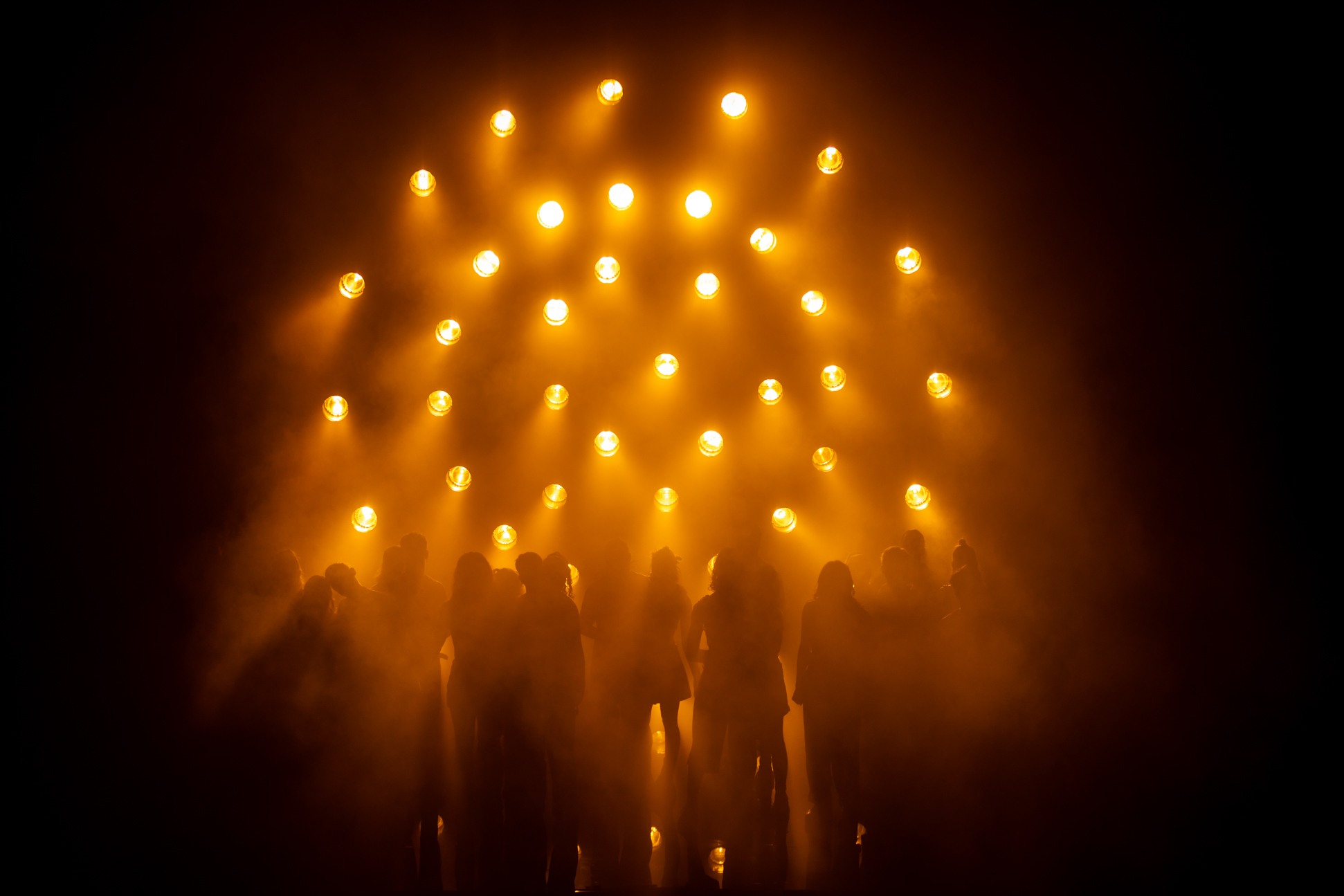
There was silence and a clear separation between stage, backstage, and audience. I looked up and saw countless lights hanging in different positions in the semi-darkness.
And I thought: “Wow… an entire world that the audience will never discover. This is where I want to exist.”
The museum and artwork that stole your heart
I strongly believe that the impression a museum leaves on you is closely connected to the circumstances in which you visit it.
I’ll never forget the first time I saw the Venus de Milo at the Louvre—I was a child, and she looked like a gigantic mermaid to me.
I’ll never forget the Picasso Museum in Antibes, which I visited when I was fourteen and completely fascinated by Pablo Picasso.
At the Miró Museum in Barcelona, I was with friends in a joyful mood and discovered the magical tapestries, once again admiring the genius of Joan Miró.
I’ll never forget the Metropolitan Museum of Art in New York either. I was twenty, traveling alone, watching the snow outside the large windows and feeling protected by the art surrounding me.
And I will never forget seeing Guernica at the Reina Sofía Museum in Madrid. I had little time and was rushing through the galleries to find it. Without a map. Suddenly, after turning a corner absent-mindedly, it appeared before me—like a bomb. I froze and burst into tears in front of everyone.
What do you consider true happiness?
The sun, good food, good music, and quality time with my partner and my friends.
Your definition of beauty
Smiling, sincere people; simplicity; the texture of cashmere, wood, and snow; and nature.
What feels authentic in our times?
Being yourself despite social norms and the general blur of the era we live in.
If you designed something for TheAuthentics.gr, what would it be?
I’m open to suggestions!
Maybe a large outdoor spring dinner under the light of hundreds of candles—lasting exactly as long as their flames do.