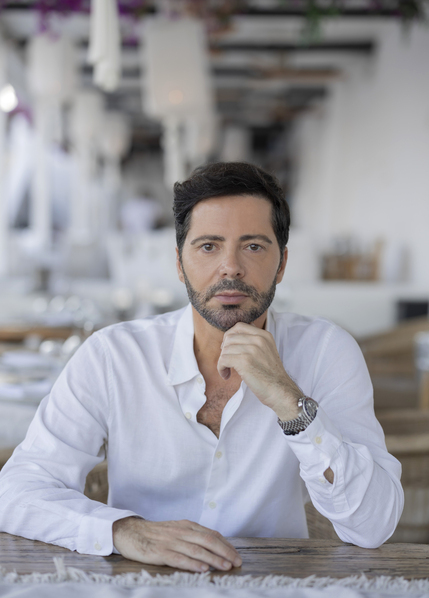
First, tell us about the highlights of your journey. What have been the defining milestones that brought you to where you are today?

My journey has always been deeply intertwined with Athens, the Athenian Riviera, and the world of hospitality. From an early age, I found myself in an industry that demands constant presence, dedication, intuition, and, above all, the ability to evolve without losing your identity. Together with my brother, Spyros, I created and developed venues that we never viewed simply as businesses, but as living organisms—places where people, ideas, and different eras could come together.

Among the most significant milestones are certainly Island and Athénée, as well as Salone de Bricolage, Dragoste, and Central. At the same time, writing has become another important dimension of my personal journey, offering a different yet equally meaningful form of creative expression.

You have established yourself as one of the most successful entrepreneurs in your field. After so many years, what personal qualities have helped you the most, and what has become non-negotiable in the way you work?

Perseverance, consistency, and attentiveness. I have always been fascinated by understanding what is happening around me—how people evolve, how their needs change, and how they choose to live, socialize, and be entertained. I place great trust in intuition, but intuition alone is never enough. It must be supported by hard work, discipline, and a daily presence.

Today, quality, respect for people, and delivering on every promise are non-negotiable values. Equally important is refusing to settle for mediocrity. When you truly believe in something, you have a responsibility to pursue it with absolute commitment, down to the finest detail.

It is well known that your interests extend far beyond business and into the broader world of creativity. Tell us about your new book, published by Kastaniotis Editions. What inner need led you to write it?

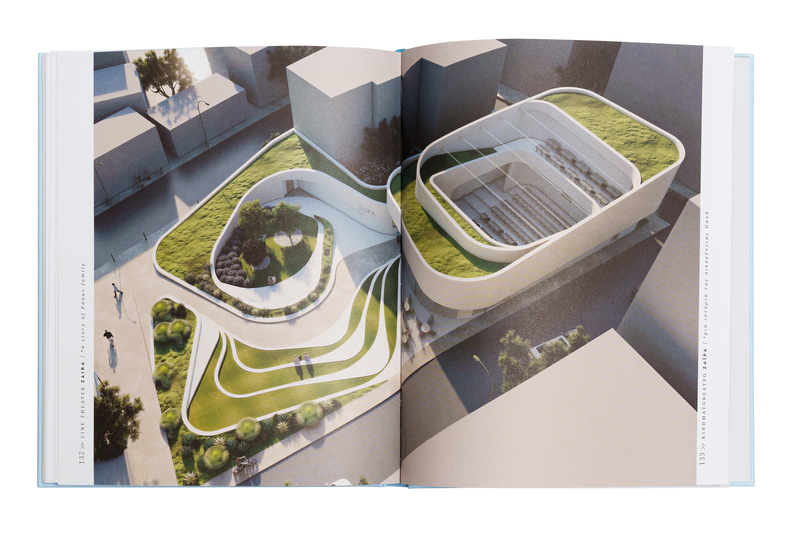
My new book is a journey through memory, Athens, and a bygone era that has disappeared, yet continues to shape who we are. Through the story of Zaira, a broader narrative unfolds—one about the city, its people, entertainment, social transformation, and family memories.

The desire to write it came from a need to preserve stories that might otherwise have been lost. I believe that when personal histories are placed within their wider social and historical context, they cease to belong to a single family. They become part of our collective memory.

What was Zaira, how is it connected to your family, and how did this journey into the past become a book?

Zaira was a historic cinema and film studio, built on a vast estate that belonged to my father’s family. The property had originally been acquired by my grandfather, who used it as a hunting ground at a time when Galatsi was still considered almost rural and untouched. Later, the area’s first commercial center was developed within the same city block.

Zaira, together with the surrounding venues, was far more than an entertainment destination. It was a cultural meeting place that reflected the spirit of its time—a space where the social and cultural life of Athens unfolded. The story of Zaira is both my family’s story and part of the history of the city itself. Its recent reopening rekindled the desire to document its legacy, giving rise to this book and preserving the significance of a place that played such an important role in Athens’ cultural life.

How important is it to respect our history and leave a legacy for future generations by preserving the memories of a bygone era?

It is profoundly important because, without memory, there can be no true sense of identity. I don’t believe we should idealize the past or live in it, but we do have a responsibility to understand it and treat it with respect.

Every generation, in my view, has an obligation to pass on not only what it has created, but also what it has inherited—stories, images, values, and experiences. Memory is what keeps the dialogue between generations alive.

Having witnessed Athens evolve over the years, what do you think it has lost, and what has it gained? What do you cherish about its past, what do you appreciate about its present, and where does the balance lie for you?

Athens has undoubtedly lost many of its historic buildings, beloved gathering places, and the small everyday rituals that once gave the city its unique character.

At the same time, it has gained openness, confidence, and a renewed creative energy. Today, Athens is a city in dialogue with the world. It attracts people from across the globe and has established itself as an international destination.

I cherish the elegance and nostalgia of old Athens, but I am equally inspired by the dynamism of the city today. I wouldn’t want to choose between the two. To me, the ideal is a contemporary city that moves confidently into the future without erasing its memory.

Which neighborhoods do you feel most connected to, and why?

I have a deep affection for the historic center of Athens because it allows you to feel close to the city’s ongoing history and evolution.

And, of course, I have a special connection to the Athenian Riviera, where the changing seasons are experienced with particular intensity. To me, it is an inseparable part of Athens’ identity—the place where the city meets the sea and where I believe an important part of its future will be shaped.

If you could change one thing about Athens, what would it be?

I would like to see greater respect for public space, architectural heritage, and the aesthetics of everyday life. A city’s beauty is not defined solely by landmark projects, but by the small details: cleanliness, greenery, well-maintained sidewalks, and thoughtfully preserved building façades.

I would like to see an Athens where beauty and quality of life are regarded not as luxuries, but as fundamental rights for everyone who lives here.

What has maturity brought to the way you approach your work?

Above all, maturity has given me the ability to distinguish between what is important and what is merely urgent. When you’re younger, you want to do everything at once, and you often feel the need to constantly prove yourself.

With time comes greater self-awareness. You learn when to persist, when to wait, and when to step away. Most importantly, you come to understand that true success is measured not by the quantity of what you accomplish, but by the quality and lasting impact of what you leave behind.

What’s next for you?

There are always new ideas and new projects on the horizon. I’m particularly focused on the continued evolution of our venues and activities, as well as on creating new experiences centered around hospitality, culture, and the Athenian Riviera.

One of our most significant projects for the coming year is the launch of the new Cabanas at Island, which will introduce an entirely new hospitality concept by offering overnight accommodation in a unique setting. It is an innovative project built around the principles of sustainability and green development, redefining what hospitality on the Athenian Riviera can be and marking an important new chapter for us.

How has your philosophy toward life evolved over the years, and what do you value most today?

With time, you come to realize that life is not measured solely by achievements or success. It is measured by the people around you, the relationships you build, the experiences you share, and the moments that carry genuine meaning.

Today, I place far greater value on time, freedom, health, the people I love, and the opportunity to create. I also believe it is essential to remain curious about life—to continue learning, discovering, and allowing yourself to be moved by new experiences.

Do you believe that creativity, in a broader sense, is a path toward becoming better human beings?

I believe it can be, provided that creativity is genuine and meaningful. The creative process compels you to observe, question, expose yourself, and continuously evolve.

That doesn’t necessarily mean every creative person is a better person. But the act of creating can certainly help us better understand ourselves and others—and that is an essential step toward empathy.

What do you love most about the industry you work in, and what do you find more challenging?

I love its creativity, its energy, the constant interaction with people, and the fact that nothing ever stands still. It is an environment that continually challenges you to evolve.

What I appreciate less is superficiality, inconsistency, and the tendency to mistake what is fleeting for what is truly meaningful. We live in an age of extraordinary speed, but I still believe that genuine value takes time to reveal itself.

What would be your dream project?

A project that brings together everything I am passionate about: hospitality, architecture, art, nature, history, and culture. I envision a destination with a strong identity—one that offers not simply luxury, but a complete experience and a different way of perceiving place and time. In fact, this is something already in development, and I look forward to bringing it to life over the coming years.

Name three places you always love returning to, and why.

Athens, because no matter how much it changes, it remains my city and continues to surprise me.

The Athenian Riviera, because my connection to the sea runs deep, and it is where I always experience a profound sense of freedom.

And Paris, because it continually inspires me through its architecture, art, history, and its unique understanding of beauty and the art of living.

What is your personal definition of beauty?

Beauty is harmony that never needs to impose itself in order to be recognized. It is something rooted in truth, balance, and emotion.

It can be found in a place, a person, an object, or a fleeting moment. To me, true beauty is never ostentatious. It possesses a sense of naturalness and, above all, the ability to endure through time.

What does authenticity mean to you today?

To me, authenticity is anything that is not created solely to make an impression. In an age where image has acquired immense power, and we are all expected, in one way or another, to constantly present a version of ourselves, authenticity has become increasingly rare—and therefore increasingly valuable.

An authentic person knows who they are, remains true to their values, and does not change their identity according to circumstance. The same is true of a place, a work of art, or an idea. Authenticity is not about perfection; it is about truth.


Chrysanthos Panas will present his new book, Zaira – A History of the Panas Family, published by Kastaniotis Editions, on Monday, July 13, at 8:30 p.m., at the historic Zaira Cinema in Galatsi—a landmark venue deeply woven into the cultural and historical fabric of the municipality.

Author