First, tell us about the highlights of your journey. What were the significant steps that brought you to where you are today?

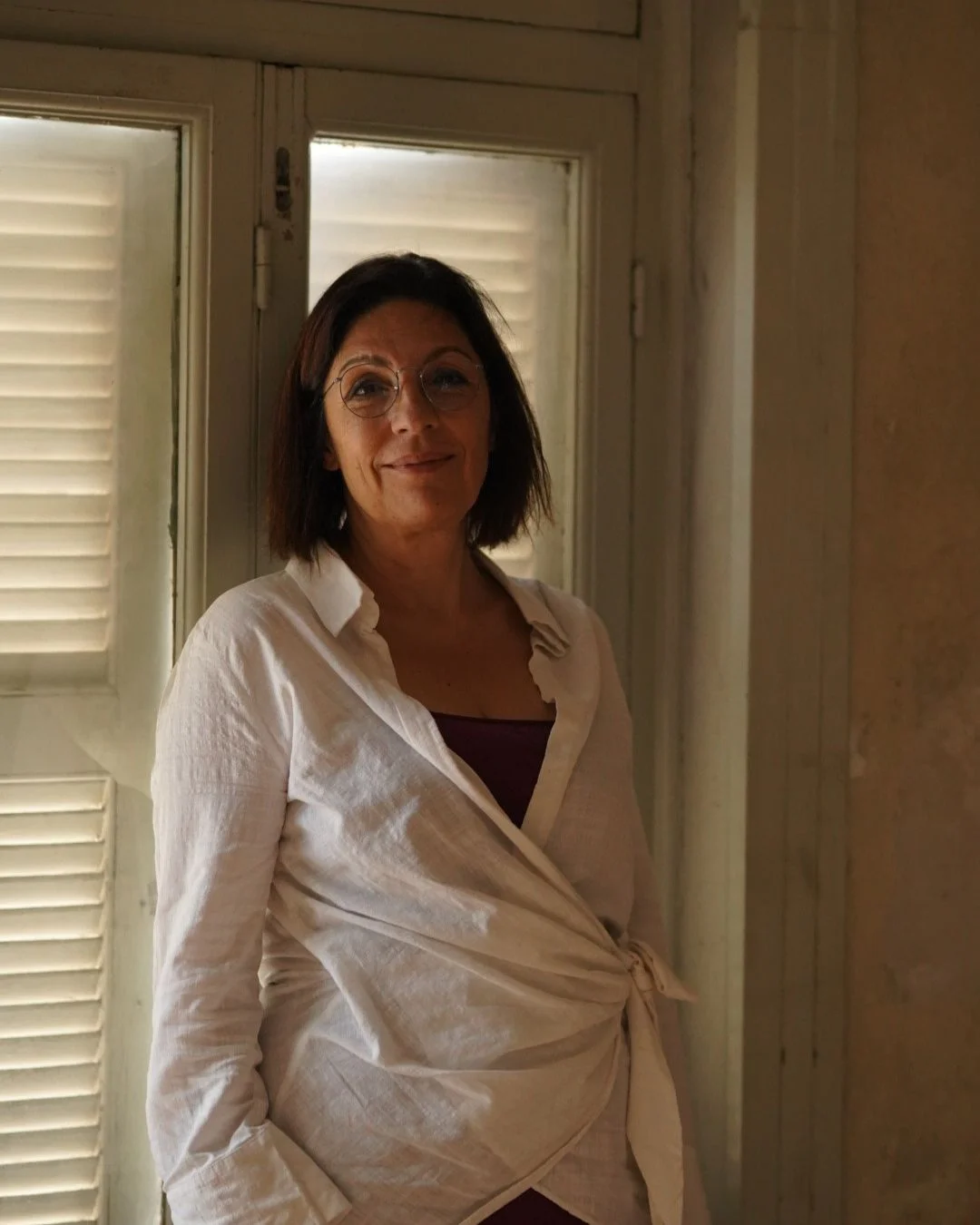
I grew up in Athens, studied Architecture at the National Technical University of Athens, and then pursued postgraduate studies at the Bartlett in London. In between, I spent a year on Chios, where I worked in Kampos for the Ephorate of Antiquities and collaborated with several architectural practices.

After returning from England, I began a PhD, which I left after two years. I realised that I am more of a practical person; I am interested in ideas, but I want those ideas to lead somewhere—to become a drawing, a material and ultimately a built reality.

In 2004, we opened Aiolou Architects in Athens. The financial crisis and my move to Mani gradually changed everything. Aiolou completed its cycle, and in 2017 ETSI Architects was established—a practice that is truly born and bred in Mani.

Since then, we have continued to grow. We now also have a second office in Athens, without losing our base or our identity. Several of our projects, most notably the restoration of the customs house in Kardamyli, have received recognition in Greece and internationally, from Dezeen to a nomination for the Mies van der Rohe Awards, among many others. In 2024, our work was recognised at the GRAIL Awards, where ETSI Architects was named Practice of the Year. These are important moments, but mainly because they confirm a collective journey rather than represent a final destination.

How did architecture enter your life, and what is the story behind discovering a creative path through your work?

I entered the School of Architecture in 1987, at the age of seventeen. My father was a civil engineer and, because he saw that I had an artistic inclination, he encouraged me to acquire a “real profession”—to become an architect, something halfway between an engineer and an artist.

When I entered the school, I was completely disappointed. I thought I wanted to do other things with my life and was preparing to take the entrance exams for the School of Fine Arts. Then an unexpected Interrail trip came along. I travelled through Italy, France and Spain with friends from university and saw buildings, cities and ways of life that I had never imagined existed. This was 1989, before the internet and social media.

I thought then that perhaps I really could pursue architecture. From that moment on, I never stopped. Perhaps it is the most consistent thing I have ever done in my life.

Later, I opened the Athens practice with friends. Just before the crisis, I had had two children and, in a rather spontaneous and perhaps reckless move, we bought a holiday home in Mani with a loan. When the practice began to collapse along with the rest of the economy, we moved here as a family, where there were at least a few projects available.

The children were young, and we thought it would be an interesting, temporary interruption to our urban life. We would return to Athens once the crisis was over.

That never happened. We stayed. At some point, ETSI Architects was created, the practice grew and, in a beautiful full circle, we eventually opened an office in Athens again. Only now we return to the city with Mani as our base, rather than the other way around.

How do you feel your aesthetic has evolved?

I am not sure that it has evolved exactly. I think it has become more informed.

The more projects you work on, the more often you encounter similar problems, but each time you discover a different way of addressing them. The same question can lead to a completely different form depending on the place, the person, the light, the available materials or the economic circumstances.

We primarily design houses for specific people. We do not practise architecture without knowing who the final user will be. The project reflects our interpretation of who that person is, what they need from their home, what they dream of and, often, what they have not yet been able to articulate.

Whether it is a restoration or a new building, we want the result to be tailored to the specific people who will inhabit it. Of course, no project is entirely unique. We all carry images, references and previous experiences with us. But the dialogue that gives rise to a project can be unique.

That is one of the great riches of the profession. Many of the people we have worked with have become friends. Their homes are, in a sense, the imprint of a long conversation with them.

What do you feel are your greatest achievements?

That is a difficult question.

I think I have managed to create a life for myself and my children, but also a way of living and working for the people I work with at the practice, outside what is expected and conventional. And I have done so in a place that neither expected me nor that I ever imagined I would end up in, let alone settle in permanently.

Now, is it an achievement to find fulfilment in your children, in your work, in the chickens you keep in the garden or in a swim in the sea?

I don’t know. But for me, these are the things that matter.

What are the materials you love, and how do you experiment with them?

I don’t have any particular taboos when it comes to materials. I do, however, like each project to have a specific palette that we work within.

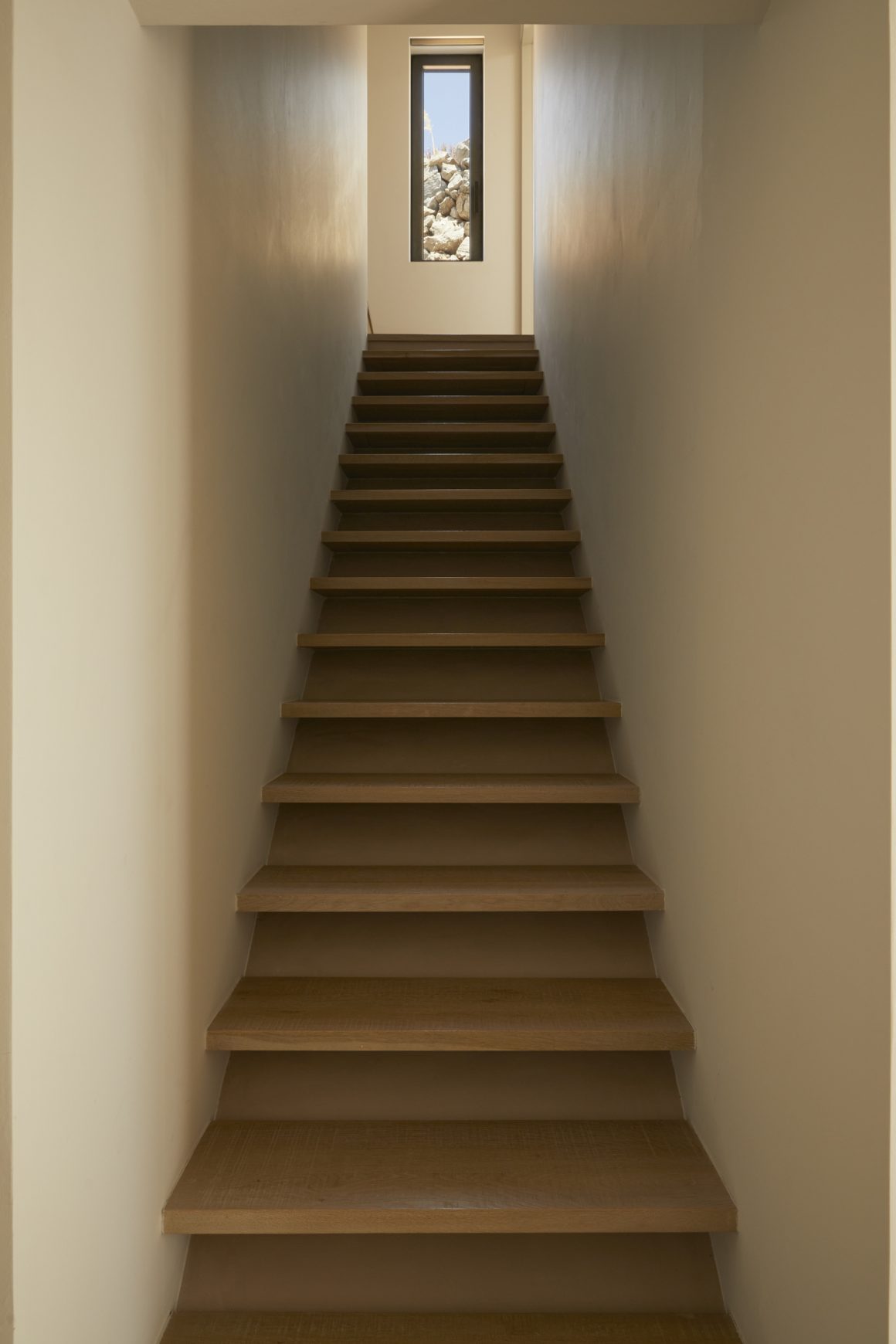
We choose a type of wood, a metal, a plaster, a flooring material and a colour palette. In a way, we submit ourselves to these choices and then look for a point at which we can disrupt them. A small discordant element or an unexpected material can bring the whole composition to life.

I perhaps have a particular fondness for materials that can be worked with here, by the people we collaborate with. Many elements of our projects are custom-made. Architecture therefore depends to a great extent on the hands that are available to us.

If you have an exceptional metalworker, you can work more extensively with metal. If you find a talented carpenter, you explore the woods and techniques they know—or that they themselves would like to experiment with. We do not design in an abstract vacuum. We design within a network of people, knowledge, limitations and possibilities.

This also has an environmental dimension. For us, local is not a decorative device. It means fewer transportation requirements, the preservation of local expertise and money remaining within the local economy.

Tell us about the design of a house in Mani. How differently do you approach a project in a place with such a strong history?

The great difference is not simply that you are designing specifically in Mani. It is that you are designing outside an urban context.

You enter a landscape that existed long before you and carries its own history, memory, vegetation, rocks, water, winds and already established balances. You have to observe before you intervene. You have to understand how people in the past worked with the constraints of the place rather than against them.

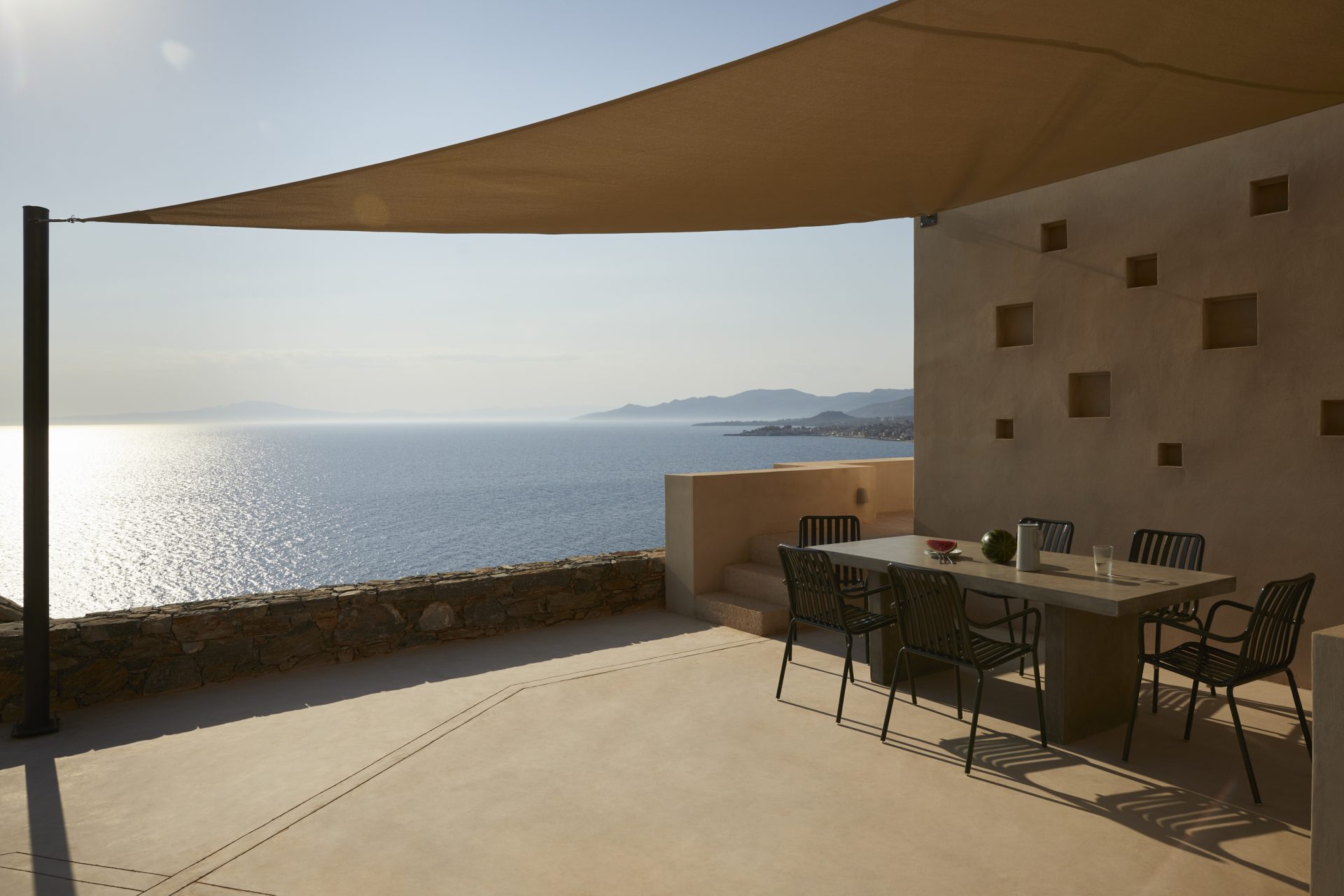
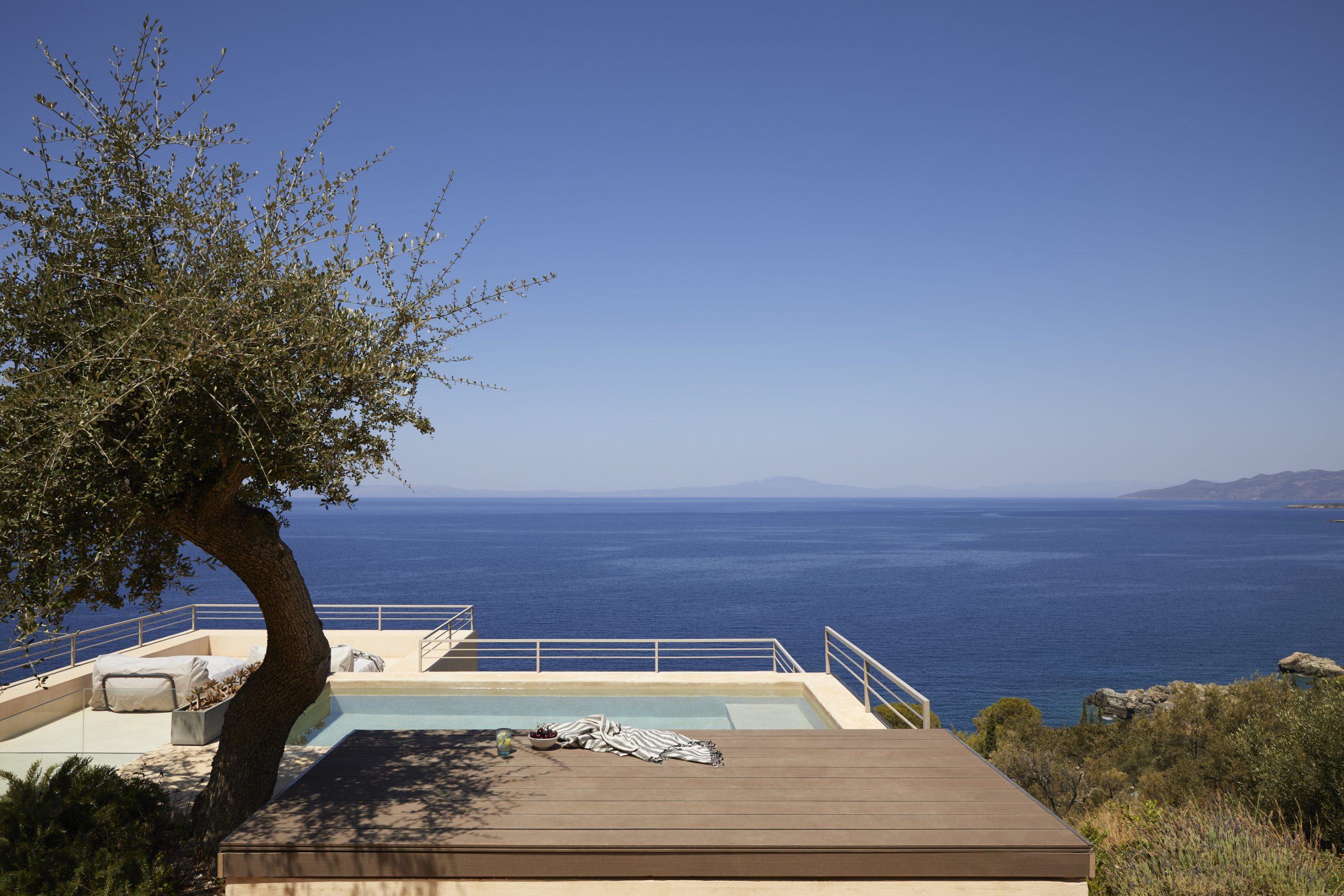
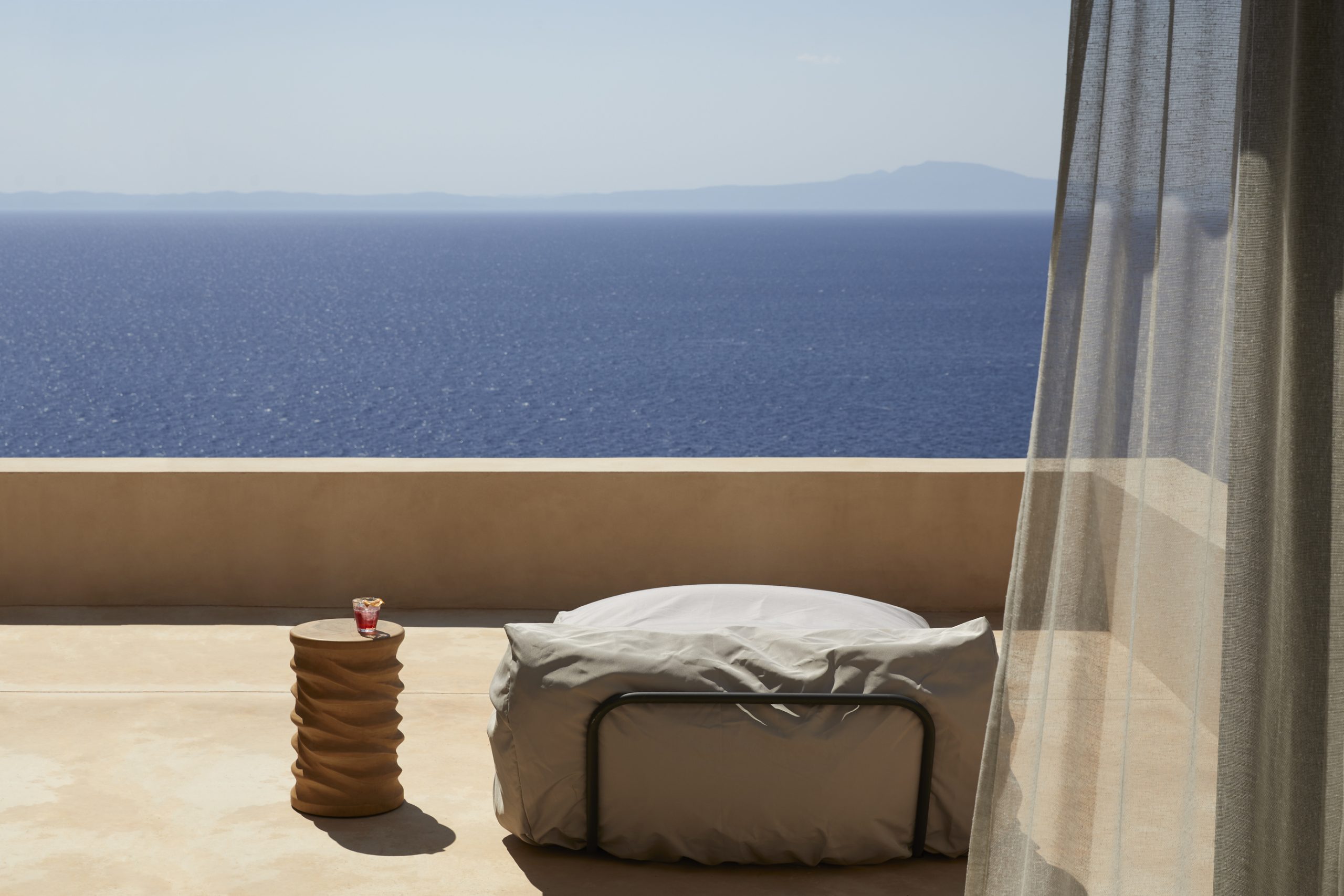
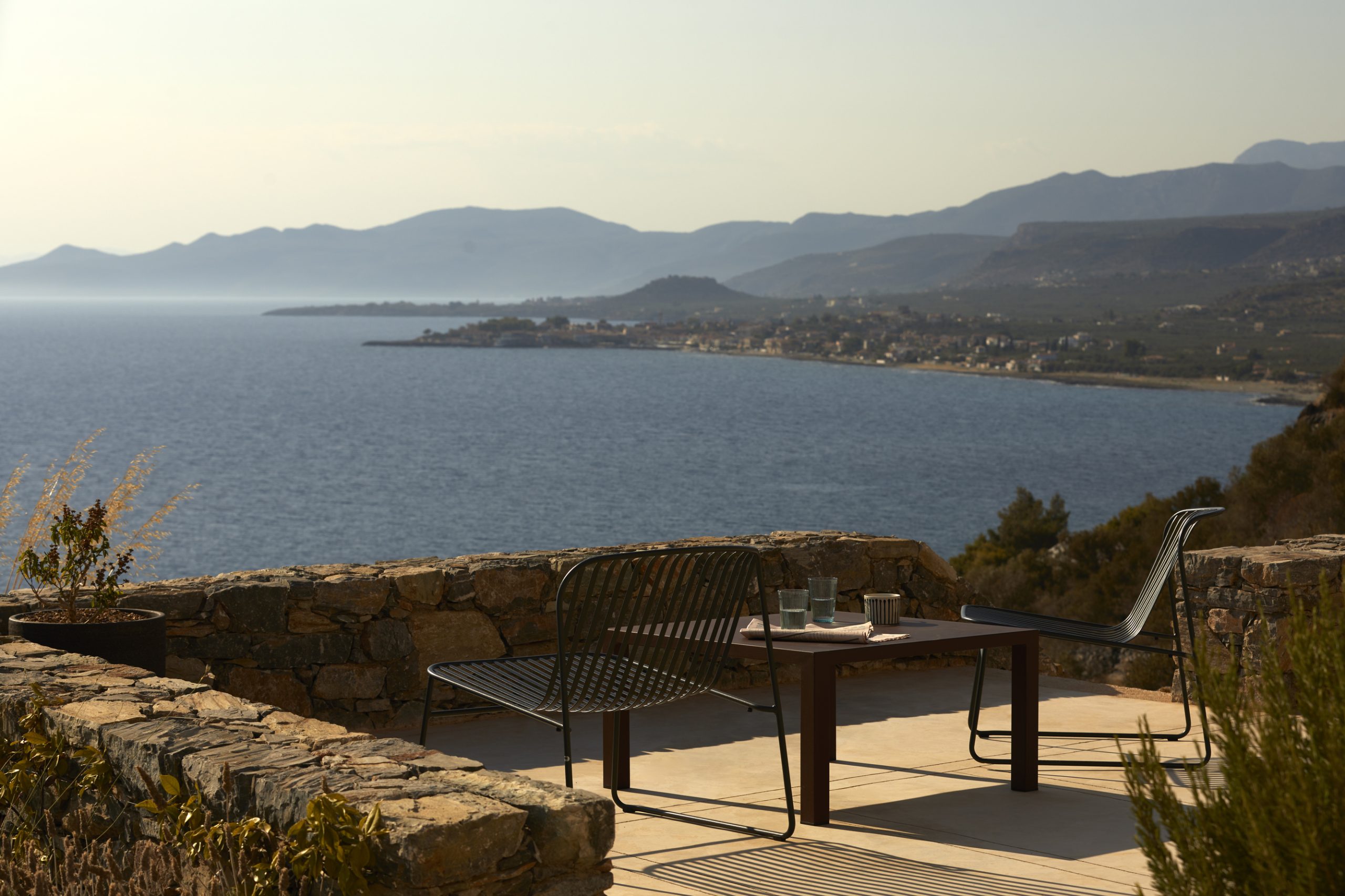
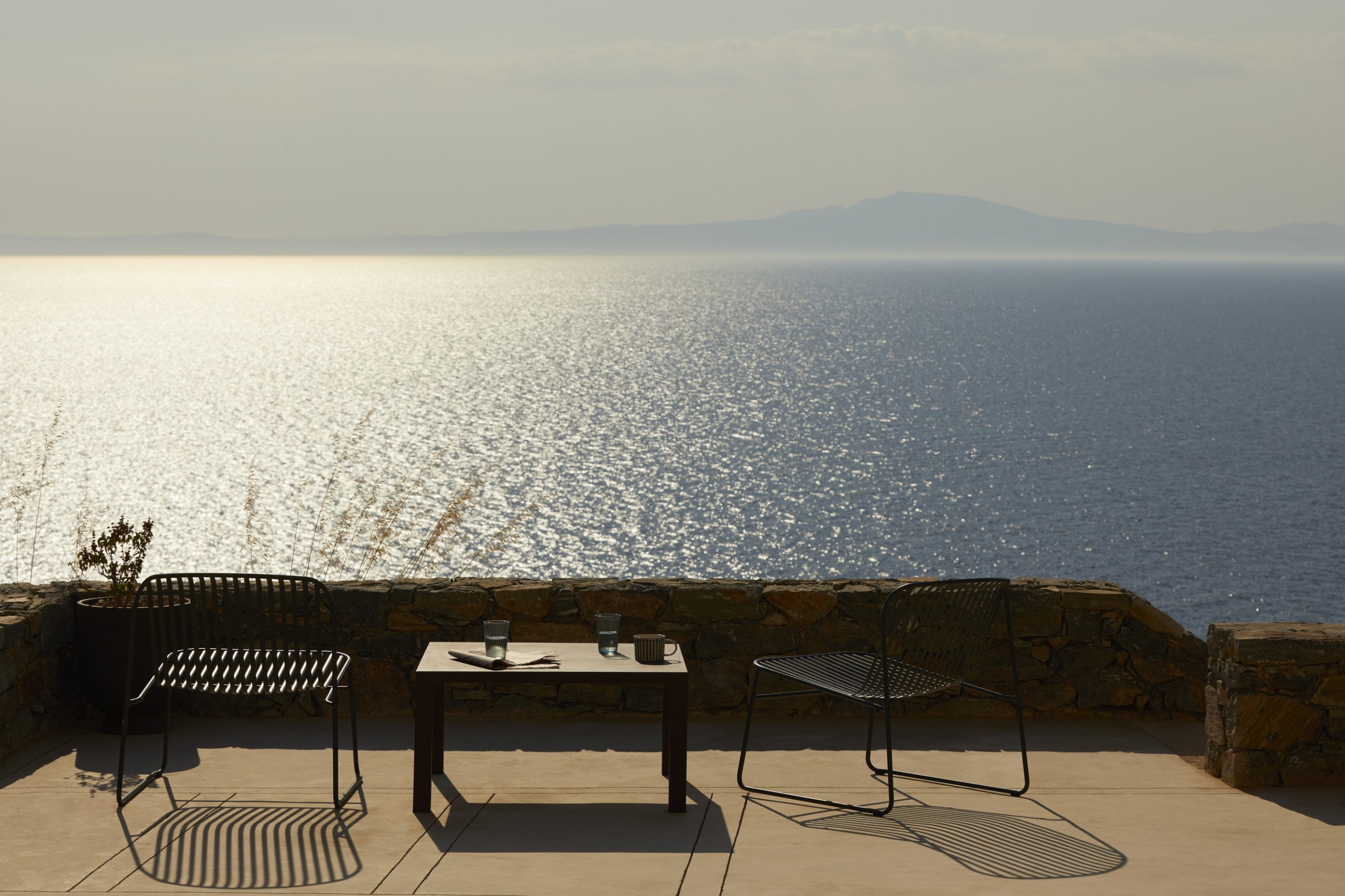
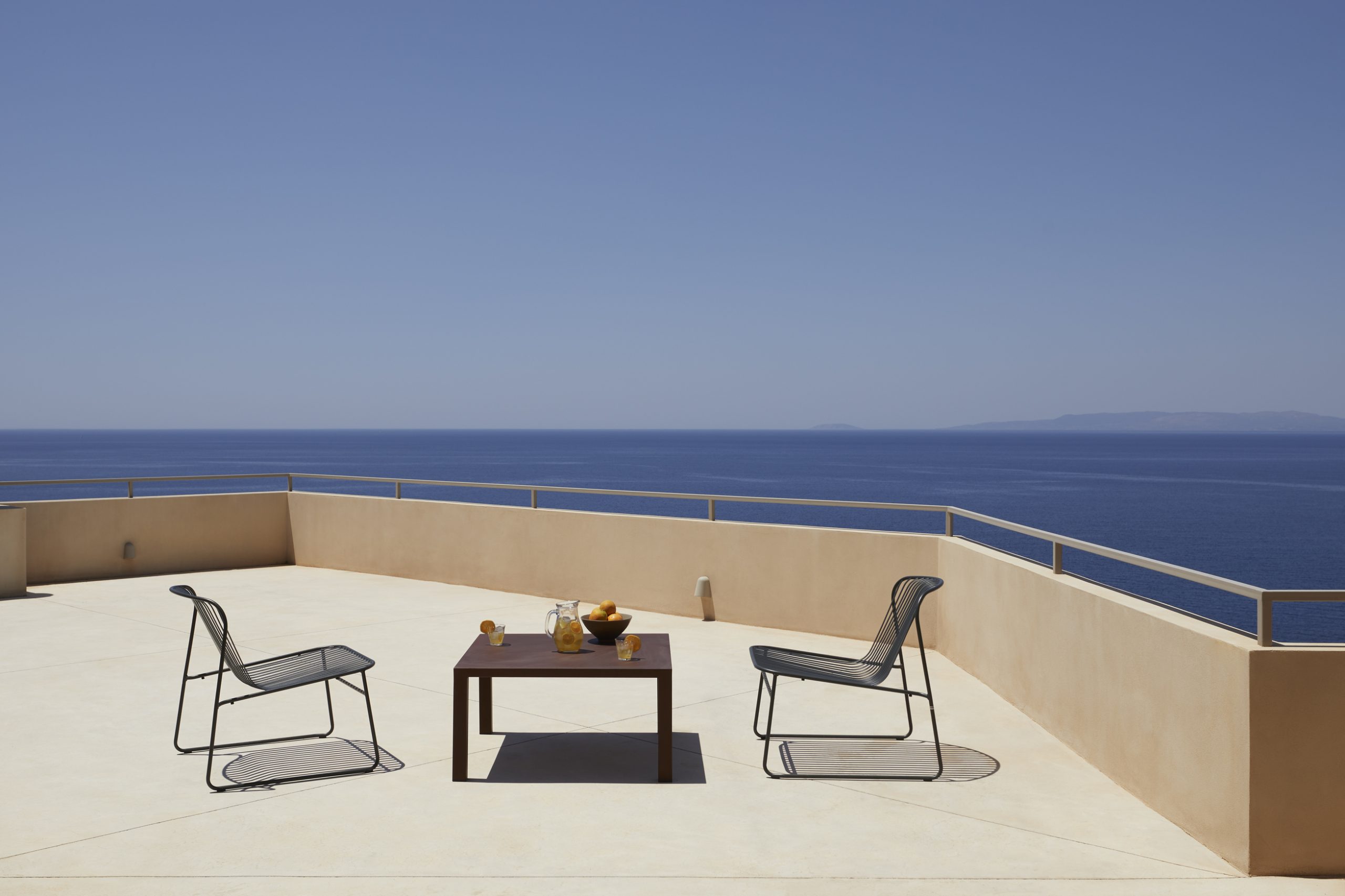
In Mani, water scarcity is a defining factor, along with wild boar, jackals and the sheer openness of the landscape. So are the stone, the strong winds, the salt air, the dramatic views and the vastness of the horizon. The climate allows you—and almost obliges you—to live outdoors for eight or even ten months of the year.

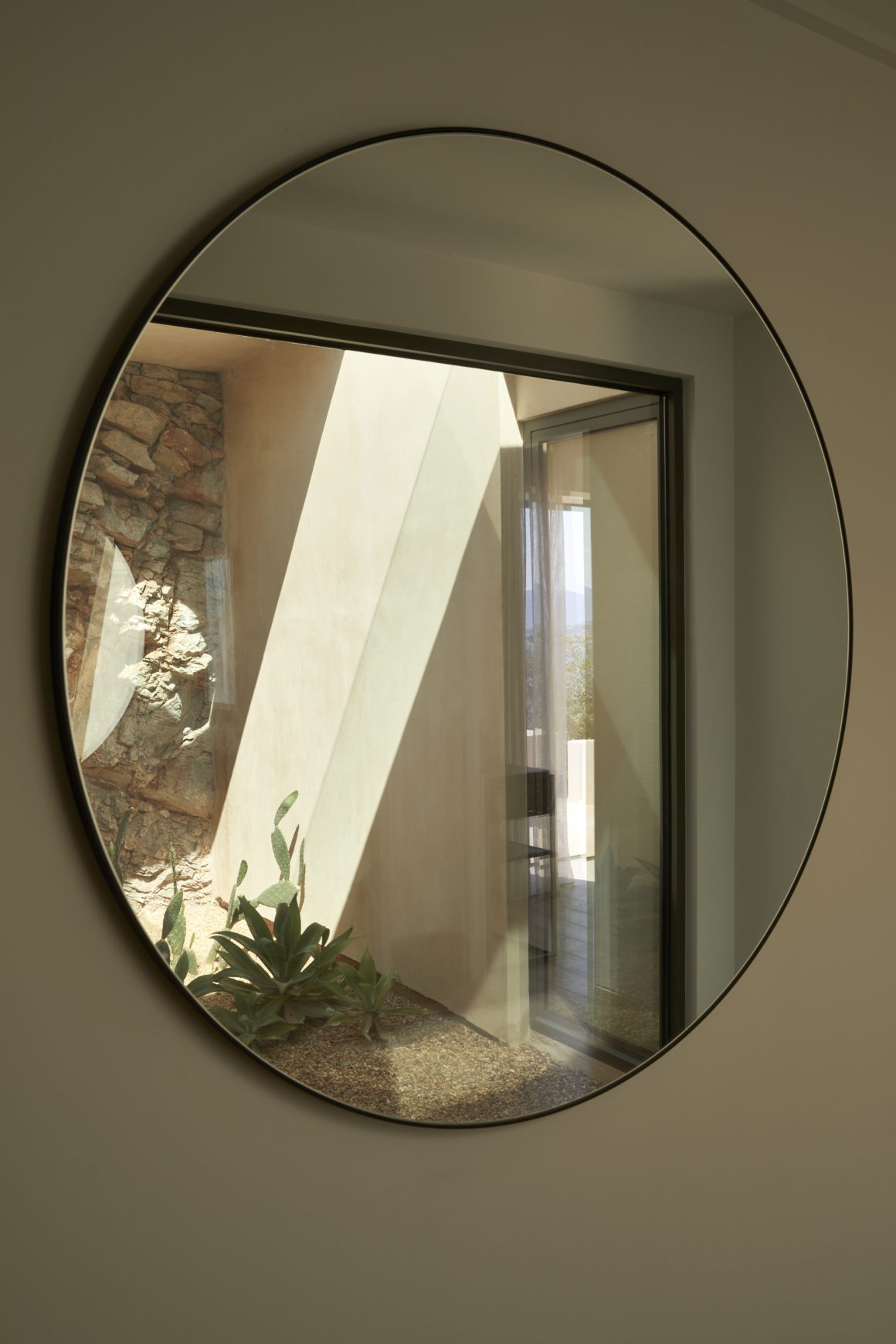
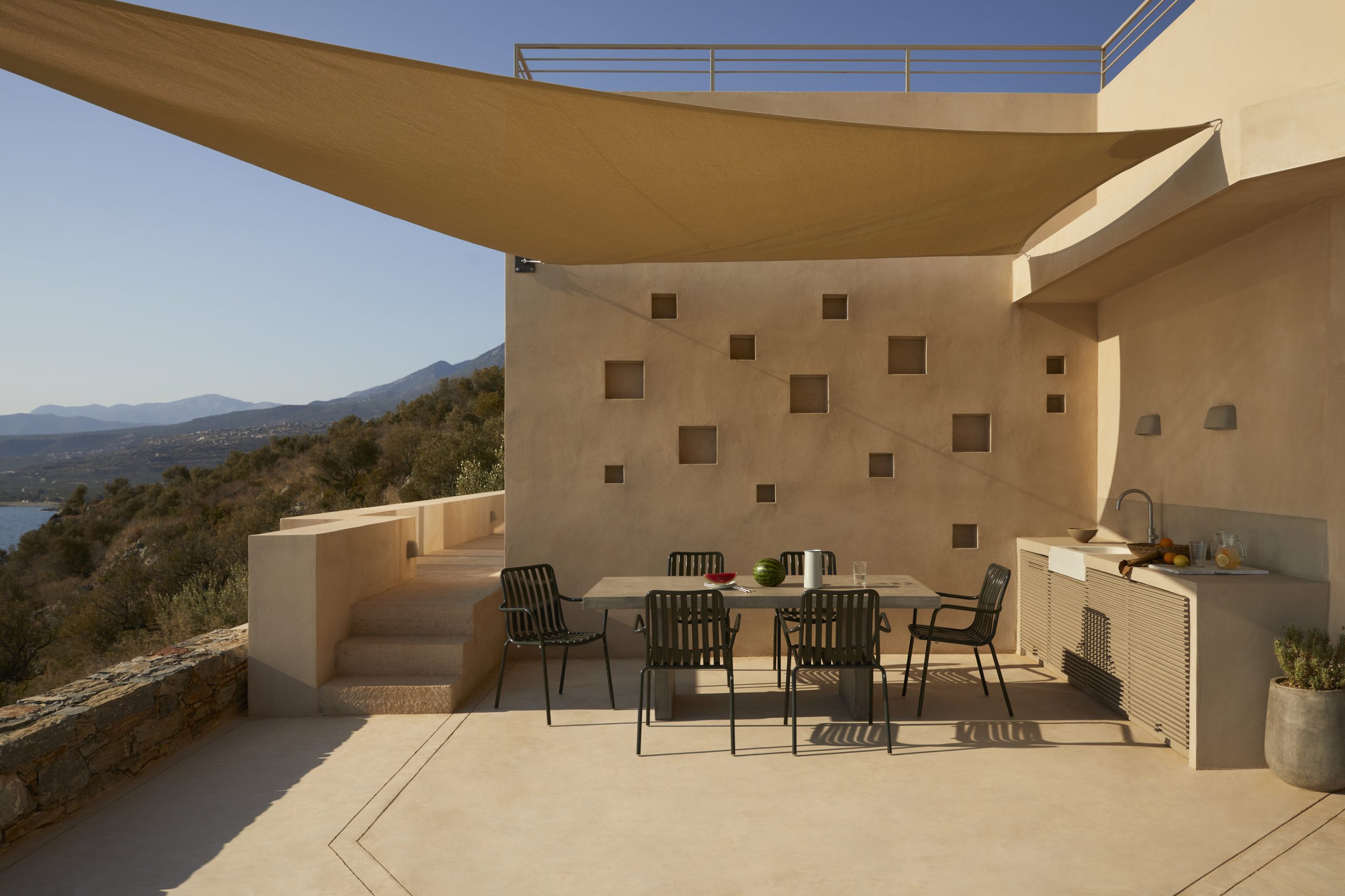
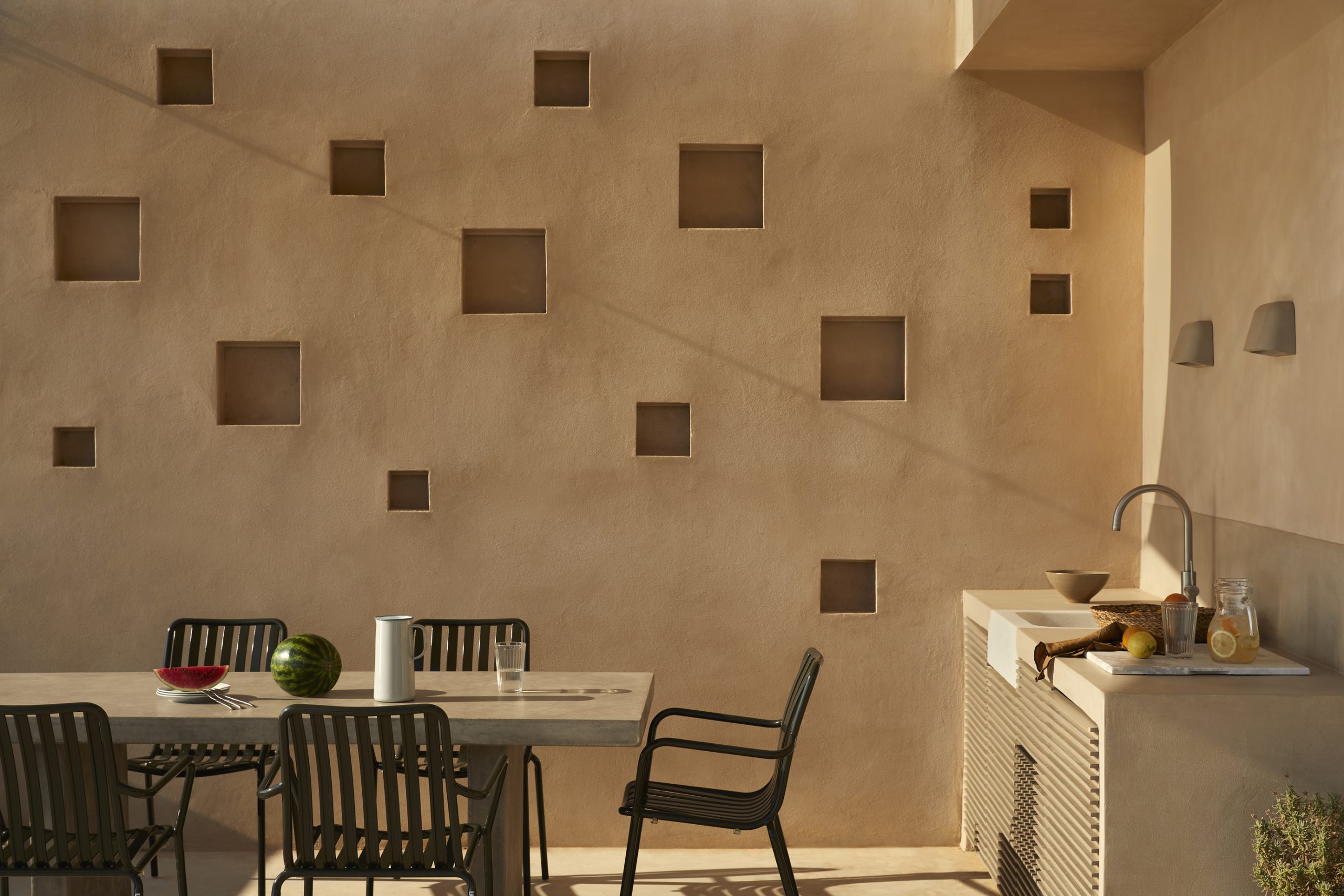
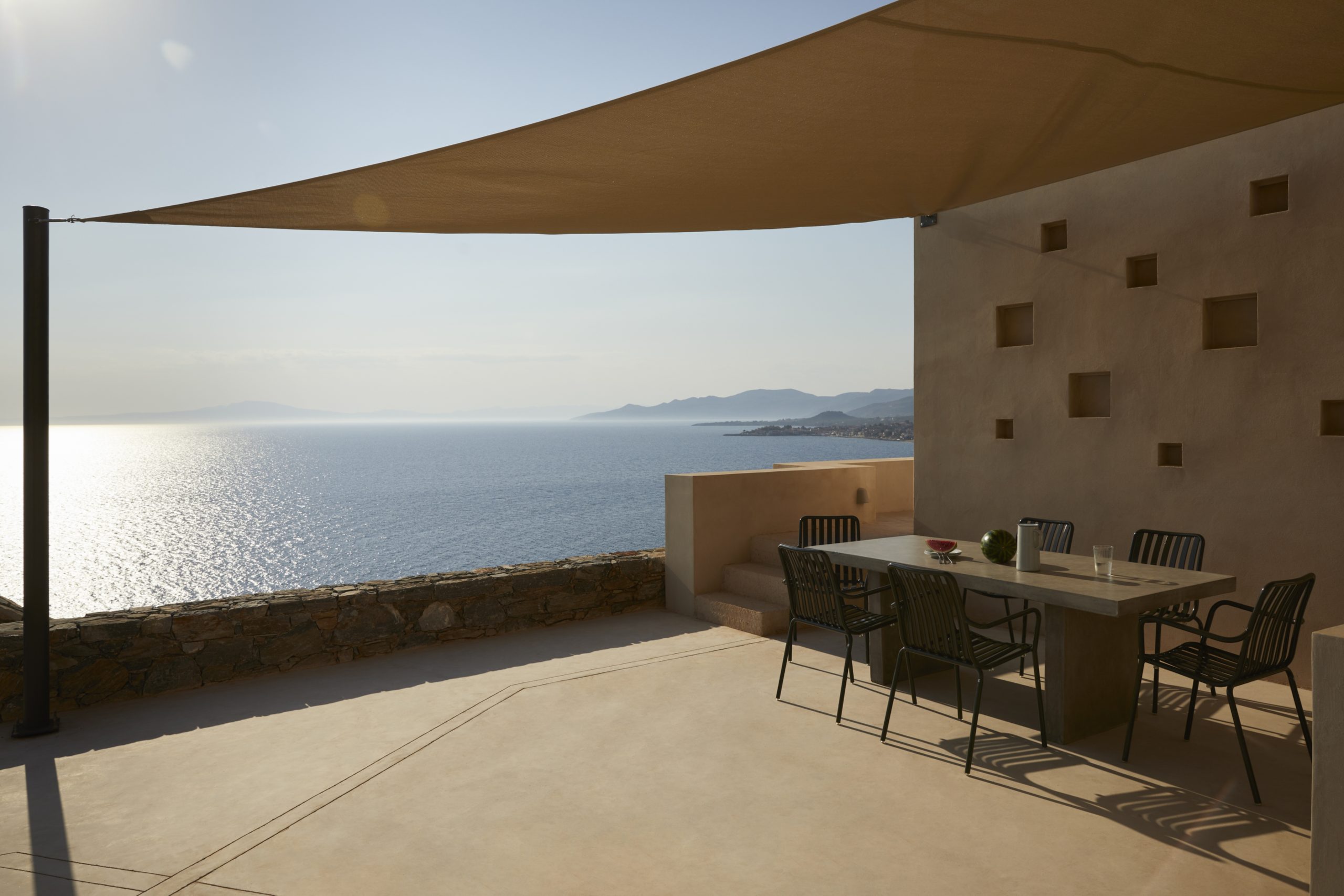
This means that, when designing a house, the outdoor rooms are just as important as the interior ones. Courtyards, patios, shaded areas, pergolas, trees, planting and even a particular spot from which to watch the sunset become additional rooms of the house.

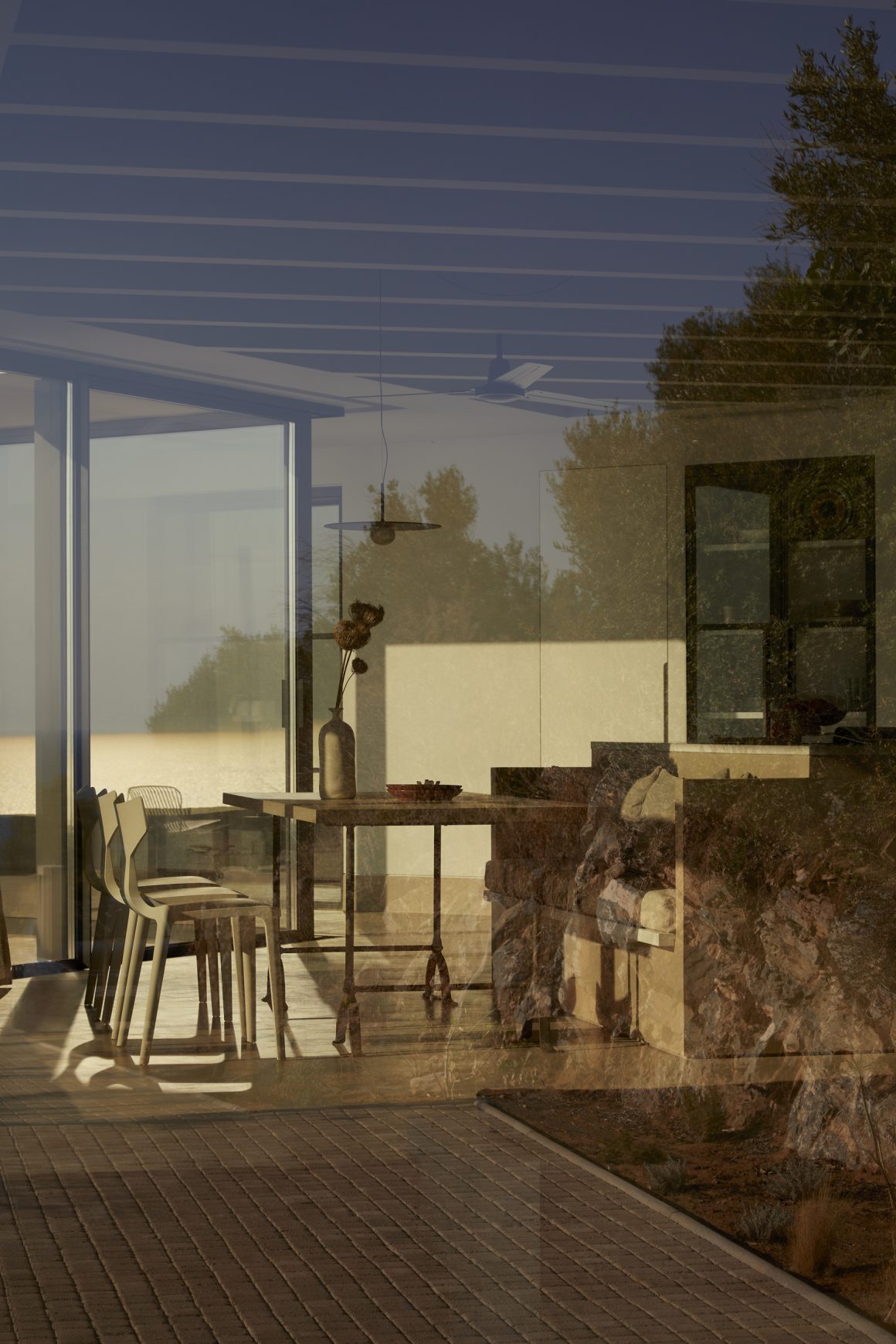
Our challenge is to make the transition from inside to outside, and from outside to inside, as natural as possible. You should not feel that you open a door and enter another world.

At the same time, winter, although short, does exist. It is wonderful to have a protected, warm interior space where you can retreat and, as people used to say, “winter over.” A good house here must be able to open itself completely, but also to become a cocoon.

How easily can architectural tradition and contemporary design coexist?

I have developed an allergy to the word “tradition” over the years.

Tradition is not the roof tiles, the stone, the donkeys, the woven textiles or anything else we use to construct a picturesque image of the past. If tradition has any meaning, it lies in the way people in earlier generations built and lived in these regions.

How were their communities organised? How were villages connected to one another? How did they manage water, energy and food? How did they position a house in relation to the sun and the wind? How did they make use of a material that was available right beside them? How did they create small self-sufficient enclaves that contained everything they needed?

Of course, we should not romanticise history. It also reveals everything we would never want anyone to experience again: war, civil conflict, abandonment, the black stone.

If there is something you can still learn from the people who live here, it is that tradition is first and foremost about economy. And economy does not mean poverty. It means precision: just enough, the principle of “nothing in excess.”

Once you understand this logic, contemporary design does not need to be artificially combined with tradition. It emerges as its continuation. You do not copy the past; you selectively draw upon its intelligence.

Is architecture a process of intuition, or something that can be learned?

I think that, just as some people perceive musicality and rhythm more intuitively than others, some people have a more immediate understanding of space, inhabitation and the feeling a room can create.

But that alone is not enough. Architecture is also a matter of culture, observation and constant practice. The more you engage with it, the more you learn to see. And the more you see, the more you understand how much you did not know.

Architectural and artistic education are, unfortunately, particularly lacking in our country. This does not mean that people lack aesthetic sensibility or desires. It means that they have often not been given the tools to recognise, articulate and demand the qualities of spaces that could make their lives better.

Part of our work is also to help them acquire that language.

Have you experimented with other forms of art? What else is part of your creative pursuits?

As I mentioned, when I was young I wanted to become a painter. I imagined myself painting, and that was the first form of creative expression that attracted me.

In practice, I never really pursued it. Architecture takes up so much space and time and, ultimately, led me towards a completely different life.

What I would really like to do at some point is write a book. I am very interested in language, the use of words, the way people express themselves and, above all, stories.

I still don’t know whether it would be a book about architecture, Mani, people, or all of these things together. I suspect that architecture might simply be the way I talk about something else.

What are your immediate plans?

Apart from the book, I would like to contribute to creating a school in the area where traditional building techniques can be passed down from older generations to younger ones.

I am not interested in a school that turns craftsmanship into a tourist spectacle or a nostalgic recreation. I would like it to be a living place of education, where old knowledge meets contemporary needs and can lead to real employment.

At the same time, I would like us to record the elderly people of the region telling their stories while we still have the chance. Not only the major historical events, but everyday life: how they worked, how they built, how they travelled, how they celebrated and how they survived. A living archive of oral history, before the voices that still remember are lost.

What prompts and inspires you to take new steps and evolve in the way you create? Tell us a story.

You catch me at a point when I am a little tired. I hope it will pass. I have gone through similar cycles in the past. In general, though, it is people who give me the greatest inspiration and the most reasons to keep moving forward. Talking with clients, friends and people who have ideas, and trying to help them understand what they themselves want and how they might live, is an extraordinary motivation. When that succeeds, it is a gift. Because an architect should not impose. An architect should interpret. It is a gift for the end user, but also for the architect who gives form to their needs.

Once, a couple came to the office who were determined to work with us. After we had agreed to the collaboration and sat down for our first proper meeting, they told us: “We want you to build us Kristi’s house. Exactly the same.” Kristi is a particular woman, an artist, with a truly beautiful house that she designed herself. The only problem was that the house already existed. So, in a sense, they were asking us to simply copy it.

At first, this seemed difficult. At the same time, however, it was an extraordinary challenge. So we said: all right—imitation is the mother of learning. We began by studying Kristi’s house very carefully. We tried to understand not only what it looked like, but why it worked: its proportions, relationships, materials, light and effortless atmosphere. Then we took it apart into its constituent elements and assembled it again on another plot of land, for different people and another way of life. The result bears no literal resemblance to the original house. And yet, in a strange way, it remains “Kristi’s house.” It is the Inside Out House in Gonatsa.

What do you love, and what don’t you love, about your home, Mani?

I love the horizon and the sense of openness very much. I like the villages, particularly the mountain villages that retain a more genuine life, rather than functioning only seasonally. They are places that exist in winter too, rather than becoming merely a backdrop for visitors. I also really like the people who live here. It is an extraordinary mosaic: locals, a strong Albanian community, English, French, Austrian, German and every kind of person you can imagine.

I like the simplicity of life. If you don’t move exclusively within the tourist areas, where the shops cater to visitors during the season, there is not much to buy. If you want to do any serious shopping, you have to go to Kalamata or Athens. It is therefore a fairly anti-consumerist place, which is good for me.

What I don’t like is the narrow-mindedness you encounter among some people. People who live surrounded by all this beauty can still maintain a strange negativity and a difficulty in coexisting, as though they cannot always appreciate what surrounds them.

And I don’t like the advance of a very predatory and superficial form of tourism. The visitor without curiosity, who could be anywhere, stays for a week, photographs the landscape and leaves without ever really getting to know or supporting anything of the place. There is nothing wrong with people coming here. The problem begins when a place becomes a disposable backdrop and local life becomes décor.

What would you like to create as your dream project?

Today I was saying that I would like to create a commune where all my friends and I could live together until the end of our lives. Not some sad retirement resort. A real place to live, with privacy when you need it and community when you want it. With private houses, shared tables, gardens, workshops, visitors, children, animals and people of different generations. And then for others to come too. And others.

Who are the architects and designers closest to your heart, and why?

In design, I would say Paola Navone. In painting, Leda Papakonstantinou. Among architects, I could name many, but to maintain some consistency, I would choose Konstantinidis for his restraint and essentiality, and Philippidis for his modest, everyday and overlooked approach. And also Hassan Fathy, for his use of humble materials, mud and local techniques, and for an architecture created for people with limited means.

What connects all these very different people in my mind is that they observe the humble, the small and the everyday, and manage to make it significant without distorting it.

They engage with the banal, with repetition, with the things most people pass by. They do not necessarily seek the spectacular gesture. They look carefully and, through that observation, reveal something that was already there but that we had failed to notice.

What are three places you love returning to, and why?

Kalymnos. I spent my summers growing up there, and for me it is almost synonymous with that season. I have many friends there, and it is a place that has been inside me from the very beginning: the wild strength of a neighbourhood that refuses to give up, the minimal shade and the openness.

London. I love it very much, although perhaps I love more the London of the time when I lived there. I don’t know anymore. But it was a place of freedom, intensity, knowledge and constant discovery.

And the mountain villages of Mani. I return to them because they still retain the rhythm of a life that is not organised exclusively around the summer season. They remind me that a place is not only its image, but also the people who continue to turn on its lights in winter.

Is creation, in a broader sense, a way of becoming better human beings?

Perhaps the only way to become better is to create—in the broadest sense, and not necessarily artistically. Artistic ability does not automatically make you a good person. There are great creators who are terrible human beings.

There are, however, people who create relationships, possibilities and circumstances. They become catalysts, open paths and enable other people to do things they could not do before. There are people who create families, communities, schools, gardens, jobs or simply an environment in which another person feels safe.

Creation, when it contains care and responsibility, perhaps does indeed make us a little better.

Tell us a story you will never forget.

One day at the Polytechnic, Biris and Dekavallas walked into the main hall. They were walking perfectly in sync, with coordinated steps, each holding a coffee.

Almost choreographically, they both turned at exactly the same moment and sat down on the edge of a table. Except that the table tipped over.

With exactly the same choreography, both coffees flew through the air and Biris and Dekavallas came crashing down onto the floor together. It was a perfect, completely synchronised architectural disaster.

Give us your own definition of beauty.

The smiles of my children.

What else would you like to design?

My own house. I still haven’t managed it. I continue to live in the house we bought as a temporary holiday home before moving to Mani. Perhaps an architect is the most difficult client of all.

Perhaps, too, you first need to understand your life and then design the house that fits it. And I am probably still trying to understand mine.

What do you consider authentic today?

I consider authentic whatever does not pretend to be something else. It is not necessarily the original, the untouched, the pristine or the “traditional.” An old building may have changed many times and still remain authentic, as long as its alterations do not attempt to erase what it has lived through. Likewise, an entirely new house can be authentic when it has a genuine relationship with its place, its people and the life for which it was designed.

We are all influenced by what surrounds us. The point is not to pretend that our ideas were born in some sterile vacuum. It is to metabolise what we have seen and make it our own.

Authenticity is not purity. It is a form of consistency between who you are, what you have lived through and what you choose to reveal. It means not hiding your changes, influences, imperfections and contradictions.

In architecture, as in people, authenticity is not about remaining unchanged. It is about changing without losing the ability to recognise yourself.

Photo Production: Mia Dorier
Photography: Mirto Iatropoulou
Set Styling: Sissy Rousaki

Author