This is not a hotel. It is an address. In the heart of the Nouvelle Athènes — the intellectual epicentre of the nineteenth century, the quarter of the Romantics — behind the discreet façade of a street since given over to pedestrians and to silence, the Hôtel des Peintres takes up a story that was broken off.
This maison d’art of seventeen rooms is the kind of secret you pass on in a low voice. To enter the Hôtel des Peintres is to step into a private house, intimate and real, with a hospitality that is personal. There is no check-in here: you settle into a place that seems always to have been there.
The Spirit of the Place
A family pension reimagined
The soul of the house draws its authority from the walls themselves. A family pension at the close of the nineteenth century, it was a refuge for the young talents of the Académie Julian and the Académie Colarossi, who came in search of the Paris light and the nearness of the place Pigalle — known, among other things, for its teeming market in artists’ models.
You have only to look out of the window: Émile Zola wrote J’accuse just across the way. Nearby, on the corner, the composer Hector Berlioz lived out his final years, leaving his name to the square that borders the hotel.
It was here, in this pocket-handkerchief of the Nouvelle Athènes, that it all played out. Claude Monet lodged on the rue d’Édimbourg, a few steps off, to paint the steam of the Gare Saint-Lazare, while literary Paris pressed into Stéphane Mallarmé’s rooms on the rue de Rome to remake poetry. Édouard Vuillard, for his part, painted the neighbouring square under snow.
To stay at the Hôtel des Peintres is to agree to become, for a night, the neighbour of these illustrious ghosts, in the absolute calm of a cul-de-sac sheltered from the tumult of Pigalle.
Scenography & Gesture
The Pair: Antoine Fontaine & Agathe Chabolle
The visual identity is born of a dialogue between two worlds: cinema and architecture.
The artistic direction is by Antoine Fontaine, a set designer of international standing (the Opéra Royal de Versailles, La Scala in Milan, and, on screen, Vatel and Sofia Coppola’s Marie-Antoinette). He does not decorate; he conceives the atmosphere of a place. Beside him, the architect Agathe Chabolle — a regular collaborator with Studio KO, who cut her teeth on landmark projects such as the Chateau Marmont — brings structural rigour and a sense of space.
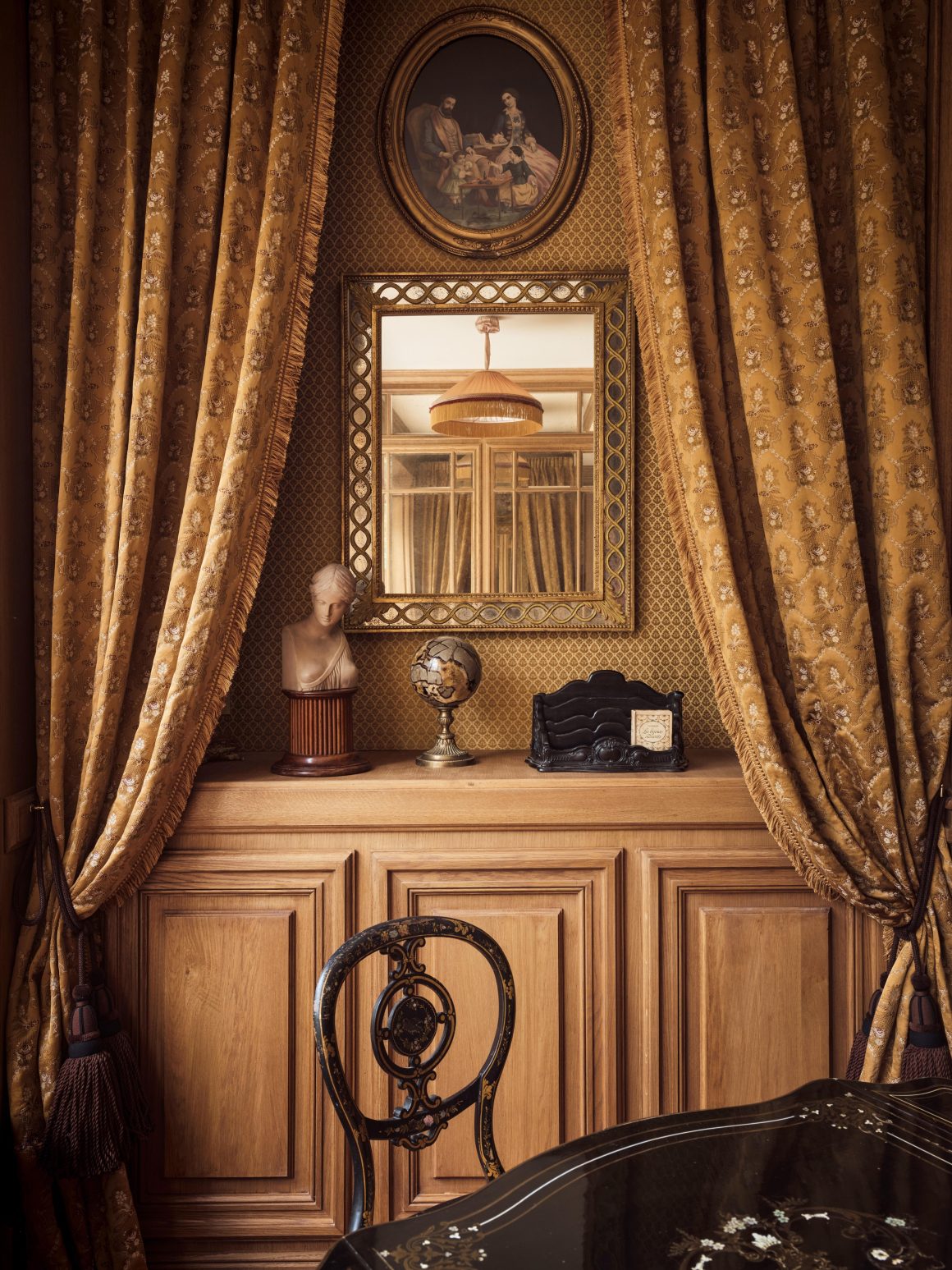
Together they have made what they call an esthétique incarnée — an embodied aesthetic. Nothing here looks new. Everything seems always to have been there, worn by time and use.
A staging, not a decoration
Craftsmanship & Material
The Hôtel des Peintres is a hymn to French craftsmanship and to noble materials, sourced without compromise.
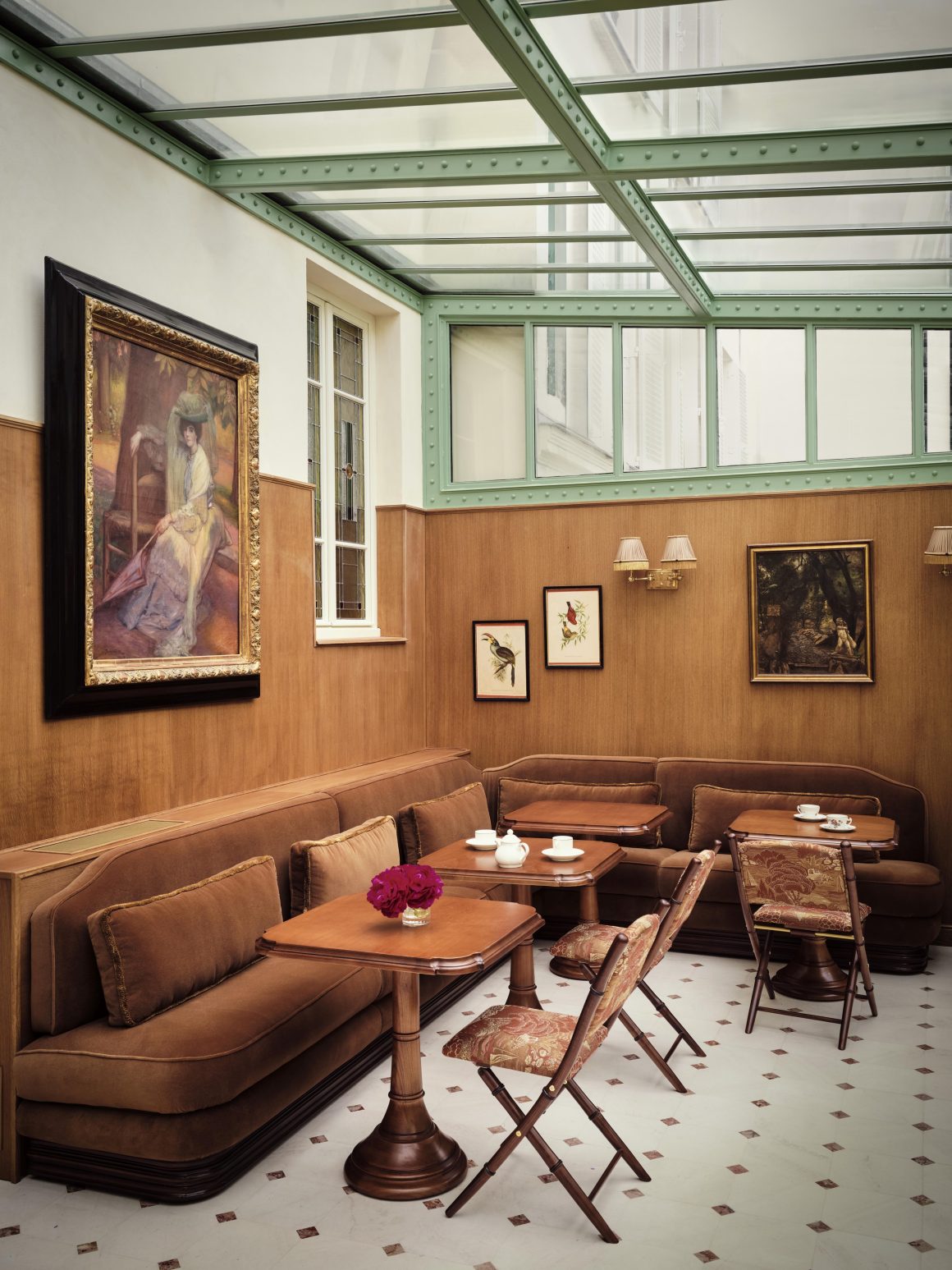
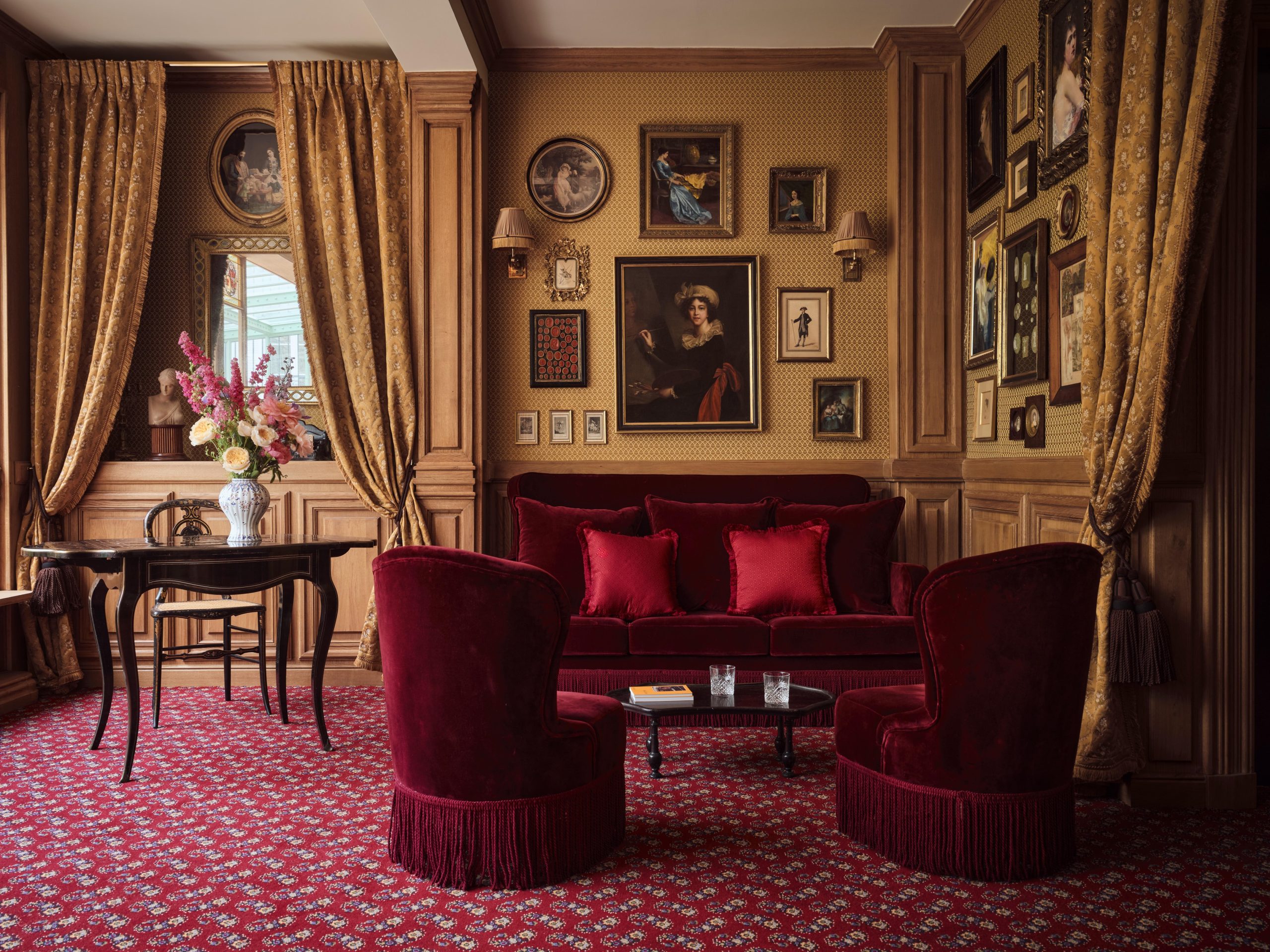
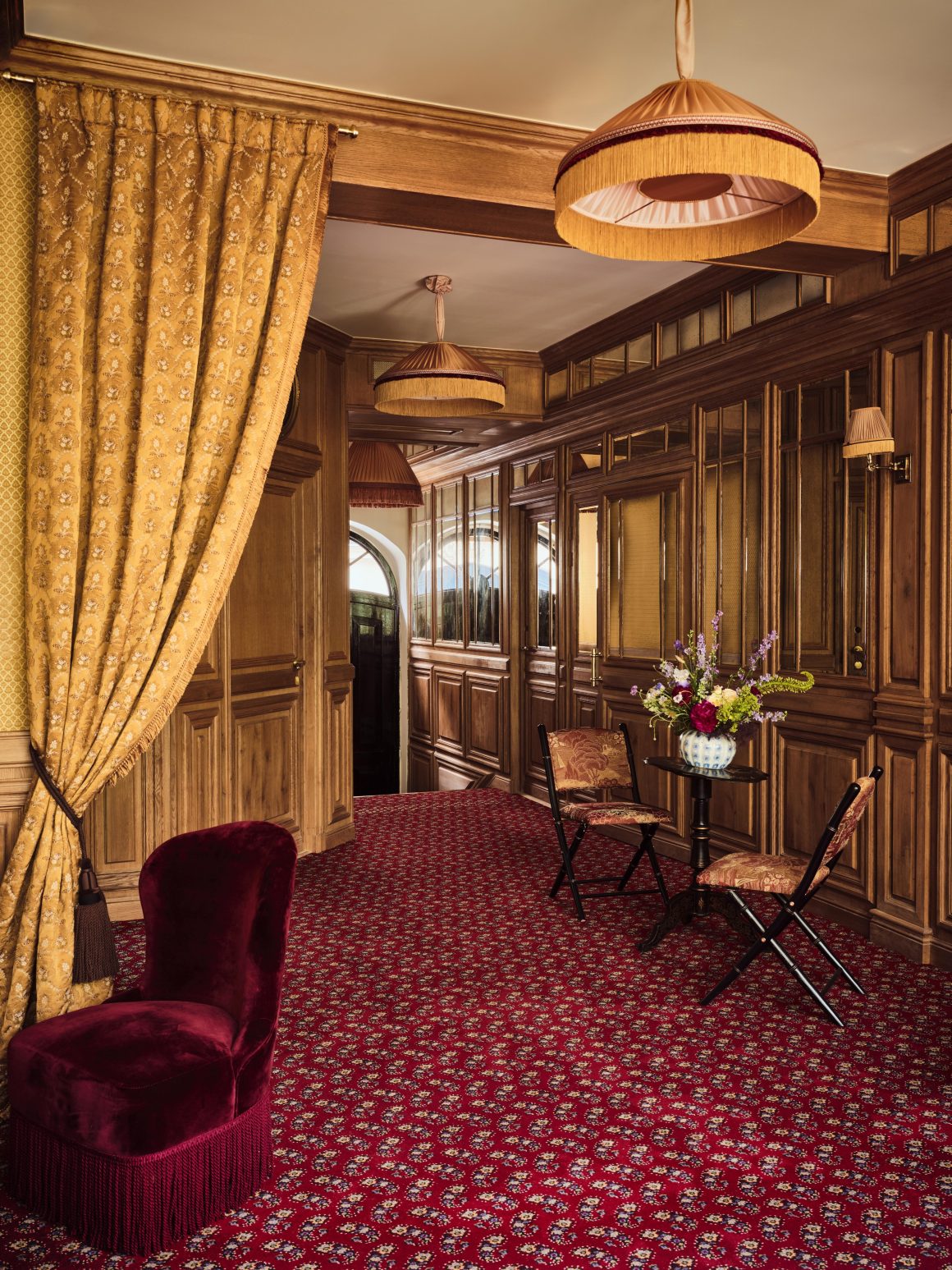
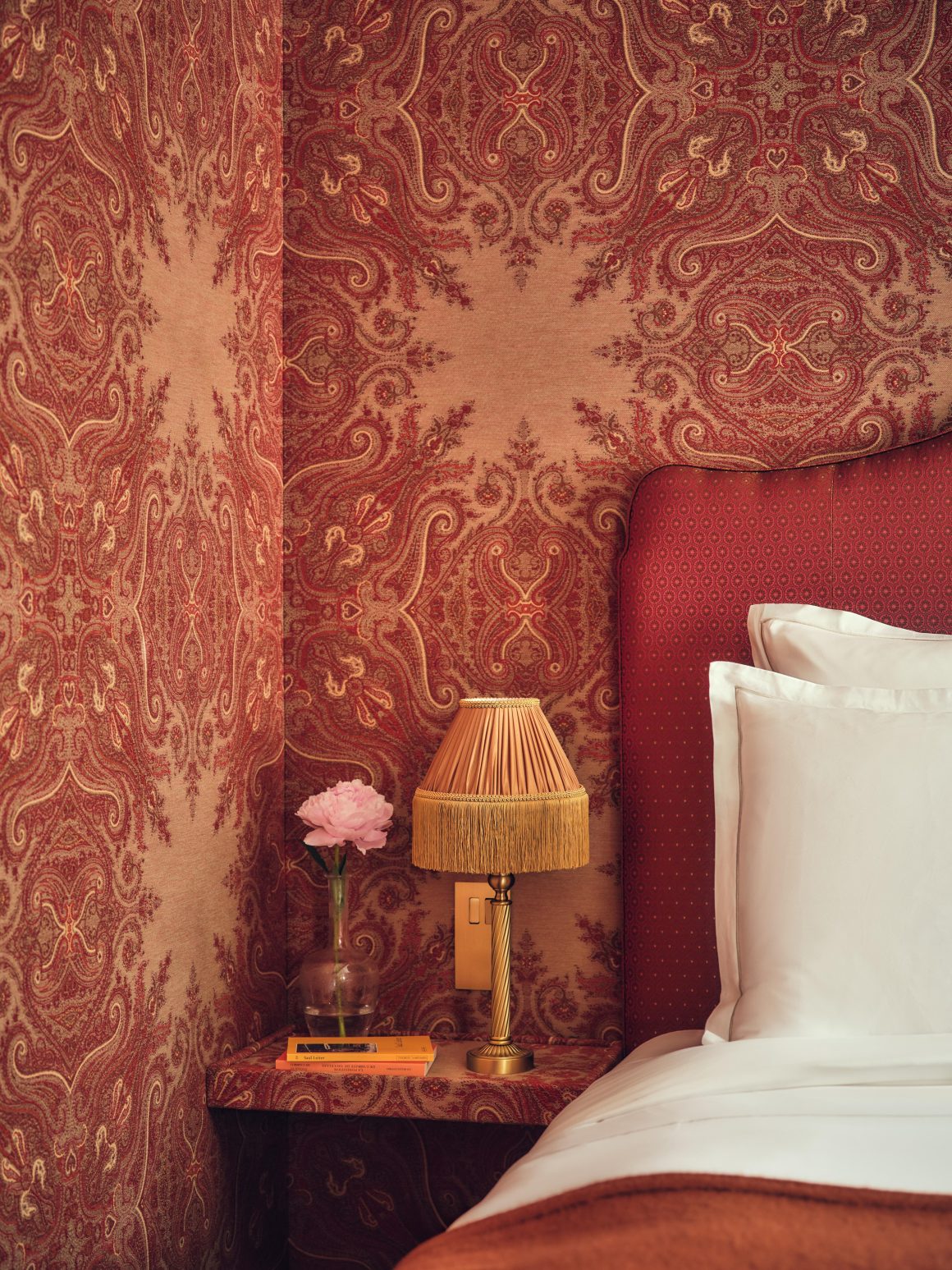
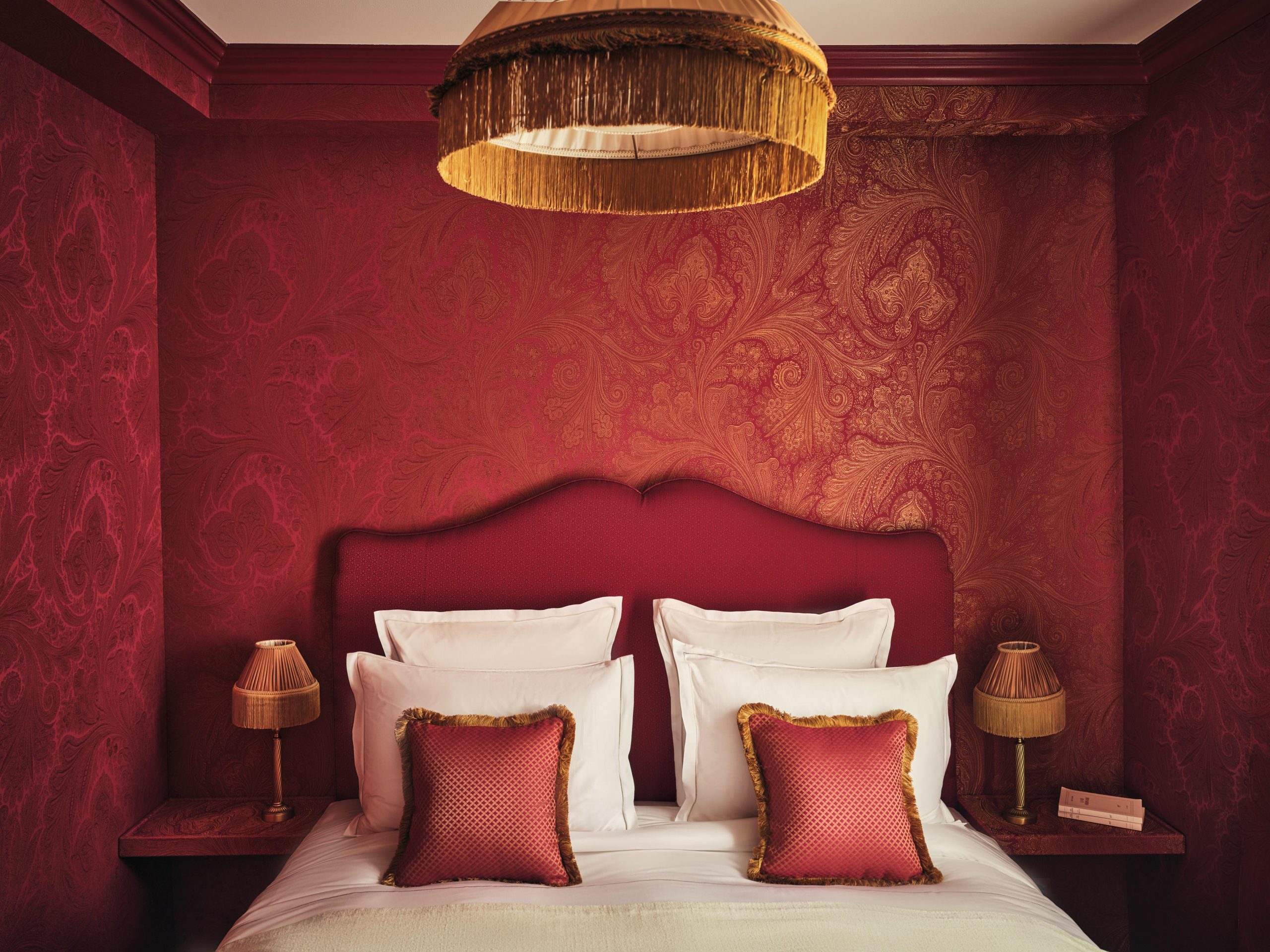
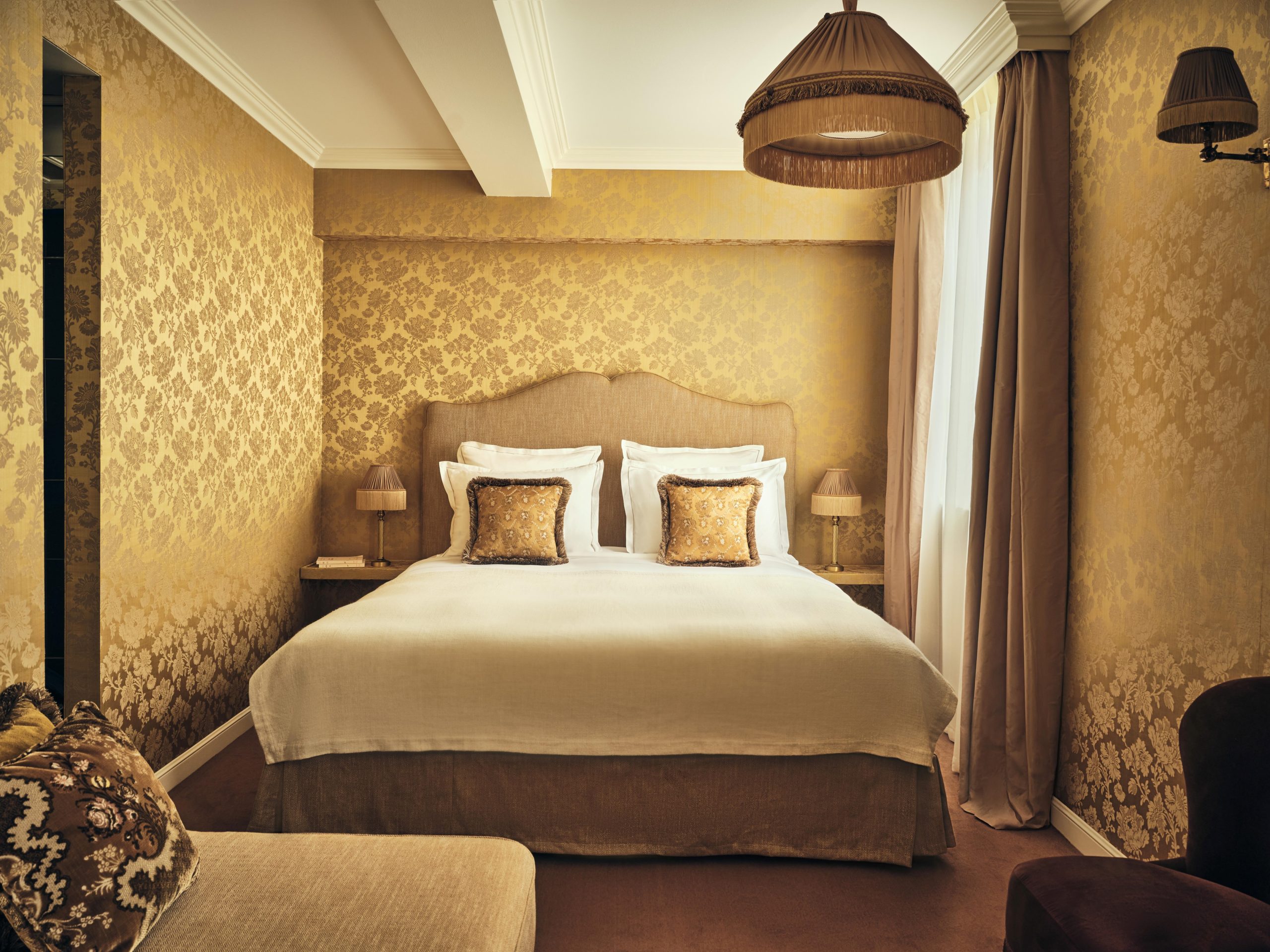
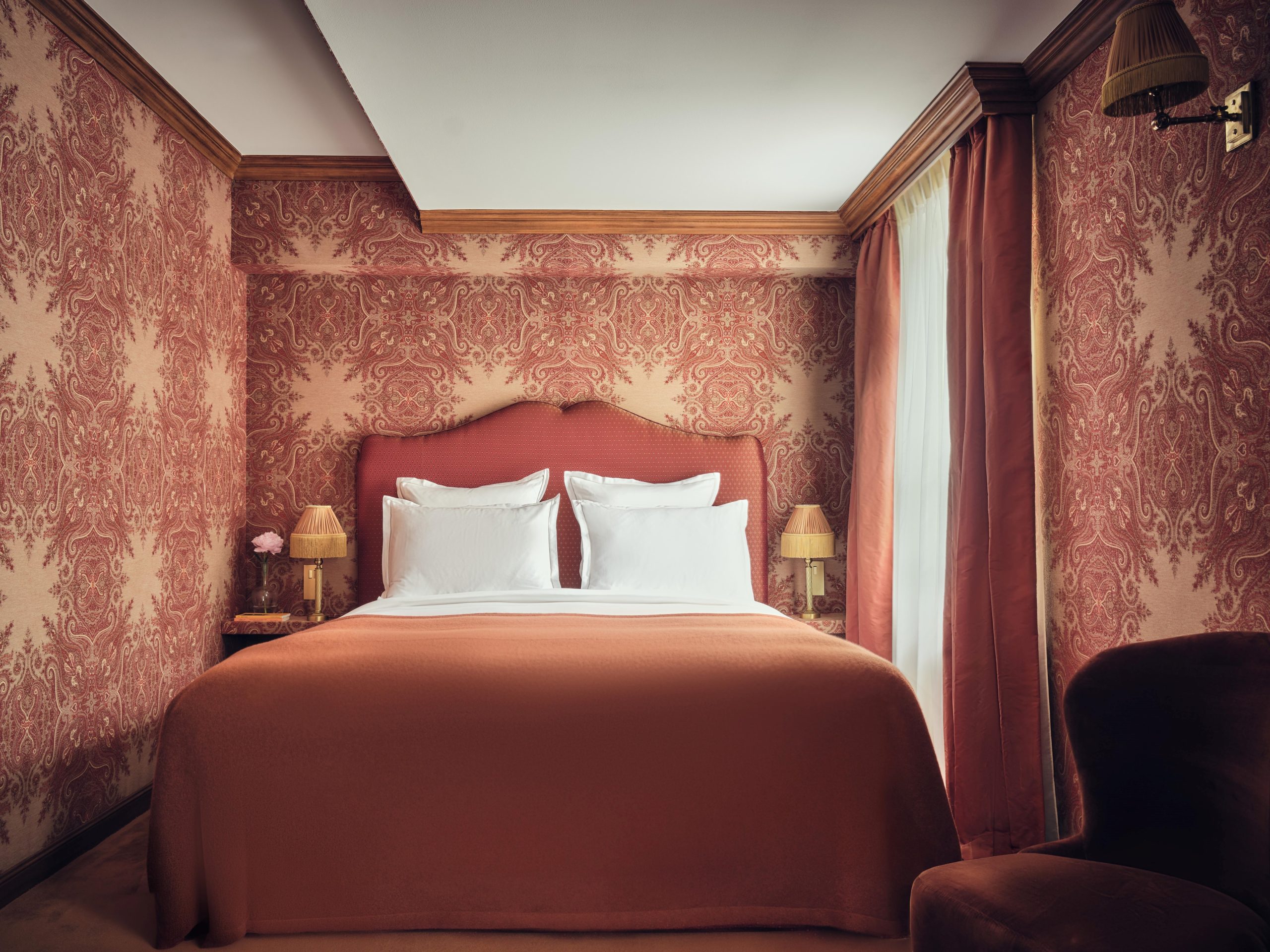
The fabrics. Deep velvets and silks from the houses of Lelièvre, Pierre Frey and Manuel Canovas, dressing the walls and the seating like stage costumes.
The stone. The arresting use of breccia pernice rosso marble, its red veining a reminder of the beaten earth of sculptors’ studios.
The technical detail. Exceptional fittings from the house of Herbeau — the same that Robert De Niro insists upon in his own residences.
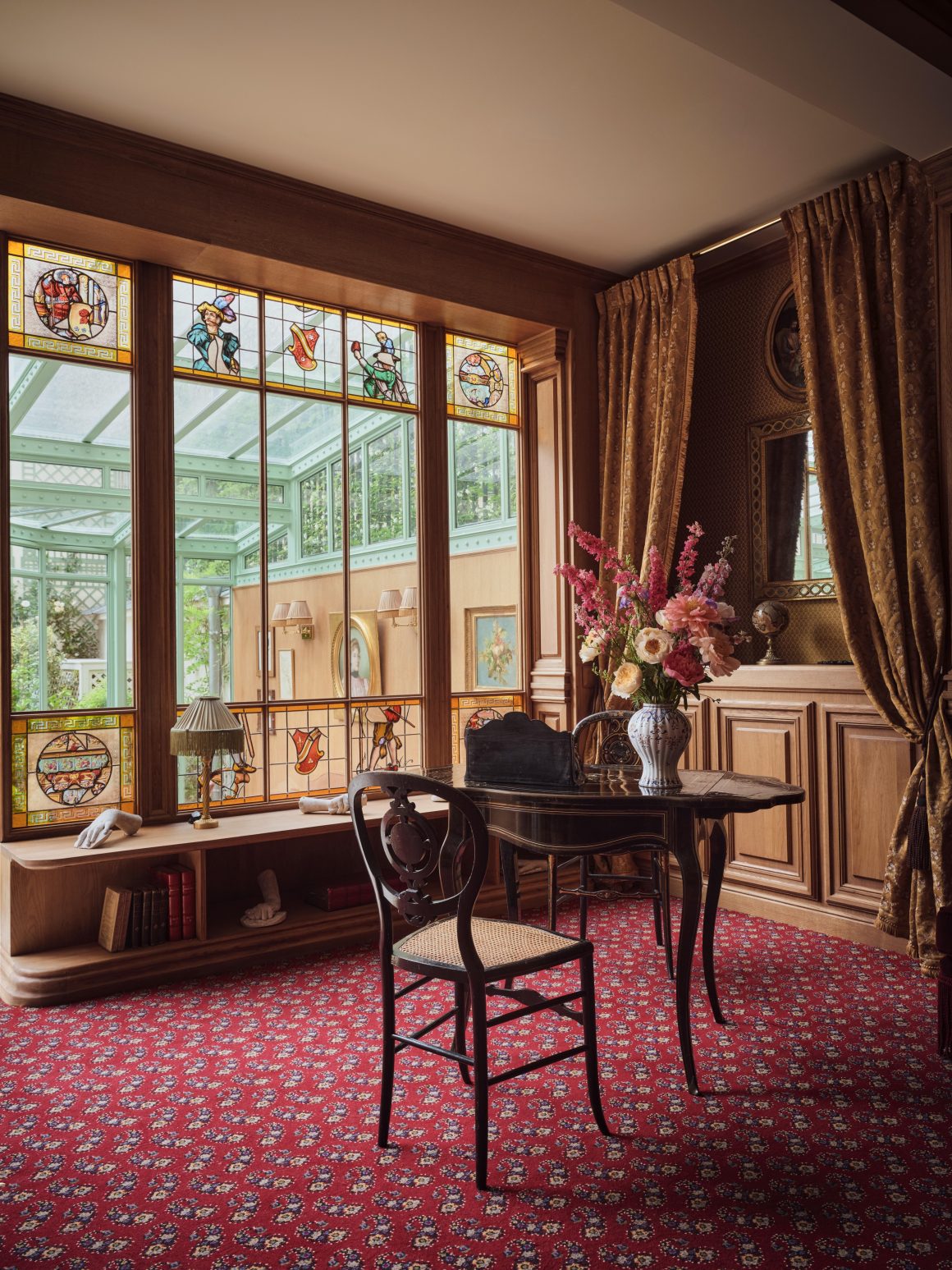
The light. Antique eighteenth-century stained glass, reset to measure, filters the Paris light and turns each ray of sun into a painting.
The lampshades. Made entirely by hand by Anne Sokolsky, in the great tradition of French decoration.
A Collection, not a Catalogue
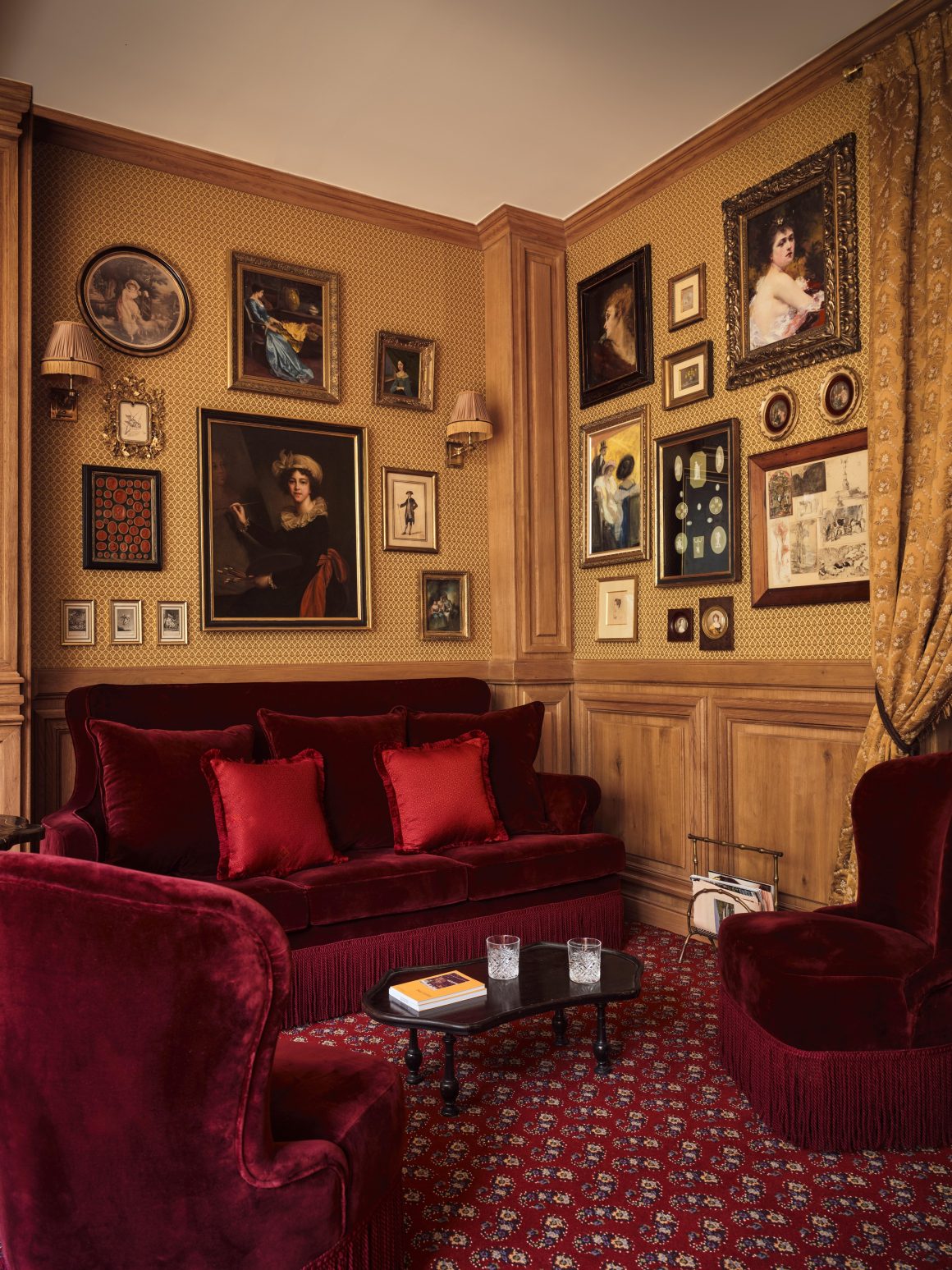
The walls carry a collection of thirty original paintings, patiently run to ground at antique dealers and in the saleroom. Forgotten portraits, charcoal sketches. Each work anchors the hotel in its reality as a collector’s house.
The Art of Living & the Garden
The secret garden & the flâneur’s ritual
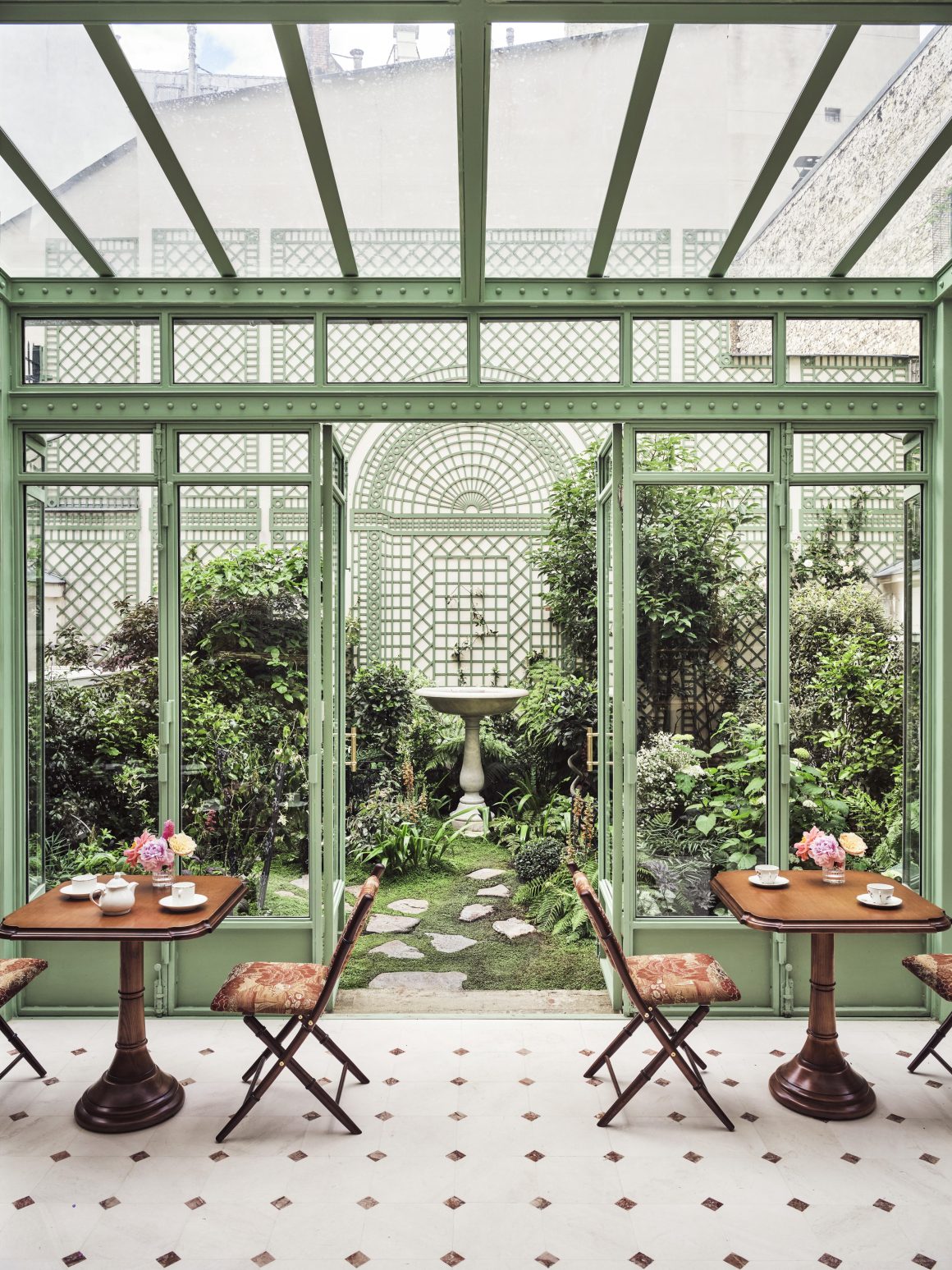
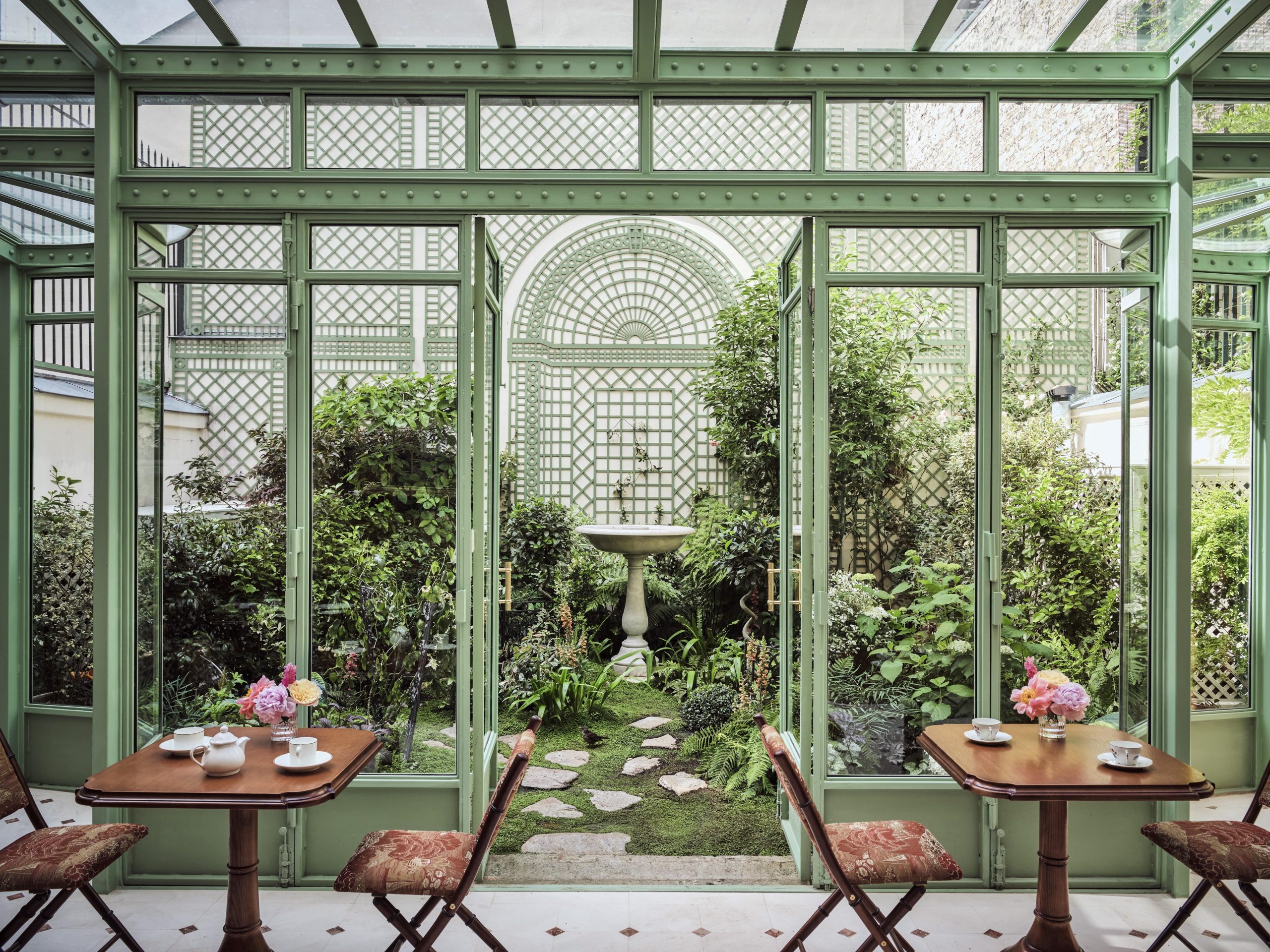
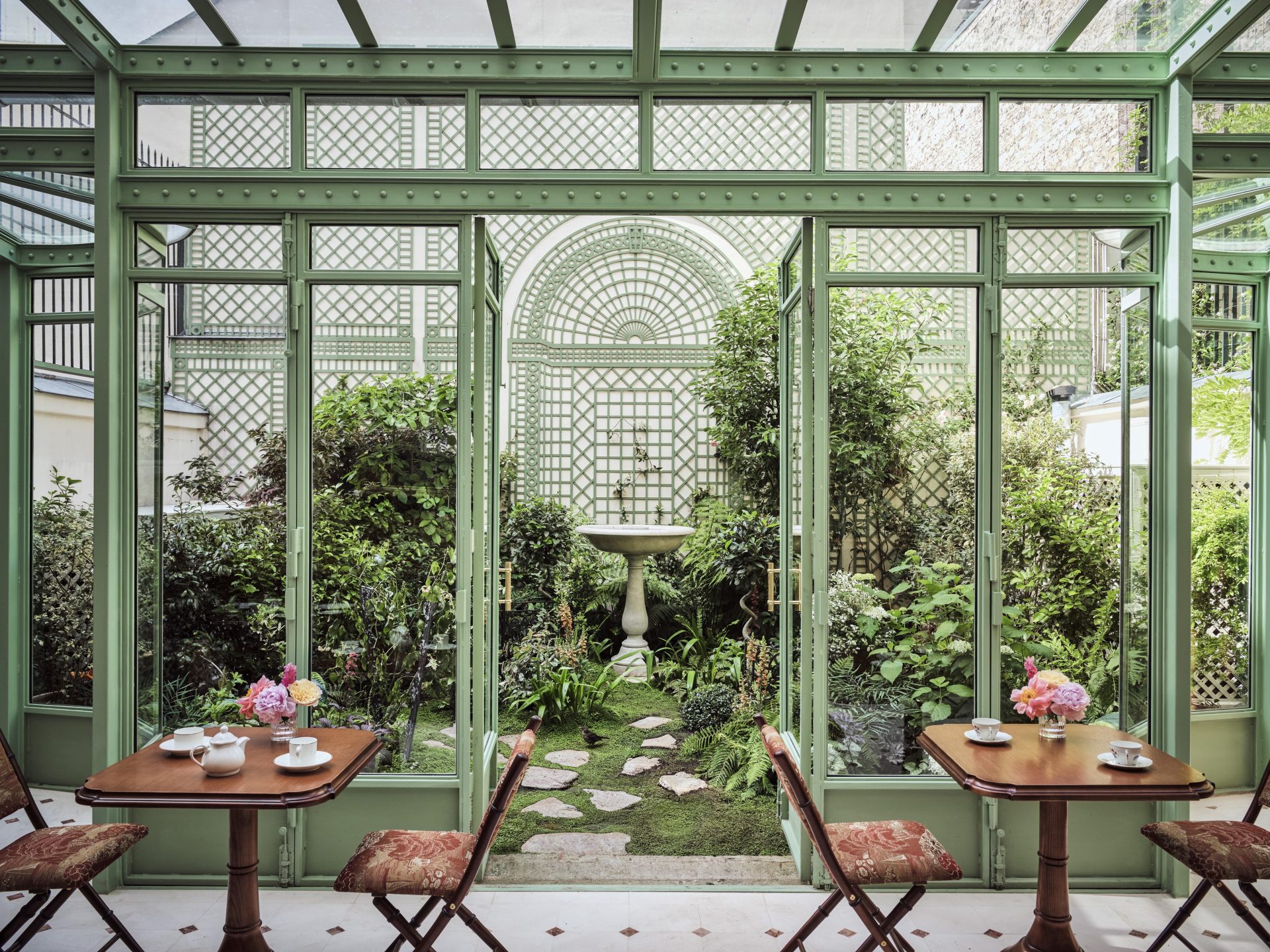
At the centre of the house, a Parisian miracle: fifty square metres of open-air garden within. A true Hortus Conclusus— an enclosed garden — this green setting is a sanctuary of silence. Hidden from view, you hear the trickle of the fountain.
From breakfast to the blue hour
Morning. Breakfast is taken facing the garden, the windows open onto the leaves, as in a country house mislaid in the 9th.
Evening. The salon changes. Lights low, the air hushed. It is the hour for a cocktail or a glass of wine, served with the easy elegance of a private gathering, the conversation carried late into the night, among those in the know.
The cultural concierge
The guide du Flâneur
We have replaced the conventional concierge desk with a form of cultural engineering. On arrival, each resident receives the Guide du Flâneur, published by the house. Far from the beaten track, it opens the doors of little-known museums — the Musée de la Vie Romantique, the Musée Gustave Moreau — and lays out walks for the aesthete.
The founder
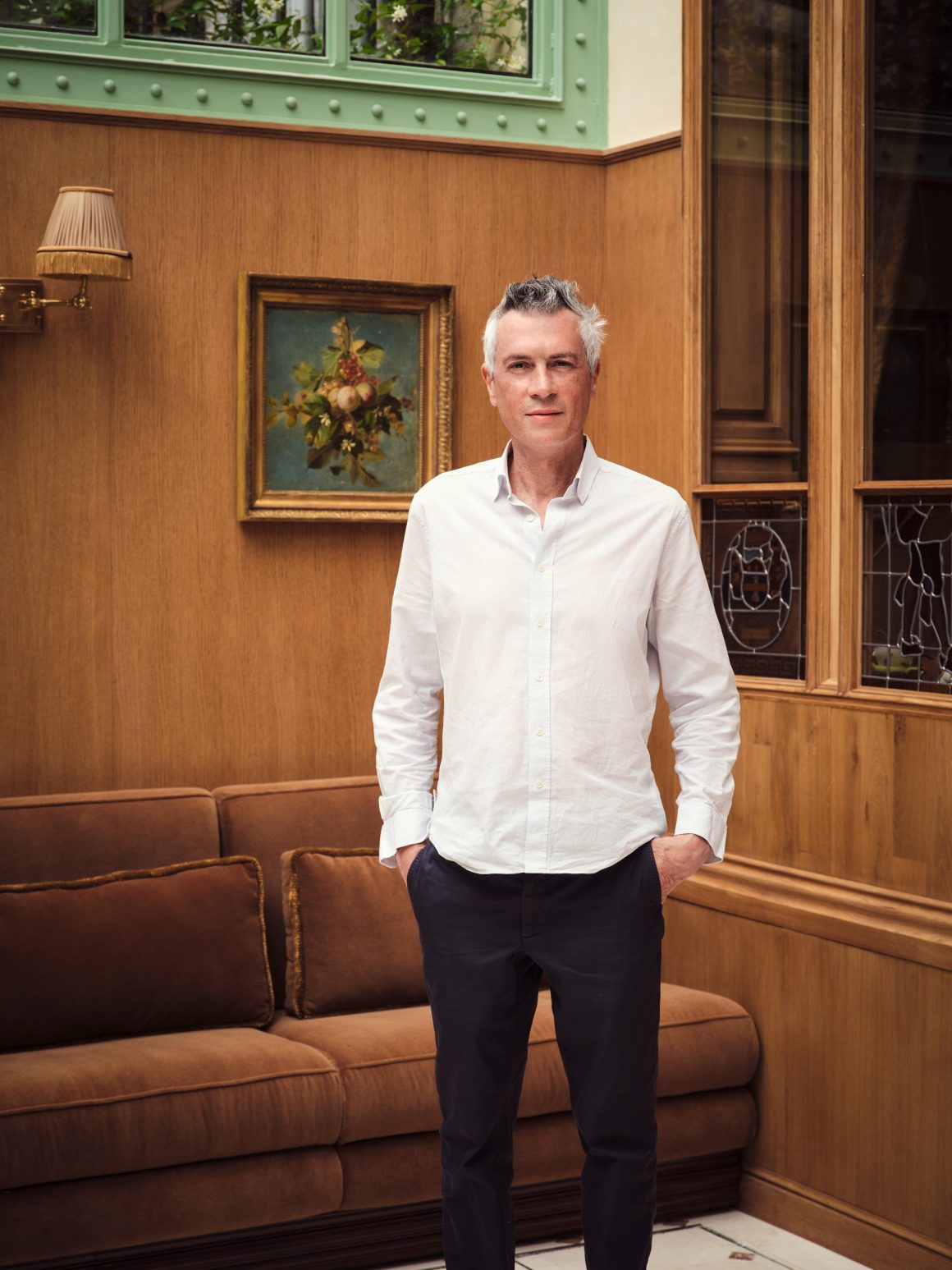
This house is conceived and run by its owner, Abel Nahmias, a film producer and the guardian of the quarter’s legendary stages — the Trianon (1894) and the Élysée Montmartre (1807). He is set on safeguarding and reimagining the historic places of that era, across the Nouvelle Athènes and Pigalle.
His ambition: to revive the soul of an era; to hold to the intimate character of the house; and to offer a hospitality that is truly personal, one in which the art of living converses with history.
Project information
Address
38 rue de Bruxelles, 75009 Paris
Opening
September 2026
Photo Mathieu Salvaing