You are fortunate to constantly be surrounded by people and places that maintain a deep and meaningful relationship with architecture, craftsmanship, and the essence of what we call Greek tradition. What is it really like to experience this, and how did you decide to actively pursue interiors?
I don’t think I ever experienced it as something “theoretical.” I’ve been working since I was 23, and I grew up observing people who created things, as well as artisans who valued history, materiality, and the functionality of everyday life. In Greece — especially on the islands, and particularly in Patmos — there is a deep, almost unconscious aesthetic knowledge. You see it in a house, in a courtyard, on a table, in the way an object wears over time and is left to age naturally. This influenced me far more than any academic approach ever could.
I became involved with interiors because I was always interested in the way space affects emotion and, ultimately, the way we live. Design as image alone never moved me; what interested me was the feeling of belonging, the relationship between people and the objects and materials around them, as a way of life.
How did your journey evolve, and what would you say were the highlights or defining moments that brought you to where you are today?
My journey evolved very organically. There was never one defining turning point, but rather a constant need to explore different forms of creation — from Eye Ring, which I started at 19, to architecture, where I began working practically a few years later.
Interiors gradually brought me closer to design and craftsmanship, as well as to the creation of objects with a narrative and often folk character, strongly inspired by the Aegean.
Travel abroad and my collaborations with people in Italy, Belgium, France, and England also played an important role, as did my deeper research into Greece’s traditional techniques.
Lesvos, which I discovered thanks to my father, became pivotal for me because it was there that I encountered people who continue to create using methods that are almost lost in the contemporary world.
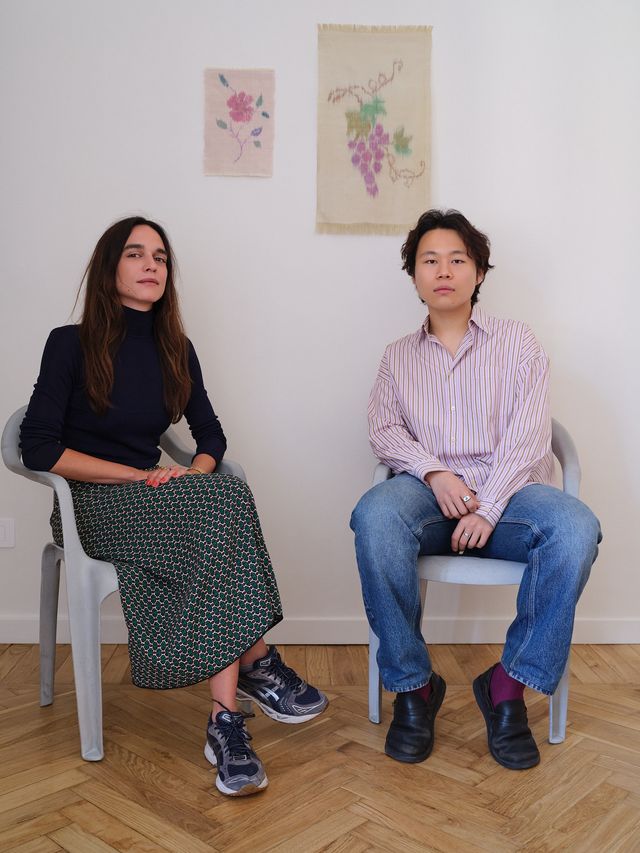
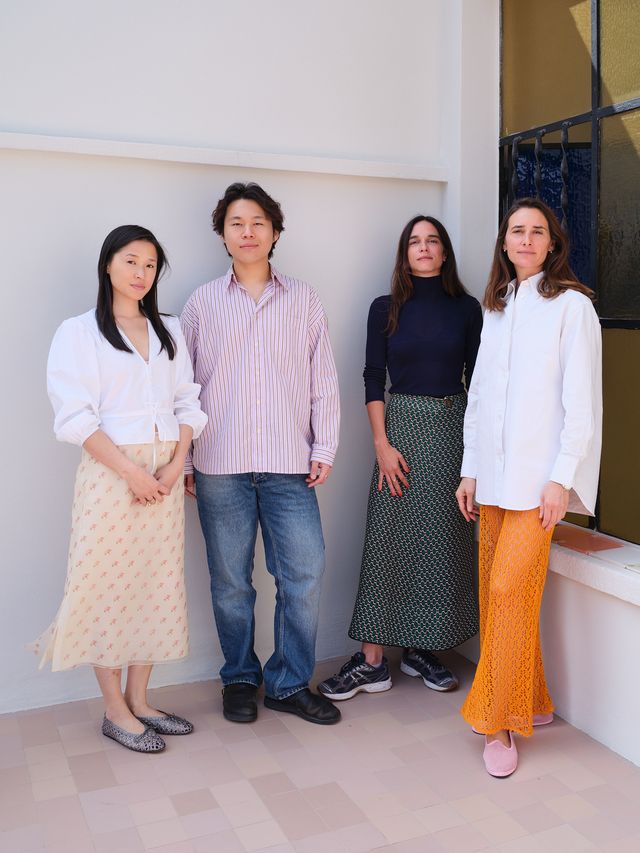
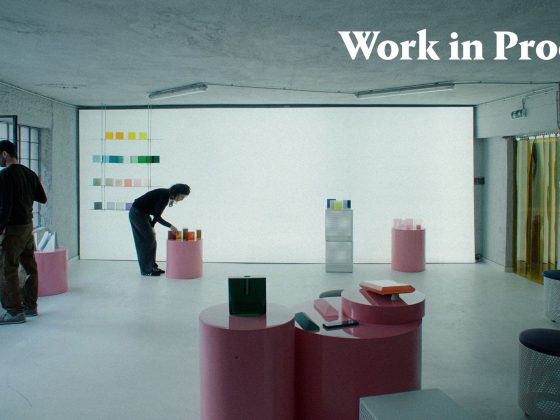
This year, I dedicated myself to presenting the Sail Away collection at Milan Design Week, together with Ambra Medda and Amy Tai, who gave me both the honor and the freedom to present my ideas and this research rooted in the island of Lesvos. Milan is an international design hub, and it was perhaps the first time I felt that such a personal and unfamiliar “journey” through Lesvos could resonate on a global level.
How did the story of discovering a creative perspective through object-making begin, and how has it evolved over time?
It began with a deep need to create objects that carry character and connection. I was always drawn to timeless objects that feel as though they have already lived — at least in certain aspects — before you, and that continue to acquire meaning over time.
At first, I focused more on research into materials and techniques. Gradually, however, I realized that what interested me most was the narrative behind each object — what it symbolizes, how it connects to a place, and how it can take on a personal identity and acquire an authenticity that remains timeless.
Over the years, my approach has become more essential, more reductive, and perhaps recently more experimental. I try for every object to have a reason to exist and to function as a carrier of experience, often without even fully knowing what I want to express until it emerges through the process itself.
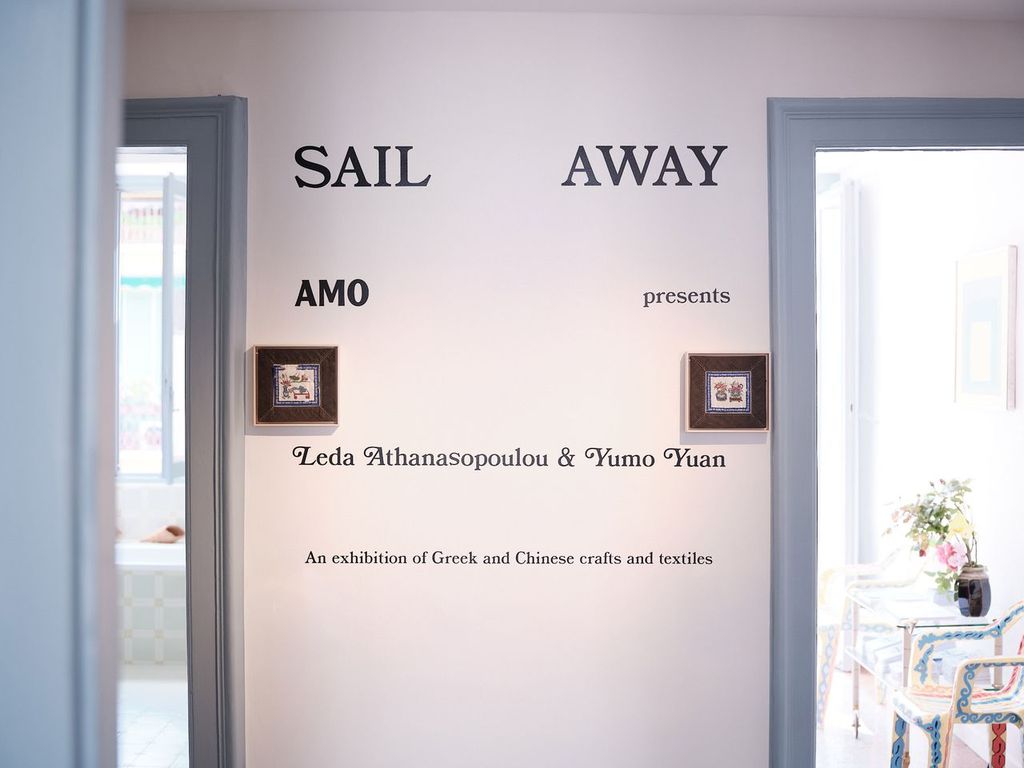
You participated in Milan Design Week with the Sail Away collection, developed through your collaboration with Chinese artist Yumo Yuan. What exactly was the project, how did it take shape, and what was that experience like for you?
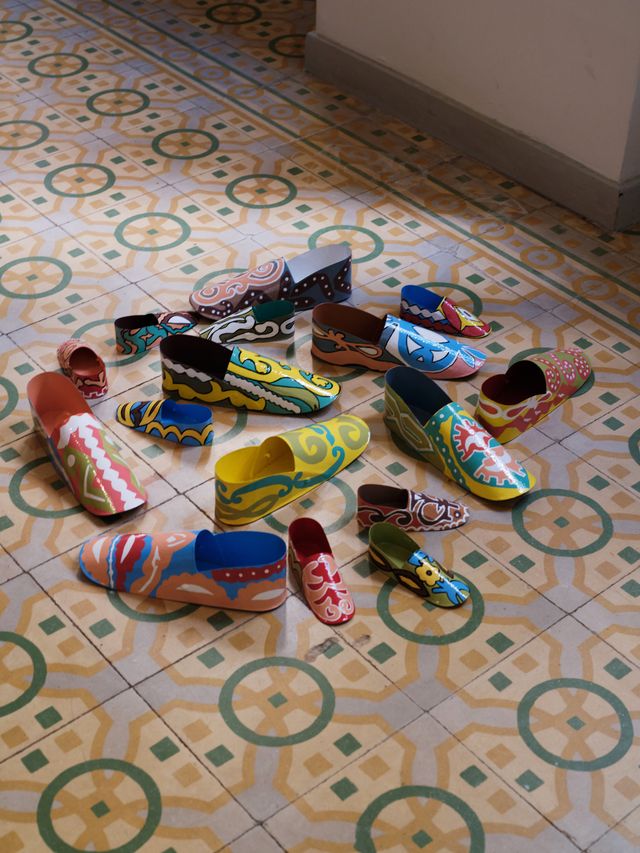
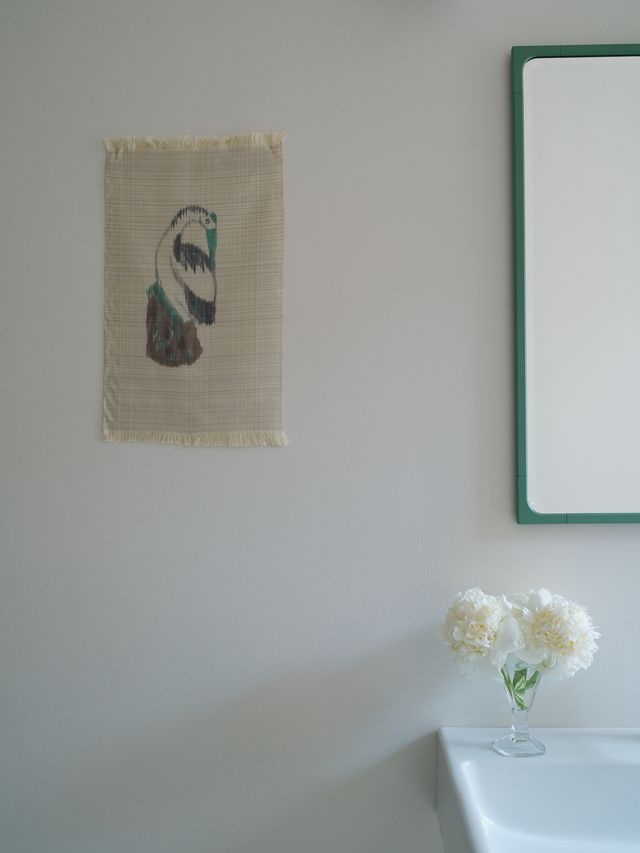
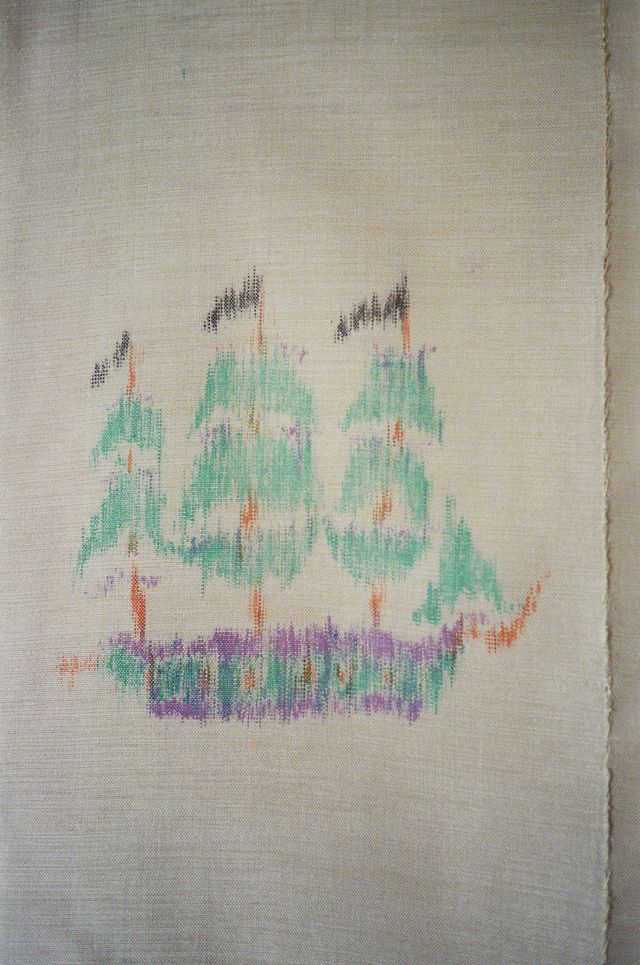
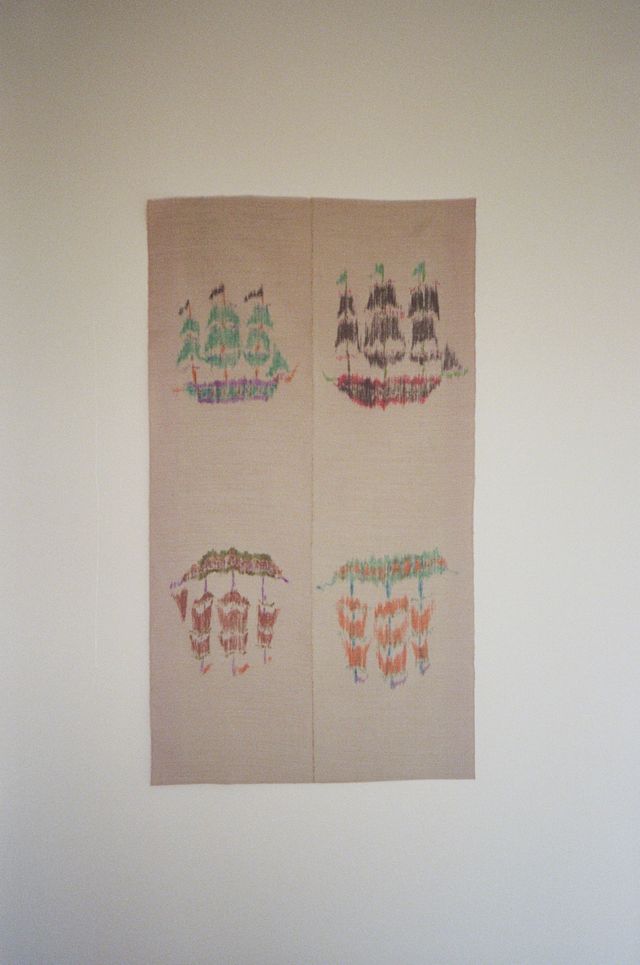
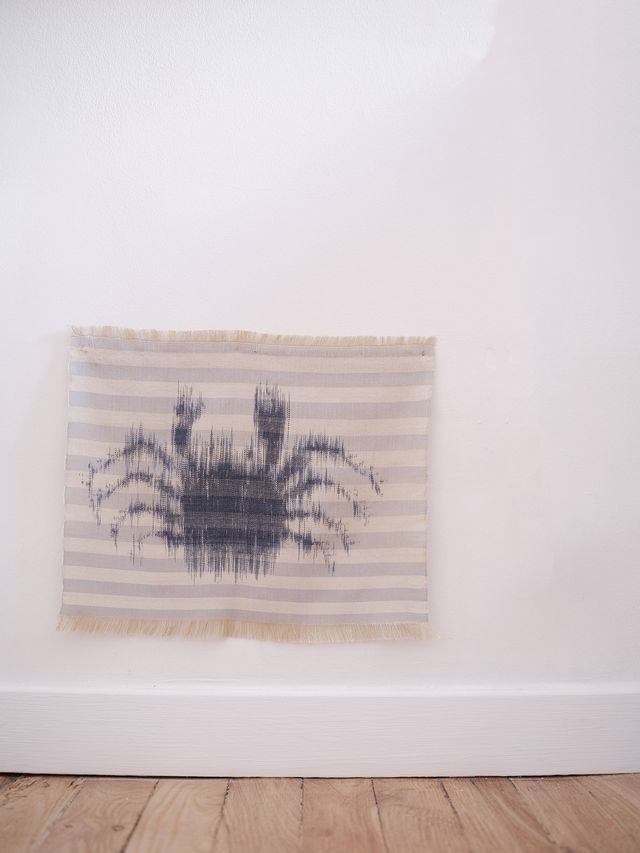
The Sail Away collection emerged through a meaningful dialogue between two cultures — China and Greece — an idea initiated by Ambra, who has Greek roots, and Amy, who has Chinese roots. Together with Yumo Yuan, we explored shared symbols across different traditions and how craftsmanship can function as a common language.
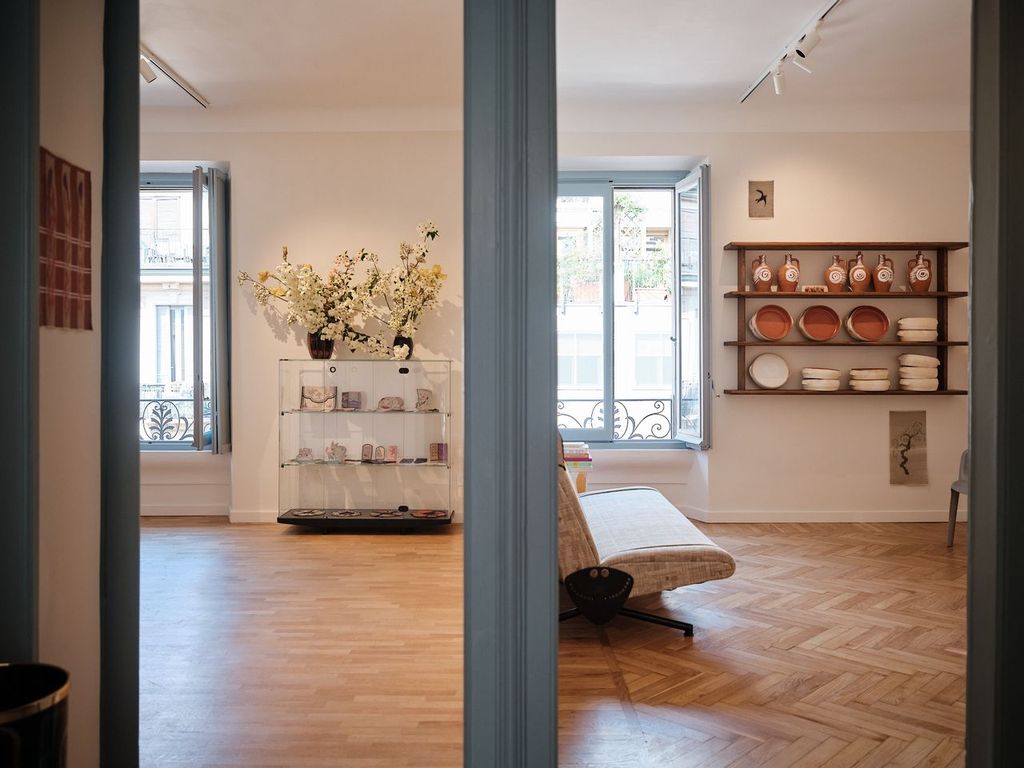
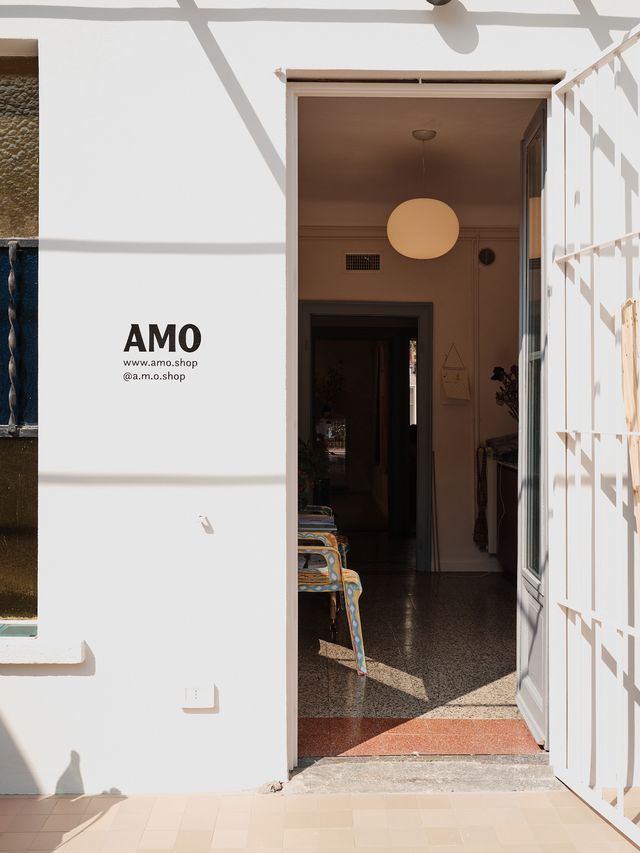
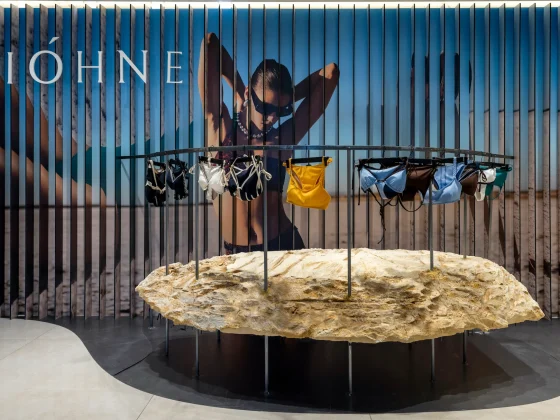
The collection was presented during Milan Design Week at Amo Shop, Ambra’s newly completed personal space, and it was a truly unprecedented experience for me. It was deeply moving to see people from different parts of the world emotionally connect with objects so strongly rooted in Greek folk tradition.
The exhibition was a reminder that design is not only about aesthetics or fashion; it is about the stories we choose to tell today — and when those stories are told with honesty and research, people respond.
Where did you draw inspiration from, and which elements were reinterpreted?
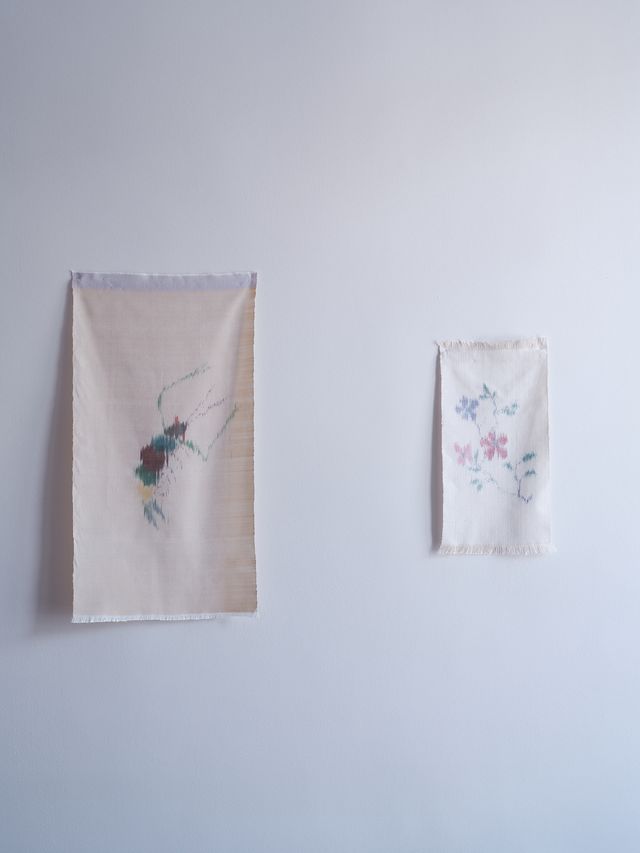
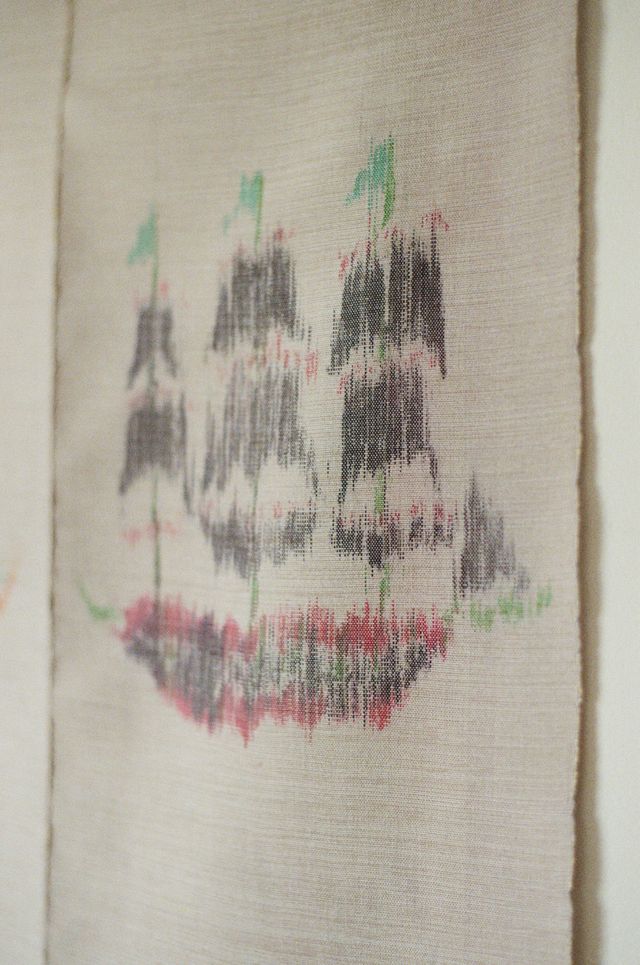
The inspiration for Yumo’s textiles came from symbols I isolated from Greek crafts that I use throughout my work — ceramics, weaving, wood carving. Symbols of protection, transition, and travel. We studied motifs that appear in both Greek and Japanese culture, such as spirals, nightingales, and ships.
What particularly interested us was the idea that people from different cultures, during the same ancient periods, were independently creating similar symbols to express shared human needs. We did not want to reproduce tradition nostalgically, but rather translate it into a contemporary language.
What exactly did you create in collaboration with the artisans of Lesvos, and what unique process did you discover and promote?
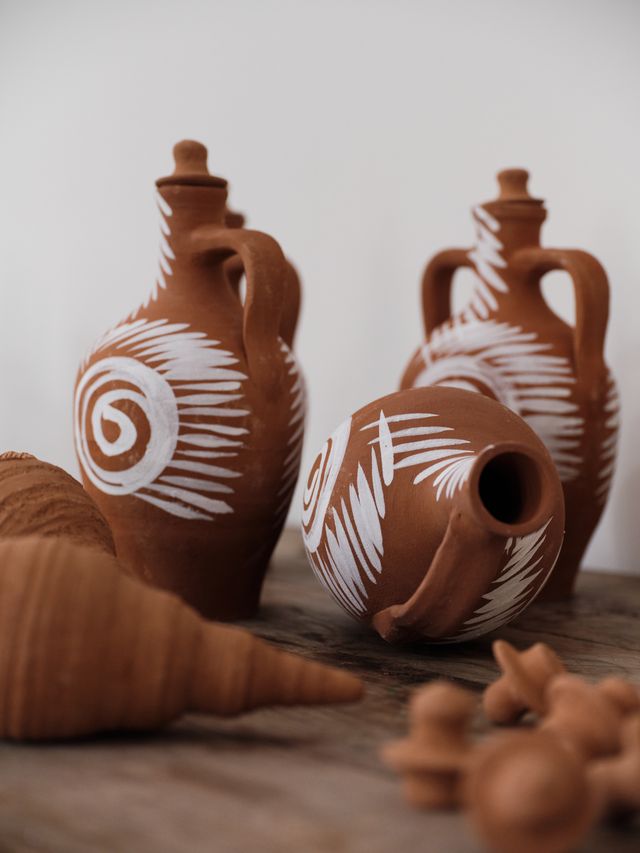
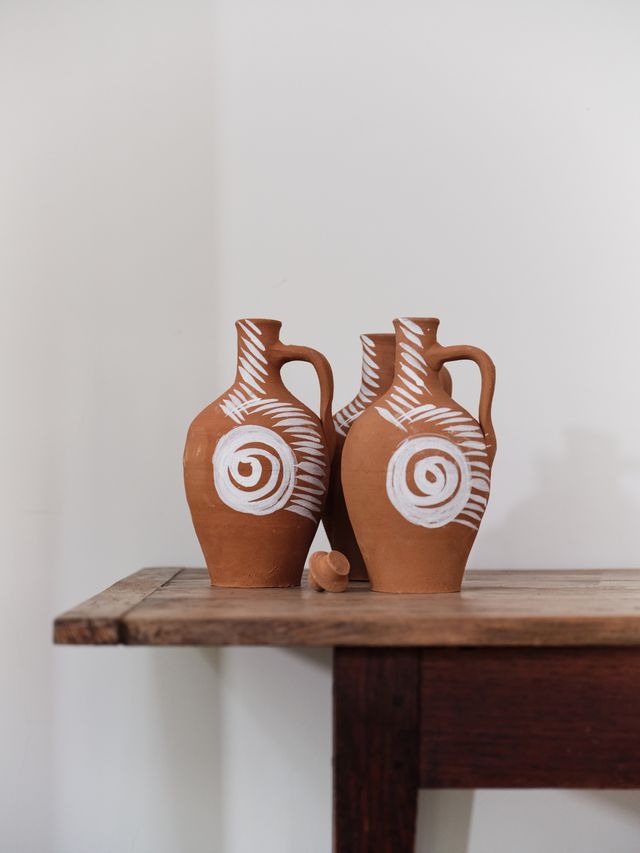
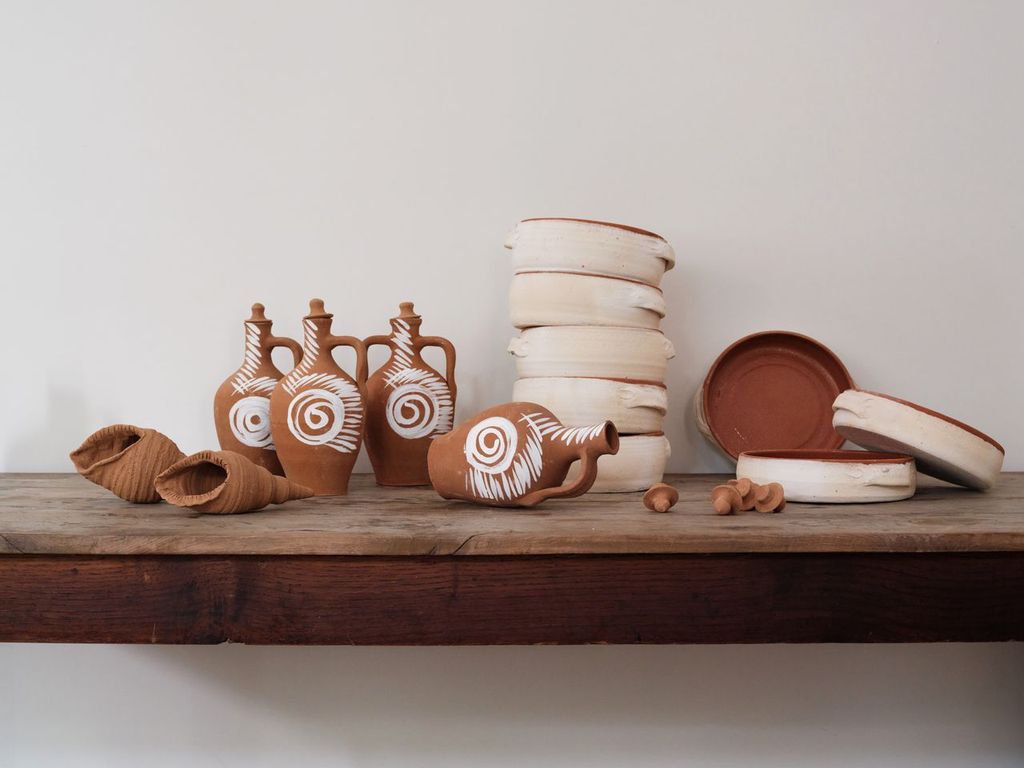
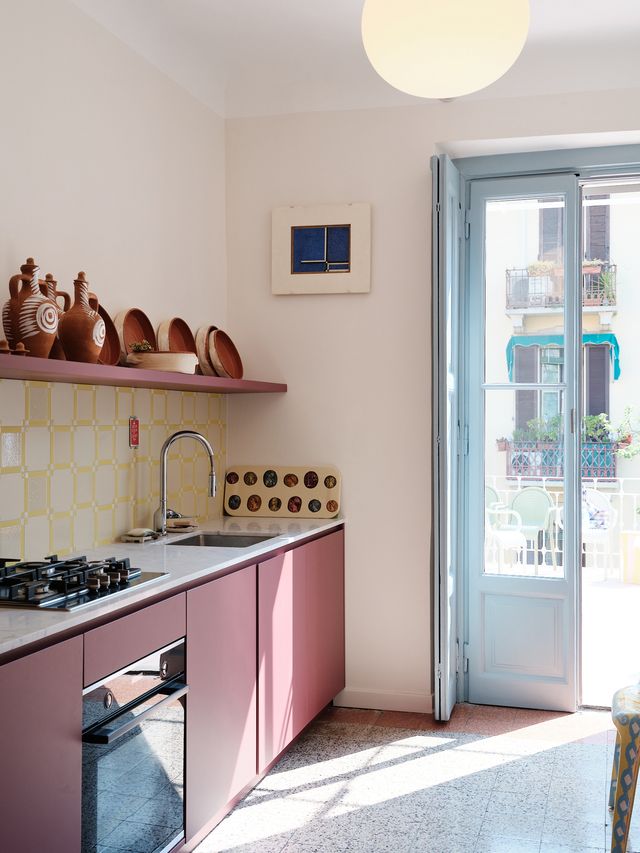
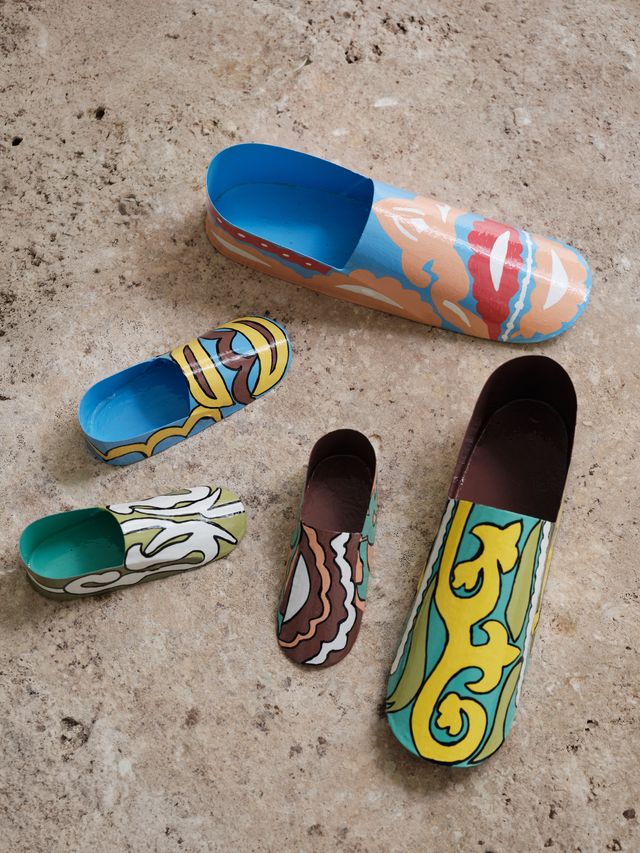
In Lesvos, I collaborated with ceramicists and artists who continue to work using traditional production methods. What I focused on most was the ceramic firing process in the village of Mantamados — a story that dates back to the 19th century, where clay is collected from the local earth and ceramics are fired in kilns, now protected by UNESCO, fueled with olive pits.
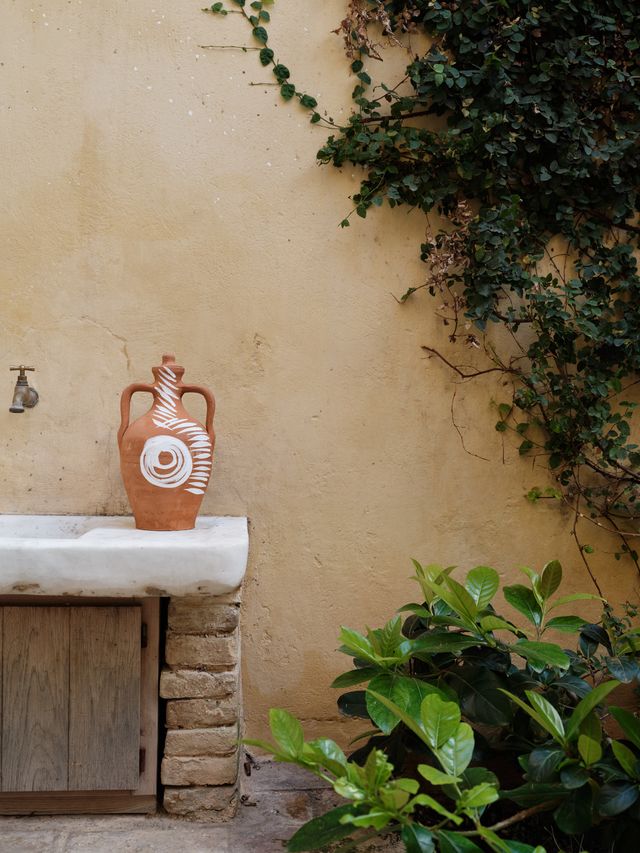
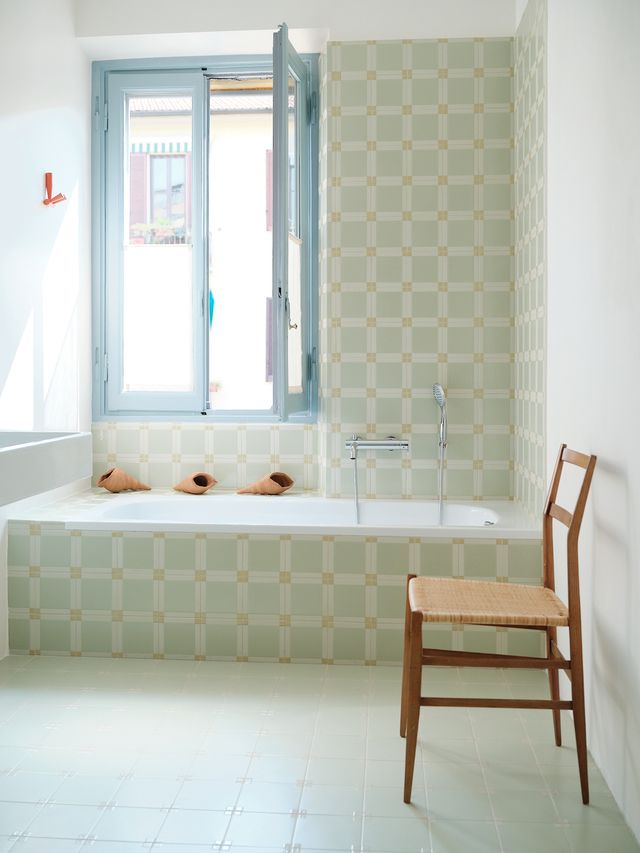
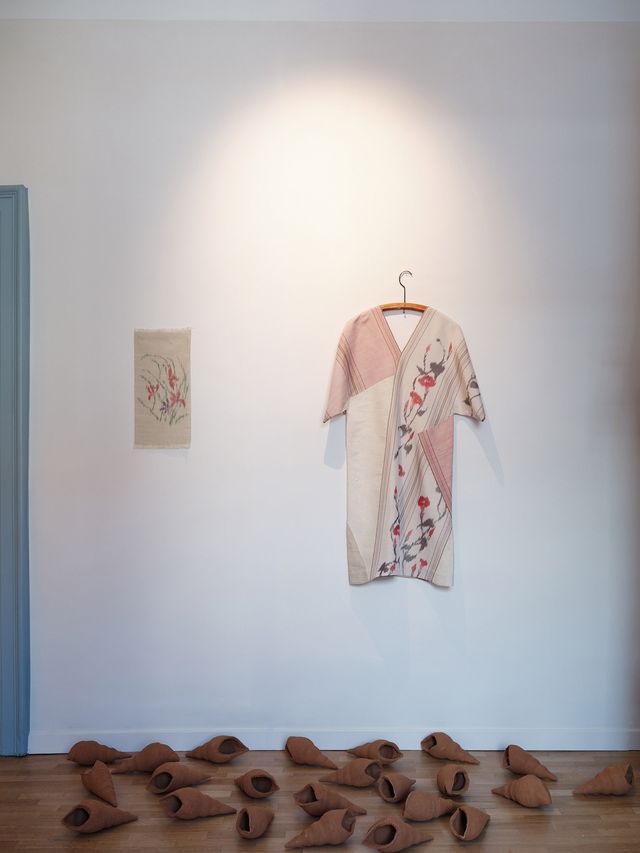
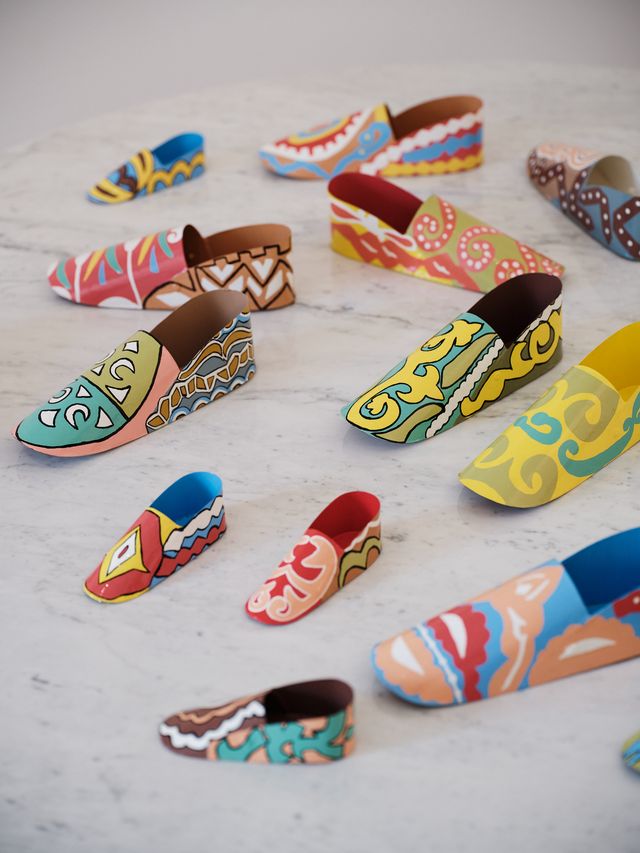
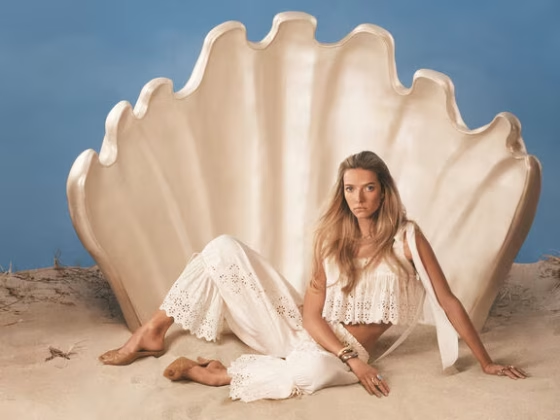
They are then painted with lime by the potter’s wife, following the same traditions and spiral motifs that survive to this day. Koumaria and giouvetsia — functional objects from another era — alongside a shell as my own contemporary addition to this narrative.
Through this collaboration, I sought to highlight not only the final object, but also the rare and slow production process itself as a cultural practice at risk of disappearing. I was interested in creating a dialogue between past and present, emphasizing the authenticity of the technique.
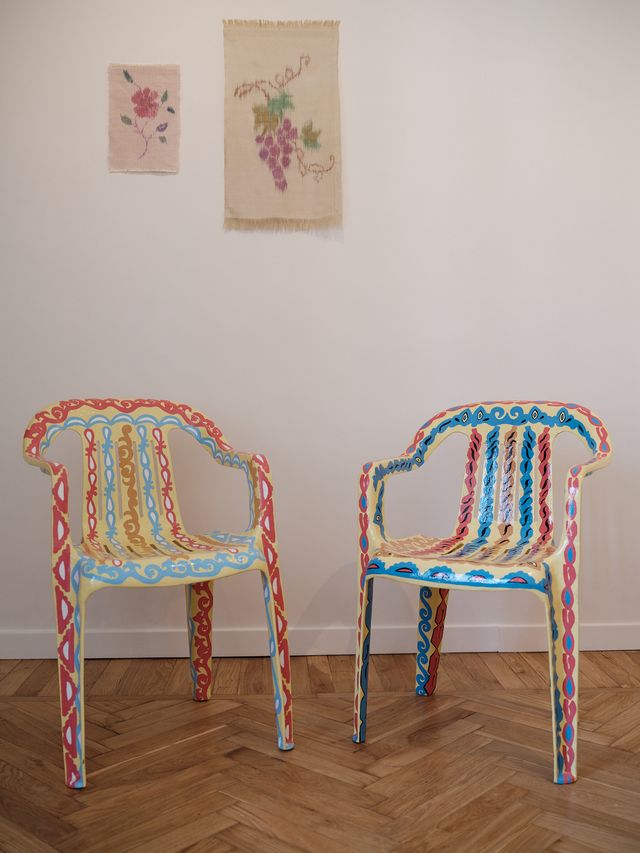
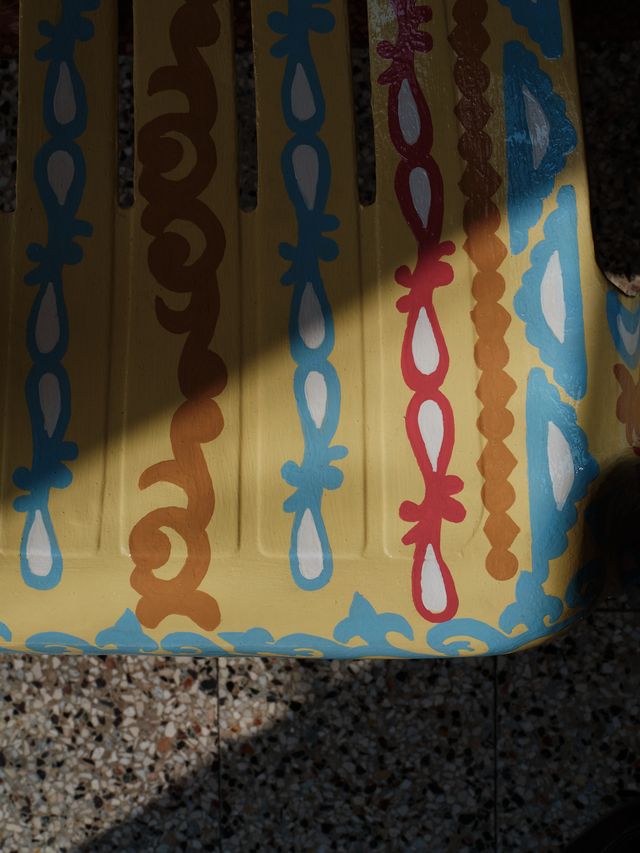
Beyond the ceramics, I presented tamata and the classic plastic chair recast in cast aluminum, painted by an exceptional artist from the village of Kalloni.
The cast aluminum chairs made from sand molds — either sandblasted or painted — as well as a series of “collages” composed of textiles from the 1930s to the 1950s sewn onto traditional burlap in Patmos, which I call Mother to Daughter because they were given to me by my mother, were also presented as part of the project. These pieces belong to my ongoing project Objects of Love, through which I bring everyday, often forgotten objects back into a new life and form.
How important do you consider the preservation of traditional methods and techniques in their authentic form, and what kind of narrative do they offer to a contemporary audience?
I consider it extremely important, though not in a museum-like or static way. Traditional techniques carry wisdom, lived knowledge, and a different relationship with time and materiality.
There was once a time when this knowledge was passed down through generations within families of potters and artisans for hundreds of years, as happened in Mytilene with families such as the Kourtzis, Kouvdis, and Chatzigianni families.
Contemporary audiences are searching for authenticity. In an era of overproduction, trends, and speed, people are once again seeking the value of craftsmanship — objects that carry a human imprint and a story.
I believe tradition gains real value when it continues to evolve — and that is what I tried to achieve.
How did the audience in Milan respond, and how genuinely interested are people today in tradition?
The response was deeply moving. There was genuine interest not only in the aesthetics of the objects, but also in the stories behind them, from people coming from all over the world. Beyond Italians, I especially remember Japanese and American journalists for their warm response and sincere interest in Greek craftsmanship.
I believe there is an essential global return to craft and local narratives. People are tired of uniformity. They want to feel that an object has been created with intention, time, and substance.
Materiality and the choice of materials are not merely decorative, but deeply functional as well. Koumaria, for example, were used from the 19th century until the invention of plastic and refrigerators, as raw clay allows water to “breathe” and remain cool. Today, there is a practical need to reconnect with the past.
Tradition today is not interesting as folklore. It matters as a carrier of identity within a world increasingly consumed by excess, trends, and convenience.
What else are you creating within your collections, and what can we expect from you next?
I am increasingly interested in creating objects that exist somewhere between design and Greek crafts that are gradually disappearing. At the moment, I am exploring new materialities and collaborations with artisans from different parts of Greece, and possibly similar collaborations abroad.
I am deeply interested in the idea of the object as a continuation of tradition, while also remaining functional and alive within everyday life.
At the same time, I work on restoration projects and interior design in Athens and across the Aegean islands, which remains my primary practice.
What do you truly love doing the most?
I love the process of discovery. Traveling, meeting people, observing details, and then creating — whether that involves spaces, objects, textiles, or furniture.
I try to see every project as a whole; that is why photography and writing around my work also interest me deeply.
What do you consider your most important achievements?
I think the most important thing is that I have managed to create a language that feels genuinely my own. An approach that connects contemporary aesthetics with tradition without becoming repetitive.
I try for my work not to feel predictable, and I rarely repeat ideas, because at every stage of my life I have something different to express and different influences shaping me.
Equally important to me are the human relationships and collaborations that have emerged throughout this journey.
What does your new collection aim to express, and what are your immediate plans?
Beyond restoration and interior design projects in Greece, I am interested in continuing my research into Greek traditions, techniques, and materialities.
I intend to continue focusing on design in a more outward-looking and international way, while always maintaining a distinctly Greek and personal identity.
What inspires you to evolve and grow in the way you create?
I don’t have much to say about that; creation is simply part of my DNA. It was gifted to me by my parents, but also by the places and people I have been fortunate enough to encounter.
Very often, inspiration comes through small moments and requires freedom and confidence. No matter how simple a result may appear, it can ultimately be incredibly bold — especially in an era where everyone is trying to create something “different.”
Many times, the space itself or the material tells you what it wants to become, as long as you are able to set your ego aside and truly observe.
Creation is not about control, nor does it fully belong to us; it is the result of freedom, perception, and disciplined personal work.
What are the non-negotiable values within your work?
Authenticity through a framework of freedom, respect for the people I collaborate with, attention to technical detail, timelessness, and a meaningful relationship with the history of place and materiality are the values that guide my work.
How has your philosophy around design evolved over time, and what do you believe holds particular value today?
From the very beginning, I moved away from the need to impress and closer toward tradition.
I believe that today, truth, the handmade process, and the endless research behind it hold particular value, as does the human presence within both the object and the space.
At the same time, personal storytelling and the way a work is presented have become increasingly important for the contemporary understanding and resonance of a project.
What would you most like to create — a dream project?
I would perhaps like to create a space — or be part of a collective — where different artisans, artists, and designers from around the world could meet, exchange knowledge, and present techniques. My participation at Salone was a small step toward that vision.
Something that could contribute to shaping a future aesthetic and a contemporary Greek identity through collective creation and cultural dialogue.
Three places you love returning to, and why?
Patmos, Pelion, Kastellorizo, and Florence — because they possess either a majestic or completely unpretentious beauty, or because of the people there who move and inspire me in ways that are difficult to put into words.
Give us your own definition of beauty.
Beauty is something that already exists in nature, in the birth of human beings, in both their inner and outer worlds, and in the materiality and structure of the natural world itself; some people simply possess the gift of revealing it.
All contemporary forms of propaganda surrounding beauty do not particularly interest me.
What do you consider authentic today?
Anything created with freedom, intention, time, and a personal imprint — something that, in some cases, truly manages to become sealed within time.
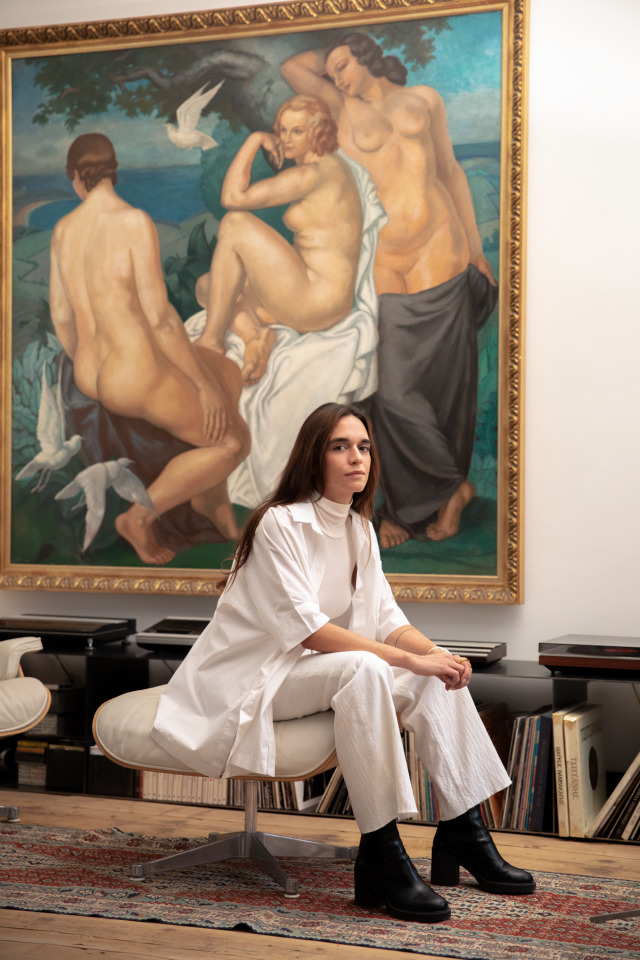
Photo @Joseph Alexiadis