A holiday home with sea views by Vico Magistretti comes back to life thanks to Eligo Studio: “From the outside, it didn’t seem particularly striking, but when we opened the door, everything changed…”

For Vico Magistretti, this villa was a calling card — a seaside retreat overlooking the Ligurian coast in Arenzano, Italy, where he experimented with architecture and design. Now, Eligo Studio revives its original spirit through a subtle dialogue between past and future.

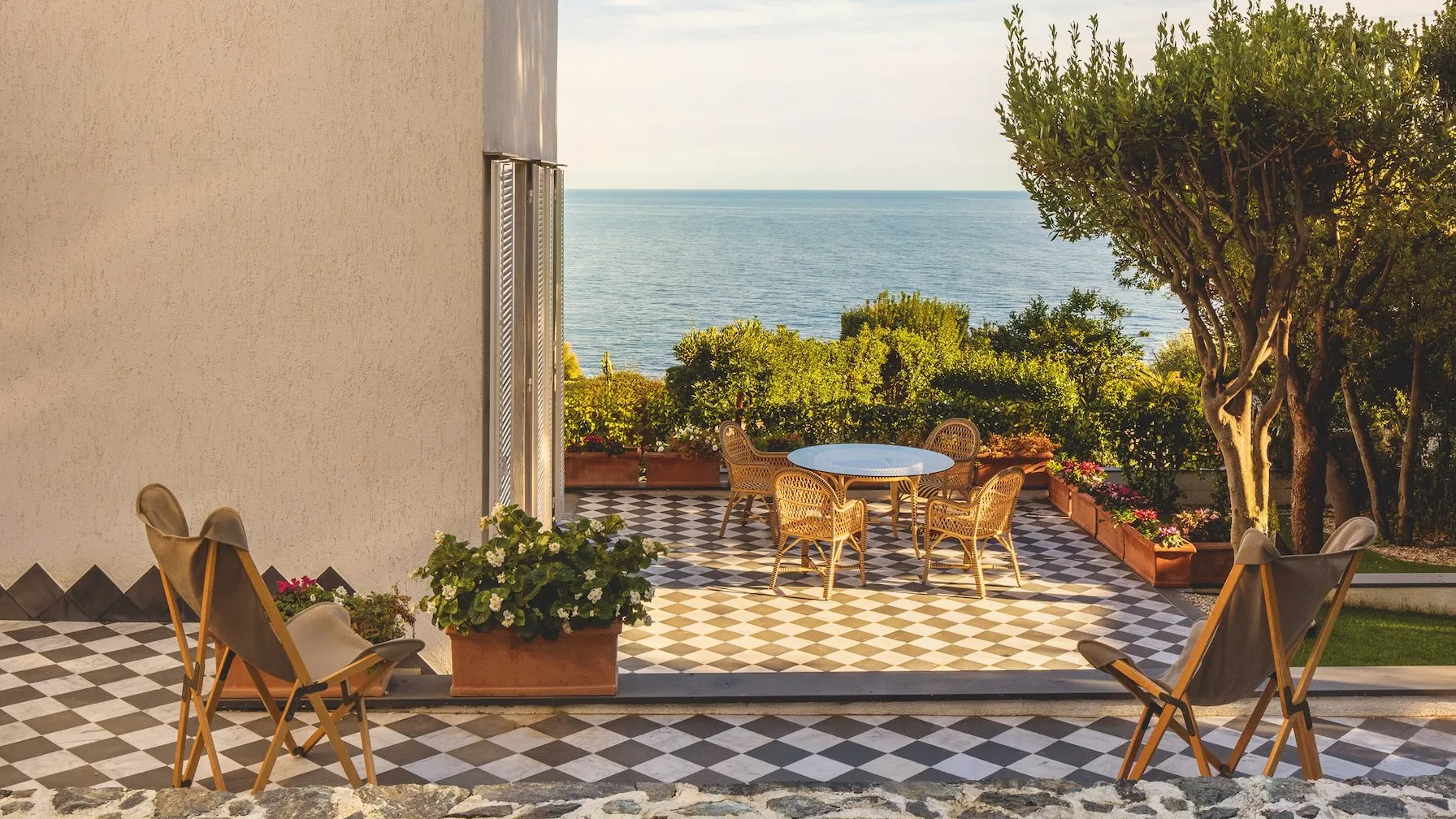
Garden, sea views, and iconic architecture inside Casa Arosio, a landmark work by Vico Magistretti, revived by Eligo Studio.

The year 1959 stands as a milestone in the history of Italian architecture. Four pioneering projects — Casa Arosio by Vico Magistretti in Arenzano; the Olivetti company canteen in Ivrea by Ignazio Gardella; the housing by Giancarlo De Carlo in Matera; and the Torre Velasca in Milan by the BBPR studio — marked the end of the era of the Congrès Internationaux d’Architecture Moderne and the emergence of new approaches, more attuned to people and the surrounding landscape.

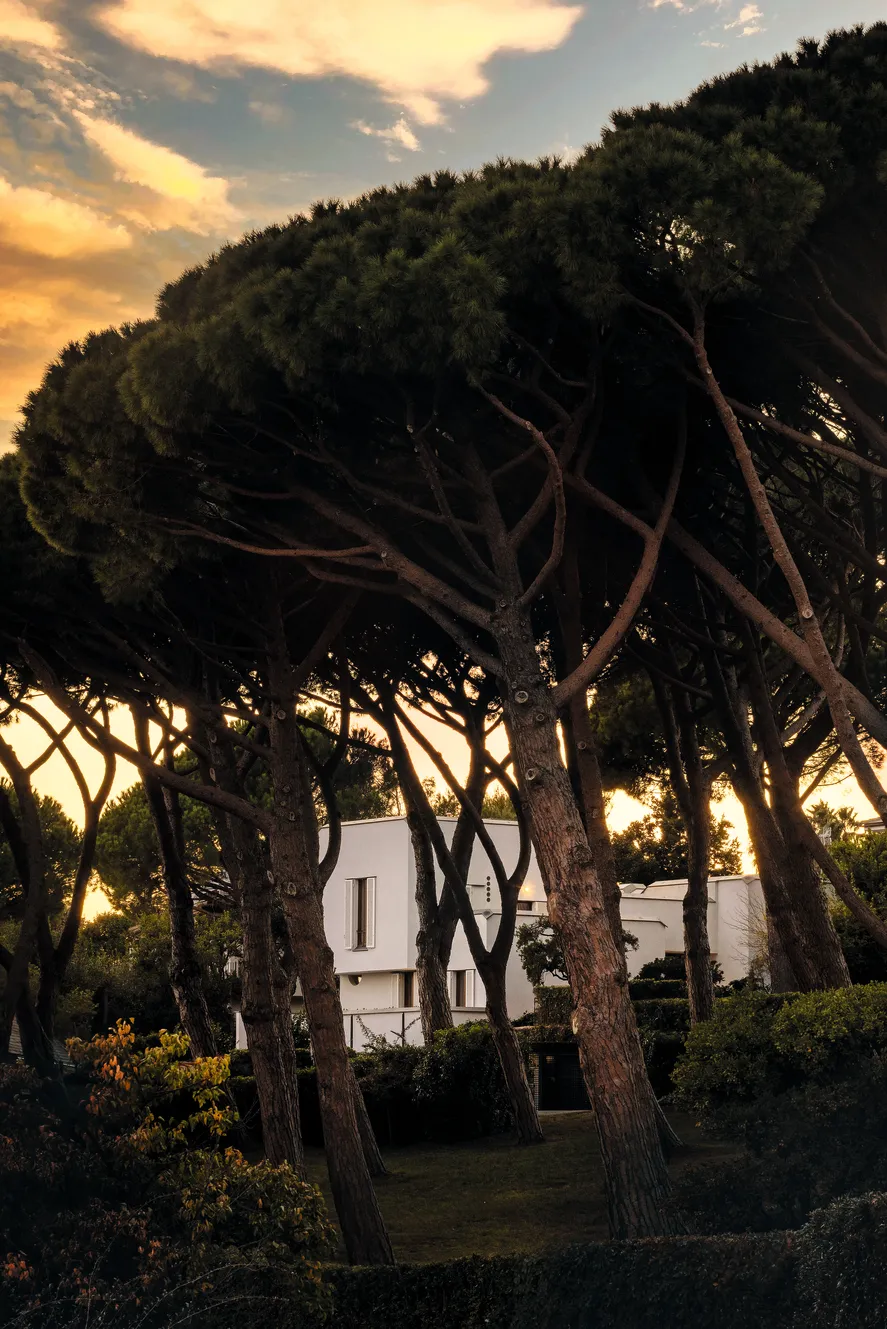
Among these references, Casa Arosio became a meeting point for generations of architects. “We used to pass by it often, as we were working on another project within the pine grove. Nearby there is a church by Caccia Dominioni and villas by Gio Ponti and Marco Zanuso, and this house hadn’t particularly caught our attention. But when we opened the door, everything changed…,” recall Alberto Nespoli and Domenico Rocca, founders of Eligo Studio.

The villa was commissioned by Paolo Arosio, who used it as a summer residence until the early 1970s, when the Aga Khan promoted the Costa Smeralda and many families — including the Arosios — began favoring Sardinia for their summer holidays. A few years ago, the house was put on the market, and Eligo Studio alerted a client, who purchased it immediately.

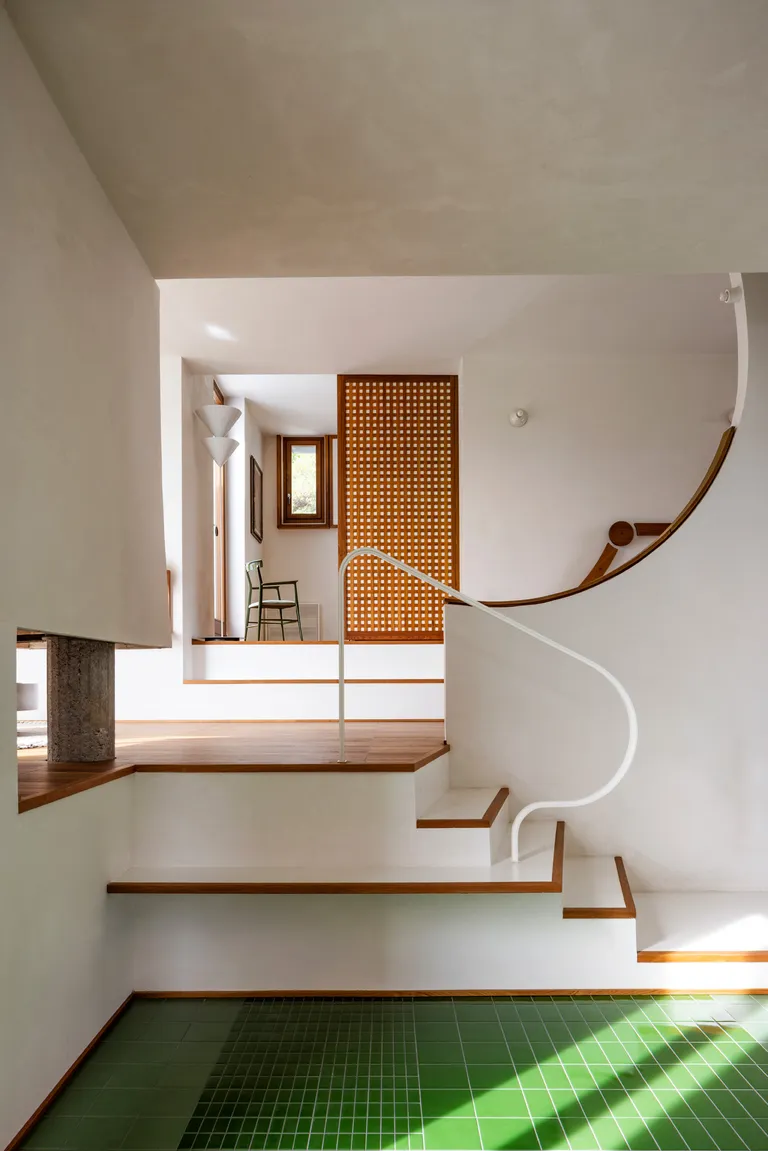
It was a true gem: entirely original and rich in patina. The small town of Arenzano, overlooking the sea and just 20 kilometers from Genoa, was a genuine playground for leading designers. “For Magistretti, Casa Arosio was a calling card: here he not only experimented with architecture, but also introduced some handcrafted prototypes for the Azucena company. Inspired by Adolf Loos, Magistretti applied the concept of the Raumplan, characterized by organizing interiors through volumes of varying heights,” explains Nespoli, referring to these 400 square meters distributed across six interlocking levels, with walkable green roofs and a garden.

The restoration carried out by Eligo Studio prioritizes local gestures and materials, while the structure incorporates technical improvements and updates. “We reinterpreted everything without altering anything,” the designers say in unison.

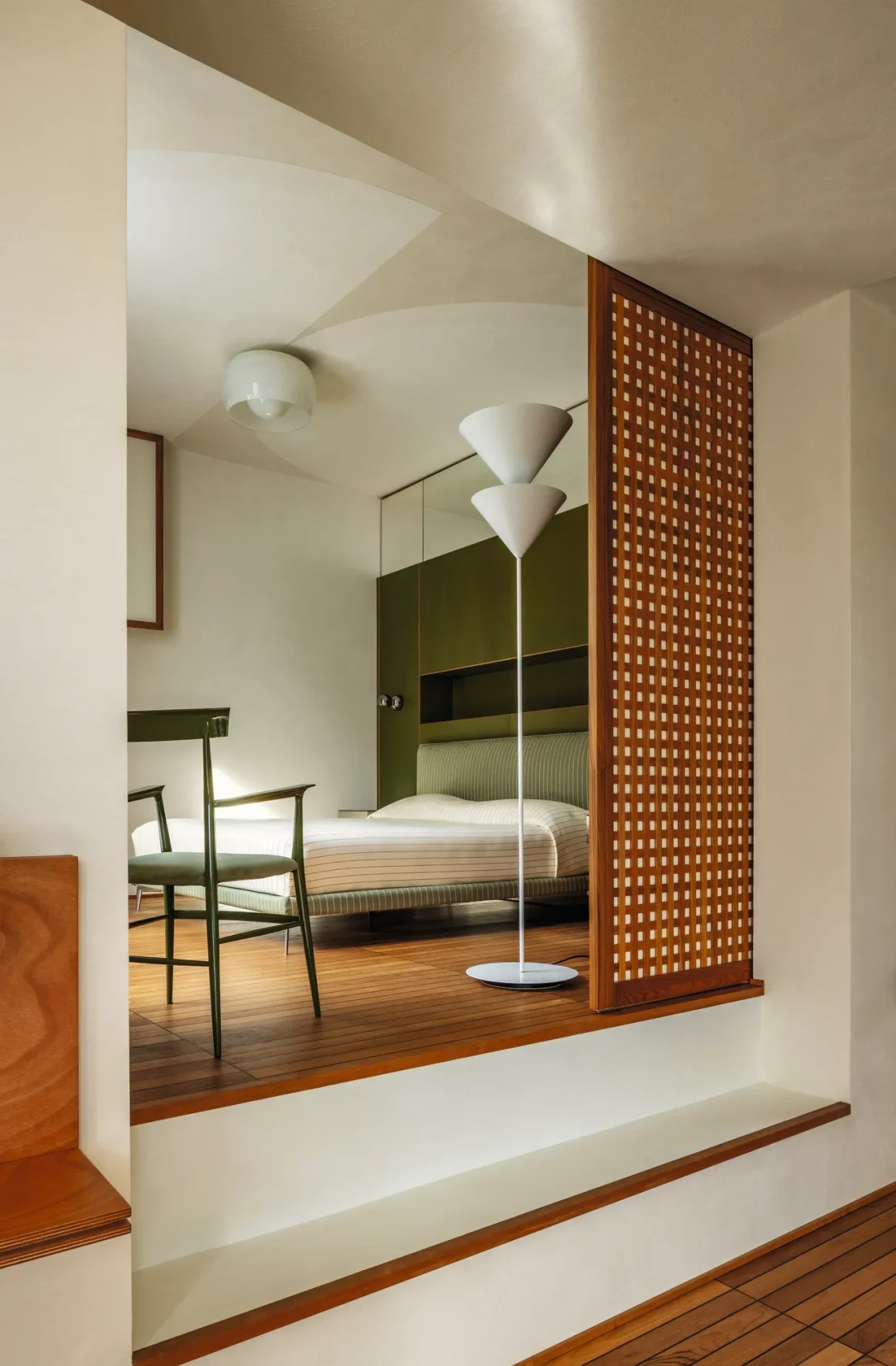
Teak flooring evokes a nautical atmosphere, while in the dining area and kitchen — now opened up to the living room — the surfaces are clad in tiles by Mutina, designed by Konstantin Grcic, a disciple of Magistretti. “We set ourselves the rule of working mainly with our own pieces, or with designs by Magistretti and his students, such as Grcic,” Rocca explains.

The railing is new: it was designed by studying the one at the Carimate Golf Club, yet it feels as though it has always been there, its undulating form adapting to the curves of the interior. The okoumé wood panels reinterpret the custom-made furniture originally designed by Magistretti himself. The handles are by Lualdi, a historic supplier to many of Arenzano’s leading designers.

The doors and sliding panels are once again made of pine, the wood once chosen by Frattini and Zanuso for projects in the area. “For the façade, Magistretti used a mixture of plaster with fragments of bottle glass. The Arosio family had repainted it, but we restored it to its original state — we like it because it brings a sense of luminosity,” say the architects.

Casa Arosio’s second life concludes with a revealing anecdote: “The building was not protected by any regulations and could have been demolished,” they explain — though it is now officially protected. Perhaps a reminder that architecture is not only inhabited, but alive, engaged in a dialogue where every gesture preserves the imprint of those who first imagined it and those who continue to reinterpret it.

Photo Helenio Barbetta

@AD

Author