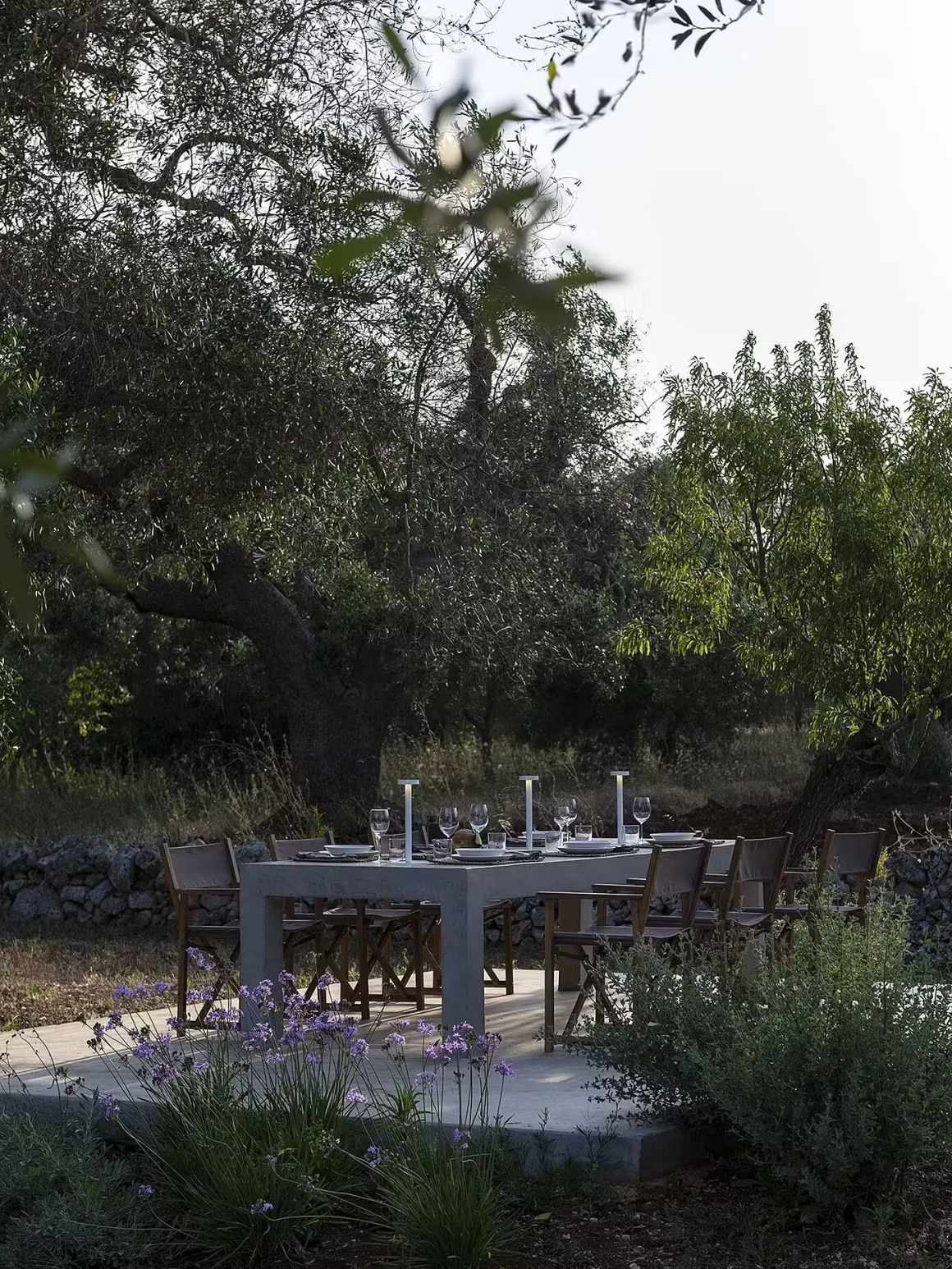
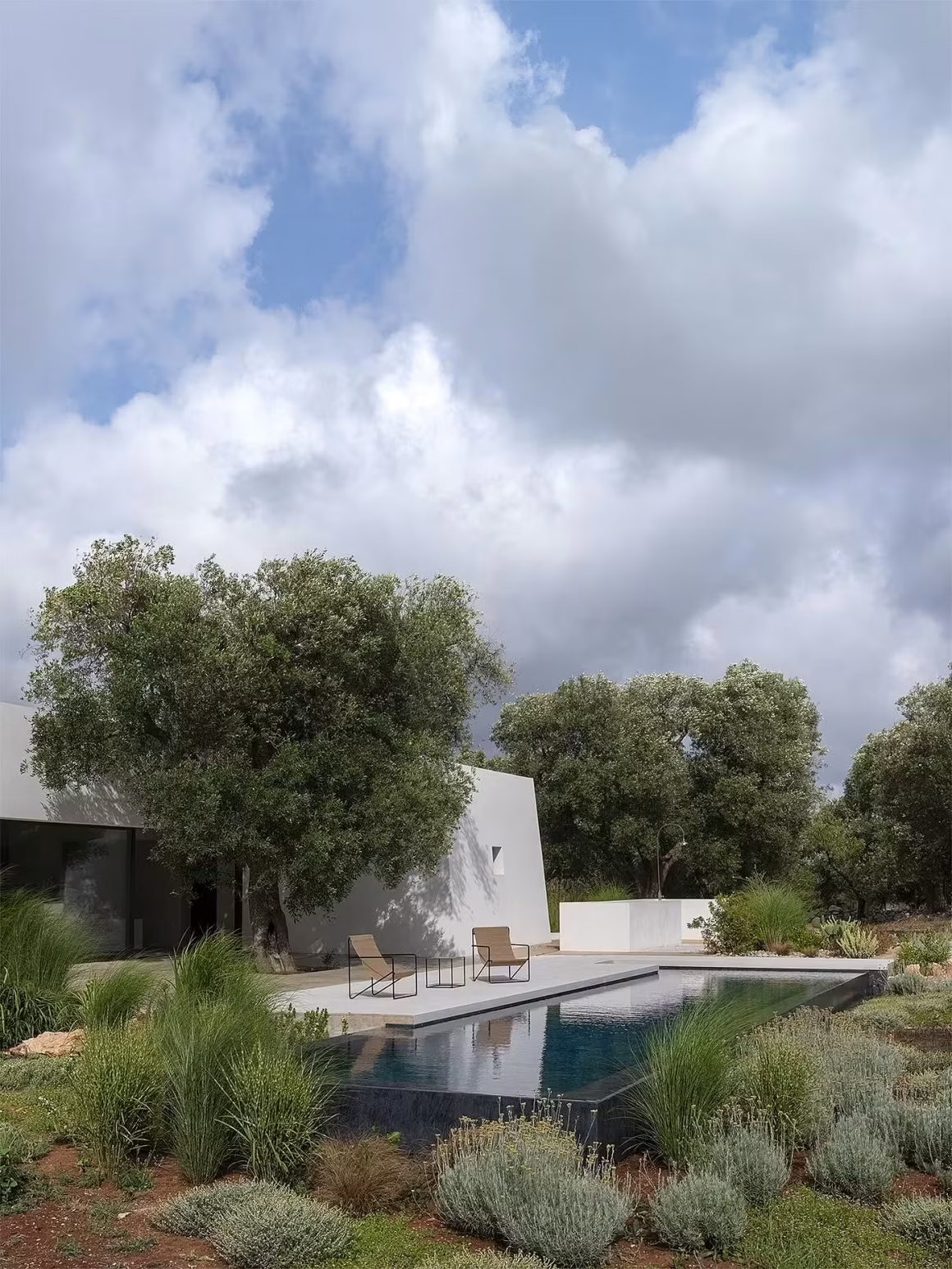
The countryside of Alto Salento is defined by gentle rolling hills and ancient olive trees—often monumental in scale and character. It is within this landscape, between Carovigno and Ostuni, that this house was conceived: a plot surrounded by dry-stone walls and dotted with expansive olive canopies that filter the sharp southern light onto Puglia’s red earth. Nothing more, yet everything needed to imagine a home immersed in nature—a long-sought retreat envisioned by its owners as a place to rest, but also to work بعيد from the city. Their request was simple: an intimate, self-sufficient home, deeply connected to its surroundings.
The concept evolved into a fluid, “diffused” house—open, continuous spaces (apart from the private sleeping area) that dissolve into the landscape, allowing the gaze to always return to the greenery that embraces the home.
Designing in such a setting was approached with care: building in nature can feel like an intrusion, a disruption that must be gently healed. The project was therefore guided by respect for the land—preserving every tree and integrating them as essential elements of the design. These olive trees provide natural protection from wind and sun, offering shade, filtering light, and allowing air to circulate softly throughout the spaces.
The volumes are simple, echoing traditional forms—compact yet articulated to follow the voids and shadows defined by the trees. Materials are rooted in local tradition: white lime plaster and dry-laid stone walls using material excavated directly from the site. Large south-facing openings are shielded by olive branches, while thicker stone walls ensure thermal mass, storing heat by day and releasing it at night.
Sustainability is intrinsic to the design. The house operates with minimal energy consumption, powered by renewable sources through photovoltaic and solar panels. Rainwater is collected, stored, and reused for irrigation and domestic needs.
The palette remains natural—lime, white Ostuni stone, and soft earthy tones. Interiors are finished with hand-applied lime plaster in muted grey to soften sunlight, while custom furnishings in oak and natural iron are crafted by local artisans. Many elements, including sofas and beds, are built directly into the architecture.
Extending beyond interiors, outdoor “rooms” were created: a living area with a fireplace carved into stone, a kitchen set within an old animal enclosure, a secluded garden for rest and reading, and a dining space beneath the shade of an olive tree. Together, these spaces blur the boundaries between built and natural environments.
In collaboration with landscape architect Giuseppe Tricarico (PAZ Studio), the surrounding greenery was carefully shaped to integrate the home into its context. Even the pool reflects this philosophy, designed with dark tones to mirror the landscape—an ever-shifting dialogue between nature and architecture.
About
Luca Zanaroli graduated from the University of Architecture of Florence. Until 2003 he works as urban and landscape planner and Project Manager in public construction and infrastructure. In 2004 he opens his own studio in Bologna working as architect on territorial planning and architecture, for private and public, working in different fields: urban and territorial planning (masterplan and projects at the urban scale); project of private and public buildings; renovation and restauration of protected buildings; interior design. In recent years, the company has been working on several private houses in Italy (especially in the south and in particular in Puglia) and abroad.
Photography Nathalie Craig