Giant stitched wound highlights development pressure on Erimitis, a Mediterranean ecosystem in Corfu
 

In Erimitis, one of the last major undeveloped coastal ecosystems in northeastern Corfu, artist The Krank presents a temporary art intervention, fourteen years after the movement to protect the area began.

“While working on the artwork in Erimitis, under the sun and in the rain, from early morning until the moon rose, I walked its paths and approached it from the sea as well. The landscape was constantly changing, and my daily contact with the locals who have been defending it allowed me, within just a few days, to genuinely come to know this place. I can no longer imagine ‘development’ here as anything other than preserving it as it is.”

— The Krank
 

ABOUT THE ARTWORK

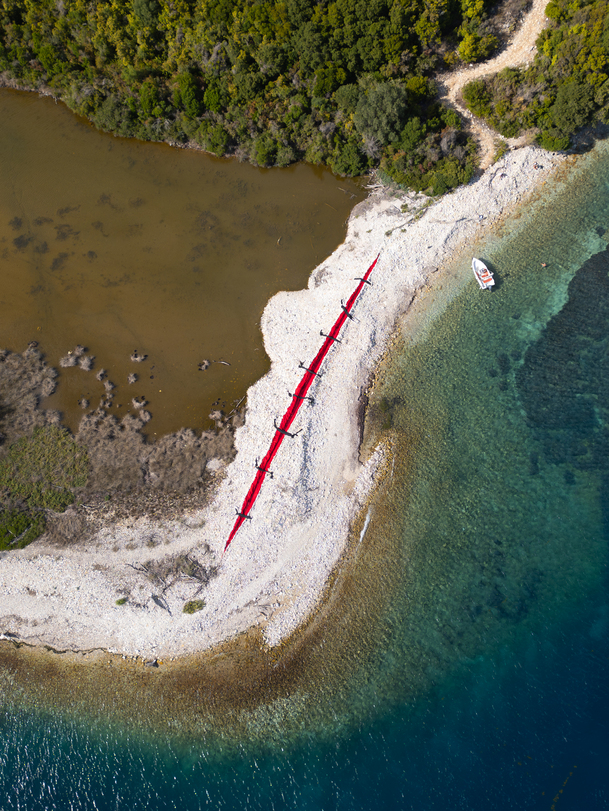
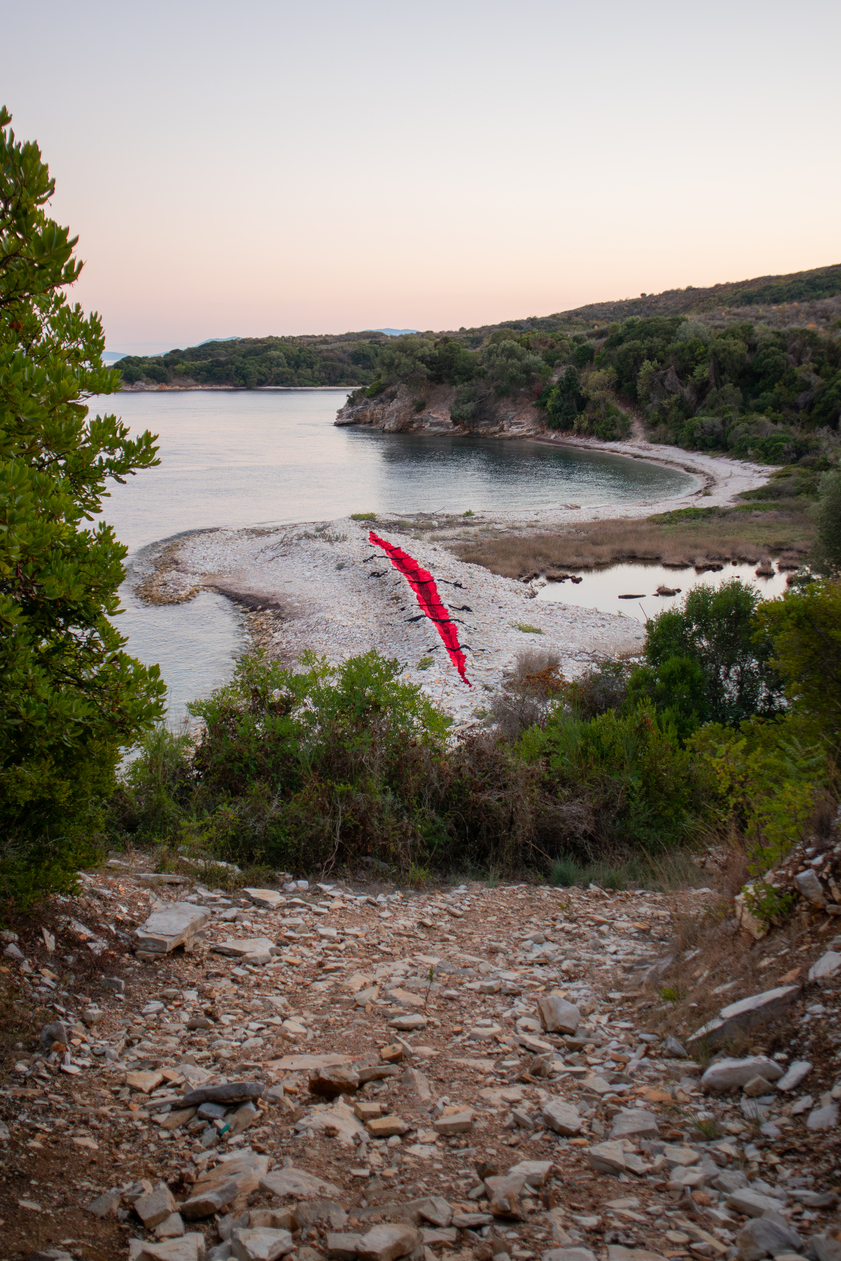
The temporary land art installation Wound was created by artist The Krank in Erimitis, Corfu. Residents and visitors encountered an artwork that speaks both to this particular place and to the growing number of natural landscapes bearing the marks of human intervention.

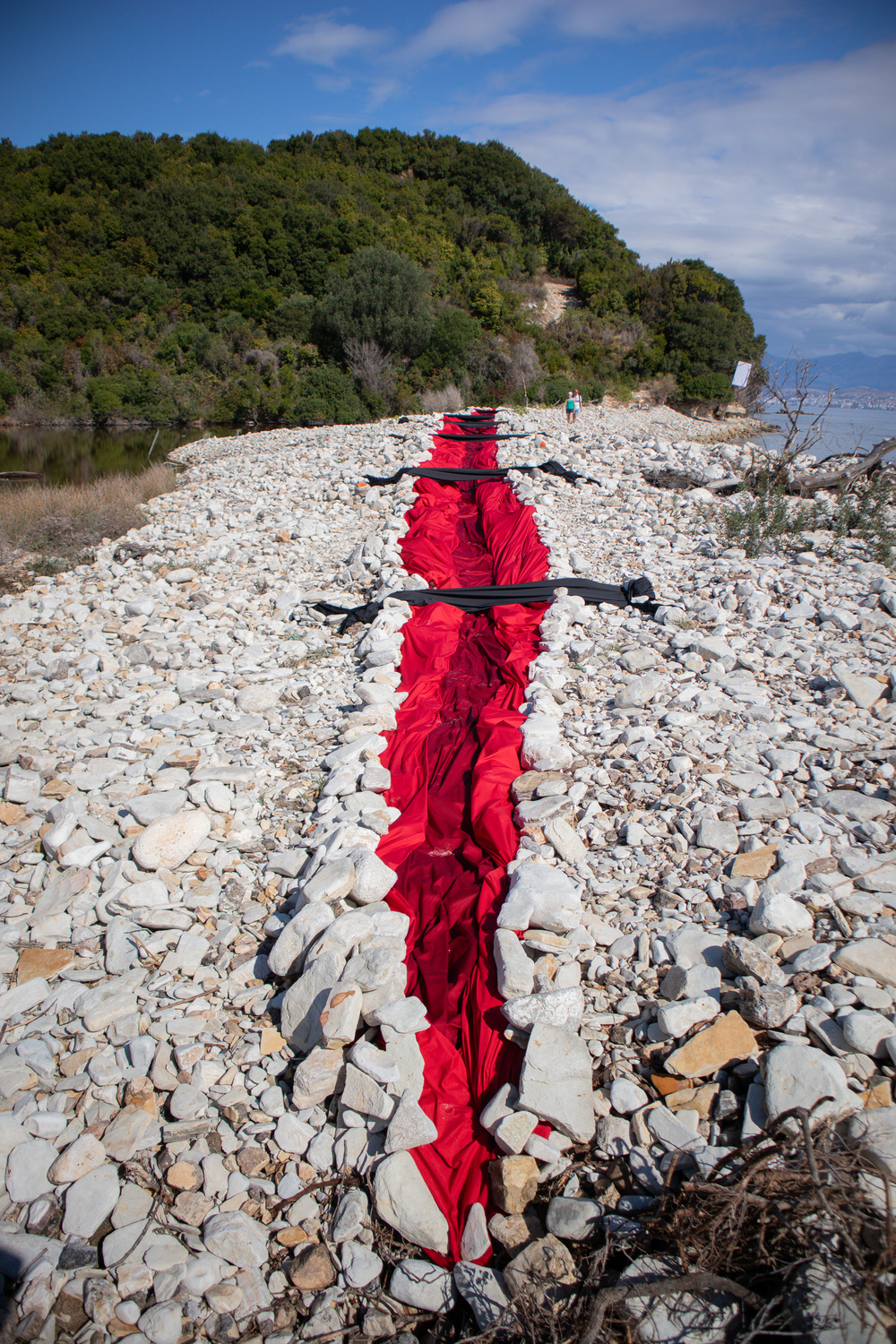
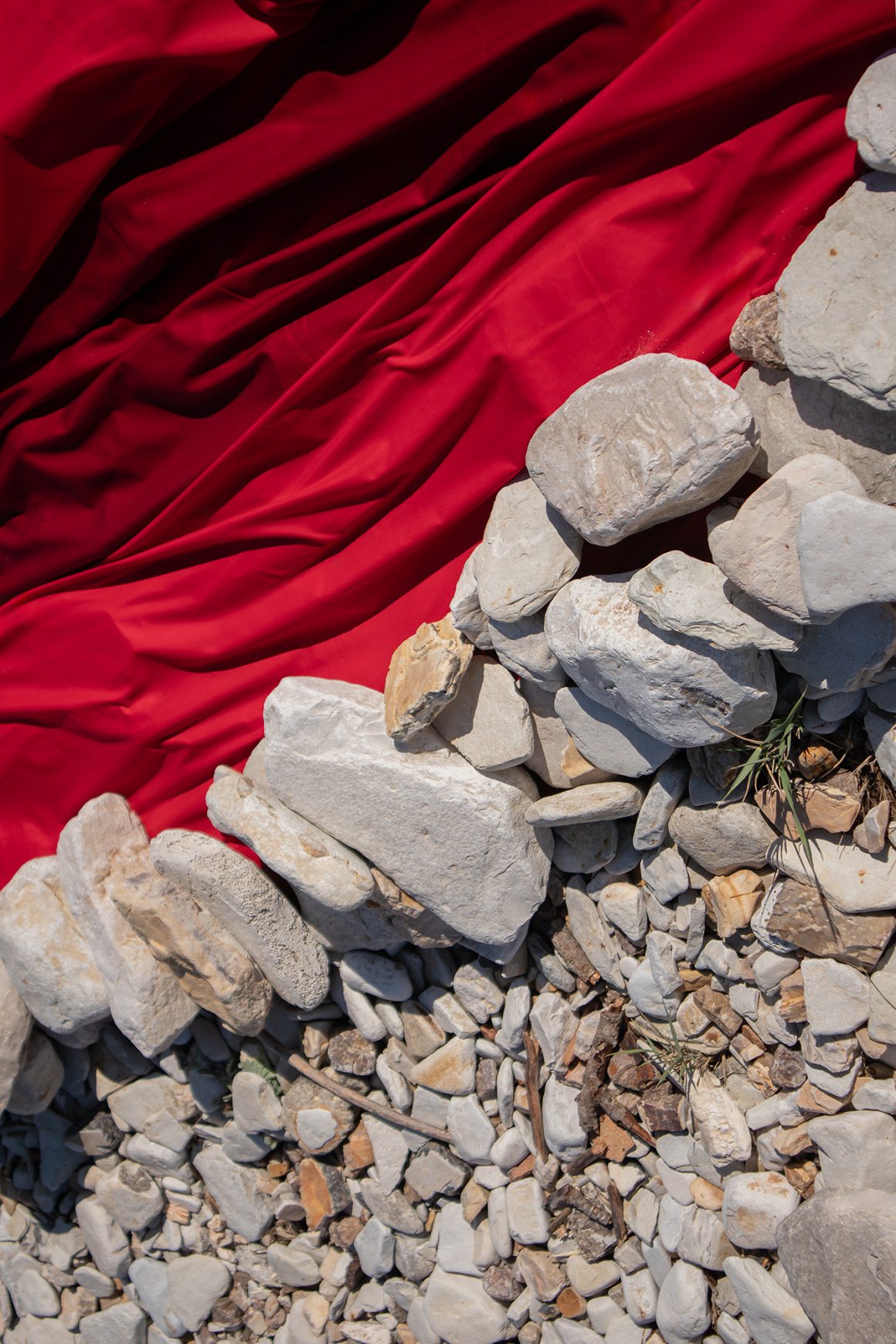
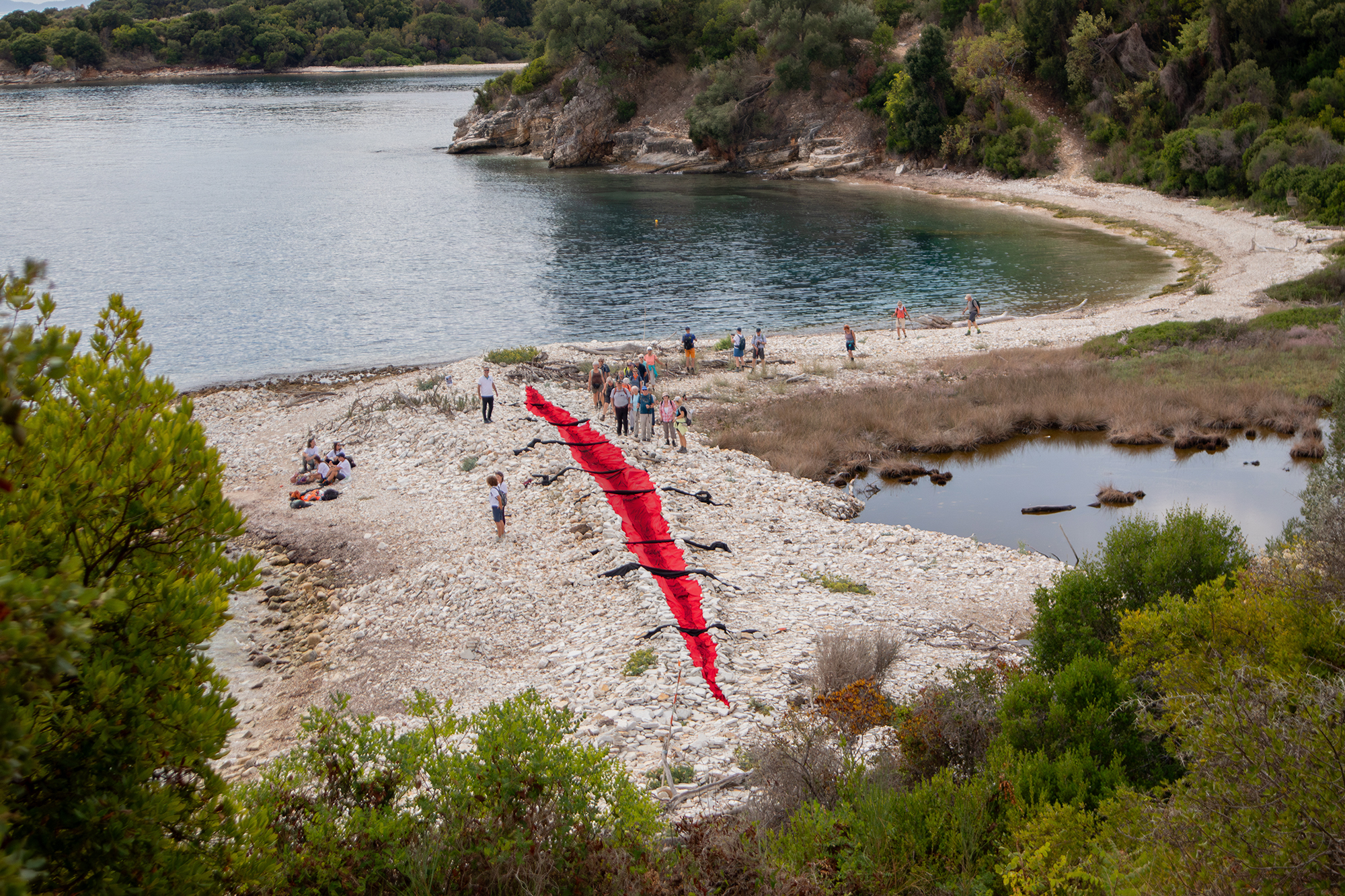
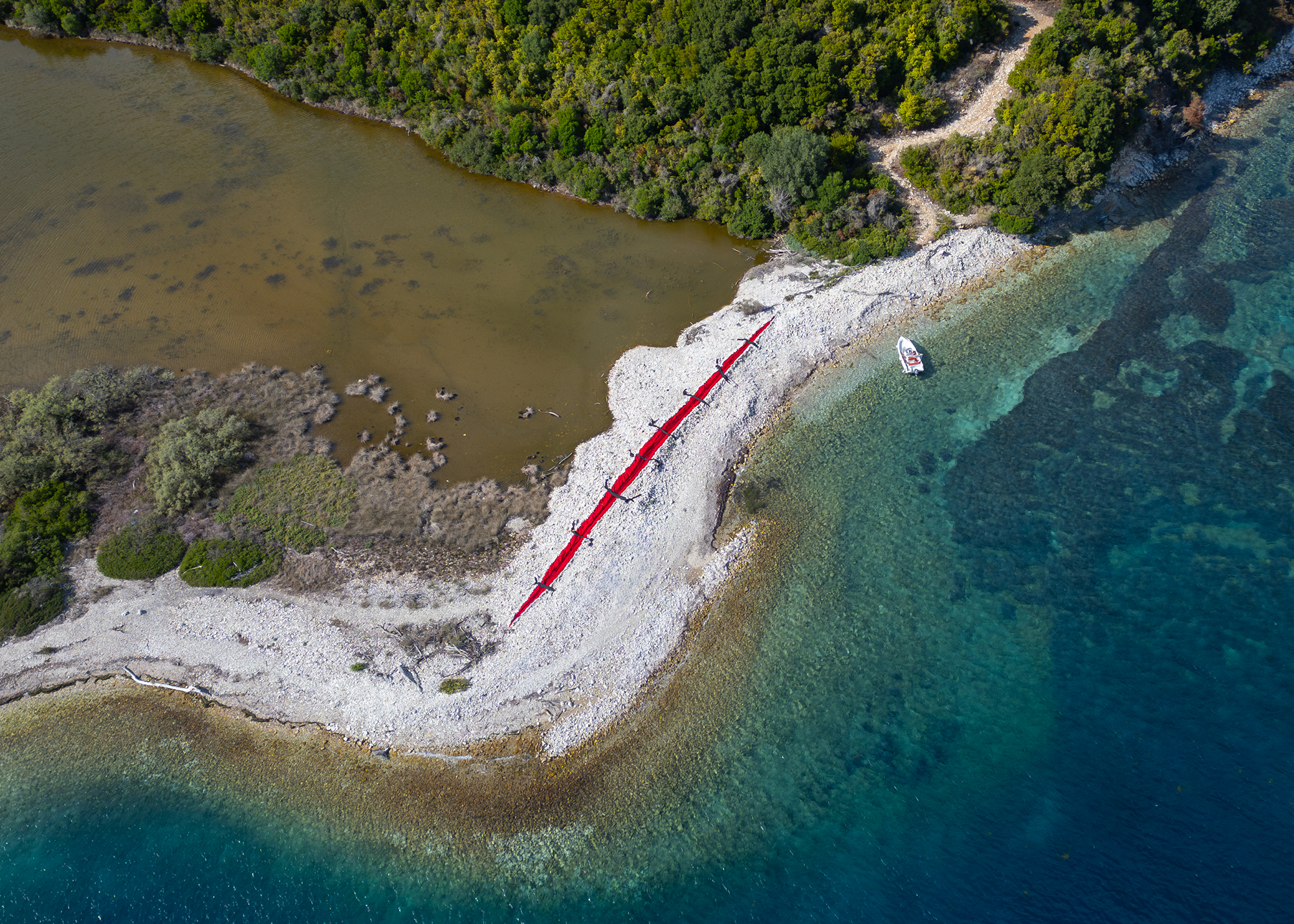
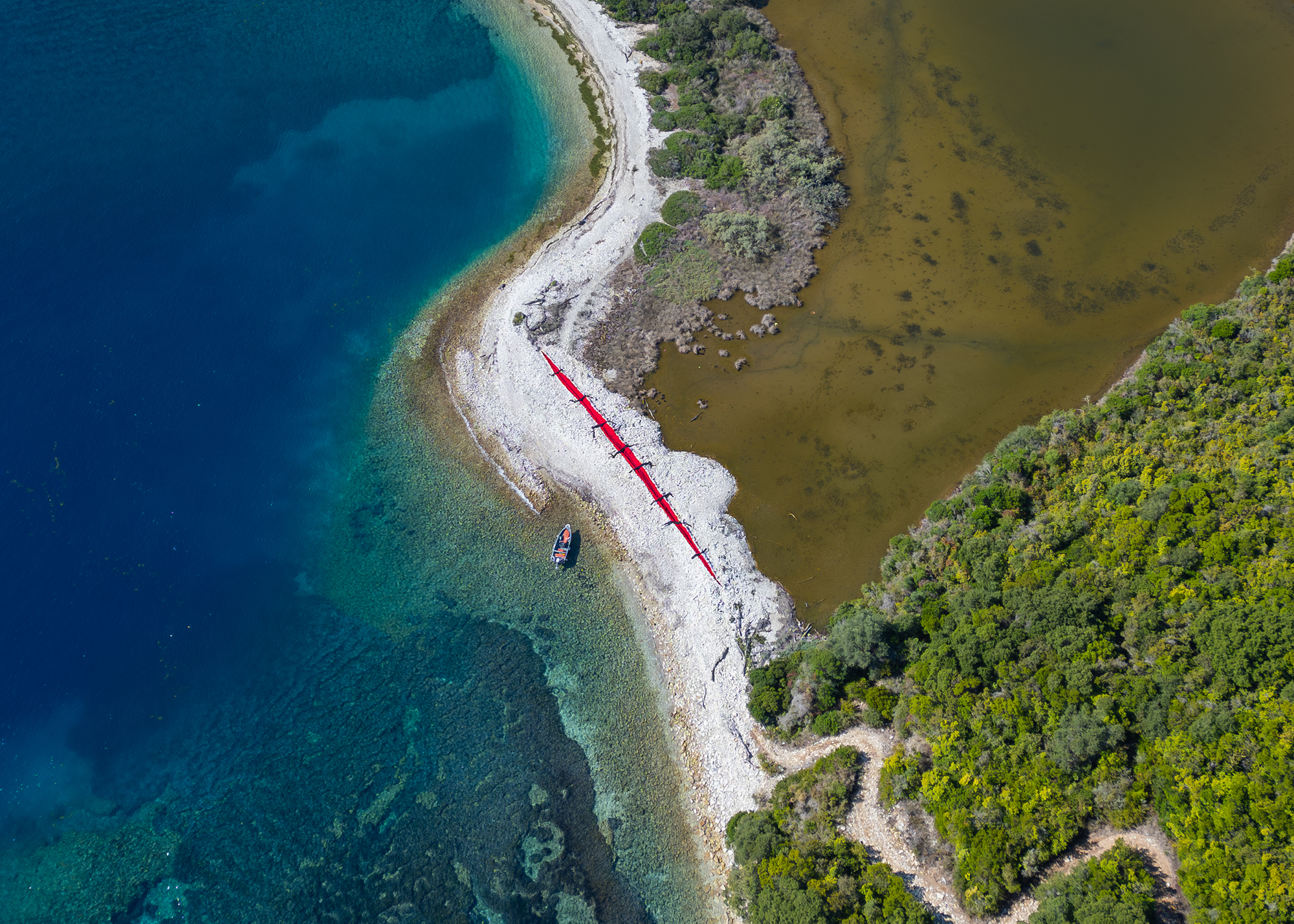
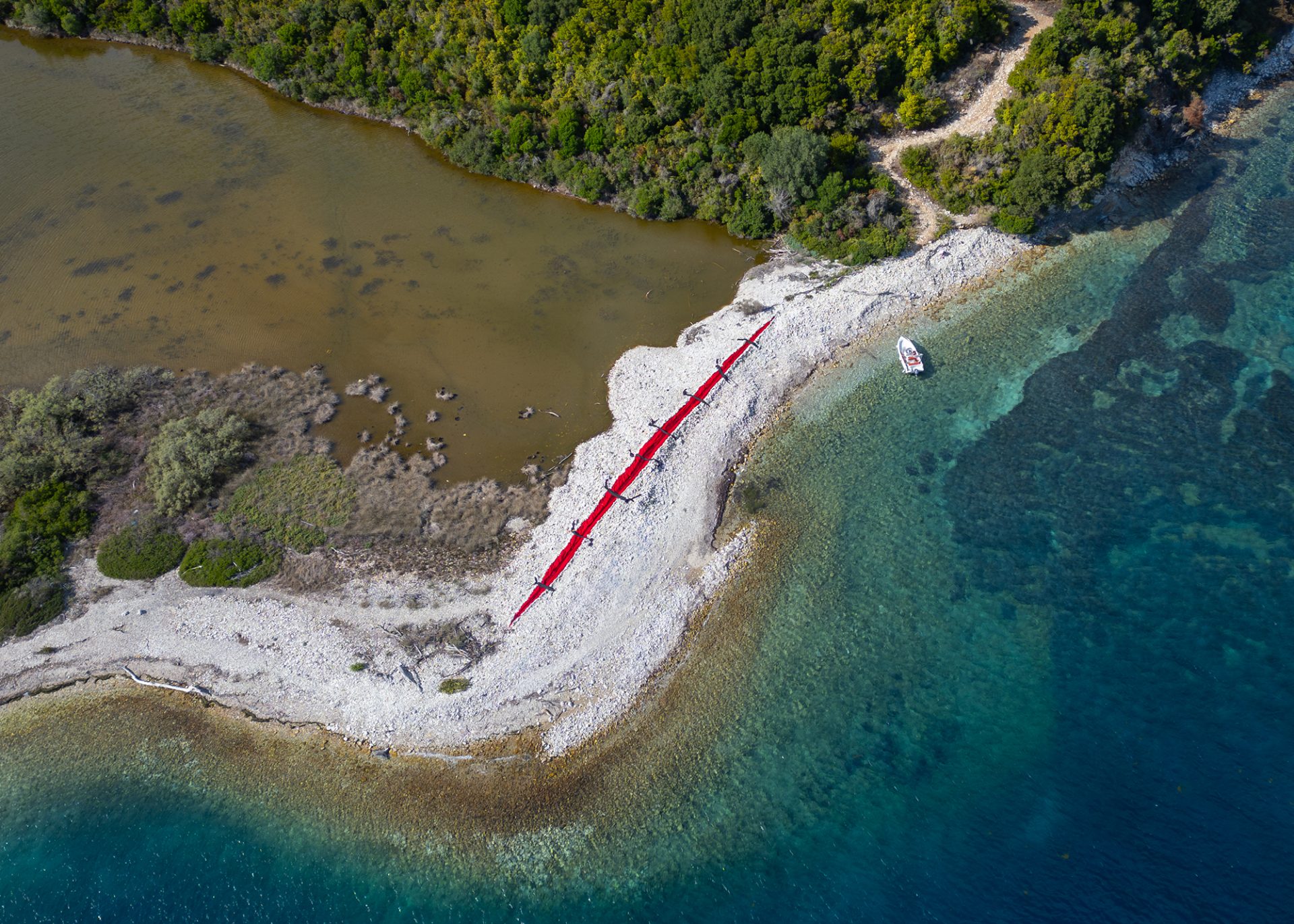
In Wound, the environment is symbolically transformed into a body. An oversized red incision appears to split the land open, while black stitches seem to hold its two sides together. A familiar image of bodily trauma is transferred to the scale of the landscape, making the vulnerability of the natural environment tangible through something we recognise from our own bodies.

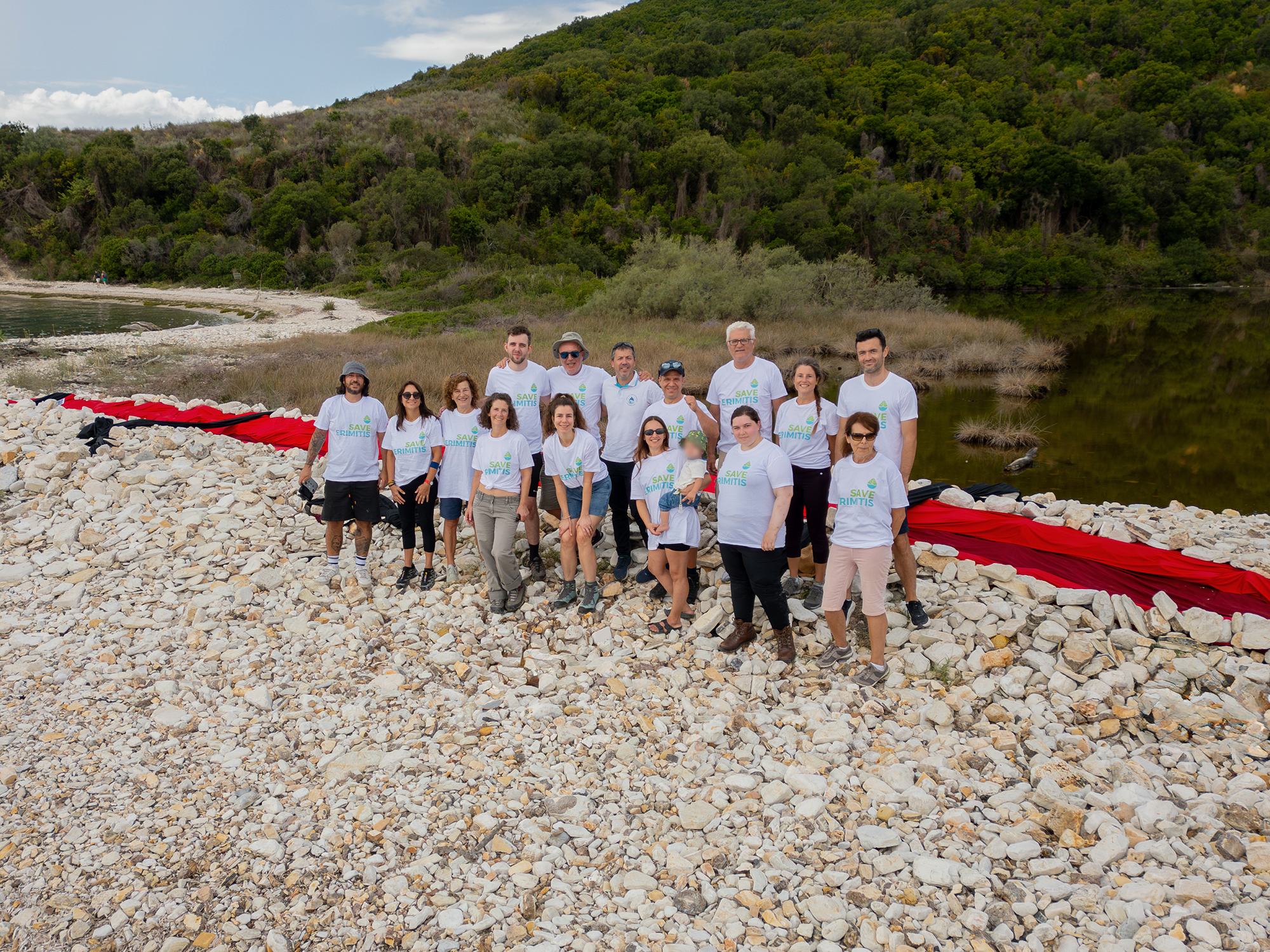
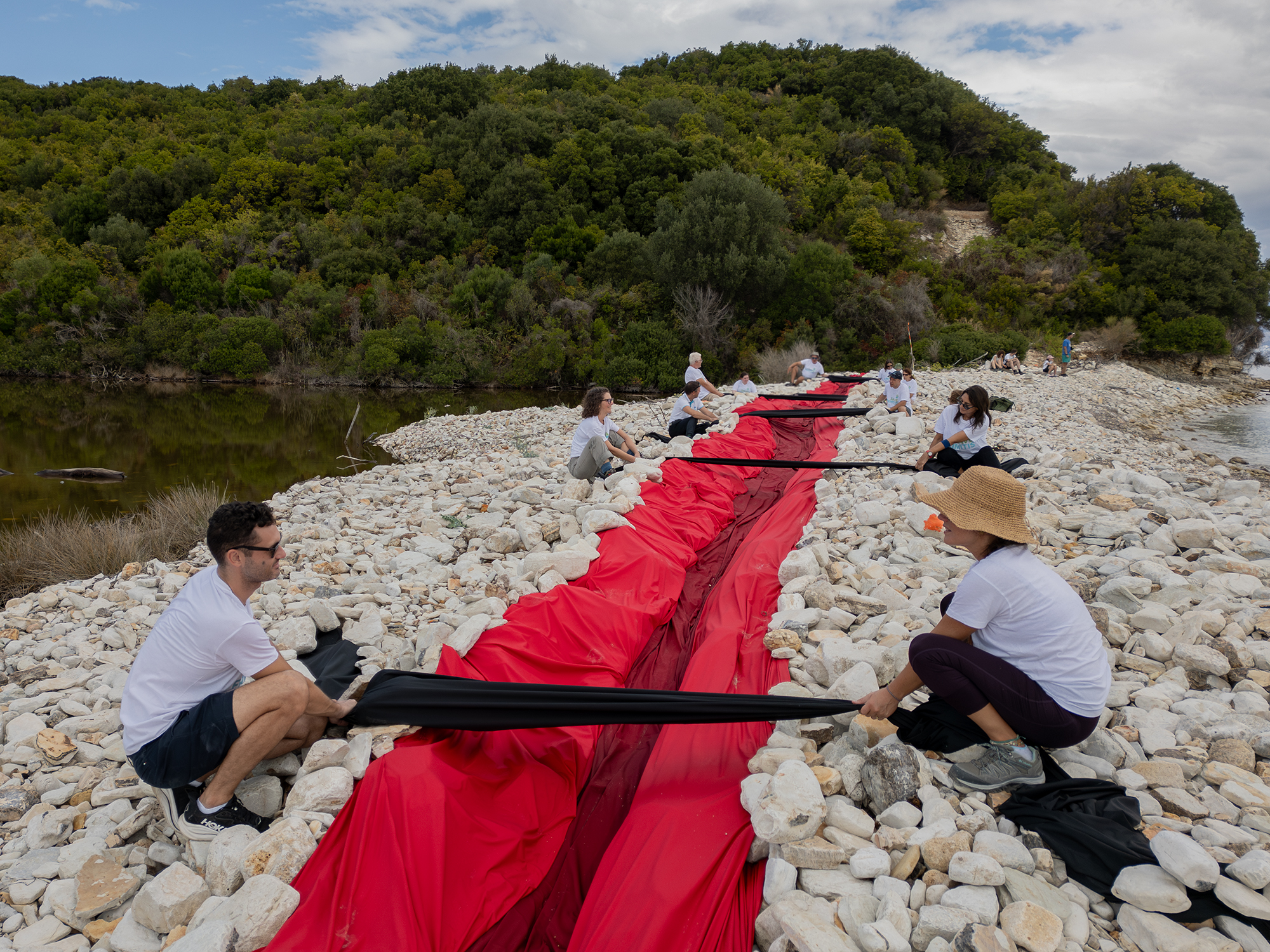
The stitches introduce a human presence into the work, not only symbolically but through the process of making it. Members of the local community and the Save Erimitis initiative took part in creating and positioning them, turning the act of stitching itself into a collective gesture.

The gesture refers to those who have defended Erimitis for years, while also speaking more broadly to any active attempt to protect a place under pressure. Care therefore moves beyond artistic metaphor and takes on a real, collective dimension in response to exploitation and intervention. The stitches do not erase the wound or undo the trauma. They hold it closed, creating the conditions in which healing might become possible.

ERIMITIS — HISTORY


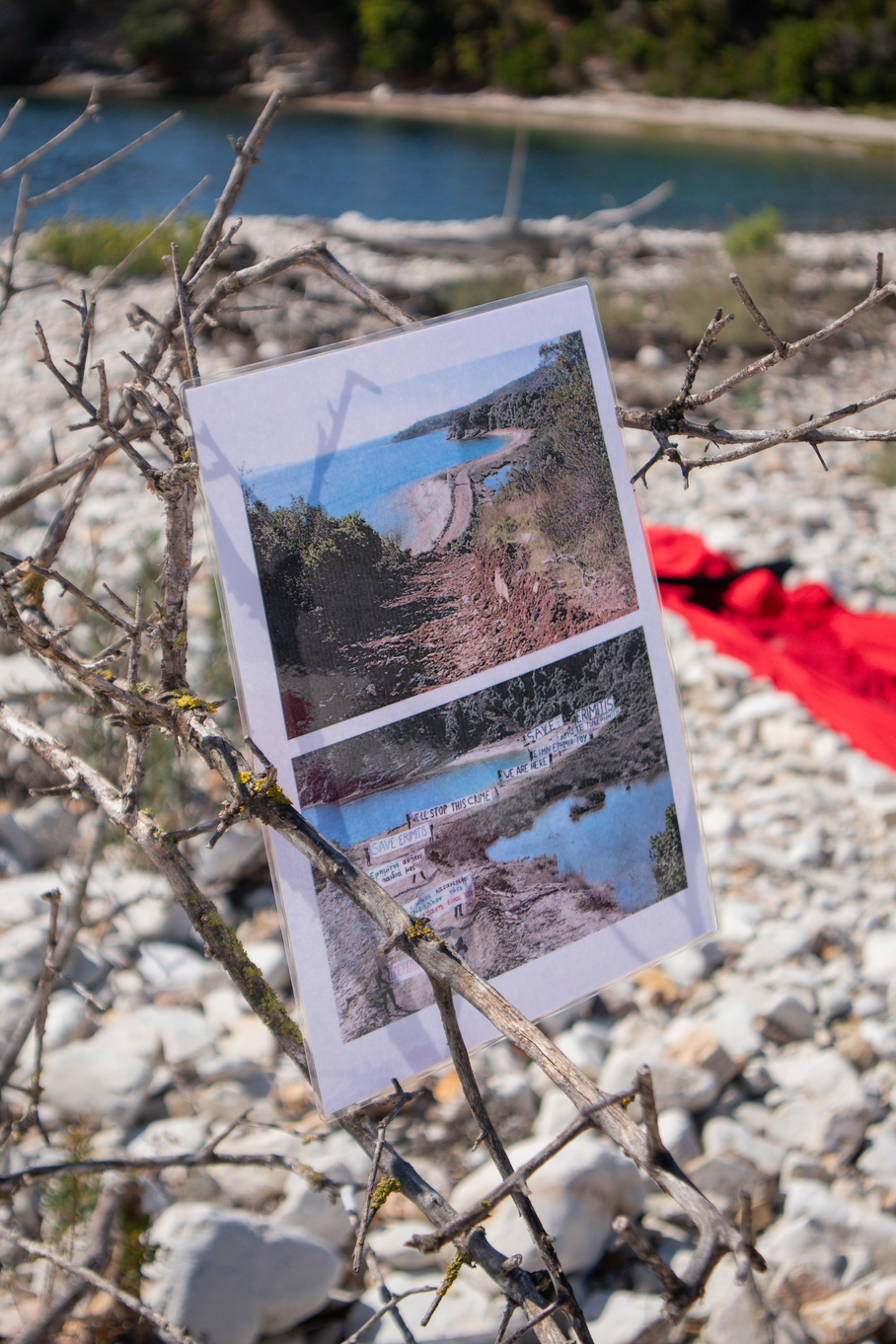
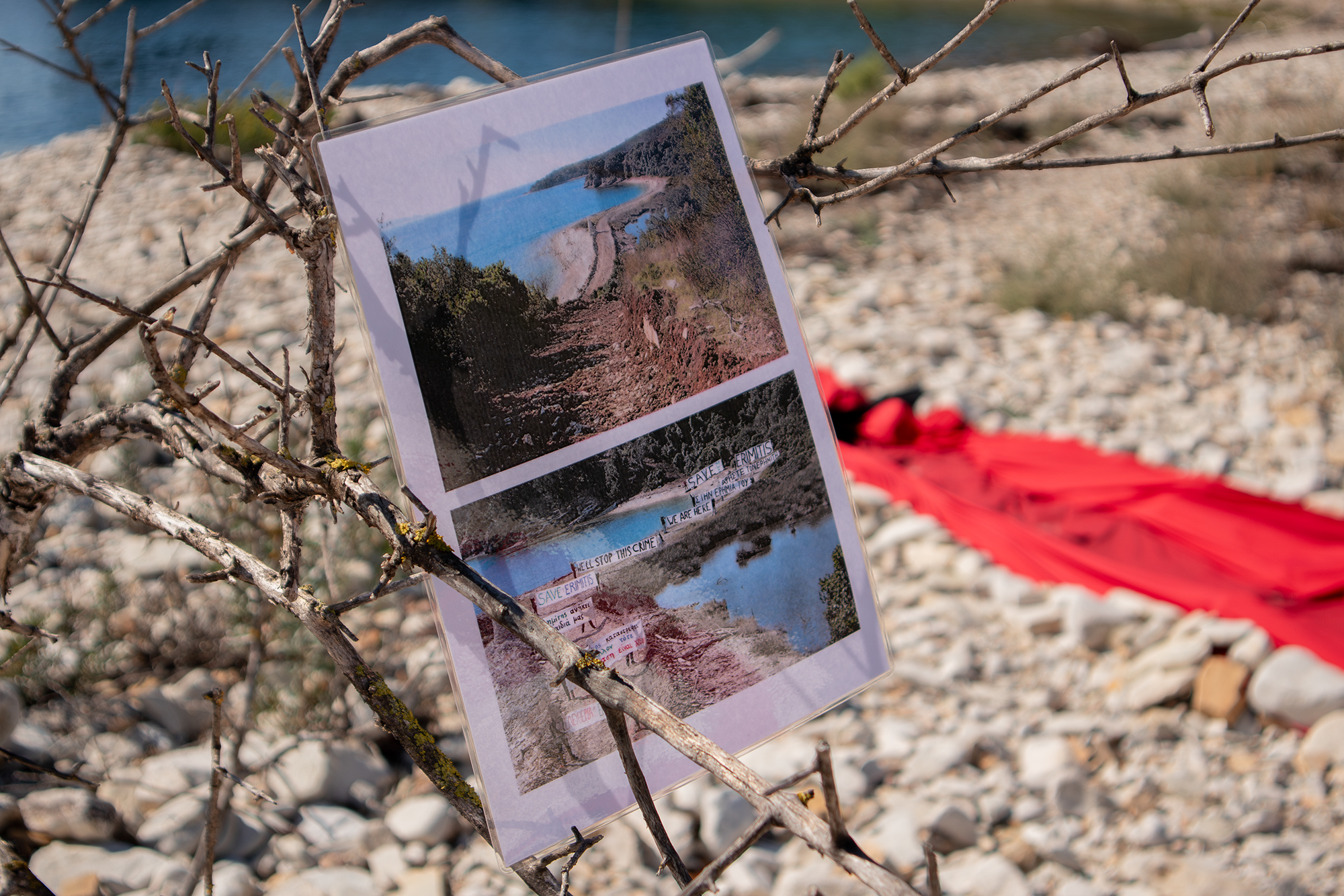
Wound was not placed at an arbitrary location in Erimitis. The installation was created on a section of the area where bulldozers had already passed during works connected to the previous development plan. The symbolic image of an injury was therefore positioned over a real trace of earlier human intervention in the land.

The dispute over the future of Erimitis began in 2012, when Greece’s state asset development fund, TAIPED, initiated the process of developing the publicly owned site. A year later, the binding offer submitted by NCH Capital was approved. The Kassiopi Project that followed envisaged a development including a five-star hotel, up to 40 villas and a 57-berth marina. Its scale and location raised serious environmental concerns and prompted years of mobilisation by residents and local organisations, as the proposed development affected a particularly sensitive ecosystem containing protected wetlands and coastal habitats. Construction works began in 2021, but after years of dispute, legal action and local mobilisation, the original plan did not proceed.

Today, the land is controlled by a new investment group linked to Calamos Investments. Although information about a different approach to the site has been reported, a complete and binding new master plan has yet to be made public. The artwork therefore appears at an interim moment: the past has already left its mark, while the future of the area remains open.

The stitched Wound exists within precisely this condition. Rather than presenting destruction as a foregone conclusion, it asks whether a place that has already been injured will be allowed to heal — or whether the wound will be opened again.

ERIMITIS — THE VALUE OF THE LANDSCAPE


Erimitis lies at the northeastern tip of Corfu, between Avlaki and Agios Stefanos. Within a relatively compact area, dense Mediterranean woodland, three coastal wetlands, rocky shores and seven small undeveloped coves coexist, forming one of the island’s most complex natural mosaics.

Its ecological significance extends from land to sea. Hundreds of plant species, dozens of bird species and more than 200 marine species have been recorded in the area, while extensive Posidonia seagrass meadows cover the seabed along the coast. The three wetlands also form part of a wider ecological system connected to the Albanian coast opposite and to the protected Butrint National Park.

It is this coexistence of forest, wetlands and sea within an almost continuous undeveloped coastal zone that makes Erimitis an invaluable natural ecosystem, not only for Corfu but for the wider Ionian region.

THE ARTWORK AND THE COMMUNITY

Over the two days of the public presentation, residents and visitors had the opportunity to take part in organised walks led by Save Erimitis together with scientific advisers, who introduced participants to the area’s ecological richness and the distinctive characteristics of its ecosystem along the route. Even for people already familiar with Erimitis, the presence of the scientists offered a different way of reading a landscape they thought they knew.

The route culminated at Wound, where scientific knowledge met artistic experience. The Krank presented the work and opened a discussion with the public around care and human intervention. Information about the ecosystem, biodiversity and ecological value of Erimitis acquired another dimension through the encounter with the artwork and the conversation that followed.

ABOUT THE ARTIST

The Krank is a Greek visual artist based in Athens. His practice centres on large scale site-specific installations, land art and public interventions that explore the relationship between landscape, collective memory and contemporary social issues. Through his work, he transforms real places into sites of public dialogue and collective reflection.

His work has been presented internationally across cultural and institutional contexts, including the Barbican Centre in London, SLVV / Deutsches Historisches Museum, Transmediale 2024 and Typo Berlin at Haus der Kulturen der Welt in Berlin, Documenta Halle in Kassel, Kultur- und Kongresszentrum Luzern in Lucerne, the World Conference Center Bonn as part of a United Nations event, Berry Campbell Gallery in New York, and in Brazil at SESI Lab in collaboration with the British Council, as well as within the World Health Organization (WHO) programme during COP30

All images © The Krank

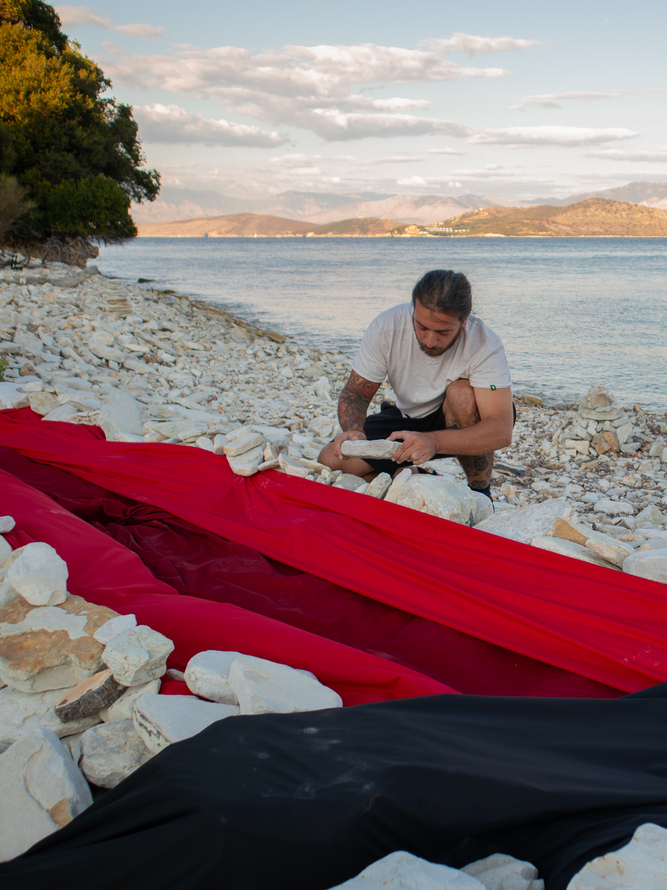
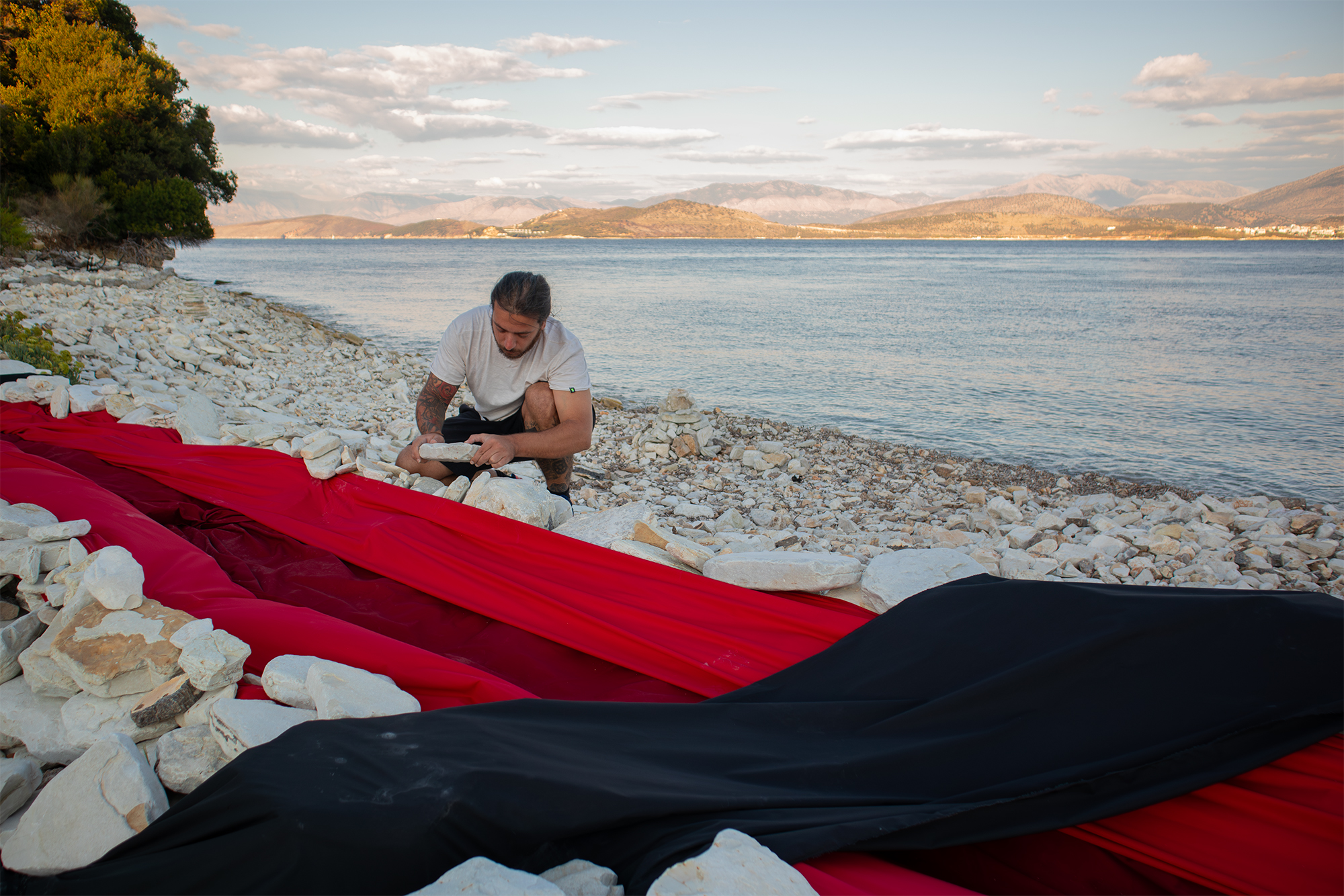
The installation process. The fabric is secured using stones from the beach.
At the same site where Wound was created, the 2021 works had already left visible traces on the ground, while the campaign to protect Erimitis had established a strong public presence. These two realities became key references for the incision and stitches at the heart of the artwork.
The stitches of Wound are positioned with the participation of members of the local community and Save Erimitis, connecting the symbolic act of care with the people who have defended Erimitis for years.
The Krank: When the landscape becomes a body, the wound expands to the scale of the land
Aerial view of Wound, a temporary 50 metre long installation in Erimitis by The Krank.

Author