The first presentation of Greek artist Giorgos Ioannou’s striking work in the UK to date.
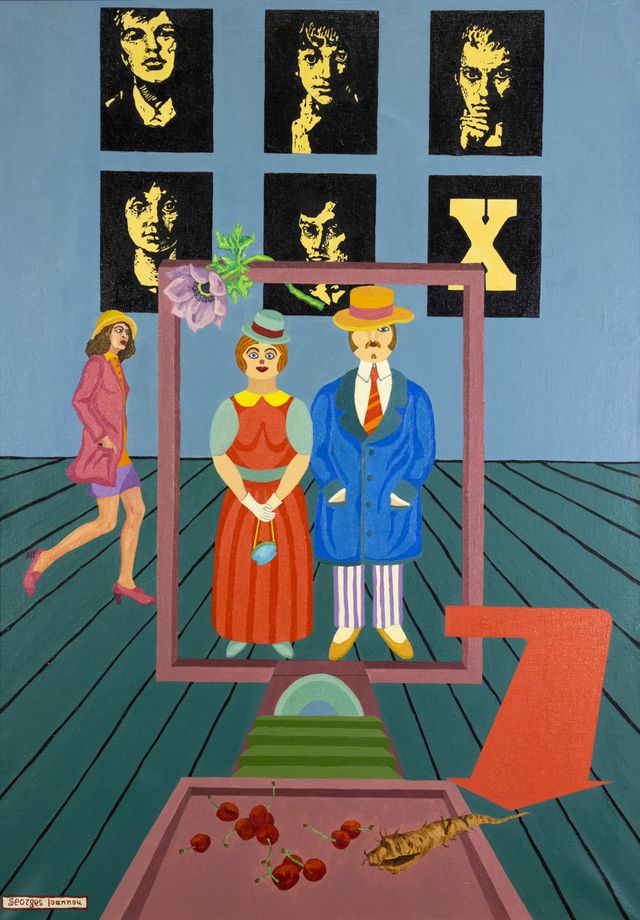
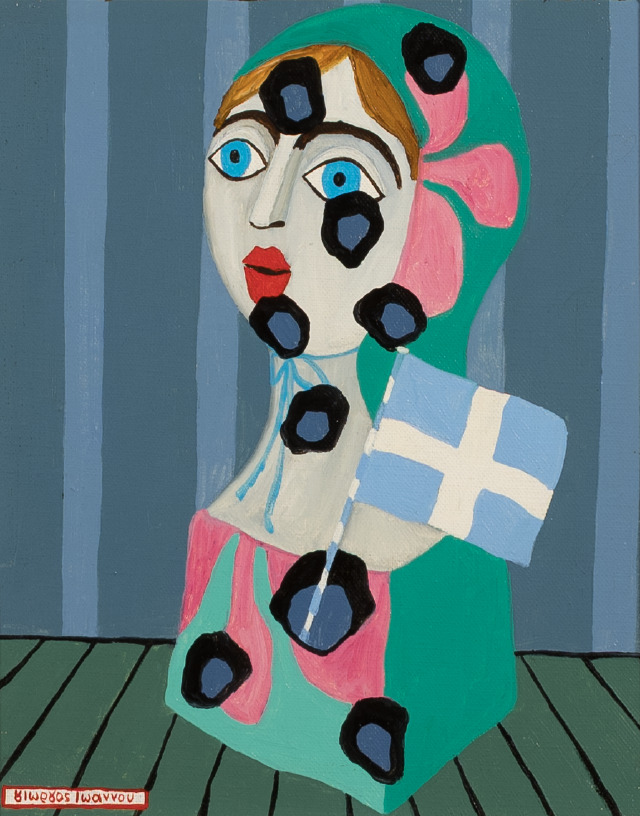
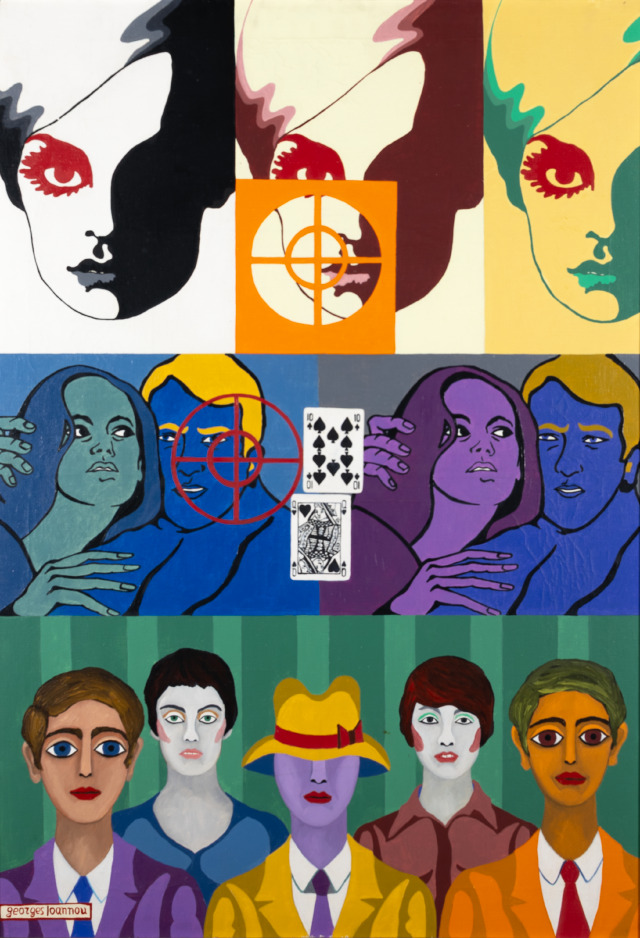
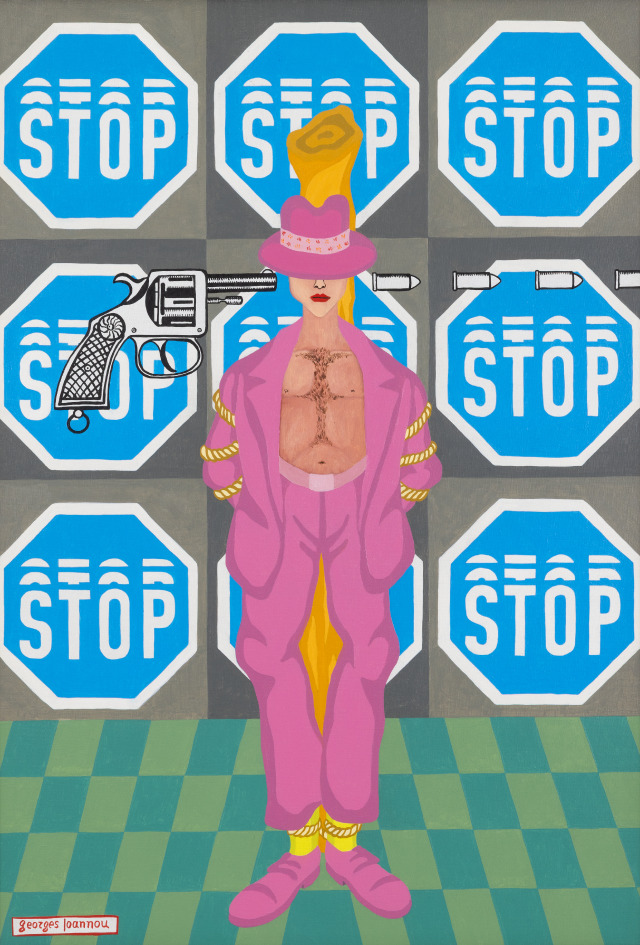
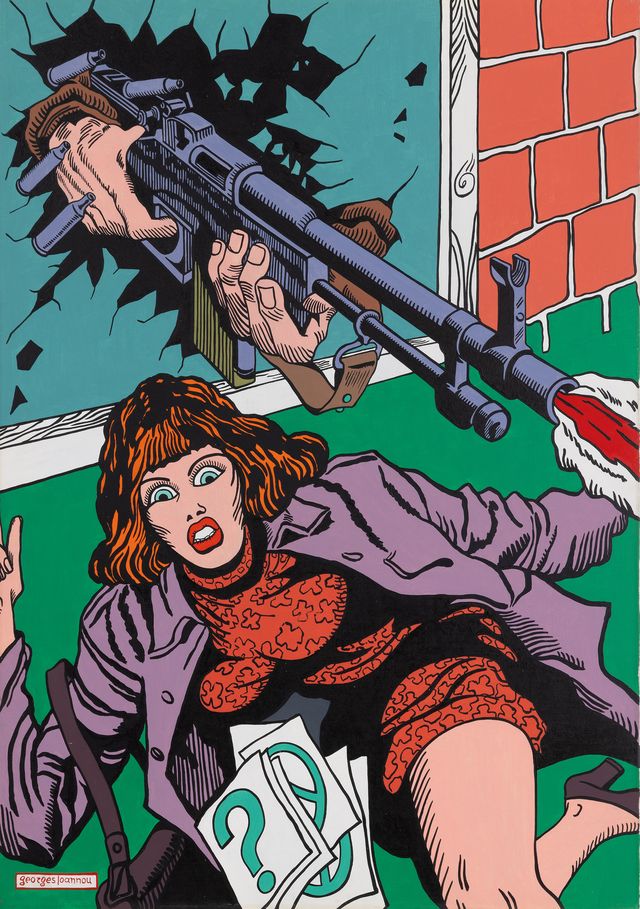
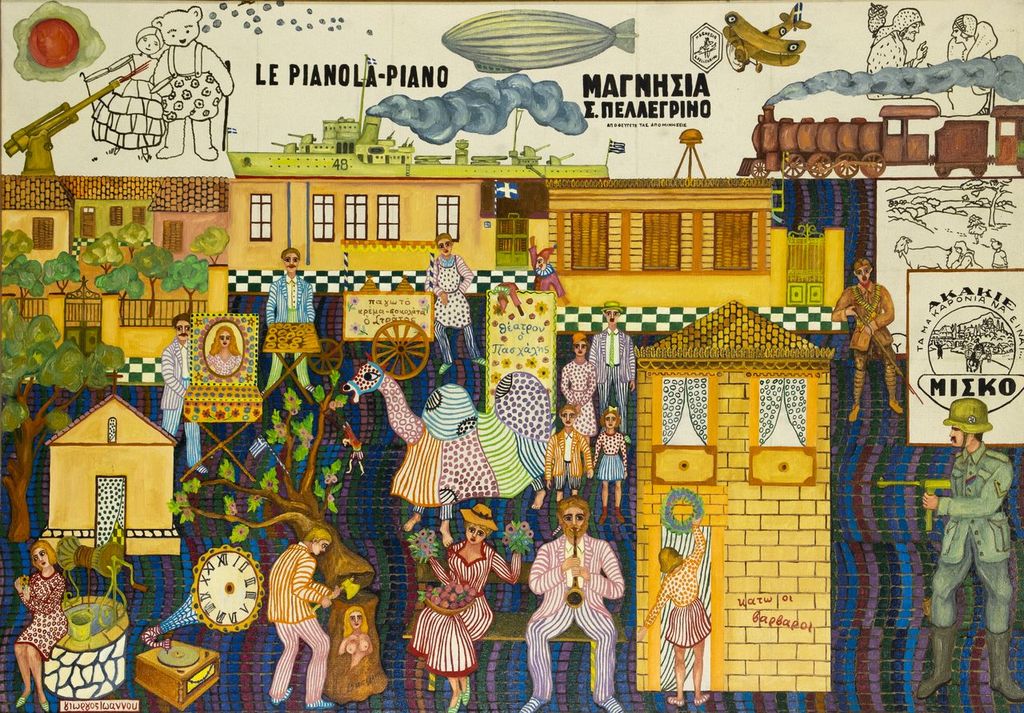
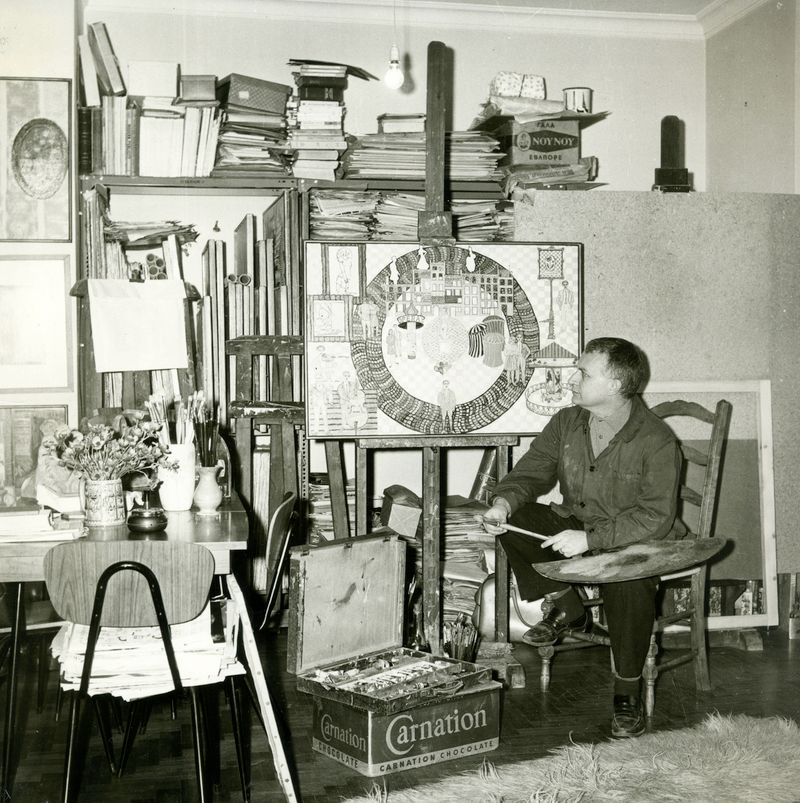
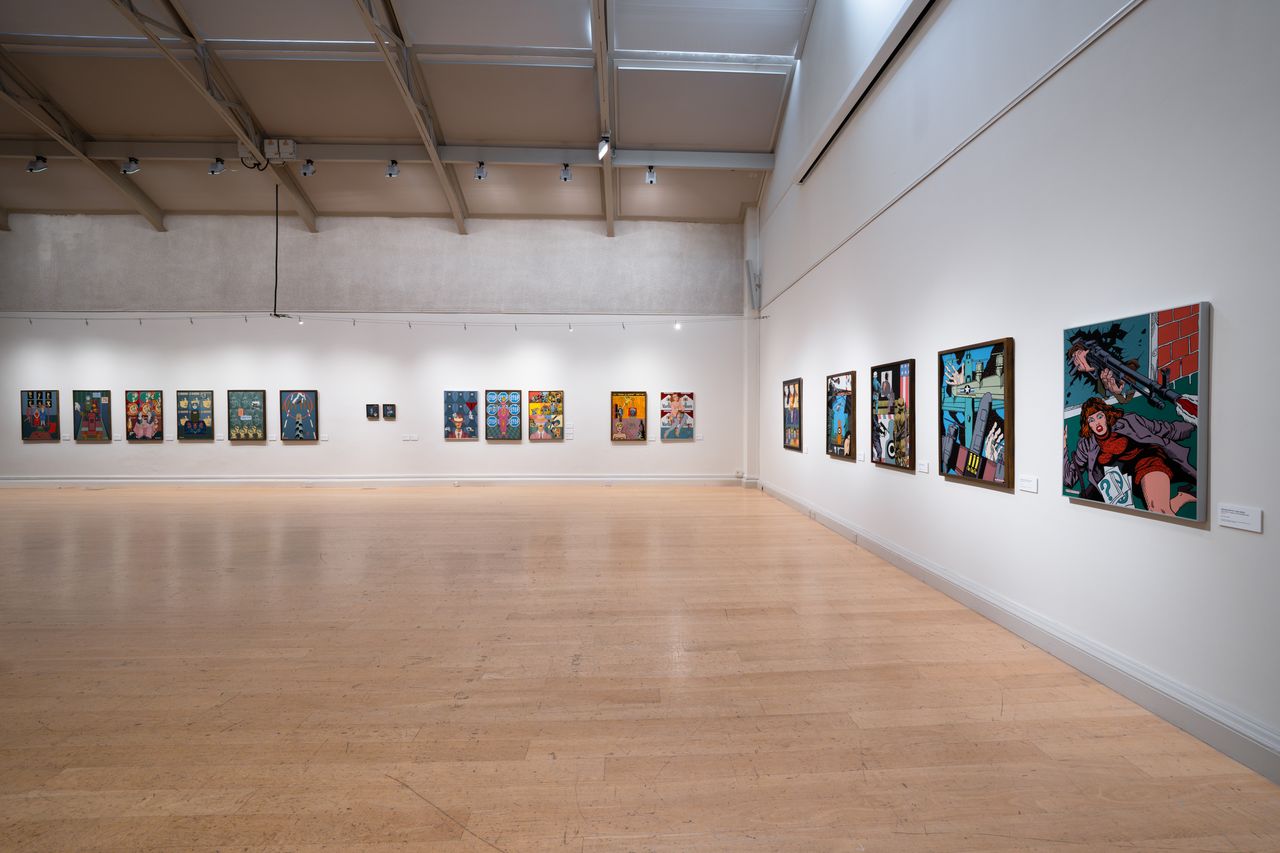
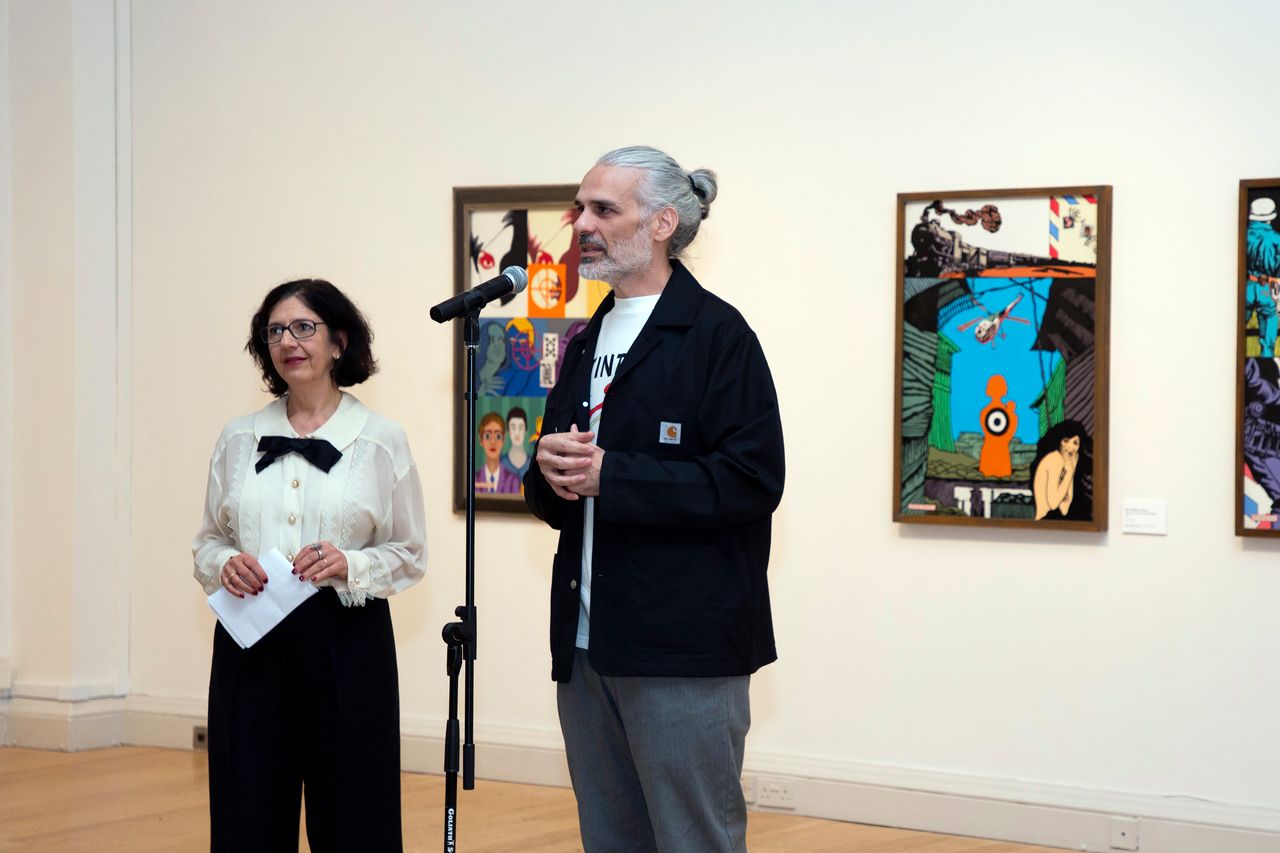
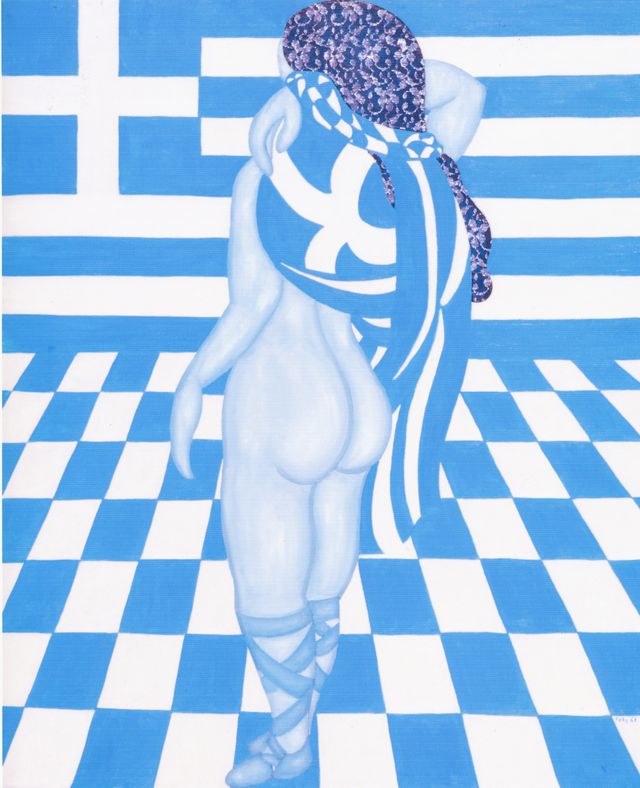
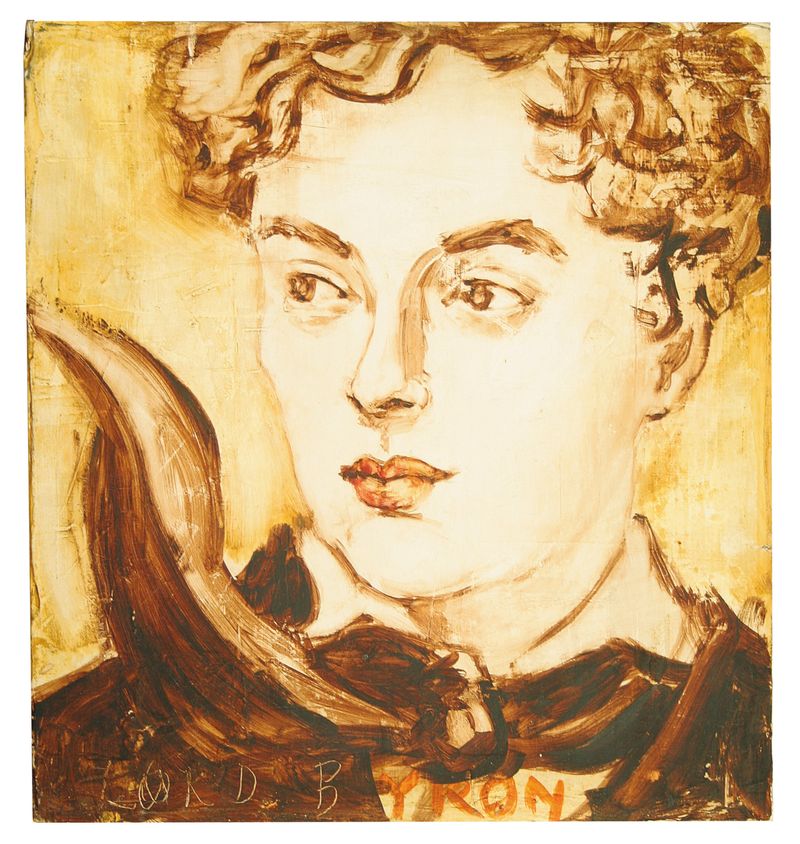
Marking the centenary of the birth of Giorgos Ioannou (1926–2017), the Hellenic Centre presents the first substantial solo exhibition of the artist’s work in London. Bringing together paintings from public and private collections, the exhibition offers a rare opportunity to encounter the work of an overlooked Greek artist who developed a distinctive visual language, which draws on the imagery and sensibility of Pop while remaining resolutely his own.
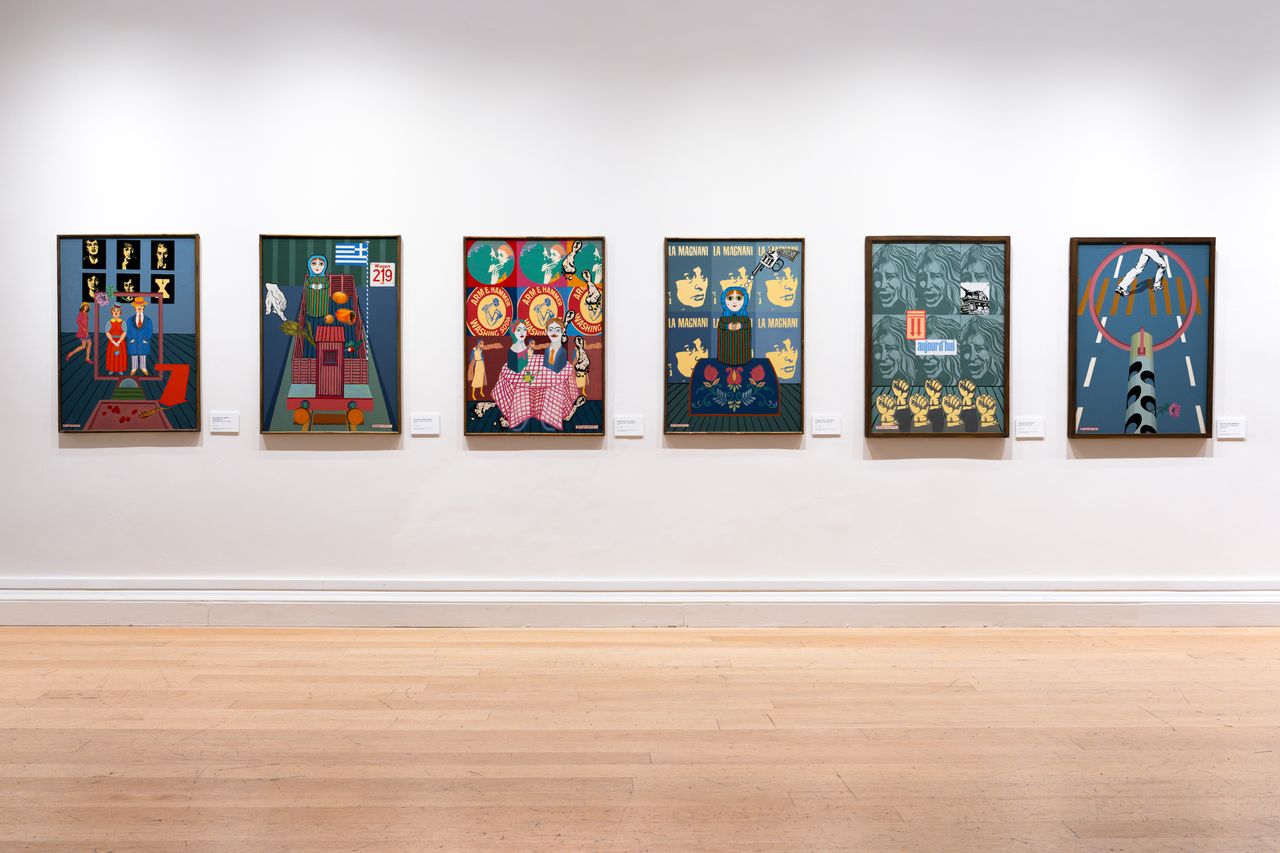
Although exceptionally prolific in Greece, Ioannou’s work remains relatively unknown in the UK. The exhibition introduces his striking paintings to a wider international audience, highlighting his passion for democracy and human rights. Focusing on works produced between the late 1960s and early 1970s – a period shaped by the Greek military dictatorship – the exhibition brings together more than thirty paintings that reveal the artist’s distinctive visual language while exploring the political and social concerns that came to define his practice during these pivotal years.
Throughout his career, Ioannou developed a rich and varied visual language, becoming particularly renowned for his use of Pop and comic-book imagery. Although his work evolved in parallel with, and independently of, American Pop art, he should not be understood simply as a Greek Pop artist. His paintings weave together personal memory, political trauma, nostalgia, folk traditions and autobiography, resulting in a deeply individual artistic vision.
It was during the years of the Greek military junta that Ioannou established his distinctive visual language. While engaging with the imagery and visual vocabulary of Pop art, he remained firmly committed to interrogating the social and political realities of his time.
While operating within a climate of censorship, the immediacy and accessibility of Ioannou’s visual language enabled him to engage directly with the political climate of the period, articulating his concerns with clarity and urgency.
Many of the works included in this exhibition were first shown during the years of the dictatorship. Despite his opposition to the regime, Ioannou continued to exhibit widely throughout the period, including at the Greek Pavillion at the 1970 Venice Biennale, at the height of the regime.
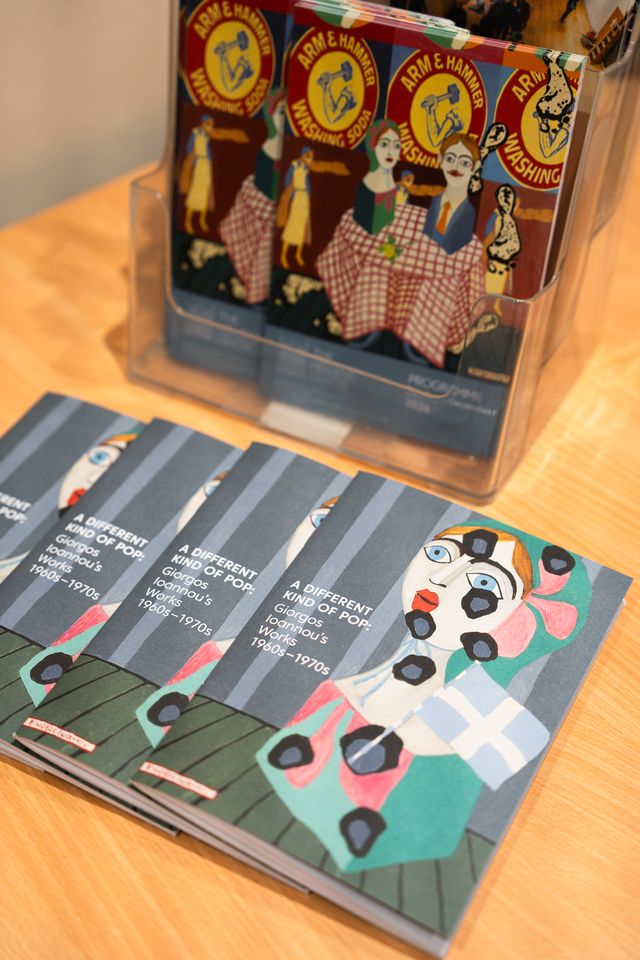
The exhibition is accompanied by a small publication and a programme of events, including an in-conversation with Kostas Stasinopoulos, Director of Exhibitions and Programmes at KYKLOS, Dimitris Ioannou, artist, the son of Giorgos Ioannou and Andrew Wilson, independent historian, curator and writer.
Co-curated by Sofia Karamani and Nayia Yiakoumaki with the support of Dimitris Ioannou and Angy Sanchez-Castrillon.
Lead sponsor Alpha Bank London. With support from the Onassis Foundation and The Panayotis & Effie Michelis Foundation.
Nayia Yiakoumaki, Director of the Hellenic Centre, said:
At a time when democratic values, social justice and environmental responsibility are under increasing pressure across the world, Giorgos Ioannou’s work resonates with renewed urgency. Throughout his career, he developed a singular visual language through which he reflected on questions of human dignity, civil rights, peace and our relationship with the natural environment. We are delighted to present the first substantial exhibition of his work in London, inviting audiences to rediscover an artist whose vision remains profoundly relevant today.
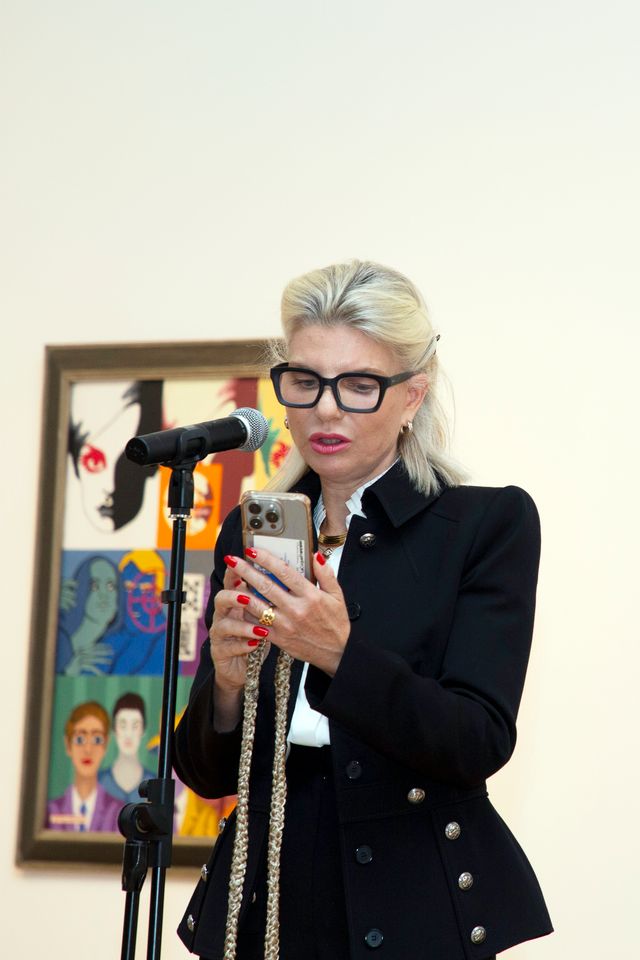
SPECIAL PUBLIC EVENTS Thursday 15 October, 09:30: In Conversation: Dimitris Ioannou with Kostas Stasinopoulos and Andrew Wilson. Join us for a breakfast reception, followed by a conversation with the artist’s son, artist Dimitris Ioannou, Kostas Stasinopoulos, Director of Exhibitions and Programmes at KYKLOS, moderated by independent critic, historian and curator Andrew Wilson.
A Different Kind of Pop: Giorgos Ioannou’s Works 1960s – 1970s The Hellenic Centre, 16–18 Paddington Street, Marylebone, London W1U 5AS Dates: 8 October – 19 November 2026
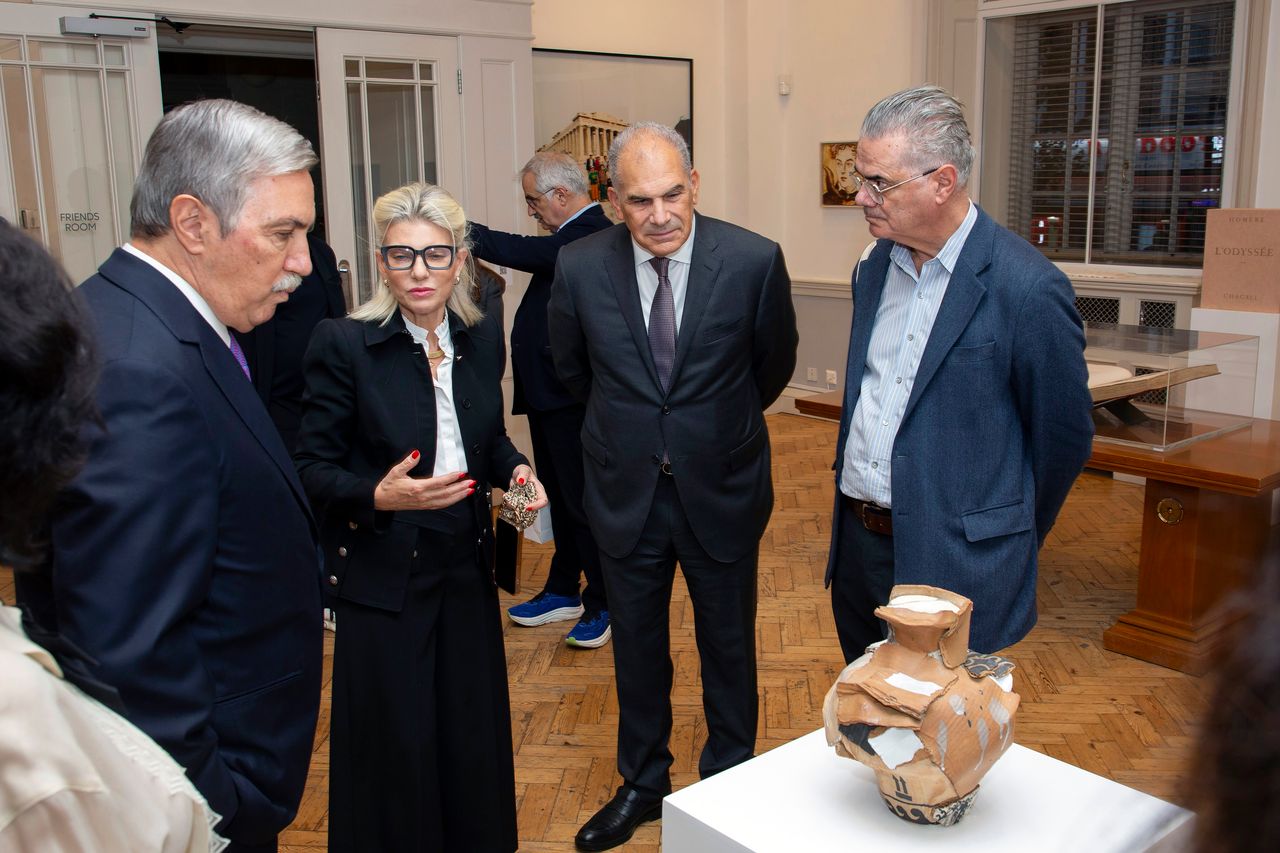
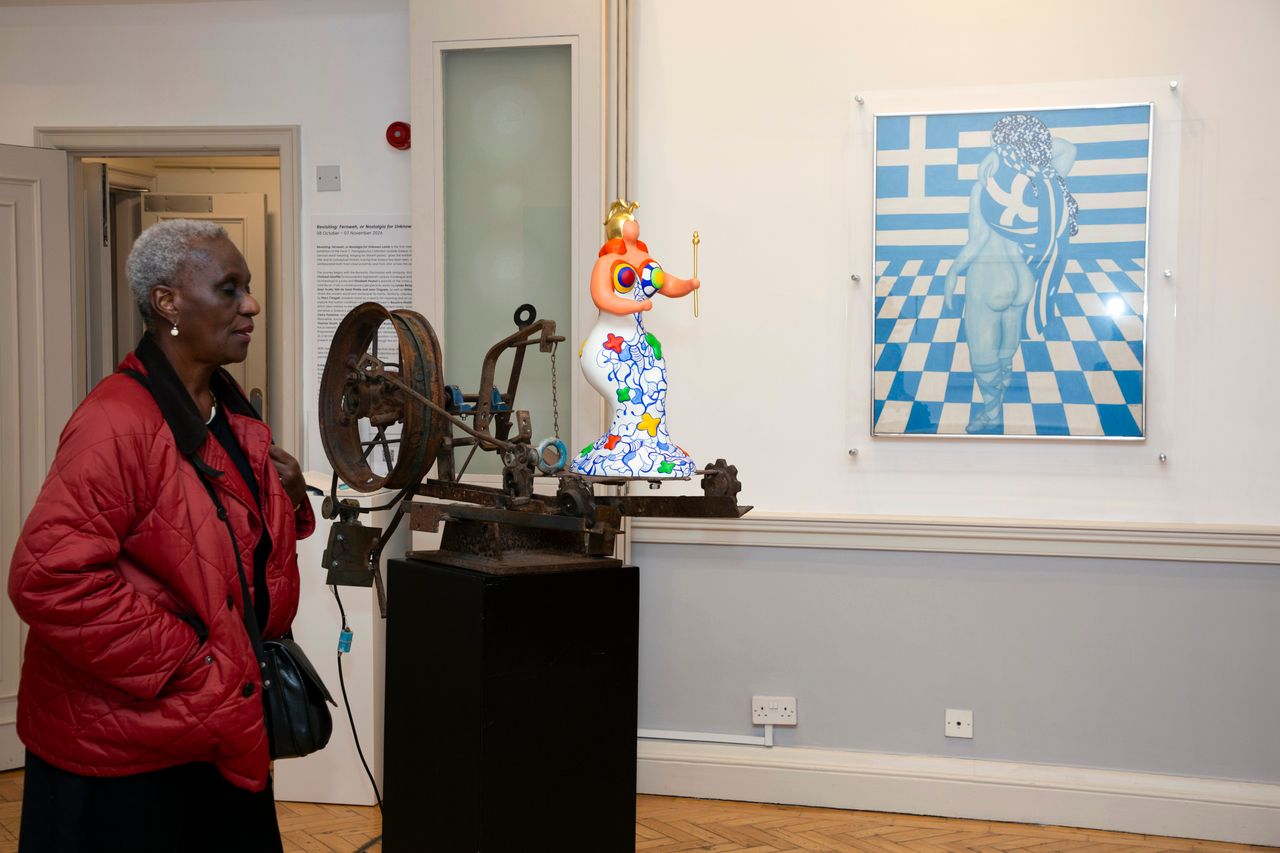
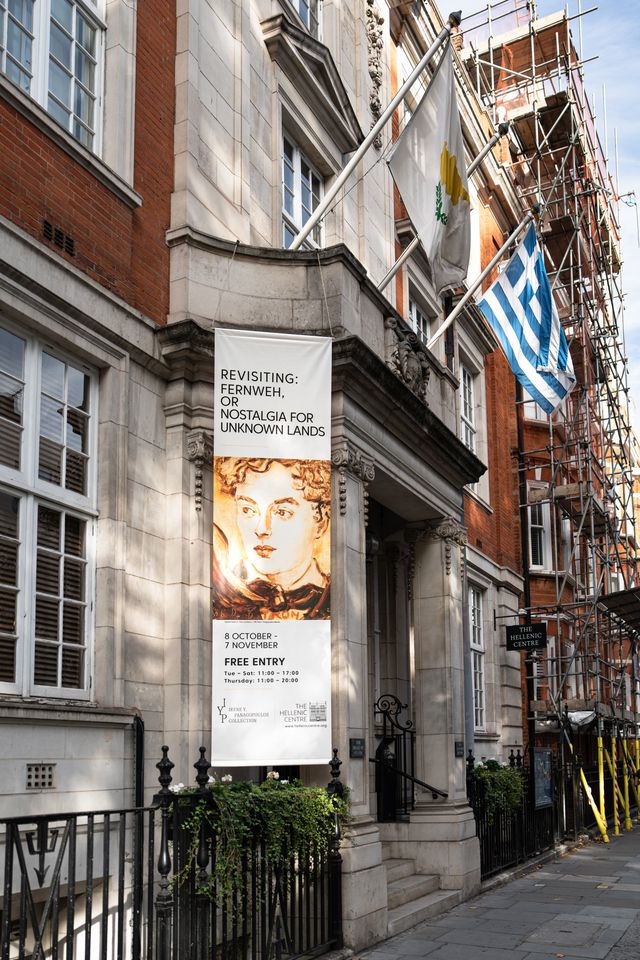
During the same period, the Hellenic Centre presents the exhibition Revisiting: Fernweh, or Nostalgia for Unknown Lands (8 October – 7 November 2026) in collaboration with the Irene Y. Panagopoulos Collection.
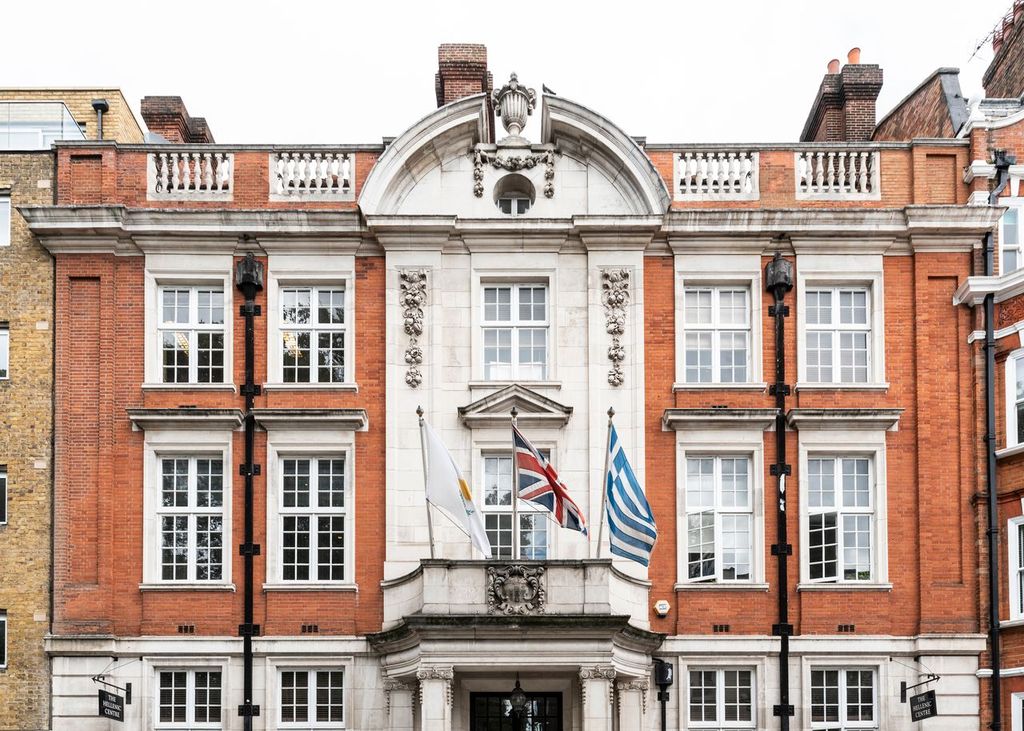
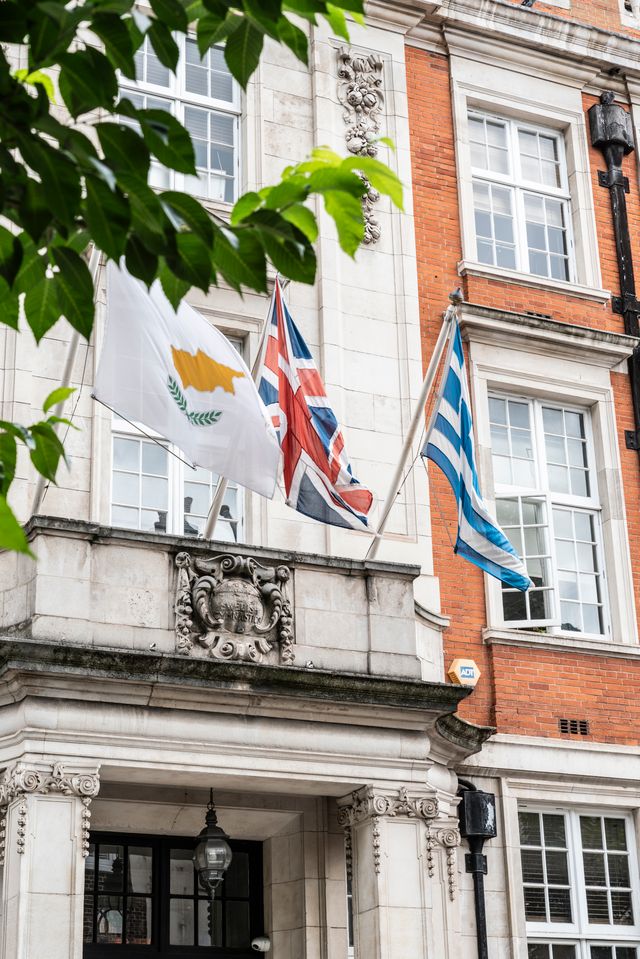
Completed in 1910, the Hellenic Centre building at 16–18 Paddington Street was designed by architects Forsyth & Maule, and commissioned by Swede Allan Broman, a pioneer of medical gymnastics who had practised in London since the mid-1880s. The building opened in October 1911 as the Central Institute for Swedish Gymnastics, offering a one-year training course for men. In 1914, as the First World War began, the building became the Swedish War Hospital for British Wounded, founded and maintained by the Swedish Chamber of Commerce in London.
The hospital initially treated 30–40 British soldiers before operating as a 24-bed officers’ hospital, employing Swedish-style physiotherapy. At the end of the war, the building reverted to its original use. Soon after, the Institute was purchased by the London County Council (LCC) and became its teacher-training College of Physical Education, later run by the Inner London Education Authority (ILEA). The College continued until 1990, when the ILEA was abolished. In 1992, the Hellenic Community Trust acquired the building, opening the Hellenic Centre two years later. A non-profit, non-governmental institution, the Centre’s missions are to bring together the Hellenes of the diaspora and provide a home for the Hellenic community in London; to promote awareness of Hellenic culture in the UK; and to nurture the relationship between Britain and the Hellenic world through cultural cooperation and exchange. The Centre offers a rich programme of lectures, exhibitions, concerts, social events, and Greek language courses to promote awareness of Hellenic culture and nurture UK–Hellenic relations.