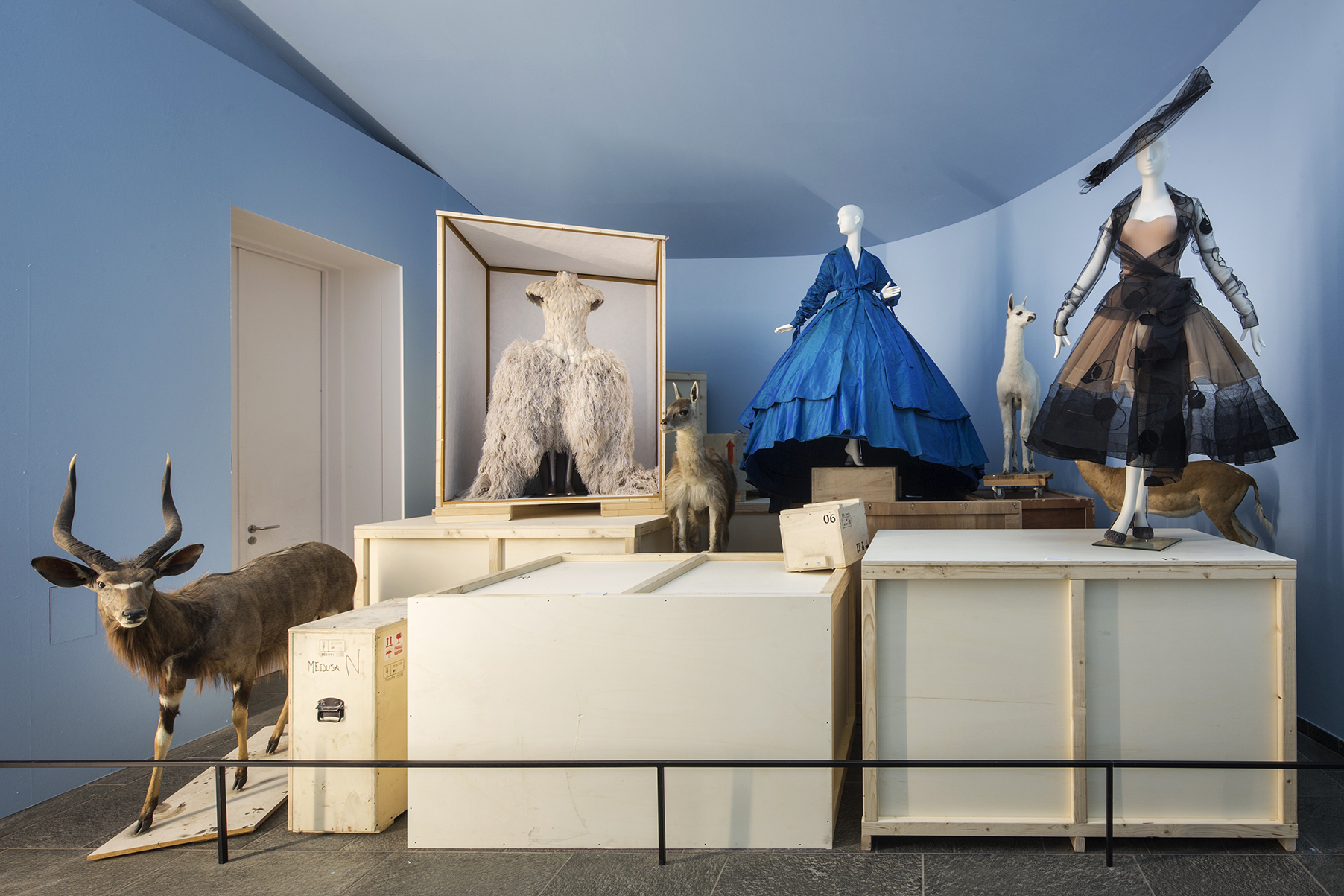
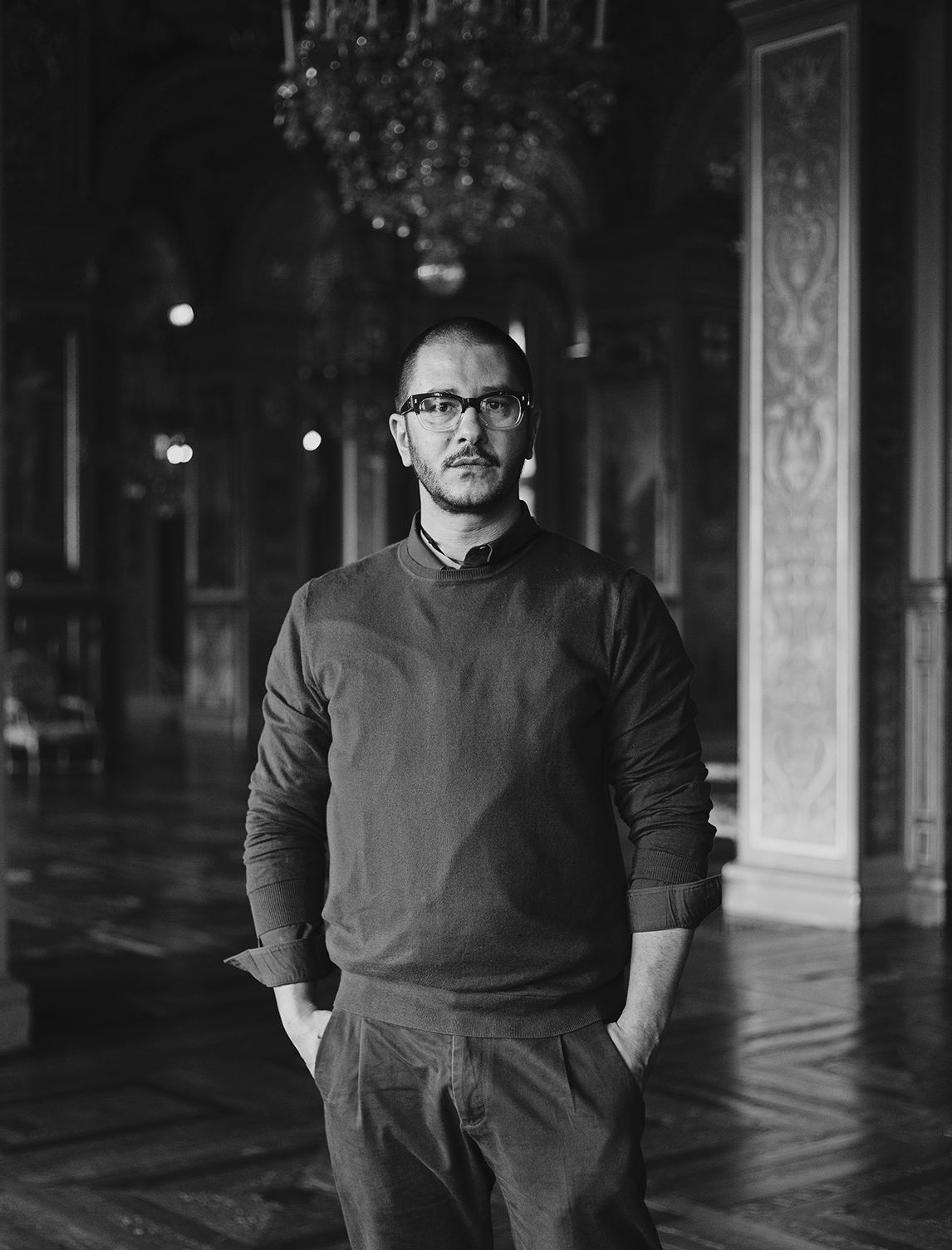
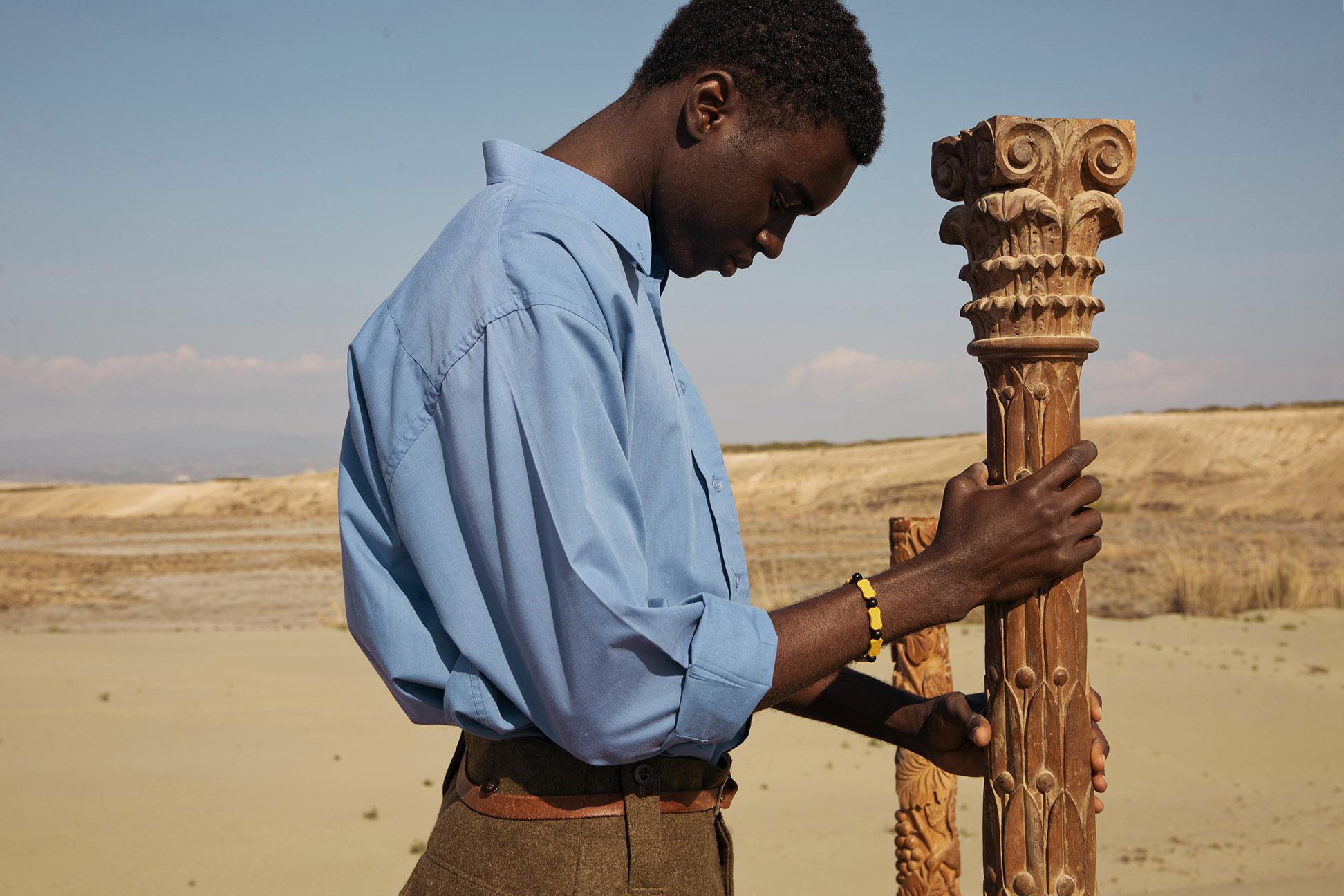
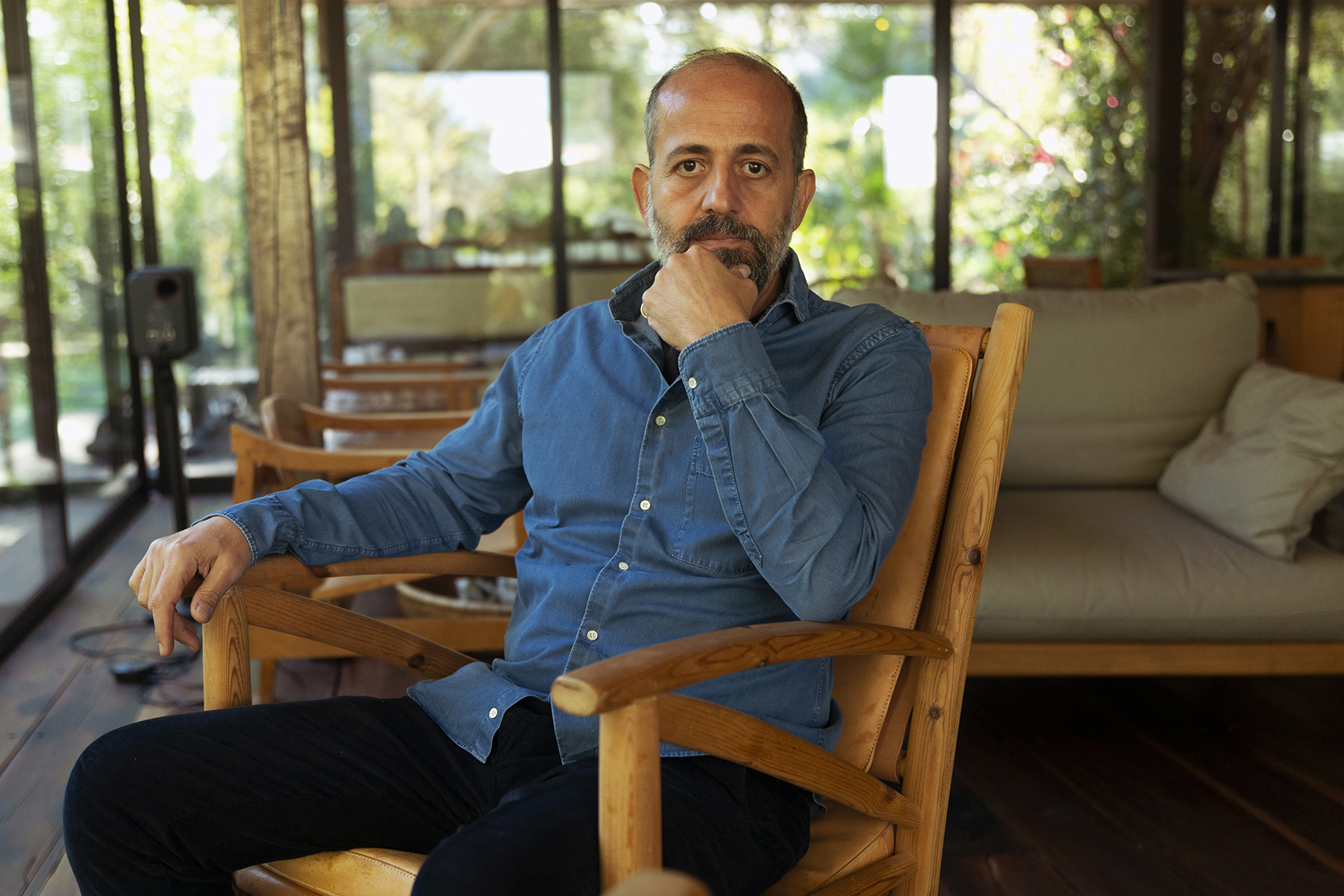
On the occasion of this year’s Biennale of Contemporary Ceramics in Rhodes, which culminates in the screening of #craftingcyprus—a short-film series created, written, and directed by Filep Motwary for the Cyprus Handicraft Service—the interdisciplinary creative reflects on a distinguished three-decade journey through fashion, art, and cultural curation. Spanning image-making, exhibition design, materiality, and traditional craftsmanship, his visionary work approaches fashion not merely as an aesthetic discipline, but as an essential narrative platform where memory, identity, and cultural heritage seamlessly converge.
Filep, at heart, you serve fashion, with a profound knowledge and a remarkably multifaceted understanding of its essence and of the people who have shaped it. You represent it through many different capacities—as a curator, journalist, critic, writer and teacher. At the same time, your inexhaustible creativity extends into a wide range of other fields, including photography, film direction and much more. Let us begin with your first great love, fashion. When did you first feel its stirrings? How did this love affair begin, and along what illuminating paths has it led you?
The environment I was born into naturally encouraged this evolution—and, with it, my eventual involvement in fashion. From a very young age, I was immersed in it every day through my mother’s profession. Magazines, patterns, tape measures, pins and fabrics were constantly within reach. They formed part of the everyday landscape of my childhood, long before I understood their significance. Most important of all was the opportunity to observe, at close quarters, the entire process of creating a garment: watching it begin from nothing, on the bare body, and gradually acquire its own identity through successive fittings, adjustments and transformations.
I was always fascinated by this continual negotiation between the body and the garment—the process, the dialogue, until the moment when, finally, the two agreed to present themselves to the world as one. I went on to study fashion design, which, as it turned out, was not enough to satisfy either my creativity or my innate curiosity. Shortly after returning to Athens from Paris in 2005, after two years working as a never-ending internship in the ateliers of Galliano and Dior, I tentatively launched a blog in English.
It was a kind of diary in which I recorded my thoughts and observations on fashion, conducted interviews, and photographed every step of my journey myself.
The site gradually gained international recognition and, within just three years, I had evolved— before the term had even been established—into an unofficial influencer and independent journalist. I never made any money from the site, yet its quality and reach continue, in different ways, to bear fruit to this day. The site came to an end in 2015, when I left for Belgium to curate a large-scale exhibition at the Fashion Museum in Hasselt. By then, the sheer speed of platforms such as Instagram and Facebook had made it impossible for me to compete with them.
What followed were new opportunities and different forms of creative expression: writing books, curating further exhibitions, and approaching and analysing fashion through a range of different disciplines. For a significant period, during the global financial crisis, photography became my sole means of making a living. And so, almost without my realising it, my horizons gradually expanded.
Looking back, my journey was never a linear one. Fashion was indeed the starting point, but never the destination. Every new field that emerged was, in reality, another opportunity to explore the same enduring impulse: to observe, to investigate, to create, and to connect different worlds with one another. I was never afraid of anything new.
As an independent fashion curator, as well as Editor-at-Large of Vogue Greece, you have experienced defining moments in fashion history, encountered its legendary figures, and witnessed its glamour at its height. Looking back over all these years, what do you hold closest to your heart as the most precious moments this dazzling world has given you?
The “formulas” for everything are now available to everyone. Behind the tricks of the perfect image, behind the glamour, the successes and everything we choose to reveal, we are all human. We share the same anxieties, the same vulnerabilities, the same fears and the same needs.
Because, however different each person’s journey may appear, every story has a beginning, a middle and an end. And perhaps that is what is most worth remembering: behind every image, there is a human being.
Power and status are transient things, and more often than not, with the passage of time, they ultimately become rather comical.
The landscape of fashion has changed, and continues to change, at a dramatic pace. What is driving these changes? How much have its objectives evolved, and how does human creativity manage to remain a positive force despite them? To what extent can it remain untouched and uninfluenced?
I feel that fashion today exists in a constant state of flux, shaped by technology, globalization, social and economic conditions, as well as the climate crisis and changing patterns of consumption. The speed at which images circulate through social media has significantly shortened the lifespan of a creative impulse, while artificial intelligence and digital tools are already transforming the way a garment is designed, produced and communicated. If we view the history of fashion as a chain of interactions, then Instagram—and the image on social media more broadly—is changing the way this chain is formed and transmitted.
In the past, an idea could pass through many “hands”: from society to the artist, from the artist to the designer, and from one historical period to another, through books, archives, museums, ateliers and personal experience. There was time for observation, understanding, assimilation and, ultimately, transformation.
A truly radical collection could remain a subject of discussion for months; it could be examined, questioned and revisited again and again, until it acquired a force capable of carrying it beyond its particular moment in time and, perhaps, into eternity. Montana, Gaultier, Mugler, Galliano and McQueen all stand as examples of this phenomenon…
Today, this process seems increasingly difficult to sustain. In the digital age, much of it is compressed into an image whose lifespan may be no more than a few seconds. Through scrolling and the logic of algorithms, we receive one image instantly, followed almost immediately by another, and then another. I see a garment, a silhouette or an aesthetic reference. I then recognize it as a “trend” and reproduce it—often simply through a repost—without necessarily having read the caption, or even when there is no explanation at all.
The danger, then, is that only the visual result remains, while the cultural, social or historical context that gave rise to it gradually disappears. The image survives, but the journey that led to it vanishes.
And perhaps this is where the most interesting point lies: the links in the chain are not necessarily lost; they become invisible. While the image appearing on our screen carries behind it a history of social conditions, techniques, people and previous images, the algorithm primarily presents us with the result. It shows us the “what” without necessarily revealing the “why”.
We may be living through an era of “superficial historicity”: we know that something existed because we have seen it, without necessarily knowing where it came from, why it was created or what it meant in its own time. History is thus transformed into an image, while the context that once gave it meaning gradually recedes from view.
On the other hand, I would not say that Instagram necessarily leads to a loss of knowledge. It can work in the opposite direction, too. An image can become the starting point for research, creating a desire to trace its origins and understand the context in which it was created. The problem begins when the image becomes the destination rather than the starting point.
Perhaps, then, the creative process today has shifted from “I see → I understand → I process → I create” to “I see → I recognize → I reproduce → I consume”. And this raises an essential question for the designer: when images circulate so rapidly, does the creator still have enough time to truly understand what is influencing them?
If not, then human creativity is at risk not because it is more heavily influenced, but because there is no longer enough time to transform influence into personal knowledge. For influence to become creative, it requires time. It requires distance, reflection, questioning and personal engagement. Without these, there is a danger that influence remains mere reproduction.
Perhaps, therefore, this is where much of the value of fashion as a creative act lies today: in its ability to rediscover the “missing links” behind the image. Not merely to identify an aesthetic, but to seek out the history, ideas and circumstances that gave rise to it.
At the same time, the objectives of fashion have also changed. They are no longer concerned solely with aesthetics, originality or commercial appeal. Sustainability, ethical production, inclusivity, functionality and the need for personal expression have acquired particular importance. The designer is therefore called upon to strike a balance between artistic creation, the demands of the market, and the social and environmental responsibilities that accompany the production of a garment.
I remember an interview I had with Dries Van Noten around ten years ago. At the time, he told me that the first garment to appear in a fashion show now had to be “Instagrammable”. The observation is particularly telling, because it reveals how the logic of the image began to influence not only the way fashion was presented, but also the way it was designed. A garment no longer exists solely within the space and time of a fashion show; it must simultaneously be capable of being translated instantly into an image, isolated from the rest of the collection and circulated within the digital environment as the banner of a singular idea.
It becomes clear, I believe, that the creator is inevitably shaped by their era, the market, technology, society and the environment in which they live. Perhaps, then, the objective is not to remain uninfluenced, but to be able to process those influences without losing one’s personal identity.
True creativity does not lie in isolation from change, but in the ability to transform change into something new, personal and meaningful. The challenge for the contemporary designer is not to protect themselves from the incessant flow of images, but to learn to look beyond them: to distinguish the invisible links, to seek the knowledge that precedes the image and, ultimately, to transform influence into a personal point of view.
Creativity today is not measured by how many images we have seen, but by how many of them we have genuinely managed to understand.
You are fortunate that circumstances allow you to encounter, at the source, exceptional talents, gifted creators and inspiring individuals who have so much to contribute. How easy is it for you to recognize them, and how exciting is it for you to discover and bring such gems to the fore?
Many of the designers who today command the media’s attention were young creators whom, around twenty years ago, I featured as emerging talents on my website. I am by no means suggesting that I “discovered” them. What I can say with certainty is that I recognized something in them very early on—something that others began to understand only much later.
Demna Gvasalia, Glenn Martens, Vaccarello… Even Rick Owens gave my blog one of his first European interviews, almost twenty years ago when he was at Revillon. For me, the blog was never simply a means of documenting fashion; it was a way of observing, discovering and, above all, engaging in dialogue with a new generation of creators before they had acquired the visibility they enjoy today, as well as with established designers such as Lacroix and the late Lagerfeld, among others. I am still friends with several of them today.
The title of the blog, Une Nouvelle iDEAL—a new ideal—expressed precisely this desire: to offer its audience not merely images, but new references, new faces and new ideas, before they had achieved wider recognition.
Perhaps this is also where my experience differed from the way social media operates today. Back then, the image was the starting point of an investigation. There was a curiosity to discover who was behind it, where it came from, what the person thought and what they were trying to create. Today, very often, the image itself becomes the end goal.
Une Nouvelle iDEAL was created precisely to bring to light those “missing links” I mentioned earlier—to connect the image with its creator, the creator with their story, and that story with whatever might come next.
In that sense, blogging during that period was more an act of curation and foresight than one of simple publication. It was not enough for me to present something because it was already important. The real interest lay in recognizing something before it became important to everyone else. Back then, an image could generate knowledge; today, there is a risk that knowledge becomes confined to the image.
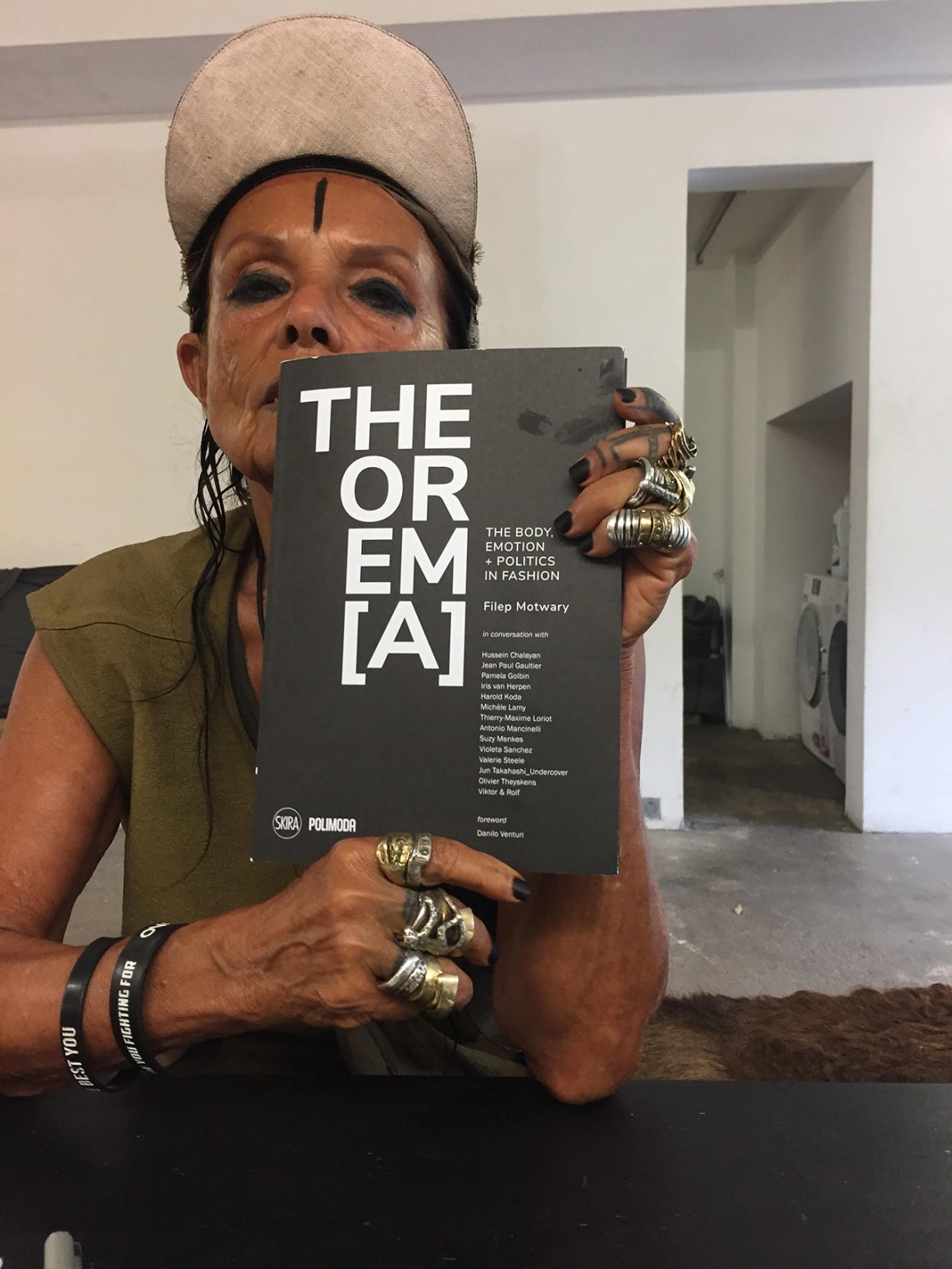
My mentor in blogging was Diane Pernet. She was the first fashion blogger in the history of and one who encouraged me to start, and eventually I did, alongside my work as a fashion designer. Perhaps, in retrospect, this dual identity—as a creator, but simultaneously as an observer and chronicler—gave me a particular advantage. It allowed me not only to participate in the fashion world, but also to observe it from a slight distance to document what was happening, and to search for the stories and ideas behind the image.
What do you consider to be your most valuable gifts—those qualities that have been sharpened and beautifully developed through the experiences and years you have accumulated in the field?
I am never satisfied with myself. I constantly want to improve.
What do you love, and what do you dislike, about the fashion world?
I like anything that is new, but also anything that makes a “comeback” at the right moment. What sometimes saddens me is fashion’s short memory. Today you are here; tomorrow, you may no longer exist. Fashion has this paradoxical relationship with time: it is constantly searching for what is new while simultaneously returning to the past, again and again. And yet, it often forgets remarkably quickly what it has created itself.
How has fashion changed you as a person, and what irreplaceable gifts has it given you?
Victoria Beckham once released a T-shirt bearing the slogan Fashion Took My Smile. Well, that is a line taken straight from real life! (laughs) Fashion can certainly take your smile away, but at the same time, it is what keeps you creative, challenges you and constantly forces you to redefine yourself and engage in self-criticism to remain relevant.
In addition to being an editor, curator, art-director and a fashion critic, you are also a photographer, and we often see you “dress” your features and interviews for Vogue with photographs of your own. Tell us about this holistic approach. Do you prefer working with absolute control over every aspect, or is it a matter of trust?
It is not really about control. What could be more honest than writing and photographing the features I choose for the magazine myself? The title of Editor-at-Large inherently carries that kind of freedom. Besides, my relationship with whatever subject I choose to cover is very important to me. I am not content simply to write about a creator from a distance; I want to meet them, photograph their work, and then write about what I have genuinely seen and experienced.
Historically speaking, the last people to work in a similar way were Cecil Beaton and Anna Piaggi. Such great icons—my God. So much beauty, so much information. I am a great admirer of both because they documented beauty with such conviction.
As far as I know, among the other editions of Vogue today, there is no one working quite like I do. And I believe this is what gives the magazine a different kind of authenticity.
Have you ever tried creating fashion yourself, designing a collection, and how difficult can it be to find yourself on the other side?
I was a fashion designer from 2000 until 2011. My clothes are owned by private collectors as well as museum institutions and have been exhibited in various places around the world. For those who remember, my collections were sold at the legendary Bettina boutique in Kolonaki, alongside brands such as Comme des Garçons and Nicolas Ghesquière’s Balenciaga.
Today, however, I have no desire to return to fashion design. And, if I am being honest, I think that even then I was doing it for the wrong reasons. I could not truly fit within the rules of commercial fashion. Perhaps, ultimately, what interested me was not so much designing clothes as products but creating through them.
Nevertheless, that experience taught me, from the inside, what goes into creating a collection. I know how much work, thought, technical knowledge and personal exposure are required to take a garment from an idea to reality. Inevitably, this makes me quite demanding when I write about a designer’s work.
And I want to be absolutely honest about this: I never write about someone whose work I consider mediocre. If I choose to write about a designer, it is because I have found something that genuinely interests me and that I believe is worth bringing to the attention of others.
Now based in Cyprus, you recently created a series of films for the Republic of Cyprus focusing on the country’s intangible cultural heritage and, more specifically, its traditional crafts. Tell us about the project: how did you approach it as a film director, and how did it come together?
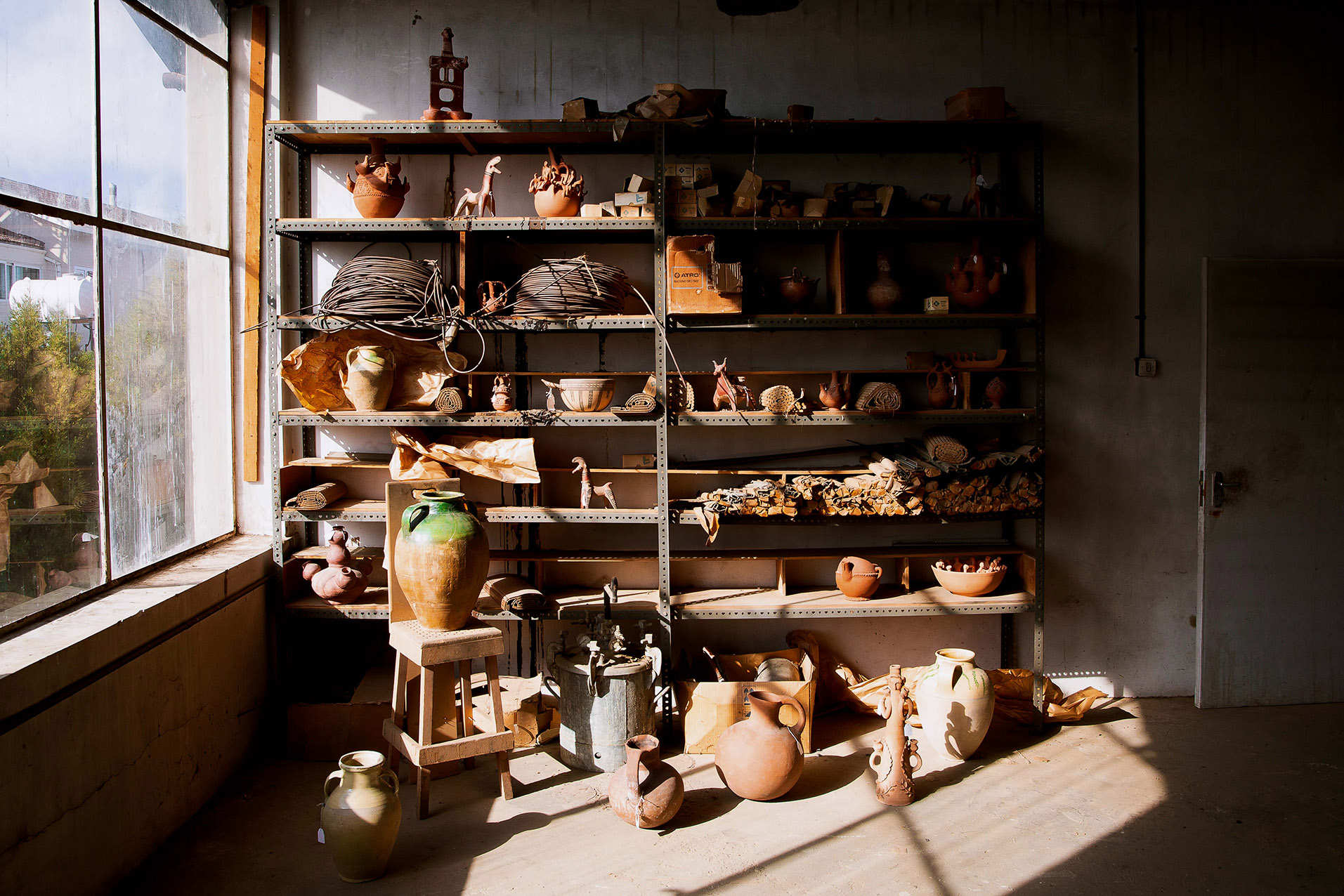
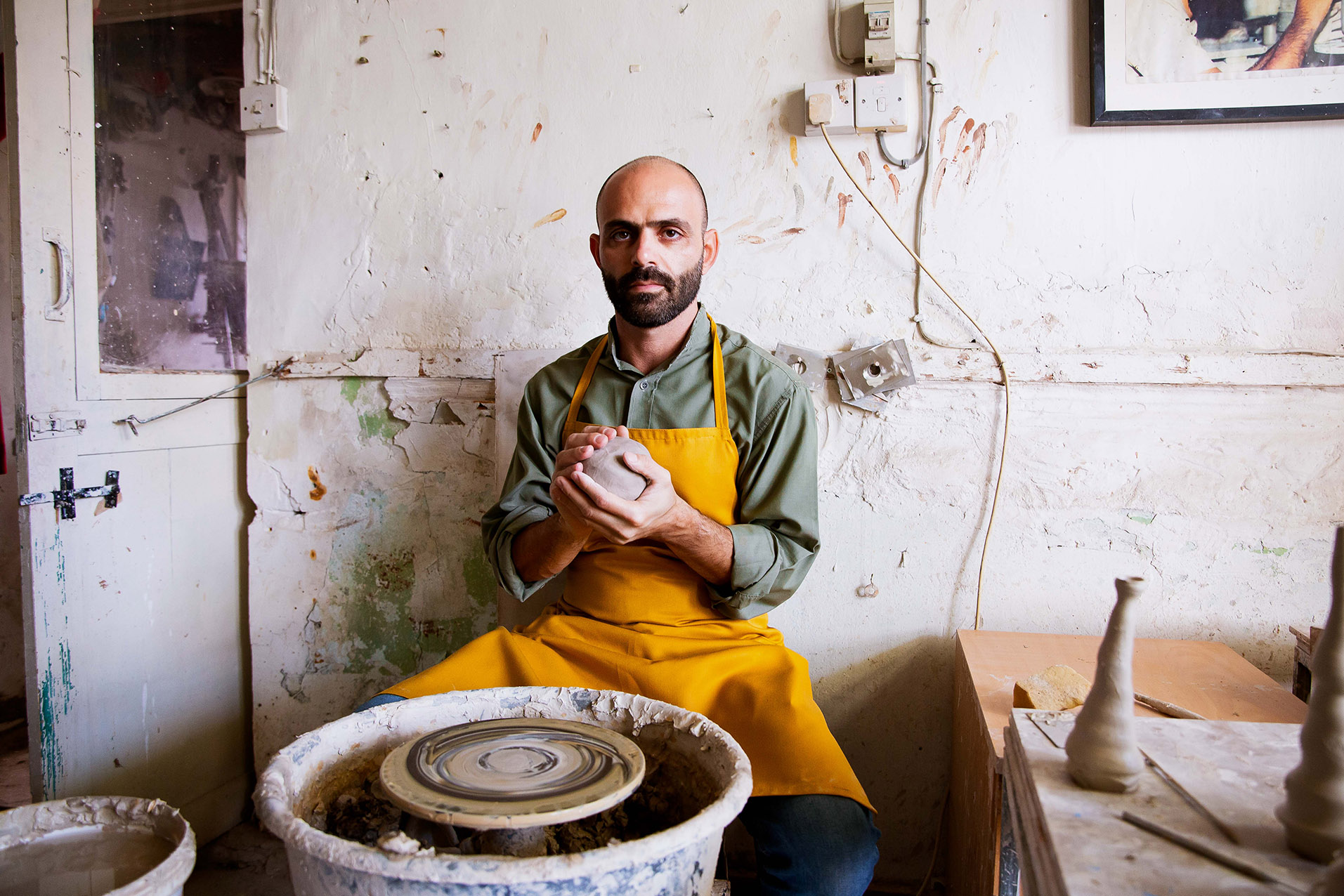
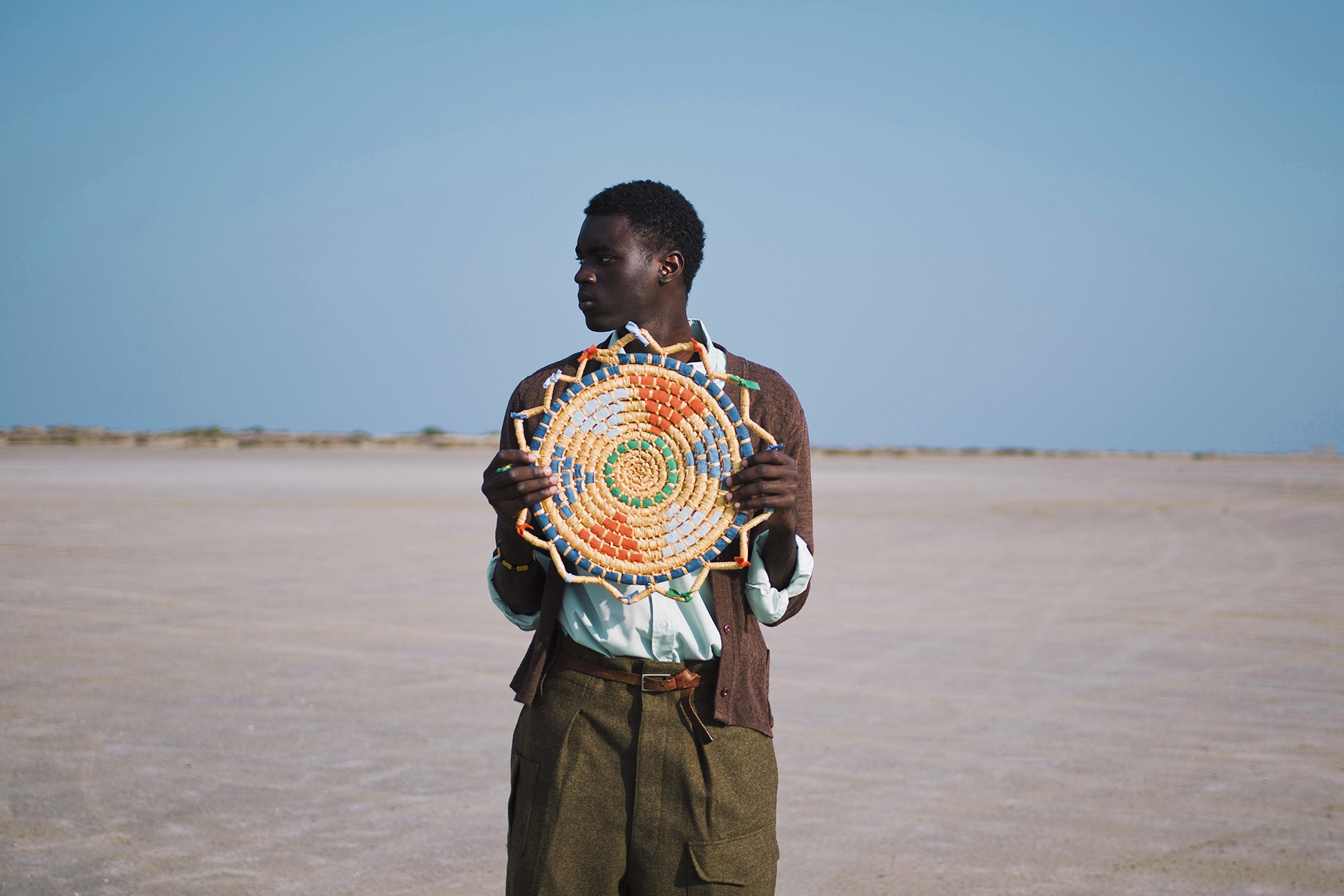
The series, for which I wrote the screenplay and directed, is called #craftingcyprus. It was commissioned by the Cyprus Handicraft Service and the Cyprus Press and Information Office, with the support of the Cyprus Deputy Ministry of Culture. It consists of eight episodes, each focusing on a different theme: embroidery, weaving, ceramics, woodcarving and furniture-making, silversmithing and goldsmithing, stone and mosaic, and finally, clothing as a concept.
I like to believe that the invitation to take on this particular project came to me as an almost natural continuation of my professional journey and of the work I have created over the years. My relationship with images, people and their stories formed the foundation from which I approached the project and, ultimately, determined the way I chose to tell it.
These films are not a historical record, nor was that ever my intention. Rather, I wanted to create a cinematic portrait of contemporary Cypriot craftsmanship through the people who preserve it, evolve it and reinterpret it. The films carry the spirit, knowledge and personal perspective of each creator—the craftsperson, designer, artist or academic. They are, and remain, the protagonists.
At the same time, each film inevitably contains a part of me: my aesthetic sensibility, my experience, my empathy towards the people and the subject matter, as well as the knowledge I have acquired through thirty years of work. All of these became tools that allowed me, where necessary, to illuminate the subject more fully, to create a meaningful dialogue between image and person, and to bring each craft to life in the most substantive way possible.
Filming took place over a period of four years, which allowed the series to acquire not only breadth but also depth. Around 80 personalities appear across the films—master craftspeople, artisans, academics, artists, designers and creators from different fields. Among them are internationally recognized figures such as Michael Anastassiades and Hussein Chalayan, as well as significant Cypriot creators and people of knowledge, such as Joanna Louca, Elysia Athanatos, Elina Ioannou, Theodoulos […]
This plurality of voices was particularly important to me. Because craftsmanship is not simply the object that is produced, nor merely the technique that is passed down. Above all, it is the people who carry that knowledge, that memory and their own personal relationship with it.
Through their voices, I tried to approach craftsmanship not as something static or confined to a museum, but as a living process that continues to exist, evolve and engage in dialogue with the present. This, after all, was what the head of the contracting authority, the Senior Officer of the Cyprus Handicraft Service, asked of me when I took on the project.
Your participation in the Biennale of Contemporary Ceramics 2026 in Rhodes involves presenting the #craftingcyprus series to a wider audience. What is going to happen there, and what are your expectations?
On 30 October, one day before the Biennale closes, the series will be screened at 6:00 p.m. at the Inn of England.
It is a great honor—for Cyprus and the Cyprus Handicraft Service, as well as for me personally— to see this work presented within such an important international institution and on such a significant occasion.
I hope the audience will take something of the place with them: its memory, its materiality and its spirit. I hope they will take Cyprus with them—and, through it, something of its very essence.
How does your own aesthetic sensibility bring out the power of creativity and the talented people behind it? How demanding was this undertaking?
Once we had finalized the list of participants together with the Head of the Contracting Authority, Ms. Anaxagora (Cyprus Handicraft Service), I embarked on a road trip across the whole of the free territory of the Republic of Cyprus, with the aim of getting to know the people involved and seeking out the locations where the filming would take place.
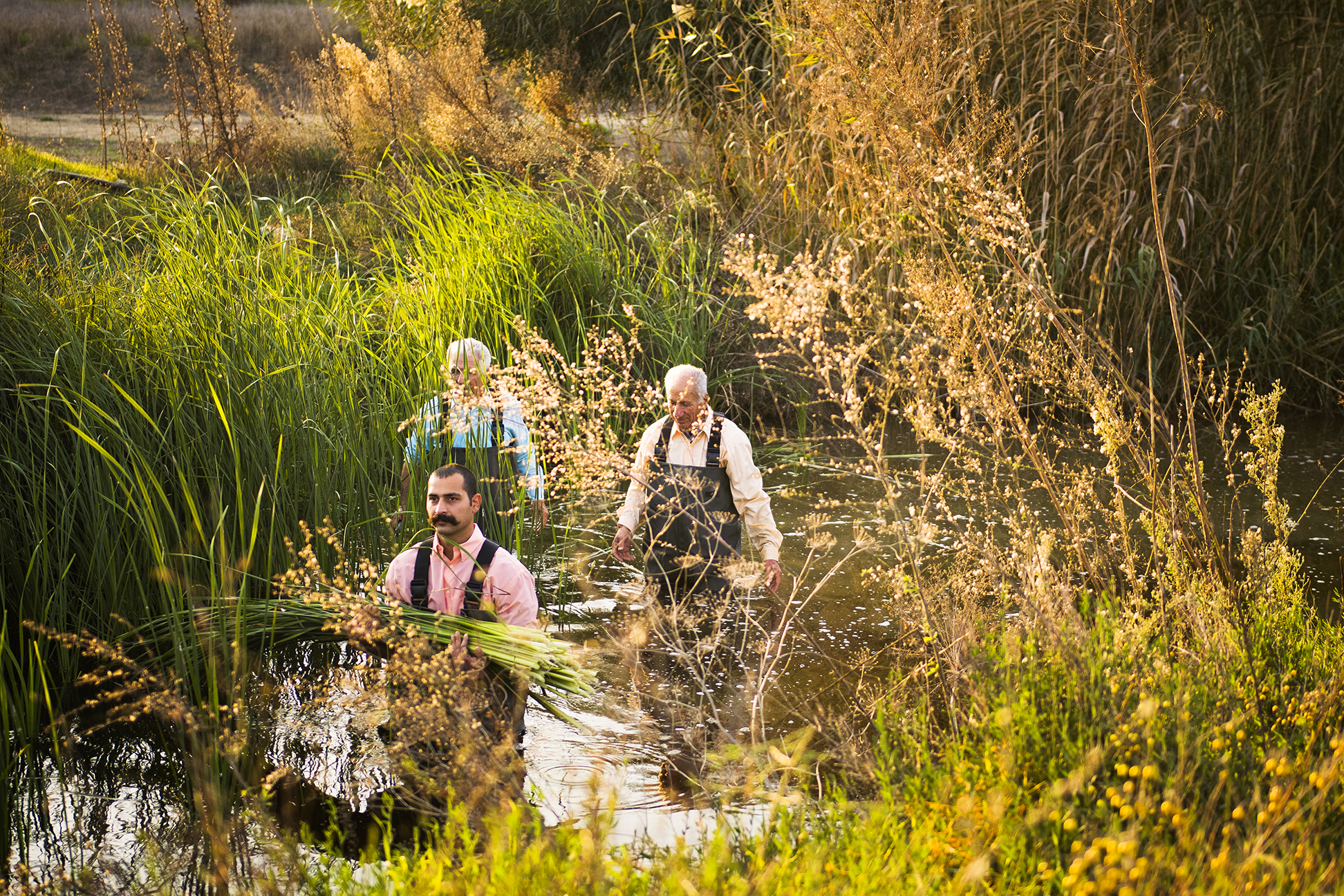
I wanted first to experience the places, to understand their atmosphere and to sense how each one might function within the film. In several cases, in fact, I deliberately chose to place people in locations that had no direct connection either to them or to their craft, thereby creating a different relationship between the person, the object and the environment. My fascination with “landscape” is, after all, clearly visible throughout the films themselves.
For each participant, I prepared a separate questionnaire, as well as detailed mood boards for each thematic section. Gradually, a working plan took shape—a kind of personal “score”— which became the framework I followed throughout the episodes. It provided the structure through which I organized my approach, right up until the actual filming of these crafts and the people who practice and preserve them began.
The “frame” also plays an important role in the final result and is perhaps the most immediate point of connection with my identity as a photographer. The choice of location, composition, distance from the subject, light, and the relationship between the person and their surroundings are not merely aesthetic decisions; they form part of the narrative itself.
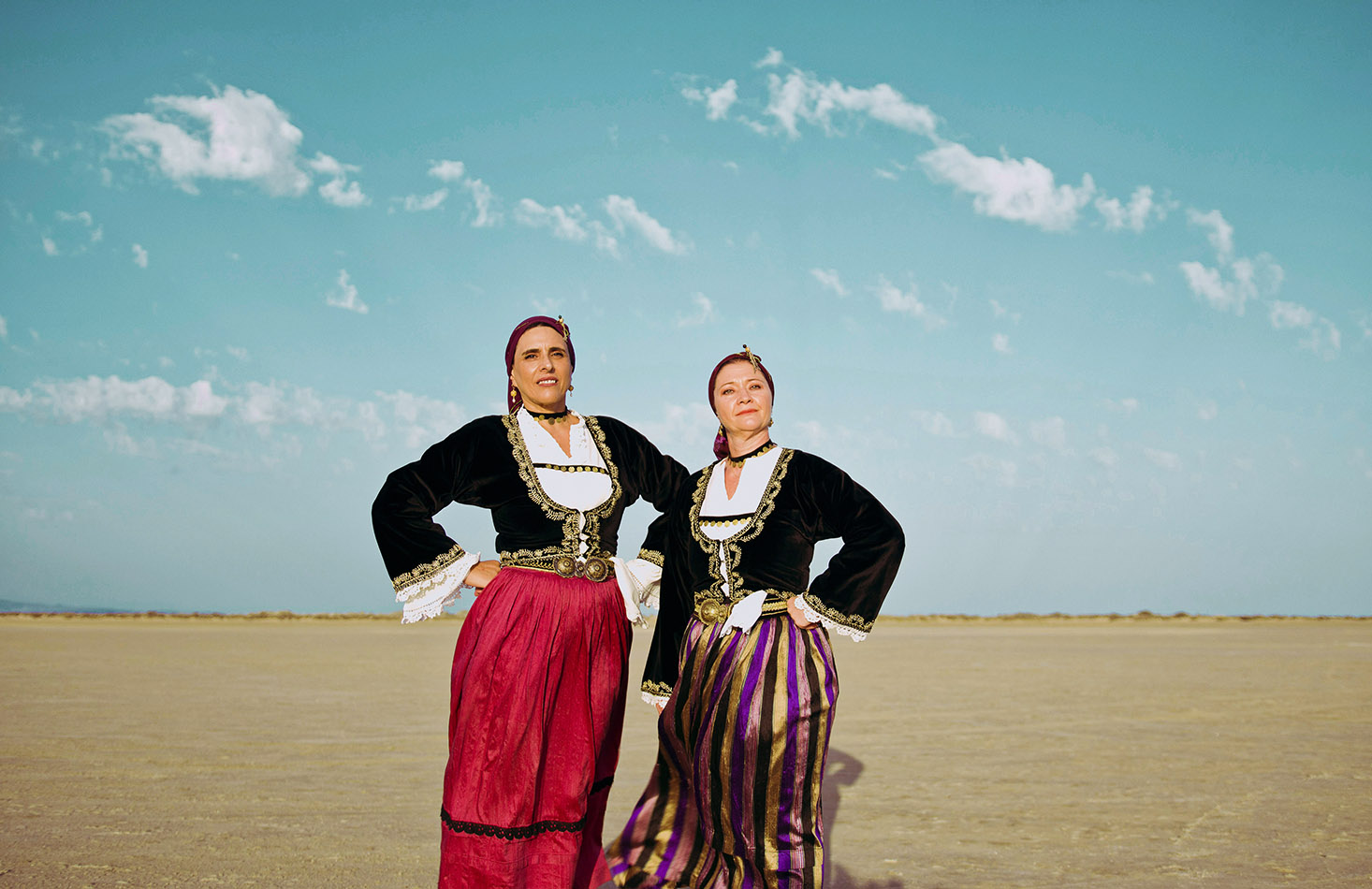
The same thinking informed my approach to the costumes, which is why I took the initiative to contact the Cyprus Broadcasting Corporation and request access to its costume department. I wanted to search through its wardrobe for costumes that could support a cohesive visual language for the series, at least in terms of color, while also creating a subtle reference to Cyprus.
Many of the colors I chose somehow evoke the aesthetic sensibilities of the 1960s and, particularly, the 1970s, as captured in the first color photographs of the period and especially in the visual material associated with the years of conflict in Cyprus. I consciously worked with pastel tones. They are gentle and quiet shades, almost fragile, and on a personal level they are deeply nostalgic for me. They carry something of the feeling of an era that has passed yet remains deeply etched in both collective and personal memory.
Overall, it was a long and demanding process which, despite its scale and complexity, was immensely enjoyable and creatively rewarding. It was a continuous process of discovery, observation and getting to know people, places and techniques. Through this journey, the identity of the series itself gradually took shape.
Beyond the approximately 80 participants, many other people placed an extraordinary degree of trust in me, opening the doors of their homes and workshops and, above all, allowing me to enter their personal worlds. I would say that the narrative of the films emerged through the process of questions and answers, but just as importantly, through everything that happened beyond them.
During the filming, I discovered that an exceptional craftsperson is not necessarily an exceptional storyteller. Their most meaningful story is often contained in what they create with their hands. Conversely, someone with an academic or theoretical mind may sometimes overanalyze a question that is, in reality, very simple. This diversity in the way people express themselves became an important part of the process and fundamentally shaped the way I approached each of the protagonists.
For the music score of the series, I worked closely with the composer Eleni Era, who lives and works in Berlin.
Does the result vindicate you? Did you manage to bring to life what you had dreamed of?
What vindicates me is the response of the audience at every screening of the series.
More generally, do you have any unfulfilled ambitions—things you dream of creating? Are there still new territories you want to explore?
Throughout my journey so far, I have been fortunate enough to be reborn from my own ashes more than once. Life can be very hard—and that is something I never expected to hear myself say. And yet, each time, a new path seems to open somewhere ahead of me.
There are always new things to discover, new ideas to explore, new paths to follow. I never stop dreaming or making plans. Perhaps because, in the end, the future is the only thing we truly have.
What gifts has maturity given you, and how differently do you see things now, some years on?
Patience and, perhaps above all, the strength to move forward without nostalgia.
Which are the most elusive virtues among younger generations today?
I believe kindness is something that is gradually disappearing. And yet, it remains one of the most essential forms of respect for another person. I consider the proper use of the Greek language equally important.
Three places you love returning to, and why.
My home, Villa Ursula in Tris Elies, which I dreamed of for 45 years; Mara Desypri’s home in Tinos, because that is where I truly feel like myself; and the sofa, sitting beside my mother watching films, because we have such a wonderful time together.
Give us your own definition of beauty.
Beauty is something natural.
What do you consider authentic in our time?
Nature, everywhere, in every form and the animal kingdom.
INFO
As part of the Biennale of Contemporary Keramics 2026 in Rhodes, the short-film series #craftingcyprus, written and directed by Filep Motwary for the Cyprus Handicraft Service and the Cyprus Press and Information Office (Cyprus Deputy Ministry of Culture), will be presented on 30 October 2026 | 18:00 at the Inn of England, Rhodes
Admission is free, with advance booking required via ArtVolt.
@bckeramics
www.bigbluedot.art