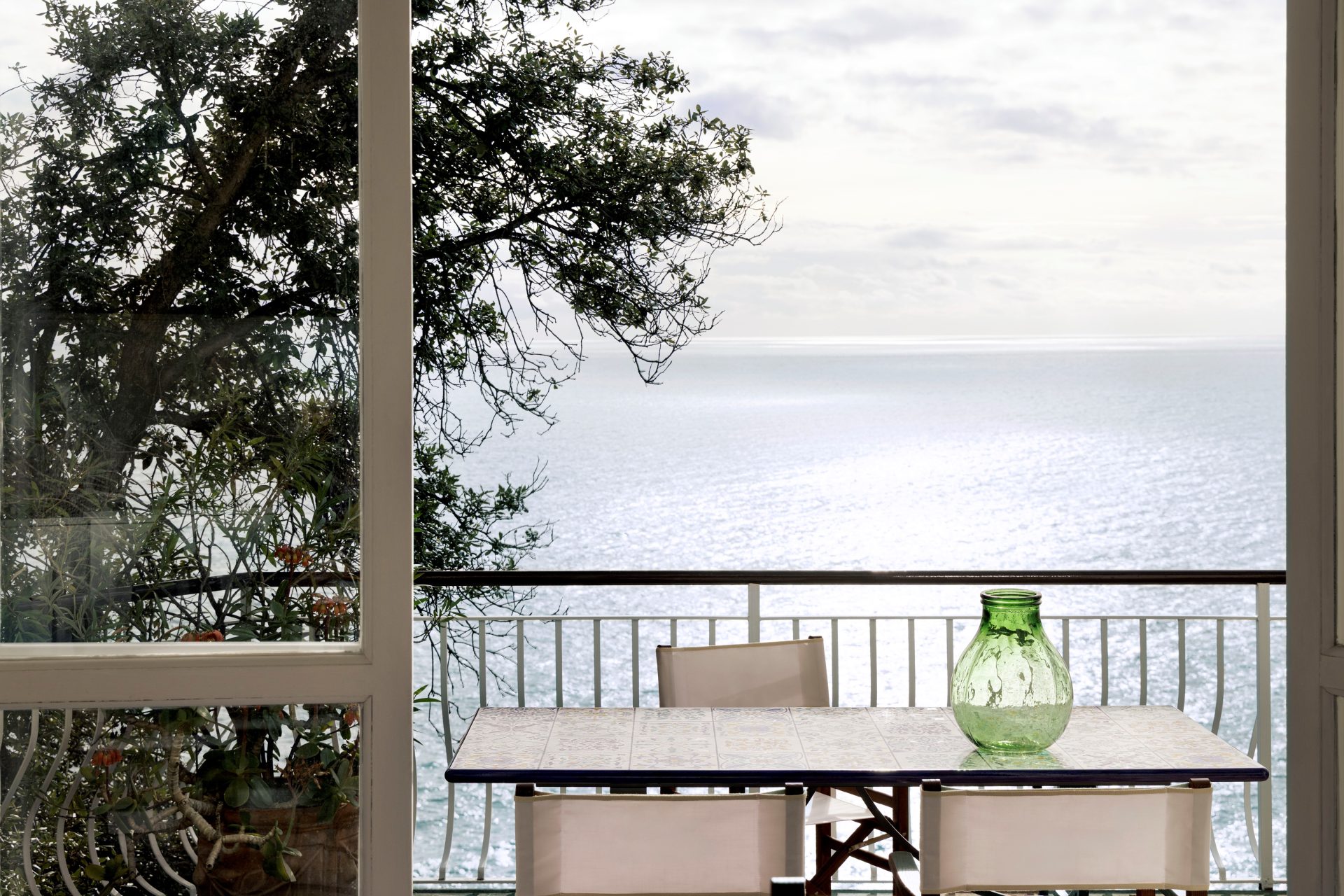
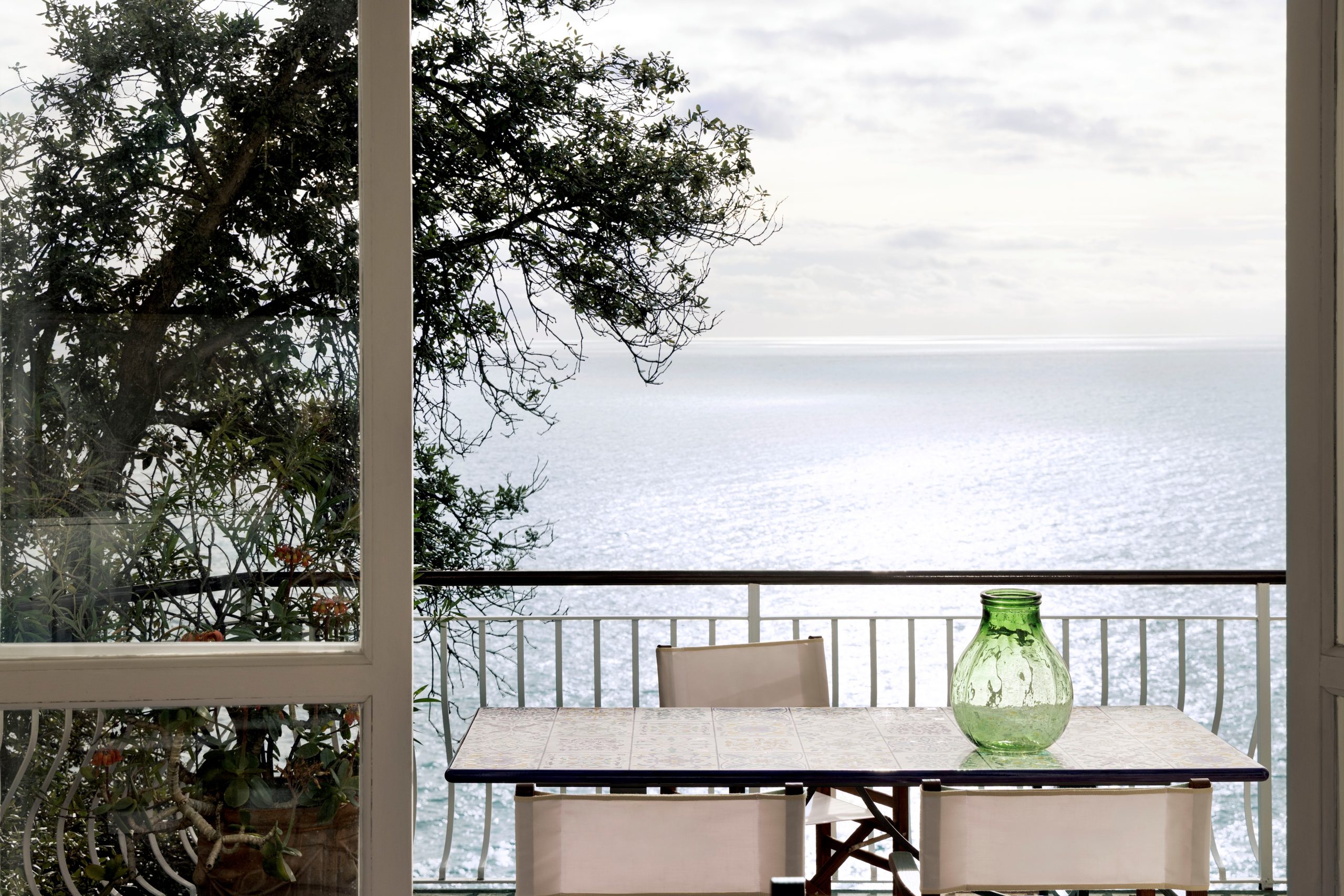
Overlooking the Gulf of Tigulio in Zoagli, a 1970s home stands out against the Ligurian Sea.
The renovation of this home was designed with the aim of creating a bright, minimalist space that evokes a Mediterranean atmosphere without sacrificing a contemporary style.
Each space has been carefully designed with the intention of creating a continuous dialogue not only between interior and exterior, but above all a dialogue between past and present, between the generations who have lived in and will continue to live in the house.
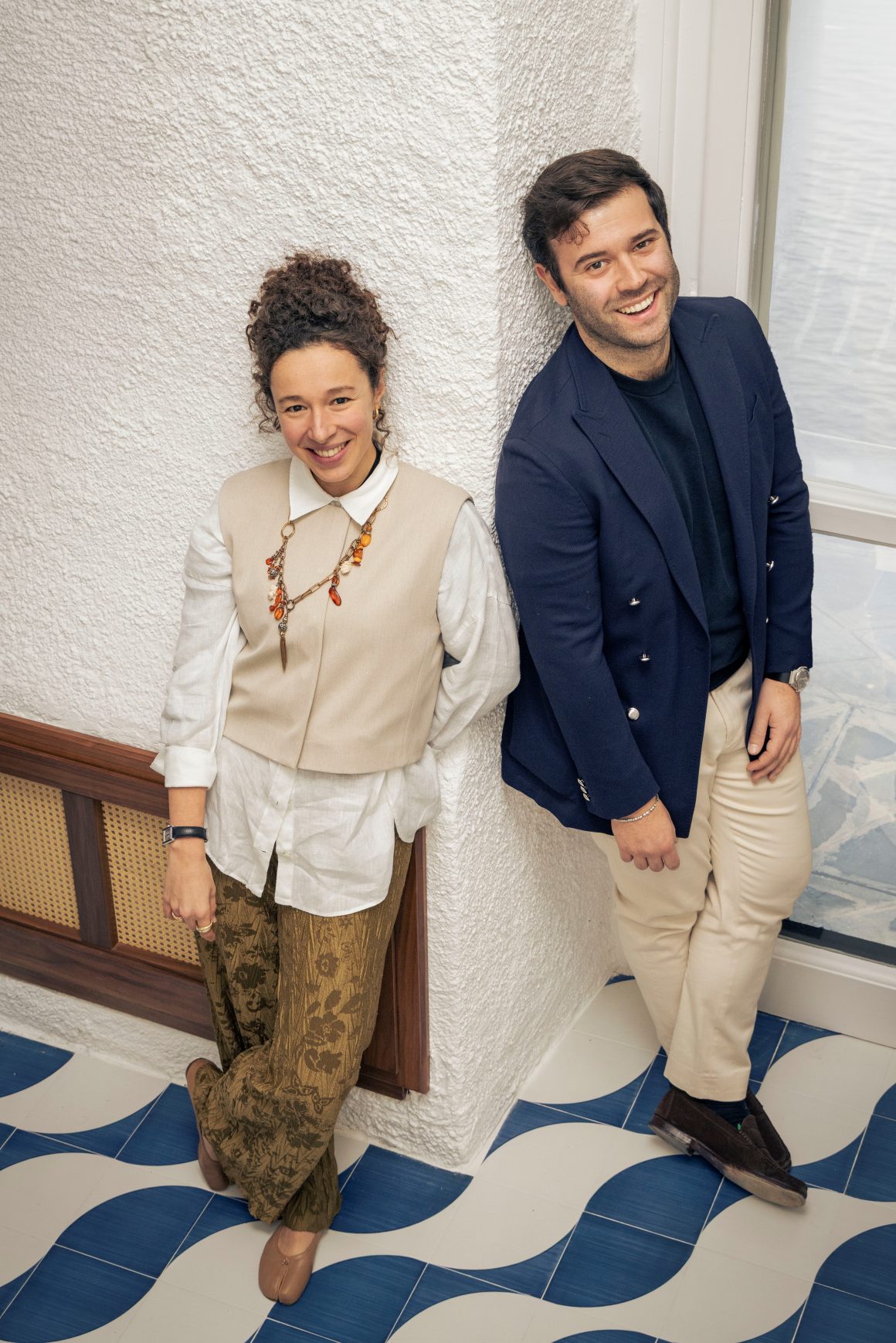
At the client’s request, the architects’ task was to keep the parents’ African roots alive while transforming the spaces and giving the home a new look.
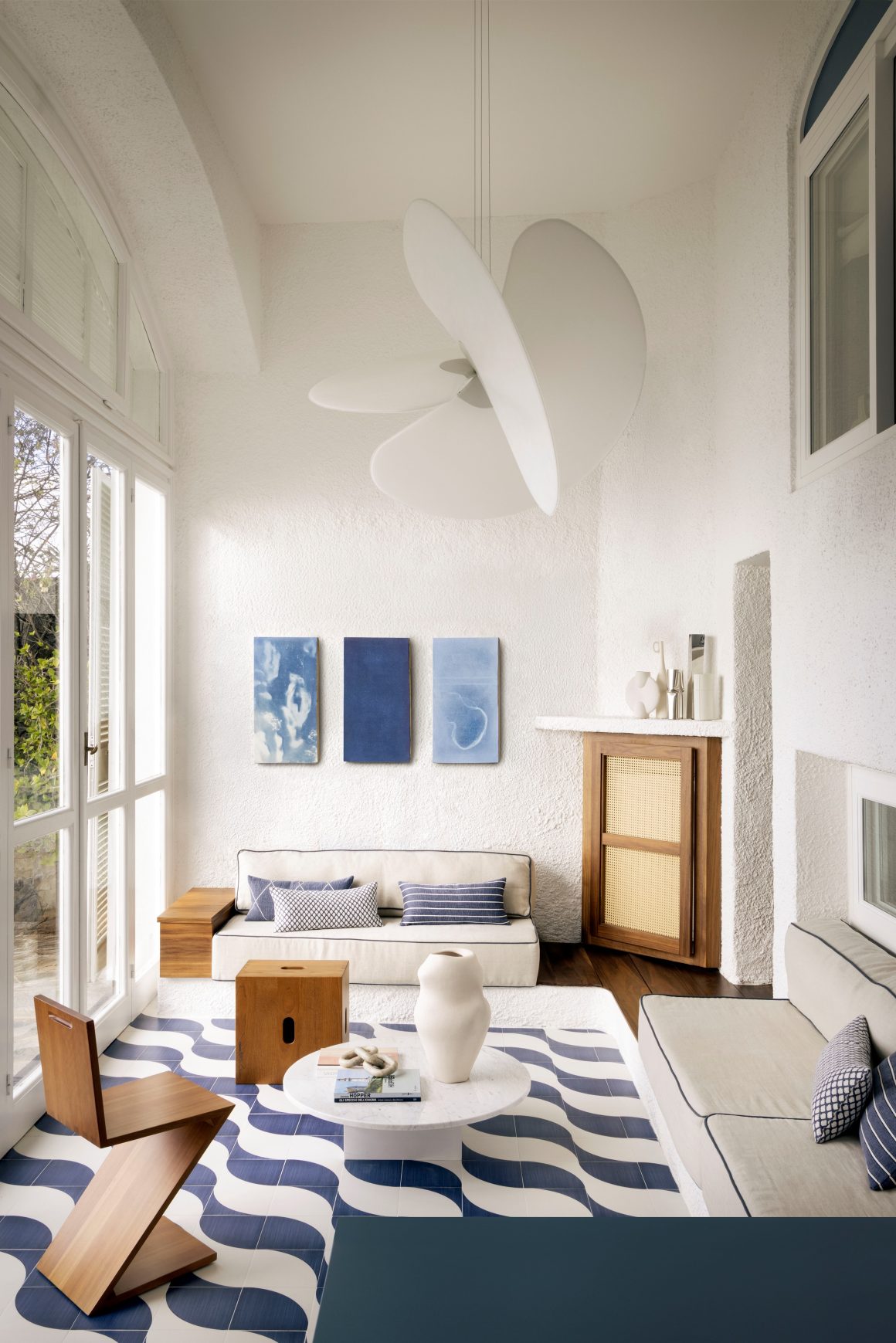
The interior surfaces feature white plaster walls with a slightly textured finish, typical of Mediterranean tradition. The color palette is inspired by the colors of the marine landscape. The white of the walls and ceilings is complemented by sandy tones and numerous hints of blue, which becomes the true star of the project.
The Canaletto wood of the furnishings introduces a warm note, balancing the freshness of the colors and making the rooms more welcoming and refined.
The living room is the heart of the home. It is a spacious and very bright area, with large glass openings that let in light and allow a direct connection with the outdoors. The sea is both inside and out. The floor, with its blue and white wave pattern, becomes a very strong graphic element, visually evoking the movement of the sea and giving the space a distinct personality.
The furnishings are minimalist yet refined: low, light-colored sofas, blue-toned cushions, a round coffee table in white Carrara marble, and a few sculptural wooden pieces.
Above the living area, the “Levante” lamp, designed by Marco Spatti for Luceplan, serves as an artistic element whose organic forms help define the space. The guest room unfolds like a quiet sanctuary, where color becomes atmosphere.
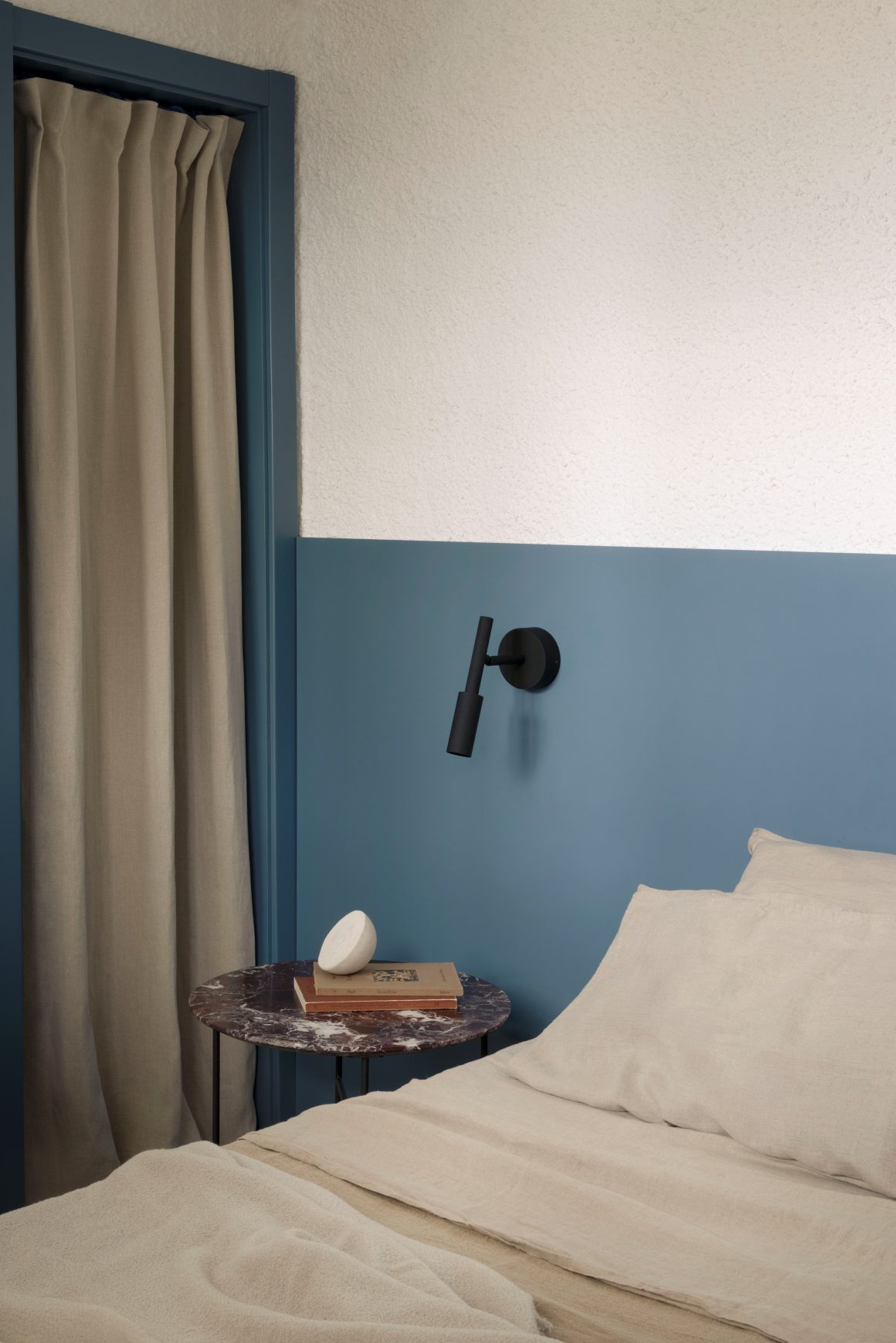
The deep blue of the wardrobe—the project’s central theme—envelops the wall with decisive elegance, framing decorative panels that seem to depict a hanging garden.
Natural fabrics and minimalist yet never cold finishes interact with the light streaming in through the window, resting on the volumes and enhancing their depth.
Here, design meets tranquility, and every detail contributes to a sense of intimate harmony.
At the top of the stairs lies the master bedroom, which maintains the same design language but with a more intimate and relaxed atmosphere. The colors are more neutral and warm, with natural fabrics and sandy tones that make the space even cozier.
As in the guest room, here too the full-wall wardrobe is integrated into the room’s architecture and features the same decorative panels with the delicate botanical motif.
The lighting is also simple and minimalist; above the nightstand, a pendant lamp
hangs from the ceiling, helping to keep the room visually light. The light enters softly, filtered through a sheer curtain.
The room tells its story through a warm, natural palette, and every surface offers a tactile, almost material sensation. Above the bed, a fan with wide blades, resembling intertwined leaves, creates a suspended, light gesture, evoking slow, exotic atmospheres.
The “Parentesi” lamp, designed by Achille Castiglioni and Pio Manzù, introduces a contemporary touch: a balance between function and gesture, with a red accent that subtly breaks the neutrality of the tones.
Three steps in beige resin, a sort of sculptural gesture, lead us to the entrance of the
master en-suite bathroom. The walls, entirely clad in shaded tiles, shimmer with subtle and never uniform hues, creating a living surface capable of capturing light and reflecting it in ever-changing ways throughout the day.
The white ceramic sink rests on a Canaletto wood shelf, simple in form yet rich in texture. The warm grain of the wood introduces a natural and sophisticated touch, subtly breaking up the ceramic continuity of the walls.
A discreet elegance characterizes the space, making it intimate and welcoming Throughout the house, there is a keen attention to detail and the selection of furnishings.
The reference to the movement of the sea is constant: the doors, reinterpreted in a modern key, made of aluminum and glass, are blue like the sea and feature a semi-transparent, undulating surface.
Decorative objects are few but well-chosen: ceramics, small side tables, wooden elements, and lamps with a minimalist design. This approach helps create orderly and harmonious spaces, where every element seems to have a specific role.
The portholes in the bathrooms transport us to imaginary journeys aboard the submarines of fairy tales.