Tell us about the highlights of your journey. What have been the defining milestones that brought you to where you are today?
I see my practice as an ongoing process of research. Every work gives rise to a new question, and every collaboration offers a different way of looking at my work. Studying at the Athens School of Fine Arts was a defining experience, as it was there that my first explorations of space and installation began.
Since then, my long-term research on the island of Tinos, my collaboration with CAN Christina Androulidaki Gallery, participation in international exhibitions, and, most recently, being shortlisted as a finalist for the Noema Craft Prize have all been important milestones. More than any distinction, however, what matters most to me is having maintained a consistent relationship with the questions that continue to drive my practice.
Creativity is central to your life. How did your relationship with weaving and sculpture begin?
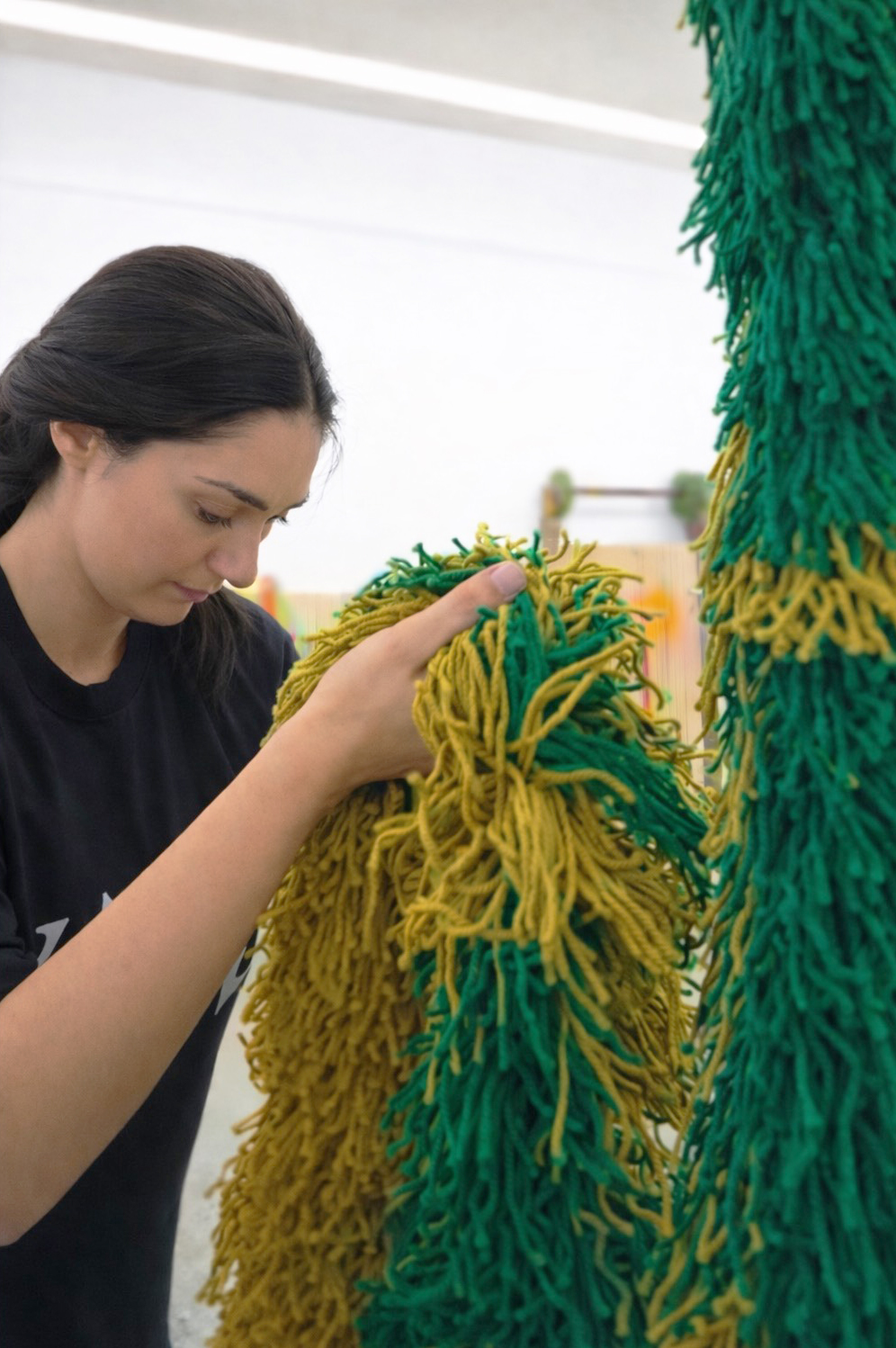
Weaving entered my practice not as a reference to tradition or as the choice of a particular technique. It emerged from a need to think about time, repetition, and the relationship between the body and space. Thread is a material that connects, supports, measures, and records. Through it, I realised I could speak about dwelling, memory, and human labour.
Sculpture followed naturally. As my research into anonymous vernacular architecture became more substantial, I felt that certain ideas could no longer remain confined to surfaces. They needed to acquire volume, weight, and physical presence.
What materials do you work with, and how does scale influence your work?
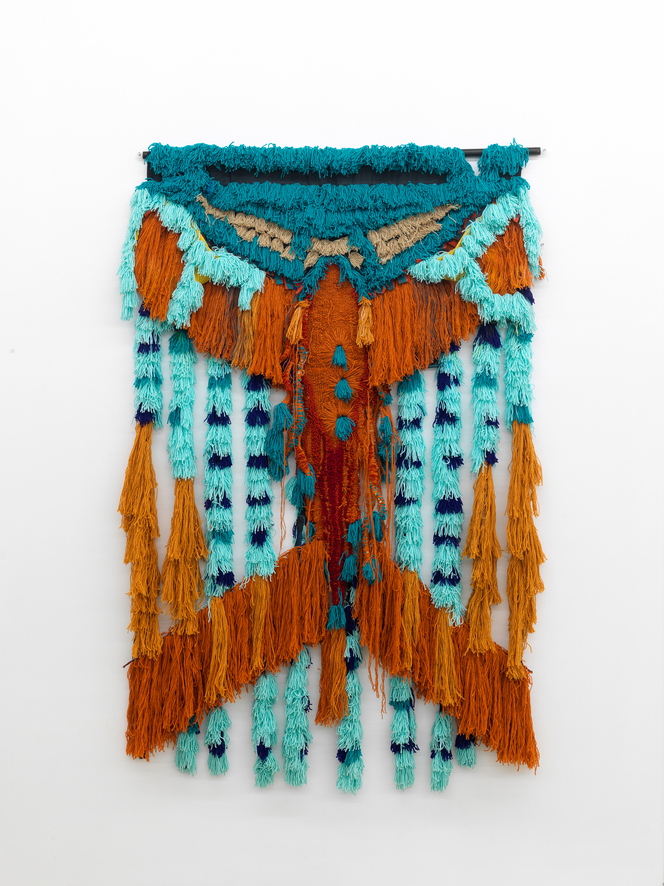
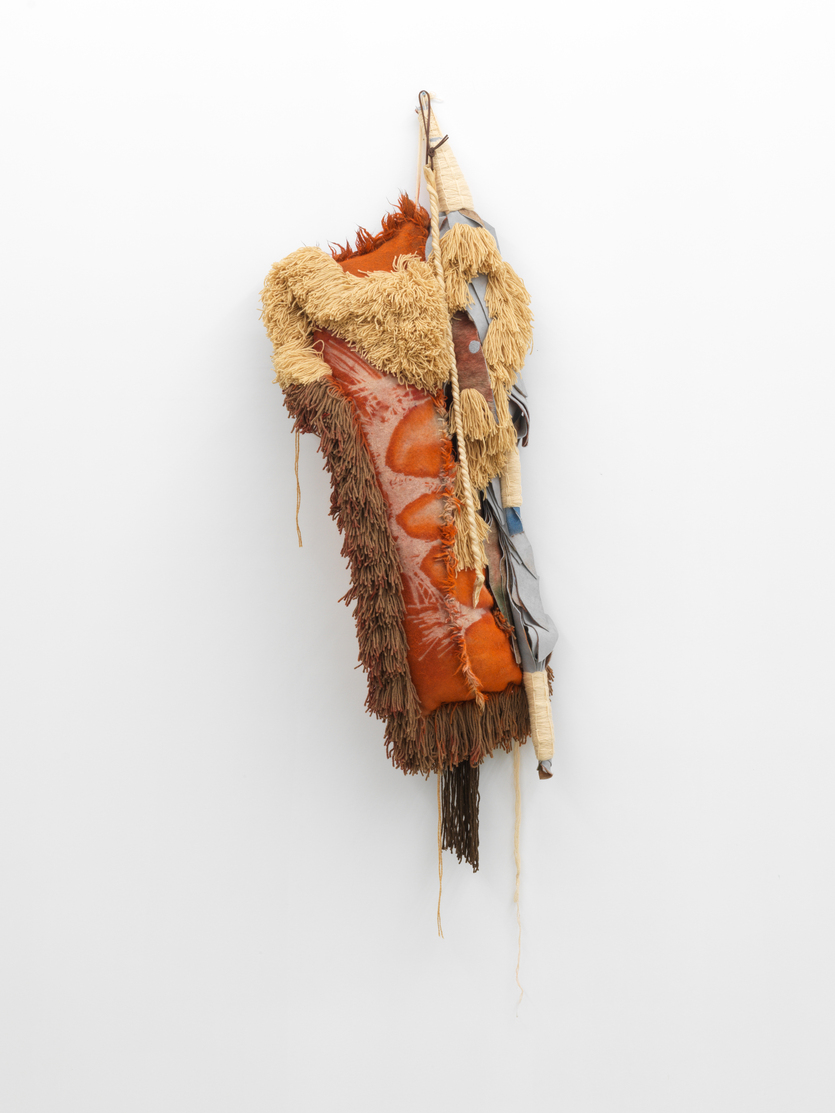
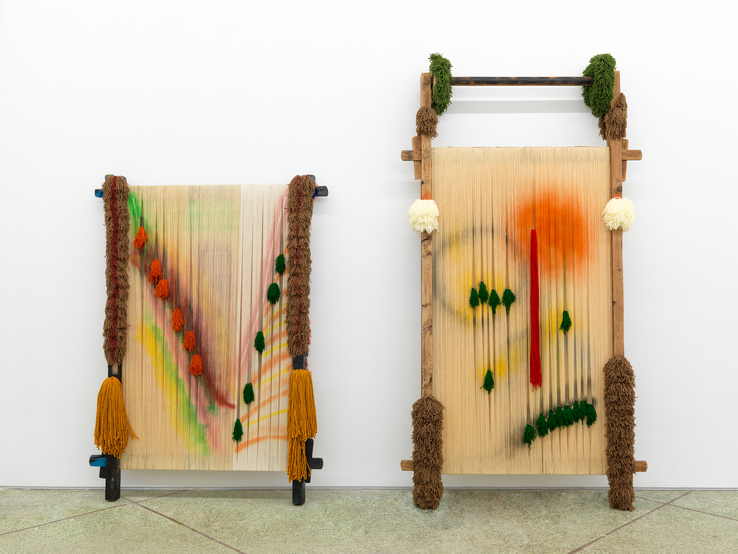
I don’t choose materials for their aesthetic qualities, but for the experiences they carry. Thread, wood, marble, fabric, or elements of a loom are never neutral materials for me—they embody histories of labour, use, and collective memory.
Scale is equally important. My works often approach architectural dimensions because I want viewers to experience them not simply as objects to look at, but as spaces they can inhabit. I’m interested in activating the body as much as the eye.
Tell us about your participation in the Noema Craft Prize. What story does your work tell?
The work I presented explores tradition as something in a constant state of transformation. It begins with the relationship between anonymous vernacular architecture and weaving—two practices that have historically been treated as separate disciplines but which, in reality, together shape the very idea of dwelling.
I am not interested in representing tradition, but in renegotiating it. The work suggests that tradition is not a fixed past, but a living process through which we continually redefine our relationship with place and with one another.
What did you gain from taking part in the Noema Craft Prize?
Meeting makers whose practices approach craft from very different perspectives reinforced my belief that craft today is about far more than technical skill. It represents another way of producing knowledge. The conversations I had with fellow artists and with the public were perhaps the most valuable part of the experience.
How important are initiatives like the Noema Craft Prize in highlighting craftsmanship in Greece?
I believe they contribute to an important shift. For many years, craftsmanship was considered peripheral to contemporary art. Today, we are increasingly recognising it as a powerful field for both artistic and theoretical research. Initiatives like these create the conditions for craft to be understood not simply as technique, but as a contemporary mode of thinking.
What do you love most about the creative process?
The moment when I still don’t know where the research will lead. When a work continues to resist me, I know it still has something to reveal. If I already know the outcome from the beginning, I usually lose interest.
How would you describe your artistic practice?
I would say it exists between sculpture, weaving, and installation. I’m interested in creating works that become meeting points between material and memory. They do not tell personal stories; instead, they seek to activate shared experiences that we recognise, even if we cannot always name them.
What values are non-negotiable in your work?
Remaining true to my thinking. Being patient with the process. And respecting the materials themselves. I believe every work needs time to mature; it cannot be accelerated simply to keep pace with the demands of the present.
How do you feel your aesthetic has evolved?
Over the years, I have found myself removing rather than adding. I strive to make my works more distilled, more essential, and more open to the viewer’s interpretation. For me, evolution lies in deepening the work, not in changing my style.
What do you consider your greatest achievement?
That I still have the curiosity to begin again. Every new work brings me back to the position of someone who does not yet know the answer.
Who are the people who help you move forward?
The people who are able to engage with my work honestly. Those who offer thoughtful criticism and are not afraid to disagree. Art is a dialogue, not a solitary act of affirmation.
What’s next for you?
I am continuing my research into anonymous vernacular architecture, expanding it through new sculptural works and large-scale installations. I hope to present this body of research in international contexts while, above all, preserving its connection to the place where it was born.
Can art make us better people?
I don’t believe art has the power to make us better on its own. But it can make us more attentive. It can teach us to observe, to listen, and to coexist with complexity. Today, that is immensely valuable.
What do you love—and what concerns you—about the art world?
I value meaningful collaborations and encounters that generate new ideas. What concerns me is when the speed of production or the constant demand for visibility begins to take precedence over artistic research itself.
Which artists have influenced you the most?
I admire artists who have worked with consistency over decades, allowing their practice to evolve organically rather than following the trends of their time.
What is your personal definition of beauty?
Beauty is not found in perfection. It emerges in the moment when a work reveals something true without trying to impress.
What does authenticity mean to you today?
Authenticity is whatever continues to arise from genuine necessity. In an age of information overload and constant exposure, authenticity is not about image but about consistency—the consistency between the way you live, think, and create.
Photo: Stathis Mamalakis