Tell us about the highlights of your journey. What were the key steps that brought you to where you are today?
I began by studying graphic design in Athens, followed by Communication Design at Central Saint Martins in London. There, I worked at design agencies and had the opportunity to take part in projects for clients I could hardly have imagined having in my portfolio at the time, including the Rolling Stones, Elton John and others. When I returned to Athens, I established my own studio under my name.
For more than ten years, I also taught graphic design at the University of West Attica, an experience that gave me a great deal and significantly influenced the way I think about the creative process. Teaching taught me to look not only at the outcome, but also at how someone arrives at it. Through my students, I encountered different ways of thinking and different solutions, and I had to learn how to guide without restricting their individual perspective.
Over the years, I felt the boundaries of graphic design beginning to loosen, gradually opening towards other directions. Little by little, a space emerged between graphic design, art and craftsmanship—a space within which I can now move very freely.
Creation is a central part of your life. How did you discover embroidery as a creative medium, how did the first idea come about, and how has your practice evolved since then?
Embroidery was already present in my family environment. It was a practice associated both with creativity and with relaxation. Perhaps that is why it found its way into my work so organically. I was fascinated by the relationship between the stitch and time, repetition and touch, as well as by the fact that embroidery carries such a specific history, both as a gesture and as a traditionally feminine form of creation.
The first idea was, in many ways, an attempt to transfer the way I thought as a designer into a different medium. Each stitch functioned in my mind like a pixel, within a technique I already knew well. Gradually, embroidery became a central part of my practice. I began experimenting with different materials and surfaces, using the technique to explore subjects that had nothing to do with its traditional applications. This led to works that move between image, narrative and craft.
What materials do you work with, and how have your works come to reflect your particular sensibilities?
Embroidery is a constant thread running through my work, but I use many different materials: fabric, paper, wood, metal, even leaves. Thread allows me to intervene on different surfaces and transform them.
I don’t have a specific method for choosing materials. Sometimes I start with an idea, while other times the material itself becomes the starting point for something new.
The works are a reflection of my mind and of what occupies my thoughts at a particular moment. The repetitive movement of the stitch has something meditative about it; it becomes a mechanism for delving deeper into my thoughts.
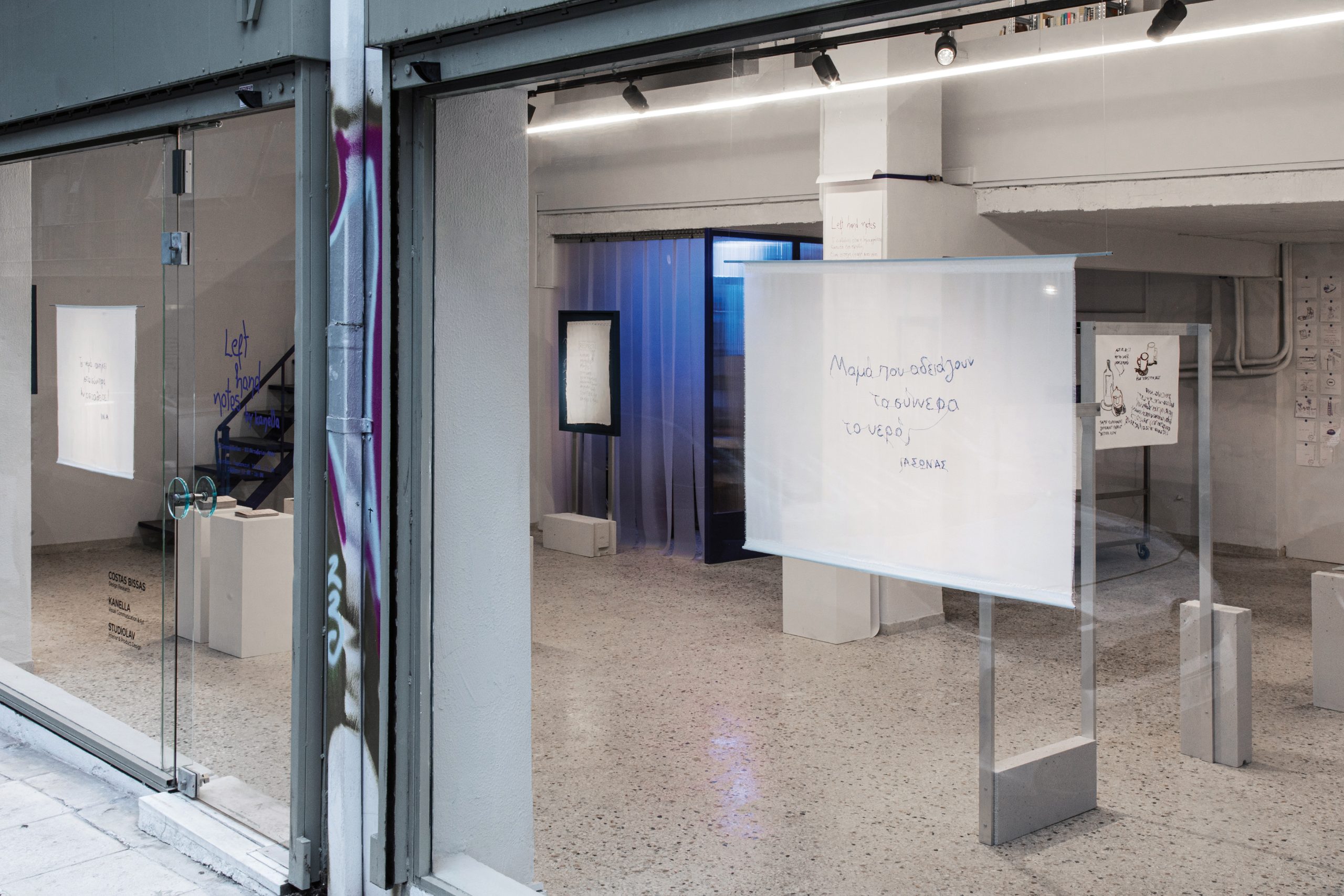
Tell us about the exhibition Left Hand Notes. What is its narrative, and what kinds of stories does it present?
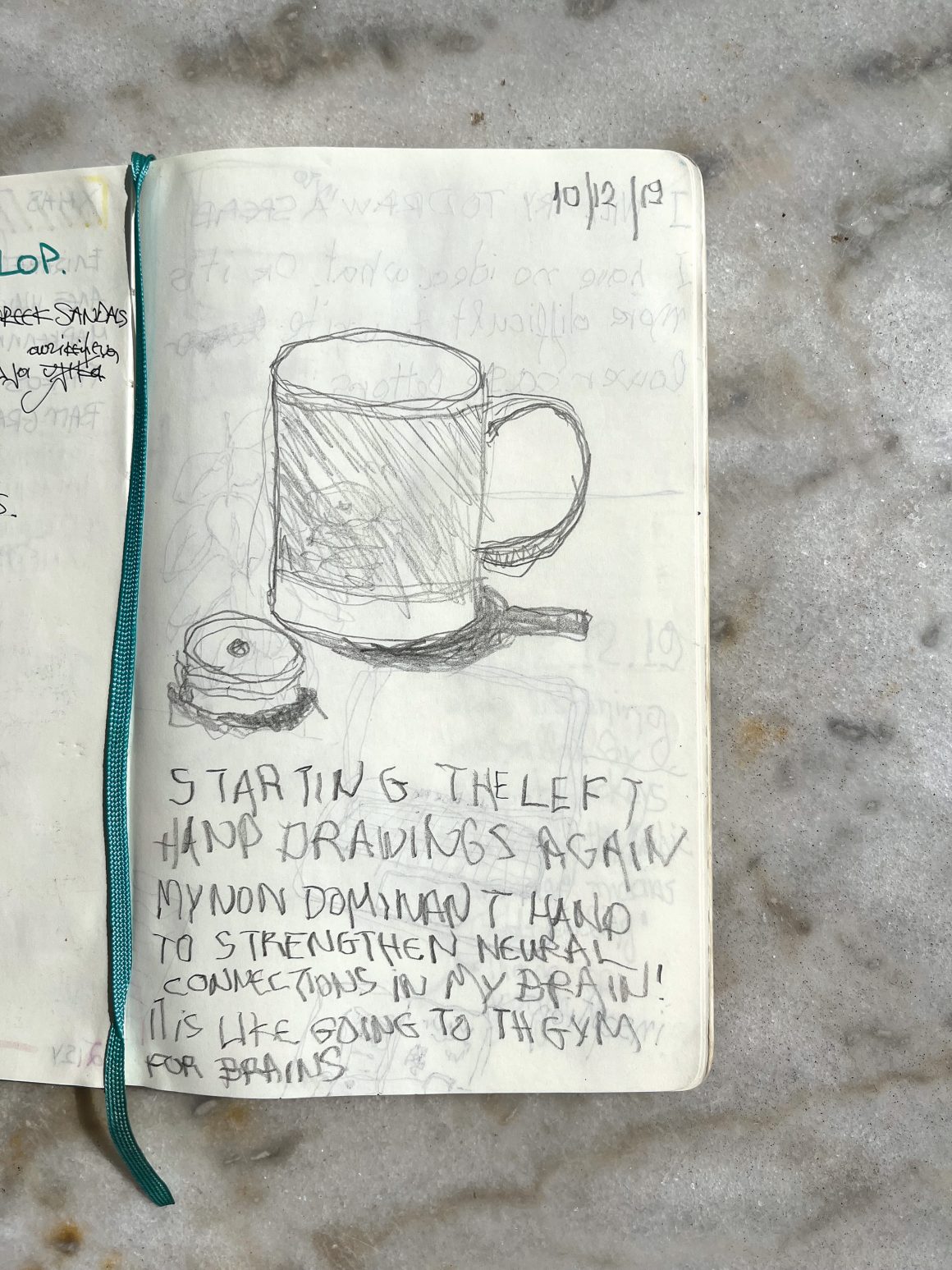
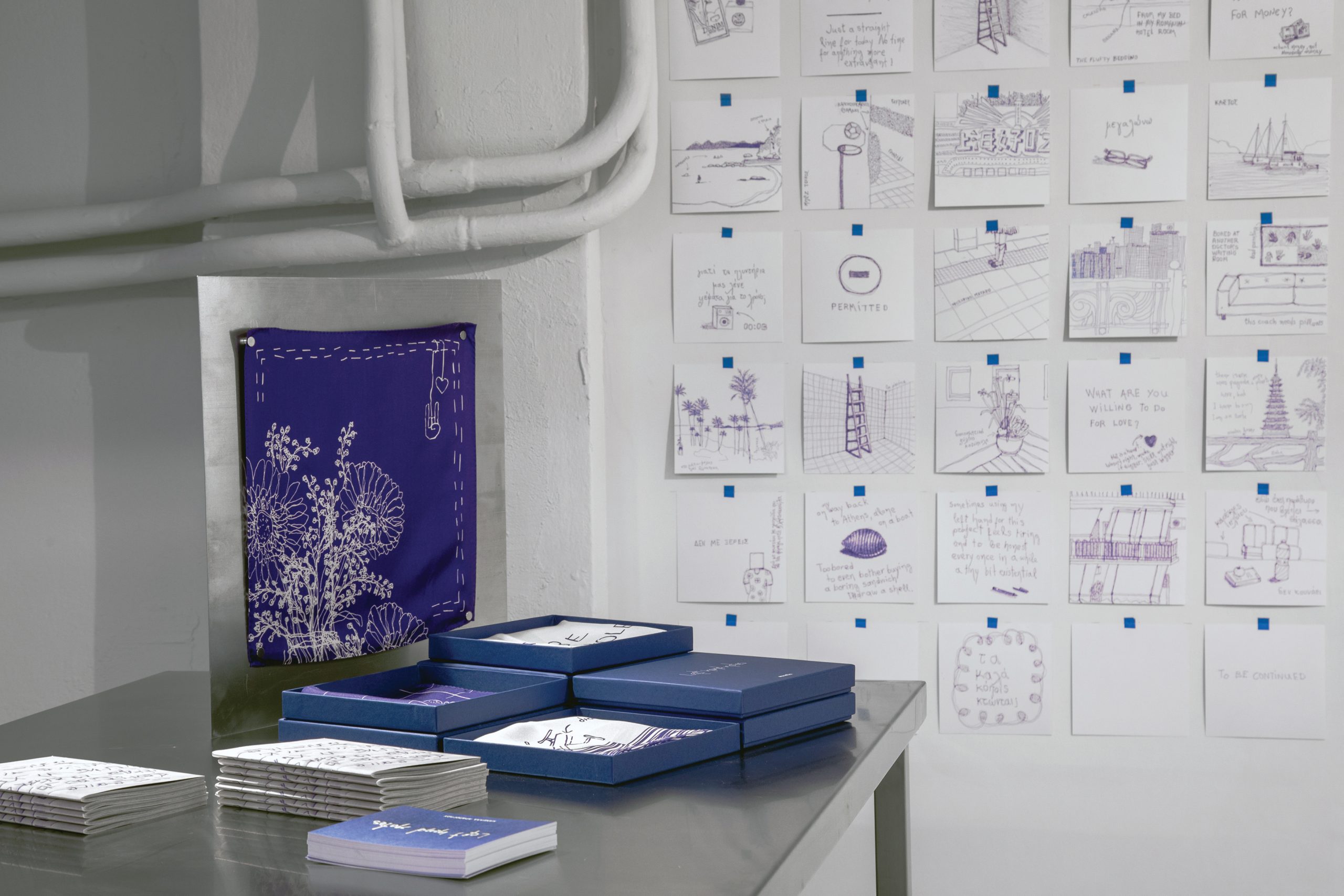
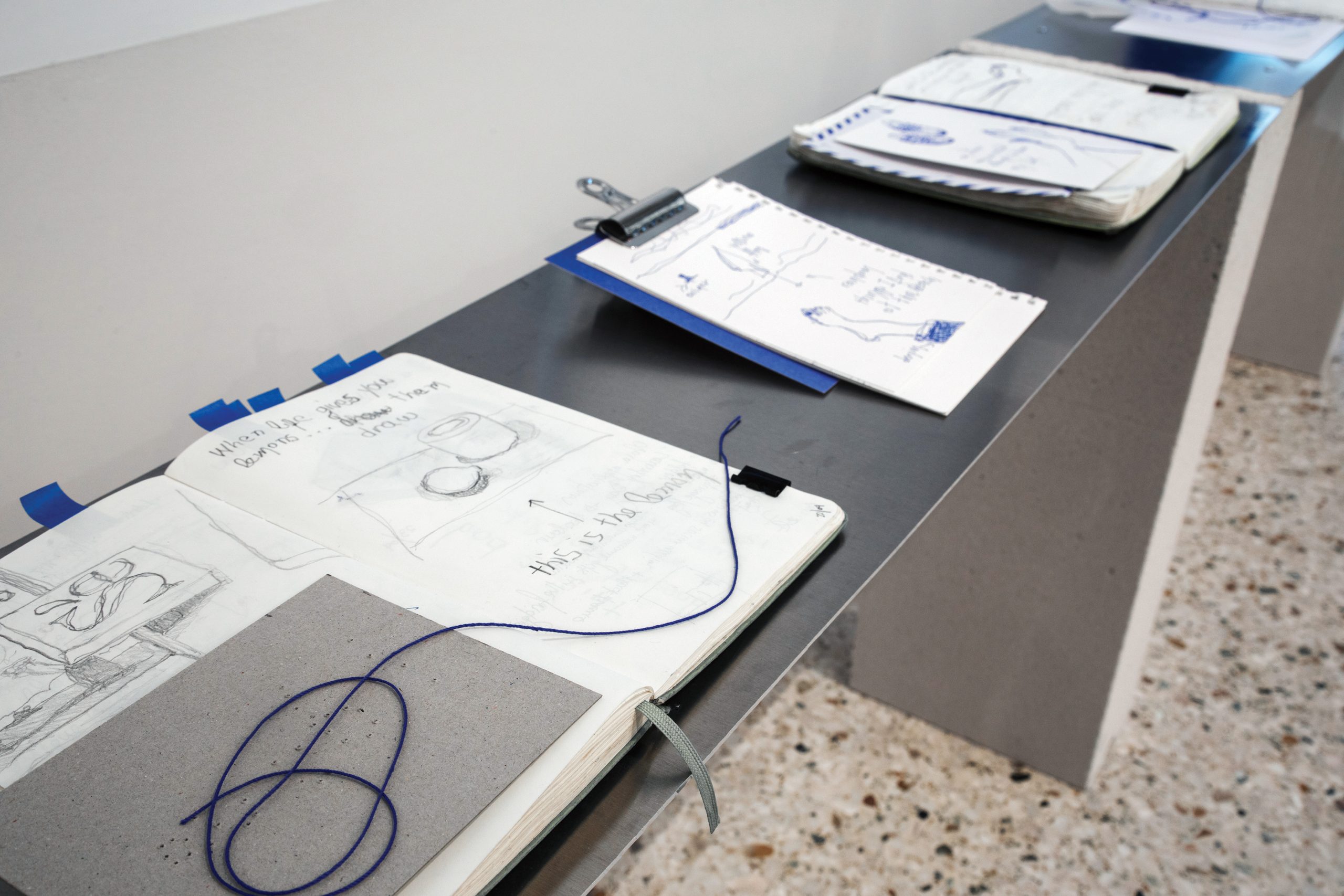
Left Hand Notes began in 2019, during a period of creative block. Inspired by research into the use of the non-dominant hand and the creation of new neural connections in the brain, I decided to try drawing with my left hand, even though I am right-handed.
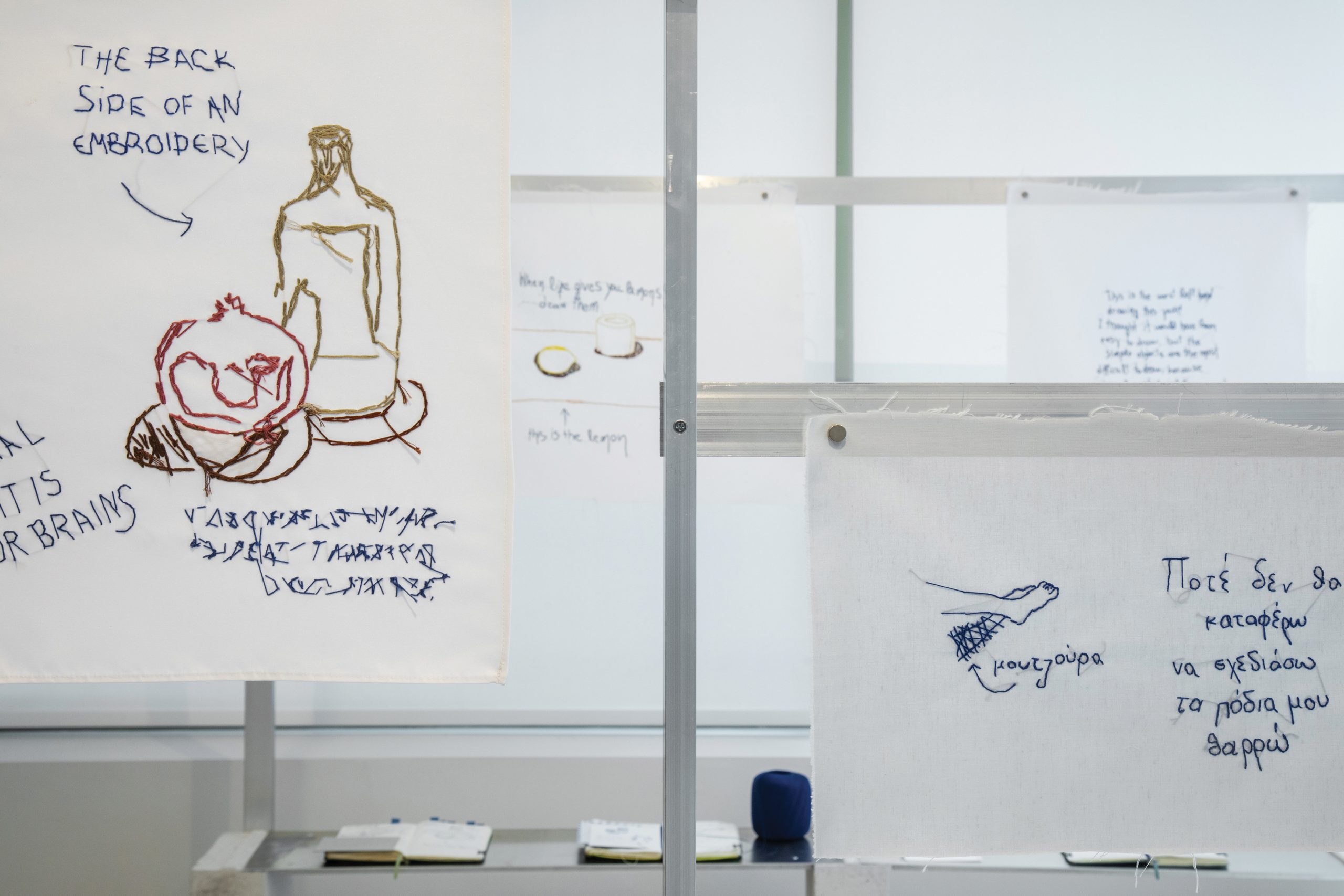
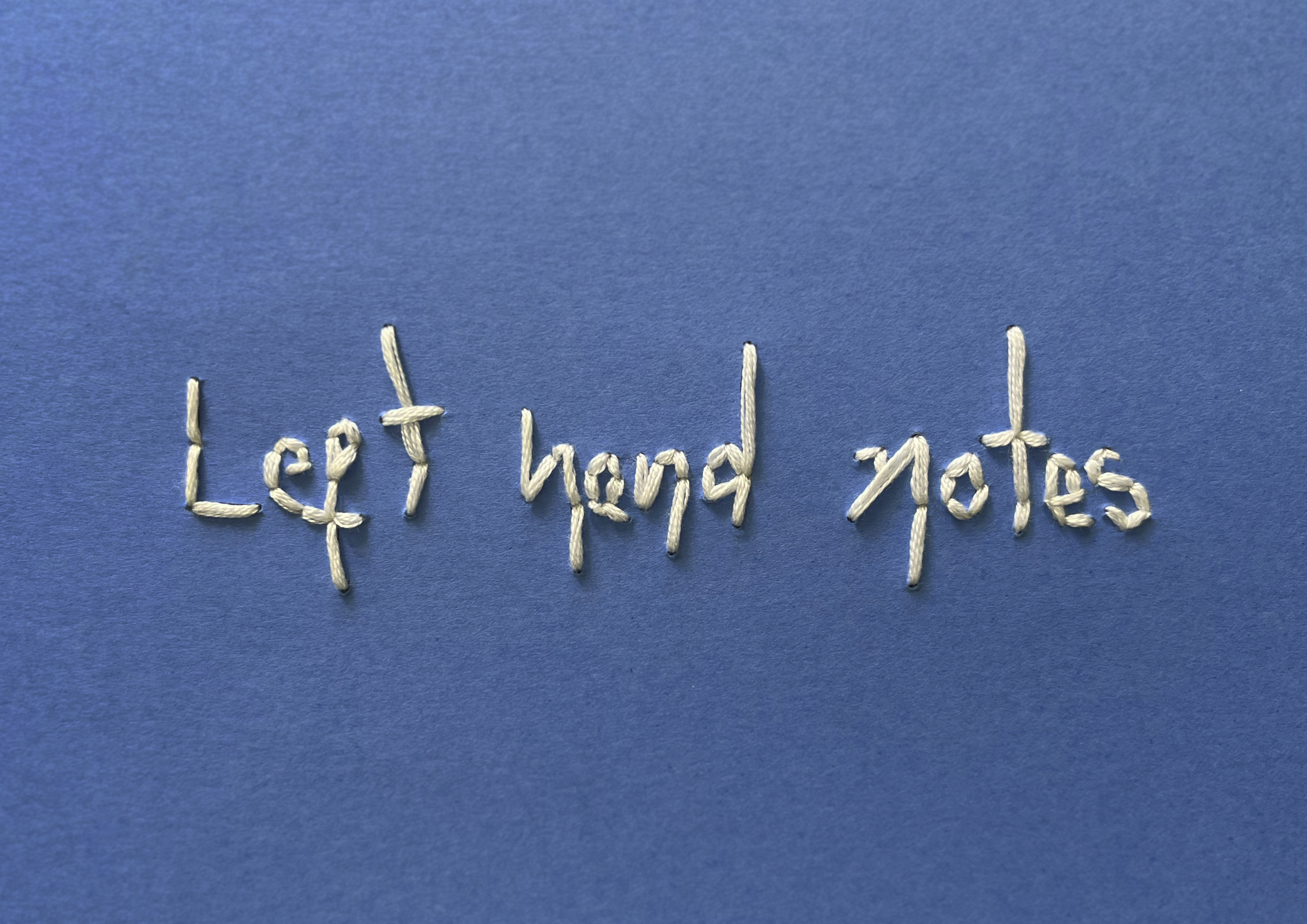
I found that I was less concerned with the outcome, since it was going to be “bad” anyway. Once the need for control and the fear of getting it wrong diminished, I relaxed. Sometimes the drawings were difficult to decipher, so I began adding notes to explain what I had drawn. These notes gradually expanded to include my own unrelated and spontaneous thoughts. That is how the name Left Hand Notes came about. Quite literally, they are the notes and drawings I made with my left hand.
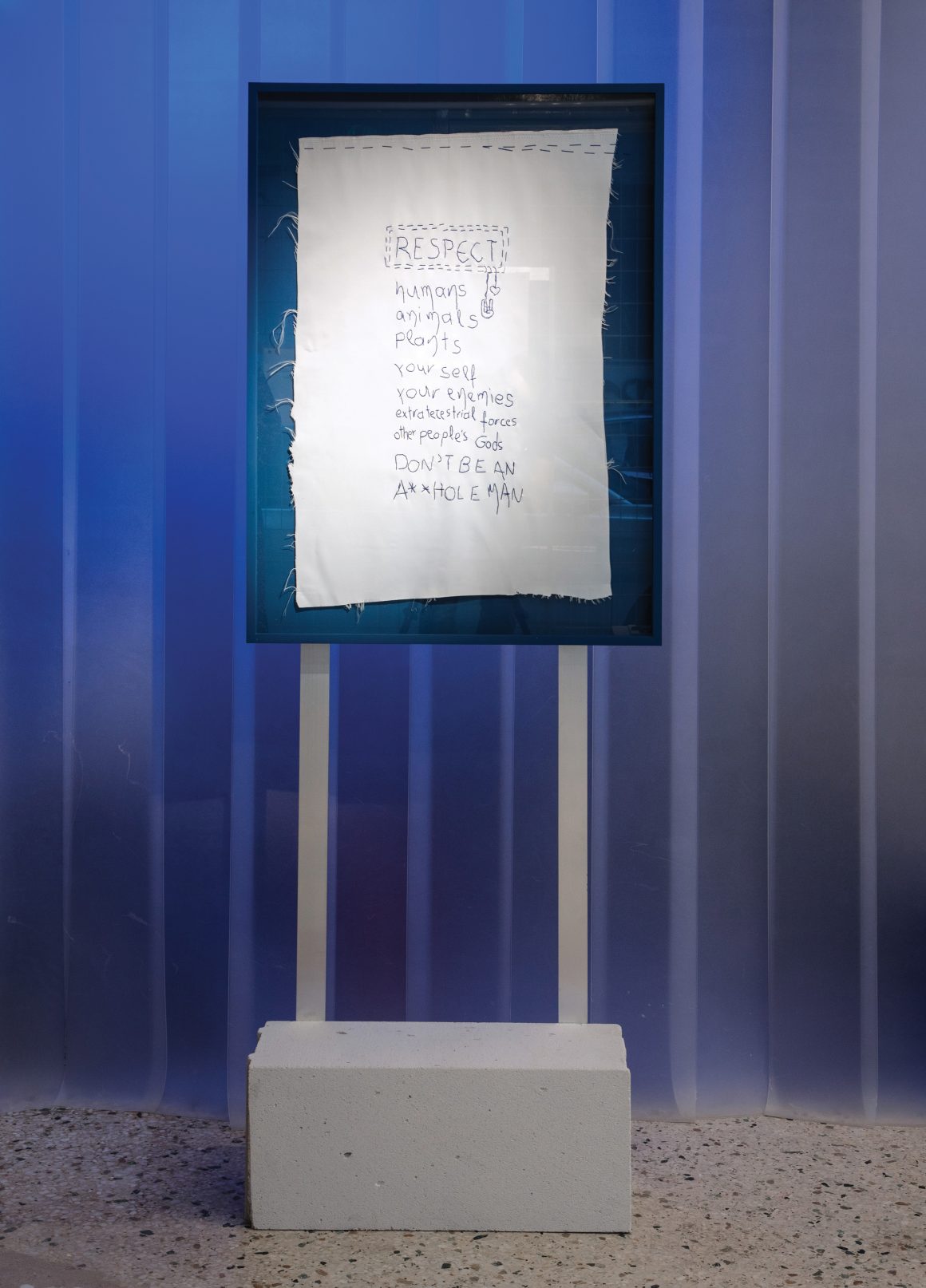
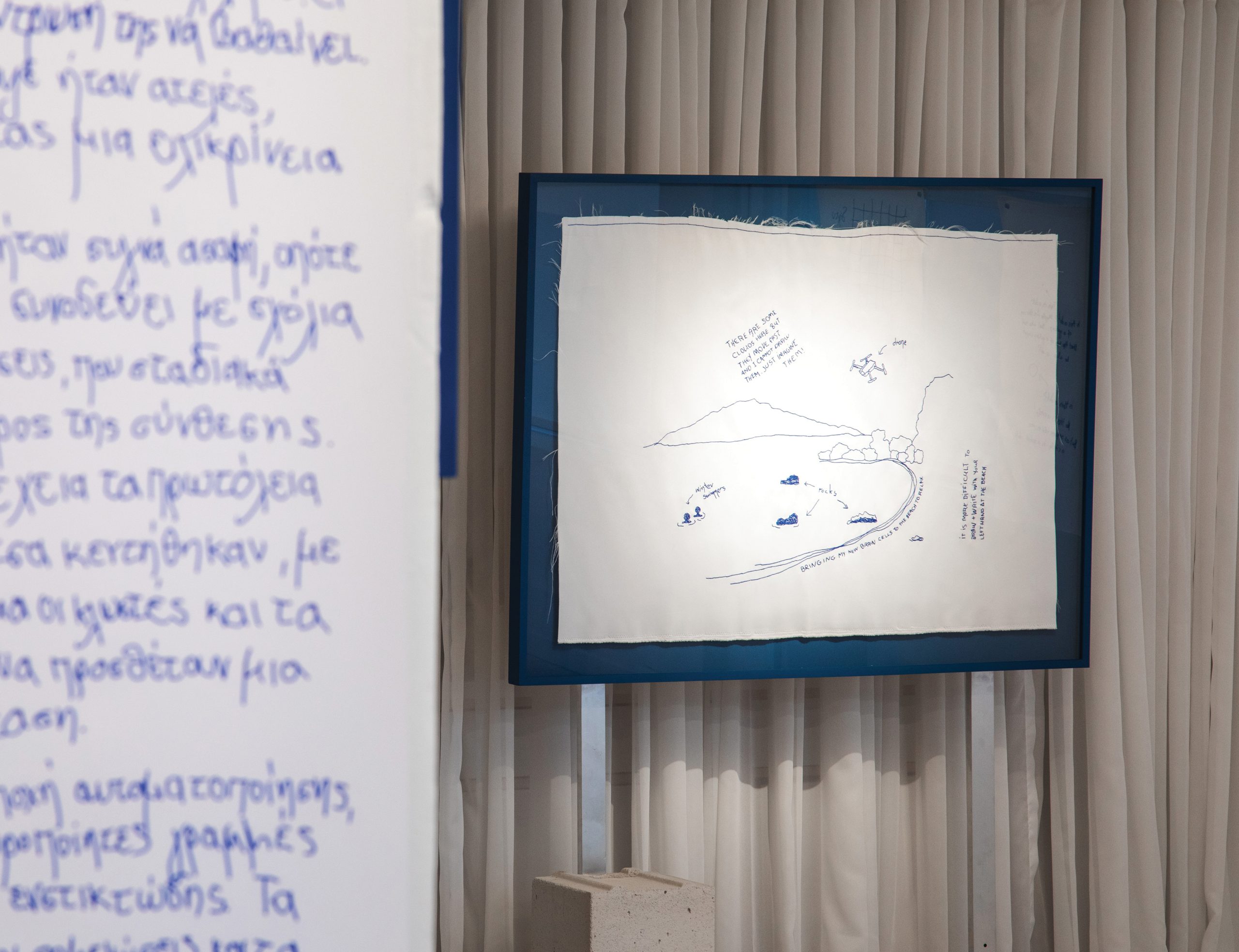
What began as an experimental game evolved into a creative journey through error, observation and discovery. And, as I always do, I tried embroidering them. Once the thread was introduced, the works acquired a different form and materiality.
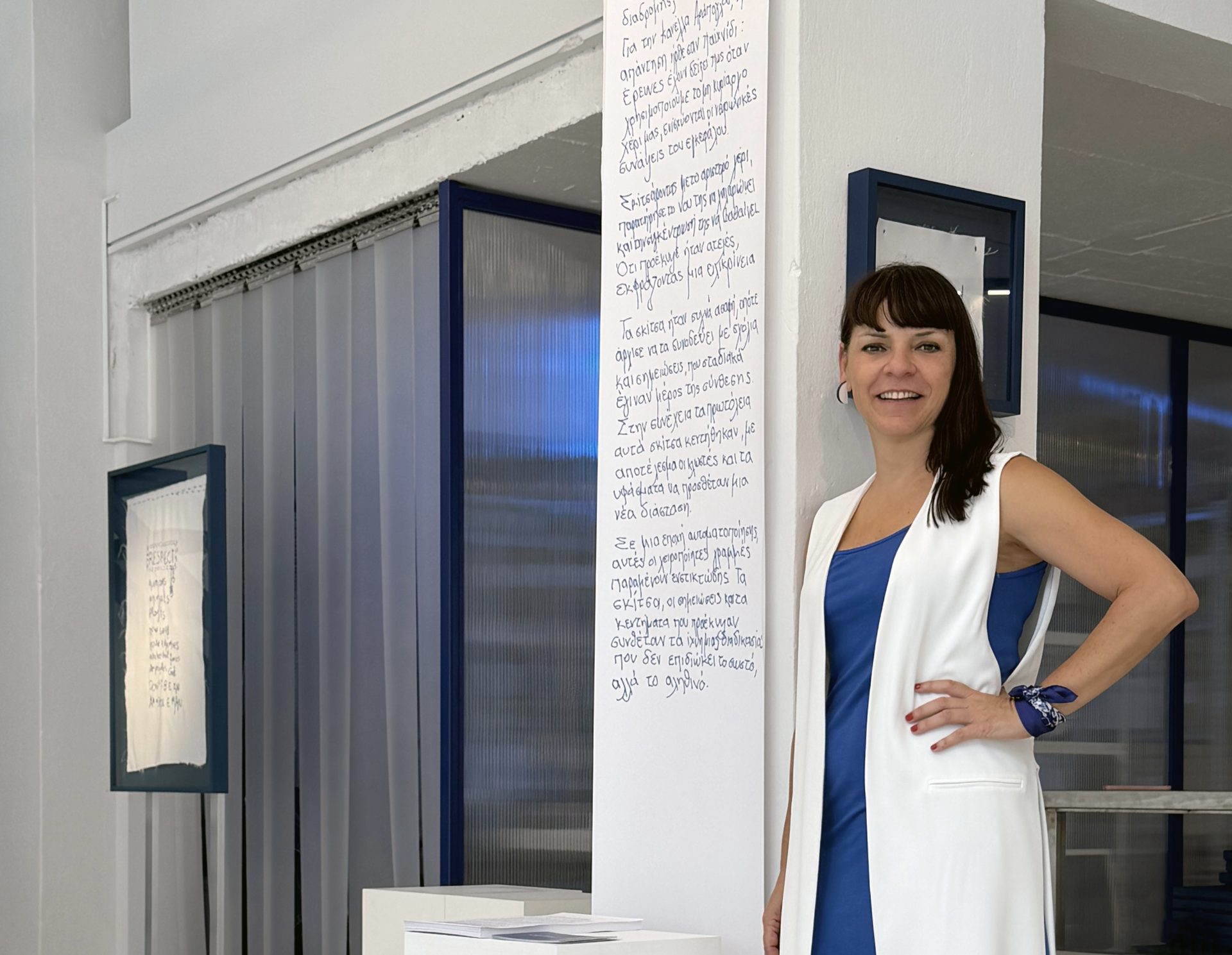
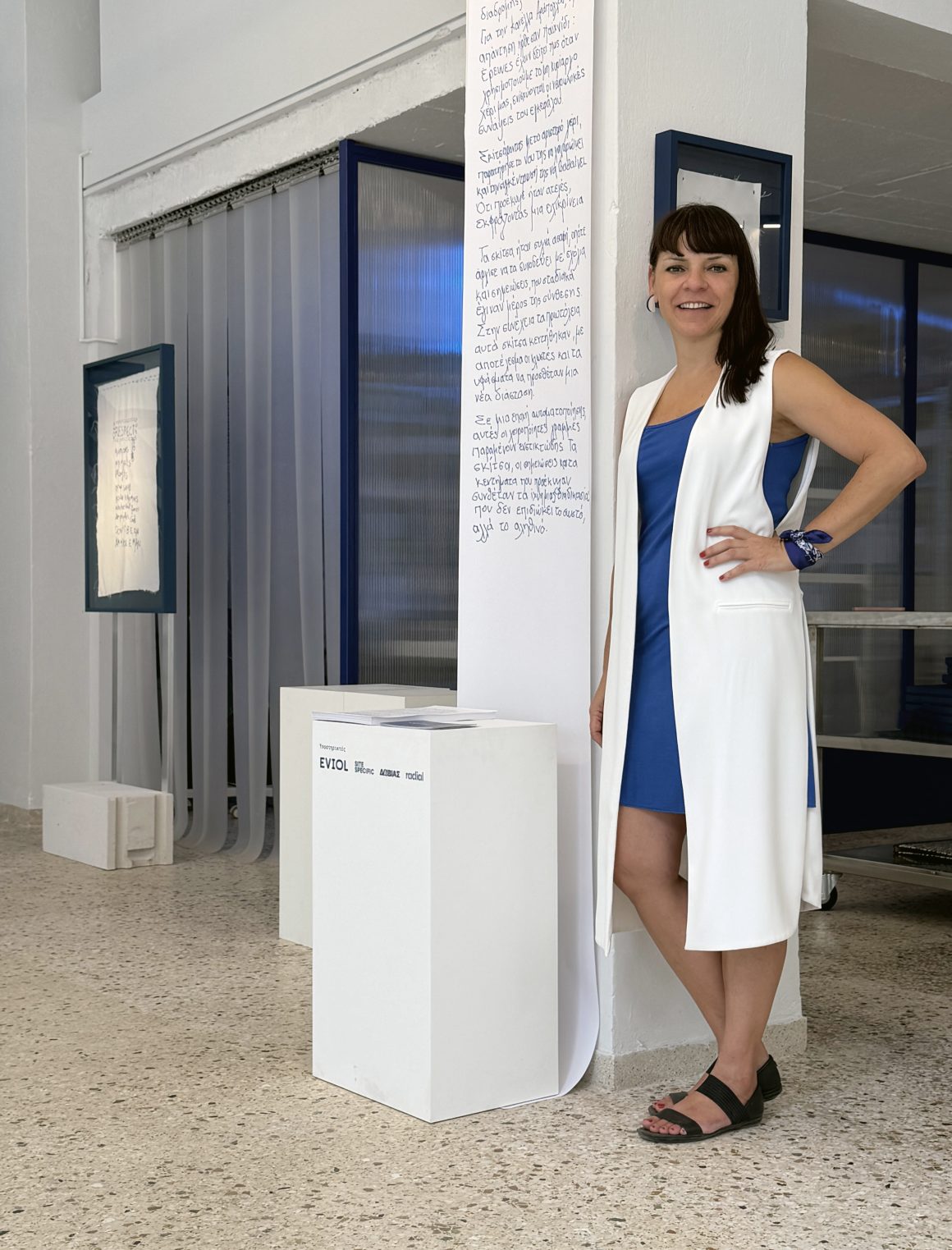
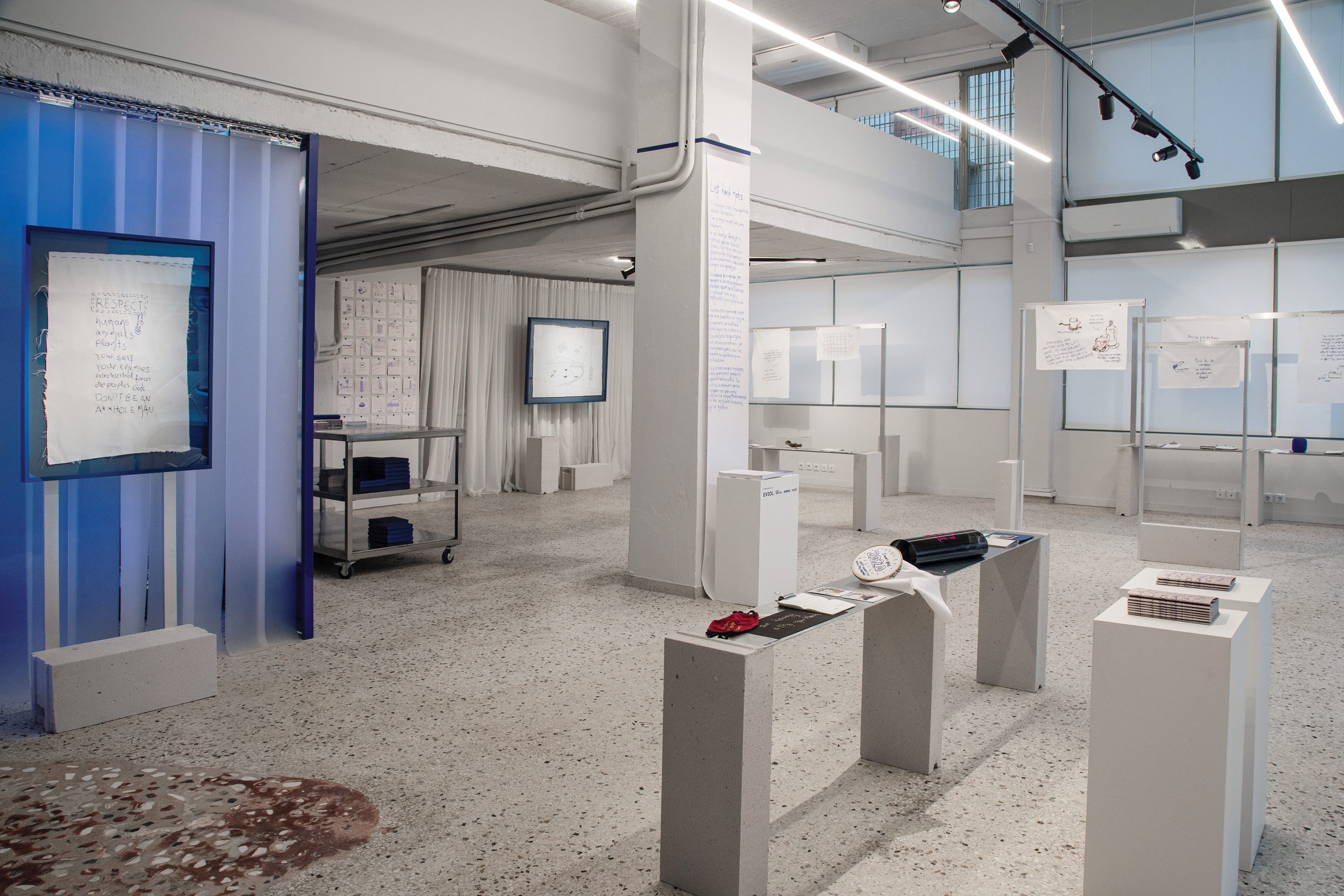
The exhibition traces this journey through original drawings and embroidered works. It is less a single, unified story than a series of independent records of a process, capturing different moments within the same creative practice.
How did your collaboration with StudioLav come about, and how did they approach your idea?
We share the same space with StudioLav and have also collaborated on other projects, so the collaboration came about quite naturally. We have a lot in common in the way we work and, of course, they have a very strong relationship with space, objects and materiality.
What I liked about the collaboration was that they didn’t try to “dress up” the idea or turn it into something different from what it is. Instead, they worked with the logic of the project and looked for a way of presenting it that would allow the process itself to remain visible.
The fact that the exhibition takes place within our shared studio is also important. The workspace becomes part of the presentation without having to be transformed into something else.
How would you describe your art and your practice? What kinds of stories do your works tell, and what do you dream of creating?
My work moves between artistic expression, structured thinking and craft. Embroidery is my primary medium, but I’m interested in using it in a more open way, outside its expected context and often in combination with other materials and techniques.
My background in graphic design has naturally influenced the way I work, particularly in how I organise an idea and find its structure. At the same time, through my artistic practice I have learned to surrender more to the process and see where it might lead me. The two, however, continually feed into one another.
My works have different starting points each time. I’m interested in themes relating to the body, memory, women’s creative practices, everyday life and observation. There is something wonderful about allowing the viewer to discover something beyond the first image.
I want my practice to remain open and shareable. In the Left Hand Notes workshops, a personal process becomes an invitation for someone else to try, experiment and let go, even if only for a little while.
What do you consider the key elements in developing a new project for the outcome to be successful, and what are the non-negotiable values that guide the way you work?
The process varies depending on the context in which I am working, although the two practices have a lot in common. In graphic design, there is usually a brief from the client, and my role is to understand it, translate it and find the right solution. In my artistic practice, there is a subject that I choose to explore myself. I decide what the question is and what path I want to take towards the outcome.
In both cases, of course, everything begins with the idea. Curiosity is, if not a non-negotiable value, certainly a very important tool. It drives me to research and experiment without a predetermined destination. Research, testing and searching for the right direction are all part of the process. The way a story is told is also very important to me, because I’m interested not only in how something will look, but also in what it has to say.
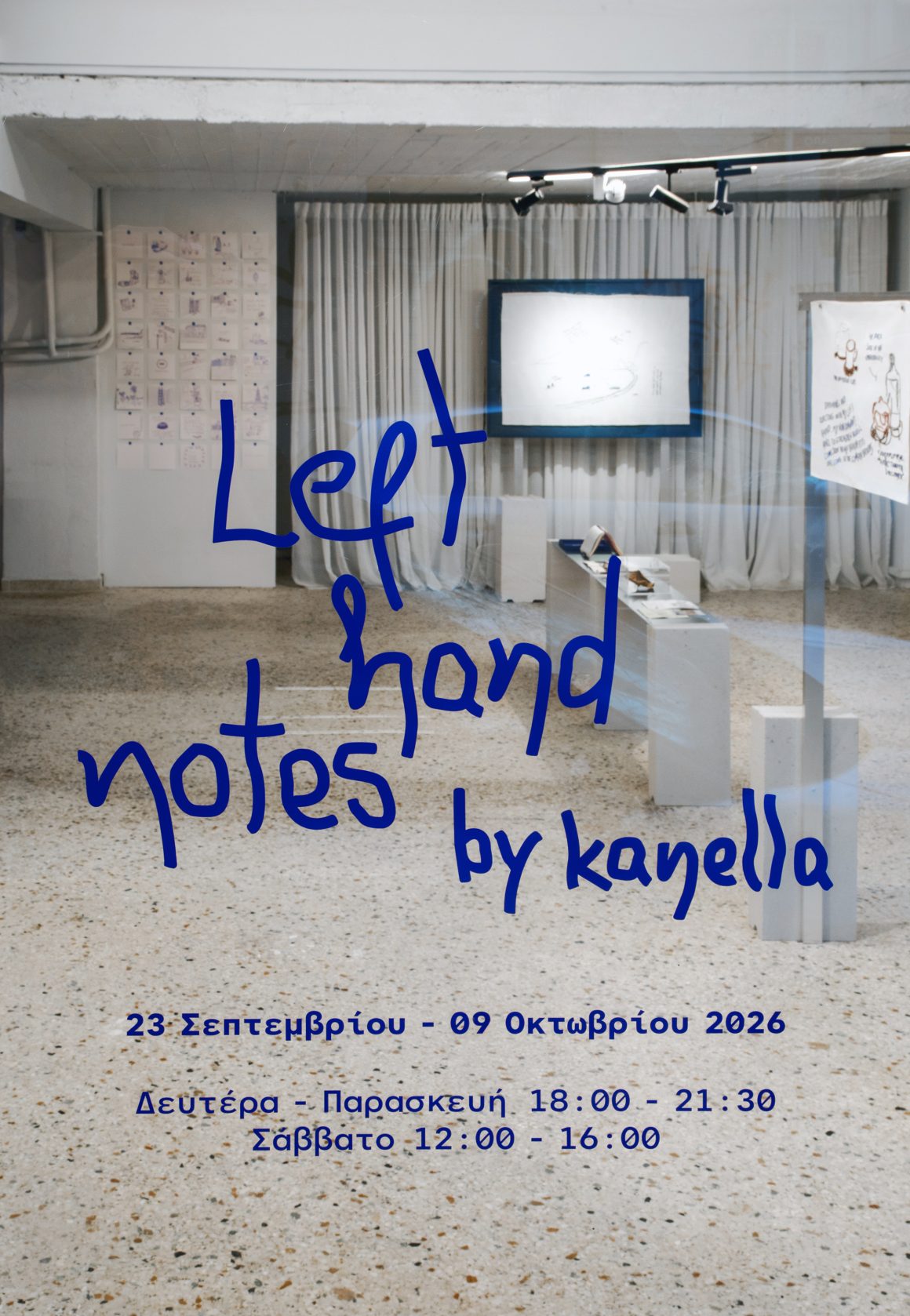
Left Hand Notes
23 September – 9 October
Monday–Friday, 18:00–21:30
Saturday, 12:00–16:00
17 Paraschiou Street, 11473 Gkyzi, Athens