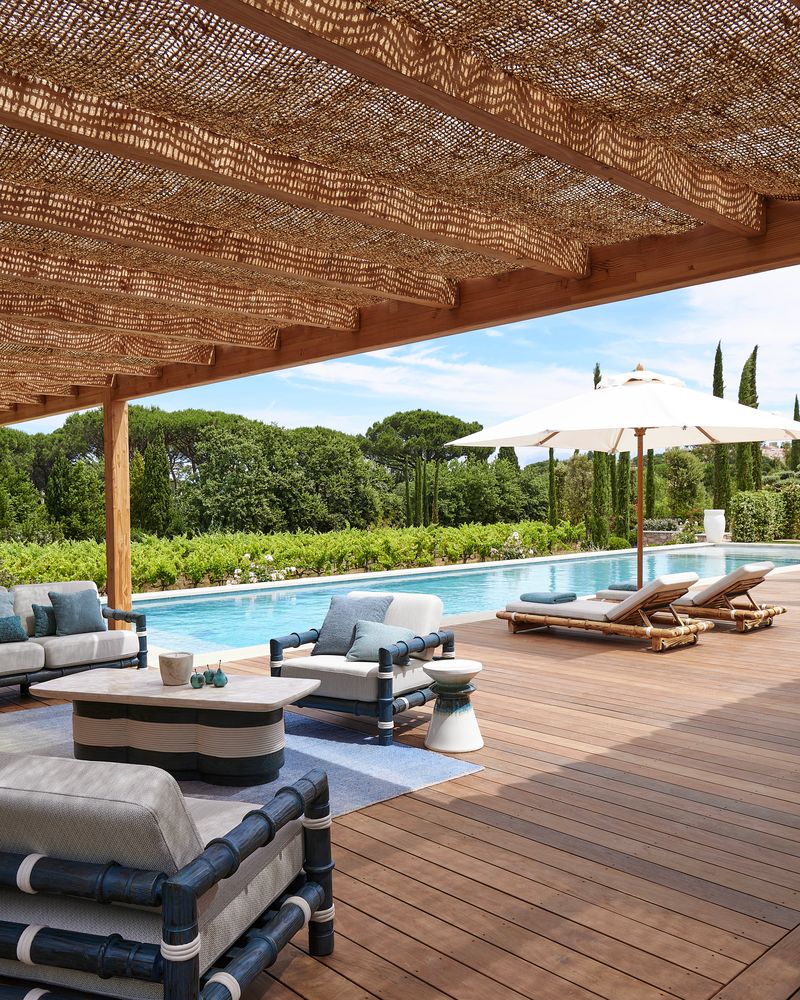
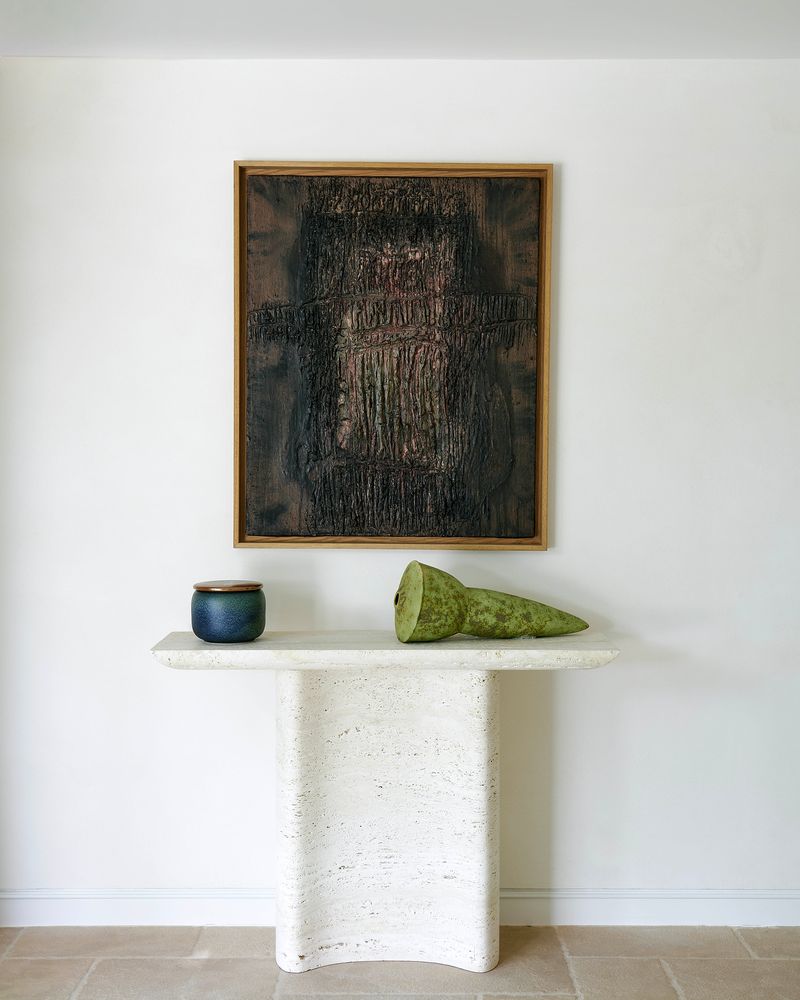
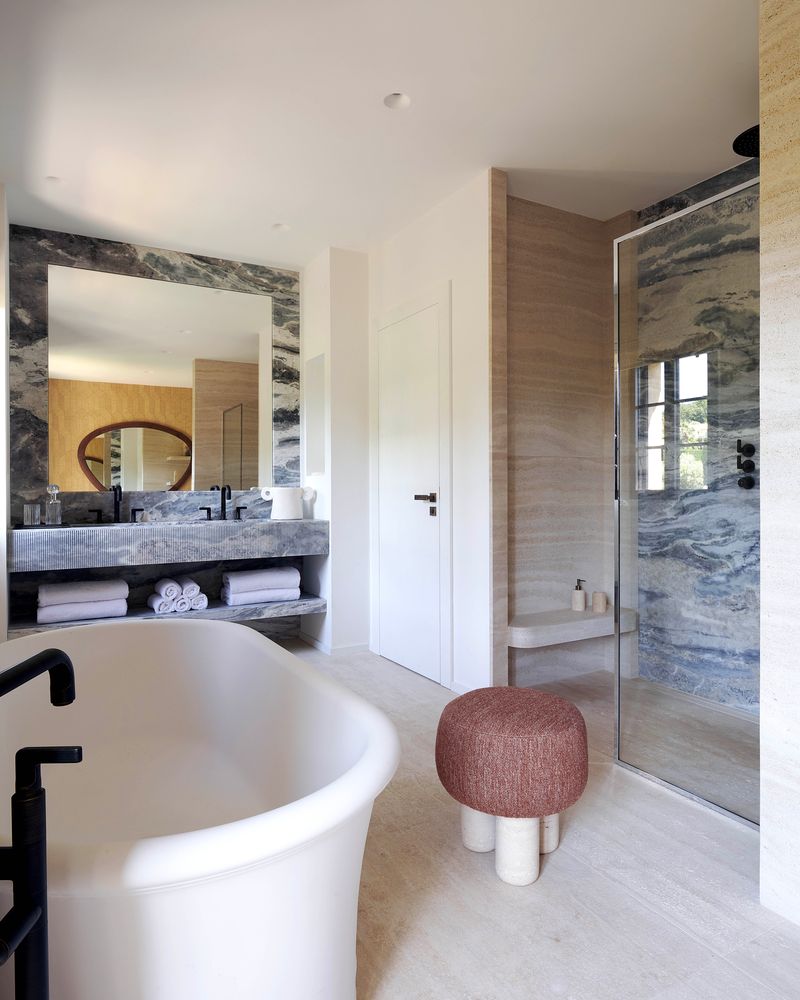
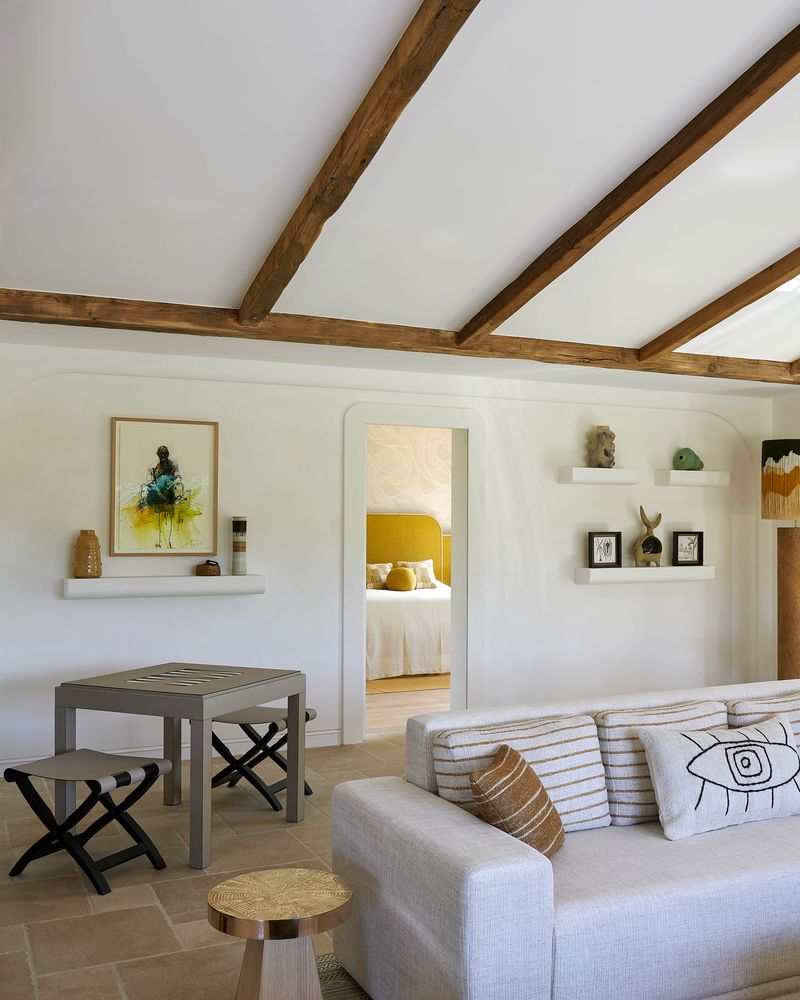
Restoring a century-old bastide while infusing it with a contemporary spirit this was the challenge Stéphanie Coutas set herself in Saint-Tropez. By blending the authenticity of raw materials with the elegance of modern lines, she created a space where every room tells a story. Reflecting a design approach in which emotion guides intuition.

Stéphanie Coutas is a storyteller of space and an ambassador of French luxury. After spending her childhood in Vietnam and later in Hong Kong, she has cultivated a distinctive aesthetic defined by rare restraint and a singular taste for bold materials. Her agency, SC Edition, delivers exceptional projects around the world.

In Saint-Tropez, she reimagined the Bastide des Vignes, a former Provençal farmhouse transformed into a contemporary haven of peace. Blending noble materials, clean lines, and a deep respect for nature, this achievement embodies her vision of a discreet and poetic luxury.

How did you discover the Bastide des Vignes, and what drew you to this place?

Stéphanie Coutas: It was truly love at first sight — first for its ideal location, just five minutes on foot from the Place des Lices. What charmed me most was the soul of the property: a cluster of buildings reminiscent of an old farmhouse, surrounded by private vineyards, which is extremely rare, especially on flat land. It almost felt like stumbling upon a micro wine estate. I immediately envisioned a garden embracing those vines (perfect for enjoying a good glass of wine!) and a home that would combine old-world charm with 21st-century comfort. It was obvious.

What were the main stages in transforming the bastide?

S. C.: The first step was to design a house that would blend seamlessly with the spirit of the place, and then to obtain the necessary permits. After that, we had to conceive the interior and exterior as one cohesive whole. We decided to excavate a basement, which became a rather spectacular construction project — especially in the heart of a residential area. It required extensive technical studies and two years of complex work to achieve.

The idea was to preserve an authentic aesthetic, with the patina of age, while integrating modern technologies invisibly. For example, the air conditioning is there, but you don’t see it. You step into an immersive setting where every detail has been designed not to disturb the emotion of the place.

How did you select the materials and artisans for this project?

S. C.: I began with the desire to find a stone that would evoke an 18th-century bastide. That stone defines the entire tone of the house and its living spaces. I also searched for reclaimed beams, ten meters long… which was quite a challenge. The goal was to harmonize textures and achieve a very soft, luminous, refined ensemble. The finishes are matte and natural, and we introduced touches of color through the décor, to bring life to the space without compromising its authenticity.

Did the Mediterranean environment guide your landscaping choices?

S.C.: Absolutely. The garden was conceived as a true landscaping project with a strong artistic direction. I wanted to create a Mediterranean atmosphere, but dry, with a hint of Italian inspiration. We sourced cypress trees from Italy, others from Provence, planted lavender… while of course preserving the property’s vines. I designed a winding pathway that crosses a large natural space. It allows you to discover the vineyards on the right before reaching the house at the end of the path. The landscape guides the eye and invites exploration.

A small anecdote about the project?

S.C.: Yes! There was a slightly twisted olive tree planted right in front of the house. Everyone wanted to remove it — even the gardener! But I was absolutely determined to keep it. I insisted on building around it, against all advice. Today, it is magnificent. It has become a central feature. To me, it represents what a true passion project is about: respect, instinct, passion… and a little bit of madness as well!

What elements were designed to foster harmony between interior and exterior?

S.C.: The house is primarily a summer home, but it is equally enjoyable in winter: it is warm and cocooning. What I always seek is perspective. When you sit in a room, what do you see? In the main living room, for example, a 400-square-meter space opens through large bay windows onto the vineyards. They can be opened almost entirely. It is this connection to the landscape that makes the whole project feel alive. Upstairs, the master suites open onto a terrace. I created a small red garden there, an intimate patio sheltered from the wind, perfect for breakfast in the morning. These are the thoughtful details that transform a house into an experience.


Does light play a central role in your conception of spaces?

S.C.: It is essential. When we begin a project, we always start by studying sunlight. Where is the sun in the morning, in the evening? Then we create the same scenario for nighttime: which areas will be used at sunset? This reflection is a true work in the shadows, but it changes everything. It makes spaces soothing, livable, natural. Of course, we must also contend with the weather, but the feedback is always the same: “we feel good here.” And that is precisely the goal.

How do you define luxury in your projects?

S.C.: For me, luxury is not a question of size or price. It is first and foremost about space — a space of one’s own. It can be a small corner of nature, a view of the sky, a harmony between natural elements and a home designed down to the finest detail. You can mix everything, as long as it feels balanced. Luxury is the freedom to choose what you surround yourself with, without constraints. It is a sensitive palette, where texture, color, and light are the true values. And above all: a project only has value if it is lived in, designed for those who will inhabit it.

Are there artists or aesthetic movements that particularly inspire you?

S.C.: I have great admiration for Axel Vervoordt. But above all, I am proud of my profession as a whole. In our agency, we do everything: spatial planning, decoration, right down to the cushions and tableware. It is this decorative savoir-faire — so distinctly French — that was sometimes overshadowed by a colder, more rigid design approach in the 2000s. And yet, it is precisely this signature, this holistic vision, that continues to draw the world to us in search of our sense of detail and art de vivre.

Οniriq

Author