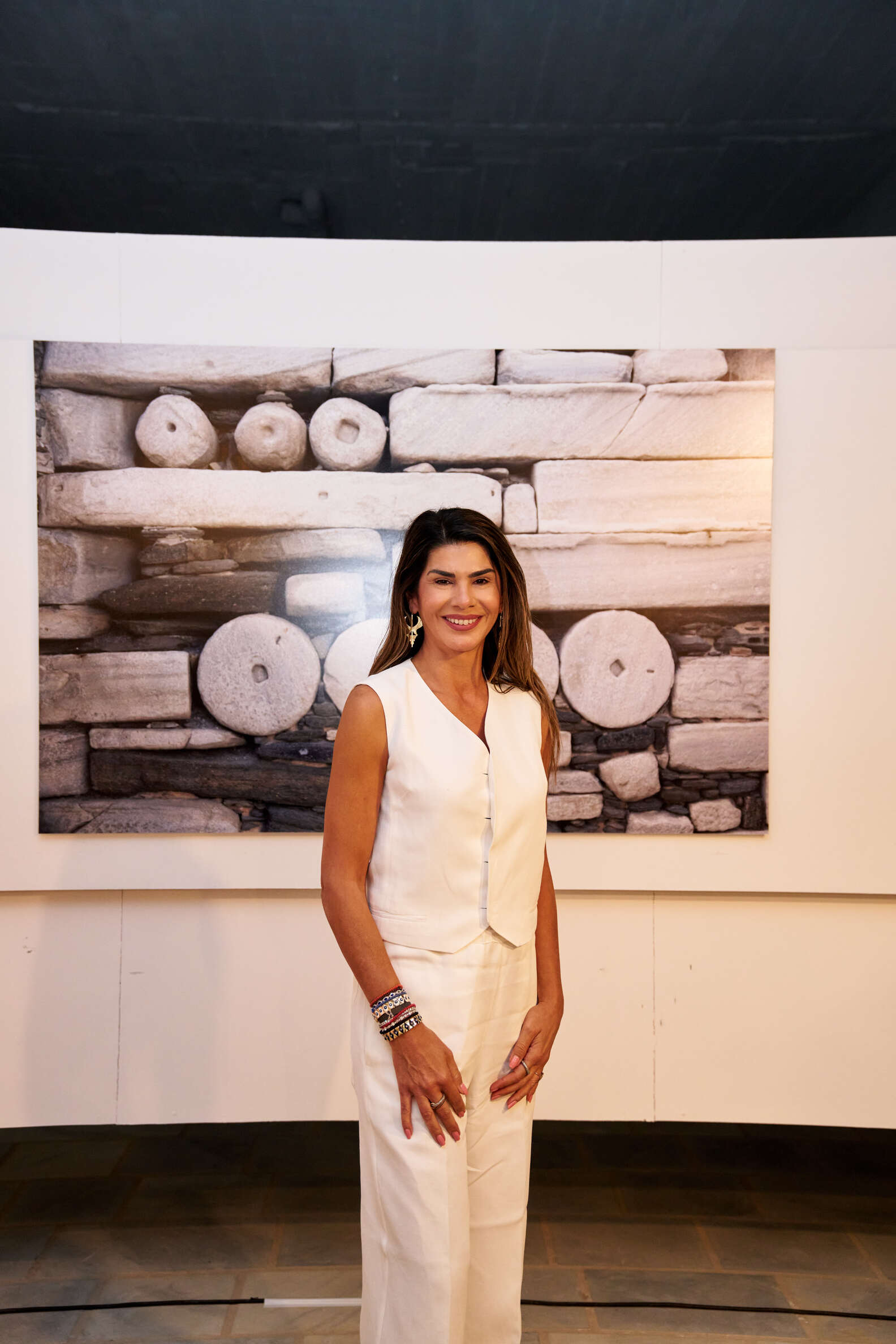
You have built an impressive career in tourism and hospitality, extending well beyond your family’s business ventures. Looking back, what have been the highlights of your journey? Which milestones have shaped the person and professional you are today?

For me, hospitality has always been a creative field. It brings together so many things I love: aesthetics, architecture, culture and, above all, people.

My journey has been closely connected to my husband Antonis Iliopoulos’s vision and to Santorini. That is where it all began, leading to the creation of hotels across different islands, each with its own personality and relationship with its surroundings. From Vedema, Mystique and Istoria in Santorini to Parīlio and Cosme in Paros, Eréma in Milos and Korona in Mani, every hotel represents a distinct creative chapter for me.

But if you ask me what I value most, it is not the hotels themselves. It is the people I have met, the relationships we have built and the joy of watching an idea evolve over time.

How did your creative vision as an entrepreneur first take shape? What inspired you to pursue new horizons, how has that vision evolved over the years, and what other interests have gradually become part of your journey?

I have always been fascinated by the process through which an idea takes shape. A space, an experience or an object can evoke emotion and tell a story without needing to explain too much.

Hospitality has given me the opportunity to bring together different things I love, connecting architecture and design with art, culture with people, tradition with gastronomy, and stories with experiences that ultimately stay with us.

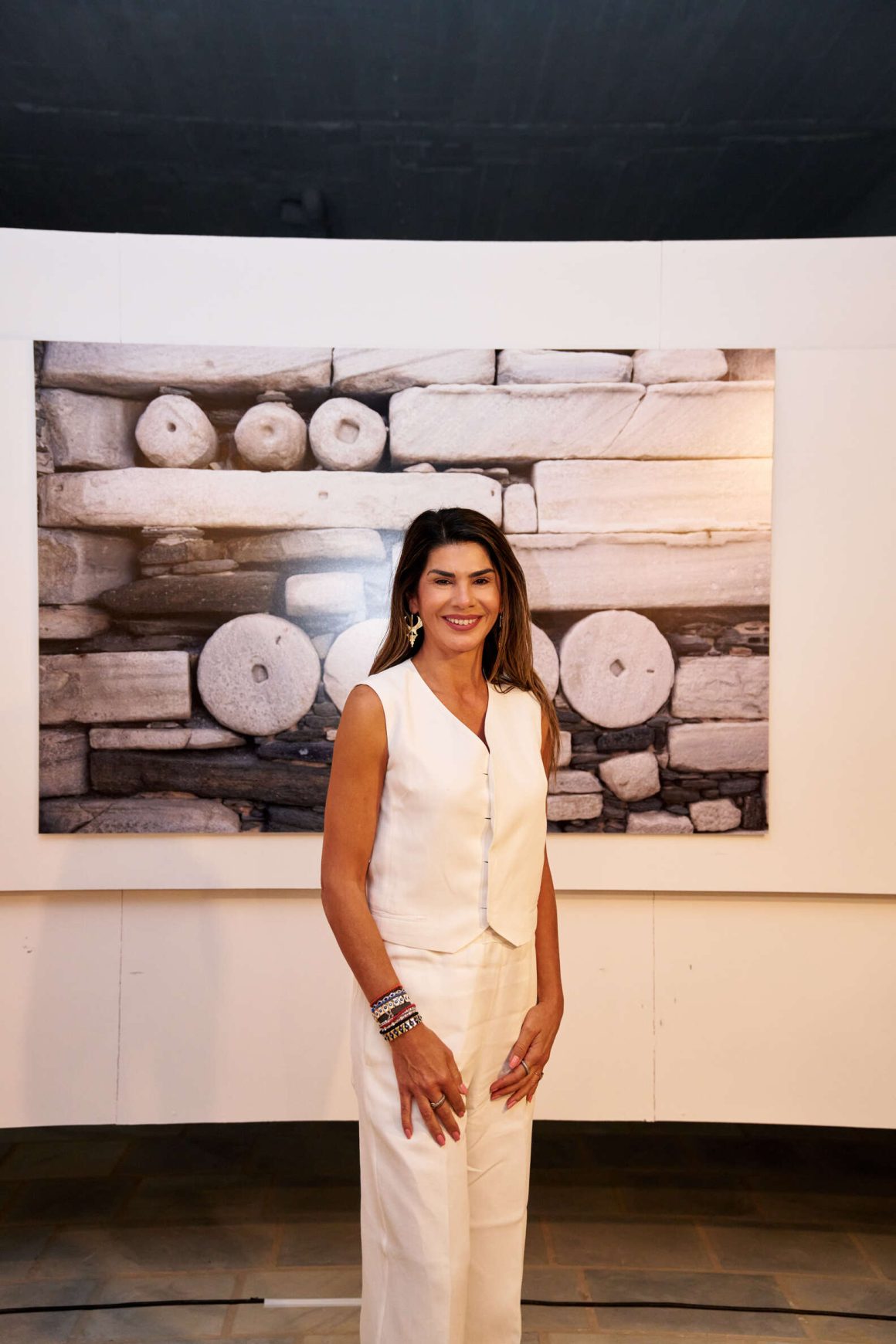
Over time, my interest in the cultural identity of places has grown even stronger. My involvement with Cycladic Identity, the initiative of the Museum of Cycladic Art, reflects my belief that the heritage of the Cyclades is a living source of wealth that we have a responsibility to preserve.

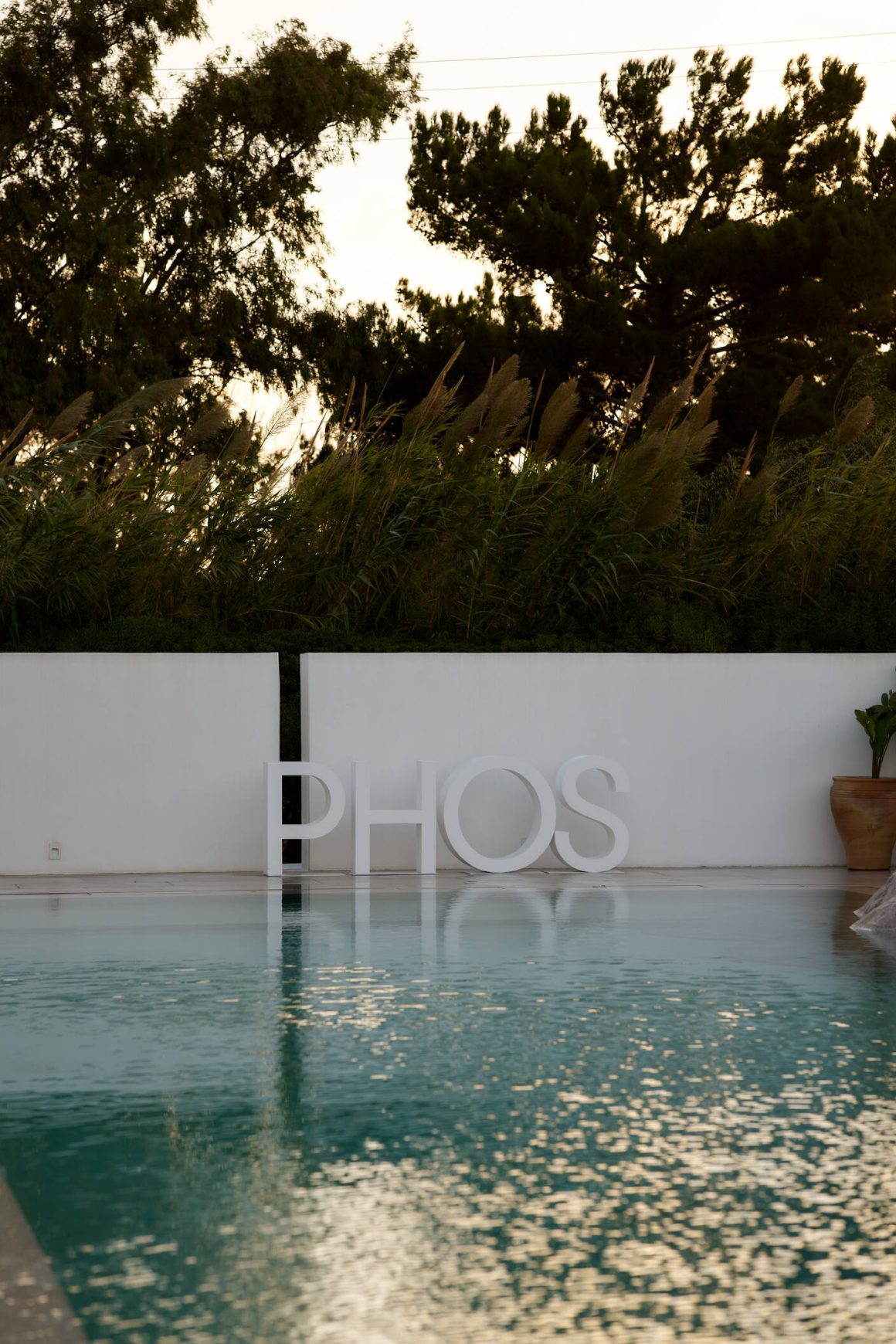
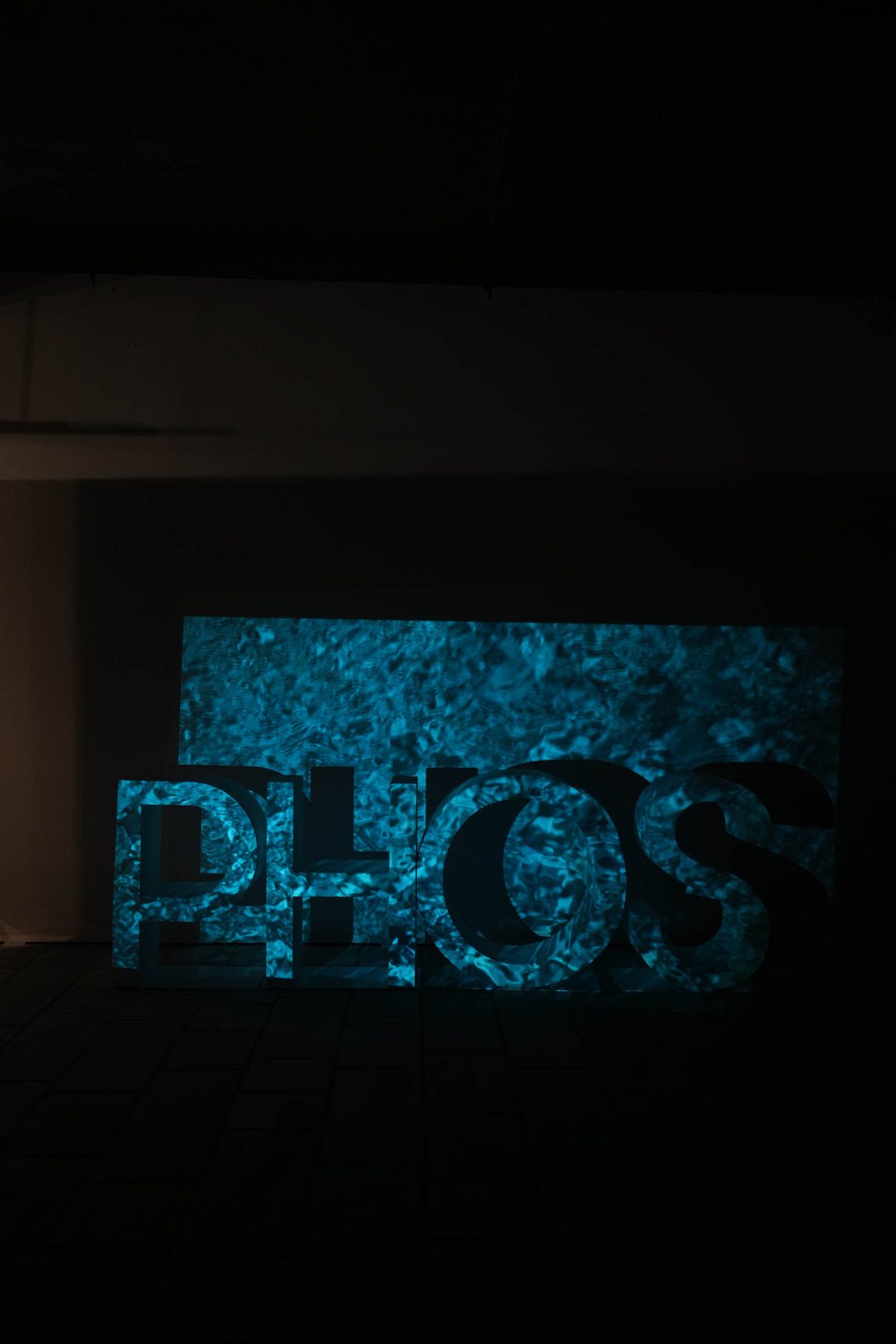
At the same time, my personal exploration of Greek philosophy and the art of living well led to the creation of PHOS. I believe creativity evolves with us, shaped by experience and by our curiosity to keep discovering something new. It is never static; it grows and changes as we do.

What was the overarching vision behind each of the fields you have pursued, and how has it evolved into what it is today?

I believe the common thread running through everything I have done is the desire to create something meaningful, something that stands the test of time.

At Empiria Group, this translates into a contemporary approach to Greek hospitality, grounded in quality, authenticity and a meaningful connection with each destination. Equally important are the people, the local communities and the way we care for the environment.

On a personal level, I am deeply interested in the meeting point between tradition and contemporary creativity. I do not believe we need to choose between the two; each can breathe new life into the other. Through PHOS, this exploration takes on a new dimension, bringing Greek philosophy into the realm of lived experience.

As the years go by, I increasingly believe that true success is measured not only by what we create, but also by the relationships we build and the legacy we leave behind.

Kalia Konstantinidou, Group Executive Officer, Empiria Group

The first chapter of PHOS recently unfolded at Parīlio in Paros, an immersive experience you conceived with your team, drawing on the wisdom of ancient Greek civilisation while reinterpreting it through a contemporary lens and in response to the needs of modern life. What inspired you to create this experience, what are you hoping to achieve, and who is it intended for?

PHOS (Presence Heals our Senses) grew out of a personal curiosity. I wanted to explore how ideas rooted in ancient Greek philosophy could engage with our lives today and awaken all five senses. After all, hospitality is an experience that engages the senses in their entirety, from space and light to flavours, aromas, sounds and human connection. Eudaimonia, moderation, harmony and self-knowledge are concepts that, despite their ancient origins, remain remarkably relevant today.

I did not want to create just another wellness retreat. I wanted to shape a space where knowledge could become experience through nature, creativity, conversation and human connection.

Paros and Parīlio offered the ideal setting for this first chapter, with the Cycladic landscape and the hotel’s distinctive aesthetic reinforcing the philosophy behind the experience.

PHOS is intended for people who are curious, open-minded and eager to grow. My ambition is for it to evolve into a platform that explores Greek philosophy and the art of living well through contemporary, meaningful experiences.

How did references to Cycladic culture and the natural landscape of Paros shape the retreat, and in what ways did they become an integral part of the experience?

Paros was not simply the place where PHOS took place. It was part of the very idea itself.

The light, the architecture and the simplicity of the Cycladic landscape create a sense of harmony that is difficult to replicate artificially.

I am particularly drawn to the wisdom of simplicity that defines the Cyclades, where generations have learned to live in close relationship with their environment, making thoughtful use of what nature offers. This is the wisdom we wanted to weave into the experience.

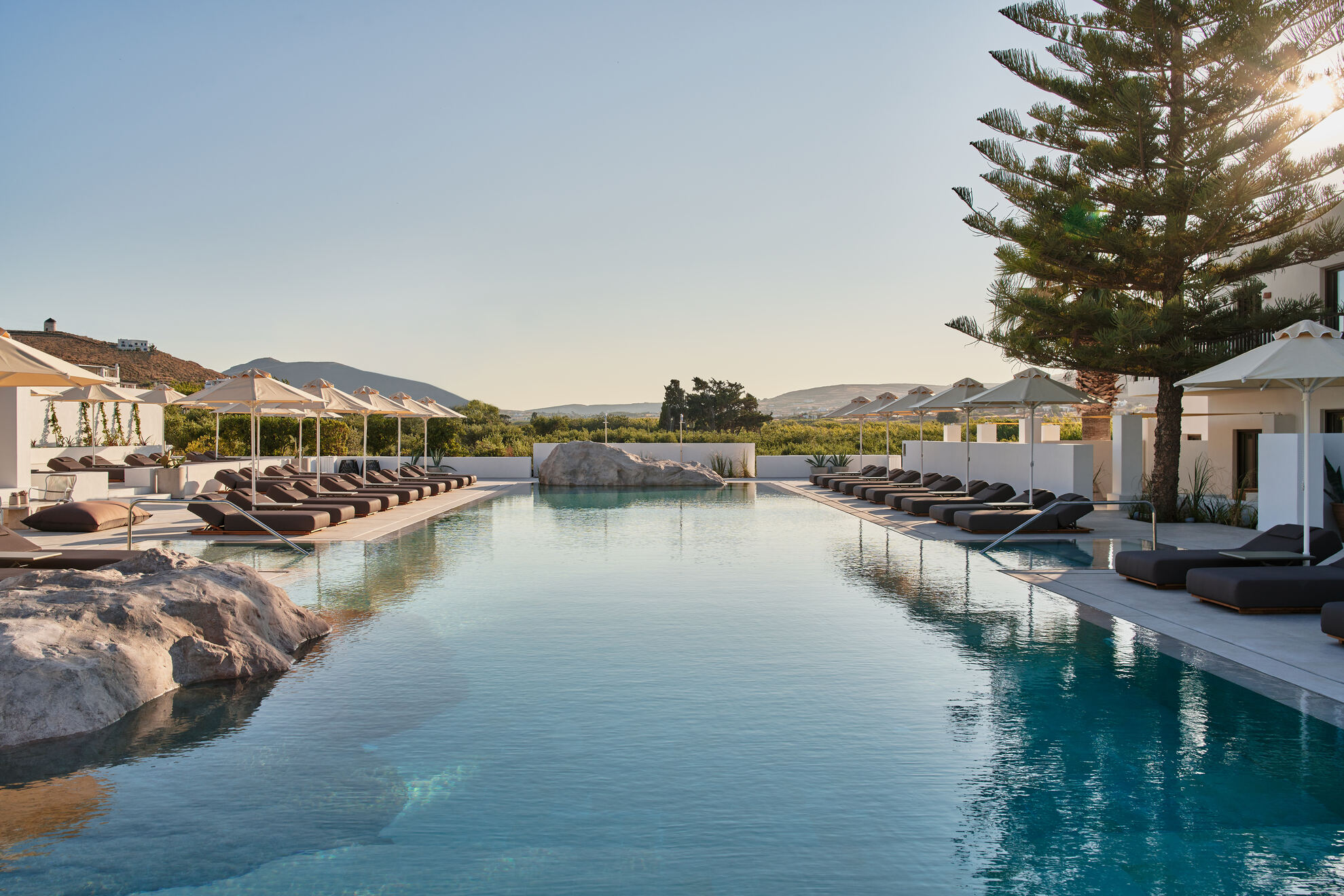
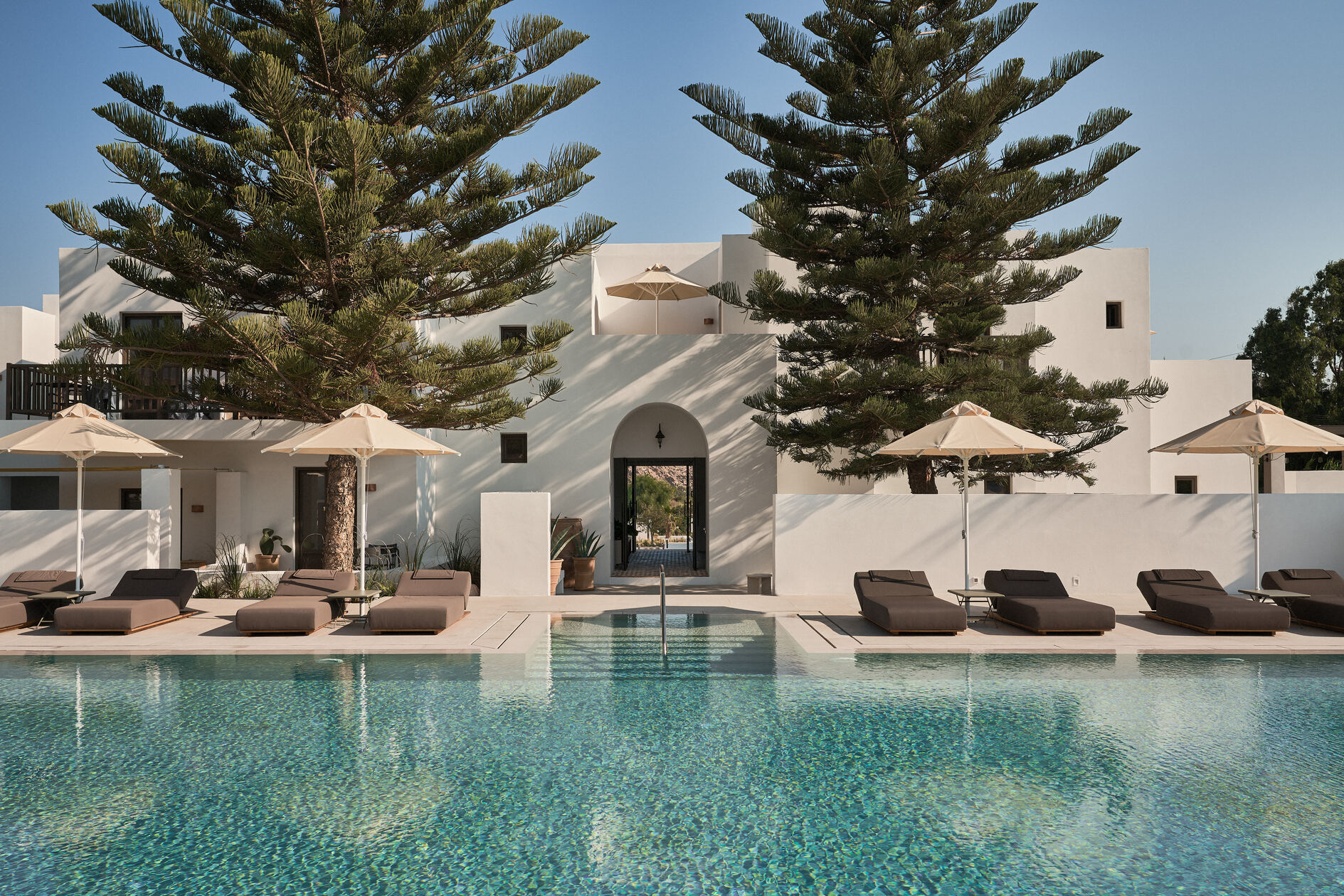
With its natural materials, clean lines and serene atmosphere, Parīlio provided the ideal setting. My intention was for participants to feel fully present in a place that was an integral part of the experience, rather than simply its backdrop.

What were the highlights of this inspiring three-day retreat, and which collaborations helped bring the programme to life and ensure that everything unfolded seamlessly?

What I remember most is the natural flow between all the different elements: philosophy, nature, creativity, conversations, intense emotions and, of course, people.

There were moments when something that began as an intellectual exploration suddenly became a deeply personal experience. A conversation, a creative activity, a spontaneous exchange of thoughts.

And, of course, none of this happens on its own. Our collaborators brought their own knowledge and perspectives, while the team at Parīlio ensured that every aspect of the experience reflected the quality and care we had envisioned.

What stays with me most is the meaningful connection that emerged among us. People who may not have known one another before came together to share thoughts, experiences and personal moments. In just a few days, a sense of familiarity and genuine communication developed, something that can never be taken for granted.

For me, this was perhaps the most beautiful affirmation of the first PHOS: that ultimately, beyond everything we plan and organise, what remains is the people and the relationships we create.


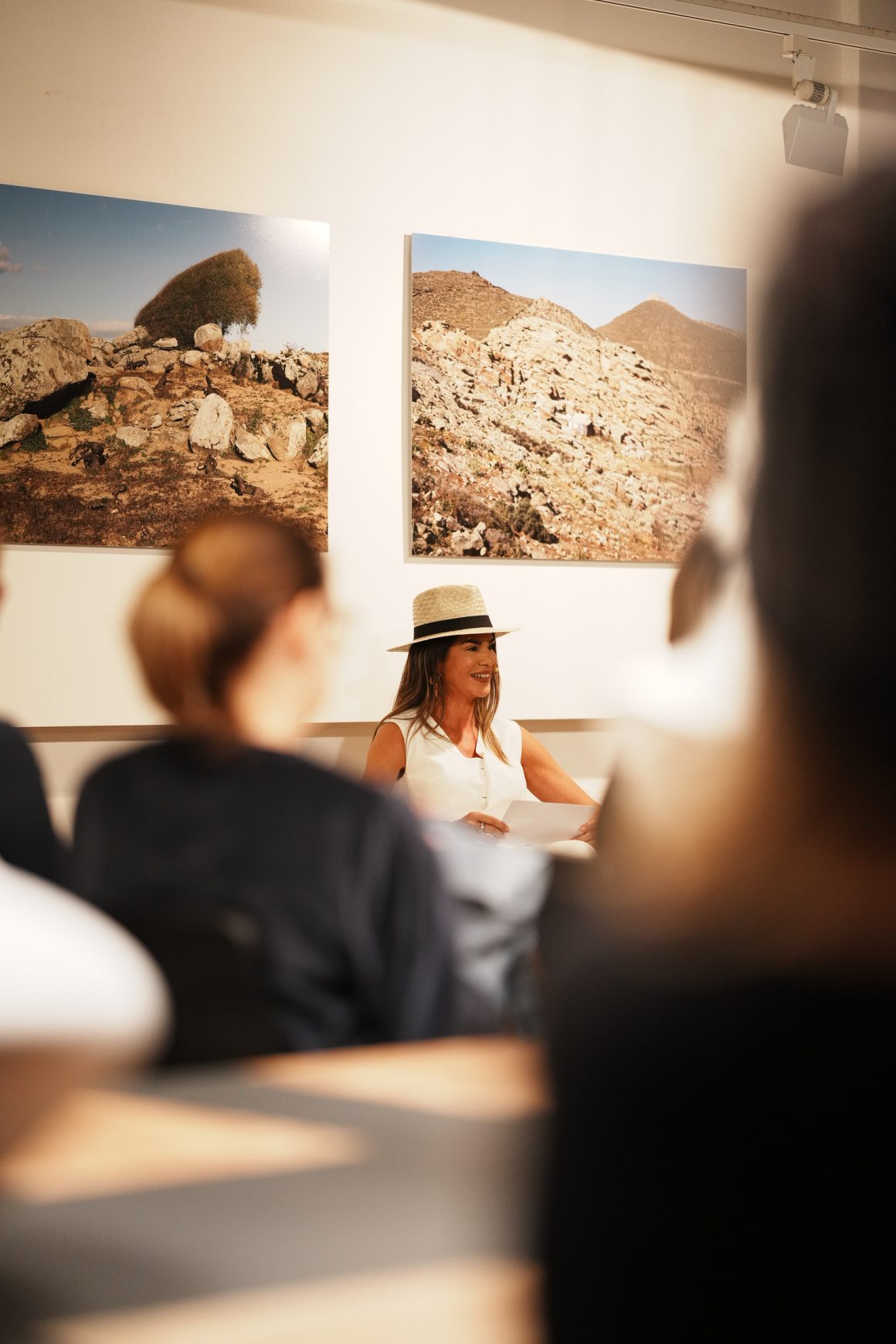
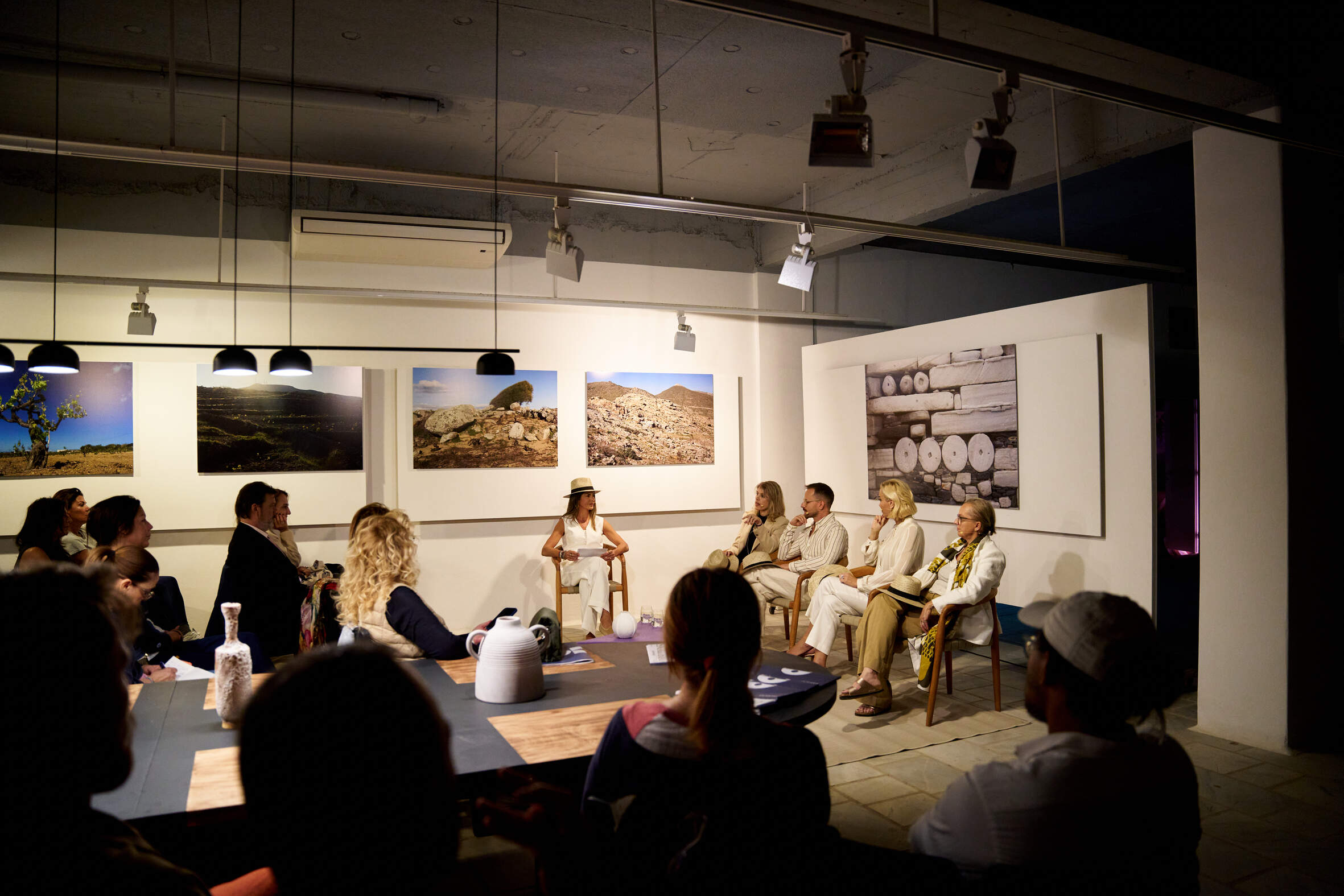
The Art of Living Well panel, with Dr. Evy Papadopoulou, Curator of Antiquities at the Museum of Cycladic Art, Dr. Polina Ellis, jewellery designer, archaeologist and fine artist, and Wojciech Ogłaza, Director of Business Development and Community Engagement at Design Hotels, and moderated by Kalia Konstantinidou,
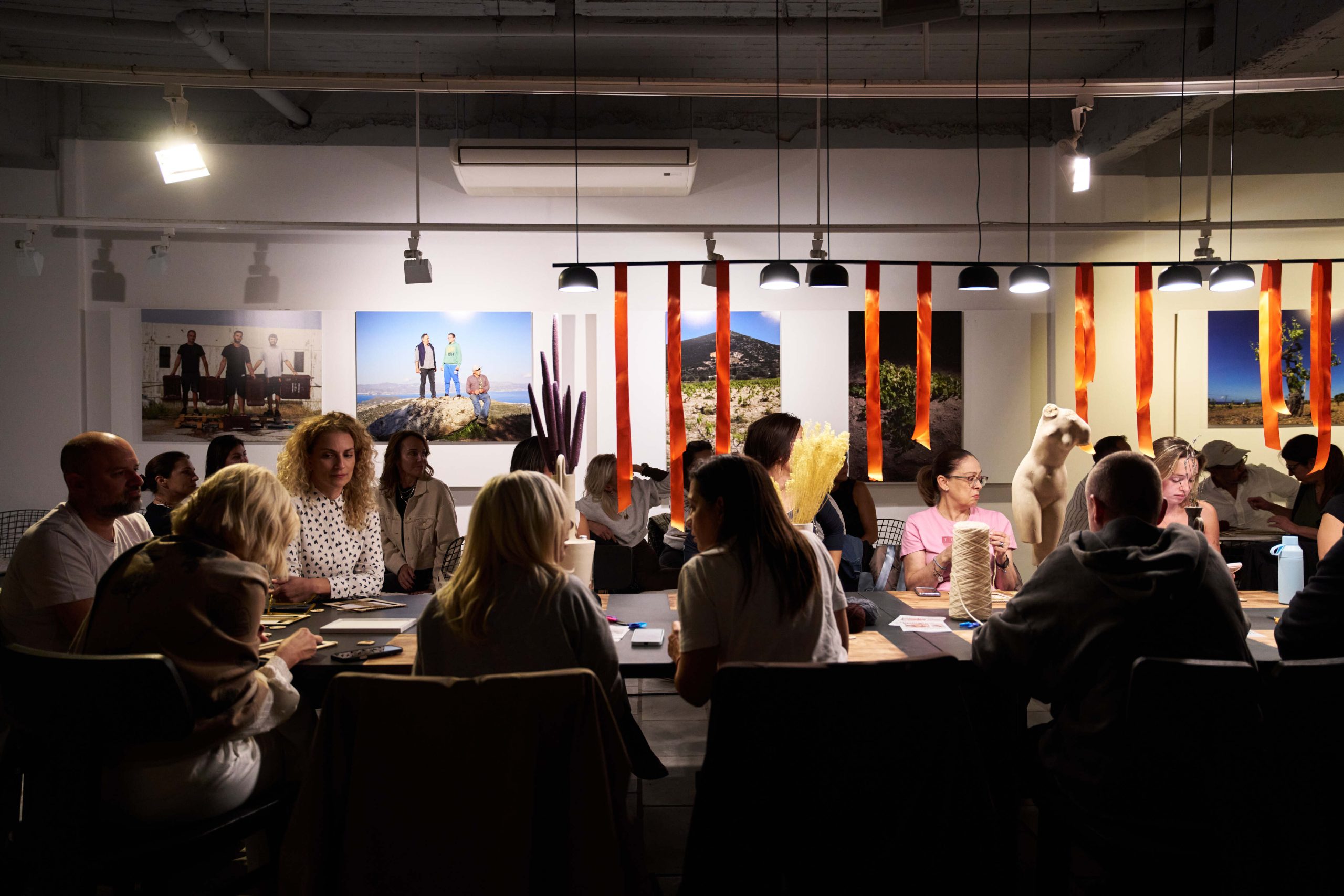
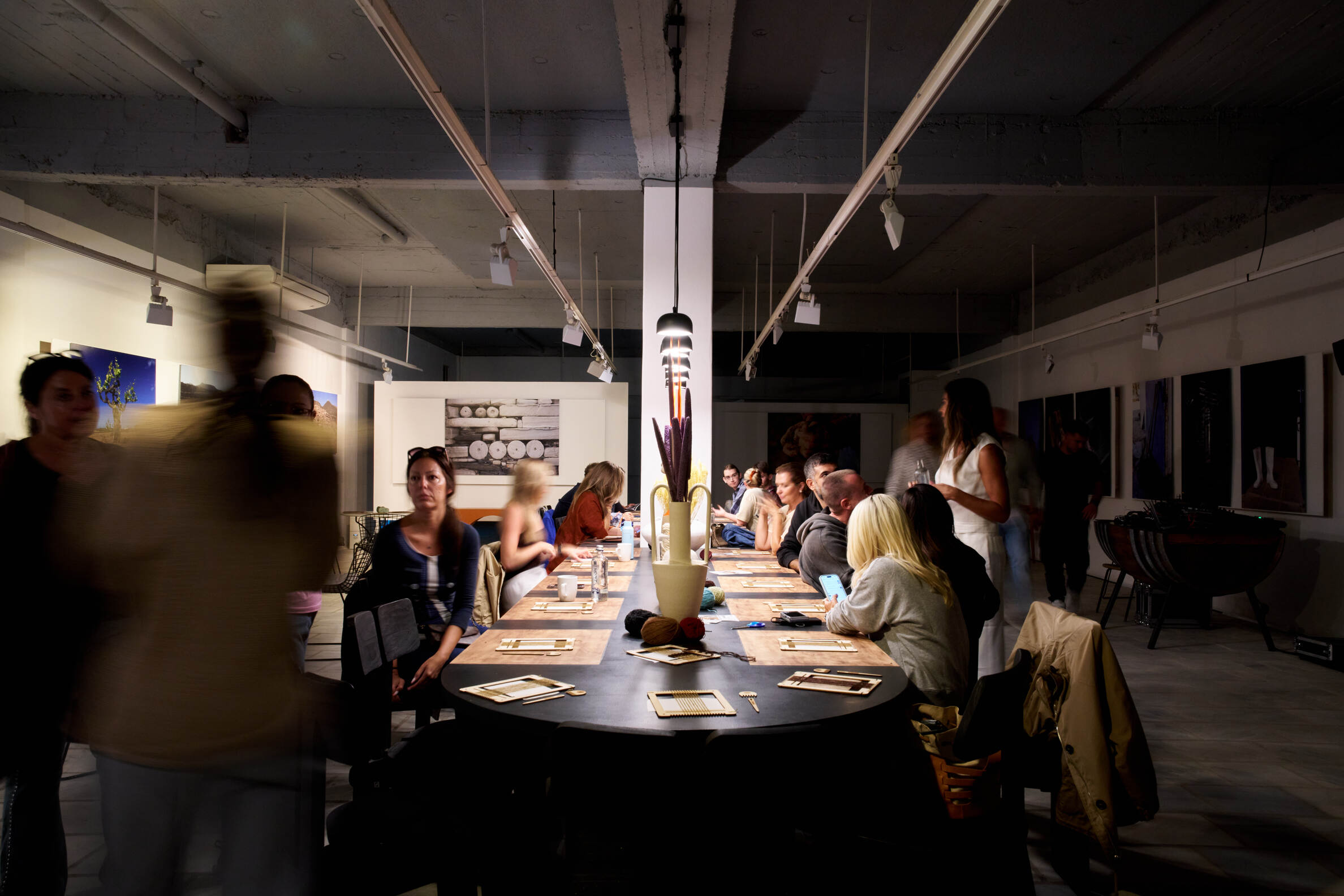
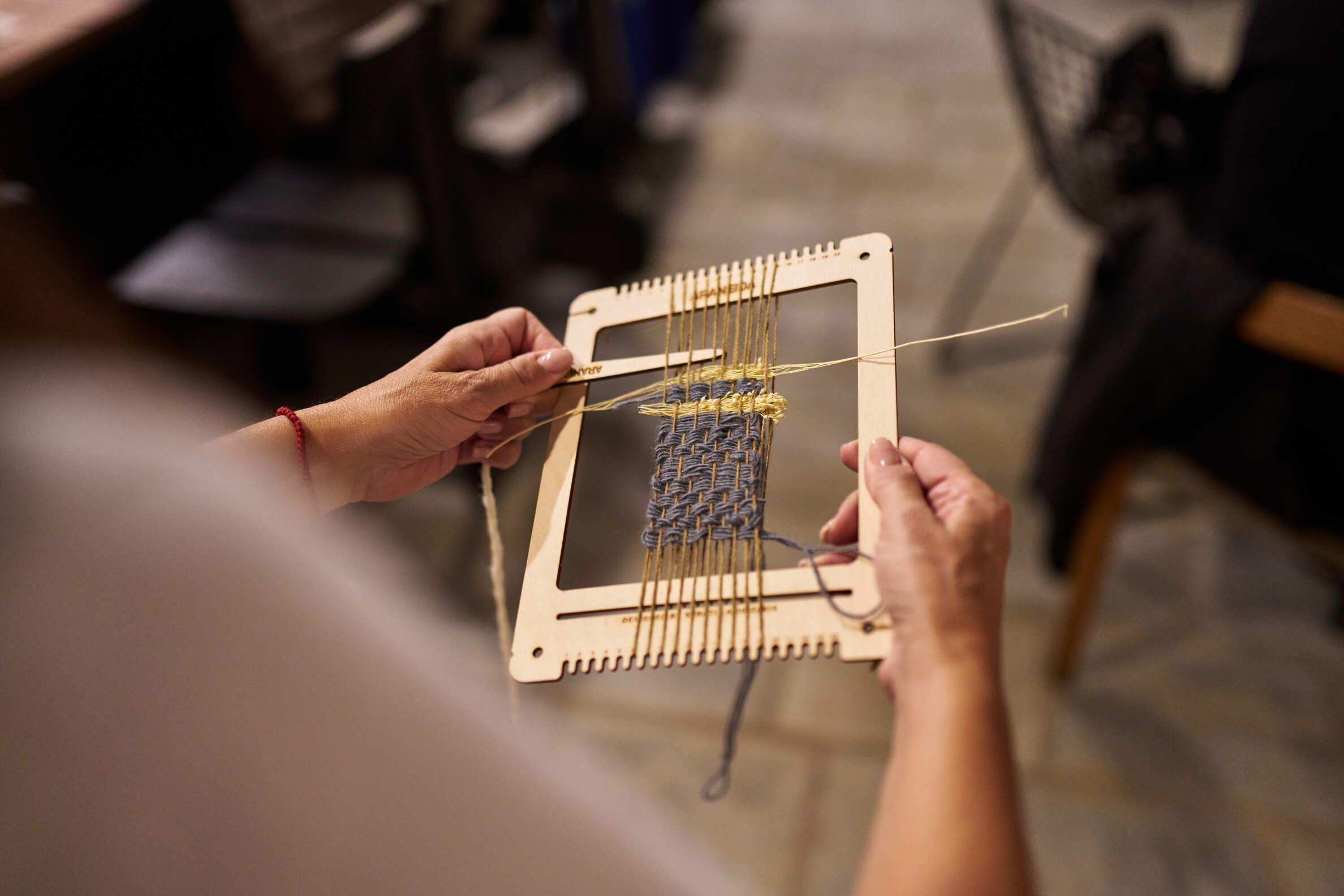
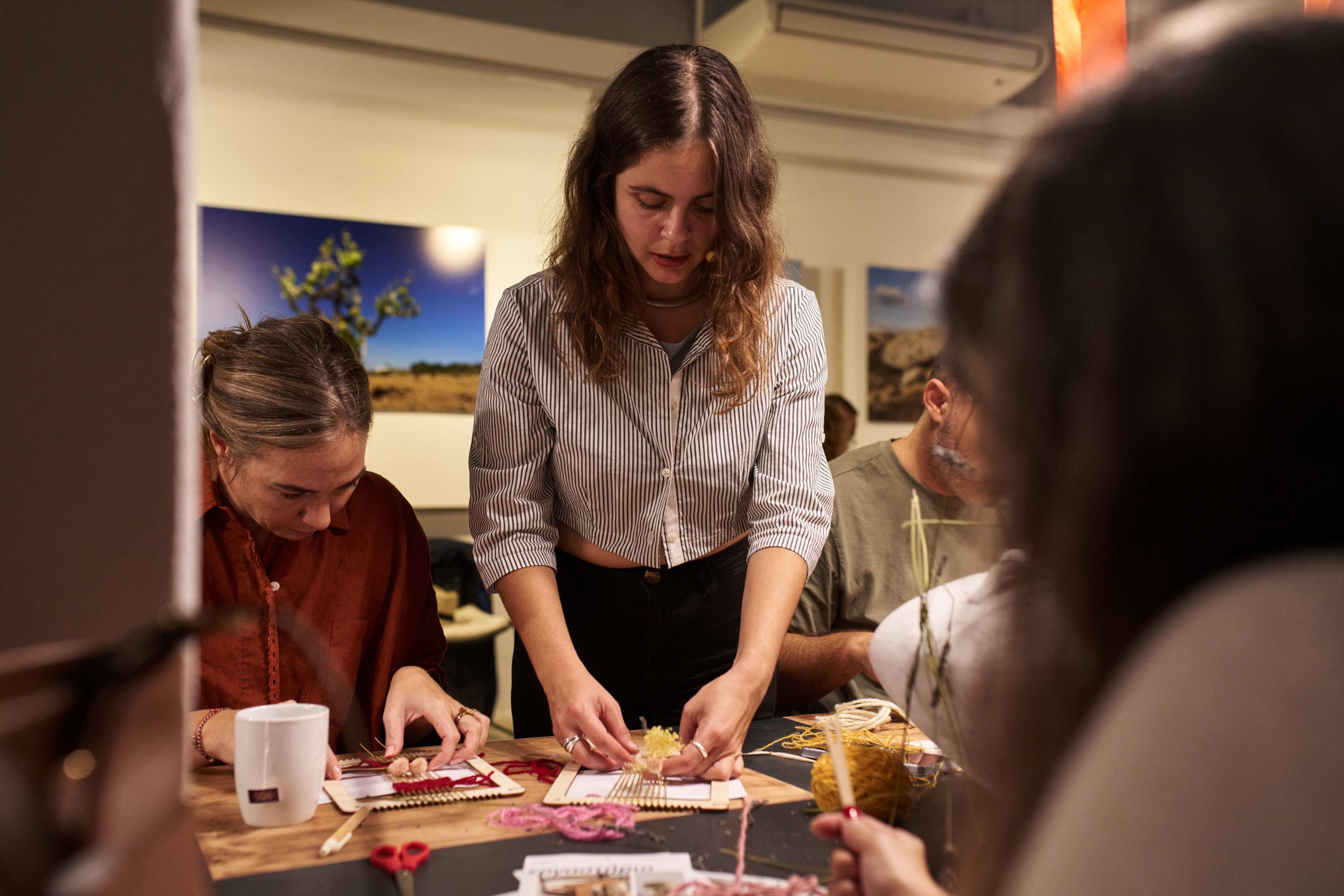
Cycladic weaving workshop led by Eirini Xanthioti of Studio Araneida
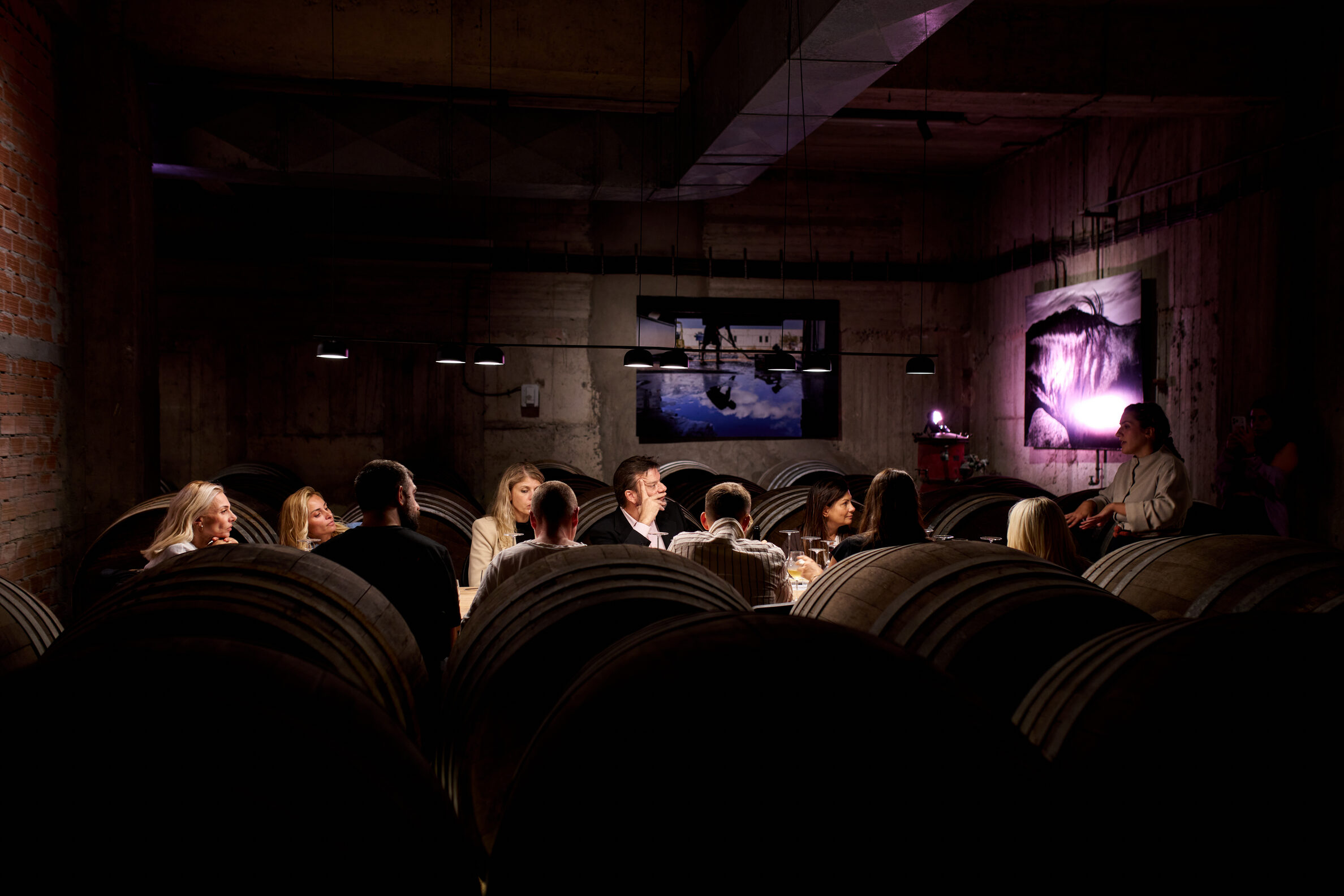
Wine and cheese tasting with local producers at Paros Farming Community

How did the audience respond to PHOS, and what kind of feedback did you receive? Are international guests generally more open to exploring wellbeing?

The response was truly heartening. What made me happiest was people’s willingness to listen, try something new and share their own thoughts.

In many countries, wellbeing is already more deeply integrated into everyday life, with greater familiarity with self-awareness and personal growth. At the same time, I see growing interest in Greece, too, alongside a genuine need for a more conscious relationship with our own wellbeing.

Our country has a unique advantage: the concept of eu zēn, or living well, is deeply rooted in our philosophical tradition and can provide a starting point for an international dialogue on quality of life. I believe we have a great deal to share with the world today, provided we find contemporary ways to express it.

What do you think modern life is missing most, and what is our deepest need? Is the art of living well something we can learn, or must each of us find our own path?

I think what we lack is time. Real time. Time for ourselves, for the people we love, for a conversation, for a moment in which we are not already thinking about what we need to do next.

We are constantly living a little ahead of the moment we are actually in.

Ultimately, I believe we are all searching for balance, connection and meaning. The concept of eudaimonia resonates deeply with me because it does not describe a perfect life. It speaks of a way of living that is cultivated through self-knowledge, relationships and our values.

The art of living well can be nurtured through education, philosophy and experience. Yet each of us must discover our own path and what truly matters to us.

As a member of Design Hotels and a Conscious Hotel, what distinctive qualities does Parīlio offer, and how does it contribute to a wellbeing retreat? How important is this distinction to your international audience?

Parīlio is a place that feels very close to my own aesthetic sensibility. It has a contemporary outlook while remaining deeply connected to Cycladic tradition.

I am particularly interested in how our surroundings influence the way we feel. Light, natural materials, earthy tones, clean lines and the flow of energy all play a part.

Its recognition within Design Hotels as a Conscious Hotel is meaningful because it connects us with an international audience that seeks precisely this kind of individuality and values responsible hospitality. For me, however, the most important thing is to have an identity that stands on its own, beyond any label.

Ultimately, Parīlio’s value lies in the way contemporary creativity enters into a dialogue with its surroundings.

Why was PHOS chosen as the culmination of this immersive experience, and how did the journey lead participants towards the radiant light of the Cyclades?

Light is perhaps one of the most defining elements of Greek identity. It is everywhere: in the landscape, in architecture and in the way we perceive space. For me, however, PHOS carries a second, more inward meaning. It is not only the natural light of the Cyclades, but also light as a symbol of knowledge, self-awareness and clarity.

The entire experience was built around three concepts: Light, Presence and Connection. I wanted it to take us a little beyond the autopilot of everyday life and bring us fully into the present. To move, listen, taste, touch, observe, create and engage in meaningful conversation. To make room for our senses again.

Ultimately, Presence Heals our Senses. Being present helps us reconnect with the things we so often overlook. A fragrance, a sound, a flavour, the light falling on a building, the touch of a material or a conversation around a table can become far more meaningful experiences when we are truly there.

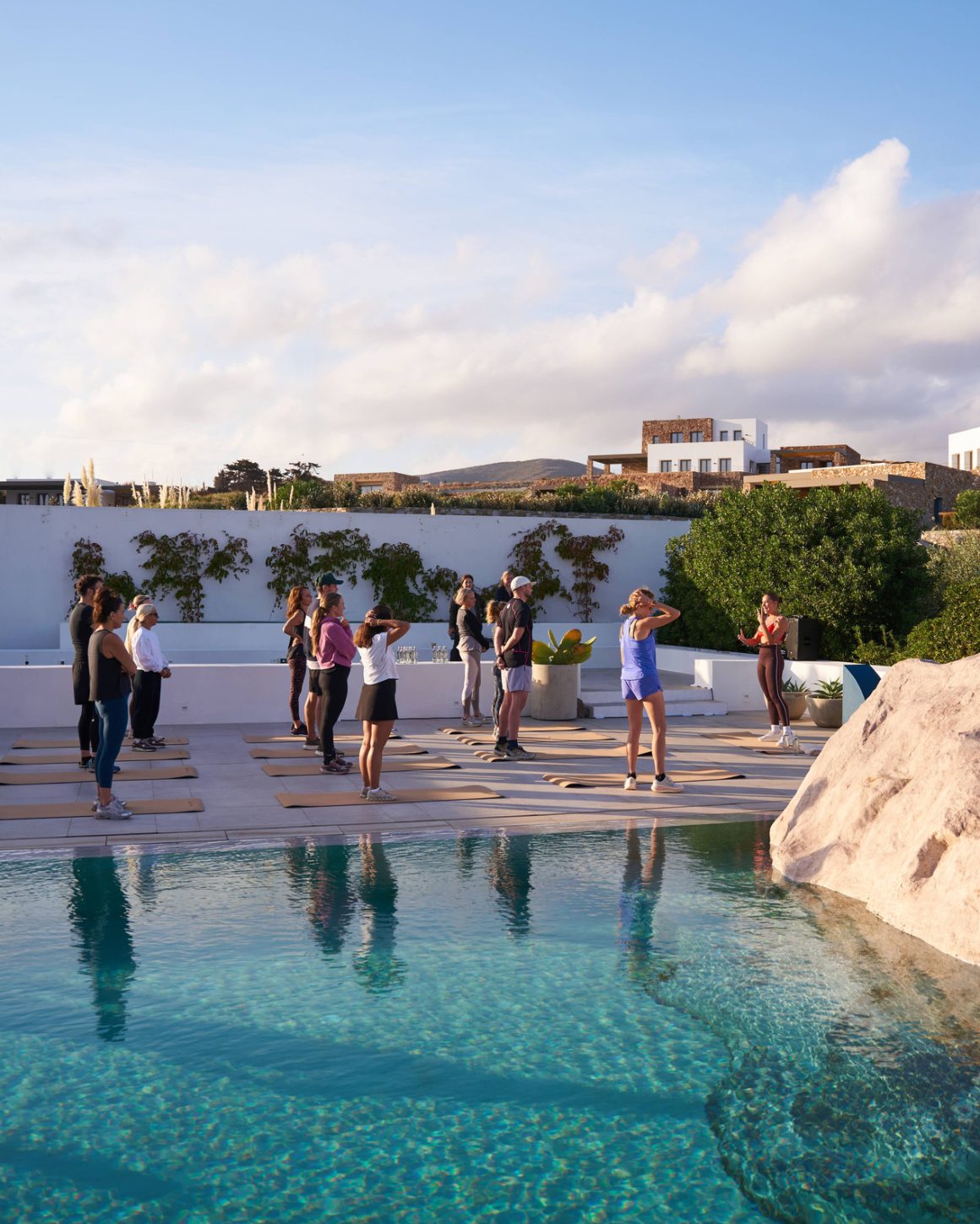
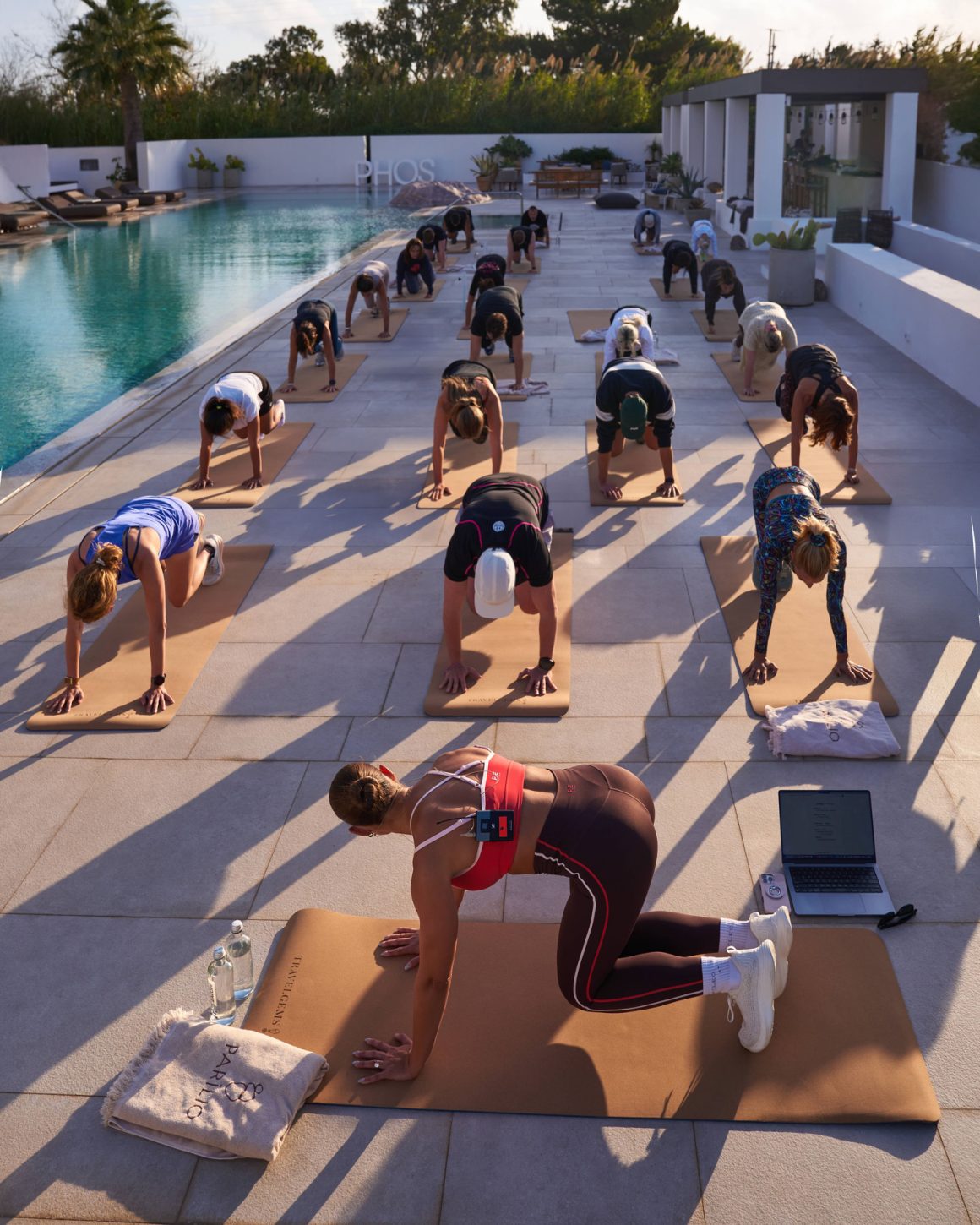
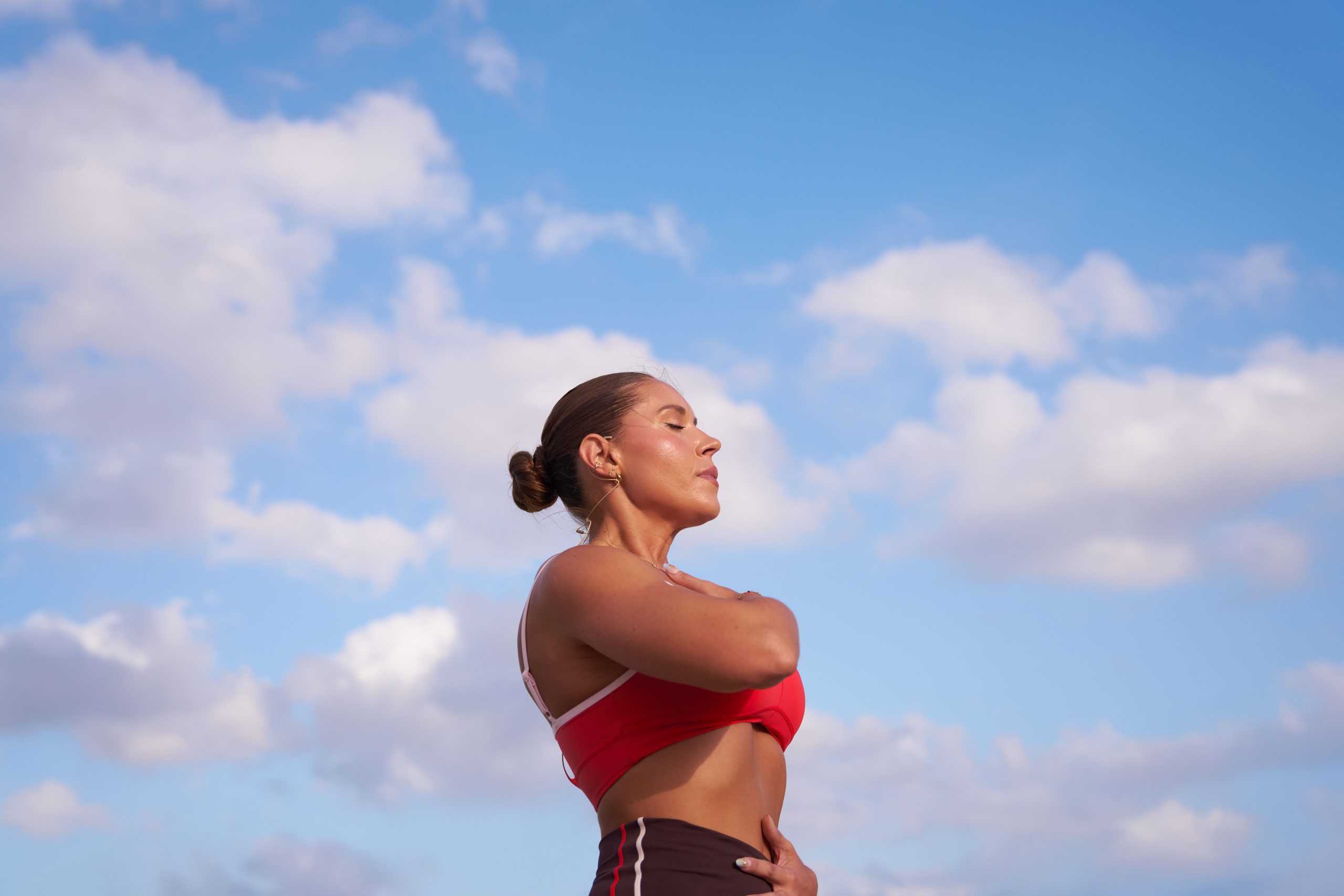
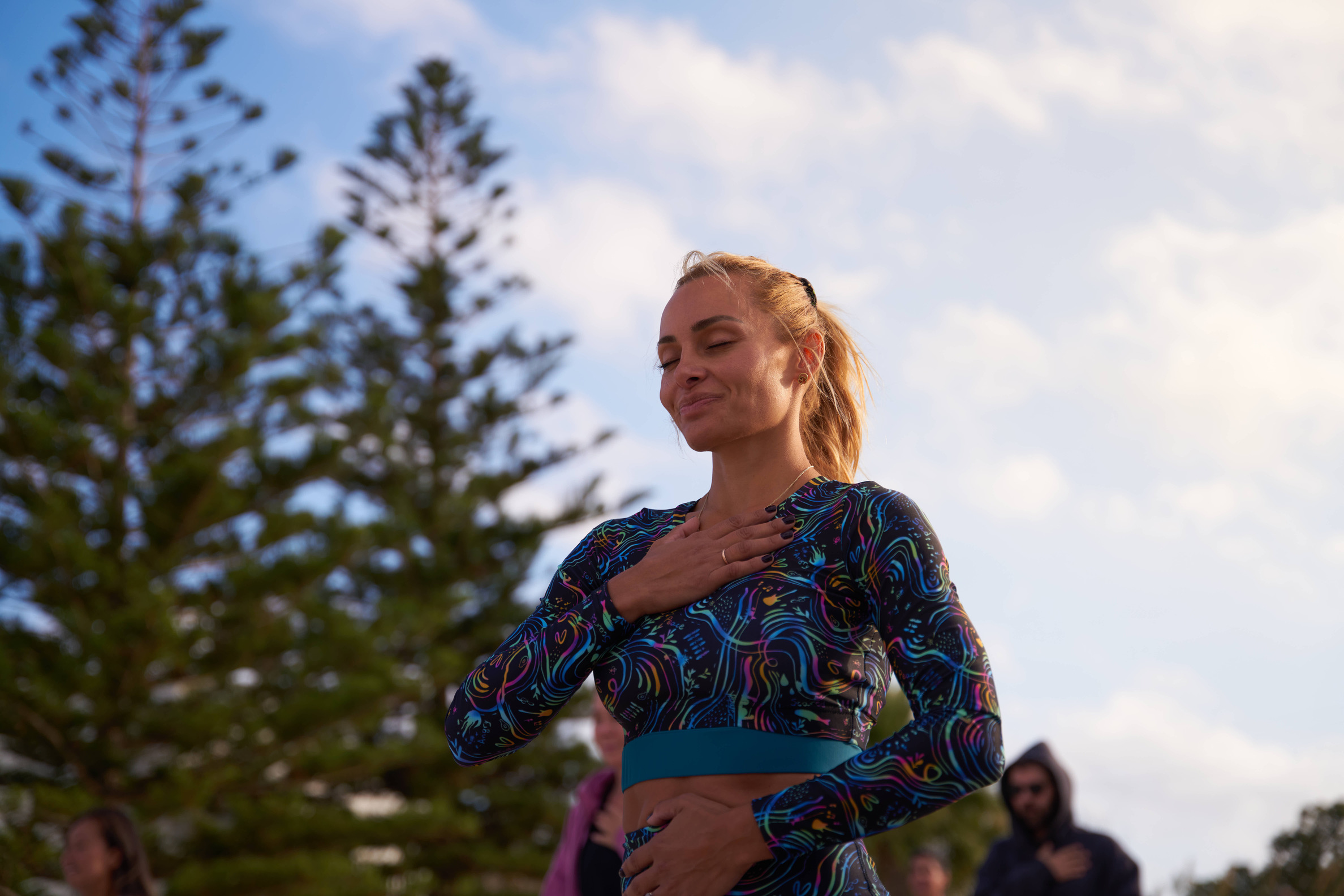
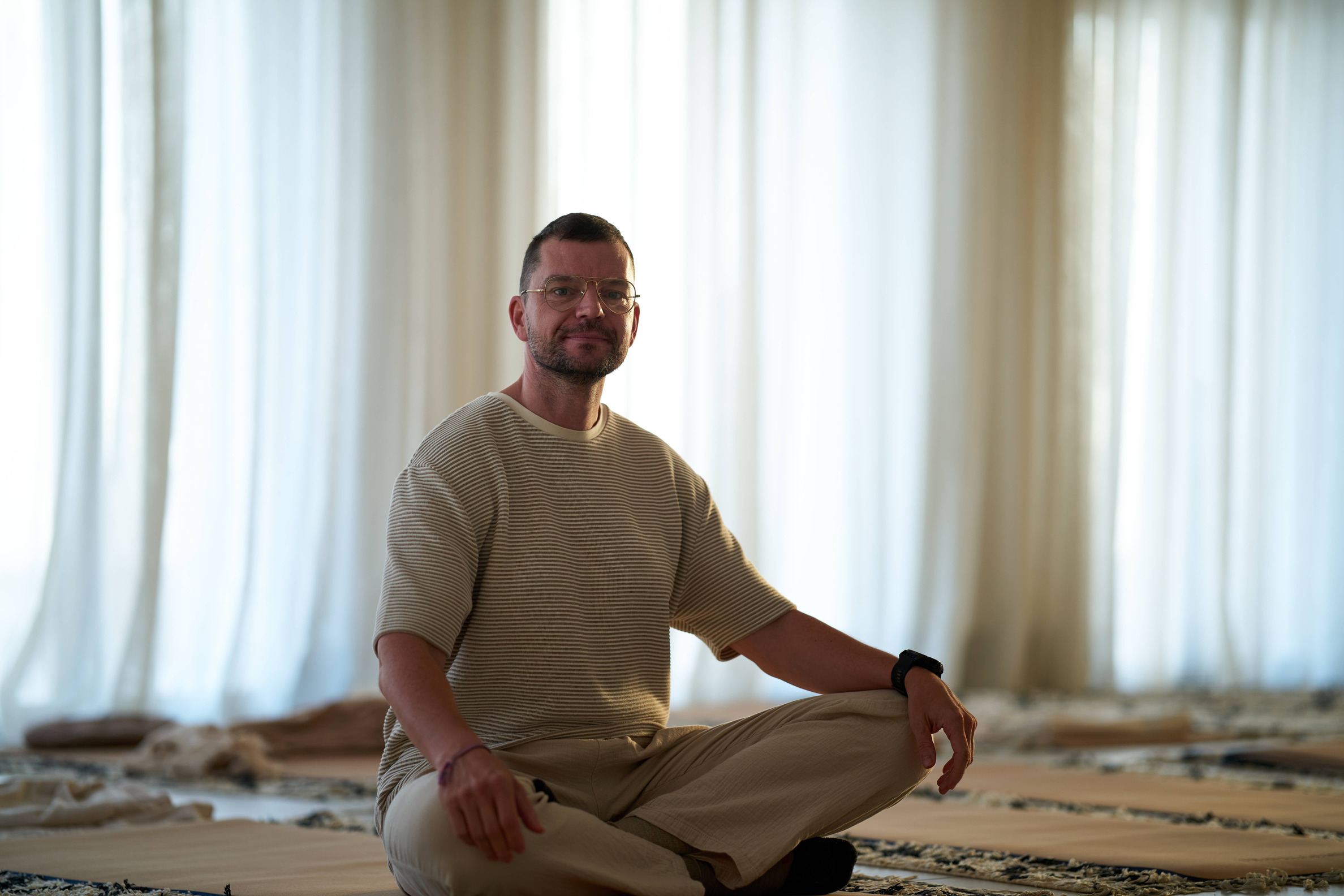
That is why the programme went beyond conventional wellness practices. It brought together movement and sound healing with creative expression, weaving and craftsmanship, gastronomy, and discussions exploring the influence of ancient Greece on creativity, ethics, architecture and design. All these elements shared a common purpose: to foster a deeper relationship with ourselves, with others and, above all, with the place itself.

I wanted participants to have already travelled this inner journey by the time they arrived at the light. For it not to be merely a beautiful Cycladic landscape, but something they could see and feel differently. Perhaps that is ultimately what PHOS is about: seeing our surroundings, the people around us and even ourselves a little more clearly.

I wanted this idea to run through the entire experience. For people to leave with a different thought, a new question or a fresh perspective on something they had always assumed they knew.

What were your own highlights and the most meaningful moments of those three days that you will carry with you?

What I will remember most are the people and the emotions we shared. There is something deeply moving about watching an idea you have envisioned and nurtured with love come to life through other people’s experiences.

I remember the spontaneous conversations, the laughter and the moments of intimacy that emerged among people who had never met before. Those are the moments you cannot plan, however carefully you design an experience.

I left Paros feeling joyful, grateful and inspired for what lies ahead. Above all, I came away with the sense that we had created something particularly meaningful to me: a space where people genuinely connected.

What do you hope for in the future, and what are your next plans?

I want us to continue evolving without losing the curiosity that brought us here in the first place.

For Empiria Group, I hope we will continue creating distinctive hospitality experiences that are meaningfully connected to Greece and the places in which we operate, while investing in the people who bring them to life.

As for PHOS, I would like to let it evolve organically. New themes, new people and new collaborations can bring Greek philosophy closer to contemporary everyday life. I like to leave room for ideas to mature. More than anything, I want to keep creating things that inspire me and offer genuine value to others.

How do you personally unwind and maintain your emotional wellbeing, calm and balance?

When you love what you do, switching off is not always easy.

For me, nature, and particularly the sea, always works as a reset. I love walking, quiet moments and spending time with the people closest to me.

I also try to leave room for spontaneity and the small pleasures of everyday life. And I have learned to appreciate humour enormously. I think it is important not to take everything too seriously. For me, balance means recognising what I need at any given moment and returning to the things that make me feel good.

What do you most love doing, and how do you feel your aesthetic sensibility has evolved over time?

I love travelling, observing and meeting people. I think I have drawn more inspiration from people and travel than from anything else.

Architecture, art and design remain constant sources of inspiration. I am fascinated by the way a space can tell a story through its materials, light, proportions and atmosphere, without needing to explain itself.

My aesthetic sensibility has changed over the years. Today, I am more moved by simplicity, naturalness and timelessness.

I am less interested in what impresses at first glance and more drawn to things you discover gradually, things that leave room for you to develop your own relationship with them.

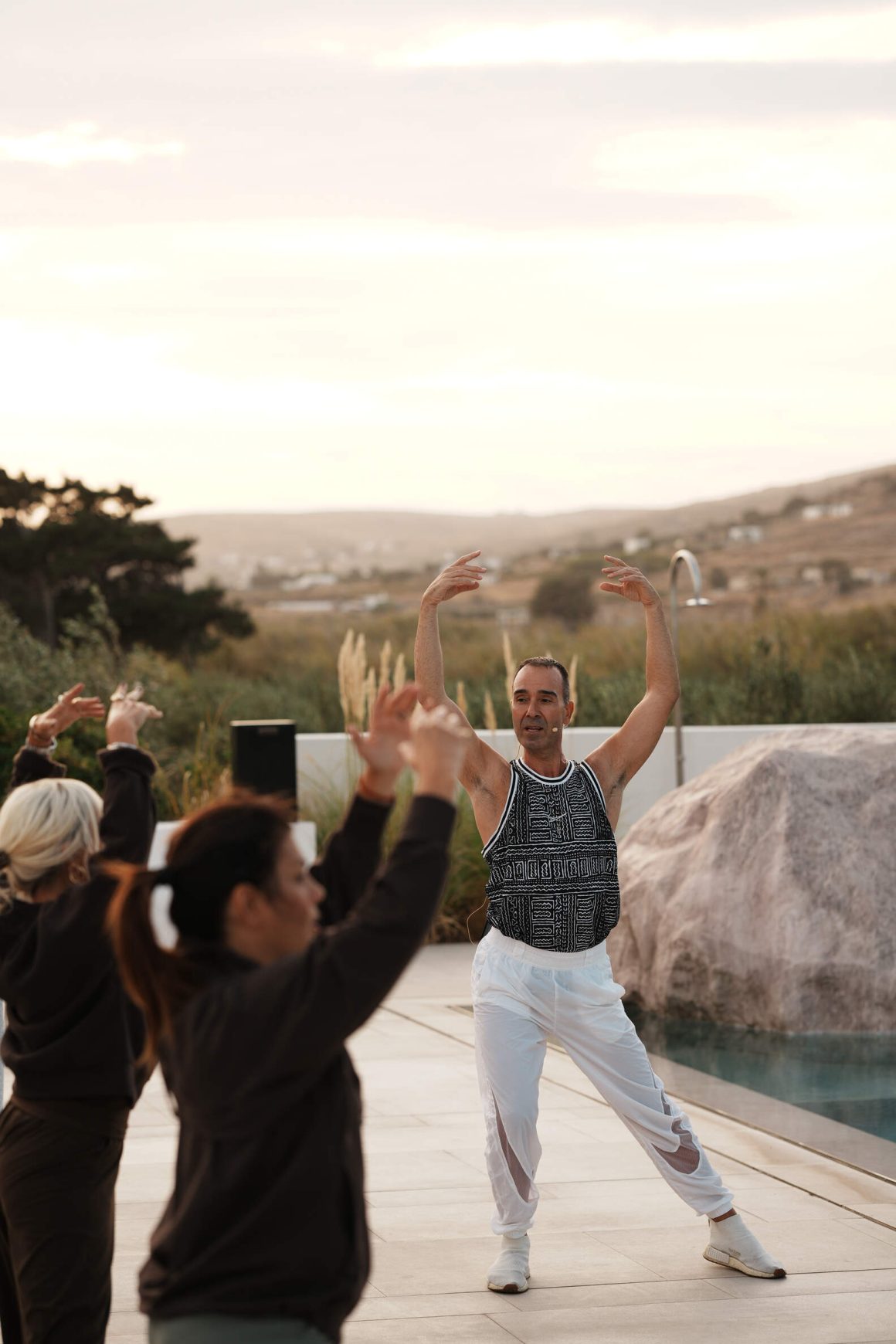
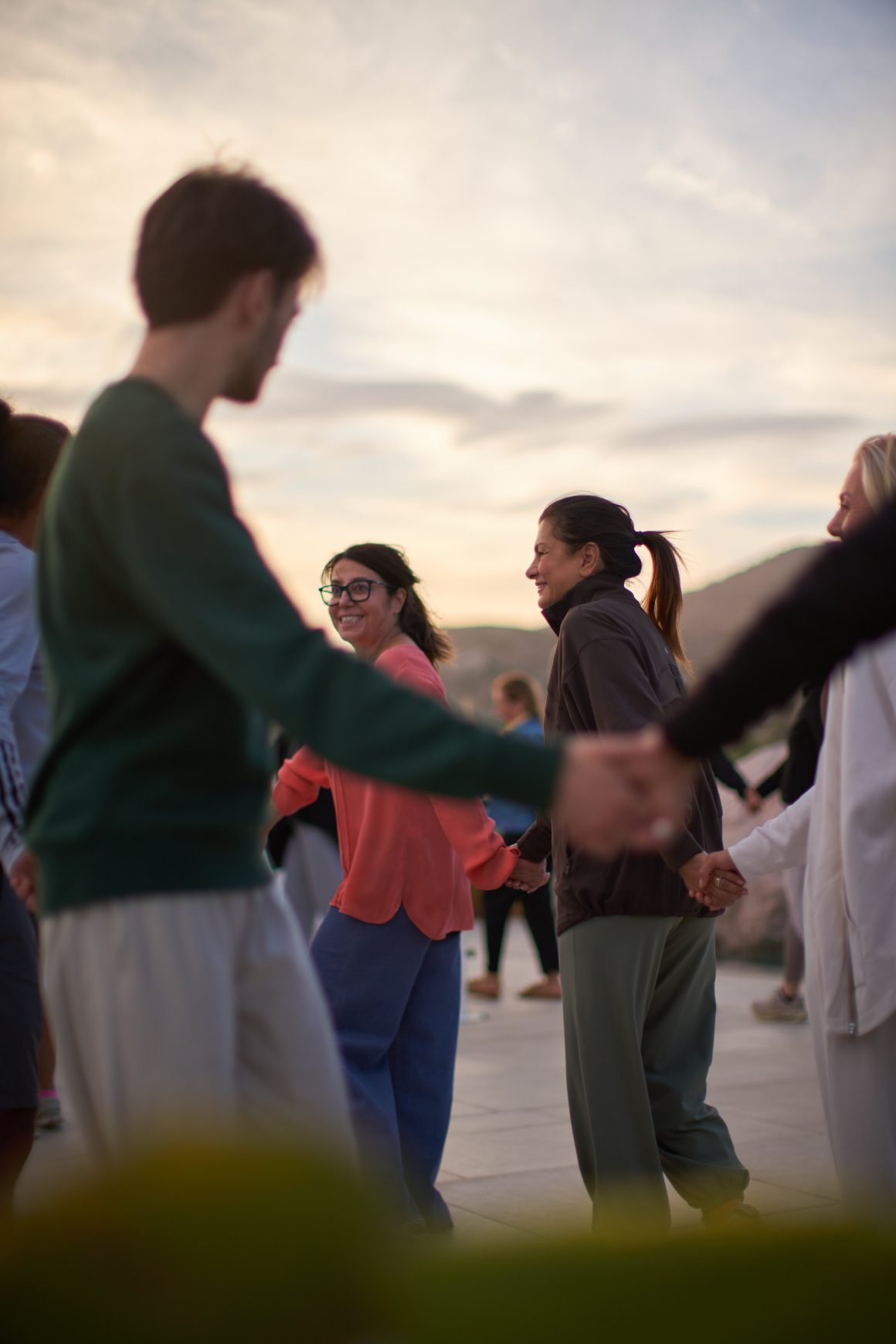
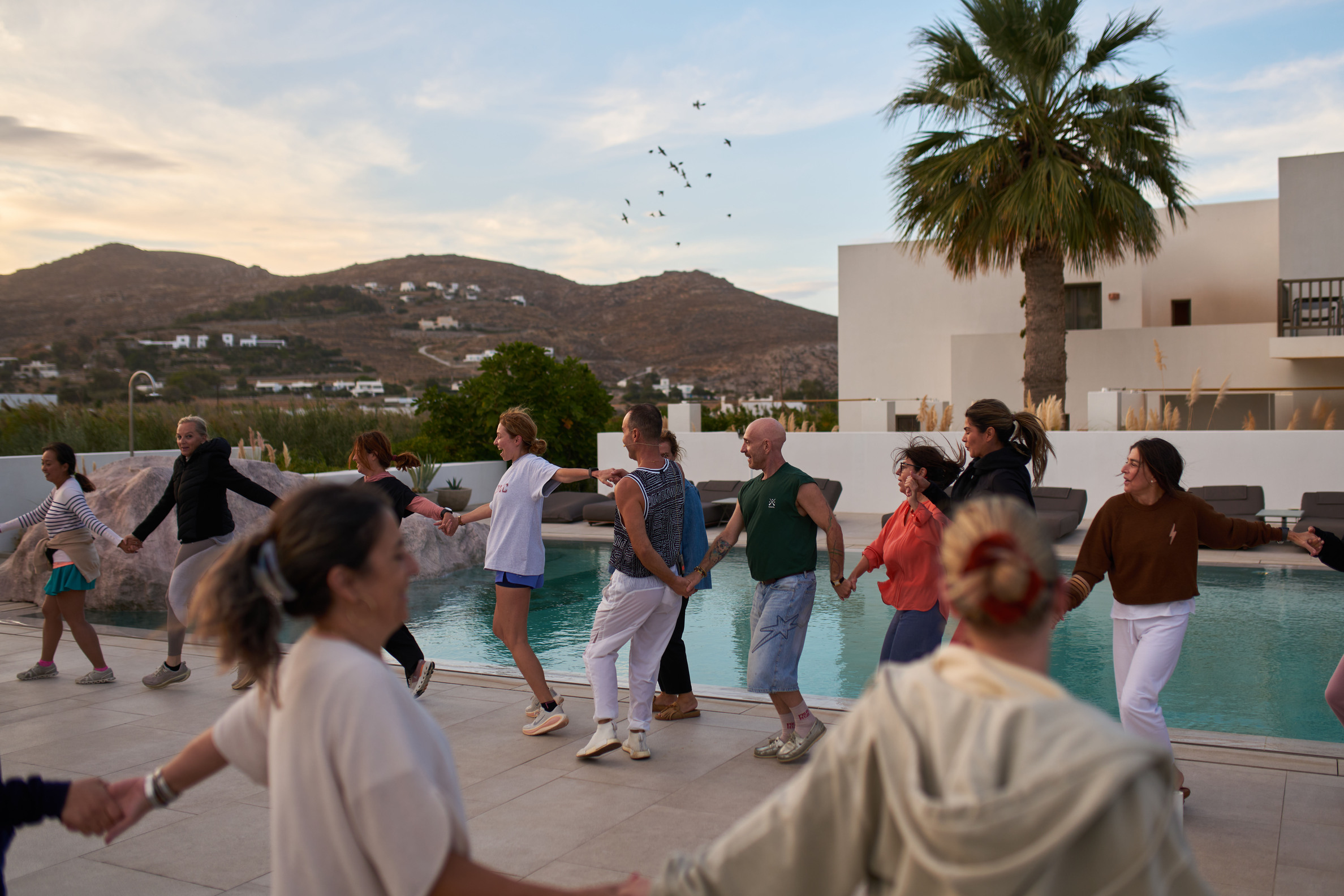
Dance movement therapy sessions by Themistoklis Pavlis

What do you consider your most significant achievements, and which of your business ventures feel like your favourite children?

I think one of the most significant achievements has been the evolution of Empiria Group into a hospitality group with a clear identity and a team of people who share a common vision.

Each hotel has its own personality and its own place in our story. Vedema is deeply connected to the beginnings of our journey, Mystique to Santorini’s extraordinary landscape, and Istoria to a more intimate approach to hospitality. Parīlio expresses the simplicity of the Cyclades, while Cosme reveals a more outward-facing side of our vision through the lens of Paros. Eréma in Milos is perhaps our quietest, most elemental expression to date: a hotel born from the landscape itself, from the island’s rocks, colours, sea and profound sense of freedom.

I could never choose a favourite. It would be a little like asking me to choose a child. Each hotel is connected to different people, experiences and moments in our lives. More than the end result, what makes me proud is that we continue to create with the same desire to evolve.

What are the non-negotiable values at the heart of your family’s business?

Respect, integrity, consistency and genuine care for people.

At Empiria Group, the principles that guide us are passion, joy, continuous evolution, and leadership with courage and responsibility. I strongly believe that a company’s values are revealed not by what it says, but by how it operates every day.

For us, everything begins with people: how we treat our partners, the opportunities we offer our teams and the relationships we build with local communities.

I believe true success is measured not only by what we achieve, but also by how we achieve it: moving forward without losing sight of the way we want to live and work.

How has your philosophy of contemporary living evolved over time, and what do you believe holds particular value today?

The older I get, the more I appreciate simplicity.

We live in an era that constantly tells us to do more, acquire more and move faster. Today, I place greater value on time, tranquillity, human relationships and the freedom to choose how we want to live.

I also think the meaning of luxury has changed. Luxury can be a beautiful space, a meaningful conversation, a moment in nature or simply having the time to enjoy something without rushing.

Ultimately, perhaps the greatest luxury today is our attention: where we choose to direct it.

I am fascinated by the idea of a space or platform where hospitality meets culture, knowledge, art and personal wellbeing. A meeting place for people from different places and creative disciplines, where you can learn something, find inspiration, exchange ideas and meet someone you might never otherwise have encountered.

PHOS is a first step in that direction. I would like to continue exploring how Greek philosophy and the concept of eu zēn, or living well, can take on a contemporary, international dimension.

I do not want to have all the answers just yet, though. Often, the most interesting ideas emerge when you leave a little room for the unexpected.

Three places you love returning to, and why.

The Cyclades. So much of my personal and professional life has unfolded there, yet every return brings a new discovery. The light of Santorini continues to captivate me, no matter how many years pass. Paros has an effortless sense of freedom, at once vibrant and deeply peaceful. And Milos, with its unexpected colours and contrasts, reveals itself differently every time.

Mani. Our home is in Oitylo, where Korona Boutique Hotel is also located. It is a place of striking simplicity, almost austere, and that is precisely its appeal. The stone, the towers, the sea stretching towards the horizon, the feeling that time moves at a different pace. Mani is not somewhere I simply visit. It is somewhere I return to.

Mexico. Every time I have been there, I have felt a powerful sense of connection, as though the place speaks to something deep within me, despite being so far away. The colours, the people, the cuisine, the way the ancient coexists with the contemporary. Mexico is a place that never seems to end, and I always leave wanting to return and discover something more.

What connects all three is their strong sense of identity. They do not try to be something else, and perhaps that is precisely why I keep returning.

How would you define beauty?

For me, beauty is not something you simply see. It is something you feel.

It does not announce itself or seek to impress. It possesses truth, harmony and an effortless confidence. You find it in the light falling across a stone wall, in a work of art that makes you pause a little longer. But often, you find it where you least expect it: in a gesture, an act of generosity or the way someone cares for another person.

The beauty that moves me most does not reveal itself at first glance. It takes time. It has depth, character and a story to tell. And in a world that never stops moving, perhaps that is the rarest luxury of all: something that makes you pause.

What does authenticity mean to you today?

For me, authenticity means remaining true to your essence. In an era when everything can be turned into an image and put on display, I believe authenticity is almost a form of freedom: knowing who you are, what you believe in and what matters to you, without constantly feeling the need to follow others or live up to their expectations.

The same applies to a person, a place or a space. An authentic place has its own history, its imperfections and its own distinct personality. It does not need to become something else to be interesting.

Authenticity requires self-awareness, honesty and, at times, courage. And perhaps that is what I value most today: what is genuine. What does not try too hard to please, and is all the more moving because of it.

Kelsey Wells
Vasiliki Millousi
Sukkhadas

Author