Your impressively creative journey has had its twists and turns. What were the key steps that brought you to where you are today?

My path is not a straight line, but a series of shifts. A defining moment was when, at 27, I found myself at the School of Fine Arts in Cluj-Napoca, in Transylvania. After a trajectory as a mechanical engineer and studies in Industrial Design in Glasgow, I felt a genuine sense of liberation for the first time. I found my place and my people. I focused solely on painting. I feel very fortunate because, in these life decisions and new beginnings, I encountered acceptance, guidance, and an environment that allowed me to truly move toward what I wanted to do.

Another important milestone was the founding of space52 eight years ago in Athens—an artist-run space that operates as a field of experimentation. More than an exhibition space, it is a platform that activates ideas, collaborations, and new forms of coexistence within contemporary art.

How did the story of discovering a creative perspective in the arts begin, and how has it evolved over time?

The initial idea was not clear—it was more of a need: to understand the world through forms. Over time, this evolved into a conscious practice where memory, history, and architecture function as raw materials. Art became a way of “holding on” to moments that would otherwise be lost.

You move between sculpture, visual art, and more, maintaining a broad approach to creation. How do you keep balance, and in what ways do you express yourself?

I don’t think of mediums as separate categories. For me, they are different languages serving the same thought. Each work “asks” for its own medium. Sometimes it is a drawing, other times an installation or an action. Balance comes from intention, not form.

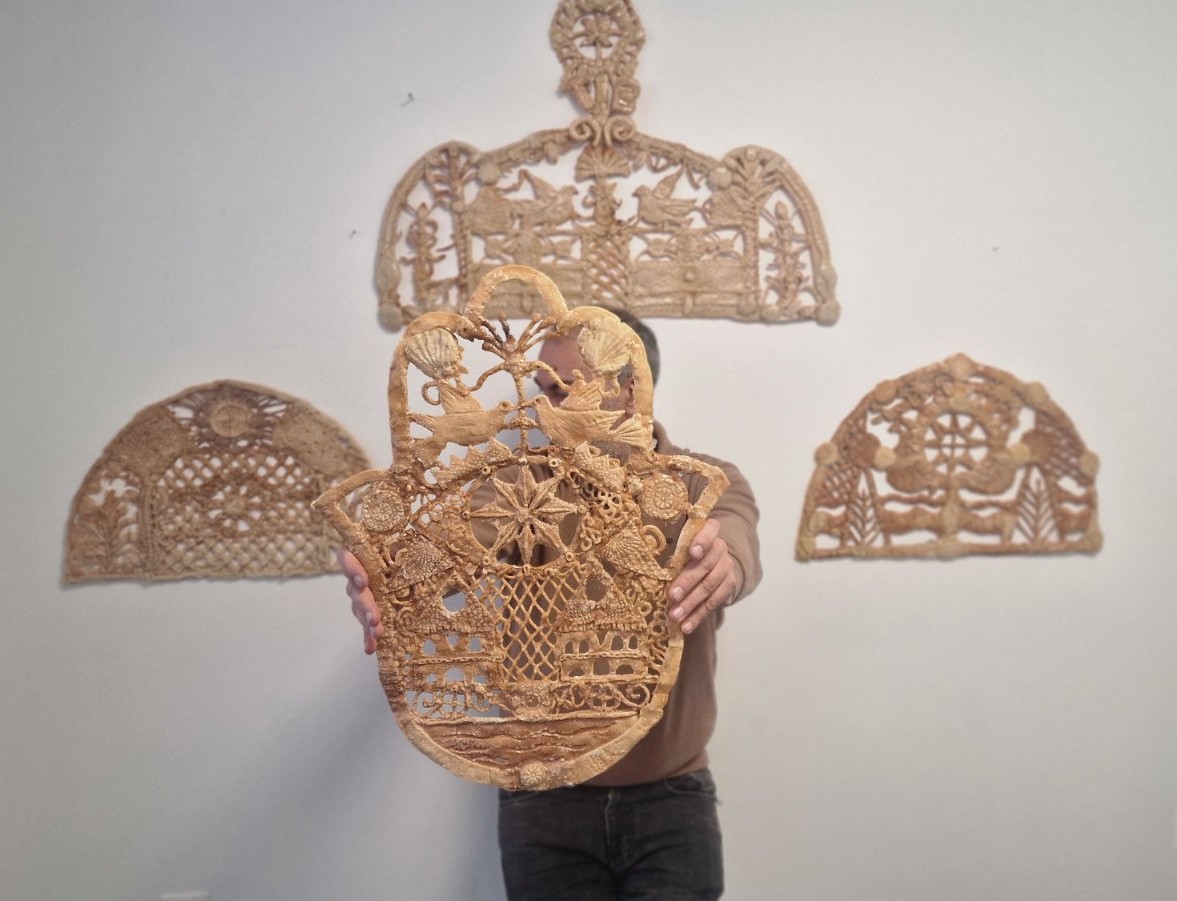
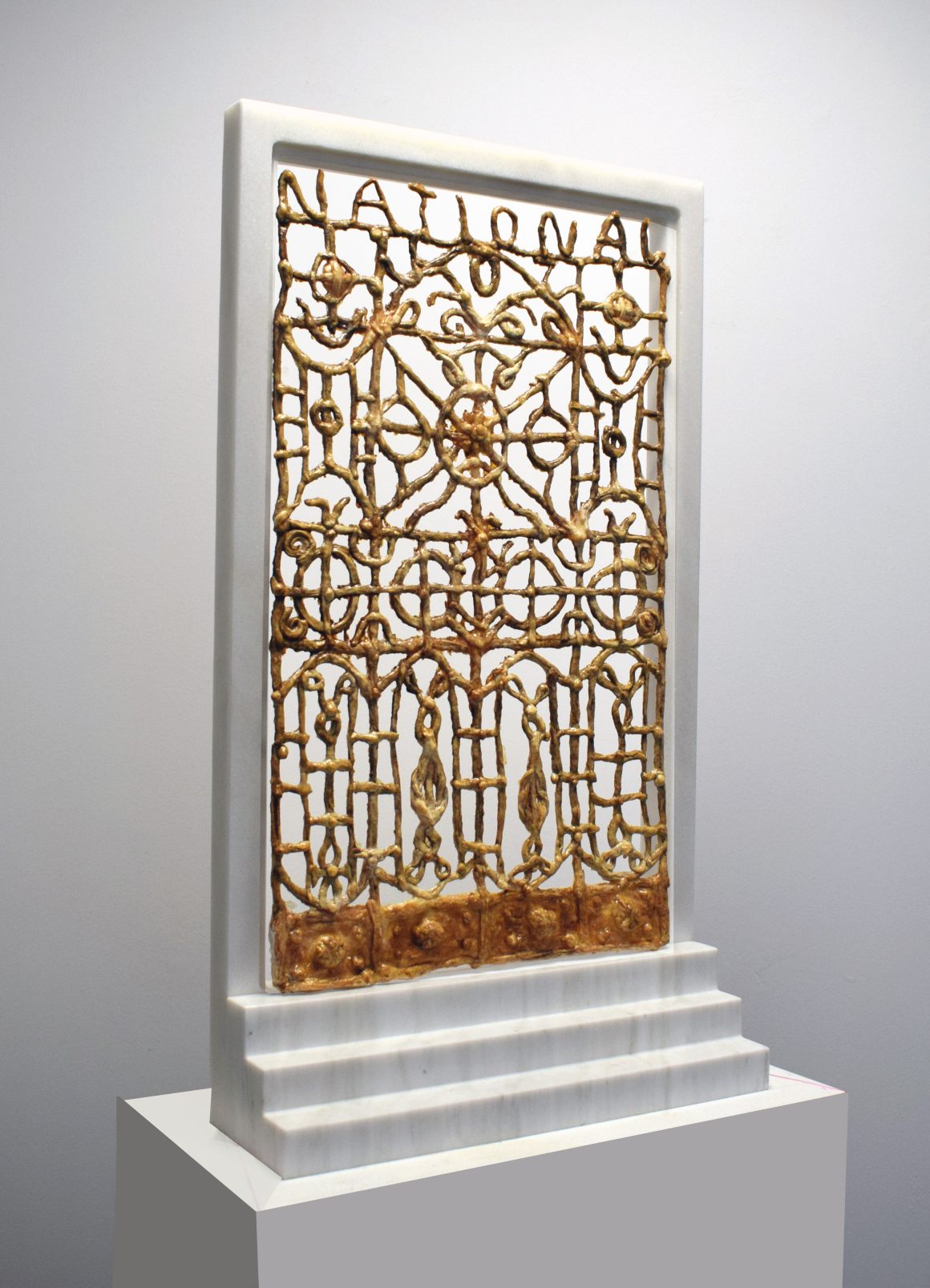
My sculpture, however, always begins with painting and drawing. Form emerges as if it is built through brushstrokes on a canvas—as a process of gesture and accumulation. In my recent works, such as Yperthyra Psomia, this relationship becomes more visible: traditional motifs are translated into sculptural forms made of dough—an unconventional and fragile material which, through fire, acquires an almost lace-like, architectural quality. There, drawing does not remain on the surface but transforms into a body—into a trace suspended between the domestic, the ritualistic, and the sculptural.

At the same time, I am particularly interested in works that incorporate process and care as fundamental elements. I am concerned with the relationship to tradition and manual practices—repetition, time, and the physicality of making. In this sense, the work is not only a result, but a journey that integrates memory and experience.

Within this framework, my practice often opens up to collaboration. I am interested in the meeting of different voices—artists, theorists, as well as people outside the art world—as a way of expanding the work itself. This is also how space52 operates: as a place that brings together diverse practices and perspectives from around the world, creating a shared field of experience and exchange.

Lintels, inert dough, various dimensions.
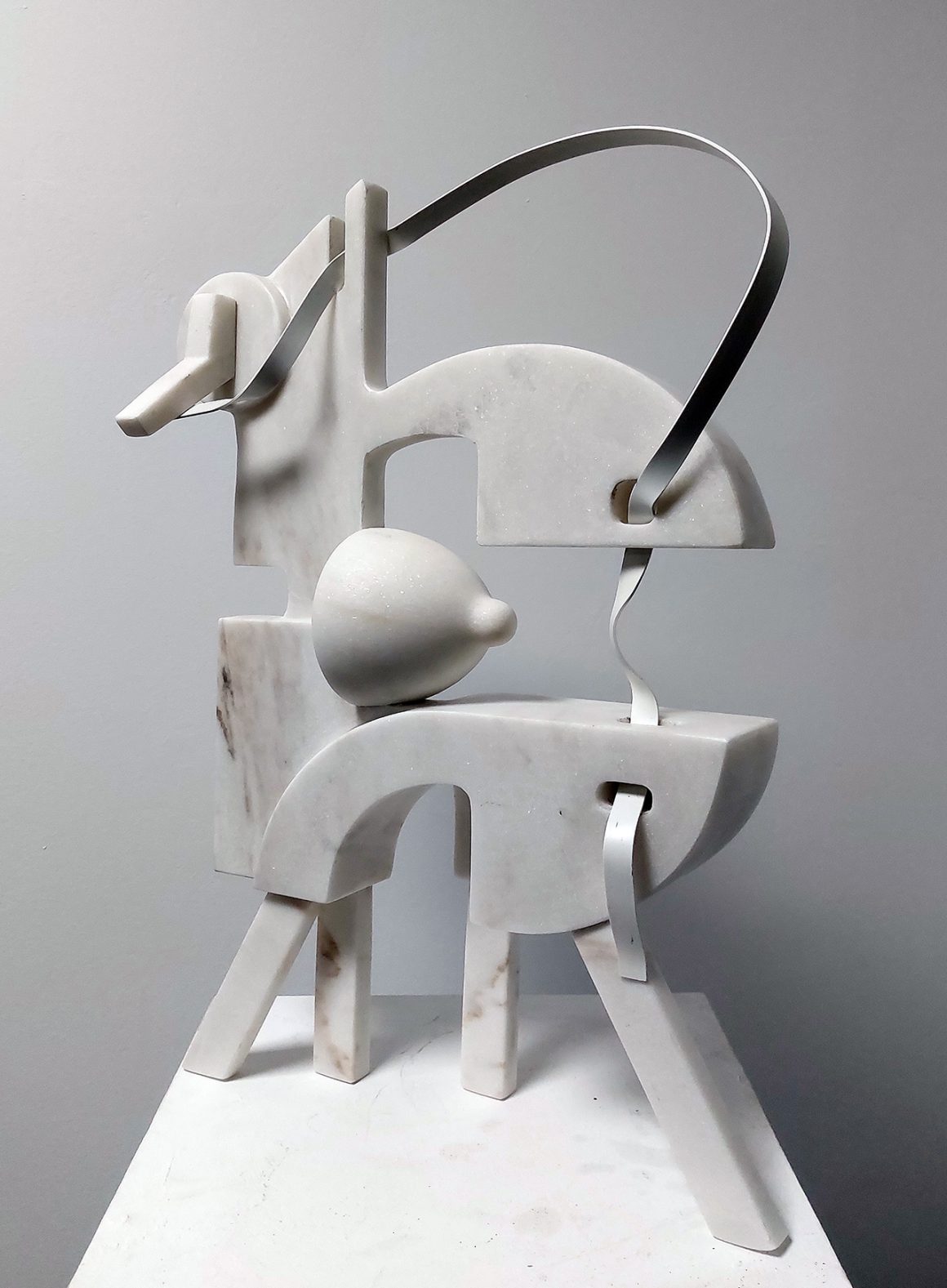
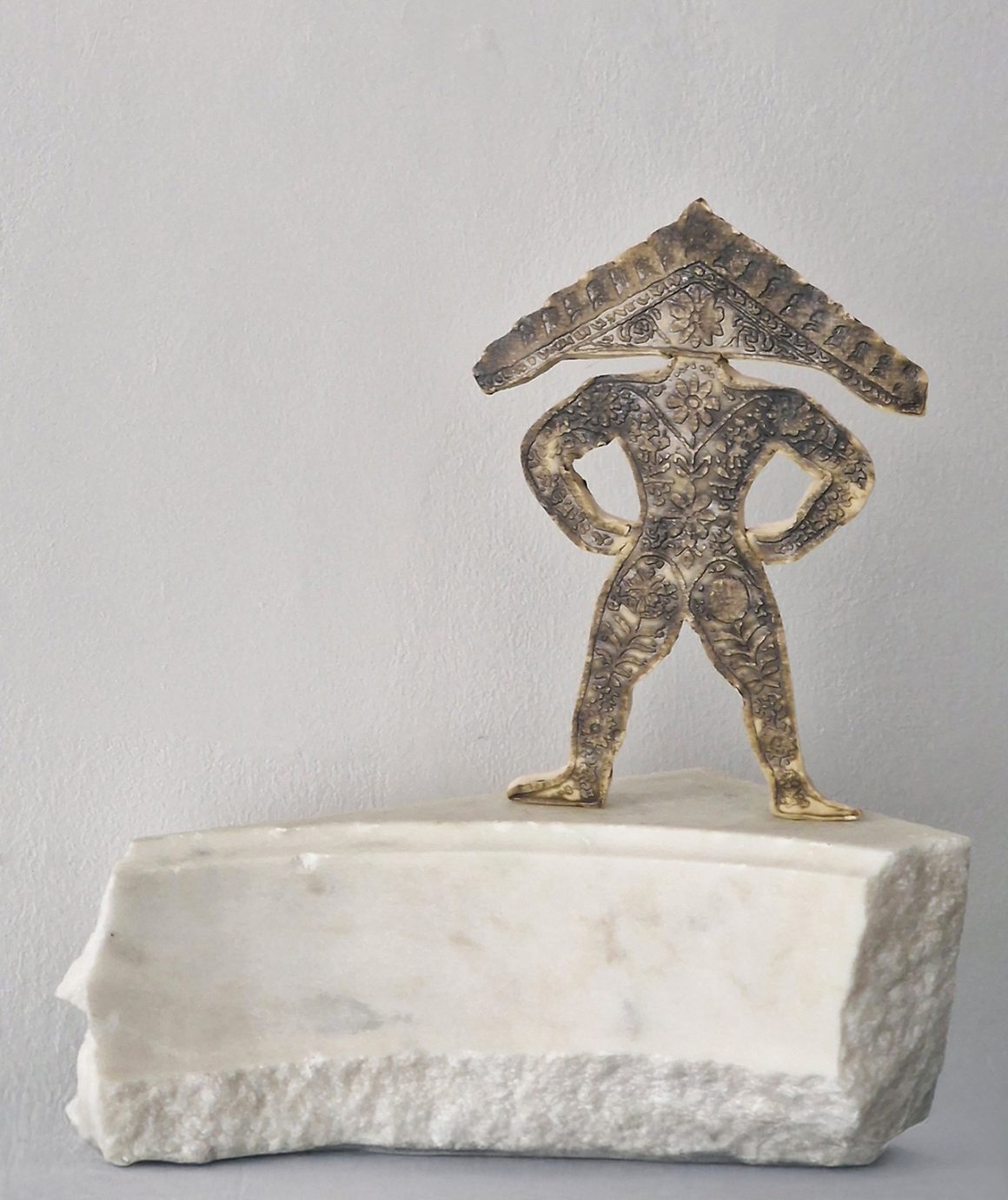
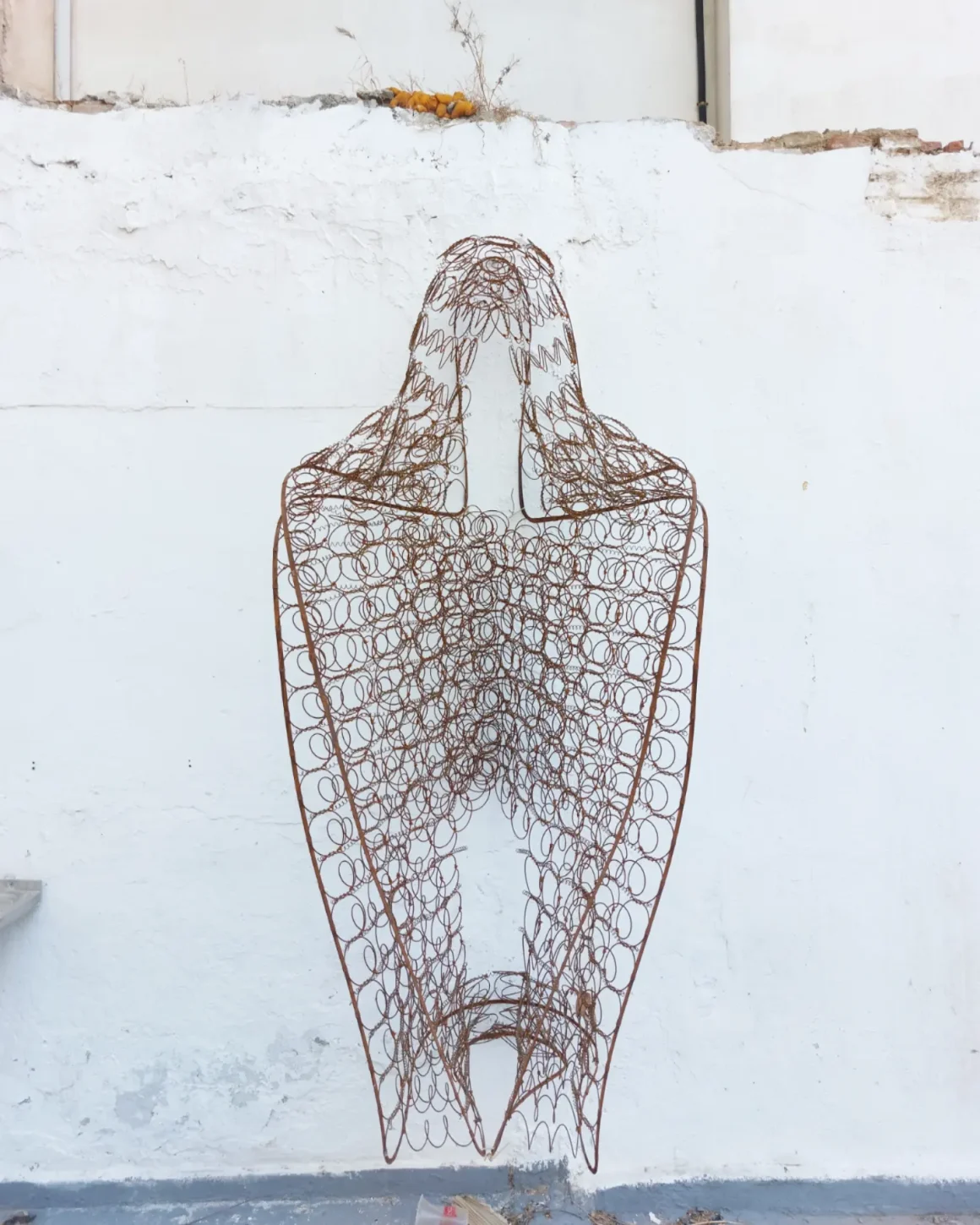
Μechanical body #1, marble, pcv, 26x15x65cm, Dionisis Christofilogiannis
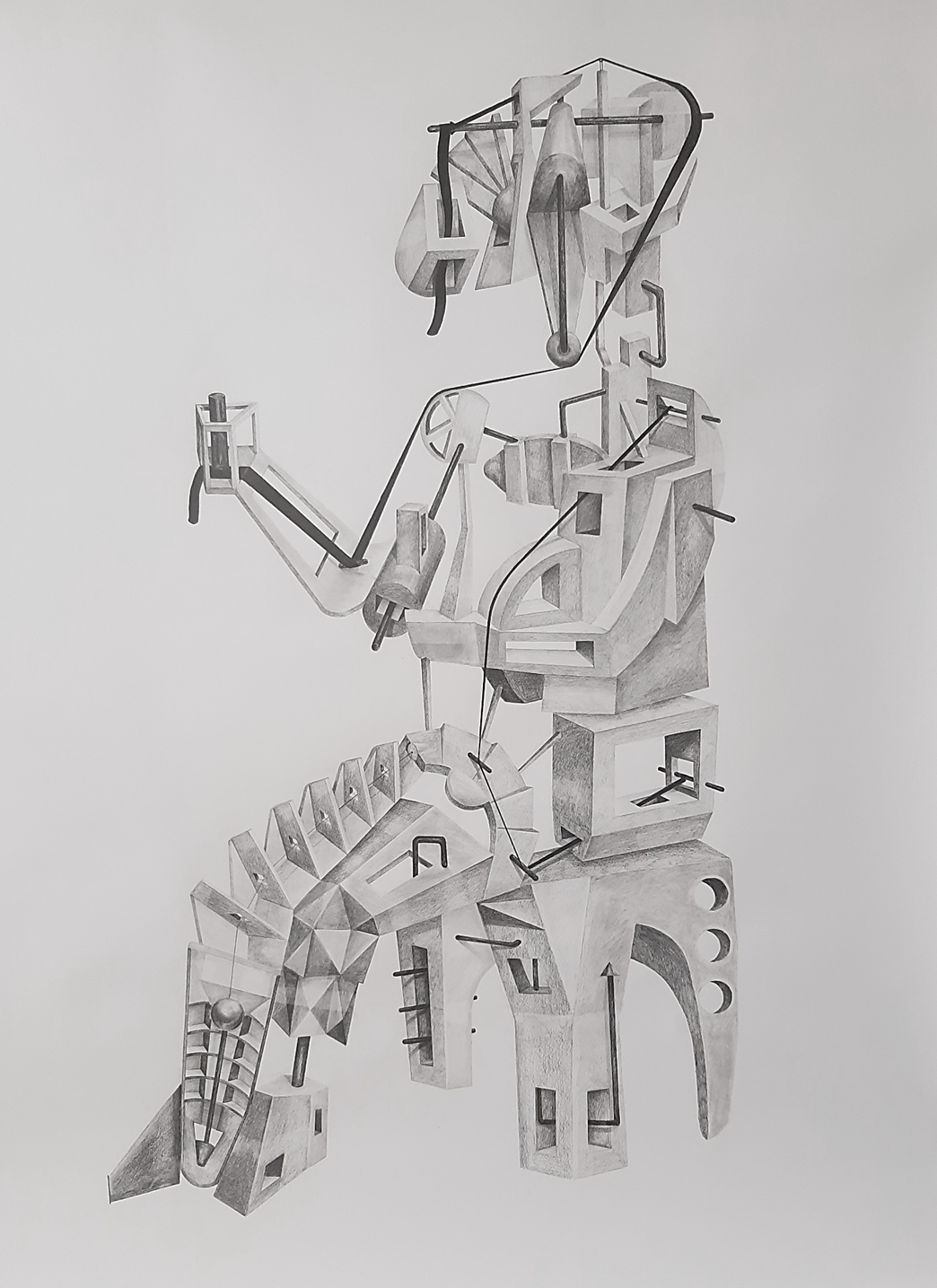
Mechanical Cycladic body, Drawing, 180x200cm

What influences does your work draw from Greece and its tradition, and how do you feel your aesthetic is evolving?

Greek tradition operates within me more as a substratum than as a direct reference—through geometries, traces, and their erosion. I’m interested in how these elements are activated in the present, not as reproduction but as transformation.

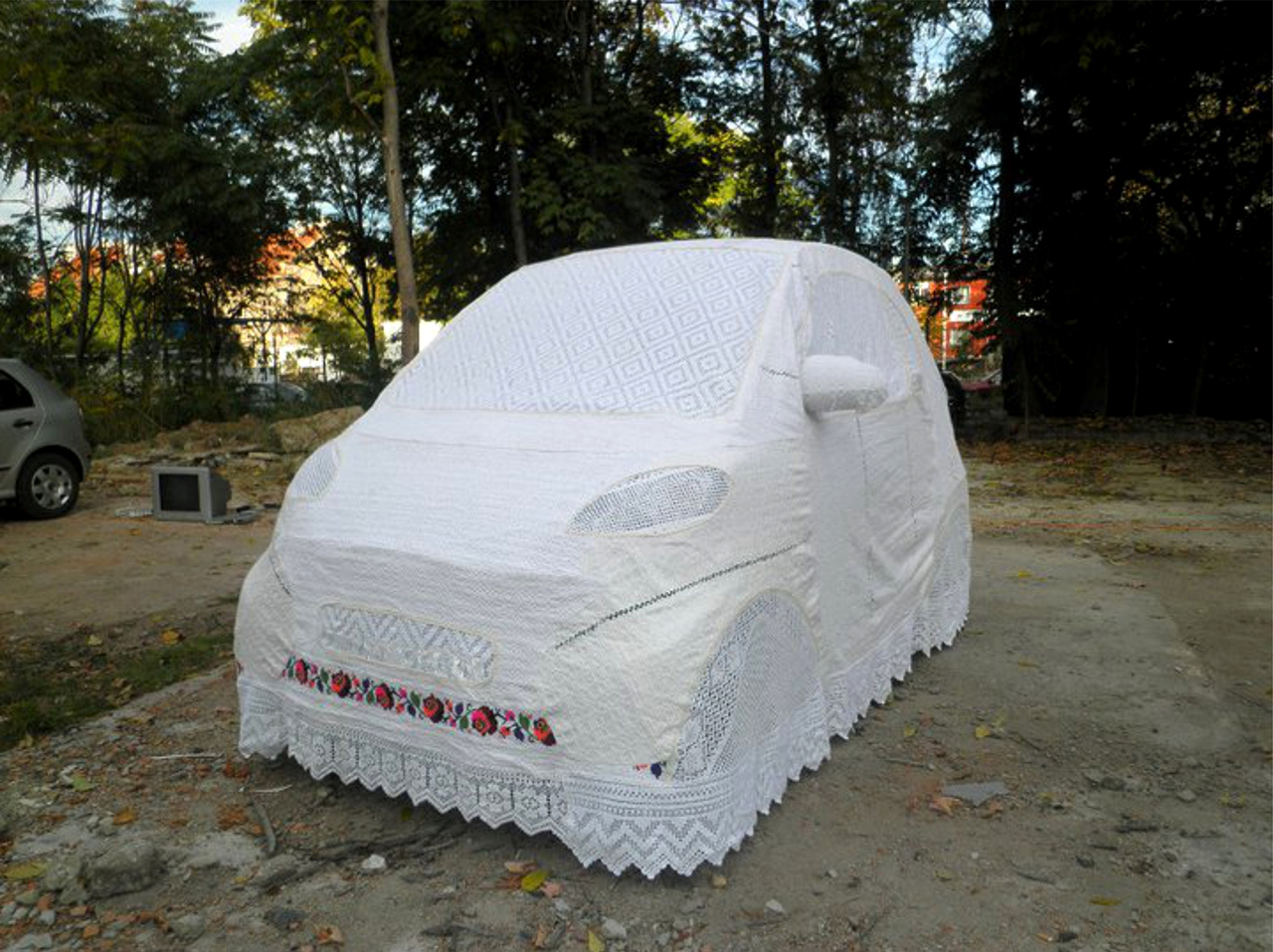
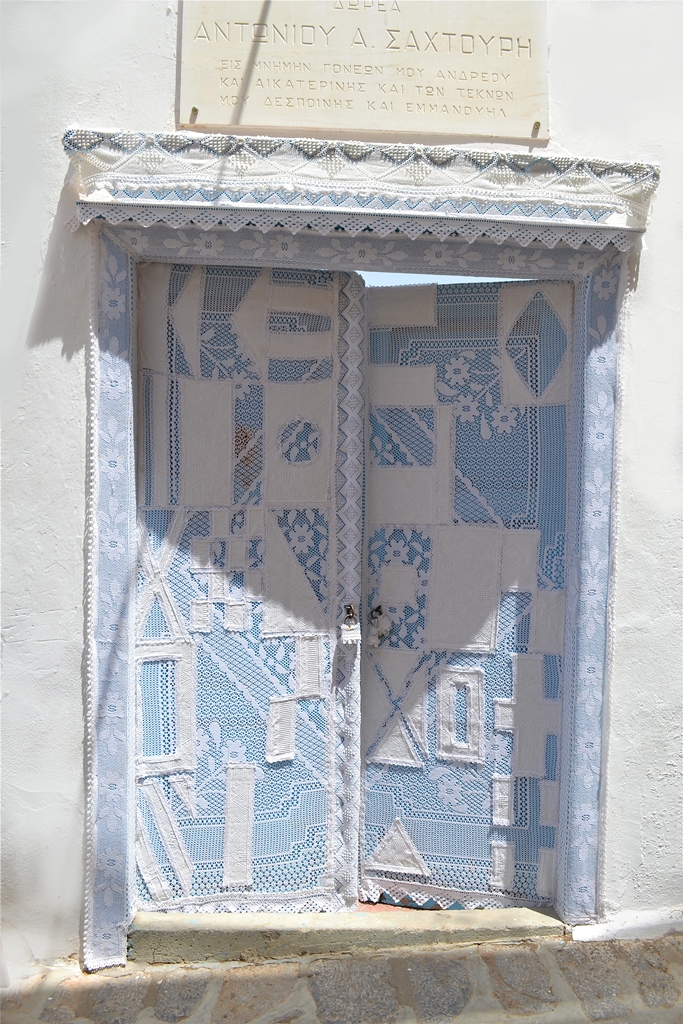
In my works with embroidery, this silent knowledge takes on a new form. In Sleeping Car, my mother’s dowry covers a car, transferring the domestic into a male-dominated space. In Abracadabra, a lace door becomes a system of communication through geometries and maritime signals. In Pyrifte, based on embroideries from the EKKA collection of the Museum of Cycladic Art, the handmade functions as a carrier of memory and is reactivated within a contemporary context.

For me, embroidery embodies time, repetition, and care—a trace that persists. Through these shifts, my aesthetic evolves as a continuous tension between the old and the new, the personal and the collective.

Sleeping Car, Lace on a car
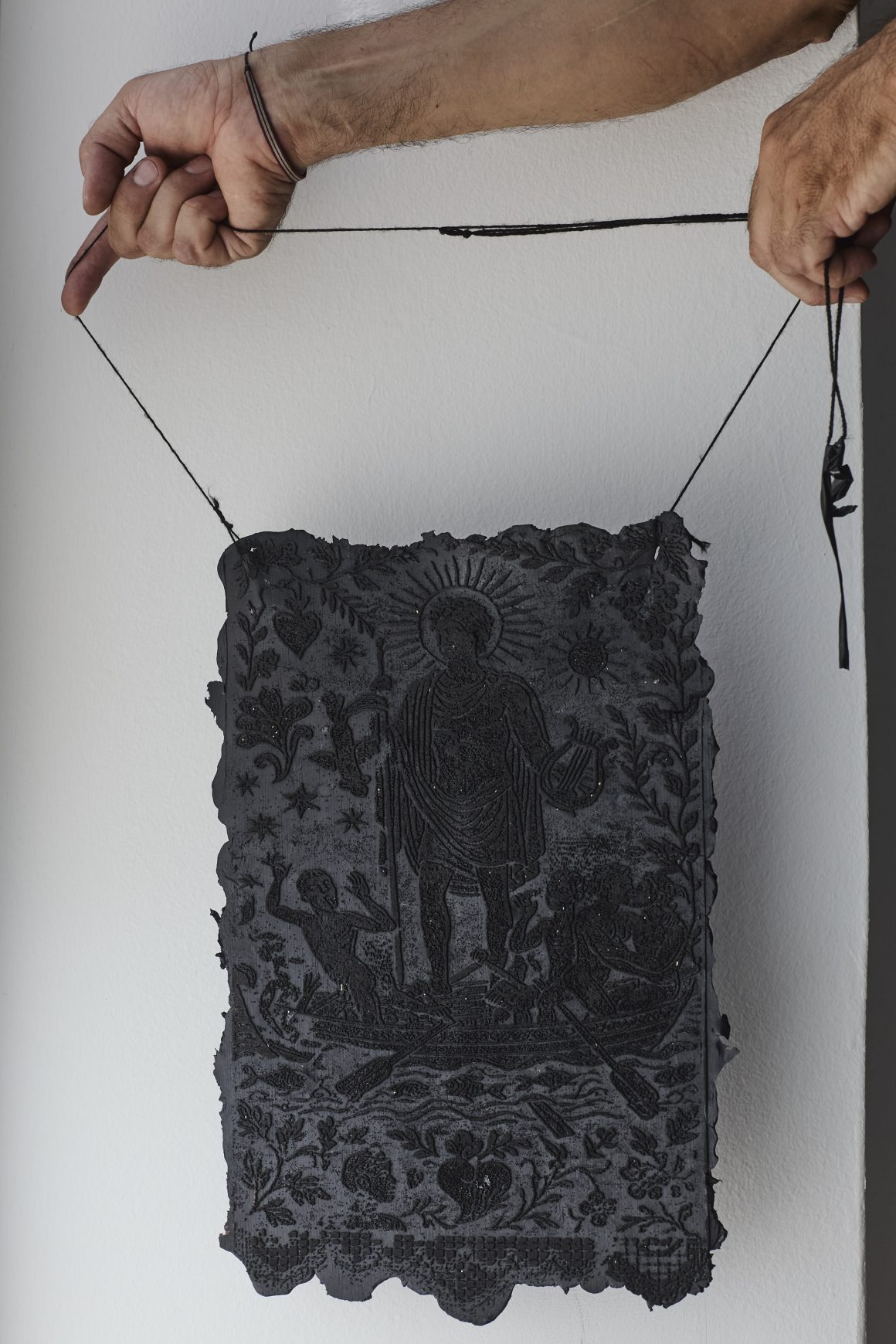
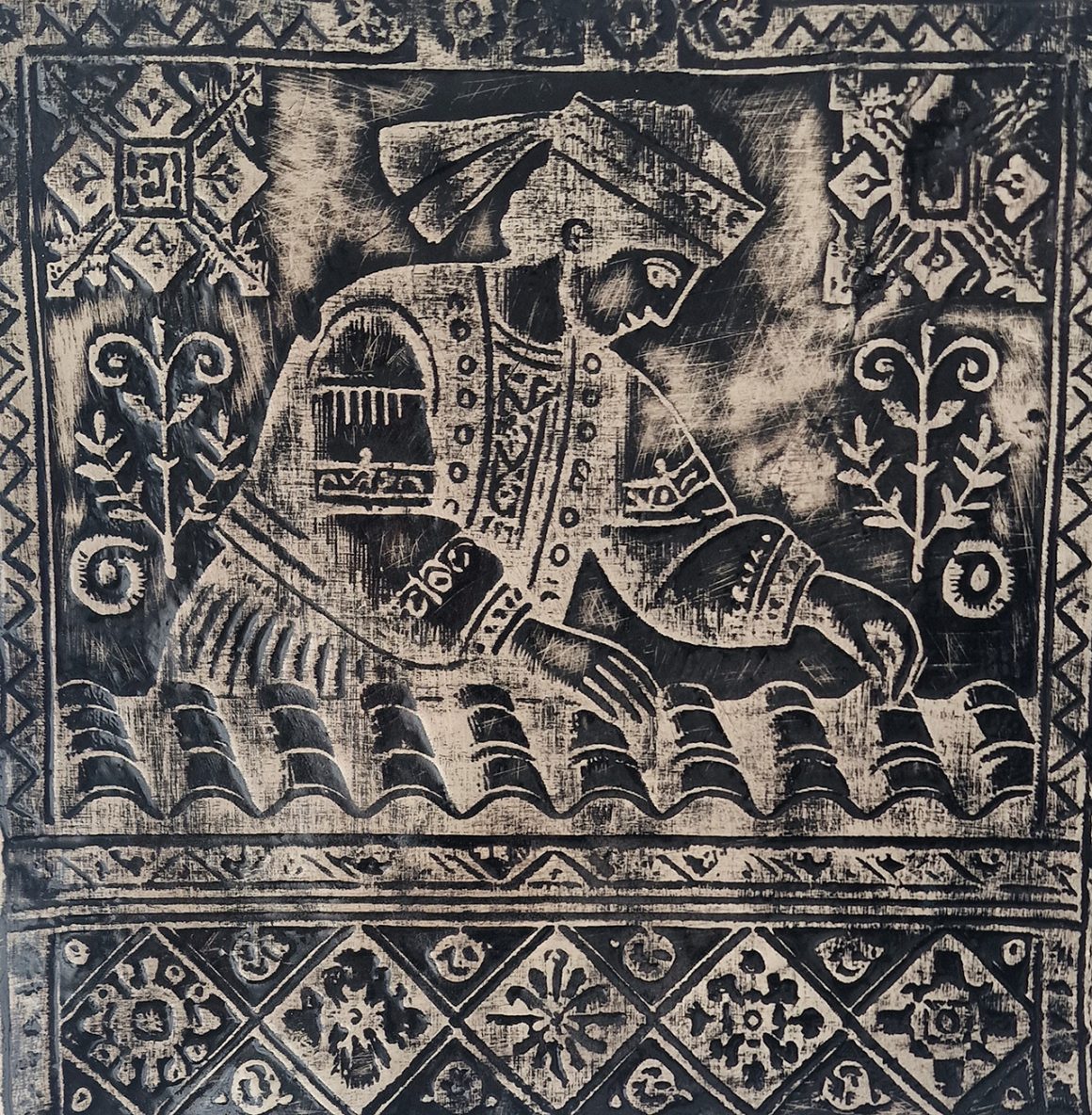
APOLLO WITH HIS SAILORS, engraved black silicon, 25x35cm
Abracadabra, lace installation on the door of the School in Hydra, 2014, Hydra School Projects.

What do you feel are your most important achievements so far, and which works are you most proud of?

I don’t think in terms of achievements. There are, however, works that opened new paths—such as MOMAFAD, which transforms a place into a living archive and was presented at the Venice Architecture Biennale. Its first iteration took place at the former Ellinikon airport in Athens—a site charged with the memory of transition and abandonment—where, for a single day, it was activated as a temporary museum, leaving behind only traces.

The second iteration, in Albania, unfolded across a broader landscape: from the old village of Tragjas to Sazan Island and the wider area of Orikum. There, the work operated within historically and geopolitically charged sites, bringing different artistic voices into dialogue and activating the landscape as a carrier of memory and narrative. In its third iteration, currently developing in New Orleans through the ARCAthens NOLA/NYC Research Fellowship, MOMAFAD shifts even further toward the living environment. Through the space of Dawn DeDeaux and Camp Abundance, the museum is not constructed but revealed—as a network of existing stories, habitation, and everyday life, where memory, personal archives, and collective experience coexist.

In all these versions, MOMAFAD is not a fixed institution but a condition—something that appears, becomes activated, and then disappears, leaving behind traces.

At the same time, the series HOME IS ME, and more broadly the works revolving around the notion of home, hold a special significance for me. They emerged during a period of uncertainty, almost unintentionally, and engage with what it means to “inhabit” in such strange times. In these works, ceramic tiles function as autonomous units—not as a fixed “wall,” but as fragments of an experience of dwelling that remains fluid. The motifs, drawing from folk traditions and rearticulated through contemporary processes, are transferred onto the ceramic surface, where the fragile and the permanent coexist.

I’m interested in this tension: ceramics as a material historically associated with protection and structure, yet one that also carries cracks, shifts, and traces of use. In this way, “home” does not appear as something given, but as a state under negotiation—between body, space, and memory. The first work of this series was acquired by the Onassis Foundation, as a natural continuation of the very thinking that brought it into being.

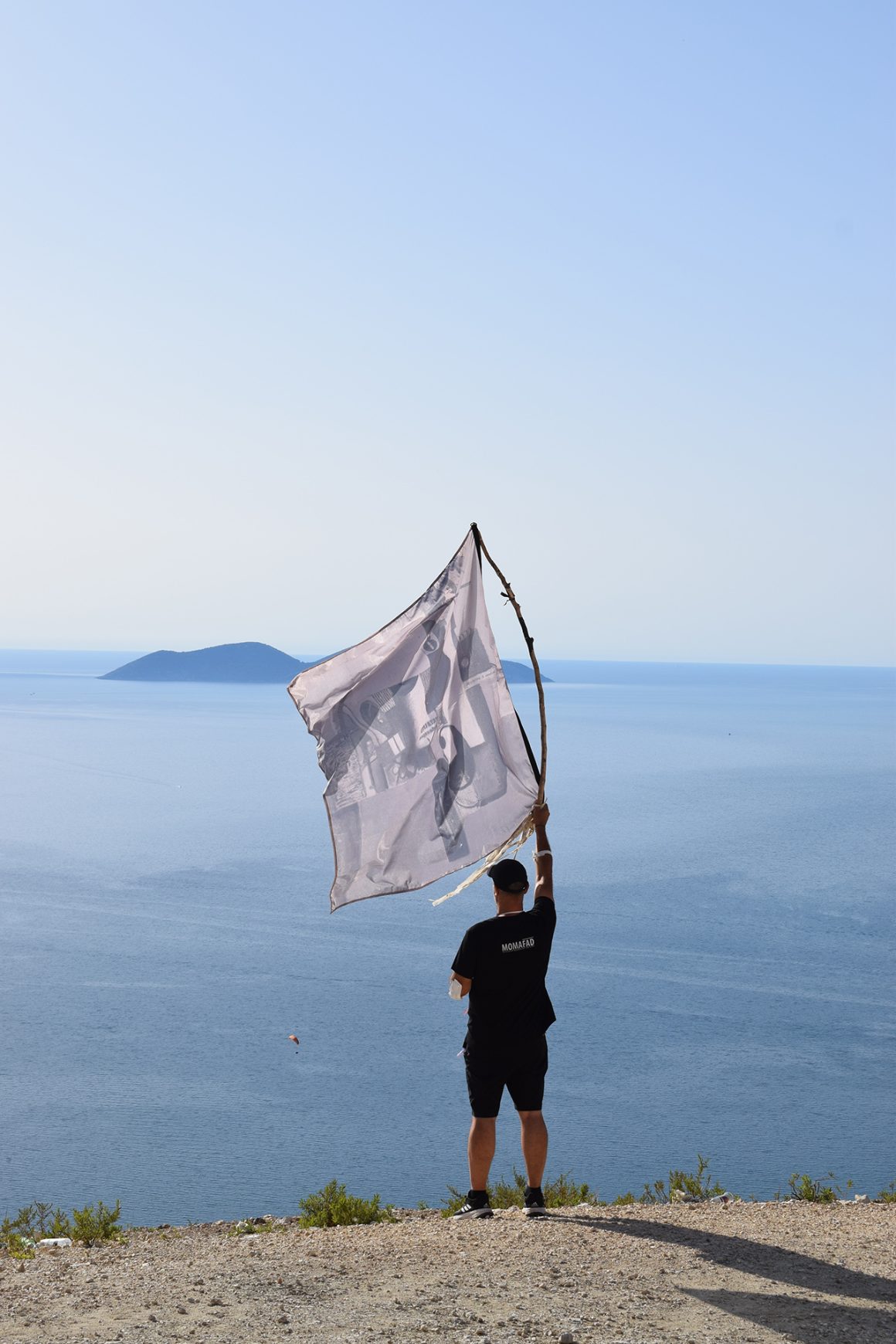
Kazimir Malevich, Sazan, MOMAFAD II / Legacy Landscapes, Sazan Island, Albania, 2025. Acknowledgements: MOMus – Museum of Modern Art – Costakis Collection. Within the framework of MOMAFAD II, I hold a flag bearing Kazimir Malevich’s Frontline Soldier on Sazan Island, transforming a symbol of the avant-garde into a gesture of memory and peace within a site charged with history.
HOME IS ME, ceramic and marble, 40x25x61cm, Onassis Collection
Ceramic tiles from HOME IS ME, 30x30ek, 2025

Who and what helps you move forward?

Collaborations are essential. People who share the same concern about the meaning of art, as well as my students, who often act as both a mirror and a challenge. At the same time, I carry principles that were shaped very early on—growing up in a village in Messinia, through a relationship with measure, grounding, and the simplicity of things. And today, my person, Haris—who has been my family for the past seven years—is a constant presence; he gives me strength, love, balance, and a deeply human perspective on everything I do.

Having a strong presence in exhibitions and recently being selected for a residency in the U.S. through the NYC Research Fellowship by ArchAthens NOLA, what do you receive from the global audience in relation to your work, and how different are the conditions in Greece?

International audiences often approach the work through more open frameworks. In Greece, there is a deeper relationship with history, but also a greater intensity. This dual reading is something that interests me.

During this period, through my residency in the U.S. (ARCAthens NOLA/NYC Research Fellowship), where I’ve already been for a month, I am experiencing a very strong response and a generous engagement with my work. In the unique environment of Dawn DeDeaux’s space, at Camp Abundance, there is a sense of freedom and meaningful dialogue that allows me to reposition my practice within a new, open context. This experience functions not only as a presentation, but as an active exchange—something that deeply influences the way I think and move forward.

What has extroversion offered you overall, and how does it affect your work?

Extroversion is a form of dialogue. It forces you to see yourself from a distance. It doesn’t change the essence of the work, but it expands the framework within which it operates.

What inspires you to evolve in the way you create? Tell us a story.

Often, the starting point comes through an encounter—something unplanned.

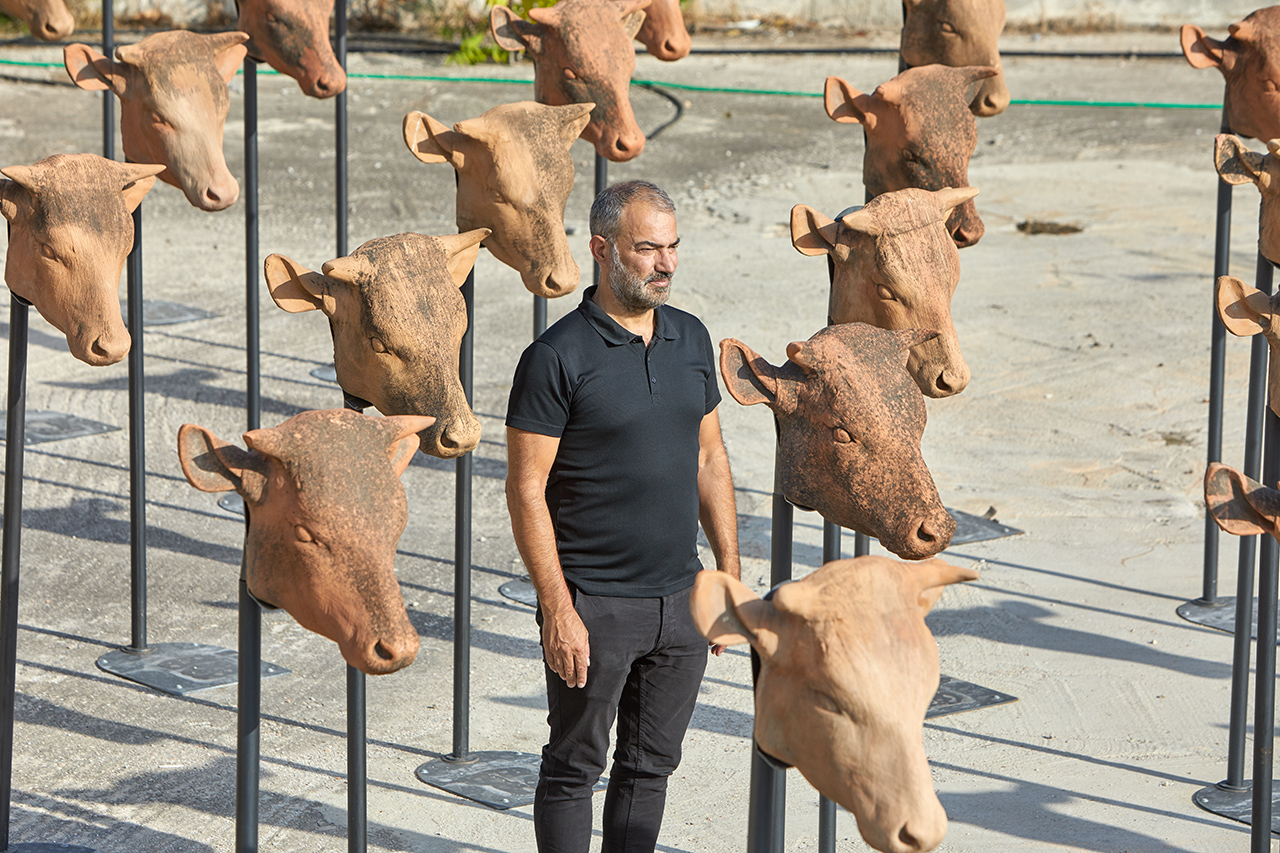
In the case of the work The Army of Goumas, I had been commissioned to create a piece in Elaionas. As I began exploring the area, I came across the workshop of Charalambos Goumas. The attraction was immediate—both to the works and to him as a person. I remember entering the yard and seeing dozens of bull heads hanging on the railings, all facing me. It was an almost revelatory image. He told me they had been there for ten years, part of a commission that was never delivered.

What was meant to be a brief visit turned into hours. That’s when I realized the work had already begun. After months of effort, I managed to acquire these ceramic pieces and create a contemporary installation—a “battalion” of 49 bull heads, placed on metal bases at human height.

The work was presented in Elaionas and at Eleusis Cultural Capital, with Goumas himself present—a deeply moving moment for me. It was one of those experiences that reminds you that art doesn’t begin with an idea, but with a relationship.

“The Army of Goumas”, installation by Dionysis Christofilogiannis, metal bases and 49 ceramic bull heads, dimensions: 1200 × 500 × 175 cm. Photo: Giorgos Vitsaropoulos

What are the non-negotiable values in your work?
Honesty, consistency, and the need for a meaningful dialogue with time and place.

Are we what we choose?
We are both what we choose and what chooses us.

What do you love and not love in your field?
I love the possibility of encounter. I do not love superficial speed.

The best book you’ve read recently
The catalog by Dawn DeDeaux, The Space Between Worlds (NOMA) in New Orleans. I was particularly interested because it treats space as something fluid — a field between realities, where memory, history, and trauma coexist and transform. There is a strong sense of “in-between” — between worlds, times, and states — which resonates deeply with me.

An artist you admire and would like to own a work of
Victor Man. For me, he is one of the most moving contemporary painters — a silent, almost internal painting, functioning more as a state than as an image.
I also carry a personal memory with him: a small, quick portrait he made of me with a pen in a kitchen in Romania. I lost it during moves — and perhaps that loss makes it even more intense within me. In this way, his painting works for me: like something you never truly possess, but that follows you.

In another life, what would you like to be?
Perhaps an Olympic track athlete. I am deeply moved by the dedication of such athletes — the daily discipline, the persistence, the absolute focus on a goal quietly built over time. There is something almost poetic in this path, where body and spirit align to reach a moment of precision and transcendence. It is a form of creation that moves me deeply.
At the same time, a childhood dream of mine was singing. I studied basic music, wrote songs and lyrics, and sang in the Royal Gospel Choir in Glasgow. But that’s as far as it went — not everyone is born a singer.

I deeply admire those people: their voice, execution, dedication, and ability to convey emotion with such precision.

Three places you love returning to and why
I am not a fan of places in a purely geographic sense. I am more interested in the feeling — of a land, a beach, a home, a sea where I feel I belong. Where a part of me exists.
The places I return to are those that carry a sense of familiarity and safety — and this has less to do with landscape and more with people. With the love, care, and empathy you encounter there. Perhaps it is also where I leave my laptop behind and the phone no longer matters. Where time changes its rhythm, and I can simply talk with the person next to me. These are the places I ultimately return to.

Is art and creation, in general, a way to become better people?
Yes, because it brings us face to face with who we are.

Your personal definition of beauty
Beauty is not something unified or abstract for me; it is moments. It is my mother’s wrinkles. It is being in love with your partner. It is a simple phone call from a friend asking how you are. It is the moment of winning a medal, a good painting, the Athens Olympic Games ceremony, the new Rosalia album, and so much more.

It is all these things together — small and large — that carry truth, intensity, and presence. And perhaps ultimately, beauty is exactly this: the ability to recognize these moments when they happen.

What do you consider authentic today?
Anything that resists ease.

If you were to design something for TheAuthentics.gr, what would it be?
I would be interested in creating a work that moves between object and narrative — something that incorporates the idea of craftsmanship, not as decoration but as a carrier of memory and experience.

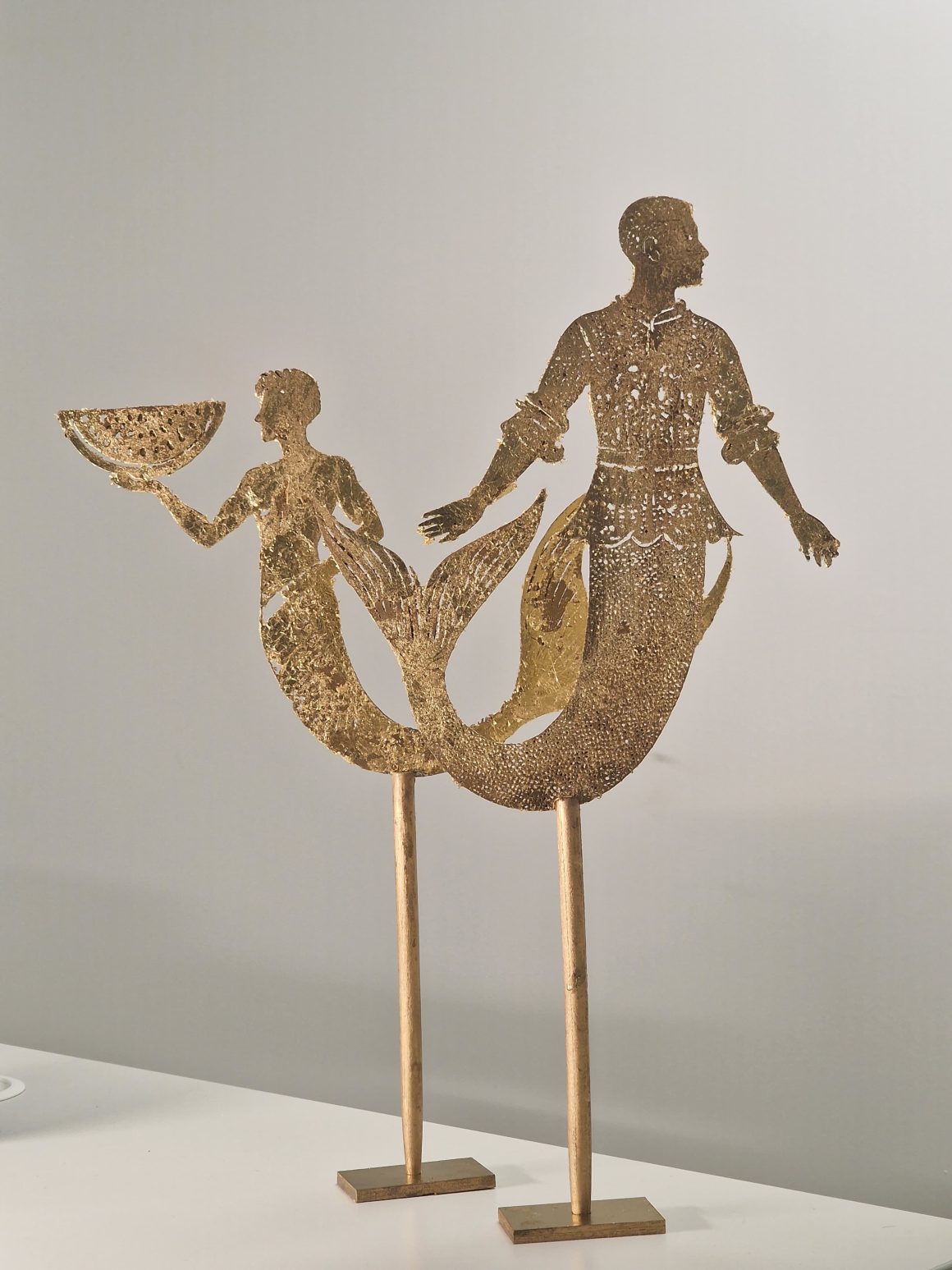
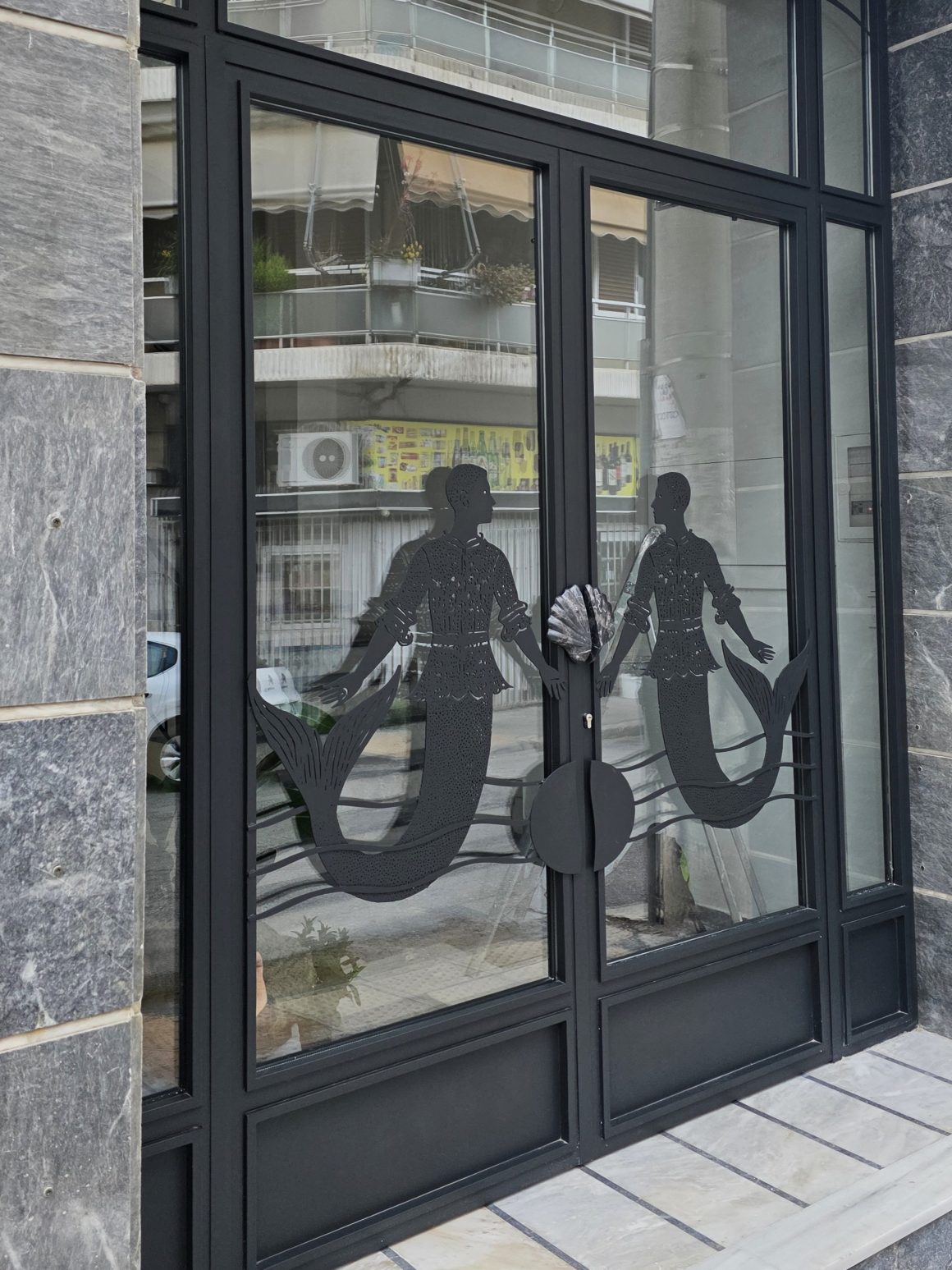
Perhaps a door or a partition element, like the metal surfaces I have worked with, featuring motifs reminiscent of embroidery and folk decoration, translated into a contemporary architectural language. As recently in Gazi, where the form functions simultaneously as image and filter — a boundary allowing the passage of light and vision. The form of the Triton, once a weather vane on a marble building in Thiseio, reappears here as a contemporary sculpture and simultaneously as a door in an apartment building in Gazi. Inspired by tradition and embroidery motifs, the Triton is transformed into a perforated metal surface allowing light and vision to pass through. From a directional symbol, it becomes a point of transition — a boundary between inside and outside, where the familiar and the public meet.

I am interested in this idea of the door as a point of transition: between inside and outside, private and public. In this way, TheAuthentics itself works — opening a space where something personal, almost private, is carried outward and becomes a shared experience. A work that does not close, but reveals.

The Golden Tritons
Door with Tritons

Dionisis Christofilogiannis

Dionisis Christofilogiannis (b. 1973, Greece) lives and works in Greece. He is a visual artist and professor at the Frances Rich School of Fine and Performing Arts, American College of Greece (DEREE).

He studied painting at the School of Fine Arts in Cluj-Napoca, Romania, where he earned both an MA and PhD. He also studied industrial design at Strathclyde University, Scotland (MA) and mechanical engineering at Sheffield Hallam University, UK (BSc).

Since 2017, he has directed the contemporary art space Space52 in Athens, which supports artists based in the city and continuously seeks collaborations with international art spaces and professionals. In 2021, Space52 received the NEON Award for organizing the international group exhibition “Never Cross the Same River Twice”, and in 2023 it received funding from the Greek Ministry of Culture for the exhibition “Behold Rhodes”.

His most recent project, MOMAFAD (Museum of Contemporary Art for a Day), was presented as part of the exhibition “SunShip: The Arc That Makes The Flood Possible” at Arts Letters & Numbers in the CITYX Venice Italian Virtual Pavilion, part of the 17th Venice Architecture Biennale. The opening of MOMAFAD, which included a documentary screening and an open discussion, took place at the National Museum of Contemporary Art (EMST) in Athens on November 18, 2021.

Solo Exhibitions: Muzeul de Artă Cluj–Napoca, Romania; Nakagawa Gallery, Tokyo; Ύλη [matter] HYLE, among others.

Group Exhibitions: BIENNALE 6 of Thessaloniki; Tirana Open 1; EMST; Memory of the Revolution – Contemporary Greek Artists at MOMus – Museum of Contemporary Art Thessaloniki; (OUT)TPIAS at Benaki Museum; Uber–Bodies at Hydra School Projects; Red and White Flag Project parallel to BIENNALE 4 of Thessaloniki; In the Studio at Kunsthalle Athens, among others.

Curatorial Work:  Co-curated exhibitions such as In the Studio at Kunsthalle Athens (with Daily Lazy Projects) and I fought the X and the X won at the National Museum of Malta and Romania (with Raphael Vella and Lydia Pribisova).

Theater Collaborations: Worked as a set designer with renowned directors, including Razvan Mazilu at the National Theater of Timisoara and Robert Wilson at the National Theater in Athens.


https://www.space52.gr/

https://dionisischristofilogiannis.wordpress.com/

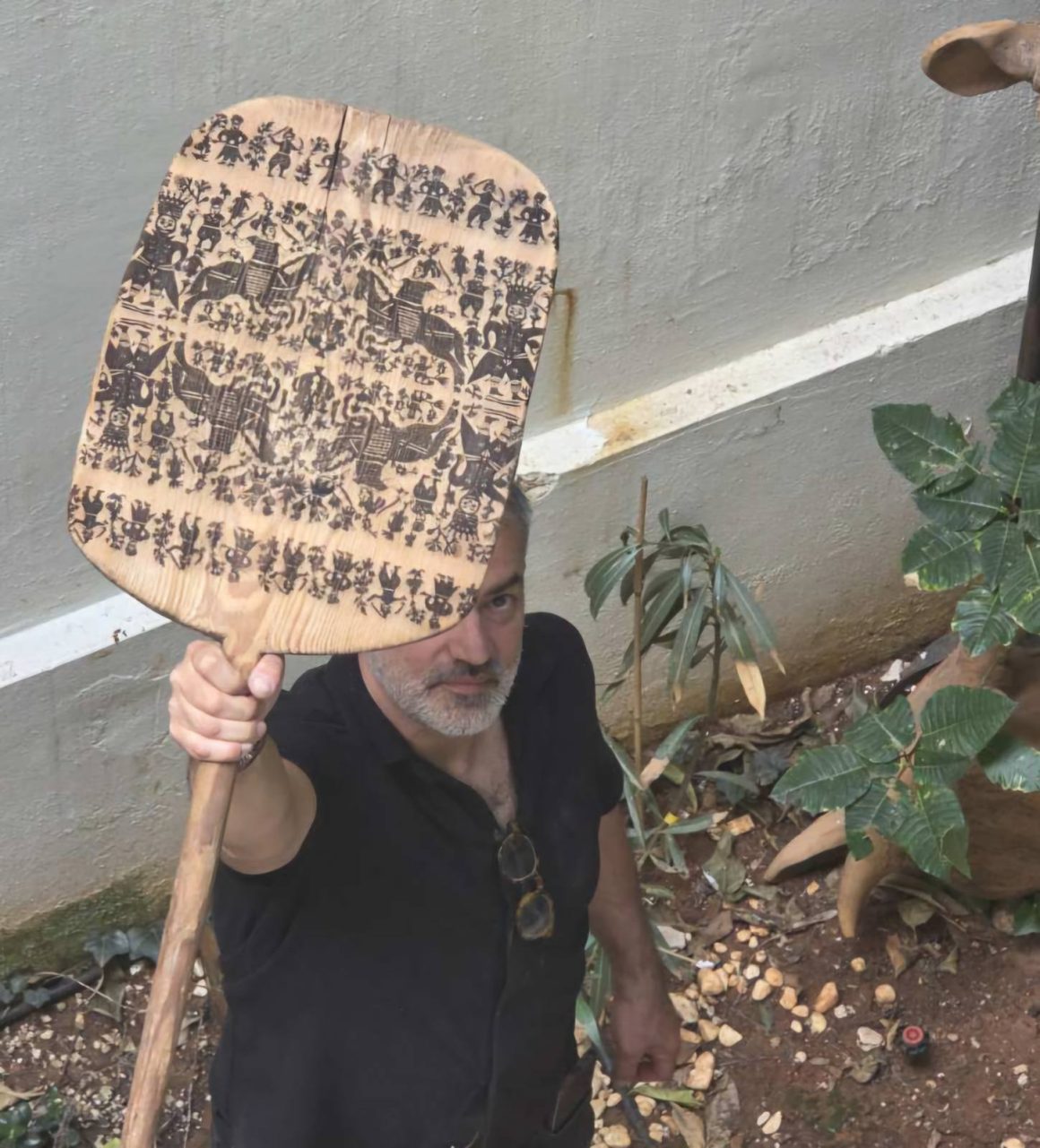
Embroidered riches, bread, and marble, 95X50X30 2023
154... and still counting, Bed frames
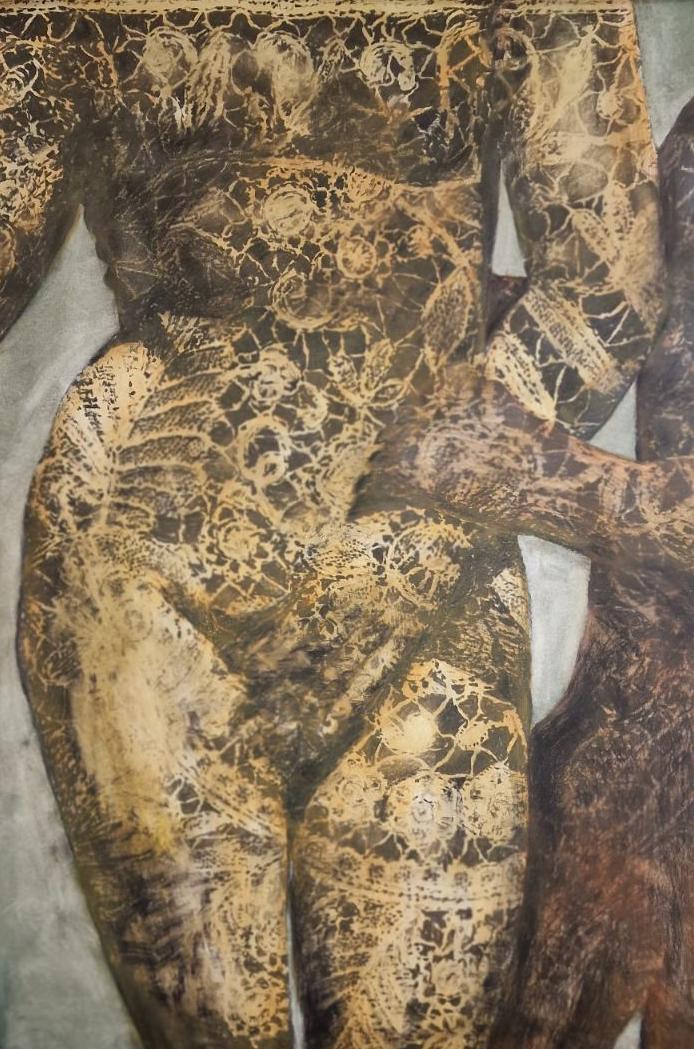
Oil on canvas, 120X140cm
Pyrifte

Author