This rationalist gem, the architect’s only villa in Milan, is set to become one of the most photographed destinations of the upcoming Fuorisalone
From 20 to 26 April, during Milan Design Week, Alcova returns to Milan for its eleventh edition, choosing, as always, unusual spaces steeped in history. Among these, Villa Pestarini stands out, the only villa designed by Franco Albini in the city, which is opening to the public for the first time.
The places of Alcova
Alongside Albini’s rationalist house, Alcova also opens up the Military Hospital of Baggio, nestled in the green Primaticcio neighbourhood, with new areas unexplored since the 2021 and 2022 editions. The two sites create a dialogue between conservation and reinvention, offering the ideal setting to welcome designers, studios, companies and institutions.
The history of Villa Pestarini
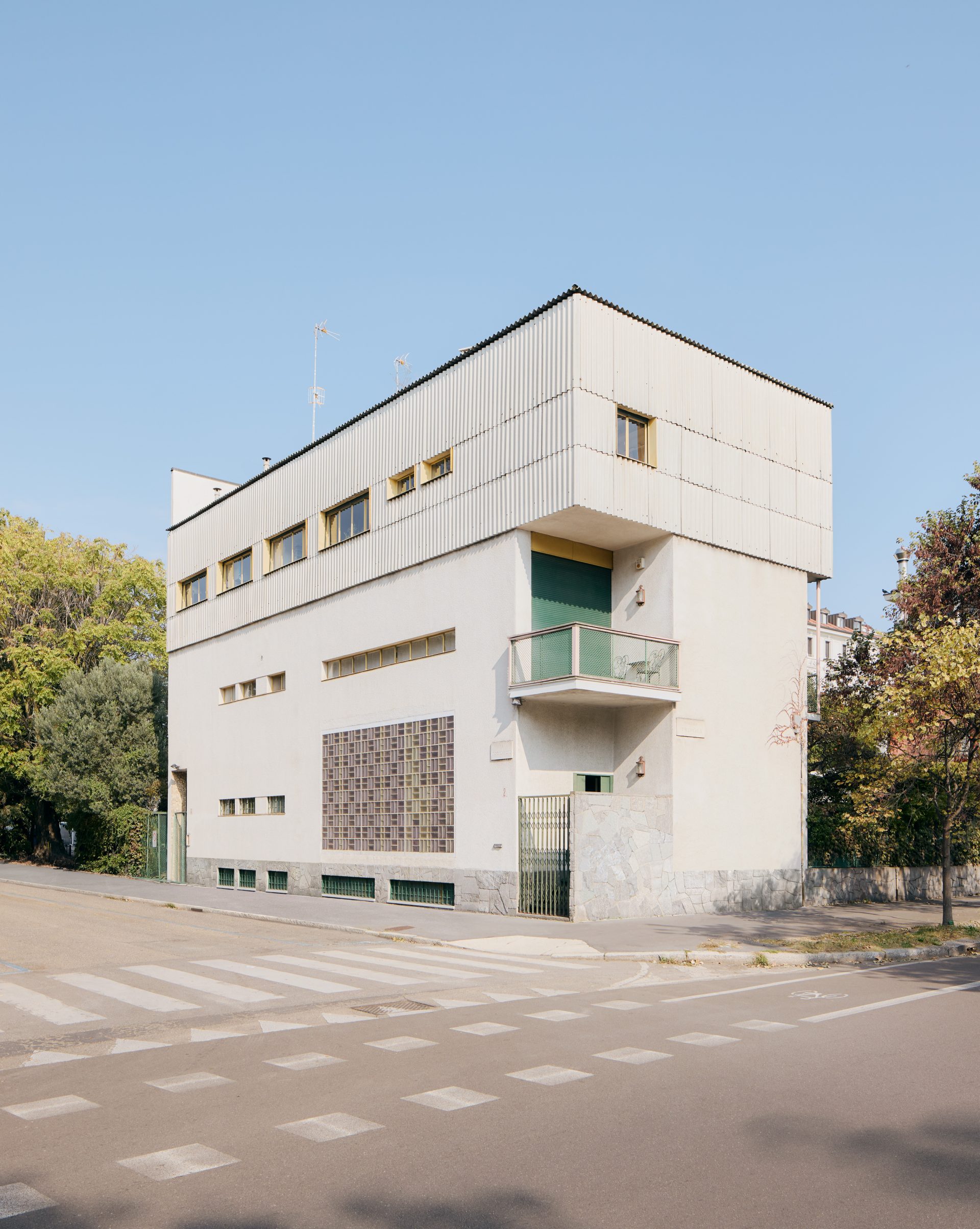
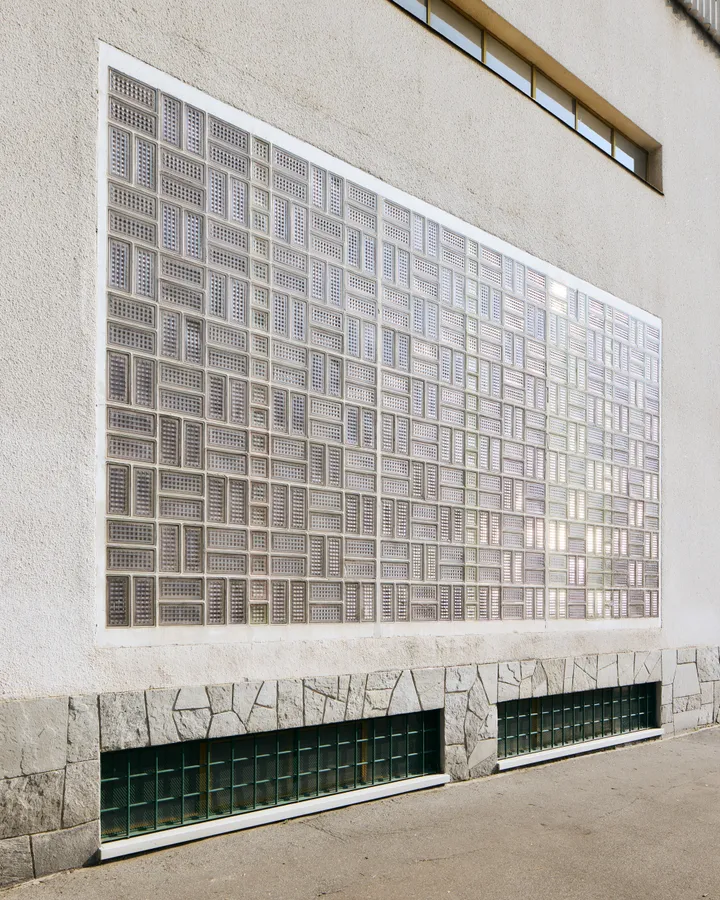
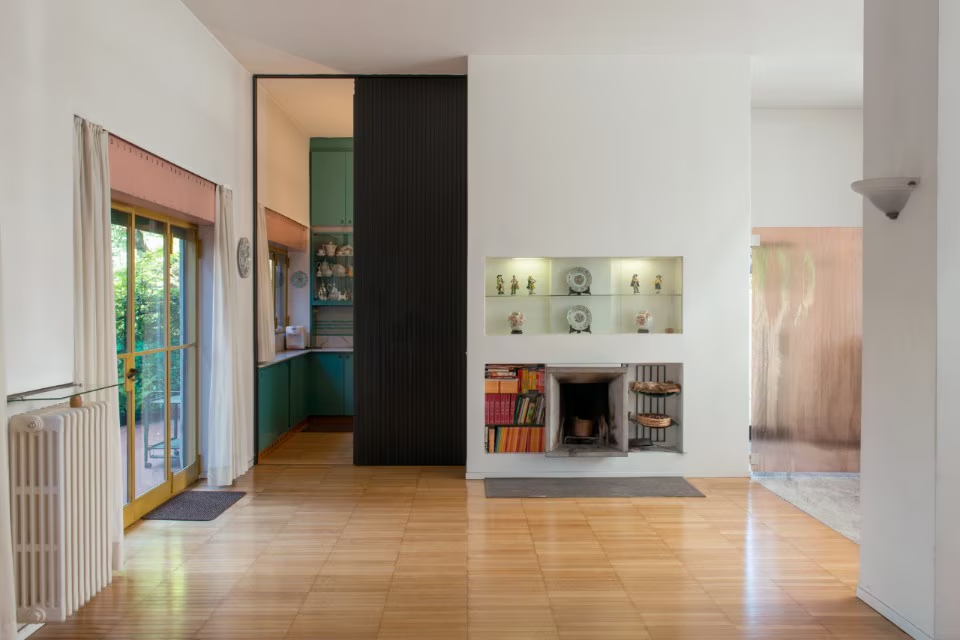
Published by Gio Ponti in Domus no. 144 in 1939 and built between 1938 and 1939, Villa Pestarini is considered one of the masterpieces of Italian Rationalism. A simple white structure, punctuated by glass-brick surfaces and large openings onto the garden. The interiors reflect Albini’s typical balance between rigour and lightness, with sliding partitions, custom-made furniture, and a central marble staircase with reduced treads that organises light and pathways.
Between the two world wars, Milan underwent rapid urban expansion. Population growth and the annexation of neighbouring municipalities required a rethinking of urban planning. In this context, in 1937, Franco Albini (1905–1977), then 33 years old, was commissioned to design a private residence on the western outskirts of the city, beyond the ring road, in an area suitable for a villa with a garden.
The result was Villa Pestarini, a small house destined to become a landmark in the history of Italian architecture. Remaining in the hands of only two families for decades and modified only marginally, it retains the compositional and functional clarity of the original design intact.
From the outside, it appears as a pure rectangular volume. The street-facing façade is marked by a large glass-brick panel, punctuated by vertical windows, while the garden side opens up with larger surfaces. A sober but incisive geometry, in which form and function find a natural balance.
Initially designed on two floors, the villa was extended in 1949 with a third floor and a second independent flat. Albini, initially opposed to the idea, accepted the intervention by cladding the new volume in white corrugated metal, which contrasted with the building’s smooth surfaces below. The extension also enabled the creation of a larger main bathroom near the spiral staircase.
Over time, the Pestarini family moved to the top floor, while the lower floors were rented out and then sold in the early 1980s. The current owner then began a philological restoration, carried out with the support of the Albini studio – led by his son, Marco, and grandson, Francesco – which recovered original drawings and photographs to restore the house to its authentic appearance.
At the centre of the interior, the white Carrara marble and glass-block staircase acts as a spatial device, shaping light, paths and relationships between rooms with a sense of lightness.
The kitchen, initially located next to the service entrance on the north side, was subsequently moved to the south side of the living room, reducing its surface area and introducing a light plasterboard partition.
In addition to the architecture, Albini also designed several pieces of furniture specifically for Villa Pestarini, which are now in production and bear witness to his idea of total design.
Alcova platform
Founded by Joseph Grima and Valentina Ciuffi, Alcova confirms its role as an experimental platform that brings architecture, design, and technology into dialogue. Over time, it has brought to light little-known or forgotten places, from the former Cova factory in Nolo to the former Porta Vittoria slaughterhouse and the Military Hospital in Baggio, expanding its scope to Varedo in 2024, including Villa Borsani, Villa Bagatti Valsecchi, the former SNIA factory, and the Pasino greenhouses.
Photo Luigi Fiano