There are places that shape their history through the people who inhabit them, the work they undertake and the knowledge passed continuously from one generation to the next. Anogeia is one such place. Weaving has long been an integral part of its social, economic and cultural identity, expressing an entire way of life, an aesthetic sensibility and a profound relationship with creativity.
From this enduring tradition emerged the Anogeia Weaving House, through the vision of Costantza Sbokou-Konstantakopoulou and her generous donation to the Municipality of Anogeia. Deeply rooted in the local community, the initiative has created a space dedicated to the study, documentation, education and creative continuation of living cultural heritage.
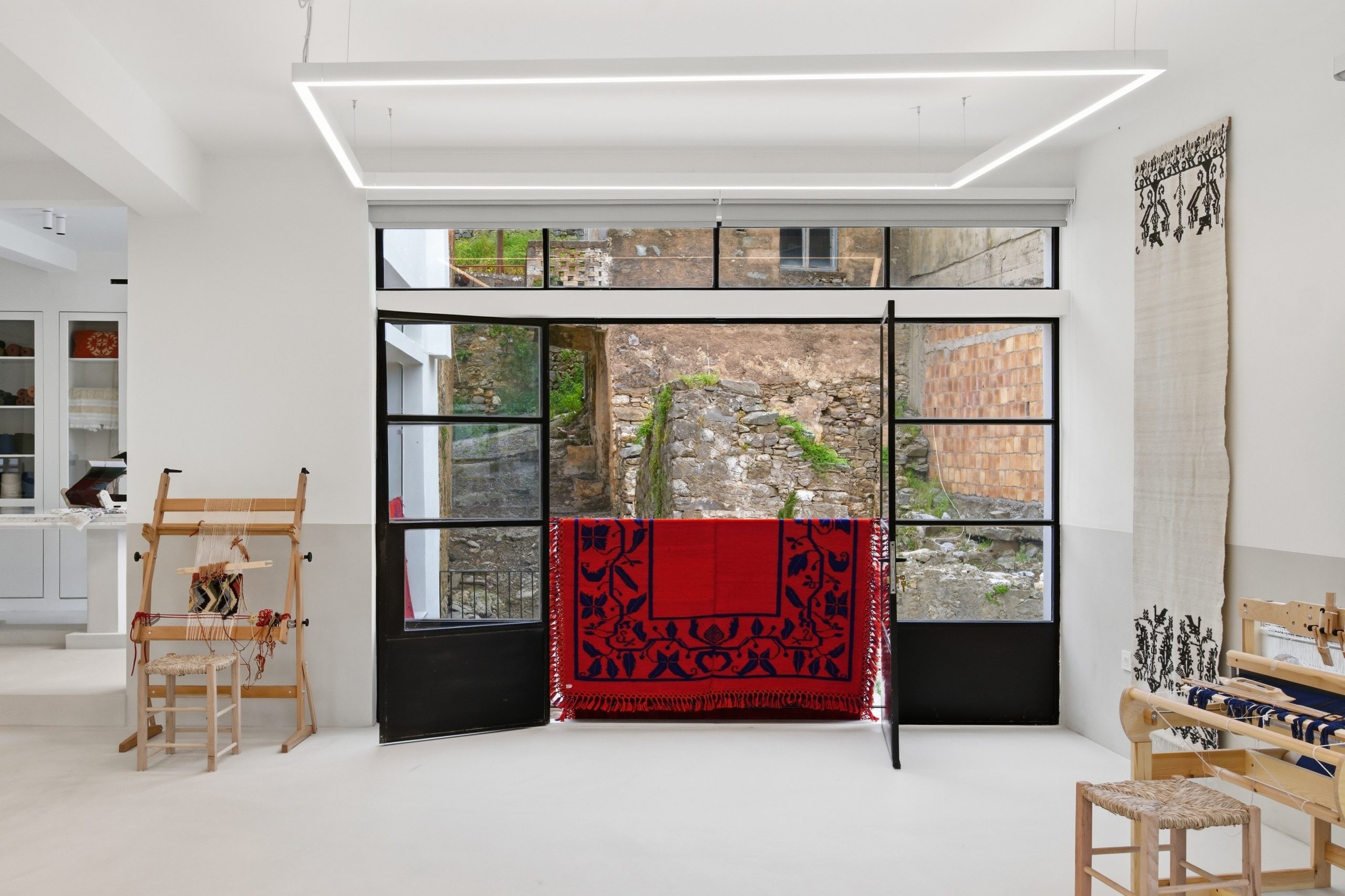
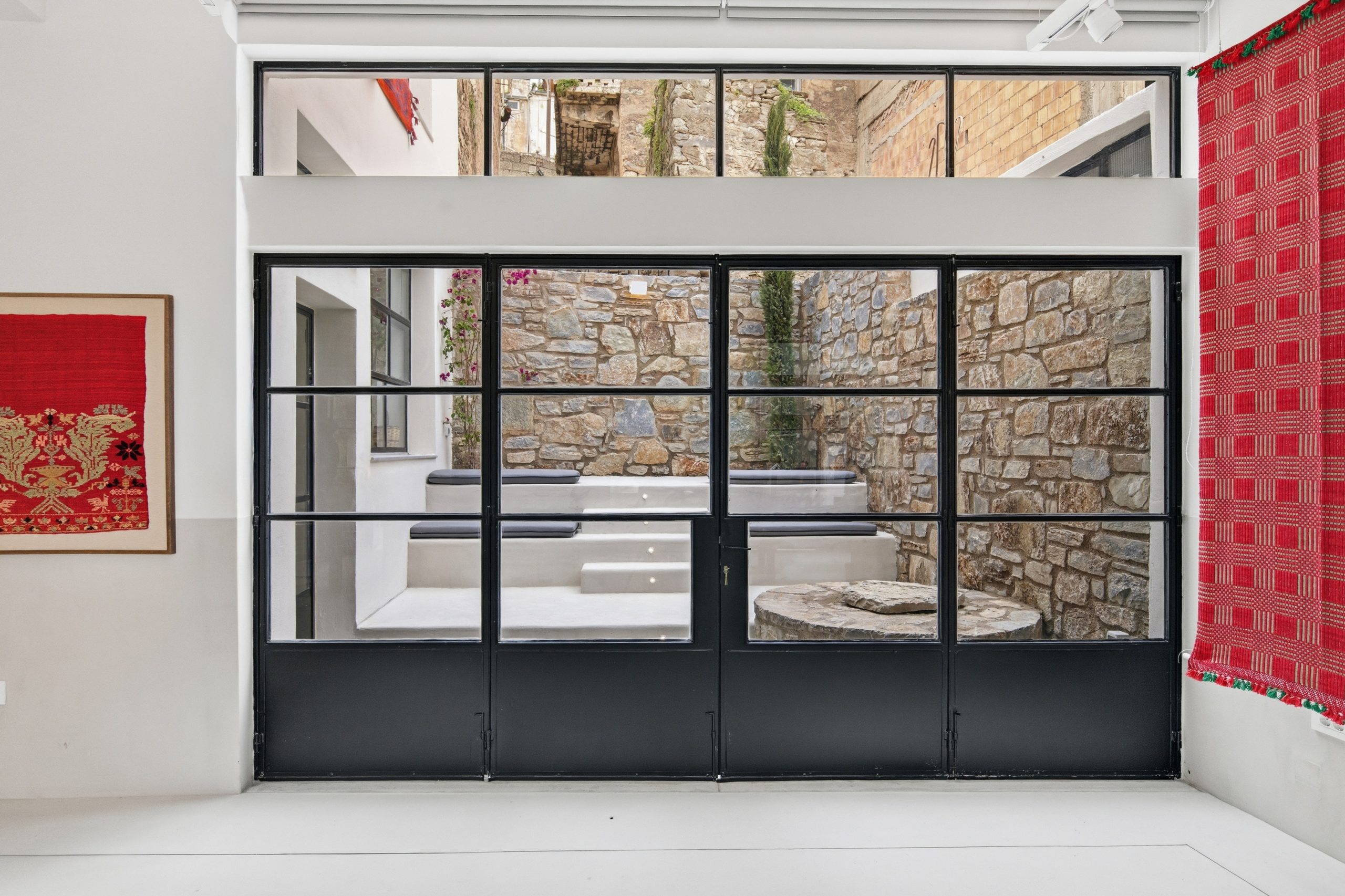
The building itself, which houses the Weaving House, holds particular significance. It once housed the weaving workshop of Costantza’s grandmother, Agapi Sbokou, née Skoula, and is directly connected to the family’s history and its weaving tradition. Today, in this same place, the memory of that heritage takes on a collective dimension, meeting a contemporary cultural mission rooted in Anogeia and looking towards future generations.
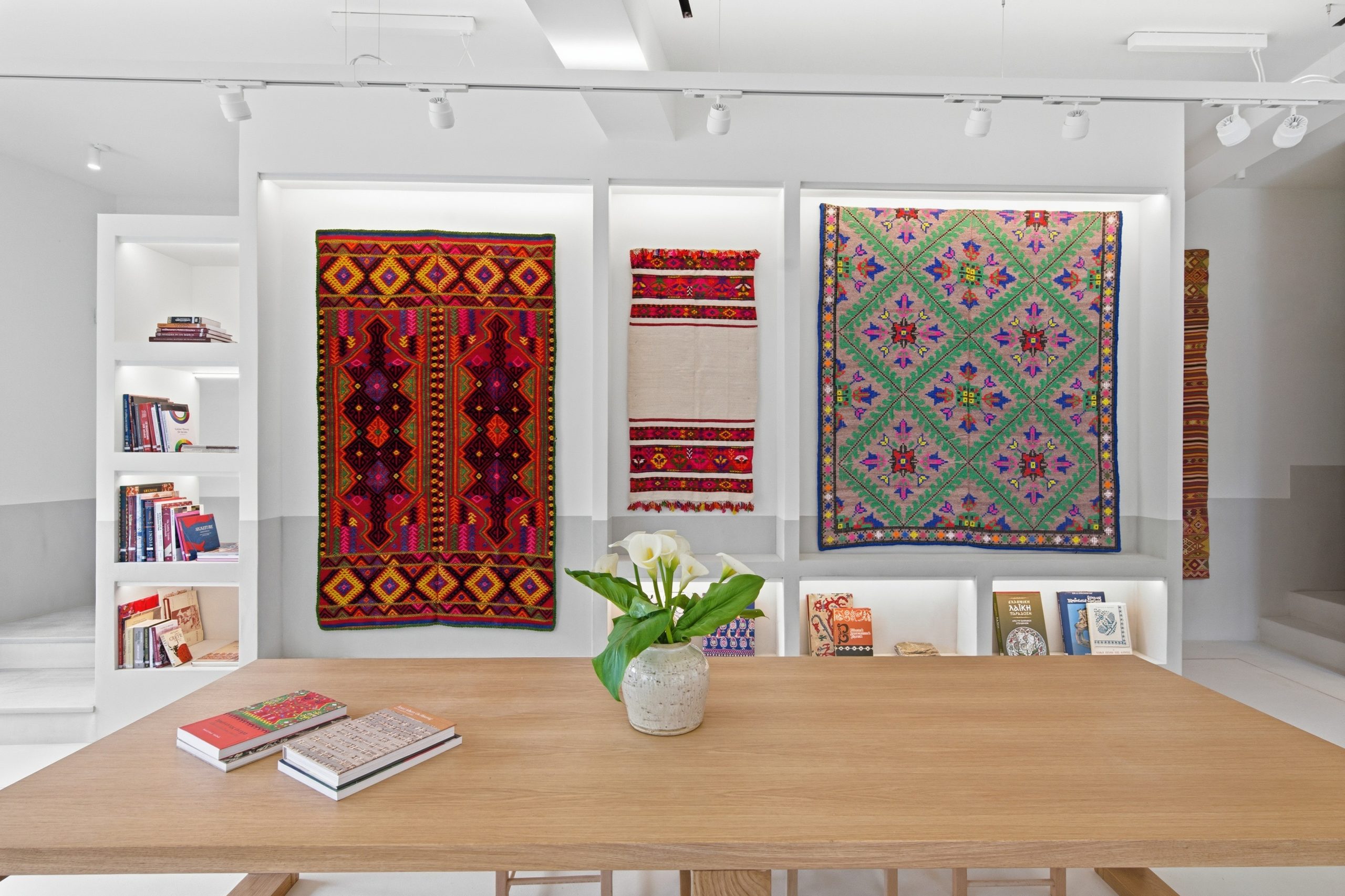
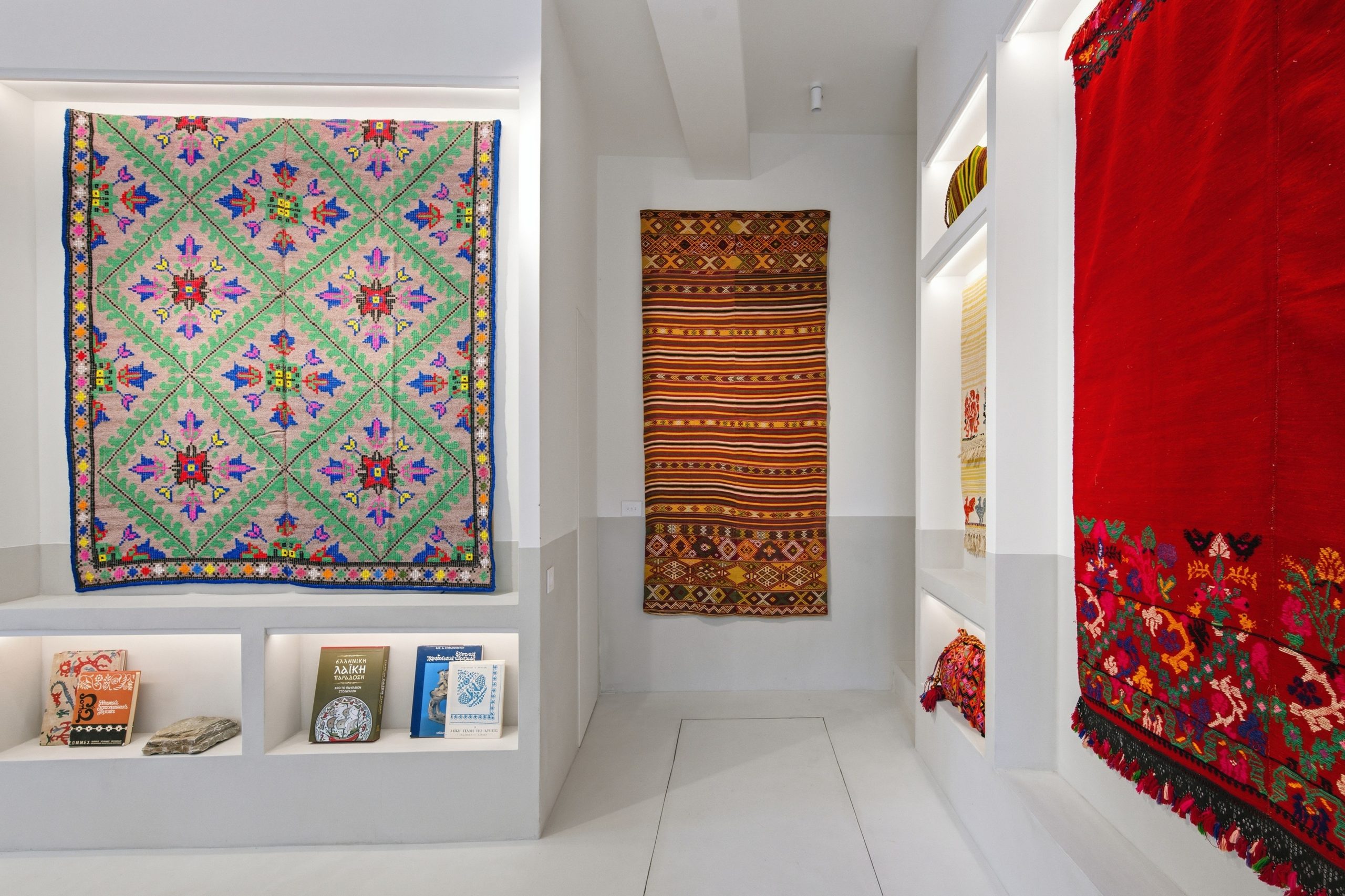
Another important addition to the Centre is its library, donated by Carmen Konstantakopoulou. It includes rare Greek and international publications on weaving, crafts, folklore, anthropology, art history and design. The collection further strengthens the Centre’s research and educational character, providing a valuable resource for study and reference.
The philosophy of the Anogeia Weaving House is founded on the belief that cultural heritage acquires lasting value when it generates knowledge, inspires creativity and cultivates new forms of expression. Weaving is approached as a comprehensive cultural system that connects history, society, the economy, women’s creativity, aesthetics and collective memory. Every initiative undertaken by the Centre reflects this philosophy, creating bridges between local experience and the international cultural dialogue.
Within this framework, the scientific identity of the Anogeia Weaving House was also established. As Scientific Director and Head of the Centre, Christina Tripodianaki was responsible for shaping its academic direction, research methodology and strategic planning, helping transform the original vision into a contemporary organisation dedicated to the study, documentation, education and creative continuation of living cultural heritage.
From the earliest stages of its development, the Centre made the systematic recording of techniques, the documentation of collections, the gathering of oral testimonies and the exploration of the historical and social context of each woven piece key priorities. At the same time, it established a framework of activities connecting research, education, production and international collaborations.
“Weaving expresses a complete culture of knowledge. Every technique, every motif and every woven piece carries a long history of experience, aesthetics and creative expression. The systematic study of this valuable cultural reservoir allows us to gain a deeper understanding of the heritage of this place and to create the conditions for its continuation.”
The Anogeia Weaving House was built around a shared ambition: to create a space where scientific research, education, production, the local community and international collaborations work in synergy, establishing a contemporary model for the stewardship of living cultural heritage. Through this approach, the traditional weaving techniques of Anogeia gain a creative continuation, local people play an active role in preserving and evolving them, and cultural heritage becomes a source of knowledge, inspiration and cultural development.
At the same time, the Anogeia Weaving House is gradually developing a production process that serves as a practical field for applying research and knowledge. Through collaboration with local weavers, the systematic study of traditional techniques and the transmission of knowledge to younger generations, the Centre is creating the conditions for Anogeia’s historic weaving techniques to acquire a contemporary creative expression. Knowledge is transformed into practice, tradition gains new momentum, and cultural heritage evolves into a living creative process with an international outlook.
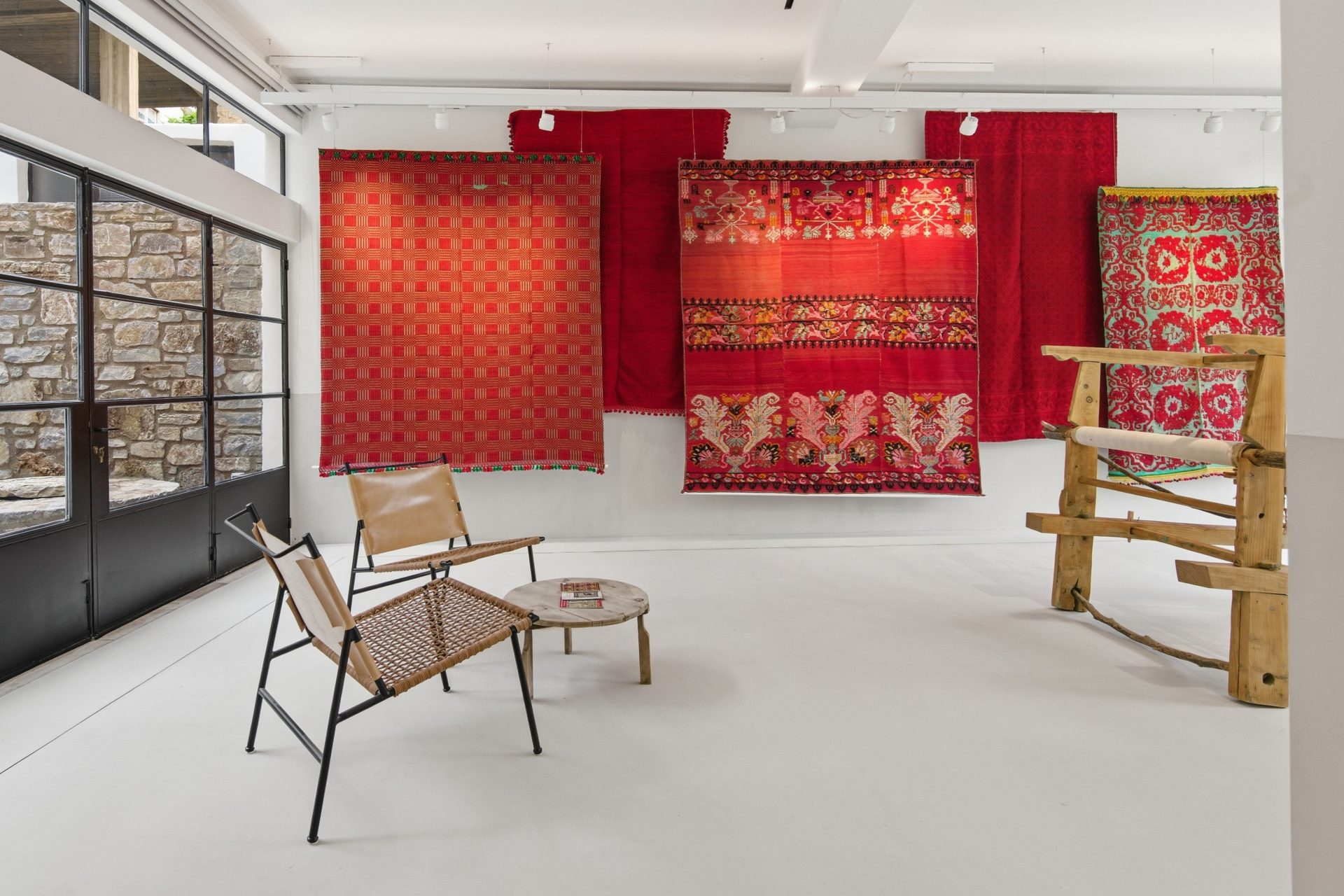
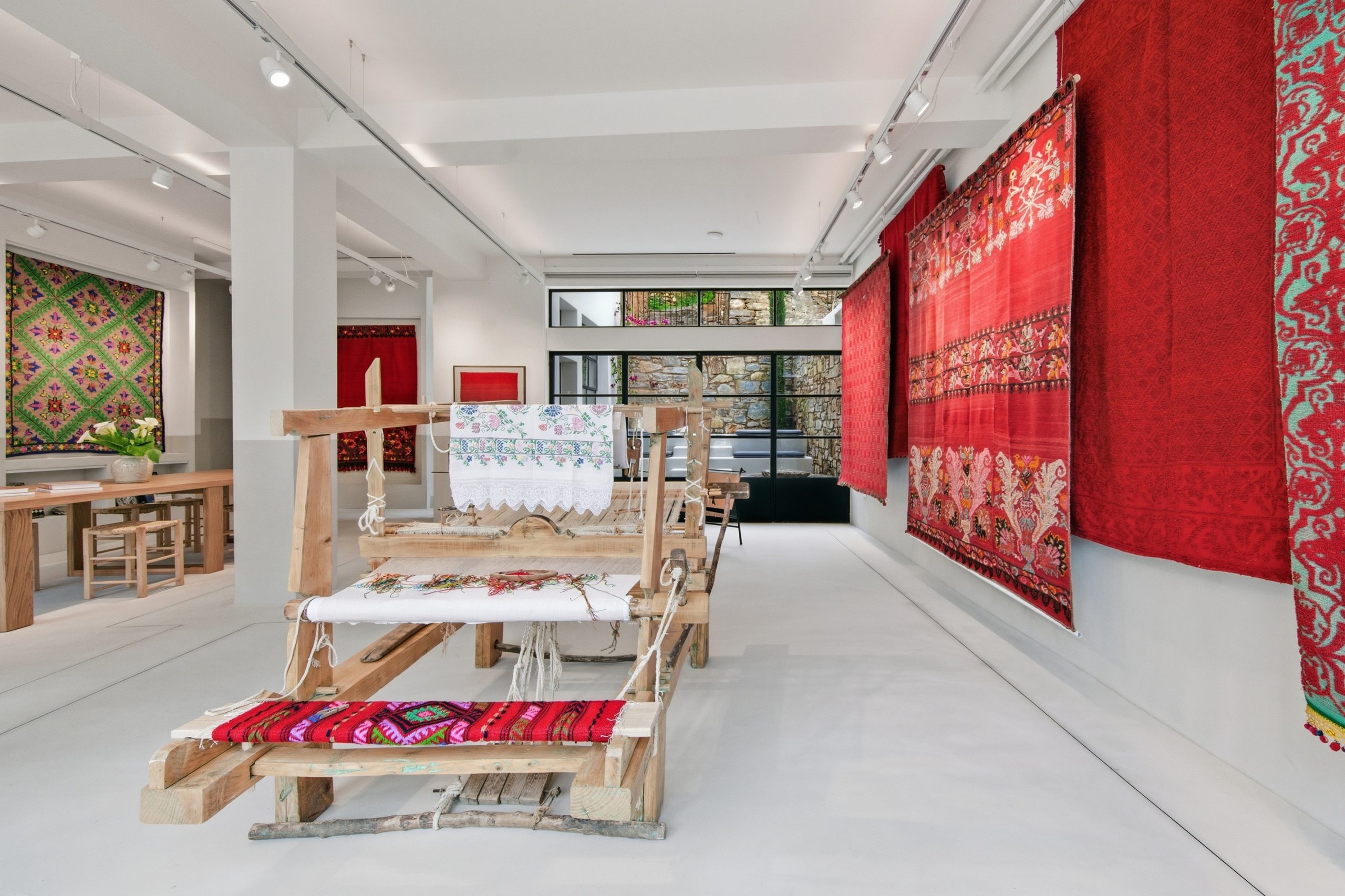
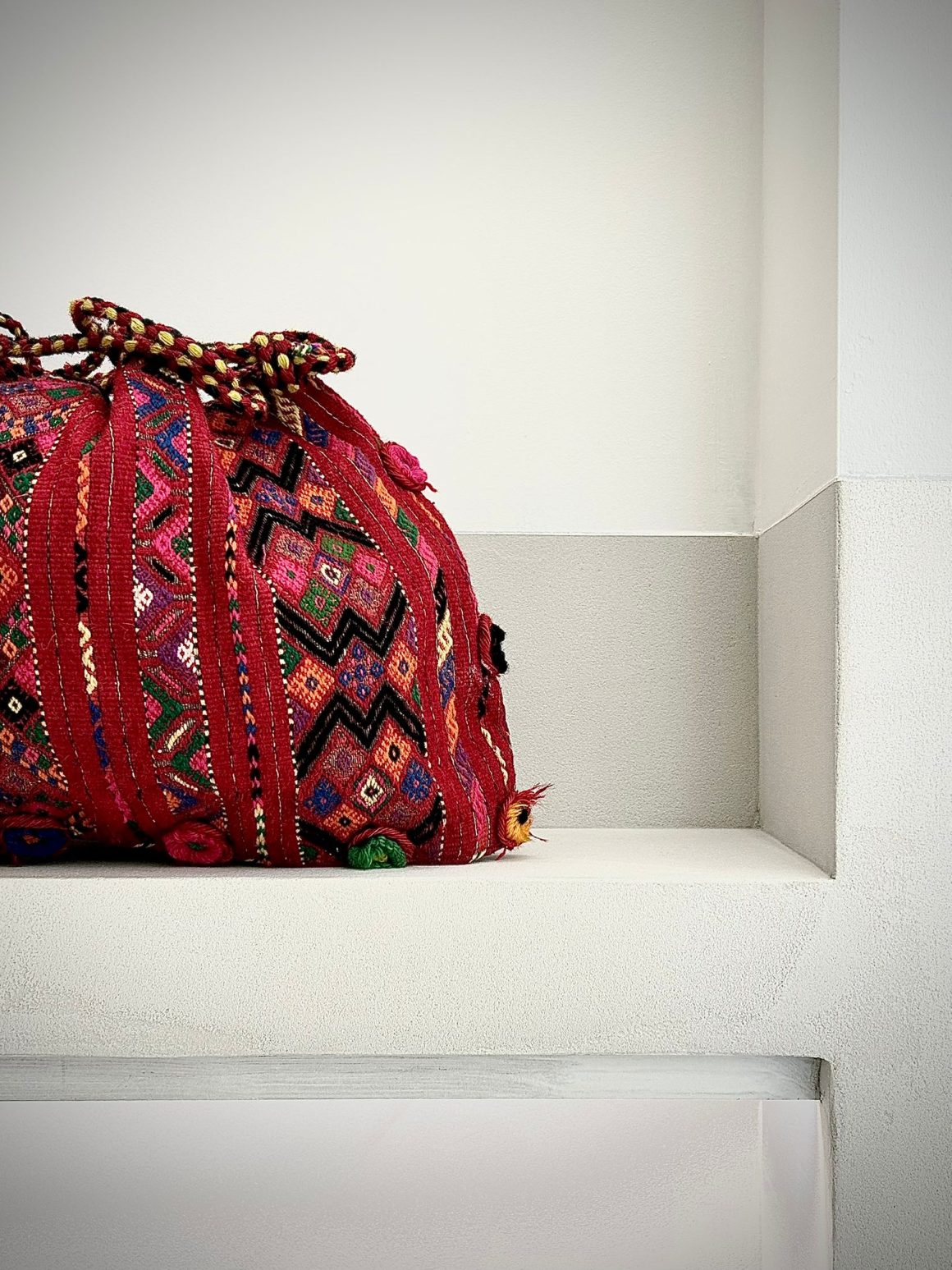
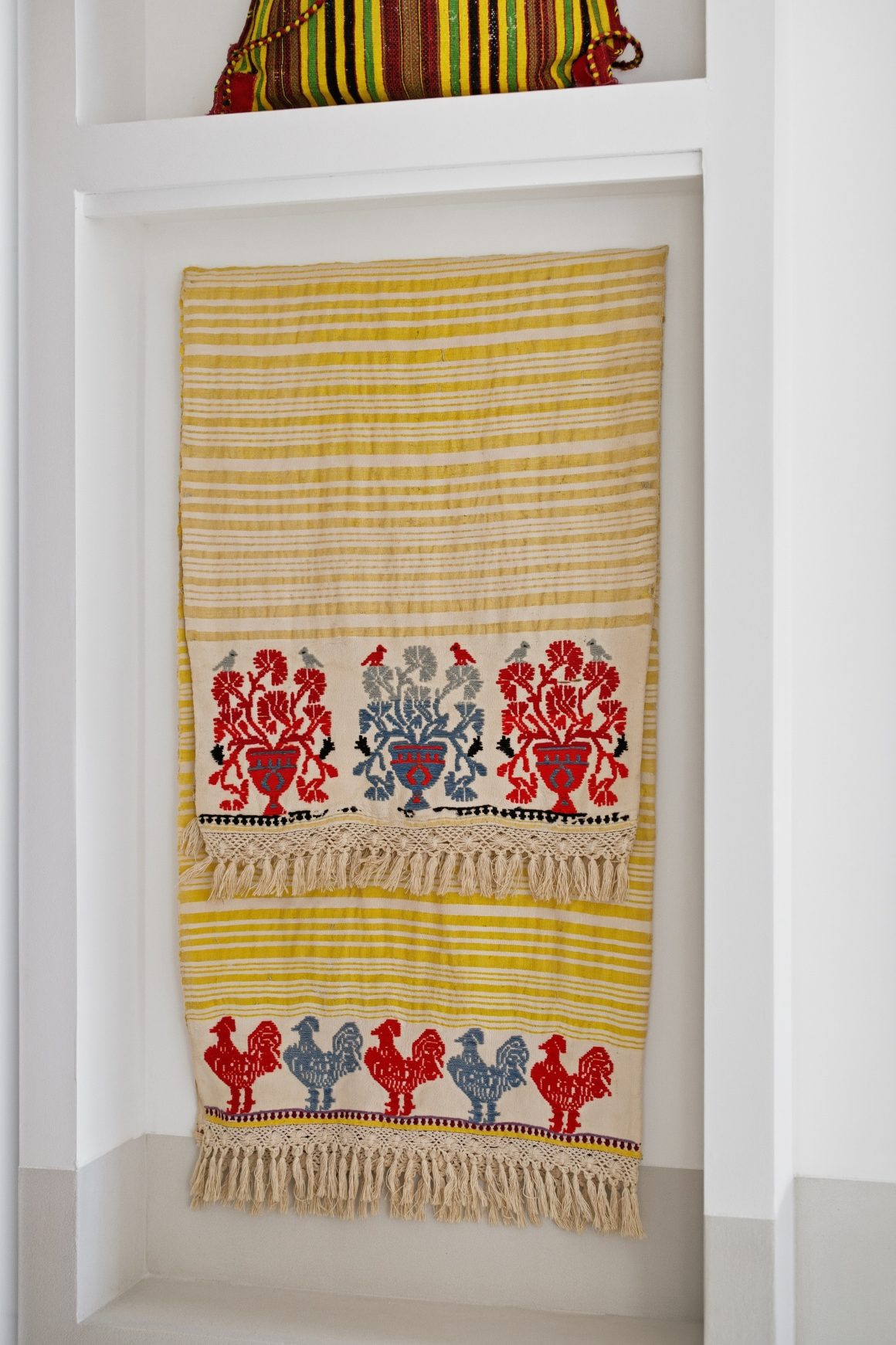
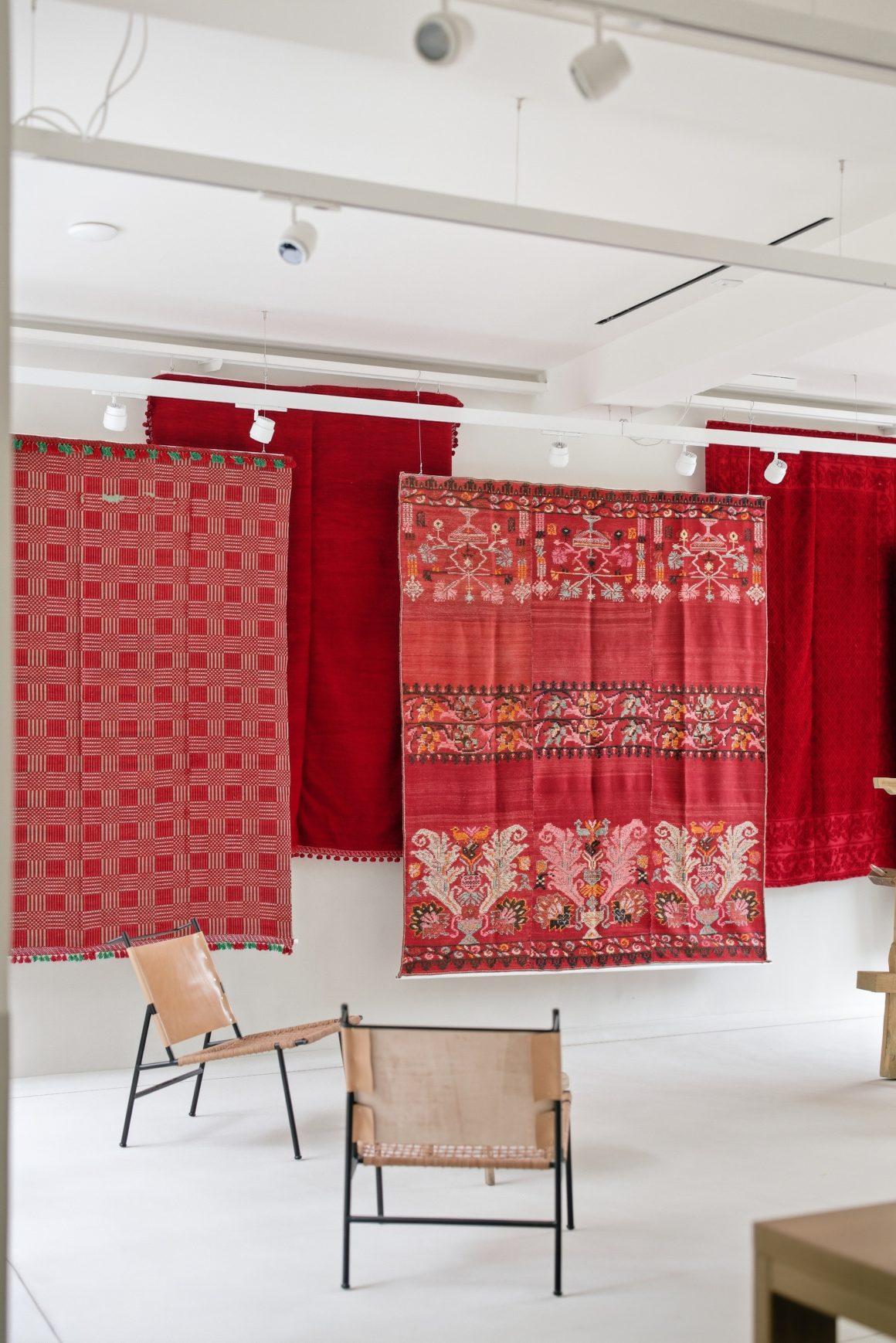
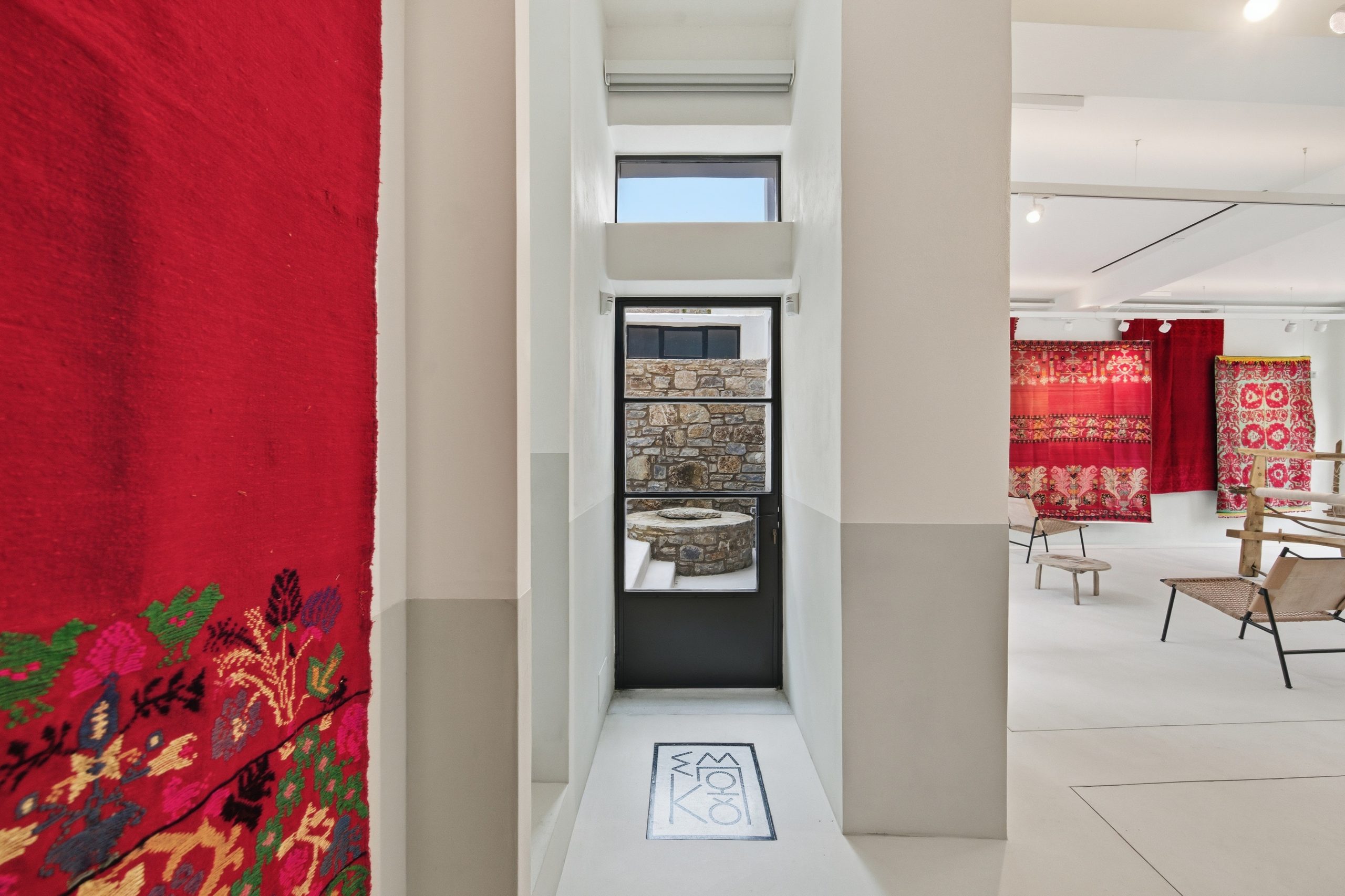
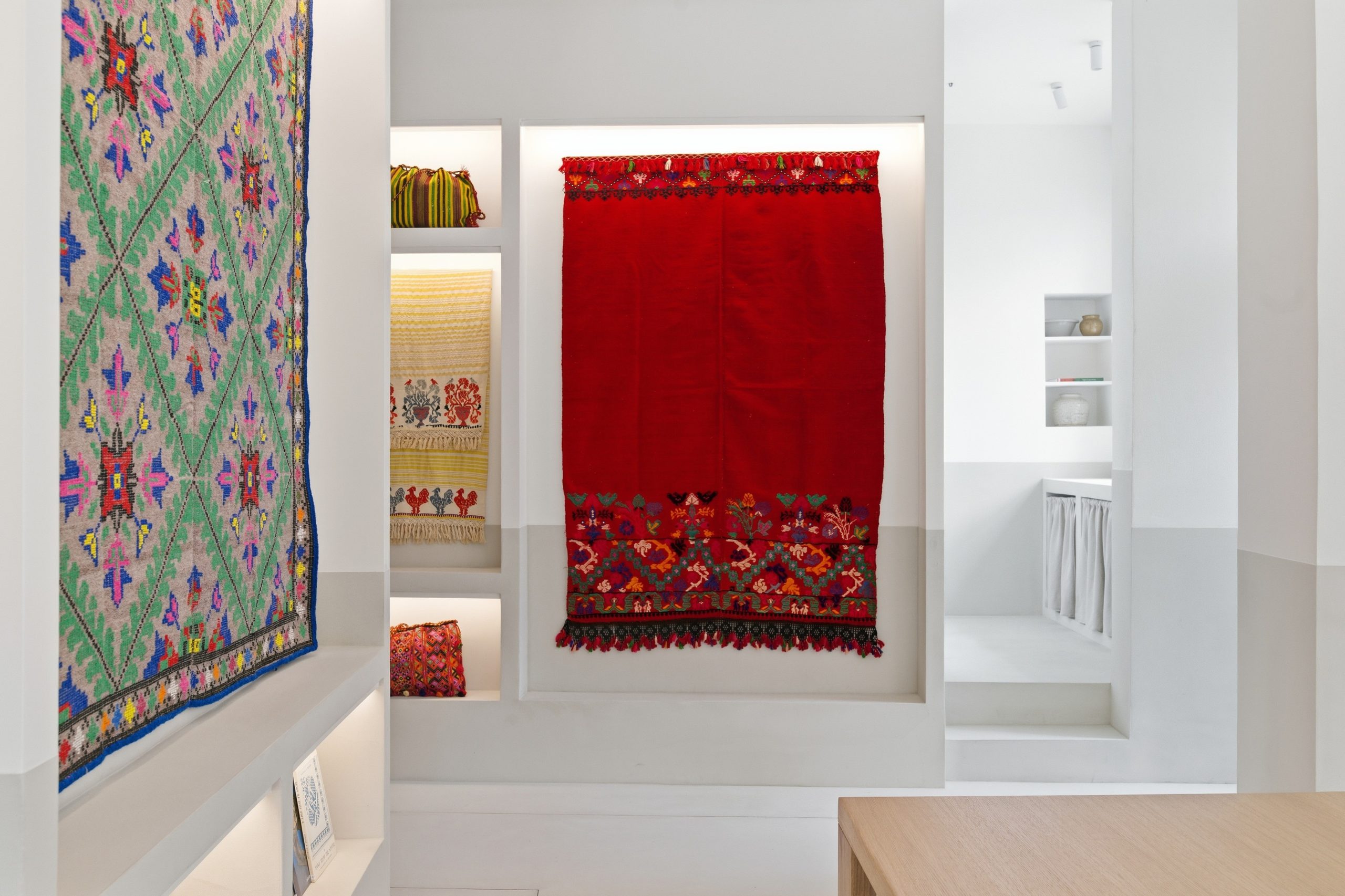
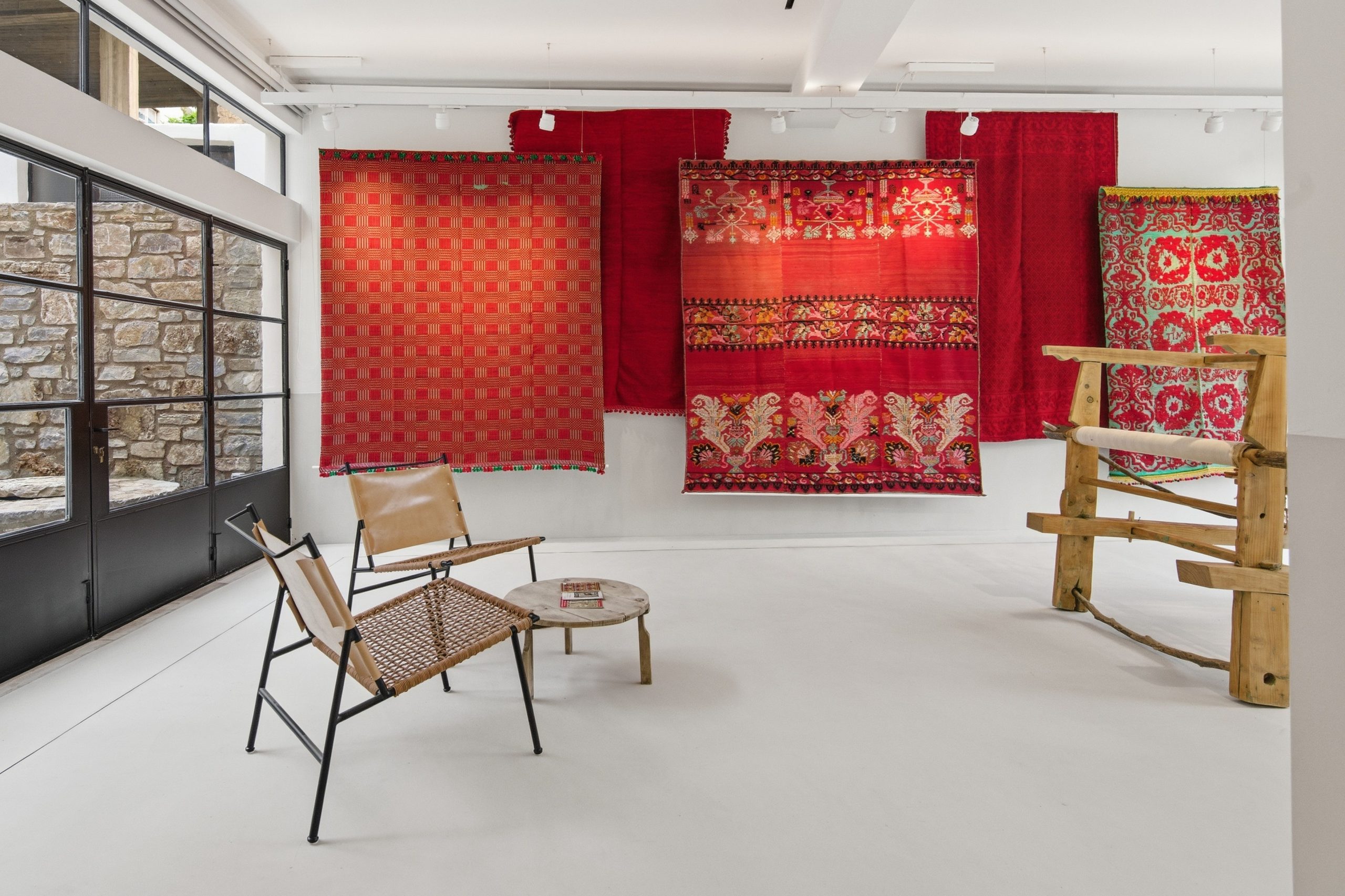
The first exhibition at the Anogeia Weaving House represents the first public expression of this philosophy. Visitors encounter authentic family textiles dating primarily from the 1930s onwards—objects that remained in Anogeia families for decades as precious heirlooms. Each woven piece was carefully preserved, accompanying significant moments in family life and carrying from one generation to the next the stories of the people who created it.
The value of these collections extends far beyond their aesthetic qualities. They are authentic records of social history, folk creativity and women’s artistic expression. Every pattern, every technique and every colour choice tells a different story of life in Anogeia, illuminating the ways in which weaving shaped everyday life, the local economy, family relationships and the cultural identity of the community.
The formation of this collection was made possible above all through the trust of the people of Anogeia. Families opened their homes, shared personal stories and entrusted the Centre with precious objects, recognising that knowledge acquires even greater value when it becomes a shared cultural resource. The response of the local community has been one of the clearest affirmations that the Centre embodies a collective desire to preserve and carry forward this cultural heritage.
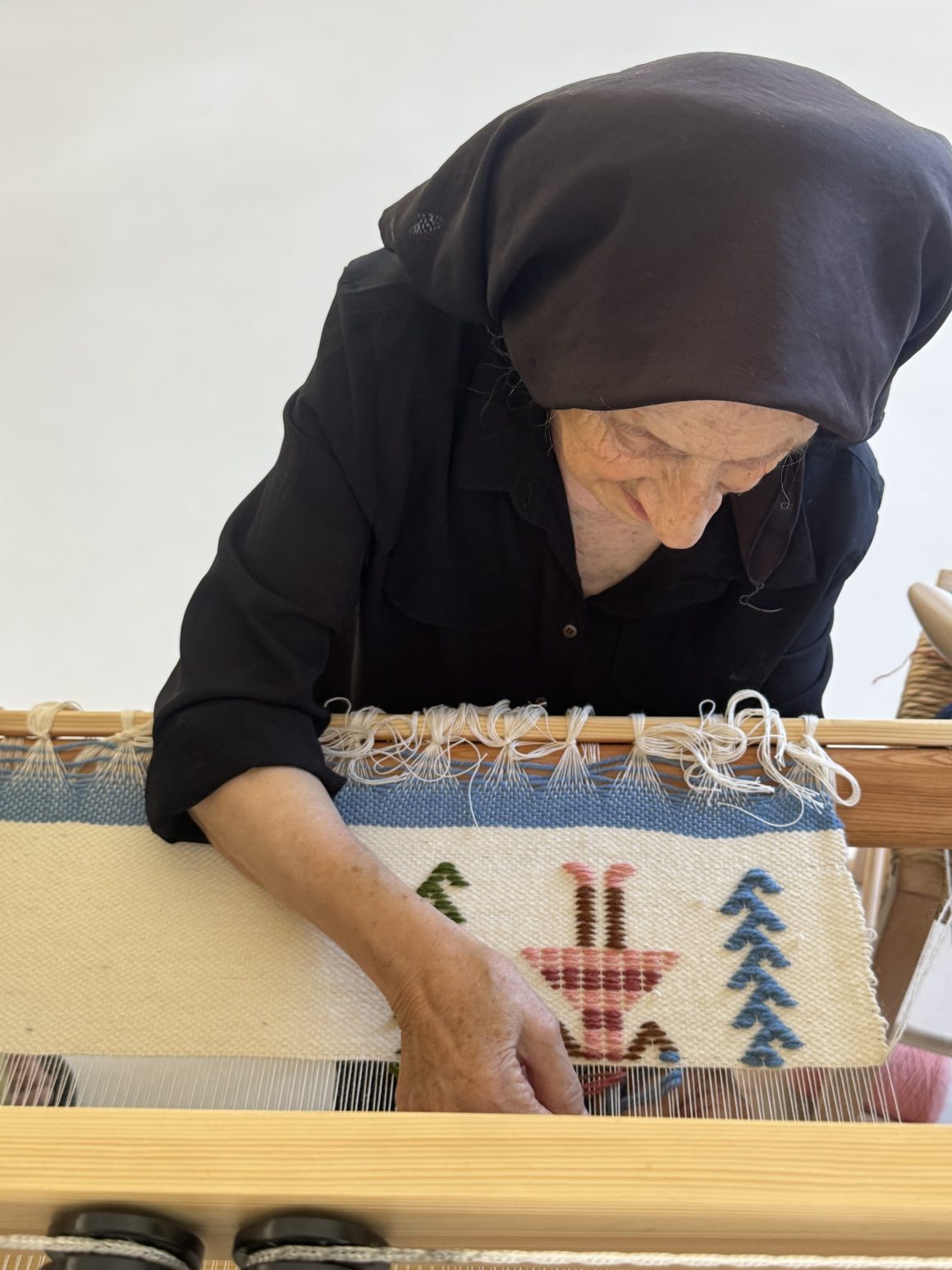
The weavers of Anogeia themselves hold a particularly important place in this process. Their experience, the techniques they have cultivated throughout their lives, their personal stories and their profound knowledge of materials constitute an invaluable resource for the Centre. Every encounter with them enriches the research with new insights, brings forgotten techniques to light and reveals details that are difficult to capture in a book or archival record.
This living knowledge also provides the starting point for the production process gradually being developed at the Anogeia Weaving House. Production is approached as a natural extension of the Centre’s scientific research and educational mission. Through collaboration with local weavers, the systematic study of historical techniques and the transmission of knowledge to younger generations, a creative environment is being established in which Anogeia’s traditional weaving techniques regain an active role in contemporary creative practice.
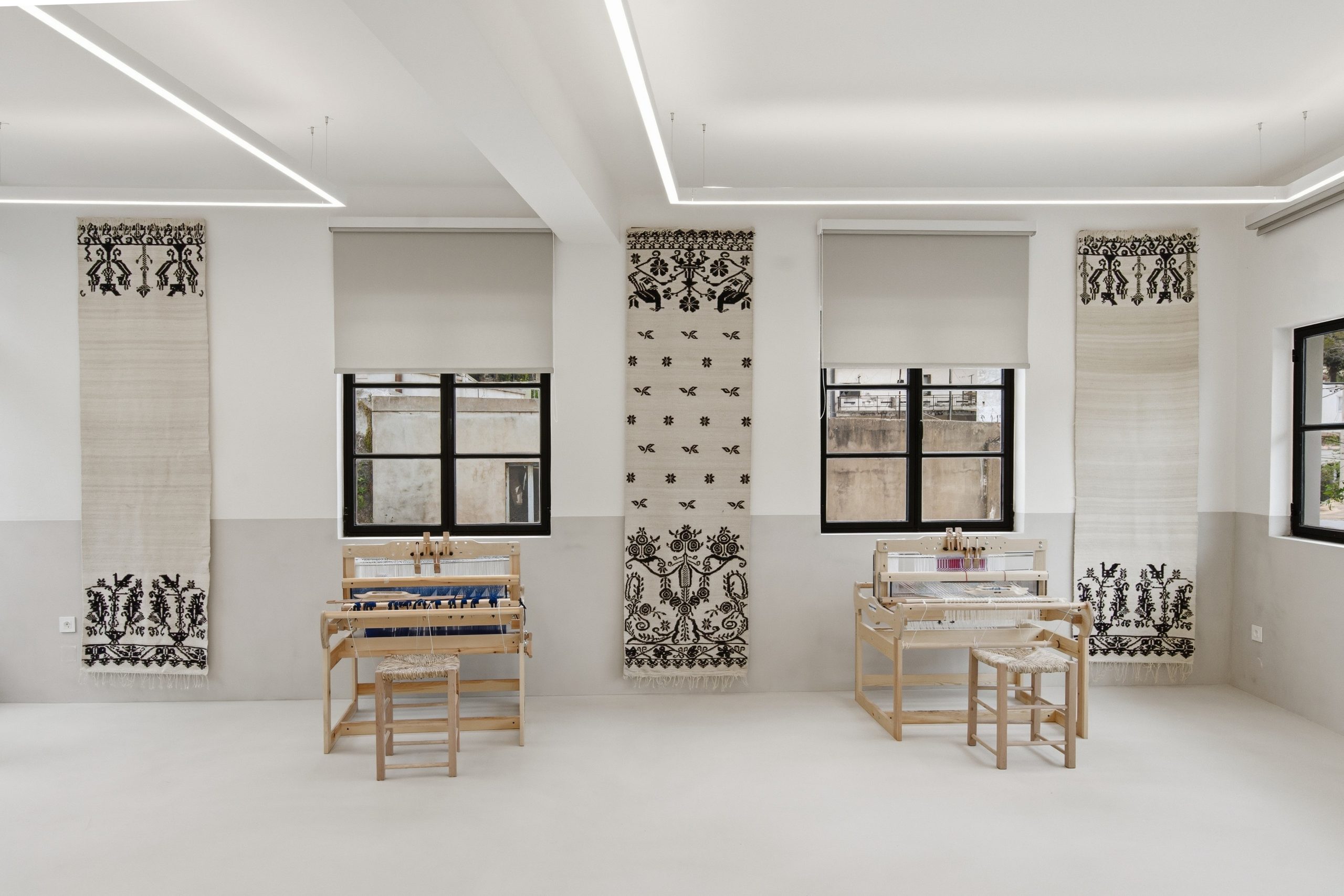
At the same time, education is one of the Centre’s most important areas of development. Its educational programmes are designed to offer a meaningful learning experience to children, young people, students, cultural professionals and creatives from Greece and abroad. Hands-on engagement with the loom, the materials, the techniques and the stories associated with each woven piece creates a new way of approaching cultural heritage, in which knowledge is transmitted through experience and participation.
A significant step in this direction was the signing of a Memorandum of Understanding (MoU) with the Benaki Museum, a partnership of particular importance that marks the beginning of a broader network of strategic collaborations for the Centre in Greece and abroad. The partnership establishes a strong framework for the exchange of knowledge and expertise, contributing substantially to the development and evolution of educational programmes, as well as to the creation of joint academic and cultural initiatives. It represents an important starting point for developing synergies that will continuously strengthen the Centre’s scientific, educational and cultural work.
An outward-looking approach has been a strategic priority since the very first day of the Centre’s operation. Collaborations with universities, cultural organisations, museums, creatives and research institutions are creating an international environment for the exchange of knowledge and experience. The weaving tradition of Anogeia is taking its place within the contemporary cultural dialogue, engaging creatively with fashion, design, architecture, applied arts and new forms of cultural production.
The response from visitors during the Centre’s first months of operation confirms that authenticity remains a timeless human need. People of all ages, from Crete, across Greece and from abroad, are discovering a place where knowledge, creativity and human experience come together to form a distinctive cultural proposition. Particularly encouraging is the interest shown by younger generations, who are approaching weaving as a contemporary field of creativity, research and personal expression.
The Anogeia Weaving House is gradually establishing a new model for the stewardship of living cultural heritage: a place where academic knowledge meets experience, the local community engages in dialogue with the international community, education nurtures creativity, and tradition evolves through knowledge.
The story of weaving in Anogeia continues to be written every day. Every new testimony, every technique documented and every person who becomes part of this journey adds another thread to a culture whose strength endures through time.
Because cultural heritage is the memory that creates, the knowledge that is shared and the inspiration passed from one generation to the next, continually shaping the next chapter in the history of a place.
General Information
Anogeia Weaving House
Michali Skoula, Perachori, Anogeia
(opposite the Prasini Folia guesthouse)
Email: info.anogeiahouse@gmail.com
Website: https://www.anogeiaweavinghouse.com/
Instagram: @anogeiaweavinghouse
Opening Hours: Wednesday–Sunday, 10:00–17:00