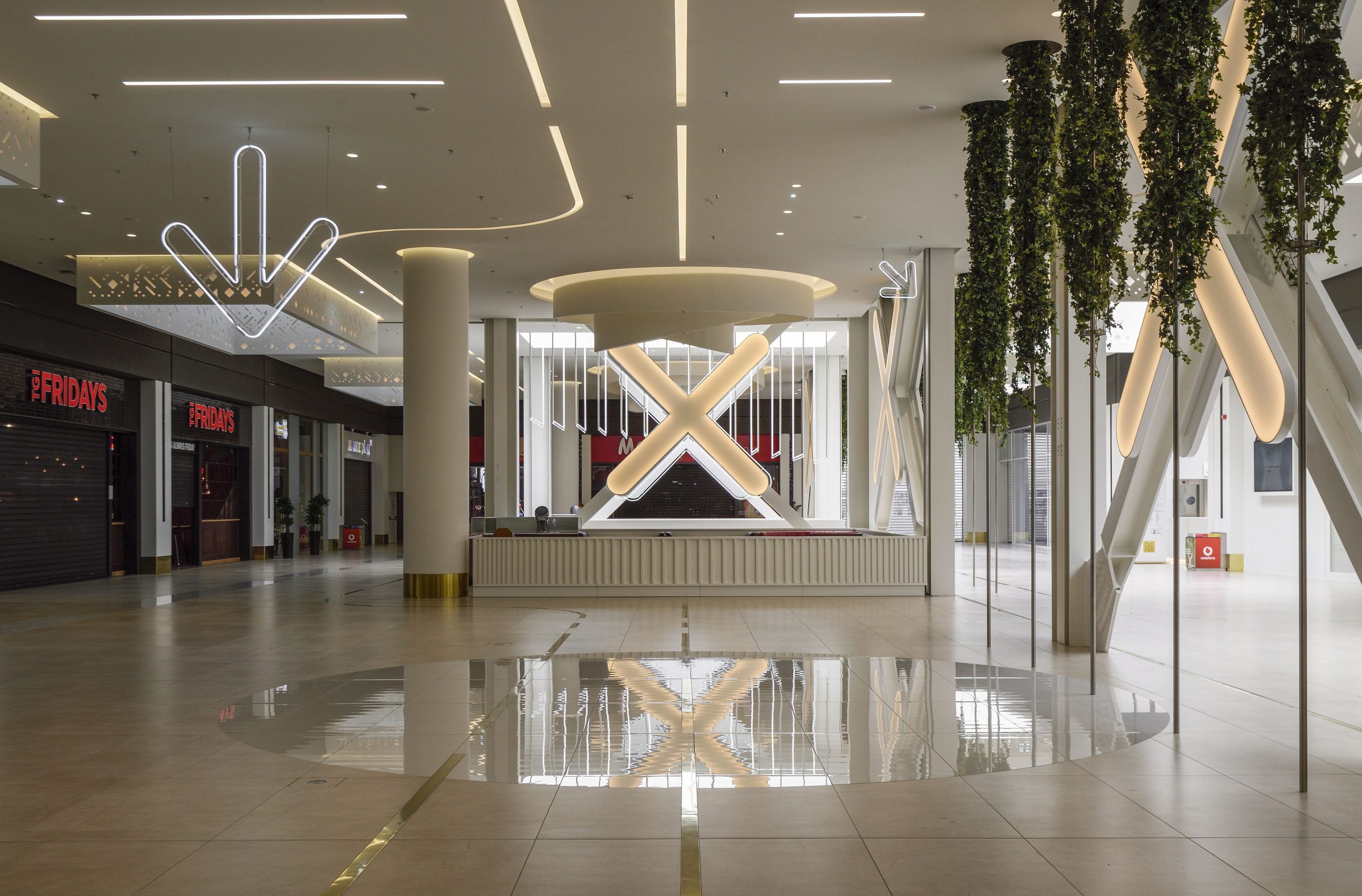
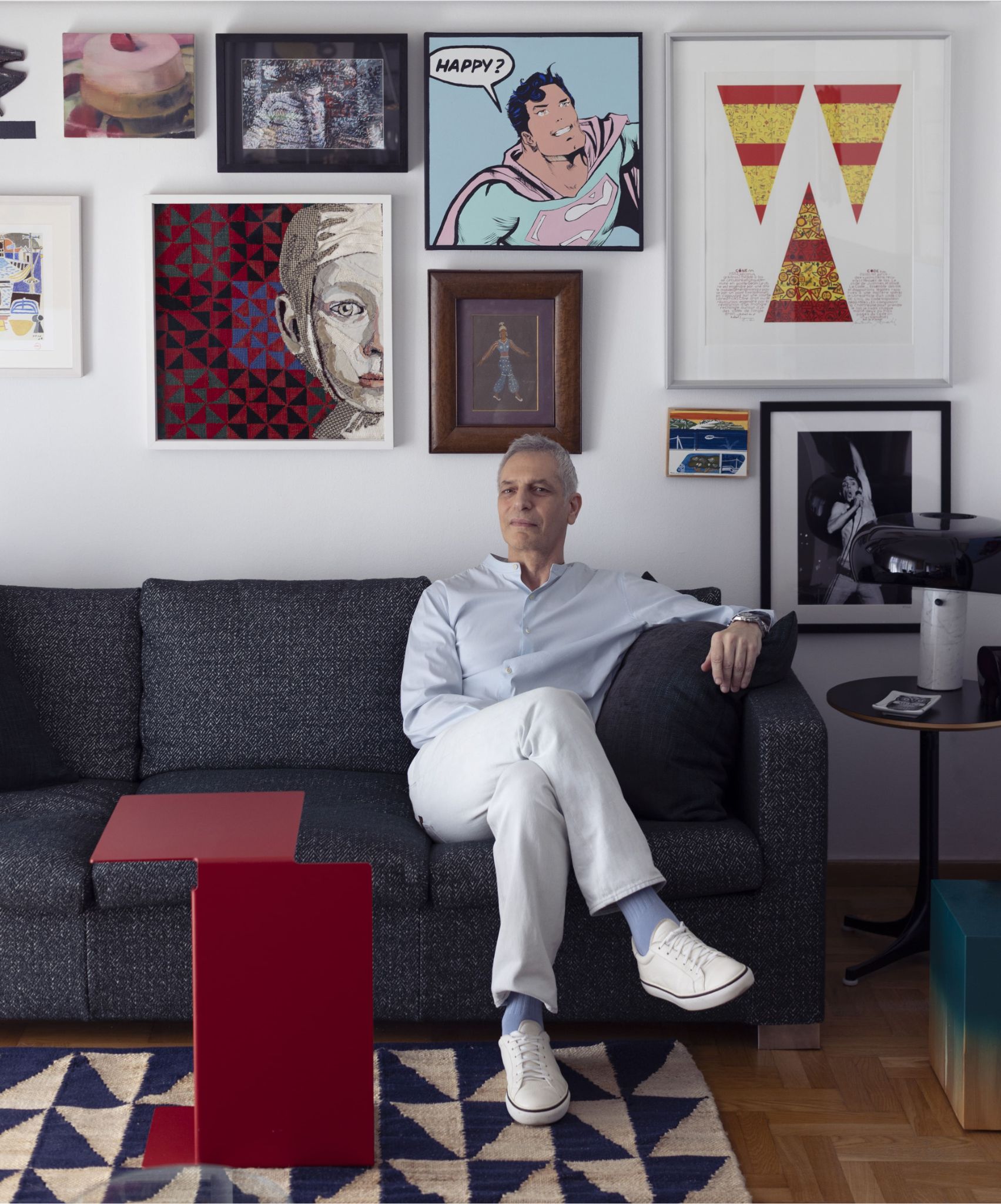
Tell us about the highlights of your journey. What are the key steps that brought you to where you are today?
My professional journey began in Thessaloniki, working on small-scale projects, with a strong drive for experimentation, collaborators who shared the same vision, and countless hours of work. The quality of these projects gradually led to larger-scale commissions, partnerships with companies that placed their trust in us, and projects abroad. I believe that recognition came through continuous engagement with the field and the effort to consistently create something new—responding to challenges without repeating ourselves.
How did architecture enter your life, and what is the story behind discovering a creative perspective through your work? How was it formed and how has it evolved over time?
I would say architecture entered my life somewhat by chance, when I decided to start drawing classes during the final years of school. I was immediately fascinated by this new medium of expression, even without knowing where it would lead. Later, at the Polytechnic, I began to understand the creative paths that open up through architecture, especially by choosing studios that emphasized the design process.
I perceive architecture as a language of communication—a system with rules that apply regardless of form or materiality. For me, evolution lies in mastering this “vocabulary” more effectively, in order to produce new narratives.
Through what processes does your aesthetic evolve?
Aesthetic development comes from training the eye—refining the way you observe and interpret things. It involves stripping away superficial elements and focusing on the essence. Ideas must be presented clearly and remain consistent with the central concept. The message should be immediately understandable and capable of being expressed in just a couple of sentences.
What do you consider your most important achievements?
The fact that even in the least interesting projects, I always find a creative aspect that brings me joy. I never approach any work as routine; I stay personally involved in the design process and strive to compose without repeating myself. In the end, I gain something from every project.
What and who helps you move forward?
A key motivation for growth is curiosity—the desire to think of something new each time, and the drive to improve on ideas you’ve explored in the past. Companions on this journey are my collaborators and my family, who are both supportive and critically engaged with my choices.
What materials do you love, and how do you experiment with them?
I have always had a strong appreciation for natural materials, especially wood and marble. Different treatments can completely transform their texture and color, altering the overall sensory experience. The way they are used can redefine the character and atmosphere of a space.
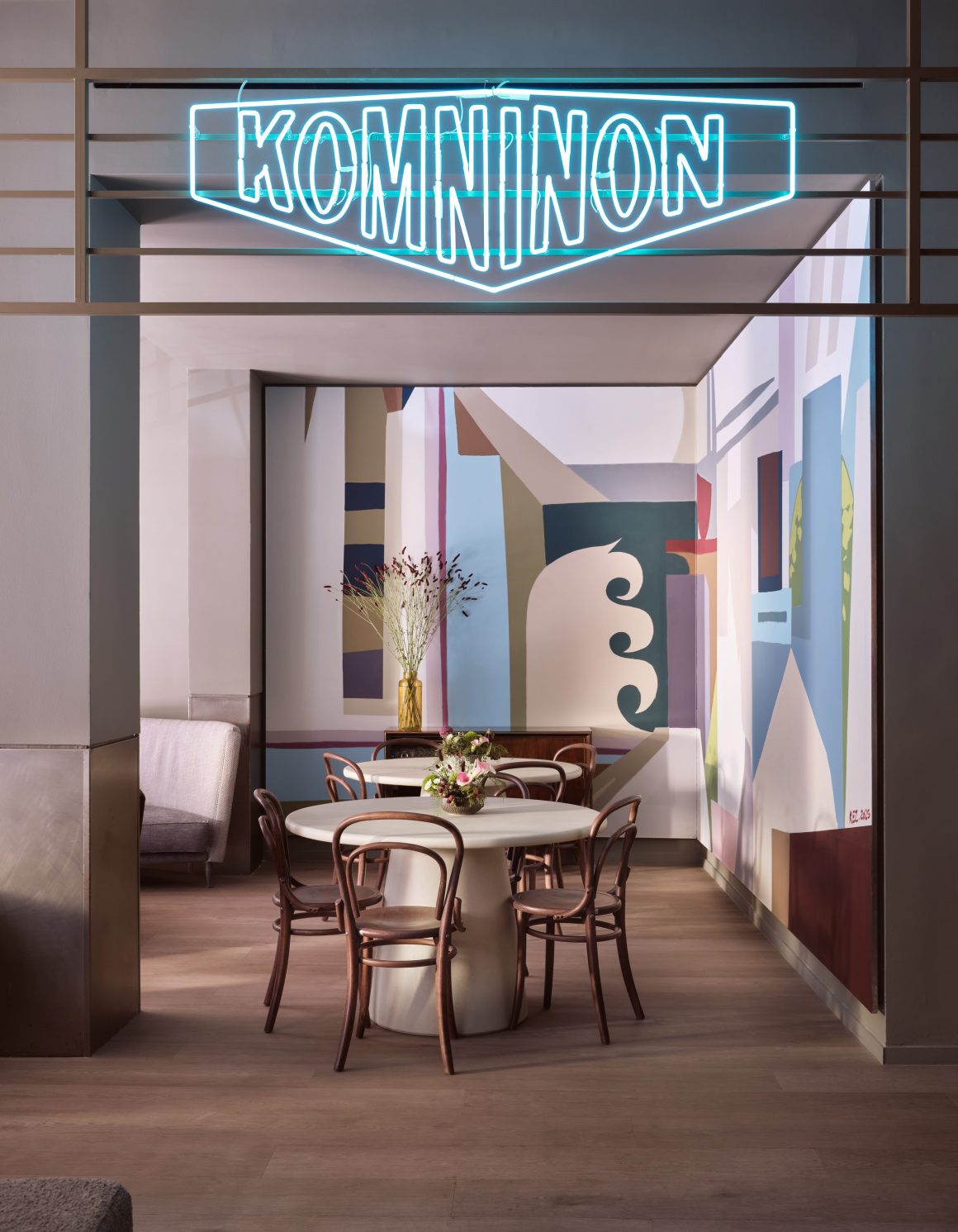
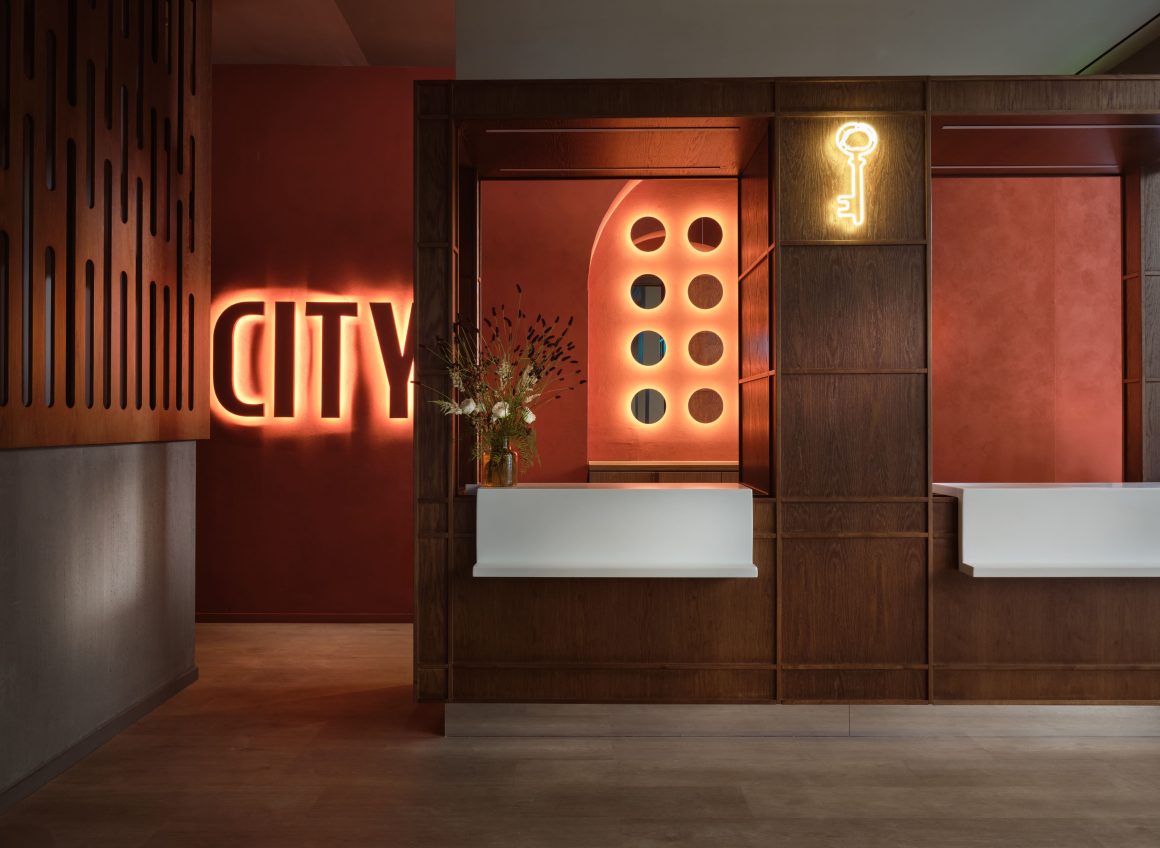
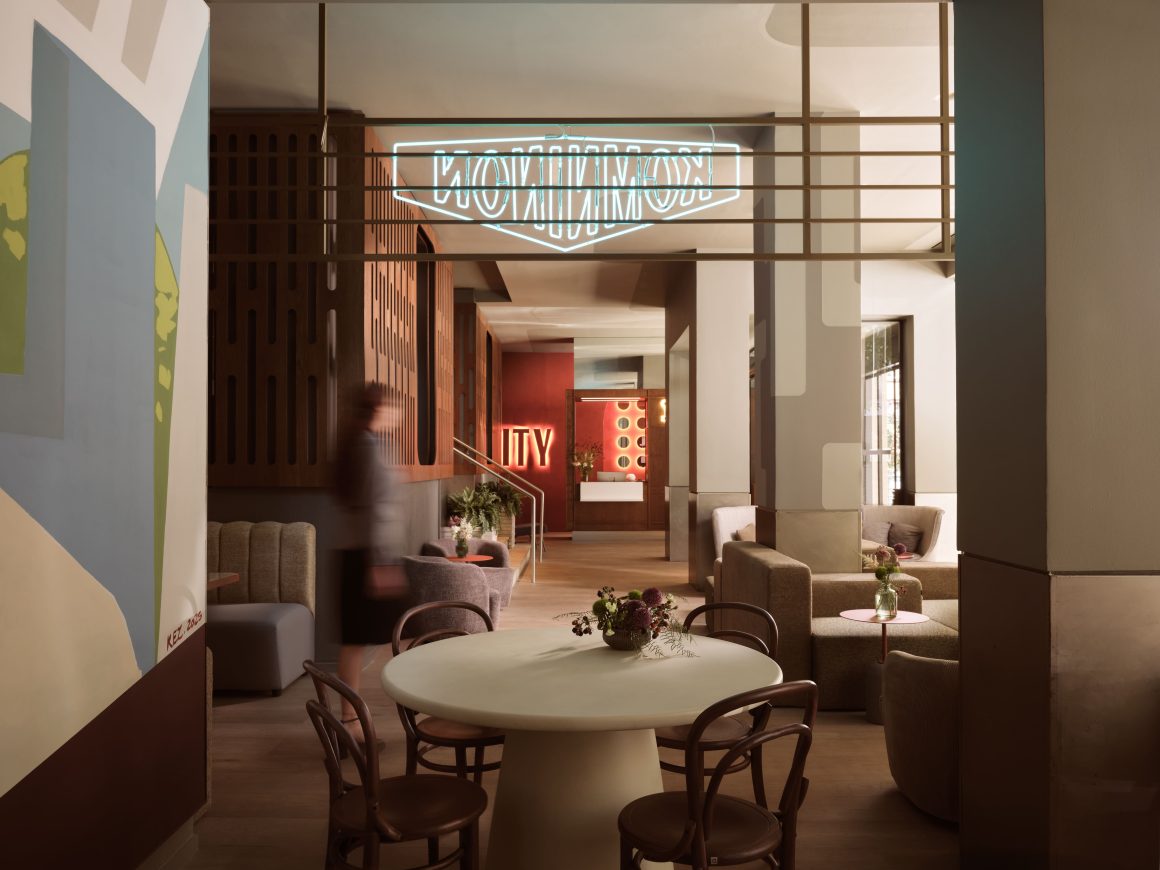
Tell us about the redesign of the City Hotel in the city center. How differently do you approach something that already has its own history?
At City Hotel, we aimed to highlight the history of the city alongside the history of the building itself. We selected elements that reference Thessaloniki’s Byzantine past, as well as features from the 1970s, when the hotel first operated.
The approach is minimal and reveals itself on a second level of reading, creating a new blend with a contemporary character.
Is hospitality a distinct category of architectural approach?
Fundamentally, architecture is one discipline, so the design process does not differ for me depending on the project category. The goal is to respond to the requirements of the building program while simultaneously staging the experience of hospitality—making it distinctive and recognizable in each project.
Do you follow your instinct, or are there techniques that guide you? Is architecture a matter of the heart, or something that can be learned?
Architecture, as an “applied art,” is a process grounded in principles and rules that can be learned and applied according to given conditions. What ultimately makes the difference is how this “syntax” and “vocabulary” are interpreted in each case.
Intuition—shaped by experience, knowledge, and research—gives each space its unique character.
Have you experimented with other forms of art? What else is part of your range of explorations?
Recently, I’ve started working with ceramics, driven by a need to return to a more primal materiality. Clay, beyond its form, has a life of its own—it transforms in the kiln depending on its composition and metal content, producing almost magical results.
What has extroversion offered you in general, and how does it influence your work?
If anything defines me, it is probably introversion, which may also be a reason why I’ve always felt the need to push myself further. My communication with the world happens through my work—my projects attract people who may want to collaborate with me. Architecture comes first, and my personality follows.
What are your immediate plans?
Long-distance travels and short getaways that function as periods of decompression and mental rejuvenation.
What triggers your evolution as a creator? Tell us a story.
Usually, it starts with an image that captures my interest during the research phase, before the design begins. A mechanism is activated that analyzes the data within the image and translates it into space. It could be a work of art, an image from nature, or even just colors—what matters is that it contains something that sparks its transformation into the specific project.
At City Hotel, the emblem of the Komnenos dynasty—the hotel is located on Komninon Street—served as the starting point for the Byzantine reference in the space. A fragment of this symbol was incorporated into the ceiling of the restaurant.
What do you love and what do you dislike about Thessaloniki?
I love the sense of familiarity, the people, the proximity of things, and the open horizon. I’m bothered by conservatism, a provincial mindset, and the slow pace.
How would you like its architecture to be, and which parts of the city do you prefer?
The city’s architecture is, in many ways, a “constrained” story—similar to that of other Greek cities—due to the lack of historical continuity, cohesive planning, and aesthetic direction. I would say I’m particularly drawn to the Kapani area, where there is a strong sense of authenticity and functional continuity over time.
What would you like to create—a dream project?
A cluster of small residences for short-term stays, set in a secluded forest location. Each unit would explore, in a different way, the relationship between nature and built form through the lens of fairy tales, offering a unique spatial experience.
What is the most extravagant thing you’ve done?
A clothing store—one of my earliest projects—where the garments were suspended in the center, leaving the mirror-clad walls completely free. It was a mix of experimentation and naivety that ultimately became my most “avant-garde” work.
Which architects and designers do you hold close to your heart, and why?
Jean Nouvel, for his ability to create buildings with strong symbolism.
Achille Castiglioni, for the simplicity of gesture that produces timeless objects.
Are we what we choose?
I believe our choices contain information about the different aspects of ourselves. In that sense, through this collage of elements, our personality is revealed.
The last thing you bought and why you chose it?
A work by Dimitra Konstantinidi from her exhibition at Apodec Gallery, for the sensitivity in the way she uses the needle, composing her narrative with colored threads.
The best book you’ve read recently?
I revisited Cassandra and the Wolf by Margarita Karapanou after many years, and I perceived its “harsh” side from a completely different perspective.
An object you would never want to part with?
A small work by Lila de Nobili.
An artist you admire and would like to own a work by?
Yannis Moralis is one of my favorite Greek artists. The consistency, experimentation, and evolution in his work are, for me, a unique example of talent and method.
In another life, what would you like to be?
I would like to be a sculpture in a museum garden, observing visitors and their reactions.
What other talent would you like to have?
I would say stronger social skills, which I consider more of a natural talent than something purely acquired through training.
Three places you love returning to, and why?
Paris, for its beauty and cultural richness;
Paros, for its horizon and the cleansing quality of its air;
Pelion, for its ever-changing landscapes and light.
Is art and creation a path to becoming better people?
The path to becoming better people passes through self-awareness and the work we do on ourselves. If art and creation support this process of introspection and reflection, then yes.
Give us your definition of beauty.
For me, beauty is kindness—offering without expecting anything in return.
What else would you like to design?
A series of ceramic, non-functional objects.
What do you consider authentic today?
Anything that stems from an inner need for expression and communication, free from ulterior motives or second thoughts.