Your journey and what has shaped your path in life so far
Every step along my path has been significant. Recently, as I was lighting a candle in a church, I caught myself reflecting on exactly that: how the way I was raised, my family, my son, the people I have encountered, the choices I have made and even the challenges I have faced have all shaped who I am. I truly believe nothing happens by chance.
Each experience—personal or professional—has taught me something about myself and gradually brought me closer to the person I am today. With greater awareness and consciousness, I now approach what I create, and the way I wish to exist in the world, with a deeper sense of responsibility and intention.
Professionally speaking, my journey began in journalism. Later, my path led me into the world of wellbeing through Pilates, yoga, breathwork and NLP. These practices profoundly changed the way I understand health and human relationships as a whole.
What do you consider your most meaningful achievements?
My most meaningful achievements are not titles or professional milestones. They lie in an ongoing process of growth—remaining true to myself while continuing to evolve.
It is about redefining who I am, learning, and continuing to create. It is about making peace with the different chapters of my life, accepting change, and staying open to what is new.
External success certainly has its place, but without inner balance and harmony, it does not hold the same meaning for me.
What led you to focus so deeply on wellbeing, and how did you experience this transformation?
It did not begin from a sense of lack. In many ways, wellbeing was already part of my lifestyle. I had been exercising for years and I have always paid attention to my nutrition. During the time I worked in magazines as a beauty editor, I also wrote about wellbeing, while Pilates was something I practiced purely for myself.
When a major professional shift occurred within our family business, I found myself at a moment of reevaluation. That was when I turned more consciously toward the field of wellbeing. One training gradually led to another.
If we can speak of a transformation, it is this: what once existed as a personal practice and a subject I wrote about has now become something I also teach, study and deeply live. Over time, the most profound shift has been internal—from focusing on appearance and “how things look” to exploring essence and “what things truly are.”
How has your philosophy around time, the body and health evolved over the years?
Today I listen much more carefully to my body and respect both my limits and my resilience. Health, for me, is not only physical condition—it is physical, mental and spiritual. It is a way of living that is built through small, consistent daily practices which, over time, create lasting results.
Although I believe I manage my time relatively well, my intention is to cultivate a rhythm of life that brings me closer to a deeper sense of inner alignment.
What do you appreciate—and what concerns you—about the professional environments you move within?
Because I move across several fields, I would answer this more broadly. What I value most in any environment is consistency and professionalism. When seriousness, respect for people and clarity of intention are present, the quality of the work naturally follows.
This is why I prefer to collaborate with people who possess integrity, knowledge and openness.
What concerns me, however, is the growing sense of superficiality and commercialization—the search for quick solutions and immediate results. I believe true value is built over time. For me, credibility, consistency and respect remain non-negotiable principles, regardless of the field.
What has been the greatest benefit of your relationship with yoga?
Alongside yoga, I also work with the Pilates method and breathing practices through breathwork. For me, Pilates represents a way of living with the body, while yoga is more of a philosophy of life. I enjoy combining the two because they share many common elements. Pilates is more focused on movement and physical practice, whereas yoga goes a step further by introducing the dimension of meditation.
Yoga—which literally means “union” and extends far beyond physical exercise—has given me more than physical wellbeing. It has helped me cultivate a sense of inner calm. Through movement and breath, it quiets the mind and allows me to manage stress with greater awareness, approaching life with mindfulness and emotional balance.
Tell us about your book. What inspired you to write it and what does it aim to explore?
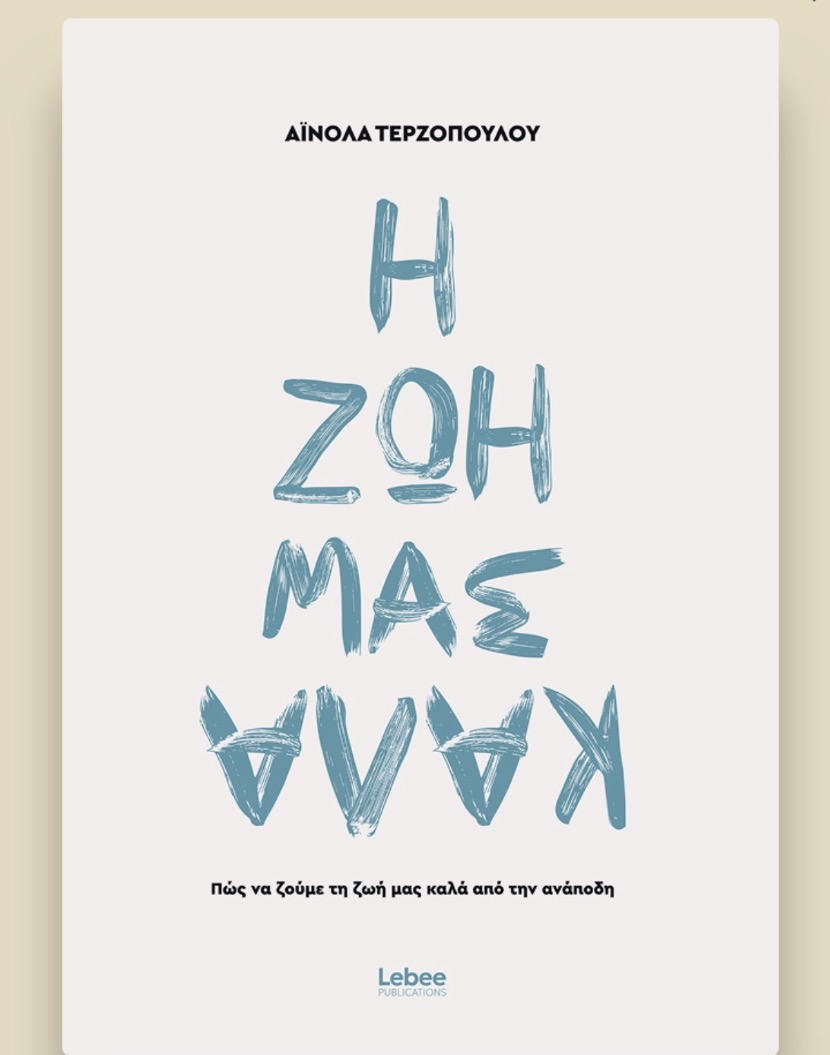
My book, Our Life Well: How to Live Our Life Well from the Reverse Side, was born from an inner urge to speak about negative emotions—the ones we usually hide or fear. The book is deeply experiential.
At different stages of life, we all experience anger, sadness, fear, guilt, and anxiety. Through twenty-four words that refer to what we often perceive as negative emotions, I wanted to show that these emotions are not our enemies. On the contrary, they can become our most valuable advisers.
They can guide us toward self-awareness, transformation and a deeper understanding of ourselves. Sometimes it is precisely by turning toward what we tend to avoid that we discover new ways of living with greater clarity and authenticity.
How important are meaningful human relationships, especially in this era of increasing disconnection?
Meaningful human relationships are fundamental to our mental and emotional wellbeing. In many ways, our identity is shaped through our relationships with others.
Today we live in a time of constant connectivity, yet communication often remains superficial. Technology may bring us closer in practical terms, but not always in a deeper, more meaningful way.
For me, building authentic relationships is essential. They are not only a way of sharing life with others but also a space where we can come to know ourselves more fully. Within such relationships there is intimacy, connection, care, truth, empathy, respect and a sense of safety.
I feel fortunate and deeply grateful to have these kinds of relationships in my life.
What values are non-negotiable in your work?
If a person’s true work is ultimately the way they choose to live and evolve, then for me the most fundamental value is something Aristotle spoke about centuries ago: living with virtue.
For me this means inner coherence. The ethical values I hold should be reflected in my actions. I try, as much as possible, to ensure that what I believe, what I say and what I do exist in harmony.
If you could create a dream project, what would it be?
This dream project has been with me for many years. I would love to spend most of my time away from Athens, ideally somewhere close to the sea—if not right by the sea.
I imagine a small guesthouse that I would create myself, where I could host wellbeing and cultural experiences. A place where people could come to slow down, reconnect, and share meaningful moments through movement, conversation, and creativity.
Are we the choices we make?
A large part of who we are is certainly shaped by the choices we make. Behind every decision lie our personality, our beliefs, our influences and even our unconscious needs.
At the same time, I believe circumstances also shape the choices available to us. I am not sure how much of our lives are determined by conscious decisions and how much is guided by life itself. Perhaps the answer reveals itself gradually through the course of our lives.
The best book you’ve read recently
For quite some time now I have been reading philosophy. I believe that the ancient philosophers have said—if not everything—then almost everything about the great questions of life.
On a personal level, philosophy has helped me immensely during difficult periods. For me, it feels like the next step after psychology: a deeper, more spiritual way of understanding both life and oneself.
One book I read recently and greatly appreciated is The Path: What Chinese Philosophers Can Teach Us About the Good Life by Michael Puett, professor of Chinese History and Anthropology at Harvard University, and Christine Gross-Loh, writer and PhD in East Asian History from the same university.
One object you would never want to part with
I do not have a particular object that I feel attached to. However, I have been wearing two very delicate necklaces around my neck for decades. I almost never take them off—only when I need to undergo medical examinations.
In another life, what would you have liked to be?
Many different things. An architect, an archaeologist, an anthropologist, a dancer. When I was younger, I also wanted to become a flight attendant and a teacher.
I have always been drawn to professions that combine creativity, movement and a sense of contribution.
What other talent would you like to have?
There are many I would love to have. Perhaps they would have made life easier—especially when people used to ask me what my life goal was, and I did not quite know what to answer.
Is creativity a path toward becoming better human beings?
Yes, I believe creativity brings us closer both to ourselves and to others. Whenever we create something—no matter how simple or complex—we observe more carefully, we dedicate time, and we learn something new.
Through this process we evolve. In many ways, creativity might also be a way of becoming more complete as human beings.
Something we might not know about you
I have four siblings and seven nieces and nephews. I have one brother from my mother and father, and three more siblings—two brothers and one sister—from my father’s second marriage.
I am the oldest of all of them, which carries its own meaning.
What does true happiness mean to you?
“True happiness is that state which, in itself, would make life sufficient.”
It is a phrase I once came across and wrote down, and it stayed with me.
Your definition of beauty
For me, beauty is something—a face, a landscape, an object—that makes me pause and look at it without needing an explanation.
Beauty contains harmony, delicacy and clarity. It also carries a certain form of gentleness and grace. For me, it is deeply connected to aesthetics.
What feels authentic in today’s world?
Today, authenticity is anything that does not try to impress.
Authenticity is the consistency between what you say and how you live. It is the alignment between words and actions. It means not needing to construct an image in order to be accepted. It requires the courage to show vulnerability and to stand with honesty.
If you were to design something for TheAuthentics.gr, what would it be?
That is a difficult question. It might sound surprising, but I have always been fascinated by folk art, especially embroidery—perhaps influenced by the magazine Praktiki, which we used to publish and where I worked.
I would love to create something inspired by that tradition—it is part of our cultural heritage—but I have not yet discovered exactly what form it would take.
So perhaps, for now, I would create a small book of photographs of hearts I randomly encounter in everyday life and capture with my camera. A friend of mine from abroad calls me “the girl who sees hearts everywhere.”