How did your creative path through painting and ceramics begin? What connects the two for you?
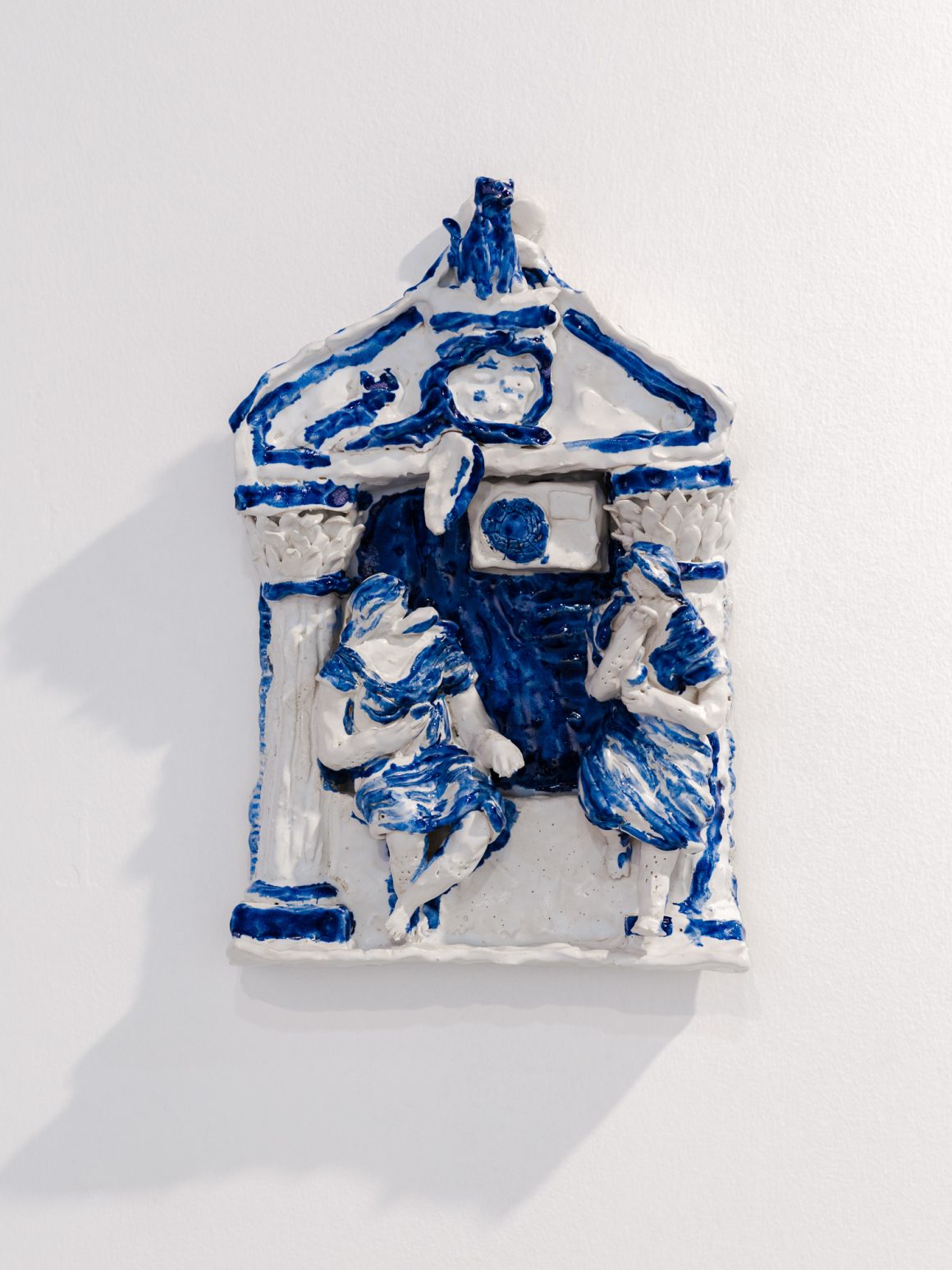
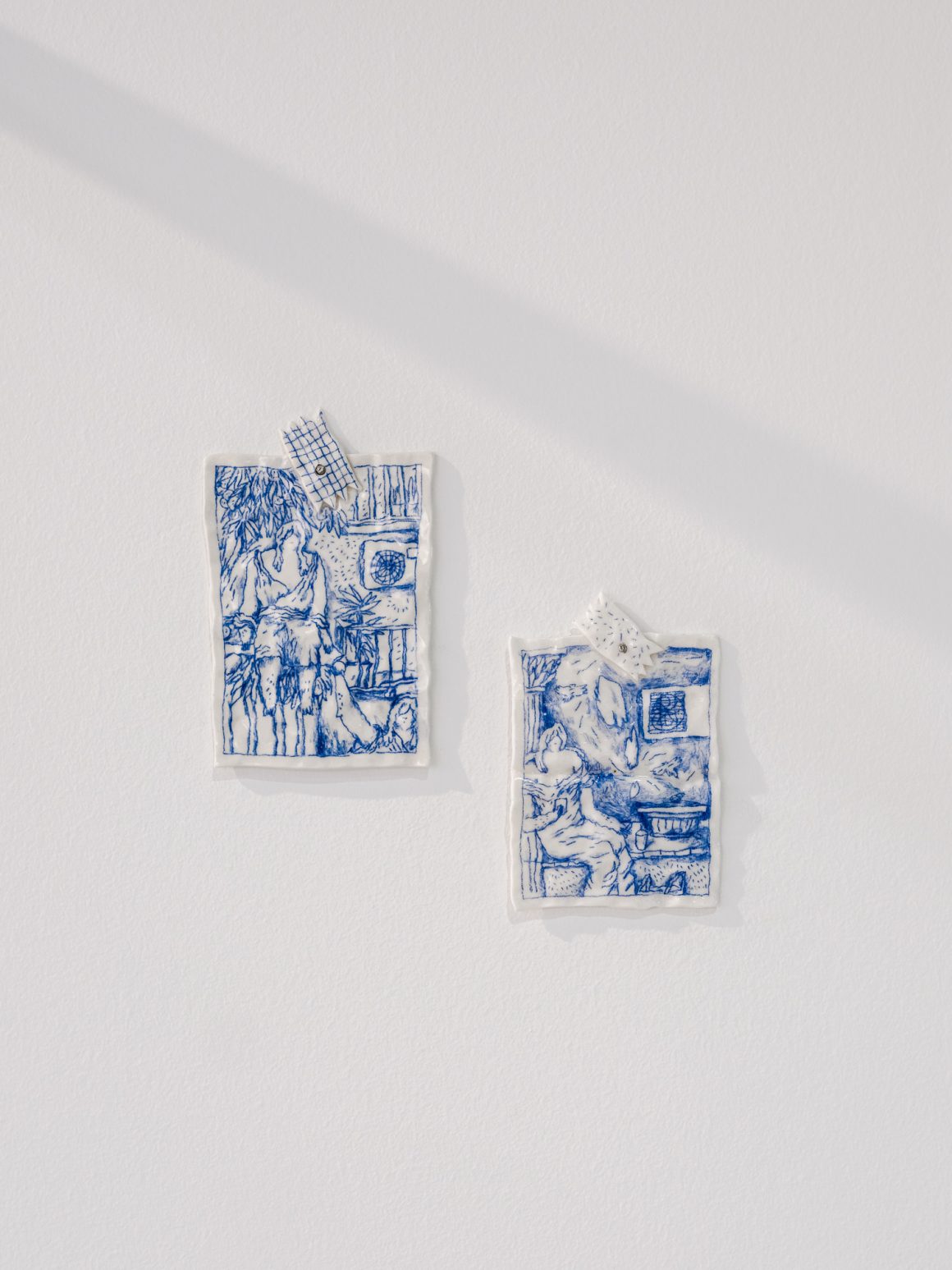
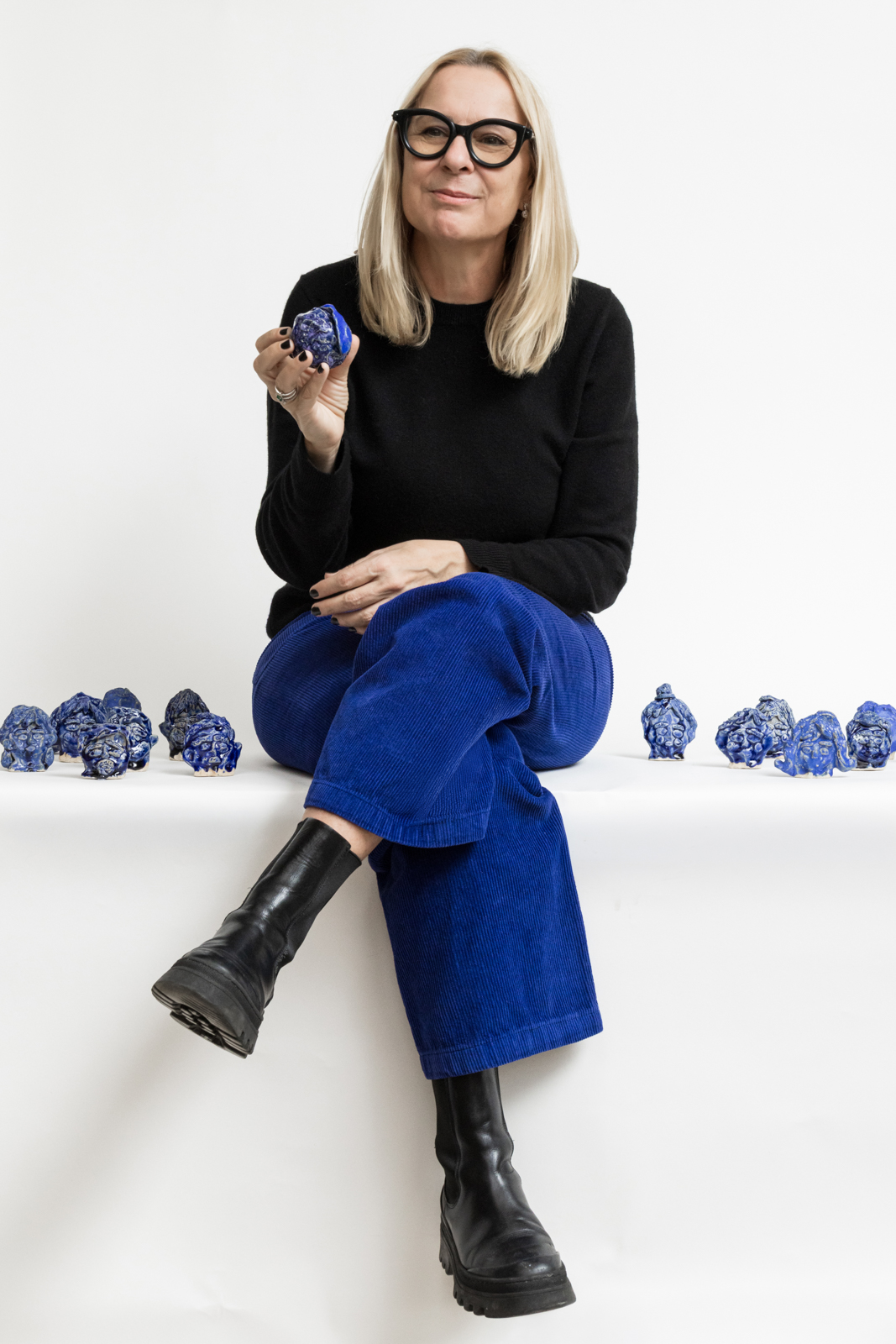
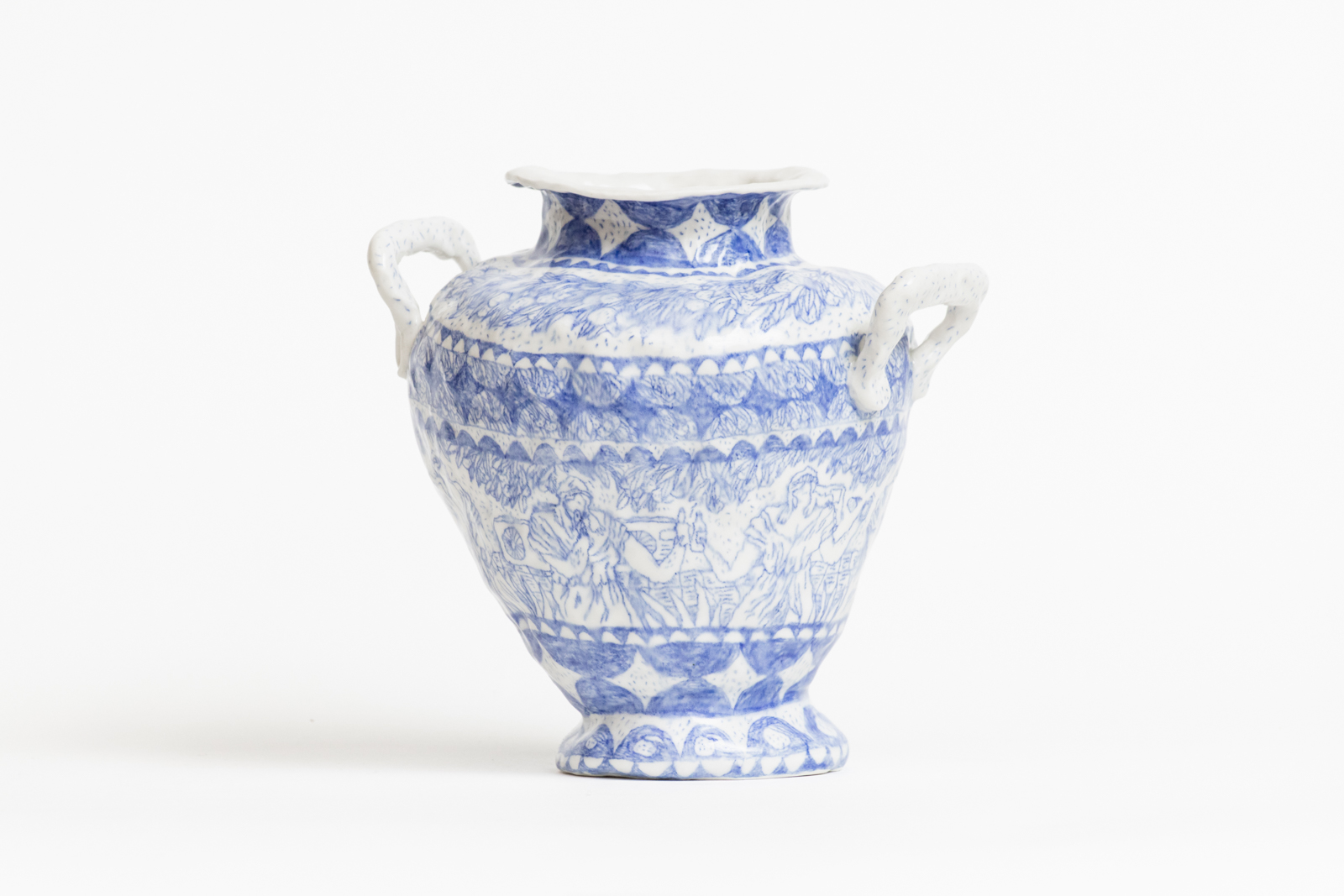
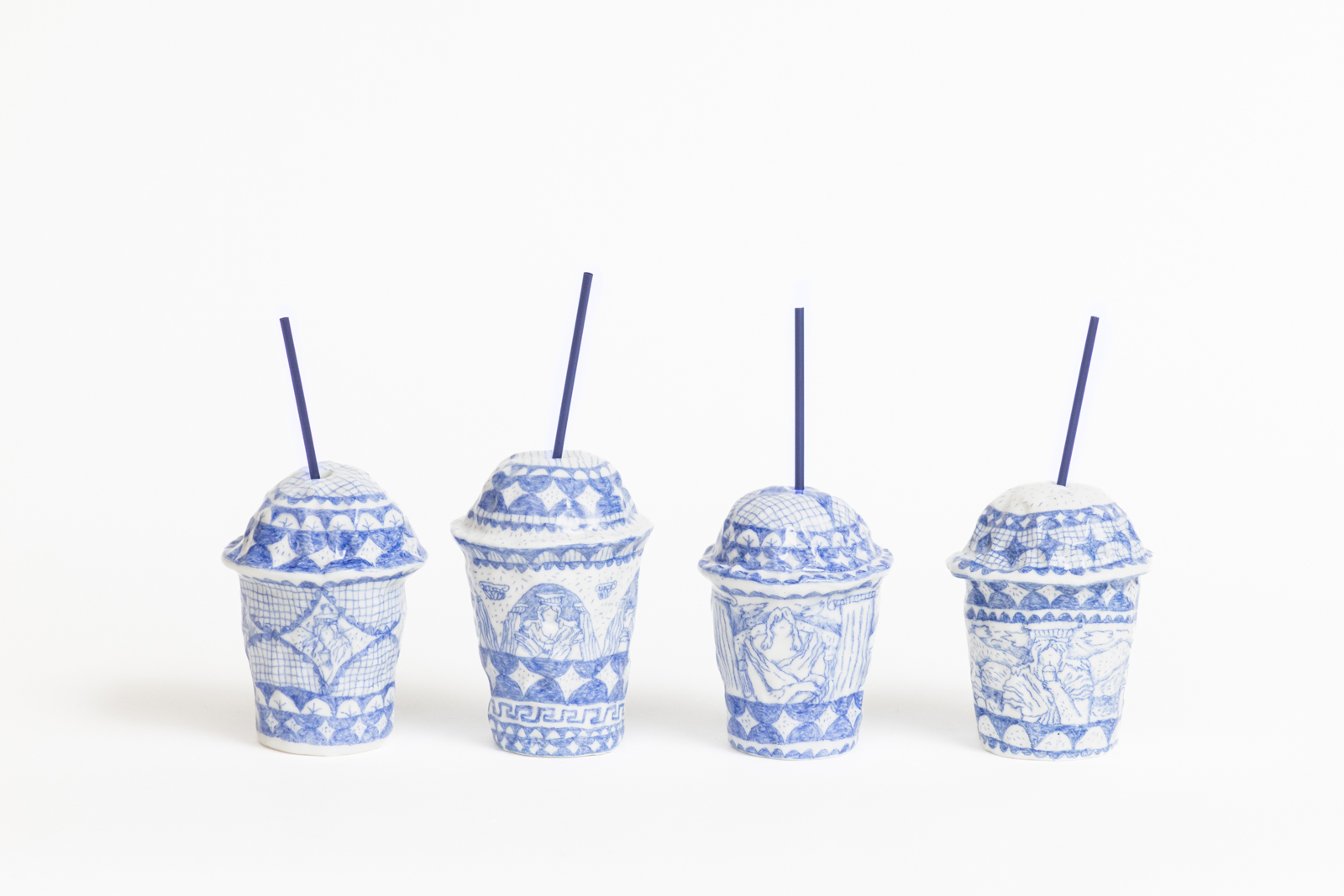
When I started modelling clay, it felt like holding an invisible brush. I still think of working with ceramics as painting in three dimensions. I try to keep the same energy in the lines that I have when I draw. I want the pieces to look as though they’ve stepped out of a painting.
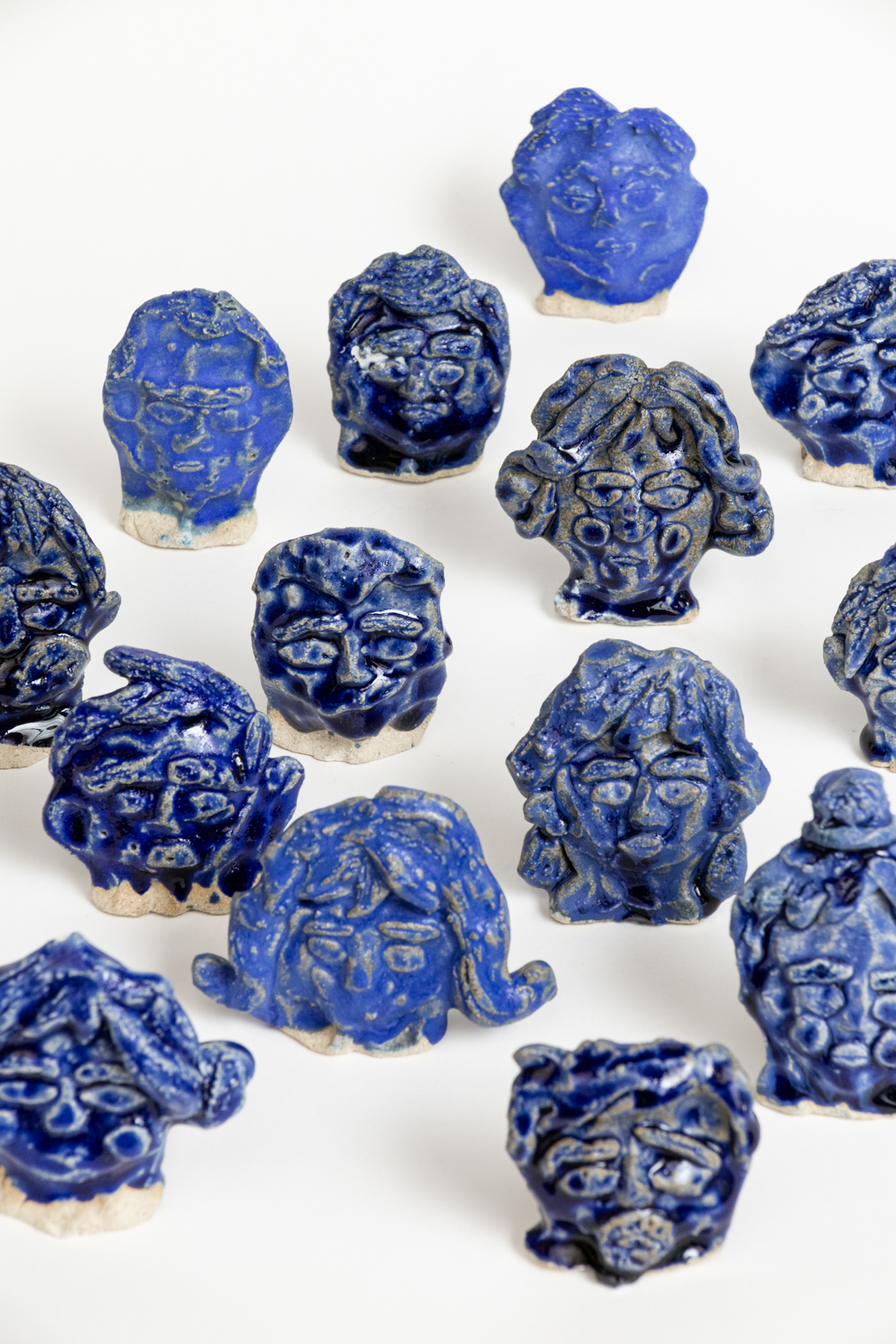
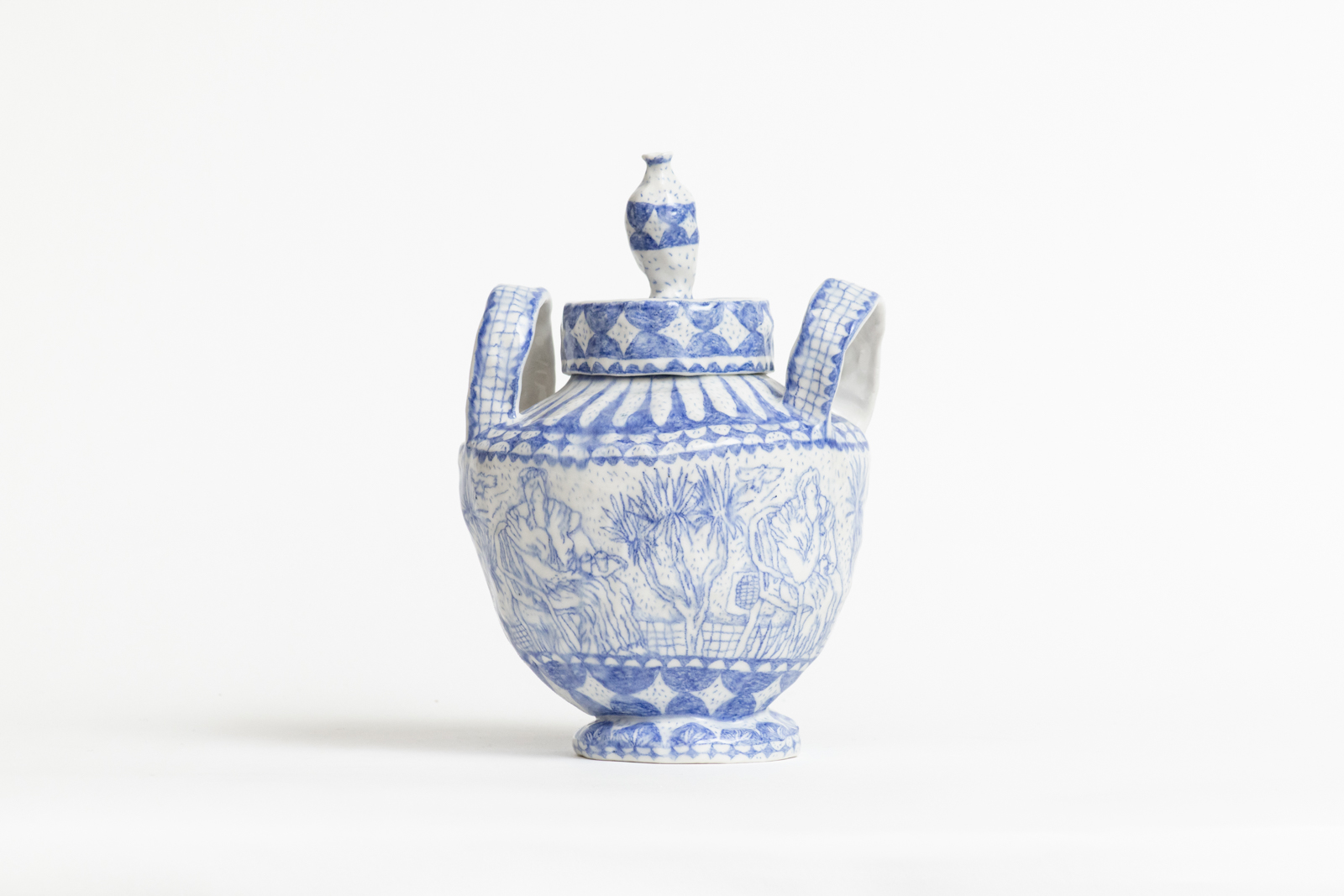
Glaze is another way for me to move between painting and ceramics. With glaze, fire becomes part of the process. The glazes can interact in the kiln, and a surface can come out glossy or matte. I love what that adds to the work.
How has your aesthetic evolved, and which projects are you most proud of so far?
My aesthetic has stayed fairly consistent, but over time I’ve found more glazes I enjoy working with, so there’s a wider range of colours and textures in my pieces now.
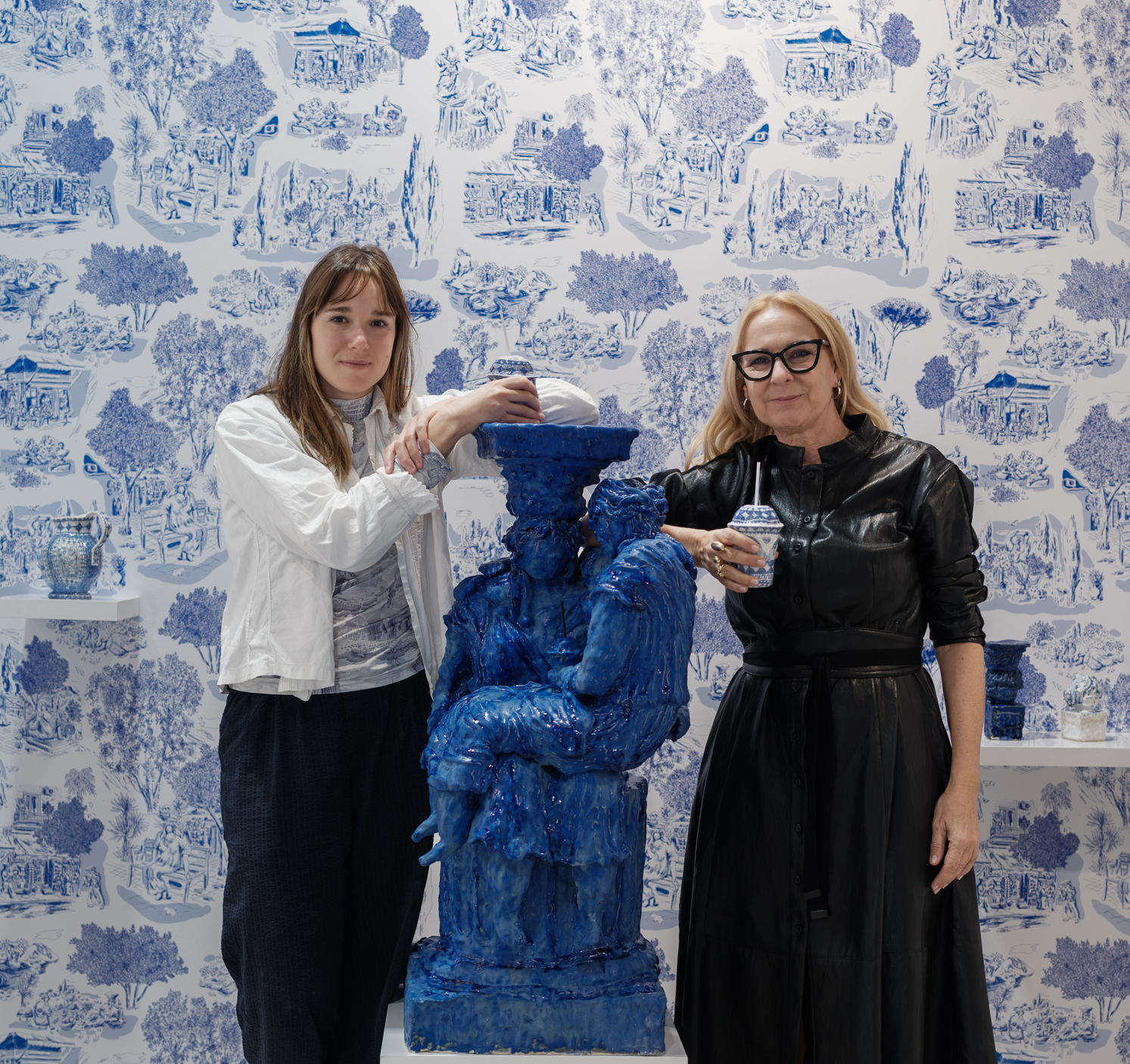
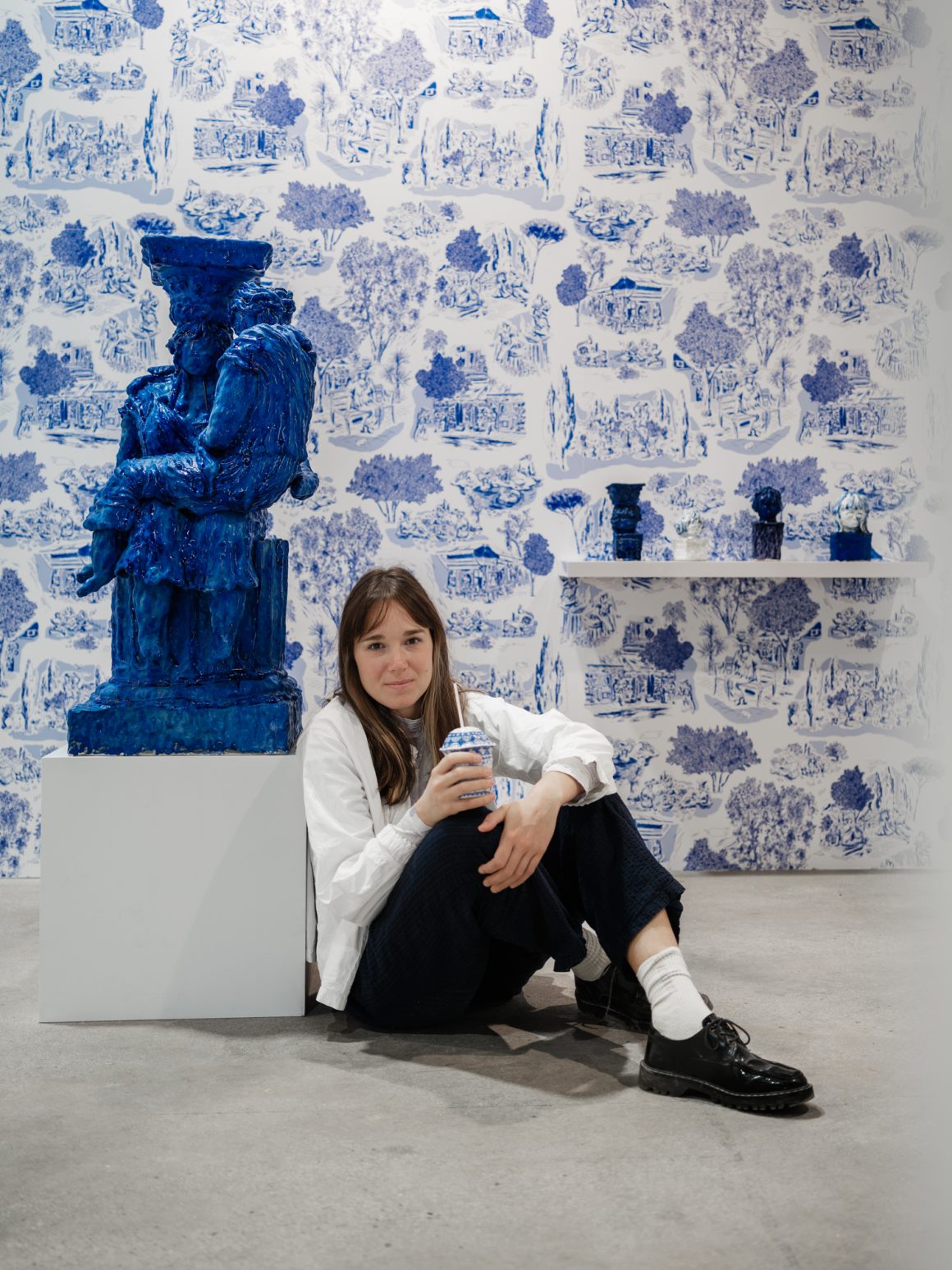
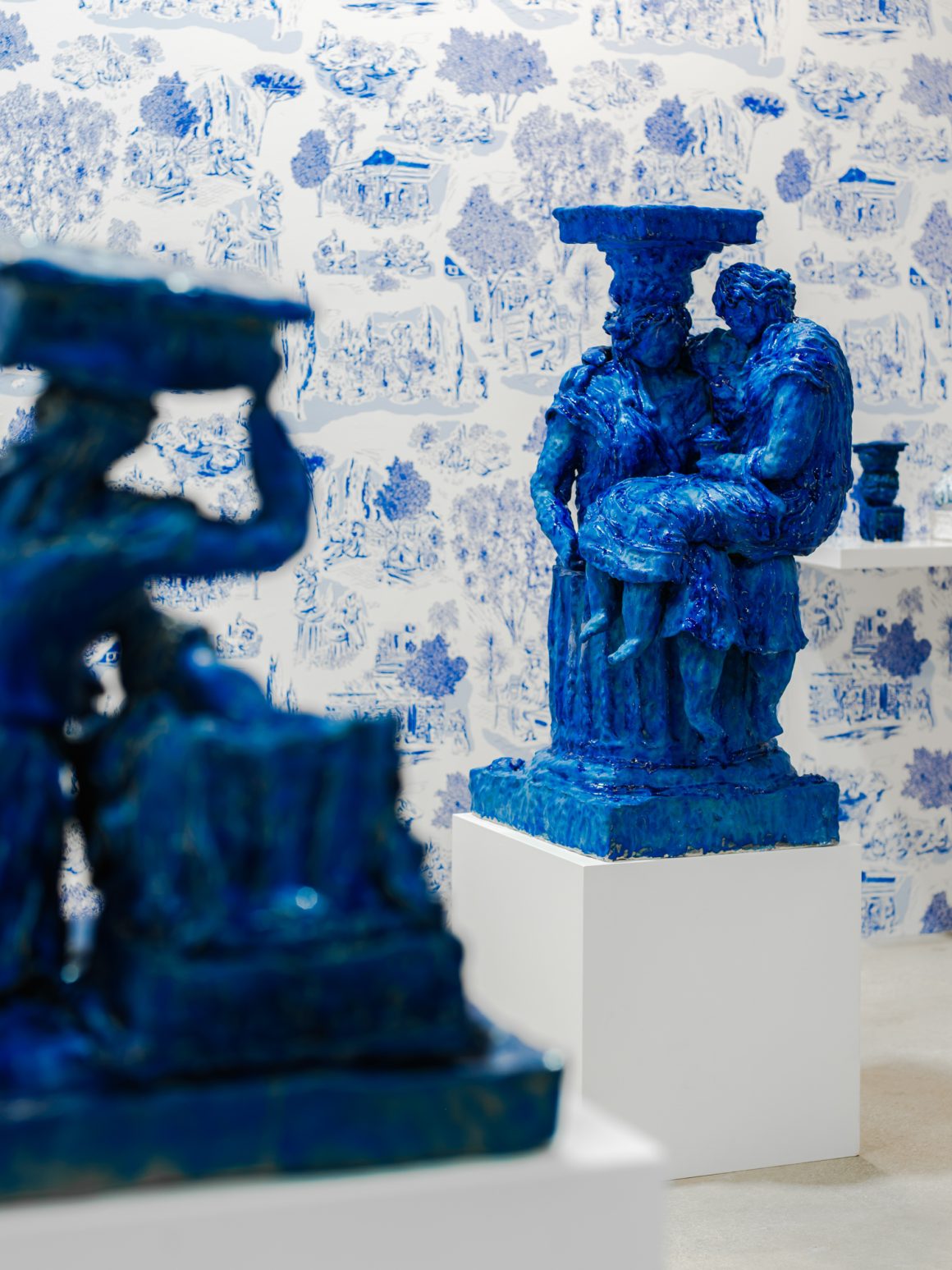
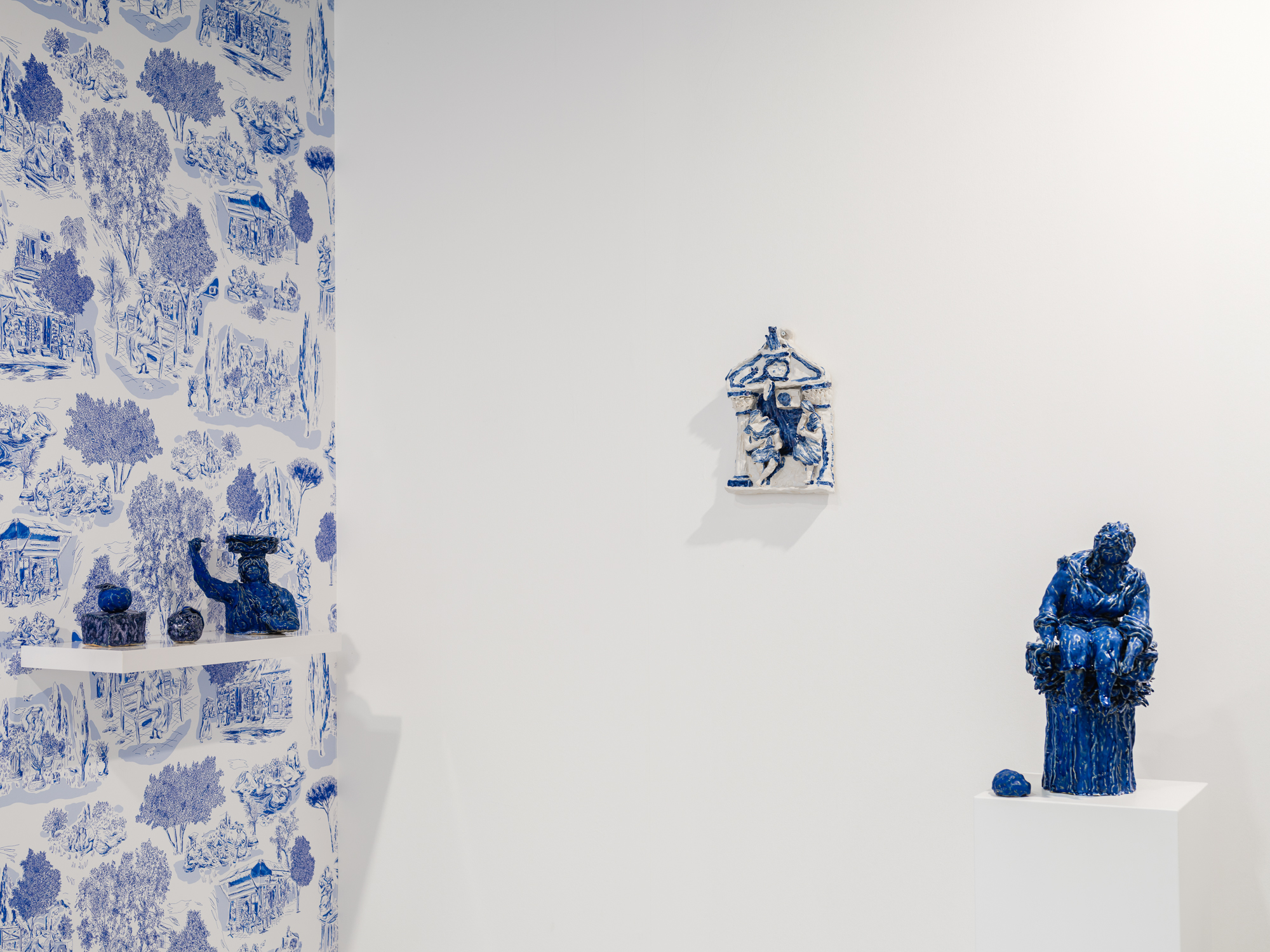
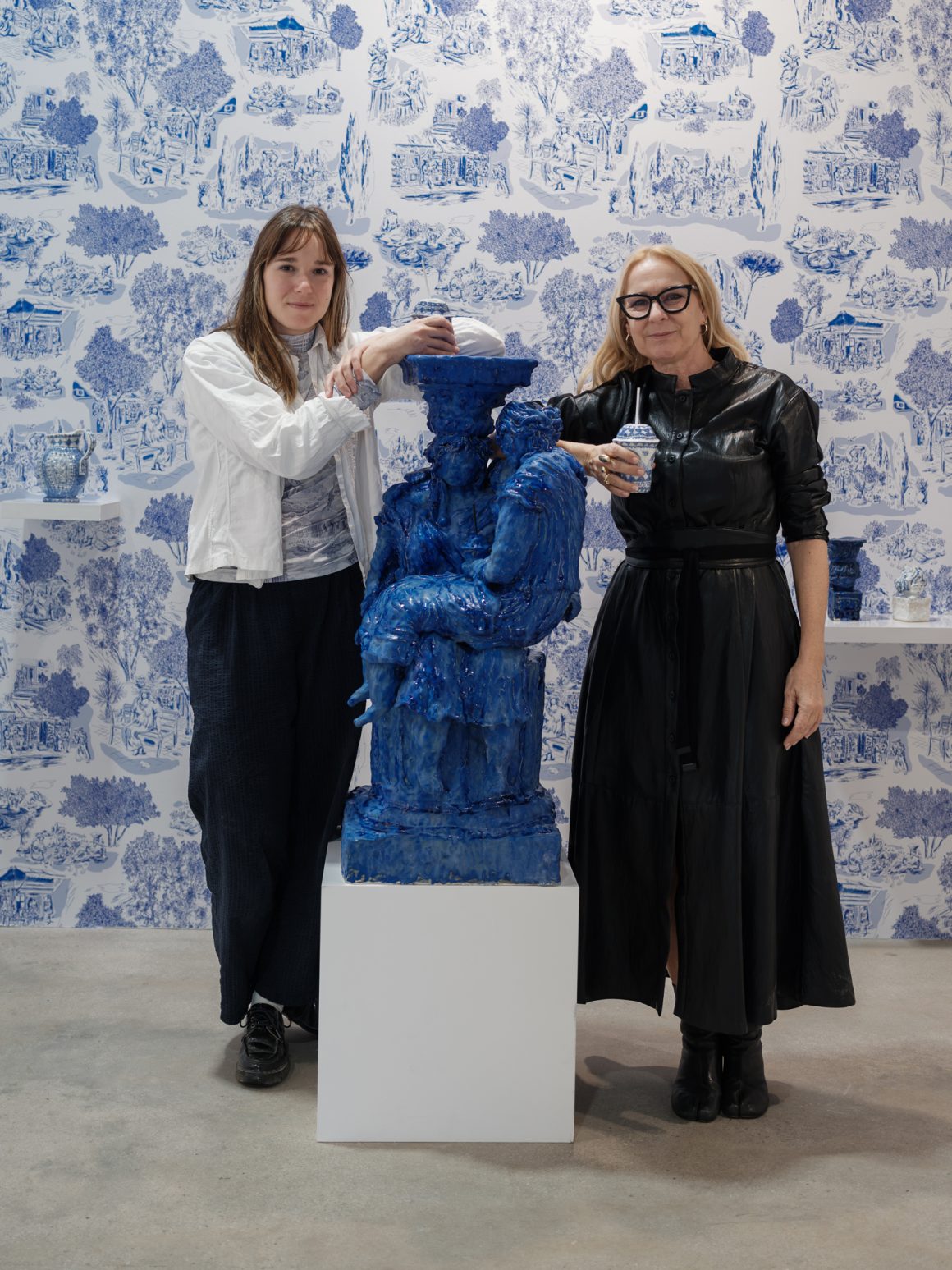
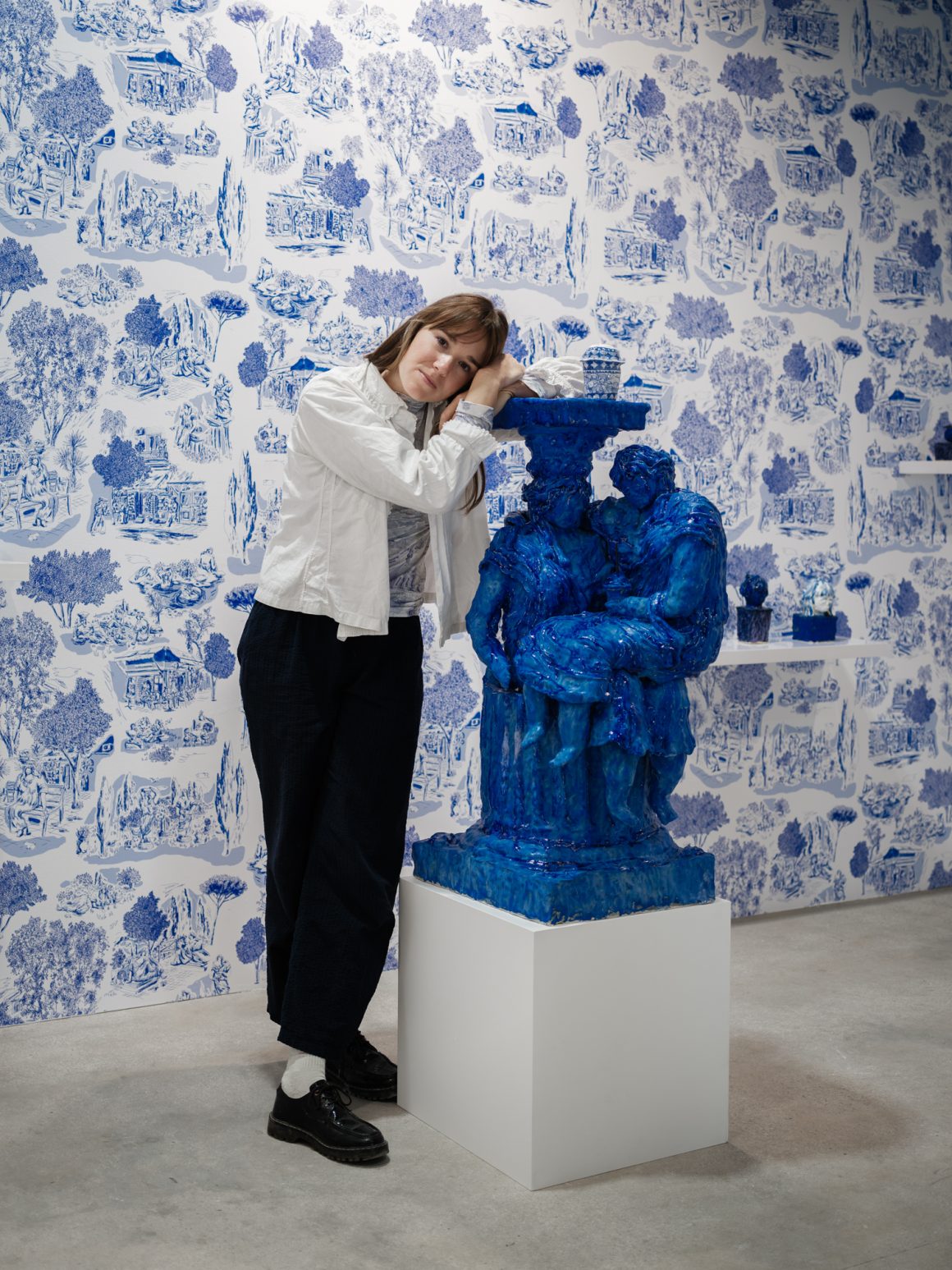
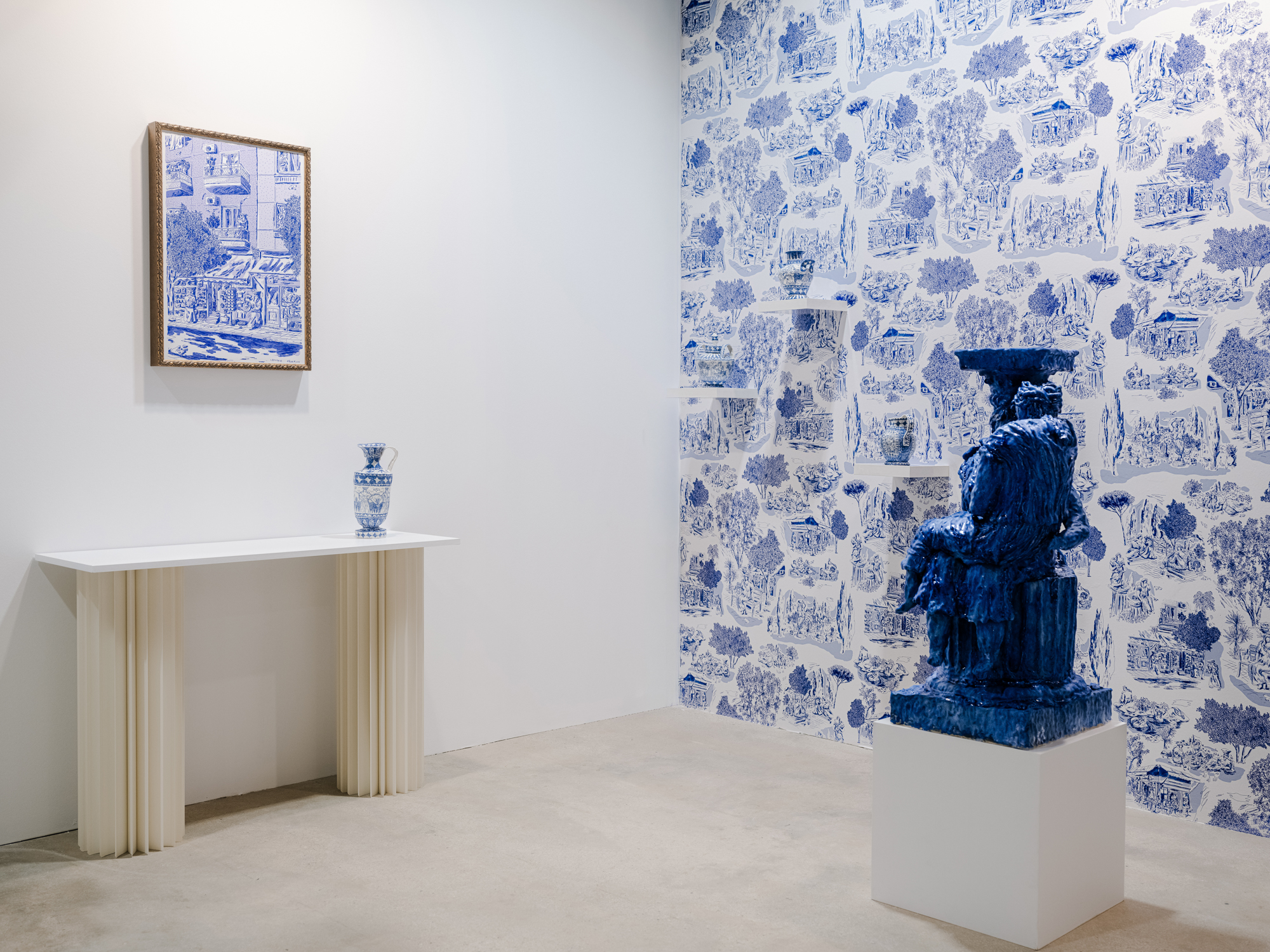
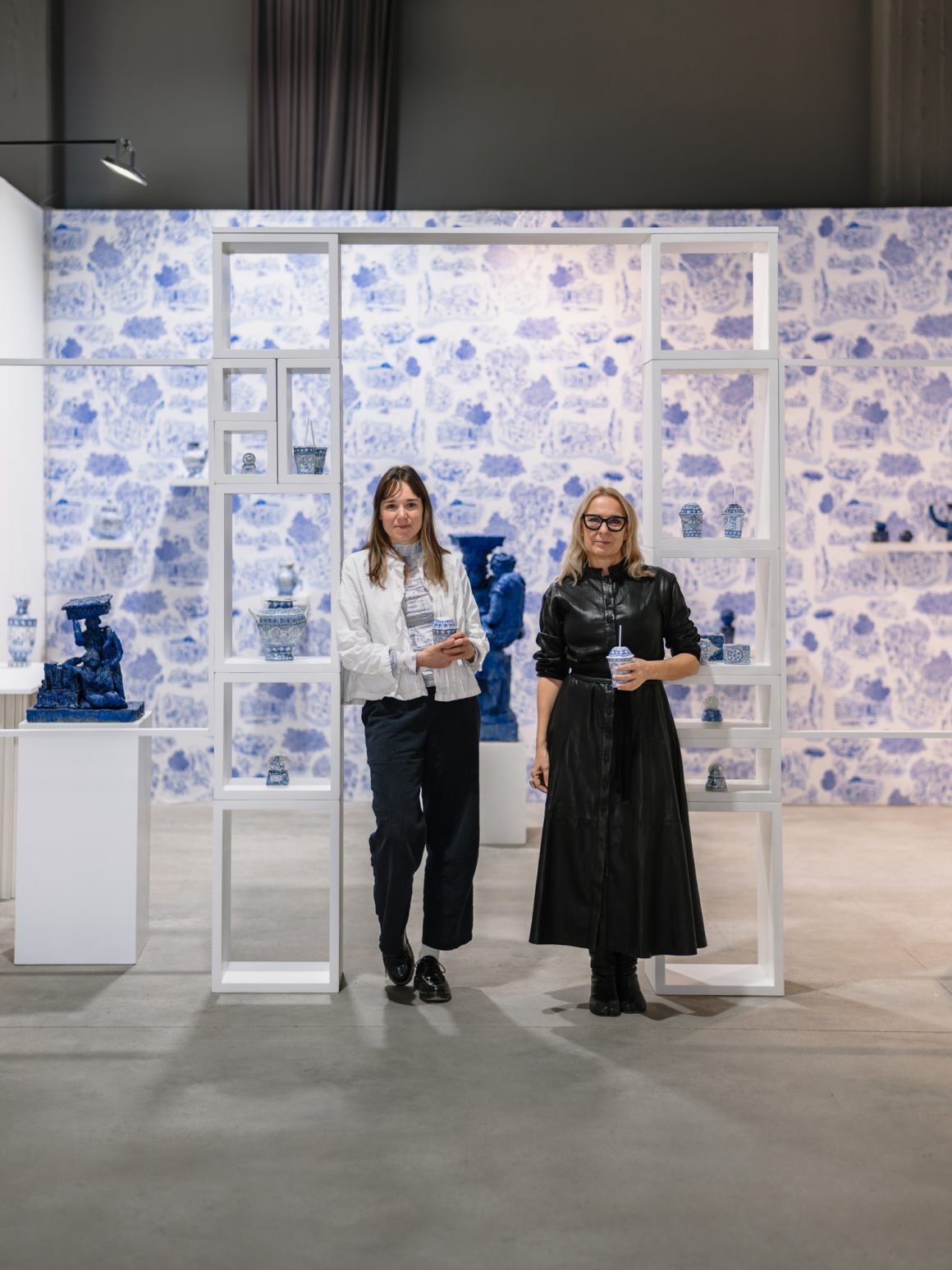
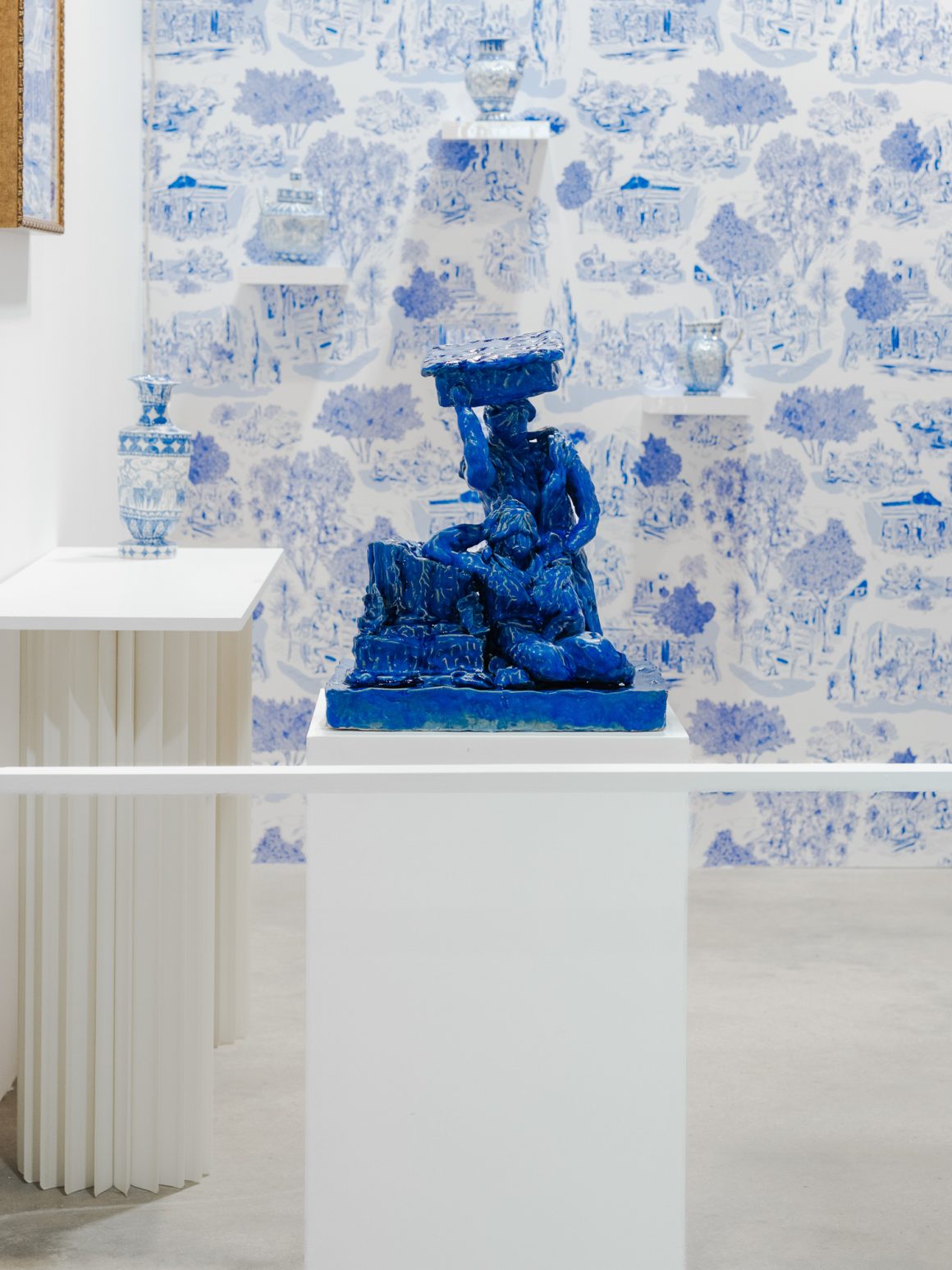
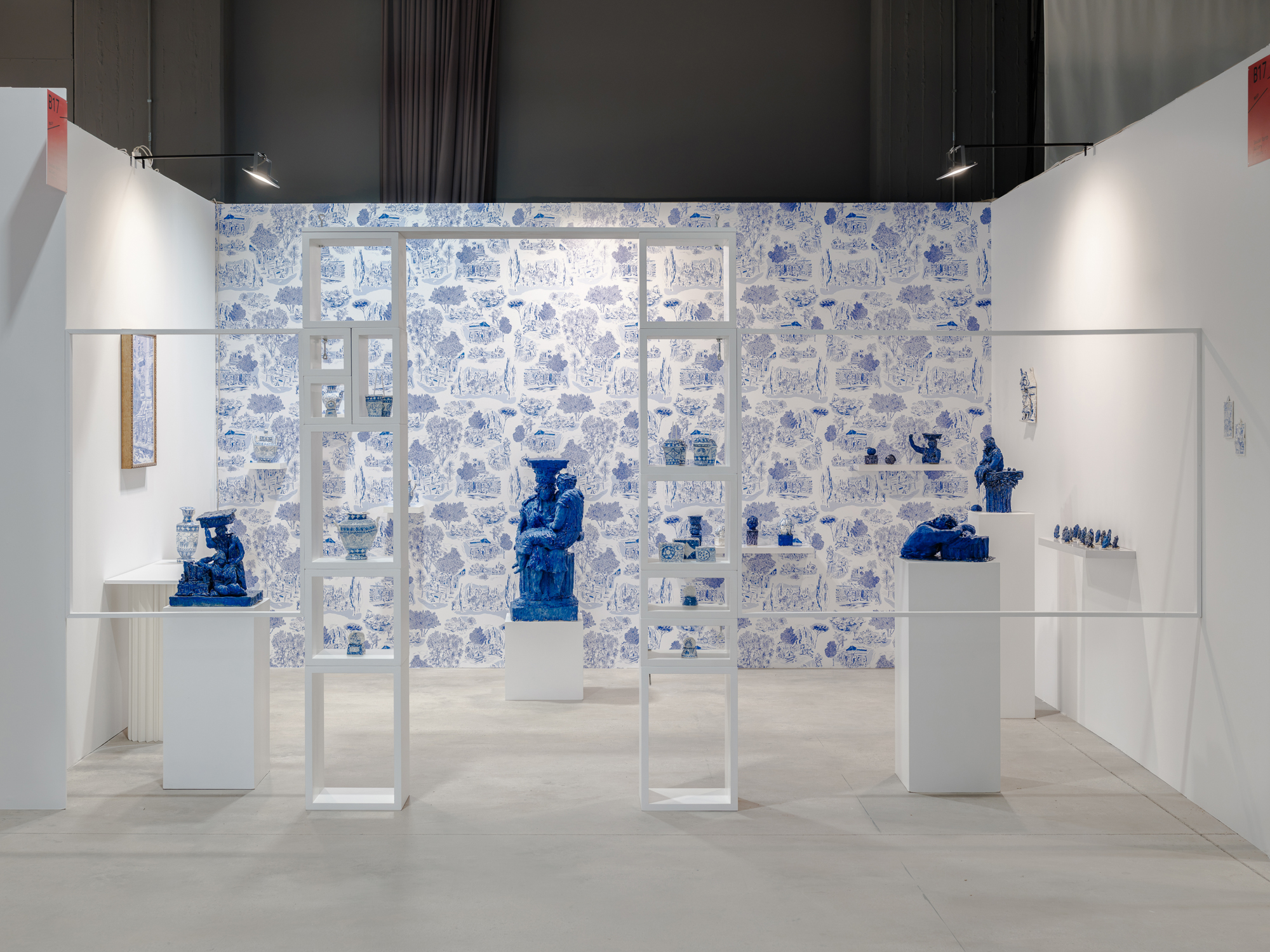
Caryatids On A Break feels like a milestone because it’s the first time I’ve made wallpaper for an exhibition. It changes how you encounter the sculptures. They have a setting, and the wallpaper lets me tell more of their story.
I also recently made a ceramic chair and a fireplace that I’m very proud of. They’re part of a bigger idea I keep coming back to. I’d love to make a life-size environment where everything around you is made of clay, like a three-dimensional painting you can walk into.
What inspired Caryatids On A Break, your presentation with Sealed Earth Gallery at Art Athina?
It began with a short documentary by Agnès Varda about the caryatids of Paris. I was drawn to these female figures holding up balconies, part of the everyday architecture of a city. With my background in urban design, I found myself looking at buildings differently. I made a few pieces based on those figures some years ago, and when Eleni (Eleni Lozou, Artists and Exhibitions Lead at Sealed Earth Gallery) and Loukia (Loukia Thomopoulou, owner of Sealed Earth Gallery) invited me to do a residency there, it felt like the right time and place to return to them.
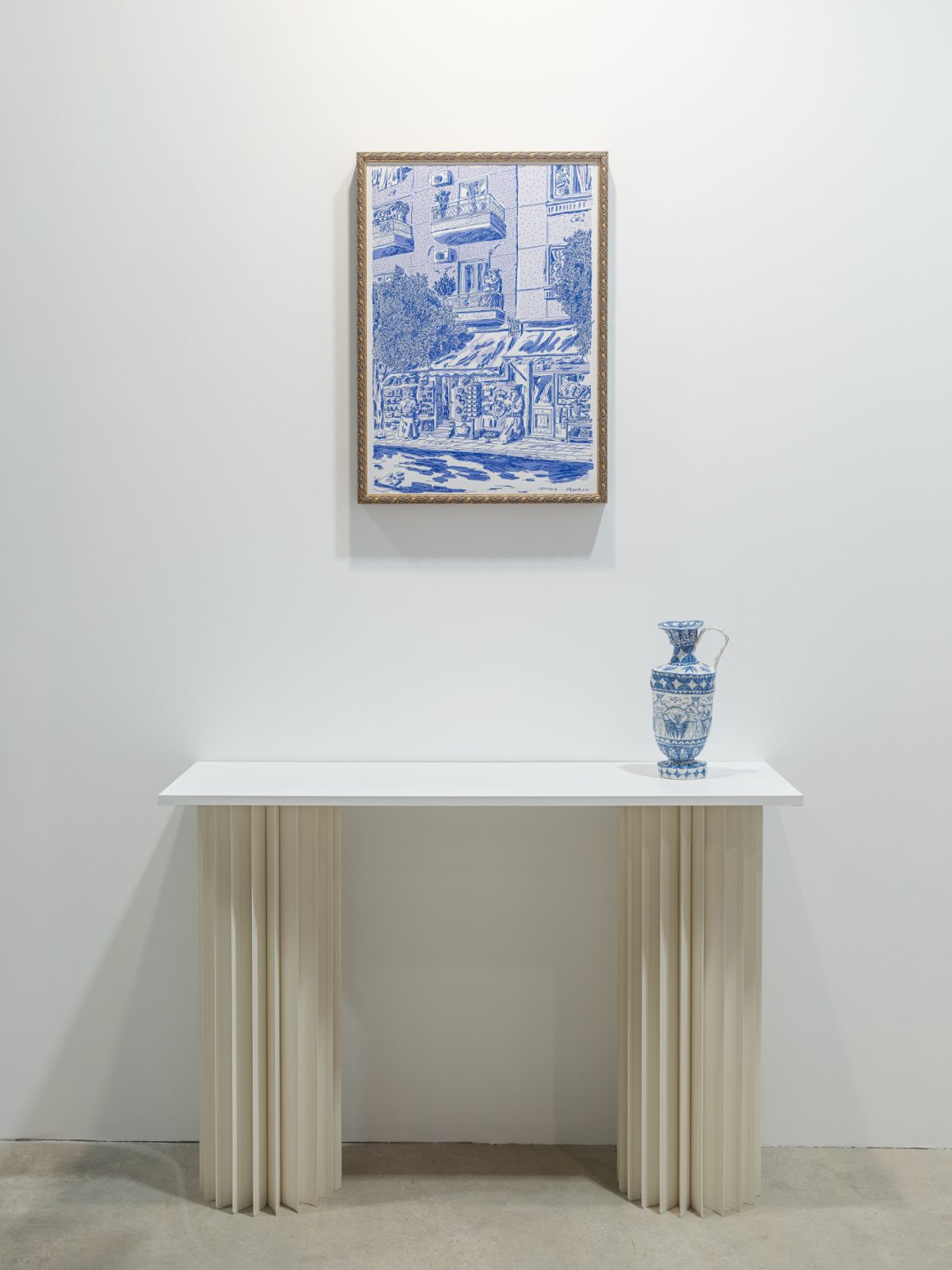
Once I was in Athens, the museum visits, the archaeological sites and everyday life in Koukaki did the rest. I’m drawn to cities where you can see different periods alongside each other. It’s easy to feel nostalgic about the past and overlook how much there is to see in ordinary life now. I wanted both to be present in the work.
What struck you most about Athens, and what stayed with you from your time here?
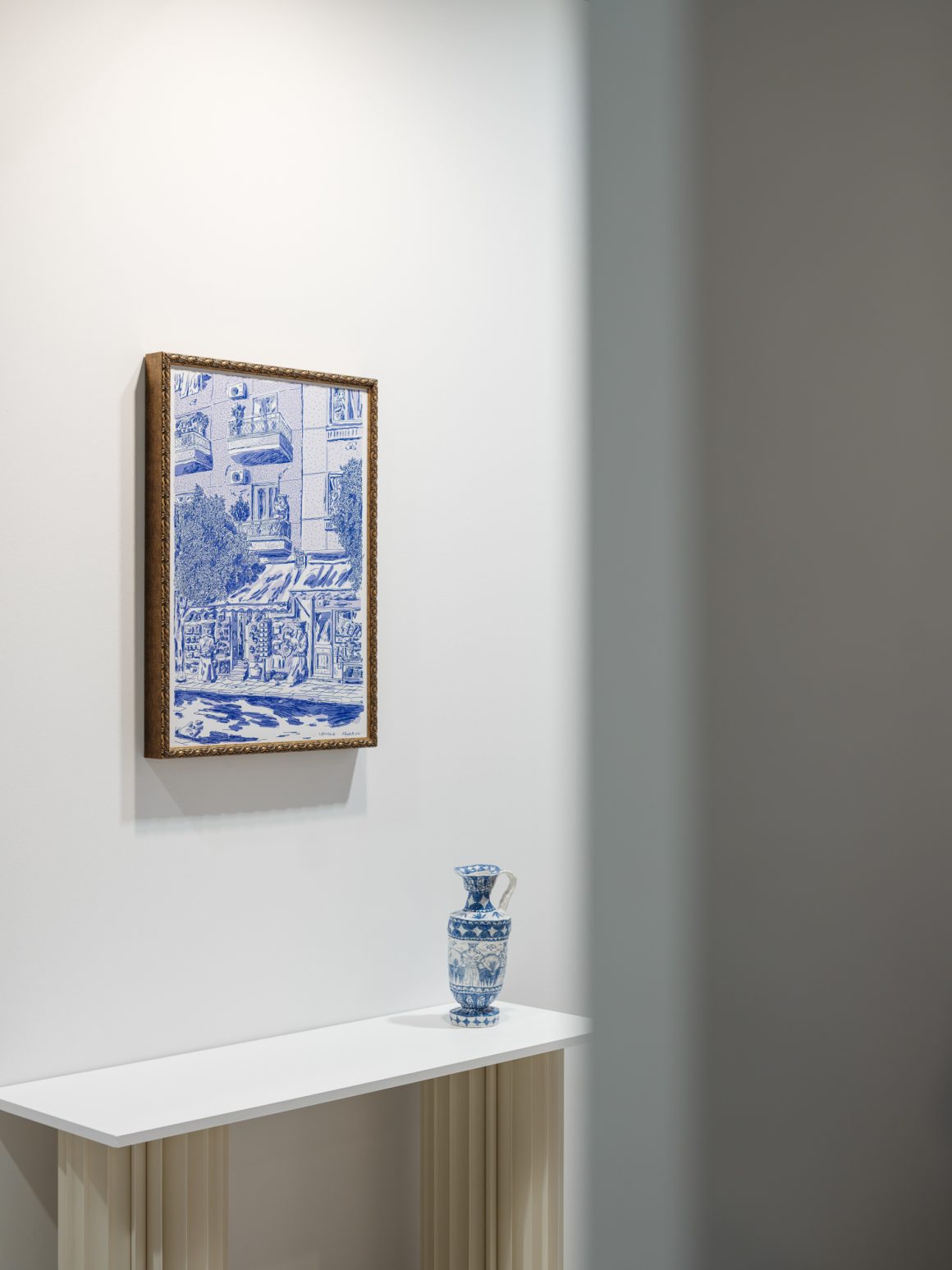
Living in Koukaki was so different from my everyday life that I paid attention to everything. The sun, the trees, the cats hanging around, people drinking freddos, the air conditioners dripping down the façades. Then you’d look up and see the Acropolis at the end of a street. I loved that you could take in all of those things in the space of one walk.
What stayed with me was a sense of resilience alongside a certain lightness. I felt a lot of warmth and joy, and a real pride in the city. I felt that warmth at Sealed Earth, too. The studio was a wonderful place to work, and everyone made me feel welcome from the start.
Why did you choose blue, and how do you imagine modern-day Caryatids spending their time in Athens?
Blue connected several things for me. There’s the blue of the Greek flag, and there’s cobalt blue, which makes me think of Chinese porcelain and European ceramics such as Delftware. It was my first time working on a monochromatic collection, and I liked seeing how much I could do with one colour.
I imagine the Caryatids having a very social life. They’d meet friends at cafés and bars, go shopping with a freddo in hand, having a picnic under a tree at Filopappou’s hill, and try to get to the beach after a long day at work. Of course, they’d get stuck in traffic like everyone else.
What did you most enjoy creating in this collection?
I loved bringing those female figures to life with a bit of humour and imagining what they might get up to once they were off duty. I also enjoyed studying ancient Greek pottery and trying out vessel shapes I hadn’t worked with before.
How did you work with Loukia Thomopoulou, the founder of Sealed Earth, and how do you see the collaboration developing?
Loukia gave me a lot of freedom and trusted me from the beginning. At times, I think she believed in me more than I did. Bringing me to Athens made such a difference. Being here gave me ideas I could only have had here, and those ideas became a body of work made specifically for Art Athina.
It felt like a real team effort with Loukia, Eleni and everyone at Sealed Earth. The collaboration is still at the beginning, and I’m sure we’ll find other things to do together.
How did audiences in Greece respond to the work?
The response was incredibly warm. I was a little nervous about taking on the Caryatids in Athens because I knew how much they mean here. It was lovely to see people embrace these present-day versions of them and respond to both the humour and the poetry in the work.
How has making art changed the way you see the world?
It’s made me much more observant. I notice patterns, colours and the way things are framed, and I find myself wondering about the history behind what I see. I often begin with something from history, a craft tradition or an archaeological object.
There’s some nostalgia in my work. What I enjoy most is bringing a detail from the past into the present and seeing what happens when the two sit together. A form or an image can remind people of something they share, whether it’s a memory or part of a common heritage. I like the idea that a piece can bring people together in that way.
What’s next for you?
I want to give myself a little time to take in the experience of working and showing in Athens. I learned a lot here, and it’s made me want to give myself more freedom in the studio and make more sculptures. I’d also like to spend time studying the history of ceramics and getting to know the traditions behind the material I work with every day.
Do you love colour, and how do you approach it in your work?
I often come back to the purples, pinks, greens and blues in Monet’s Water Lilies. I’m still amazed by the Impressionists and the way they use colour. Those paintings have stayed with me for a long time. Working almost entirely in blue for this exhibition was a departure from the palette I usually reach for.
What keeps you curious, and can you remember an experience that changed how you think about your work?
Discovering the Centre Pompidou as a child was a turning point. It made me realise that architecture could be fun. I felt something similar when I discovered the Memphis Group much later. It gave me a sense of how playful design could be.
I go back to medieval painting, old engravings and archaeological objects, as well as Impressionism and Expressionism. Films feed into the work too. I notice how a scene is framed or how a song can change the way you feel about an image. Pedro Almodóvar, Jean-Pierre Jeunet and Wes Anderson all draw me into worlds of their own. I also love animated films where the materials feel so present that you can almost touch them through the screen.
What would be your dream project?
I’d love to make a life-size room where everything is made of clay. I sometimes imagine it as a play kitchen scaled up for adults. You could walk in and find yourself inside one of my pieces. It would take some very big kilns, so we’ll see what life brings.
Which artists and ceramicists do you admire?
I keep returning to Matisse, Cy Twombly, Monet, Bonnard and Toulouse-Lautrec. In ceramics, I’m drawn to artists who play with the traditions they work in. I love what Philip Eglin does with traditional pottery forms, and how Héloïse Bariol brings the technique of terre vernissée into her contemporary work. I also recently discovered Chungwoo Yoo, a Korean ceramicist who tells stories about everyday life through very expressive pieces.
Do you believe art and creativity can make us better human beings?
I think art can soothe us. It gives beauty and poetry a place in everyday life, and it gives us a way to express things we might otherwise struggle to say. That can be a real relief. Sensitivity and emotion are at the heart of why I make art and why I love it so much.
Which museum and artwork stole your heart?
The Centre Pompidou, and especially Jean Dubuffet’s Jardin d’hiver. I love the experience of walking into it and finding yourself surrounded by the work. I’d love to create that feeling with ceramics, to give someone the chance to step inside a world I’ve made.
Photos: Spyros Chamalis & Bill Stamatopoulos.